Conegliano, Italy – Great cycling and wine!


castello di conegliano biking and cooking tours italiaoutdoorsfoodandwine
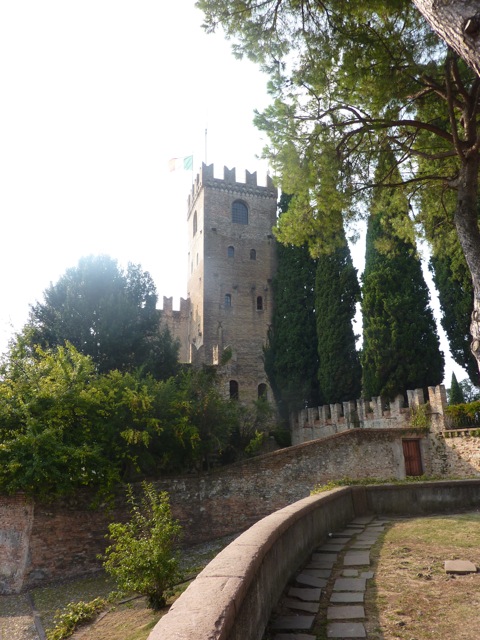
Castello di Conegliano

Conegliano is a town located in the Veneto region, in the province of Treviso. Located about 30 km north of the city of Treviso, it lies in the foothills of the Dolomites and is most noted for its wine, Italy’s favorite sparkling aperitif, Prosecco.
flat vineyards in piave bike tours italy italiaoutdoorsfoodandwine
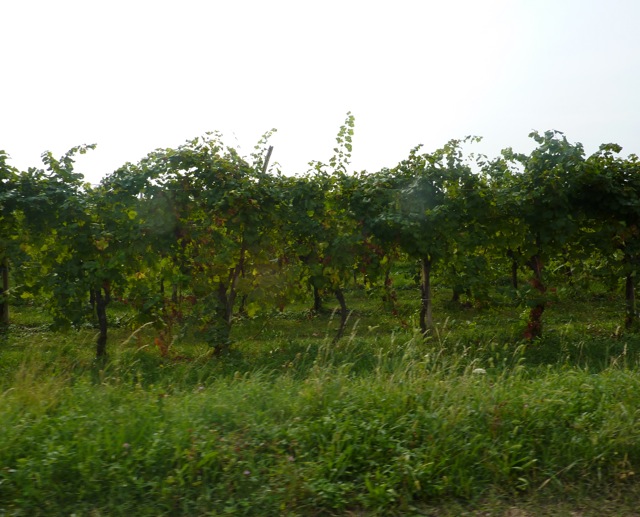
Vineyards in Piave

We visit Conegliano on a couple of our bike tours, as it offers some wonderful routes for all levels of cyclists. Approaching from the south and west from Castelfranco, Montebelluno, and Treviso, we find flatter terrain along the Piave River valley which we explore during our Primavera del Prosecco bike tour. This valley is known for both the Piave DOP cheese as well as its’ own DOC wine zone, featuring the native Raboso varietal, one of Italy’s best ‘big’ reds.
prosecco hills bike wine tours italy italiaoutdoorsfoodandwine
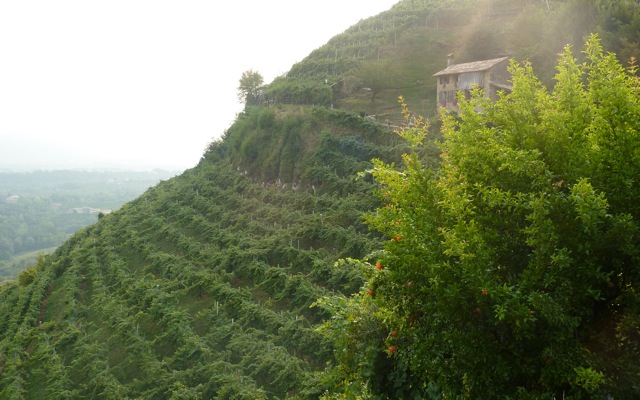
Prosecco hills

For those that desire more challenging terrain, we can climb some hills in the Prosecco wine region. Conegliano is one of the two end points of the preeminent locale for Prosecco production – the Conegliano Valdobbiadene DOCG region. In these picturesque hillside vineyards, locals grow grapes for the best proseccos in the world. With advanced cyclists, we head north through Vittoria Veneto to the Bosco di Cansiglio. The Bosco (or forest) is where the Venetian’s obtained the wood needed for their sailing ships, back in the height of the Venetian republic when they were producing one ship per day.  Here, we tackle Passo Crosetta, a climb that has been part of the Giro d’Italia several times, and included on our Train Like a Local – Mid Mountain cycling tour.
patio at castello dolomites ski tours italiaoutdoorsfoodandwine
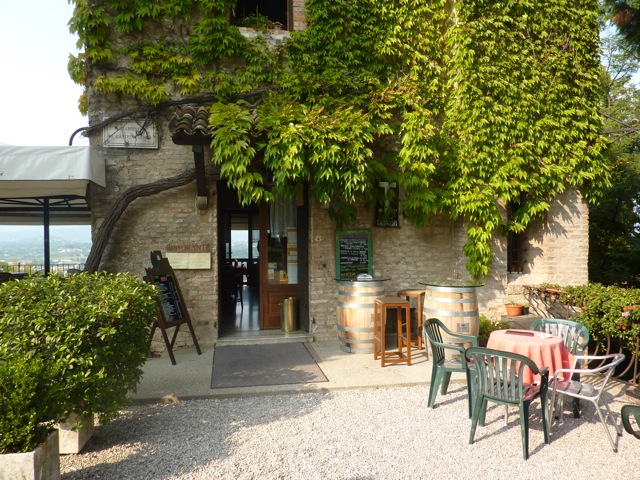
Terrace cafe at Castello

Conegliano itself is an interesting place to explore after our rides. A couple of spots well worth a visit include the Cathedral, dating from 1491, and adorned with important frescoes and paintings, including a renowned altarpiece from noted artist Cima di Conegliano. A short (but uphill) walk outside the city brings one to the Castello di Conegliano with its beautiful bell tower. At one time, this tower contained a large bell used to summon the populace and signal the start of the City Council meetings. Today, the Torre della Campana (bell tower), houses the Civic Museum, with a wonderful collection of paintings. After a tour of the gallery, stop and enjoy a snack, a glass of a local wine and the panoramic view from Ristorante “Al Castello”.
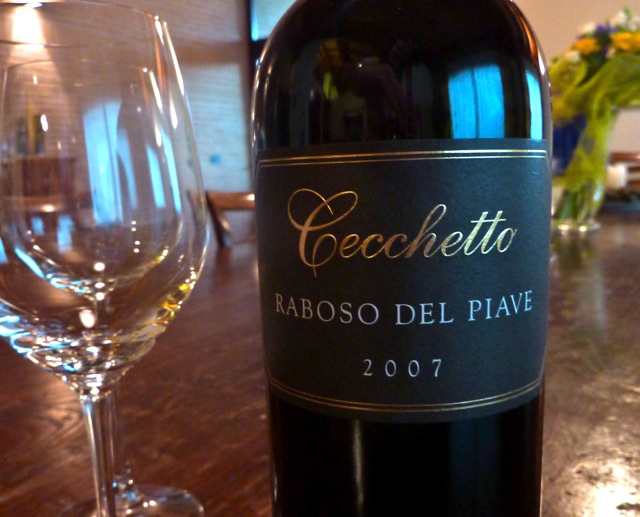
cecchetto raboso cycling wine tours italiaoutdoorsfoodandwine
Cecchetto Raboso 2007

Noted for its wines, Conegliano is the home of Italy’s oldest and most prestigious wine school, the Scuola Enologica. Conegliano is on the cusp of three distinct wine zones – the aforementioned Conegliano Valdobbiadene DOCG, known for its quality prosecco, as well as two lesser known regions, the Piave and the Colli di Conegliano. The Piave DOC stretches from the hills near Conegliano south to the shores of the Adriatic. Piave is known for its’ wonderful indigenous varietal, Raboso, an ancient wine made here since before the time of the Roman empire. In this region today, you will find several local producers devoted to rediscovering and promoting this native treasure. Finally, the Colli di Conegliano DOCG produces some very interesting blends; its Rosso combines the native Marzemino grape with international varietals such as Cabernet Franc and Cabernet Sauvignon to make a big, fruity, tannic wine. The Bianco is a crisp and fruity blend of Chardonnay and the local Incrocio Manzoni. Two very interesting and rare sweet wines are produced as well, the Rosso Refrontolo and the white Torchiato di Fregona.
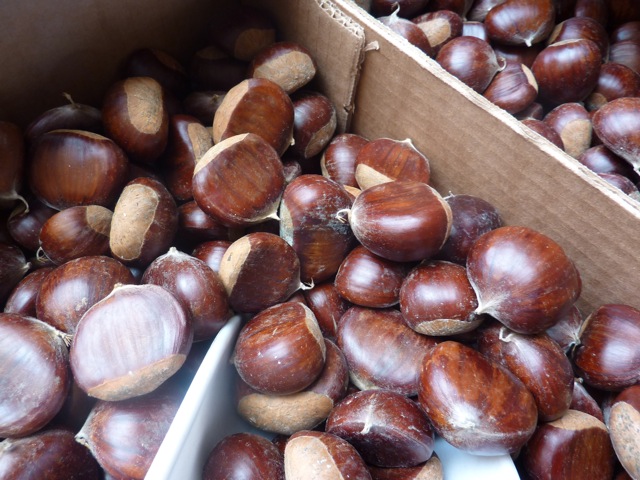
marroni conegliano bike and cooking tours italiaoutdoors food and wine
Chestnuts at Conegliano market

You will find some wonderful local food products as well on your visit. South of Conegliano, along the fertile planes of the Piave river, you will find fields of the local corn variety, Mais Biancoperla, considered the ideal grain for the delicate white polenta. The entire province of Treviso is known for its many different varieties of radicchio, many more than we come across here in the US. Cured meats, such as sopressa, salame and cotecchino are produced nearby, as well as various forms of preserved goose, as salame, prosciutto, or preserved in goose fat. Many superb cheeses hail from this area, include Montasio, Casatella Trevigiana, Taleggio, Urbiaco, Asiago, and, of course, Piave. To the north, in the Prealps, chestnuts have been cultivated for centuries, a food staple for many poorer families. They are one of few crops that can be grown on steep slopes, as well as produce during colder winter months. Chestnuts are typically dried, and then either boiled or ground up into flour and used in a variety of dishes, from breads and pastas to dessert. A market visit in the fall will always include a stop by the vendor who is roasting chestnuts, the wonderful aroma making it impossible not to stop for a few to snack on.
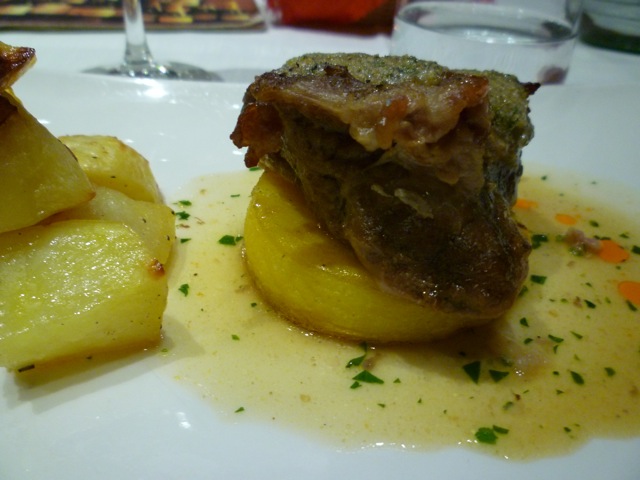
braised veal dolomites cycling tours italiaoutdoors food and wine
Guanciale di vitello brasato

A nice place to enjoy a meal in Conegliano is Ristorante Al Salisa, right on Via XX Settembre. They offer an eclectic menu, with both traditional dishes (piatti tipici regionali) as well as more innovative plates, including curries and sushi. I enjoyed a delicious zuppe di fagioli (bean soup) on my last visit, as well as giuanciale di vitello (braised veal cheeks) served with polenta and vegetables.
Posted in Prosecco, Raboso, Travel, Uncategorized, Veneto Food, Wine | Tagged , , , , , , , , , , , , , , , , , , , | Leave a comment

Rediscover Lambrusco – Not the wine you remember!

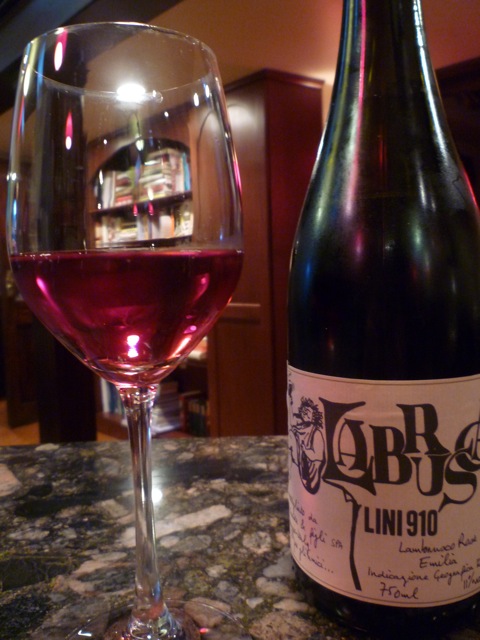
labrusca rose front bike tours italy italiaoutdoorsfoodandwine
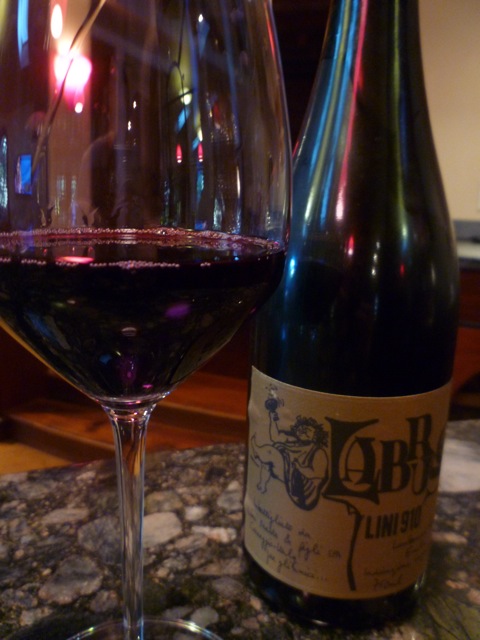
Lini 910 Labrusca Rose

My first introduction to Lambrusco was early on in my wine drinking days – the ‘infamous’ sweet Riunite sparkling wines that we all found very drinkable when we first began indulging (usually a bit too much) in alcoholic beverages. With a bit more sophisticated palate (I hope), I’ve moved on to other, more elegant wines, and didn’t have a Lambrusco for many years. Recently, however, I’ve rediscovered this grape, yet another overlooked gem. As with several other wines from Northeastern Italy, such as Soave and Valpolicella, Lambrusco was mass produced and low quality wines were imported in volume to the US in the 70s and 80s – at that time, Lambrusco was the biggest selling import wine in the US – earning these wines a poor reputation stateside that still follows them today.  Back in Italy, however, many smaller producers forged ahead, sticking with these varietals and investing in the development of prime vineyards (usually at higher elevation, and harder to cultivate) and enhanced production techniques. The result are wonderful wines that bear little or no resemblance to the wines we may remember from the 70s and 80s. Eric Asimov from the New York Times recently published an article about his ‘rediscovery’ of Lambrusco, Lambrusco Wants You Back.

Lambrusco is the name of both a family of red grapes, and the wines produced with them. Both are made in Emilia-Romagna and Lombardia, near Mantova, Modena, Parma and Reggio nell’Emilia. There are many varieties of the grape, over 60 have been identified throughout Italy. The most common ones, native to Emilia-Romagna and Lombardia are (all beginning with Lambrusco): Lambrusco Salamino, Sorbara, Marani, Maestri, Monterrico and Grasparossa.

mantova bike wine tours italiaoutdoorsfoodandwine
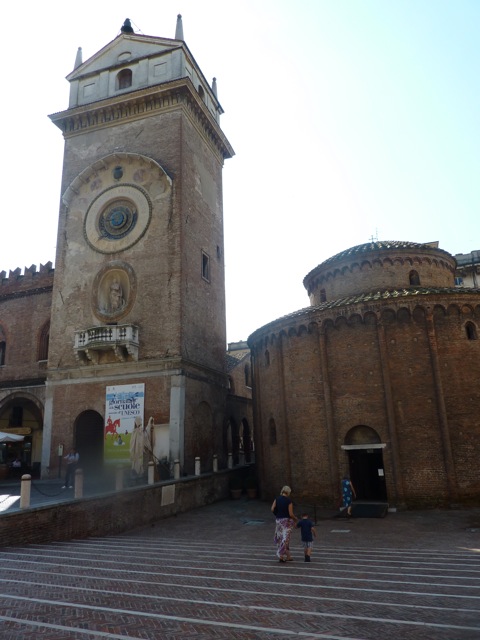
Rotonda di San Lorenzo, Mantova, Italy

Lambrusco wine production in this region dates as far back as the Etruscans and Romans. The vines were often trained to climb up trees, holding them high off the ground to prevent mildew. Lambrusco was valued for its productivity and high yields, which unfortunately probably led to its ‘abuse’ in the 70s.

Today, we can find fun, refreshing frizzante (slightly sparkling) wines produced in five Lambrusco DOC regions: Lambrusco di Sorbara, Lambrusco Salamine di Santa Croce, Lambrusco Reggiano, Lambrusco Mantovano, and Lambrusco Grasparossa di Castelvetro. You will find whites, rose, as well as red sparkling wines. Most produced in Italy are dry, as the grape itself is not particularly sweet, but sweeter versions are produced either by only allowing for partial fermentation, or by blending with sweeter grapes, such as Ancelotta.

I recently found two Lambrusco wines at one of my favorite gourmet stores, Joppa Fine Foods in Newburyport, MA. Both are sparkling wines produced by the Lini winery, in Correggio, Emilia-Romagna. The Lini family celebrated its’ 100th year of winemaking in 2010, and today the wines are produced by fourth generation wine maker Alicia Lini. They offer a wide array of sparkling Lambruscos, white, rose and rosso, produced using both the Charmat method (the method used to produce prosecco, and most commonly used for Lambrusco), as well as the more labor intensive Metodo Classico (classic method used for champagne.)

labrusca rose rear cycling dolomites italiaoutdoorsfoodandwine
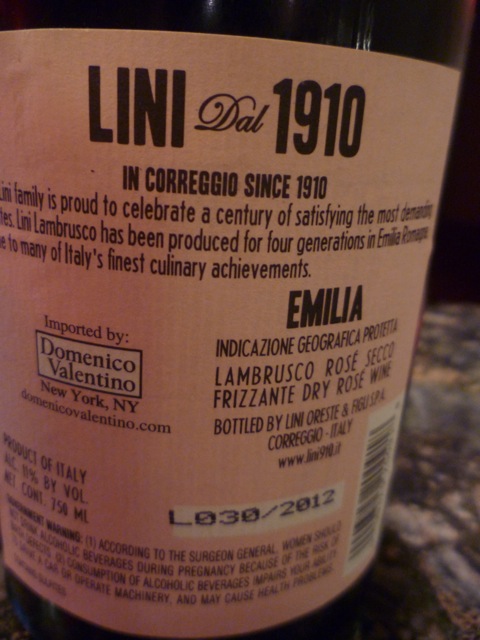
Labrusca Rose rear label

The two I tasted are the Lini 910 “Labrusca” Rose and Rosso. The historic “Labrusca” label is designed “to appeal to all consumers, satisfying the largest and most diverse clientele.” Both are vibrant, refreshing wines; fun wines at an affordable price point (under $20), perfect for a warm summer evening. Both are Emilia IGT (Indicazione Geografica Tipica) wines, which indicates they are a blend of Lambrusco grapes from different DOC zones.

The Lini 910 rose is produced using the Charmat method, with the secondary fermentation taking place in stainless steel tanks over a period of 3 months.  According to the Lini web site, this results in finer bubbles “that aid in digestion.” It is a blend of 80% Lambrusco Salamino, with 20% Lambrusco Solara. One first appreciates its’ very attractive deep pink and intense aromas of rose and cherry. It has crisp, fresh palate and nicely balanced acidity. A wonderful accompaniment to a variety of antipasti, from seafood to cured meats and fresh cheeses, as well as light pastas.

labrusca rosso luxury ski holidays italiaoutdoorsfoodandwine
Lini 910 Labrusca Rosso

The Lini 910 rosso is a real experience, as red sparkling wines are few an far between – but this will have you wondering why we don’t see more of them! Again, produced using the Charmat method, from a blend of Lambrusco Salamino (85%) and the slightly sweet Lambrusco Ancelotta (15%). Dark ruby red in color, with scents of red fruits and berries – cherry, strawberry, raspberry, blueberry. Well-structured, with intense, refreshing flavors of cherry and dark berries, and a slightly tannic finish. This pairs well with white meats, roast pork, and hearty soups.

Posted in Uncategorized, Wine, Wine Pairings, wine tastings | Tagged , , , , , , , , , , , , , , , , , , , | Leave a comment

AOP – Aglio, Olio e Peperoncino

sign at entrance biking and cooking tours Italiaoutdoors Food and Wine
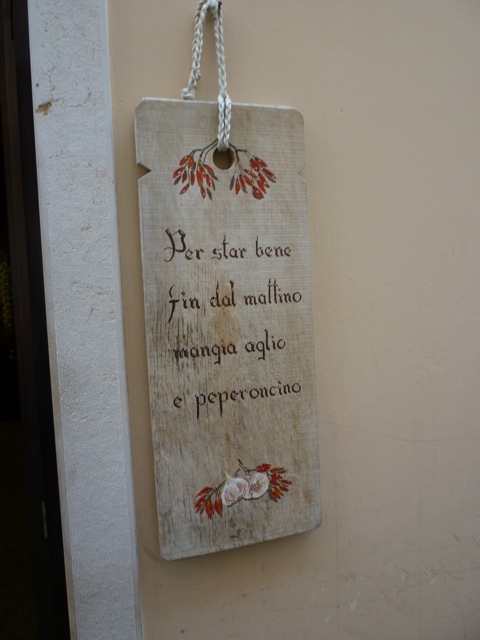
Sign at Entrance

“Per star bene fin dal mattino mangia aglio e peperoncino”

To feel good at the end of the morning, eat garlic and peppers.

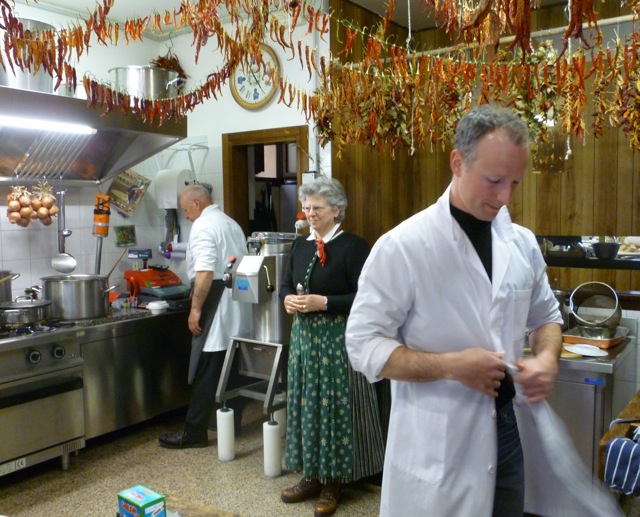
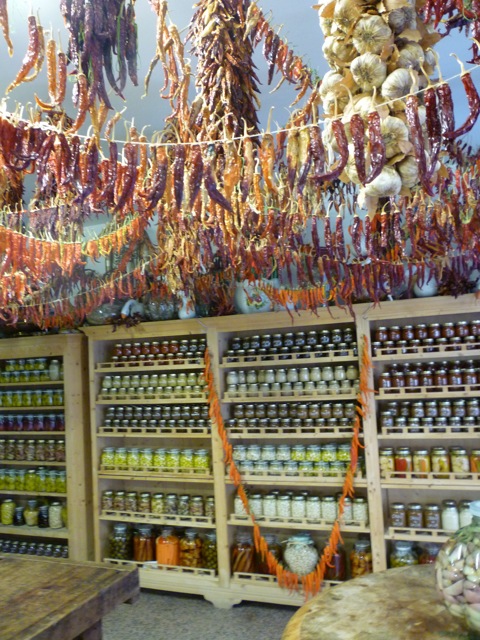
This sage advice greeted me recently as I entered into a small shop in Bassano del Grappa. While wandering the streets of this beautiful town in the Pre-Alps of the Veneto, I happened upon a local producer of canned products. I was warmly greeted by the family, who were very proud of their products – understandably – and brought out one after another for me to taste. I had a hard time pulling myself away, and returned later with a few of our bike tour guests for even more! Father and mother were in the rear, cooking up the next batch, while their adult son greeted the guests and offered us sample after sample.

family at work cycling tours italy italiaoutdoors food and wine
Family at work

The name of this shop is “Specialita in Gamba”, and it advertises “Produzione propria e spaccio di conserve aglio e peperoncino”, conserves of garlic and peppers. Strings of garlic and dried hot peppers hang from every available rafter. They produce a wide variety of items packed in olive oil – garlic, both whole and crushed, shallots, as well as many pickled vegetables – carrots, cauliflower, peppers, celery. In addition, they produce and can many interesting sauces; cren in salsa (horseradish), radicchio, white asparagus, and one simply labeled AOP.

conserves in bassano bike wine tour italiaoutdoors food and wine
Conserves in shop in Bassano del Grappa

The sauces here are all basically pestos. Pesto is most commonly interpreted as a mixture of crushed basil, garlic, cheese, nuts and olive oil, but this simple technique can be applied to so many other ingredients. The word ‘pesto’ derives from the Italian word “pestare”, which means to pound or crush. Traditionally, a pesto would be made using a mortar and pestle, with the ingredients being ‘ground’ with a circular motion of the pesto. Now apply this same technique to, say, asparagus, and you get a wonderful sauce for pasta.

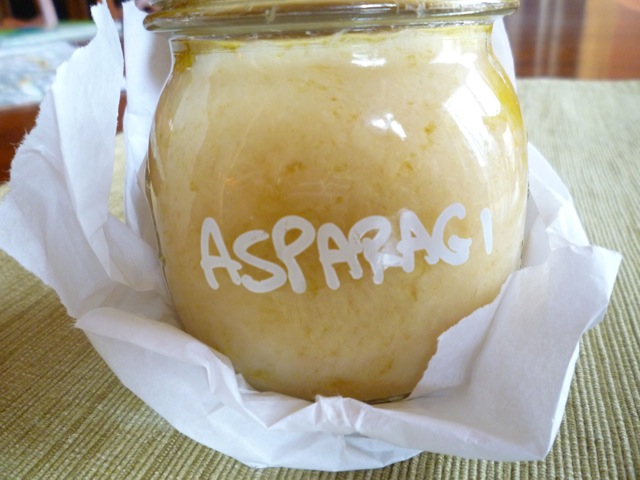
white asparagus italy bike tours italiaoutdoors food and wine
White asparagi sauce

I tried many of these sauces while there; the radicchio, one just made with crushed garlic, and white asparagus. I brought home a jar of the latter, so my family could experience the renowned white asparagus of Bassano. The one that really intrigued me was their specialty, the AOP. It made my now rather long list of dishes to recreate back home!

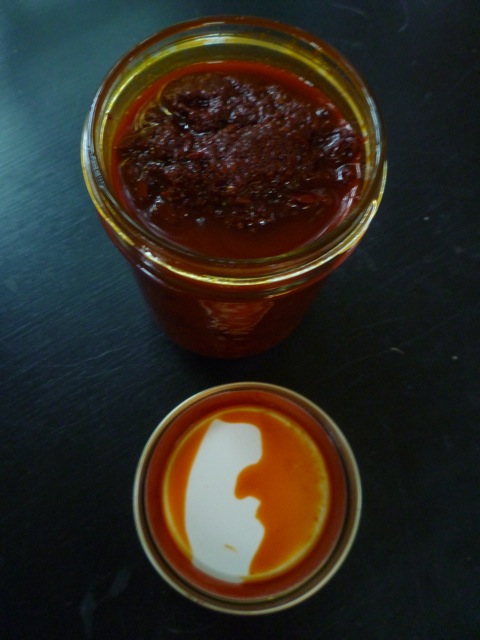
AOP in jar cycling dolomites italiaoutdoors food and wine
My own AOP

I did a bit of research first, to discover if any recipes existed for this AOP sauce as this store produced it. Looking up AOP recipes on the internet, I found several that claim that AOP is a sauce made not from aglio, olio e peperoncino, but aglio, olio, e pomodoro (tomatoes). While I am sure this is a tasty combination, all the recipes for this seemed to originate from a US restaurant.

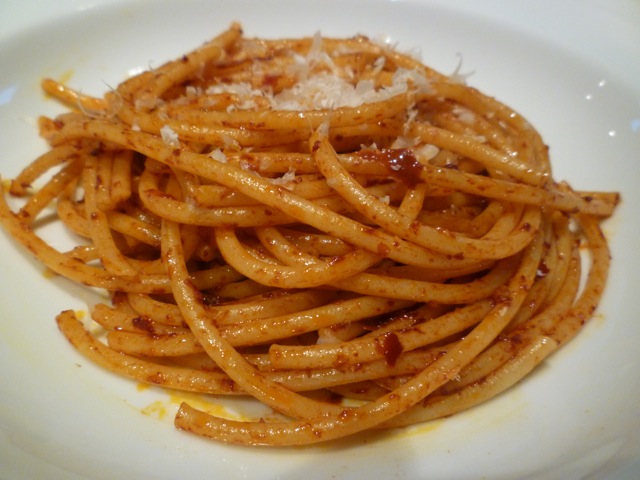
bucatini AOP culinary bike tours italiaoutdoors food and wine
Bucatini with AOP

Most of the “authentic” versions of recipes with the AOP are a very simple pasta sauce, made by browning sliced garlic just ever so slightly in olive oil, adding hot red pepper flakes, turning off the heat and tossing it over pasta. This dish is so simple and quick, it hardly seems worth the even minimal effort of making a sauce like I saw in Bassano. But then I started to think about all the other uses for the AOP sauce, if it happened to live in my refrigerator for a week:

  • Over pasta
  • Over grilled vegetables – zucchini, corn, eggplant
  • Over grilled pork, chicken, fish
  • Nice on a sandwich with italian meats and cheeses
  • Flavor a salad dressing – take a little, mix with more oil and a bit of vinegar.  Combine lettuce with black beans, corn and avocado.
  • Season a stir fry
  • Crostini – Chopped avocado mixed with a bit of AOP
  • Mixed in with brown rice

Here is my recipe for the AOP sauce. Four ingredients, (don’t forget salt), and a food processor. This is simply a peperocino ‘pesto’. If you try it, please let me know what other uses you find for it – I am just getting started!

Peperoncini e Aglio bike tours italy italiaoutdoorsfoodandwine
Peperoncini e Aglio

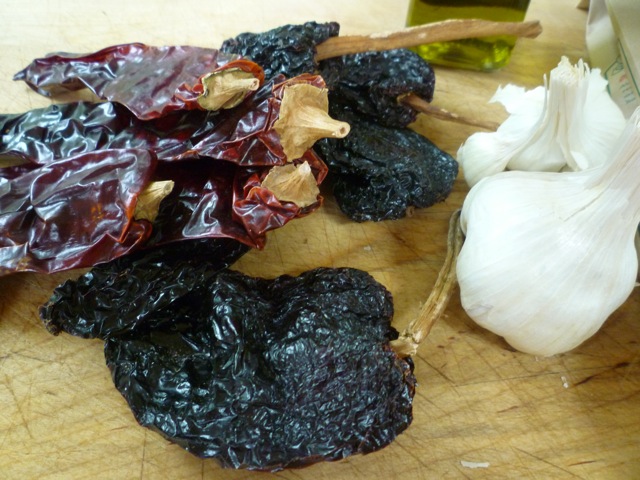
I used a mix of ancho (mild to medium) and california (medium to medium hot). I began by just pureeing the mild peppers with the oil and garlic, then added the hotter ones until  the level of heat was what I wanted. Experiment with peppers of different heat levels, as well as adding more garlic – both of which I will be playing with in future versions of this. Just remember – it is easier to add more than to take it out!

Salsa di AOP (Aglio, Olio e Peperoncino)

Makes 1 pint

3/4 cups extra virgin olive oil
8 cloves of garlic, thinly sliced
9-10 dried medium to large chili peppers, soaked in warm water for 30 minutes to rehydrate, seeds removed
Kosher salt

Place the olive oil in a saute pan, and heat over medium heat. Add the sliced garlic and cook until they are just starting to brown. You want the flavor of the garlic in the oil, but you don’t want it too cook too long, or the garlic will become bitter. Remove from the heat.

Place the chili peppers in the bowl of a food processor. Add the oil and garlic. Puree until quite smooth, 1-2 minutes or so. Season with salt. Serve immediately, and place the remainder in a sealed container, topped with a thin layer of olive oil. Store in the refrigerator, it should keep for at least 10 days.

Posted in garlic, Pasta, Travel, Uncategorized, Vegetables, Veneto Food | Tagged , , , , , , , , , , , , , , , , , , , , , , , | 2 Comments

Capretto Alla Tirolese – Grilled Goat Steaks

capretto alla tirolese italy bike tours italiaoutdoorsfoodandwine
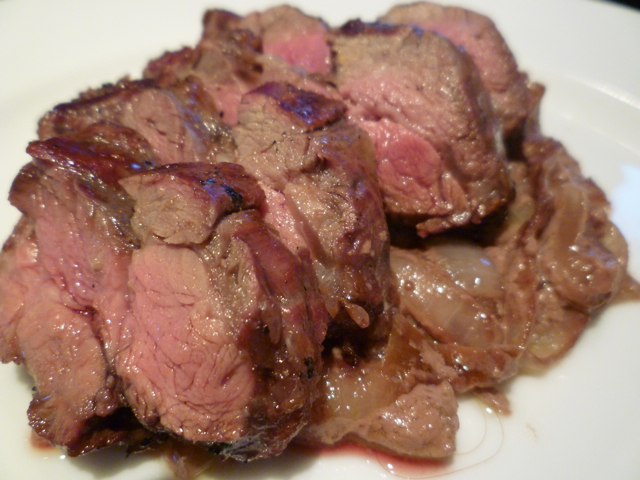
Capretto alla Tirolese

Always interested in expanding my culinary horizons, when I am at the market I am immediately drawn to any food I haven’t yet had the opportunity to cook. This week at  the Newburyport Farmer’s Market I was able to purchase locally raised goat meat. So guess what was on the menu last night!

capretto cycling tours dolomites italiaoutdoorsfoodandwine
Capretto (Goat) Strip Steaks

I purchased the meat from Riverslea Farm, in Epping, NH. Riverslea is owned and operated by Jeff and Liz Conrad, who started out in 1991 and today raise both sheep and goats for the sale of meat, skins and wool. They sell naturally raised meat animals directly to the public, as well as washable sheepskins and wool products their farm shop and by mail.

They began their goat herd with Nubians, excellent milk producers, and Alpines, another hardy dairy breed.  In 1996, they introduced South African Boer in order to get a meatier animal.  Today, they breed 40 crossbred does exclusively with Boer bucks, producing goats with extremely lean and tender meat. They had a variety of cuts available, but as it is July, I was more interested in something that could be cooked quickly on the grill, rather than slow and low. I asked if they had any cuts they would recommend on the grill, and ended up purchasing 4 strip steaks.

I did a bit of research on goat meat, and how best to cook it, before diving in. Interestingly enough, goat is actually the world’s most popular meat, with 75% of  the world’s population eating it. This fact appeared in several places on the web, including this article in the New York Times. It is growing in popularity here in the US, with demand being driven both from ethnic groups who enjoy it as part of their traditional cuisine, as well as some high end chefs and producers – like NYC chef Scott Conant, and Niman Ranch – who are specializing in it. It is often called chevon or mutton when the meat comes from adults, and cabrito or kid when from young animals.

I leaned that goat meat is very lean, over 50% leaner than beef, and 40% leaner than chicken, even with the skin removed. The lack of fat does mean it should be cooked with a bit of care, and not just like a steak. Leaner cuts can tend to dry out quickly while cooking, so cooking with moist heat rather than dry is usually recommended. If grilling, which is pretty dry, a lower heat is suggested, with some marinating.

ingredients culinary bike tours italy italiaoutdoorsfoodandwine
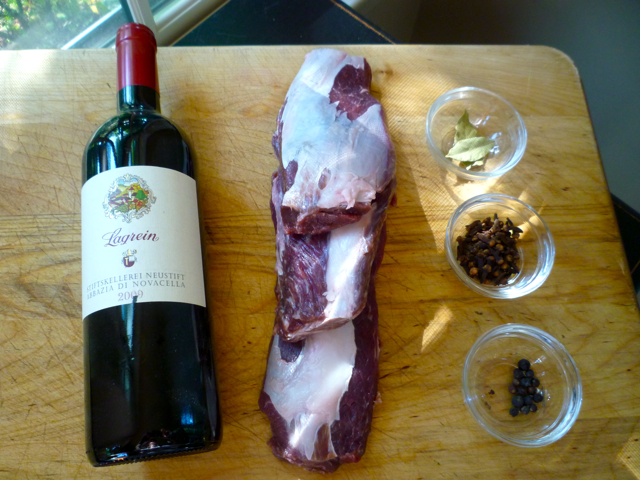
Goat steaks with marinade ingredients, with a Sudtirol Lagrein

In Italy, goat is most popular in the south, with it most commonly being roasted whole. There are several recipes I found in La Cucina: The Regional Cooking of Italy for goat, most requiring slow cooking. I ended up adapting a recipe from Sudtirol for my goat steaks, a traditional recipe for chamois (Chamois alla Tirolese), which I am pretty sure I’m not going to find here in the US anytime soon. Chamois is a goat antelope species, native to the mountains of Europe, including the Alps. They live at moderately high altitudes and are adapted to living in precipitous, rugged, rocky terrain, like you will find in Alto Adige. They spend their summers above the tree line in meadows, and when winter rolls around, they go to lower elevations to live in forests, mainly in areas dominated by pines. As with goat, they are an extremely lean meat.

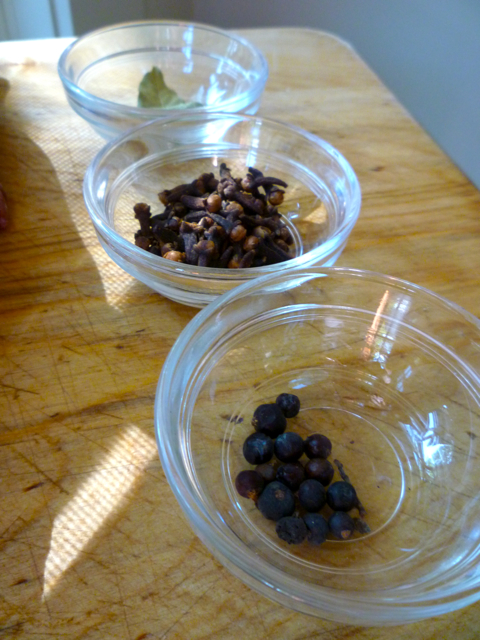
I used the flavors from the original recipe – bay leaves, cloves, juniper berries, Lagrein wine – to create a marinade. I grilled the steaks, and turned the marinade into a pan sauce.

seasoning ski holidays dolomites italiaoutdoorsfoodandwine
Juniper, cloves, bay leaves

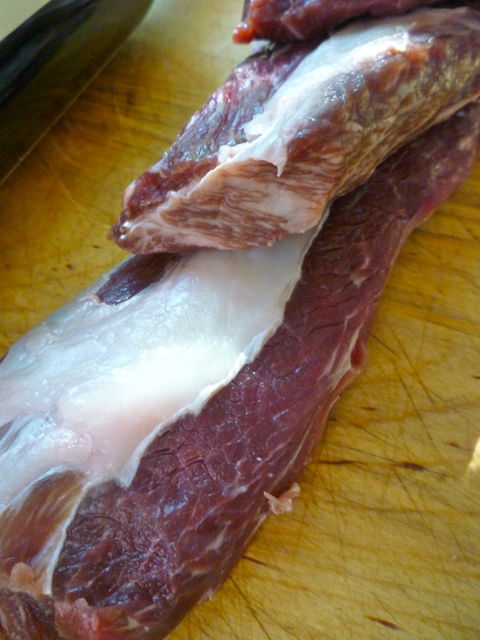
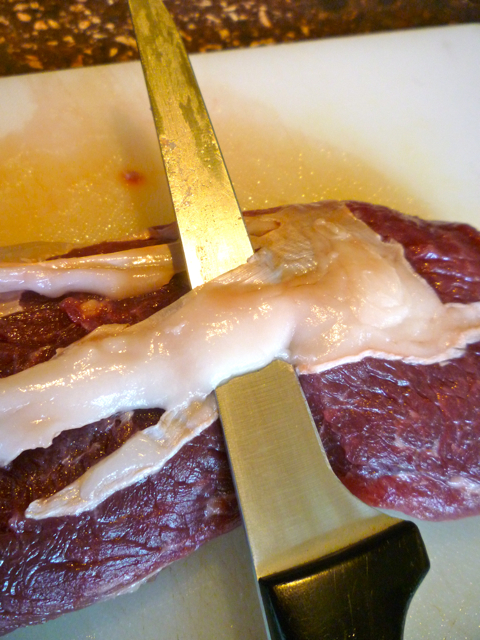
One note on cooking goat, there is a silver skin that should be removed prior to cooking. Silver skin is a thin membrane with a silvery sheen. It does not break down during the cooking process, and can be a bit tough, so is best removed.  This is quite easy to do with a sharp knife. Stick the blade of a thin knife under the middle of the silver skin, making a slit. Slide your knife toward the end of the silver skin, pulling up a bit while pushing forward. The silver skin should come away from the meat underneath in a long strip. Turn the meat 180°, and do the same to the other side. Continue until all the silver skin has been removed. If your meat is frozen, removing the silver skin becomes even easier if you do it before the meat has completely defrosted.

remove silver skin bike wine tour italiaoutdoorsfoodandwine
Removing silver skin

This recipe would work with any meat, especially leaner cuts like venison, buffalo, and elk. It was a very flavorful meat, a bit chewier frankly than a steak, but we don’t use (or even have) steak knives, and was easily cut with a regular table knife. I definitely will be returning for more!

Capretto alla Tirolese

2 lbs. goat strip steaks
2 bay leaves
7 juniper berries
4 whole cloves
Pinch fresh thyme leaves
2 cups red wine, preferable Lagrein
1 cup vinegar
1 tablespoon butter
1 tablespoon olive oil
1 large onion, thinly sliced
1/2 cup heavy cream, acidulated with 1 tablespoon lemon juice, or sour cream

Remove the silver skin from the steaks, and place in a sealable plastic bag.

Combine the bay leaves, juniper berries, cloves, thyme, red wine and vinegar in a small bowl. Pour over the goat, seal the bag and refrigerate. Marinate for up to 24 hours.

Preheat the grill to medium.

Place the butter and olive oil in a medium saute pan, and heat over medium high heat. When the butter is melted and hot, add the onions and cook until softened and beginning to brown, about 10 minutes.

Remove the goat from the marinade, and place the steaks on a sheet pan. Season with salt and pepper.

Posted in Goat, Travel, Trentino Food, Uncategorized | Tagged , , , , , , , , , , , , , , , , , , , , , , , | Leave a comment

Baccala Mantecato alla Vicentina, and House-Cured Salt Cod

baccala mantecato bike tours italy italiaoutdoorsfoodandwine
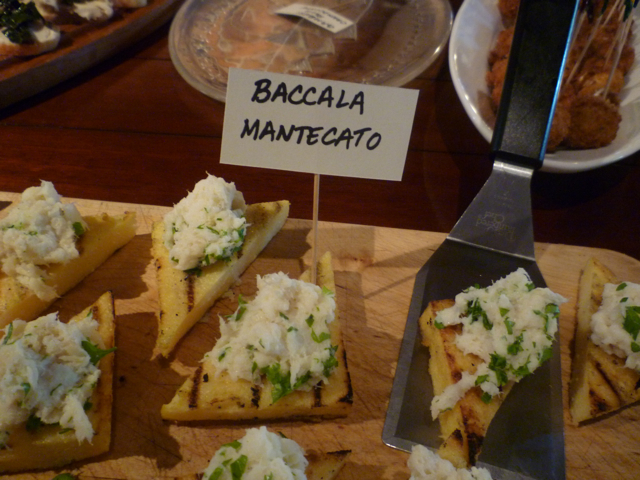
Baccala Mantecato

One of the most traditional dishes of the Veneto region are various versions of baccala. You will find baccala on the menu in restaurants all over Venice, from the small hidden bacari (wine bars) to the most elegant ristorante. It’s a local specialty which we see almost daily on our biking adventures in the area.

Recipes with baccala are found in almost every region in Italy. Outside of the Veneto, baccala is similar to the brandade found in France, and made with salt cod, cod that has been salted and dried. In the Veneto, however, salt cod is not used in their baccala. Instead, they use stoccafisso (stockfish), which is cod that has been air dried as they hang on sticks – hence the name – and not salted. It is much firmer than salt cod, and requires several days of soaking to rehydrate.

baccala at our bike tours italiaoutdoorsfoodandwin
Baccala on our Italy bike tours

The use of stoccafisso in this region has its’ origins far back in history. In 1432, an expedition led by the Venetian captain Pietro Querini was stranded on one of the island Lofoten, off the coast of Norway. Querini returned from his travels with the local specialty, stockfish. In this Catholic country, the use of stockfish became a popular and cheaper way for the poorer inhabitants to refrain from the consumption of meat during fast days, as fresh fish was expensive. In this way, dishes that use stockfish, such as baccala, made their way onto the tables of the Veneto. The dish is so popular in this region that today the majority of Norway’s stockfish production is consumed in the Veneto.

cooking cod in milk wine bike tours italiaoutdoorsfoodandwine
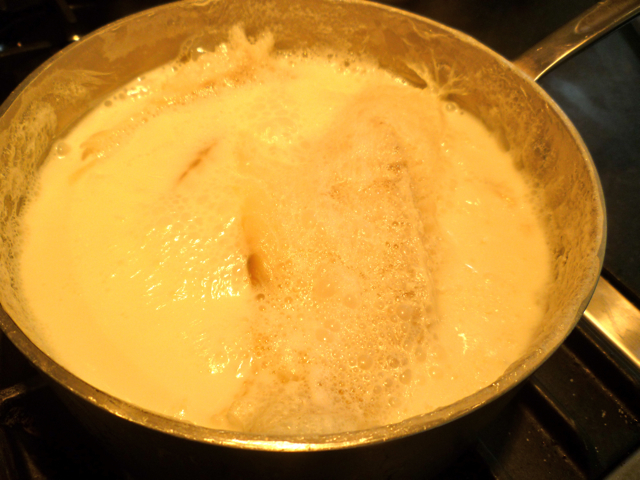
Cooking baccala in milk and olive oil

You will see various versions of baccala during a trip to the Veneto. In Venice, you will see baccala alla veneziana, which is made only with olive oil. In Vicenza, a city in the Veneto just west of Venice, you will see baccala alla vicentina, which uses milk and olive oil, or sometimes just milk. You will also see baccala mantecato. Mantecato comes from the verb mantecare, to beat or whip, which refers to the process of beat the fish to make the baccala. So you may see baccala mantecato alla vicentina, or alla veneziana.

salted cod custom bike tours italiaoutdoorsfoodandwine
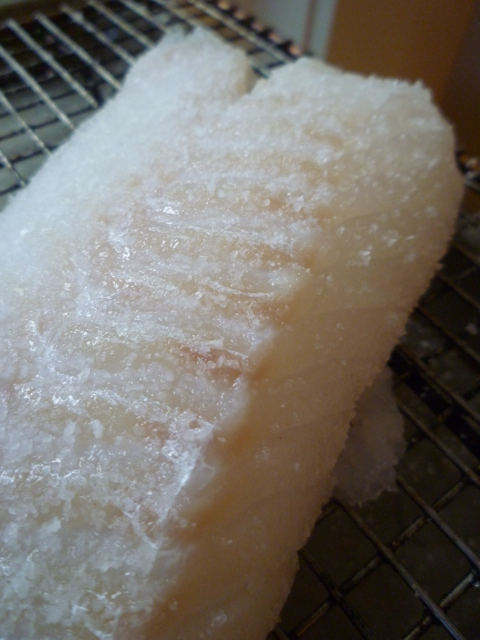
Salted cod

Here in the US, I don’t find stockfish. But in New England, I have made my own salt cod using fresh local cod on several occasions. I use this as a substitute for stockfish when I make baccala. It’s easy, and if you start with very fresh cod, won’t smell up your refrigerator. This recipe is adapted from Judy Rodger’s cookbook, The Zuni Cafe Cookbook.

House-Cured Salt Cod

2 pounds fresh skinned cod fillet
3 tablespoons kosher salt

Rinse the cod fillet under cold water, and press it with paper towels to dry. Salt the fish with the kosher salt – 1 1/2 tablespoons per pound. Sprinkle a bit more salt on the thicker center than on the edges and tail. If the center section is thicker than 1 1/2 inches, cut a 1/2 inch slash in the thickest section and salt inside this to make sure the salt will penetrate the fish evenly.

Place on a stainless steel rack, and place this on a sheet pan to catch any drips. Cover with another sheet pan, placed upside down. Whatever you use as a cover, make sure it does not touch the fish. Refrigerate and cure for up to 7 days. You can pour any drips off each day. If you keep the fish for longer than 5 days, you should lift out the fillet, rinse and dry the rack, and lightly resalt.

To desalt the cod, rinse it under cold water, and then soak it in plenty of fresh cold water.  Refrigerate. If the cod was salted for only 24 hours, allow 4 to 8 hours to desalt it. For longer cures, allow 24 hours, changing the soaking liquid twice. After the soaking, the texture should resemble the texture of fresh cod, rather than the firmer texture it took on after salting.

grilling polenta cycling dolomites italiaoutdoorsfoodandwine
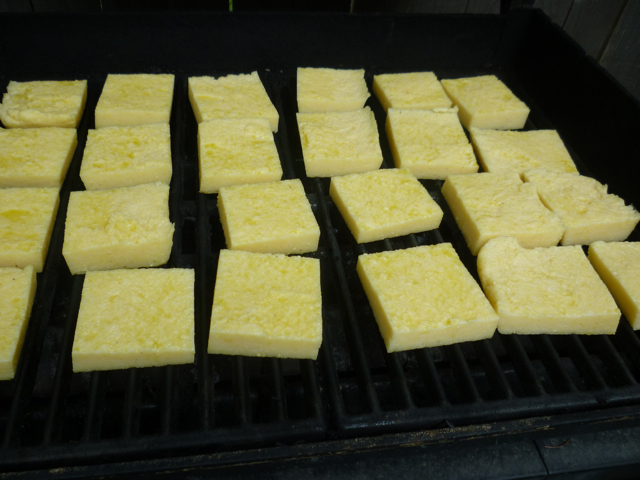
Grilling polenta

I made baccala recently for a cicchetti party I hosted, featuring lots of delicious little snacks I’ve enjoyed in Venice. I used my own salt cod, and adapted a recipe from La Cucina: The Regional Cooking of Italy. I served it with its’ traditional pairing, grilled polenta.

Baccala Mantecato alla Vicentina

2 pounds salt cod, soaked for two days
5 cups milk
3/4 cups extra-virgin olive oil
Salt and white pepper

Place the fish in a pot with the milk over medium heat. When the milk begins to take on a little color from the fish, add the olive oil. Cook and reduce the liquid. When the mixture begins to dry out, beat with a wooden spoon or a potato masher to break up the fish. You want a dense, flavorful mixture. Season with salt and pepper.

Posted in antipasti, Fish, Travel, Uncategorized, Veneto Food | Tagged , , , , , , , , , , , , , , , , , , , , , , , | Leave a comment