Ajo Blanco – Exploring South America with Newburyport Wine Club

ajo-blanco-newburyport-wine-club

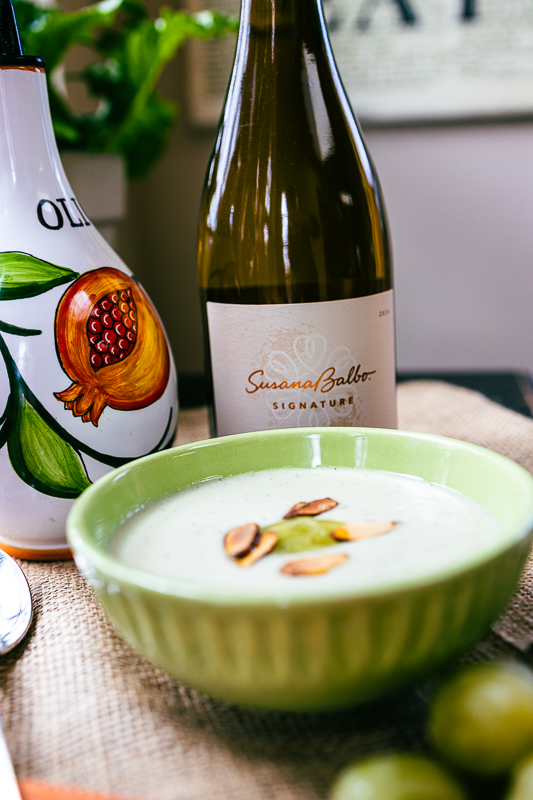
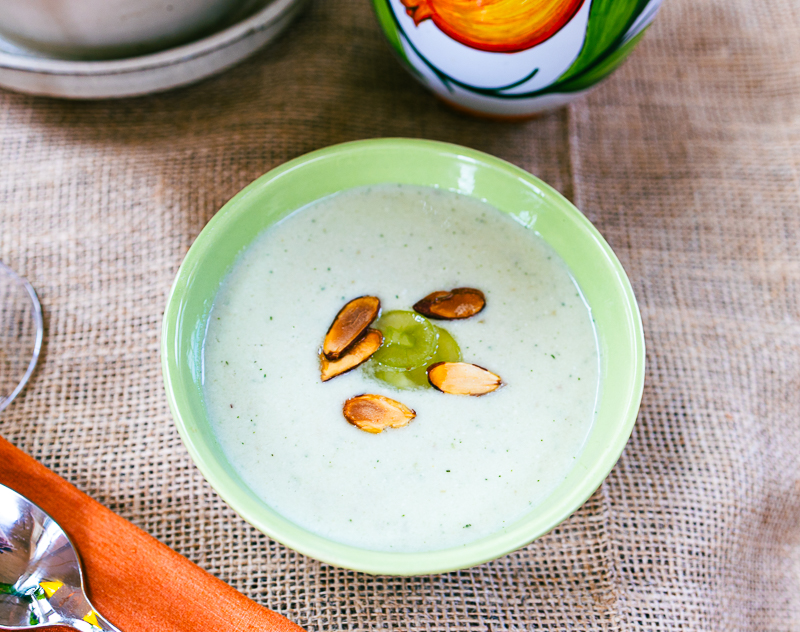
We referred to this as “white gazpacho” when we served this during our South America Uncorked evening. But in South America, Ajo Blanco is the cooler, sophisticated older cousin of the famous red tomato soup we all know and love. Dating all the way back to the Moorish influence in Southern Spain, it’s a velvety, pale concoction that achieves its luscious creaminess without a single drop of dairy, relying instead on a puree of blanched almonds, garlic, and soaked bread. A splash of grassy extra-virgin olive oil and a sharp hit of sherry vinegar bring the drama, turning what looks like a simple bowl of milk into a savory, nutty concoction that hits like a refreshing Mediterranean breeze on a sweltering July afternoon.

While the ingredients list might sound like a strange pantry raid, the magic happens in the garnish. In a move that sounds wrong but tastes incredibly right, the traditional topper for this chilled soup is a handful of sweet, juicy green grapes. This sweet-and-savory high-wire act is exactly what makes the dish a cult favorite; the burst of fruit cuts right through the rich almond base and the pungent bite of raw garlic. It is essentially the culinary equivalent of wearing a crisp white linen shirt while eating a handful of salted nuts—effortlessly elegant, slightly salty, and undeniably cool.

Ajo Blanco – White Gazpacho
Serves 4

2-3 ounces bread, such as day-old baguette, crust removed and roughly torn
1 cup blanched almonds
1 cup green grapes
¼ sweet onion, roughly chopped
2 garlic cloves, roughly chopped
1/2 jalapeno, seeds removed and sliced
1 cucumber, peeled, seeded and chopped
1 teaspoon sherry vinegar
Kosher salt and pepper to taste
Extra-virgin olive oil
1 cup Water to help thin soup (amount may vary)

Tear up the bread and soak in just enough water to cover for about 10 minutes.

In a blender, very finely chop the almonds.

Add the wet bread to the almonds in the blender, as well as the grapes, onion, garlic, chile, cucumber, vinegar, salt and pepper, vinegar and a good drizzle of olive oil.

Add 1/4 cup of water and blend until everything is incorporated. Add more water as needed to obtain your preferred consistency. Taste, and adjust seasoning as desired, such as adding more salt or vinegar.

Transfer the soup to a storage container, and chill in the refrigerator for at least 2 hours.

When ready to serve, garnish with mint, sliced green grapes, and toasted slivered almonds. You could add frozen grapes to the chilled soup to keep it cold. It should keep for a couple of days in your refrigerator.

We paired our Ajo Blanco with the 2024 Susana Balbo Signature “Brioso” White Blend. “Brioso” is a sophisticated architectural feat from Argentina’s first female enologist. A masterful blend of Torrontés, Semillon and Sauvignon Blanc, this wine offers a luminous profile of white flowers, citrus zest, and a distinct flinty minerality born from the Uco Valley’s limestone-rich soils. It is the wine’s delicate balance of weight and vivacity that makes it an inspired partner for Ajo Blanco. As the wine’s subtle herbaceous notes bridge perfectly to the grassy extra-virgin olive oil swirled atop the bowl, the finish remains clean and saline—much like the refreshing burst of a green grape garnish—ensuring that the rich nuttiness of the soup never feels heavy.
ajo-blanco-newburyport-wine-club


Susana Balbo is widely regarded as the “Queen of Torrontés” and a trailblazing force who fundamentally reshaped the landscape of Argentine viticulture. In 1981, she shattered a massive glass ceiling by becoming the first woman in Argentina to graduate with a degree in enology, often standing as the lone female professional in a fiercely male-dominated industry. Her early career took her to the remote region of Salta, where she revolutionized the Torrontés grape, transforming it from a rustic table wine into a sophisticated, world-class aromatic white. Beyond the cellar, Balbo has been a tireless global ambassador, serving three terms as the President of Wines of Argentina and eventually venturing into politics as a national congresswoman to advocate for women’s empowerment.
Posted in Uncategorized | Leave a comment

Chimichurri – South America Uncorked with Newburyport Wine Club

chimichurri-newburyport-wine-club

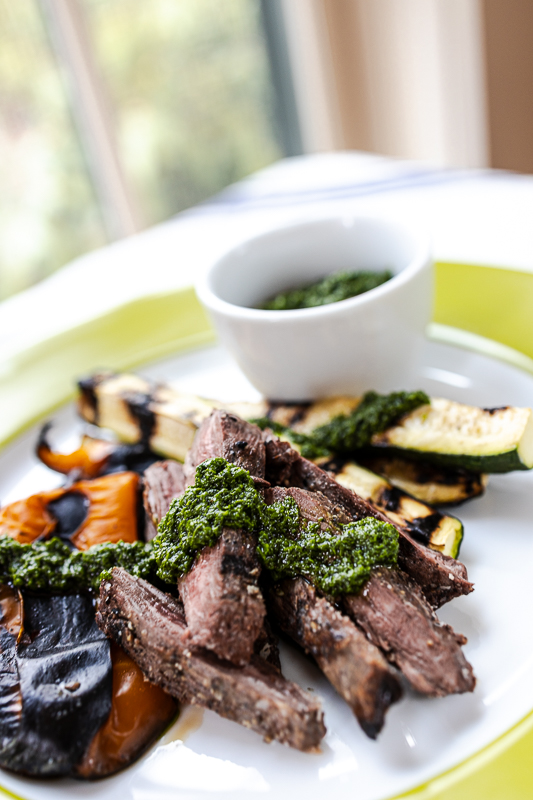
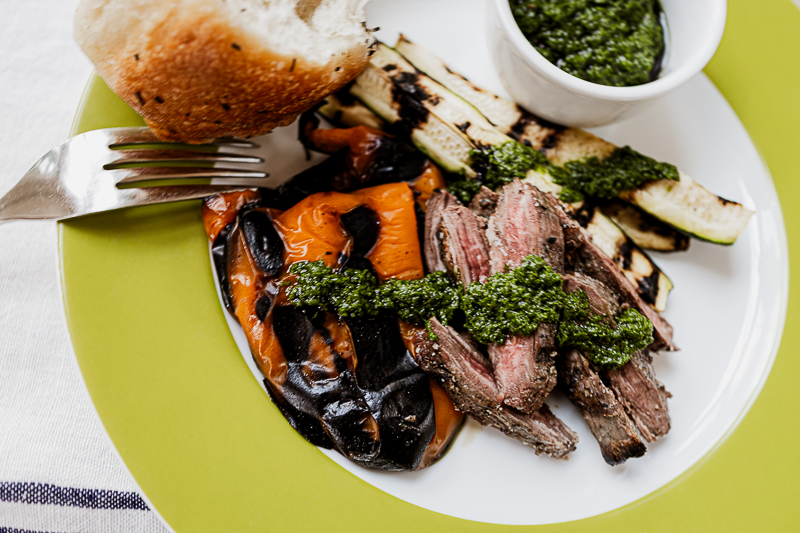
Chimichurri is the vibrant, punchy heart of the South American barbecue tradition asado, serving as the indispensable partner to grilled meats from the Argentine pampas to the churrascarias of Brazil. This uncooked sauce is a bold emulsion of finely chopped flat-leaf parsley, minced garlic, dried oregano, and a kick of red chili flakes, all suspended in a zesty bath of oil and red wine vinegar. While its base is simple, the flavor profile is complex: the acidity of the vinegar cuts through the richness of fatty beef, while the herbs provide a grassy freshness that balances the smoky char of the grill. Traditionally, it is prepared by hand with a knife or a mortar and pestle to maintain a rustic, textured consistency, as pureeing it into a smooth paste is considered a culinary sin in its home regions. But let’s be real – it still tastes damn good made with a blender.

The history of chimichurri is as colorful as the sauce itself, steeped in the lore of the gauchos (cowboys) who roamed the vast grasslands of Argentina and Uruguay in the 19th century. One popular legend attributes the name to an Irish immigrant named Jimmy McCurry, who allegedly created the sauce as a substitute for the Worcestershire sauce he missed from home; over time, “Jimmy’s Curry” supposedly morphed into “chimichurri.” More linguistically plausible theories suggest it stems from the Basque word tximitxurri, meaning a “hodgepodge” or “mixture,” brought over by the significant wave of Basque settlers. Regardless of its etymological roots, the sauce remains a symbol of national pride and communal gathering, evolving from a practical way for wandering cowboys to flavor their campfire meals into a globally recognized masterpiece of South American cuisine.

chimichurri-newburyport-wine-club

Chimichurri

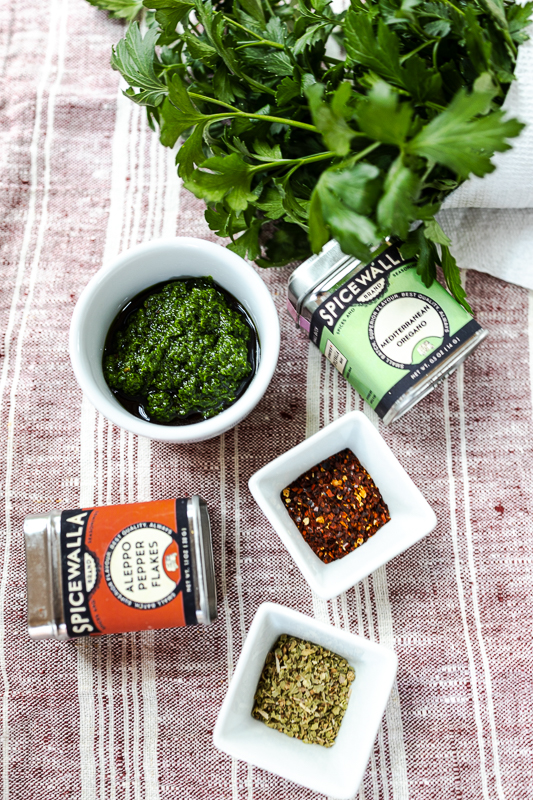
Consider this a flexible blueprint designed for experimentation! I rarely stick to the script myself—depending on the season, I’ll swap in fresh oregano for the dried, or pivot to bright basil or cilantro. If you’re a garlic lover, go ahead and toss in three cloves; if you’re craving a kick, dial up the Aleppo pepper (a wonderfully smoky crushed red chili)., or add a jalapeño! I encourage you to tweak the ratios to complement whatever you’re cooking. It’s a beautifully versatile companion for everything from charred vegetables to grilled meats.

1/2 cup olive oil
2 cloves garlic, chopped
1/2 cup parsley
3/4 teaspoon dried oregano
1 teaspoon red wine vinegar
1 teaspoon coarse salt
Pepper, to taste
1/4 teaspoon aleppo pepper flakes

Place the olive oil and garlic in a blender. Puree until the garlic is emulsified into the oil.

Add the parsley and oregano to the blender, and blend until everything is a fairly smooth puree. Add more olive oil if needed to obtain the consistency you wish.

Add the vinegar, salt and pepper to taste.

Transfer to a bowl, and mix in the aleppo pepper flakes. Allow to sit for at least two hours, so the flavors release into the oil.

This will keep for a few days in the refrigerator. Bring to room temperature before serving, as the oil will solidify a bit in the refrigerator.

You can also freeze this in small plastic bags, or ice cube trays, to use next time you grill.

chimichurri-newburyport-wine-club

For our South America Uncorked tasting, Gary selected the 2023 Bodega Garzón Tannat Reserva from the coastal hills of Maldonado, Uruguay. This wine is a masterclass in why Tannat has become Uruguay’s flagship grape. This vintage is deep purple and vibrantly aromatic, bursting with notes of fresh plums, raspberries, and a distinct mineral “grip” from the estate’s ancient granite soils. On the palate, it is full-bodied and powerful, yet it possesses a surprising freshness and “juicy tension” that sets it apart from the heavier, more rustic Tannats of the past.

When it comes to the table, this wine and chimichurri-topped grilled meat are a textbook regional pairing for two scientific reasons. First, Tannat is famously high in tannins; these molecules bind to the proteins and fats in a charred steak, effectively “cleansing” your palate with every sip. Second, the wine’s natural acidity and hints of balsamic and spice mirror the zesty red wine vinegar and dried oregano in the chimichurri. Instead of the sauce overpowering the wine, the two dance together—the chimichurri heightens the wine’s fruit profile while the Tannat provides the structural backbone to stand up to the bold, garlicky punch of the sauce.

Posted in Uncategorized | Leave a comment

Cacio e Pepe – 4 Pastas From Rome

rome-pasta-cacio-e-pepe-wine-tours

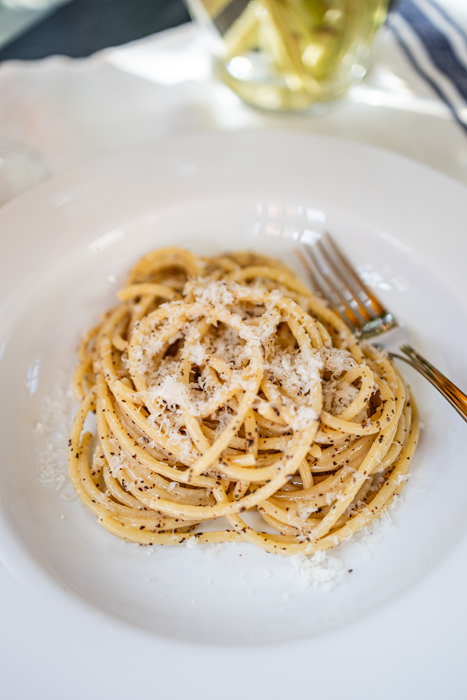
A recent trip to Italy ended in Rome, which I hadn’t visited in many years. I indulged in pasta, pasta and pasta, as there are several pasta dishes that appear on most Roman menus, and the local chefs pride themselves on their careful preparation of these seemingly ‘simple’ pastas. All require only a few ingredients, and can be prepared in 30 minutes or so. My next few posts follow my efforts to discover the secrets to master the preparation of these dishes.

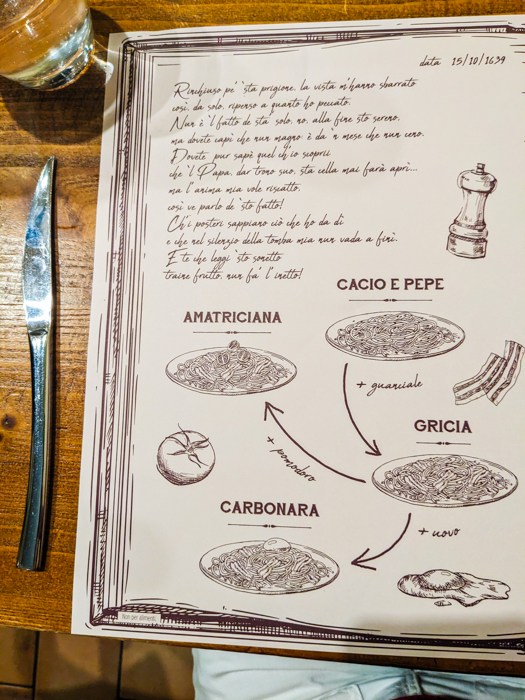
My traveling companions were not familiar with these pasta dishes, as it was their first trip to Italy. So helping them keep the four pastas straight, associating each name with the ingredients, was my goal. At our last dinner, we sat down to a table set with placemats that provided a great visual to describe the four – I only wish we had found it at our first meal, and not our last!

rome-pasta-cacio-e-pepe-wine-tours

As you can see, there is overlap with the ingredients of the four pastas. Cacio e Pepe is the OG here, pasta, pecorino and pepper. Add guanciale, you get Gricia. Add guanciale and eggs, Carbonara. Add guanciale and tomatoes, you have Amatriciana. No more than 5 ingredients in any of the four.

The tricks of the trade to preparing these four dishes overlap as well. One of the cookbooks I turned to to learn about these techniques is “Autentico: Cooking Italian, the Authentic Way”, by Rolando Beramendi. In his description of Cacio e Pepe, he states: “When teaching this recipe, I tell my students that if they can master this dish, they are well on their way to becoming pasta experts. It may seem like a simple dish to prepare, but precise timing and attention to detail are essential to its success.”

So without further ado, let’s learn the tips and techniques that make these recipes and become pasta experts:

rome-pasta-cacio-e-pepe-wine-tours


Ingredients, Ingredients, Ingredients

This is true for just about every Italian recipe. When you are creating a dish from only a few ingredients, each need to shine. For Cacio e Pepe, there are only 3.

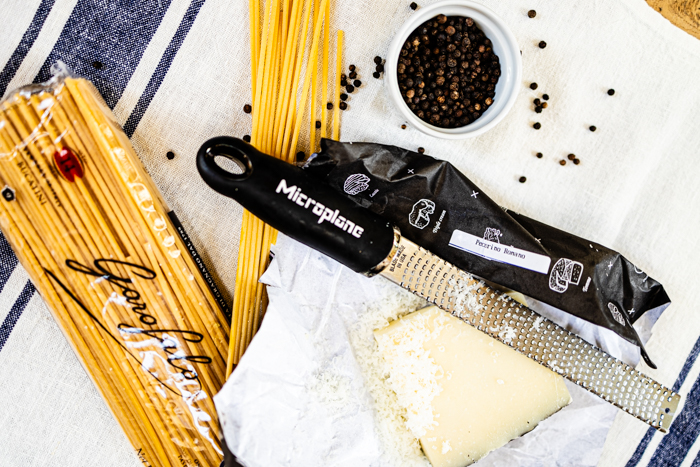
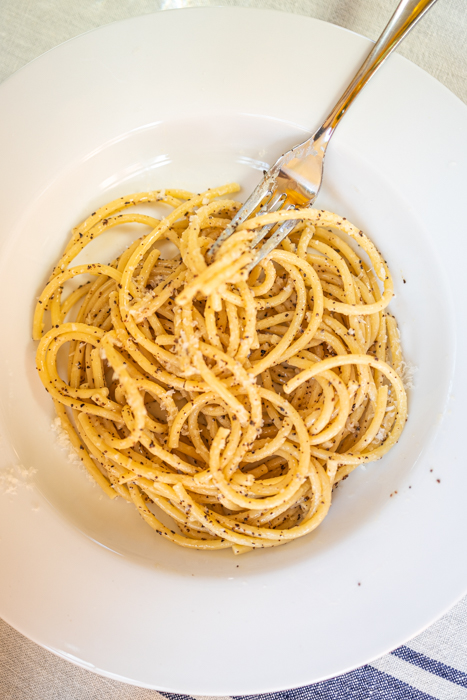
Pasta: The typical shape used for this dish is hand-made tonnarelli pasta (a very thick, square spaghetti) something you won’t easily find outside of Rome. Most recipes will call for spaghetti. I like to use bucatini – slightly thicker than spaghetti, easily found in the US.

An artisanal type pasta is best, one that is sightly rough on the outside. Mass-market producers use teflon-coated dies to extrude pasta at a high speed, the result is a smooth exterior. Traditional dies are brass, and leave a rough texture on the exterior of the pasta. Your lovely sauce will stick better to the pasta if the surface is rough.

These pasta sauces are not meant for fresh pasta, which is typically egg based. Egg pastas are too absorptive and lack the structure required for these dishes.

rome-pasta-cacio-e-pepe-wine-tours

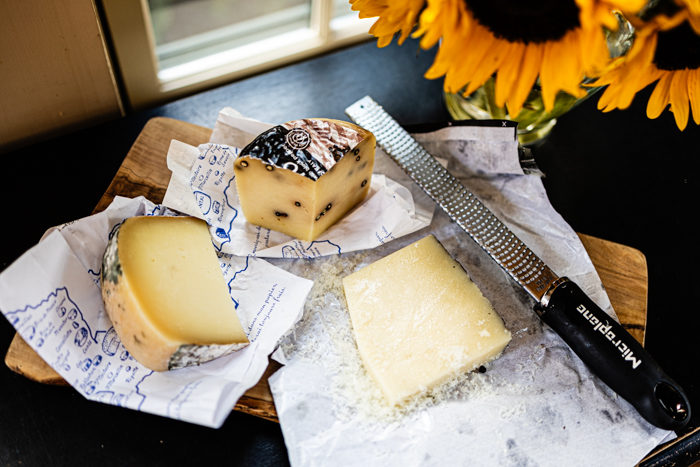
Pecorino: More specifically, Pecorino Romano. The cheese is so important to this dish that it is the source of the name, “Cacio” is the local dialect for cheese. Pecorino is a goat cheese, with many types produced in several regions like Tuscany and Lazio. It is 3x more flavorful than Parmigiano Reggiano!

Look for a quality aged pecorino imported from Italy. Younger versions, and many American produced versions will not melt correctly and your dish will not work. If you cannot find a Pecorino Romano, I have successfully used other Italian Pecorinos, like a Pecorino Pepato from Sicily (which conveniently contains black pepper), and an aged goat cheese from Calabria.

You can use an authentic Parmigiano Reggiano for a nice dish, but it won’t have the barnyard “punch” you’ll get with a nice Pecorino. Barnyard may not sound like appealing, but done right, it is 🙂

Grate your pecorino as finely as possible, I prefer to use a microplane to grate the cheese for this dish.

Pepper: Black Tellicherry peppercorns, toasted in a pan and then crushed in a mortar and pestle is the tradition. I used freshly cracked Tellicherry peppercorns when a mortar and pestle is not at hand (or I’m lazy.) I’ve also used some wonderful coarsely cracked peppers like the Salt Sisters Applewood Smoked Black Pepper. But some, like Schezuan, might be too powerful. In any case, you want high quality options, not the finely ground pepper you bought some years back and found stuck in the back of your spice drawer.

A few more tips:

Gather and prep all your ingredients before starting the dish. The process goes quite quickly when it begins, and you don’t want to overcook your pasta while grating your cheese or grinding the pepper.

Reserving the pasta cooking water is key. Pasta water consists of water and starch granules. What happens when you add a starch like flour to a sauce? It thickens, but not only does it thicken, it acts as an emulsifier so a little pasta water can transform a sauce with a bit of oil in it into a smooth creamy sauce that coats your pasta. I have lost count of the number of times I forgot and drained all the cooking water down the drain. I now always set a 2-cup measure out by my pasta cooking pot, and scoop out 2 cups before I drain. I do this step for every pasta I cook, whether the recipe calls for it or not. I have found that even a tomato based or meat based sauce can benefit from a bit of pasta water occasionally. Create your method to remember this important step!

Do not add oil to your pasta water. It will counteract all of your efforts to create a sauce that adheres to the pasta.

Warm the pasta bowls. This can help your creamy sauce creamy as it is consumed.

Enjoy with a nice robust red. This dish, when made with a robust pecorino, can stand up to a robust red, like a nice Chianti Classico.

rome-pasta-cacio-e-pepe-wine-tour

Cacio e Pepe

Serves 6 as a first course, 4 as a main.

1 pound spaghetti
1/2 cup grated pecorino (pecorino Romano is best)
1 tablespoon black pepper (toasted and ground in a mortar if possible)
Kosher salt

Bring a large pot of salted water to a boil. Add the pasta, stirring occasionally as it softens to keep the pasta from sticking to the bottom, or to each other. From time to time, grab a strand and taste, until the spaghetti is al dente, about 10 minutes. Remove 2 cups of the cooking water and reserve. Turn the heat to low.

Drain the pasta in a colander and return it to the pot, off the heat. Add about half the cheese to the warm spaghetti. Toss the spaghetti to coat it with the cheese as it melts. Add about 1/2 cup of the cooking water, and continue to mix, adding the remaining cheese and more water as necessary until the spaghetti is evenly coated and creamy.

Sprinkle the pepper over the top and toss until the pepper is evenly distributed. Taste and season with salt and more pepper as necessary. Serve immediately in warm pasta bowls with extra cheese and pepper on the side.

rome-cacio-e-pepe-wine-tour
Just a photo from my trip to Rome.
Posted in Cheeses, Pasta, Uncategorized | Tagged , , , | Leave a comment

Negroni Sbagliato

The most anticipated hour of each day on our Italy tours is the aperitivo hour. The aperitivo is a popular Italian pre-dinner ritual of enjoying light drinks and appetizers while socializing with friends and family. In the early evening, Italians will gather at a bar to enjoy prosecco, wine or cocktails, accompanied by snacks like olives, cheese, chips and various small bites. Beyond its gastronomic role to whet the appetite, the aperitivo is a moment for relaxation and socialization, encouraging people to unwind before the main meal. This social custom has spread beyond Italy, with many cultures adopting their own variations of “cocktail hour” with drinks, food, and good conversation. One of the crucial elements of Italy’s dolce vita!

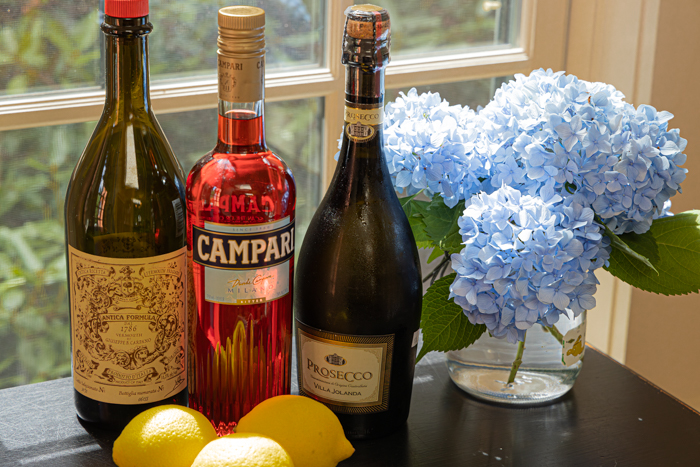
Italy produces a huge array of alcoholic liqueurs designed to create unique cocktails for the aperitivo. Many of these have a bitter flavor, which Italians love. Probably the best known outside of Italy is Campari. Campari is a potable bitter, a drinkable bitter as opposed to aromatic bitters such as Angostura. This iconic Italian aperitif dates back to 1860 when Gaspare Campari, a bartender from Novara, Italy, first concocted this vibrant red elixir by infusing a base of alcohol and water with a proprietary mix of herbs and fruits, including rhubarb, orange, and a type of sour orange known as chinotto. The bitter infusion is then sweetened with sugar in the form of simple syrup and stiffened with alcohol according to its eventual destination: 24% for the US, 25% for Italians.

Campari gained popularity in the late 19th and early 20th centuries, becoming a staple in Italian cafes and bars. The brand’s signature cocktail, the Negroni, further solidified its status around the world. Over the years, Campari has evolved into a global brand, with its distinctive taste and bold marketing campaigns ensuring its enduring presence in the ever-expanding world of spirits and cocktails.

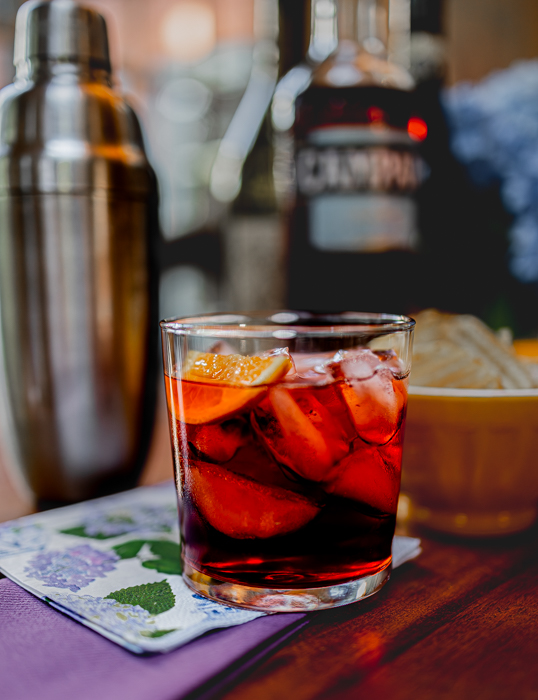
One variation of Negroni that I’ve recently developed a liking for is a Sbagliato, which I think of as a cross between a Negroni and a Spritz. According to Marisa Huff, in her book Aperitivo, the Sbagliato was born when the owner of Milan’s Bar Basso reached for the gin while making a Negroni and came up with sparkling wine. After scolding the bar back for mixing up the bottles, he tasted the mistaken cocktail only to discover he’d come up with a simple, super-drinkable twist on a classic: the Negroni Sbagliato (sbagliato is Italian for “mistaken”).

Negroni Sbagliato

2 ounces Campari
2 ounces sweet vermouth
2 ounces prosecco
Orange slice

Fill a rocks glass with 3 or 4 ice cubes. Add the Campari and vermouth, then stir with a bar spoon. Top with the sparkling wine and stir again. Garnish with an orange slice.

Posted in cocktails, Uncategorized | Tagged , , , , | Leave a comment

South African-Inspired Butternut Squash Soup with Crème Fraîche and Dukkah

This recipe was created for our Newburyport Wine Club, where we create events to experience different wines and to develop an appreciation for pairing foods with wines. A recent event focused on South African Wines, “Where Old World Meets New World”. When our themes focus on a region, I always return to the wine pairing adage, “If it grows with it, it goes with it”. So traditional South African recipes were our inspiration for the evening’s menu.

Butternut squash soup has seamlessly woven itself into South African cuisine, becoming a beloved dish cherished for its comforting flavors and wholesome richness. This creamy concoction embodies the fusion of local ingredients and the many culinary influences found in South Africa. South African chefs often infuse the soup with aromatic spices such as coriander, cumin, and nutmeg, lending it a delightful depth of flavor. It’s not uncommon to find variations featuring indigenous ingredients like rooibos or ginger, adding a unique twist to this traditional dish.

I had expert help developing the variation we created for our wine club. We gathered at our sommelier Gary Sullivan’s lovely home to try the menu for the evening with the wines he personally selects for our events. Our collaborator Karen Shernan, owner of Affimata, was there, and our great friend, chef and restaurateur Jody Adams. I brought the squash, vegetable broth, lots of various spices and other ingredients, and we worked together over the stove, tasting and adjusting, to create a perfect pairing for a wonderful Chenin Blanc.

Chenin Blanc has a storied history in South Africa, dating back to the 17th century when Dutch settlers first introduced the grape to the Cape. Initially used for brandy production, Chenin Blanc eventually found its place in wine-making, becoming one of South Africa’s signature varietals. Throughout the centuries, Chenin Blanc has seen fluctuations in popularity and production techniques, but its versatility and adaptability to diverse terroirs have ensured its lasting presence in the South African wine landscape. Today, South Africa is the largest producer of Chenin Blanc in the world, with winemakers showcasing the grape’s potential through a variety of styles, from crisp and refreshing to richly textured and complex, solidifying its status as a cornerstone of the country’s wine-making heritage.

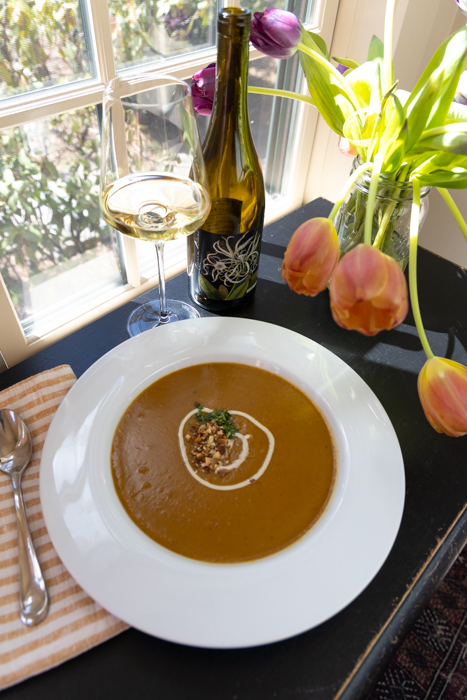
We enjoyed the amazing 2022 Botanica Wines “Mary Delany” Chenin Blanc, 100% Chenin Blanc. Botanica Wines was founded in 2009 by owner and self-taught winemaker Ginny Povall, an American who fell in love with the beautiful Cape winelands, purchased Protea Heights farm in Stellenbosch’s Devon Valley and relocated to the southern tip of Africa in 2008. With notes of orange blossom and rind, and an almost negroni-like perfume, this wine is complex and elegant, with layers of pure, concentrated pear, citrus, and stone fruit flavors, mouth-watering acidity and a tangy, mineral core.

Gary had suggested a recipe that included a roasted banana. We were all a bit skeptical of this addition, but surprisingly it worked! Not too much though!

South African-Inspired Butternut Squash Soup with Crème Fraîche and Dukkah

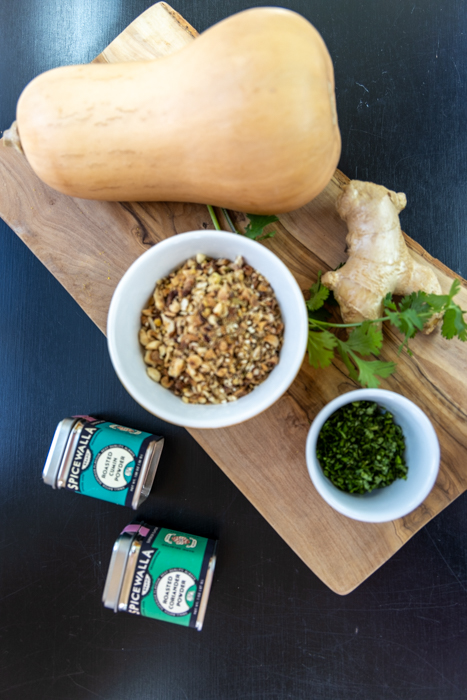
1 butternut squash (about 1.5 pounds), peeled and chopped into 1 inch cubes
2 tablespoons extra virgin olive oil
Kosher salt and freshly ground pepper
1 banana, unpeeled
4 cups vegetable stock
1 cup coconut milk
1/2 teaspoon roasted coriander seeds
1/2 teaspoon roasted cumin
1/4 teaspoon turmeric
1 teaspoon grated fresh ginger
Juice and zest of 1 lime
Optional: 1 teaspoon curry powder
Garnish: crème fraîche, dukkah, cilantro

Preheat oven to 400°F.

In a large bowl, toss chopped squash with olive oil and a bit of salt and pepper. Lay out on a sheet pan, do not crowd, so use two sheet pans if necessary. Place the banana, unpeeled, on one of the sheet pans. Place in the oven and roast until the squash is browning and tender, approximately 20 minutes. Check the banana occasionally during this time, and remove if it begins to split open.

Transfer the roasted butternut squash to a large sauce pan. Add the vegetable stock and heat over medium heat. Add the coconut milk and 1/2 of the roasted banana. With an immersion blend, blend until the entire mixture is smooth. If you prefer a thinner soup, you can add a bit more vegetable stock or water.

Add the roasted coriander, cumin, turmeric, ginger, lime juice and zest, stir to thoroughly combine. Season to taste with salt and pepper.

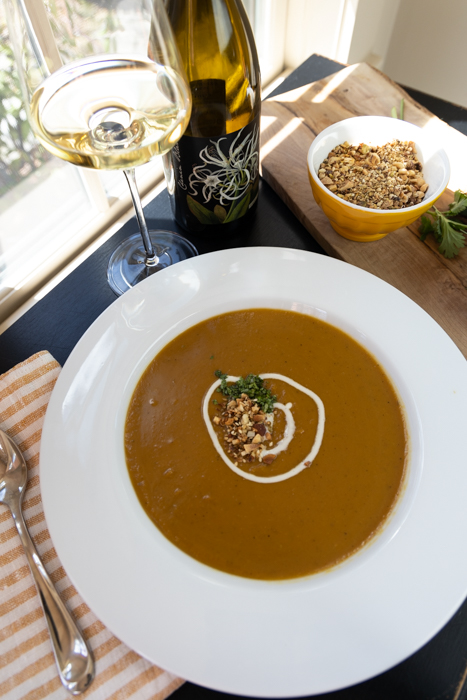
Garnish with crème fraîche, chopped cilantro anad dukkah.

Dukkah is a spice and nut mix, originally from Egypt, but now seen all over Africa. We’ll get to it in a future post.

Posted in Gluten Free, Newburyport Wine Club, Soups, squash, Vegetarian, Wine Pairings | Tagged , | 1 Comment