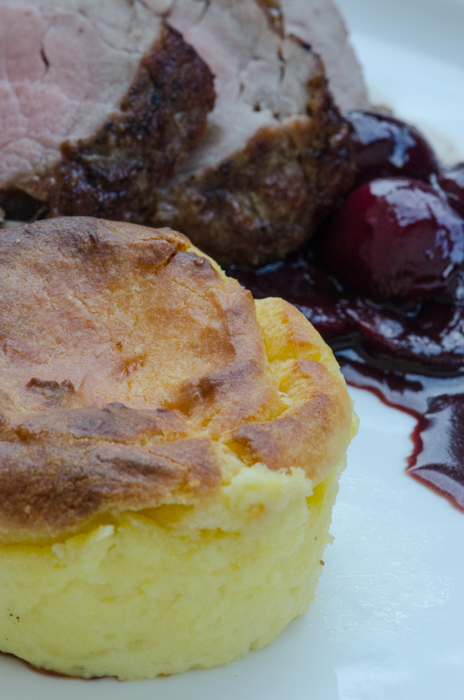
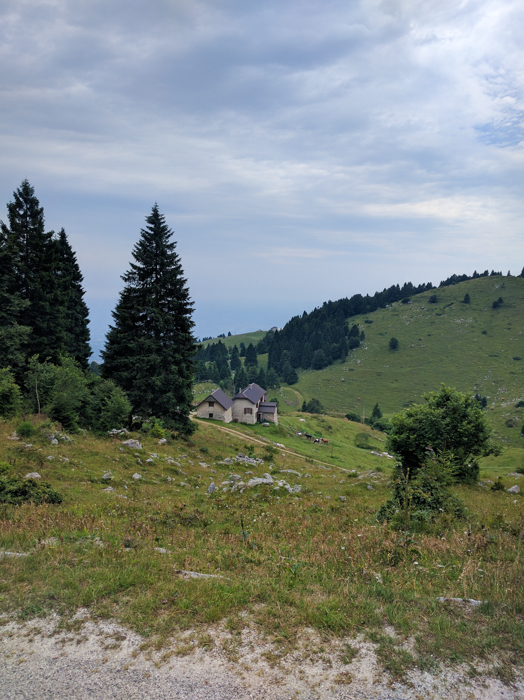
 On a private walking tour in Italy this season, we enjoyed a lovely hike with spectacular view along the Altopiano dei Sette Comuni (Plateau of the Seven Communes.) This area, located in the north of the Province of Vicenza, is rarely visited by tourists, but most are familiar with its cheese, the renowned Asiago. Although most have not experienced the real thing – producers here in the US usurp the name, but true Asiago is only produced in this area of Italy.
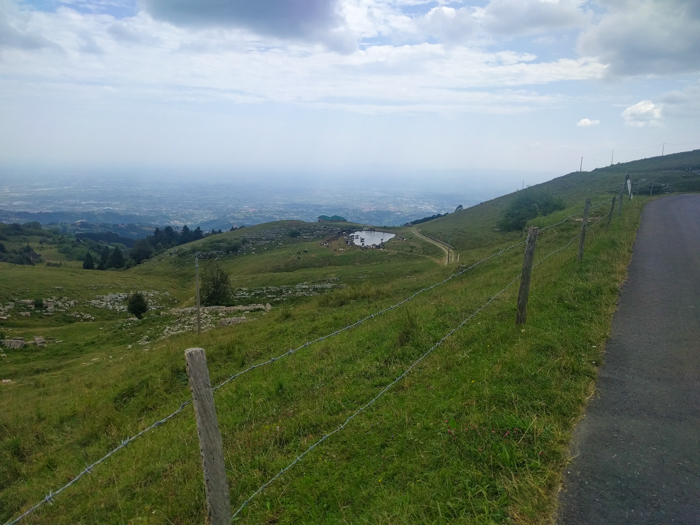 Asiago has an official Italian DOP (Denominazione di Origine Protetta) designation. The only ‘official’ Asiago is produced in this area, near the town of Asiago. Asiago’s authentic production process dates back to the year 1000, when the cheese was made with ewe’s milk. It became an important market for cheese in the early 1500s, when a large amount of woodlands in the area were converted to pasture and mountain farms. We followed a trail that wraps along a ridgeline affording us amazing views of the plains of the Veneto, passing by several traditional malghe that still today produce Asiago by these time-honored methods.
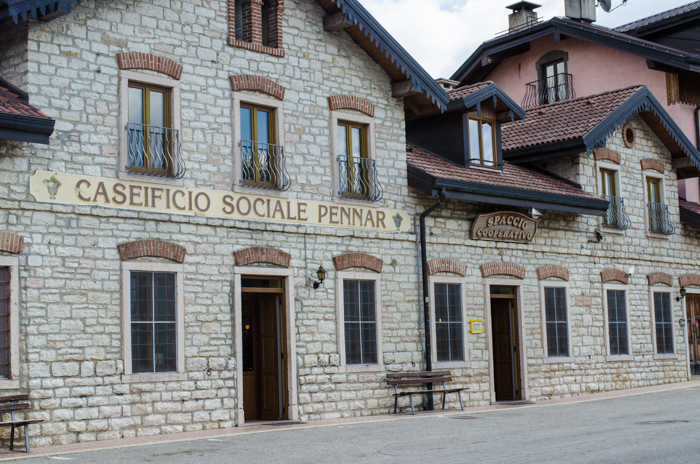
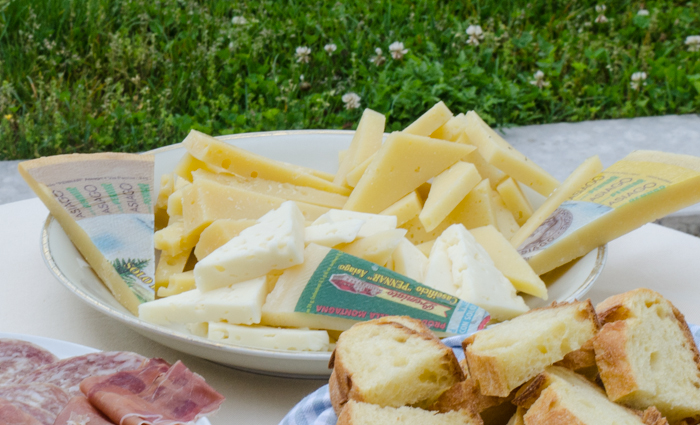 Traditionally made Asiago is referred to as Asiago d’Allevo, or matured Asiago. Asiago d’alleva is made from raw milk from Pezzata Nero and Bruno Alpina cows, Milk from the evening milking is allowed to stand overnight, then it is skimmed and combined with milk from the morning milking, which is not skimmed. Coagulation occurs at 35°C, then the soft curd is broken up and cooked twice, once at 40°C and then next at 47°C. The cooked curds are transferred into molds, and the rounds are either dry salted or wet salted in brine baths before maturing. Asiago is referred to as mezzano if it has matured for at least 3 months, and is referred to as vecchio if it has matured for a minimum of nine months. Stravecchio is aged even longer.
 The outer rind is thin, and becomes increasing brown as it matures. The inner cheese is white, semi-hard, with an even texture. The vecchio or stravecchio versions may be used for grating as the body becomes harder. The cheese also develops a fuller flavor and fragrance as it matures.
Recently, a fresh type of asiago has become increasingly popular, Asiago Pressato. It is produced in larger dairies in lower lying areas. It is made from pasteurized whole cow’s milk, the curd is first dry-salted. The curd is broken up, then cooked and drained, transferred into molds and pressed (pressato). It is matured over a period of 20 to 40 days, and is soft to the touch, with small holes in the body, and pale in color with a mild, milky, delicate flavor.
 The following recipe I’ve translated from Italian, and replaced the rabbit with something a bit easier to locate in the US – pork tenderloin. Use Asiago Mezzano for this recipe, also often called “Dolce” in Italy, as the younger aged cheese is a bit sweeter than its elder siblings.
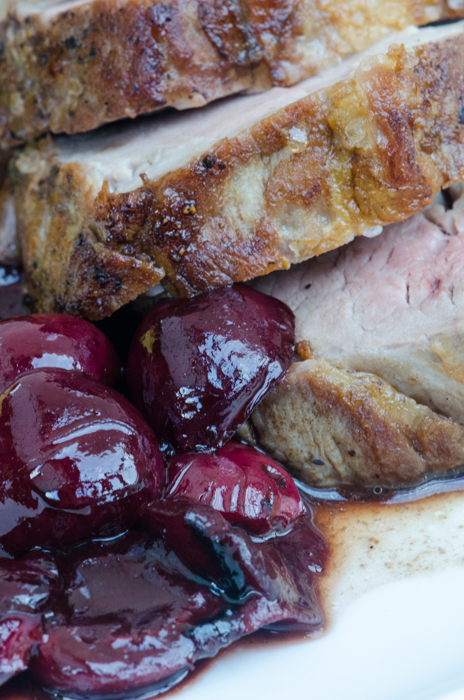 Filetto di Maiale con Spumone di Asiago Dolce
For 6 people
4 tablespoons butter
1/2 cup flour
1 cup milk, warmed in a saucepan
4 egg yolks
2 egg whites
4 ounces Asiago Mezzano, grated
Kosher salt
2 tablespoons extra virgin olive oil
Kosger salt and freshly ground pepper
2 pork tenderloin
Balsamic vinegar
2 tablespoons butter
10 ounces fresh cherries, pitted
For the spumone: In a medium saucepan over medium heat, melt the butter and mix it with the flour, stirring and cooking for a few minutes. Whisk in the warm milk, stirring until the mixture is smooth. Cook until thickened a bit, until it coats the back of a spoon. Add the Asiago, and stir until melted. Remove from heat and allow to cool slightly.
While the mixture is cooling, whip the egg whites until stiff peaks form. Now add the egg yolks into the cheese and milk mixture, stirring to combine. Then gently fold in the beaten egg whites. Season mixture with salt. Butter the inside of 6 small aluminum molds. Divide the mixture between the 6 small molds, then cook them in a water bath at 200°F for 15 – 20 minutes, until set. Remove from oven and allow to cool slightly. Remove from the aluminum molds and keep warm.
Brush the tenderloin with the olive oil, then season with salt and pepper. Heat a large saute pan over medium high heat, and place the tenderloin in the hot pan. They should sizzle as the hit the pan; if they do not, remove and let the pan heat a bit more. Sear the pork on all sides, then reduce the heat. Drizzle with balsamic vinegar, and continue to cook until it reaches an internal temperature of 130°F. Remove pork from the pan and set aside.
Pour a glass of water into the saute pan, scraping and mixing with the bits and pan juices that remain. Cook to thicken. Add the two tablespoons of butter and pitted cherries, and cook over high heat for 5 minutes.
Cut the pork into 3/4” thick slices and fan on six plates, along with the cherries. Place one spumone on each plate, and finally garnish with the sauce. Serve immediately.
 We ran our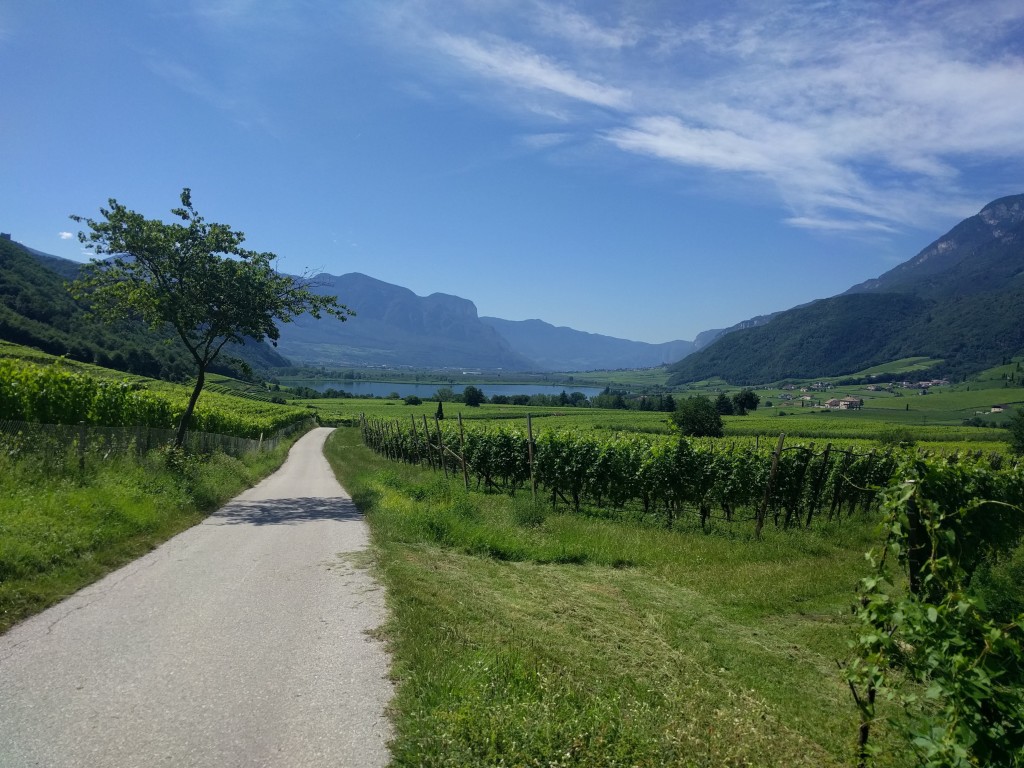
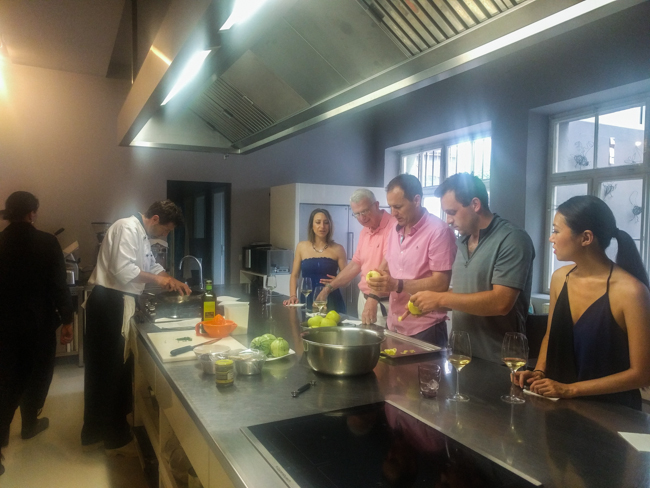 We joined Michael to learn to cook some of Sudtirol’s favorite local dishes, and a few Italian classics – this season’s menu included Gnocchi di Patate alle “Checca”, potato gnocchi with a fresh tomato sauce, Vitello Tonnato, Canederli Pusteresi su Insalata di Capucci e Rucola, and Apple Strudel. I’ll be writing articles on all of these over the winter back in my home kitchen.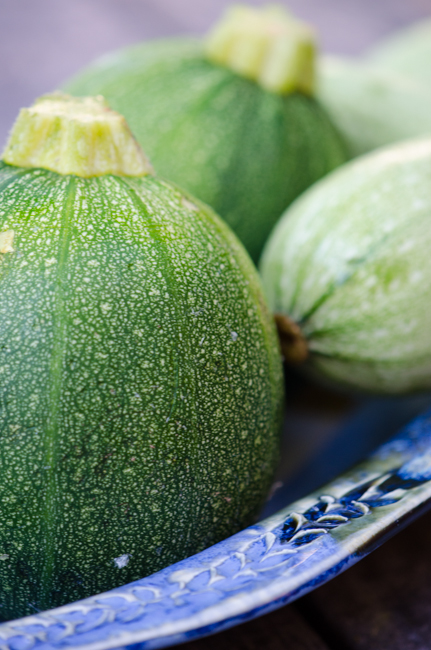
 Our
Our 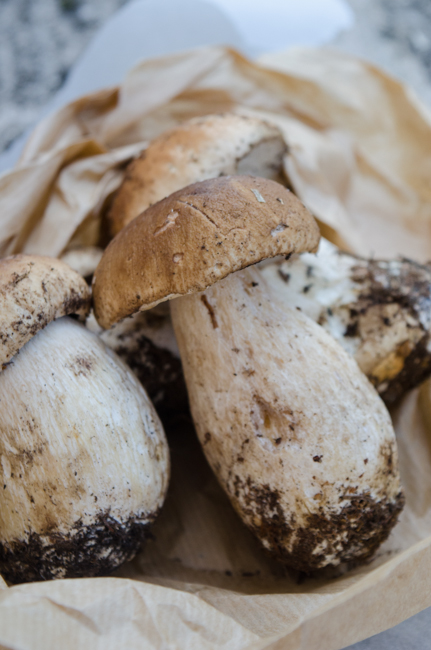
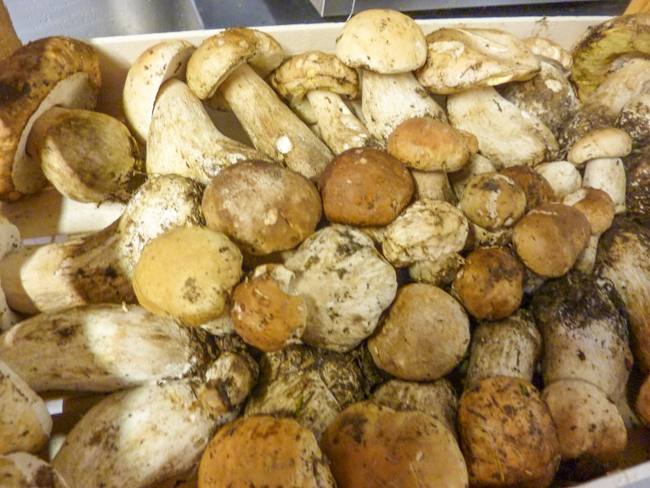
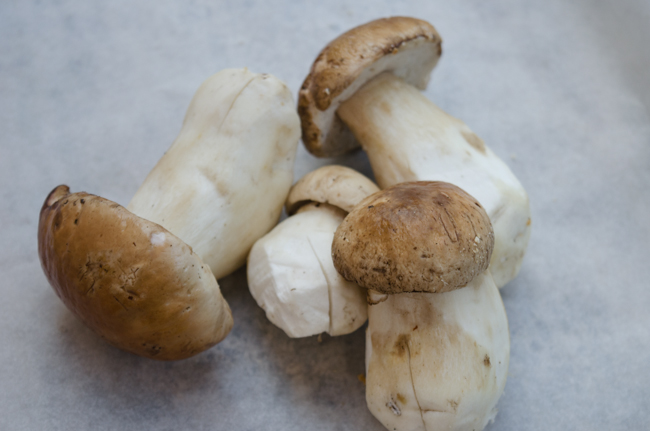
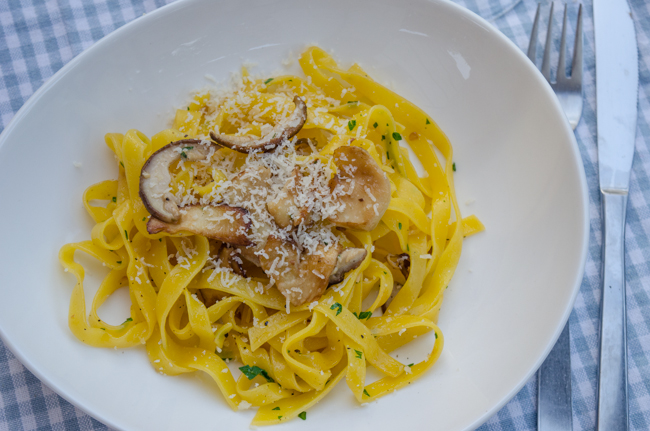
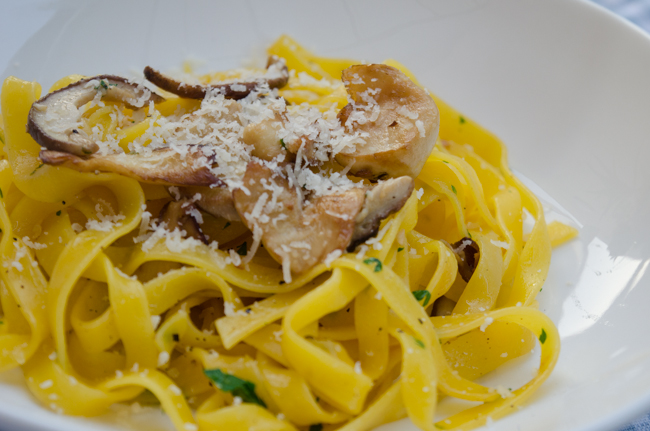 Fresh porcini are used in a wide variety of dishes – fresh raw porcini, thinly sliced, served with grana cheese and olive oil; porcini soup, porcini risotto. This pasta recipe I see all over Italy during the fall, from Alto Adige to Tuscany – Taglietelle con Porcini.
 Our
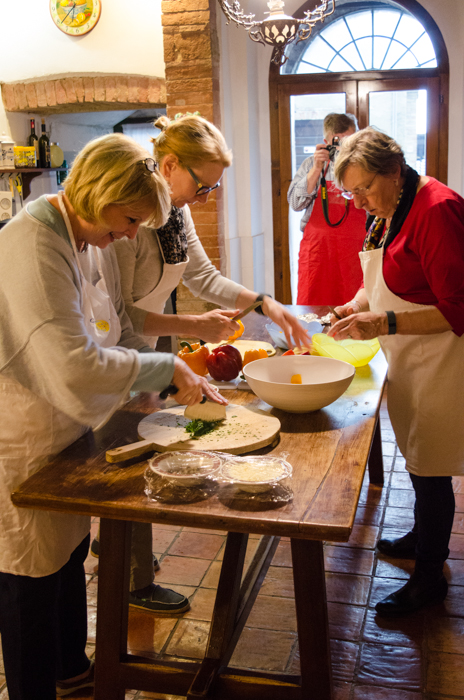
Our 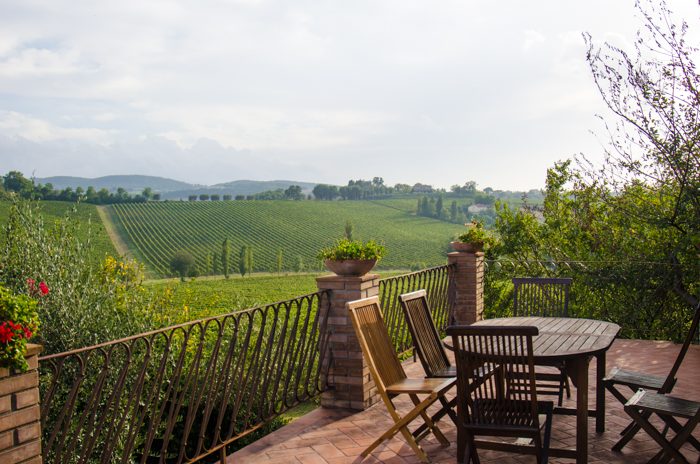 Terenzio and Marta own a small wine estate just outside of
  Peperoni, not to be confused with pepperoni sausage (an American salumi you won’t find in Italy) denotes an entirely different food in Italy, the peppers we know as bell peppers in the U.S. Peperoni translates as “big peppers,” and you can find many varieties cultivated across Italy. The majority come from the south, as they prefer warmer temps, but from the Giallo di Cuneo pepper from Piedmont or the Quadrato Piccolo from the Veneto to the Friariello of Tuscany to the Peperone di Senise of Basilicata, you will find peperoni in various forms – stuffed, roasted, grilled, even pickled – on tables across Italy.
 Peppers hail originally from South America, and were not known in Europe until 1493, when Christopher Columbus visted the New World for the second times and discovered the plant. Columbus was responsible for the misleading name “pepper”. At that time, peppercorns were a highly prized condiment, and the name “pepper” was applied in Europe to all spices with a hot flavor, and so was applied to this newly discovered plant, with spicy varieties.
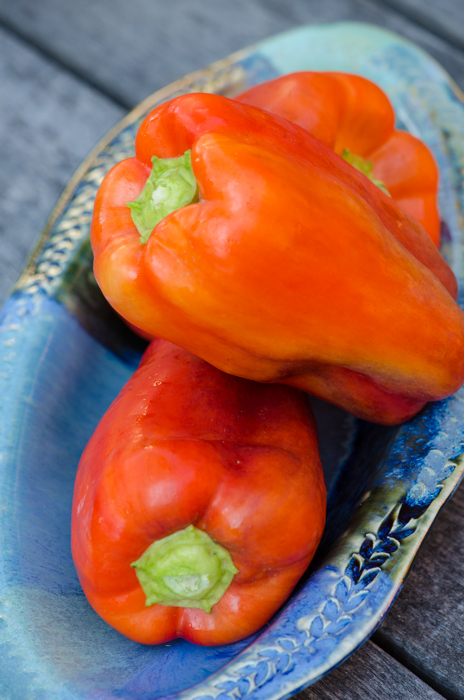 Like bell peppers in America, peperoni color — green, red, orange or yellow — indicate the stage of ripeness. Reds are sweet and fruity; oranges and yellows are mildly sweet; and greens have a touch of bitterness.
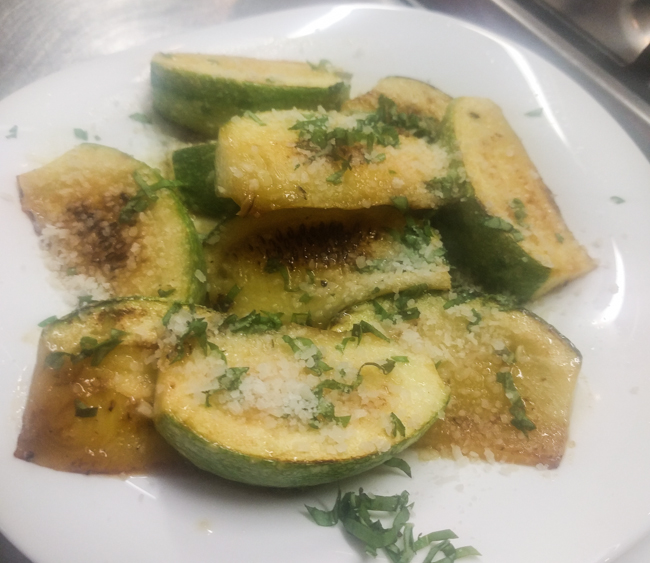
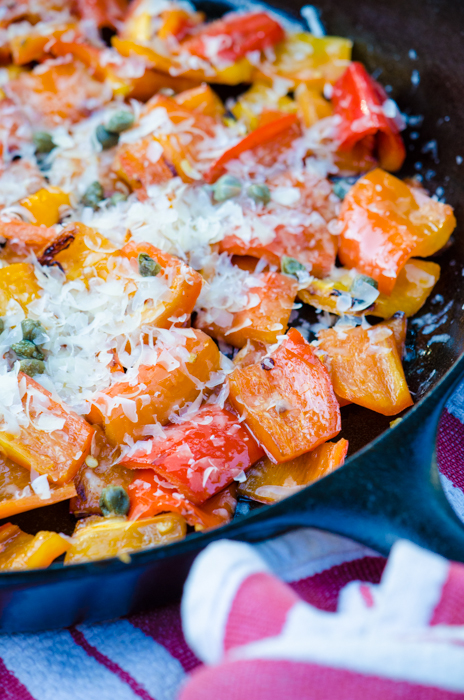
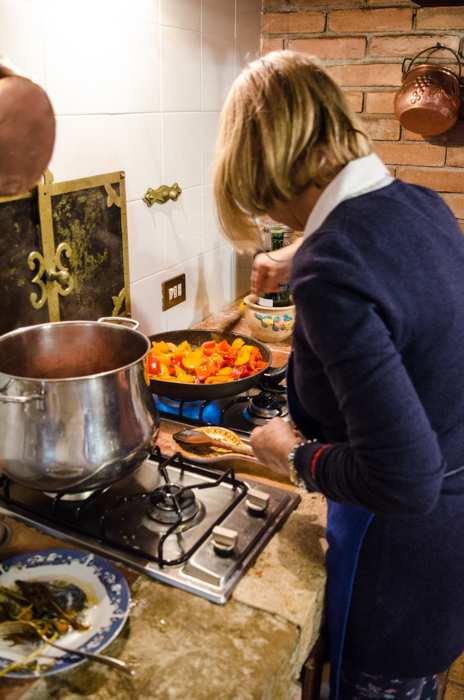
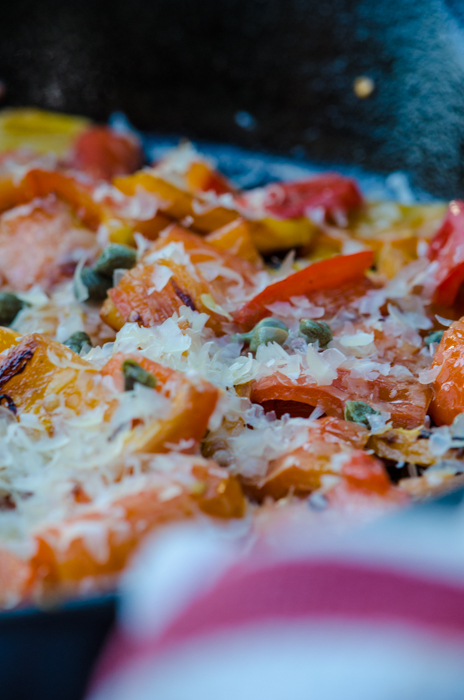 The recipe we prepared this evening Marta describes as a traditional Tuscan farmer’s dish. A very simple side dish, red peppers sauteed in olive oil, finished with grated cheese and capers. I’ve seen many similar variations that you can easily adapt – cheese only; cheese and black olives, cheese and breadcrumbs. This is a tasty simple summer side dish which is prepared in advance and served at room temperature – perfect with grilled chicken or fish.
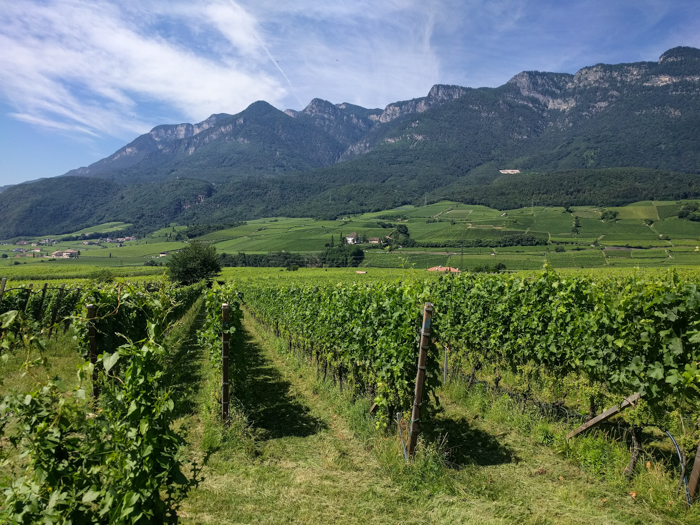 A favorite destination for our
 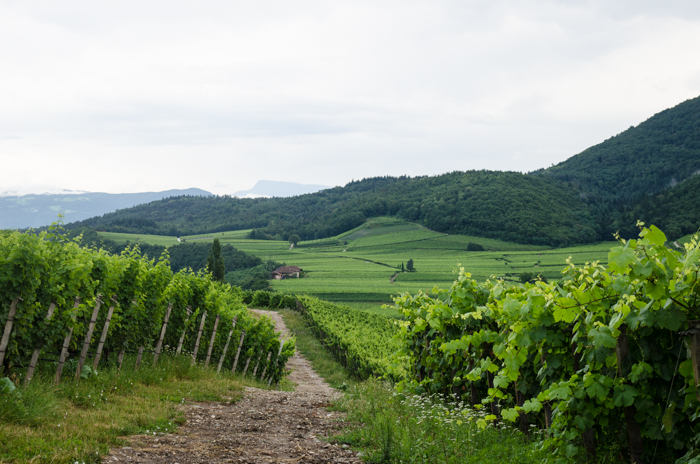 On a recent
 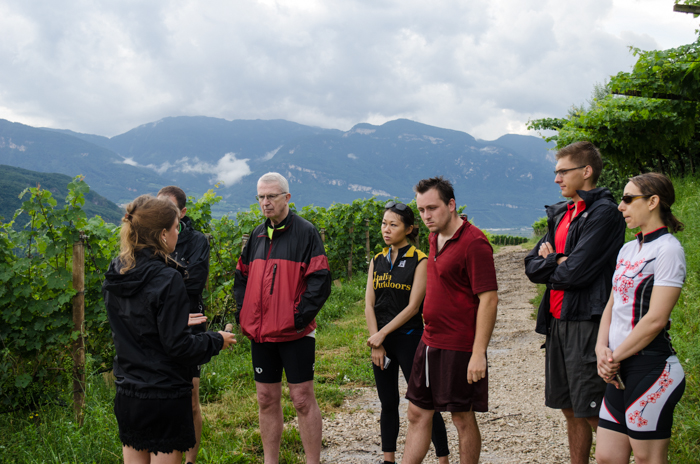 After our ride, we settled in to enjoy a private tour and tasting at their Castel Ringberg estate. To quote their literature: The philosophy of the estate is dedicated to its terroir – the idea that wines must be the individual expression of their soil, climate and cultivation in the vineyard – and that this must be maintained according to principles of sustainability and passed on to the next generation. The firm belief that the quality of wine is created in the vineyard requires uncompromising work, taking into account the individuality of each vineyard.” We saw this dedication to the terroir and sustainability in action during our tour.
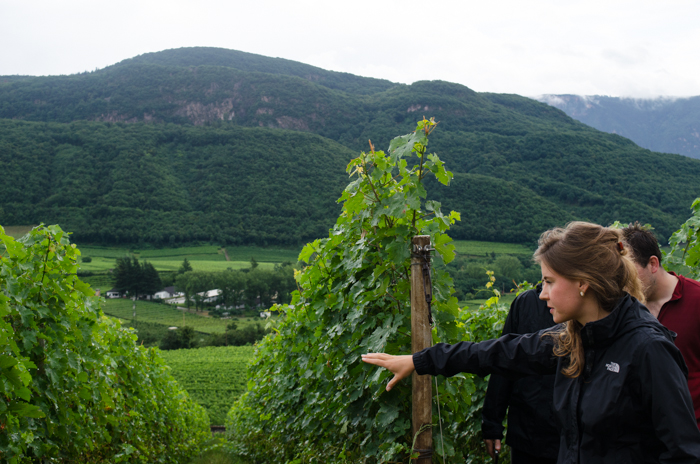 Our tour began in the vineyards of Castel Ringberg, the estate’s most important vineyards, located on a hillside about 300 m. Formed by a glacier, the limestone soil that surrounds the estate is quite poor, but this stimulates deep root growth, resulting in better quality wines. Castel Ringberg has the prestigious additional denomination of VIGNA. The VIGNA designation recognizes the smallest historical / geographical unit of a vineyard. Every single VIGNA must be officially admitted and registered with the regional authorities.
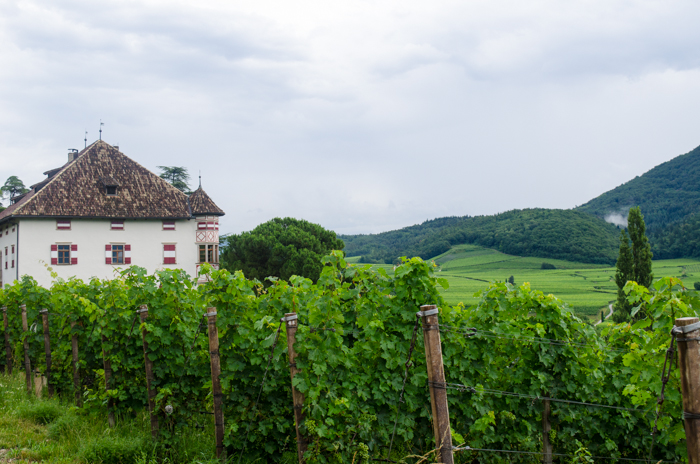 We passed row upon row of vines as our guide Lena described the sustainable cultivation techniques employed by the estate. She pointed out the cover crop that is encouraged to grow between every other row of vines, alternating rows every other year. In the past, these plants would be cut down, due to a misguided perception that they were taking away nutrients from the grapes. Here, the growers recognize that the opposite is true – a diverse mix of plants in the vineyard nourishes the vines. She pointed out the roots nodules of the clover, which are crushed when you step on them, providing much needed nitrogen to the surrounding soil. This cover crop also provides an environment for a diverse population of insects, keeping the unwanted pests at bay.
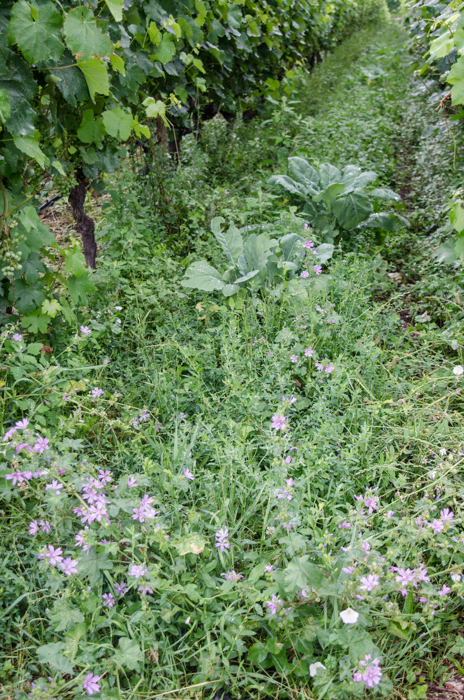 As Vernon and I discuss the unique geography of Italy during our tours, we point out how it has affected everything from its history to its amazing array of foods. The high density of different micro climates allows a wide variety of products to be cultivated within a very small area. Our vineyard tour supplied a first hand demonstration of this as we marveled at the change in the cover crop as we walked – a stroll of about 10 rows presented us with a totally different cover crop, due solely to the change in climate.
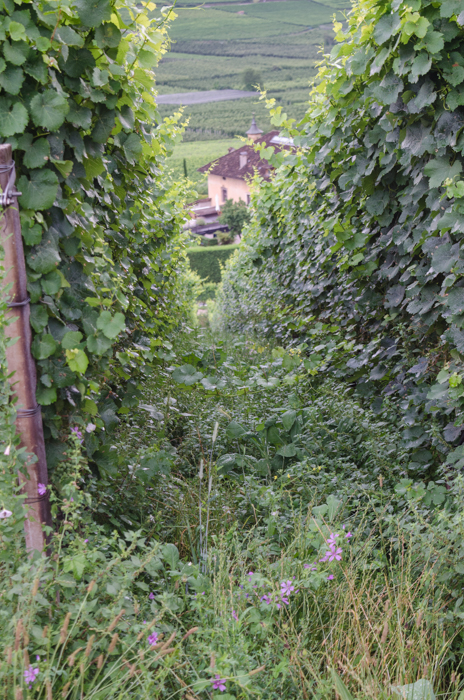 As the first drops of rain began to fall, we headed back to the castle for our private tasting. The castle itself is a lovely building, a perfect setting for a special event. It was originally built as a hunting lodge for the Austrian monarchs, the Habsburgs, in 1620. We settled around a large table to enjoy some amazing wines.
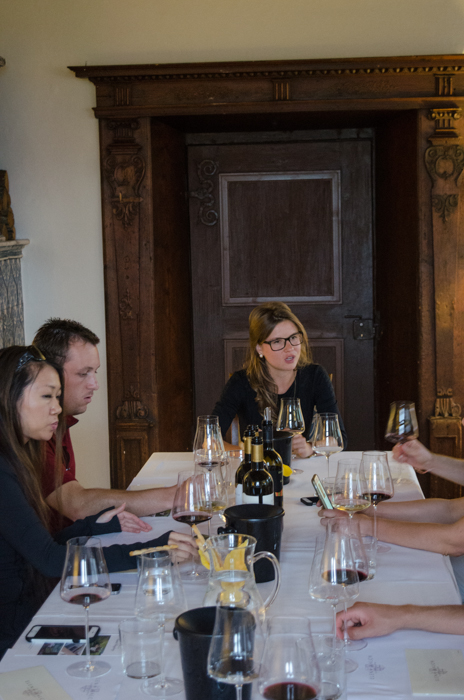 Selezione Pinot Bianco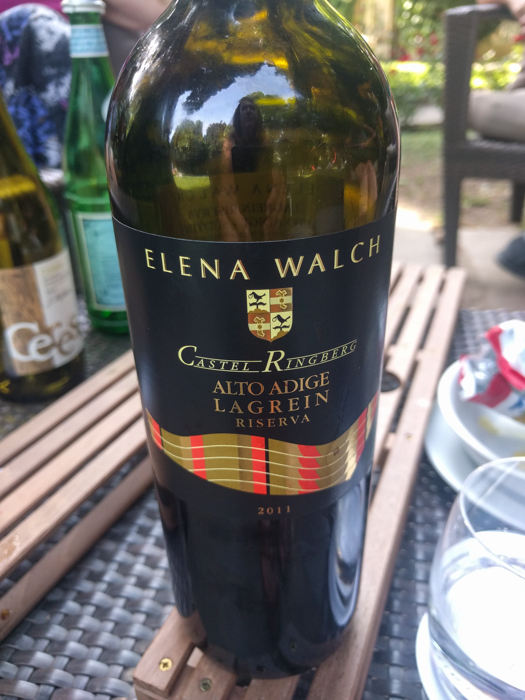
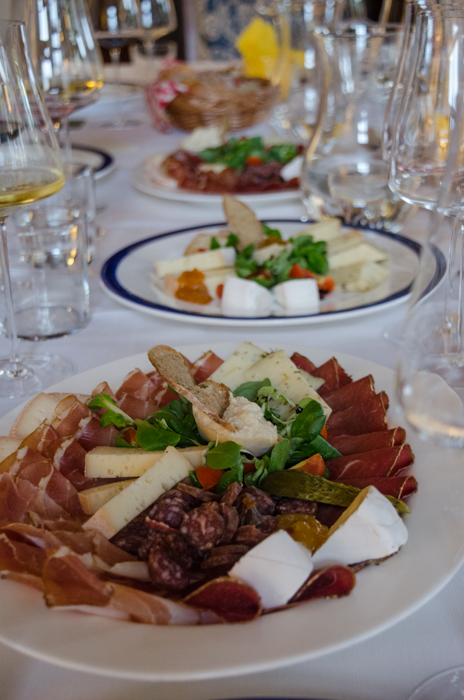 The wines of Elena Walch are available in the US.