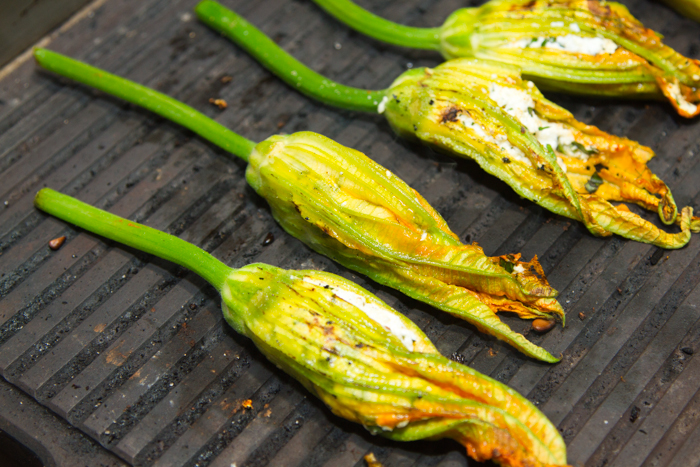
 Guests on our summer cycling and walking tours are enamored when squash blossoms appear on the table – whether stuffed with cheese, topping a pizza, or flavoring a frittata the presentation is always lovely. These blossoms are easily found in both restaurants as well as local markets in Italy, where they have graced tables since at least the 1500s, but have yet to find their place here in the US.
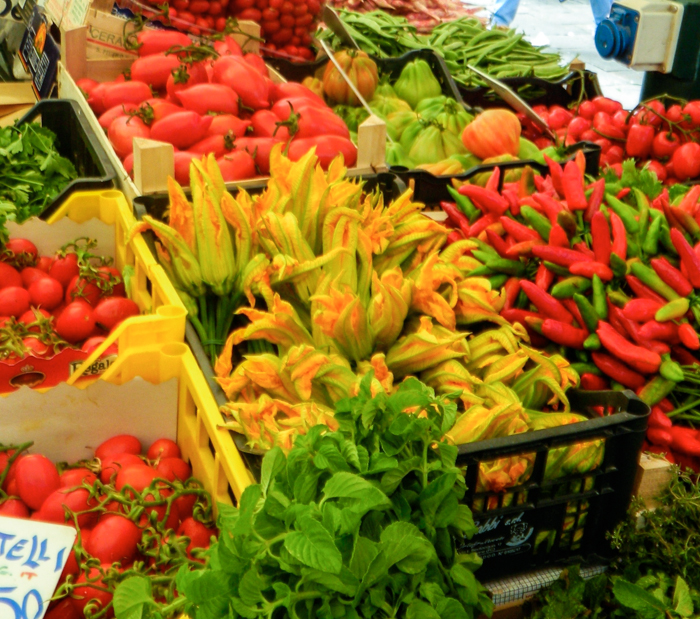 Squash blossoms are the edible flowers of Cucurbita species of squash, the species that produces squashes and pumpkins including acorn, cocozelle, crookneck, straight-neck, and zucchini. They are highly perishable, and so are rarely stocked in supermarkets here in the US. Both male and female squash blossoms can be used. In Italy, male blossoms are harvested early in the season, as picking only male flowers (leaving some for pollination), leaves the female flowers to produce squash. The zucchini squash themselves are harvested later in the season, when they are only 5 inches or so long, and are often sold with the female blossoms still attached.
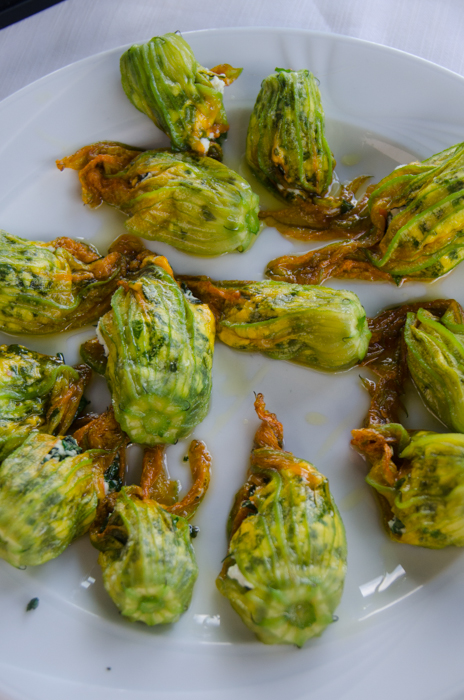 Fried squash blossoms are coated in a light batter and deep fried. Regional variations include frying simply the flowers, or the flowers stuffed with herbed ricotta cheese in Tuscany, mozzarella in Campania, a bit of anchovy in Rome. For those looking for an even more effortless and lighter version, they can be simply brushed with extra virgin olive oil and grilled or baked. Here’s a recipe I’ve used in several cooking classes for our groups in Italy.
Baked Squash Blossoms Stuffed with Herb Ricotta
Makes 4 servings
¾ cup sheep’s milk ricotta cheese
6 tablespoons mixed finely chopped fresh herbs; mint, cilantro, basil, garlic chives
4 tablespoons extra virgin olive oil
Kosher salt and freshly grated black pepper
16 squash blossoms
1 lemon
Mix the cheese in a bowl with the herbs and 1 tablespoon olive oil. Season with salt and pepper.
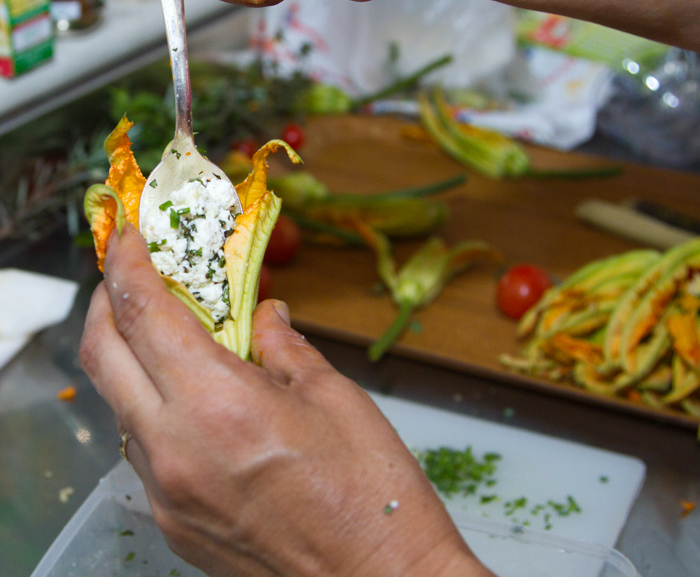
Remove the pointy green needle-like things at the base of the flower. Carefully pry apart the petals of each blossom. Remove the stamen. Put a spoonful of the cheese mixture inside each blossom and gently twist the tips of the blossoms shut. Brush the blossoms with oil and season the outside with salt and pepper.
Place the blossoms over medium heat on the grill and cook on each side for 1 minute. Or, place on a sheet pan and roast in an oven for 8 minutes, until the center is soft.
Serve immediately with a squeeze of lemon.
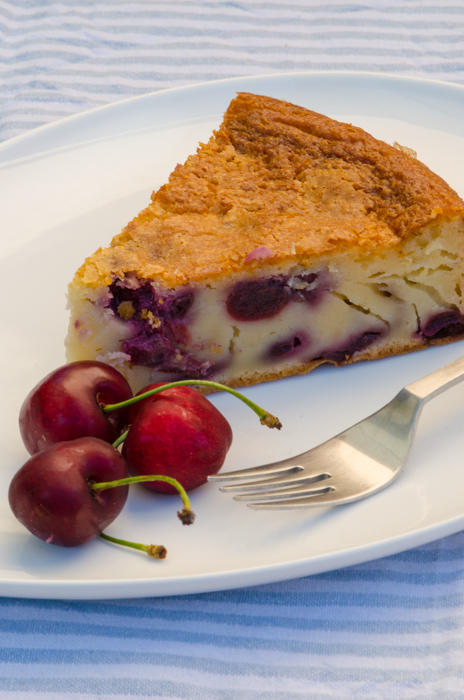 This July we’re cycling through the region of Trentino-Alto Adige. Verdant green fields down the Adige Valley, we cruise down flat bike paths that lie between the Alps and Dolomites, with the optional climb for those that enjoy a challenge. Last month in the Veneto it was cherry season, and we find ourselves in the midst of cherries again in July in Trentino.
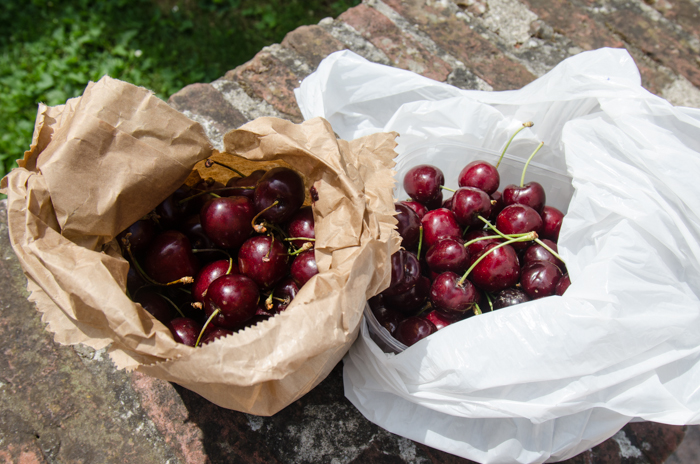
 Cherries are grown in the Adige valley as well as the Valsugana, and begin appearing in June with late season varieties extending the season into August. You will find them in cakes, jams, fruit in syrup, juices and ice creams, and also savory dishes like my recent post on Quaglie con Ciligie. Raw cherries are one of my favorite quick snacks to offer a hungry cyclist as our group passes through on their ride. I’ve also treated them to this homemade traditional cherry cake – a simple dessert which is easily dressed up with whipped cream and perhaps a bit of dark chocolate on the side.
 Torta di Ciliegie della Tradizione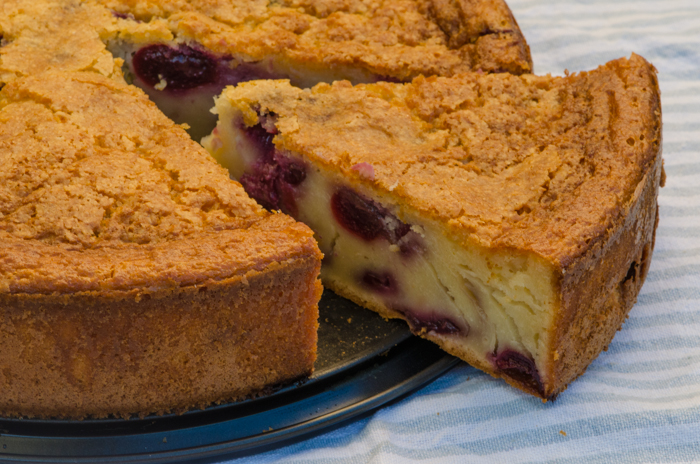
 Our spring season cycling and
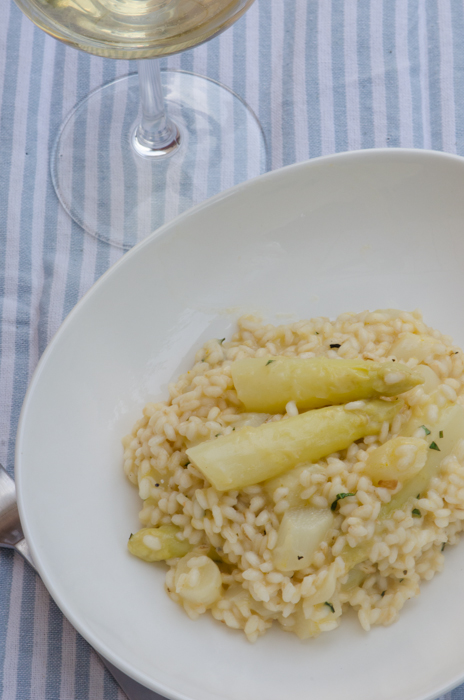
 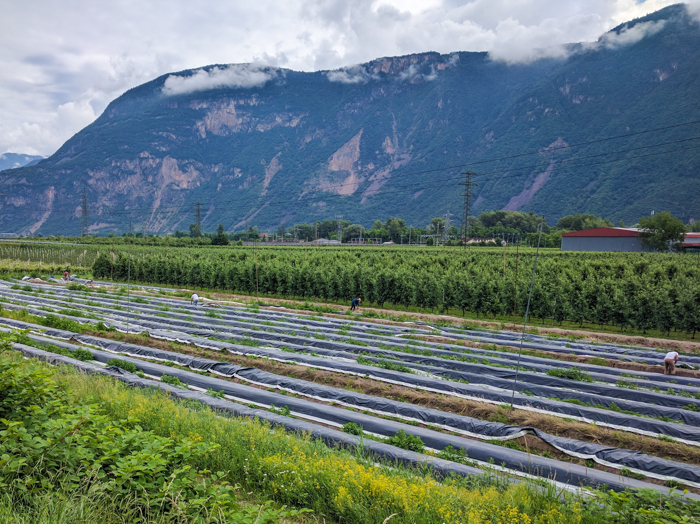 To cultivate white asparagus, as soon as the shoots peek through the soil, they are covered up with more soil, which continues as they grow. The stalks are always covered with a thick layer or mulch and now also a dark plastic tarp. Without exposure to sunlight, no photosynthesis starts, and the shoots remain white. This process is called etiolation, and creates pale white asparagus spears that have a more delicate in flavor and more tender than their green cousins.
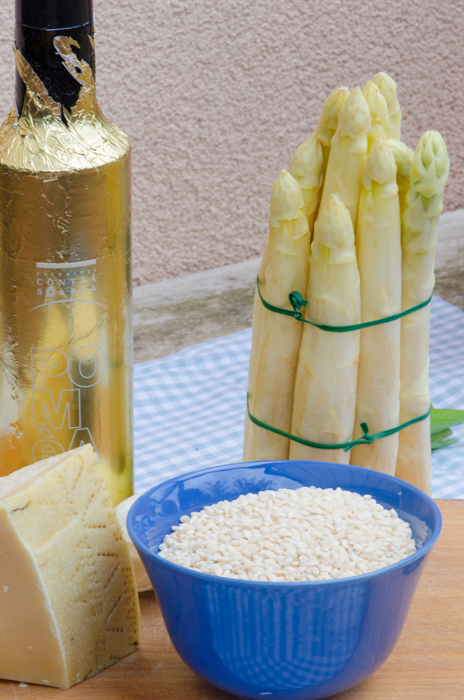 Due to its quality and delicacy, it is quite perishable and must be correctly conserved and served within a few days. Good preserving practices include immersing the asparagus in was between 6 and 8 degrees centigrade to inhibit oxidation. It is also beneficial to avoid prolonged exposure to light and open air.
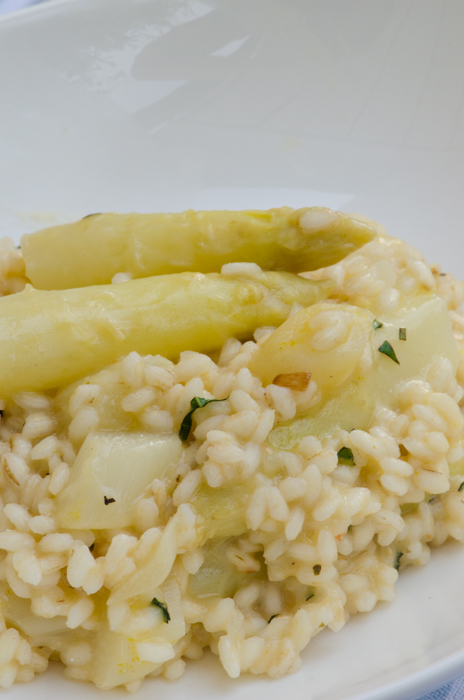 Risotto con Gli Asparagi
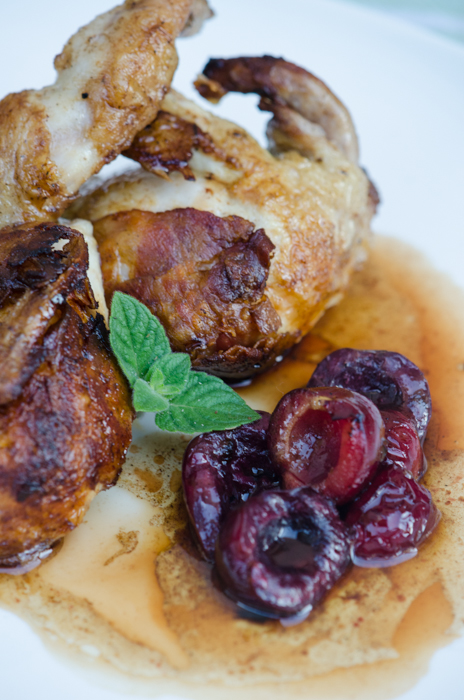 May and June is cherry season in Italy, and during our
 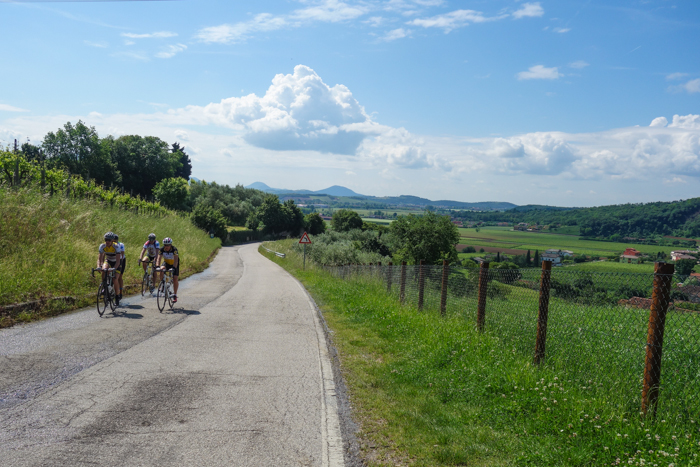 One of our favorite areas for cycling is the Berici Hills, just south of Vicenza. Besides their own wine DOC, and peas, mushrooms, black truffles, honey and olive oil, we pass through a couple of small areas which right now are bursting with cherries; trees bearing the fruit, and the local farmers out with their makeshift roadside stands with signs “Vendita Ciliegie”, Buy Cherries.
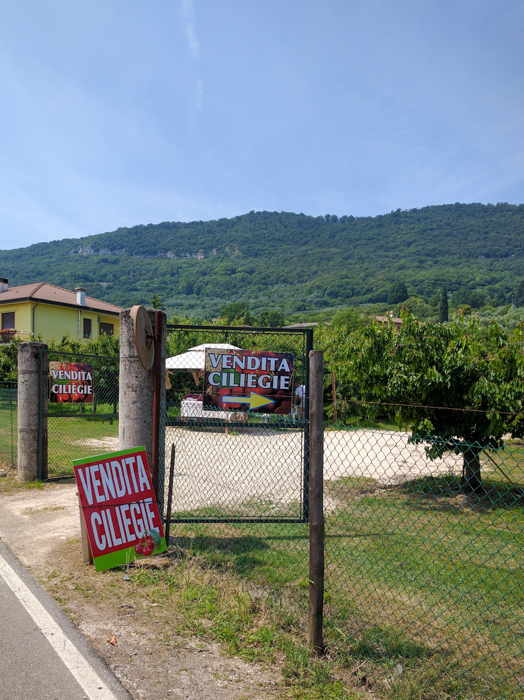 Here in the Berici Hills, the cherry orchards are in the south-east, at the foot of limestone cliffs, between the plain and the slopes of Mount Castellaro. The terrain is characterized by rocky outcrops and a limited topsoil layer. The steep slopes provide intense sun exposure, causing the fruit to ripen early.
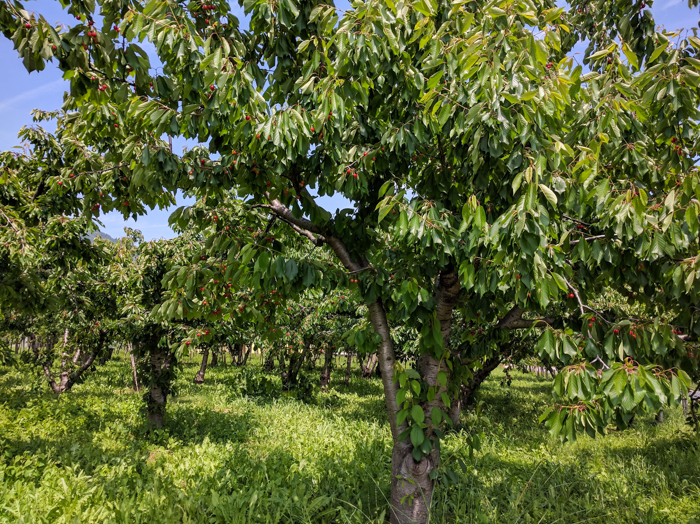 The hamlet of Castegnero is the center of production, with a long history of cultivation of their specific variety, known as the Mora di Castegnero (the Castegnero blackberry). In early spring, the trees are thick with flowers, and the resulting fruit is tender and dark, with a high sugar content. The “Festa dea Siaresa” is their cherry festival held in late May and early June. Visitors can purchase cherries and cherry products from vendors while enjoying entertainment, and feasting on traditional dishes and Colli Berici wines at local restaurants.
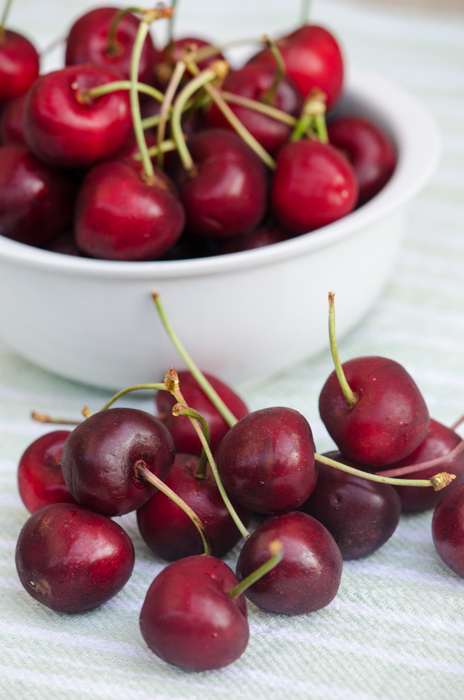 Just a couple of kilometers away, as we tour through the hamlets of Sarego and Meledo we find another variety of cherry, the Mora Cazzano, known as Durone di Verona elsewhere. Here the slopes are lower, the soil deeper, and the more limited sun exposure causes the fruit to ripen slightly later. This fruit is a bright red, and crunchy, with a very sweet flavor.
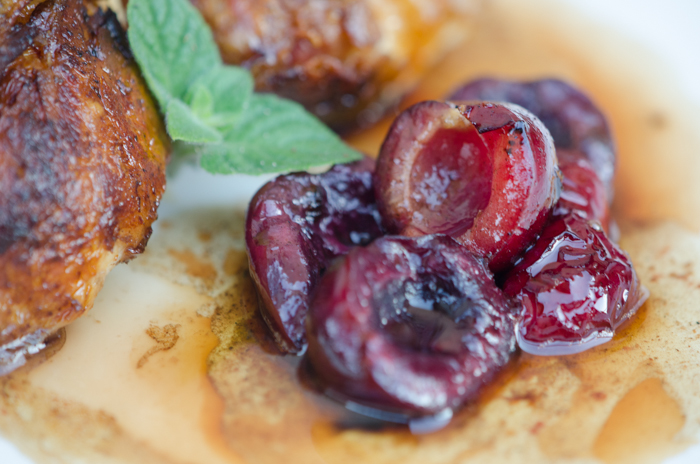 During cherry season, cherries appears in all types of dishes from salads to savory to desserts. The following recipe I’ve translated from an Italian cookbook containing 40 recipes all featuring cherries from the Veneto.
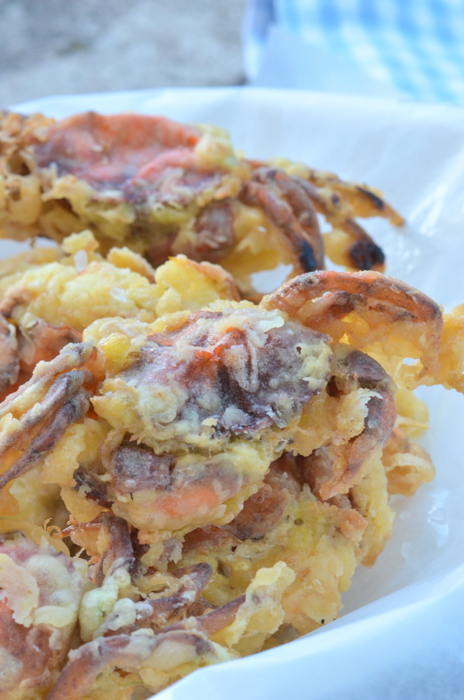 On our recent cooking class our hosts delivered a very special seasonal treat as we worked – a plate of hot moeche fritte, fried soft shell crabs. These unique crabs are a seasonal Venetian treat, as they are in the US. In Venice, they are referred to as moleche, moeche, or moeca in Venetian dialect. These crabs are a different species than found here in the US, they are smaller (about 2-3 inches), and are available twice a year – in the fall and spring. Maseneta indicates the female crab (with shell), which is particularly valued at the end of summer when, after having changed and having mated, she is mature and filled with eggs.
 The moleche fishermen of Venice (molecanti) are masters as managing the molting process of their harvest. Raising crabs is a strictly local activity, passed down from generation to generation. The tradition is practiced in Burano and on the Giudecca but until the second half of the last century the raising of moeche was a secret known only to the crab farmers of Chioggia. The crabs are caught by placing nets with funnel shaped traps in the waters at the beginning of the season.
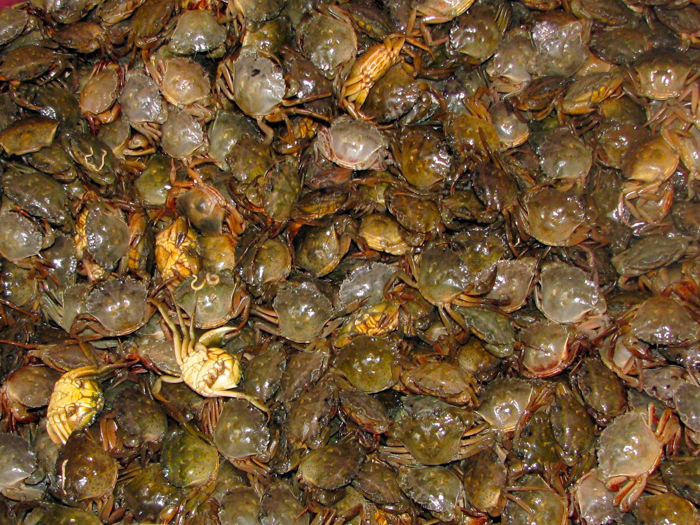 The fishermen separate the crabs from the fish and bring them back to big warehouses where they select the crabs about to undergo their seasonal change and place them in a particular tub. There is only a very brief 5-6 hour period in which the shells are soft enough to eat, as continued contact with water will harden them in a matter of hours. The trick is to identify those crabs that are just about to molt from those that are not; the former are stored in tanks until they have molted, at which point they are taken to markets such as the amazing fish market at Rialto. The latter are held back in a separate tub until their molting time has come. The crab stocks were almost depleted in the 1980s. Today they are farmed in various locations around Venice, and it now is an important industry in the region.
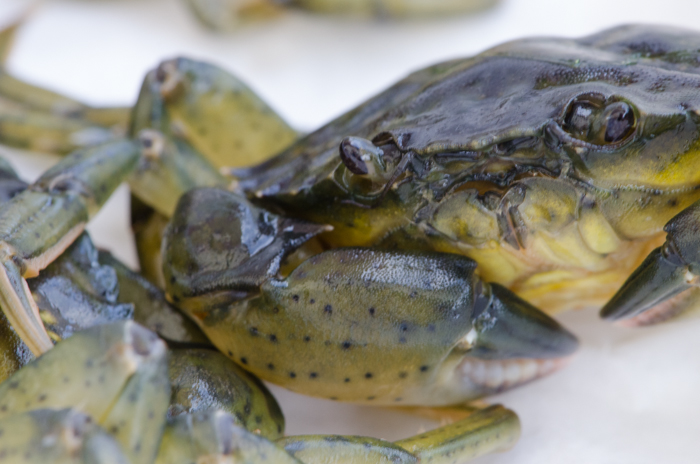 The fascination that the Venetians have with this strange crab has made its way into local expressions. The Lion of Saint Mark, the symbol of the Venetian republic, when represented frontally framed by its wings is called “Leon i moeca”, the crab lion. When a person repeatedly forgets to bring a promised gift to another person, one can say: “anca se’l deventa gransio no importa”, “even if it becomes a crab, it doesn’t matter”, in other words, even if too much time has gone by and the moeca’s shell grew back, the gift would still be appreciated. Also the expression “Andar in brodo de masenete”, “to become a crab broth” is used when something disappears, like masenete when they are cooked too long. And Venetians, when encouraging one another not to despair, say “in mancansa de masenete, bone anca e sate!”, “If we have no crabs, well, the legs are good tool!”
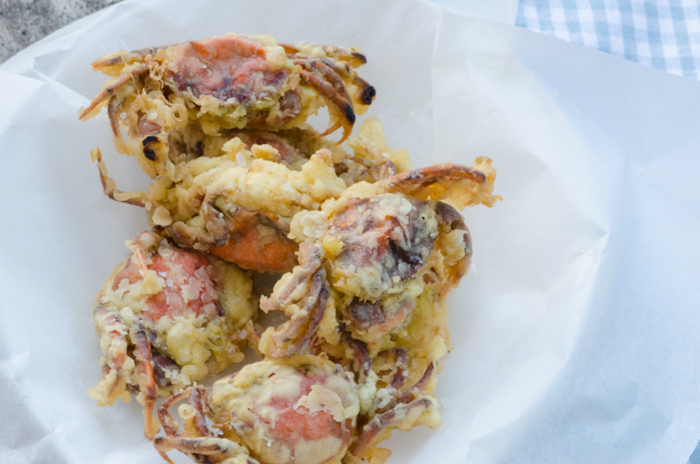 Moeche Fritte