Exploring Castelfranco Veneto – Wine and Radicchio in an Historic Walled City

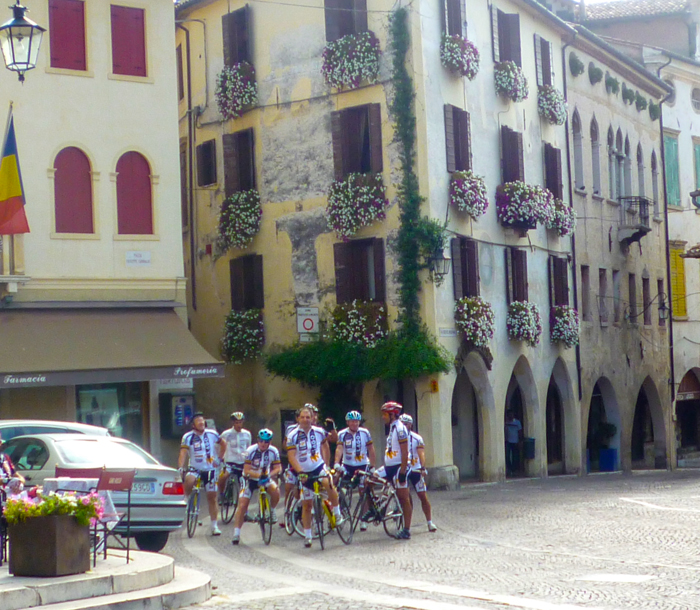
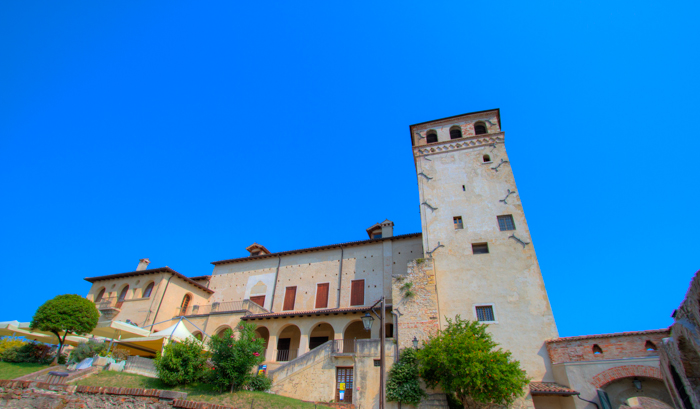
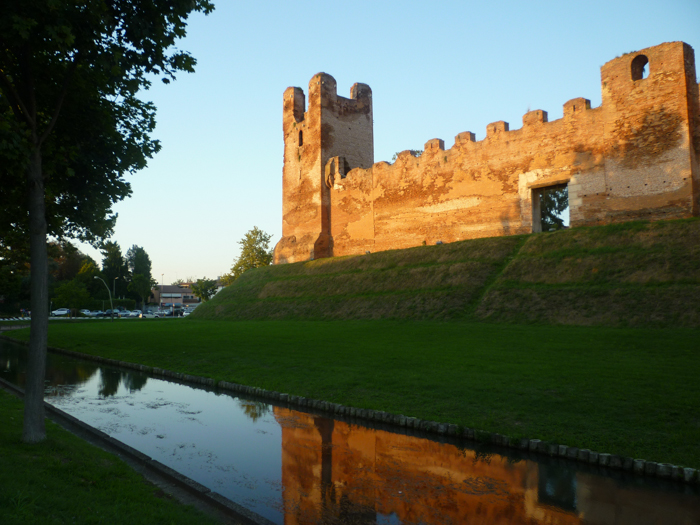
walls-of-castelfranco-bike-tours-italySurrounded by majestic medieval walls, some of the best preserved in all of Italy, the town of Castelfranco Veneto is a destination we visit often on our cycling tours in the Veneto. It’s called Castelfranco Veneto to differentiate it from other Italian towns called Castelfranco, including one in Emilia-Romagna. The town is situated between Treviso and Vicenza, and its defensive walls remind visitors of the battles between the powerful towns of Padua, Vicenza and Treviso in the 13th and 14th centuries.
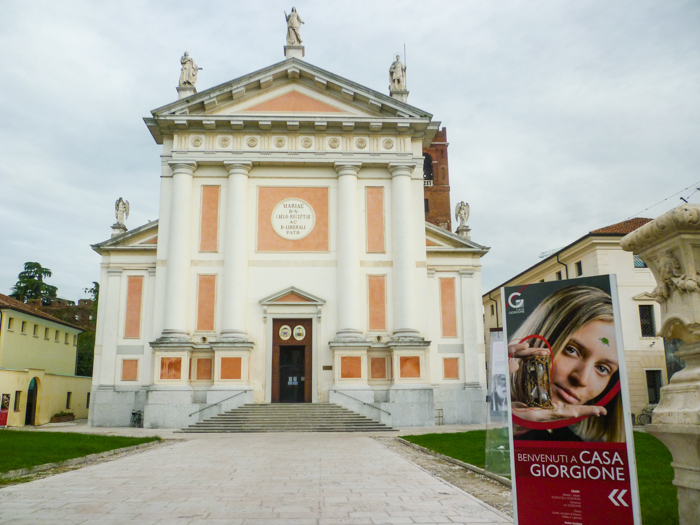
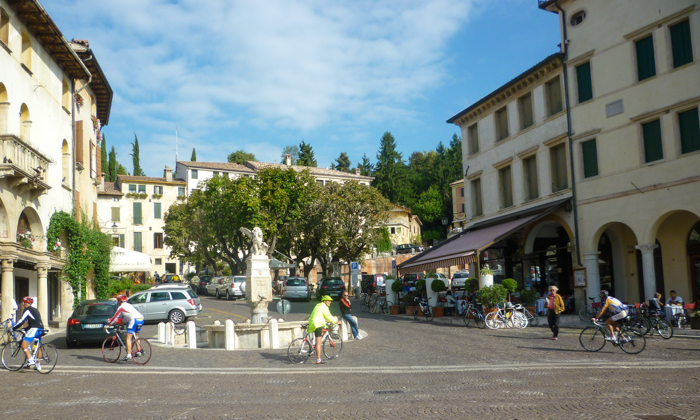
castelfranco-duomo-italy-cycling-toursThe town has a small historic center,  a lovely place to wander for an hour or so, with a few sights worth visiting. The central piazza is dominated by the Duomo, designed in the eighteenth century by Francesco Maria Preti who also designed Villa Pisani at Strà, another stop on our Veneto tours. The church houses the town’s main attraction: an altarpiece by Giorgione, who was born here in Castelfranco. His works are few but very important, and renowned for their multilayered messages, including the famous Tempest in the Accademia Gallery in Venice. The altarpiece, which is located in a side chapel on the right, is one of his finest works, the Madonna with St. Francis and Liberalis, more commonly called Pala del Giorgione. In the background, the towers of the old town may be seen.
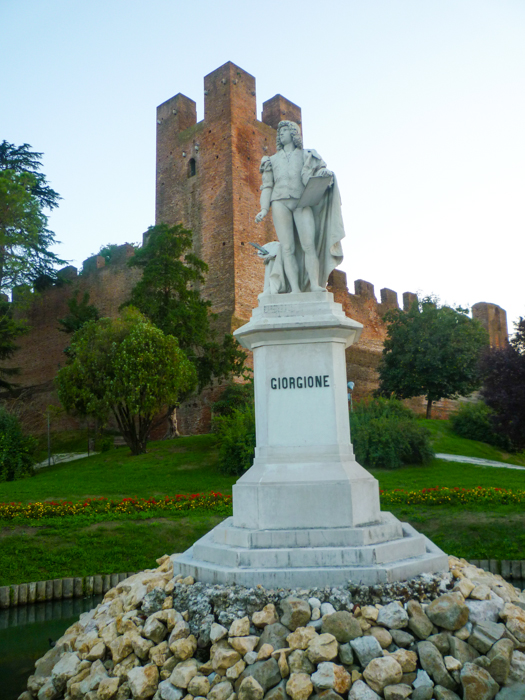
giorgione-castelfranco-italy-cycling-toursNext door to the Duomo is the Casa del Giorgione (‘House of Giorgione’). It was once claimed to be the birthplace of the artist, but there is no evidence to support this. Today it houses a nice little museum displaying a fresco attributed to Giorgione as well as informational exhibits on the local history, neighboring historical villas, and local agriculture.
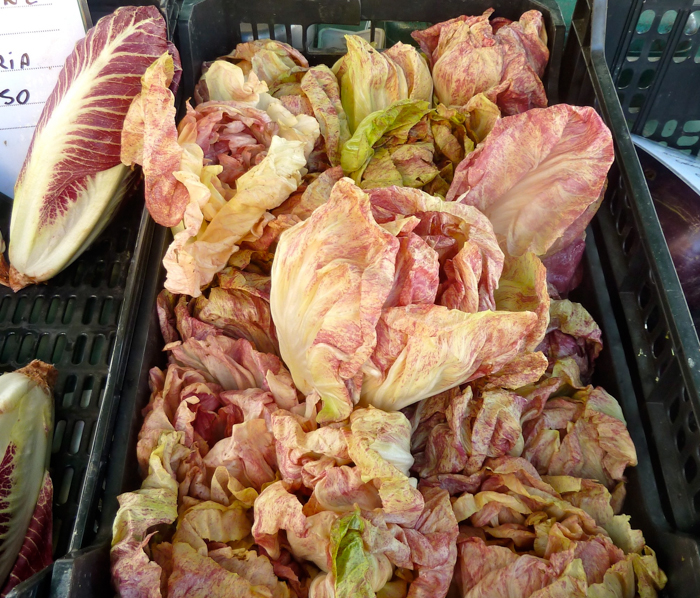
radicchio-market-wine-bike-tours-umbria-copy-smallerFor a town of such a small size, you will have many options for wonderful meals. The region of Treviso is known for radicchio – on my first visits years ago I was amazed by the number of varieties and the range of flavors. Castelfranco boasts its own unique variety, the heirloom IGP Radicchio Variegato di Castelfranco. This radicchio has a distinctive appearance, creamy white and variegated, with an open rose-like shape. It has a tender, softer flavor and some claim that is it actually a hybrid of radicchio and belgian endive.

A few of my favorite dining spots in Castelfranco:

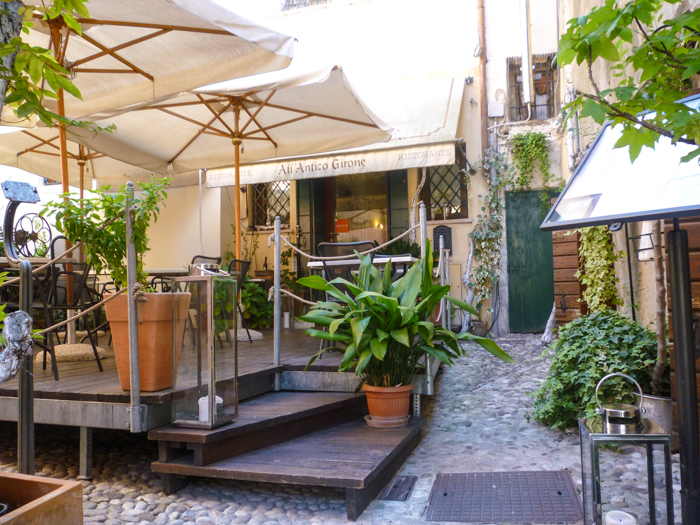
All’Antico Girone – Right behind Hotel All Torre, look to left up short alleyway after passing through city gate. Their menu focuses on traditional local dishes, with a dash of creativity. The wine list is very impressive, with a nice selection of local wines.
antico-girone-castelfranco-italy-cycling-toursOsteria ai Do Mori – Vicolo Montebelluna, 24. Good local cooking, well prepared. Seasonal menu, a lovely garden for al fresco dining under the historic walls of the city.

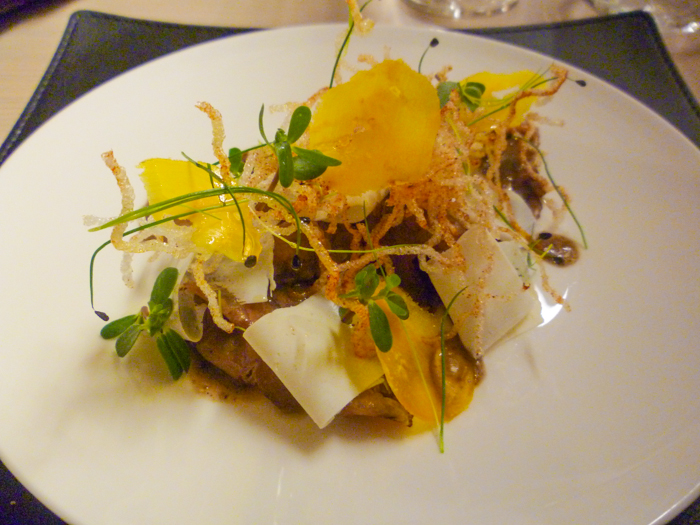
Feva Ristorante – Borgo Treviso 62. Very elegant dining just outside of Castelfranco. Wonderful modern interpretations of traditional dishes.
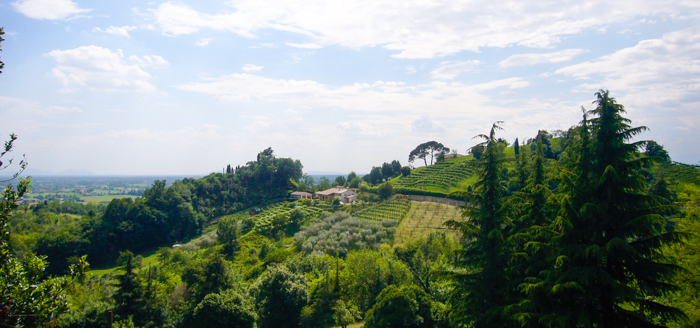
feva-castelfranco-italy-cycling-toursWith the flatter plains of the Piave river basin to the west, and the hills of Prosecco to the north, visitors to Castelfranco have an amazing variety of local wines to explore, including wines from the Prosecco, Colli Asolini e Montello, Breganze and Piave wine regions.
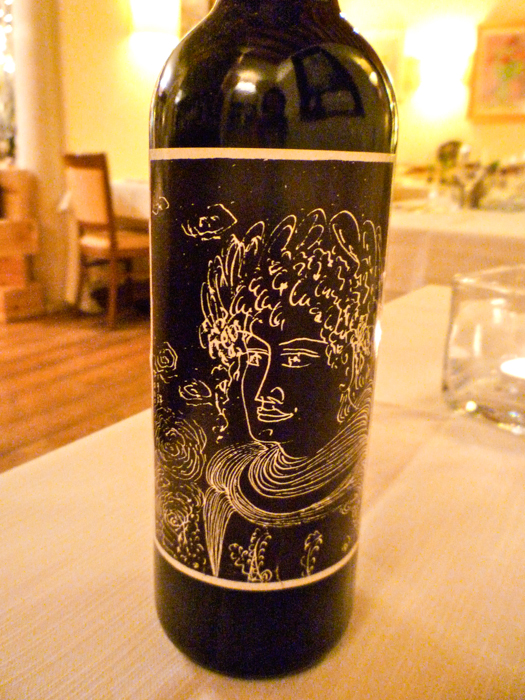
capo-di-stato-duomo-italy-cycling-toursCapo di Stato from Loredan Gasparini, a producer from the Colli Asolani e Montello area, is one  not to miss. In the Colli Trevigiani, the hills outside of Treviso, Gasparini has been producing quality wines from Cabernet Sauvignon, Merlot, Cabernet Franc and Malbec, where the microclimate is well-suited for the cultivation of these Bordeaux varieties. Capo di Stato is one of Gasparini’s signature wine, produced in limited quantities. The name, Capo di Stato, Head of State, refers to the wine’s well-deserved international reputation, as it was a favorite of French President Charles de Gaulle. It is a rich wine, deep garnet in color with intense dark berry nose with hints of spice. Full-bodied, well-balanced, nicely tannic with a persistent finish, this is a wine for those fans of ‘big’ reds.
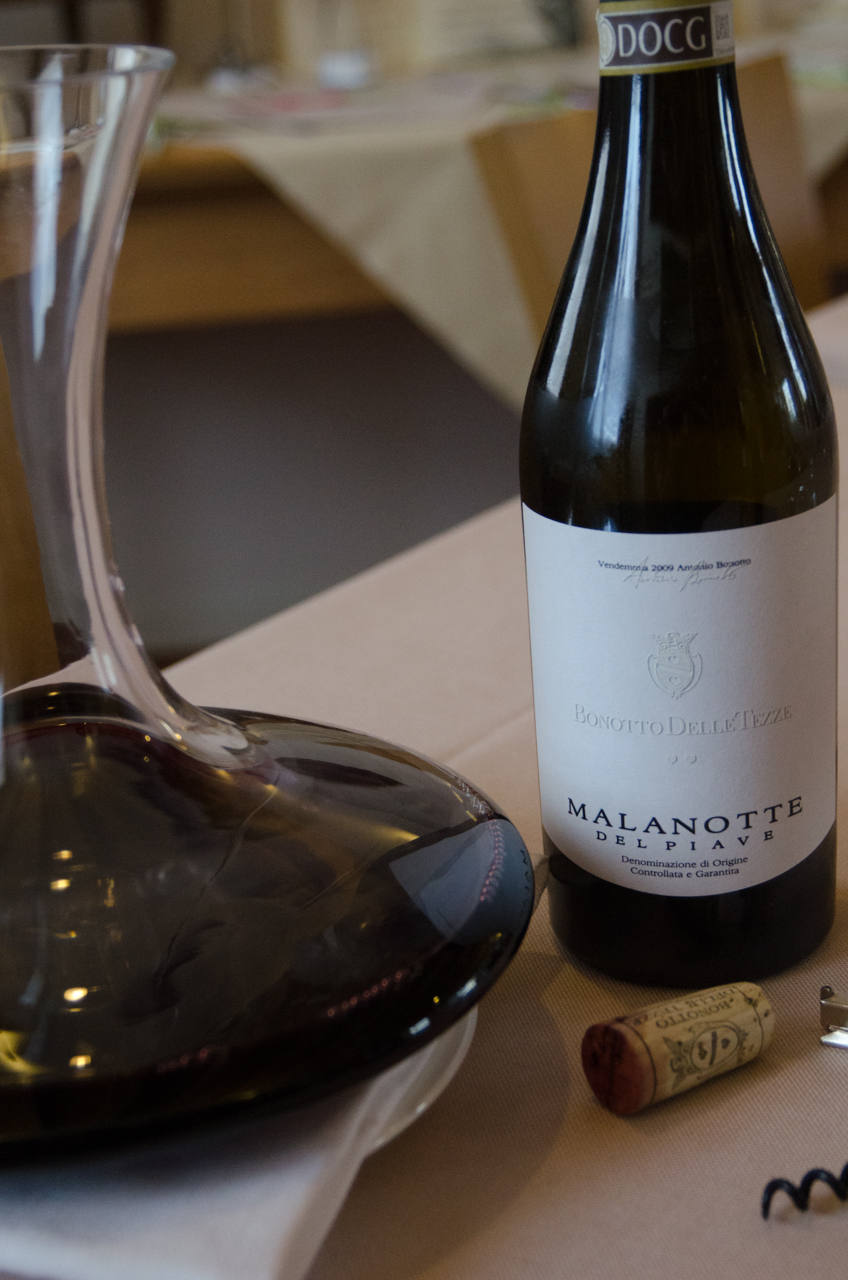
wine tasting malanotte 1 wine bike tours italyAnother big red is the Piave Malanotte DOCG. This new DOCG denomination Malanotte del Piave, or Piave Malanotte, was officially established in December 2010. This wine must contain at least 70% of Raboso del Piave grapes, an indigenous varietal and up to 30% of Raboso Veronese: these varietals can be combined with up to 5% of other local red varietals. DOCG regulations dictate that between 15% and 30% of grapes must be dried before being pressed. This austere, dry wine ages for at least thirty-six months partly in barrels (at least twelve months) and partly in the bottle (at least four months), to allow the wine to reach an intense ruby reddish and purple color that tends to garnet red when aged, and its typical bouquet of spicy cherries.
Posted in Travel, Uncategorized, Veneto, Wine | Tagged , , , , , , , , , , , , , | 1 Comment

Canederli di Speck – Traditional Dumpling from Sudtirol

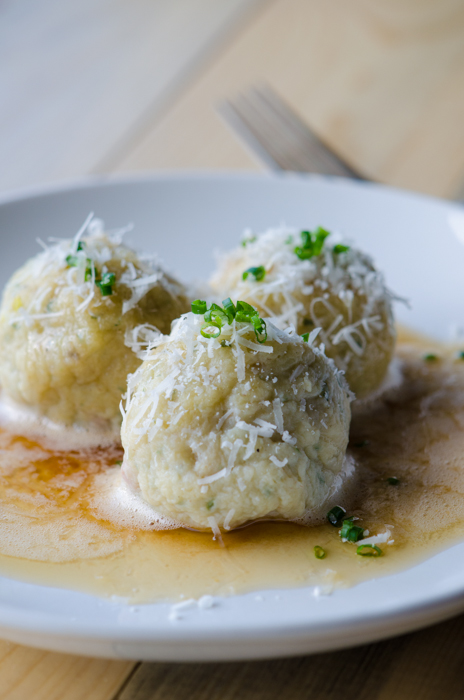
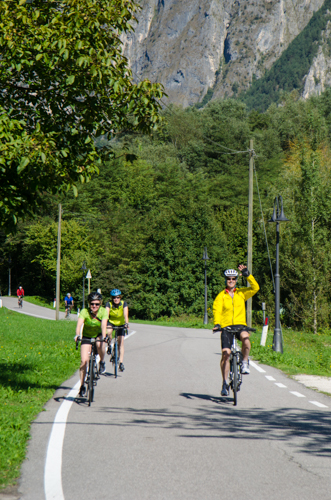
canederli-burro-dolomites-walking-toursIf I had to pick one dish to represent the regional cuisine of Trentino-Alto Adige or Sudtirol, canederli would be it. With it’s majestic terrain of mountains and river valleys, fascinating history as it has been caught between the Mediterranean influences to the south and Germanic peoples to the north, and over 300 days of sunshine annually, it is the perfect area to explore on a cycling tour or hiking adventure.

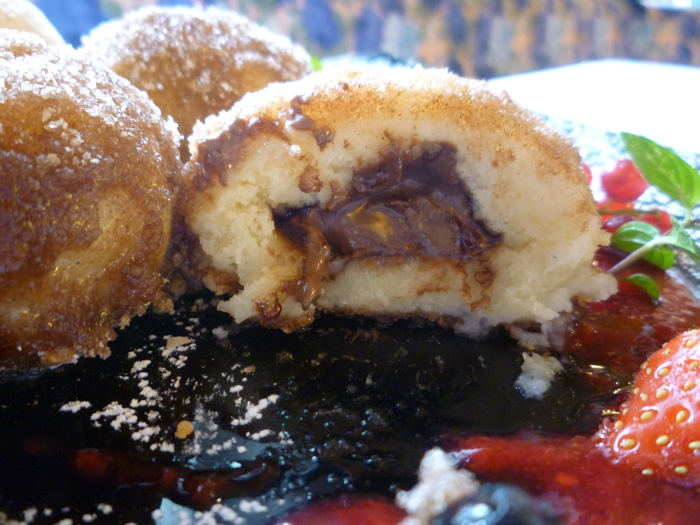
valsugana-bike-tour-italyCanederli dumplings, or knödel in German, are the signature dish of Tyrol. These are large dumplings made with stale bread, milk, flour and egg, and flavored with a variety of different ingredients. They are a quintessential example of the ‘cucina povera’ of Italy, creating a dish out of your leftover stale bread and flavoring it with whatever you had on hand. They can be savory, and served as a first course (Canederli in Brodo or con Burro) or as a side dish to accompany meats, like a traditional goulash. You will also see sweet versions, often stuffed with fruits or creams and served for dessert.

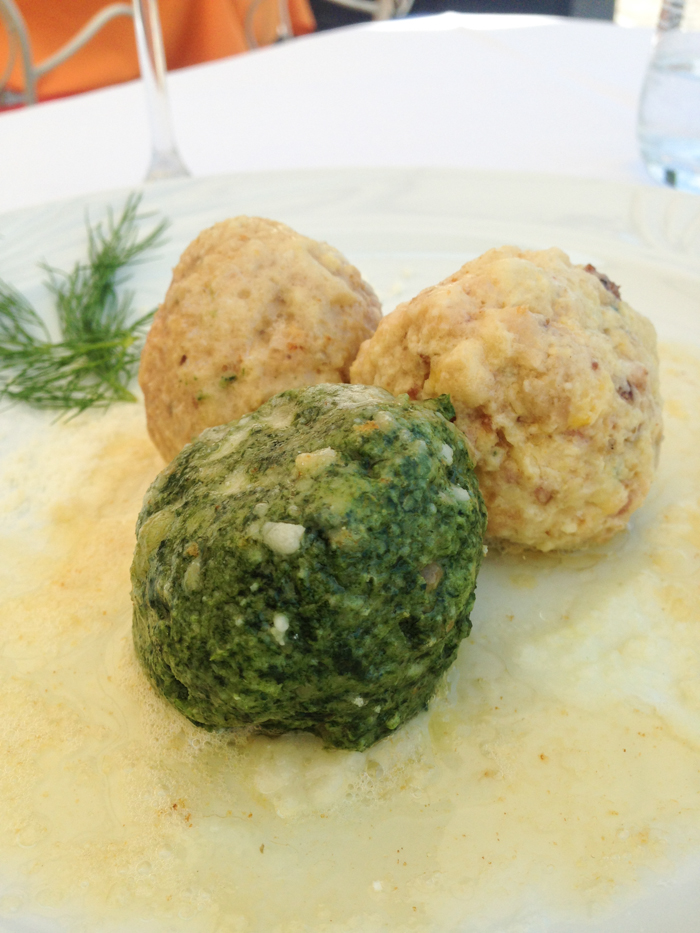
canederli-stuffing-ski-tours-dolomitesIn each valley they are cooked differently: in Val Passiria and Burgaviato we find varieties made with buckwheat, in the Puster Valley there are Canederli di Magro, or ‘skinny’ dumplings made without meat.  In Val Venosta they might be steamed rather than poached. Different flavoring options abound, from speck, mushrooms, cheese, spinach, to nettles, turnips and sausage. The most typical version is the one I present today, Canederli di Speck, speck being the smoked prosciutto produced here in Trentino-Alto Adige. But gourmet versions of the humble canederli abound, from beet canederli (recipe here) to canederli with fresh porcini to ones stuffed with malga or farm cheeses.

canederli-private-bike-tours I researched several recipes for canderli, and they all varied greatly as to the amount of flour used, from a couple of tablespoons to a cup or more. One recipe I translated from Italian recommended: “the bread must be perfectly dry and hard, several days old. The optimum consistency of the dough for the dumplings depends on various factors such as the size of the eggs, the type of bread, etc. So do not worry about the doses, but vary according to need.” Too much flour and they will be dense and heavy; too little, they will break apart during poaching (testing one is recommended) and they will not hold their rounded shape. So add the flour gradually, a bit at a time, and don’t feel you need to use all of it.

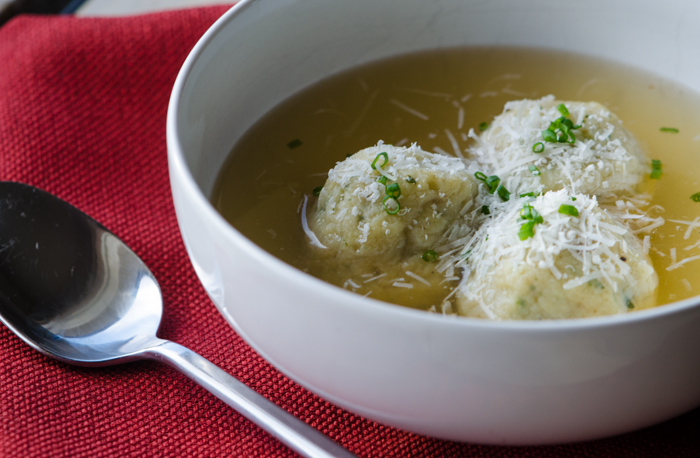
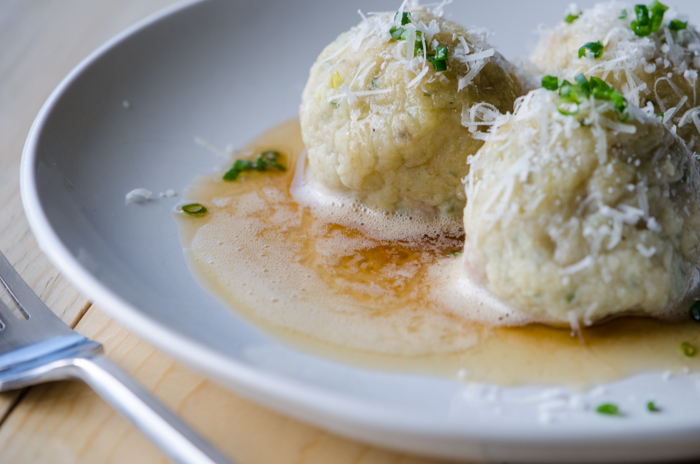
I provide two very typical ways of serving the canederli here – Canederli in Brodo are served in a rich beef or chicken broth, and Canederli al Burro Fuso, served in a browned butter sauce.

canederli-brodo-dolomites-walking-toursCanederli di Speck

8 ounces stale white bread, cut into 1/4 inch dice
1 1/2 cups milk
1 tablespoon butter
1/2 onion, minced
1/2 leek, minced and rinsed well
2 tablespoons fresh Italian parsley, minced
4 ounces speck, diced
2 eggs, beaten
1/4 cup to 1 cup flour, plus more for dusting
Kosher salt and freshly ground pepper

8 cups good beef or chicken stock

Place the bread in a large bowl and add the milk. Stir to combine, and season with salt and pepper. Allow to rest for an hour, stirring occasionally to make sure the bread is uniformly moist.

Meanwhile, melt the butter in a saute pan over medium heat. Add the onion and leek and cook until translucent and soft, about 4 minutes. Allow to cool.

After the bread mixture has rested, add the onion-leek mixture, the parsley, speck, and the eggs and thoroughly mix the ingredients with your hands, breaking up any larger pieces of bread and making sure the speck, parsley and onions are evenly distributed.

Then begin to add the flour, 1/4 cup at a time, stirring to combine everything. The final amount of flour will depend on how dry the bread is, the type of bread, the size of the eggs. It will begin as more of a batter, sticking to the sides of the bowl more than itself. It will stiffen as you add more flour, beginning to clump together in a large ball. In the end, the mixture should be uniformly moist, and still a little sticky. If it is very sticky, add a bit more flour.

Using your hands coated with flour, form the canederli by pressing the mixture into balls, about the size of a clementine. Roll each ball lightly in flour, shake off the excess and place on a sheet pan, leaving room between each so they do not stick. If they do not hold their rounded shape fairly well, and instead flatten immediately, you probably need a bit more flour.

If you have not made these before and are unsure of the consistency, you can test one at this point before forming all the dumplings. Poach the first one in a pan of boiling water for 10-12 minutes. If it does not hold together, a bit more flour might be required. This is not an exact science – make them how you like them!

When ready to serve, bring the broth or water to a simmer in a large pot. Place the canederli into the simmering liquid and poach for 12 minutes or so. They will sink to the bottom at first; stir them occasionally so they don’t stick to the bottom. Eventually they will float to the top.

For Canederli in Brodo: Spoon the canederli and broth into bowls, top with grated grana cheese and minced chives, and serve immediately. Note that the broth will be cloudy from the flour that coats the canederli. If you prefer a nice clear broth, poach them in broth or water which you then discard, and use fresh hot broth to serve.

For Canederli in Burro: Remove the canderli from the poaching liquid and keep warm. Melt 1/4 cup butter in a saute pan until brown and nutty. Place 3 canederli onto each plate, pour the browned butter over them, then sprinkle with some minced chives, grated grana cheese, and freshly ground black pepper. Or add some chopped sage when browning the butter.

canederli-burro-wide-dolomites-walking-tours

Posted in Travel, Trentino Food, Uncategorized | Tagged , , , , , , , , , , , , | 3 Comments

Exploring Asolo – The City of a Hundred Horizons

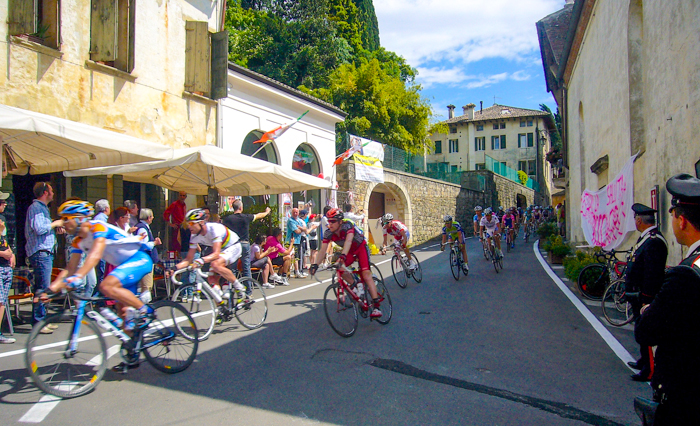
asolo-horizon-italy-cycling-toursOne of the things I love most about visiting Asolo during our tours is arriving with our small group of cyclists or walkers and finding ourselves totally outnumbered by locals. Especially on Sunday, when there is a steady stream of Italian cycling clubs making the climb to the Piazza Garibaldi – we blend right in, enjoying a cafe to recharge after the ascent. But unlike the cycling clubs, quickly off to complete their ride, we take some time to explore and appreciate one of the ‘hundred horizons’ that city of Asolo is known for.

cycling-club-asolo-cycling-toursA small, charming village today, during the late 15th and early 16th centuries, Asolo was a center of culture in the region. Caterina Cornaro was the queen of Cyprus until her husband died and she abdicated the throne. She sought refuge from the Republic of Venice, which in effect banished her to Asolo, where she ruled from 1489 to her death in 1510. During her reign, she established a magnificent Renaissance court in Asolo, including luminaries such as the painter Gentile Bellini and humanist Cardinal Pietro Bembo.

caterina-cornaro-castle-asolo-cycling-tours
Caterina Cornaro’s Castle in Asolo

A stroll around the town offers many opportunities to discover yet another lovely vista as you explore a hidden alleyway. A short walk will bring you to the Rocca, a fortress built on the summit of Mount Ricco that overlooks the center of Asolo. Stop into the Cathedral to view paintings by Lorenzo Lotto and Jacopo “da Ponte” Bassano.

pizza-garibaldi-asolo-walking-toursEnjoy a prosecco at a cafe along Piazza Garibaldi, just as English poet Robert Browning, actress Elenore Duse, and explorer Freya Stark must have done during their time in Asolo, all of whom made this lovely spot their home. Asolo is in fact known for it’s local prosecco, the Colli Asolani Prosecco wine zone has earned the highest quality designation in Italy, the DOCG. Look for Bele Casel’s Gran Fondo, an unfiltered, fresh prosecco that the locals enjoy, made using the original technique of fermenting in the bottle, how prosecco was made prior to the invention of the steel vats used today.

If you’re spending more time here, and want to enjoy a more leisurely meal, there are several great options.

Hosteria Ca’ Derton – just off Piazza Garibaldi. A traditional hosteria, casual, featuring typical regional dishes like pasta with local mushrooms.

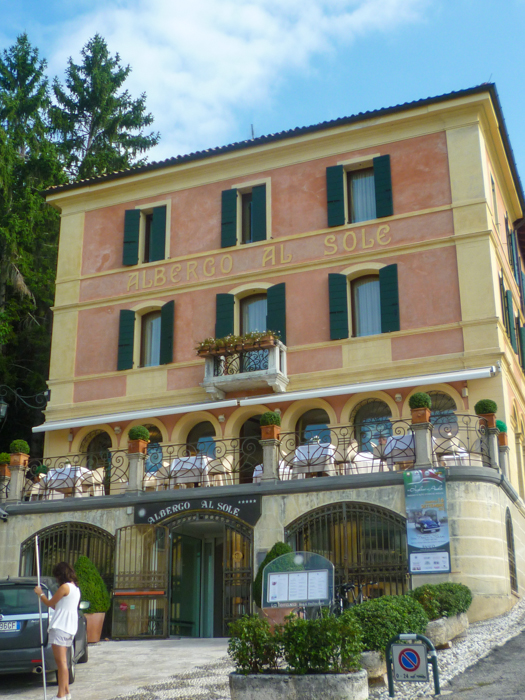
la-terrazza-asolo-walking-toursRistorante La Terrazza – located in Albergo Al Sole, you can enjoy a luxurious meal in their elegant dining room or on the terrace overlooking the city center. The best hotel in town, for those looking to stay overnight. They had Bele Casel’s Gran Fondo here during my last visit.

Ristorante Due Mori – fresh local ingredients, a wood-burning stove, and a panoramic view, a recipe for a memorable meal. Try the roast chicken.

We’re returning to Asolo in May, to watch the finish of Stage 11 of the 2016 Giro d’Italia.

asolo-giro-italy-cycling-tours
Giro d’Italia 2010 in Asolo
Posted in Travel, Veneto | Tagged , , , , , , , , | Leave a comment

Cooking in Italy – Barley Soup from Sudtirol

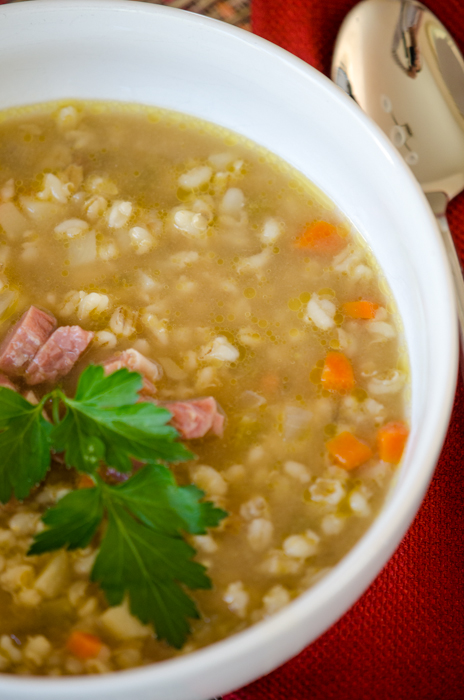
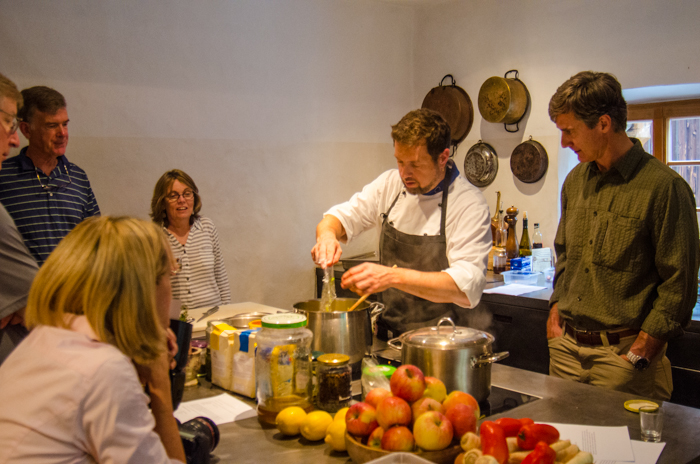
barely-soup-dolomites-hiking-toursAnother regional recipe from our favorite chef from Sudtirol, Michael Seehauser. Michael has worked with several of our groups during our hiking tours and cycling excursions in Trentino-Alto Adige, and we’re including a class with him next season on our Dolomites hiking tour. An active outdoors man, he has cooked in kitchens and campfires around the world, but loves the cuisine – and amazing landscape – of his home region best. I enjoy collaborating with him, as his recipes are both authentic and approachable. This soup is a perfect warm comfort dish to finish off a great day of skiing or hiking.

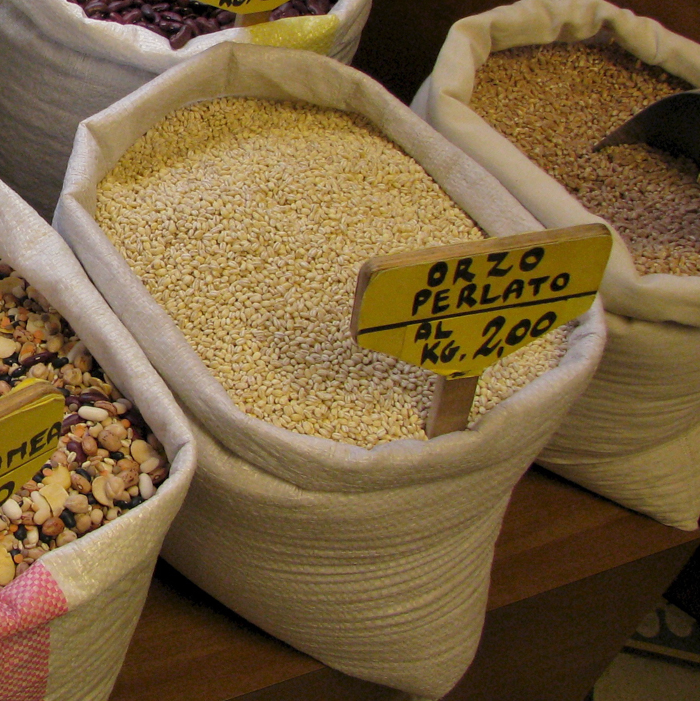
orzo-barley-bike-tours-dolomitesIn the US, we are familiar with a pasta called orzo. The size and shape of orzo pasta is similar to an unprocessed grain of barley, which is what orzo means in Italian. In Italy, however, this pasta isn’t as common as in the US, and I rarely see it in dishes besides a soup. When there, and ‘orzo’ appears on the menu, it is referring to the grain, barley.

Barley has been cultivated in Italy since ancient times, it is one of the first grains consumed in its wild form. Roman legionnaires would march off to battle with a bag of barley, which they would later boil in their helmets, making a hearty porridge. Its’ reputation for sustaining fighting forces was widespread; according to Pliny, barley was the special food of gladiators, who were also known as hordearii, or ‘barley eaters’.

barley-soup-demo-dolomites-hiking-toursOver the centuries, barley was replaced by more easily cultivated crops such as maize, or corn, and is no longer a commonly found grain in southern areas. However, as we move north and east into Trentino-Alto Adige and Friuli-Venezia Giulia, we see more barley being cultivated and consumed as it is particularly well-suited for cultivation at high altitudes and colder climates.

barley-soup-on-stove-dolomites-hiking-tours
Photo credit: Suzanne King

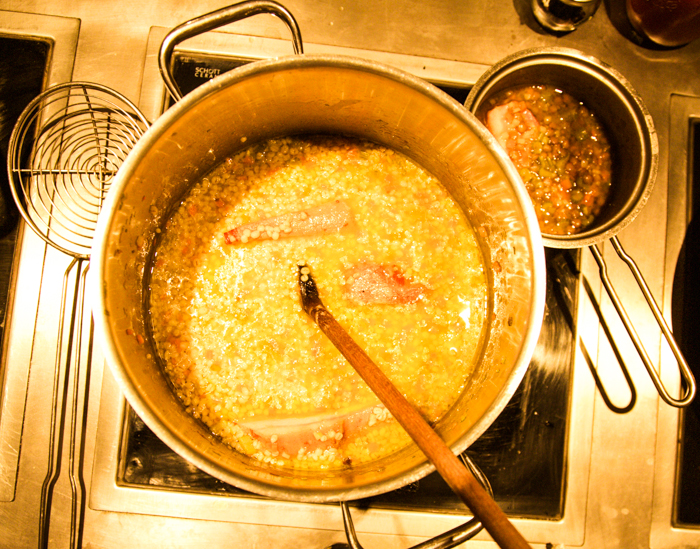
Chef Michael flavored this soup with a large hunk of wonderful speck from Trentino-Alto Adige. It is common to find speck sold as a single large piece in Italy, but not so here. Just ask at the deli counter – they may give you a questioning look, but it is easily done with a large knife. If speck is not available, use prosciutto, pancetta, ham, bacon, canadian bacon. If you can only find bacon strips, or slices of pancetta, don’t abandon the recipe! These thin slices will be difficult to remove and cut up after they are cooked in the soup, so cut up before and add these to the pot with the vegetables and saute. You would not need as much olive oil.

speck-room-dolomites-hiking-tours
Speck smoking room at our rifugio: Photo credit: Suzanne King

Gluten-free option: We had one guest on the tour who was gluten-free – we replaced the barley with 1/2 cup or so of lentils for a gluten-free variation.

Enjoy with a glass of Gewurztraminer, the ‘spicy’ grape from nearby Tramin.

Zuppa d’Orzo

Ingredients for 4 people

extra virgin olive oil
1/2 carrot, cut into 1/4 inch dice
1 stalk of celery, cut into 1/4 inch dice
3 minced shallots
1/4 cup white wine
4 ounces speck, in one large piece
4 ounces pearled barley
6 cups beef broth
olive oil, salt, freshly ground black pepper

Heat the olive oil in a large pot over medium-high heat. Add the carrot, celery and shallots and saute until translucent, about 5 minutes. Season with salt and pepper. Pour over the white wine, and cook until liquid is almost gone. Add the speck, barley and broth and simmer for about 1 hour
When the meat is cooked remove from the soup and cut into cubes and mix with the barley soup.Taste and adjust seasoning. Serve with finely chopped chives or parsley.

Posted in Gluten Free, Lentils, Soups, Travel, Trentino Food, Uncategorized | Tagged , , , , , , , , , , , , , , | Leave a comment

5 Tips for Dining Well – and Cheaply – in Venice

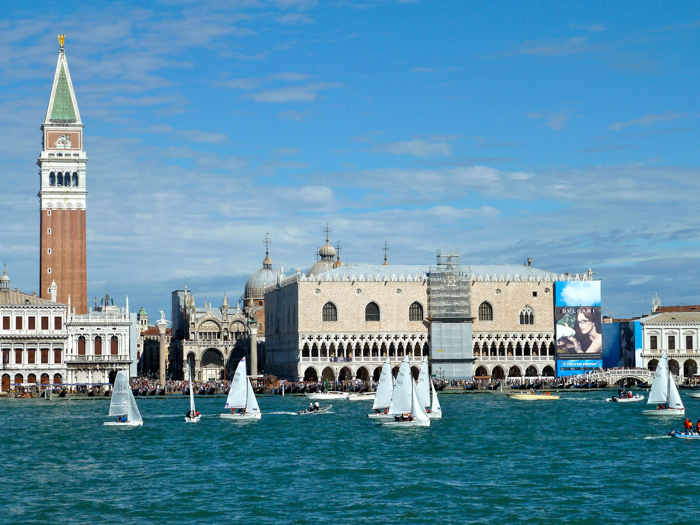
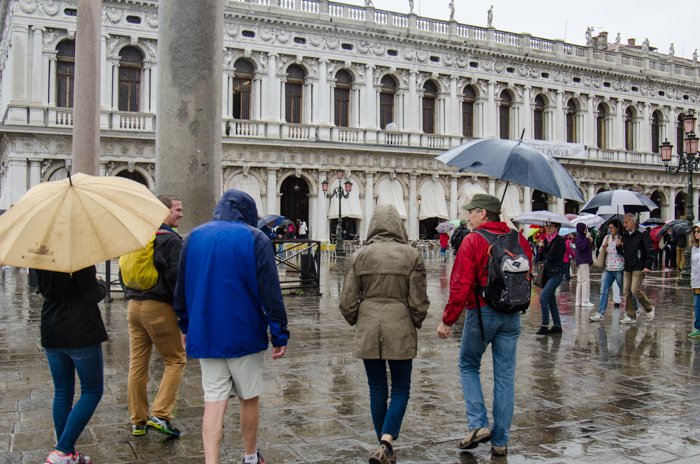
view-venice-walking-toursA destination we visit yearly on our cycling and walking tours, Venice has fascinated travelers from all over the world for hundreds of years. Built on more than 100 small islands in the midst of marshy lagoon in the Adriatic Sea, its pallazi seem to rise out of the water. There are no paved streets, and therefore no cars, trucks, scooters or bikes, just canals and boats. Tourists wind their way down narrow, maze like alleys, through small squares, often loosing their bearings several times before turning a corner to find their ultimate destination in front of them – the Grand Canal, the Doge’s Palace, Piazza San Marco. Getting lost in Venice is virtually inevitable, but also leads to some of my best discoveries.

private-venice-walking-toursI am often asked by our clients on how I find the restaurants I recommend and include on our Italy tours. Wandering off-the-beaten path is part of it, but I’ve also developed an eye for where to find those special places that offer a wonderful meal, rich in local products, reflecting the traditional regional cuisine. Here are 5 tips that may help you find that hidden, special neighborhood trattoria on your next visit to Venice.

1. Avoid the main tourist spots

It is a lovely to envision yourself enjoying a fantastic meal sitting in the Piazza San Marco gazing at the Doge’s Palace, or dining along the Grand Canal. But this is where everyone heads. Venice is a popular cruise ship destination, and on certain days in the summer will have passengers from multiple ships spending the day exploring the city. They head to Piazza San Marco and the Grand Canal. When I wish to enjoy a glass of prosecco here, I wait until the evening when the cruisers have returned to their ship. And I accept the fact that I’m going to pay double the cost for the prime location.

harrys-venice-walking-tours2. If you wish to visit the famous Venetian dining institutions, be prepared to pay

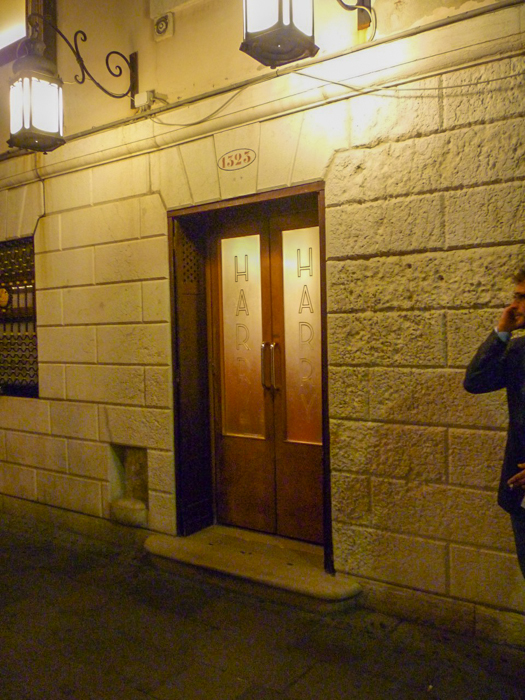
Venice is home to several restaurants with long-standing reputations as dining destinations. At the time of my last stop at Harry’s Bar, made famous in the writings of Hemingway, a glass of coke was 13 euro, a whiskey based cocktail 26 euro, or with the exchange rate at the time, around $36. I left.

Another nasty surprise when I dined at Trattoria alla Madonna, a spot often recommended for those looking to experience a classic seafood restaurant near the Grand Canal – on top of the higher than average prices, an additional 18% ‘servizio’, or service charge. appeared on my bill. Tipping is NOT expected in Italy (there is no entry for tip income on a tax form in Italy, for example) and this servizio charge is simply to guilt tourists who are used to tipping into paying even more. I never recommend a restaurant that includes this charge.

So if your heart is set on including one of these institutions during your visit, do so – but be forewarned on the price tag. I personally want the most memorable part of my meal to be the food, the wine, and the overall experience, not the final bill.

menu-venice-walking-tours3. Take a look at the posted menu

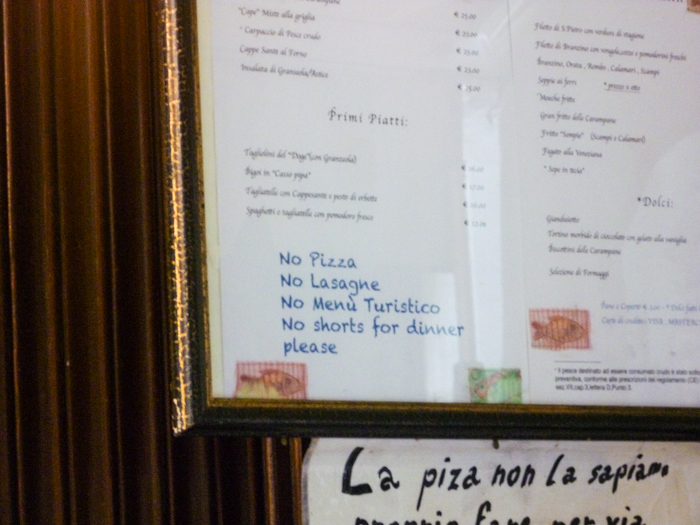
Stroll along the Grand Canal at lunch or dinner time, and you will routinely be approached by restaurant host stationed outside the door, cajoling you to dine in their establishment (who falls for this, I wonder?) These places, and others, prominently display a large Menu Turistico, a Tourist Menu. Written in multiple languages, with photos of the dishes, and featuring items such as pizza, lasagna, and caprese salad, this type of menu delivers one message loud and clear “We haven’t changed our menu in years!”

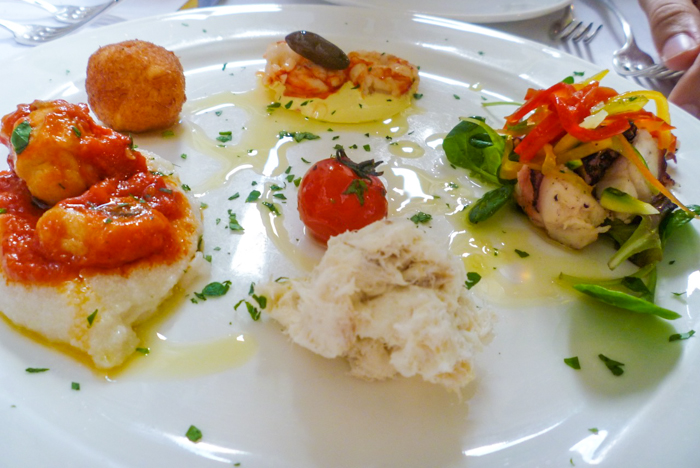
seafood-venice-walking-toursI head away from these main tourist routes, and look for the small trattorie with a blackboard and a handwritten menu, a good sign the menu changes frequently to reflect what’s fresh and in season. I am especially intrigued when the menu is written in a seemingly strange version of Italian – the Venetian language, a Romance language still spoken by some residents of this region. The well-known local risotto with peas (risotto con piselli), is called “risi i bisi” in the Venetian language. I don’t always know what I am getting, but that is part of the adventure and I am sure this place is not catering to tourists. In Venice, it is quite rare to have a restaurant where not one employee speaks enough english to translate the menu for you, so step inside and try it out.

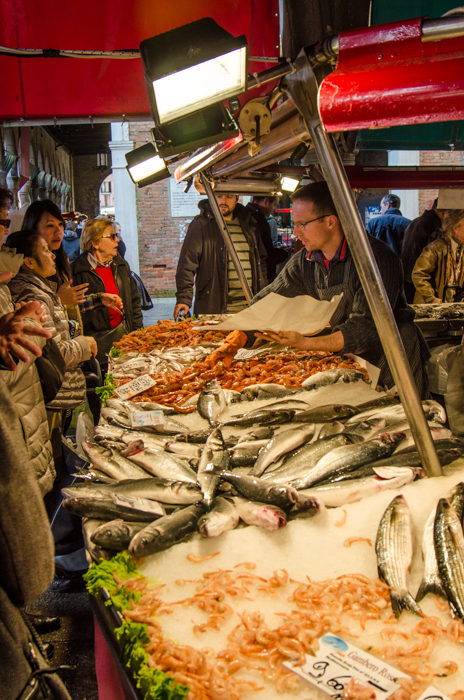
rialto-fish-market-venice-walking-tours4. Restaurants near the Rialto market

Since the year 1097, Venetians have gathered at the Rialto market for their fresh fish, vegetables, fruit, meats, cheeses, and salumi. Early in the morning barges arrive at the nearby port along the Grand Canal, unloading freshly caught fish and shellfish, and produce from nearby islands like Sant’Erasmo. Delivery men push handcarts laden with fruits, vegetables, cheeses. The market is one of the best food markets in Italy. An early morning visit will have you rubbing shoulders with chefs from the nearby restaurants as they figure out what their menu will feature that day. So head away from the Grand Canal into the neighborhoods behind the market to find some wonderful local spots. As the Rialto fish market is closed on Sunday and Monday, many of these restaurants are too, and those that aren’t are selling day old fish (gasp.)

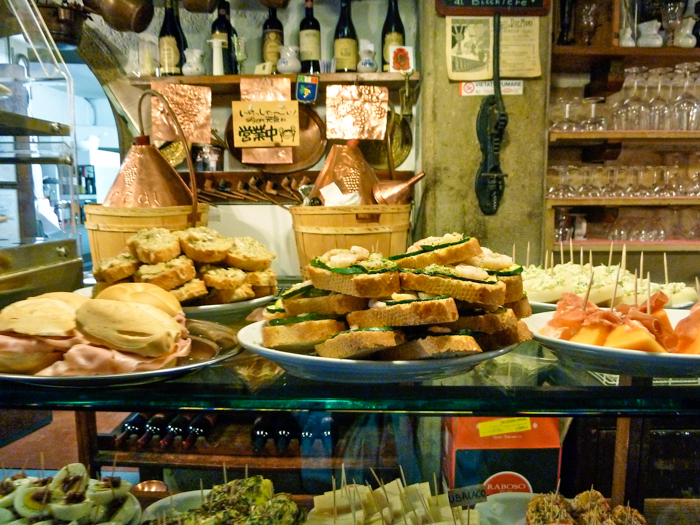
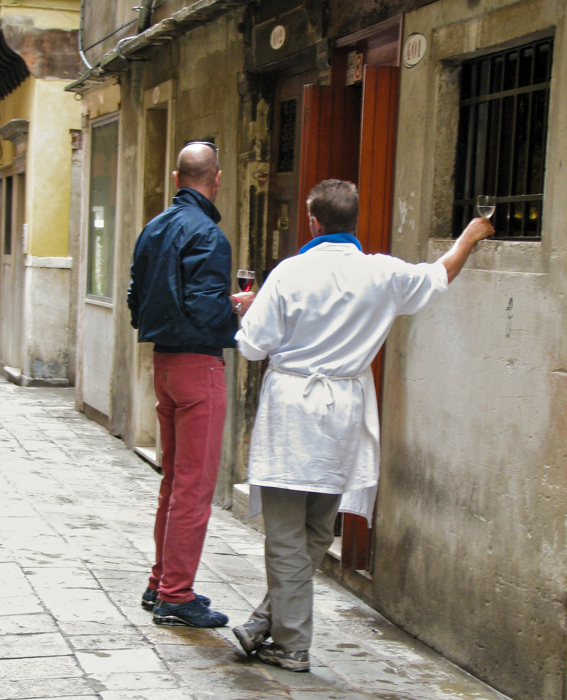
cicchetti-venice-walking-toursJust around the Rialto market are the Venetian baccari, or wine bars. The locals head here after their shopping to sip a restorative glass of prosecco and sample a variety of little snacks called cicchetti or cichetti. Similar to the Spanish tapas, these snacks will feature many of the wonderful seasonal foods you just admired in the market. A walking tour of the wine bars is a great end to the morning; called a giro d’ombra, or tour of shadows, as ombra is local slang for a glass of wine. Years ago, vendors selling glasses of wine to market visitors would keep their wine cool by moving periodically to follow the shade, or shadows.

chef-market-wine-venice-walking-tours5. Explore outside of San Marco

Venice is divided into six areas or “sestiere”. These are Cannaregio, San Polo, Dorsoduro (including the Giudecca and Isola Sacca Fisola), Santa Croce, San Marco (including San Giorgio Maggiore) and Castello (including San Pietro di Castello and Sant’Elena). Most tourists never venture outside of San Marco, home to the major tourists attractions. If you visit the Rialto market, you’ve made it into San Polo. But the other sestiere are well worth a visit, with many interesting but lesser know sites, and eateries undiscovered by tourist crowds.

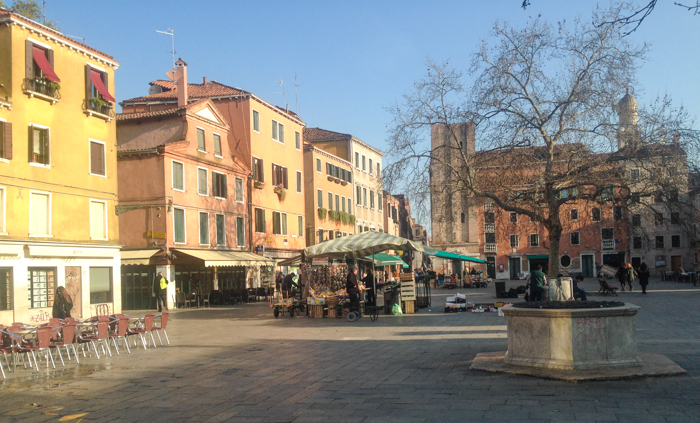
campo-venice-walking-toursCannaregio is the northernmost sestiere, the historical home of the Venetian Jewish Ghetto. Today, the areas of the district along the Grand Canal from the train station to the Rialto Bridge are busy with tourists, but the rest of Cannaregio is residential and relatively peaceful, with morning markets, neighborhood shops, and small cafés.

Castello is the largest of the six sestieri of Venice, Italy. This district is dominated by Arsenale, once the largest naval complex in Europe, and by the monasteries in the north of the quarter. After learning about Venetian naval history at the Arsanale, wander the streets and enjoy the local macelleri (meat shops), bakeries and restaurants.

Dorsoduro is located the other side of the Grand Canal from San Marco. Here you will find many of Venice’s famous museums, including the Accademia Gallery and the Peggy Guggenheim Collection. Dorsoduro is a vibrant community, where foreign residents of Venice mix with the students and academics from Foscari University. Spend an evening people watching at one of the bars, cafes, and restaurants in lively Campo Santa Margherita.

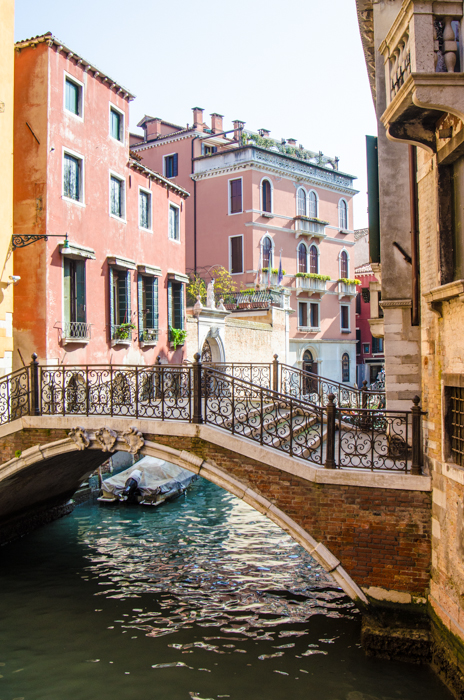
bridge-private-venice-walking-tours

Posted in Travel, Uncategorized, Veneto Food | Tagged , , , , , , , , , , , | 1 Comment