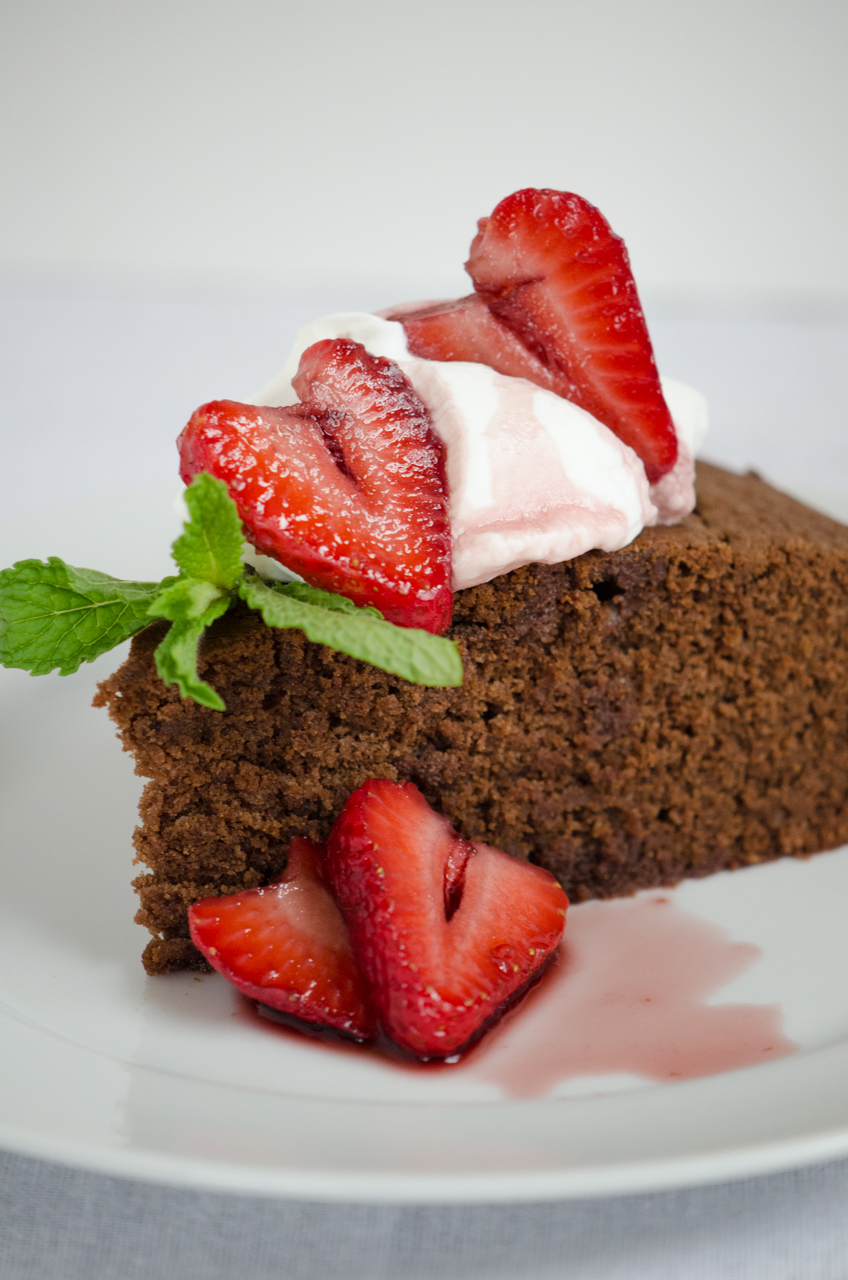
Torta al Vino Rosso con Fregola – Red Wine Chocolate Cake with Strawberries

torta vino rosso wine bike tours italy italiaoutdoors food and wineThis recipe was recently featured in an article in La Cucina Italiana magazine, entitled Italy’s Best Desserts. The author is Francine Segan, a food historian and the author of a new book, Dolci: Italy’s Sweets. I loved the article, Francine offered some very traditional sweets that included some wonderfully unique flavor combinations. Her background as a food historian shines through as she shares the story behind the recipes, something I try and share with our guests during our cooking classes on our culinary bike tours.
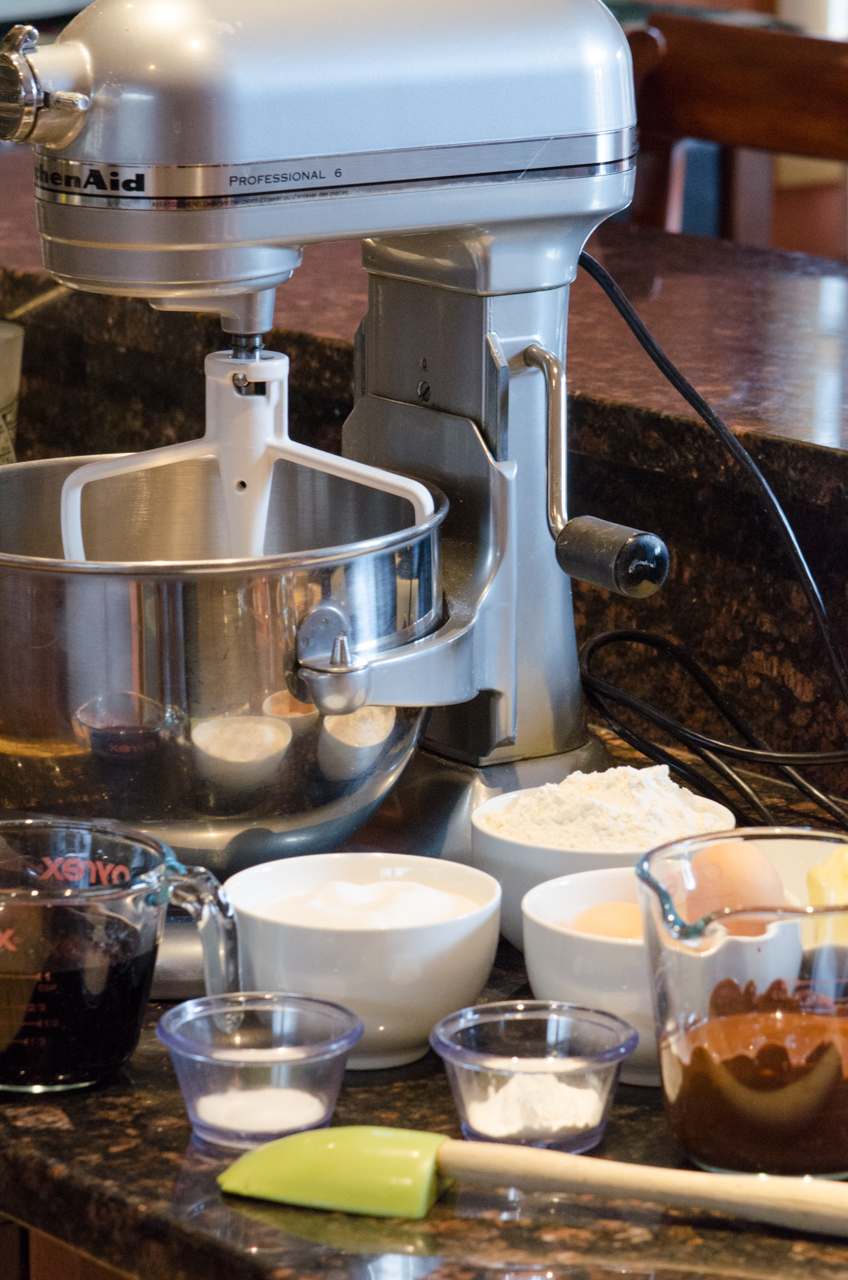
ingredients with mixer cycling holidays umbria italiaoutdoors food and wine
Francine was taught this recipe from Paola, a woman from Bologna who shares her regions (Emilia Romagna) cuisine with foreign visitors through Home Food Italy (homefood.it). She explained that this cake is usually served with a glass of dry red wine. As this cake is not overly sweet, Italians will serve it after a meat-based secondi with a red wine sauce, so guests can continue to enjoy the same red wine from dinner through dessert, which is usually frowned upon in Italy. The fruit of the wine provides a wonderful foil for the dense, dark chocolate.
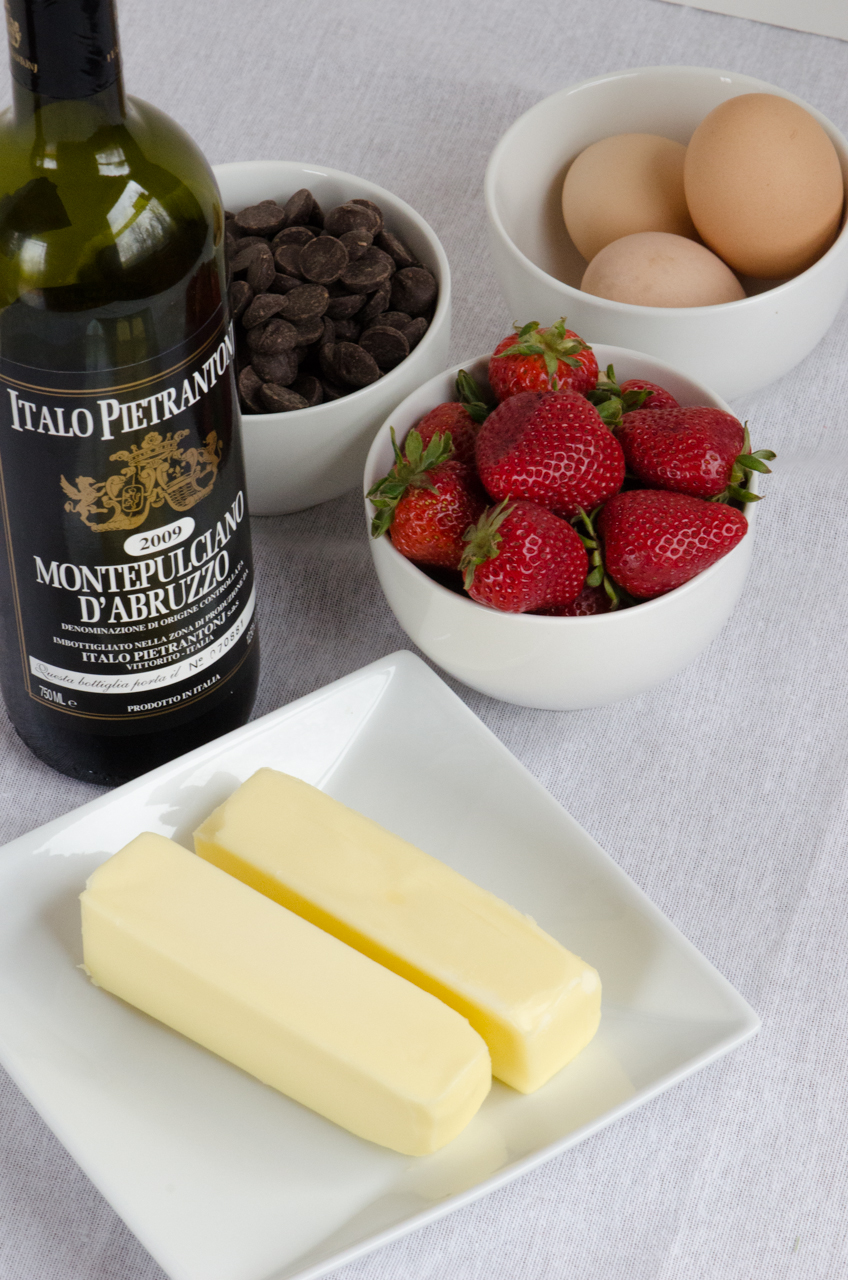
raw ingredients bike tours italy italiaoutdoors food and wine
Francine includes raspberries in her recipe, but I decided to use strawberries instead, as the season is just around the corner. Browsing through Lynne Rosetto Kasper’s A Splendid Table, I found the perfect strawberry recipe – Fragole al Vino Rosso. I thought this the perfect accompaniment to the torta, with one simple change; I replace lemon juice with balsamic vinegar, one of Emilia Romagna’s signature products, and a perfect pairing with fresh strawberries.
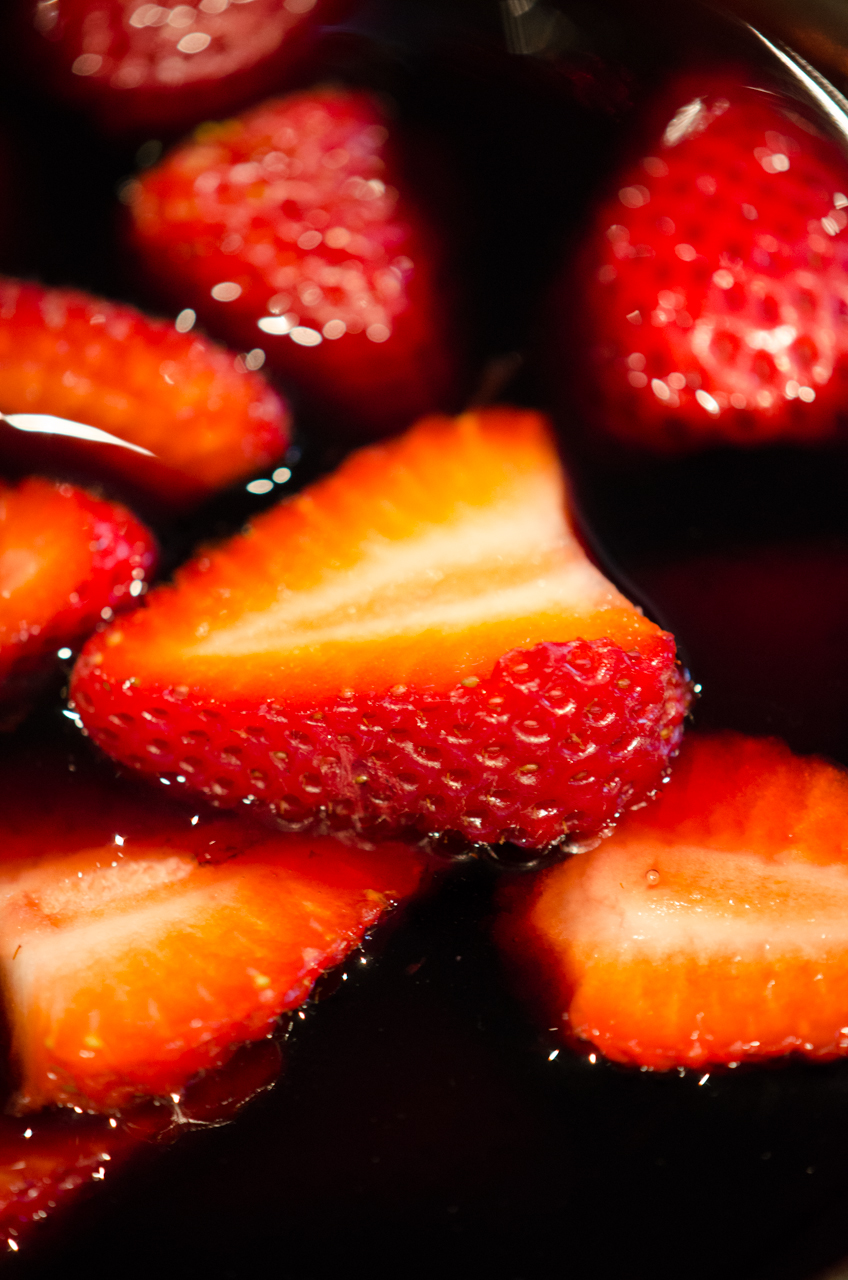
strawberries in balsamic luxury bike tours italy italiaoutdoors food and wine

Torta al Vino Rosso

1 cup (2 sticks) unsalted butter, at room temperature, plus more for greasing pan
1 1/2 cups unbleached all-purpose flour
1 tablespoon baking powder
3/4 teaspoon fine sea salt
1 1/4 cups sugar
3 large eggs, separated
5 ounces good-quality bittersweet chocolate (80% or more), melted
1 cup dry red wine

Preheat oven to 350°.

Grease a 9 or 10-inch springform pan and line the bottom with parchment paper. Butter the parchment.

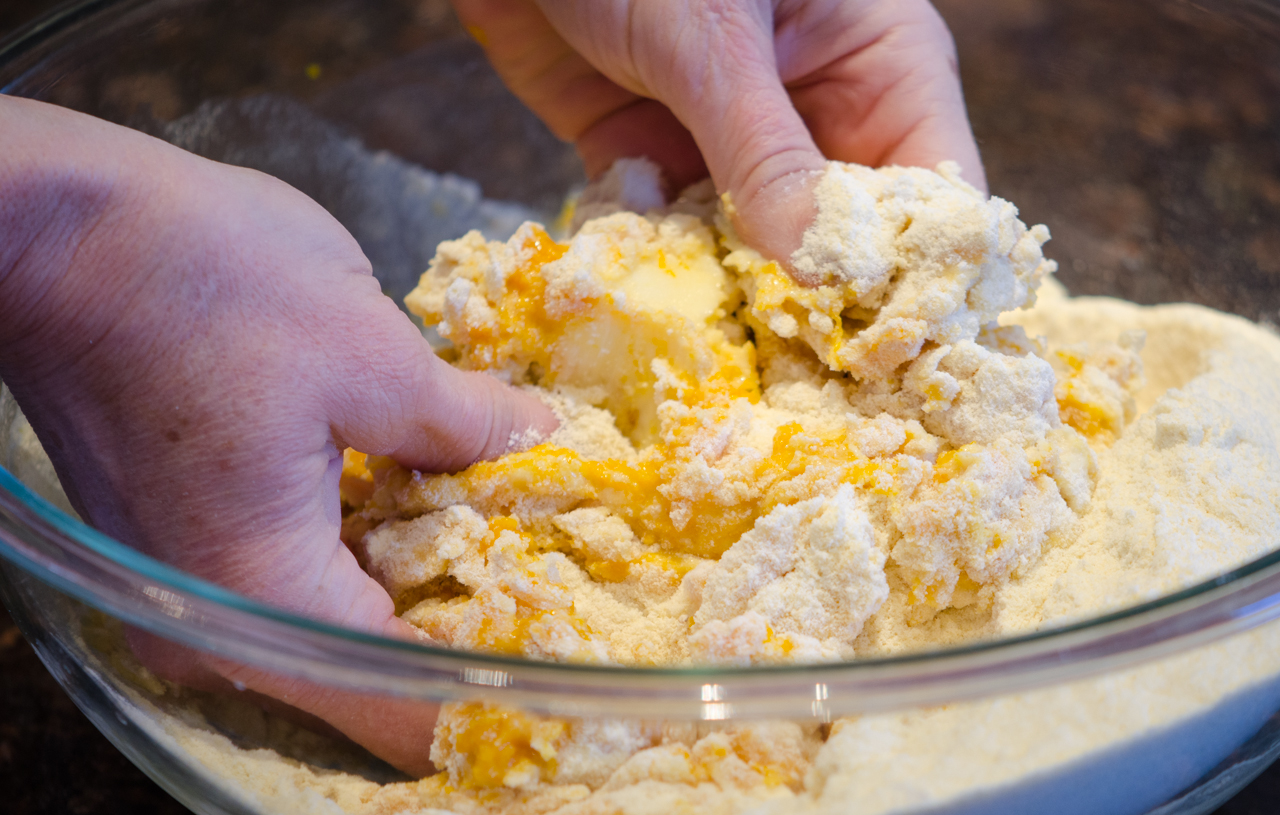
In a large bowl, whisk together four, baking powder, and salt, set aside. In the bowl of an electric mixer fitted with the paddle attachment, beat together butter and 1/2 cup sugar on medium speed until light and fluffy, about 4 minutes. Beat in egg yolks, 1 at a time, scraping bowl as necessary. Add chocolate; beat just to combine. In 3 additions, add wine to butter mixture, alternating with flour mixture.

In a large bowl, using a clean whisk beater, beat egg whites until soft peaks form. Gradually add remaining 3/4 cup sugar and beat until the whites are firm and glossy.
Using a spatula, gently fold whites into batter just until no white streaks remain. Pour batter into prepared pan, smooth top with spatula. Bake until a toothpick inserted in the center comes out clean, 40 to 45 minutes.

Transfer cake to wire rack; let cool in pan 10 minutes. Run a knife around pan to loosen cake, release from pan. Let cool completely on wire rack.
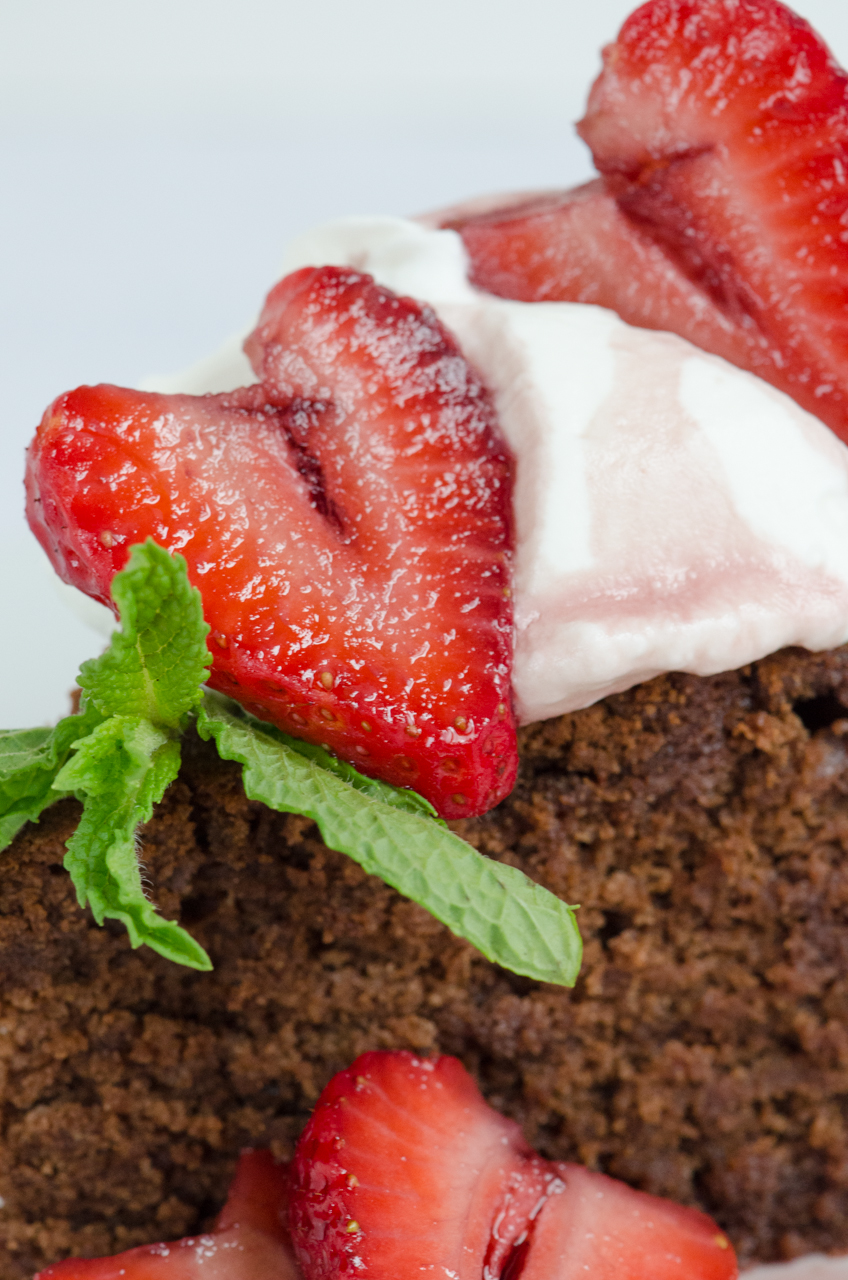
 

torta vino rosso close wine bike tours italy italiaoutdoors food and wineFragole al Vino Rosso

1 cup fruity red wine (Valpolicella, Merlot)
1 tablespoon balsamic vinegar
2 tablespoons sugar
1 pint ripe strawberries, rinsed, hulled, and sliced

Combine the wine, balsamic vinegar, and sugar in a deep bowl. Add the strawberries. Let stand 1 hour at room temperature. Then refrigerate 30 minutes to 1 hour before serving. Keep them much longer than 2 hours softens the fruit too much.
Posted in Baking, Dessert, Emilia Romagna, Uncategorized, Wine Pairings | Tagged , , , , , , , , , , , , , , , , , , , , , , | 3 Comments

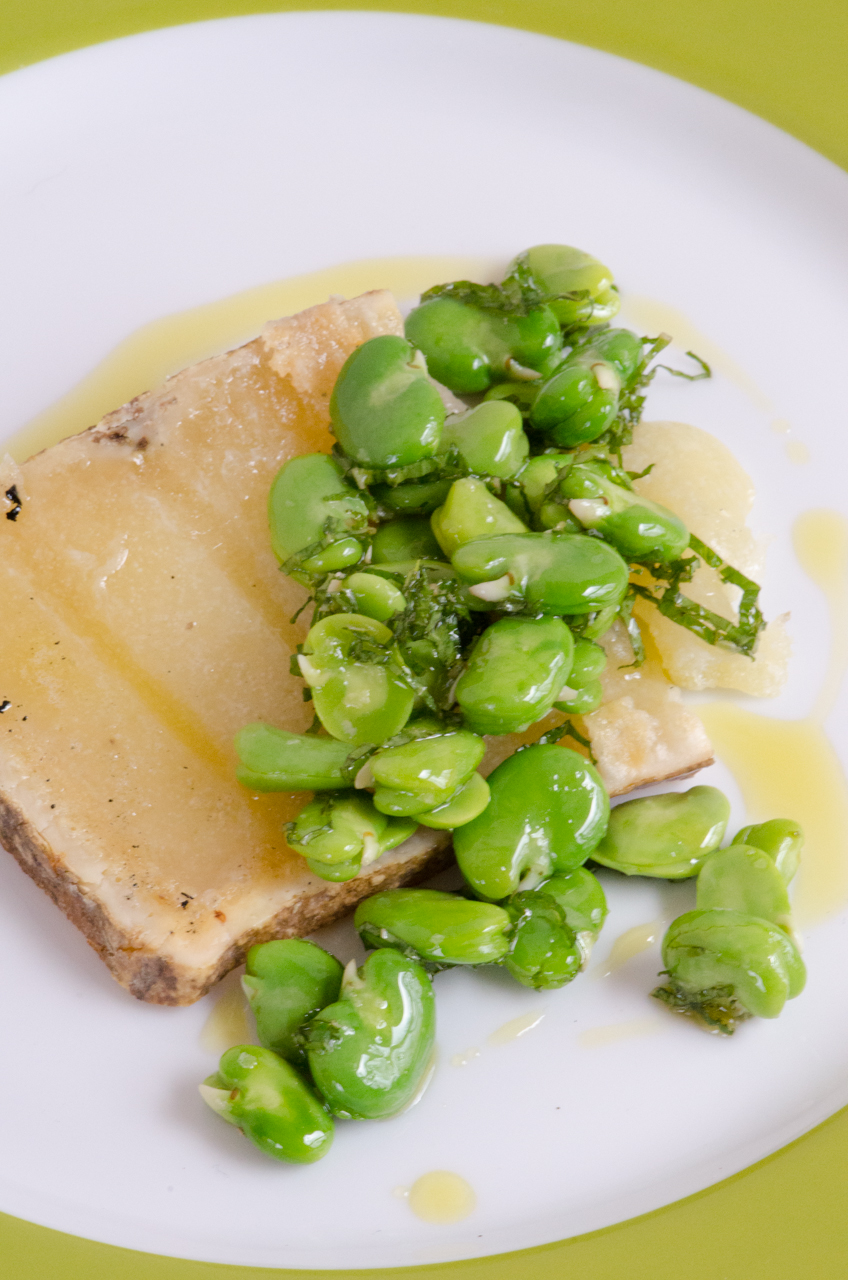
Grilled Pecorino with Fava Bean Salad

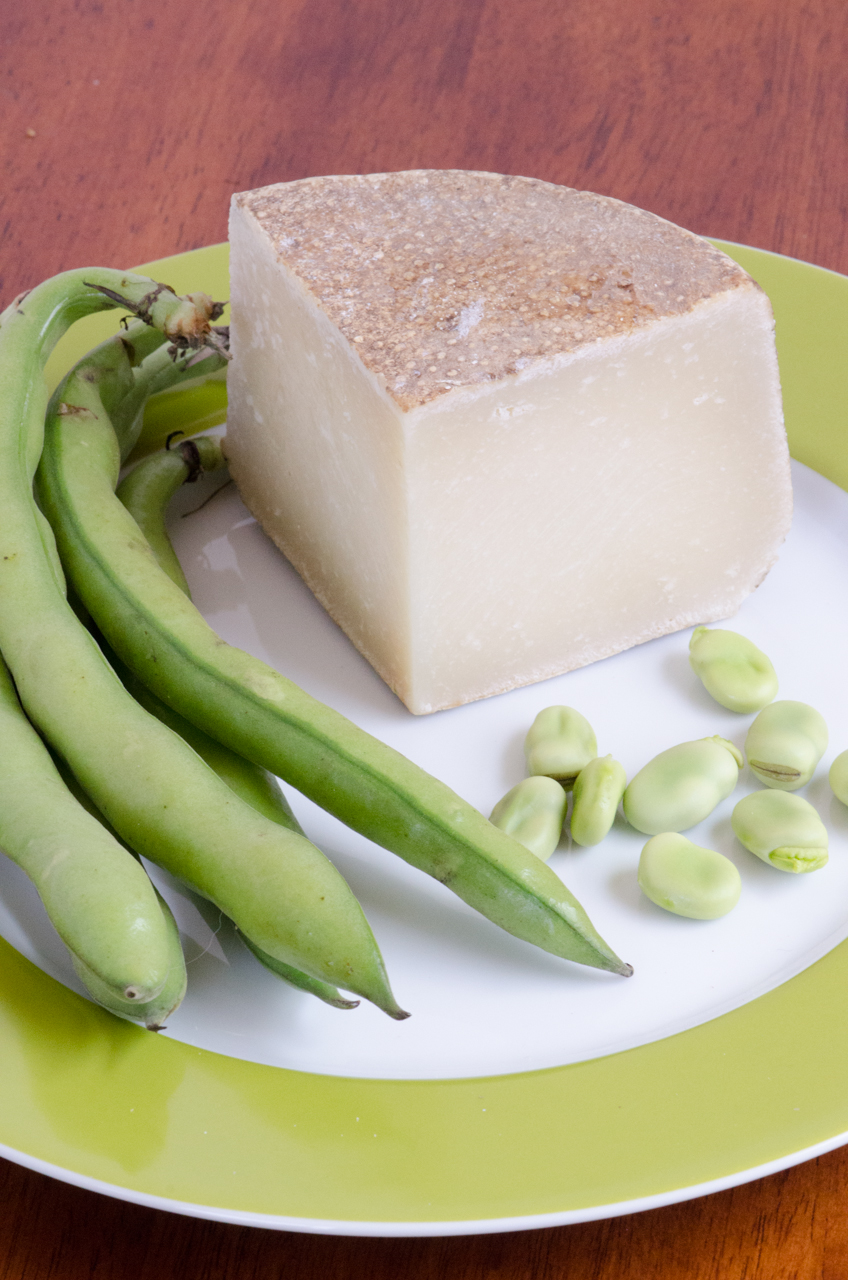
grilled pecorino and favas private bike tours italy italiaoutdoors food and wineFava beans, or broad beans (fava is Italian for ‘broad bean’) have been cultivated in the Old World for thousands of years. Along with lentils, peas and chickpeas, these easy to grow beans have been part of the Mediterranean diet since about 6000 BC. From Elizabeth Schneider’s Vegetables from Amaranth to Zucchini: “This venerable mainstay of the Old World has been cultivated for so long that its wild ancestor and place of origin are no longer traceable. Found from China to England, where they are known as broad beans, they are now most associated with the south of France and Italy.” This association with Mediterranean cuisine has made the fava bean highly sought after by chefs; the labor involved with preparing them unfortunately makes them a bit intimidating for home cooks.
peeling fava beans culinary bike tours italy italiaoutdoors food and wine
But, once you go through the laborious preparation, very little needs to be done. Simplicity is key here – Elizabeth quotes my good friend, cycling companion and chef, Jody Adams: “I feel they are one of those foods that should be treated with almost ritualistic simplicity.”

pecorino and favas private bike tours umbria italiaoutdoors food and wine
Salty hard cheeses and fava beans are a classic combination. In Tuscany, one of the regions we visit on our Bike the Wine Road cycling tours, the salty hard cheese of choice would be one of the many Pecorino cheeses produced here.  The name “Pecorino” is a somewhat recent invention. Pecorino comes from the word pecora, meaning sheep, as these cheeses are made from ewe’s milk. But prior to the end of World War II, every area in Tuscany had it’s own “cacio” that it made from ewe’s milk, using very similar production techniques. Today, you will find many types of pecorino cheeses in Tuscany (as well as Sardinia, Lazio and Sicily). Pecorino Toscano has earned the EU DOP quality designation. So the salad itself is quite simple; this is an adaptation of a dish from Elizabeth Schnieder’s book. The labor – multiple steps, but each quite easy – is in the preparation of the beans themselves.

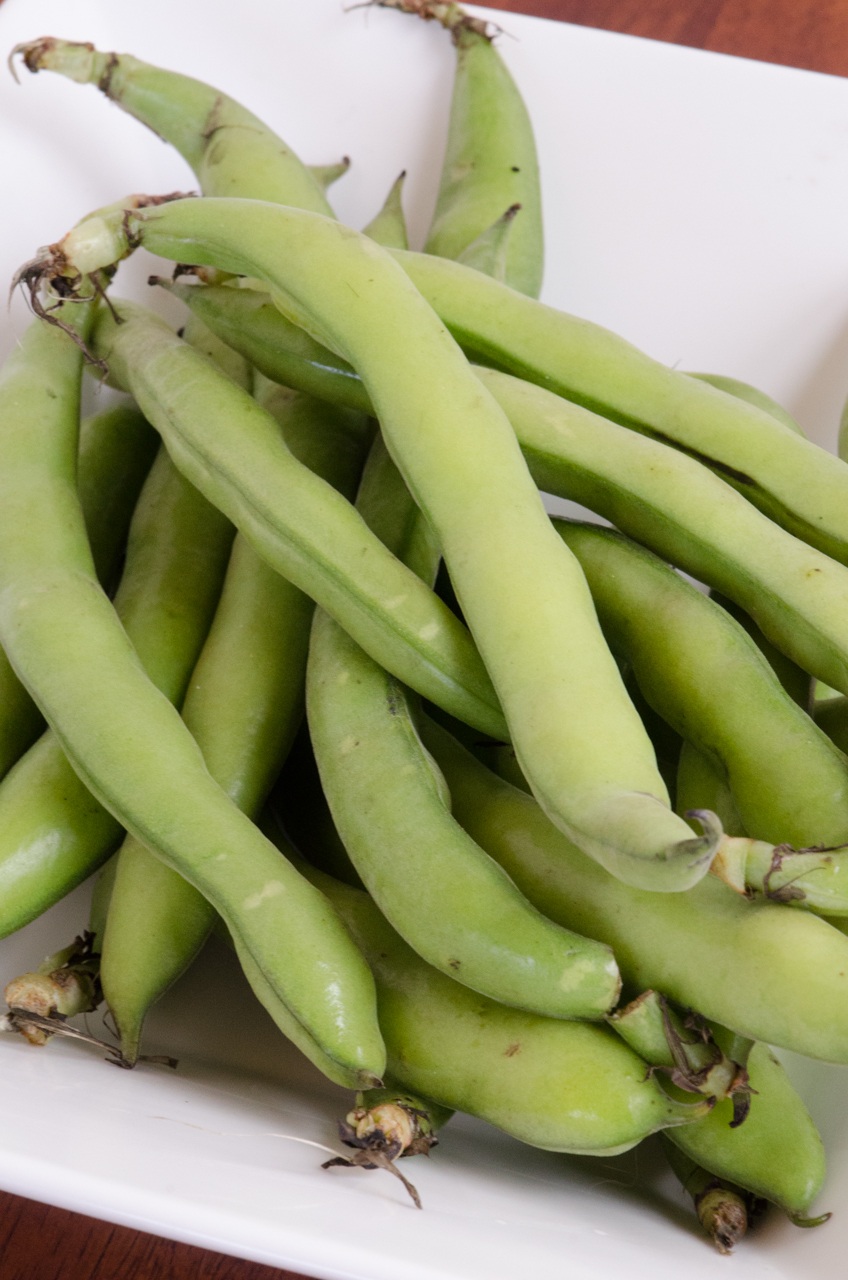
fava bean pods private bike tour italy italiaoutdoors food and wine
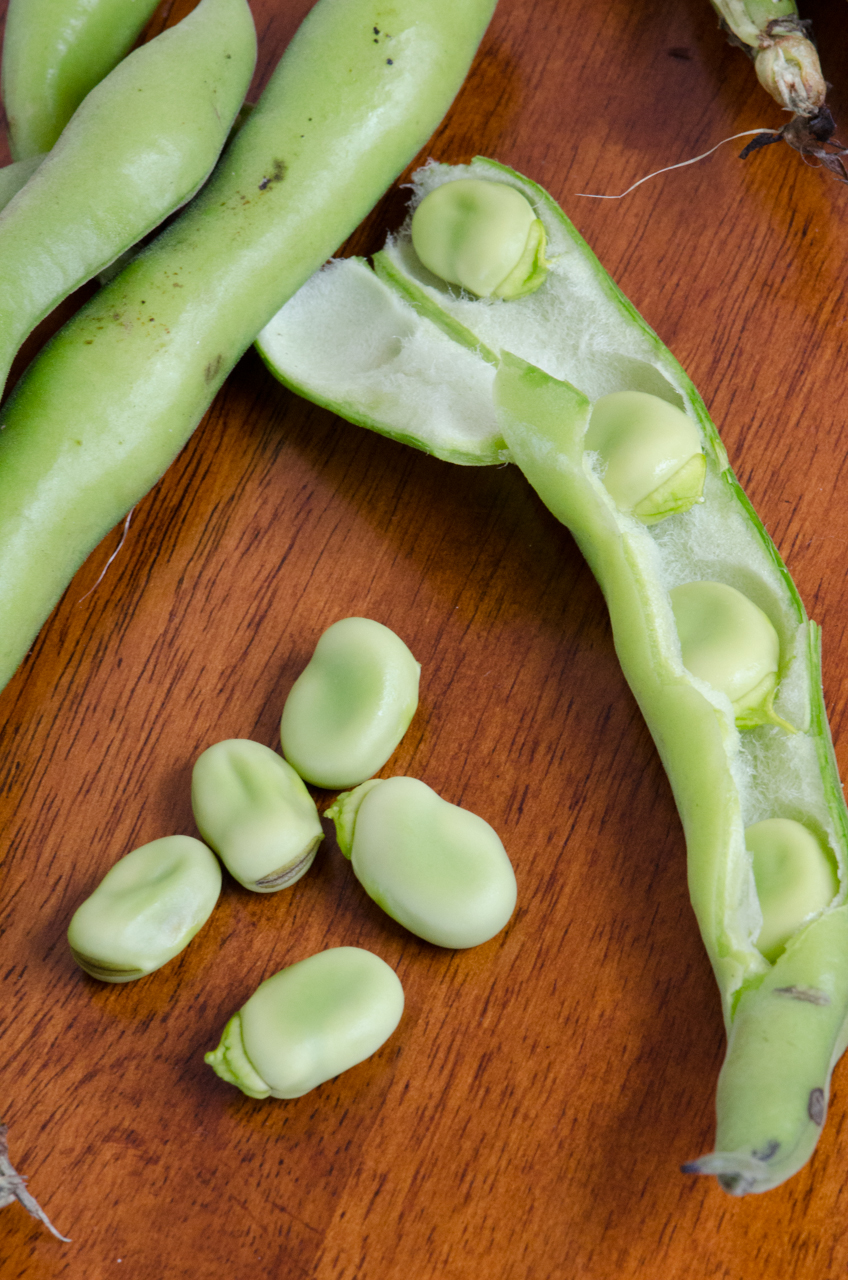
Unless you have access to favas straight off the vine, and using them in stews or purees, you will need to both shell and skin them. Most beans sold in the US will require both. First, spend some time picking out the right beans. You should inspect each pod, feeling for large, individual beans. In my enthusiasm to actually see them in stores – they still rarely grace the produce section in my neck of the woods – I have grabbed handfuls, to get home and open them up and find beans so immature as to yield nothing after peeling. You want to inspect each, feeling for beans inside each pod that are as large as a fingernail.
unpeeled fava beans wine cycling holidays italy italiaoutdoors food and wineNext, you will need to shell, blanch, and then peel your fava beans. To do this: Snap the tips off the pods, then strip any strings along the pod. Open the seam, and pull out the individual beans from the plush pod in which they lie.
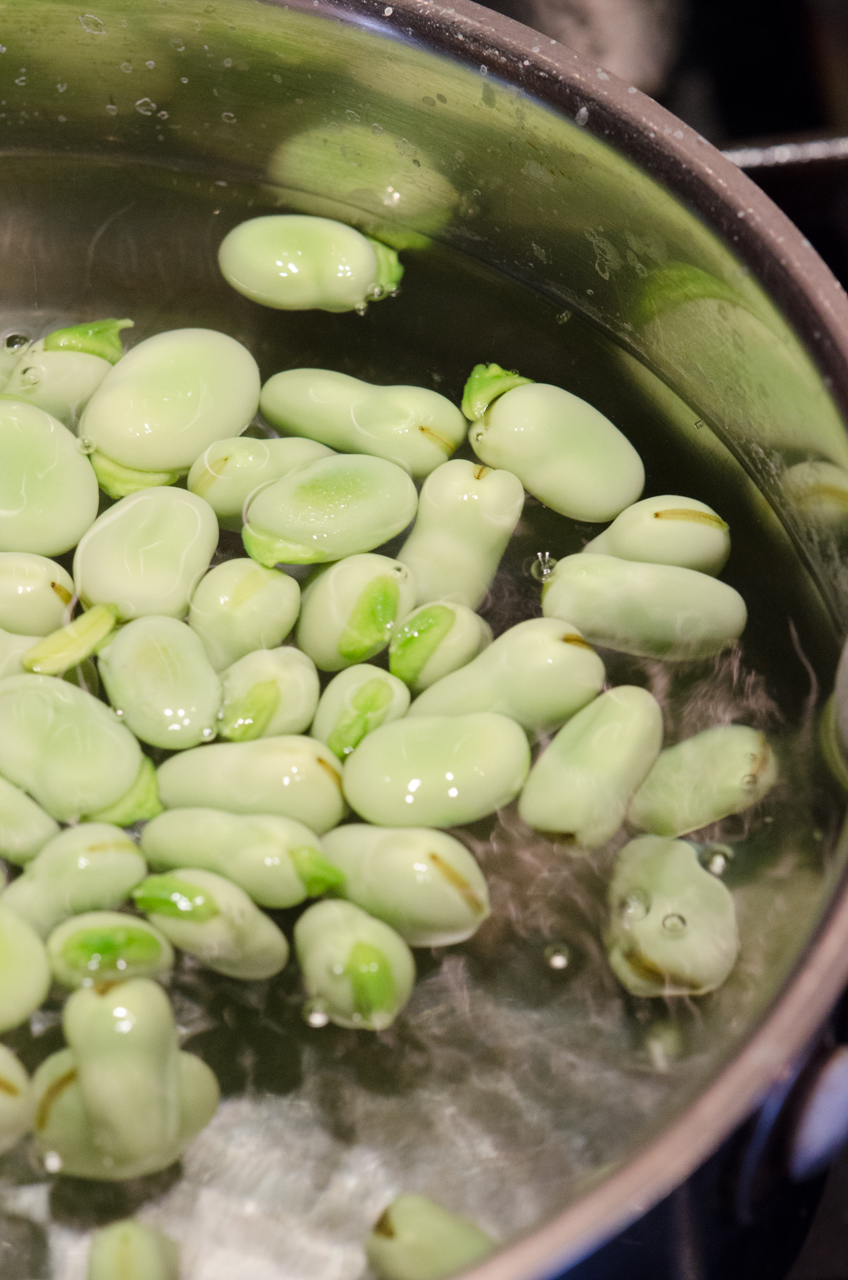
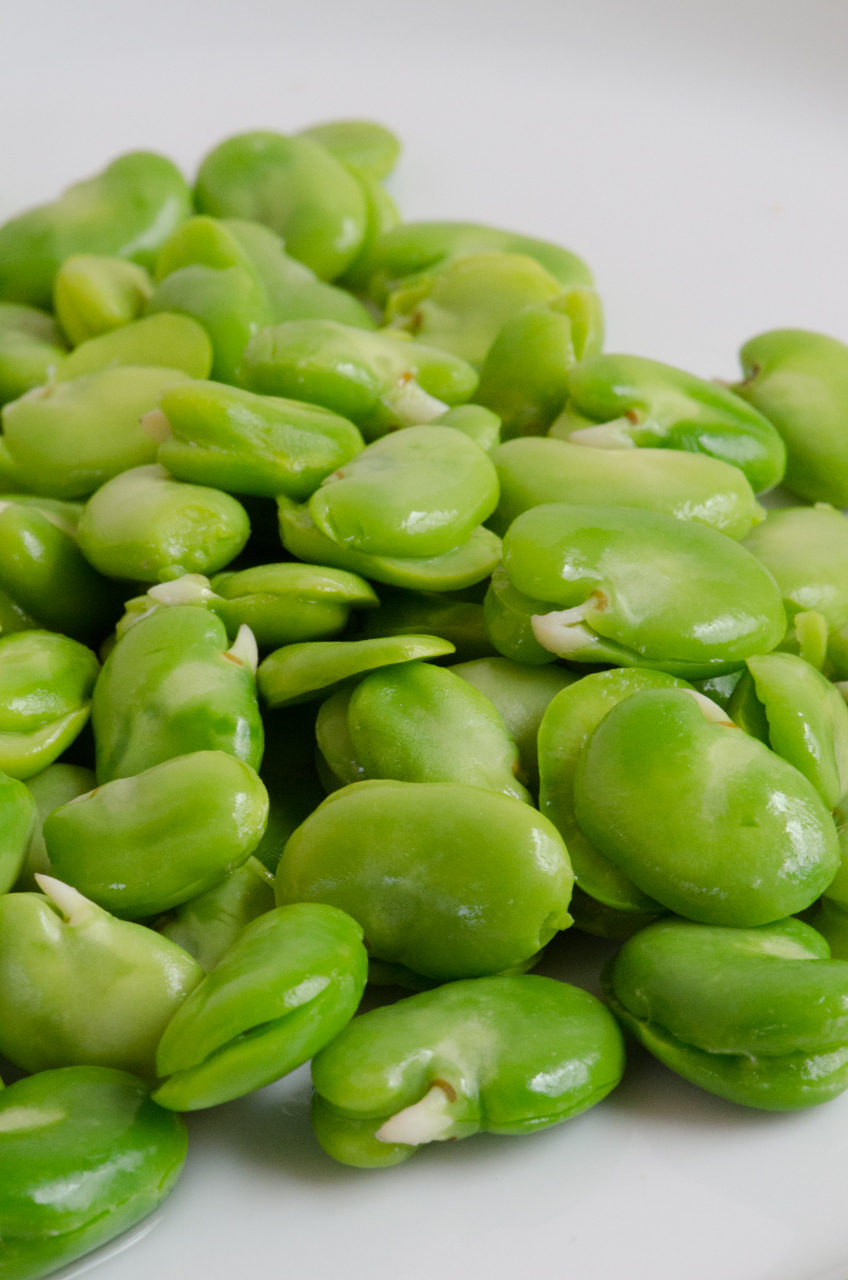
blanching fava beans bike tours umbria italiaoutdoors food and wineBring a pot of water to a rolling boil, and salt. Dump the beans into the boiling water, and return to a boil. Do NOT cover. Cook for 30 seconds to 1 minute, depending on size. No more, or they will squish when you skin them. Drain and drop into ice water to stop the cooking process.
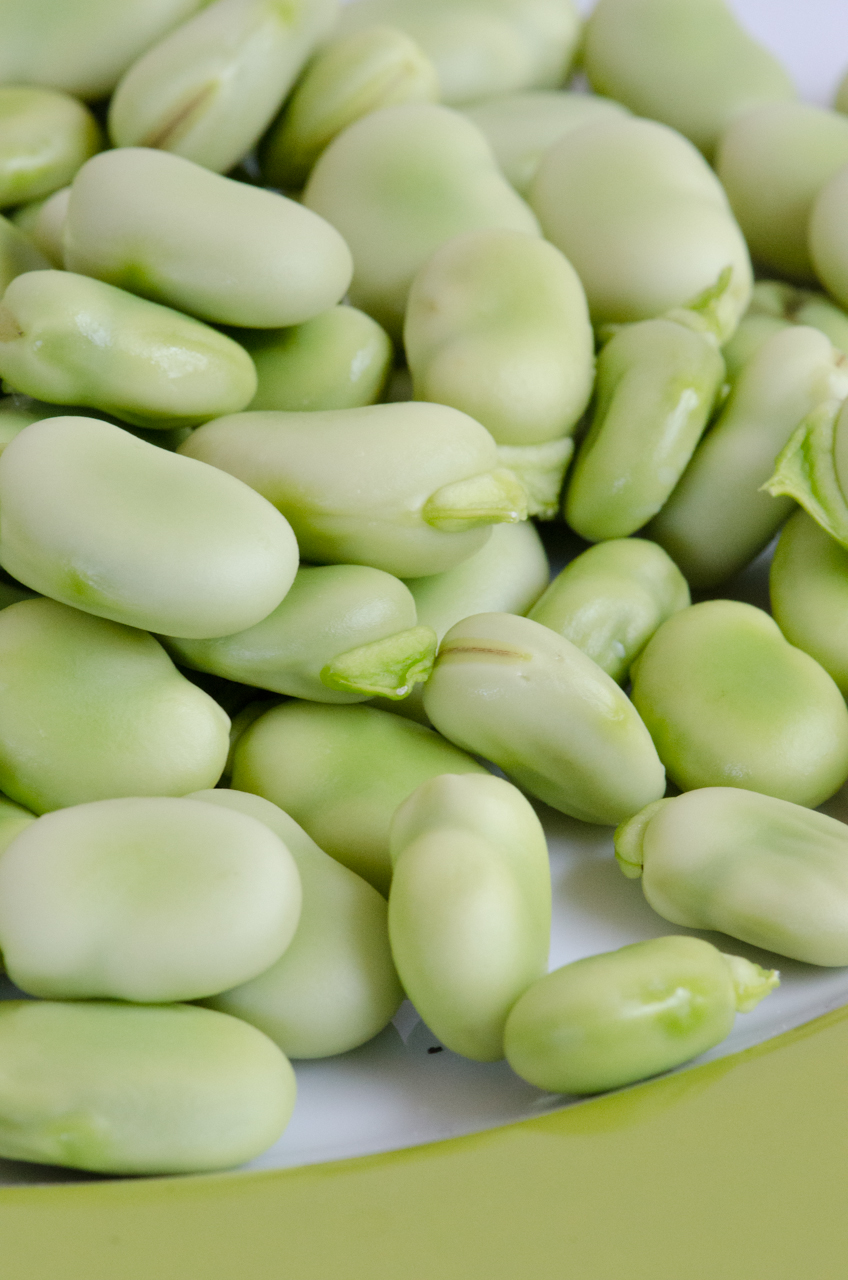
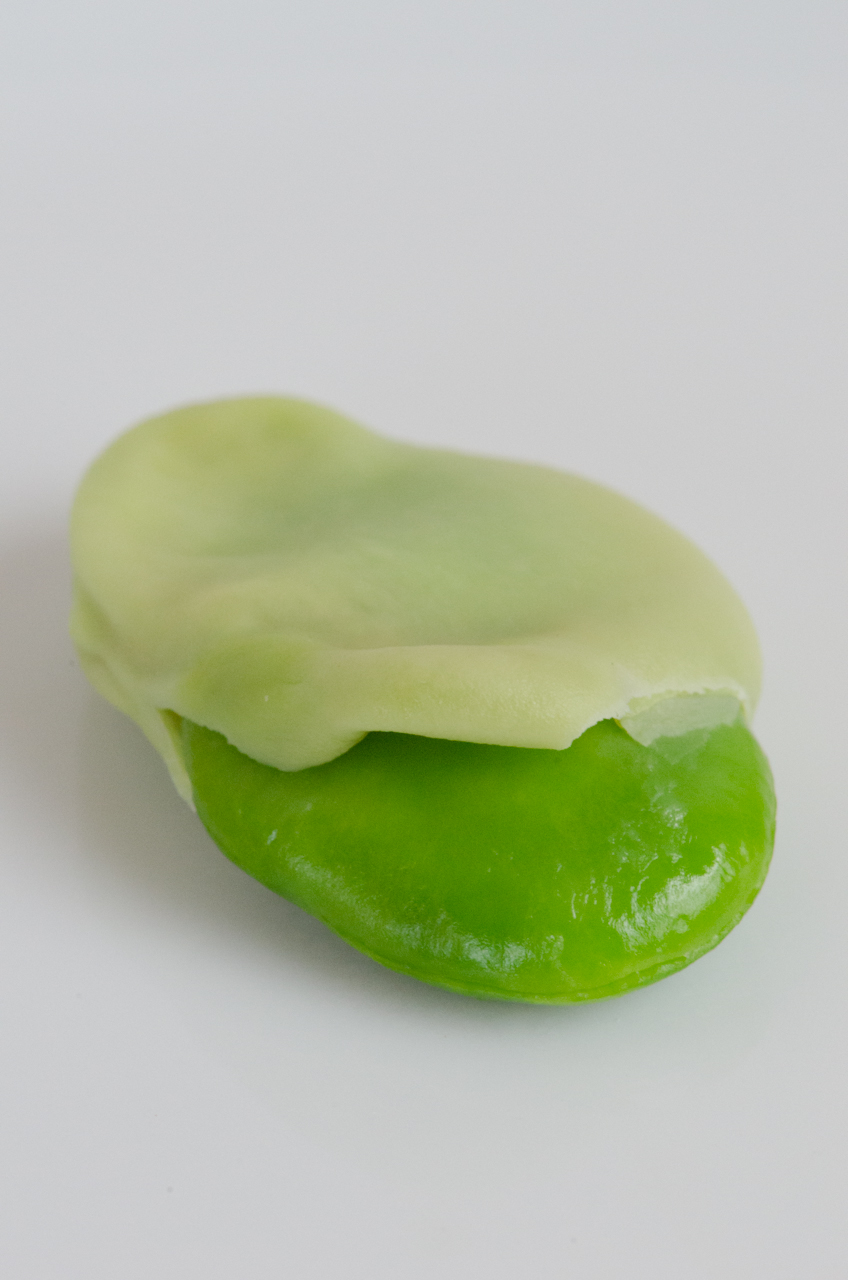
peeling fava cycling tours tuscany italiaoutdoors food and wineTo peel, pinch a bit of skin off of the top of each bean with your fingernail. You will then be able to squeeze the bean at the opposite end and pop out the bean. Truly a labor of love.

blanched favas dolomites cycling tours italiaoutdoors food and wineGrilled Pecorino with Fava Bean Salad

Serves 4

8 ounces aged Pecorino, sliced into 1/2 inch slices
20 – 25 pods fava beans
2 tablespoons extra virgin olive oil, plus more for drizzling
1 clove garlic, finely chopped
5 leaves fresh mint, chiffonade
Kosher salt

Blanch favas and peel when still warm. Toss with olive oil, garlic, and fresh mint. Season with salt.

Grill the pecorino cheese until just colored on each side and soft. Place warm cheese on plate and spoon over the fava beans. Drizzle with olive oil and serve.

Posted in beans, Gluten Free, Salad, Travel, Tuscany, Uncategorized, Vegetarian | Tagged , , , , , , , , , , , , , , , , , , , , , , | 1 Comment

White Asparagus of Bassano del Grappa

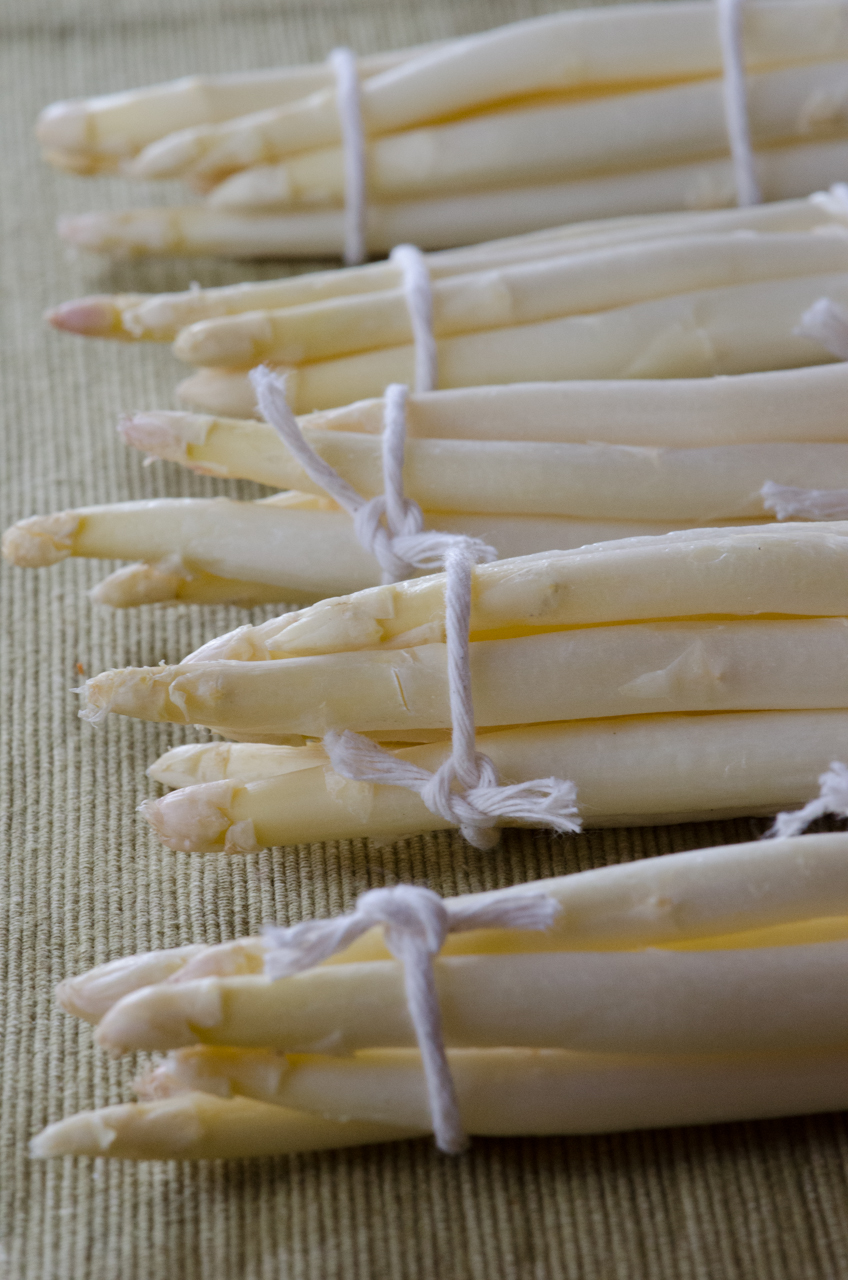
white asparagus cycling holidays italy italiaoutdoors food and wine

One of our favorite towns to visit on our cycling tours is the beautiful historic Pre Alps town of Bassano del Grappa. Our spring trips in the area give us the opportunity to indulge in the area’s renowned white asparagus, which appears mid-March to mid-June. The origins of the delicacy date from as early as 1200.

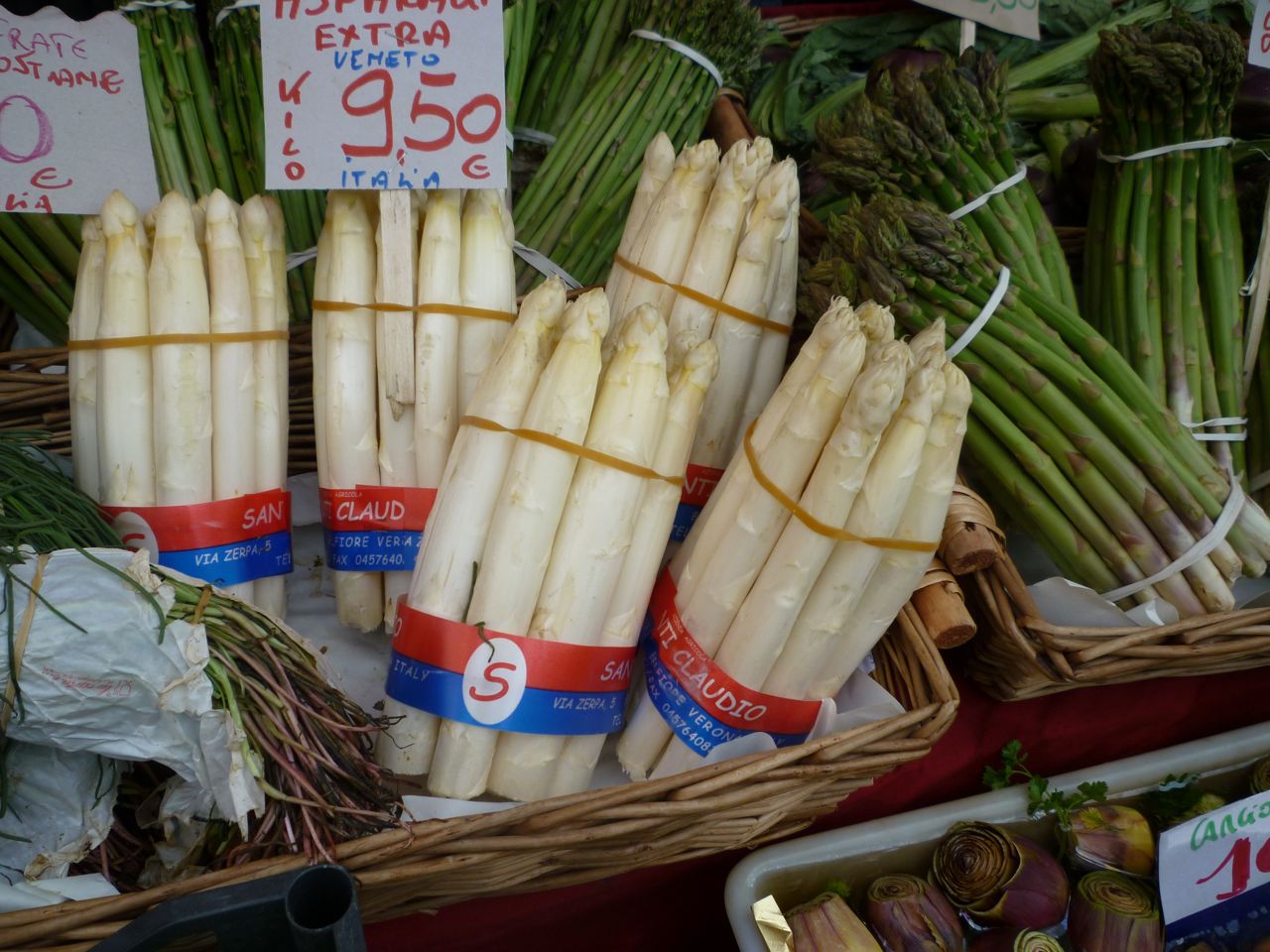
White asparagus in Italy market - custom cycle tours italy
White asparagus in Italy market

There are several legends surrounding it’s origin in the area, one attributes its discovery to an extremely violent hailstorm, which destroyed most of the harvest. The farmers, desperate for food of any kind, plowed the land under in a search for edible roots and tubers and discovered a delicacy: the tasty, pleasant white asparagus. In the 1500 and 1600s, the white asparagus of Bassano was prized, reserved for the banquets of the nobles of the Venetian empire. The most ancient recipe was asparagus and eggs, with olive oil and pepper.

asparagus bundles biking and cooking italy italiaoutdoors food and wine
What is white asparagus? It is simply green asparagus that has been deprived of light, preventing it from turning green. Today, it is covered with a thick layer of mulch and plastic. This process, called etoilation, creates pale white spears that have a more delicate flavor than their green counterparts.

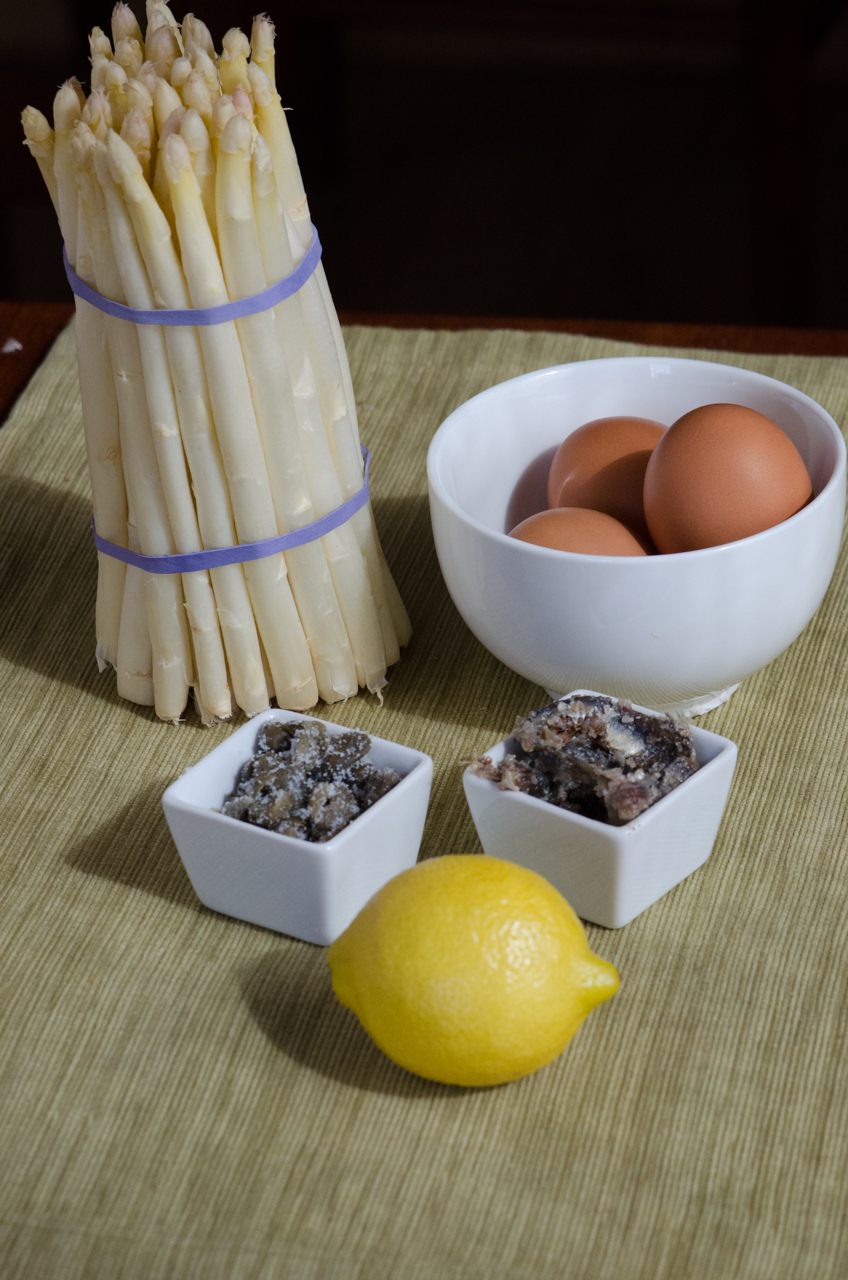
asparagus ingredients bike tours italy veneto italiaoutdoors food and wine
In Bassano, the asparagus found the ideal environment: sandy, soft, well-drained and slightly calcareous soil on the banks of the Brenta River. The soil type, combined with a particularly mild climate, produces a product recognized for its quality the world over. Its’ pale color, tenderness and sweet-sour perfume make it particularly well-suited for rice dishes, soups, pasta and salads. Its tenderness allows one to enjoy the entire length. Due to its quality and delicacy, it is quite perishable and must be correctly conserved and served within a few days.
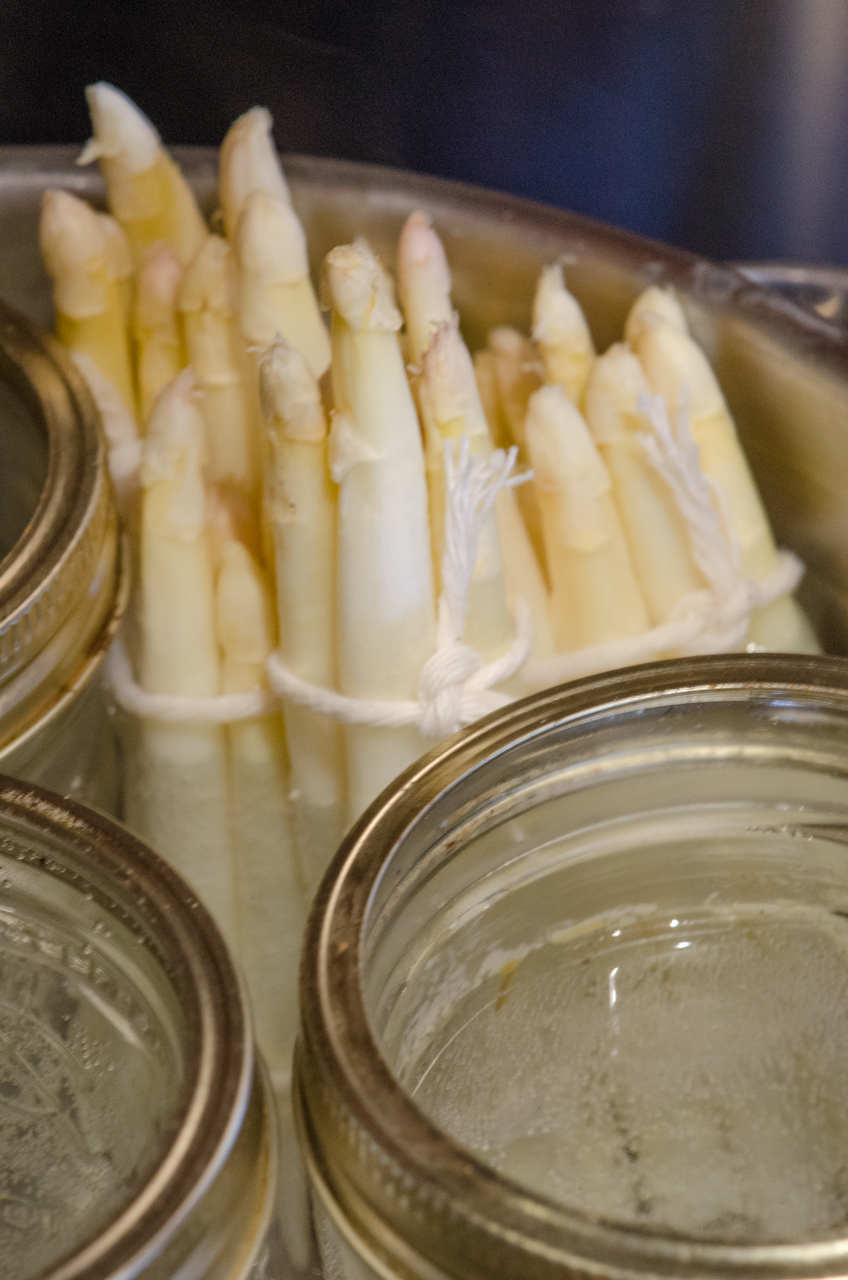
cooking asparagus bike tours dolomites italiaoutdoors food and wine
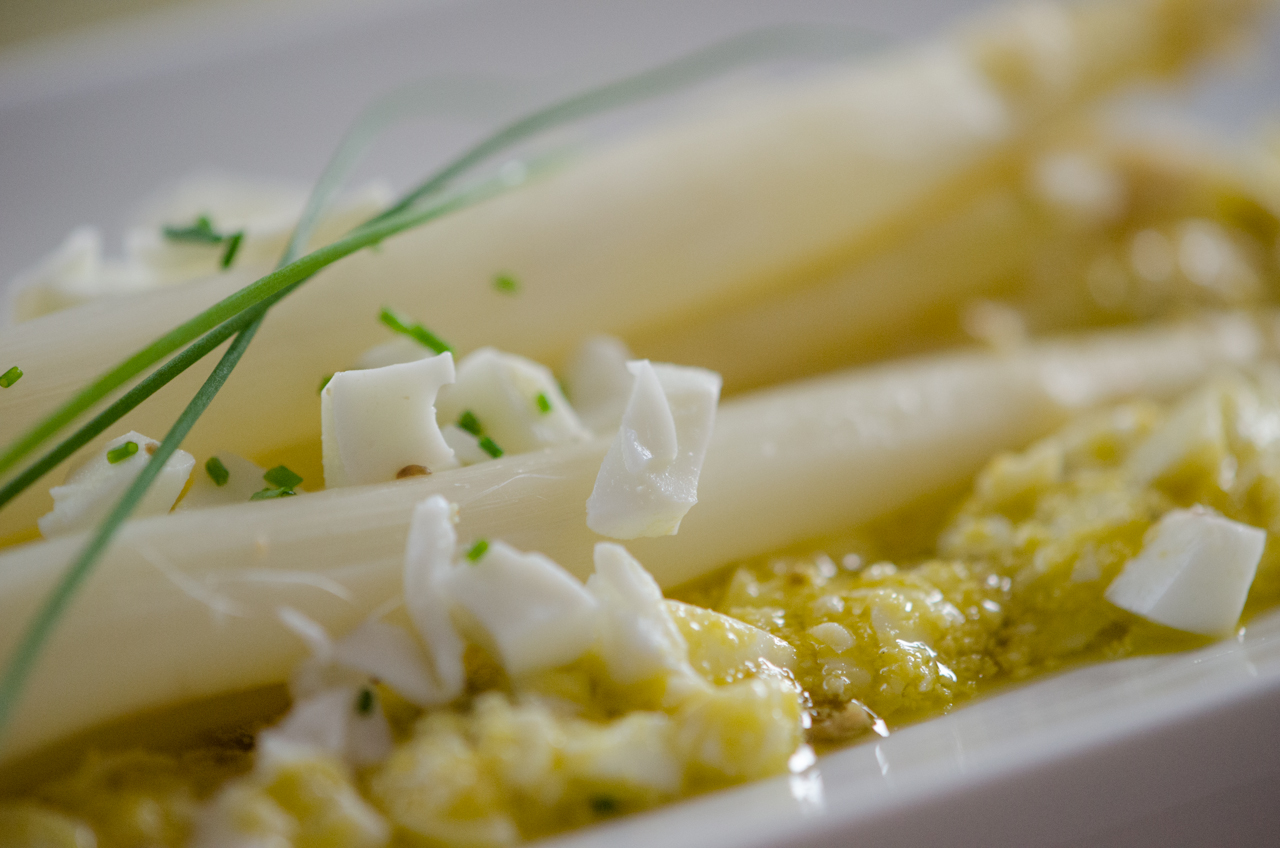
The following recipe is from La Cucina Italiana, a classic combination of asparagus and eggs. You can either serve the sauce on the side, and dip individual spears into the sauce, or toss the spears with the sauce and serve, topped with additional egg whites. This is a great spring recipe for fresh asparagus of any color! Enjoy with a nice white wine from the nearby Breganze wine region, such as their Bianco (a blend of the local grape Tai) or Vespaiolo.

Asparagi di Bassano Con Salsa di Uove Sode

1 lb. asparagus, woody ends trimmed and peeled if skin seems thick
3 large, hard boiled eggs, shells removed and cut in half, yolks separated
2 tablespoons lemon juice
1/2 cup extra virgin olive oil
2 salt cured anchovy filets, boned, rinsed and chopped
1 tablespoon capers, rinsed and chopped
Kosher salt and freshly ground pepper

Tie the asparagus stalks in small bunches and stand them up in a high, narrow pan. Add water to about two-thirds up the length of the stalks and simmer them until tender, about 8 minutes.

To make the sauce, press the hard boiled egg yolks through a sieve, into a small bowl. Stir in the lemon juice, and then, stirring constantly, slowly drizzle in the olive oil. Chop the egg whites and add most of them to the sauce, reserving a bit for garnish. Add the anchovies and capers; season with salt and pepper, and additional lemon juice if desired.

Posted in Asparagus, Eggs, Gluten Free, Uncategorized, Vegetables, Vegetarian, Veneto Food | Tagged , , , , , , , , , , , , , , , , , , , , , , | 1 Comment

Porchetta – Umbria’s Famed Roast Pork

pork roast umbria bike tours italy

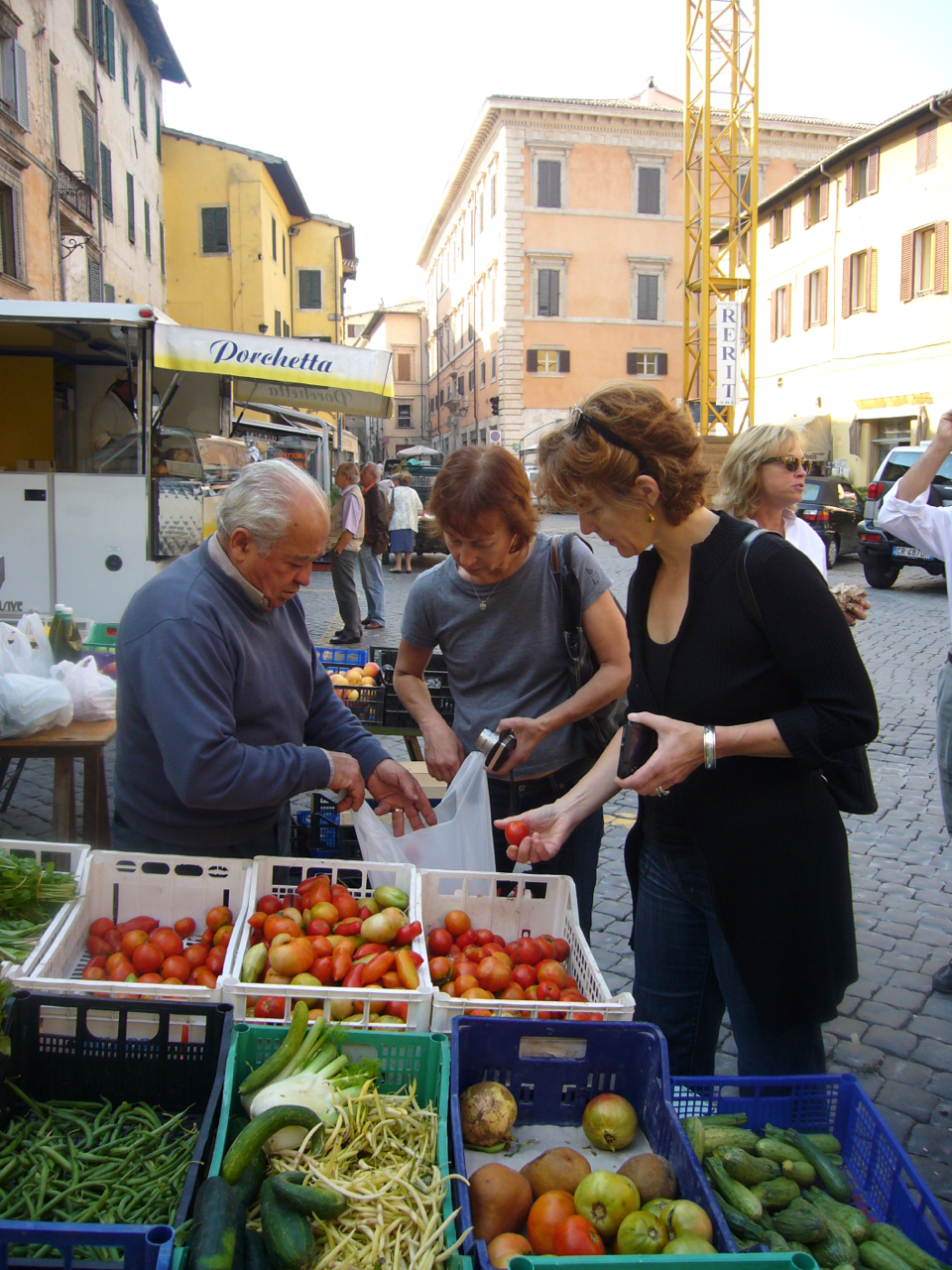
For me, a trip to an Umbrian market is not complete without a stop by a
porchettai, a vendor in a white van hawking delicious porchetta sandwiches, a large sandwich of savory roasted pork on a fresh white bun. A tasty snack to revive weary cyclists as we tour Umbria, you can find porchetta sandwiches throughout Italy. My boys and I enjoyed a porchetta sandwich at a music festival in Bolzano. In Umbria, however, one of the hog raising centers of Italy, and renowned for it’s wide array of cured meats, the preparation of porchetta is a serious matter, earning it the Traditional Speciality Guaranteed (TSG) status, which “refers to a foodstuff produced either using traditional raw materials or characterized by a traditional composition or a mode of production.”


umbria food market bike tours italyRefering to La Cucina: The Regional Cooking of Italy, by the Accademia Italiana della Cucina for a traditional porchetta recipe, I found the following description:

belly and loin umbria culinary bike tours italy italiaoutdoors food and wine“To prepare this traditional Umbrian recipe for a whole spit-roasted, the animal, optimally weighing between 70 and 100 pounds, would first be carefully cleaned and all bristles scraped from the hide. The entrails would be removed and cleaned: the intestines and tripe defatted and placed under salt with a little vinegar, later rinsed and chopped, the heart, lungs, spleen and liver cleaned and chopped. The combined entrails would then be seasoned with salt and pepper and mixed with a generous amount of parboiled fennel and garlic to make a savory filling. Numerous deep cuts would be made into the skin of the pig and the filling both stuffed into the cavity and rubbed into the cuts. After sewing the pig closed and securing it with wire, it would be roasted in a very hot wood-burning oven on two metal sawhorses, usually for about 2 1/2 hours.”

pork and seasoning umbria villa vacations italy italiaoutdoors food and wineI am usually game for anything, and we have in fact roasted an entire pig, but the whole entrail thing is a bit daunting, and really not possible unless you are butchering the pig yourself. I wanted to create a recipe that would recreate the flavors and textures of porchetta in Italy – the simple but savory seasonings; the lean, moist center, still juicy, surrounded by a bit of fat and crispy skin – without buying (and then having to eat) an entire pig.

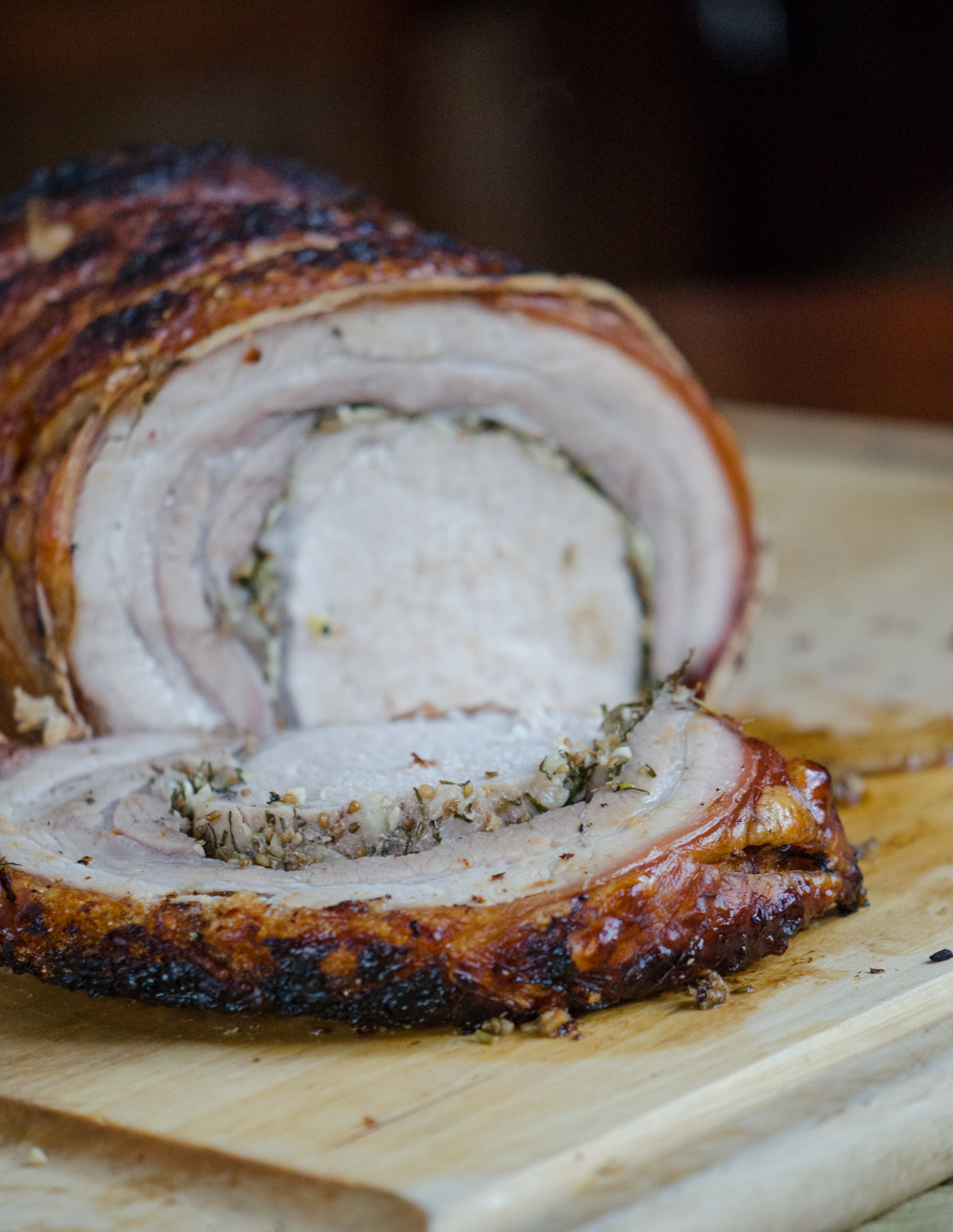
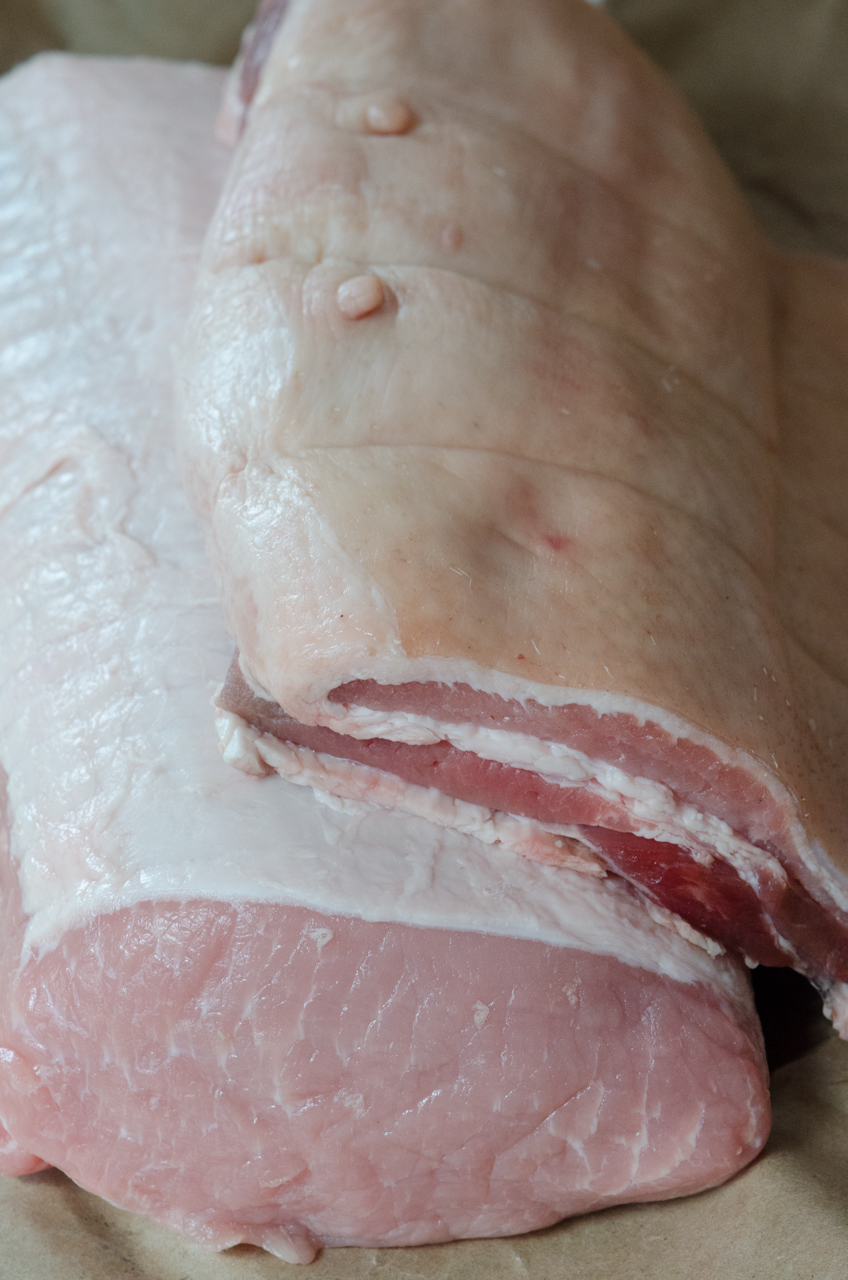
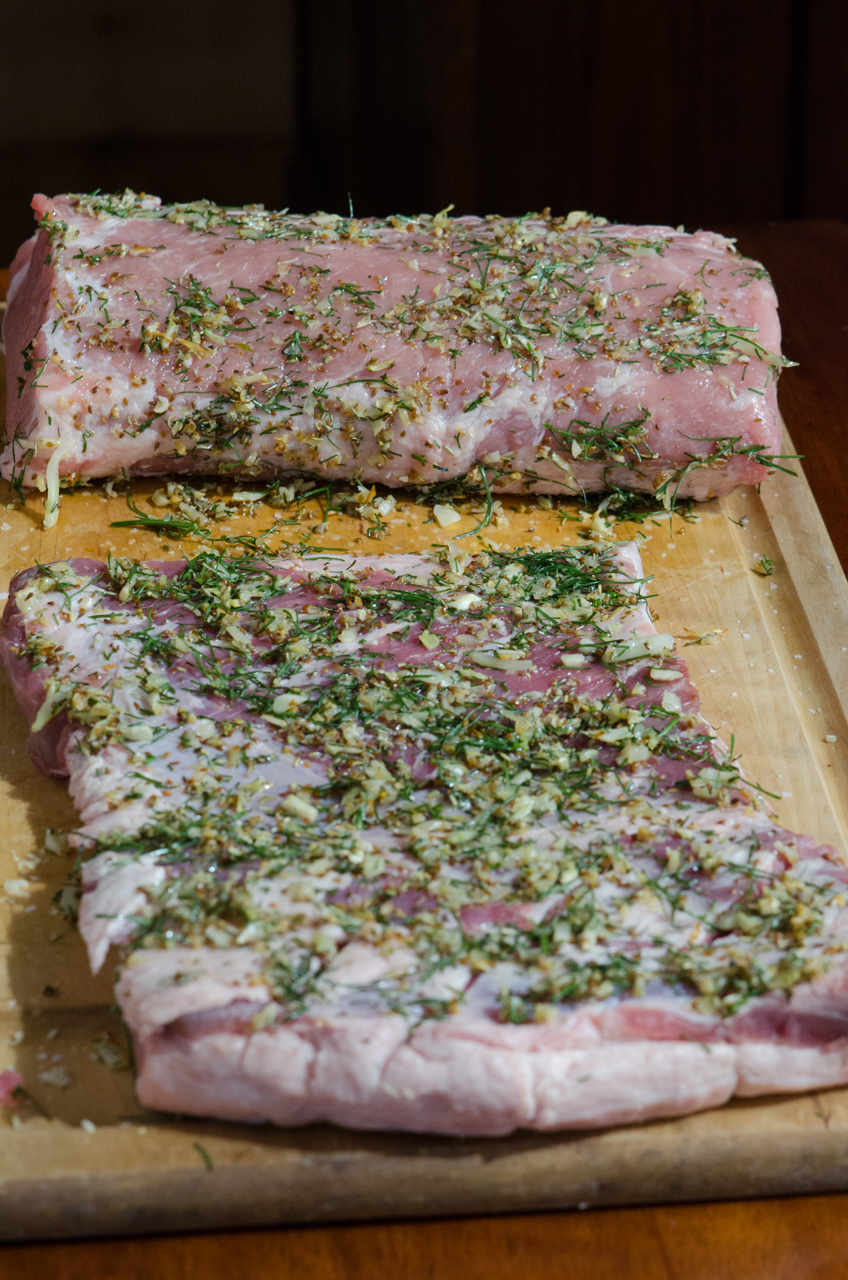
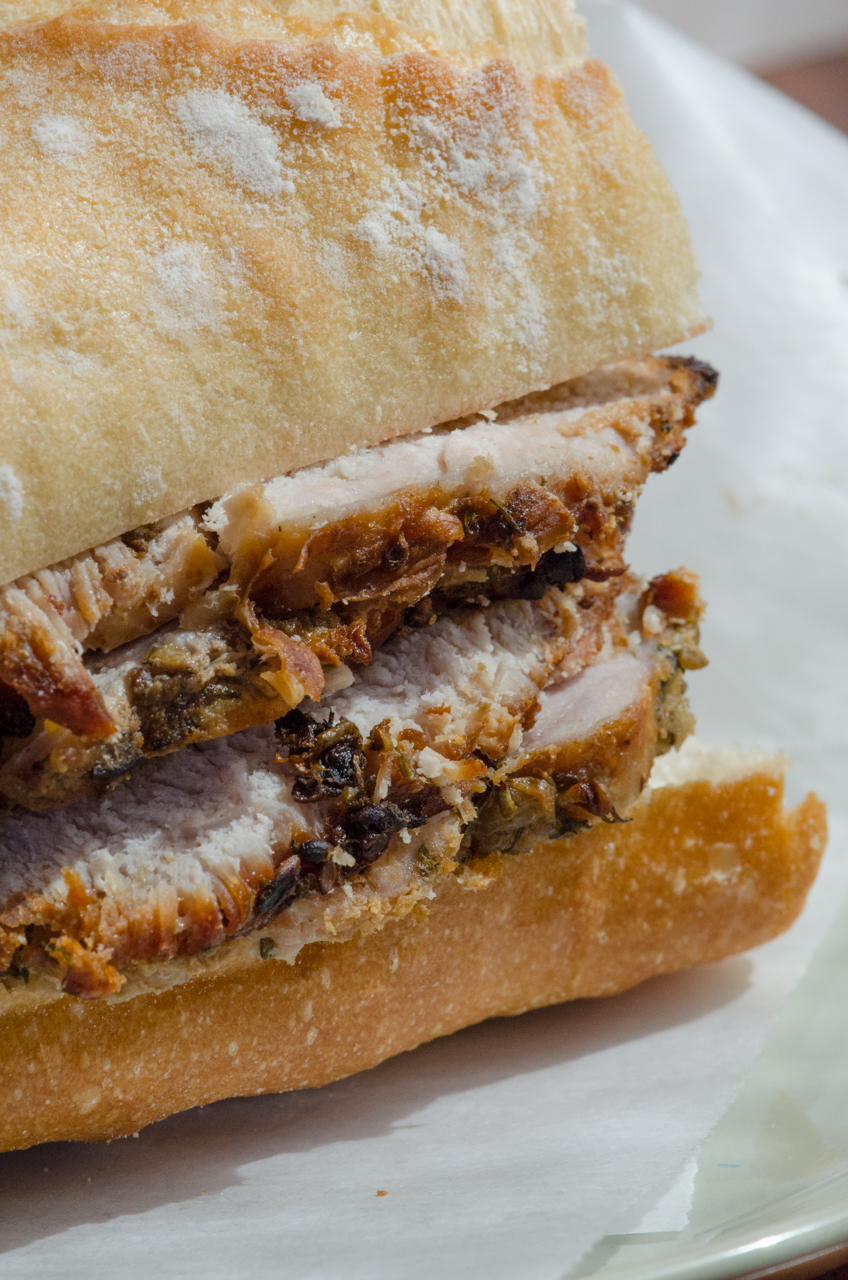
pork roast umbria european cycling holidays italiaoutdoors food and winePurchasing a pork roast doesn’t do it, there’s no skin, and no fat. A pork belly has the latter two, but no lean meat. The simple solution – combine the two. Here, I season both a pork loin roast and a pork belly with garlic, fennel, rosemary and salt, then wrap the belly around the loin and roast it. We enjoyed thick slices of porchetta for dinner, then tasty porchetta sandwiches for lunch the following day. Not quite the same as enjoying them in the middle of an Umbrian market, but certainly a tasty Sunday night dinner.

porchetta sandwich umbria bike tours italy italiaoutdoors food and wineThis is best started the day before you wish to serve it, but not absolutely necessary!

Porchetta

This is best started the day before you wish to serve it, but not absolutely necessary!

1 2 1/2 – 3 pound piece fresh pork belly, skin on
1 2 1/2 – 3 pound boneless pork loin
Kosher salt
2 tablespoons fennel seeds
2 tablespoons olive oil
1/2 bulb fresh fennel, tough outer layer and inner core removed, chopped into 1/4 inch dice
3 garlic cloves, minced
1 tablespoon minced fresh rosemary, or 1 teaspoon dried
1/4 cup fennel fronds, finely chopped

Preheat oven to 500°F.

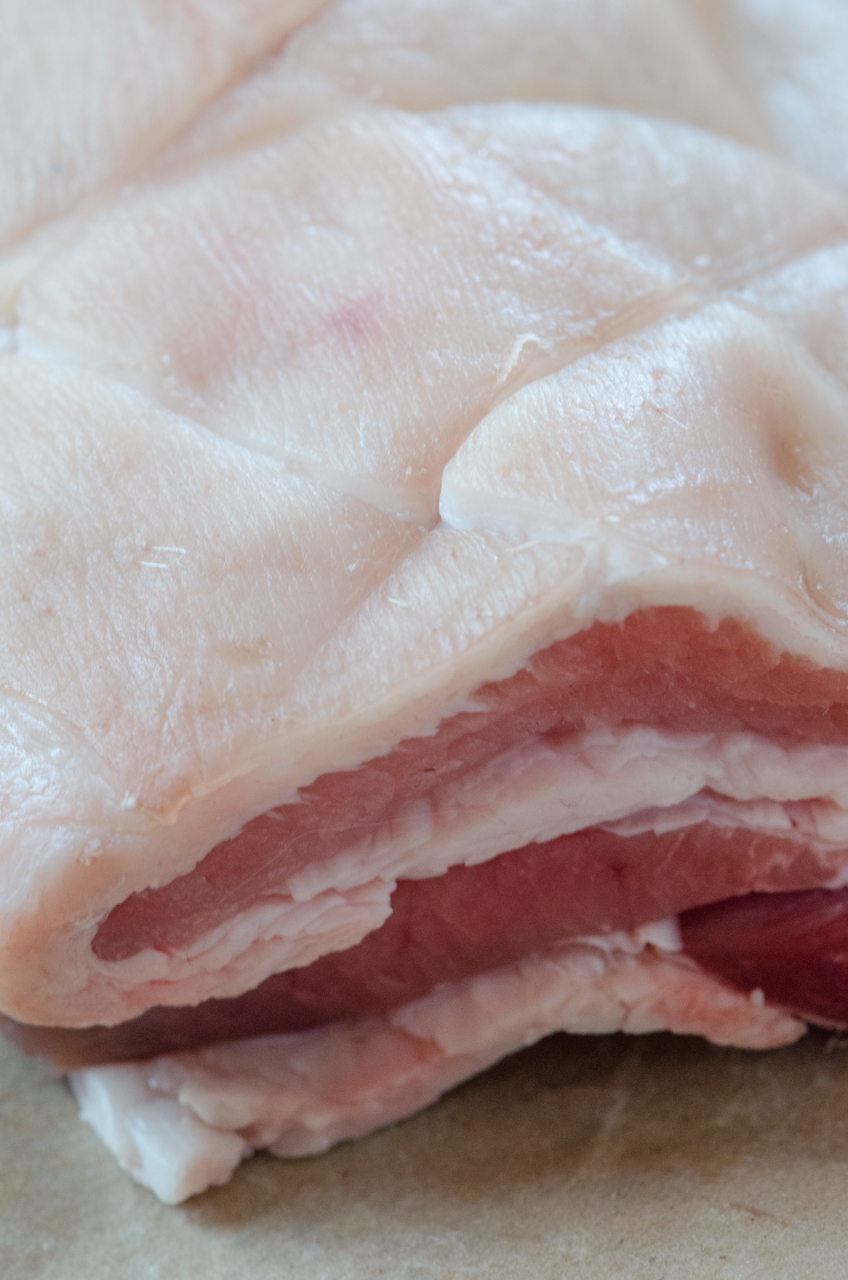
Set belly skin side up. Using a sharp knife or box cutter, score the skin on each diagonal, making a diamond shaped pattern. Try to cut only the skin itself, but don’t worry too much if you cannot pierce the skin everywhere, or if sometimes you cut a little deeper. It is hard to penetrate the skin consistently, even with a very sharp knife.

Flip the belly so the skin side is down. Score the belly flesh in the same diagonal diamond shaped pattern.

Salt both sides of the belly, as well as the loin. Set aside while you make the seasoning mixture.

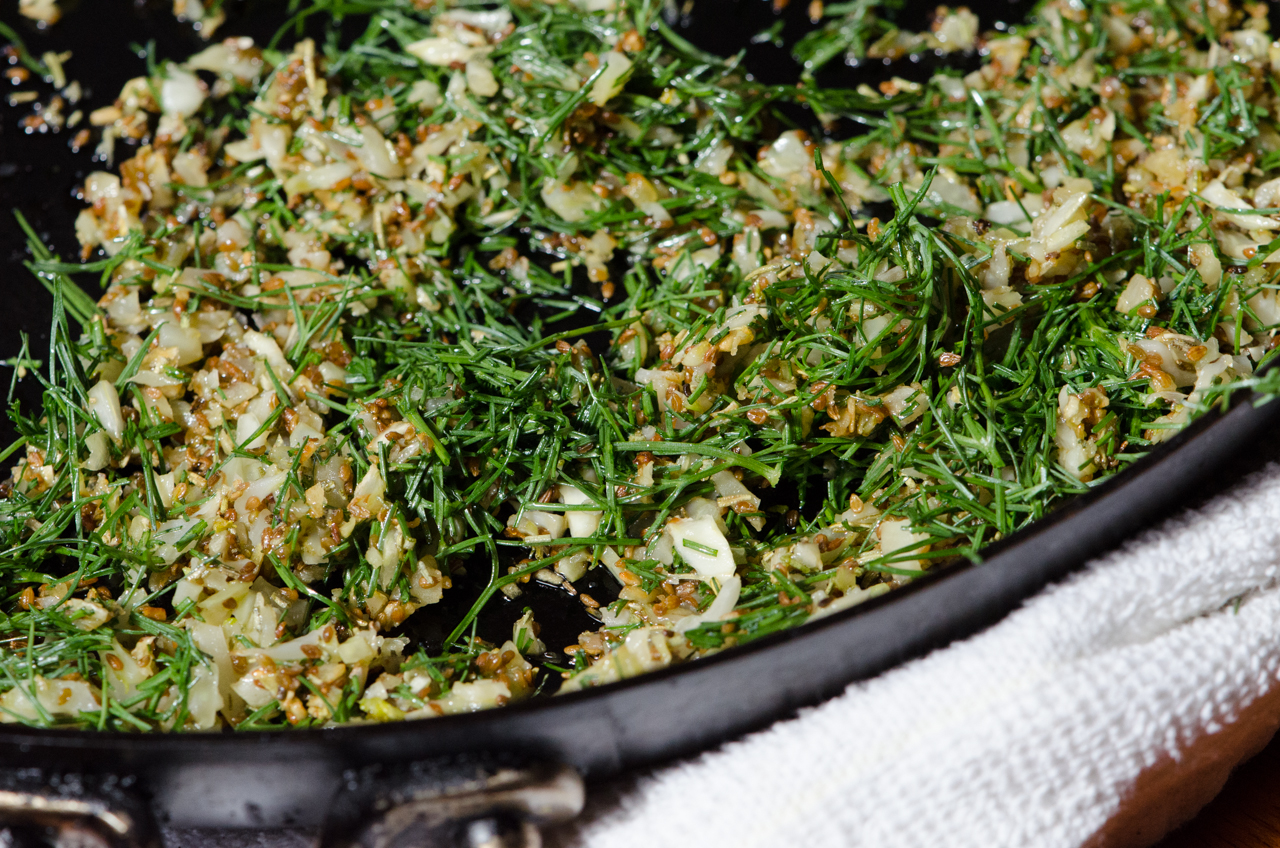
Place the fennel seeds in a hot sauté pan, and toast just until they are aromatic and starting to brown. Add the olive oil, chopped fresh fennel, garlic and rosemary, and saute until the fennel is soft, about 4 minutes. Add the chopped fennel fronds and remove from heat.

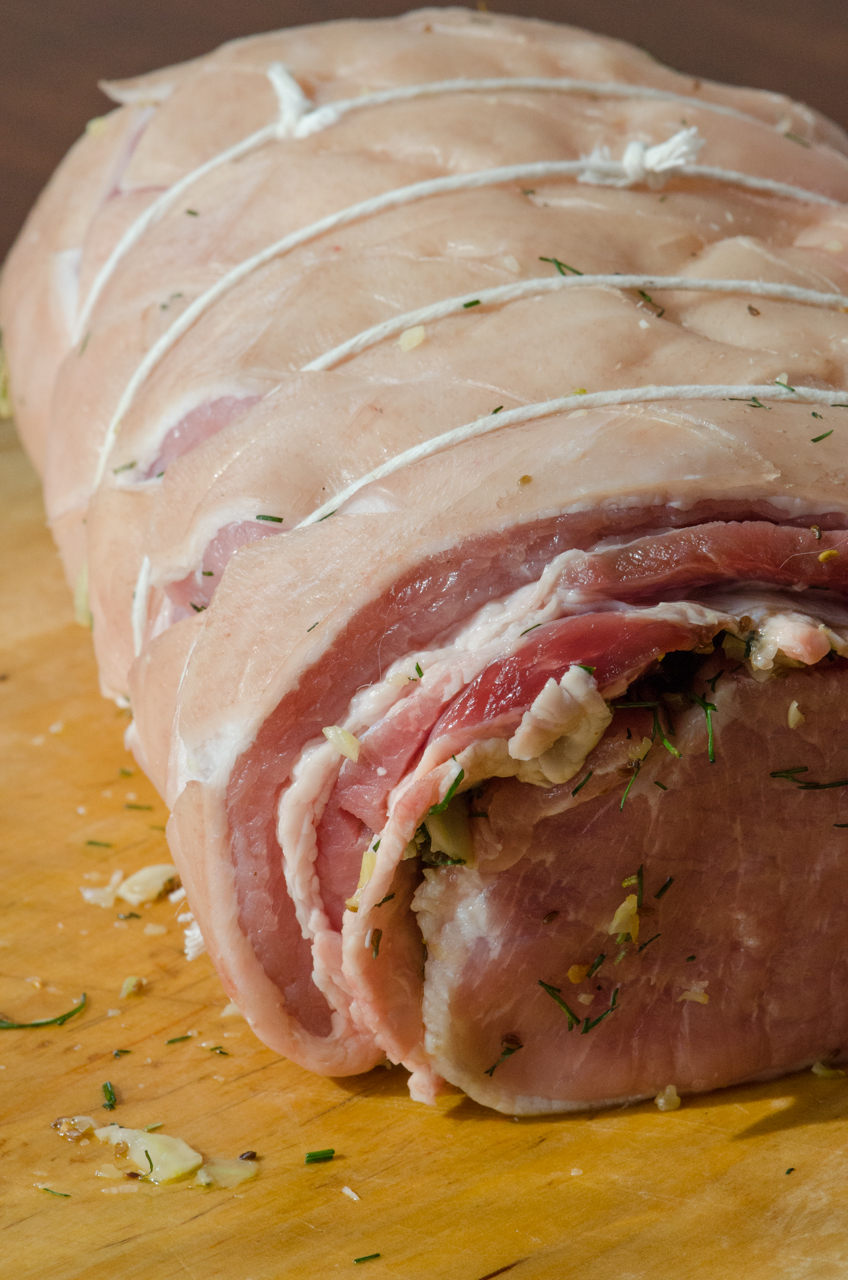
Cover the entire loin and the flesh side of the pork belly with the seasoning mixture. Roll the belly around the loin so the short ends of the belly meet, or come as close to meeting as possible. If there is a bit of loin still exposed along the bottom, don’t worry, we’ll put this at the bottom and no one will ever know. If the loin is longer than the pork belly, or the belly longer than the loin, and one sticks out, trim so the ends are flush.

Tie the roast with kitchen twine at about 1/2” intervals. Place the roast on a wire rack set in a sheet pan, with any gap where the pork belly may not cover the loin at the bottom. If you have the luxury of time, place the roast, uncovered, in your refrigerator for 1-2 days to allow the seasonings to penetrate the roast and the skin to air-dry. When ready to cook, removed the roast from the refrigerator and allow to sit at room temperature for 2 hours.

Preheat oven to 500°F.

Place roast in preheated oven, and roast for 45 minutes. Reduce heat to 300° and continue to roast until the porchetta reaches an internal temperature of 140°, about 1 1/2 to 2 hours more. If the skin is not as brown and crispy as you’d like, turn on the broiler and finish browning the skin, keeping a careful eye on it so it doesn’t burn.
Slice into 1/2 inch rounds for serving as a roast, or into very thin slices for your porchetta sandwich.

scored pork belly umbria bike and wine tours italy italiaoutdoors food and wine

seasoning umbria cycling holidays italy italiaoutdoors food and wine

Posted in Uncategorized | 3 Comments

Pane di Zucca

https://www.italiaoutdoorsfoodandwine.com/index.php/bike-tours-italy-ski-holidays-italy/tuscany-umbria-and-sicily-cycling-tours/wine-bike-tour-umbria italiaoutdoors food and wine

For a couple of weeks now I have been staring at my last winter pumpkin, waiting for some inspiration to determine it’s fate. After my travels last year to Ferrara, the “City of Squash Eaters”, I covered a sformato recipe as well as cappellacci di zucca. I’ve done a squash soup. I’ve done numerous risottos – not yet squash – but did rice last week. I was browsing through a recent issue of La Cucina Italiana, and spotted a recipe for a squash bread. I realized I hadn’t yet done a bread recipe on this blog, so here’s my first.

squash culinary bike tours italy italiaoutdoors food and wine
One I started looking for recipes for a pumpkin bread, I found dozens. The majority in Italian. I expected that the recipes would hail from the Northern regions of Italy, as pumpkin is a favorite food there, but I found several further afield – one from Tuscany, another from Umbria. The Franziskaner bakery in Bolzano, Alto Adige, describes their Pane di Zucca as made from a traditional recipe, well-suited for both elderly and children and a great accompaniment to meats and cheeses of the region. La Cucina: The Regional Cooking of Italy has a recipe from Emilia-Romagna – home to the aforementioned squash-eating city. This was the sweetest version I came across, including 1 1/2 cups sugar. Elisabeth Crawford includes a Pane di Zucca recipe in her cookbook, Flavors of Friuli. Her version of this baked treat is one of many featured during the Festa di Zucca, an annual festival held the last weekend in October in the small town of Venzone in Friuli-Venezia Giulia. I suspect that every region in Italy that produces squash – which includes most of Italy, from Friuli and Alto Adige to Sicily – has some variation of this bread in it’s cuisine.

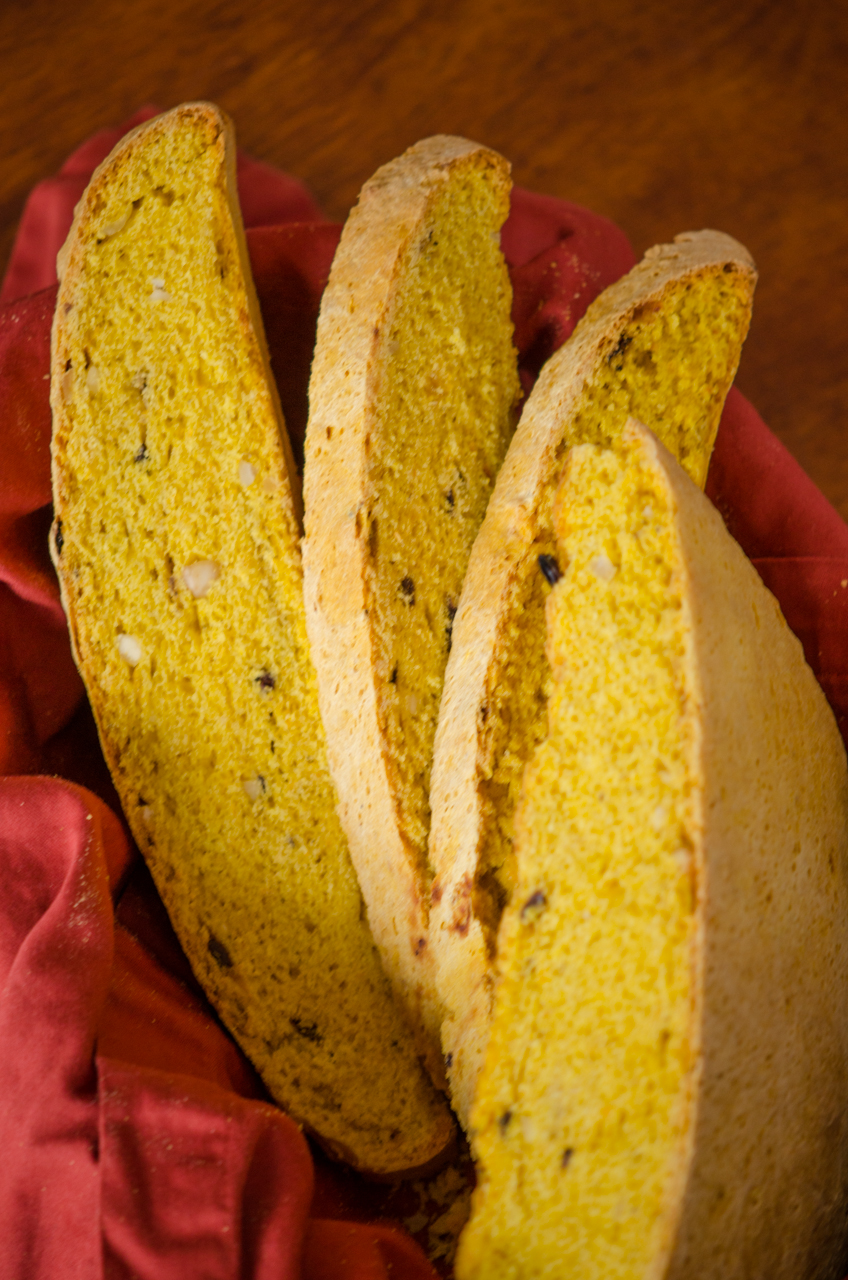
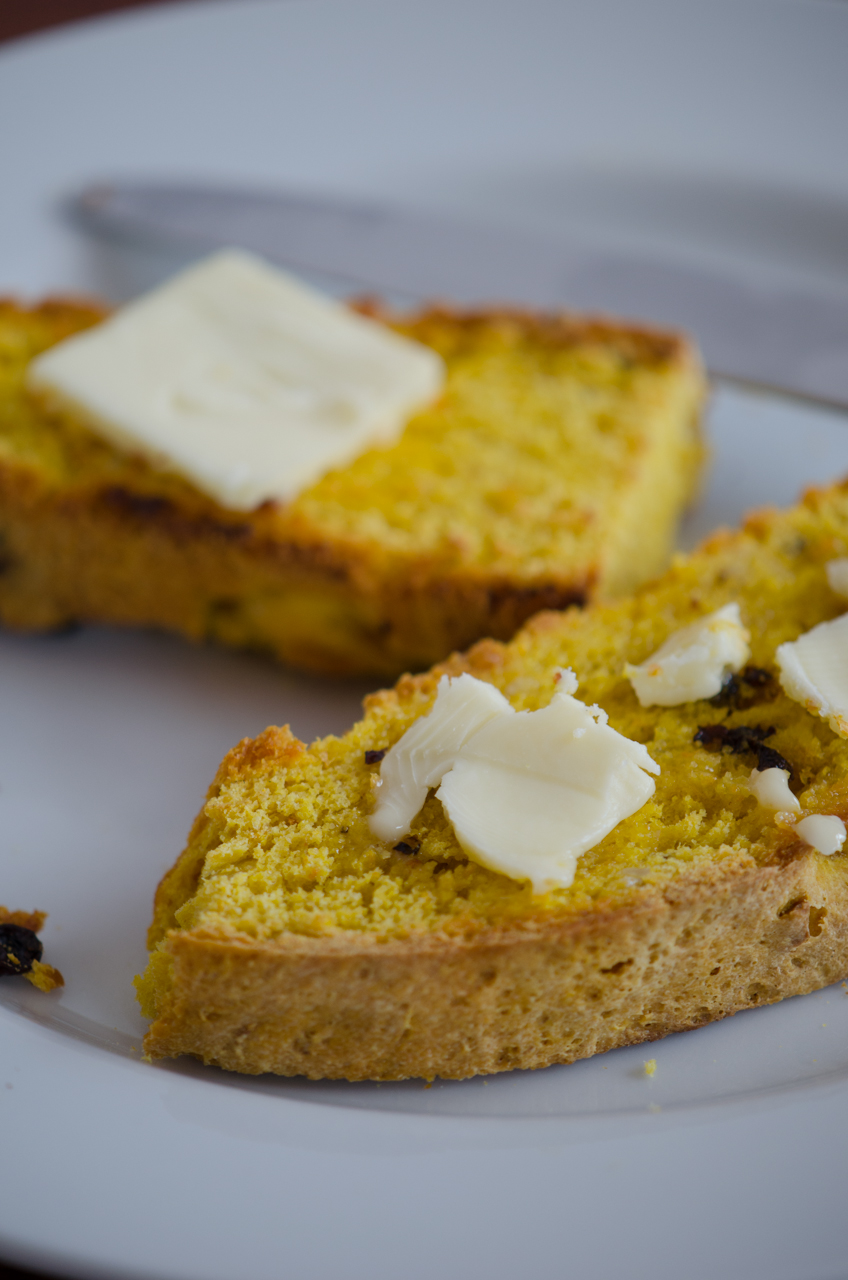
toast pane di zucca cycling tours tuscany italiaoutdoors food and wine
All versions included some sort of winter squash or pumpkin that has been cooked – boiled, roasted, however – and then mashed. Adding mashed vegetables, like potatoes, to bread results in breads that are moist and keep longer, so was often done back in the day when the big brick community oven might only be fired up once a week or so. Some were sweet versions that included sugar, and are meant to be served as a dolce, but I elected to keep this version sugar-free. Many included either nuts, or raisins, I added both currants and hazelnuts.

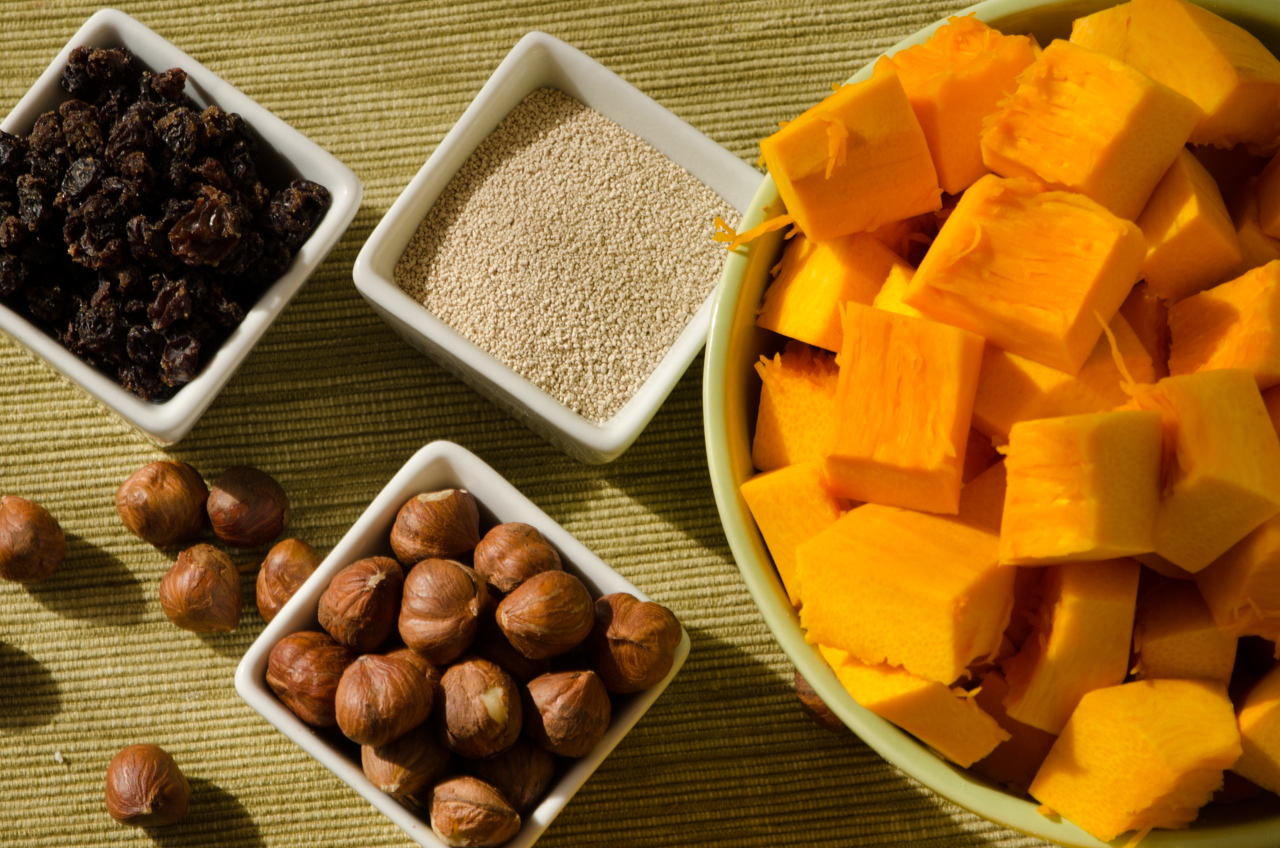
ingredients cycling holidays europe italiaoutdoors food and wine

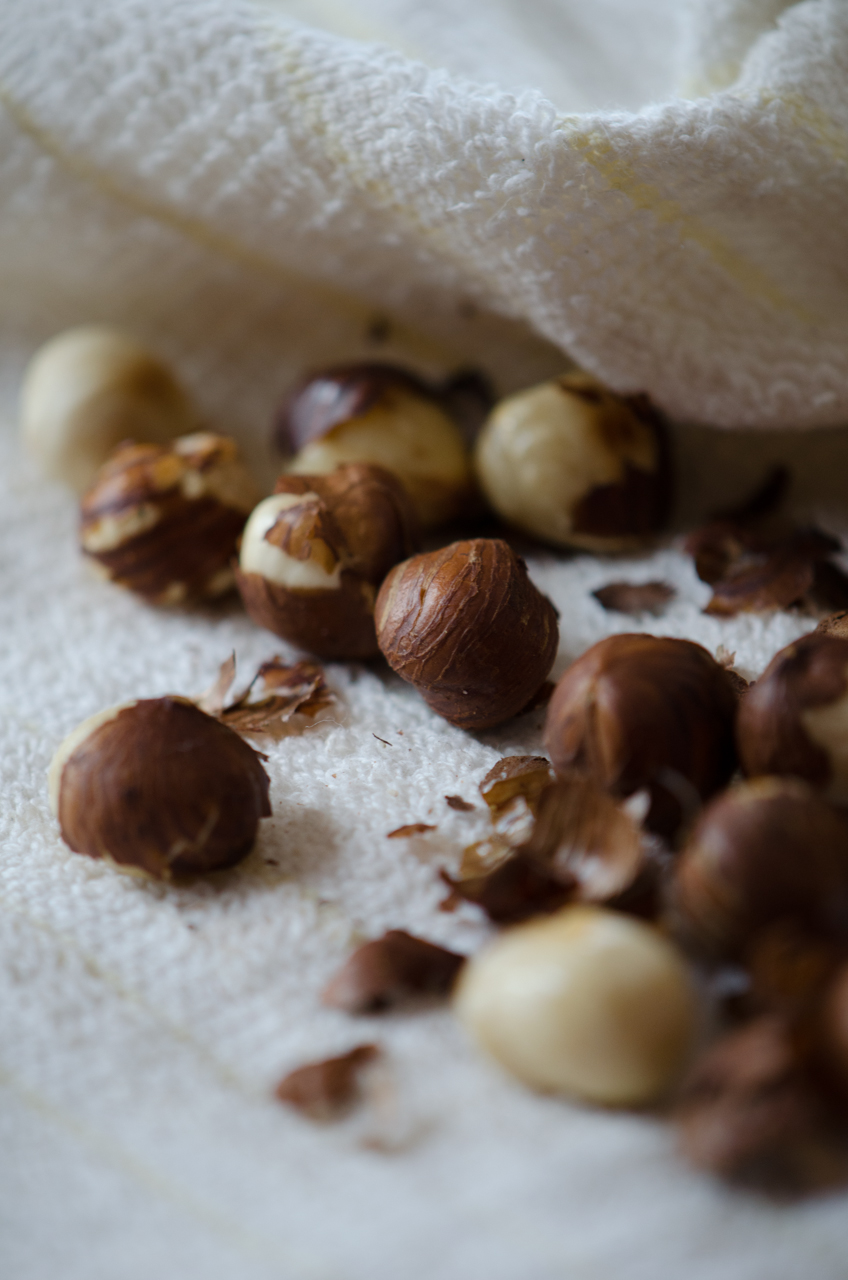
hazelnuts private guides villa holidays italy italiaoutdoors food and wine
Pane alla Zucca/ Pane con ucca/ Pane di Zucca

2 cups 1/2 inch cubes pumpkin or butternut squash
Olive oil for coating squash and bowl
Kosher salt
2 1/2 cups all purpose flour
1 1/2 cups semolina flour
2 1/2 teaspoons active dry yeast
2 1/2 tablespoons unsalted butter, at room temperature
1/4 cup hazelnuts, toasted, skins removed, and coarsely chopped
2 tablespoons currants, soaked in a tablespoon of warm water, drained

Preheat oven to 375°.

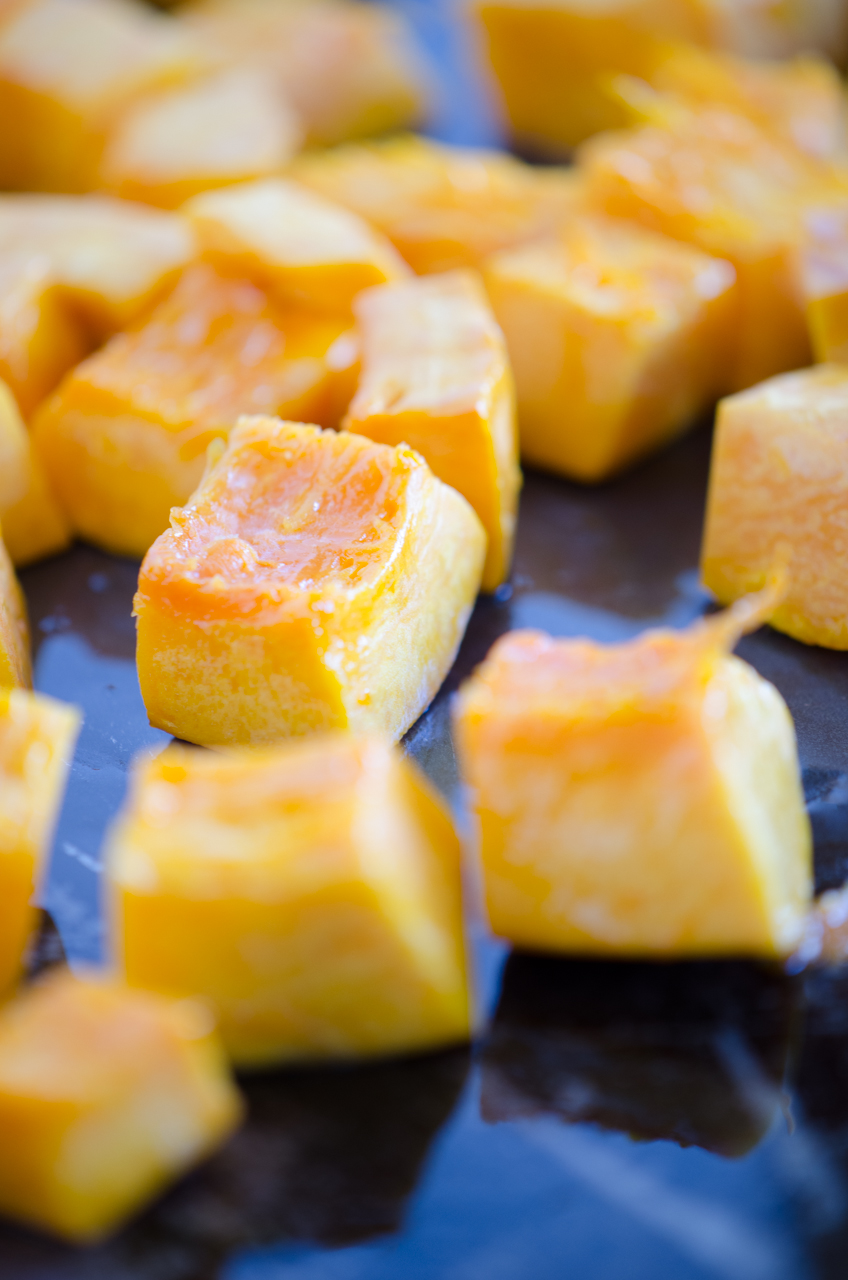
Place the squash cubes on a sheet pan, drizzle with olive oil and toss the cubes to coat them in the oil. Season with salt. Place in the oven and roast until tender, about 12 minutes. Remove from oven, and pass the cubes through a ricer to mash, or just mash with a fork until smooth. Allow to cool to room temperature.

In a large bowl, dissolve the yeast in 1 cup warm water (110°); let stand until foamy, about 10 minutes. If the mixture doesn’t foam, begin again with fresh yeast.

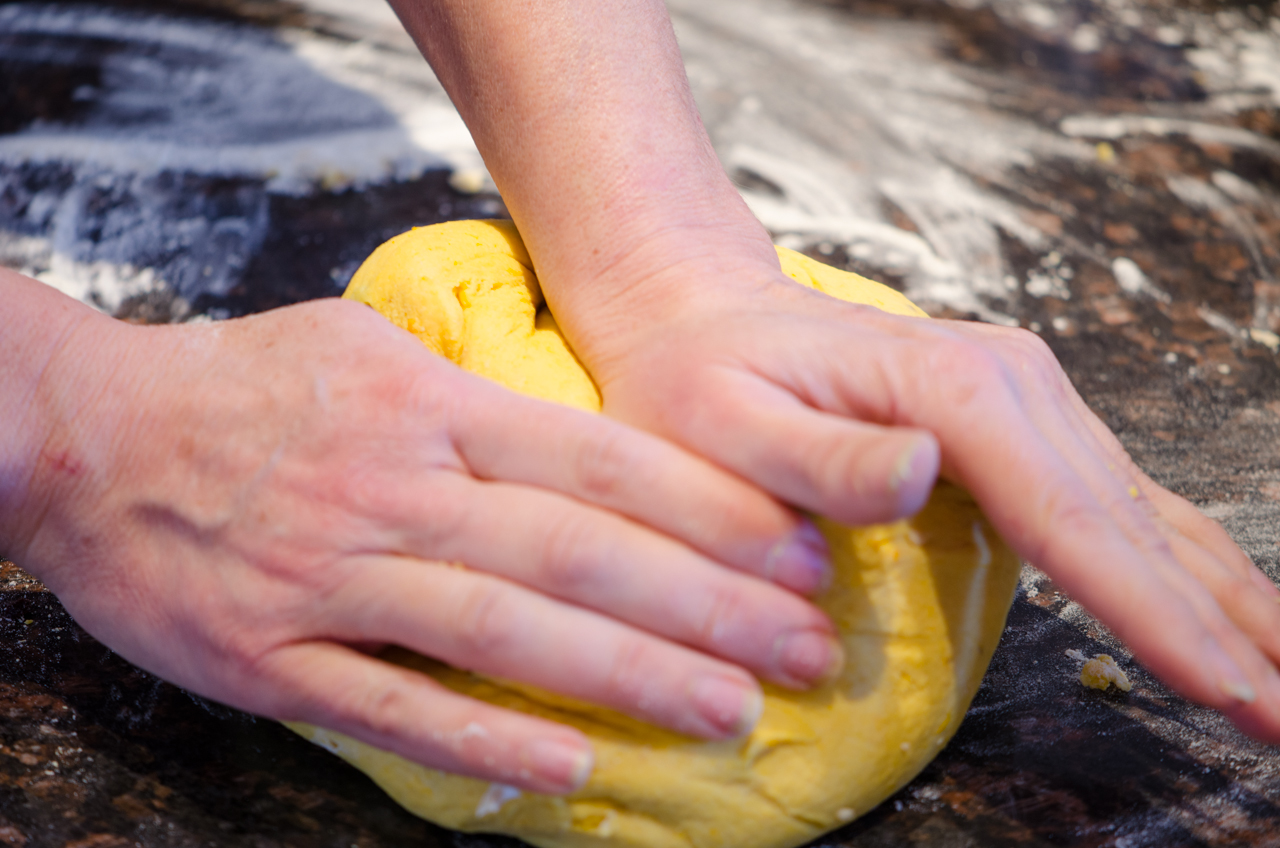
In a second bowl, combine the all purpose flour and the semolina flour with 1 teaspoon of kosher salt. Add the smashed pumpkin, butter, and flours to the water and yeast, and, using your hands, combine to form a soft dough. Turn dough out onto a lightly floured work surface, and knead the dough for 10 – 15 minutes, until soft and elastic. As the dough becomes soft, knead in the chopped nuts and the currants.

Coat the inside of a large bowl with olive oil. Place the dough in the bowl, turning to cover the entire ball of dough with olive oil. Cover with plastic wrap and allow to rise in a warm place until doubled in size, about 90 minutes.

Turn the risen dough out onto a floured surface, and form it into a 5-6 inch round loaf. Place on a baking sheet and loosely cover with plastic wrap. Let rise in a warm place until double in size, about 45 minutes. While the dough is rising, preheat the oven to 400°.

Place bread on the middle rack in the preheated oven. Bake until the loaf is golden brown and sounds hollow when tapped, about 45 minutes, rotating loaf about halfway through. Transfer to a rack and allow to cool completely.

pane dough biking and cooking tours italy italiaoutdoors food and wine kneading dough bike tours umbria italiaoutdoors food and wine

Posted in Baking, Friuli-Venezia Giulia, Pumpkin, Travel, Trentino Food, Uncategorized, Veneto Food | Tagged , , , , , , , , , , , , , , , , , , , , , , , | 2 Comments