Cantina Tramin – Discover the beautiful home of Gewurztraminer

Cantina Tramin bike wine tours - Italiaoutdoors Food and Wine
Cantina Tramin

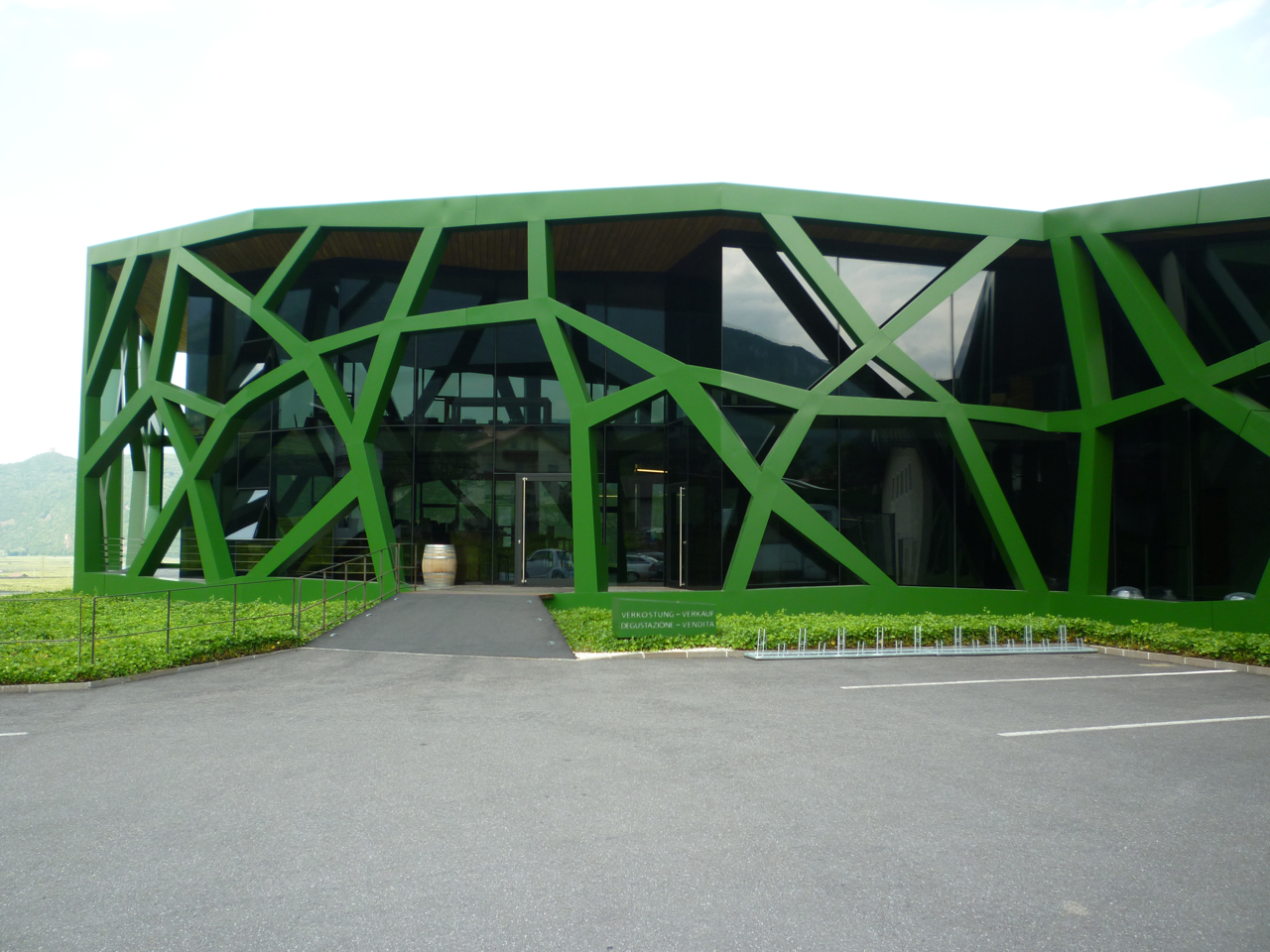
Last week brought me not one, but two opportunities to explore the wines of Cantina Tramin. Here in the US, I lead a cooking class event to benefit the Portland Symphony Orchestra, and the host of the event, a local wine distributor, selected the Tramin Pinot Noir as one of the wines for the evening. A few days later, I was exploring the Sudtirol Wine Road, a beautiful area perfect for our Italiaoutdoors Food and Wine Bike tours, and had the chance to visit the Cantina itself. Located in a spectacular setting in Alto Adige, it was a chance to enjoy their wines once again, while enjoying their splendid panoramic views of the surrounding vineyards.
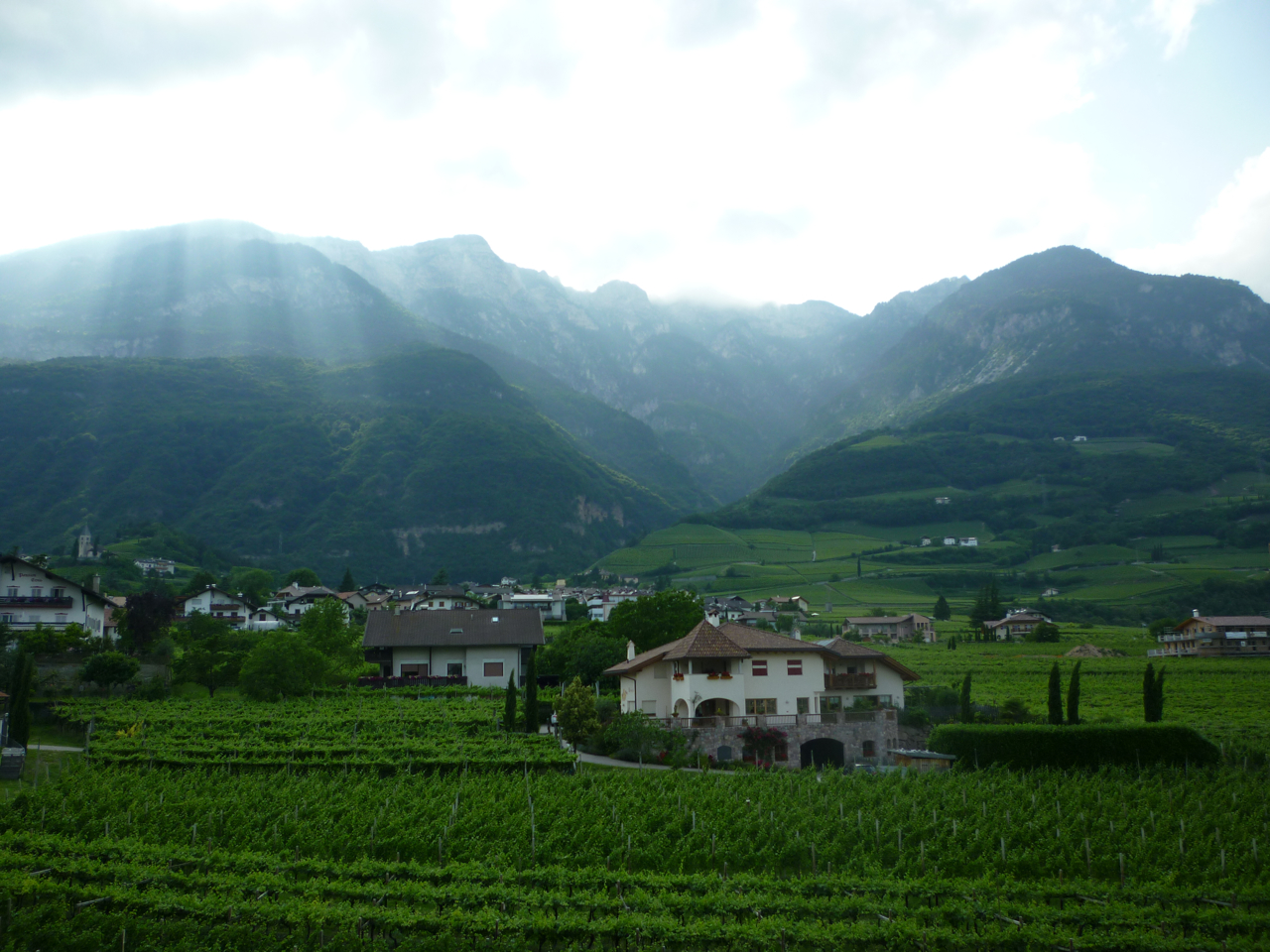
view from tramin ski tours dolomites - Italiaoutdoors Food and Wine
View from Cantina Tramin

Cantina Tramin is located in the town of the same name, also known as Termeno (towns in Alto Adige have both German and Italian names). This region grows many types of wines, but it’s favorite vine bears its name, Gewurztraminer, or “spicy” Traminer. Traminer is one of the oldest grapes in the world, and recent studies have demonstrated that it is the ancestor of some of the oldest grape varieties in the world, including Cabernet Sauvignon, Riesling, Pinot Bianco, Grigio and Noir. An intensely aromatic and elegant wine, its pink to reddish grapes are naturally sweet, and produce a white wine that is usually off-dry, with a strong scent of lychee.

Cantina Tramin was founded in 1889 by Christian Schrott, the rector of Termeno and a member of the Austrian Parliament – recall that this part of Italy was part of the Austro-Hungarian empire until after World War I. Cantina Tramin is among the oldest cooperatives in the region. Today, their wines are created from grapes grown by the 270 member growers. Their vineyards are located on slopes spread between the towns of Tramin, Neumarkt, Montagna and Ora, at an altitude between 250 and 850 m. above sea level. During the day, these hillside vineyards experience wonderful sun exposure and warm winds wafting up from Lake Garda just to the south, and become quite warm. As the sun sets, the temperature drops significantly as the colder air from the mountains drops down and cools the grapes. This contrast between warm days and cold nights creates very balanced, drinkable wines with a fresh minerality and elegance.
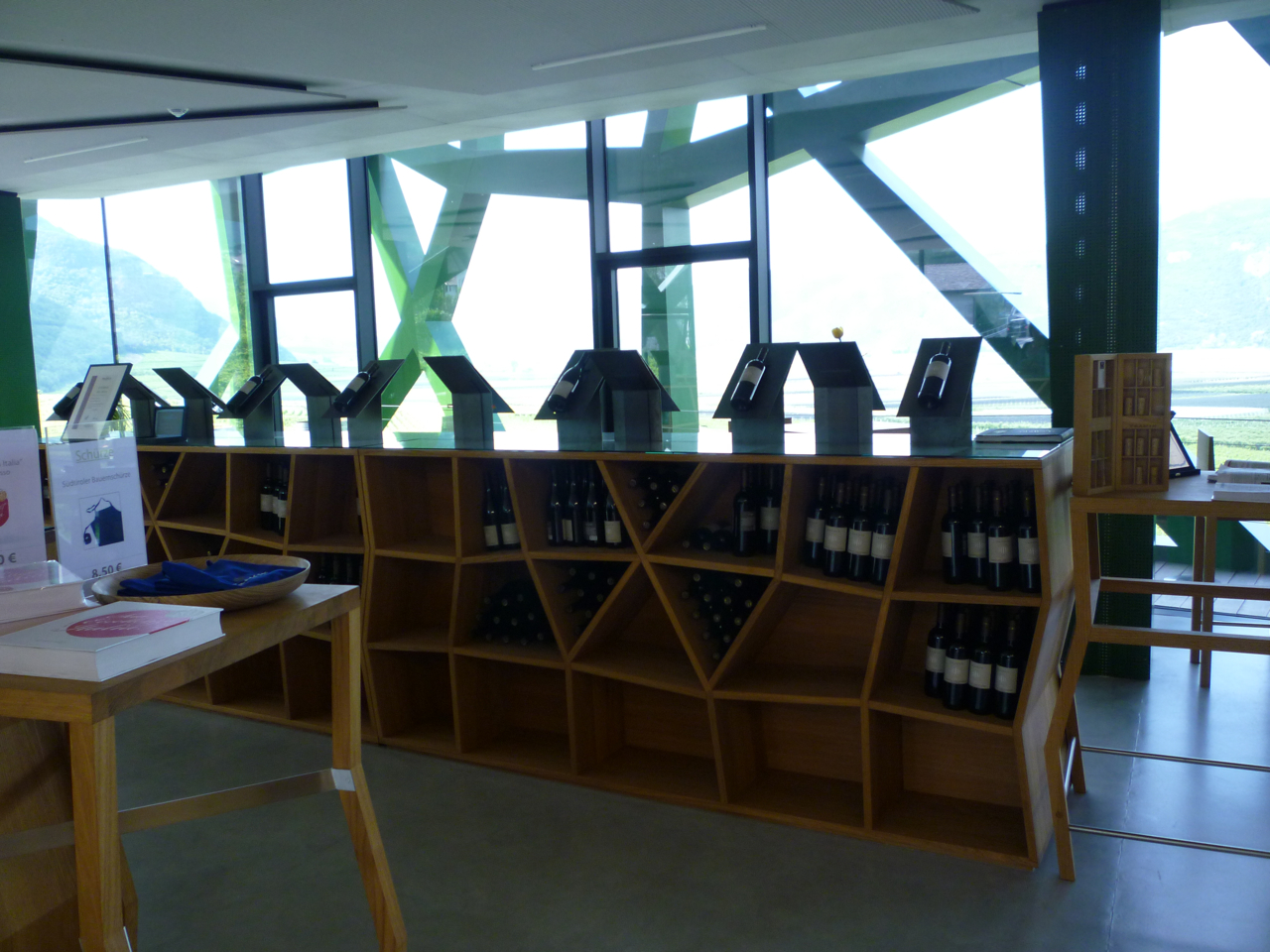
Inside Cantina tasting room gourmet bike tours italy - Italiaoutdoors Food and Wine
Inside Cantina tasting room

In addition to Gewurztraminer, the Cantina produces many other fine white, red and sweet wines, many from traditional grape varieties that thrive in this region. There is Lagrein, the native black grape of Südtirol – Alto Adige. Additional whites include Pinot Blanc, Chardonnay and Sauvignon, all grapes when grown in this environment display unforgettable aromatics and complexity.

Of course, when in Tramin, you must try Gewurztraminer. We enjoyed this as we watched the sun drop behind the mountains just outside, backlighting the picturesque peaks. This wine is 100% Gewurztraminer, grown in vineyards planted between 300 and 450 meters in calcareous clay and gravel in the areas of Tramin and Montagna.

The wine itself is a golden yellow, with hints of green and red. It exhibited intense aromas of rose, tropical fruits and lychee. Very fruits and intense, rich and silky, with some acidity to balance everything out. This wine pairs well with fish and white meats, and it slight sweetness is a great foil for spicy foods.
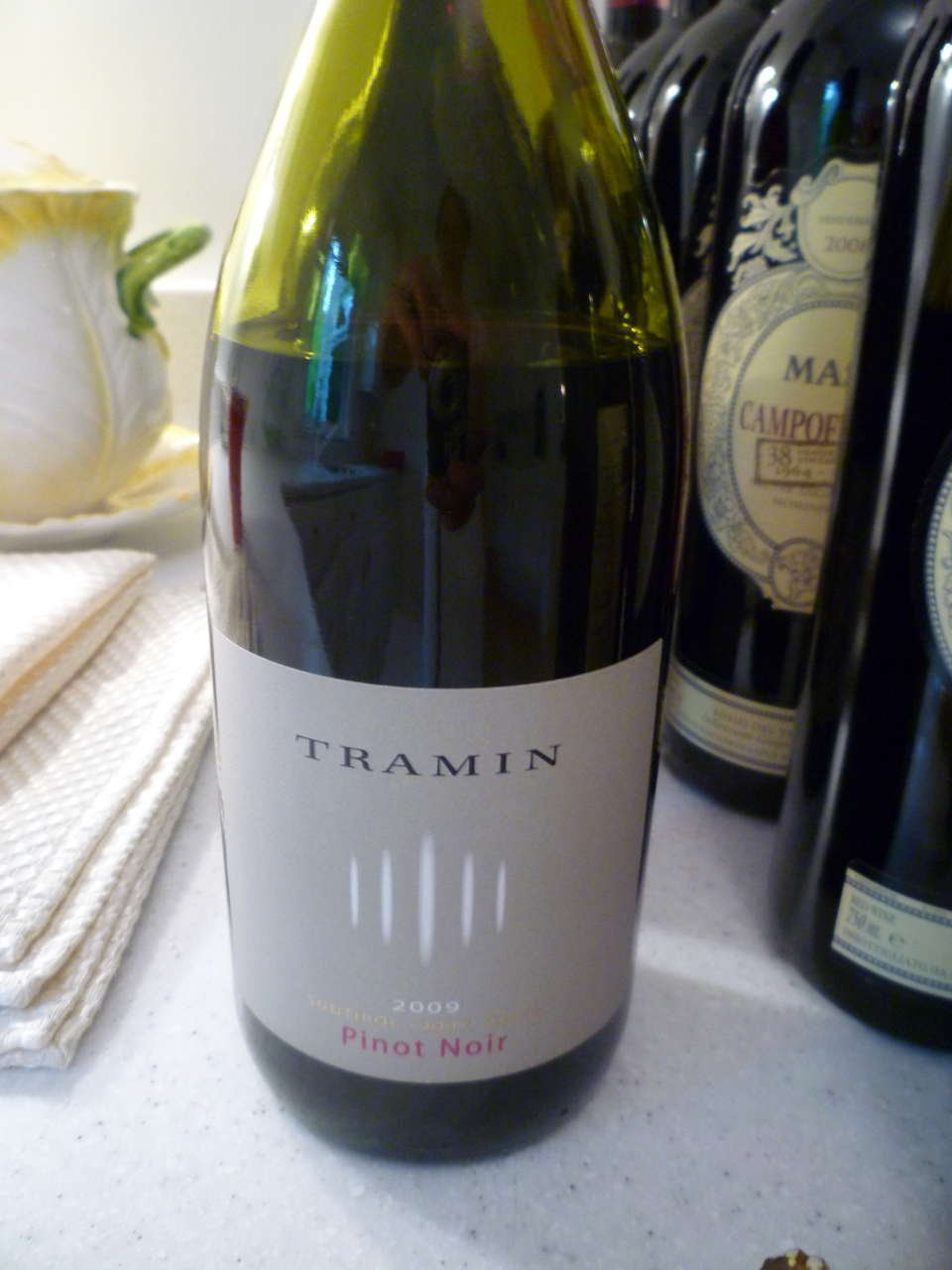
Pinot Noir bike tours italy - Italiaoutdoors Food and Wine
Tramin Pinot Noir

I have also enjoyed two of their red varietals. Their Pinot Noir/Blauburgunder (Black Burgundy) again is 100% of the named varietal, with these grapes hailing from vineyards planted in gravel and calcareous clay soils between 350 and 450 meters near Mazzon and Montagna. The combination of soils and abundant sunshine give this wine a unique taste and detail. The wine is fermented and aged in a combination of French barriques, oak casks and stainless steel vats.

We very much enjoyed this Pinot Noir during our cooking class event; it is an elegant red that paired well with both the brick oven pizzas we made, as well as the grilled steak. Ruby in color with light garnet hues, it exhibits aromas of fresh berries. This is a well-balanced wine, with nice tannins and elegance.
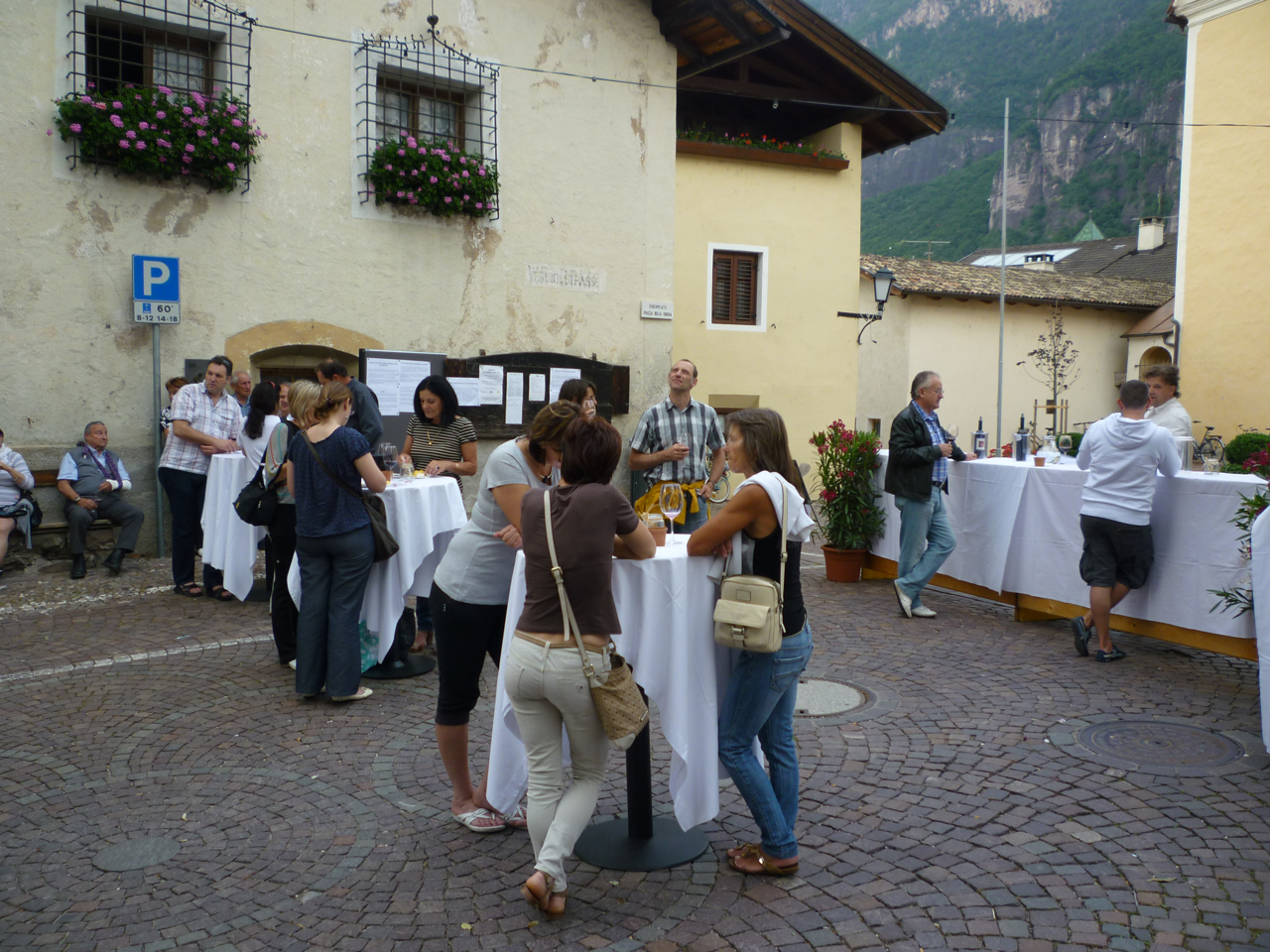
Lagrein Festival gourmet bike tours italy - ItaliaoutdoorsFoodandWine
Lagrein Festival

Finally, I got a chance to taste their Lagrein that evening, at one of the events in the Sudtiroler WeinstrassenWochen/Vino in Festa, a month long festival in the area to celebrate the local wines. That night, we attended the Il Lagrein Al Passo Col Tempo festival in Ora, Italy. This was a chance to taste several of the local Lagreins, one of the areas most beloved indigenous grapes, along with a few of the local foods, including polenta, cheese, and salumi. The Cantina Tramin Lagrein was included in the tasting line up.

Made of 100% Lagrein, from vineyards planted in the clay, gravel and sandy soils common to the areas of Ora, Tramin and Egna. It was a dark ruby red in color, with scents of dark berries with floral hints. Full-bodied, with a characteristic tannic structure, it’s strong acidity makes is the perfect pairing for the local salumi and aged cheeses, as well as roasts and braises.
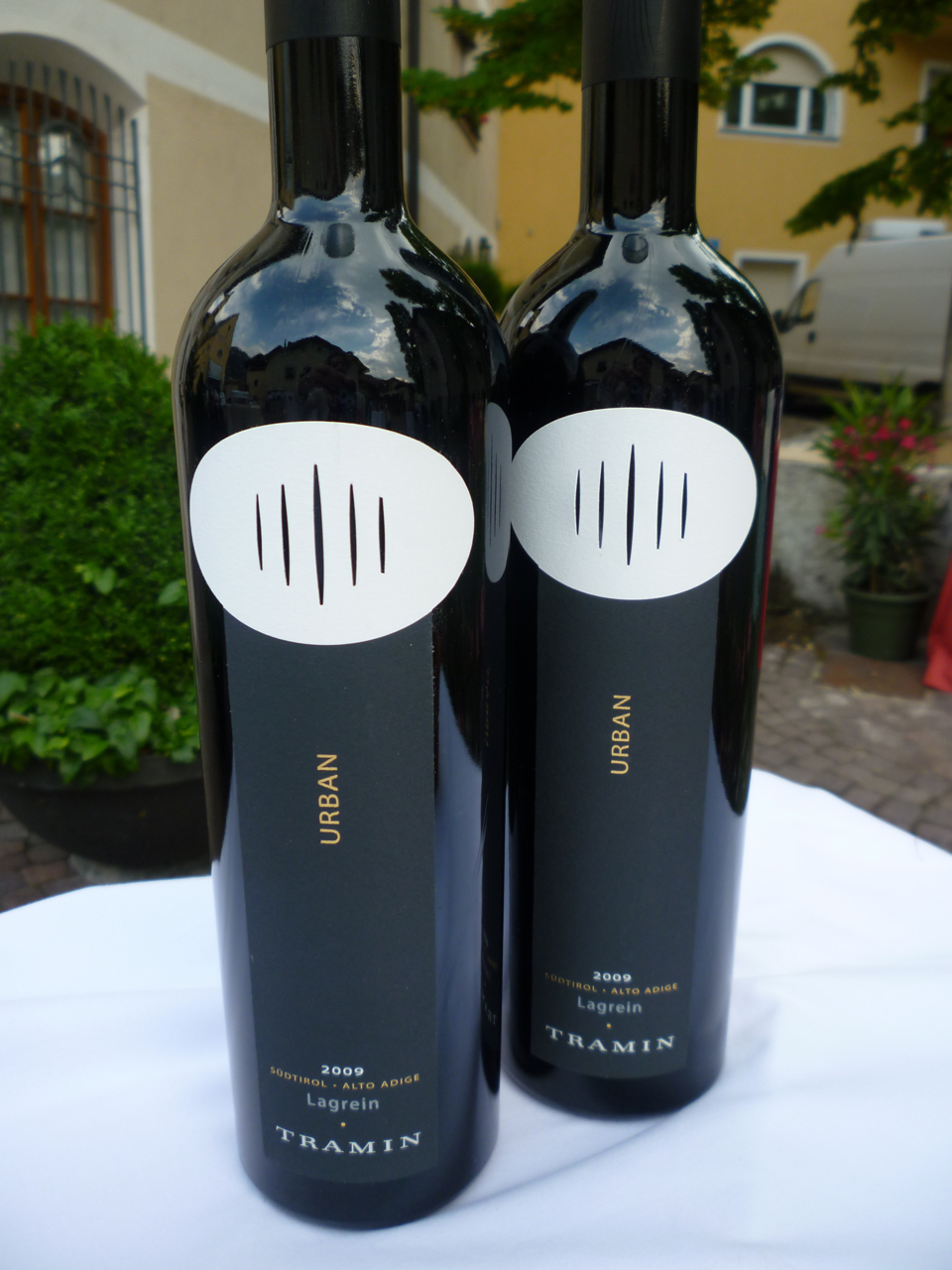
Tramin Lagrien Urban ski holidays dolomites - ItaliaoutdoorsFoodandWine
Tramin Lagrein Urban
Posted in Gewurztraminer, Lagrein, Pinot Noir, Uncategorized, Wine Pairings, wine tastings | Leave a comment

Bistecche all’Aceto Balsamico

Bistecche all'Aceto Balsamico luxury bike tours
Bistecche all'Aceto Balsamico

Balsamic vinegar is one of the most well-known Italian contributions to the culinary world, now a basic condiment found in many kitchens here in the US. It is common all over Italy, we find it at every table in the regions we visit on our bike or ski tours, but to truly appreciate it requires a bit of background on it’s origins and the role it has played in the households over the centuries. Balsamic vinegar hails from the Emilia-Romagna provinces of Reggio Emilia and Modena, with its origins dating almost 1000 years ago. The name comes from the Latin Balsamum, meaning a ‘balm’ or a restorative, and it was originally used for it’s curative properties. Supposedly, during the plague of 1630, the Duke of Modena carried an open jug of the vinegar in his carriage to ward off the disease.

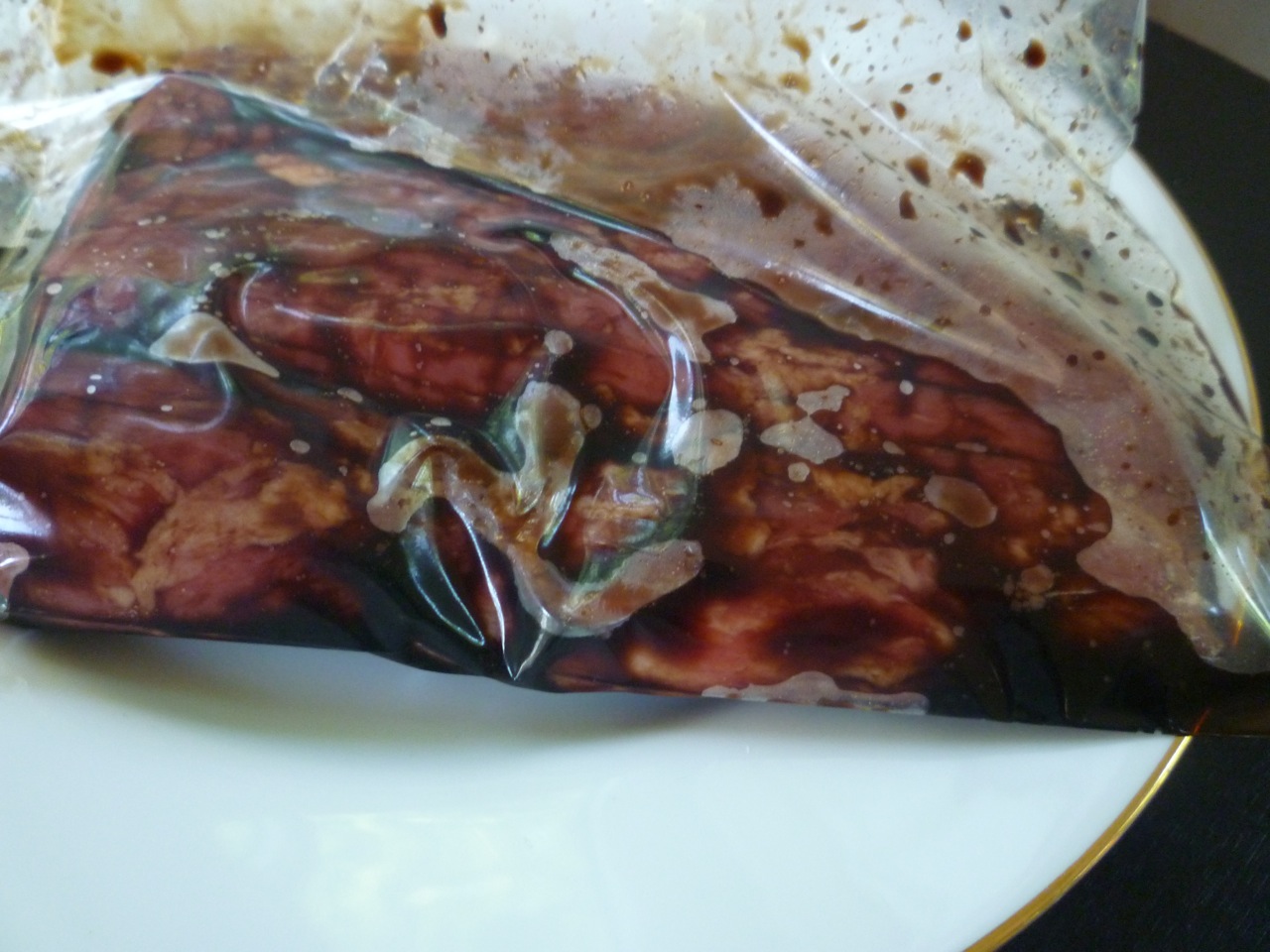
Marinating steak in balsamic

In the farmhouses and estates that in Reggio Emilia and Modena which have been producing balsamic vinegar for centuries, enter their sunny attics and you will find a row of wooden barrels, of increasing size, lined in a row. The number of barrels may vary, but the minimum was 3, and the DOP regulations require at least 7 barrels, and a total aging period of at minimum 12 years. The types of wood used for the barrels varies as well, one may be chestnut, one cherry, one mulberry. Each year, a bottle of vinegar – the families allotment for the year – is removed from the smallest of the barrels. The smallest barrel is then topped off with vinegar from the next smallest barrel, and so on down the line. The sweet concentrate produced each fall by pressing and cooking down this year’s grapes enters the largest barrel, beginning its slow progress into the wonderful balsamic vinegar – now one may understand why, in Modena, it is said “One generation makes balsamic for the next.” Balsamic vinegar was traditionally part of a brides dowery, and one of the families prized possessions that traveled with them during wartime evacuations during WWI and WWII.

steak from wood oven custom bike tours
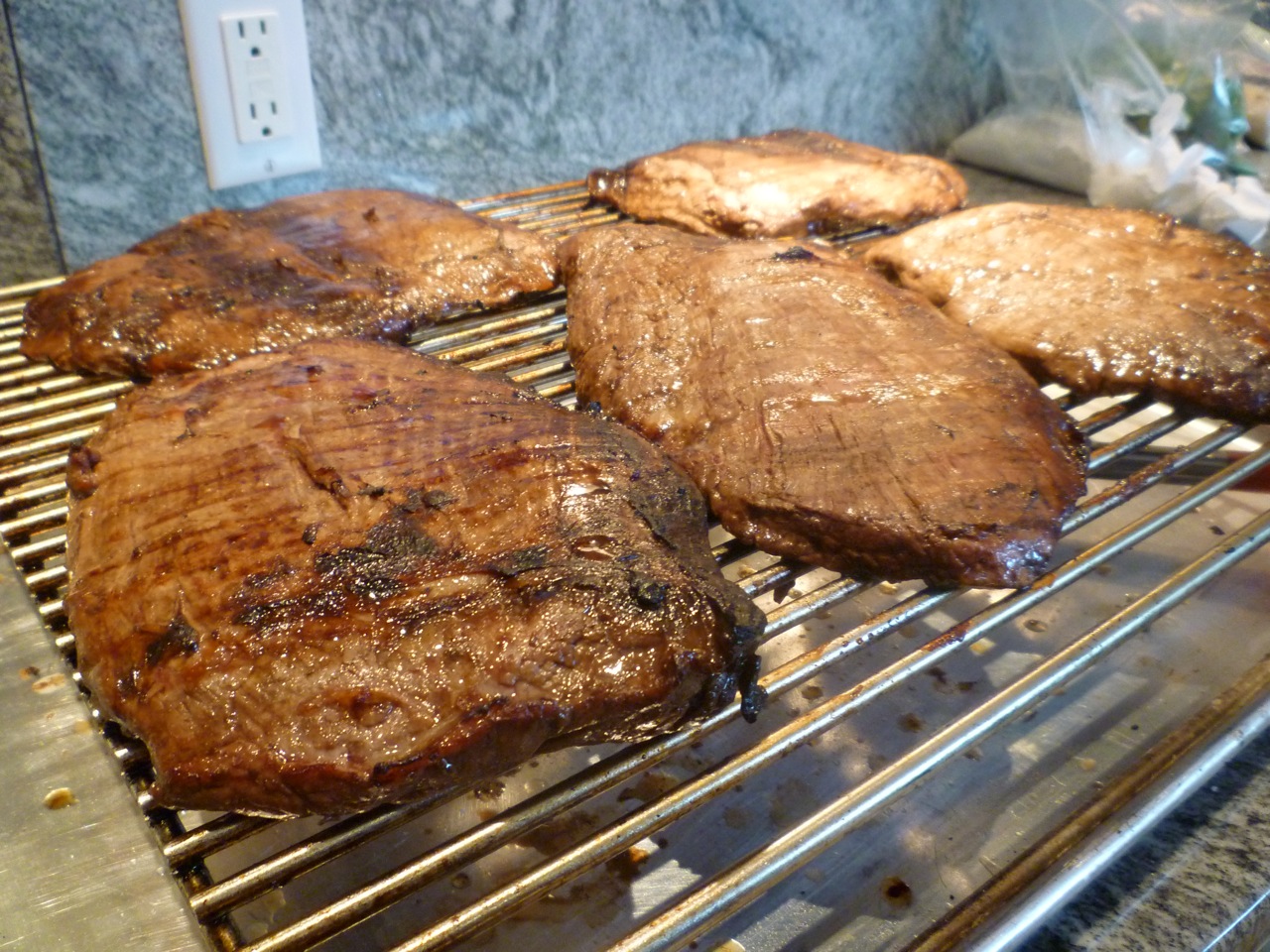
Grilled steak from wood oven

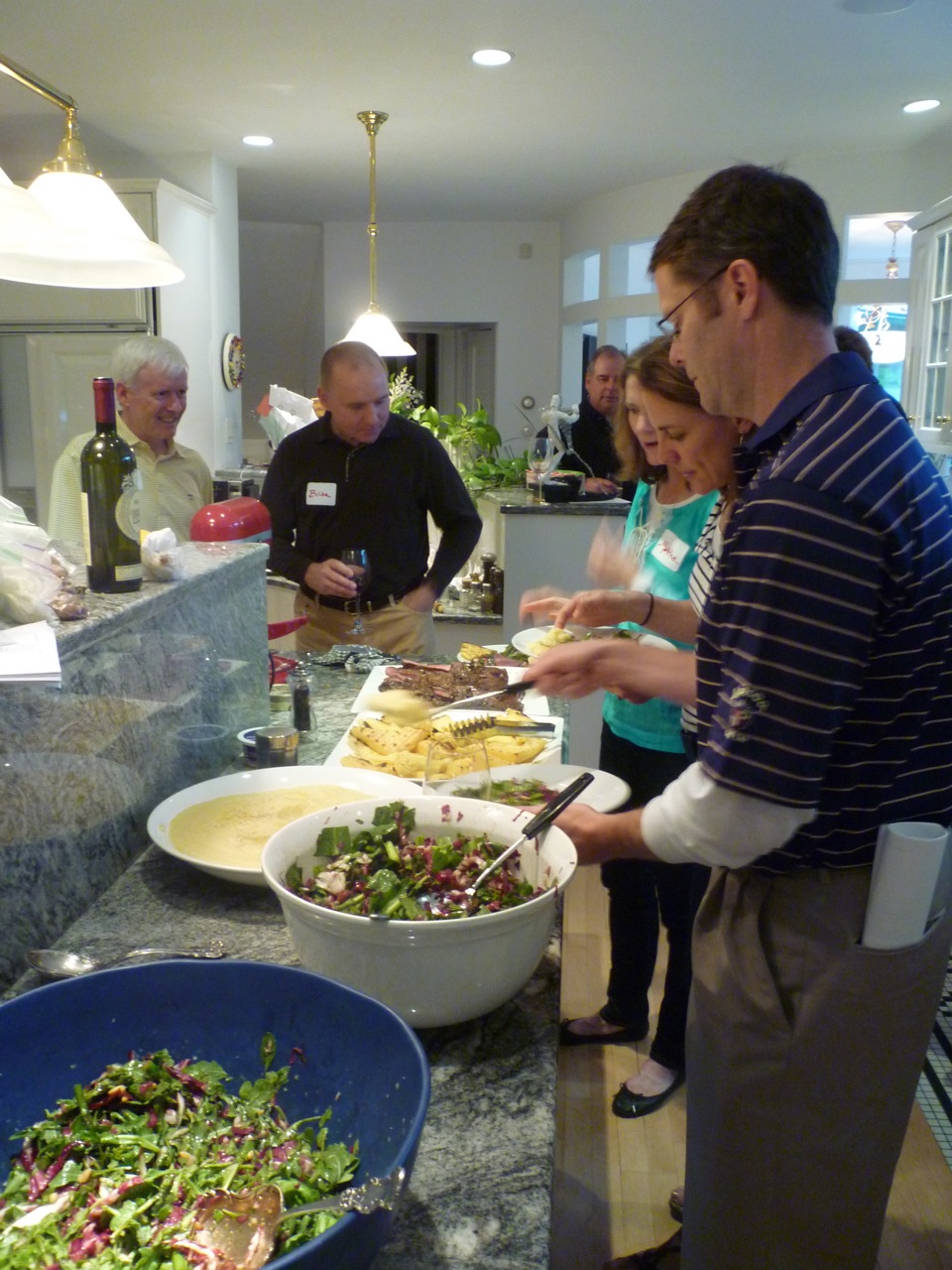
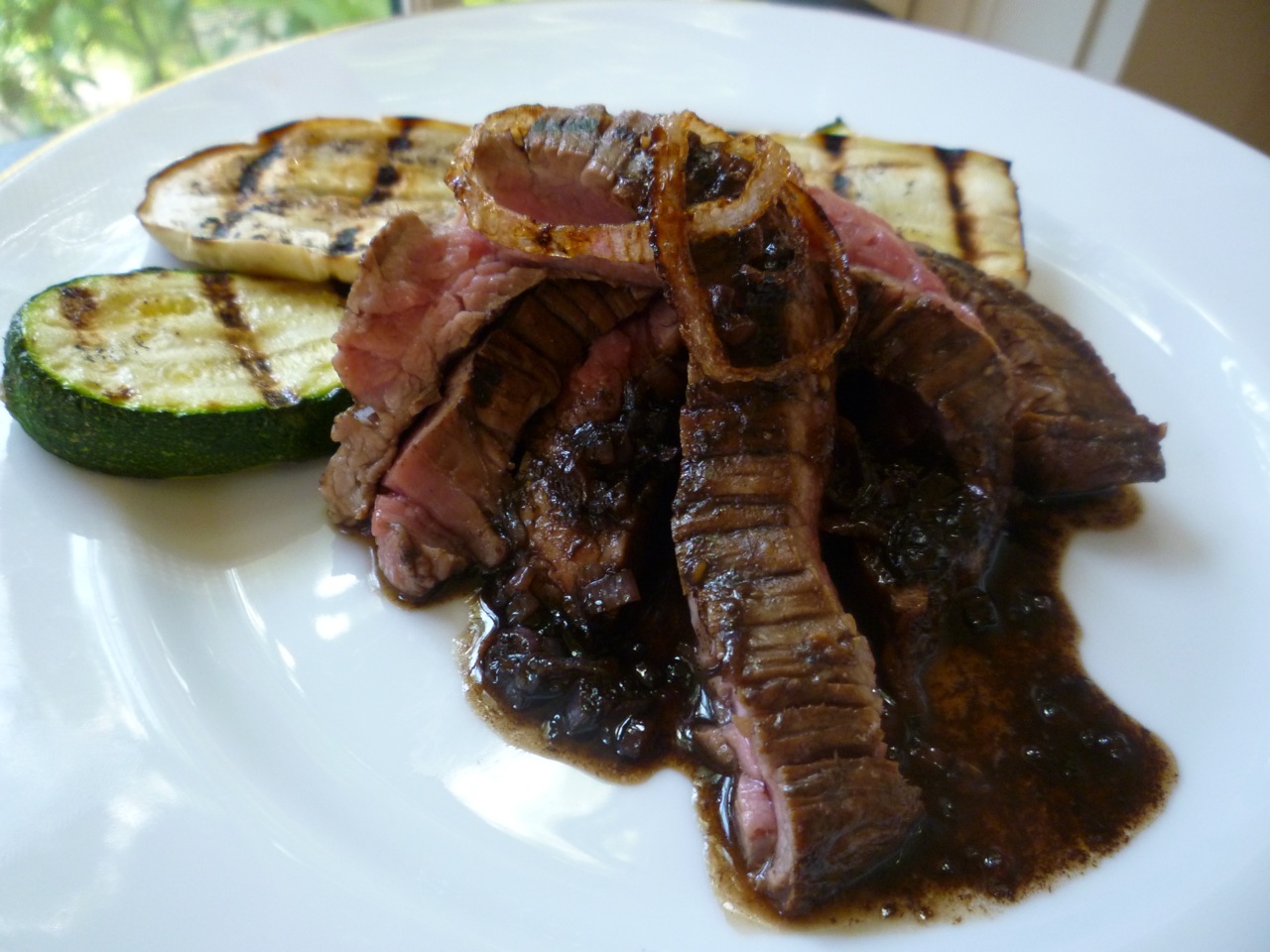
I just included  this recipe in a fun cooking class event in Falmouth, ME to benefit the Portland Symphony Orchestra. We were able to grill the steaks in a wood fired oven, and our host cooked them to perfection! I like to make this recipe with Tendercrop Farms own flank steak or hanger steaks. I marinate them in a little balsamic, grill, and then thinly slice and serve with grilled vegetables.

Cooking class steak private bike holidays
Cooking Class

Bistecche all’Aceto Balsamico

Serves 4

2 tablespoons butter
4 steaks of your choosing (I like to use flank steak, that I’ve marinated in about 1/4 cup of balsamic vinegar for a few hours)
Sea salt and freshly ground black pepper
1 shallot, chopped
2 teaspoons balsamic vinegar
Sea salt

Season the steaks with salt and pepper, and grill until they have reached the desired doneness. Transfer to a serving dish and allow to sit for a few minutes.

Melt the butter in a saute pan over medium heat. Reduce the heat to low, add the shallot to the skillet and cook until translucent, about 5 minutes. Add the vinegar, and any steak juices that may have collected on your serving dish. Reduce for about a minute or so, then remove from heat, pour the sauce over the steaks and serve.

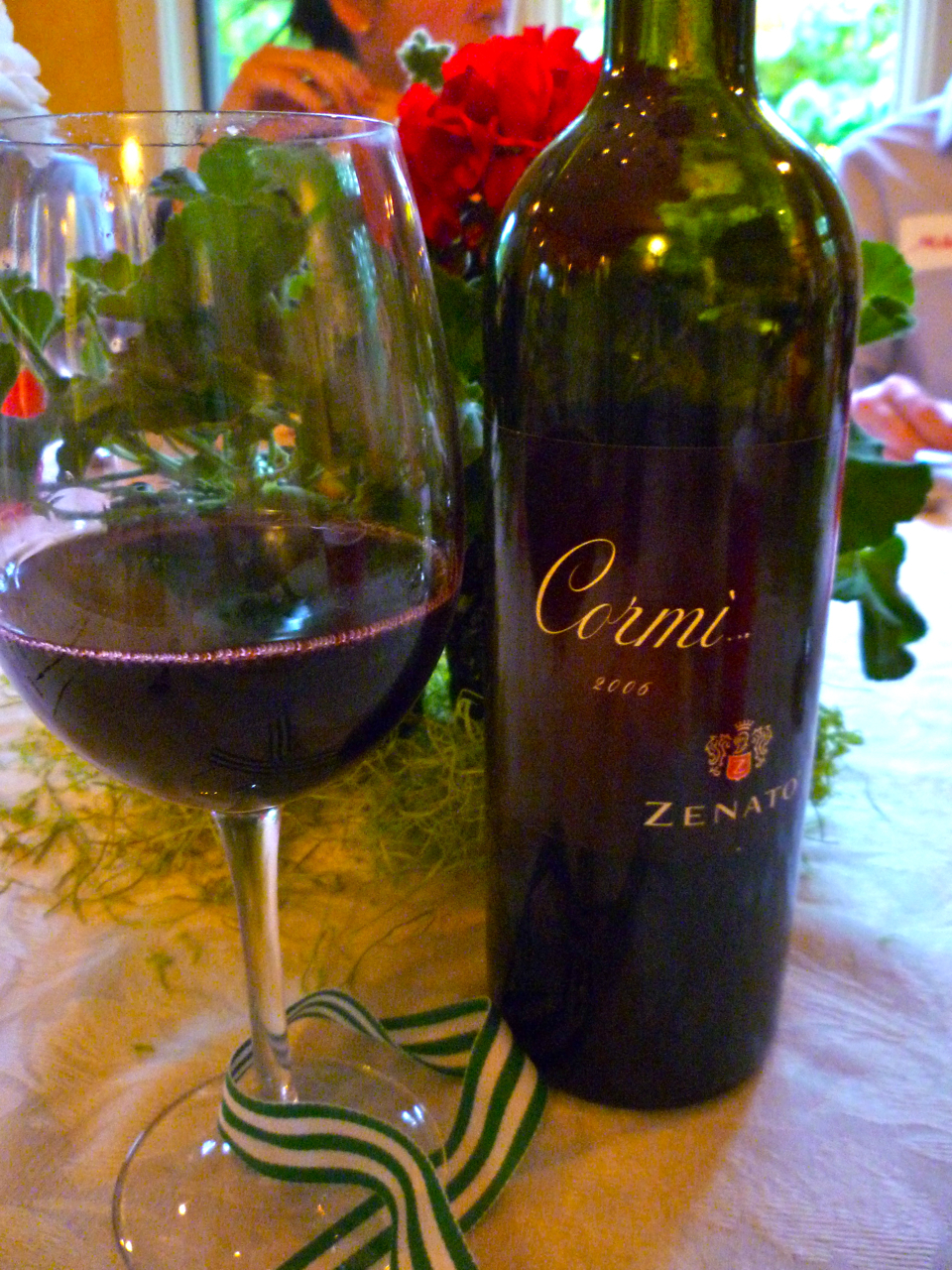
We paired this with the robust Cormi from Zenato, a blend of Corvina and Merlot. This big, tasty red was a great pairing with the grilled meat.

Zenato Cormi - bike wine tours italy
Zenato Cormi
Posted in Beef, Emilia Romagna, Travel, Uncategorized | Leave a comment

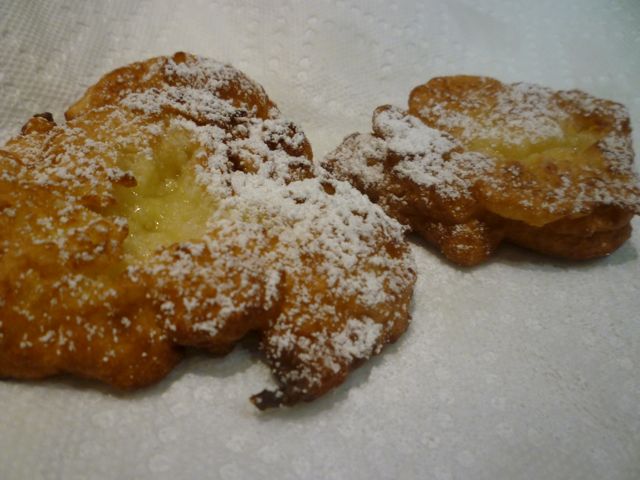
Fartaies – Grappa Fritters

fartaies bike tours europe - Italiaoutdoorsfoodandwine
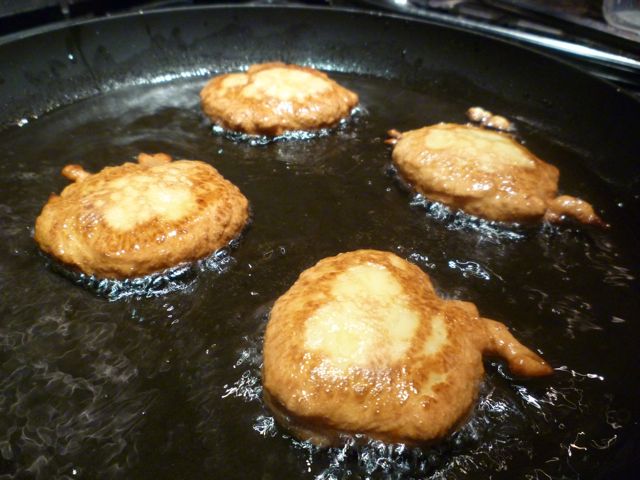
Fartaies - Grappa Fritters

The most famous, and most popular, after dinner drink in Northeastern Italy is grappa. It is primarily served as a digestivo, to aid in the digestion of a heavy meal. It can be served by itself, or added to espresso “caffe corretto”, an “ammazzacaffe”, where a few ounces of grappa are served after you finish your espresso, or a “resentin” (little rinser), where you rinse out your espresso cup with a few drops of grappa. However you choose to enjoy it, you will find a vast variety of grappa to taste on your visit.

grappa poli italy bike tours - italiaoutdoorsfoodandwine
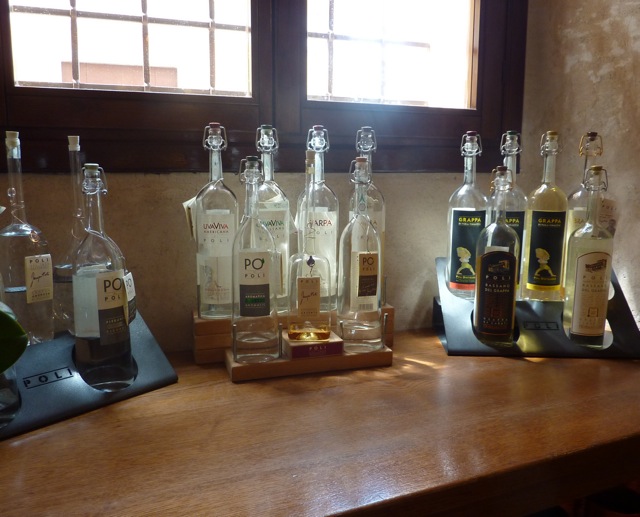
Grappa at Poli

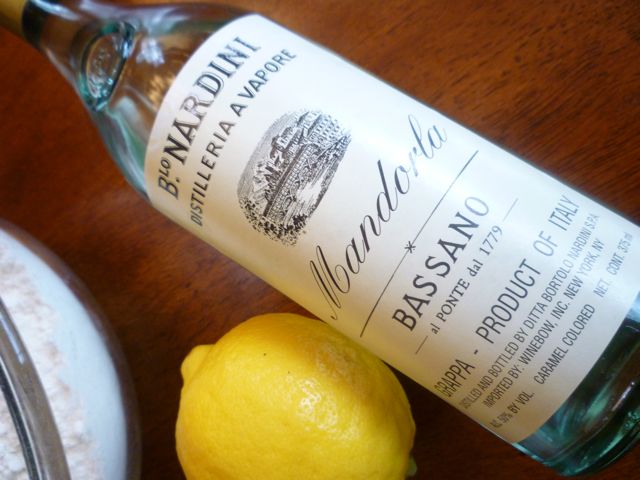
We visit Bassano del Grappa on our tours in Italy, and have the opportunity to visit two very well known producers that are right across the street from each other. Nardini is located at the end of the famous Ponte degli Alpini in Bassano, and is popular with the locales; you will see quite a crowd there, spilling out onto the bridge itself in the late afternoon. Poli is located here as well, and has a very interesting museum that leads you through the production process. Many small antique bottles are on display, and a ‘sniffing’ room, where you can explore the aromas of about 20 or so different grappas.

nardini grappa bike wine tours - italiaoutdoorsfoodandwine
Nardini Grappa

Grappa is similar to other distilled liquors, but is unique in that it is the only spirit made from distilling the skins, pulp, seeds and stems (called vinaccia) leftover from the winemaking process. Legend has it that a Roman solider first distilled grappa in Bassano del Grappa using equipment he stole from Egypt, but this is not the case, as the distillation techniques in use then could not produce grappa. According to Ove Boudin, in his book Grappa: Italy bottled, in ancient times the royalty would drink the wine, and the poor would make their own makeshift wine by adding water to the leftovers – nothing went to waste – calling it vinello. Around 1600, the Jesuits formalized and perfected distillation techniques, making it possible to distill vinaccia, and grappa was born.

mixing batter cycling holidays italy - italiaoutdoorsfoodandwine
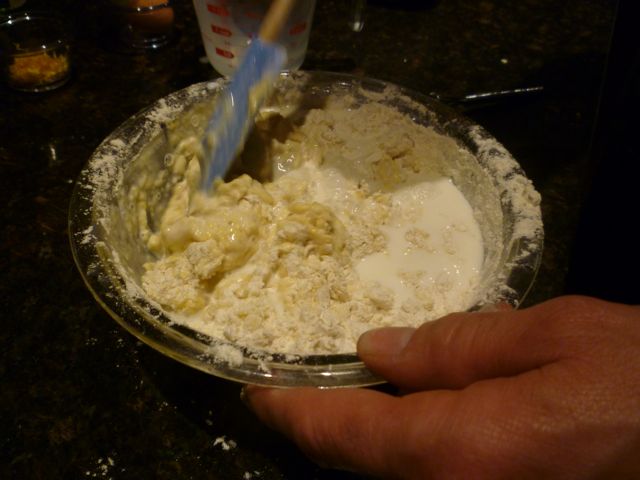
Mixing fritter batter

For many years, grappa was distilled with whatever vinaccia the producers would have available. Nowadays, as with most distilled liquors, modern producers have introduced refinements to the production process, greatly improving the final quality, and resulting in many diverse varieties. Today, the use of varietal grapes and aging in casks of various types of woods allows the producers to offer magnificent grappas that reflect the  high quality and the unique nature of the original grapes. At the forefront here is Nonino, a Friuli based producer that was the first to introduce a single varietal grappa in 1973.

frying fartaies cycling dolomites - italiaoutdoorsfoodandwine
Frying the fartaies

On our biking and cooking tours, we often incorporate grappa in our cooking. It can be used like other distilled spirits, as a flavoring agent in meat and fish dishes (see my post on Trout with Grappa), as well as desserts. Here’s a dessert that uses grappa, fartaies, or grappa fritters. Fried dolce, called frittelle, are very common in the Veneto, especially around Carnavale. A quick bite enjoyed by party-goers as easy to eat indulgences before the austerity of Lent.

Fartaies – Frittelle di Grappa

3 large eggs
2 tablespoons sugar
3 1/3 cups all-purpose flour
Pinch of salt
2 cups milk
1/4 cup grappa
grated zest of 1 lemon
1 1/2 teaspoons baking powder
1/4 cup canola or vegetable oil
Confectioner’s sugar

Put the eggs, sugar, flour, salt and milk into a medium bowl and whisk until smooth. Adjust the consistency by adding a bit more milk or flour; the batter should be like a thick pancake batter.

Add the grappa, lemon zest and baking powder. Stir to combine.

Heat the oil in a frying pan and pour in the batter into small 3” or so rounds. Cook until golden on the bottom, them turn over to cook the other side. Remove from pan, drain on paper towels, and dust with confectioner’s sugar. Serve warm.

Posted in Dessert, Eggs, Uncategorized, Veneto Food | 3 Comments

Risotto di Scorzonera

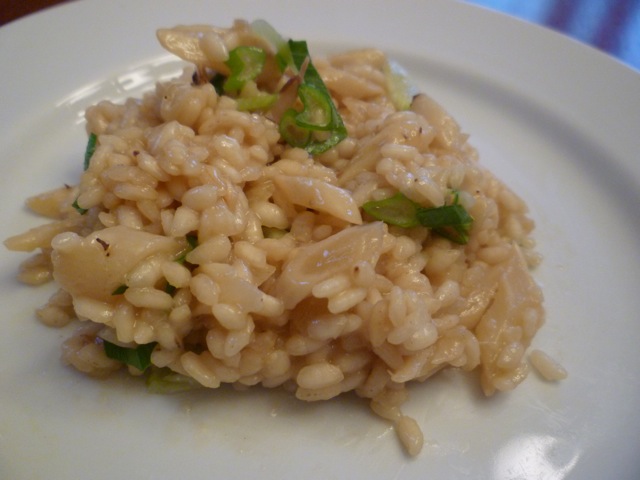
plated scorzonera risotto private bike tours
Risotto di Scorzonera

So many interesting foods are beginning to appear at local farmer’s markets here in New England, now that spring is here. I love to try these new foods, and learn about their history in the culinary traditions of Italy. Scorzonera is my latest discovery, and now that I know what to look for, I’ll keep my eyes open for it on our next culinary bike tour in Italy.

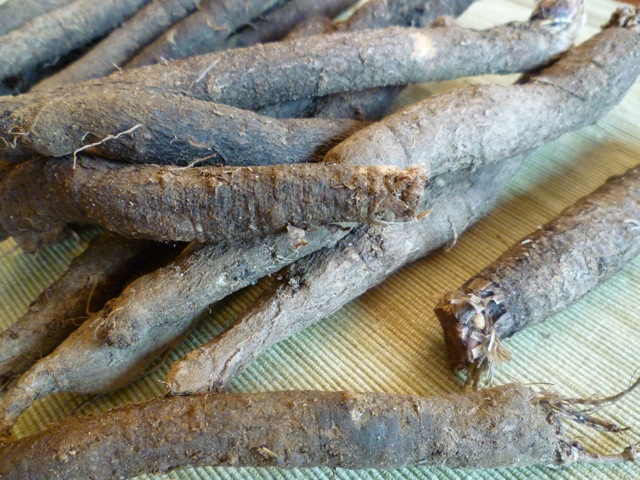
scorzonera roots bike tours italy
Scorzonera roots - black salsify

Scorzonera is the root of salsify, sometimes referred to as ‘black salsify’, due to the black color of the outer layer of the root. It is native to lands around the eastern Mediterranean, growing as far east as Siberia. It has likely been eaten since classical times, but actual cultivation began in Italy and France in the 16th century. It has never really taken off here in the US, and appears most commonly on tables in France, Italy, and Russia.

The name itself has a couple of origins: from the Italian words scorza, or bark, and nera, black. In addition, scorzone in Italian refers to a poisonous snake, and the salsify root has been used for a long time to treat venomous snake bites.

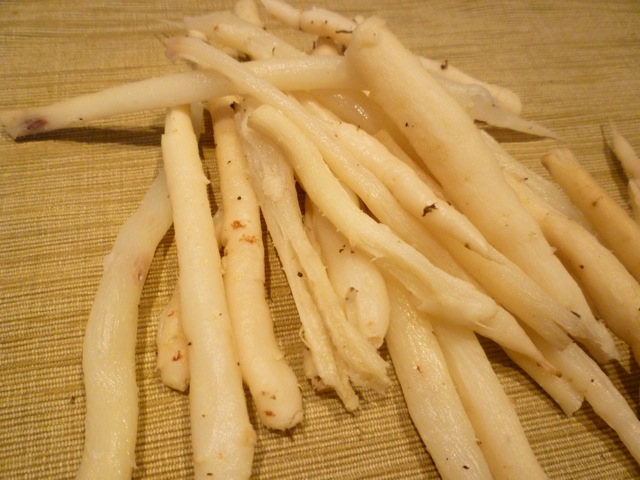
cooked and peeled private cycling holidays
Cooked and peeled scorzonera

Salsify resembles a long, thin carrot, with an outer black layer that surrounds a white interior. The root is difficult to remove from the soil without damage, and if broken it should be used immediately, as it will discolor. When cutting to use in cooking, it should be kept in acidulated water to prevent it from turning brown.

cooking scorzonera culinary bike tours italy
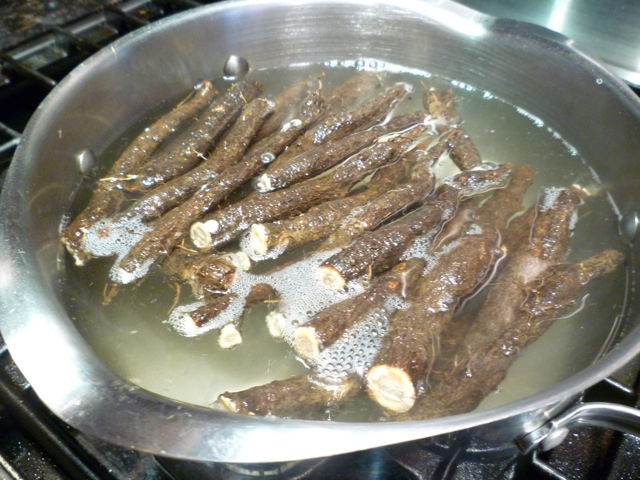
Cooking scorzonera before peeling

I had to do some reading and research to learn more about how to prepare scorzonera, and what types of dishes would include it. It is often roasted or boiled, used in a gratin, or in a nice cream based soup. Many suggested to cut into large pieces and cook it, unpeeled. Once cooked, the outer black skin slides off pretty easily. Not many recipes are available, especially in English, but a very traditional use in Italy would be in a risotto. With a flavor that has been described as a cross between artichokes and asparagus, scorzonera makes a wonderful addition to a spring risotto.

scorzonera risotto ingredients custom bike tours italy
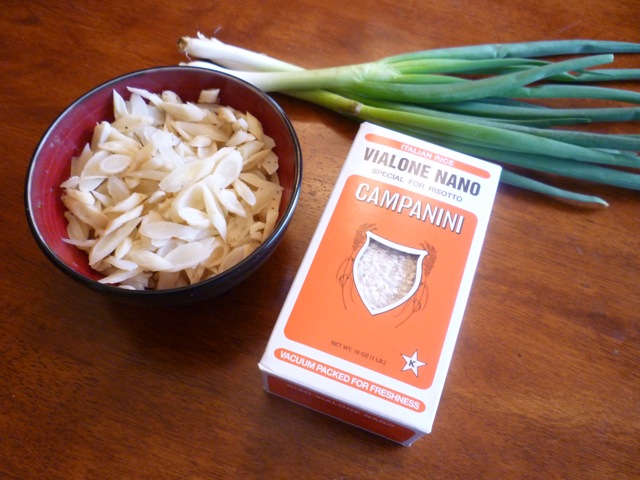
Ingredients for risotto di scorzonera

Risotto di Scorzonera

Serves 6

1 pound scorzonera
6 1/4 cups vegetable or chicken stock
1 1/2 tablespoons olive oil
1 1/2 tablespoons butter
1 leek, white part only, trimmed of roots and outer leaves, sliced thinly crosswise and swirled in a bowl of cold water to remove any grit
1 scallion, thinly sliced
2 cups risotto rice, vialone nano, arborio or carnaroli
1 1/2 cups white wine
1/2 cup grated grana cheese
1 tablespoon fresh herbs – chives, basil, mint – finely chopped

Place a large pot of water on the stove, and bring to a boil over high heat.

Trim the scorzonera roots, and cut into large pieces if desired. Place in the boiling water, and simmer until the roots are cooked through, about 15-20 minutes depending upon the thickness.

Remove from water, and when cool enough to handle, remove the outer black skin. This should be loose enough to simply rub off with your fingers. Cut the white core into 1/4 inch slices.

Bring the stock to a boil, then reduce heat and keep warm.

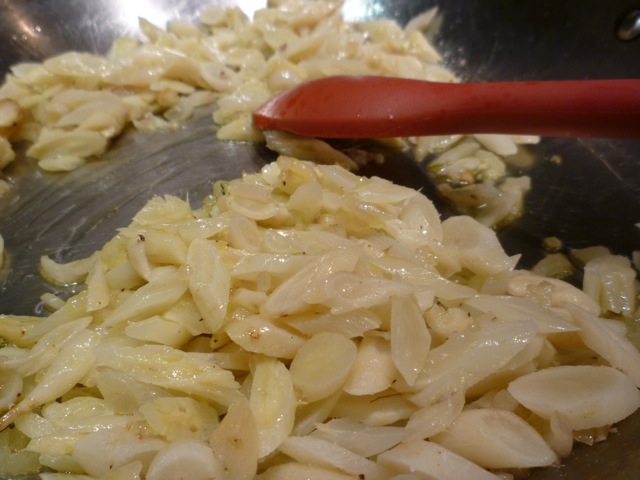
Heat the oil and butter in a large saute pan, add the leek, shallots, and scorzonera slices, and cook over low heat, stirring occasionally, for 5 minutes.

Add the rice. Stir for about 1 minute. Add the white wine, and simmer until it has evaporated. Stir in a ladleful of the stock. Cook, adding the stock a ladleful at a time, and allowing it to be absorbed by the rice before adding more.

Taste the rice occasionally as you add the stock, and stop cooking when the rice is al dente, you don’t want it too mushy.  You may not use all of the stock. Add the grated cheese. Season with salt to taste, and serve, garnished with the chopped herbs – I used thinly sliced fresh spring onions as my garnish.

A nice wine to enjoy with this would be the aromatic Kerner, such as that produced in Alto Adige by Abbazia di Novacella.

saute scorzonera cycling holidays dolomites
Saute leeks, scallions, scorzonera
Posted in Kerner, Risotto, Uncategorized, Vegetables, Vegetarian, Wine, Wine Pairings | Tagged , , , , , , , , , , , , , , , , , , , , , | 5 Comments

Asparagi con Uova

asparagus eggs ski holidays dolomites
Asparagi con Uova

It is asparagus season both here and in Italy, so I’ve been reading and cooking a lot with it lately. The first shoots of the season are even appearing up here in the cold north woods of Maine.

asparagus from maine custom ski holidays
Asparagus from Maine

I included asparagus in a couple of recent posts, where I added it to a pasta, Pasta alla Carbonara con Asparagi, and a Spring Oat Risotto. This post is dedicated to the vegetable itself, and how it would be traditionally served in Italy.

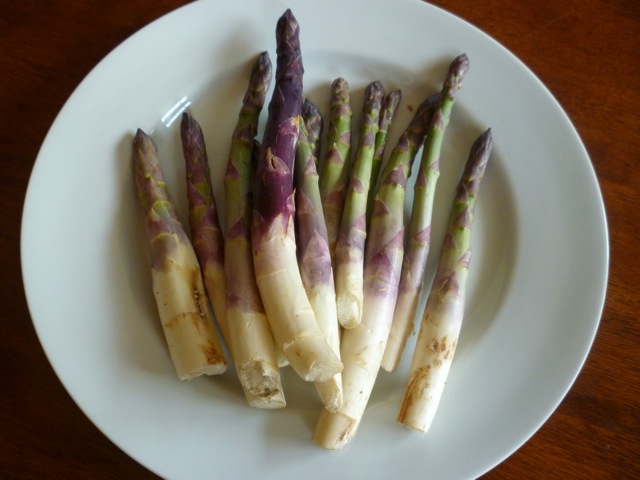
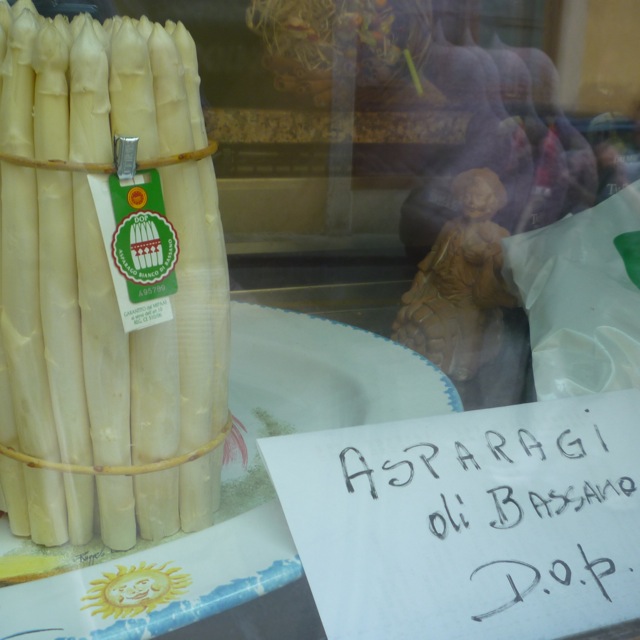
In Northeastern Italy, and in fact throughout continental northwestern Europe, the most prized asparagus is white. This is less bitter, and much more tender that our green asparagus. The freshness of the asparagus is highly prized, and you don’t see it exported much outside of the region. The asparagus season is short, and you will see it make it’s way into many dishes during its short growing season.

asparagi di bassano bike tours italy
Asparagi di Bassano

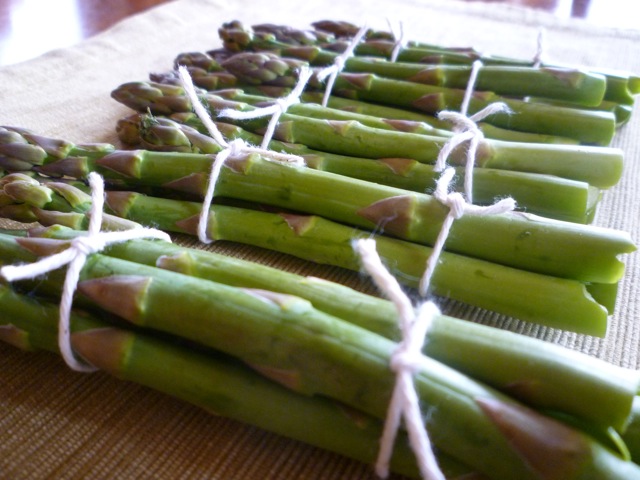
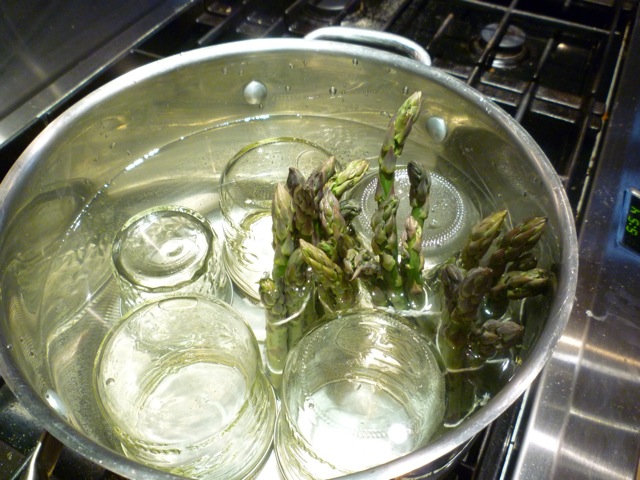
The traditional way of preparing the asparagus in Italy, and elsewhere in Europe, is to gather a few stalks together, tie them in bunches, and blanch them vertically in a tall pot. The water level should reach just below the tips, allowing the tips, which have the finest texture and the most delicate flavor of the plant, to steam rather than boil.

asparagus bundles culinary bike tours italy
Asparagi bundles

To cook the asparagus:

Asparagi

2 lbs. asparagus, woody ends trimmed and peeled if larger than your pinky finger

Tie the asparagus stalks into small bundles of 5-7 stalks each. Stand  them upright in a tall, narrow pan. If you don’t have a pan narrow enough, fill the space with something that will help hold the asparagus upright. I used a few mason jars. Fill the pan with water, until the level of water is just below the tips of the asparagus stalks. Remove the stalks from the pot, place the pot on the stove and bring to a simmer.

Salt the water, then place the bundled stalks upright in the hot water. Simmer until bright green and tender, about 8 minutes, but this will vary depending upon the thickness of the stalks.

cooking asparagus cycling holidays italy
Blanching asparagi

Remove the stalks from the water, cut apart the bundles, and serve with one of the following sauces.

Some variations of this technique flavor the blanching water with butter, sugar and white wine.

The classic pairing with asparagus is egg. In France, you may serve these with a Hollandaise sauce. In Italy, I’ve found a variety of different preparations which I am sharing here.

Asparagi con Uova

1 egg per person
Extra virgin olive oil

Hard boil the eggs. My method is to place the eggs in a small saucepan, fill with water, and bring to a low boil. Simmer the eggs for 12 minutes.

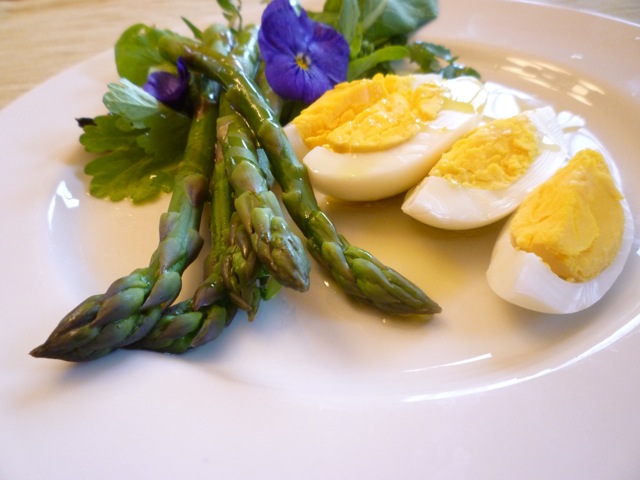
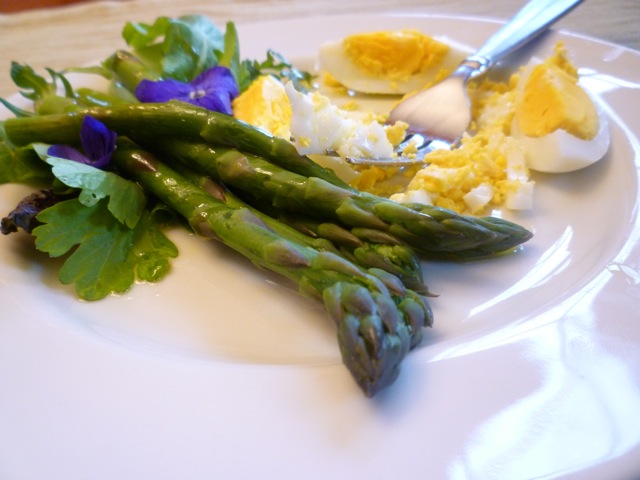
Shell the eggs, cut lengthwise into quarters, drizzle with olive oil, season with salt and pepper and serve. Traditionally, one would mash up the yolk of the eggs with a bit of olive oil, and enjoy with the asparagus.

asparagi con uova bike and wine tours italy
Asparagi con Uova

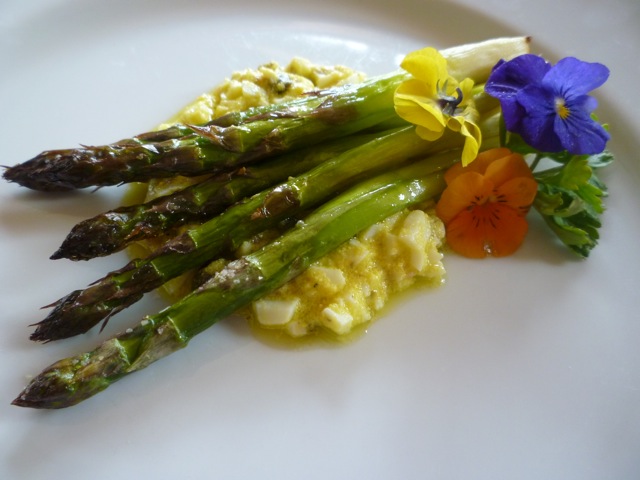
This next recipe, from La Cucina – The Regional Cooking of Italy, by the Accademia Italiana della Cucina, makes a sauce from the hard boiled eggs, a bit more elegant of a presentation. It is a recipe from the Veneto, meant to be served with the Asparagi di Bassano, the sublime white asparagus from one of our favorite stops on our Italiaoutdoors Food and Wine bike tours.

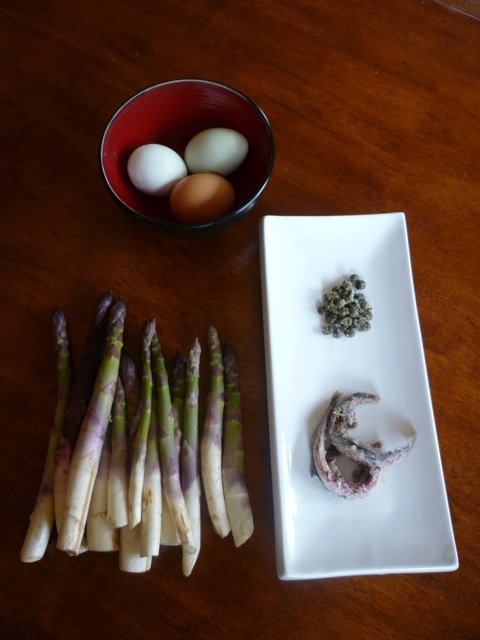
Ingredients for asparagi private bike  tours italy

Asparagi con Salsa di Uova Sode

3 large hard boiled eggs, shells removed, cut in half
2 teaspoons lemon juice
1 cup extra virgin olive oil
2 salt crusted anchovy filets, finely chopped
1 tbsp capers, rinsed and finely chopped
Salt and pepper

Remove the yolks from the eggs. Press the yolks through a sieve into a small bowl. Stir in the lemon juice and then, stirring constantly, slowly drizzle in as much olive oil as necessary to obtain a somewhat fluid sauce. This probably will not require all of the olive oil.

Finely chop the egg whites. Add to the yolks, along with the anchovy and capers. Stir to combine. Season with pepper, taste, and adjust seasoning by adding lemon juice or salt as needed. Serve with the asparagus.

Asparagi con Salsa di Uova private ski holidays
Asparagi con Salsa di Uova Sode

This final sauce I’ve translated from a book on classic Dolomite recipes interpreted by a few Michelin star chefs in the region. Here, a very similar sauce is made from hard boiled eggs, this one is flavored with mustard and water, rather than anchovies and capers. I haven’t tried this one yet, but thought I’d share it anyway, to complete the set!

Asparagi con Salsa Bolzanina

2 eggs
1 teaspoon mustard
1 teaspoon white wine vinegar
2 tablespoons hot broth or water
1/4 cup extra virgin olive oil
Kosher salt and freshly ground black pepper
1 tablespoon minced chives
2 tablespoons melted butter
2 tablespoons grated cheese, such as a grana.

Boil the eggs for 7 minutes, cool, then peel and separate the yolks from the whites. In a small bowl, mix the yolks with the mustard, vinegar, and broth or water. Add the oil slowly, stirring constantly. Finely chop the egg whites, and add them to the yolks. Season with salt and pepper, and add the minced chives.

Place the asparagi on serving plates, drizzle with the melted butter and sprinkle with the grate cheese. Top with the Salsa Bolzanina and serve, accompanied by speck or prosciutto.

If serving as an antipasti, pair with a nice prosecco, like those from Col Vetoraz or Adami. A nice white to accompany this would be the Maculan Pino & Toi.

Posted in antipasti, Asparagus, Eggs, Travel, Uncategorized, Vegetarian, Veneto Food, Wine Pairings | Tagged , , , , , , , , , , , , , , , , , , , , , , , | Leave a comment