Gnocchi Class

cooking class cuinary cycling holidays europe

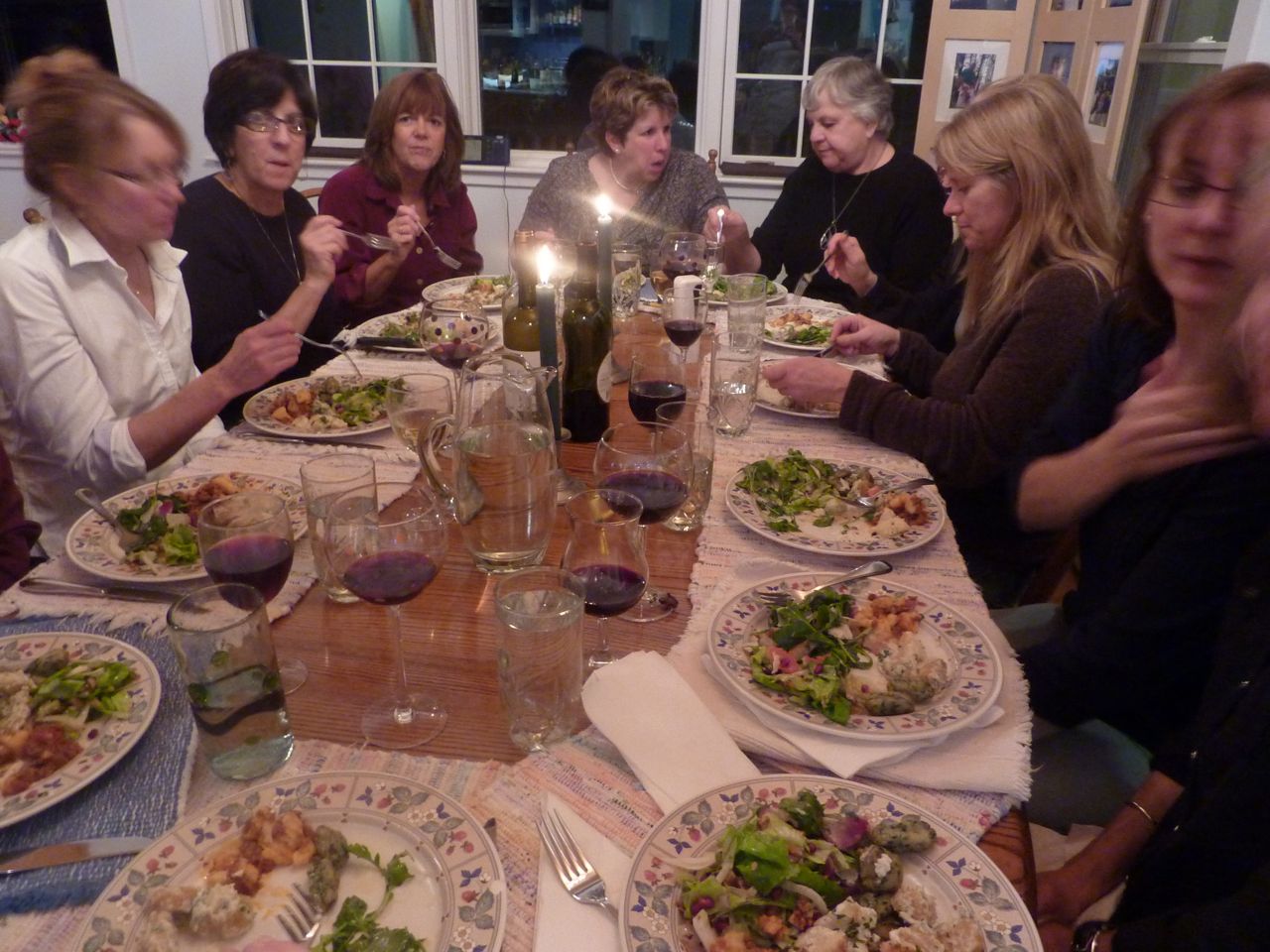
I ran a cooking class last night for a wonderful group of ladies who turned out to cook, laugh, drink wine, and support our local school. Most had not attended a cooking class before, and after we reviewed the recipes and finally got cooking at about 7pm, they were convinced that I was nuts and we were all not going to eat until midnight! But everyone got right down to business, and we were sitting down to a wonderful dinner a few minutes after 9.

On our last Italiaoutdoors culinary bike trips in Italy, our hosts at one of the villas we stayed at ran a cooking class and showed us how they make gnocchi. It’s easy, fun, and most people haven’t tried to make it themselves. Last night we made 4 gnocchi dishes, two with the traditional potato gnocchi, one with a butternut squash gnocchi, and the last with a bread gnocchi. I’m posting one of the two potato gnocchi recipes here. I’ll address in later posts the non-traditional ones.
riced potatoes bike wine tours italy

Gnocchi are basically poached dumplings, a dish made for years as a way of using up leftovers be they potatoes, squash, pumpkin, ricotta, or bread. There are couple of tips to making good gnocchi – gnocchi that are tender and light, not heavy and dense.

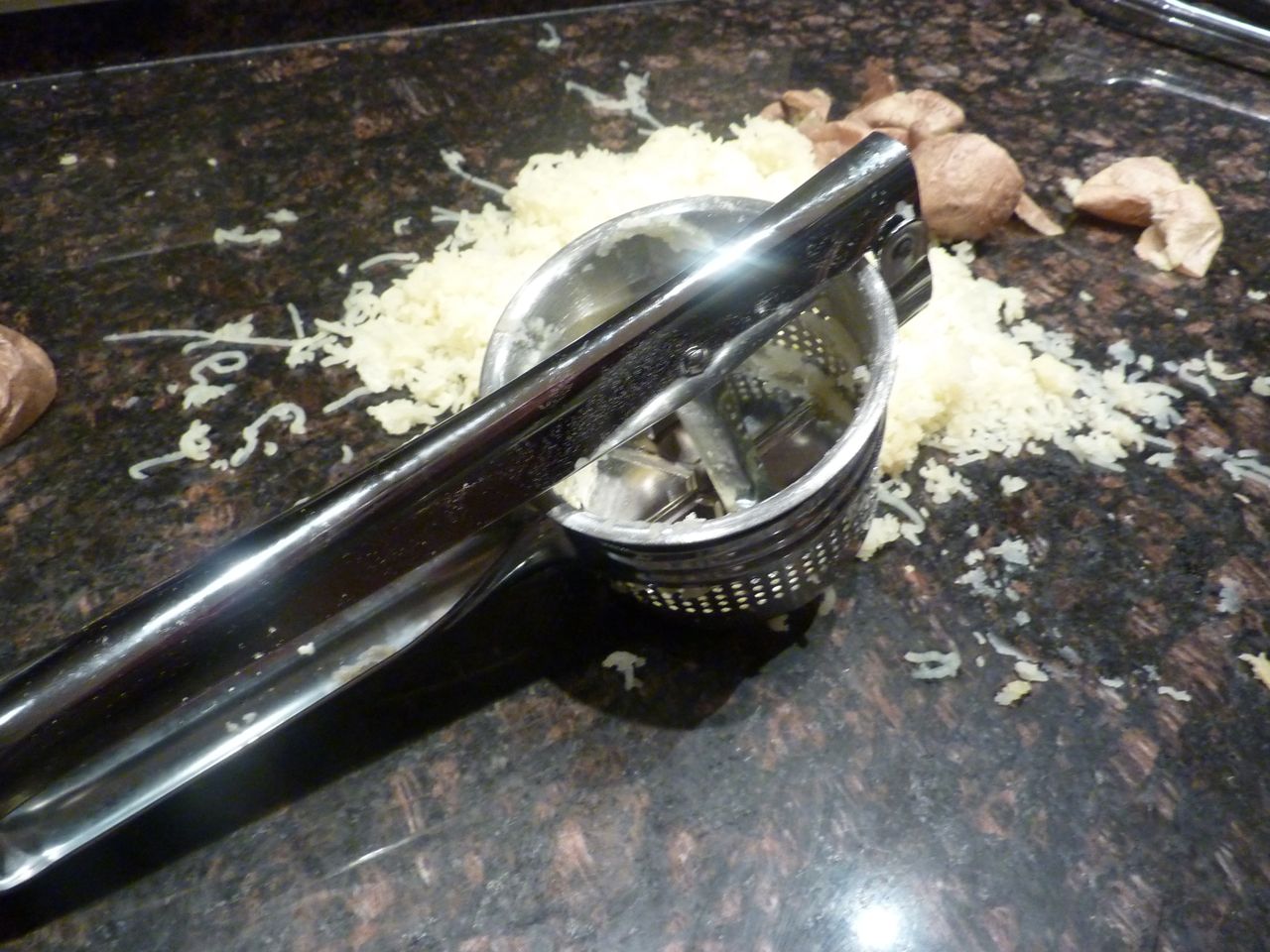
You begin by cooking the potatoes. It doesn’t really matter whether you boil or bake them, I’ve seen recipes that do both. But, regardless of the cooking technique, it is important to rice them when they are warm as they otherwise they can become gummy. “Ricing” potatoes is the act of passing them through a potato ricer, which is basically a sieve with a handle attached that pushes the food through the holes. If you don’t have a ricer, you can use the medium holes on a box grater, or I have even pushed it through strainer with a large spoon.
cooling luxury villas tuscany italy
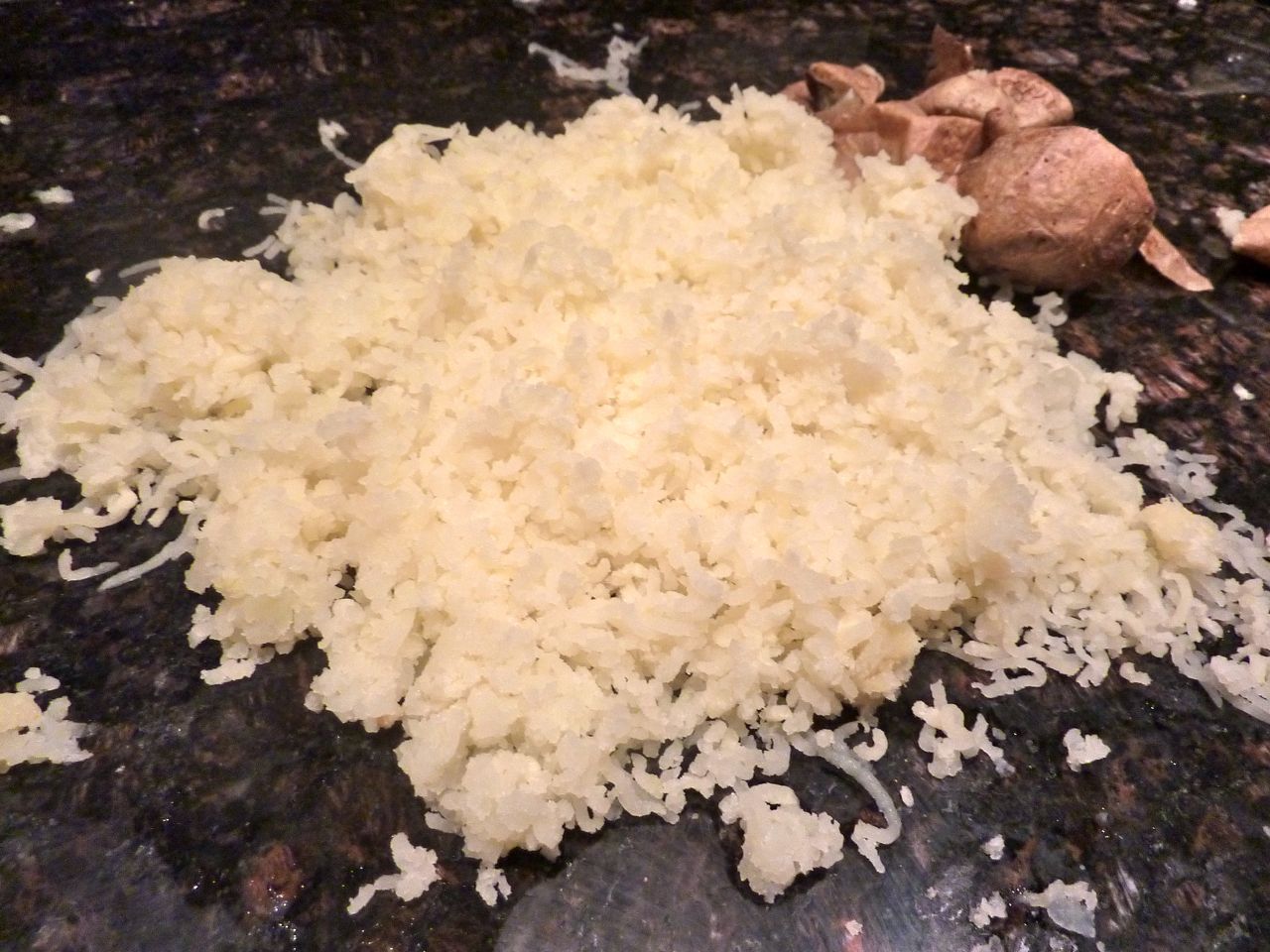
Riced potatoes cooling

Second, allow the potatoes to cool before continuing. When warm, they continue to sweat a bit and you end up adding more flour to absorb this liquid. Which brings us to the third tip – use as little flour as possible in the production of the gnocchi. The less flour you use, the lighter they will be. I start with a little less than the recipe calls for and then add a bit at a time.
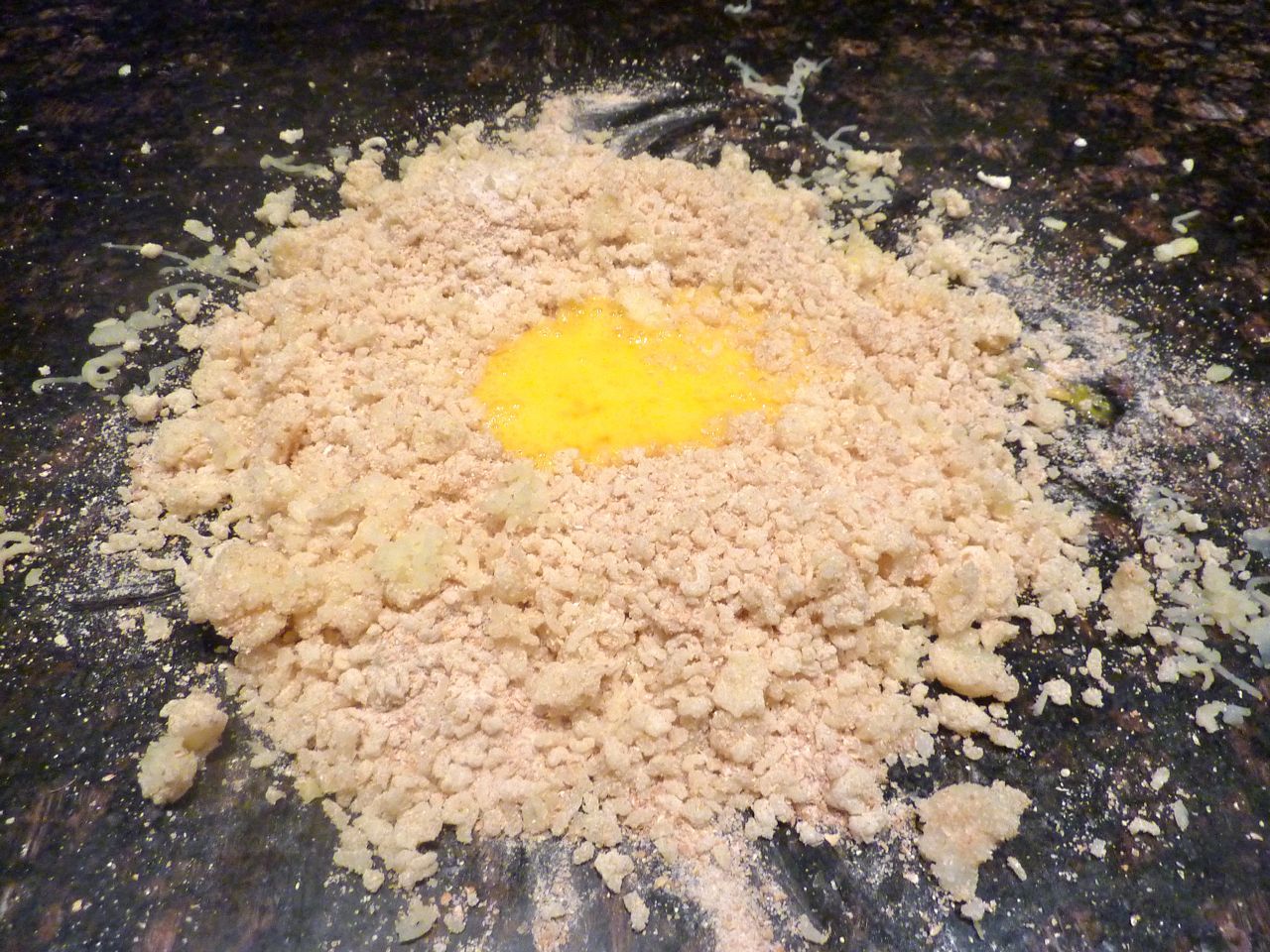
potatoes and egg ski holidays dolomites

I rice the potatoes directly on a counter, then add the flour and salt and lightly mix everything together without compressing the riced potatoes. I then make a well in the center of the potato flour mixture and add the egg, and mix together very quickly. Once the dry ingredients hit the wet, you want to handle the dough as little as possible to get tender gnocchi (tip 4.) If you have not made much gnocchi before, you may want to make and cook a test one at this point to make sure that you have added enough flour to bind it together. Boil some water in a small pan, and drop in a grape-piece of dough. It will first sink, then eventually rise to the surface. If it breaks apart into several pieces, you will need to add more flour.
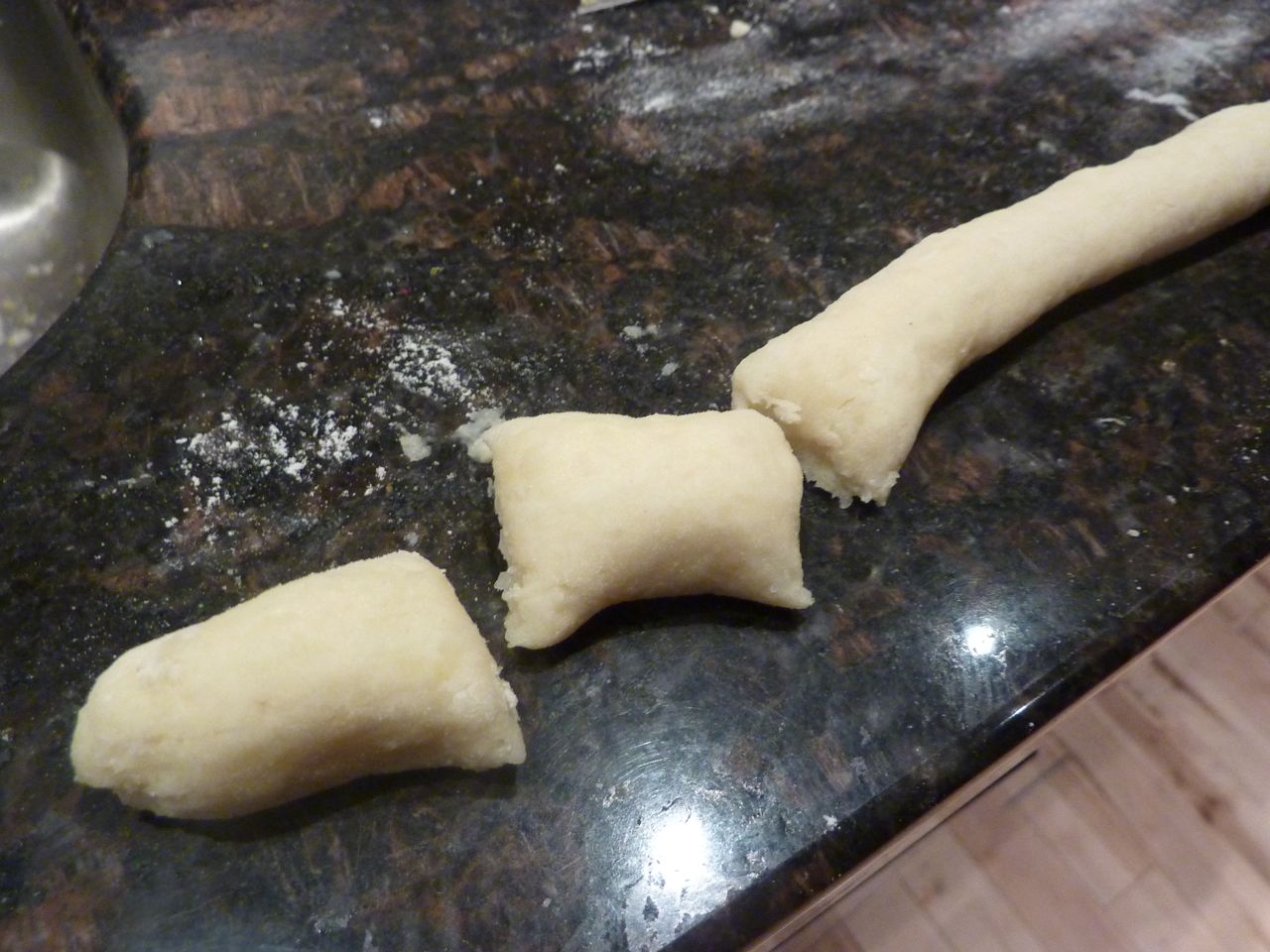
forming gnocchi custom bike tours italy

Once you have the gnocchi dough with the correct amount of flour, you will divide the dough into 6 pieces, and, taking one piece at a time and using the palms of the your hands, roll it out into a long thin log. The log should be the width of your thumb. Using a table knife, cut the log into 1 inch long pieces, and place the individual gnocchi on a floured sheet pan.
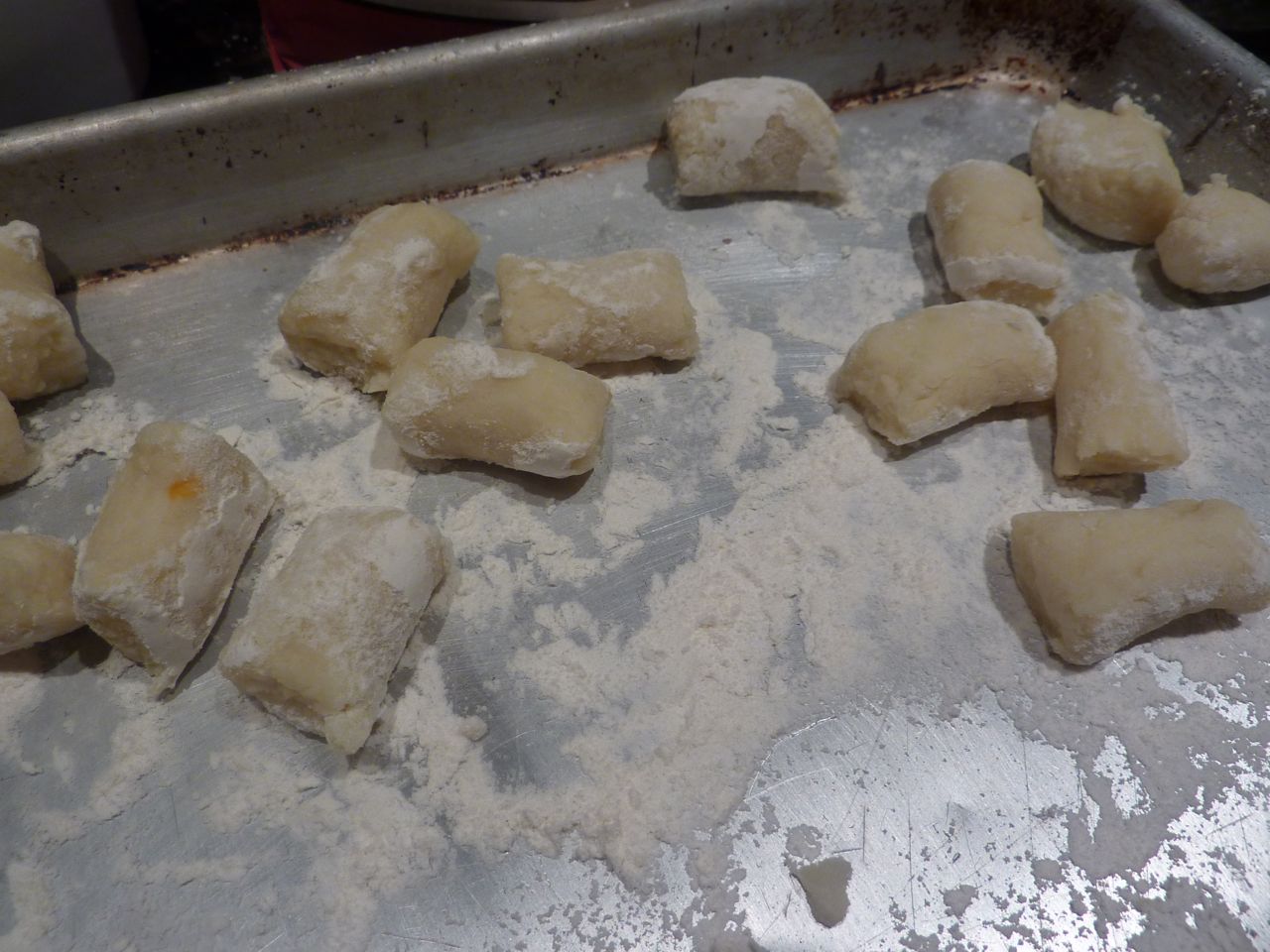
gnocchi gourmet bike tours italy
Gnocchi ready to cook

If you are not going to cook the gnocchi in the next day or so, you can freeze them at this point. Place the sheet pan with the gnocchi in the freezer. Once they are frozen, you can store them in a plastic bag. When ready to use them, do not thaw. Just cook the frozen gnocchi as below.
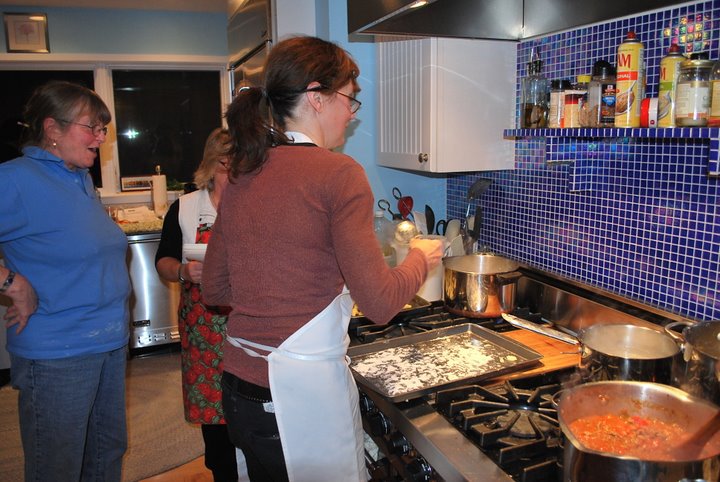
cooking gnocchi bicycle and cooking tours italy
Kathy, Pam and Janet cook gnocchi

Bring a large pot of water to boil, and season with salt. Working in batches, drop about 1/4 or so of the gnocchi into the boiling water. Remove once they float to the surface and place on a clean sheet pan. They are now ready to be added to your favorite sauce, or included in a baked dish as I’ve done here, a cream and tomato gratin.


Potato Gnocchi

This recipe is based on Jody Adams gnocchi recipe from her book “In the Hands of A Chef”.

Make 4 side dish serving (about 65-75 gnocchi)

2 lbs. baking potatoes, cleaned
1 cup all-purpose flour, plus additional for dusting
1 tablespoon kosher salt
1 large egg, beaten

Roast the potatoes for 40-50 minutes, or until done. Make sure they are quite tender, as they will not rice properly if they are still somewhat hard.

Let the potatoes cool for a few minutes. As soon as you can handle them cut each potato in half, scoop out the flesh and place it in a ricer. Rice directly onto the counter. Allow the potatoes to cool.

Add the flour and the salt and mix well. Add the egg, and quickly knead everything together into a sticky dough, working as quickly as possible. The secret to tender, light gnocchi is 1) add as little flour as possible and 2) knead as little as possible.

Fill a small pan with water and bring to a boil. You will use this to test the texture of your gnocchi. Take a small piece of dough, about the size of a grape, and drop it into the boiling water. It will cook for about a minute, and then should rise to the surface. Let it cook for one more minute, then remove it from the water. If, rather than sink and then rise, it breaks apart, add a bit more flour to the dough and knead again. Once you get a test one that sinks and then rises without blowing apart, you are ready to move on to the next step. You should have a test gnocchi that is cooked through, but still soft and light.

Dust the counter with flour. Divide the dough into 6 equally sized pieces. Take one of the pieces and place it on the floured counter top. Using the palms of your hands, roll the piece out into a 1/2 inch thick log, which will be about 12 inches long. Cut the log into 1-inch lengths, and place the individual gnocchi onto a sheet pan that has been dusted with flour. Repeat with the remaining pieces of dough.

Fill a large pot with water, bring to a boil and season with salt. Add the gnocchi to the boiling water in small batches. Once they have risen to the top, allow them to cook for one more minute, then scoop them out with a slotted spoon and lay them on a baking sheet to cool. At this point, they are ready to use in your favorite sauce or baked gnocchi dish.

Baked Cream and Tomato Gnocchi Gratin

This recipe is a basic gratin type recipe that here is used for gnocchi, but can be used with pretty much any pasta. Just precook the pasta and use instead of  the cooked gnocchi.

Make 4 side dish servings

1 tablespoon unsalted butter
1 recipe potato gnocchi (about 65-75 gnocchi) or 3/4 lb. cooked pasta
1 cup light cream
1 16 oz. can diced tomatoes
Kosher salt and freshly ground pepper
3/4 cup freshly grated parmigiano reggiano or grana cheese
1/2 cup panko or other bread crumbs
2 tablespoons fresh basil, thinly sliced

Preheat the broiler.

Grease a shallow baking dish with the butter. The baking dish needs to be large enough to accommodate the gnocchi or pasta in a single layer.

Heat the cream in a small saucepan over medium heat. When it just starts to simmer, season with salt and pepper and add the tomatoes and remove from the heat.

Arrange the gnocchi or pasta in the baking dish. Pour the cream mixture over the gnocchi or pasta. Sprinkle with the cheese and bread crumbs. Place under the broiler until the gnocchi or pasta are toasted, about 5 minutes.

Top with the basil and serve.
Posted in Uncategorized | Tagged , , , , , , , , , , , , , | 3 Comments

The Best Leftover Turkey Soup or How to Use Your Entire Turkey

turkey soup bike tours italy
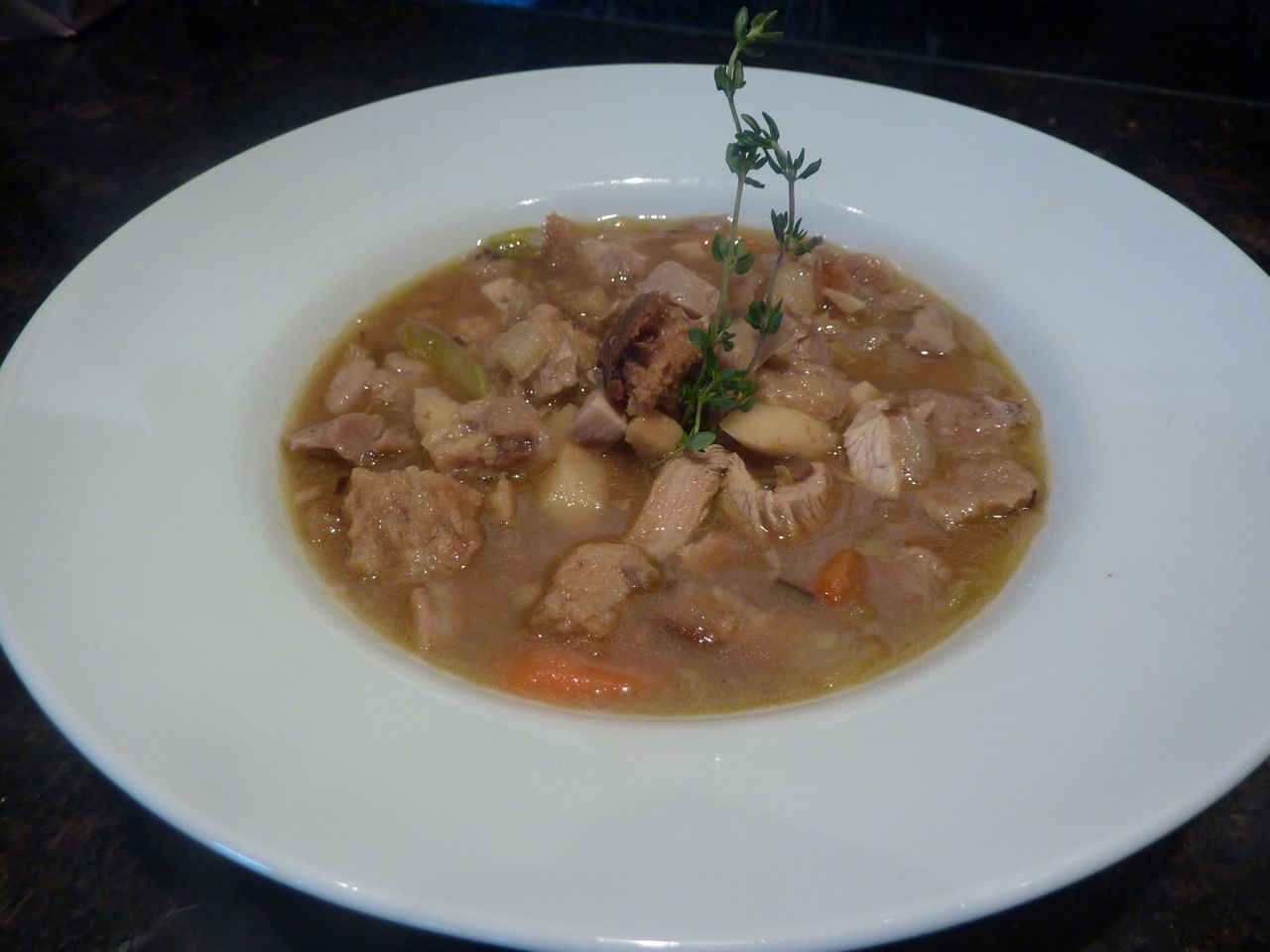
The Best Turkey Soup

This year I purchased a 25 pound organic turkey from my local farm stand for our Thanksgiving feast. As always, my objective is to utilize the ENTIRE bird. This is a very European sentiment that we see all across Italy as we tour on our bikes. The local cured pork products, the cuisine that uses many different cuts of meat, all born out of the necessity of using every single part of the animal. Here’s some ideas about how to put the entire turkey to use in your kitchen.

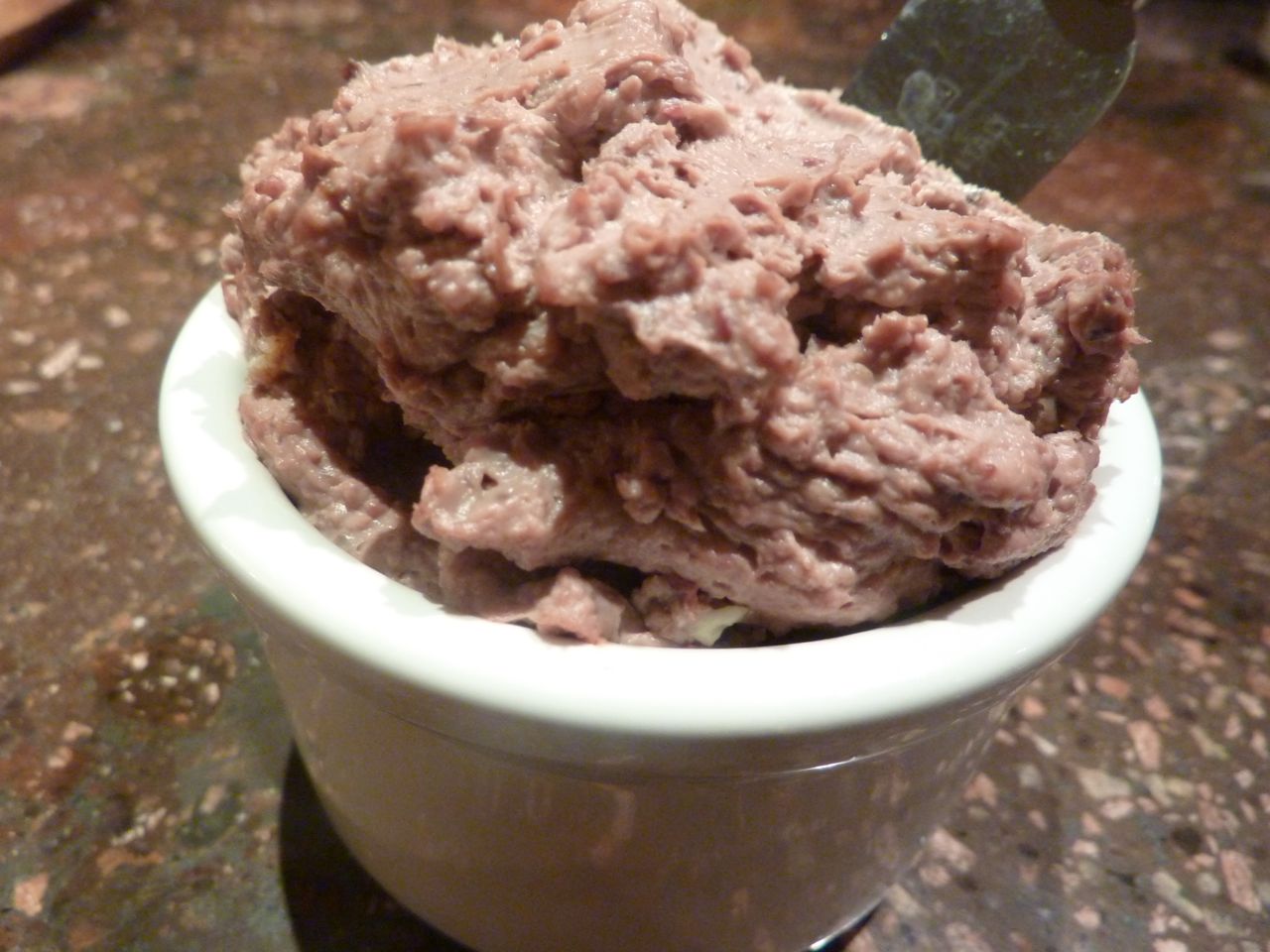
Upon getting the turkey home, I removed the neck, heart, gizzard and livers. The neck, heart and gizzard go into my stock, either immediately or into the bag I keep in my freezer for use in my next batch (see my post last week on Crock Pot Stock.) I don’t use the liver in stock – it makes it cloudy – but I whip up a quick liver pate which I use as an appetizer on Thanksgiving. The recipe for this is pretty basic, and included below.

turkey live pate culinary bike tours italy
Turkey Liver Pate

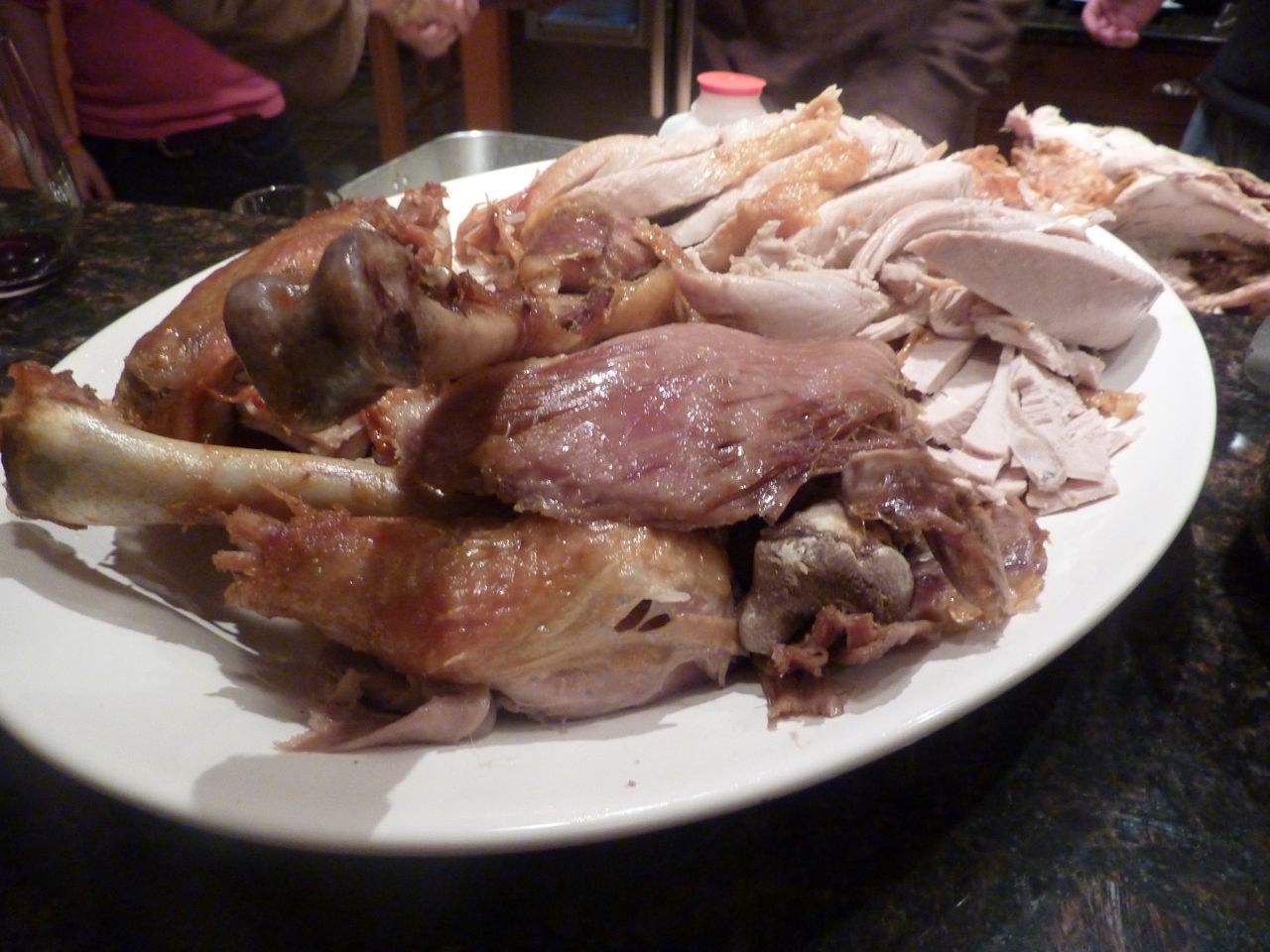
On Thanksgiving itself, we cook the bird. We always brine regardless of whether we roast, smoke, or deep fry. It is the best way of insuring a moist turkey, and can be a great way to add flavor if you spike your brine with herbs, brown sugar, maple syrup, even tea – many options here! My friend Steve Dunn, OuiChef, is waiting for my description on the deep fry process, so here it goes:

Invite a bunch of friends over for Thanksgiving dinner. Deep frying is of course done outside, and only takes 3-4 minutes per pound. So our guests have arrived before we’ve even started cooking the bird. It has been removed from the brine an hour or so before cooking and is hanging in our garage to air-dry. You don’t want to lower a wet bird into a pot of bubbling oil.

deep fried turkey cycling dolomites italiaoutdoors food and wine
Deep Fried Turkey

At this point, the prosecco has been opened and I am finishing off the 8 sides dishes I’ve planned, chatting with the girls, and catching up with the crowd of teenagers that have just shown up and will now be joining us for dinner. So all I can say is that the turkey disappears into the back yard with the men and beer and comes back an hour and a half later ready to go. I’ll have to devote another post (and another turkey) to the process to do it any justice.

The carcass and any other random spare parts go into a couple of plastic bags that I store in the freezer, destined for turkey stock.

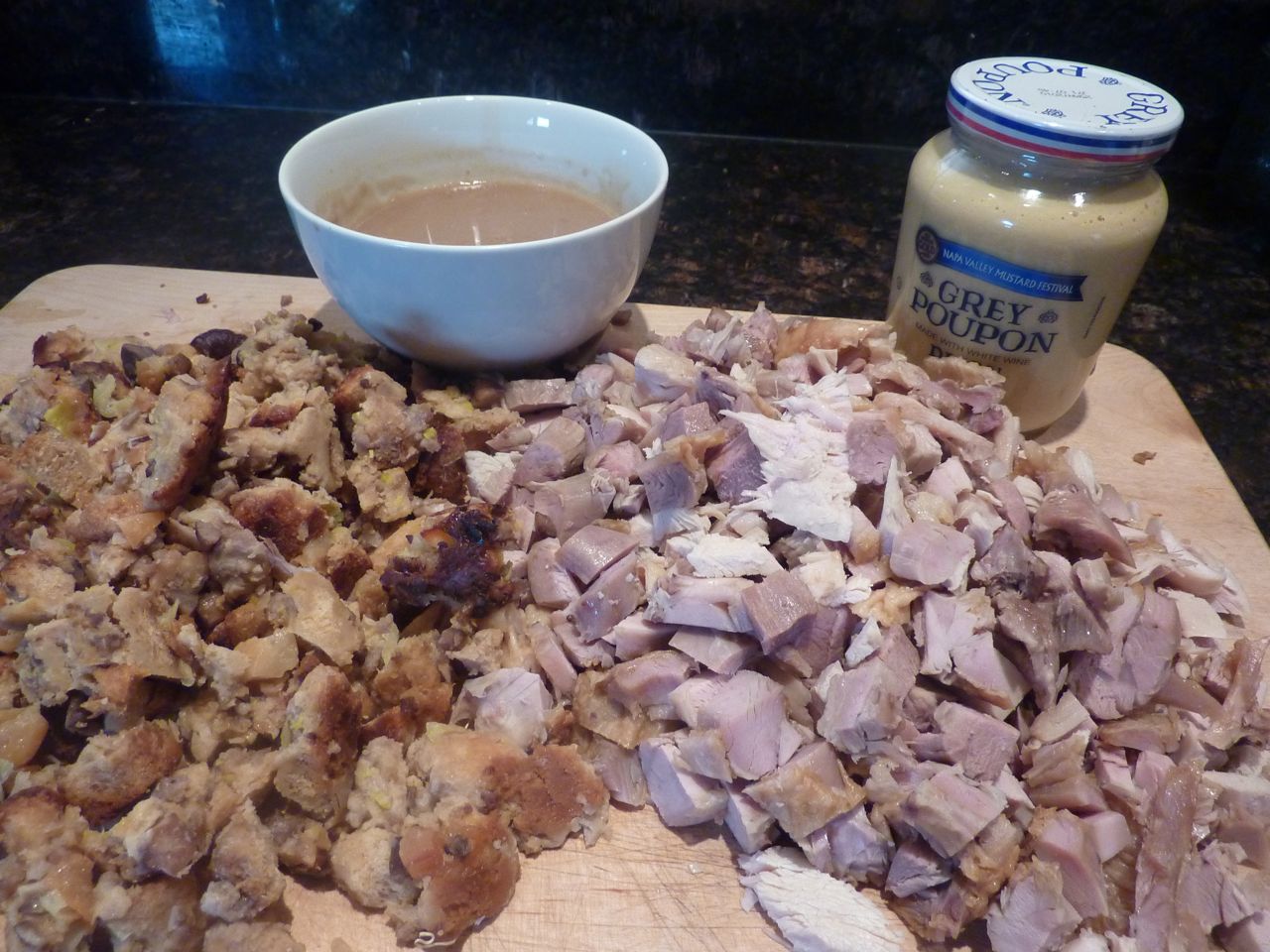
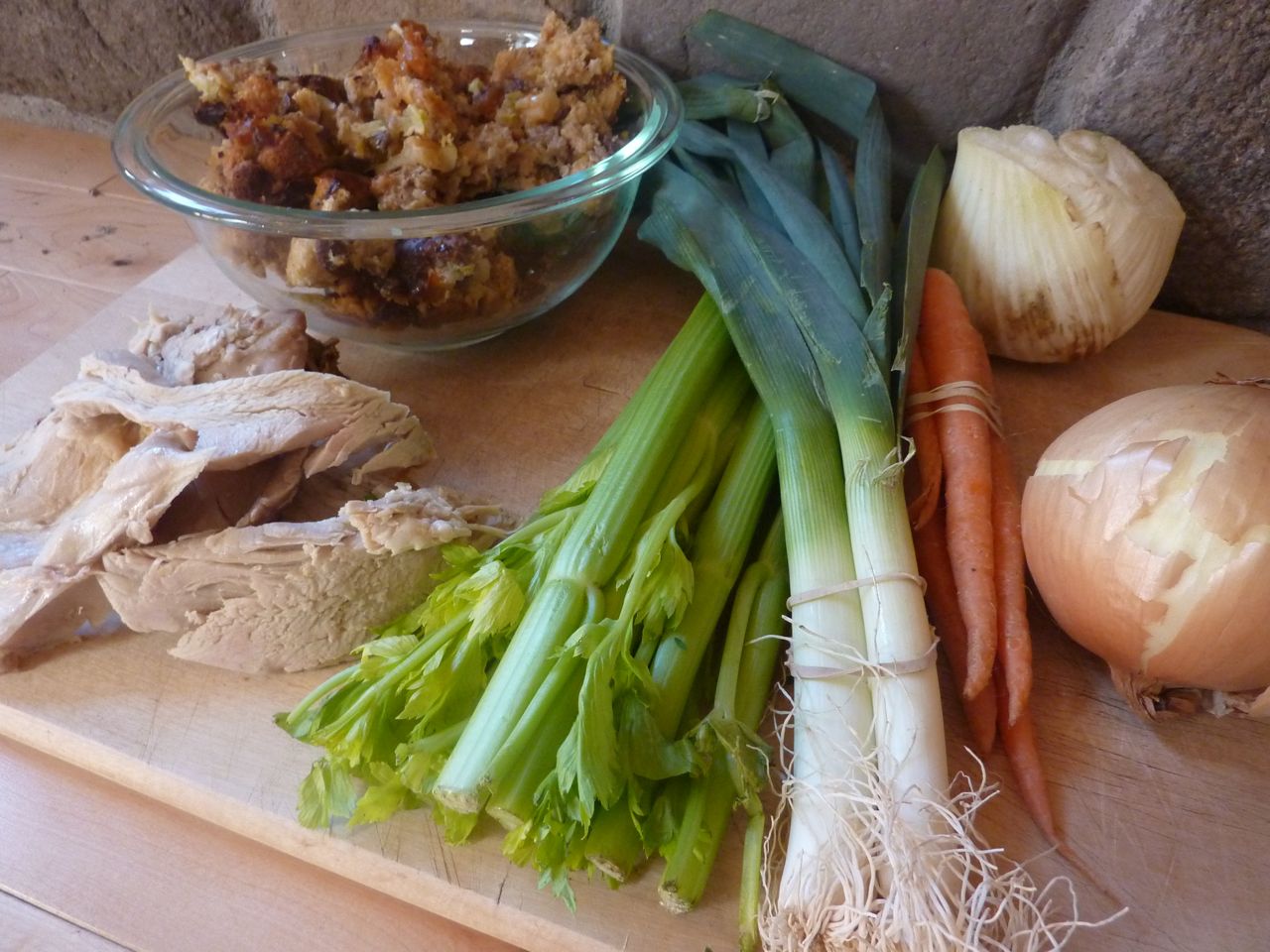
In spite of our best efforts on Thanksgiving and a lunch of turkey sandwiches the following day, we still have leftover turkey meat to deal with. Or we did, until I put the last of the turkey to good use in a great, hearty soup. The recipe here is meant to be flexible and use what you have. Leftover turkey, stuffing and gravy all go in, the proportions are really not that important. Have a lot of roasted vegetables leftover? Throw them in too. This is one of my favorite soups and I wish I could figure out how to have it more often without having to cook an entire turkey dinner to get it. It was a great lunch on Saturday, after my first ski day of the year.

ingredients for soup ski holidays dolomites italiaoutdoors food and wine
Stuffing, turkey meat, gravy and mustard

A nice change this year was the addition of the dijon mustard. I found a recipe in the “Silver Spoon” Italian cookbook for a turkey stew with mustard which provided a nice little zing to the soup, and a new flavor element to counteract turkey fatigue. It is common in both Italy and France to serve dijon mustard along with turkey.

Turkey Liver Pate

Makes about 1/2 cup of pate (depending upon the size and number of livers)

1 tablespoon butter
1 tablespoon minced shallot
1 turkey liver, rinsed and cleaned (remove the lighter, stringy fibers)
A chunk of butter, about 3/4 the size of the liver, softened
A few fresh thyme sprigs
A splash of your favorite liquor – grappa, cognac, bourbon
kosher salt and freshly ground pepper

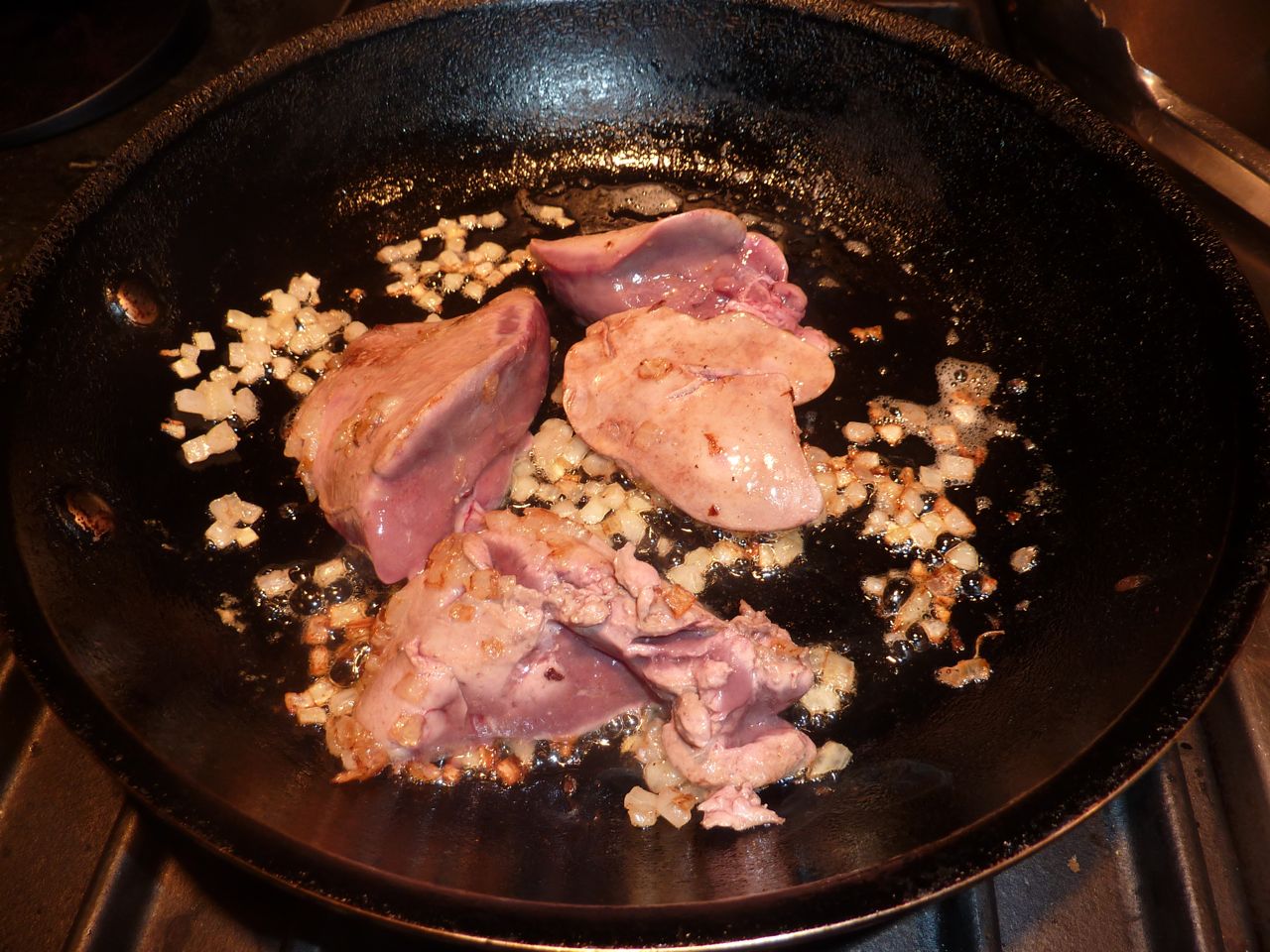
Melt the butter in a small saucepan. Add the minced shallots and saute until softened, about 3 minutes. Add the turkey liver and saute until cooked through. Remove from heat.

saute liver custom bike tours italy italiaoutdoors food and wine
Sauteing livers

Place the contents of the saucepan in a food processor. Add the butter, thyme and liquor and pulse until combined. Season with salt, pepper, and a bit more liquor if desired. Place in a small ramekin, and serve with crackers as a Thanksgiving appetizer.

The Best Leftover Turkey Soup

In culinary school, we learned the formal definitions of the various types of soups. One specific type is a panade, which incorporates bread crumbs as a thickening agent. This term is also used to refer to the use of bread crumbs as a binding agent in general, for anything from quenelles to meatballs. The well-known soup from Tuscany, Pappa al Pomodoro, is an example of a panade.

soup ingredients private cycling holidays europe italiaoutdoors food and wine
Ingredients for soup

With a refrigerator full of Thanksgiving leftovers, what better way to put all of them to use than to combine them in a soup. A few years ago I threw in the stuffing as well, and I’ve been making this ‘panade’ soup every year since. Even my kids enjoy it, all the while they are insisting they are tired of turkey!

Serves 6

2 tablespoons extra virgin olive oil
2 stalks celery, peeled and sliced
2 carrots, peeled and sliced
1 onion, chopped into 1/4 inch dice
1 leek, white part only, cut in half lengthwise and thinly sliced, rinsed in a large bowl to remove grit
1 bulb fennel, tough outer parts removed, chopped into 1/4 inch dice
Kosher salt and freshly ground pepper
6 cups turkey stock, bring to a boil before using
2-3 cups turkey meat, coarsely chopped
2-3 cups stuffing
Any leftover roasted vegetables, cut into bite sized pieces
1/2 – 1  cup gravy
1/4 cup dijon mustard

Heat the olive oil in a large stock pot over medium-high heat. Add the celery, carrots, onion, leek and fennel. Saute until softened and beginning to brown, about 5 minutes. Season with salt and pepper.

Add the hot turkey stock, and simmer until the vegetables are cooked through, about 5 minutes.

Add the turkey meat, stuffing, roasted vegetables, gravy and dijon mustard. Simmer until heated through, adjust seasonings, and serve.

Posted in Soups, Thanksgiving, Turkey, Uncategorized | Tagged , , , , , , , , , , , , , , , | Leave a comment

Braised Turkey with Pears, Chestnuts and Rosemary

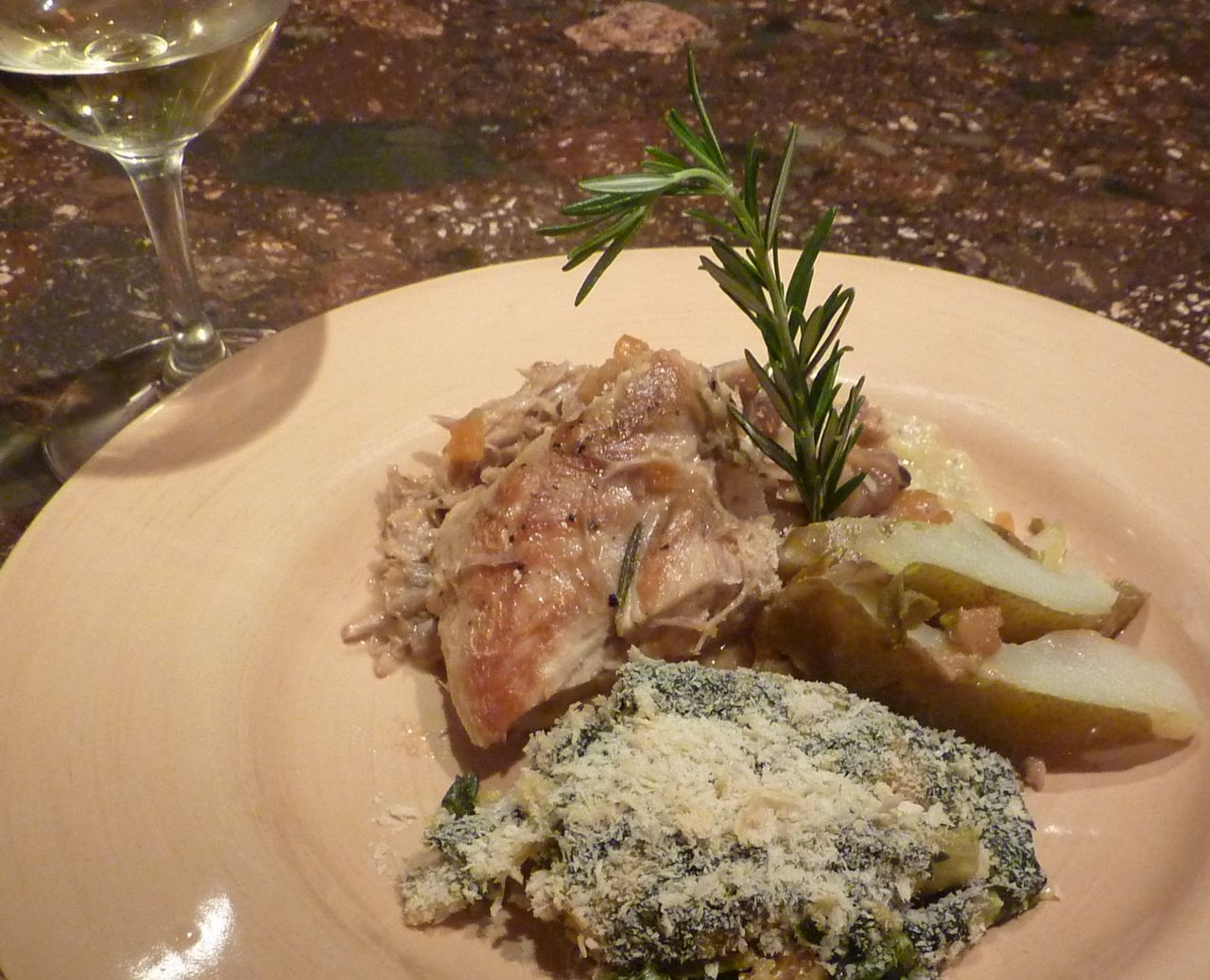
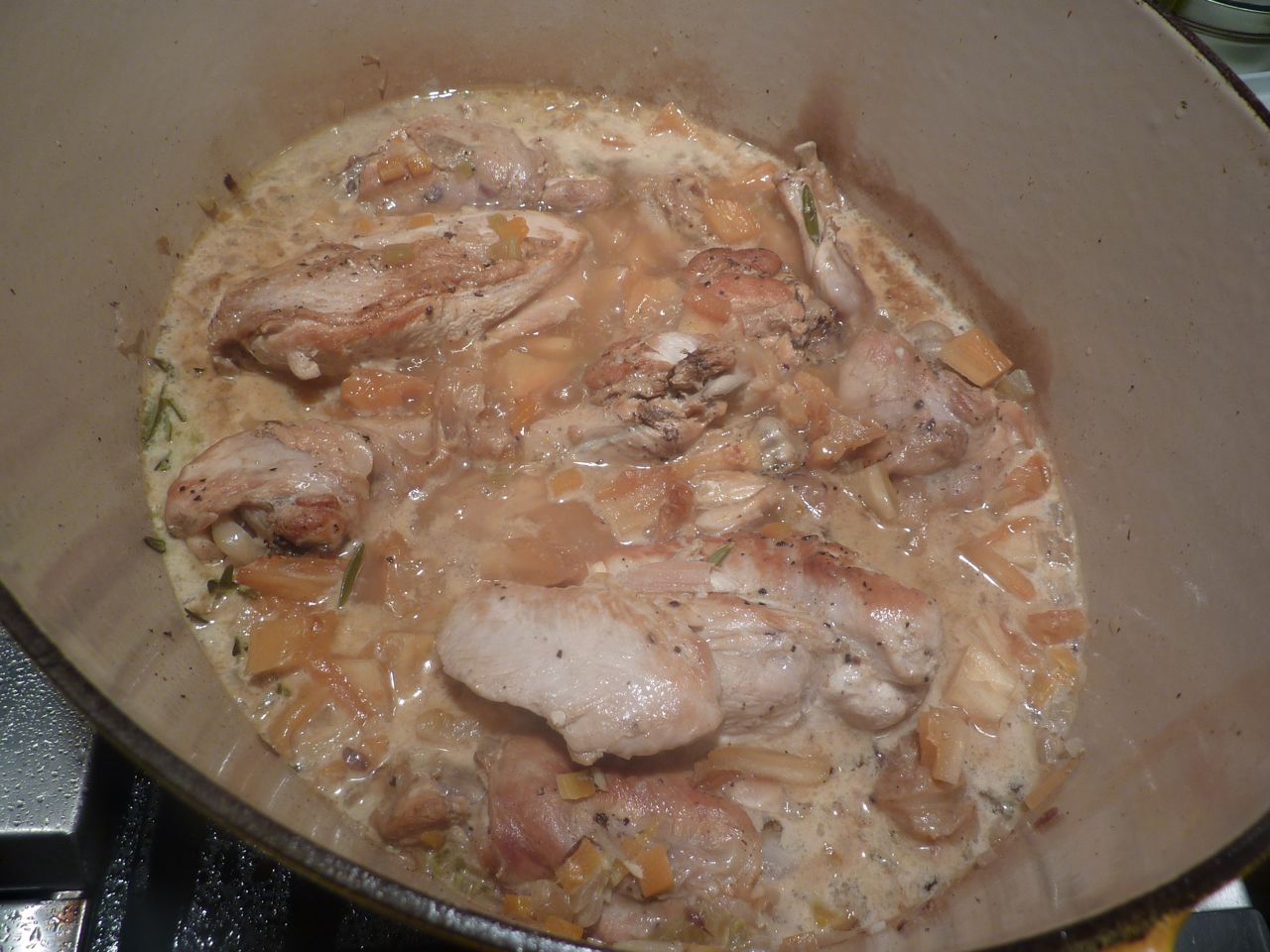
Braised turkey with pears bike tours italy italiaoutdoors food and wine
Braised Turkey with Pears

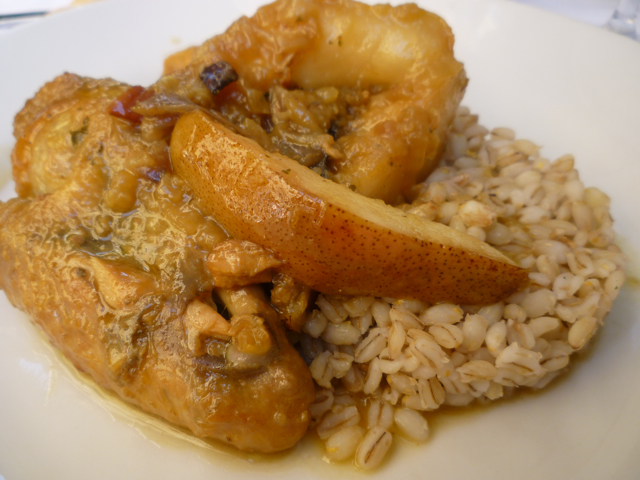
If I had to pick one example of traditional American cuisine, it would probably be a Thanksgiving dinner. Every year, millions search their recipes books, magazines, and the internet looking for a new twist on the classic roast turkey. Or maybe, to be a little different, we might smoke it or deep fry it (we’re into the latter now.) So, how else to prepare a turkey? Once again, I’ve found inspiration in Italy. Turkey is not something one thinks of as “Italian”, but turkeys are part of the cuisine of the Veneto that we see during our Italiaoutdoors Food and Wine tours. We don’t see a large roast turkey, but smaller birds – they raise many different breeds in this region, including pigeon, geese, guinea fowl, and duck –  prepared a variety of ways. Braising is always a favorite fallback of mine, so I developed this recipe for turkey. The flavor combination of poultry and pears was one I enjoyed in Ferrara, Italy.

pigeon and pears bike wine tours
Pigeon and pears in Ferrara, Italy

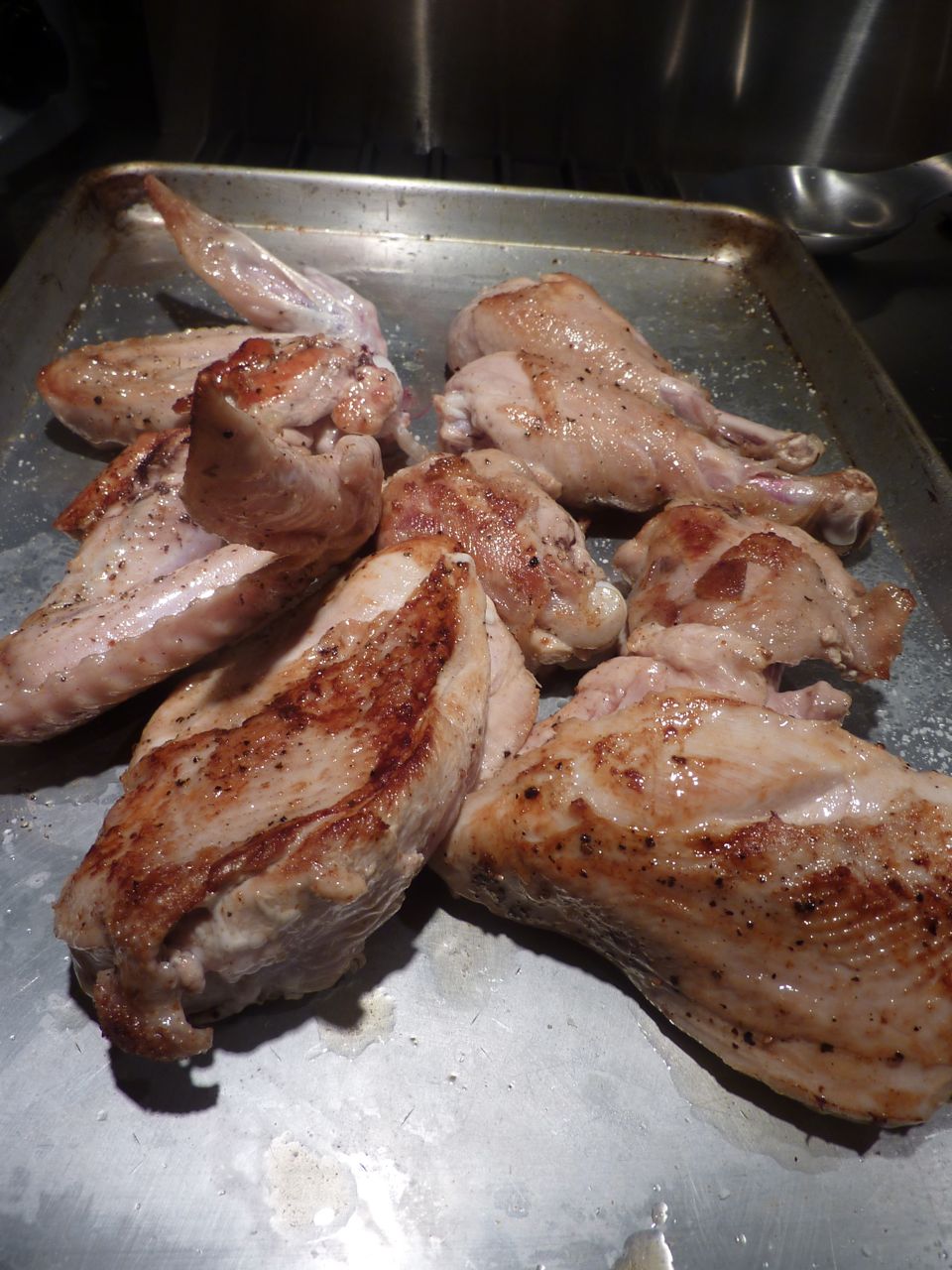
Probably the hardest part of this recipe for many will be the first step – cutting the turkey into pieces. I begin by removing the legs. You slice right through the web of skin that goes from the leg to the rib cage, and I find by rotating the leg around in a circle, you can pretty much just pop it out of the socket. Cut through right where the thigh bone joins with the hip socket. You should not have to cut directly through a bone. The same technique can be used to separate the thigh from the drumstick – again, just by folding that joint the wrong way you can locate where the two bones meet and cut through fairly easily. The next step is to remove the breast meat from the rib cage. You begin at the breast bone which runs along the length of the breast at the center. Take a knife and make a shallow cut along its length on one side or the other. Continue to deepen this cut in stages, following the rib cage down. Progressing in this manner, you will remove the breast in one piece. As you reach the bottom of the rib cage, you will find the joint where the wing and the rib cage meet, and again, folding the wing away from the breast will let you locate the center of the joint where you will be able to cut through fairly easily. Then just cut the wing away from the breast. You will have 8 pieces at this point; 2 wings, 2 breasts, 2 thighs and 2 drumsticks. Plus a leftover carcass of the rib cage and back. I cut the turkey into pieces early in the day, and made a quick brown stock with the carcass, neck and giblets.

seared turkey cycling tours dolomites italiaoutdoors food and wine
Seared turkey pieces

The braise was pretty standard – sear the meat, cook the standard soffrito (carrots, celery, onions), wine and stock as a braising liquid.  I used dried pears in the actual braise itself, rather than fresh, knowing that the fresh ones would quickly fall apart. I added a garnish of a roasted fresh pear. I have to say, I prefer the flavor of the braise to a roast turkey, and will be doing this again. I served this with polenta, but it would be great with pasta, or mashed potatoes, or a risotto. Or stuffing!

braising turkey ski holidays dolomites italiaoutdoors food and wine
Braising turkey

Braised Turkey with Pears, Chestnuts and Rosemary

Serve 4, with leftovers

1 small turkey (6-8 pounds)
kosher salt and freshly ground pepper
2 tablespoons vegetable oil
2 stalks celery, peeled and cut into 1/4 inch dice
2 carrots, peeled and cut into 1/4 inch dice
1 onion, cut into 1/4 inch dice
1/2 cup white wine
4 cups turkey or chicken stock
1 teaspoon fresh rosemary, finely chopped
1 pear
6 ounces dried pears, cut into 1/2 inch pieces
4 ounces chestnuts, coarsely chopped

Cut the turkey into pieces. First, remove the two legs from the body. Separate the thighs from the drumstick. Then, using a boning knife and starting from the center of the breast bone, separate each breast and wing from the rib cage. Cut the wing away from the breast meat. You should now have 8 pieces: 2 thighs, 2 drumsticks, 2 wings, and 2 boneless breasts. You can do this early in the day, and then make your stock with the rib cage and back.

Season the turkey pieces with salt and pepper. Heat the oil in a large heavy pot. Sear the turkey pieces on all sides. Do this in batches if necessary, as you do not want to crowd them in the pan. They will steam, rather than sear. Remove from heat.

Reduce the heat to medium, and add the celery, carrots, and onions. Season with salt and pepper and cook until softened, about 5 minutes.

Add the wine and bring to a boil. Reduce for a minute or so. Add the turkey thighs, drumsticks and wings. Add just enough stock so that the liquid comes  about 2/3 of the way up the sides of the meat. Add the rosemary. Cover first with parchment, and then with a sheet of foil. Cover with the lid. reduce the heat to low, and simmer slowly for 2 hours, turning the pieces over halfway through.

In the meantime, cut the pear in half and roast in a 350° oven until tender. Remove from oven. When cool enough to handle, remove the core and slice into 12 slices.

After two hours, lift the foil and parchment and add the breasts and the dried pear. Recover with the parchment, foil, and lid, and braise for another 30 minutes.

After the 30 minutes, uncover the turkey and remove all the turkey pieces from the braising liquid, setting them aside on a sheet pan. Turn up the heat under the braising liquid, add the remaining stock, and reduce until you have about 1/2 cup liquid surrounding the pear pieces. While the braising liquid is reducing, remove the meat from the wings, thighs and drumsticks. Cut each breast into two pieces. You will now have four breast pieces, and a pile of shredded dark meat. Save the bones for stock, if you wish.

Once the braising liquid has reduced, add the breast pieces and the shredded turkey meat back into the pan, and heat through. Add the chestnuts. Place one breast piece and some shredded turkey meat on each plate, and top with the braising liquid and 3 slices of roasted fresh pear. Serve with polenta, mashed potatoes, rice, pasta, even stuffing.

Posted in Braising, Fruit, Pears, Thanksgiving, Turkey, Uncategorized | Tagged , , , , , , , , , , , , , , , , , , , | 4 Comments

Easy Crock Pot Stock

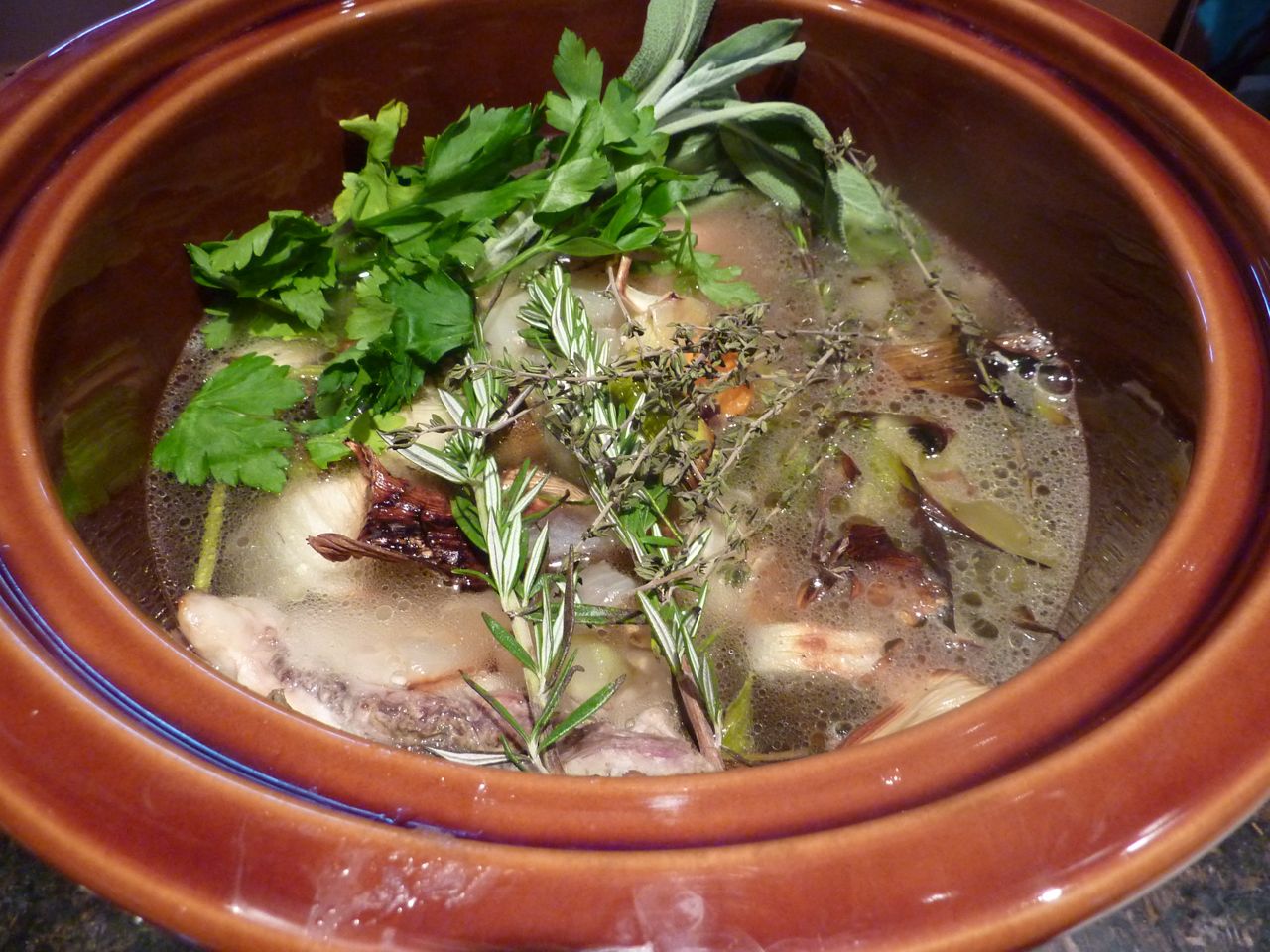
chix stock in crock pot ski holidays dolomites italiaoutdoors food and wine
Stock in crock pot

Not a particularly exciting subject, but I thought it would be worth sharing for the upcoming holiday season. Using your own stock can make a huge difference in your gravies, sauces, warm winter soups and risottos. In our cooking classes in Italy, we make our own stock, even if it only cooks a hour or so. I find even the organic, free range brands from the grocery stores can be lacking in flavor and a bit ‘stale’. With this recipe, a long simmered, highly flavored stock is a snap to make.

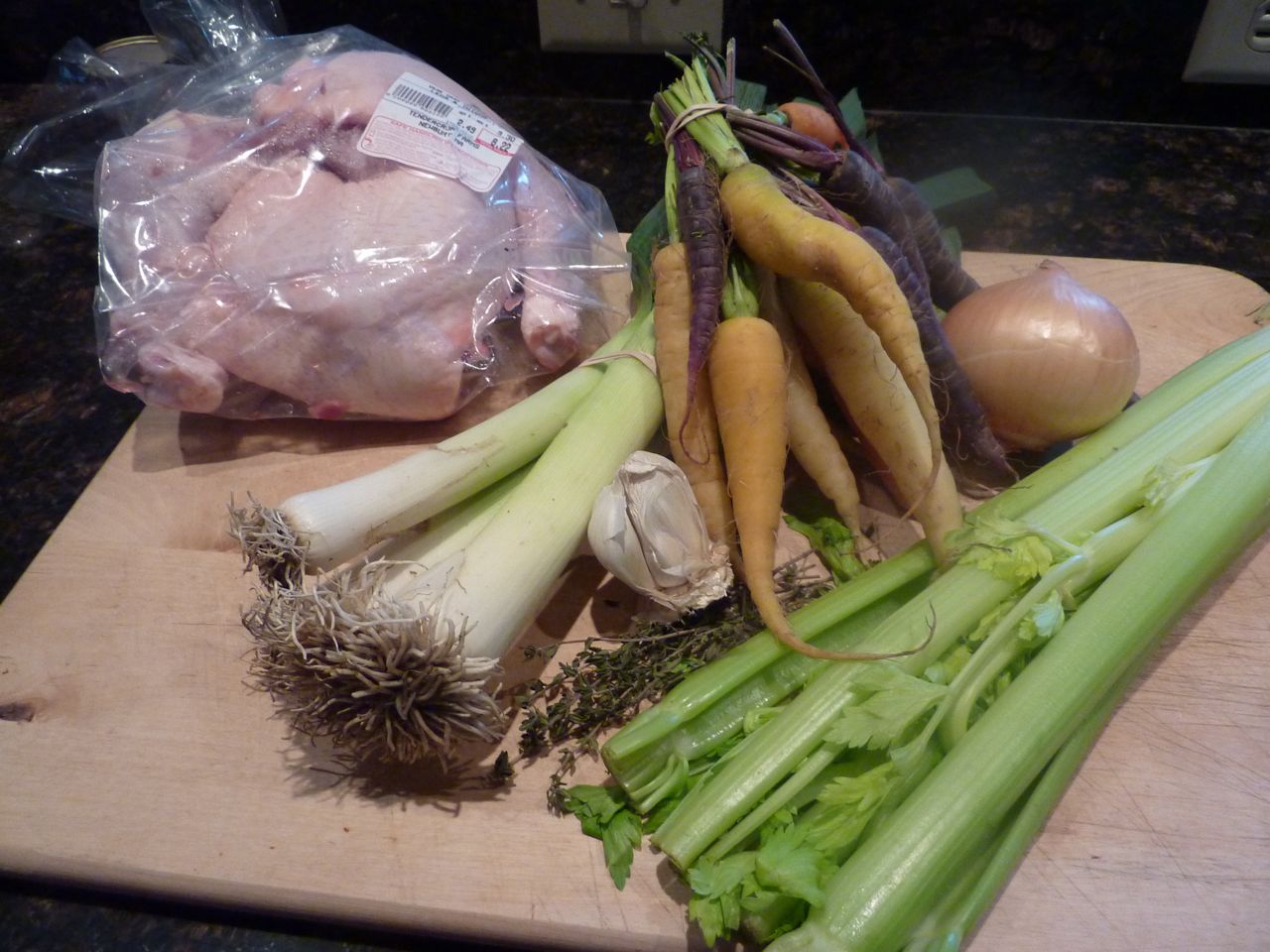
To collect the chicken or meat parts for my stocks, I keep a couple of zip lock bags my freezer, one for chicken and one for meat, and as I butterfly chickens or debone meats I collect the scraps in these bags. I use these scraps for my stocks. Although I often need stock before I’ve collected enough scraps (as you’ll notice from the picture); in that case, I’ll use the cheapest chicken parts I can find. Here, I’ve made the stock with whole chicken legs.

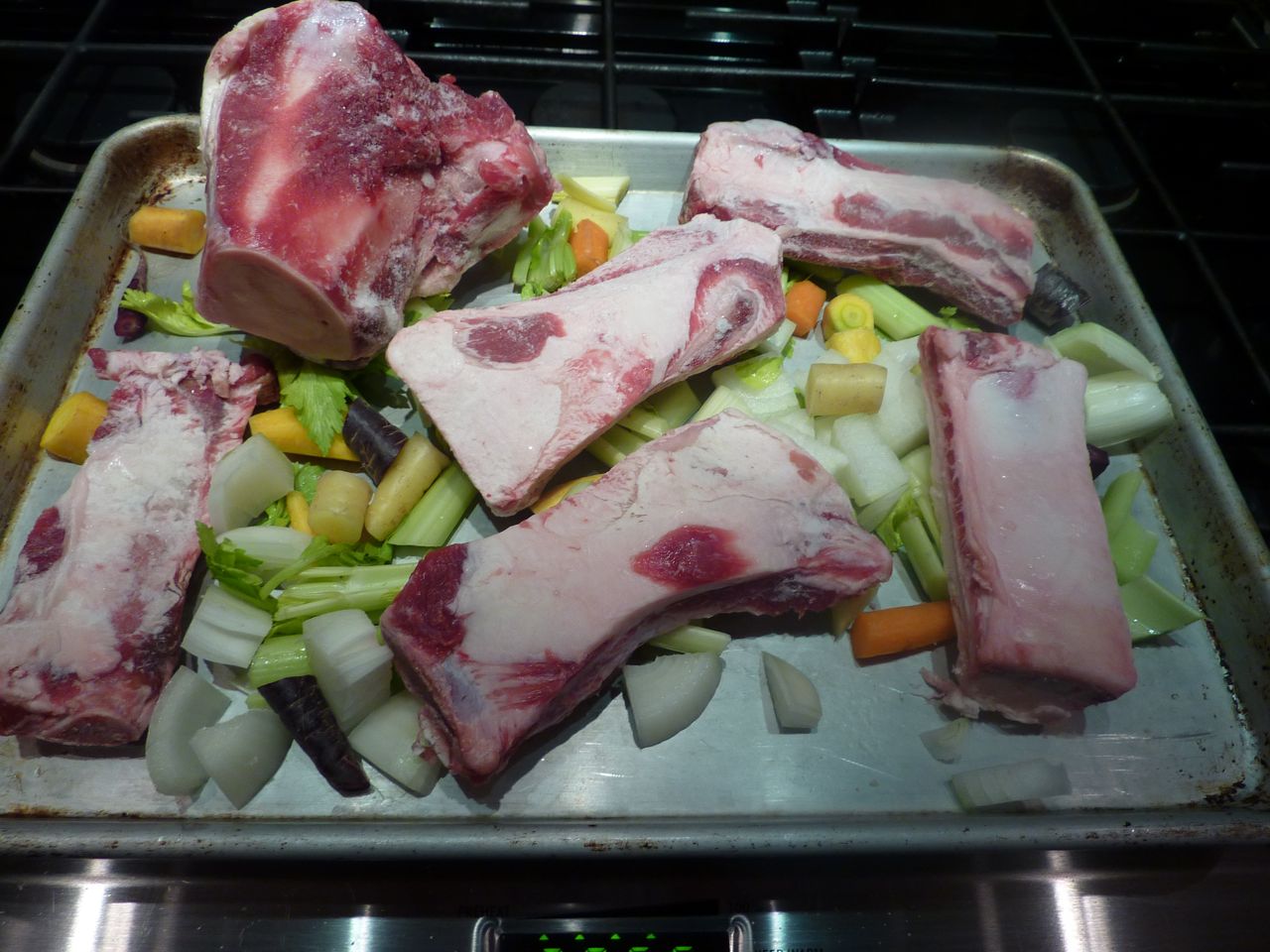
beef for roasting culinary bike tours italy italiaoutdoors food and wine
Beef and vegetables ready to roast

I like brown stocks; the caramelization adds another level of flavor. When I’ve collected enough scraps to fill up my crock pot, I throw the chicken/meat, along with onions, carrots, and celery that have been chopped into a few good sized pieces, and roast briefly in the oven. I know Julia Child frowns on this, she says browning for stock in the oven imparts a bad taste to the meat. However, she uses a lot of scraps like giblets, neck, and hearts. I use backs, even whole thighs, and I have to say I usually think a chicken roasted in the oven tastes pretty good. I don’t find many giblets and hearts in my whole chickens these days. But when I do use them, I don’t roast them in the oven.

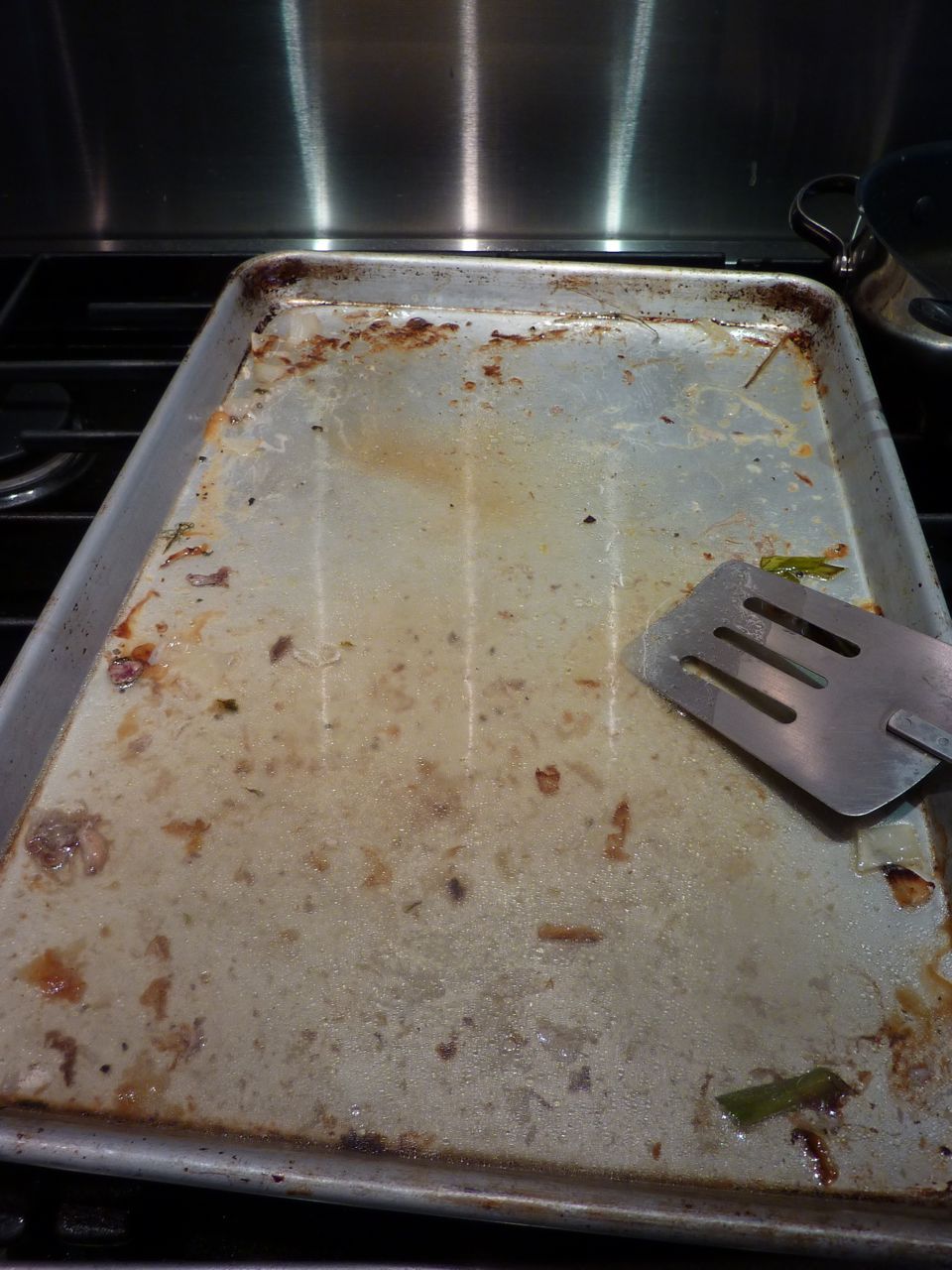
scraping browned bits cycling tours dolomites italiaoutdoors food and wine
Scraping up the browned bits

Everything from the oven is then put into a crock pot. I put a little water into the sheet pan I used for the roasting and heat this over the stove while I scrape up those nice browned bits that are left – can’t let those go to waste! I pour this water and browned bits into the crock pot, and then cover with water. My crock pot holds about 12 cups of water, in addition to the meat/vegetables. I then check my refrigerator to see what else interesting I can add; fennel fronds or the top of a leek make a nice addition to a chicken stock. I add the standard stock seasonings: bay leaves, parsley, peppercorns, garlic. I don’t bother with the bouquet garni, wrapping all of these up in a cheese cloth. If they are left whole, they will be removed when you strain everything.

stock ingredients bike tours italy italiaoutdoors food and wine
Stock ingredients

I can then turn on my crock pot and leave everything overnight, or for a full day. I don’t worry about skimming, although I will do it occasionally if I happen to be right there. I leave the cover off if I am around the house, which allows the liquid to reduce a bit and concentrate the flavors. I check the level every once and a while to make sure there is enough. If I am leaving it overnight, or if I plan to be away from home for a while, I will cover it. I can always reduce it later.

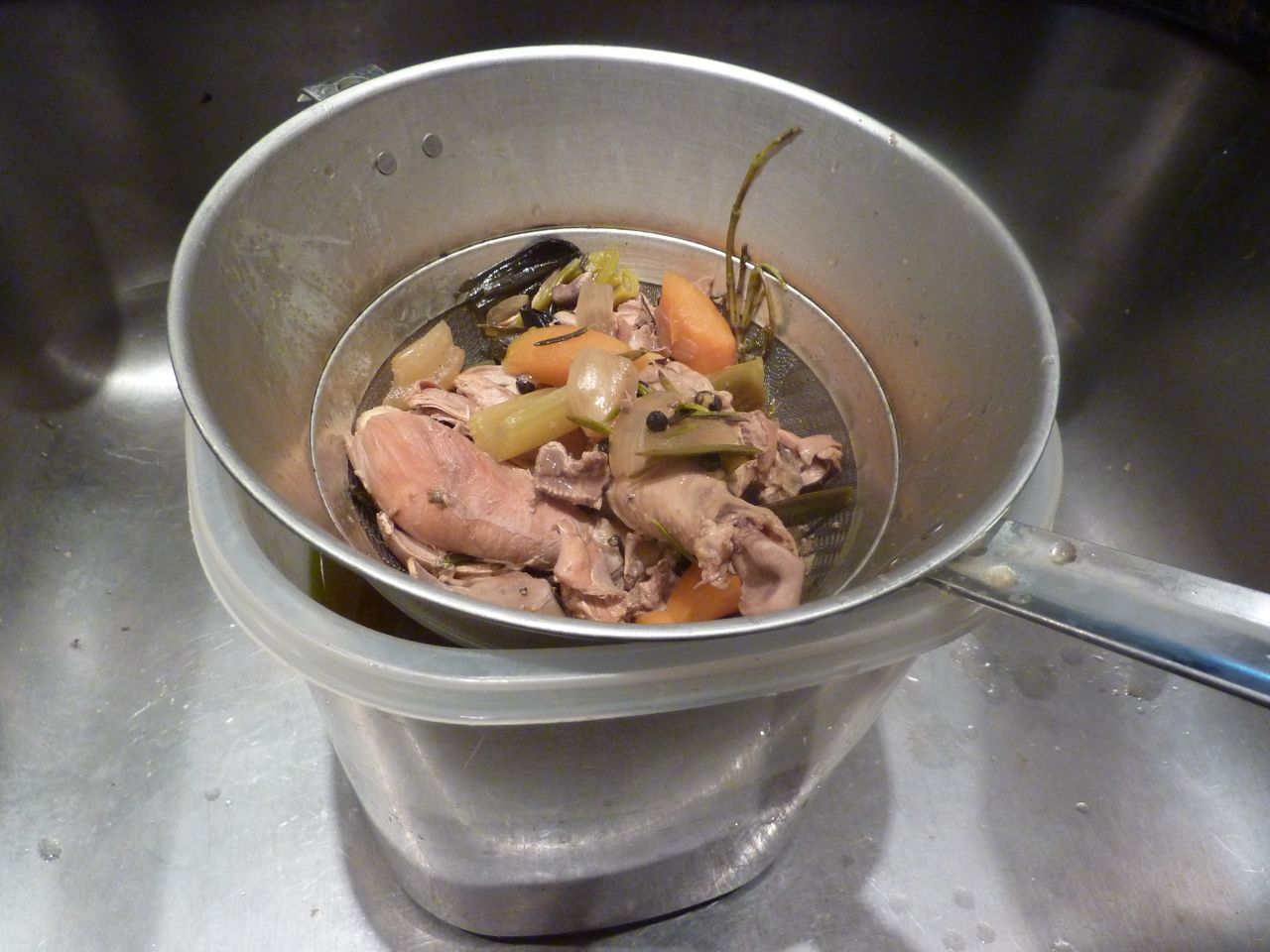
straining the stock bike wine tours italiaoutdoors food and wine
Straining the stock

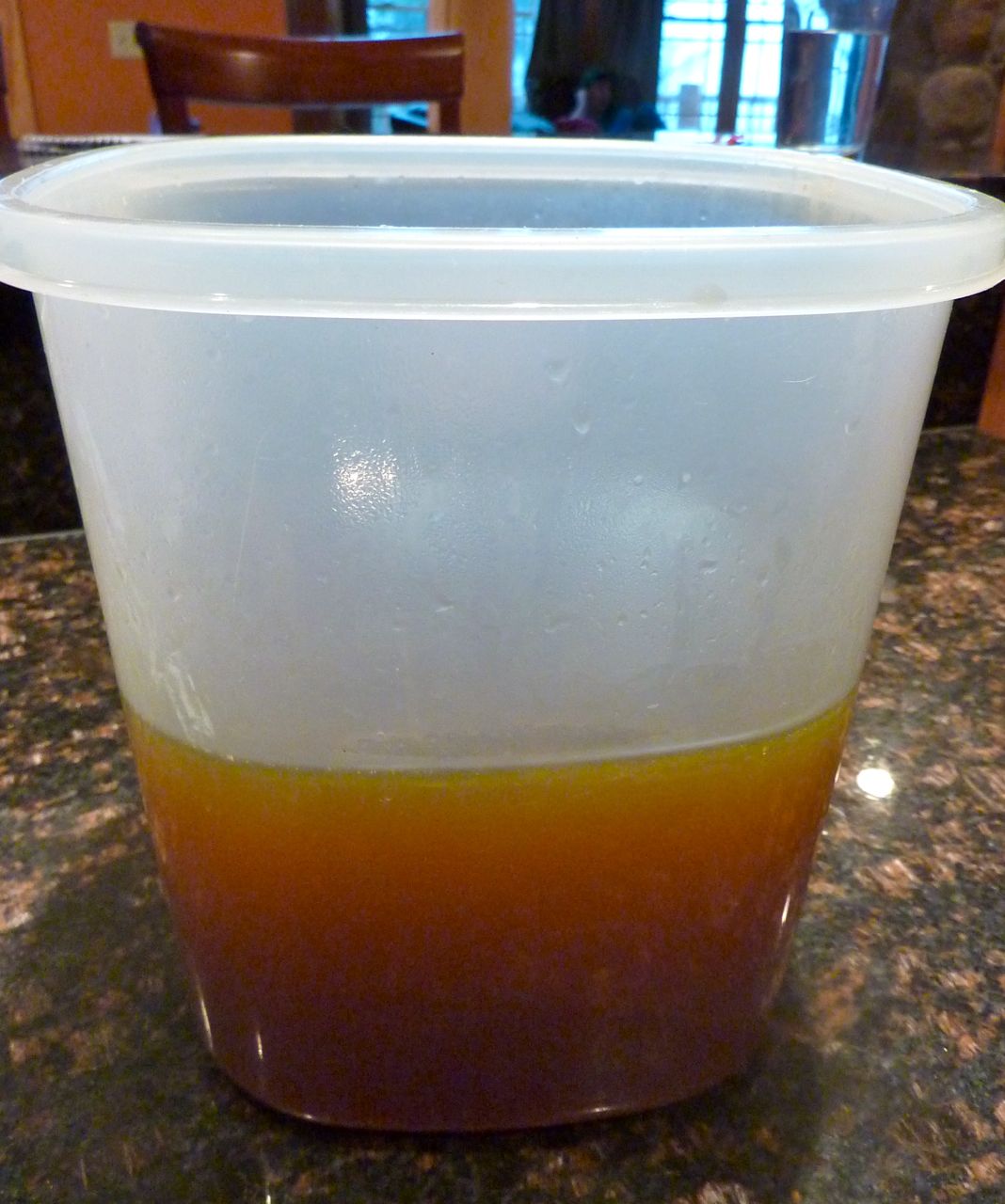
When it has cooked long enough (6-8 hours for chicken, 8-12 for beef), I strain it into a large plastic container. I lift out the larger pieces and dump those directly into the trash, then pour the remainder into a large strainer. I usually chill the stock before I use it, and during the chilling process the fat will rise and solidify on the top. This makes it quite easy to eliminate most of the fat by simply removing and disposing of this layer.

finished stock cycling holidays europe
Finished stock, ready to chill

After chilling, I freeze what I don’t plan on using that week. I either freeze 4 cup batches in a large freezer ziplock, which is a perfect amount for a soup, or I pour the stock into a couple of ice cube trays and freeze stock ‘cubes’. When they are solid, I can remove them from the trays and store them in a single zip lock. These cubes are great for finishing a sauce or in a stir fry.

Crock Pot Stock

Makes approximately 12 cups of stock (depends on the size of your crock pot)

2 lbs. various chicken parts – backs, wings, legs, neck, giblets. Not breasts, livers. For beef stock, bones and scraps.
1/4 cup or so of extra virgin olive oil
2 medium onions, very coarsely chopped
2 stalks celery, cut into larger 1 inch pieces
2 carrots, peeled and cut into large 1 inch pieces
3 bay leaves
4 cloves garlic, peeled
10 springs fresh thyme or 1 tsp. dried
Handful of parsley or parsley stems
10 peppercorns

Preheat the oven to 350°.

Place the larger chicken or meat pieces (not giblets), onion, celery, and carrots on a sheet pan. Drizzle with the olive oil. Roast until brown, about 20-30 minutes. Remove from oven.

Transfer the roasted meat and vegetables into your crock pot. Add the smaller chicken parts and the remaining ingredients to the crock pot.

Place the sheet pan on your stove and pour some water into it, enough to just cover the bottom. Turn on the heat to low, and scrape the browned bits that have adhered to the bottom of the sheet pan to get them to dissolve in the water. This accomplishes two things – it gets those nice browned bits into your stock to add flavor, and it cleans your sheet pan. Pour the water from the sheet pan into your stock pot. Add additional water to cover.

Cover, and bring to a boil. My crock pot has an ‘auto-shift’ setting, which is ‘high’ for the first hour and then switches to ‘low’. This is perfect for stock. You want it to come to a boil, and then reduce to a simmer for 6 hours or so. Meat stock can go even longer.

When the stock is done, strain the stock through a strainer, disposing of the solids. Chill as rapidly as possible. If you have room in your refrigerator, you can place it in an ice water bath.

It will keep in your refrigerator for 3-4 days. It should be brought to a boil before using. If you need to store it longer, it can be frozen.

Posted in Soups, Thanksgiving, Turkey, Uncategorized | Tagged , , , , , , , , , , , , , , , , , | 1 Comment

Apple Amaretti Tart with Almond Ice Cream

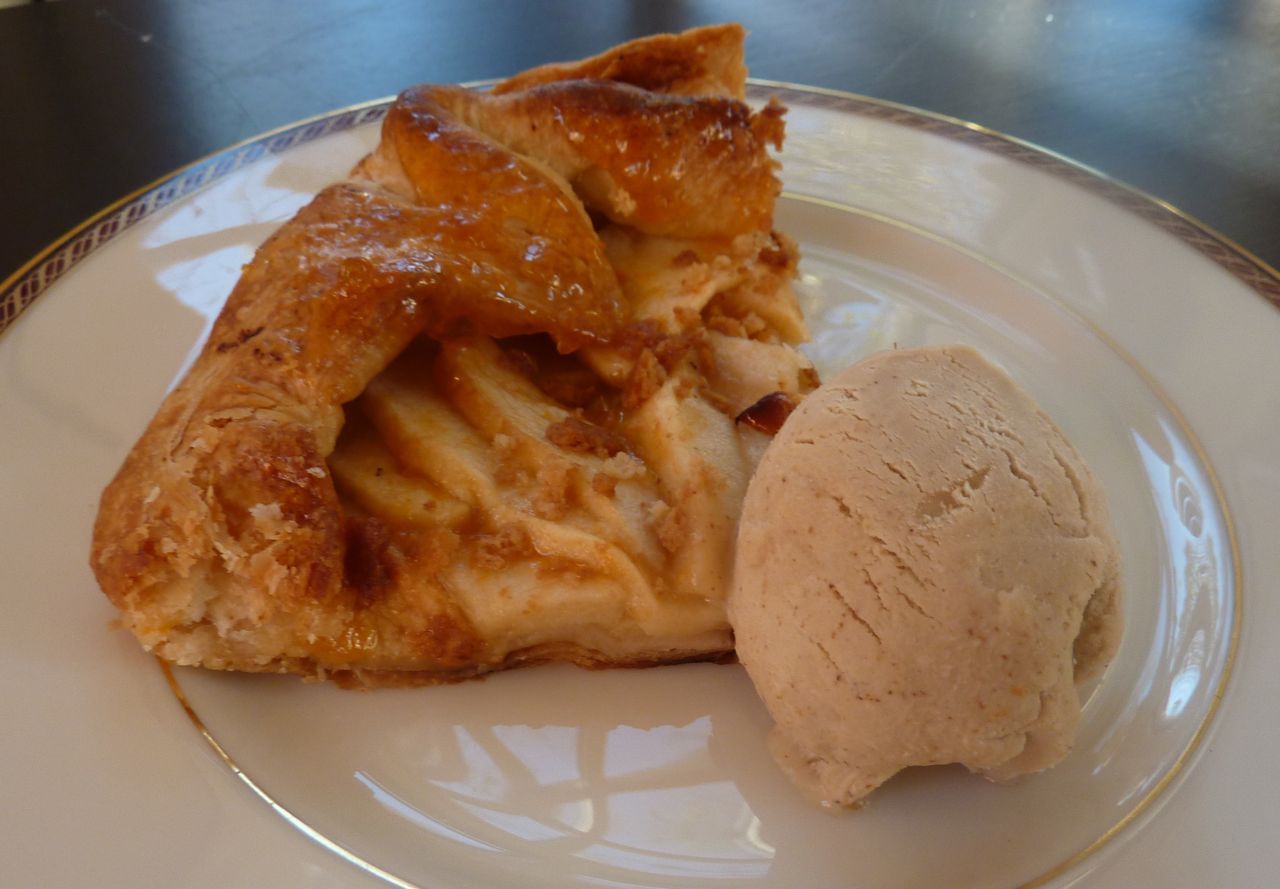
apple tart culinary bike tours italy
Tart with almond ice cream

On our Italiaoutdoor bike trips this summer to the Veneto, we did a really fun cooking event Villa Margherita with our gracious hosts the Dal Corso family. For dessert, we had a wonderful apple creation in which we cored an apple, filled it with apricot jam and crushed amaretti cookies, then surrounded it with puff pastry. Apples are cultivated in both the Veneto and Trentino regions of Northern Italy, with Trentino being home to the Val di Non DOP, a designation bestowed up apples which are grown according to strict quality and cultivation guidelines.

puff pastry cycling tours dolomites
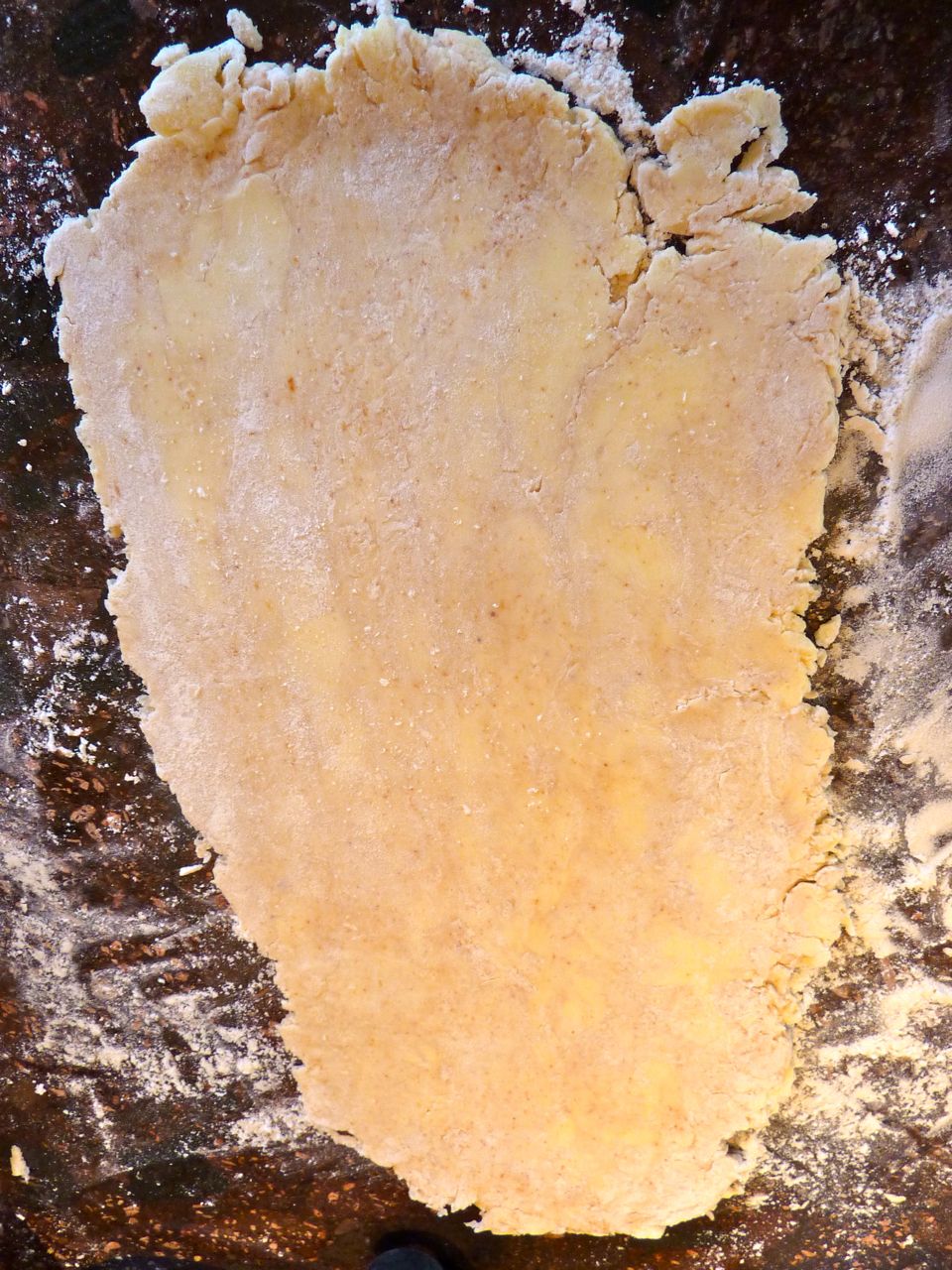
rolled into rectangel

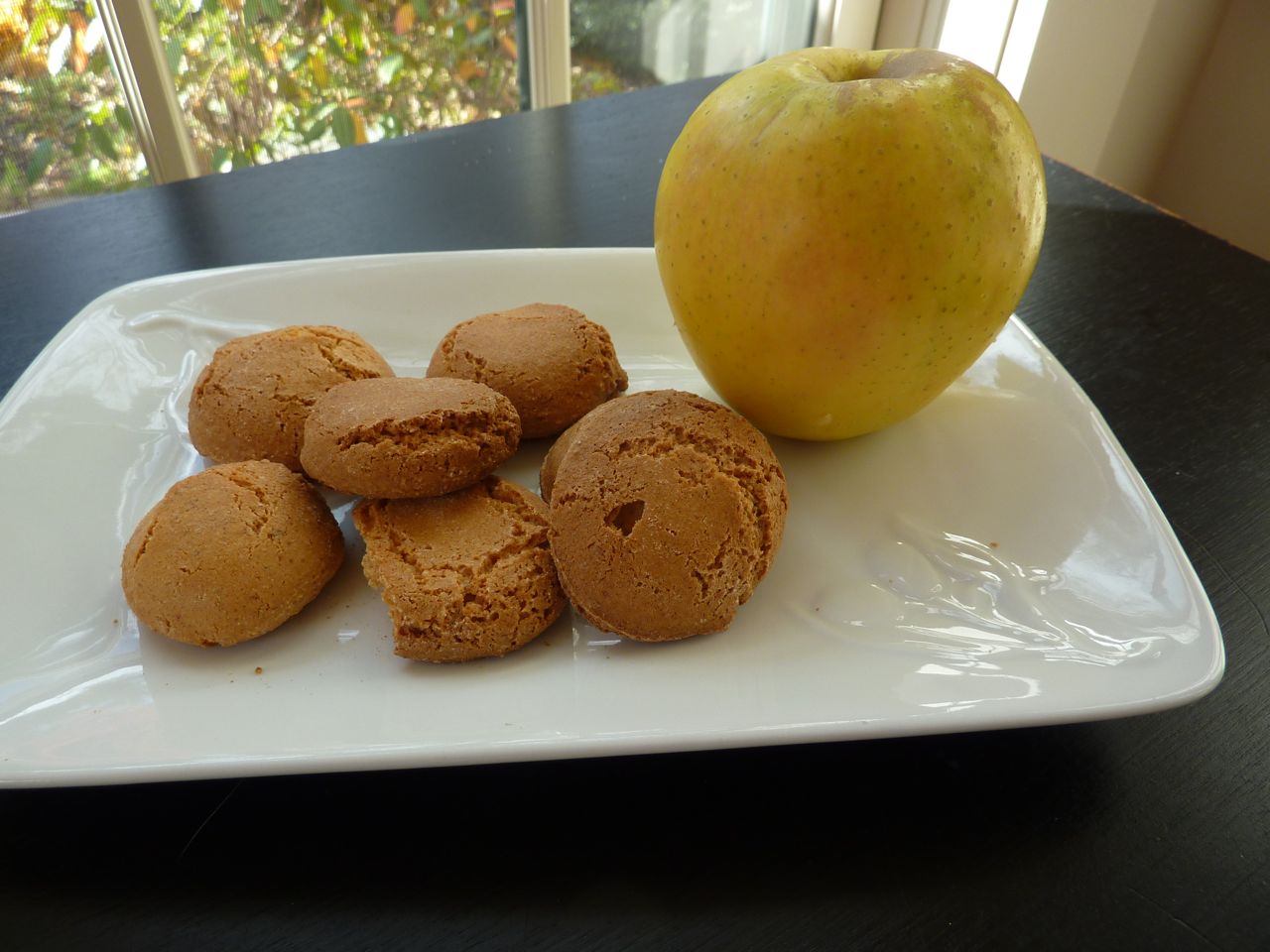
Here, I combined the same flavors in an apple tart. Puff pastry can be a bit laborious to make, but Judy Rodgers offers a simplified version in her book “The Zuni Cafe Cookbook”. It doesn’t “puff” quite as consistently as classic puff pastry, but it is perfect for a rustic tart such as this. I replaced a little flour in the pastry with some finely ground amaretti to bring the almond flavors to the tart crust.

puff pastry custom cycling holidays europe
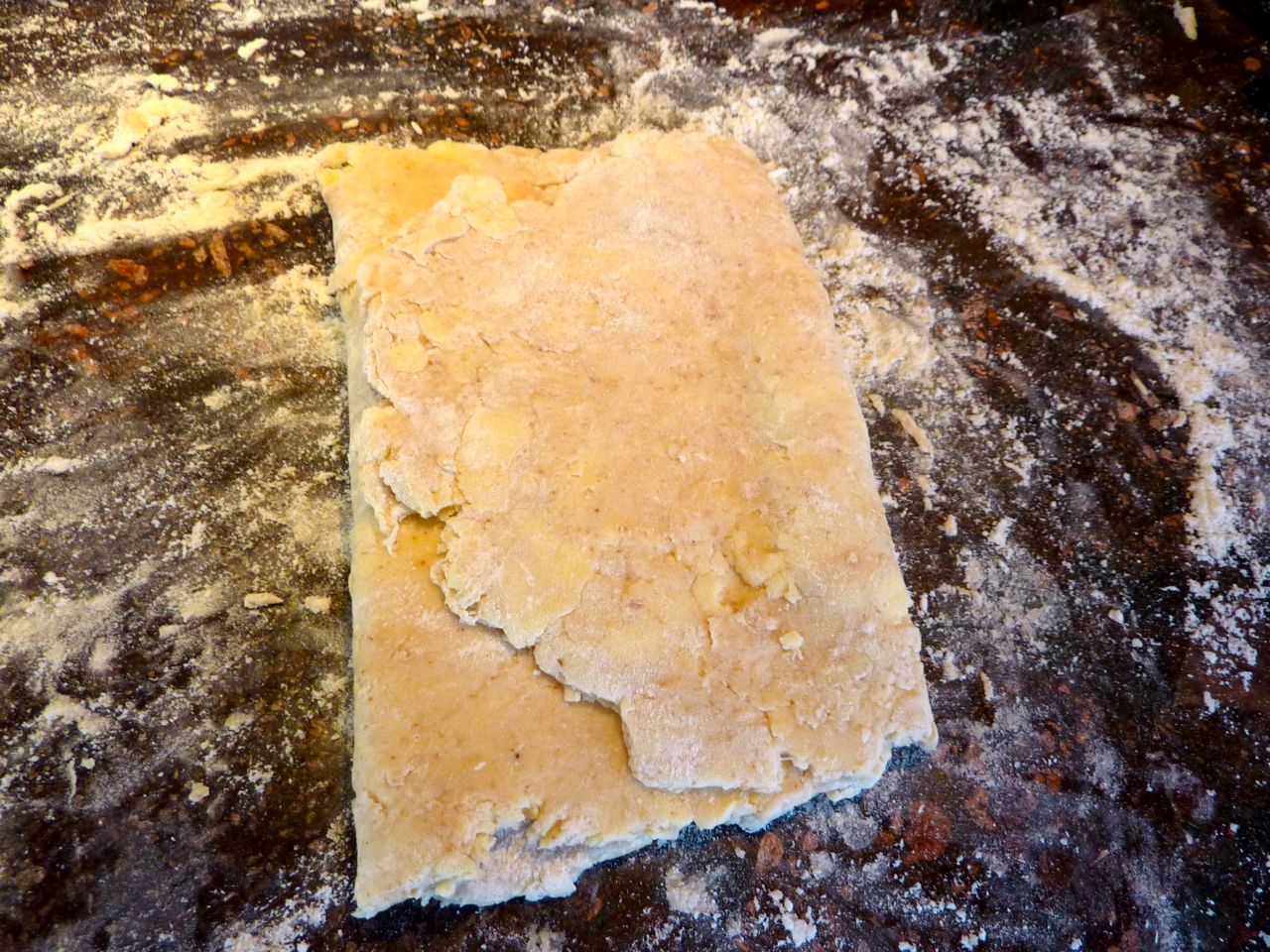
folded and then turned

Puff pastry has only a few ingredients – butter, flour, water, salt. It gets its “puff” from the process used to make it, which creates hundreds of thin layers of butter/dough. When you bake it, the butter layers melt and leave an air space between the dough layers. To create these layers, you encase a sheet of butter inside an envelope of dough, then roll and fold and roll and fold and chill and roll and…

tart dough ski holidays dolomites
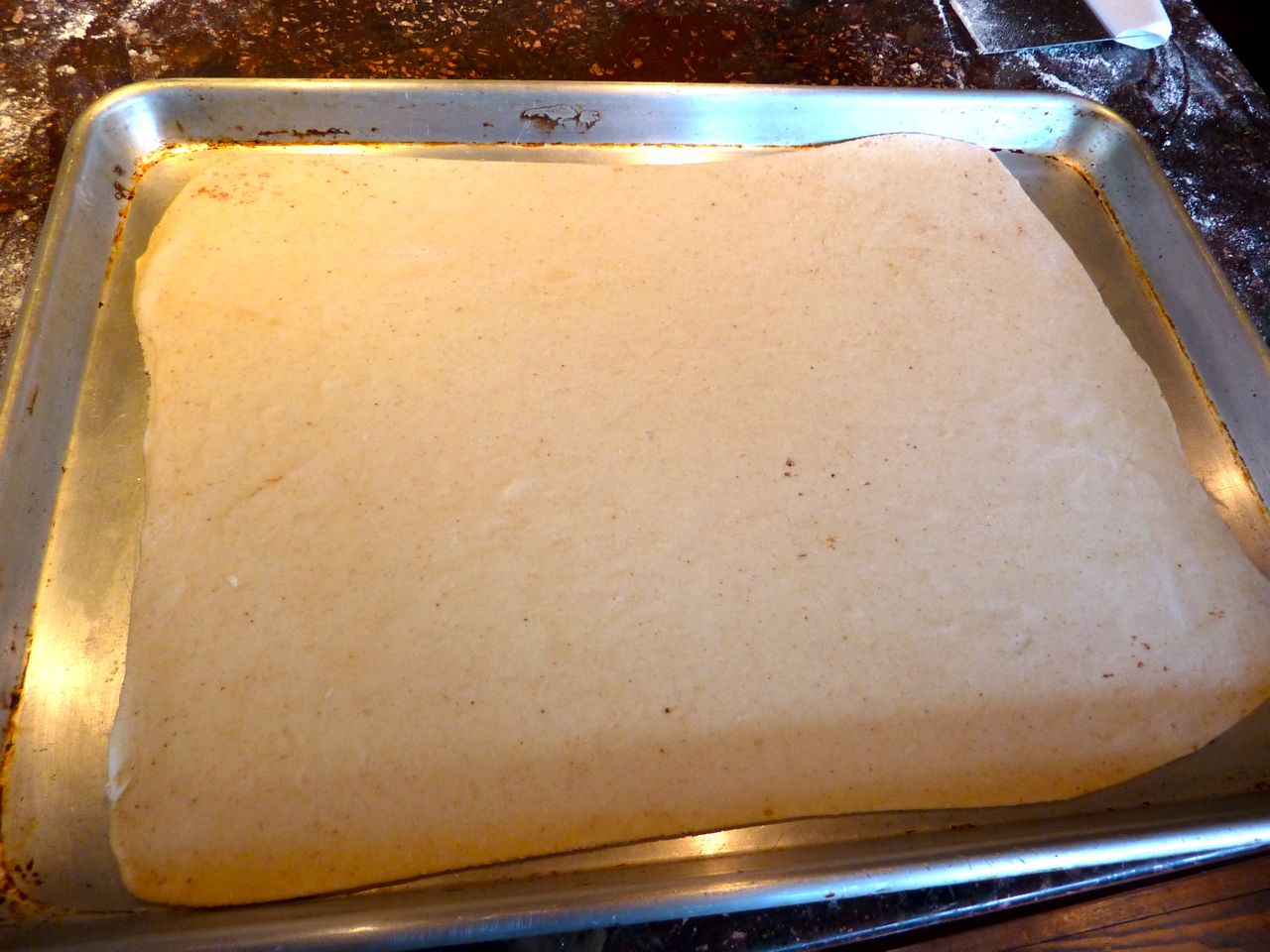
rolled out on sheet pan, ready to chill

In Judy Rodger’s version, she slices the butter very thin and incorporates into the flour and water in a method similar to a basic pie crust. To re-create the layers of butter, she keeps the butter in much larger, flatter pieces than you would for a pie crust, and then finishes it off with a series of rolling and folding, just as in the classic puff. The result does not have the uniform layers achieved with the class puff, but it is wonderful for a rustic tart such as this. It is also a very easy recipe to remember – 1 cup flour, 1 stick butter!

 apple and amaretti luxury villas tuscany

baked tart custom bike tours italy
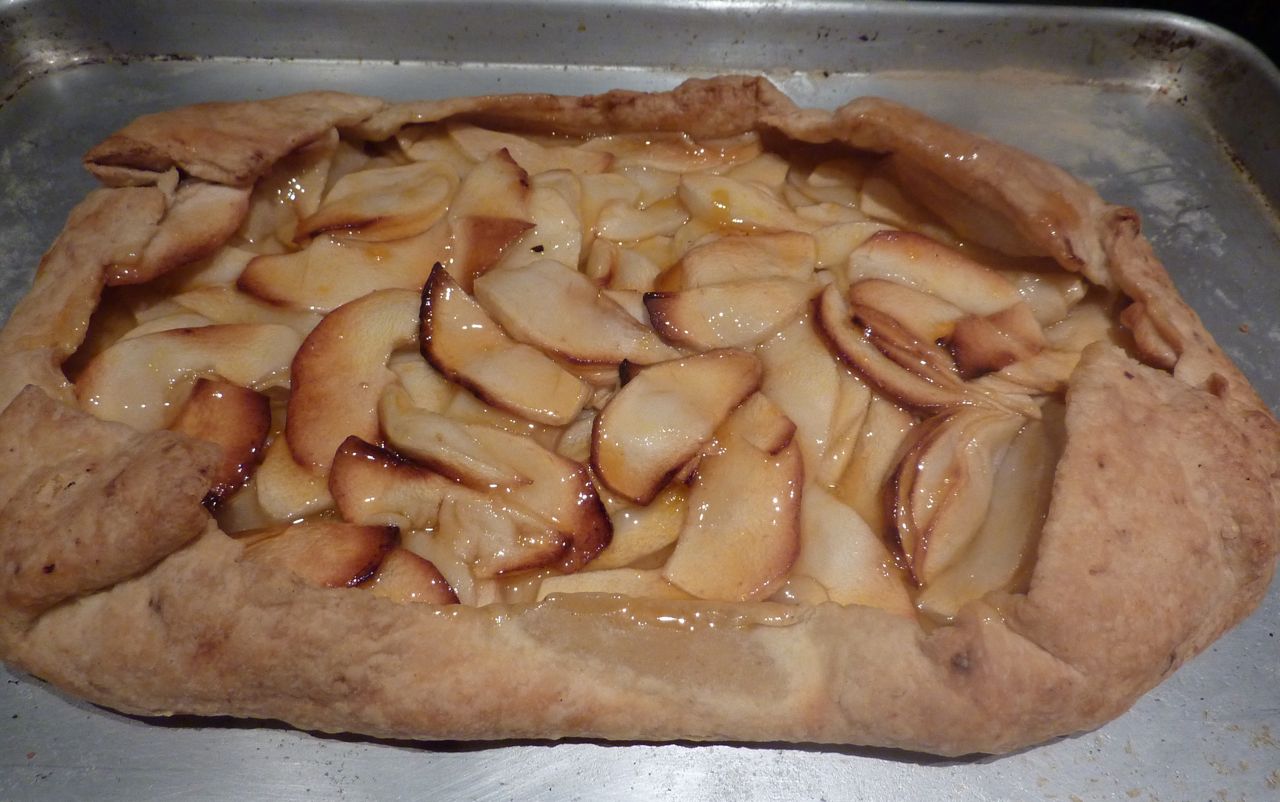
tart fresh from oven

Apple Amaretti Tart

Serves 8

For amaretti puff pastry:

1 cup minus 1 tablespoon all-purpose flour
1 tablespoon finely crushed amaretti cookies
1 teaspoon salt
8 tablespoons cold unsalted butter (1 stick)
5 to 6 tablespoons of ice water

For the tart:

5 large apples, peeled, cored, and sliced
1 tablespoon butter
1/4 teaspoon salt
1/4 cup apricot jam
2 tablespoons water
1 tablespoon amaretto
12 amaretti cookies

For the puff pastry:

Place the flour, crushed cookies and salt on a counter and mix together.

Cut the butter into 1/4 inch slices. Lay in the flour and coat the butter slices with the flour. Press the slices thin, using your thumb and forefinger. Spread the flour and butter in a circle on the counter and trickle the water over it, one tablespoon at a time, stirring it with your fingers in the butter and flour until it is absorbed. Between each addition of water, use your fingers to lift and move the flour and butter around.

After the water has been added, use a scraper to move the mass together, sliding the scraper under the pile and folding it on top of itself. Then, using the heel of your hand, push down and away on the mass, smearing the mass on the counter. Slide the scraper underneath the mass again, lift and fold on top of itself again. Turn the mass 90°, then using the heel of your hand, push down again on the dough. At this point, all the loose bits of dough should be incorporated, and there should be no dry spots. It will not look smooth or homogeneous in texture. If you still have a fair amount loose bits hanging around, repeat the process of pushing down and away with the dough, then gathering and folding, until it is. Wrap loosely and refrigerate for 30 minutes. If you chill it longer than that, it may need to warm up a bit before it will roll out without cracking.

Measure out a small amount of flour, and dust the counter top and a rolling pin. Roll the dough out, going away from and then toward you, into a rectangle roughly about 18 inches long and 6 inches wide. Fold into thirds (like a letter) from one of the short ends, and then the other. Turn the folded dough 90°, then roll again into the same size rectangle, and repeat the folding process. Rewrap the dough and refrigerate for another 20 minutes.

Repeat this process of rolling, folding, rolling and folding two more times, chilling for 20 minutes in between. After the last set of rolling and folding, refrigerate the dough for at least an hour. At this point, it can be wrapped tightly and kept overnight, or even frozen.

When ready to roll out, make sure the dough is warm enough to roll without cracking. Roll into a square about 8 inches wide and 12 inches long. Place the square on a sheet pan and chill for at least an hour.

For the tart:

Preheat the oven to 375°

Remove from the refrigerator. Fill the center of the tart dough with the apple slices, leaving about 1 inch of dough clear all around the outside of the rectangle. Fold this border up and over the apples, folding the dough together around the corners. Dot the apples with the butter, and sprinkle with a little salt.

Bake until the crust is golden brown and the fruit is tender, about 40 to 45 minutes. Remove from oven.

Mix the apricot jam, water and amaretto in a small saucepan and heat over medium heat until the jam has melted. Simmer until slightly thickened, then remove from heat and brush the glaze on the apple tart. Sprinkle with the crushed amaretti cookies and serve with almond ice cream.

Almond Ice Cream

Serves 8

1/2 cup whole, unblanched almonds
2 cups cream
1 cup milk
2 eggs
3/4 cup sugar

Place the almonds on a baking sheet, and toast until browned. Allow to cool, then finely chop in a food processor.

Combine the cream and milk in a medium saucepan. Bring to a simmer over medium heat. Remove from heat and stir in the chopped almonds. Allow to sit for 2 hours.

In a medium bowl, whisk the eggs for 1-2 minutes. Slowly whisk in the sugar a little at a time. Continue to whisk until lighter and thicker, another minute. Whisk in the almond cream and chill for an hour.

Freeze in an ice cream freezer according to the instructions. Freeze for two hours. Serve with apple amaretti tart, or canned cherries in wine and dark chocolate.

Posted in Apples, Dessert, Ice Cream, Tarts and Pies, Uncategorized | Tagged , , , , , , , , , , , , , , , , , , | 2 Comments