The Terroir of Brunello – Home of #whaleinavineyard

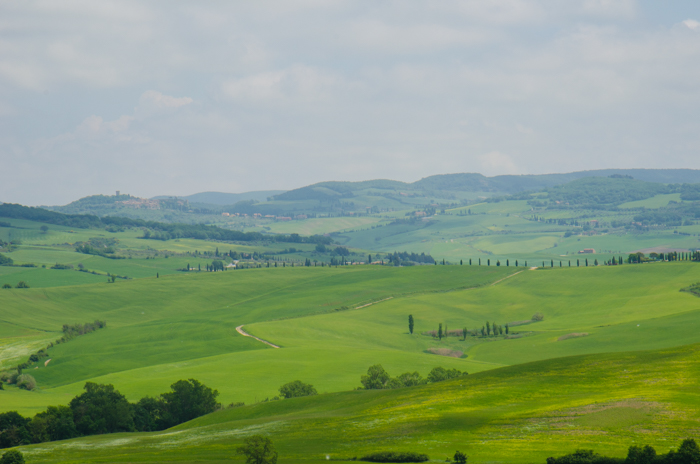
val-dorcia-view-custom-tuscany-tour-italiaoutdoorsOur Walk and Wine tours in Italy take us to some of Italy’s loveliest landscapes – the Langhe hills of Piedmont, Val d’Orcia of Tuscany, and the Verona province of the Veneto – as we discover the home of Italy’s most prestigious wines. The Montalcino area in Tuscany is a prime example. While we enjoy our daily explorations in the picturesque Tuscan countryside, we develop a true appreciation for how this glorious land shaped the outstanding Brunello wines we sample along the way.
val-dorcia-brunello-custom-tuscany-tour-italiaoutdoors

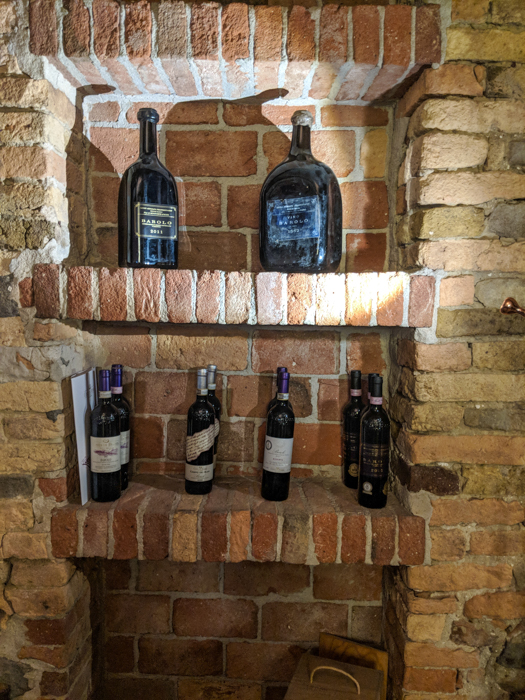
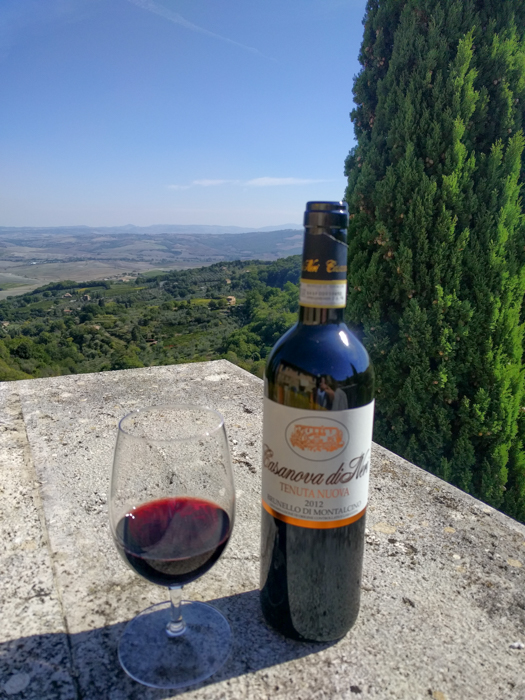
Brunello di Montalcino, and its younger sibling, Rosso di Montalcino, are both produced using exclusively Sangiovese grapes, Sangiovese in purezza as the locals say. They are, in fact, the only DOC wines in Italy that are required to be 100% Sangiovese. Wines from Chianti and the Vino Nobile from nearby Montepulciano CAN be 100% Sangiovese, but they don’t HAVE to be. Sangiovese is the most commonly planted grape in Italy, primarily grown in Tuscany and Emilia-Romagna, but found in other regions as well.
banfi-brunello-custom-tuscany-tour-italiaoutdoors

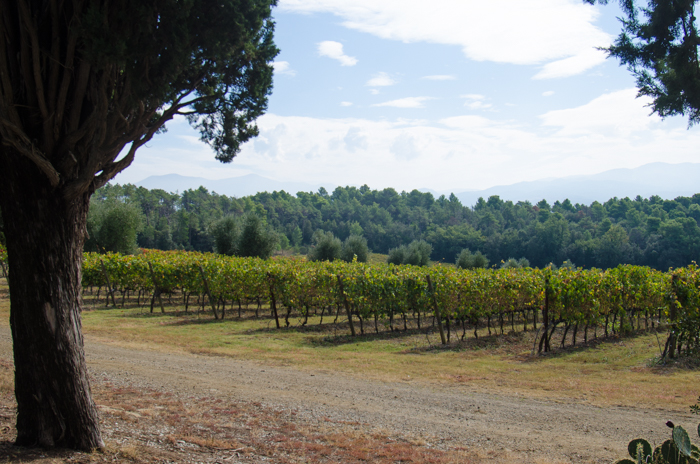
It is a very temperamental grape – late-ripening, difficult, unforgiving. It exhibits a huge variation between plants, even clones, depending upon the growing conditions. It is believed to have originated in Tuscany, but this is still up for debate. For hundreds of years farmers in Tuscany cultivated their local grapes, which had their own local names: Morellino di Scansano in the Maremma area of Tuscany, Sangioveto in Chianti, Prugnole Gentile in Montepulciano, Sangiovese Grosso or Brunello in Montalcino. These local grape vines were assumed to be different varieties; they had leaves of different shapes and sizes; some had larger grapes, others smaller; the bunches of grapes were more tightly packed on some than others.
palazzone-vineyards-custom-tuscany-tour-italiaoutdoors

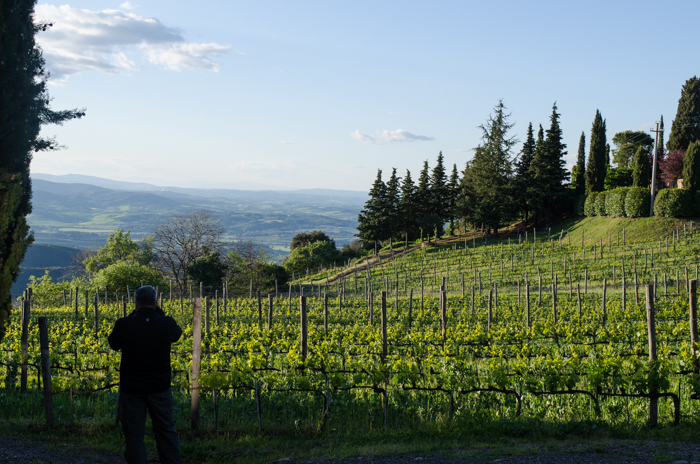
In 1876, a group commissioned to understand the local grape varietals undertook an experiment where they planted these 4 varieties: Morellino di Scansano, Sangioveto, Prugnole Gentile, and Sangiovese Grosso in the same single vineyard, and watched, recorded, and made wine. Lo and behold, as time passed, the 4 varieties changed – the stark differences in appearance began to fade, the wines produced by each developed a noticeable similarity, and they responded in like ways to different growing seasons. Today we know that these are all local expressions of the Sangiovese grape.

Cabernet is considered a resilient variety, You can grow it across a range of terroir – different elevations, various soil types, different microclimates – and you will get somewhat predictable results. Not so with Sangiovese, it strongly “expresses” its terroir, with wildly fluctuating results depending on its home, climate, soil type. It can be overly acidic, lighter in body, mediocre. But at the right altitude, in certain soil types, with the right amount of sunlight, Sangiovese wines develop unparalleled aromas, intense flavors, with a complexity and ability to age that escape all but a very few wines. Montalcino is this perfect growing environment for this mercurial grape.
montepulciano-view-custom-tuscany-tour-italiaoutdoors

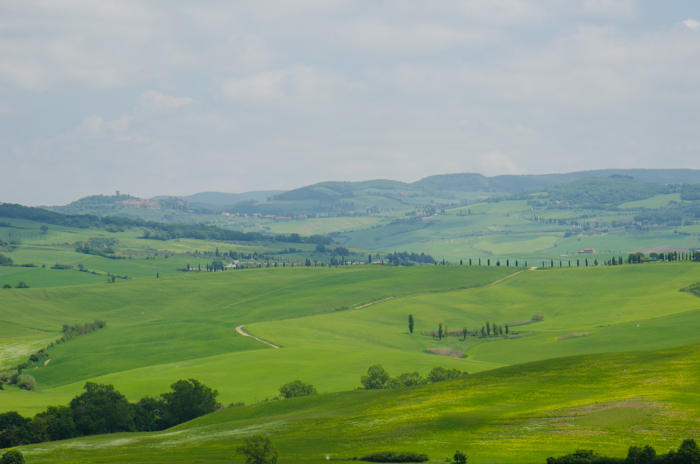
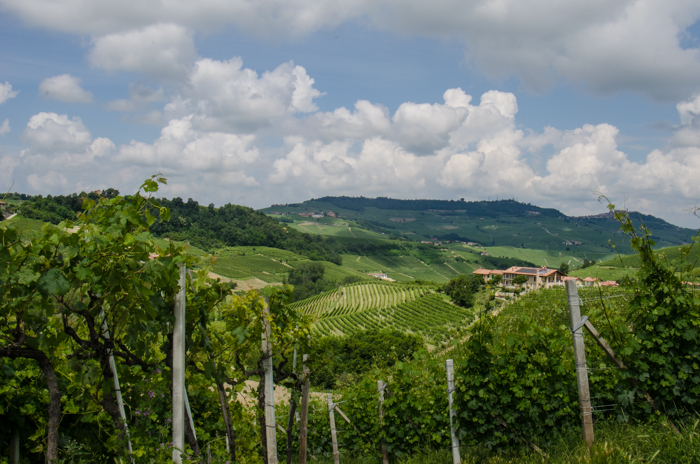
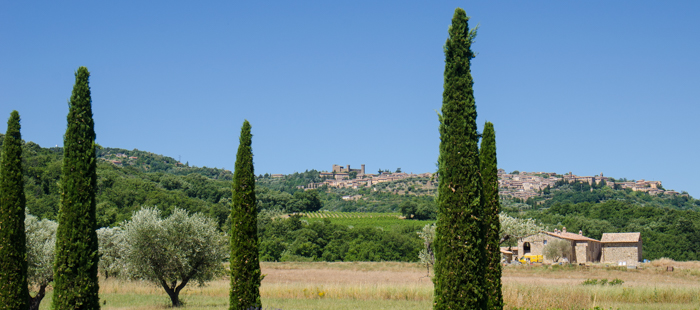
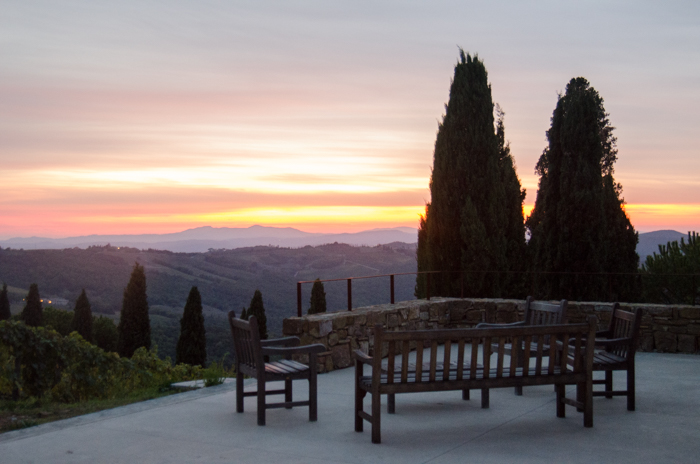
Montalcino is a hilltop town and surrounding comune in the province of Siena, Tuscany. Located just west of Pienza, we enjoy spectacular views of the picturesque Val d’Orcia during our visit. Nearby Monte Amiata dominates the south-east horizon, and on clear evenings I have sipped Brunello while gazing at the Islola di Giglio in the Tyrrhenian Sea just 40 miles away. Montalcino is closer to the coast than either Chianti or Montepulciano, and so benefits from a more Mediterranean climate – warmer, greater diurnal temperature variations, a longer growing season offering late-ripening Sangiovese a chance to fully evolve.
sunset-brunello-custom-tuscany-tour-italiaoutdoors

Within the zone itself we find a myriad of microclimates. The elevation of vineyards in this relatively small area range from almost sea level to 1640 meters (over 5000 feet). There are pronounced differences in rainfall and summer temperatures throughout.

But what perhaps is one of the most unique characteristics of the Montalcino terroir is the sheer number of different soil types found in this zone. The producer Banfi has identified 29 different types in its vineyards alone. Italy was formed when the African and European plates collided, and the soils from each plate intermingled. Millions of years ago, Italy was under a sea, and slowly emerged. We learn about this in other wine zones, like Barolo, where this ancient event plays a role in the intensity and longevity of the wines of today. Here in Montalcino, however, this emergence was not as “clean”, here the sea retreated and returned numerous times, unearthing and remixing the soil each time. The instability created by this fractured emergence caused massive erosions, sending millions of tons of earth crashing down from higher elevations, mixing different layers of soil, distributing marine fossils throughout, resulting in a highly complex array of soil types. Higher elevations experienced a bit less of this churn, lower a bit more.
le-ripi-custom-tuscany-tour-italiaoutdoors

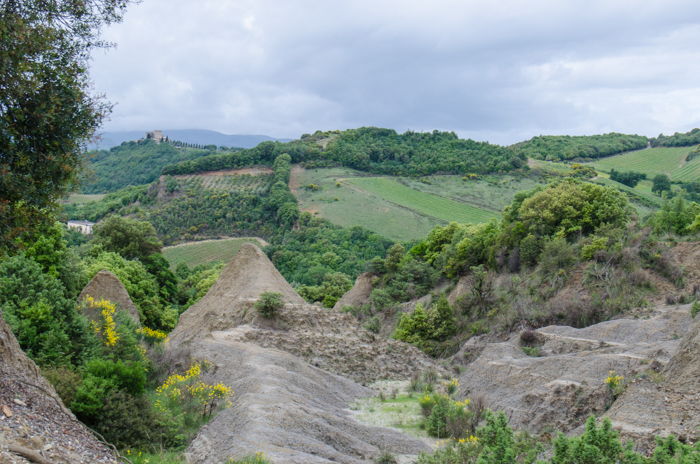
To give a few concrete examples we encounter on our travels, there are the distinctive “Le Ripi”, of Podere le Ripi, south of Montalcino near Sant’Antimo. “Le Ripi”, the cliffs, are tenacious clay based hills that remain after thousands of years of erosion washed away the surrounding more porous soils. Here is lots of clay, still quite salty. Limestone boulders remain, rounded down from centuries of the sea receding and returning. Many minerals are found in the soil here, just 7 miles from Monte Amiata, an ancient volcano. Today Podere grows both Sangiovese as well as Syrah and Merlot. This clay soil presents itself in powerful, intense wines, salty, with good acidity. Also worth seeing here is the most densely planted vineyard in the world, as well as their unique nautilus shaped cellar.
castello-banfi-custom-tuscany-tour-italiaoutdoors

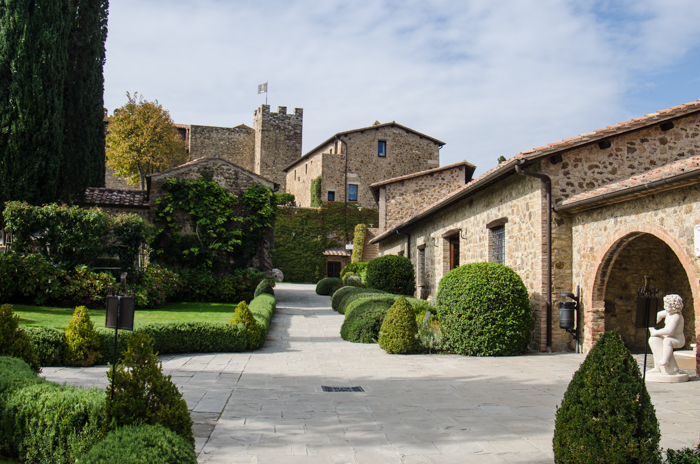
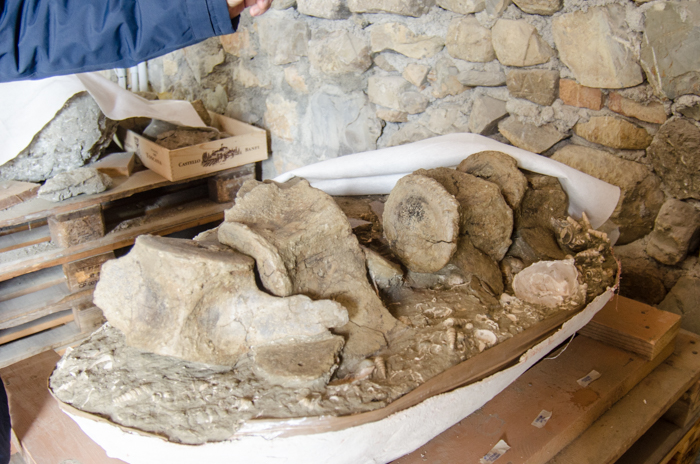
The largest producer in the Montalcino area is Castello Banfi estate. Owned by the Mariani family of Long Island, NY, they established Castello Banfi in the southern part of the zone in 1978, and today they are leaders in research into the grapes and terroirs of Montalcino. Over 10 years ago, while digging in a vineyard, workers uncovered the massive skeleton of a prehistoric whale. Nicknamed “Brunella”, this creature, believed to be about 4 million years old, is being carefully cleaned, reassembled and studied by a team of paleontologists, financed by Banfi. Visitors to the Castello can stop by and watch the scientists at work. A friendly professor gave me a quick tour, pointing out the small shark teeth and teeth marks on the skeleton itself, indications that “Brunella” may have met and untimely end. It is fascinating to see the hard evidence of events that occurred millions of years ago still present today, and to learn how these ancient events shape the wines we enjoy along the way.
whaleinavineyard-custom-italy-tour-italiaoutdoors

Thanks to Laura Gray at Il Palazzone for telling me about Brunella. You can follow the discoveries of the Brunella team on Twitter at #whaleinavineyard. For those who wish to learn more about Brunello, I highly recommend “Brunello di Montalcino” by Kerin O’Keefe.
Posted in Uncategorized, Wine, wine tastings | Tagged , , , , , , , , , , , , | 3 Comments

Focaccia con Zucca e Salvia – Pumpkin and Sage Focaccia

focaccia-cut-custom-italy-tour-italiaoutdoors

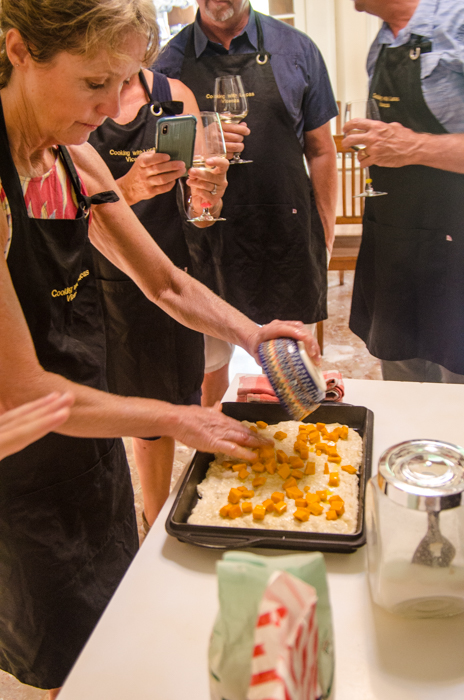
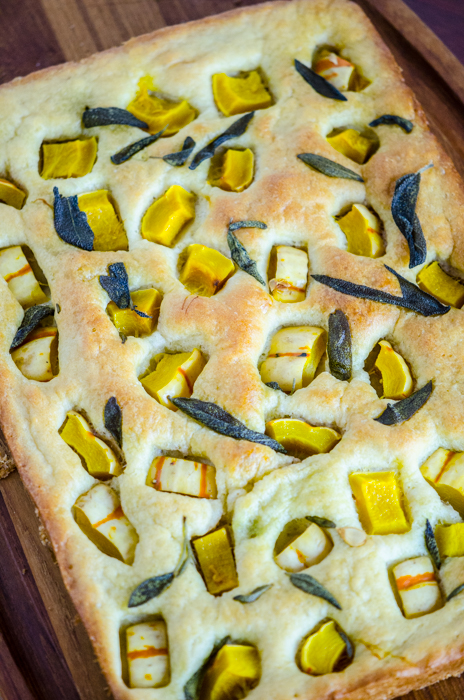
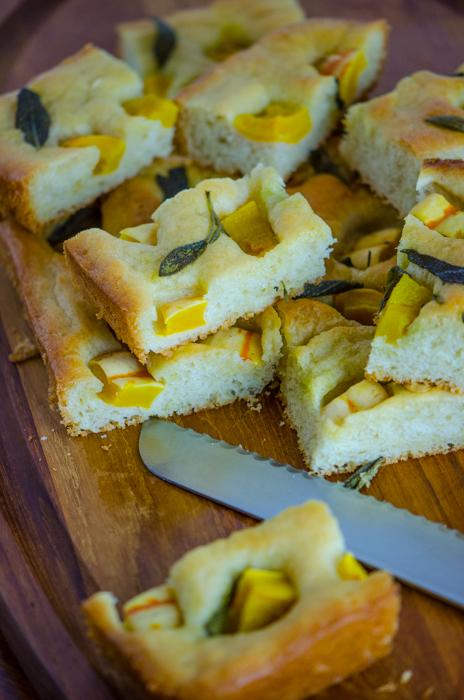
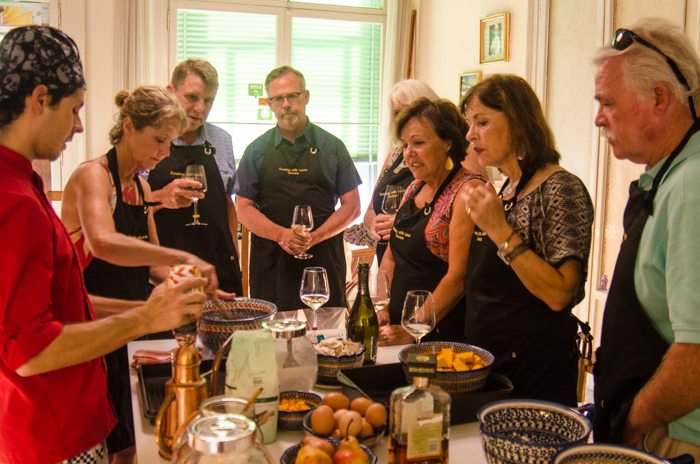
Who doesn’t love focaccia? A leavened flat bread with seemingly unlimited variations, everyone can find a favorite. This version, topped with squash or pumpkin and sage is perfect for an autumn dinner, or to bring a bit of Italy to your Thanksgiving table. This season as we visited Vicenza on a couple of our custom Italy tours we made focaccia with a true Italian chef, our good friend Lucas Migliorelli. Prep took 10 minutes max, two hours to rise, then bake and we had ourselves a real treat, focaccia fresh from the oven.

focaccia-cooking-group-custom-italy-tour-italiaoutdoors

focaccia-cooking-class-custom-italy-tour-italiaoutdoors

Today focaccia is found throughout the Italian peninsula, but it is primarily associated with Ligurian cuisine, as the olive oil in the bread helps keep it from spoiling quickly in the salt air and humidity of this coastal region. As we enjoy a walking tour in Cinque Terre, we visit many small towns that dot the coast of Liguria, each isolated and each with their own variation this flat bread. Focaccia Genovese is the most common, topped simply with a mixture of olive oil and water, and salt. It is enjoyed throughout the day, for breakfast with your cappuccino, as an afternoon snack, or in the dinner bread basket.

focaccia-whole-custom-italy-tour-italiaoutdoors

In Italy, “zucca” refers to pumpkin, as well as several different winter squashes with pumpkin-like consistency. Butternut would work well, here I used delicata squash which has the additional benefit of not needing to be peeled!

Focaccia con Zucca e Salvia

1 package dry yeast (2 1/4 teaspoons)
1 tablespoon of sugar (optional)
1 cup of warm water
2 cups of bread flour
1/2 cup of olive oil
1 1/2 tablespoon kosher salt
1 cup raw pumpkin or winter squash, chopped
12 leaves fresh sage

In a big bowl, dissolve the yeast and the sugar in the warm water. If you have not used your yeast recently, you may want to test it to make sure it is still active – to do this, dissolve it in just a couple of tanblespoons of the water and allow to sit for 10 minutes or so. If it is bubbling a bit at the end of the 10 minutes, add the rest of the water and continue. If not bubbling, you need new yeast!

Add 1 1/2 cups of the flour and 1 tablespoon of the salt into the bowl, and with a strong wood spoon, mix the water into the flour. Continue to mix for about 1-2 minutes.

Add the other 1/2 cup of flour and mix to form a stiff dough. Knead the focaccia dough in the bowl for about 3 minutes, mixing very well. Add 1/3 cup of olive oil to the dough. Using your hands, squeeze the olive oil into the dough for about a minute. Any extra oil a the bottom of the bowl you will later pour on the top of the dough.

Make a ball with the dough, and put the dough in a sheet pan lined with a sheet of parchment paper. Spread the dough with your hands into rectangle, about 1/2 inch thick.

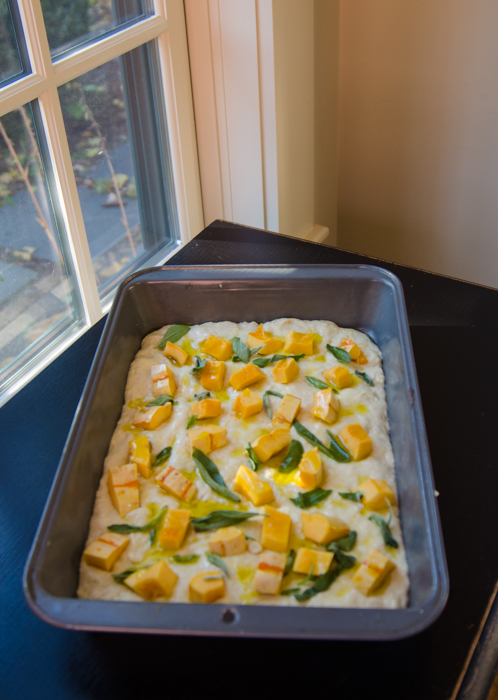
Using your fingers, make little indentations all over the dough – this is what they do in Genova! Evenly distribute the squash pieces across the top of the dough, followed by the sage leaves. Pour the rest of the olive oil on the top of this, the oil will pool and fill the small holes you made with your fingers. Cover with plastic wrap and let the focaccia rise for about two hours.

Preheat the oven to 400°F.

Sprinkle with the remaining salt. Bake for about 30 – 40 minutes, until nicely golden brown. Keep your eye on the bread so it doesn’t over bake and turn into a rock. Enjoy!!

focaccia-window-custom-italy-tour-italiaoutdoors

Posted in Baking, Liguria, Pumpkin, squash, Travel, Uncategorized | Tagged , , , , , , , , , , , , , , | 5 Comments

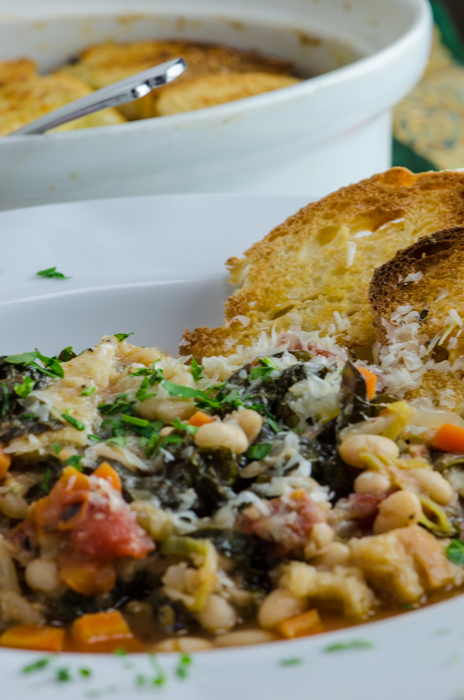
Ribollita Toscana – Tuscan Bean, Kale and Bread Soup

ribollita-tuscany-walking-tour-italiaoutdoors

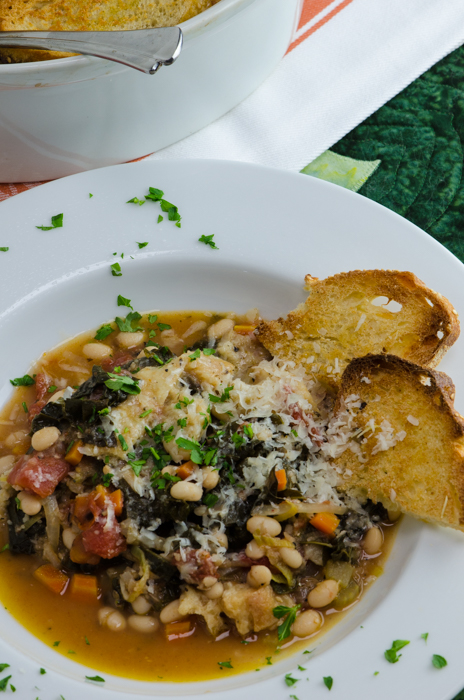
After an active morning hiking in Tuscany’s lovely Val d’Orcia, nothing beats sitting down to a lunch of Ribollita Toscana, accompanied by a glass of local Sangiovese from one of Tuscany’s newer wine zones, Orcia DOC (named one of the Top 10 Wine Getaways in 2018 by Wine Enthusiast.) A hearty soup of beans and greens, layered with bread and cooked twice, literally “reboiled”, in Italian ribollita. This would be a dish for a Monday night, incorporating the leftover broth and vegetables from Sunday nights boiled meat dinner, adding beans and bread to stretch it to feed many mouths.

val-dorcia-tuscany-walking-tour-italiaoutdoors

We see numerous bread based dishes on our private tours in Umbria and Tuscany. Here, bread is not often enjoyed alone, but is incorporated into a soup or other dish, like pappa al pomodoro or panzanella. Why? Because the traditional breads of the area – Pane Toscana (Tuscan bread) or Pane Sciapo in Perugia – are made without salt.

In the 12th century, the rulers of Pisa were at odds with the rulers of Florence, and cut off their supply lines from the coast. This made salt prohibitively expensive. The Florentines, unwilling to cave to the pressure, simply began making their bread without it. On a recent visit to Badia e Coltibuono, a winery and olive oil producer in Tuscany, we were shown the estate ‘salt safe’ where the owner would secure his salt each evening before retiring.

ribollita-baking-tuscany-walking-tour-italiaoutdoors

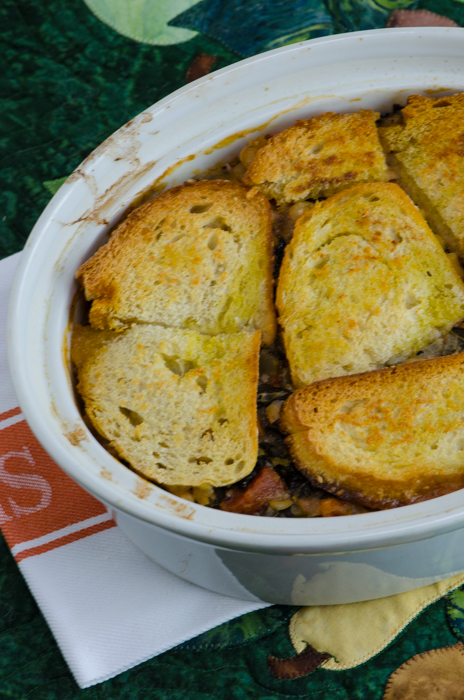
This soup is best reheated and eaten the day after it is cooked, though you can serve it when freshly made. I baked this soup in the oven, but you can also cook it on the stovetop – you may need to add a little more broth or water, and be sure to keep a close eye on it so the bottom doesn’t scorch.

ribollita-olive-oil-tuscany-walking-tour-italiaoutdoors

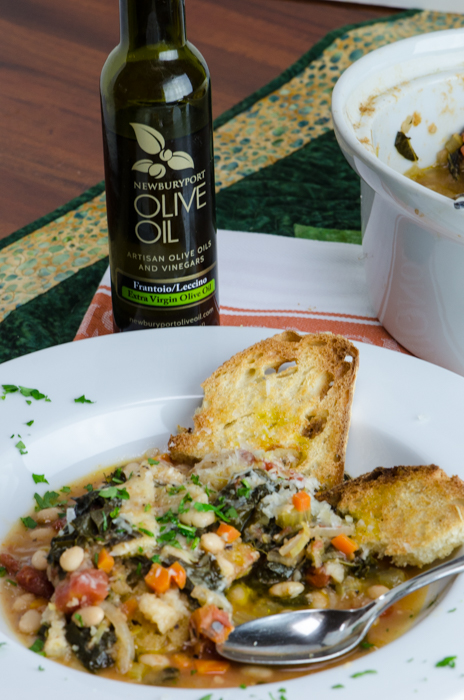
Spoon and serve in a bowl, garnished with a bit of grated cheese and a generous drizzle of extra virgin olive oil as they do in Tuscany. This is a perfect dish to accompany that wonderful quality olive oil that you brought back from Italy. Here at my Newburyport home I head over to Port Plums to pick up some, a great local source when I can’t get to Italy!

Ribollita Toscana

Serves 4

1 cup dried cannellini beans, soaked for 12 hours
2 sprigs parsley
2 ribs celery, 1 chopped into 1/4” dice
Kosher salt and freshly ground pepper to taste
1 carrot, chopped into 1/4” dice
Extra-virgin olive oil for sautéing and drizzling
1 large red onion, sliced
1 leek, sliced, soaked in water to remove grit
1 pound (about 8) plum tomatoes, peeled, seeded and diced or 1 15-ounce can chopped plum tomatoes
1 large potato, peeled and diced
1/2 bunch Tuscan kale, chopped
1/2 head Savoy cabbage, chopped
1 pound chard, chopped
1 loaf of stale Tuscan (saltless) bread, sliced and toasted
1 clove garlic, peeled (optional)

Drain the beans and cook them in water to cover with 1 sprig of parsley, the whole rib of celery, salt and pepper until tender (you may need to cut celery into 3-4 pieces to fit into pot.) Remove and discard celery and parsley. Reserve the beans in their cooking water.

In a soup pot, heat a generous amount of oil and add the red onion and leek. As soon as they begin to turn golden, add the minced celery, carrots, remaining sprig of parsley and the tomatoes and cook, stirring frequently, for 2 to 3 minutes. Add the potato, Tuscan kale, cabbage, and chard. Cook, stirring to combine, then add water to cover. Season with salt and pepper and cook over medium-high heat for 1 1/2 hours.

Puree about half of the cooked cannellini beans and add the pureed beans, the whole beans, and the cooking liquid to the pot. Stir to combine, season to taste with salt and pepper, bring to a boil, and cook over very low heat for another 30 minutes.

If desired, rub each of the toasted bread slices with the garlic clove.

In an oven-proof pot, alternate layers of the bread slices with the soup, then set aside to rest. To make true ribollita, the following day add a little water, drizzle with oil, season with freshly ground pepper. Bake in the oven, without stirring, until most of the liquid has evaporated and a crust has formed on top. Drizzle with additional olive oil and grated cheese and serve.

ribollita-toscana-tuscany-walking-tour-italiaoutdoors

Posted in Uncategorized | 1 Comment

Barolo Walk and Wine – Costa di Bussia

costa-di-bussia-view-barolo-walking-tour-italiaoutdoors

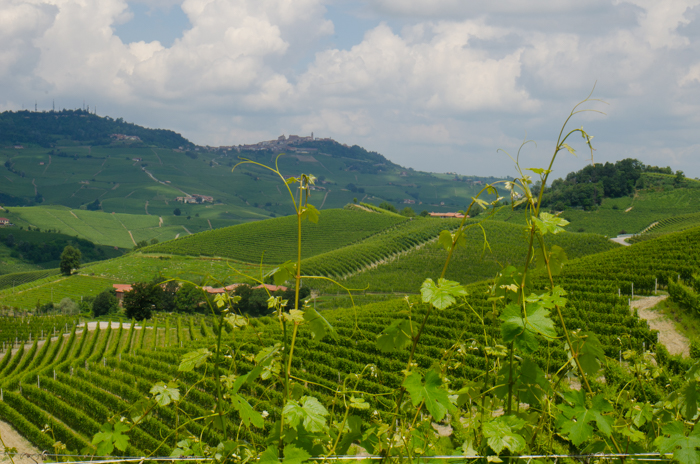
The wines of Barolo are extremely expressive of their picturesque terroir. On our Italiaoutdoors Food and Wine private wine tours of this region, we slow down, and mindfully explore this amazing territory by foot or by bike (electric assist for those who are not a fan of hills). We begin in the northwest area, visiting La Morra, which has younger, sandier soil. Here we taste fruitier Barolo, the more “feminine” with milder tannins, ready to enjoy at a younger age.

We finish the week in southeast, which dates from the Helvetian age, in the commune of Monforte. Here, on our walks through the verdant vineyards, if we can take our eyes off of the spectacular scenery, we notice a crumby, clayey, white-yellow soil that can really stick to our hiking shoes when wet. This tenacious soil produces more intense wines, with increased color, body, and strong tannins that benefit from longer aging.

One of the best wineries to experience the terroir here near Monforte is Costa di Bussia. My knowledgeable guide Erica suggested we begin in the vineyards, which was my preference as well, having seen many a wine cellar. Italian winemakers across the country repeat the phrase “our wines begin in the vineyards”, so of course discovering the story of Costa di Bussia should begin there as well.

costa-di-bussia-view

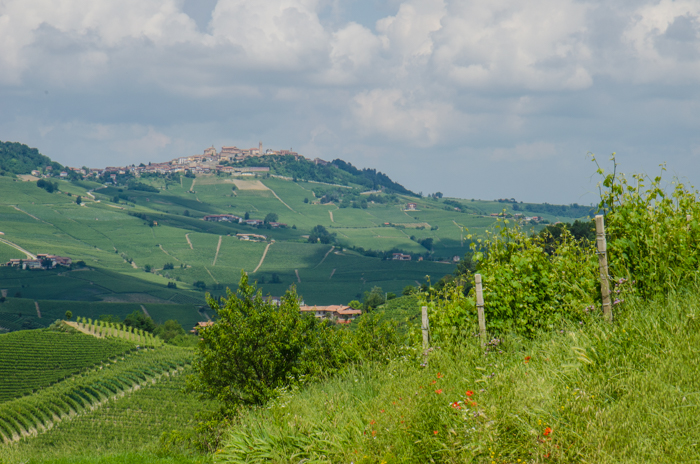
Surrounded by a breathtaking view, with the town of La Morra visible in the distance, Erica gives me the lay of the land. Below us is the Bussia valley, created by the Bussia River, now recognized as a Barolo cru. Millions of years ago, this area was a sea. The waters receded from west to east, so the land that is now Monforte and nearby Serralunga and Castiglione Faletto was the first to emerge. The terrain here is heavy with clay and calciferous material due to the sea shells, which you can still find today. This high level of minerality results in strong wines with pronounced tannins – “male” Barolos – intense, strong, long lived.

The best slopes for these Barolos are the south facing slopes with the optimum sun exposure, important for the late-ripening Nebbiolo. Occasionally they will use the lower elevations of north facing slopes if the sun exposure is adequate, but the top of these slopes are used for the other two indigenous reds, Dolcetto and Barbera, which ripen earlier.

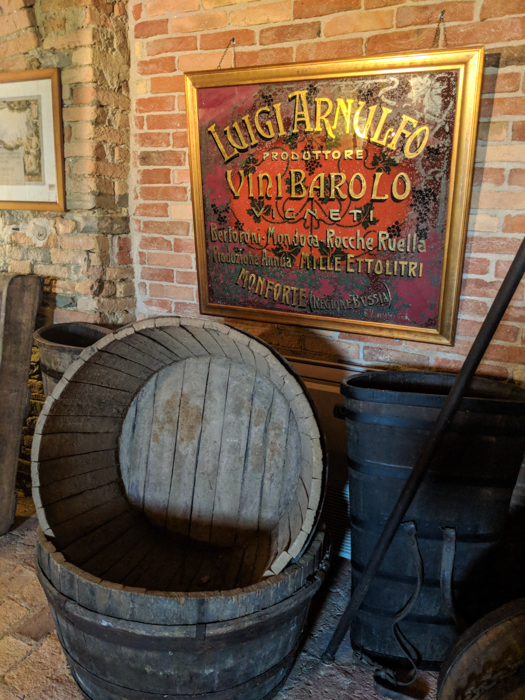
costa-di-bussia-sign

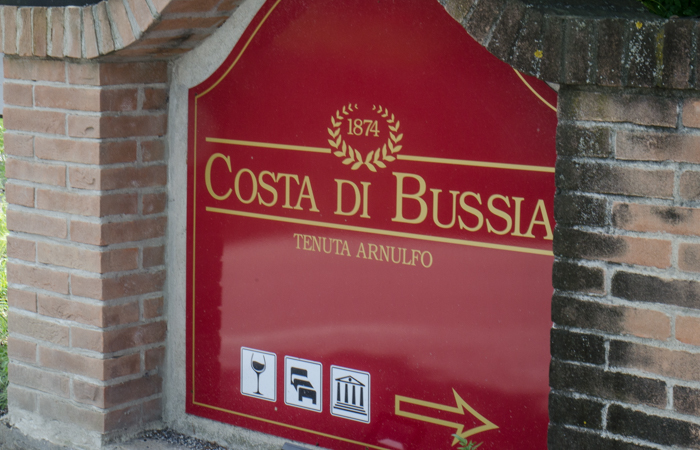
Costa di Bussia was founded in 1874 by Luigi Arnulfo, from a local family of pharmacists. He began producing the native Barolo, and realized the unique terroir of Bussia. Arnulfo is considered one of the pioneers of Barolo production, applying his scientific background to develop tools to analyze the chemical makeup of wine, including alcohol and sugar content. He bottled Barolo in unique square shaped bottles to facilitate long transport; his bottles arrived intact as far away as California, making Barolo one of the first internationally renowned wines. When philoxera threatened to destroy the entire industry in the late 1800s, Arnulfo travelled to France to learn the grafting techniques that saved the grapes from extinction. He died in 1928, and the property fell into disuse until the current owner, Paolo Sartirano purchased it in 1988 and restarted production under the Costa di Bussia name.

costa-di-bussia-museum-barolo-walking-tour-italiaoutdoors

Erica continues, introducing the unique features of their individual vineyards. The original vineyard, located just behind Cascina Arnulfo, is Campo del Gatto – Field of the Cat. Fully facing south, it is located on a “back” where the limestone rich clay marl outcrops provide austere growing conditions. The high percentage of clay here results in wines that are rich in color and structure. From this historical vineyard, they produce one of their two single vineyard wines, their Vigna Campo del Gatto Barbera d’Alba.

costa-di-bussia-campo-gatto-barolo-walking-tour-italiaoutdoors
Campo di Gatto

Behind the Campo di Gatto is a second small 1 hectare parcel, the Campo dei Buoi, Field of the Bull. This historical name was mentioned in the purchase document of the original estate signed by Luigi Arnulfo and his father. The soil here has a high percentage of carbonates and other mineral components, such as potassium, phosphorus, and calcium. The southern exposure allows for optimum ripening of the grapes. This is the home of Costa di Bussia’s single vineyard Barolo, Vigna Campo dei Buoi.

costa-di-bussia-nebbiolo-barolo-walking-tour-italiaoutdoors
Nebbiolo Vineyards

As we follow the winding road past the Campo di Gatto, we look out over the Bussia hill vineyards planted with the prolific Nebbiolo. The Bussia hill boasts a mix of clay and sandstone marls, at times overlapping, alternating, and in parts mixed together, some parts more fertile, others less so. In this mix of soil types, the Nebbiolo grapes mature at different rates, exhibit different aromas and flavors, producing wines with many sensory dimensions. These vineyards are devoted to the production of the Bussia Barolo DOCG, the Langhe DOC Nebbiolo Arcaplà and the Barolo DOCG Luigi Arnulfo.

costa-di-bussia-bricco-vineyard-barolo-walking-tour-italiaoutdoors
Bricco Vineyard

The highest vineyard on the estate is a Nebbiolo vineyard called “Bricco”, with a south-west exposure. Here the vines need to reach deep into the poor marl soil to find the sublayers that are very rich in carbonates and minerals. Costa di Bussia’s most prestigious wine, their Barolo Riserva, hails from here, a wine with powerful structure, tannins and great ageing potential.

Two other vineyard parcels are dedicated to the traditional every day drinking wines of the region, Barbera and Dolcetto. And lone among vineyards devoted to red grapes is a vineyard planted with Chardonnay, an experiment undertaken by Paolo Sartirano in 1992.

costa-di-bussia-museum-sign-barolo-walking-tour-italiaoutdoors

Following our tour of the vineyards, we return to the Cascina where Erica leads me through the wine museum dedicated to Luigi Arnulfo. During renovation of the original farmhouse, Sartirano uncovered over 200 letters and many instruments and other objects from Arnulfo’s time. These artifacts reflect his work in the vineyard and in the winery, his scientific discoveries, new trade routes, and the role the Langhe producers played in the world wide wine industry in the late 1800s. They are now carefully preserved and available for all to learn from in this small, but fascinating museum.

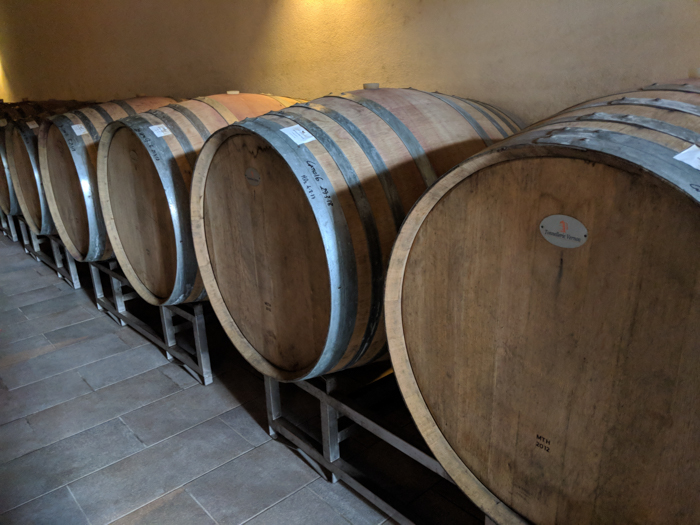
costa-di-bussia-aging-barolo-walking-tour-italiaoutdoors

A quick tour of their clean and well-equipped modern production facilities, and then on to the tasting room.

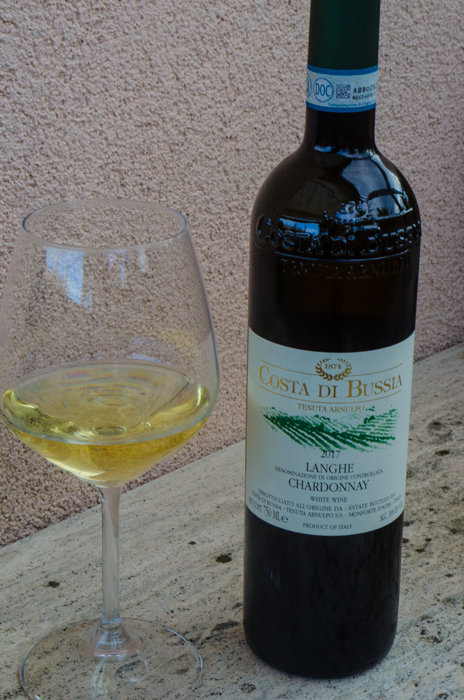
Langhe Chardonnay 2017

costa-di-bussia-chardonnay-barolo-walking-tour-italiaoutdoors

100% Chardonnay, aged 6 months on the lees, this is the result of the owner’s experiment with white grapes in this red-centric region. Non-typical tropical flavors of banana, mango and apricot make for a very fresh and interesting Chardonnay. Persistent finish, with a bit of toasty yeast on the finish. Pair with antipasti, shellfish, risotto.

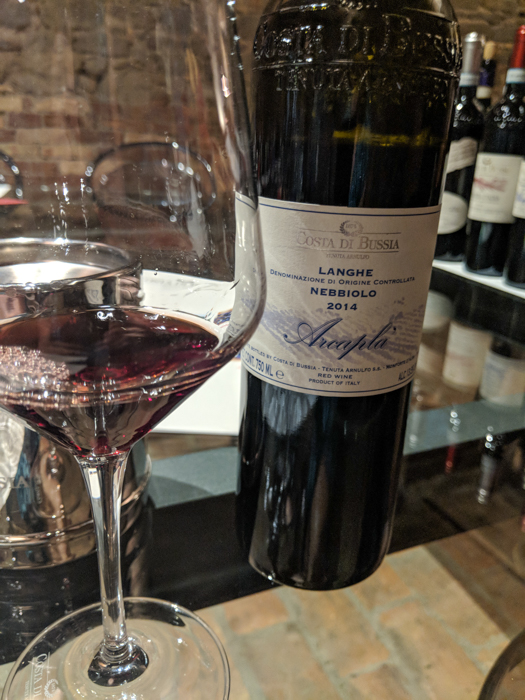
Langhe Nebbiolo Arcaplà 2014

costa-di-bussia-arcapla-barolo-walking-tour-italiaoutdoors


A new wine with vintage 2014, its traditional name comes from its predecessor, the D.O.C. Langhe Red “Arcaplà” with was produced until 2010 using the ancient technique arcaplé, a blend of Nebbiolo (70%) and Barbera (30%). Today, however, it is now a DOC Langhe Nebbiolo produced with 100% Nebbiolo grapes of the estate.
100% Nebbiolo from the Bussia vineyard, aged in small French oak barrels. Deep ruby in color, with scents of vanilla, spice and currants. Elegant mouthfeel, smooth tannins. Enjoy with pastas, roasts, grilled meats, mature cheeses.

Campo di Gatto Barbera 2013

100% single-vineyard Barbera from their oldest vineyard Vigna Campo del Gatto. Aged for 18 months in 500-liter French oak tonneaux. Deep ruby red color with flavors of cherries and wild berries. A note of spice accompanies a persistent velvety finish. Best with roasted or grilled meats, and aged cheeses.

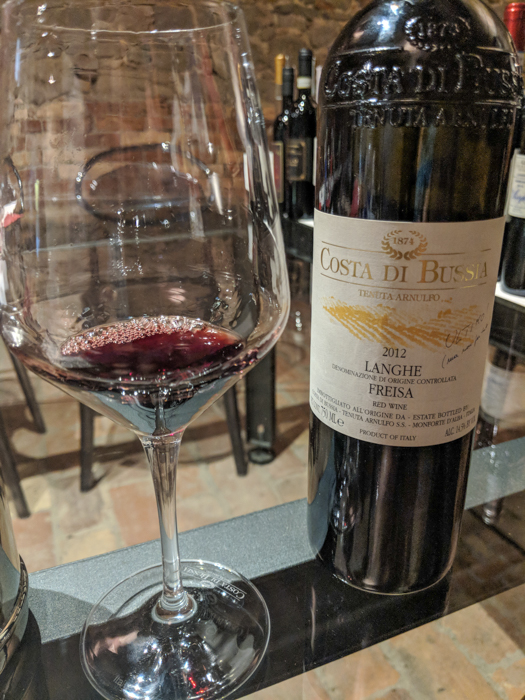
Langhe Freisa 2012

costa-di-bussia-freisa-barolo-walking-tour-italiaoutdoors

Freisa is a native grape of Piedmont, an offspring of Nebbiolo. Once one of the most planted in Piemont, it is now almost forgotten. Similar to Nebbiolo, Freisa produces wines with considerable tannins and acidity. While it can be used in blends, it is most often encountered as a varietal. Like Nebbiolo, Freisa produces a relatively light colored wine but with more distinctive purple hues. The wines are often characterized with strawberry, raspberry and violet aromas.

This was an interesting wine to try, but alas, time is limited. Costa di Bussia no longer produces Freisa.

Bussia Barolo 2013

100% Nebbiolo from their Bussia cru vineyards. 18 month aging in big Slavonian oak barrels of 5000 litres, then in the bottle. It should age well in your cellar for at least 15 years. Soft ruby red in color, with classic Barolo profile of rose and cherry, and just a hint of spice. Well-balanced, with velvety tannins and persistent finish. Enjoy with game, roasts, aged cheeses.

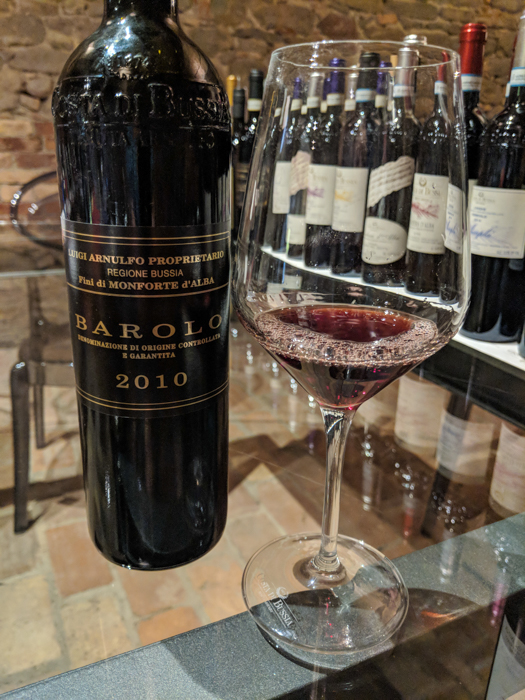
Bussia Luigi Arnulfo Barolo DOCG 2010

costa-di-bussia-arnulfo-barolo-walking-tour-italiaoutdoors

A special selection of only the best grapes, harvested over-ripe, dedicated to Luigi Arnulfo. 36 months of aging in 5000-liter Slavonian oak barrel, then in the bottle. Should be good for at minimum 15 years in the cellar. More intense in color than the Bussia Barolo, with aromas of rose, tobacco and ripe cherry. Smooth and silky tannins, with an exceptional persistence. Appreciate with game meat, braises, and mature cheese.

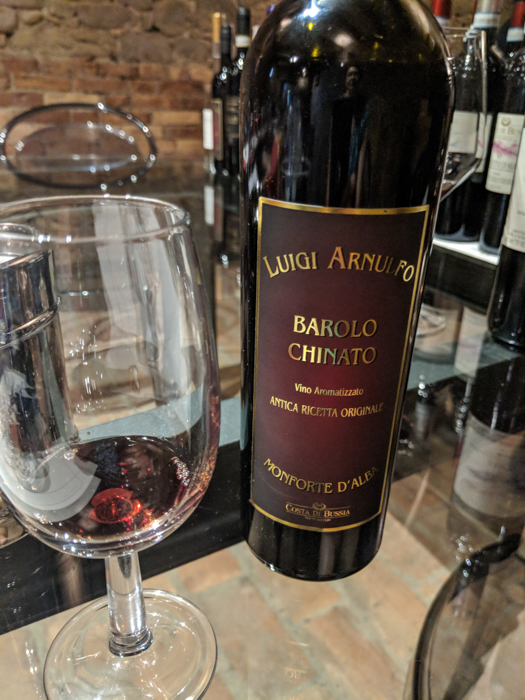
Luigi Arnulfo Chinato

costa-di-bussia-chianato-barolo-walking-tour-italiaoutdoors

A very interesting dessert wine, unique to Piedmont. A traditional recipe created by Luigi Arnulfo, reflecting his training as a pharmacist. This Barolo Chinato was a special liquor, used in the past as a natural remedy against the cold and flu, as well as malaria, which was one of Italy’s most deadly diseases until the mid-1900s. Barolo Chinato is produced with Barolo wine and with an infusion of spices, roots and medicinal plants such as quinine, hence the name “Chinato”, cloves, rhubarb, mint, cinnamon, and many other ingredients, all written in the original recipe from Arnulfo.

100% Nebbiolo, aged in the bottle. Traditionally drunk after meals as either a digestif or a dessert wine. A distinctive – and very Italian – mix of bitter and sweet, together with the spices, make it quite unique. Enjoy on its own (a wine for meditation, as the Italians would say), or with a bit of dark chocolate.

Posted in Uncategorized | Leave a comment

Torta di Fragola – Breakfast in Tuscany

torta-di-fregola-tuscany-tours-italiaoutdoorsOur Italiaoutdoors private walking and cycling tours in Italy visit the lovely hill town of Montepulciano. Situated between two of Tuscany’s picturesque valleys, the Val di Chiana and the Val d’Orcia, with views of Lake Trasimeno to the east, and Monte Amiata to the south west, it is an enchanting stop on our adventure.

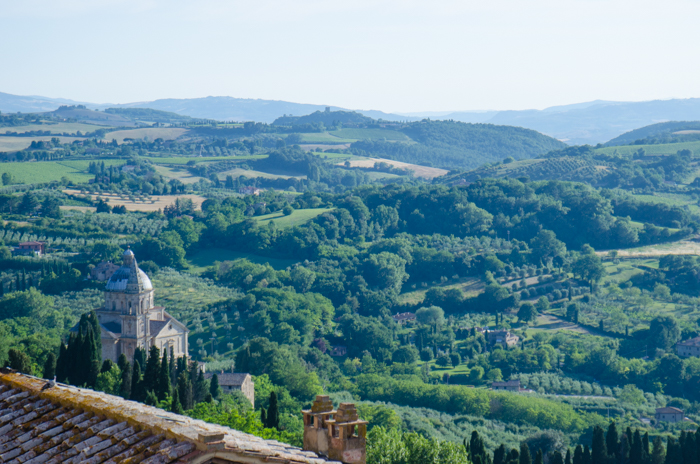
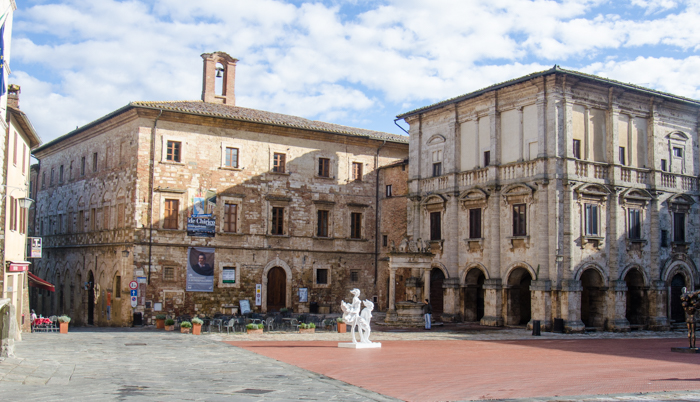
view-san-biagio-tuscany-tours-italiaoutdoorsThe main street of Montepulciano stretches for just under a mile from the Porta al Prato up hill to Piazza Grande. Our favorite local guide can lead us on a private tour, revealing the history behind the medieval and Renaissance edifices, including the Palazzo Comunale, Palazzo Tarugi, and the Duomo. The lovely church seen just off the hill outside the city is the Sanctuary of the Madonna di San Biagio. Car traffic is severely restricted within the 14th century walls of the city, making it a perfect city to shop for locally made leather goods, or sit in an outdoor enoteca and taste Montepulciano’s renowned Vino Nobile.
montepulciano-tuscany-tours-italiaoutdoors

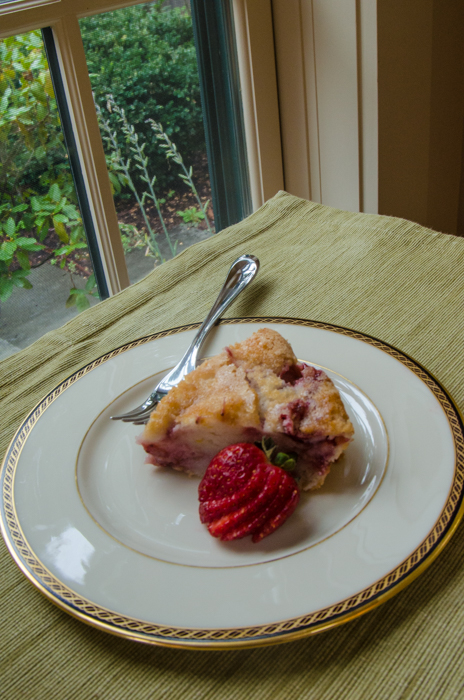
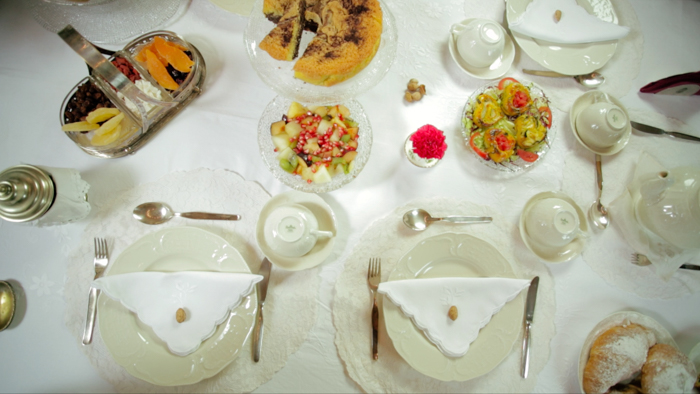
When searching for the perfect lodging for guests on our tours we look for small, unique properties that are centrally located, with congenial hosts that consistently spoil us. This is exactly what we find at Il Tosco. Four elegant rooms in a historical house, formerly a residence of local nobility, Elena and her mother see to our every need. The breakfast is absolutely amazing, with fresh fruit, eggs, yogurt, cereals and several of mom’s wonderful homemade cakes. At the request of our guests, Elena shared the following recipe for one of our favorites, the Torta di Fragola – a Strawberry Cake.

il-tosco-breakfast-tuscany-tours-italiaoutdoors

Torta di Fragole

1 cup and 5 tablespoons rice flour (7 ounces)
3/4 cup granulated sugar (5 ounces)
2 teaspoons baking powder
1/2 cup vegetable oil
1/2 cup plus 1 tablespoon water
3 egg whites
Zest of 1 lemon and juice of 1 lemon
10 ounces strawberries, sliced

Preheat oven to 350°F.

In a medium bowl, combine the rice flour, sugar and baking powder. Stir to combine.

In a second medium bowl, combine the oil and water.

In a large bowl, whip the egg whites until stiff. Carefully fold in 1/3 of the flour mixture. Then fold in 1/3 of the oil/water mixture. Repeat 2 more times untl all these ingredients are well combined.

Fold in the lemon zest, juice and sliced strawberries.

Scrape the batter into a pregreased or non-stick 9” cake pan.

Bake in preheated oven until brown, and a toothpick inserted in the middle comes out batter free, about 40 minutes. Cool on a rack.

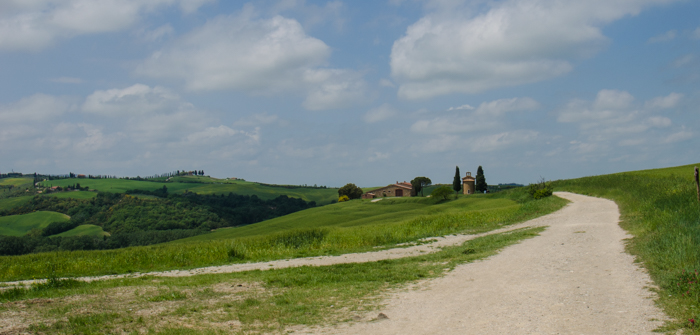
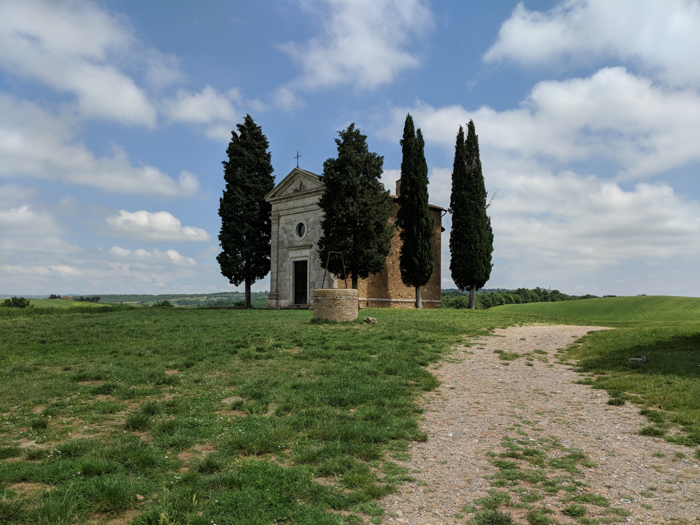
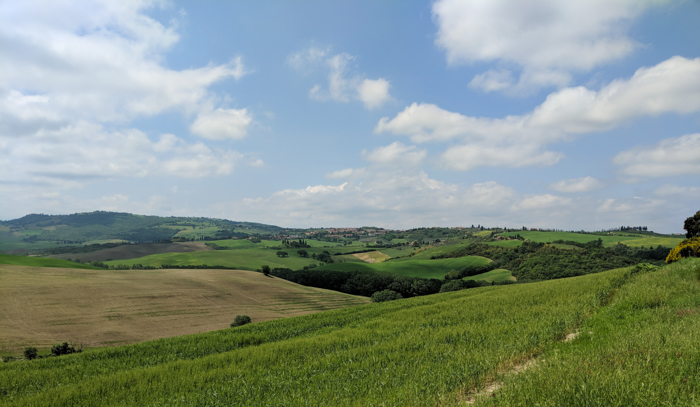
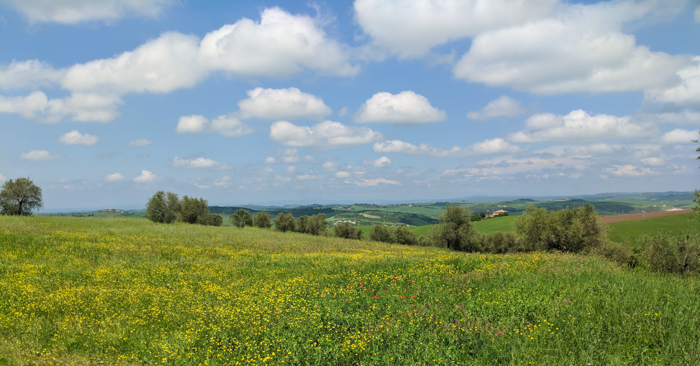
We have a full day in front of us exploring the lovely Val d’Orcia, home to the classic Tuscan landscapes seen here, but we are ready for anything after our substantial breakfast feast!

flowers-val-orcia-tuscany-tours-italiaoutdoorsview-church-tuscany-tours-italiaoutdoorsval-orcia-tuscany-tours-italiaoutdoors

Posted in Uncategorized | 3 Comments