Walk and Wine in Tuscany – Il Palazzone

il-palazzone-sunset-tasting-private-wine-tours-italiaoutdoors

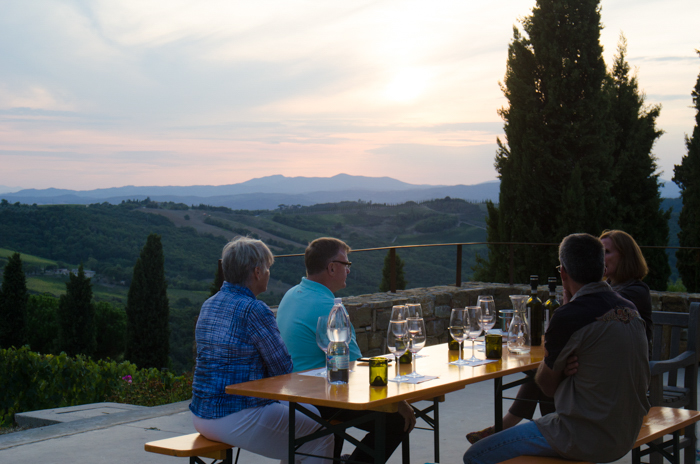
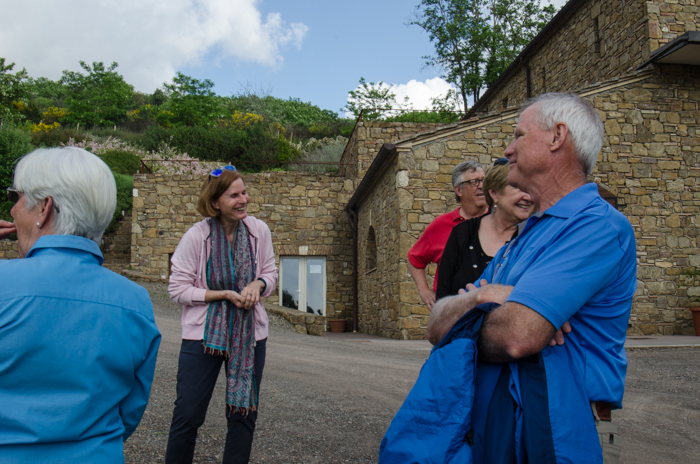
Our final – and often most loved – winery tour and tasting on our walking and cycling tours in Tuscany is Il Palazzone, a producer just outside Montalcino. Not only do we taste amazing Brunello and other wines, but our hosts are some of the most passionate and knowledgeable in the area. Laura Gray, the estate manager, oversees the day to day operation of the winery, but always has time to make our small groups welcome. Esther Mercedes Jürgens of Vino Vistas often leads our evening tours, educating us on the history of Brunello and the work that goes on behind the scenes to produce wines of this quality. I learn something new every visit.
il-palazzone-esther-private-wine-tours-italiaoutdoors

As Esther described during our last visit, Il Palazzone represents what is a ‘typical’ Brunello producer:

  • small
  • family owned
  • foreign owned (foreign = not from Montalcino)
  • wasn’t originally a winery
  • multiple vineyards

My recent article on the History of Brunello will supply the background to anyone who wishes to understand why most producers follow this profile. This article here is all about why Il Palazzone is anything but ‘typical’.
il-palazzone-sign-private-wine-tours-italiaoutdoors

In the mid-1990s, New Yorker Richard Parsons, a frequent visitor to the area, began his search for just the right property to make his beloved Brunello. In 2000, he purchased Il Palazzone. Parsons visits frequently, participating in all the key activities of production, from hand harvesting to blending. In 2003 Laura, a trained sommelier, joined him, recruited from Parsons’ favorite local restaurant. Today, their Brunello wines are regularly rated over 90 points by Wine Enthusiast, Wine Spectator and other well-regarded wine reviewers.
il-palazzone-vineyards-spring-private-wine-tours-italiaoutdoors

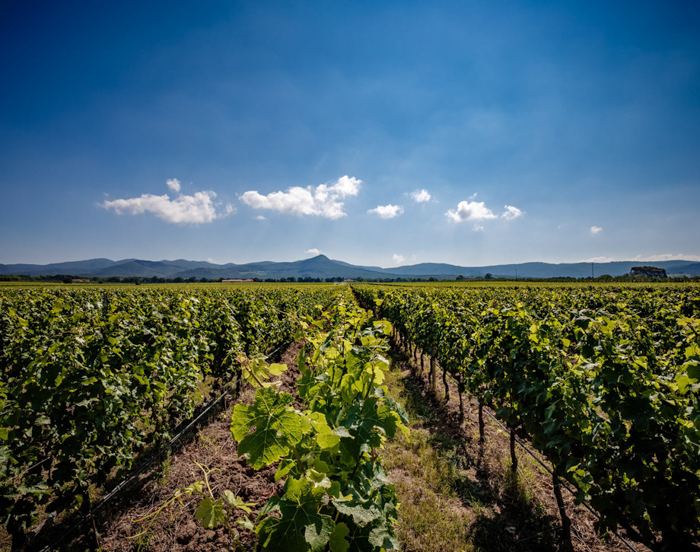
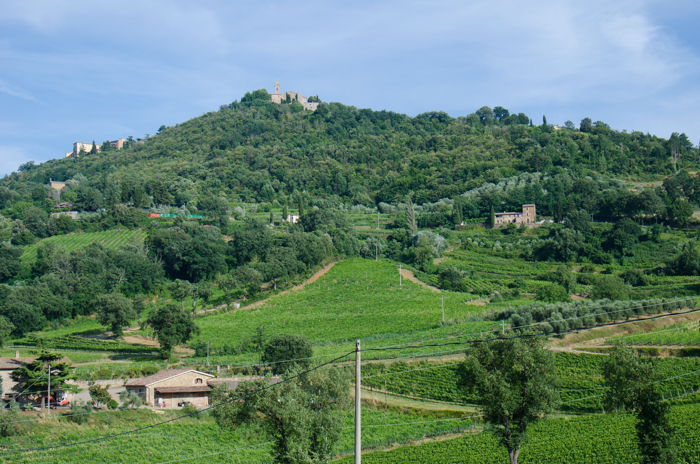
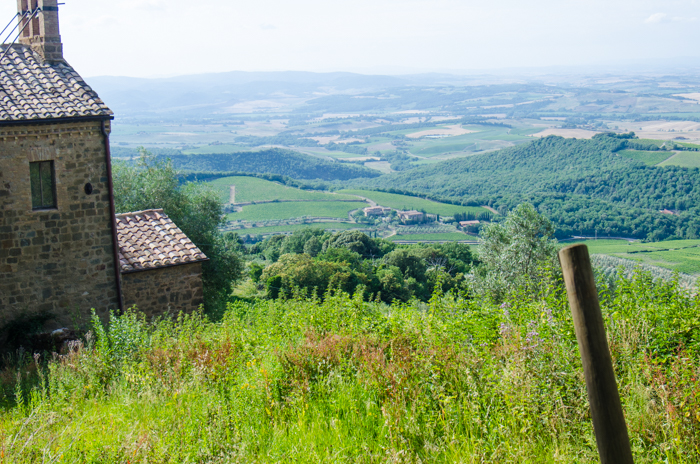
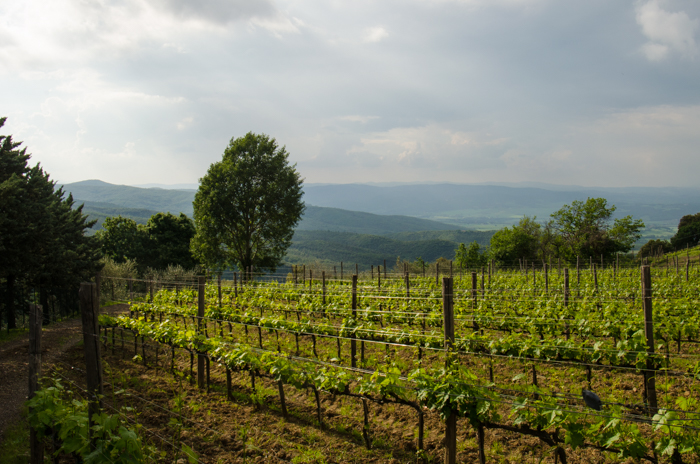
We begin every tour at the source – the vineyard. Currently, Il Palazzone has three separate vineyards in different areas of Montalcino. In spite of its small size, this wine zone boasts a broad variety of terroirs (see my article on the Terroir of Brunello), very important for a grape such as Sangiovese which is extremely dependent on its growing environment. Having three vineyards in three different locations allows the winemakers of Il Palazzone to create blends using grapes from three locations, adjusting each year to best reflect the results of each harvest.
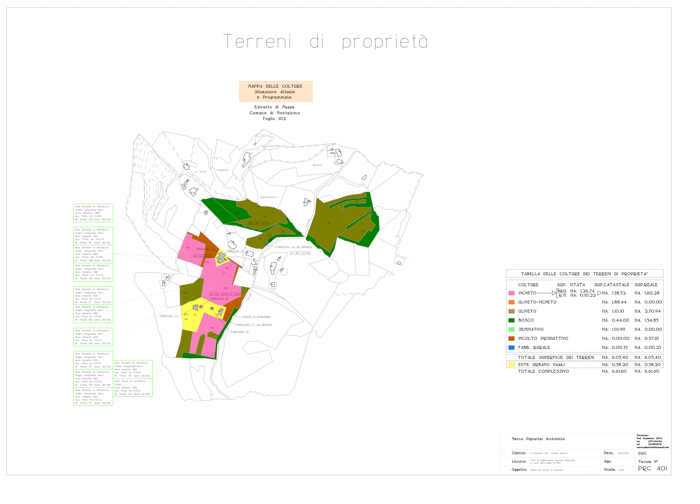
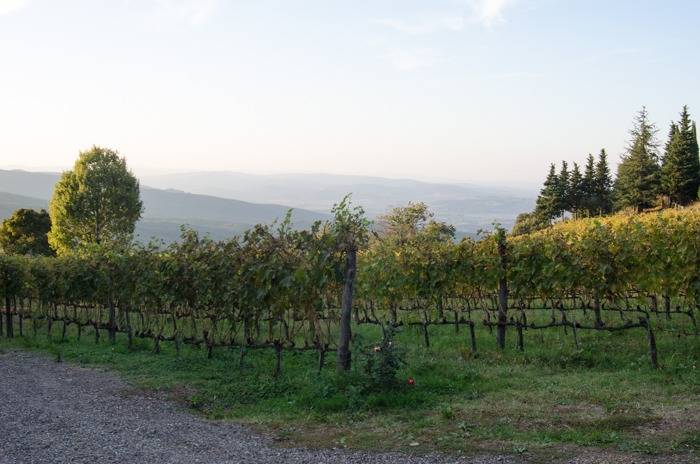
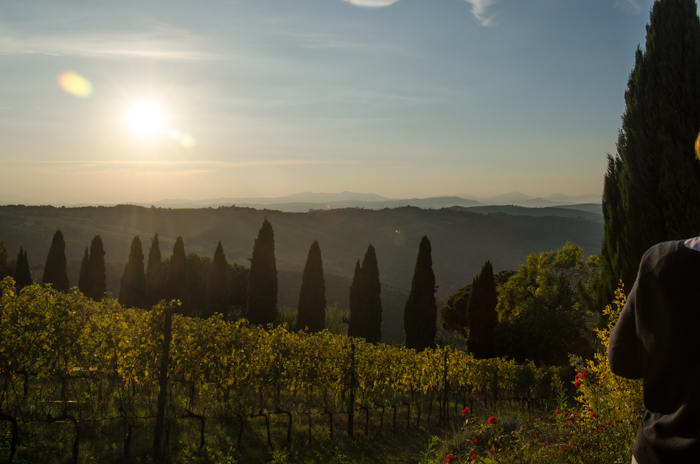
il-palazzone-vineyard-map-private-wine-tours-italiaoutdoorsThe vineyard we visit is their Due Porte vineyard, just outside of Montalcino to the northwest. This is their highest vineyard, at 1700 feet. The elevation and northwest exposure result in later ripening, but excellent ventilation and large diurnal temperature variation results in grapes that are high in fruit and maintain good acidity even in hotter years, necessary for long aging.
il-palazzone-sunset-private-wine-tours-italiaoutdoors

The other two vineyards are located in the southeast corner of the Brunello zone, near Castelnuovo dell’Abate. The Vigna del Capa vineyard is over 700 feet lower in elevation, with a southern exposure. The area here, at lower elevation, emerged much later from the sea that covered this land millions of years ago. The terroir here is noticeably more saline, with minerals such as iron, magnesium and manganese in the soil. The grapes from these vineyard have an incredible minerality, ripen sooner, with more sugars.

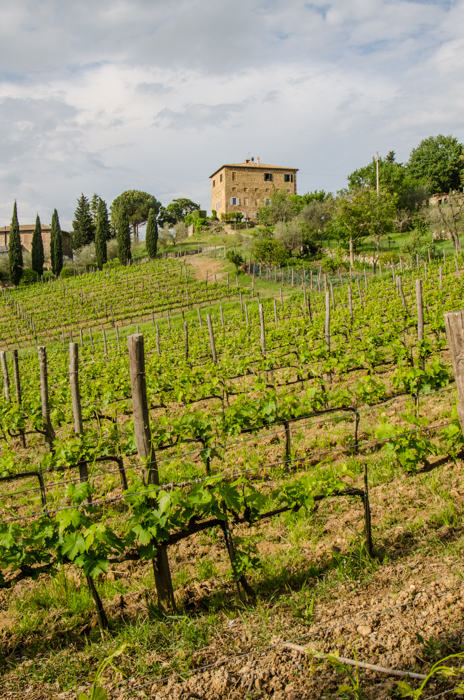
Esther leads us over to the vines, and explains Il Palazzone’s commitment to “responsible agriculture”. While not officially certified organic, they do not use any chemical pesticides or insecticides. The few treatments used are allowed in organic farming. As an example, after a violent hail storm this spring damaged the young vines, they were treated with an algea to assist with recovery.
il-palazzone-young-vineyard-private-wine-tours-italiaoutdoors

We learn about their use of cover crops, which I’ve seen employed by other quality producers with a commitment to sustainability. Cover crops are nitrogen rich legumes such as lupins, fava beans and clover which are planted in alternate rows. These are then ploughed under, enriching and fertilizing the soil. This reduces erosion, improves water absorption and increases organic matter which enhances soil structure and eliminates the need for chemical fertilizers. Cover crops also increase biodiversity, as evidenced by the flowers, butterflies, ladybirds and earthworms in the vineyard.

Cultivating the vines is very hands-on, from beginning to end. From careful pruning, to stripping away individual vine-leaves in order to allow bunches to dry after rain in order to prevent grey mold rather than resorting to use of anti-fungal sprays, painstaking manual labor pays off in the end. Robert Parsons invites a crew of friends to be part of the harvest, putting passionate oenophiles to work in the fields. Many return year after year.
il-palazzone-cellar-private-wine-tours-italiaoutdoors

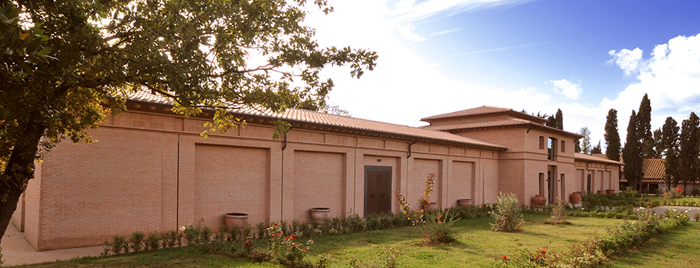
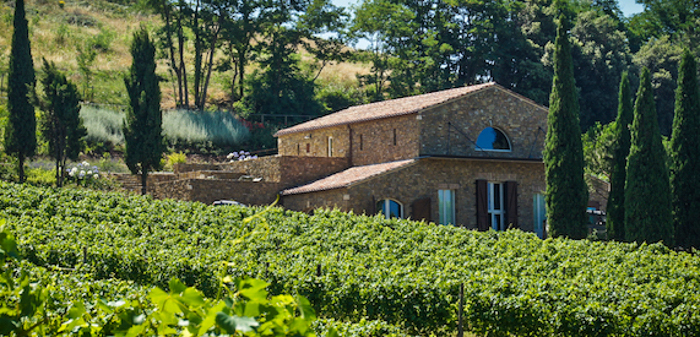
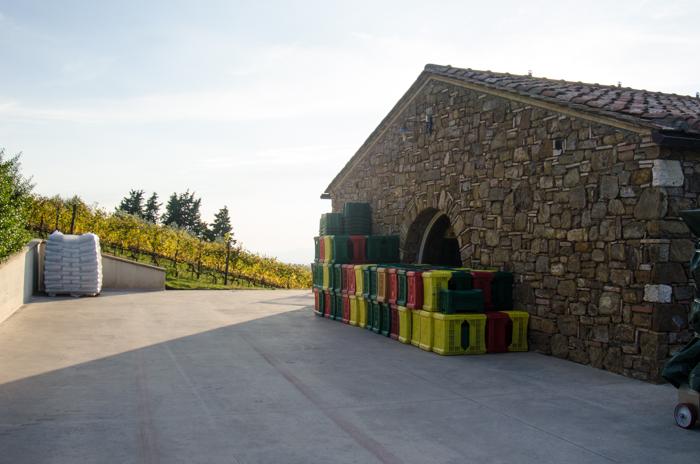
After our tour of the vineyards, we enter the cellar. Built in 2012, the cellar was designed by local architect Marco Pignattai to blend in with the historical architecture of the area. The cellar looks like a church nestled among the vineyards, belying the modern production facility housed inside. We enter the vinification room, built with a gabled roof style used throughout the Val d’Orcia. Green initiatives that were incorporated into this traditional design include recovering rainwater for irrigating the surrounding gardens (irrigation of the vines themselves is only allowed in emergency situations) and cellar work, installing an air exchange system to maintain temperature throughout the seasons and reduce energy use, using 90% recycled bricks for the roof and the walls, and sourcing all the stone for the landscaping from an on-site quarry.
il-palazzone-cellar-back-private-wine-tours-italiaoutdoors

il-palazzone-vinification-press-private-wine-tours-italiaoutdoors

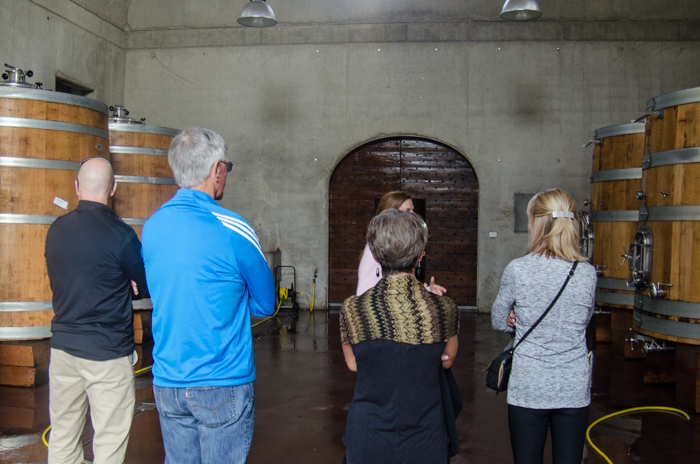
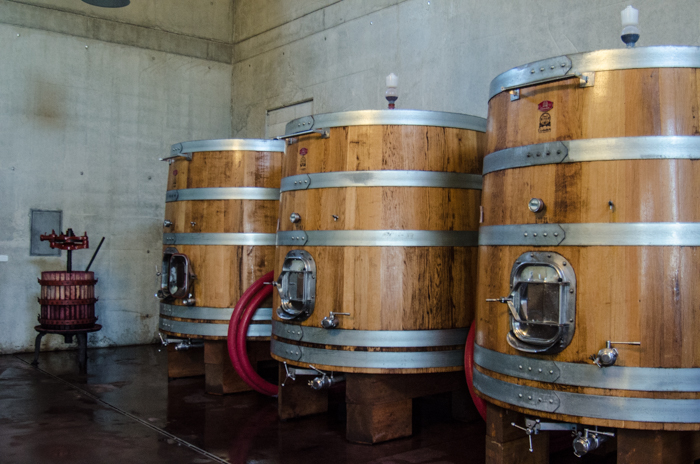
The vinification room holds the fermentation barrels and the traditional press that is used to press the grapes. This room is quite quiet for most of the year, but in mid October, just a few weeks after harvest, it is full of the almost palpable aromas of fermentation as the yeasts go to work, converting the sugars stored in the grapes during the growing season into alcohol and carbon dioxide. We take a few minutes here to soak in the atmosphere and review the fermentation process. Fermentation takes place in beautiful wooden 5000 liter barrels. The tannins in the oak are an anti-oxidant. This, combined with the micro-oxygenation permitted by the wood, results in a clean wine with increased aromatic and tannin stability.
il-palazzone-grape-must-private-wine-tours-italiaoutdoors
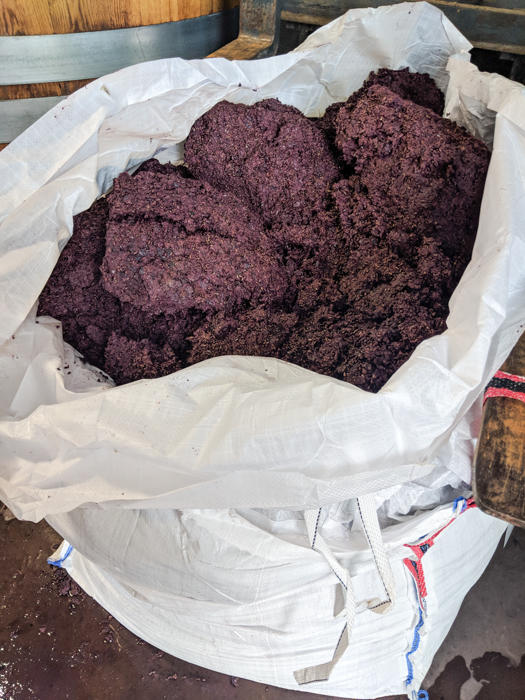
Grape must ready to be made into grappa

il-palazzone-vinification-group-private-wine-tours-italiaoutdoors

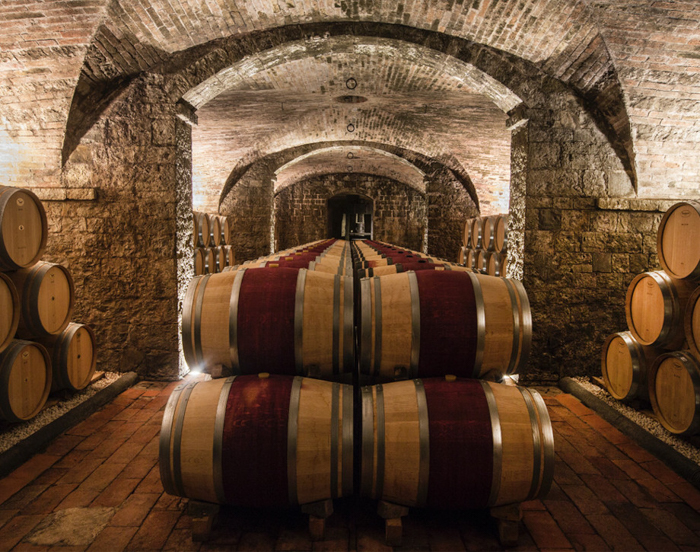
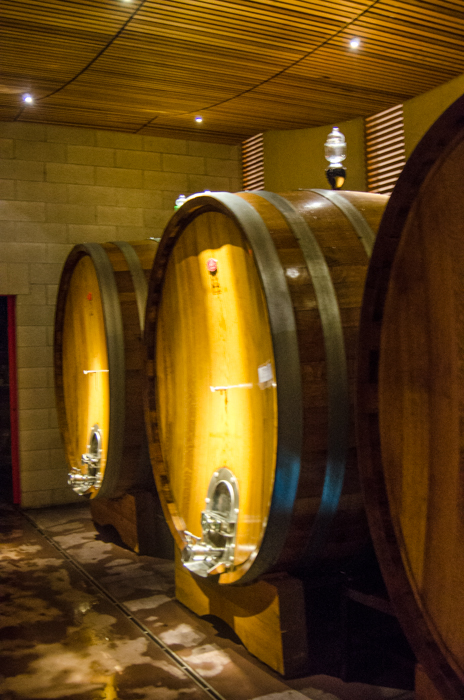
We wander next to the aging room, moving from a large, open, warehouse type room to a peaceful, dark, quiet space – an appropriate environment for a wine to rest and gracefully develop. Above us, an undulating roof made of thousands of small cedar slats, reminiscent of the waves in the ancient ocean that gave birth to this terroir.
il-palazzone-tasting-private-wine-tours-italiaoutdoors

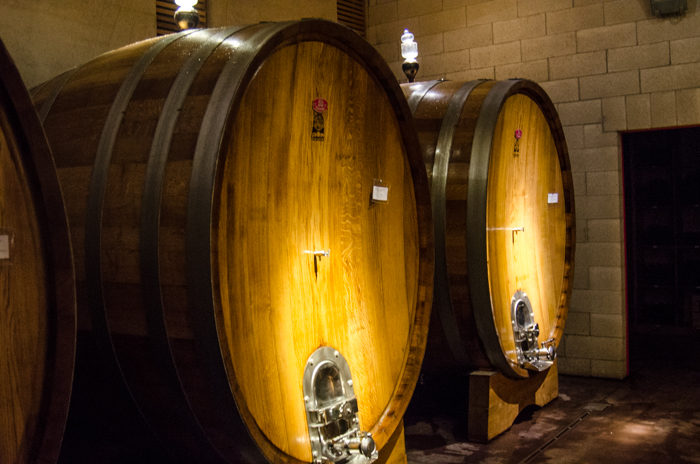
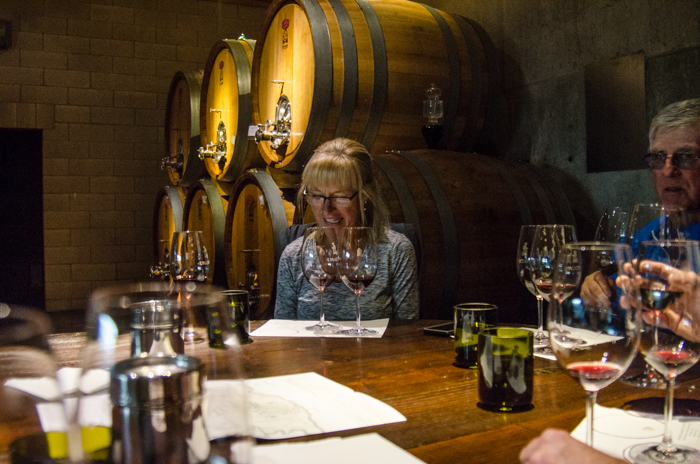
A simple, but elegant tasting is already arranged for us in the center. We are surrounded by the large Slavonian oak “botti” that Il Palazzone prefers for aging. Botti can vary in size, from 1500 to 10000 liters, and perform the so-called “traditional” style of aging. This is in contrast to “modern” style aging which employs smaller 225 liter French oak barriques. The decision to use botti today is an important one, as the cellar must allow ample room – barriques can be packed more efficiently on racks – as well as a large entry for installation. It is not the most cost-effective option. The thick walls, fine-grained Slavonian oak, and less surface area to contact the wine require a longer aeration time, but results in increased complexity, more fruit, and ultimately a wine with more aging potential. Il Palazzone Brunello often spends nearly four years in wood. Current DOCG regulations specify a minimum of only two years. In exceptional vintages the best grapes are devoted to their prestigious Riserva. An Il Palazzone Riserva spends a year more in wood than the vintage Brunello and is released a year afterwards.
il-palazzone-aging-botti-group-private-wine-tours-italiaoutdoors

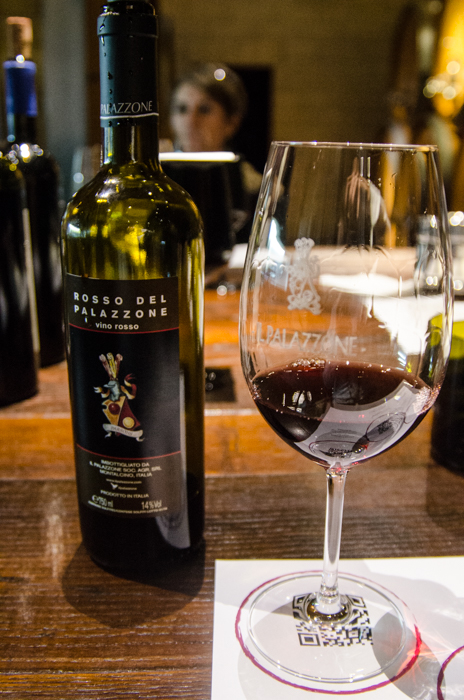
We taste first the Rosso del Palazzone. As mentioned earlier, the three Brunello vineyards are in three very different areas of Montalcino. Consequently each vineyard ripens at a different time and the picked grapes show very different qualities due to difference in soil, age of vines, position and altitude. The ensuing wines are also vinified separately. The team at Il Palazzone creates the ideal composition for each vintage of Brunello by combining the three 100% Sangiovese vineyards in different proportions, depending on whether or not they produce a Riserva and the fluctuations of the growing season.
il-palazzone-rosso-private-wine-tours-italiaoutdoors

Occasionally they choose not to include a barrel of wine from one vineyard or the other in order to maintain a perfect balance in their Brunello. This wine, potential Brunello, is set aside to make their Rosso del Palazzone. During my last visit, we sampled the NV 01/18 Rosso del Palazzone, a 100% Sangiovese Grosso blend of 80% 2016 and 20% 2017 vintages. Deep red in color, with typical flavors of fresh cherry, complemented by herbal notes and a nice minerality. This versatile wine pairs well with a variety of foods, including soups, pastas, grilled meats and cheeses.
l-palazzone-brunello-private-wine-tours-italiaoutdoors

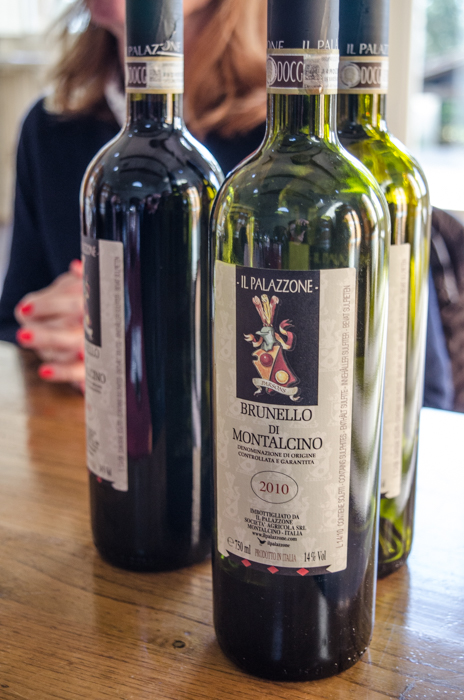
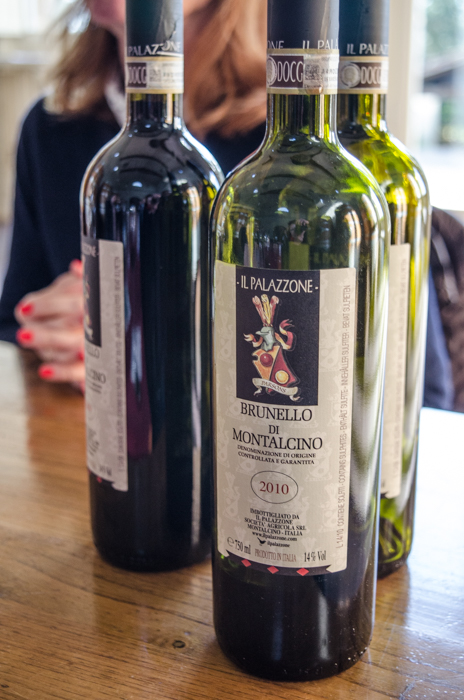
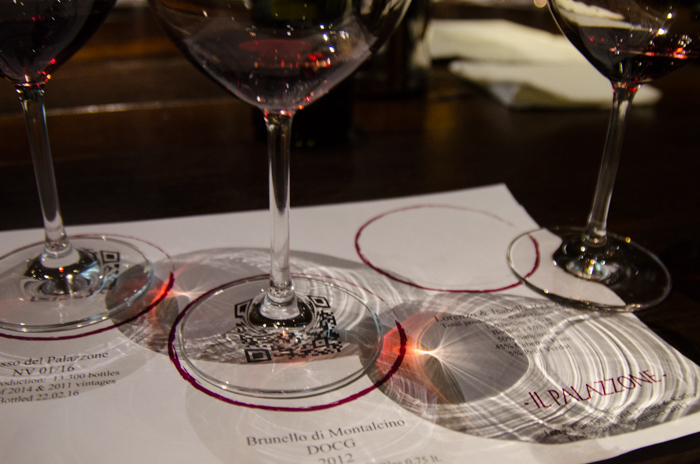
We then sampled two amazing Il Palazzone Brunello, this visit their 2009 and 2013 Brunello di Montalcino. Il Palazzone Brunello di Montalcino DOCG is produced with 100% Sangiovese Grosso grapes. Il Palazzone follows the traditional aging requirements for Brunello, a minimum four years, at least two of which must be in oak.

2009 was a very hot summer, resulting in a warm and rich wine. Il Palazzone decided to balance the effects of the heat with considerably less wood aging than normal: only 34 months compared to their typical 40 plus months. Too much time in wood for a ripe vintage like this would risk exhausting the wine and reducing its aging potential. This wine possesses aromas of fresh cherry, damp earth, and tobacco. Elegant, but subtle, well-balanced. Great with braised meat dishes and game.
il-palazzone-tasting-glasses-private-wine-tours-italiaoutdoors

The 2013 is the most recent vintage, so it has not yet come in to its own, but shows great promise. After hot and torrid 2011 and 2012, the cool, wet and extended spring of 2013 was welcomed. September brought an extended series of warm ventilated days and cool nights, perfect for increasing aromatics, keeping acidity high and alcohol in check. This was given 38 months of aging in the wood botti. The color is a deep ruby with garnet hues. Many aromas develop, from cherry fruit to vanilla to anise and leather. A fresh acidity with a well-rounded structure from start to finish. Pair with a nice beef stew or goulash.

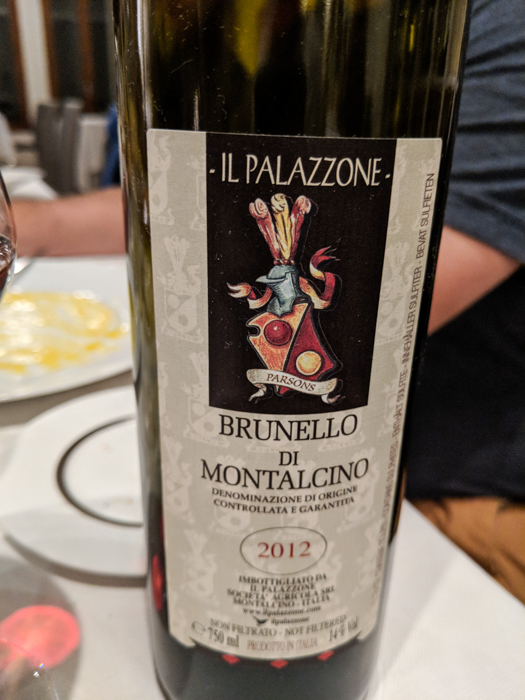
After enjoying a final taste of Il Palazzone Grappa that Esther insisted we try (I never turn down a taste of grappa), we exit the cellar to meet our transfer back to Montalcino. A spectacular moonrise provides the perfect ending to delightful evening. Off to enjoy some more Brunello with our farewell feast in Montalcino – we couldn’t resist finishing with a bottle of 2012 Il Palazzone Brunello!
il-palazzone-brunello-2012-private-wine-tours-italiaoutdoors

Posted in Travel, Tuscany, Uncategorized, Wine, Wine Pairings | Tagged , , , , , , , , , , | 2 Comments

Brasato di Coda di Bue al Barbera – Braised Oxtail in Barbera

braised-oxtails-italy-private-wine-tours-italiaoutdoors

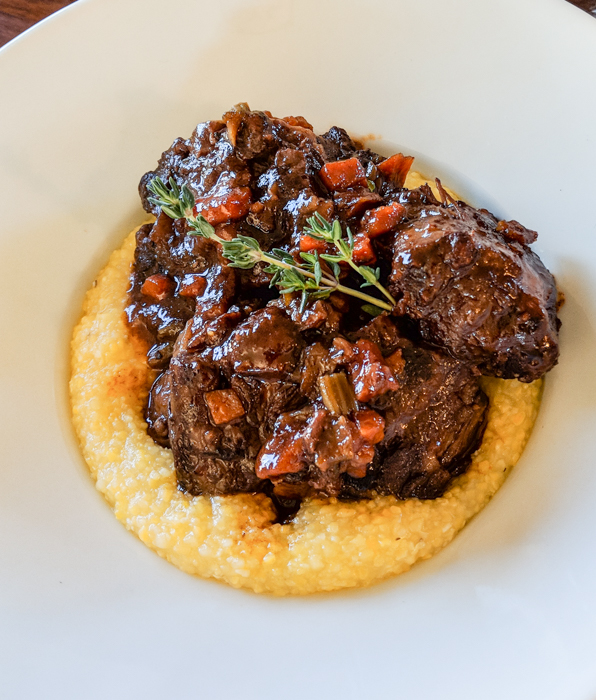
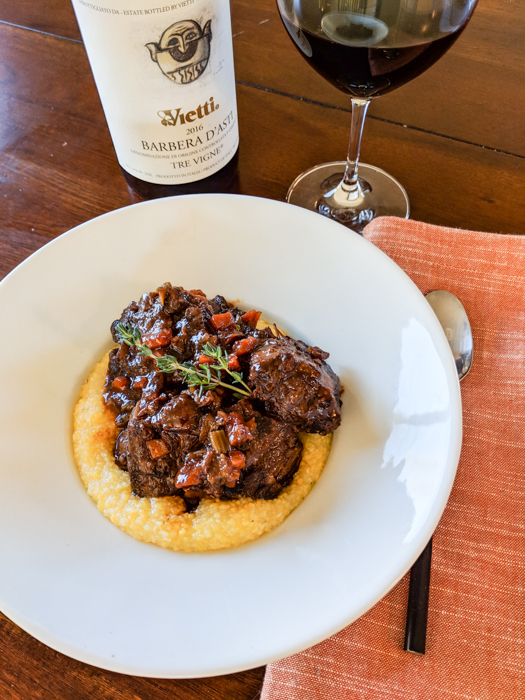
Here’s a dish we see no matter where in Italy our Italiaoutdoors private tours take us – braised beef with Brunello in Tuscany, braised beef with Amarone in the Veneto, and braised in Barolo in Piedmont. A perfect dish for colder months that pairs superbly with the robust red wines that are the signature ingredient. However, here in the US I am hesitant to braise beef in a $60 bottle of wine!

barbera-italy-private-wine-tours-italiaoutdoors

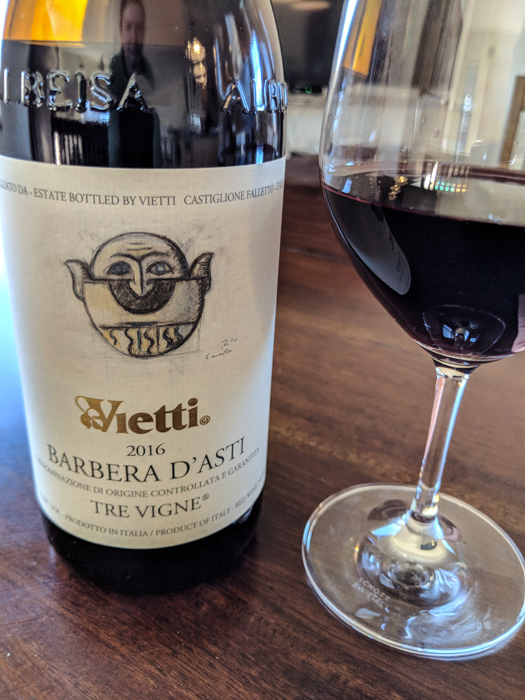
This recipe was inspired by my recent post on Brasato al Barolo, but rather than using an expensive Barolo I selected a bottle of Barbera. Barbera is a red Italian varietal, originally from Piedmont, that is now the third most planted grape in Italy. While Barolo and Barbaresco are typically saved for special occasions, Barbera is “the people’s wine” and enjoyed every day.

oxtails-italy-private-wine-tours-italiaoutdoors

Barbara is very dark in color, but surprising light in taste, with flavors of cherries, strawberries and raspberries. Barbera is low in tannins and high in acidity, which makes it a perfect wine to pair with rich foods. Here I’ve braised oxtail in Barbera. The acidity in the wine cuts straight through the intense flavors and fat, a perfect complement to this luxurious and comforting dish.

serralunga-italy-private-wine-tours-italiaoutdoors

Braising is an ancient method of cooking that slowly transforms tougher cuts of meat into a luscious dish of meat that falls apart with a touch served with a flavorful sauce. The meat is seared, some vegetables may be added for flavor, then the meat is partially submerged in liquid and slowly simmered for hours until the meat literally falls apart. This Piedmont-inspired variation includes chestnuts, very common to find in Italian dishes in the colder months. `

The Italian word brasato comes from brace, meaning “hot coals”, as a heavy pot containing the braise would be buried in glowing coals where the meat would cook for hours.

braised-oxtails-close-italy-private-wine-tours-italiaoutdoors

Brasato di Coda di Bue al Barbera (Braised Oxtail in Barbera)

Serves 6 to 8

2 tablespoons extra virgin olive oil
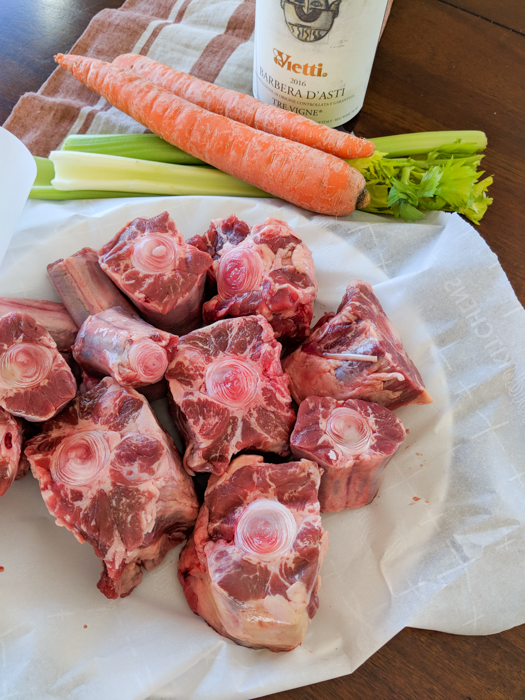
4 pounds oxtails, cut into 3” sections
Kosher salt and freshly ground pepper
1/4 cup unbleached all-purpose flour for dusting
2 medium onions, diced
4 medium carrots, peeled and diced
1 stalk celery, diced
1 clove garlic, minced
2 bay leaves
2 sprigs fresh thyme
1 cup cooked chestnuts, coarsely chopped
6 cups Barbera wine

Season all sides of the oxtails with salt and pepper. Dust with the flour. Heat the oil in a heavy enamel pot or other ovenproof pot; place oxtails in the pot in batches and brown on all sides until well caramelized all over. Remove and set aside.

Lower heat to medium. Add the onions, carrots, celery and garlic, season with salt and pepper, and cook until they begin to soften, 4-5 minutes, scraping up all the browned bits from the pan as they cook. Add the bay leaves and cloves, stir to combine. Return oxtails to the pan, placing on the vegetables. Add the chestnuts.

Add the wine. The wine will come up the sides of the oxtails so that they are half submerged.

Raise the heat to high, when the wine begins to bubble, lower to a simmer and cover. Cook over low heat, turning the meat occassionally, until the meat is very tender, falling apart when you pull it with a fork, and the wine is reduced – this may take 2 1/2 – 3 hours.

Carefully remove the oxtails to a platter and keep warm. Bring the wine and vegetables back to a boil and continue to reduce until it thickens enough to coat the back of a spoon. Taste and adjust the seasoning with salt and pepper if necessary.

Serve with polenta. Spoon some of the sauce over each serving.

Posted in Beef, Braising, Piedmont, Travel, Uncategorized, Wine | Tagged , , , , , , , , , , , , | Leave a comment

Bolgheri Wine Zone – How a Little Known Zone in Tuscany Helped Create the Super Tuscan

bolgheri-vineyard-private-wine-tours-italiaoutdoors

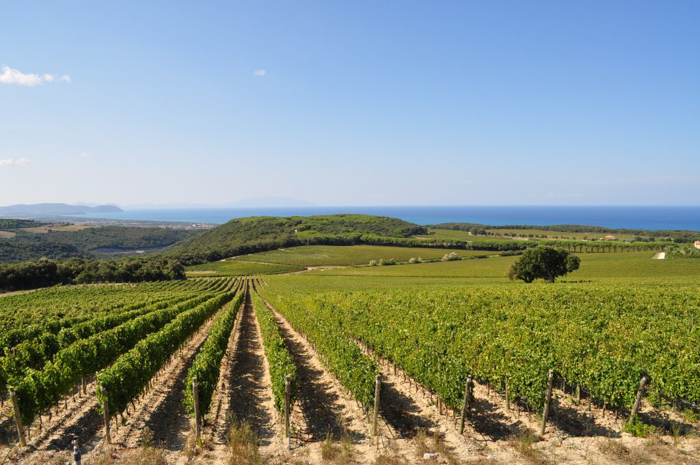
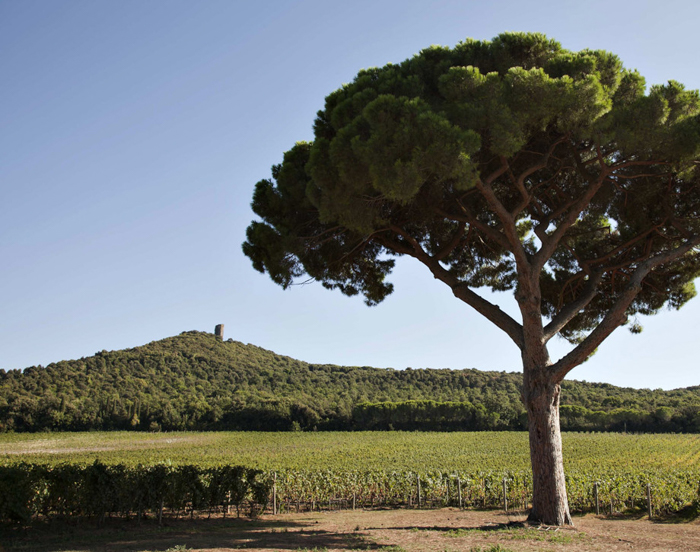
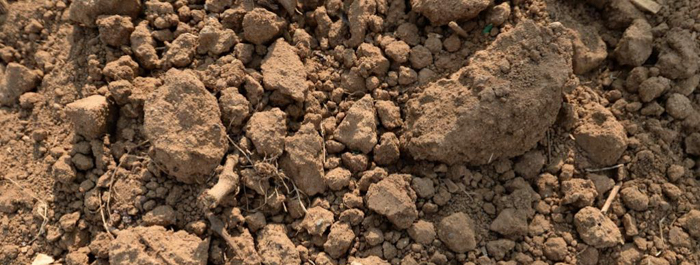
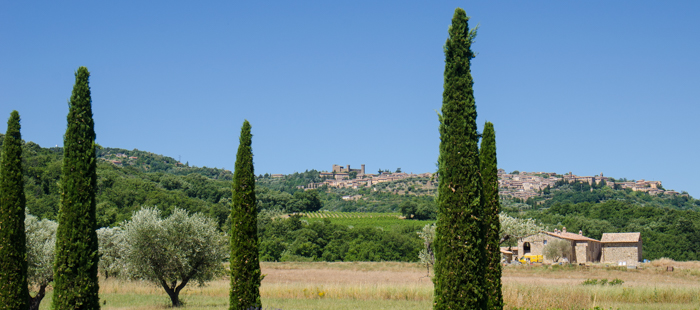
Bolgheri is a relatively new wine zone located on the Tuscan coast, south of Livorno in an area known as Maremma. The zone is named after the town Bolgheri in the north of the region. Here, stony vineyards with high amounts of gravel and patches of clay slope down to the Tyrrhenian Sea, enjoying a dry sunny and breezy climate. In 1983, the Bolgheri DOC was created, defining the few not-very interesting white and rose wines produced here. But just over 10 years later, this obscure little zone would have a profound impact on the Tuscan wine scene.

Italian laws regarding wine production under their DOC system (read my article on Understanding Italian Wines to learn more about this system) dictate, among other things, the specific grape varietals that can be used and their origin. This system can be quite beneficial to maintaining the quality of wines, but can also stall progress, restricting some producers to traditional wines made from indigenous grapes according to long-standing, but outdated techniques. A very frustrating situation for Italian winemakers looking to appeal to an increasing sophisticated international audience.

One region stuck in this situation was Chianti Classico. You may recall the old style Chianti bottles wrapped in a straw covered flask, ironically called a fiasco. In the 1970s this was one of Italy’s most highly exported wines. The traditional recipe for a Chianti, dictated by the DOC system. required a large proportion of white grapes – from 10% to as much as 30%. The result was a fruity, thin wine meant to be consumed young, with no ability to age. An increasingly hard sell to a wine-consuming public rapidly moving towards Bordeaux style wines.

guado-al-tasso-vineyard-private-wine-tours-italiaoutdoors

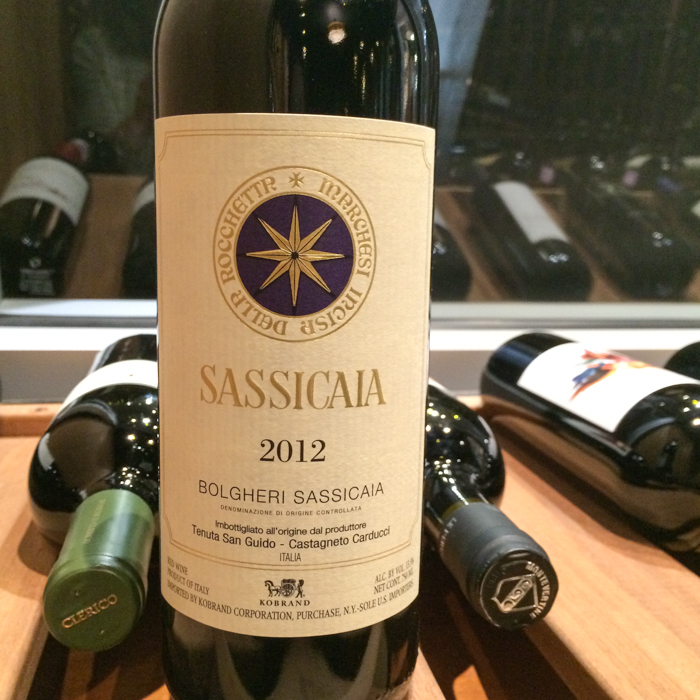
In quiet Bolgheri, the seeds for a revolution were being planted. At the end of World War II, Marchese Mario Incisa della Rocchetta noticed the similarity between the gravel soil of his home in Bolgheri and the famous Bordeaux vineyards of Graves and the Haut-Médoc. He was inspired to plant Bordeaux varieties – Cabernet Sauvignon and Cabernet Franc – on his estate. He expanded his Cabernet plantings in the early 1960s to include his Sassicaia vineyard. The Marchese partnered with winemaker Giacomo Tachis, and his brother-in-law Niccolò Antinori to produce Bordeaux-style wines from his estates in Bolgheri, introducing innovations including temperature controlled environments, steel fermentation vats, and extended aging in French barriques.

bolgheri-soil-private-wine-tours-italiaoutdoors

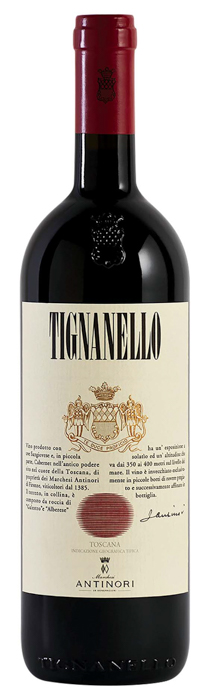
The Antinori family was already a well-established producer in the Chianti DOC, one of the aforementioned producers chafing at the requirements to include white grapes in Chianti. In the early 1970s, Tuscan wine makers, led by the Antinori family, rebelled. Chianti producer Marchese Antinori released a new wine, Tignanello, in 1974. Instead of the typical native grapes required to be blended with Sangiovese to create a Chianti, Tignanello is a blend of Sangiovese, Cabernet Sauvignon and Cabernet Franc from their vineyards in the Chianti region, produced as a Bordeaux style wine, and aged in French oak barrels, no doubt in part inspired by della Rocchetta’s results in Bolgheri.

tignanello-cellars-private-wine-tours-italiaoutdoors

Just four years later, the Bolgheri area jumped out of anonymity to international attention when della Rocchetta’s Sassicaia beat out an assortment of Bordeaux wines at an international blind tasting event held by the UK wine magazine Decanter,.

sassicaia-bolgheri-custom-tours-italy

These high quality wines were targeting a high price, but could only be called a Vino di Tavola, sharing this name with the lowest quality Italian table wines. So the term Super Tuscan was coined, no coincidence in English, to brand these wines, highlighting their superior quality and differentiating them from the lower quality Vino di Tavolo. Italian law finally caught up in 1992, when the government introduced the Indicazione Geographica Tipica (IGT) designation. This designation provides deliverance from the restrictions on varietals of the the DOC and the higher-level DOCG. Still considered lower quality than DOC and DOCG, Super Tuscans now often appear under the Toscana IGT designation.

vineyards-guado-al-tasso-private-wine-tours-italiaoutdoors

The revolution produced change. Today the Bolgheri DOC includes a Rosso blend which can contain native Sangiovese as well as international varietals such as Cabernet Franc, Cabernet Sauvignon, Merlot, Syrah, Petit Verdot. A Bolgheri Sassicaia DOC was created in 1994, for wines from Bolgheri made with a minimum of 80% Cabernet Sauvignon.

Today this small area with immense potential has attracted additional investment from Italy’s most prestigious producers. Tenuta San Guido, the della Rocchetta family estate continues to produce Sassicaia, as well as Guidalberto (currently a Cabernet Sauvignon/Merlot blend) and Le Difese (a 70% Cabernet and 30% Sangiovese blend).

tenuta-san-guido-private-wine-tours-italiaoutdoors

In the 1980s, Lodovico Antinori began planting on the neighboring Ornellaia estate. After developing a stellar reputation for Ornellaia wine, he sold the company to Robert Mondavi. Today, the Tenuta dell’Ornellaia estate is fully owned and operated by the Frescobaldi family.

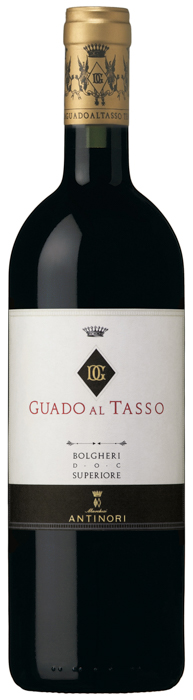
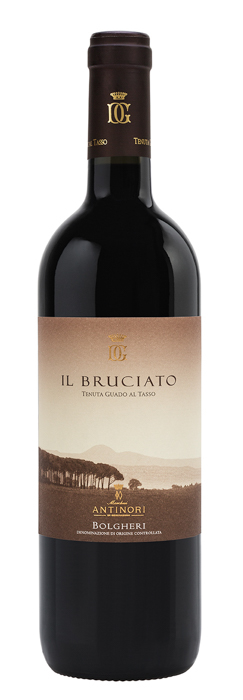
The Antinori family continues to produce wine here in Bolgheri at Tenuta Guado al Tasso. Wines produced here include Bolgheri DOC Superiore wines Guado al Tasso (A blend of Cabernet Sauvignon, Merlot, Cabernet Franc and occasionally a small amount of Petit Verdot) and Matarocchio (100% Cabernet Franc) as well as Bolgheri DOC Il Bruciato (Cabernet Sauvignon, Merlot and Syrah).

Here are some tasting notes for a few of the wines mentioned in this article.

2015 Tignanello

antinori-tignanello-private-wine-tours-italiaoutdoors

Still commanding a reputation as one of the premier “Super Tuscans”, Tignanello is produced at the Antinori estate Tenuta Tignanello in Chianti Classico zone, as an IGT wine. The 2015 Tignanello is intense ruby red in color with purple highlights, with aromas of red fruit and sweet spice. The palate is fresh and lively with gracefully balanced tannins. A harmonious and long-lasting finish.

Blend: Based principally on Sangiovese blended with smaller amounts of Cabernet Sauvignon and Cabernet Franc. Aged fourteen to sixteen months in French and Hungarian oak barrels, some new and others already used once previously. The various lots, fermented and aged variety by variety, were then blended together a few months before being bottled. A further twelve month period of bottle aging occurs before commercial release.

2015 Guado al Tasso Bolgheri DOC Superiore

Guado_Tasso_1

The 2015 Guado al Tasso boasts rich aromas of coffee, tobacco and leather along with pleasing notes of ripe berries. The palate is bright, fresh and luscious with elegant tannins. The finish is full bodied and persistent. 2015 is a vintage with great aging potential.

Blend: A blend of Cabernet Sauvignon, Merlot, Cabernet Franc and occasionally a small amount of Petit Verdot. At the end of the first year of aging in new oak barrels, the wine is blended and put back into oak for a further six months of aging before bottling.

2016 Il Bruciato

antinori-bruciato-private-wine-tours-italiaoutdoors

The 2016 Bruciato is intense ruby red in color. Aromas of ripe red berries, sweet spices, with bright minty notes. The palate is well rounded with pleasant fruit on the long-lasting finish.

Blend: 55% Cabernet Sauvignon, 30% Merlot, 15% Syrah. Aged in small oak barrels for an seven months before being bottled, followed by four months of bottle aging before commercial release.

Posted in Uncategorized | Leave a comment

The History of Brunello di Montalcino – Walk and Wine with Italiaoutdoors


montepulciano-view-custom-tuscany-tour-italiaoutdoors

Immersing ourselves in Italy’s best wine regions, as we do on our Italiaoutdoors Walk and Wine tours, involves discovering these wines from many perspectives – the terroir, the local history and culture, the producers and , of course, a thorough sampling of the wines themselves. I recently wrote a brief article on the distinctive terroir of Brunello, and the important role it plays in distinguishing these unique wines. Here I share a bit about the history of Montalcino, and its evolution from remote rural village to a town that is today internationally recognized as the center of production of one of the world’s most sought-after wines.

montalcino-hillside-italy-wine-tour-italiaoutdoors

A hilltop town in the Siena province of Tuscany, Montalcino was first settled by the Etruscans. The town supposedly takes its name from the variety of oak tree that once covered the hill. During the late Middle Ages, Montalcino became a local center of commerce, owing to its location on the Via Francigena, the main road followed by pilgrims traveling between France and the Holy City. During this time, Montalcino was known for its tanneries and for high-quality leather goods. Wooden wares were also produced, hand crafted from the oak forests that surrounded the town.

At this time, Europe saw the introduction of the sharecropping system, mezzadria in Italian, in which a local farmer tends a plot of land owned by a wealthy landowner, with the landowner receiving anywhere from one-third to two-thirds of the production. The farmer would feed his family on what remained, so his small plot of land would contain many different crops, with the goal of growing as much as possible throughout the year. Grape vines were cultivated, but they would be grown among other crops, not in a vineyard solely dedicated to vines. A local wine was made, a sweet white wine called Moscadello.

montalcino-countryside-italy-wine-tour-italiaoutdoors

In 1260, Montalcino was annexed to Siena, and thereafter was affected by the ongoing conflict between Siena and Florence. In 1555, Siena was conquered by Florence under the rule of the Medici family and the rulers and leading citizens of Siena along with their French Allies, took refuge in Montalcino. The city held out for 4 years, until a peace accord was reached, but the siege took its toll and left the city impoverished. The city remained part of the Duchy of Tuscany until reunification of Italy in 1861. Around this time a few wealthy local landowners in the area started experimenting with the production of a red wine. Among them was a pharmacist named Clemente Santi.

Wine production was very different in the mid-1800s. As mentioned earlier, grapes were not cultivated in their own vineyards, with careful trellising; they were interspersed with other crops and trellised to whatever was nearby. Grapes were harvested quite early, when more acidic and not fully ripe, to thwart thieves and avoid any crop loss due to inclement fall weather. After harvest, grapes were not de-stemmed before fermentation, so red wines were rough and bitter. White wines were blended into reds to “mellow” it into something more drinkable. Wine was produced in old barns or other outbuildings with minimal attention to sanitation and no temperature control.

Clemente Sandi was an outspoken critic of the winemaking techniques of that time, including the early harvest and the use of mixed fields of crops. He planted the first real grapes-only “vineyard” in Montalcino, and in 1869 won two silver medals for his red wine. But perhaps his greatest contribution was his grandson, Ferruccio Biondi Santi, who built on Clemente’s discoveries to create the modern-day Brunello.

sangiovese-vineyards-italy-wine-tour-italiaoutdoors

By the mid 1870’s, growers in the area were beginning to produce wines solely from the local red grapes, called “Brunello”, little brown ones. Ferruccio focused heavily on the Brunello variety, identifying the best performing plants on his estate. At the time, both powdery mildew as well as the louse phylloxera threatened vineyards across the country. Ferruccio identified the plants most resistant to these plights and replanted his vineyards with them. He eventually planted vineyards with his Brunello shoots grafted onto US sourced root stock, which is impervious to the phylloxera louse. Other innovations included training systems that were lower to the ground to better capture heat from the earth, and higher planting density to force plants to compete for nutrients and develop deeper root growth. He adopted de-stemming for his all-red grape based wines, longer fermentation on the skins, and began barrel aging and strict quality control. These approaches produced wines with more structure and stability, allowing the wine to be exported to far-away destinations. Fans of Biondi Santi’s Brunello increased, and it eventually became the most expensive wine produced in Italy.

World War I saw a huge decline in the market for premium wines, and only a few producers survived. Ferrucio’s son Tancredi took over the estate upon his return home from the war. Just as the local wine economy began to recover, phylloxera hit again in the 1930s, destroying almost all the vineyards in Montalcino. And again, as recovery from this began, World War II started, once more crushing the market for these exclusive wines.

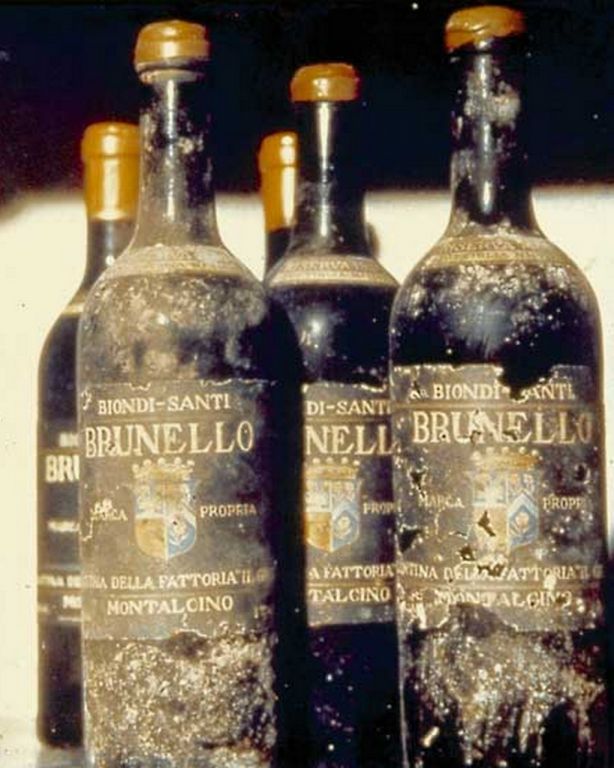
During this war, the front passed right through Montalcino, laying waste to the countryside. Any wine discovered in local cellars by desperate troops was quickly consumed. Tancredi and son Franco Biondi Santi took many years worth of their Riserva Brunello wines and walled them up in a remote corner of their cellars, hiding them from the forces passing through. Unearthed years later, the rediscovery of these wines provided the ultimate proof of the longevity of Brunello – they are still amazing.

Following the war, production slowly recovered. In 1966, Brunello became one of the first registered DOCs in Italy, and the following year 13 producers were back in business, producing 150,000 bottles that year. in 1969, a state dinner held by the Italian Embassy in London put Brunello front and center on the world-wide stage. Biondi Santi’s 1955 Brunello was served, and was a sensation. The notoriety brought along a nice increase in price for the wine, and an investment in the expensive cellars needed to house a wine that requires 4 years of aging in wood didn’t seem so ludicrous. The early 70s saw a huge increase in the number of acres planted for Brunello.

rosso-di-montalcino-italy-wine-tour-italiaoutdoors

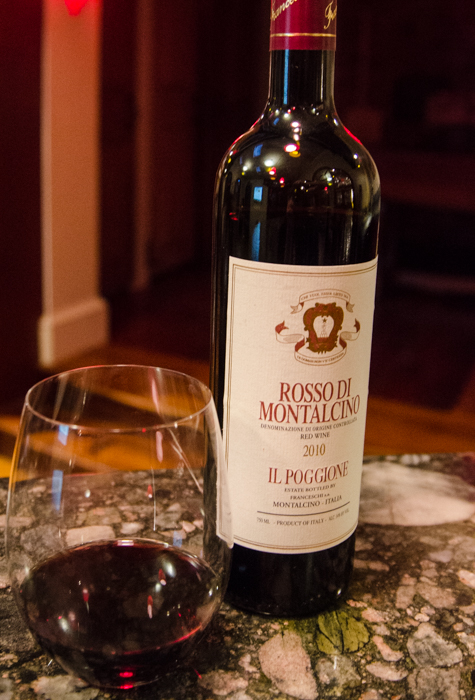
During this same time, the Consorzio del Vino Brunello di Montalcino was founded to safeguard the reputation and quality of Brunello. Many members had just planted new vineyards and were otherwise expanding their operations, and wanted a more immediate revenue stream. They were interested in a wine they could sell earlier, especially one they could sell with the prestigious “Brunello” as part of it’s name. They won in the short term, selling this younger wine under the name “Vino Rosso dai vigneti di Brunello” (red wine from the Brunello vineyards), but today this wine is known as Rosso di Montalcino.

montalcino-producers-italy-wine-tour-italiaoutdoors

In the 80s and 90s demand for Brunello outstripped supply. Vineyard locations and acreage were strictly regulated by the Consorzio, but they were under constant pressure to allow new producers to enter and existing producers to expand. A devastating frost in 1984 destroyed many of the local olive orchards. Farmers looking to rebuild faced a choice – replant olive trees, that don’t produce for 10 years, or plant vines, which produce in 4. As you can guess, many of those who elected to rebuild than to sell to hungry outsiders chose the later.

Large producers from outside Montalcino wanted to invest here, including Antinori, Frescobaldi, and the Mariani family from New York, who started Banfi. In 1997 the Consorzio opened up the Brunello registry of vineyards and expansion occurred, including vineyards at lower elevations which are hotter, and produce very different wines – higher in alcohol, less acidity, and typically not as age-worthy. These newer ‘outside’ producers, looking to achieve the recognition and status just being awarded to Super Tuscans that were all the rage, modeled their operations after the French style of wine-making – international varietals, aging in smaller French barriques rather than the traditional large botti, use of outside consultants who favor the French/Bordeaux style.

botti-italy-wine-tour-italiaoutdoors

Critics, finding Bordeaux-style wines familiar territory, loved these wines, and gave them high marks, much higher than the traditional style Brunello. But temperamental Sangiovese can be weighed down with the new oak in the smaller barrels, and are less vibrant, less cherry, lack minerality. After only a few years of aging, the traditional Brunello wines are just beginning to come into their own, while some “new” styled Brunello were already past their prime. In 2008 the ultimate betrayal of the traditional Brunello; several large producers were accused of blending other grapes into their wines, in a scandal called Brunellogate. Their production was confiscated while each were investigated and authenticity confirmed. Post Brunellogate, the Consorzio has had several internal debates on whether or not to allow other grapes to be blended into Brunello, but thankfully they have remained true to their tradition – today Brunello di Montalcino still proudly maintains their unique identity as the only 100% Sangiovese wine in Italy, Sangiovese in purezza.

palazzone-brunello-italy-wine-tour-italiaoutdoors

Today, visitors can experience this history by tasting the wines – sample a Brunello made in a traditional style, aged in large botti, and compare to a newer style aged for a time in barrique. Try producers from the original, higher altitude vineyards near the town itself, and compare to others from newer vineyards in the southwest, or in the southeast near Abbazia Sant’Antimo. Sample a blend of Sangiovese from Montalcino mixed with other grapes, which can be sold under the newer Sant’Antimo DOC. For our tour guests, our morning explorations through this lovely countryside provide us the knowledge and first-hand experience to understand and appreciate these wonderful wines. And we thought we were just having fun 🙂

Many thanks to Esther Jurgens at Vino Vistas, who has introduced many of our groups to the secrets behind Brunello wines. For those who wish to learn more about Brunello, I highly recommend “Brunello di Montalcino” by Kerin O’Keefe.

Posted in Travel, Tuscany, Uncategorized, Wine, Wine Pairings, wine tastings | Tagged , , , , , , , , , , , , , | 1 Comment

Sbrisolona – Crumbly Cake from Mantova

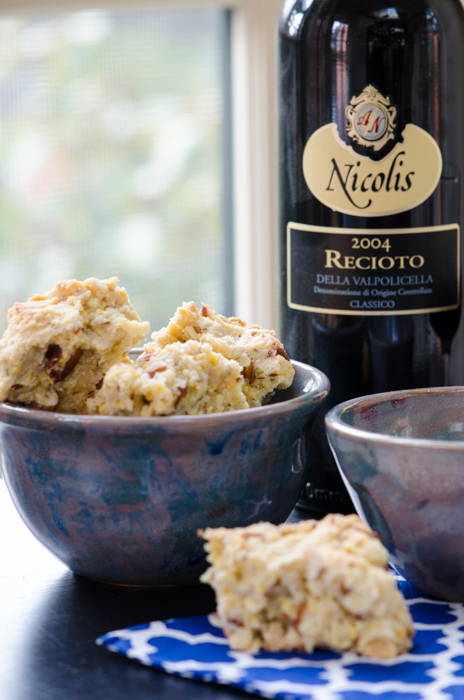
sbrisolona-private-italy-tour-italiaoutdoors

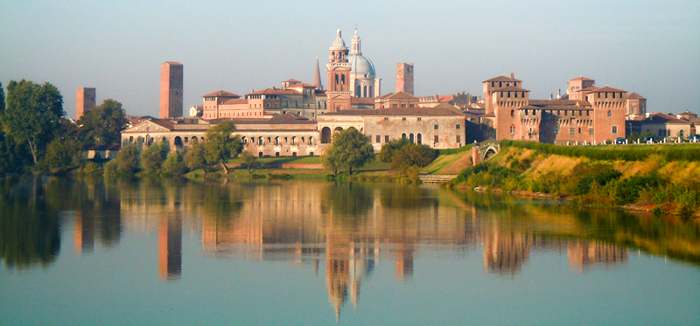
This fall we led a private group cycling tour through the Amarone and Valpolicellla wine areas, south through lovely Borghetto sul Mincio, ending the week in magnificent Mantova, one of the most picturesque cities in Italy. We enjoyed a week of unparalleled wines paired with amazing foods. Many of our meals ended with a dessert wine, paired with a local sweet biscuit or cookie. The unique regional dolce (sweet) that followed us all week is Sbrisolona.

mantova-private-italy-tour-italiaoutdoors

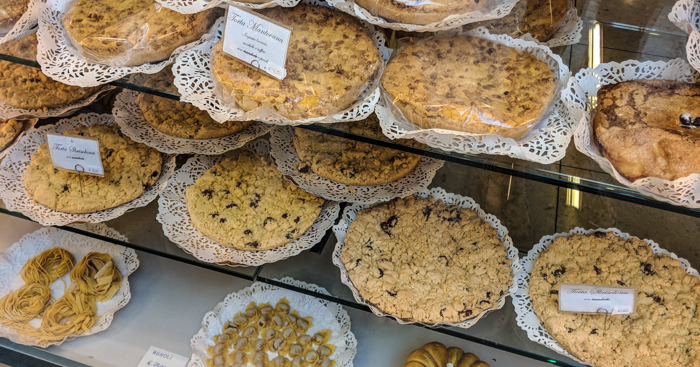
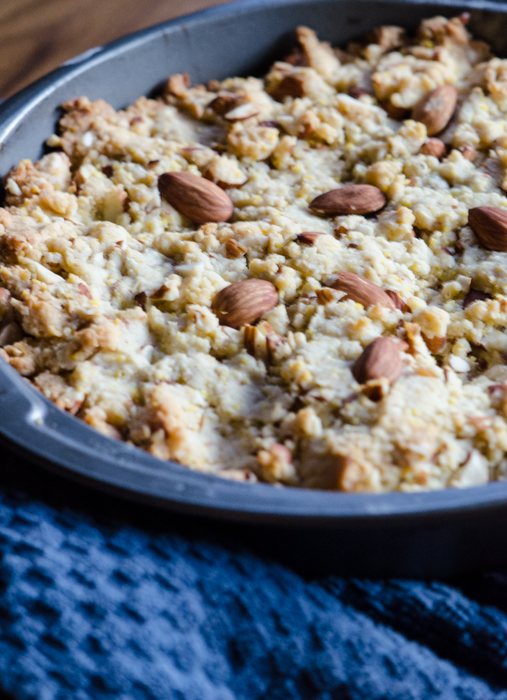
The tongue-twisting name comes from the Italian verb sbriciolarsi, which means ‘to crumble’ or ‘to fall into pieces’.  It is front and center in the bakery window in Mantova, its home, but spread throughout the whole province of Verona thanks to its perfect match with the dessert wine Recioto. Farmers in the surrounding countryside made a hard and crumbly dessert from items they had on hand – crushed grains such as millet and cornmeal, nuts they could forage, and lard. Cooks for the wealthy ruling Gonzaga family of Mantova enriched the recipe with additions of expensive, hard to obtain ingredients like almonds, butter, sugar and spices. Today these luxury items, no longer so exclusive, are the standard.

mantova-bakery-private-italy-tour-italiaoutdoors

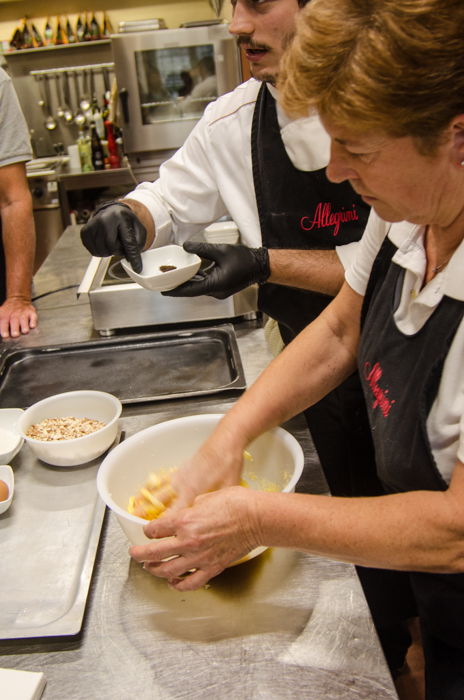
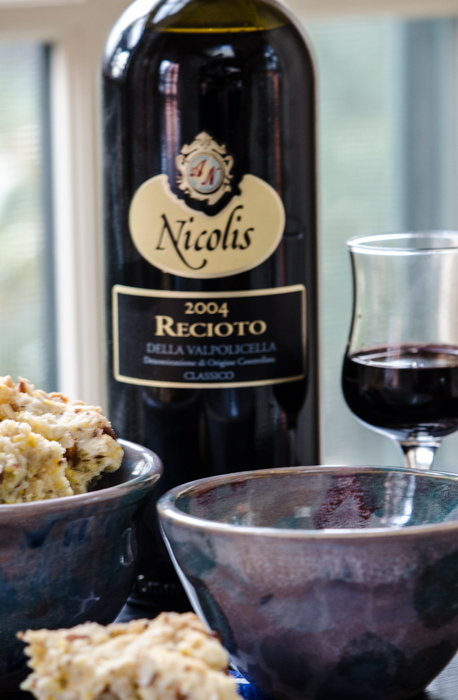
We had the great fortune to learn how to make this treat from two Italian chefs on our visit, during our stay at Allegrini’s luxurious Villa della Torre. The recipe could not have been easier, just mix the ingredients and bake. It is cooked an a cake pan, but the end result is more of a cookie than a cake – instead of cutting it, you break it into pieces and enjoy with a glass of Recioto della Valpolicella. Which we did!

sbrisolona-class-private-italy-tour-italiaoutdoors

A bit of background on Recioto. The name ‘recioto’ comes from ‘recie’, ‘ears’ in the local dialect. The ‘ears’ of the grape bunch are those lobes on the top, which receive the most sunlight, and are therefore riper and drier with more concentrated sugars. These are separated from the remainder of the bunch, and are used to produce this sweet dessert wine. Today, this process is a bit more efficient, as the entire bunch is picked and the grapes are air dried in a room to concentrate the sugars. This technique (passito) produces a raisin that is then fermented to produce a sweet wine. Fermentation of wine is the process of converting sugar to alcohol. In Recioto wines, the fermentation process is stopped, typically by chilling the wine, before all the sugar is consumed, resulting in a sweet wine.

recioto-private-italy-tour-italiaoutdoors

Legend has it that, in the early 1900s, a local producer forgot about a barrel of Recioto fermenting away in his cellar. When it was eventually discovered, the fermentation process had totally consumed the sugars, resulting in a dry wine. Tasting the wine that was expected to be sweet, and instead finding a bone dry, high alcohol, full-bodied wine, the taster exclaimed “Amaro!” (bitter), and Amarone wine was born.

Sbrisolona

11 ounces all-purpose flour
3.5 ounces coarse yellow cornmeal
9 ounces butter
5.5 ounces sugar
9 ounces almonds (shelled but with their skin) coarsely chopped
10 whole almonds for decoration
1 egg
pinch of salt

Preheat the oven to 325° F. Smear the bottom and sides of a 9” cake pan with butter, dust with 1 tablespoon of the flour and set aside.

Mix the flour, yellow cornmeal, chopped almonds and salt in a bowl.

Melt the butter. Whisk the sugar with the egg and melted butter in a separate bowl, then transfer to the bowl with the almond mixture. Mix all ingredients slowly by hand until homogeneous.

Put the mixture into the cake pan in handfuls, rubbing it between your palms to make its characteristic uneven surface. Add some whole almonds on top of it and put the cake into the oven. Bake it for about 40 minutes.

Sbrisolona is not cut with a knife but simply broken into pieces by hitting it with your fist. It is ideally matched with Recioto, but you can also serve it with a generous sprinkle of Grappa.

sbrisolona-whole-private-italy-tour-italiaoutdoors

Posted in Baking, Travel, Uncategorized, Veneto, Wine, Wine Pairings | Tagged , , , , , , , , , , , , , | 1 Comment