 Venetians themselves are not really meat eaters; their watery surroundings naturally drove them to a seafood based cuisine. However, as you move inland from Venice to the mainland, the low-lying wetlands that exist around the Po, Brenta, and Adige river valleys were the perfect breeding ground for a wide variety of waterfowl. Our Italiaoutdoors Food and Wine cycling tours take us along many of these same rivers. These various species of waterfowl were value and hunted by the locals for hundreds of years. For Hemingway enthusiasts, recall Major Cantwell revisiting the last romance of his life in Venice as he huddles in a duck blind during a hunt (well, the blind was actually in Trieste, you get the idea – his last romance was in Venice.)
 All along these waterways, we see the food products used in the local cuisine, from rice for risottos, to fresh-water fish, to waterfowl. Traditionally there was an enormous variety of water birds that were hunted and used for food. Each would be prepared in a particular way, designed to exhibit (or hide) its particular characteristics. Nowadays, we see recipes that call for “duck”, years ago, you would prepare each particular variety in a slight different way. The most prized species of duck “germano reale”, the familiar Mallard in english, even had different preparation techniques for the female (boiled, and used for stock) than the male (roasted). One would have then another specific recipe for the pintail duck, another for the teal, the tufted duck, the coot, and so forth. Waverly Root describes recipes in which the not-particularly attractive taste of heron and curlew is disguised with a lengthy marinade in white wine, lemon juice, consomme and herbs.
 The varied assortment of wild species in the region is on the decline, due to pollution, shrinkage of wetlands due to agriculture and other development, unsustainable hunting, and invasive species, as the mallard is sometime considered to be due to the fact it can successfully interbreed with other wild species.
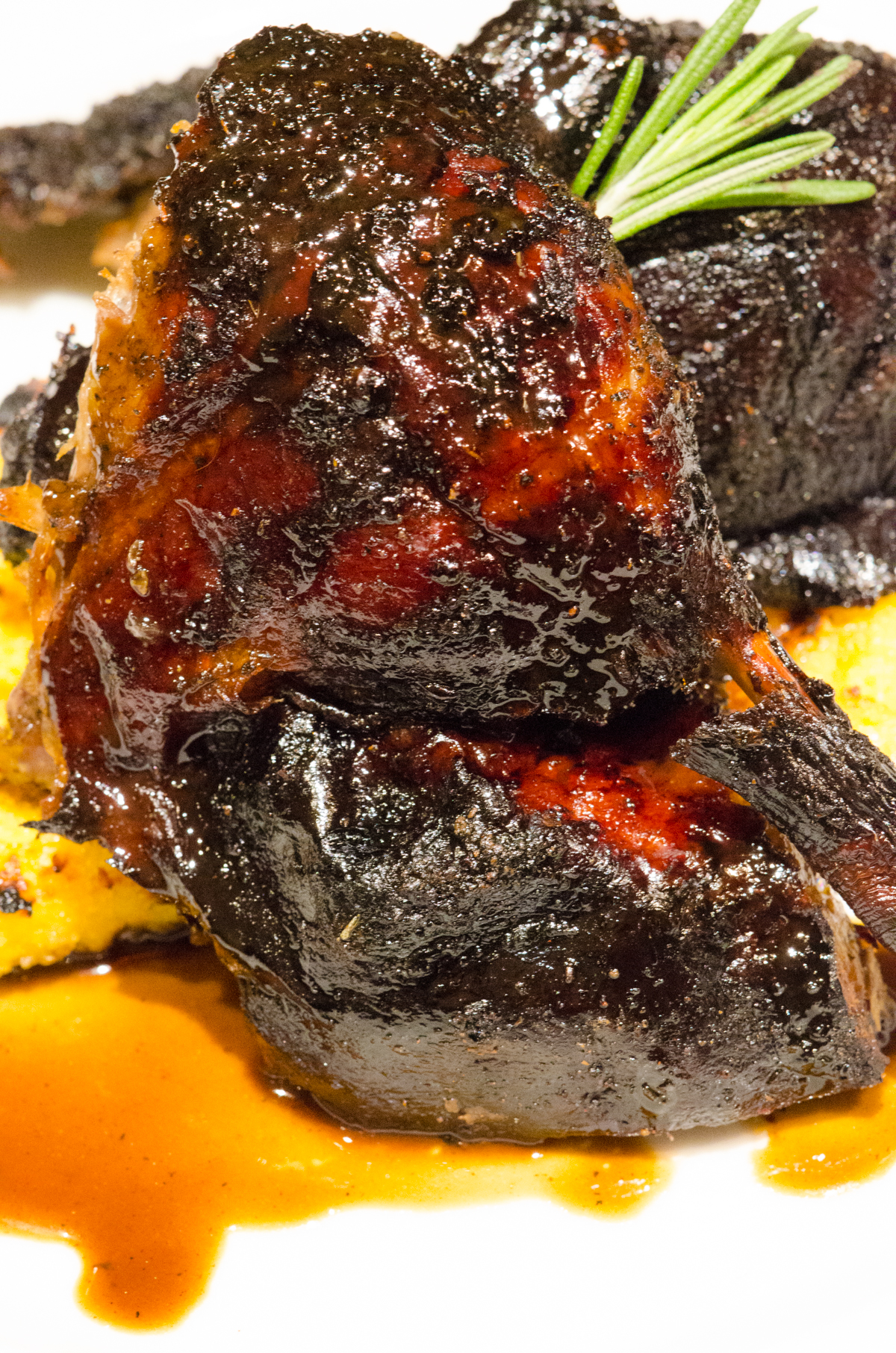
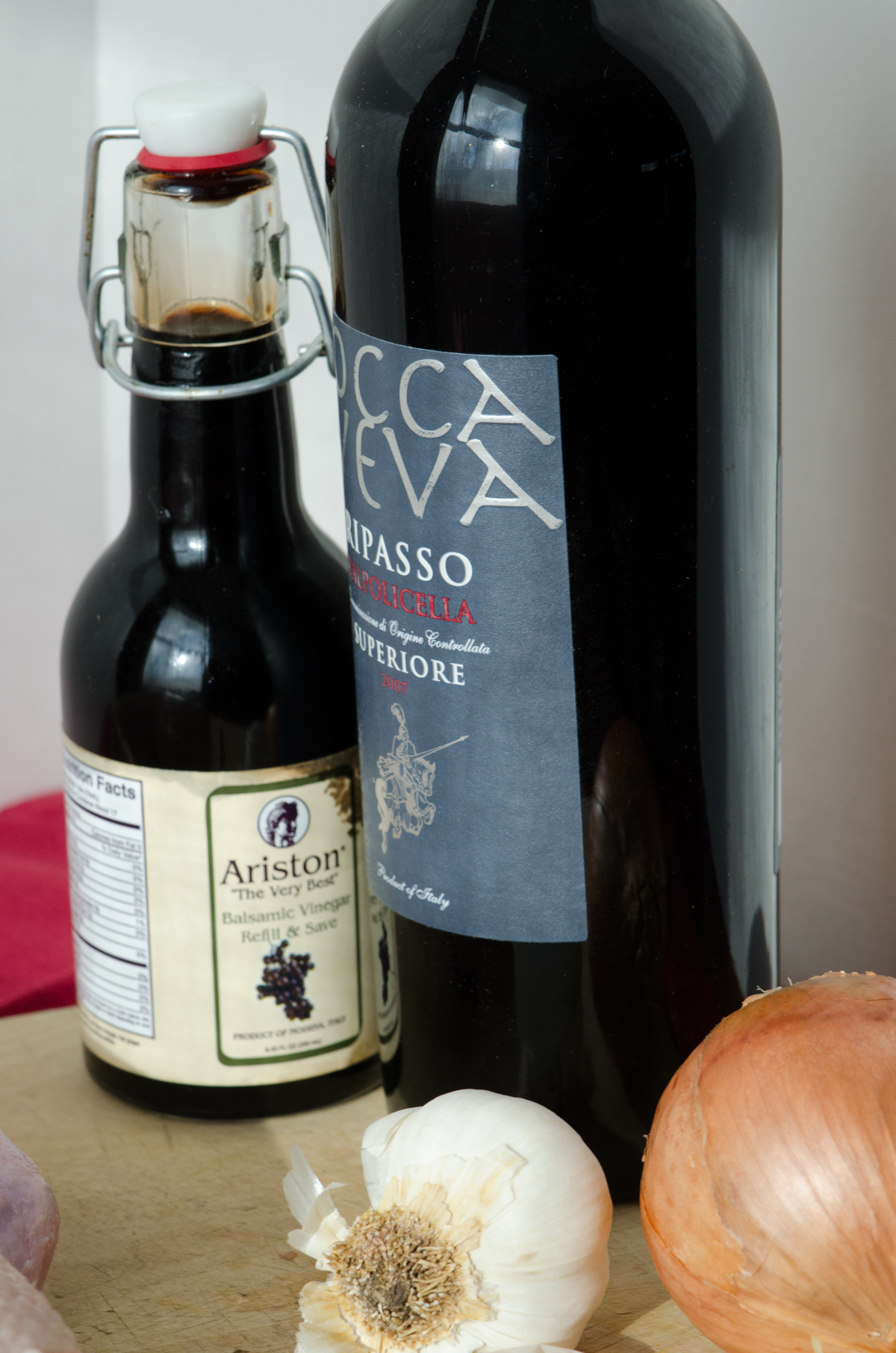
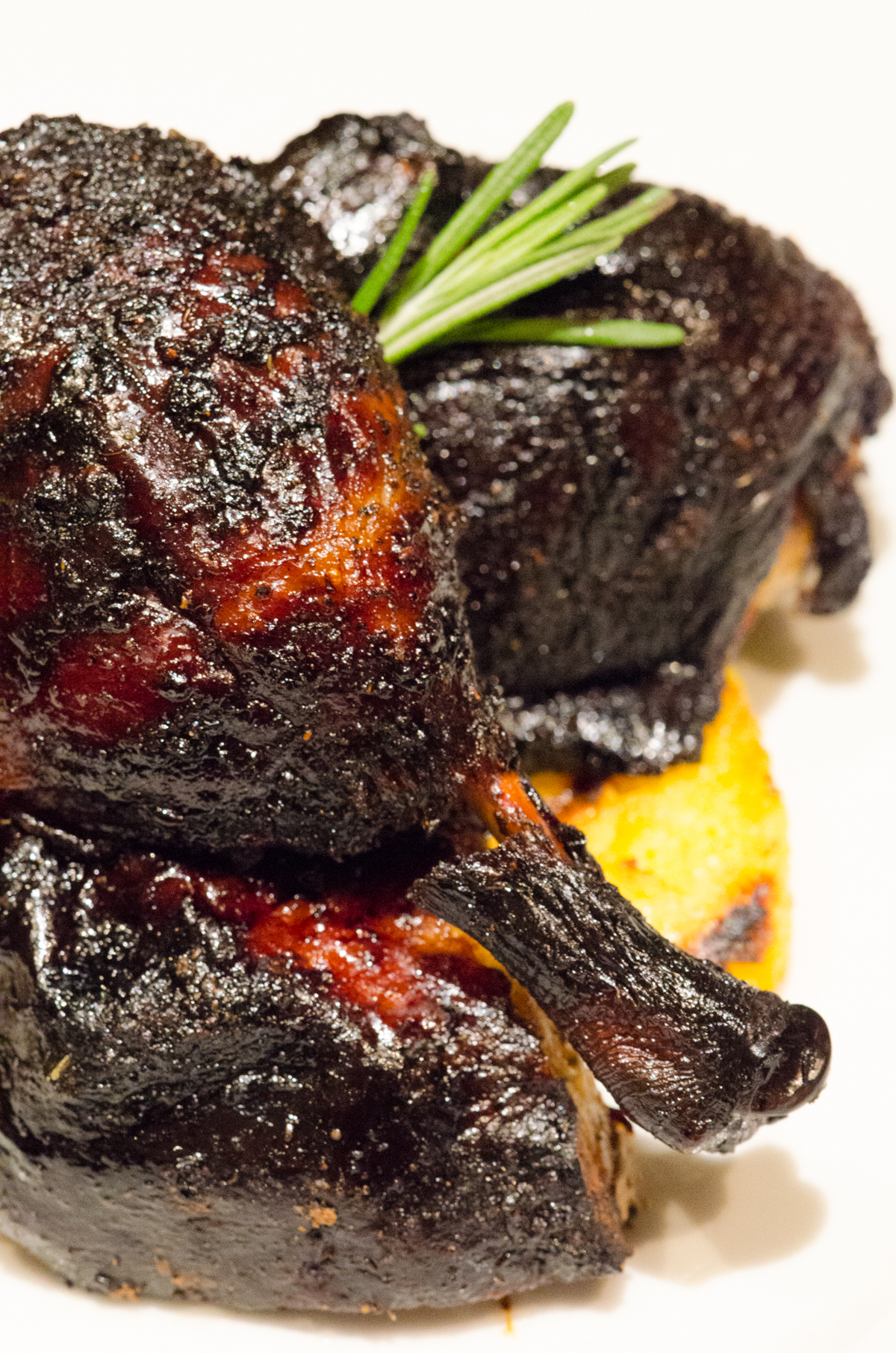
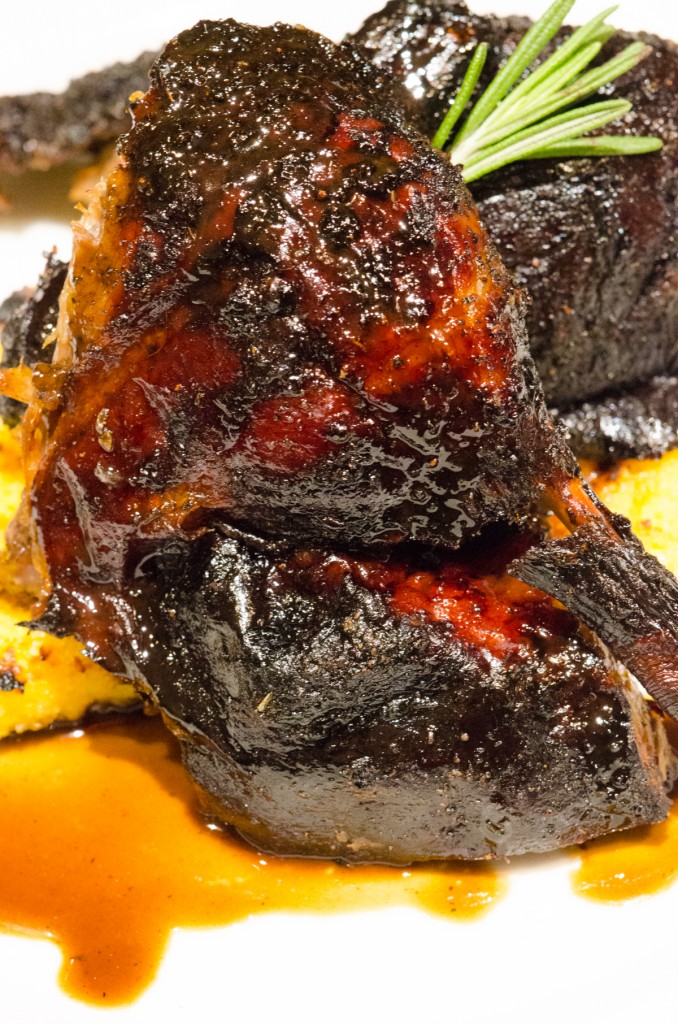
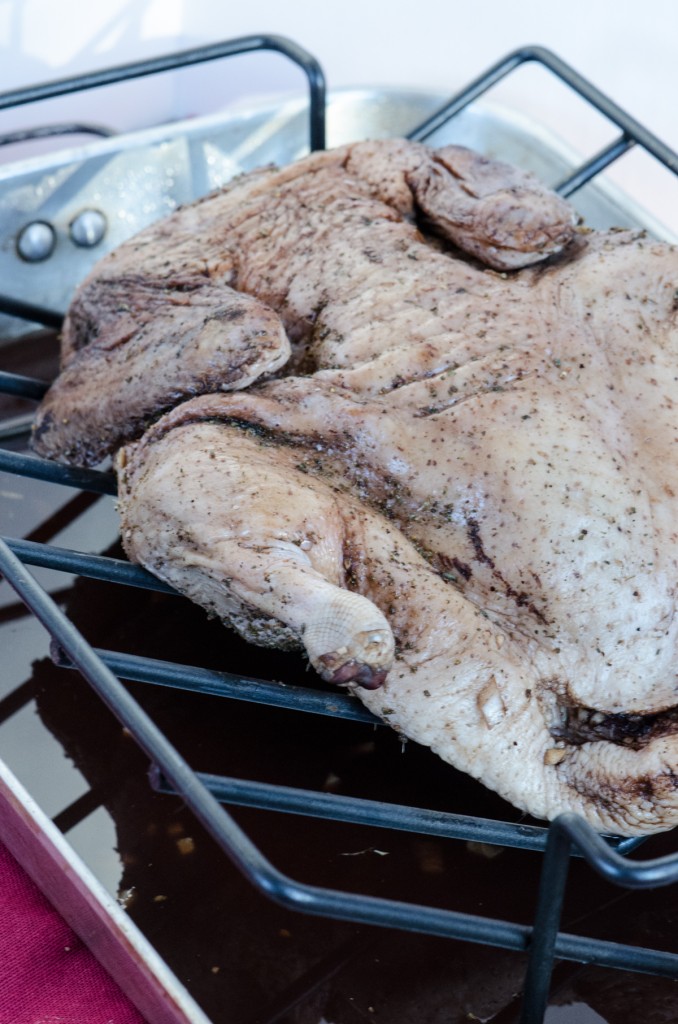
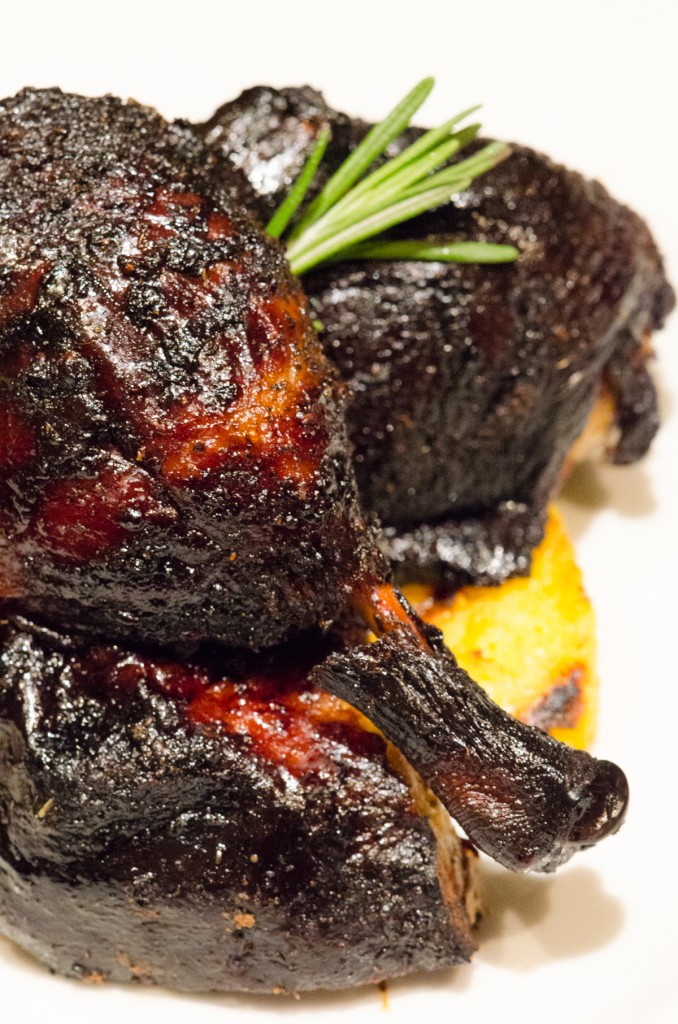
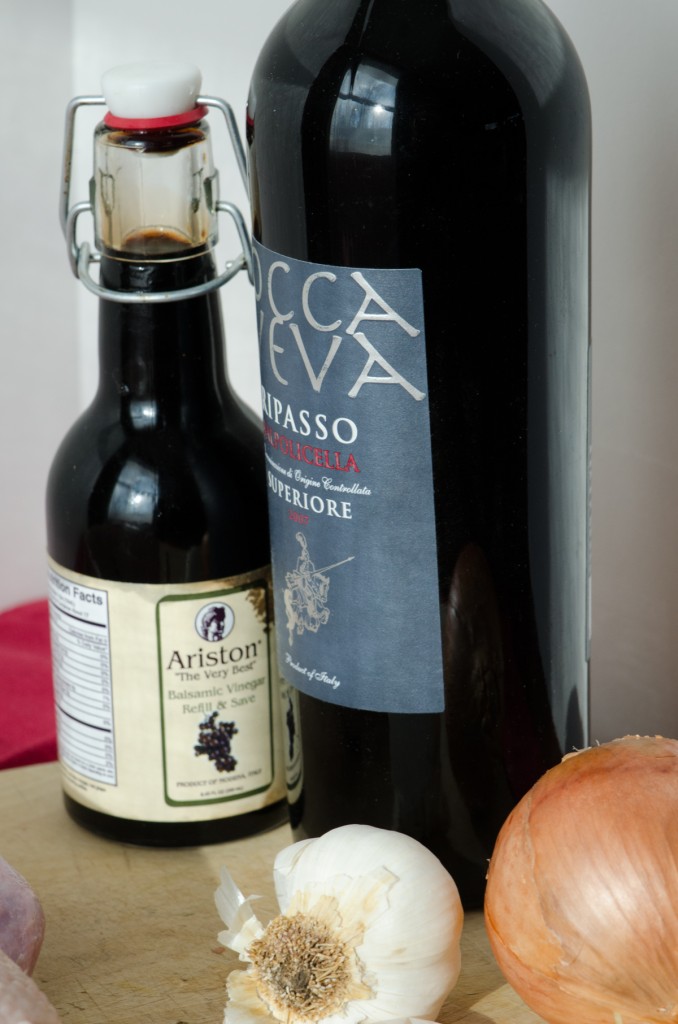 During the holiday season, it is easy to find fresh duck in my local grocery store; other times of year I only find frozen. Roasting duck is a bit more complicated than other fowl, due to it’s high fat content. The goal is to cook it slowly enough that the fat is rendered, but still get a crispy skin. I had several recipes I consulted for this recipe – one, from Marcella Hazan uses a blow dryer to dry the skin so it crisps up. Another, from Jody Adams, first roasts the duck, then cooks it again in a skillet. I’ve borrowed from both, working some of the flavors of Jody’s recipe into a marinade and spice rub and allowing the duck to sit, uncovered in the refrigerator in order to dry out the skin. This worked quite well, and the duck emerged nice and crispy from the oven. I served it with grilled polenta, but farro would be another great choice. Pair with a nice Valpolicella, and you’ve got a delicious and elegant holiday dinner.
 Anatra Arrosto con Balsamico
One fresh duck
1/2 cup balsamic vinegar
1/4 cup red wine
1/2 onion, chopped into 1/4 inch dice
2 garlic cloves, finely chopped
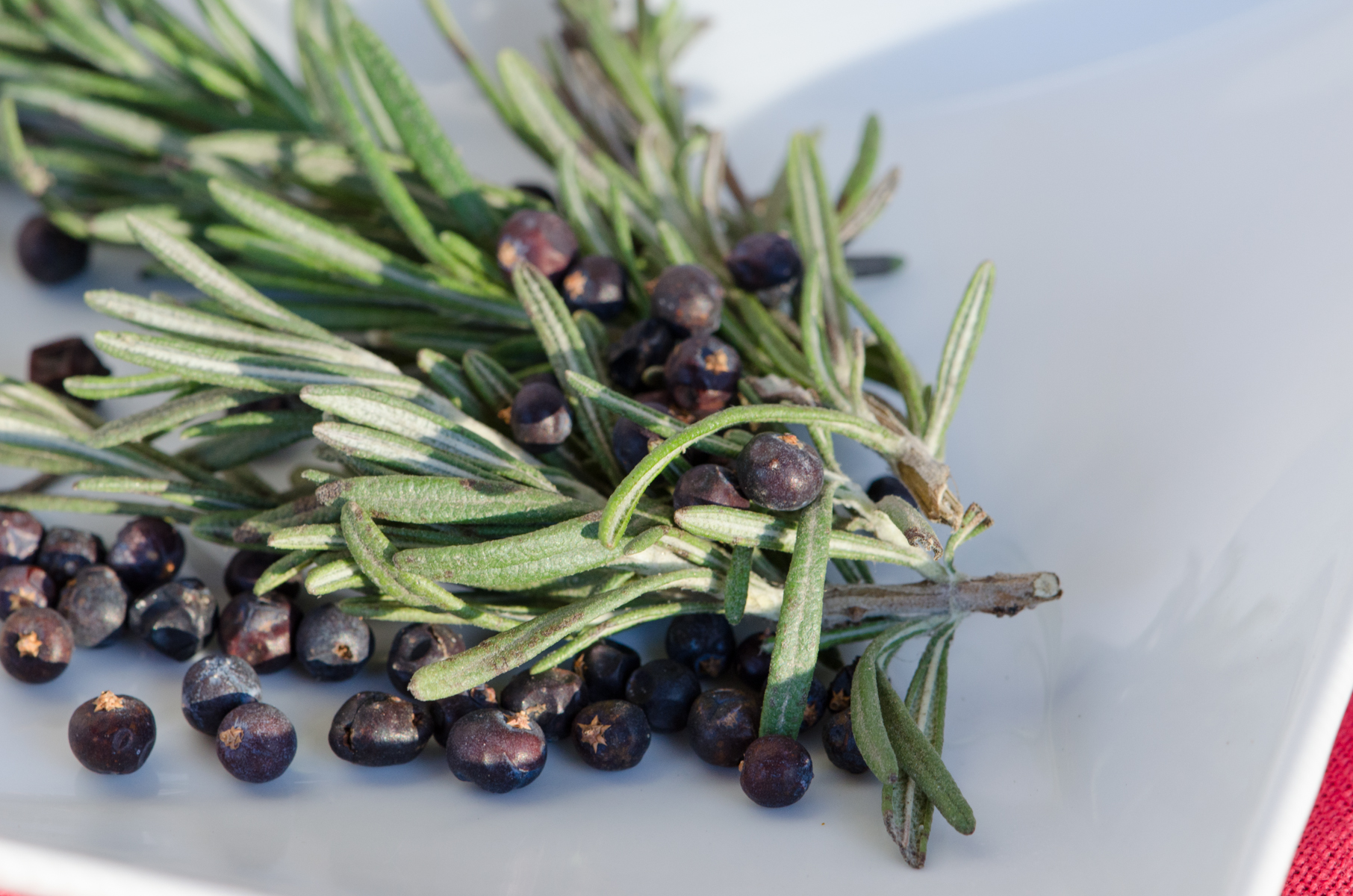
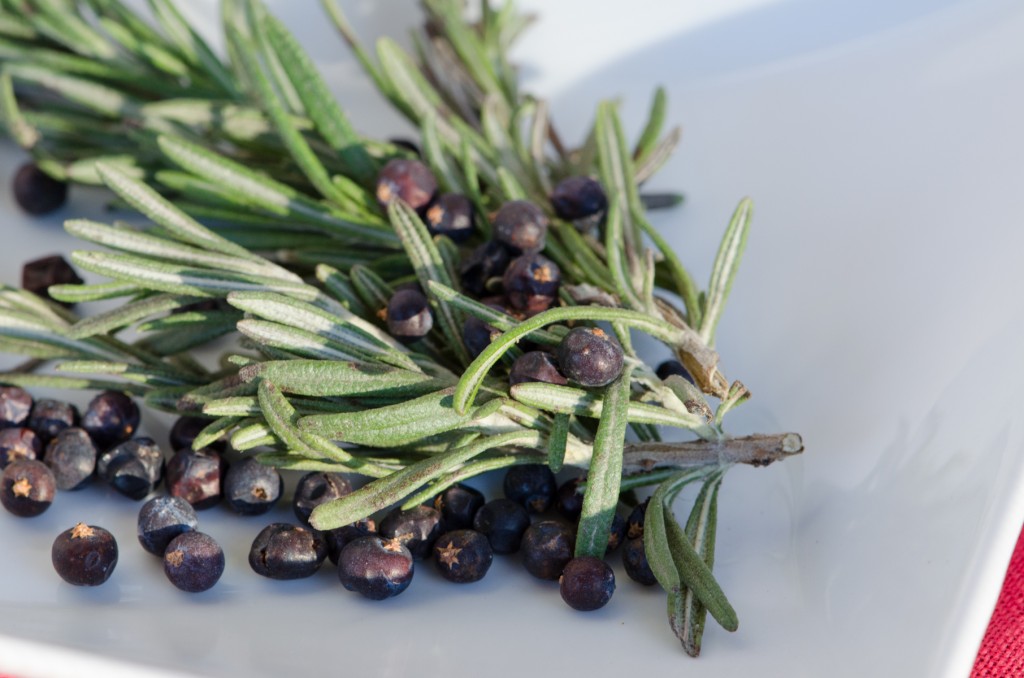
2 teaspoons dried rosemary
2 teaspoons ground juniper berries
1 tablespoon kosher salt
Remove the gizzards and other items from the cavity of the duck, reserving the gizzard and neck if you wish to make the sauce.
Cut off the wing tips, and reserve with the gizzard and neck for the sauce.
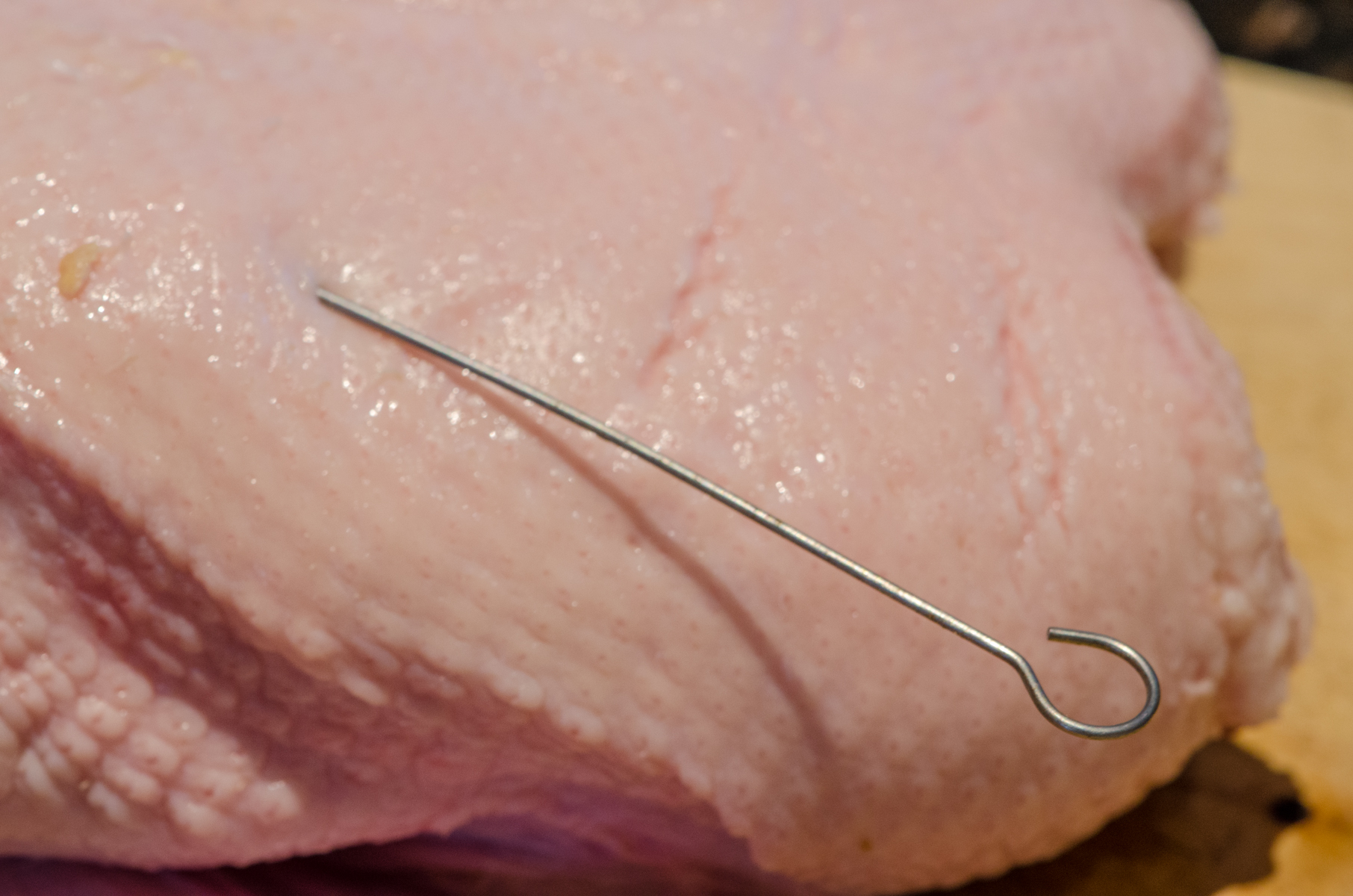
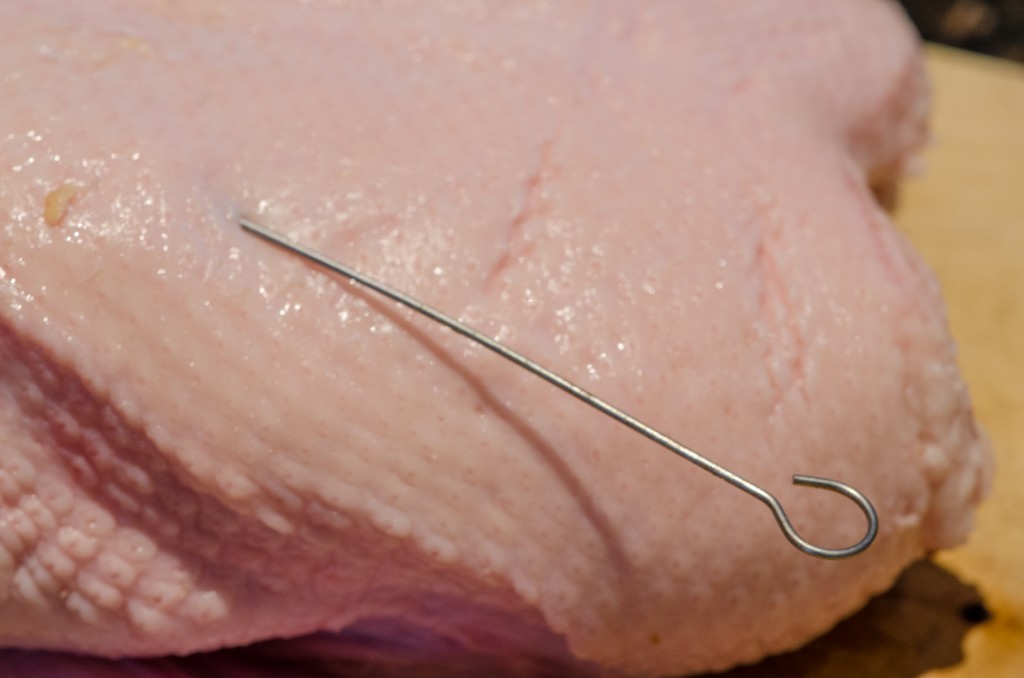
Cut off the fatty flaps around the neck opening and trim the fat from around the opening to the cavity. Discard the trimmings. Rinse the duck inside and out and pat dry. Carefully poke the skin of the bird all over with a fork or skewer. Try not to penetrate beyond the fat layer into the meat – if you poke in too far, the juices will run out during cooking along with the fat. Poking the skin at a sharp angle instead of straight in will help.
Mix the vinegar, red wine, onion and garlic cloves together in a large bowl. Roll the duck all around in the marinade, making sure plenty of marinade flows inside the cavity. Cover and marinate overnight in the refrigerator.
The next morning, remove the duck from the marinade (don’t scrape it off) and reserve the marinade in a small container. Mix together the rosemary, juniper berries, salt and pepper. Rub the spice mixture all over the duck, inside and out. Place the duck on a sheet pan and return to the refrigerator, uncovered, so the skin can dry out.
When ready to begin roasting, preheat the oven to 325°.
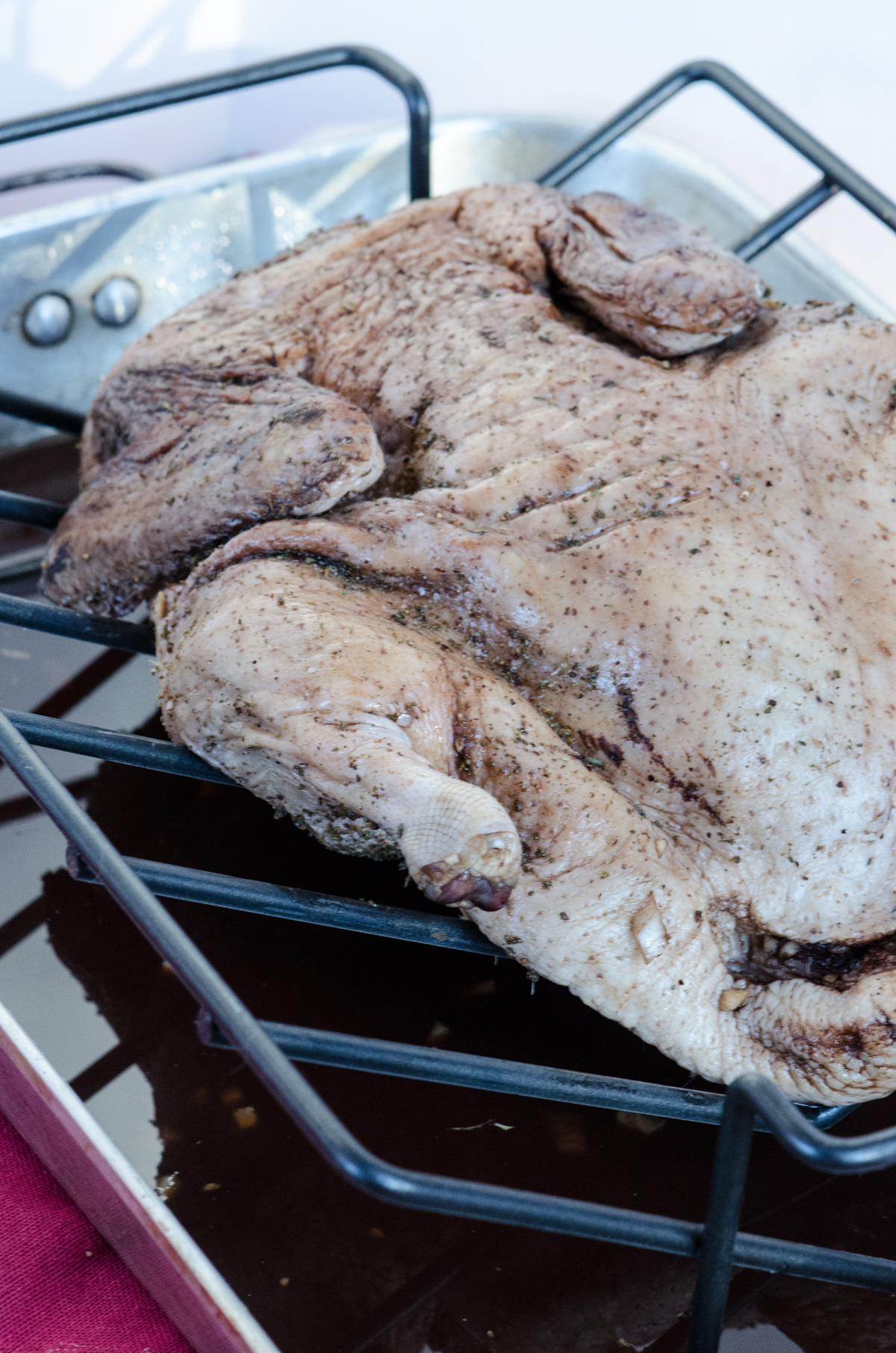
Set the marinated duck breast side down on a nonstick V-rack in a roasting pan. THe duck must be at least 2 inches above the bottom of the pan. Pour the remaining marinade into the pan, and add 1/4 inch of water. Place the pan in the oven and roast for 1 hour.
Flip the duck breast side up. Carefully prick the thighs with a fork again, avoiding penetrating the meat itself. Rotate the pan so the opposite side of the duck i now toward the back of the oven. Continue roasting until the skin is dark brown and just about all of the fat has melted off the body of the duck, another 2 to 2 1/2 hours. (This is a good time to make the sauce.)
The duck is done when an instant-read thermometer inserted into the thickest part of the thigh reads 180°. Let the duck rest 20 minutes.
When the duck is cool enough to handle, cut into 4 pieces, two breast and wing pieces, and two legs.
Heat a 1/8-inch layer of vegetable oil in a large, heavy bottomed saute pan over high heat until very hot. A nonstick pan is preferable. Season the duck pieces with salt and pepper. When the oil is almost smoking, add the duck pieces skin side down Do not disturb the duck pieces once you have set them in the pan. Allow them to sear for 1 minutes, then adjust the heat to low, cover the pan and cook until the skin is crisp, about 15 minutes. Pour off any excess fat that accumulates. Sprinkle the meat side with balsamic vinegar.
Balsamic Vinegar Sauce
Wing tips, neck, and gizzard from 1 duck
2 tablespoons vegetable oil
2 shallots, coarsely chopped
1/2 small carrot, peeled and coarsely chopped
1/2 celery stalk, coarsely chopped
1/2 teaspoon chopped fresh thyme
1/2 teaspoon fresh rosemary
1/2 cup dry white wine
2 cups chicken broth
Kosher salt and freshly ground black pepper
1 teaspoon ground juniper berries
1 to 2 tablespoons balsamic vinegar
Using a cleaver or large kitchen shears, chop the wing tips and neck into 3 inch pieces. Coarsely chop the gizzard. Heat the vegetable oil in a large sauté pan over high heat. Add the chopped wing and neck pieces. Cook until well-browned, 8 to 10 minutes. Pour off any excess fat. Add the gizzard, shallots, carrots, and celery. Cook until well browned, about 5 minutes.
Lower the heat to medium. Add the herbs and wine and reduce to a glaze, 5 to 7 minutes. Add the chicken stock and reduce until the sauce coats the back of a spoon, about 25 minutes. Strain. Season to taste with salt, pepper, juniper berries and the balsamic vinegar. Serve warm.
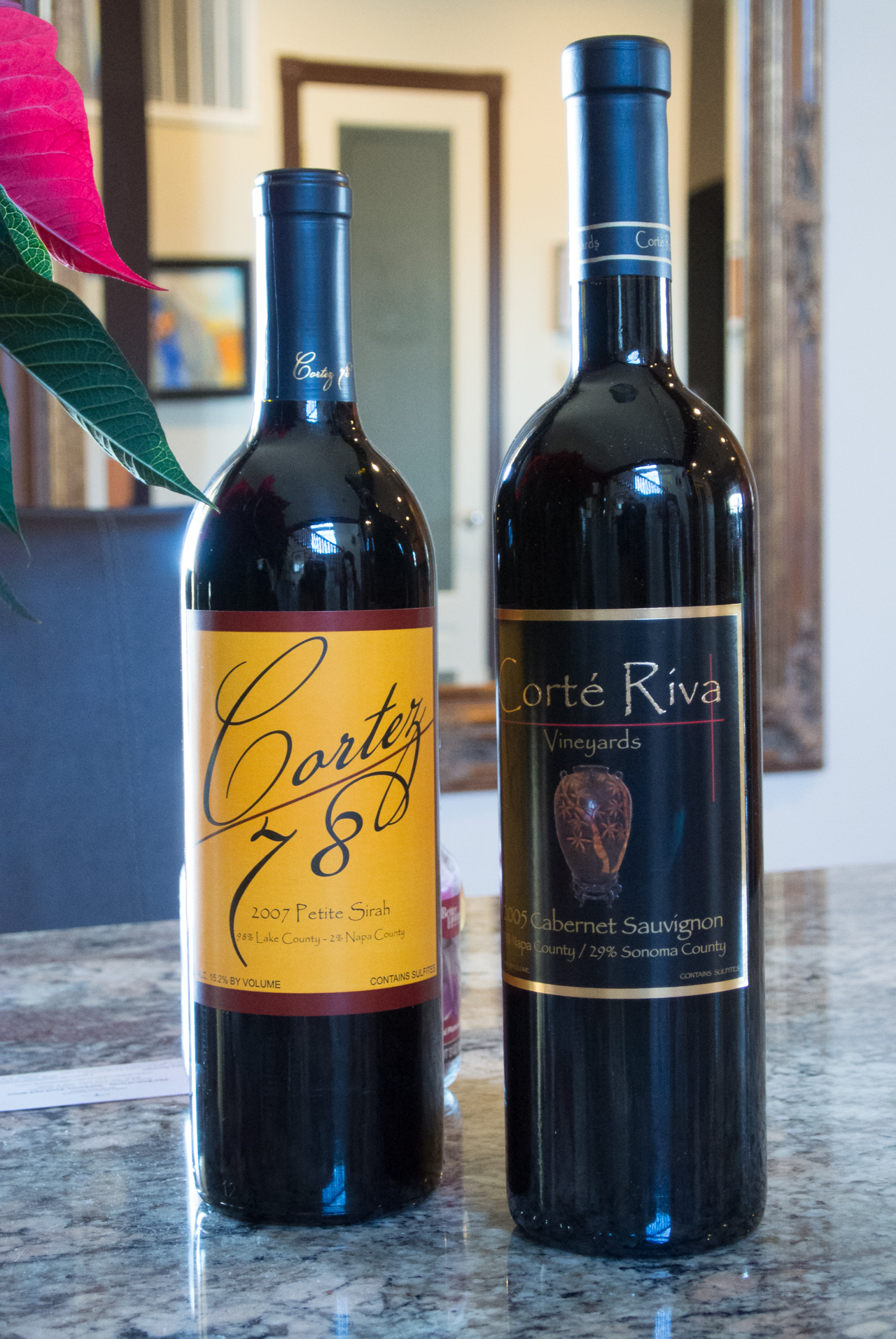 My recent vacation in California wine country inspired me to share a few thoughts on the differences between the US wine industry and the Italian wine industry. We discuss this very subject on almost all of our Bike the Wine Roads tours in Italy. My last post, on Bell Vineyards, discussed the different perspectives on terroir, the natural environment in which the wine is produced.