Saumon con Verdure Mediterranee – Great food to be had in Sudtirol

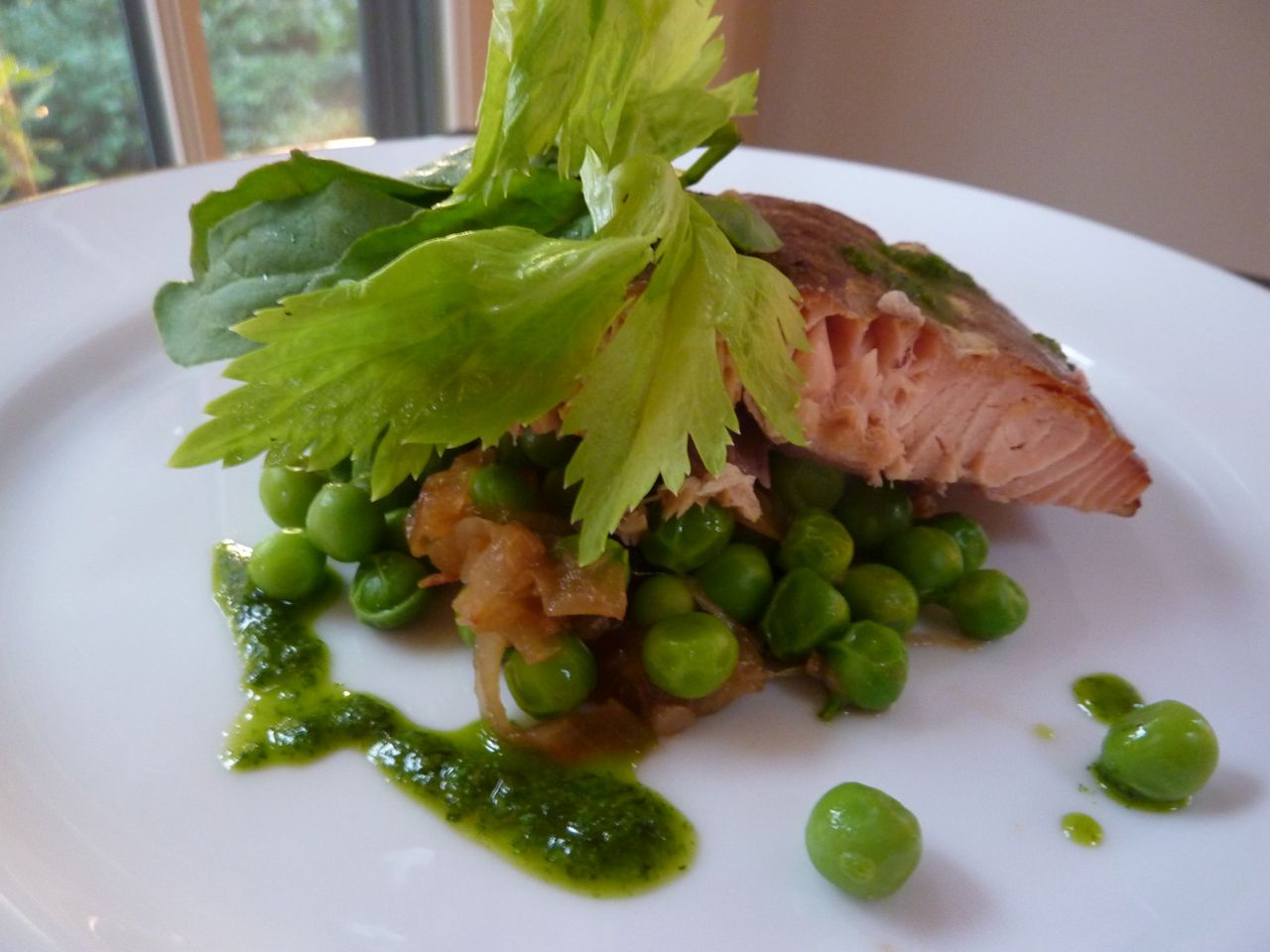
Saumon con Verdure Mediterranee

I spent a couple of days earlier this month exploring the towns of Bolzano and Trento in the Sudtirol and Trentino regions of Northeastern Italy. A place absolutely worth a visit, with the magnificent Dolomites surrounding you, terraced vineyards at the base of these peaks, green fields of grapes and apple trees in all directions, and picturesque cities and hamlets reflecting history and culture of both Italy and the Mediterranean to the south, and Austria and Germany to the north.
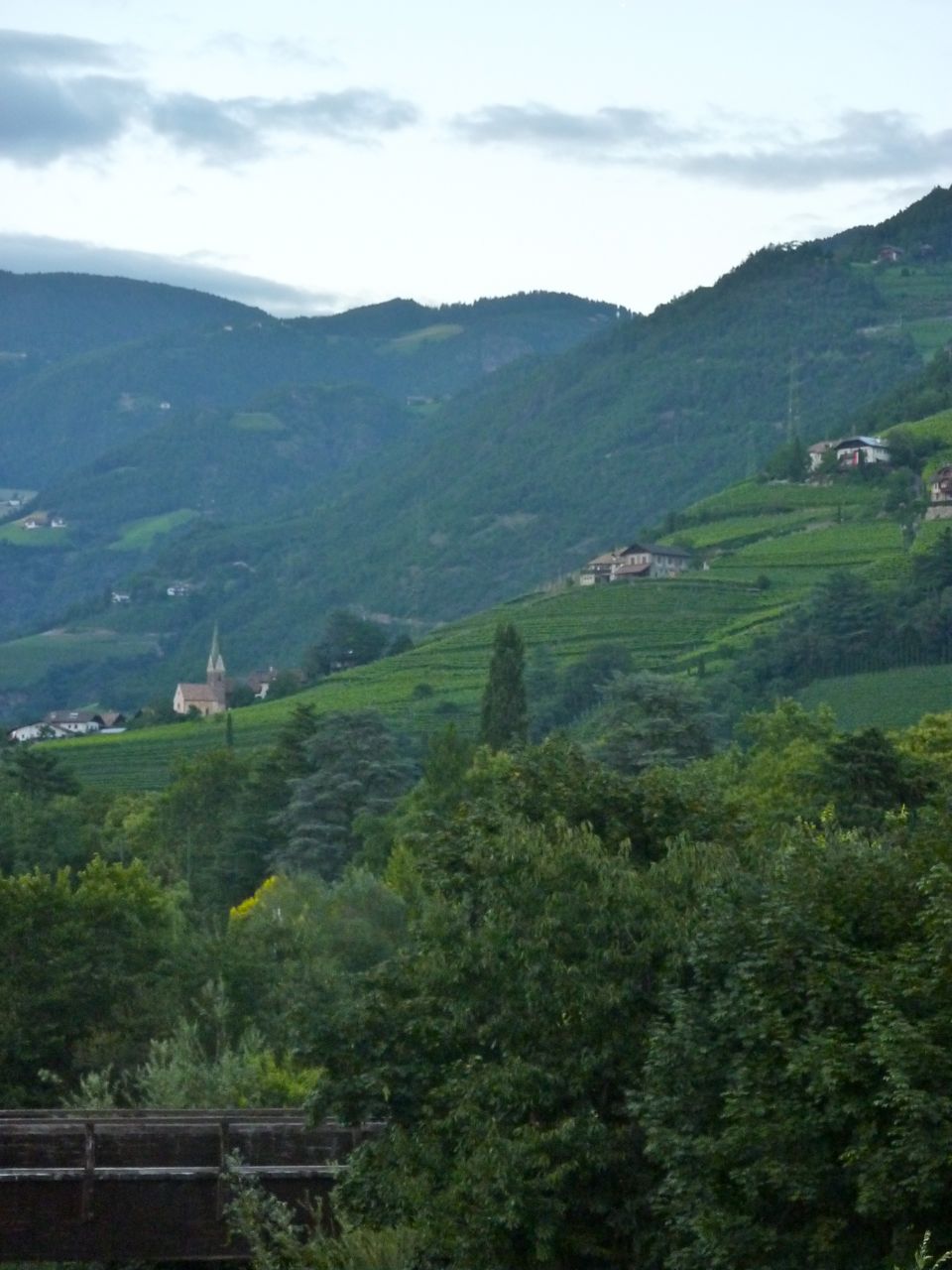
View of surrounding countryside from Bolzano

But hidden among these natural beauties is a surprisingly innovative gastronomic scene. Sudtirol, one of the least populous regions in Italy, boasts more Michelin starred restaurants than any other region in Italy. Pair this with the sheer number, as well as quality of wines produced here, and it becomes a must-see region for active foodies. Biking along bike trails, hiking the Dolomites, skiing and winter hiking, paired with amazing foods and wines.

While winding my way from Bolzano down to Trento along the Suditrol Weinstrasse (Wine Road), I stopped at several wineries along the way. I discovered a small recipe book in one of them, a collection of regional recipes put together by three of these chefs; entitled 33x Classici delle Dolomiti. Here is the first recipe I’ve translated from it. I’ve loosely converted metric measurements to US, and added a few instructions. But it is a delicious and healthy dinner.

Trout is commonly found in the lakes in both Trentino Alto-Adige as well as Friuli-Venezia Giulia. This recipe lightly sautes trout fillets in butter, and serves it over a bed of ‘Mediterranean’ vegetables. I had smoked salmon in my refrigerator, so I substituted that. Smoked trout would also work, and it is regionally ‘correct’ as smoking trout and salmon is done in both these regions.
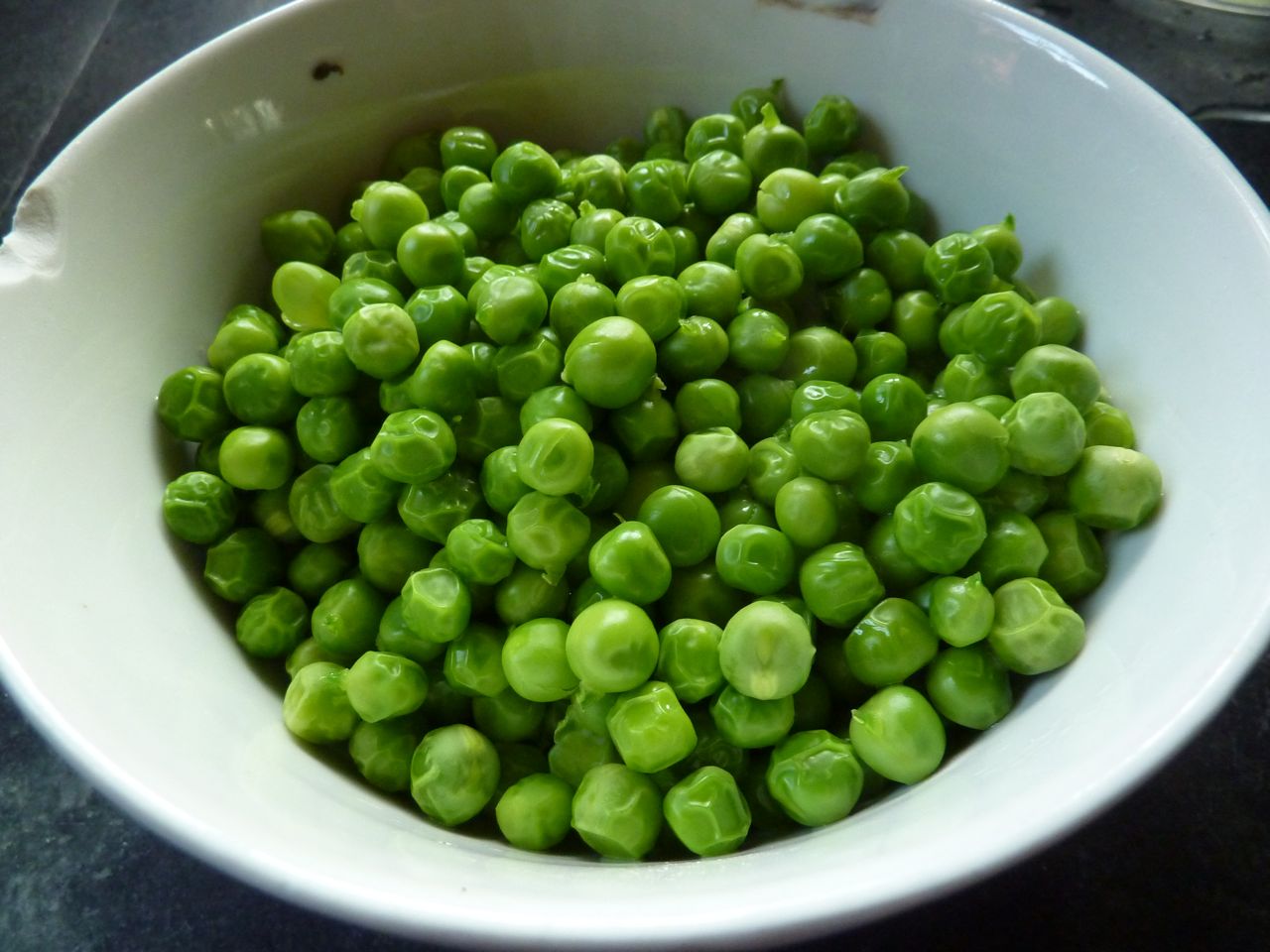
Fresh blanched peas

The recipe called for fava beans, which I replaced with some fresh local peas from my CSA. I topped it with arugula from the same CSA, as well as some celery leaves. We used celery leaves as a garnish a couple of time with Susan Regis on our last Chefs on Bikes tour in June; its an attractive and tasty garnish.

Saumon o Trota su Verdure Mediterranee

1 spring onion
1 teaspoon sugar
1/2 cup white wine
1 anchovy filet
1/2 clove garlic, finely minced
1 bay leaf
1 sprig thyme
1/4 cup olive oil
Kosher salt and freshly ground pepper
1/2 small chili pepper, finely minced
10 ounces blanched fava beans, green beans or fresh peas

4 trout filets or 4 – 4 ounce pieces of smoked salmon
Kosher salt and freshly ground pepper
2 tablespoons butter for roasting
1 sprig thyme
4 herb oil for garnish (4 parts oil to 1 part blanched basil, pureed in a blender)
1 cup watercress, arugula or celery leaves
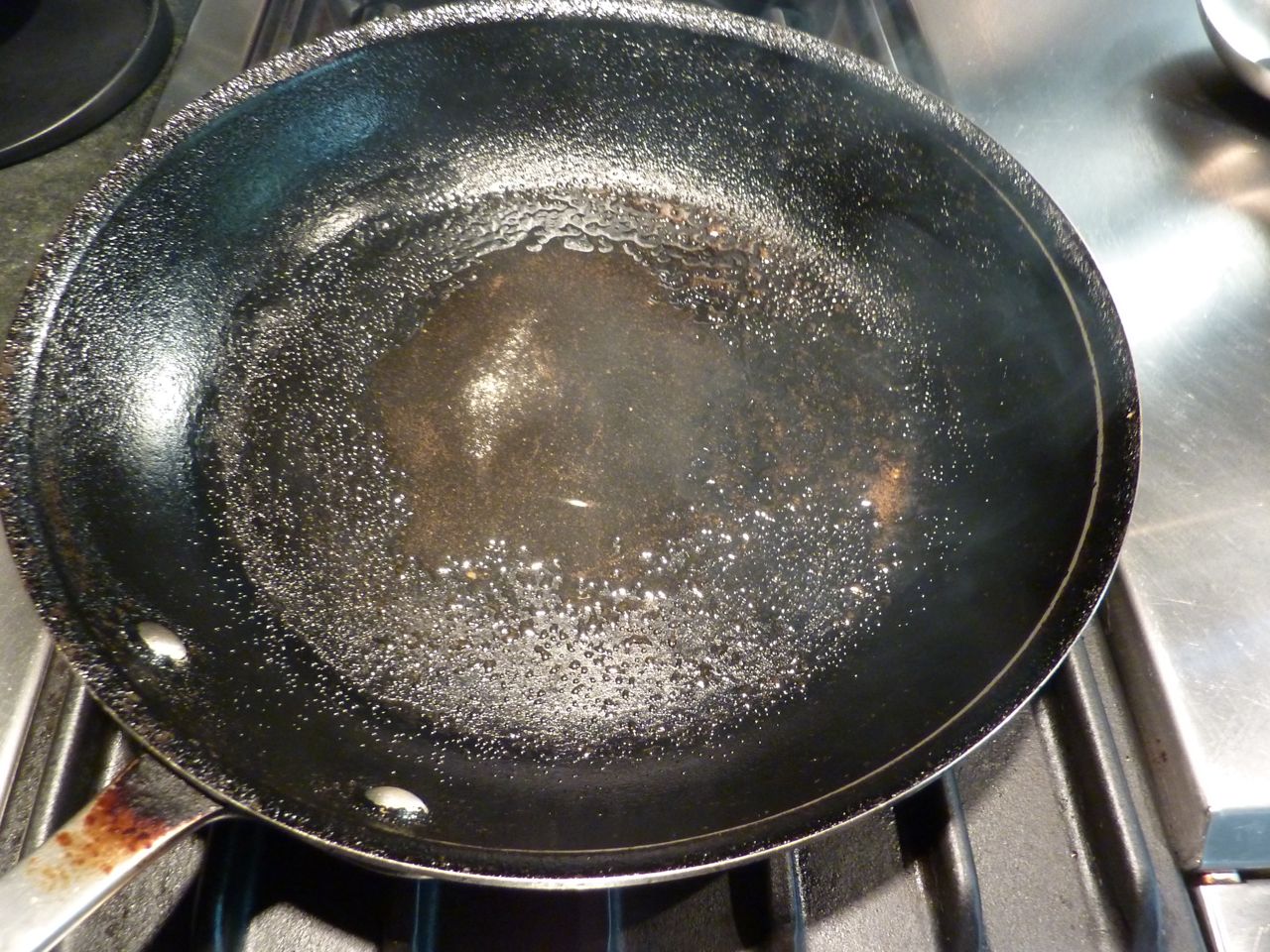
Caramelizing sugar

Peel the onion, then cut into thin strips. Place the sugar in a medium saute pan, and caramelize the sugar over low heat, then add the white wine. Reduce the white wine by half.

Add the onion, anchovy fillet, garlic, bay leaf, a sprig of thyme and olive oil, season with salt and pepper, simmer on low heat.

Add the beans or peas and warm.

Remove any excess bones from the trout using tweezers. Season the filets with salt and pepper.

Heat the butter in a saute pan until just beginning to brown. Add the trout, and cook for two minutes. Turn, add the thyme, and cook for another minute.

Serve on the vegetables, and garnish with the basil oil and arugula.
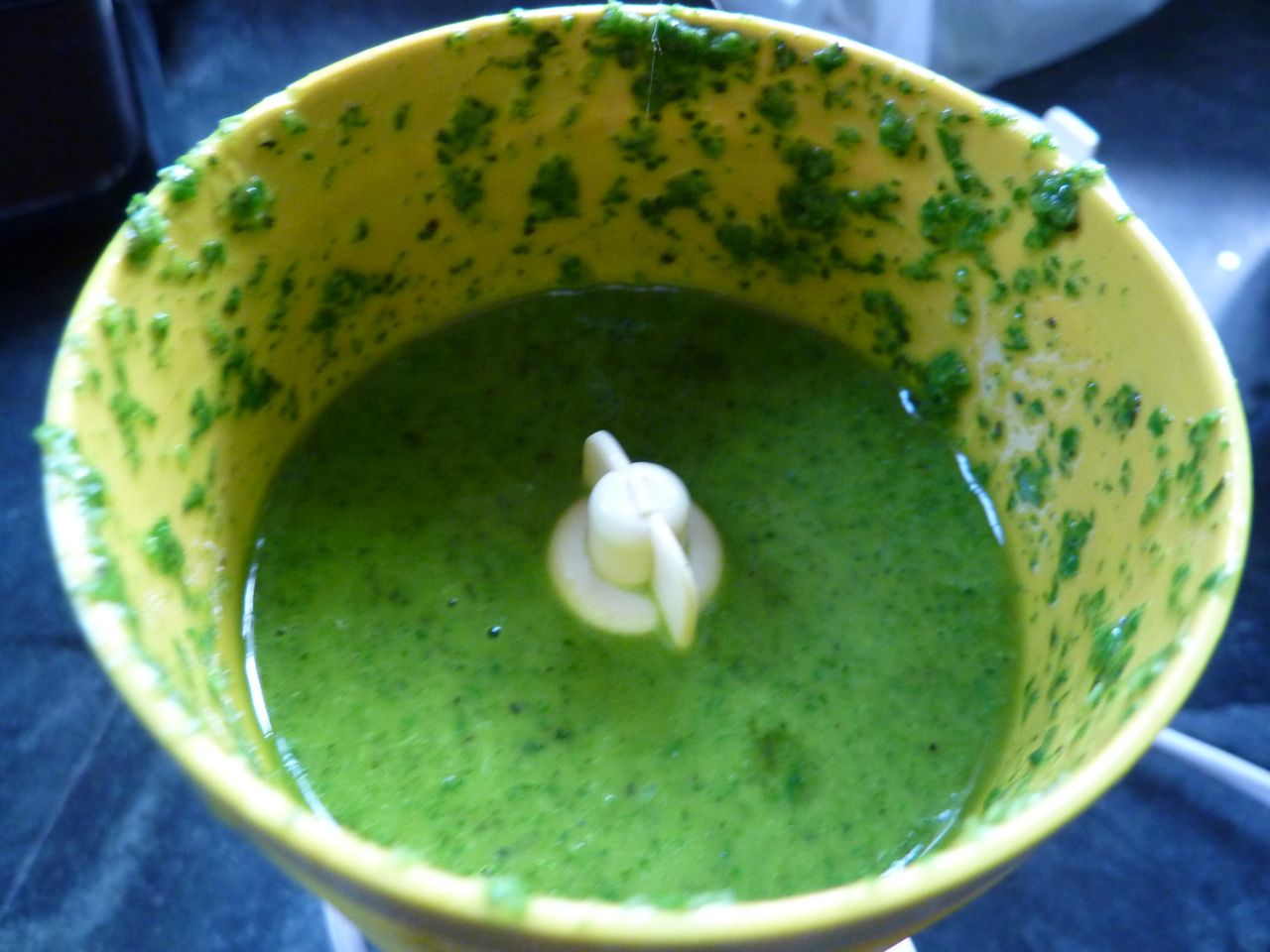
Herb oil - blanched basil pureed with olive oil

The recipe suggested several alternative preparations:

instead of the beans and onions, serve in a salad of lentils
Use perch, turbot, or cod instead of trout
instead of fava beans you can use peas or green beans.

A great wine to pair with this, especially the smoked salmon version I made here – the Alois Lageder Lagrein Rosato. A wonderful, refreshing, flavorful rose with enough strength to stand up to some stronger smoke flavors.
Posted in Arugula, Fish, Fitness, Friuli-Venezia Giulia, Lagrein Rose, Lentils, Salmon, Smoked Food, Trentino Food, Trout, Uncategorized, Wine Pairings | Tagged , , , , , , , , , , , , , , , , , , , , , , , , , , , | 1 Comment

Pizza Dough with Susan Regis

Pizza with prosciutto, asiago and arugula

When deciding on our menu for our last Italiaoutdoors Chefs on Bikes trip with our Master Guest Chef Susan Regis, pizza was the first to be added. Although not a traditional dish of Northeastern Italy, it is commonly found all over Italy today. I’ve yet to meet someone who does not like pizza; and the options for toppings are basically limitless, although I have to admit to not being sold yet on true ‘fusion’ versions like buffalo chicken pizza! But select your favorite seasonal produce, and complement it with  cheese, perhaps a cured meat, and it’s hard to go wrong. Offer a selection of toppings in a ‘make-your-own’ party and even the pickiest eaters are happy.

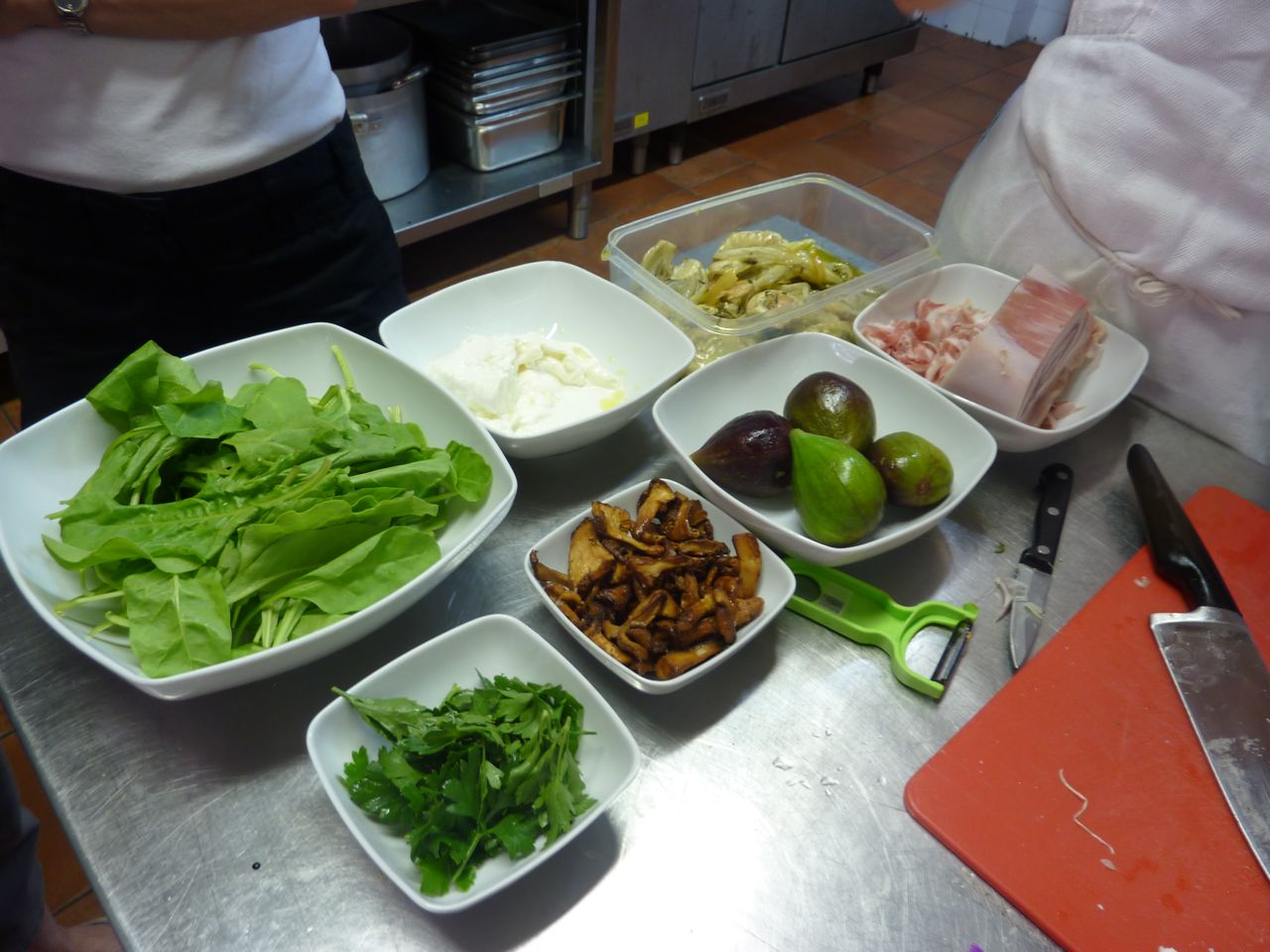
A wide array of toppings

Susan makes fantastic pizzas at her restaurant Upstairs at the Square. During her stint at Biba, the Lobster Pizza was a house favorite. In Italy this past trip, she shared with us her secrets to producing a great pizza crust. We also prepared a couple of items for topping. The following day we prepared at late post-ride pizza lunch, with some wonderful varieties of pizzas!

Here’s the original recipe:

Pizza Dough

1 cup warm water
1/2 teaspoon fresh yeast
1 1/2 high gluten flour
1/2 cup all purpose flour
1/2 cup semolina flour
1 teaspoon salt
2 tablespoons olive oil
Additional 2 tablespoon all purpose flour for dusting

Mix first four ingredients and let rise for an hour. Add the next three ingredients to above, then add enough all purpose flour to bring dough together into a smooth, soft, but not sticky dough.

Let sit out 1 hour. Put in oiled bowl. Cover. Refrigerate overnight. Use the next day.

Now, a few things to add:

I recently made this at home, and can’t find anything in my supermarket that is ‘high-gluten’ flour. But you can purchase pure gluten, so I used 2 cups all purpose flour, and 1 tablespoon pure gluten. Bread flour, if you can find it, will have a higher gluten content than regular or pastry flour.

Gluten is a protein composite that is present in wheat, and gives dough its elasticity, helps it to rise and keep its shape when baked. We want to develop the gluten in products such as bread and pizza, but not develop it when working with pastries or cakes.

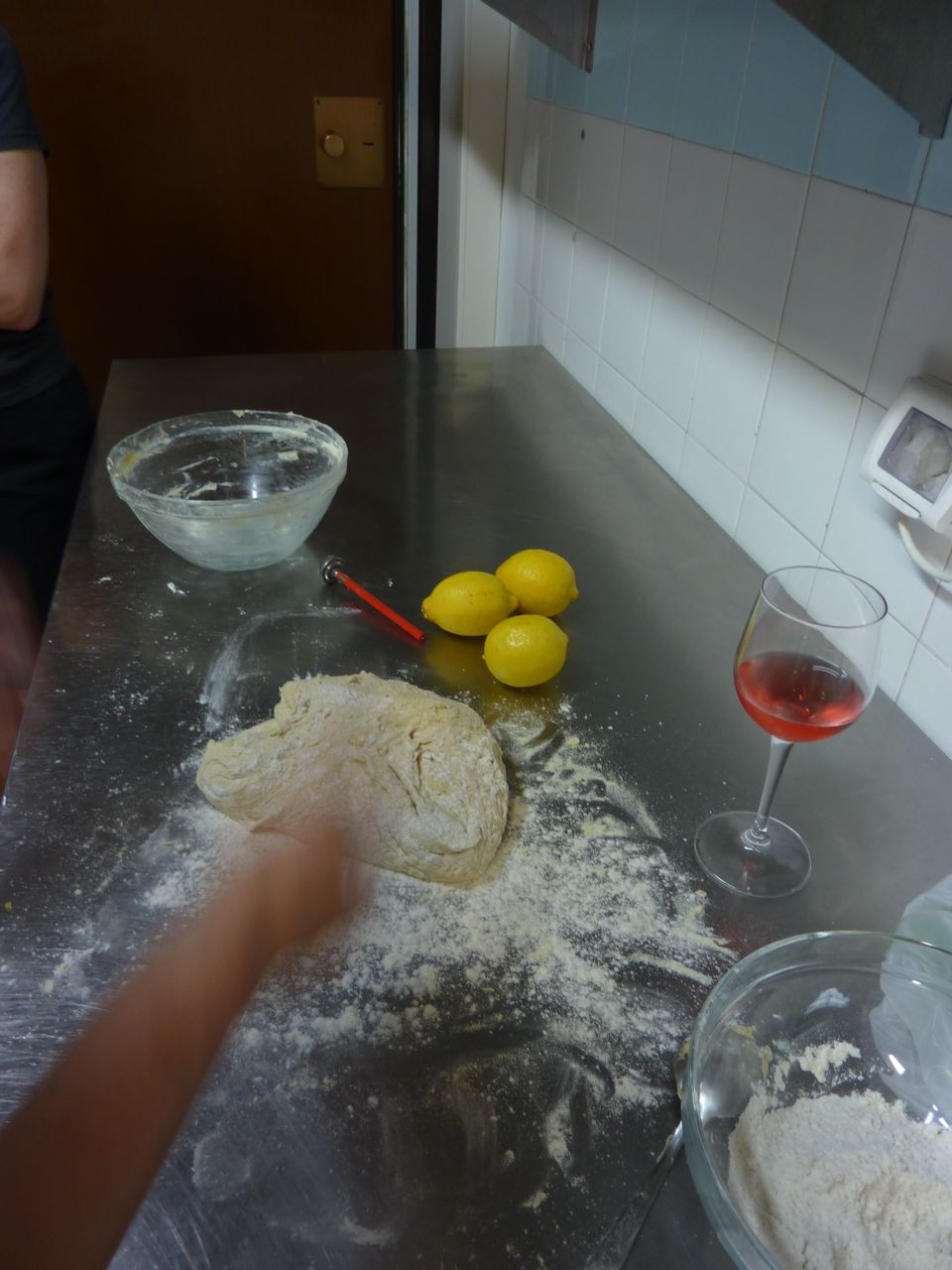
Kneading the dough (with a glass of wine nearby)

After the hour rise, we added the remaining ingredients. We then kneaded the dough for 10-15 minutes – this step is not mentioned in the recipe. Again, this is to develop the gluten, which will result in an elastic, stretchy pizza dough. Knead until soft and smooth; when done, if you poke your finger into the dough, the indentation should disappear as the dough returns to its original shape. If this doesn’t happen, you haven’t kneaded it long enough.

An overnight rise is essential; it allows the flavors to develop, and the gluten to relax. Take the dough out of the refrigerator 2 hours before making the pizza.

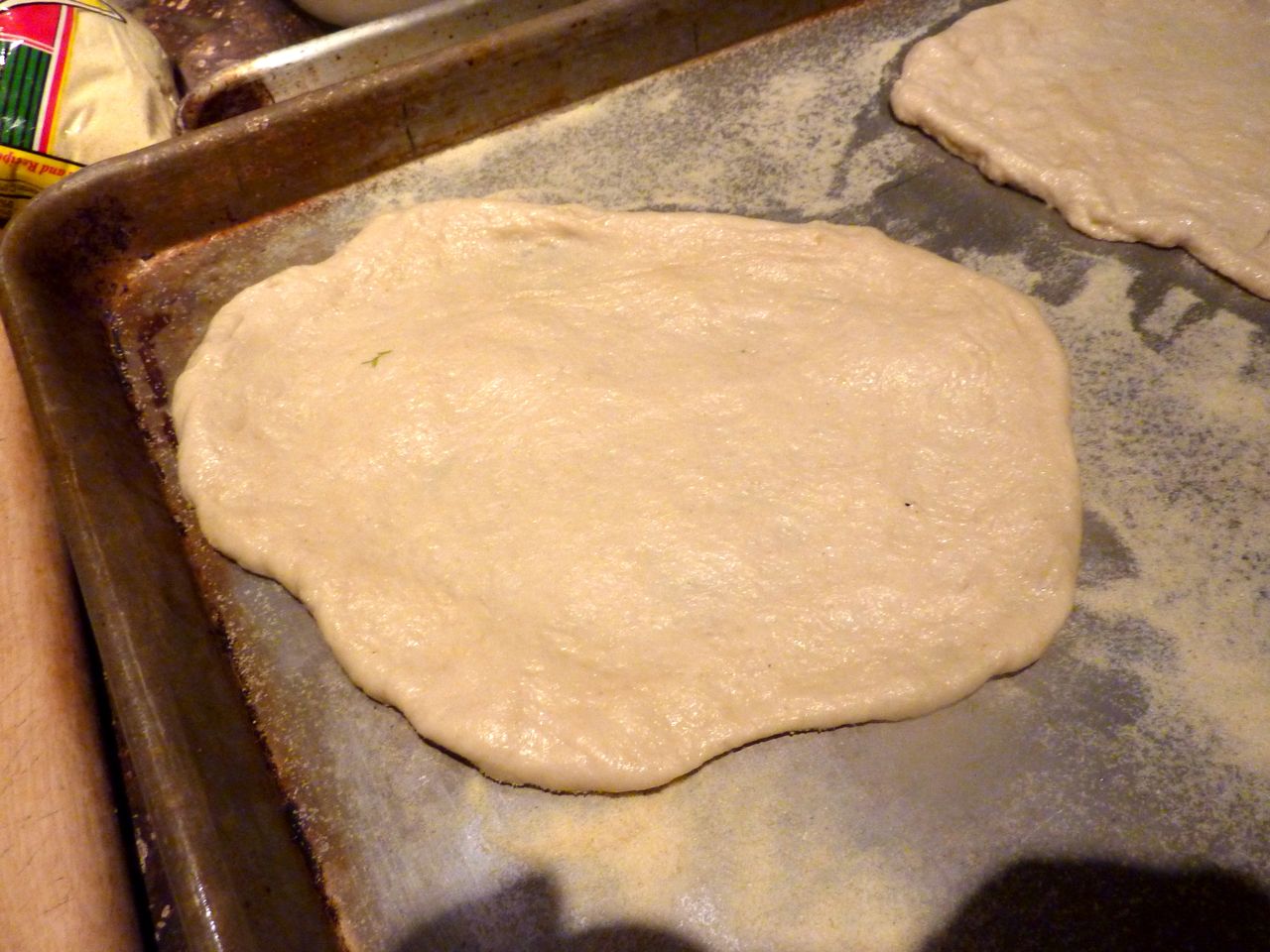
Dough pulled into shape

Susan recommends pulling the dough into the desired shape, rather than rolling it out. She likes the big bubbles that form on the edges, so you want to encourage those air bubbles to develop, rather than flatten them during the rolling process. So we divided the dough into 4-5 pieces and slowly pulled them into a somewhat rounded shape. The shape doesn’t need to be round; this is a rustic product! If the dough rips, just pinch it back closed.

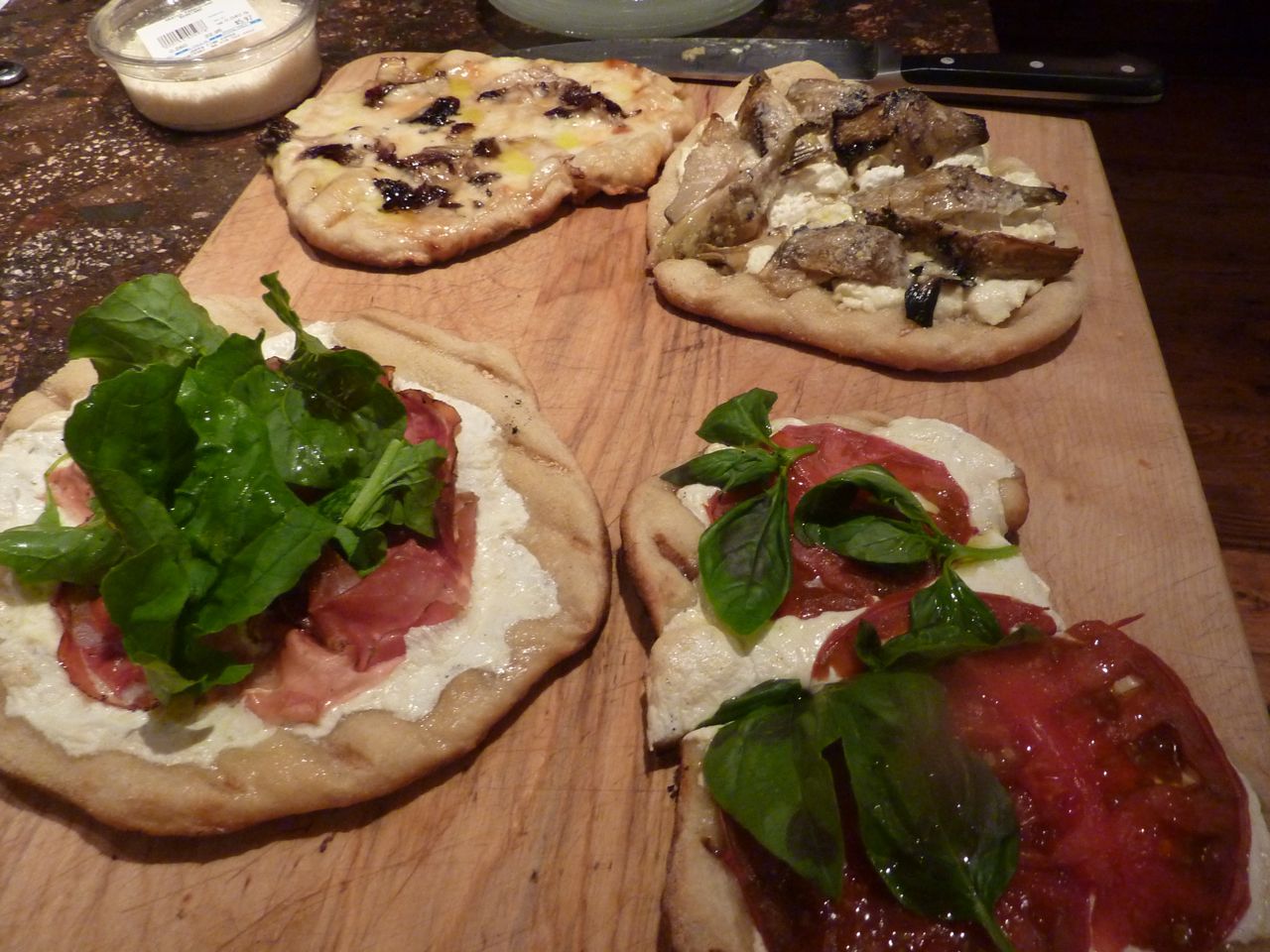
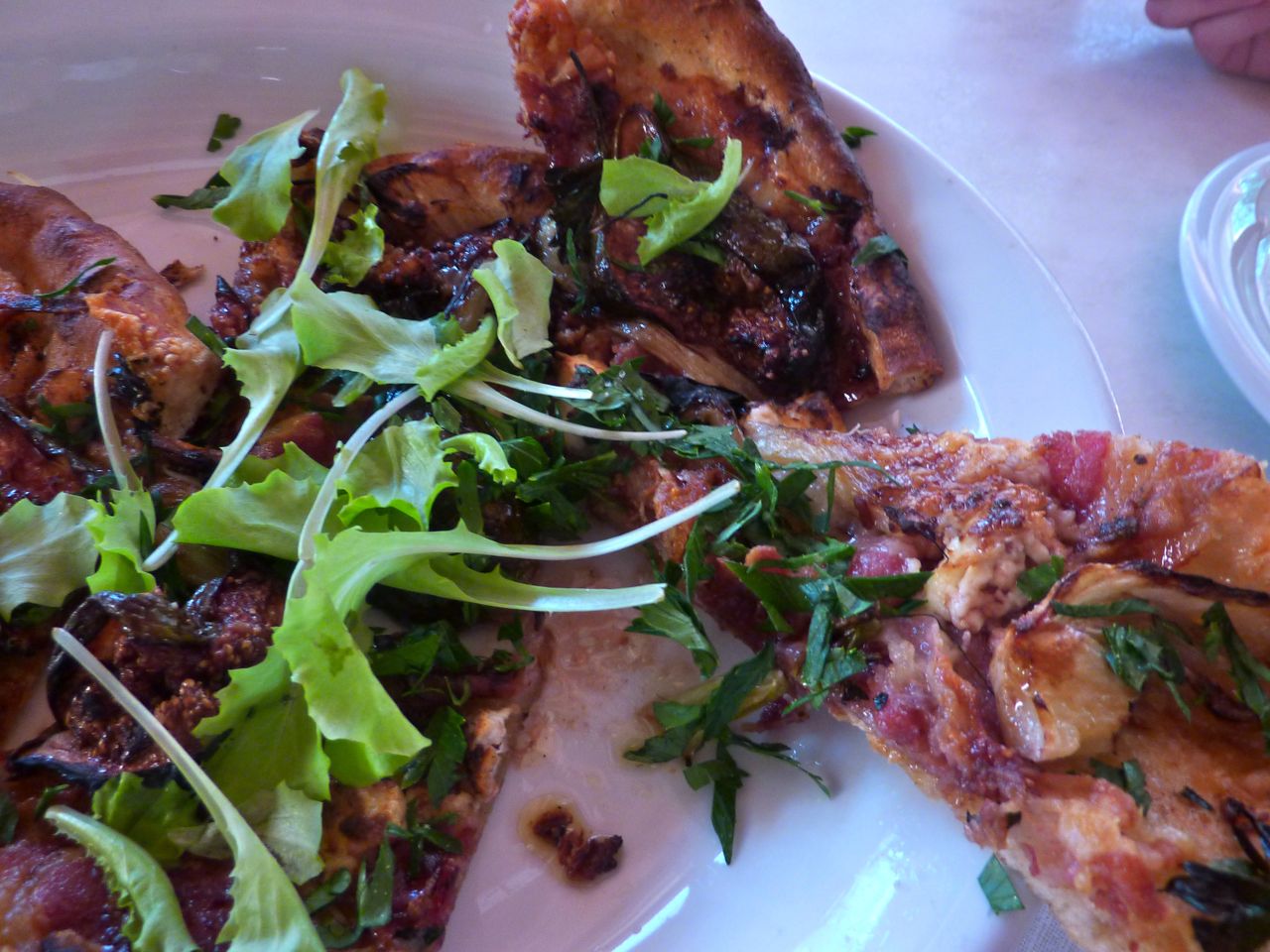
We had some great options for toppings – fennel confit (fennel braised in oil), homemade ricotta, fresh figs, two types of prosciutto, arugula, various ages of asiago cheeses, mushrooms, honey. We started with a prosciutto, ricotta and grana pizza; then aged asiago, fig and honey. We ended up with leftovers, that made a great antipasti the following day.

Grilled pizzas

If baking in the oven, the pizza should be baked at as high a temperature as you can get it. The idea is to have the pizza cook from below; you want to place it on as hot a surface as you can possibly get. That is why a pizza stone is key to getting a good home crust. You get it nice and hot, and cook your pizza directly on top. Our challenge in Italy was 1) no stone, and 2) convection oven only. Our first crust did not crisp up like Susan wanted it too; we played around a bit with various scenarios. We ended up cooking it directly on the oven rack, making pretty much a mess of things. The result was tasty, and pretty crisp in spite of the non-ideal circumstances.

At home during the hotter summer months, we cook our pizza on the grill. We cook just the crusts first,  then take them off and top them, returning them to the grill just to melt the cheese and warm the toppings.

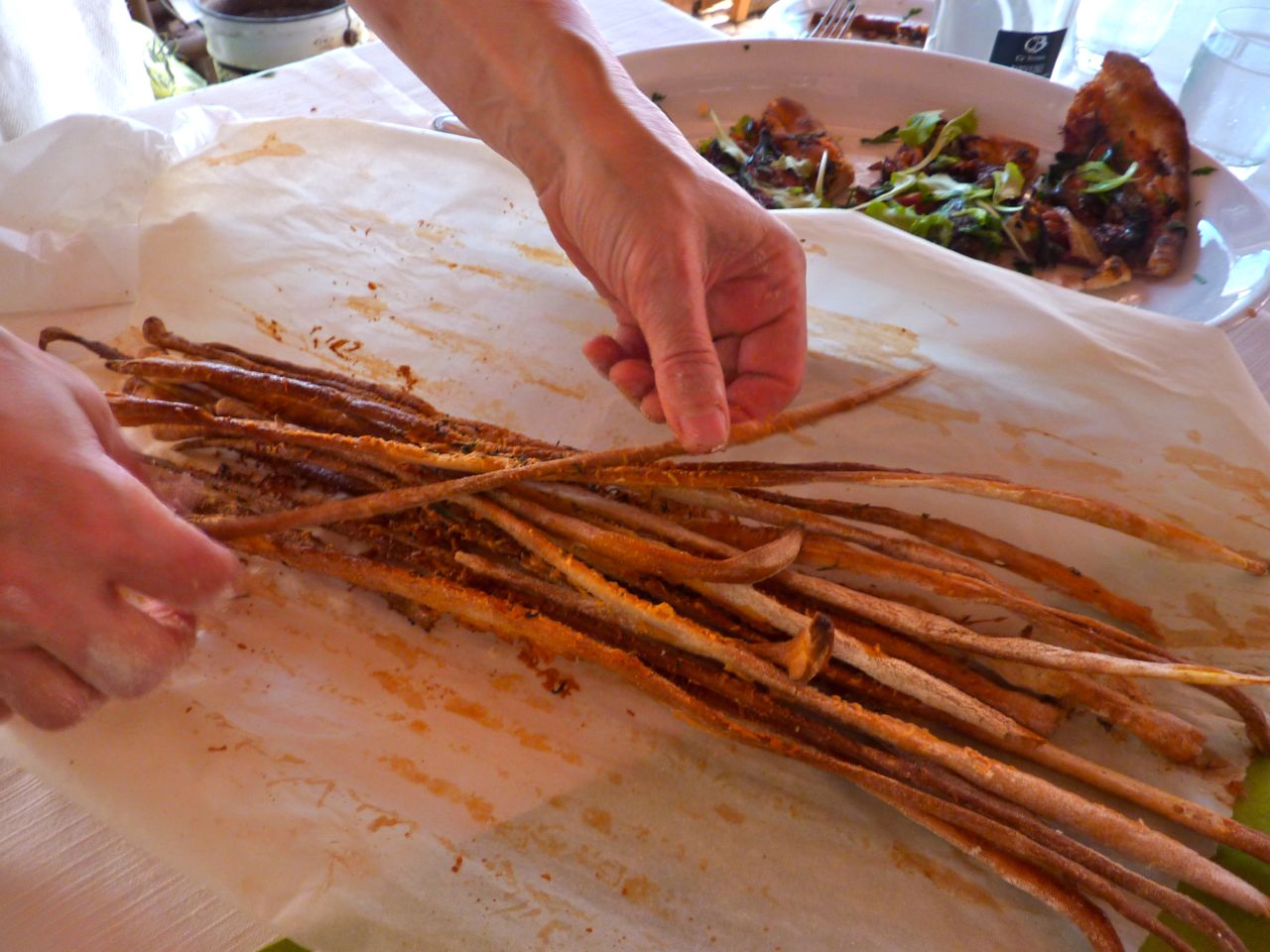
Suzie's fabulous bread sticks

Susan also showed us how to make breadsticks from the pizza dough. You just roll out a rectangle, cut them into thin strips, and top with grated cheese and some minced herbs – we used thyme.

Posted in antipasti, Arugula, Fitness, Pizza, Ricotta, Travel, Uncategorized, Veneto Food | Tagged , , , , , , , , , , , , , , , , , , , , , , , , , | Leave a comment

Rain delay, and final night feast – thank you Susan Regis!

Sherry and Vernon at the top

Torrential downpours overnight made for wet roads in the morning at our scheduled departure time of 9am. The skies still appeared threatening, and some occasional drips were coming down. But our trips always allow for a bit of flexibility, so we decided to delay our ride until the afternoon; allowing the skies to clear a bit and the road to dry.

Grill at Locanda

Our plan for the evening was to cook our last dinner over the fantastic Locanda grill, staying a bit out of the way as the kitchen was open for service. We had a bit of prep to do beforehand, so with the late start on the bikes, we moved to the kitchen.

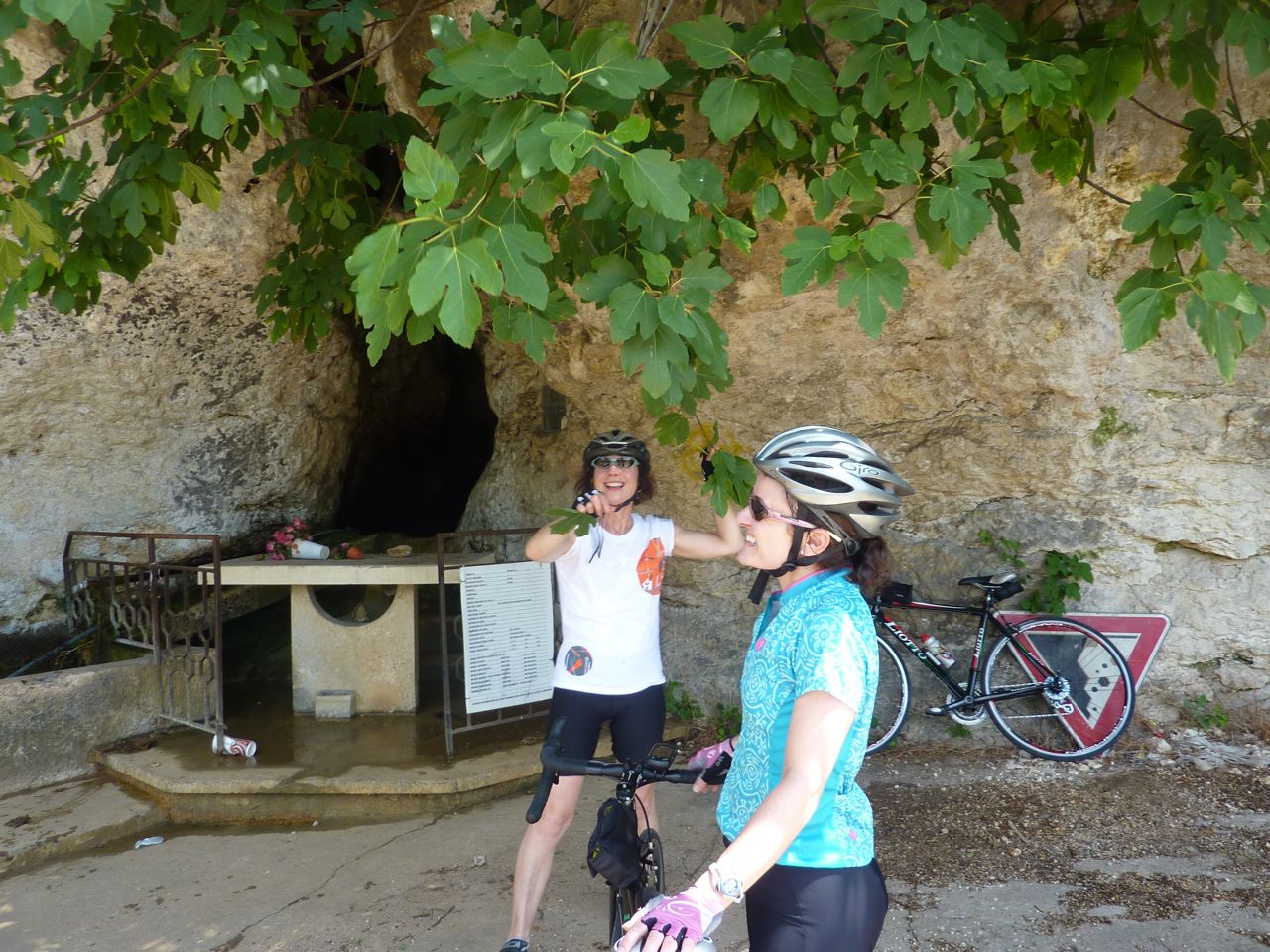
Susan and Chrissie at water stop

We had a few tasks: continue to braise the pork belly, which was proving a bit tenacious; finish off the duck ragu; marinate the radicchio; make some sort of dessert; and the big task: Susan’s Venetian wedding ravioli. These raviolis are made with a dough of potato and flour, much like a gnocchi dough without an egg. They are stuffed with a mixture of dried fruit, nuts, our homemade ricotta, grana, and grappa. I know these as cjalsons, a type of ravioli that hails from Friuli Venezia Giulia. Sometimes made with pasta dough, sometimes with this potato dough, I was happy to learn from Susan Regis how to make it successfully with the potato dough.

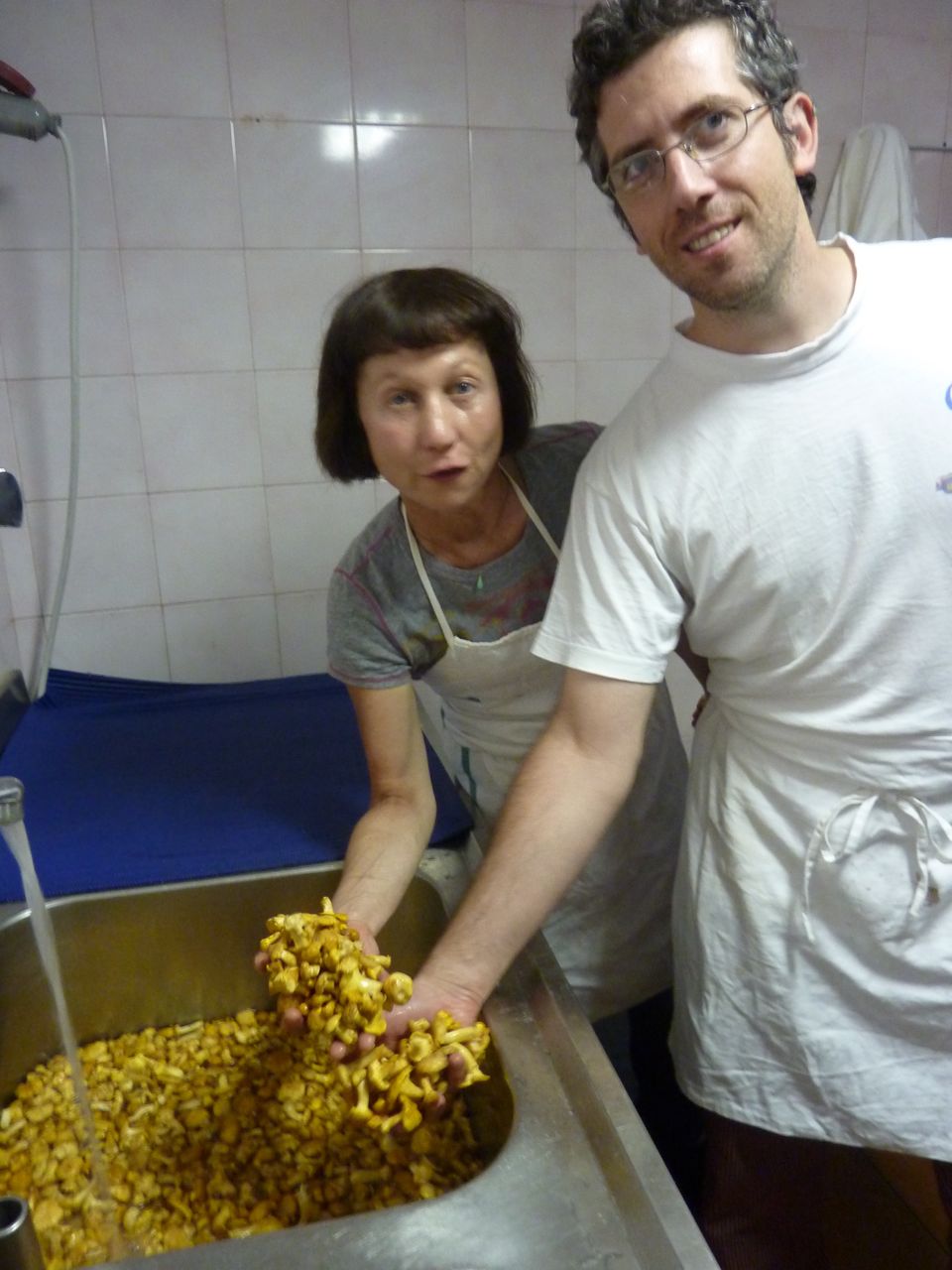
Susie and Chef Dennis check out some fresh mushrooms

We baked the potatoes, then skinned them when still warm, spreading the potato flesh across the counter to cool it quickly and let the steam escape. We riced it while warm as well. We mixed it with the flour, and kneaded it a bit. The flour we had was semi-whole wheat, which we would not recommend using for this – it doesn’t seem to absorb moisture as well as a white flour. Joyce and Chrissie did a great job forming the ravioli – rolling it out just like a pie dough, placing a spoonful of dough on the top, brushing a bit of egg was around the sides, covering the filling with dough and using a cutter to cut the individual raviolis. They were circular in shape, and we pressed around the edges to seal in the filling. We only needed to make one or two per person, as we have plenty of food lined up for tonight, so we made pretty quick work of it.

We cranked up the heat and finally got the pork belly to soften up a bit. We defatted the duck ragu, and Chrissie did a precise job cutting up the meat from the legs. This was added, and we were done here. The radicchio was cut into quarters lengthwise, then marinated in balsamic glaze, wine vinegar and herbs. I threw together a bread pudding, made from a sweet panettone like bread that I bought at a great bakery in Bassano the day before. The remaining cherries were roasted to accompany them.

We put together a quick salad for lunch, with leftover potato skins from the ravioli, topped with pancetta and cheese. Vernon returned, the bikes were ready, and we headed out for a quick afternoon ride. The skies had cleared, the roads were dry, and we were off.

More hills today, but we were ready for them! We rode along the spine of the Colli Berici, taking a different, more remote route. Dropping down into the valley, we revisited beautiful towns like Lumignano and Custozza, before one last trip up our favorite hill to our Locanda. A quick shower, and then Susan started up the grill.

Antipasti

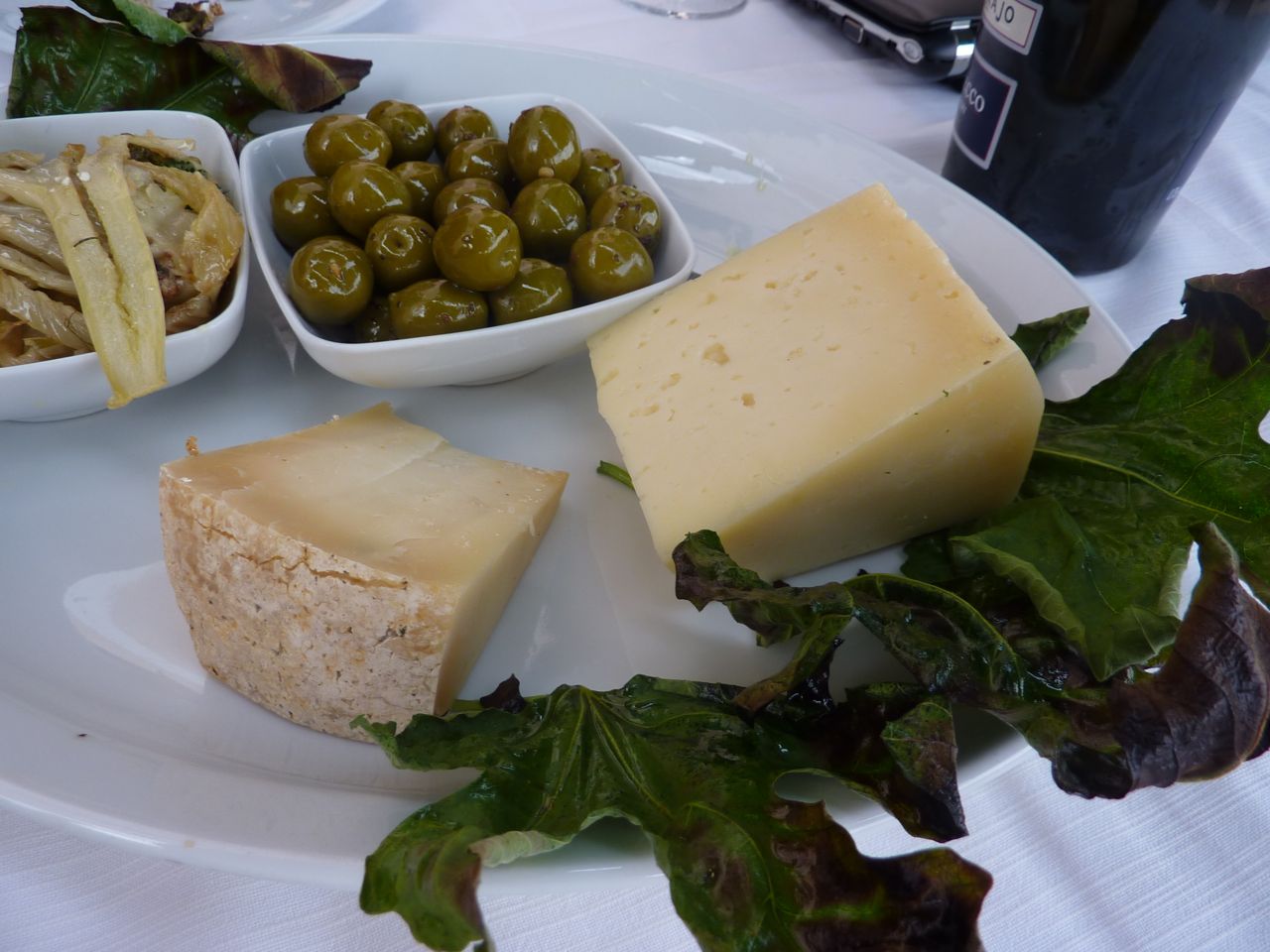
We began with lots of antipasti: burrata cheese with the local Prosciutto di Berico Euganeo, as well as the Prosciutto di Sauris from Friuli. Roasted eggplant, roasted onions, and roasted tomatoes. Two stronger cheeses: bastardo del grappa, and

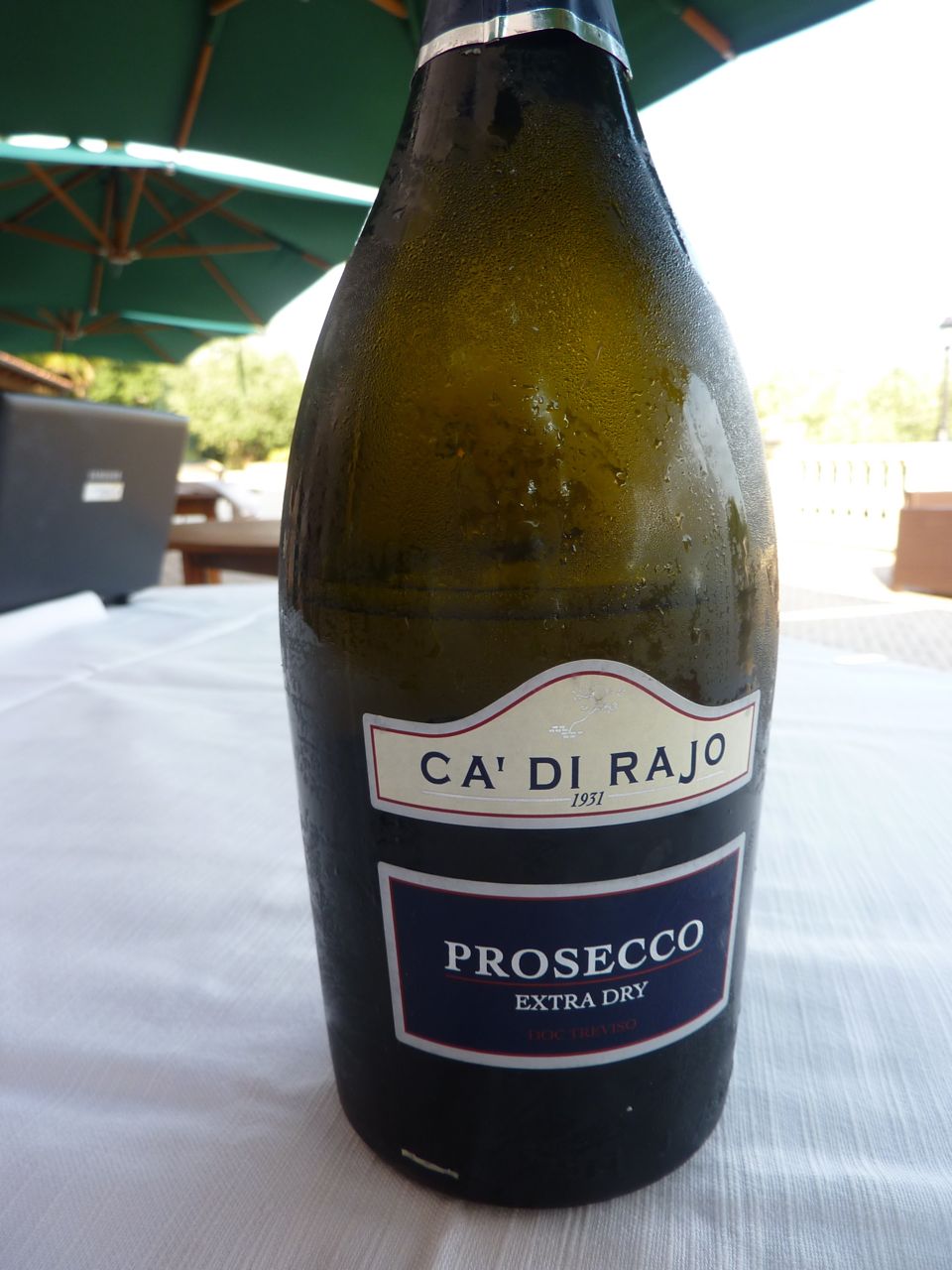
Ca' di Raji Prosecco

montasio from Friuli. We enjoyed this with a Ca’ di Rajo prosecco.

Our first course: the ravioli, or cjalsons, served with a browned butter and sage sauce. Yummy!

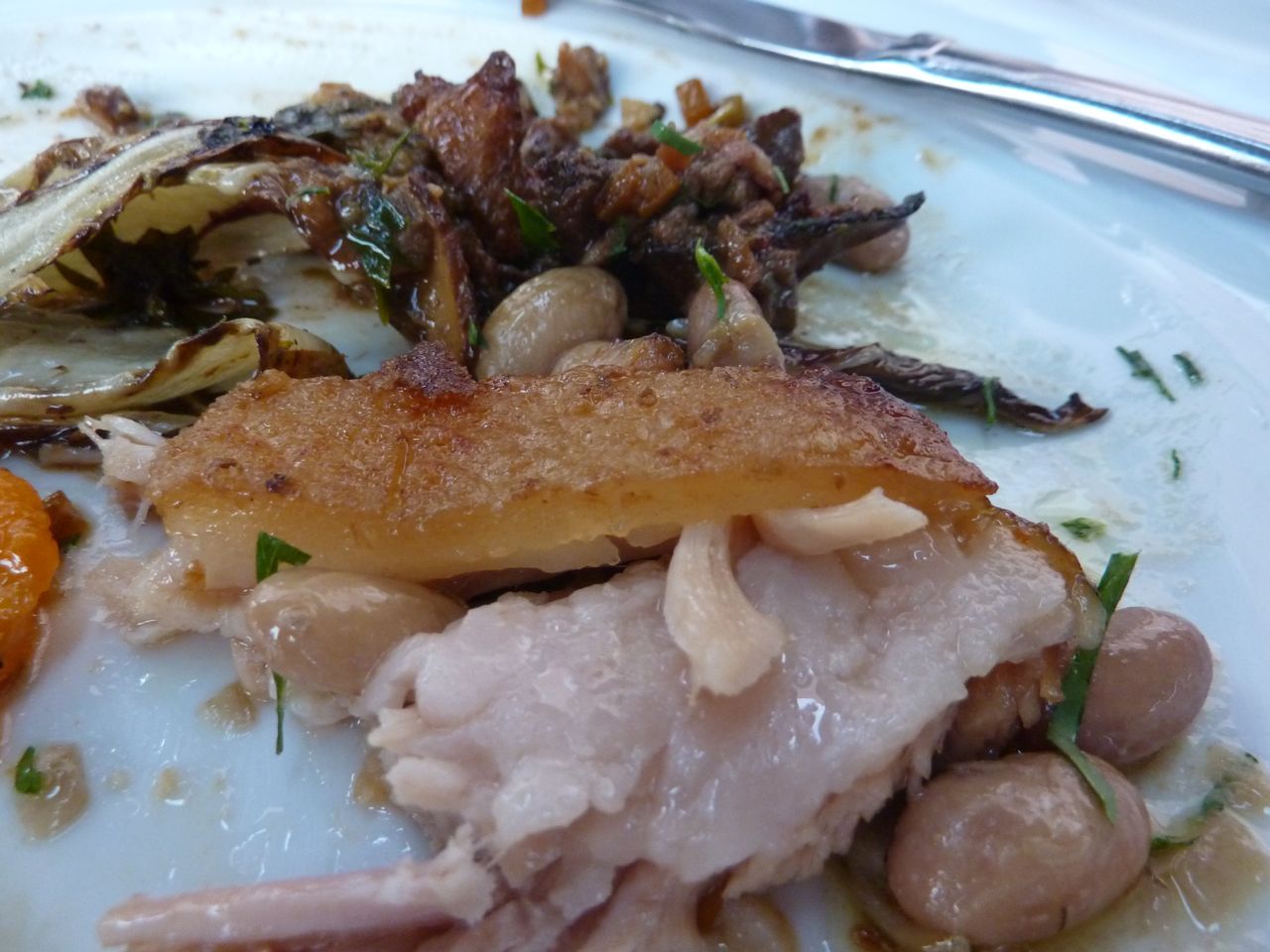
Susan and I grilled and plated, while the others enjoyed some wine. Our last meal: pork belly with our fresh borlotti beans; duck ragu with buckwheat polenta, grilled radicchio. Just a little taste of each, but everyone had contributed during the week to produce a

Pork Belly, Radicchio, Duck Ragu and Polenta
Pork belly, radicchio, duck ragu and polenta

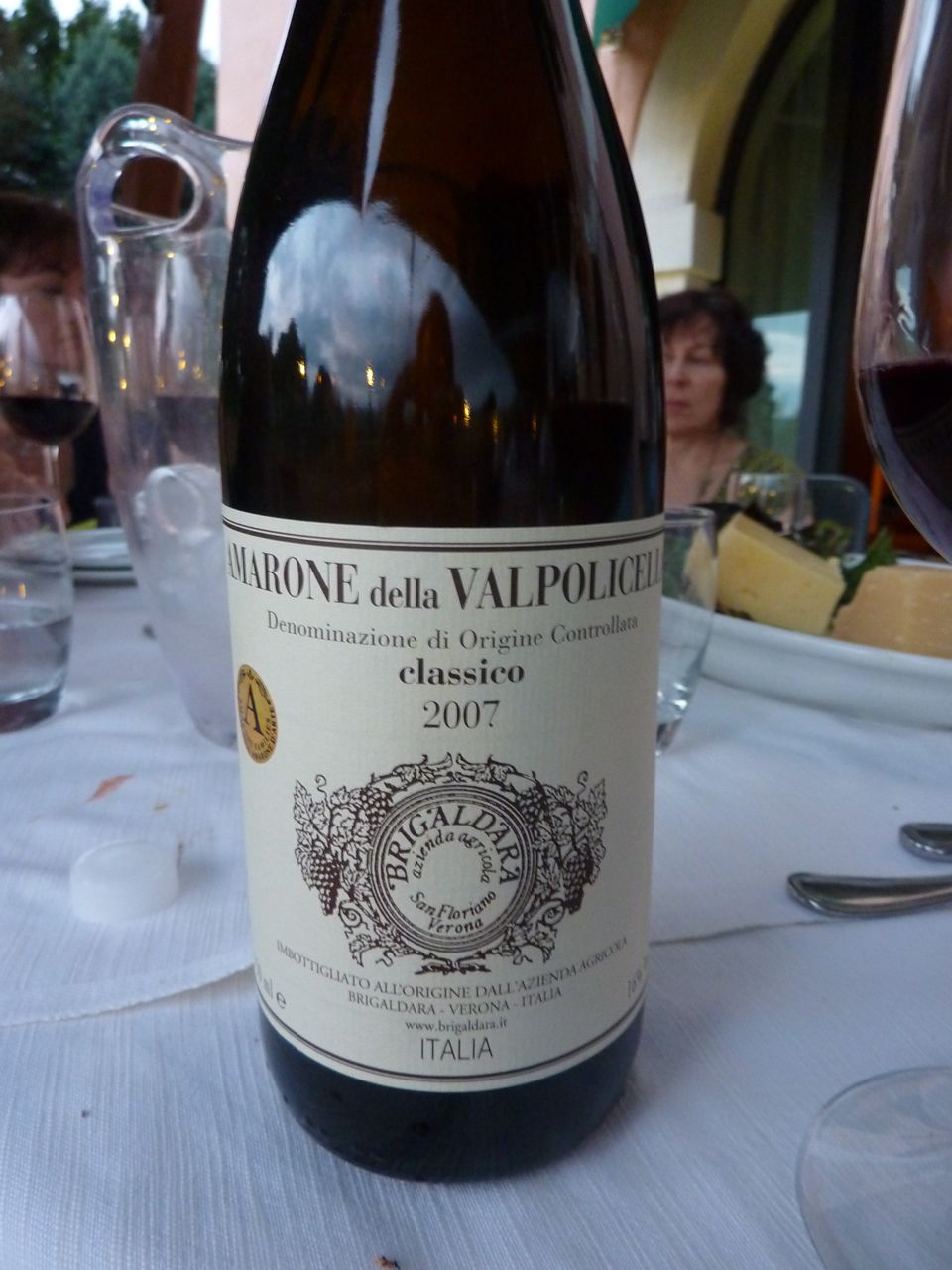
fantastic feast under Susan’s expert supervision. We enjoyed Valpolicella and Amarone wines from Brigaldara and Novaia wineries just to the west. Big meaty reds to complement our pork and duck dishes. Finally, our dessert: bread pudding with roasted cherries and grappa whipped cream. A perfect last meal to celebrate our trip!

Brigaldara Amarone
Posted in Amarone, antipasti, beans, Braising, Cherries, Dessert, Fitness, Friuli-Venezia Giulia, Mushrooms, Pork, prosecco, Radicchio, Ricotta, Valpolicella, Veneto Food | Tagged , , , , , , , , , , , , , , , , , , , , , , , , | Leave a comment

Bassano del Grappa

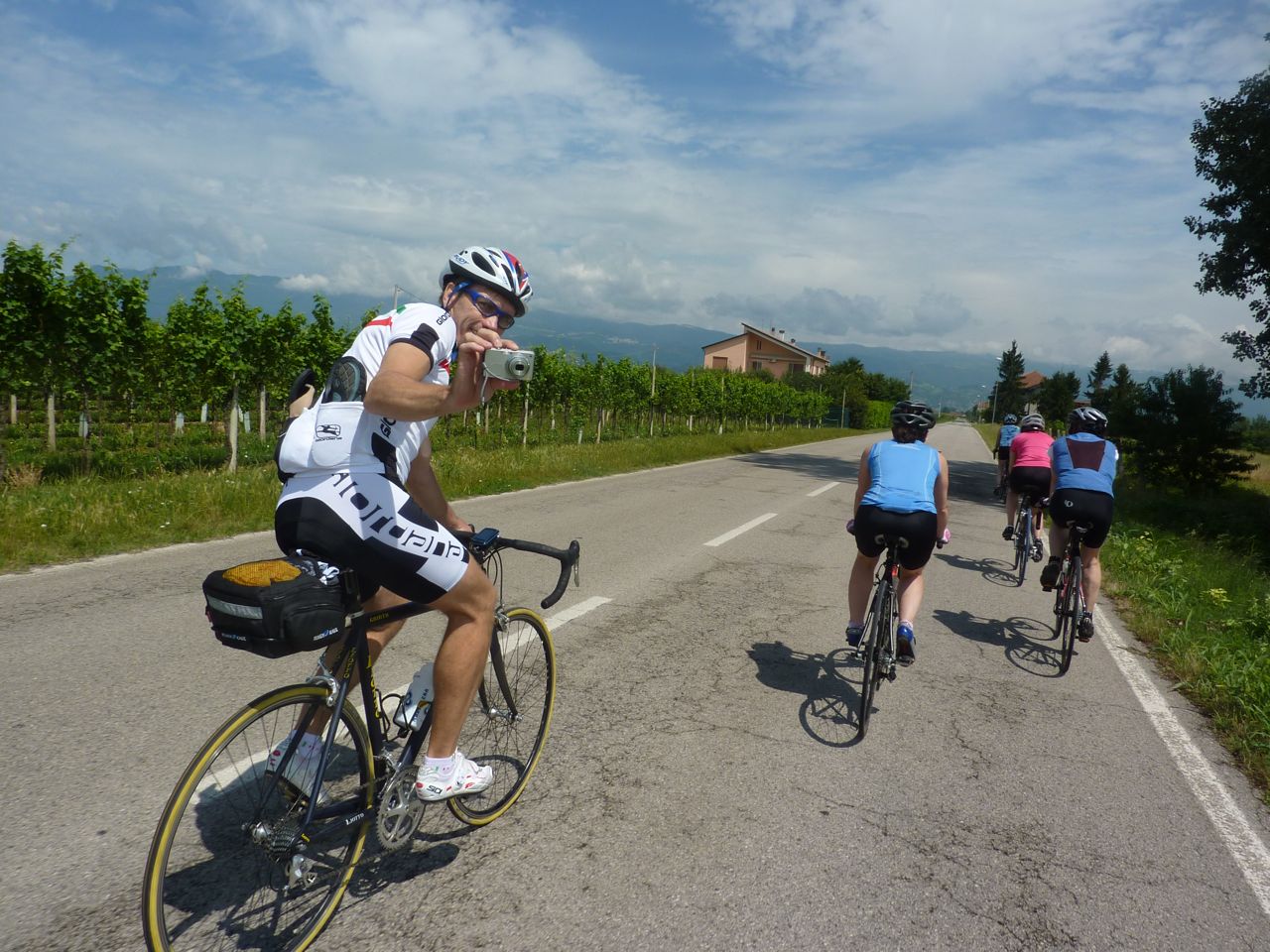
Dueling camaras

Today we decided to take a break from the kitchen altogether, and do a longer and more leisurely ride. Our destination today is the beautiful city of Bassano del Grappa, known for white asparagus in the spring, the beautiful Ponte degli Alpini, another of Palladio’s designs, and home to several grappa distilleries.

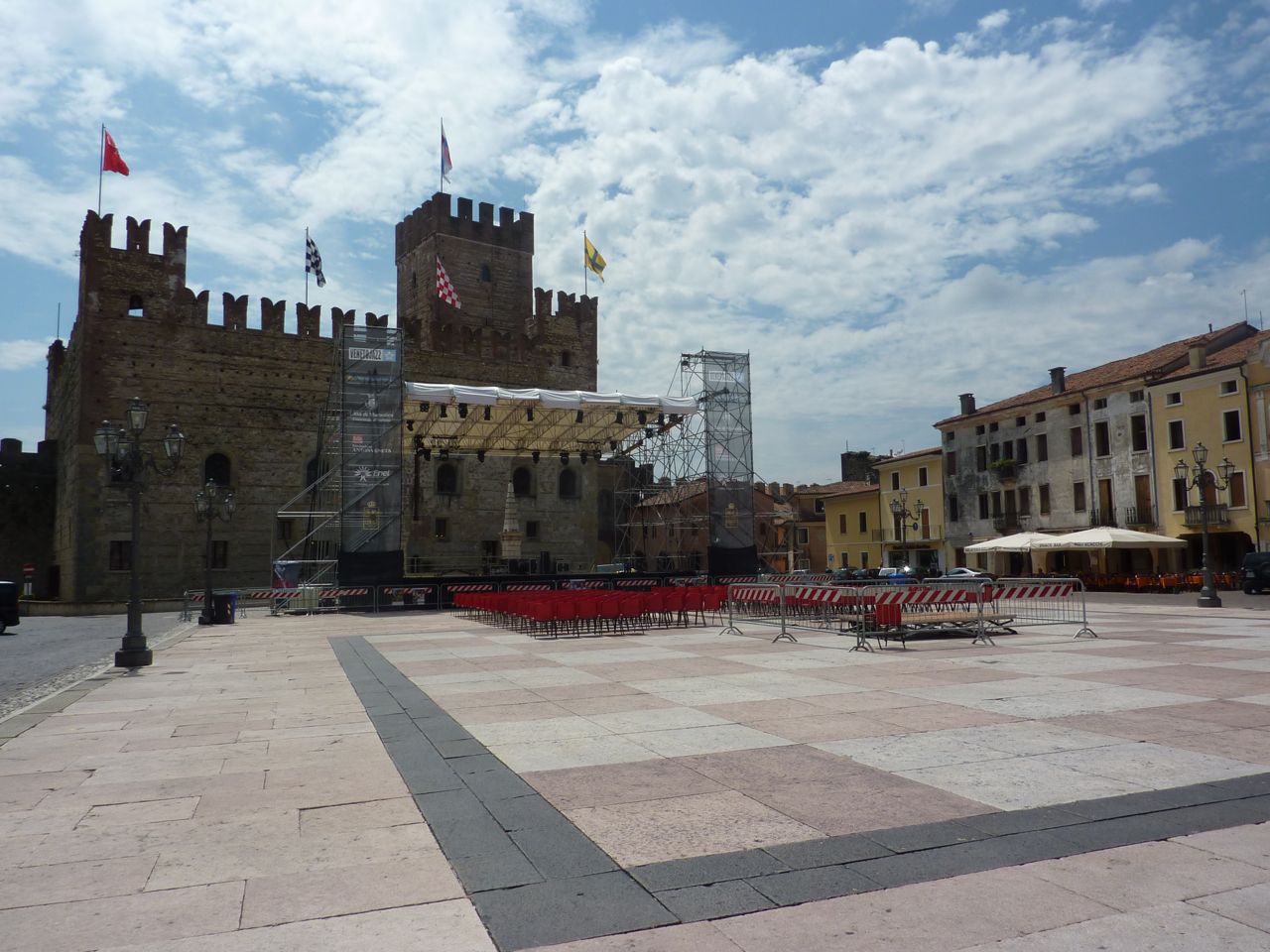
Marostica, with chess board on piazza

We head out through downtown Vicenza and north. Once again, lovely vineyards and farmlands stretch on either side of us as we ride from small town to small town. We make a quick first stop to refuel on a caffe and croisssants. Our first destination is the walled city of Marostica. Surrounded by walls dating from the 11th century, Marostica is known for its cherries, which have just come and gone in May.

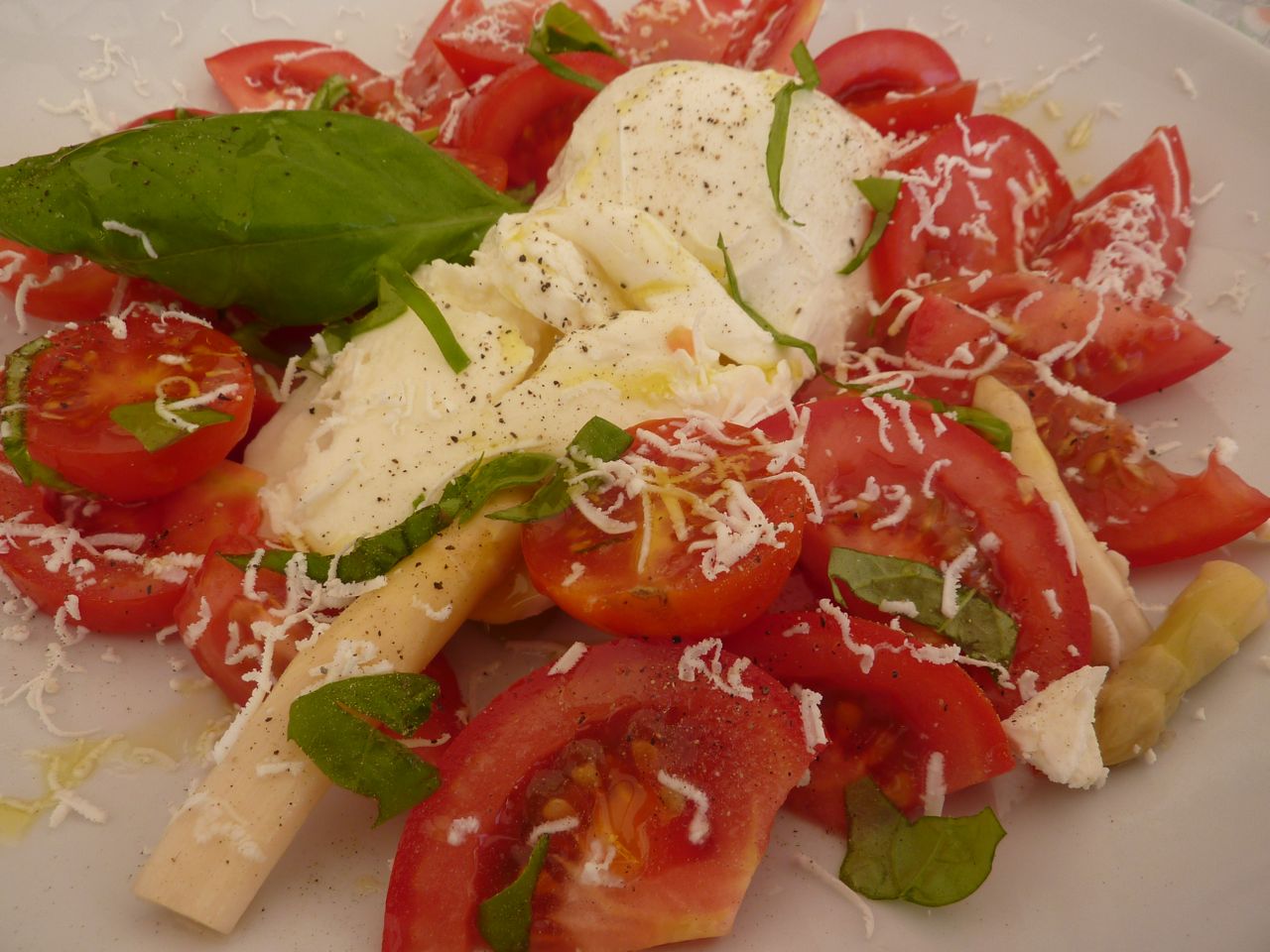
Lunch of tomatoes and burrata cheese

The introduction of cherries into Marostica itself is a very well-known story. In 1454, the governor, Taddeo Parisio, had a daughter Lionora who had two suitors vying for her hand in marriage. Rather that subject everyone to the usual duel, Parisio promised his daughter to the one suitor who could best the other in a living chess game. This chess game was played in the city center, with live persons standing in for the chess pieces. The winner wed the beautiful Lionora, and the loser was awarded the hand of her less attractive younger sister. The first cherry trees were planted that year in Marostica in commemoration of this event. To this day, this chess game is reenacted every other year in September.

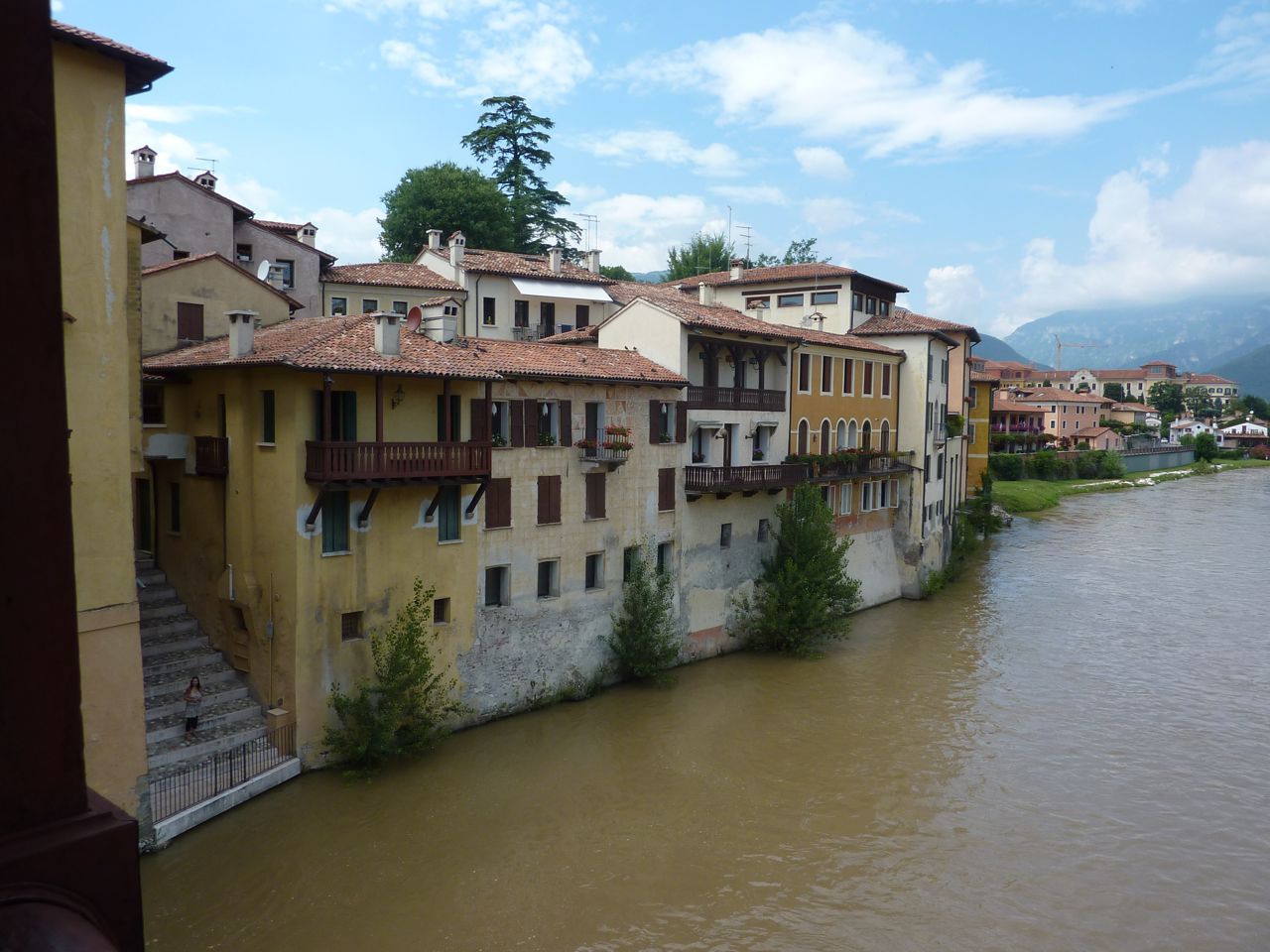
View from Ponte degli Alpini

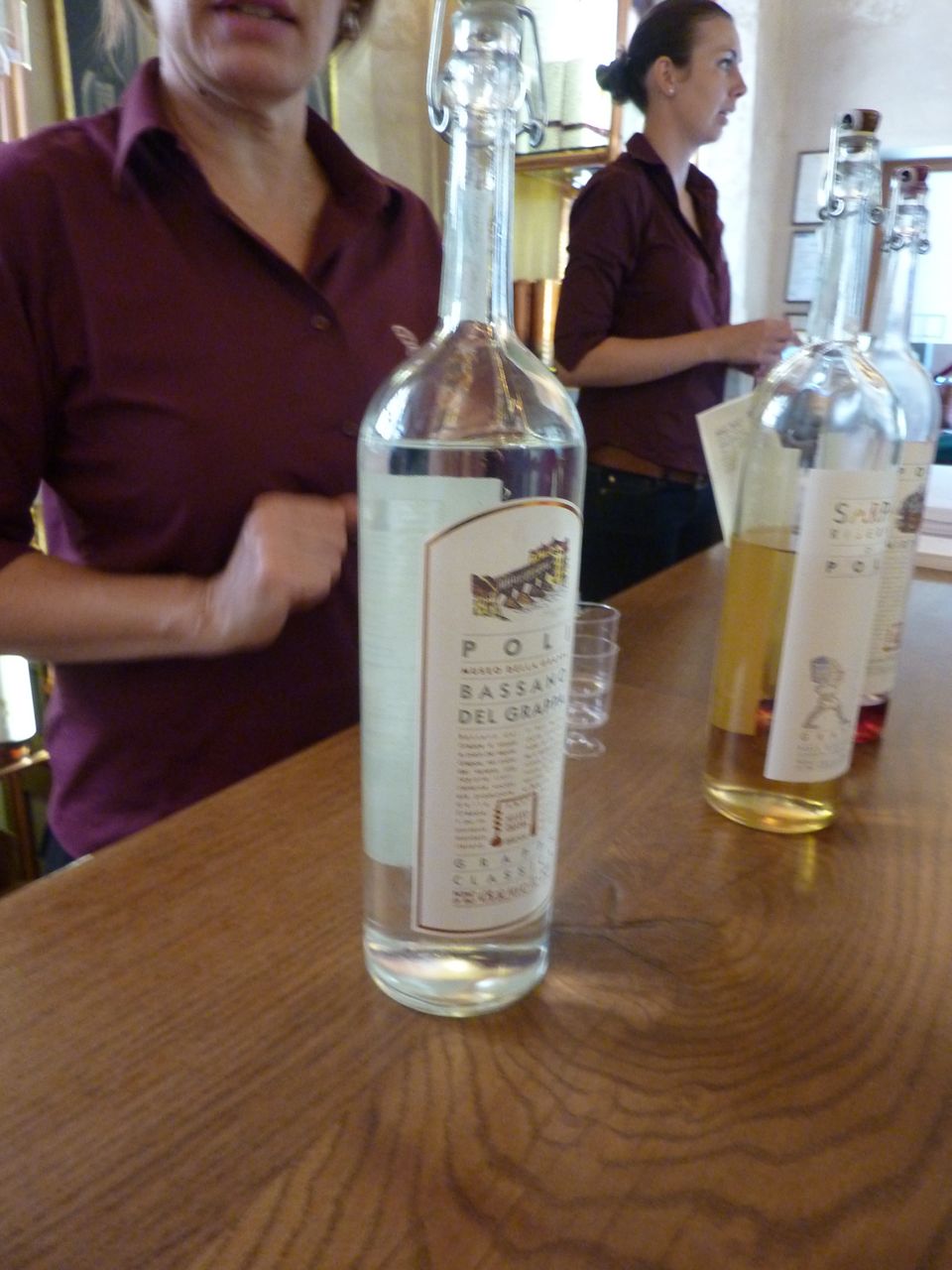
We enjoyed a quick lunch, then back on the road. We have only 7 kilometers to go, and quickly reach Bassano. We visit the famous bridge, Ponte degli Alpini, and then pay a visit to the Poli grappa distillery. We tasted several types of grappa, all very different: a ‘traditional’ grappa, not to processed or aged, that one would typically use in coffee or cooking; an aged grappa, golden in color and noticeable smoother, and then some interesting flavored grappas, including blueberry (mirtillo).

Grappa tasting

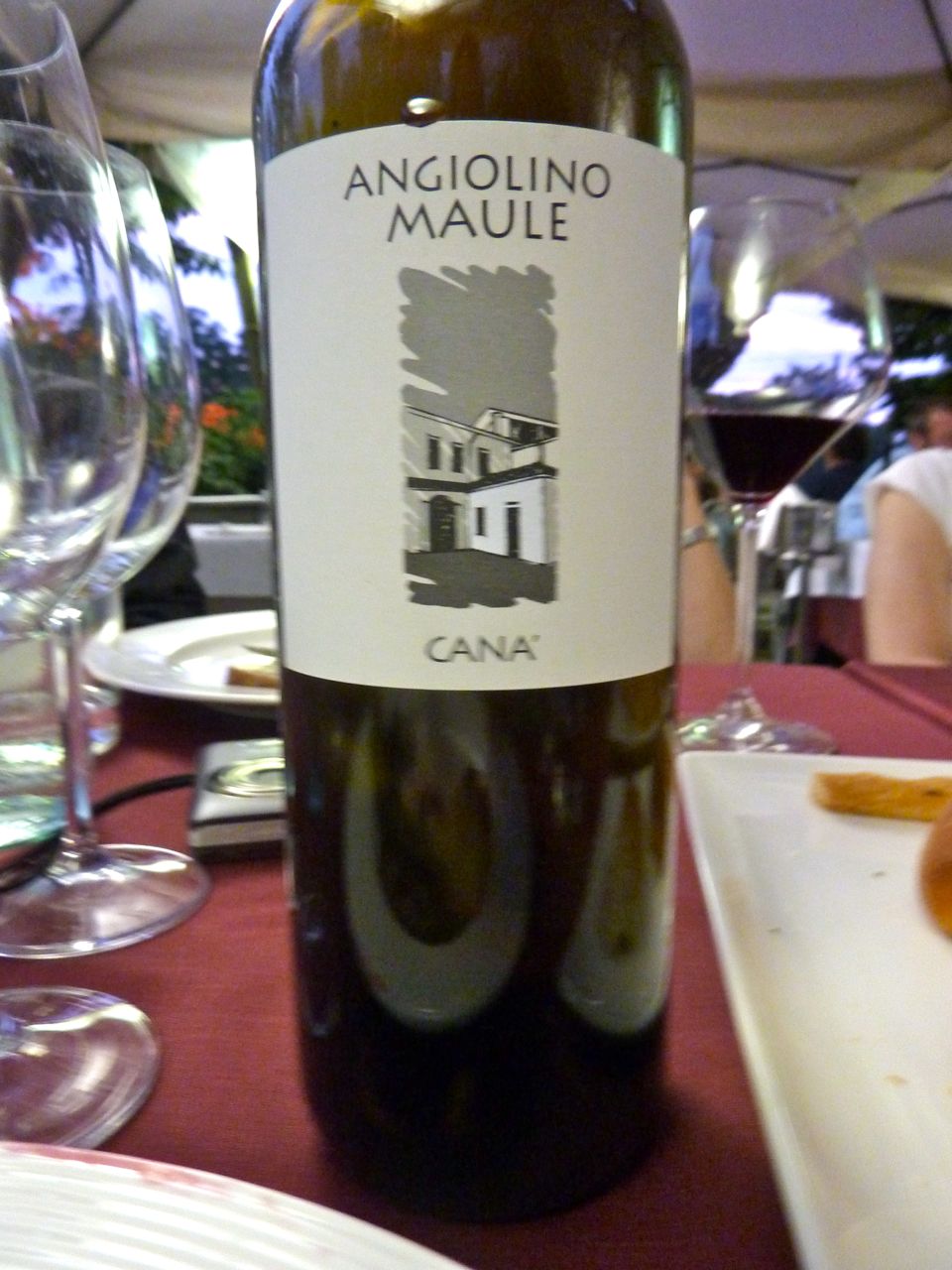
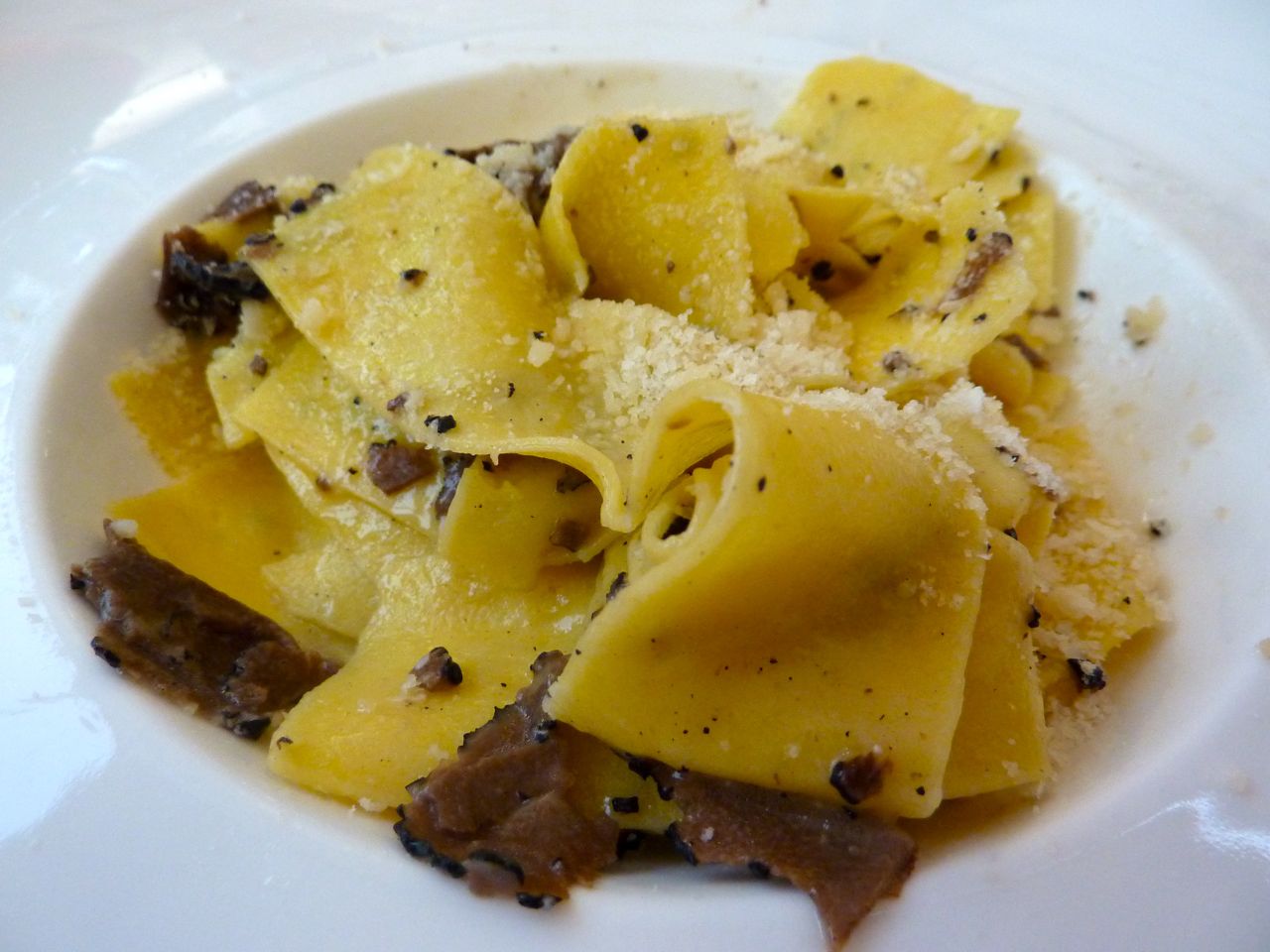
We had an hour to explore Bassano, and while Vernon returned with all of our bikes, we took a taxi back to our Locanda. We had some time to relax before our dinner at Trattoria Zamboni. We dined outside, amidst beautiful flowers. A lovely evening, which had cooled off to the perfect temperature for dining al fresco. We enjoyed lots of different dishes; souffle of carrots and zucchini, homemade pasta topped with truffles from the Colli Berici, pork braised in milk, venison with cherries. We began with a Pinot Grigio from Colle di Bugano, which we have passed on our rides, and made our Gargenega from last night. Next was an absolutely amazing wine from Antonio Maule, Cana, full-bodied, robust. Maule has a small vineyard, La Biancara, in Gambellara, and is passionately devoted to sustainable, biodynamic techniques and hands-off processing. We finished with another red from Castello di Lispida in the nearby Colli Euganie. Yet another wonderful dinner; most agreed that this was our favorite restaurant so far, although it is certainly hard to choose!

Maule Cana wine
Tagliatelle with Colli Berici truffles
Posted in Cherries, Colli Berici, Fruit, Gambellara, Tagliatelli, Travel, Uncategorized, Veneto Food, Wine Pairings | Tagged , , , , , , , , , , , , , , , , , , , , , , , , , | Leave a comment

Vicenza, City of Palladio

Susie stops in the shade

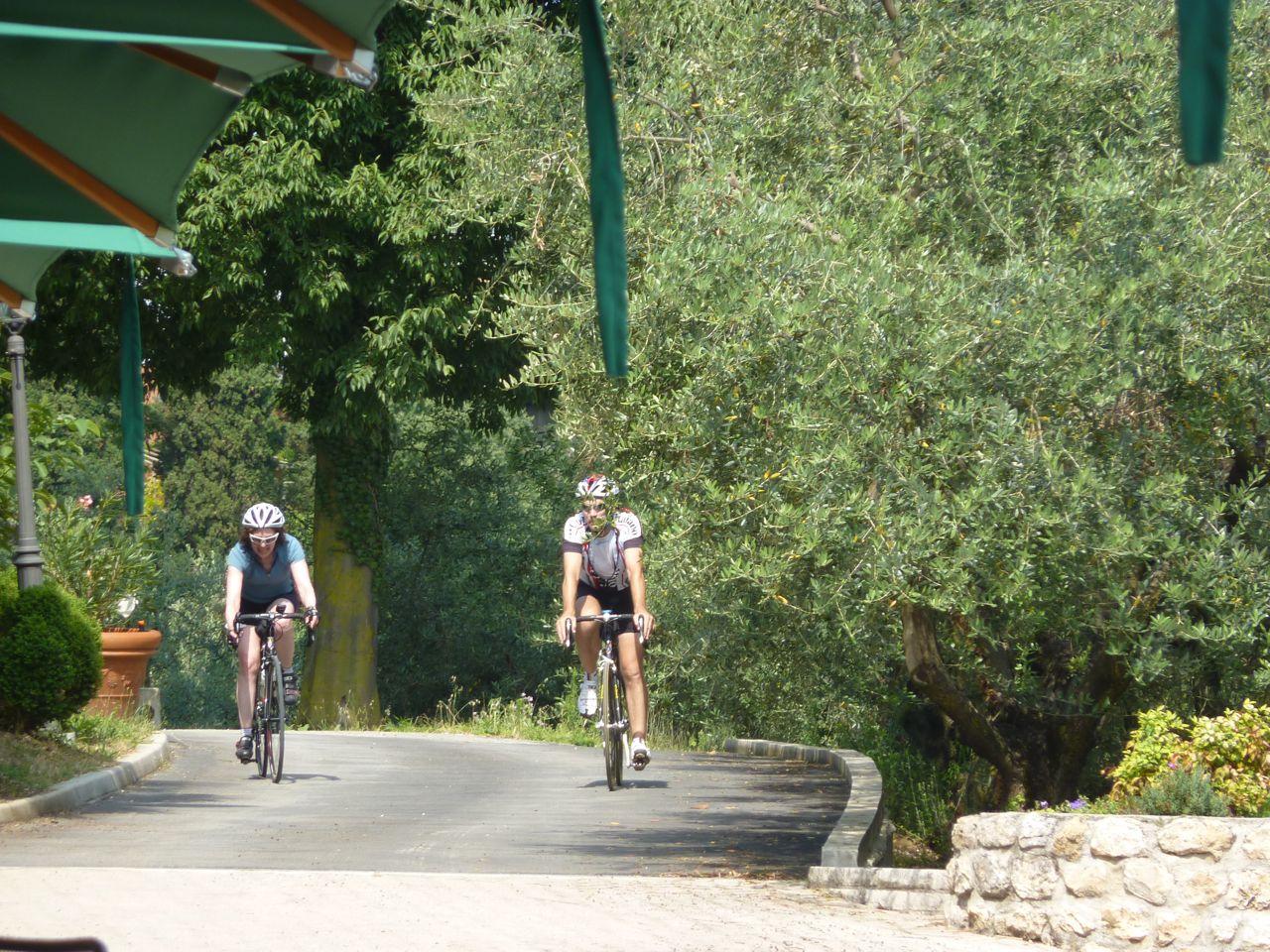
A shorter ride today, our destination being downtown Vicenza. We are staying just to the south of this beautiful city, in the Berici Hills. Our locanda is situated in a picturesque location, but its panoramic view means we have a bit of a hill to climb to reach it at the end of the day! So we know today that challenge is in front of us, but first, lots of sights to see.

We begin heading down the hill – the easy part, and then wind our way around Lago di Fimon, taking the scenic route to Vicenza. We ride through a few small hamlets, corn fields (polenta corn), and vineyards. We eventually make our way to a bike trail which will lead us most of the way into Vicenza.

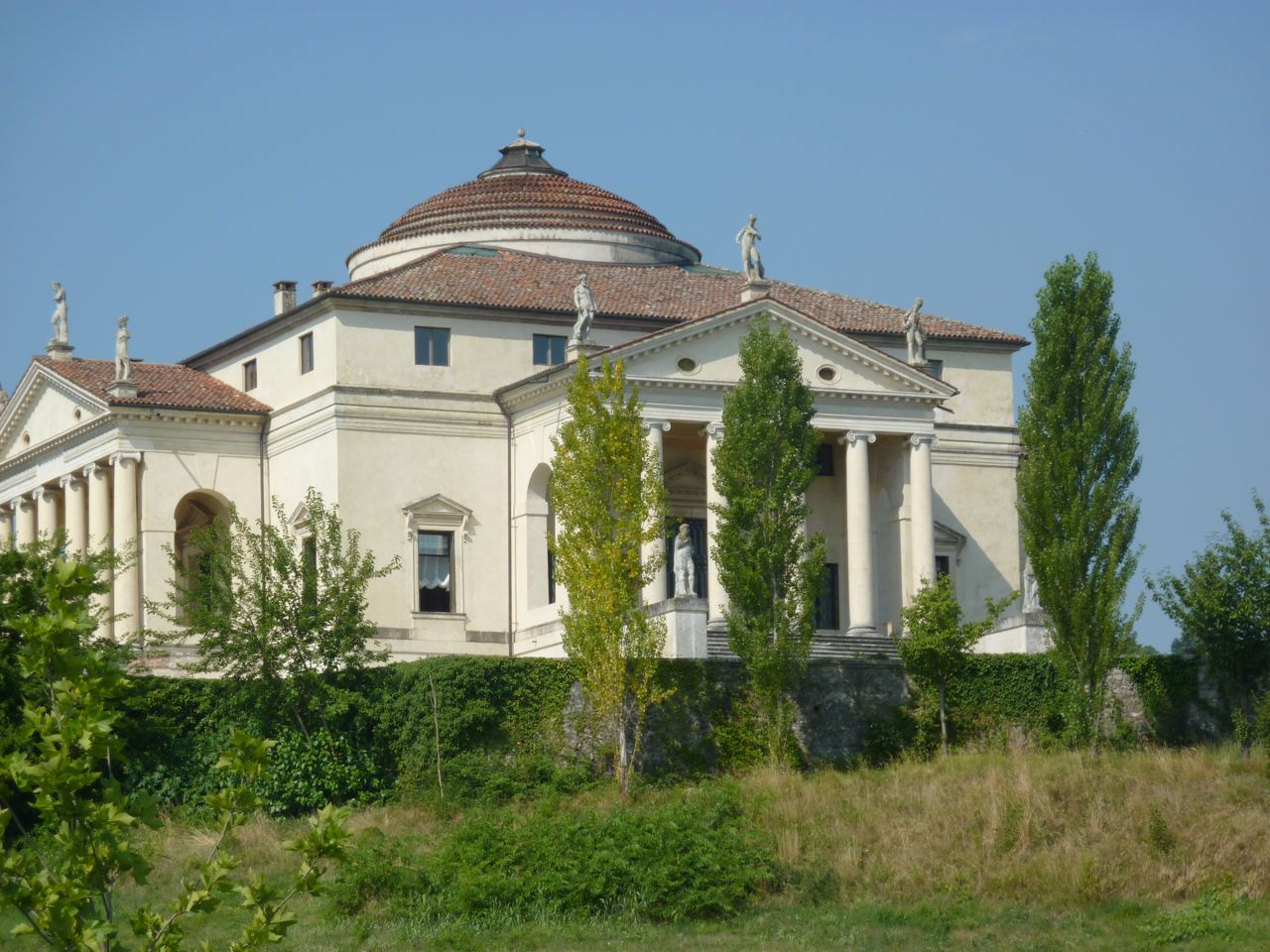
La Rotonda

As we begin to enter the city, the beautiful Renaissance villa La Rotonda by Palladio, otherwise known as Villa Almerico Capra greets us on the left. A classic example of Palladio’s architecture, it was built in the late 1500s. Inspired by the Pantheon in Rome, it is one of Palladio’s best known works. It is beautifully maintained both inside and out. We took a few moments off of the bike to explore the villa and the beautiful grounds, then headed into downtown Vicenza.

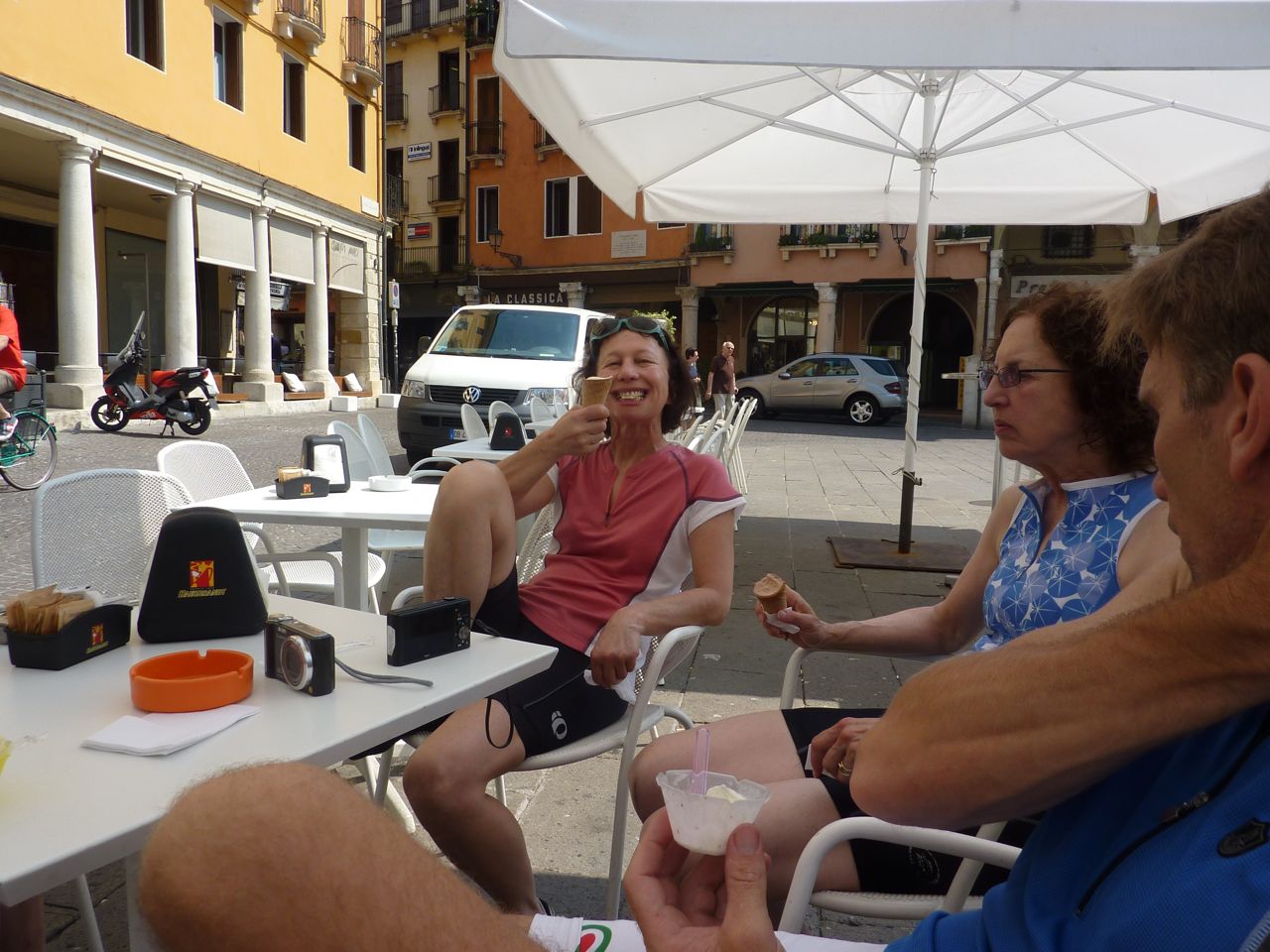
Gelato break

Our destination was the centrally located Piazza dei Signori, where we left our bikes and had a few moments to stroll around and get the lay of the city. We will return here tonight for dinner, so we are identifying our shopping spots for tonight! A quick gelato to refuel, and we hop back on the bikes for a direct ride back to the Locanda. That hill is still in front of us.

But before our challenge – a little purse shopping! Vernon knows a great leather goods producer right on the way; we all stop (except for me, who is outside changing my flat tire), and purchase handmade bags for an amazing price. We leave our orders, and Vernon will pick them up for us later in the week. Back on the bikes. Now, not much remains between us and that hill.

Expert hill climbers

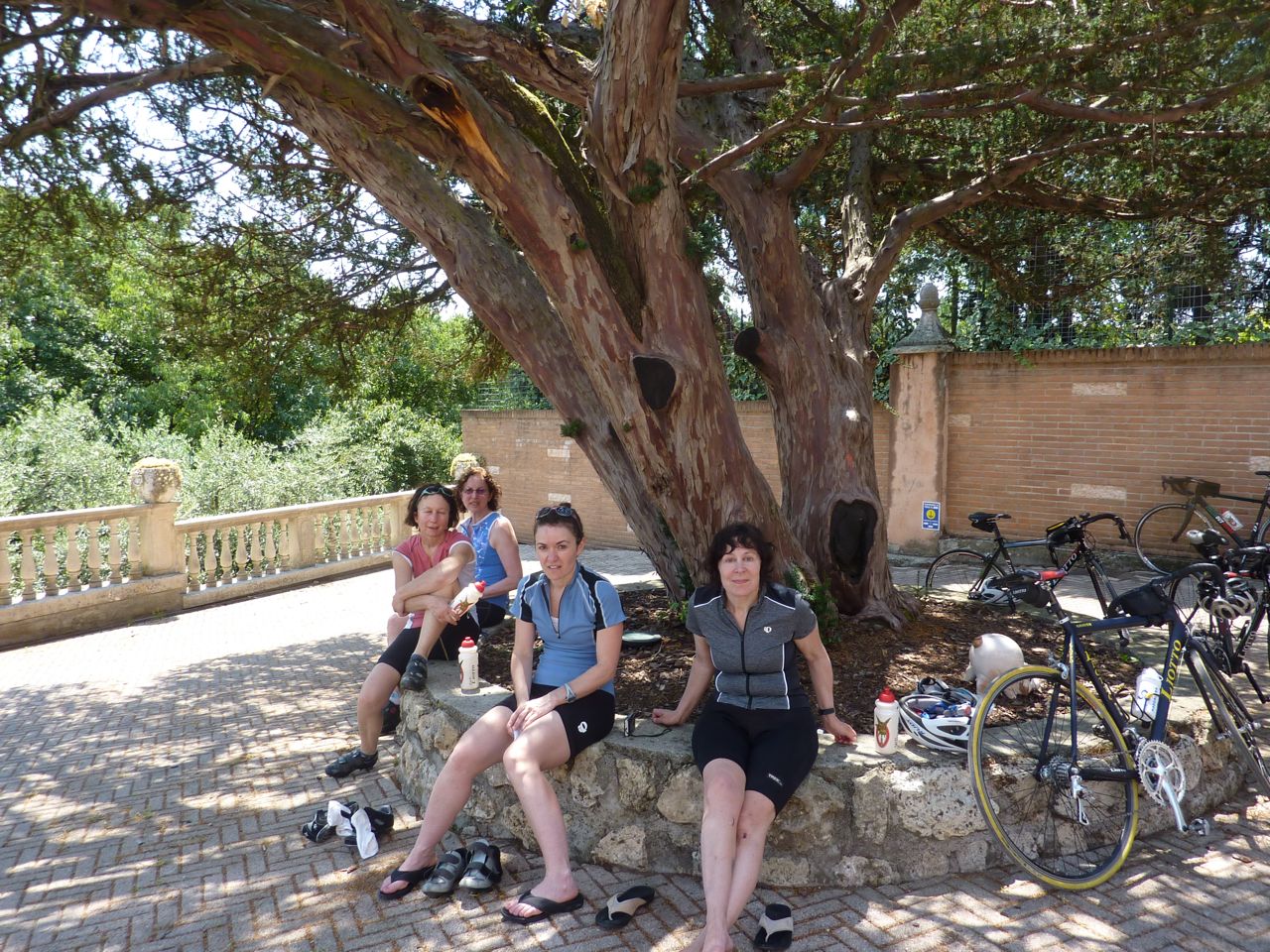
We arrive at the hill, and all start the ascent at our own pace. It is hot, and a 1.6 km climb. But our biking skills and our familiarity with our equipment has improved significantly over the last two days, and before you know it, we are all up cooling off under a tree at the Locanda. What had seemed such a challenge only two days before was not so much this time around!

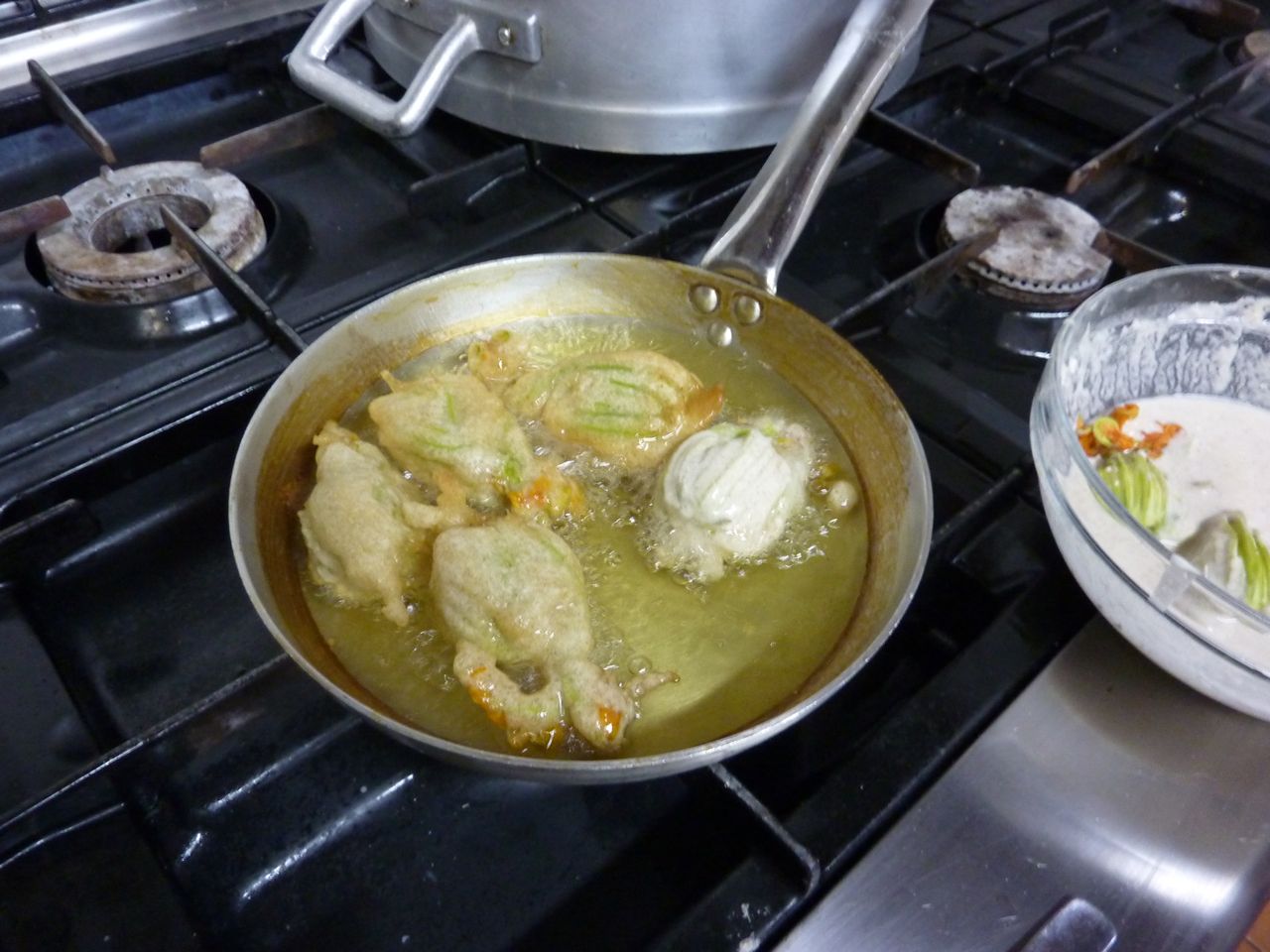
A quick shower, and back in the kitchen with Susan. Today is a prep day, as we make a duck ragu, cure some pork belly, and make polenta. On Friday, we will enjoy all of this preparation at our farewell dinner. We begin with Susan showing us a quick antipasti with zucchini flowers. We take out the stamen, stuff them with our homemade ricotta and a sage leaf, and coat them with a bit of tempura batter – egg white, seltzer water, and flour. A quick fry, and we have a tasty treat.

Zucchini flowers

We chop onions, carrots and celery for our ragu, as well as our braised pork belly. Our duck ragu is started; saute the soffrito (onions, carrots, celery), render the fat off of the duck legs, deglaze with wine, and braise the legs in stock, wine, some herbs, tomatoes.

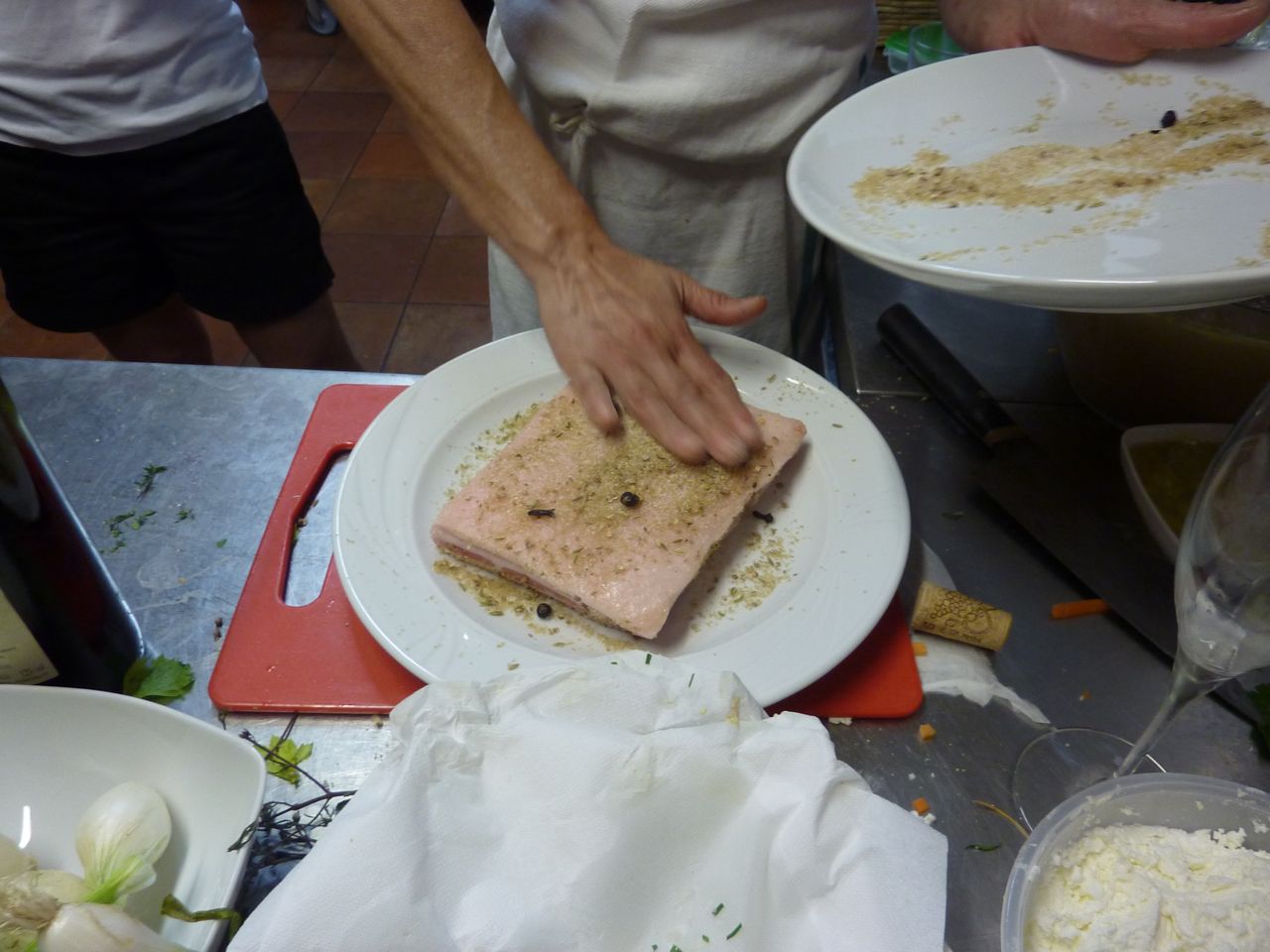
Pork belly

We cure our pork belly, coating it with salt, sugar, and whatever spices we find on hand – garlic, juniper berries, crushed fennel, thyme. It will sit until tomorrow, when we braise this. We make polenta with a combination of corn and buckwheat flours; a bit untraditional, but the use of buckwheat in polenta actually predates the use of corn, which was not cultivated here until it arrive from North America. Sherry and Joyce pitched in on the stirring. It takes a good 45 minutes or more of cooking to really properly develop the flavors of the polenta.

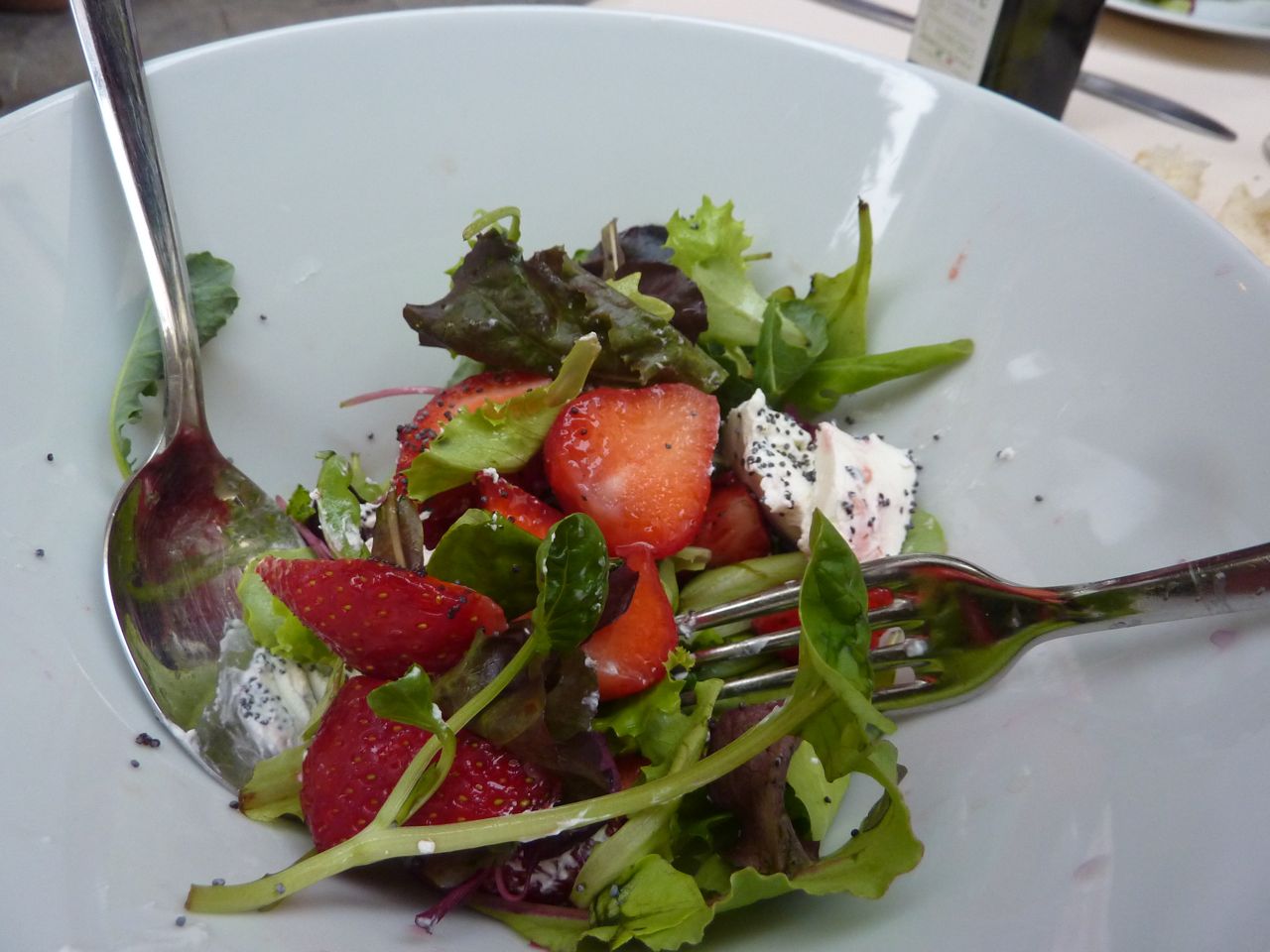
Salad with strawberries and robiolla

Tonight we headed back into Vicenza for dinner. No specific plan was in place, besides a bit of shopping. After the stores closed, we found Antica Casa della Malvasia for dinner, located in a quiet alleyway. And, comically enough, we had the same waiter here as we did on Monday at Antica Guelfa – he holds 3 different wait staff jobs in Vicenza. We were making plans to meet up with him at his third job later in the week. A very nice Gargenega from Colle di Bugano, a winery we rode by on Monday in the Colli Berici, was our first choice. Susan shared her great salad, with strawberries, robiola, and poppy seeds. And our entrees paired well with a robust Cabernet from Piovene Porto Godi, yet another great winery from the Colli Berici.

Posted in Cheeses, Colli Berici, Fitness, Pork, Salad, Uncategorized, Veneto Food, Wine Pairings | Tagged , , , , , , , , , , , , , , , , , , , , , , , | Leave a comment