Travels in Italy – Fumane, Day 1

Fumane, Valpolicella, Italy

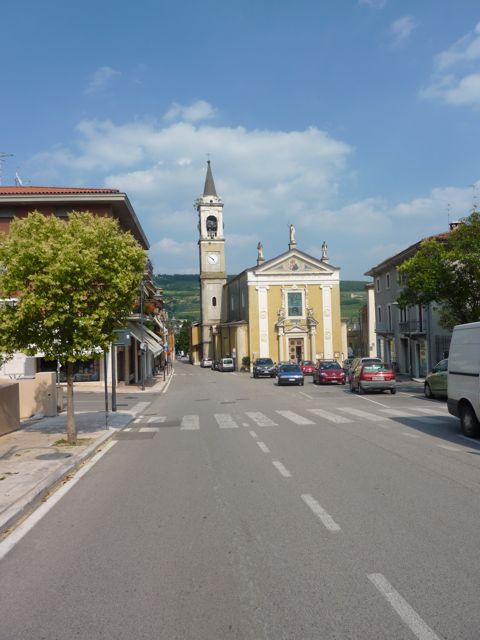
I arrived in Fumane mid-afternoon on my first day in Italy, after a nice lunch in Soave. Not to hard to find, this is a small hamlet in the heart of Valpolicella wine country. We will visit here on our upcoming Bike the Wine Roads of the Veneto trip in September, and I have a list of vineyards that I want to check out before then. I stayed at the Locanda Le Salette, a small locanda right in the downtown area. Clean, inexpensive, a fine place to stay for someone more interested in what is outside the hotel than in!
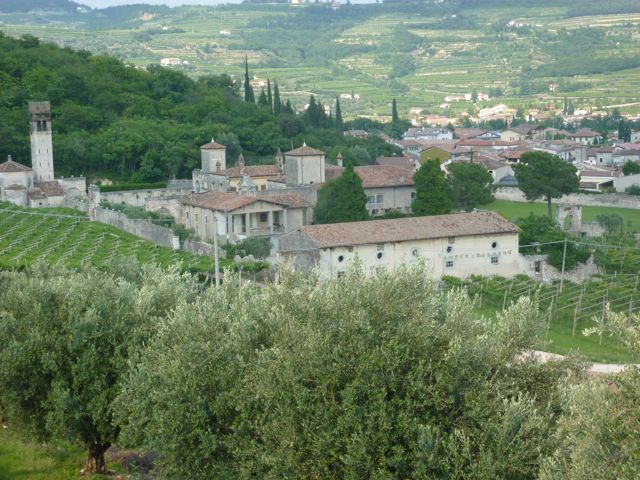
Villa della Torre from above

I settled in my room, then headed out to explore Fumane on foot, after too much time on a plane and in a car. I headed out the main street, and started up hill. Fumane is the home of one of the larger producers in Valpolicella, Allegrini. Just down the hill from my locanda is their cantina, which I passed on the way in. Up the hill is the Villa della Torre Allegrini. The historical vineyard Palazzo della Torre surrounds the Villa, and gives its name one of the best known wines of Allegrini. You can arrange in advance for a tour and tasting, so I was only able to admire the exterior. But I enjoyed a nice hour plus hike up the hill behind the Villa, around several switchbacks until I was able to take some good shots from above.
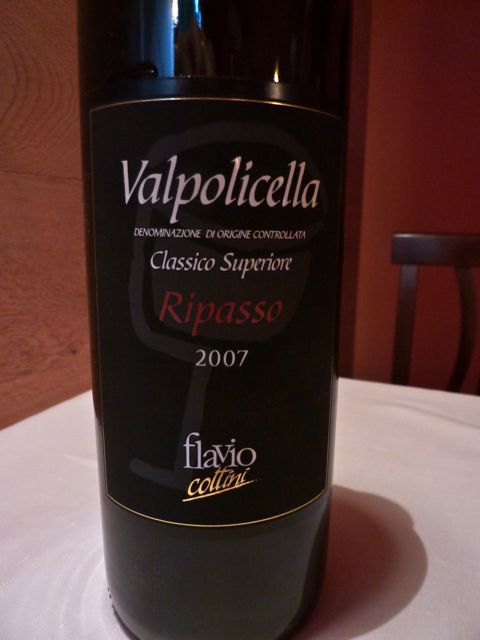
Valpolicella Ripasso

The ristorante at Le Salette is the highlight of the locanda. It specializes in Cucina a Km 0, serving only local foods and wines, not hard to do when you have such a location. All the wines hail from Fumane, and the fruits, cheeses, salumi, even flour, comes from local producers. They were listed by name in the menu. I could not keep track of all the local wines I tried – I was served by Fabio, who made me feel right at home, and kept my wine glass full all night. As it was his birthday, I was not allowed to buy any myself! I started with an apertif of a sparkling wine, then a Valpolicella Classico Superiore 2007 Ripasso from Flavio Cottini (wonderful cherry), then an intense Amarone, and a sweet Recioto to finish.
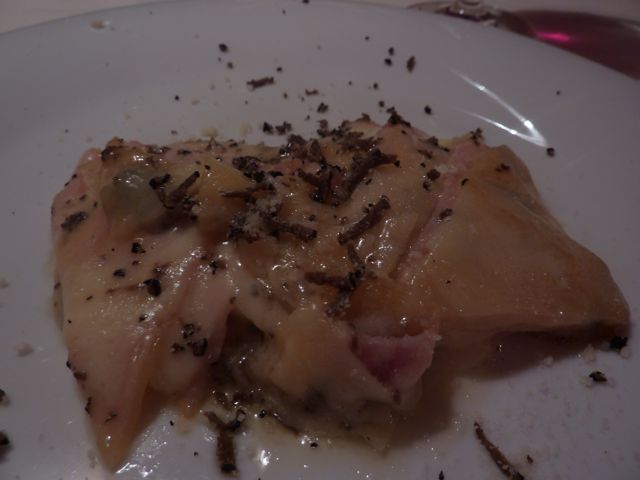
Millefoglie with Monte Veronese and Truffles

My meal began with Millefoglie di Patate Nostrane con Monte Veronese DOP e Tartufo Nero Scorzone de Monte Baldo – thinly slice potatoes, similar to our gratin, layered with speck, covered with melted Monte Veronese cheese, and finished with shaved black truffles from Monte Baldo.
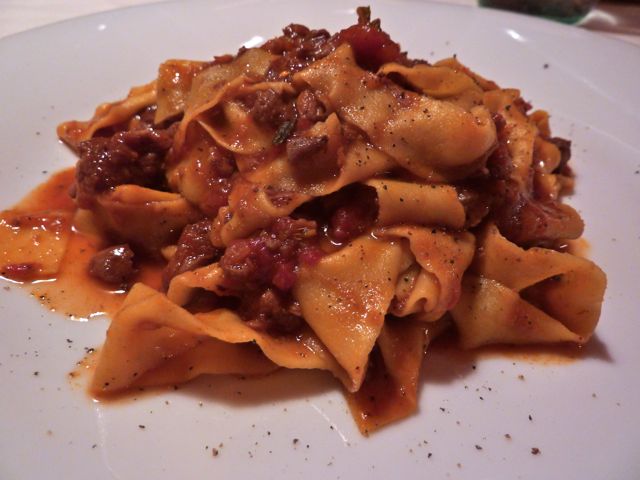
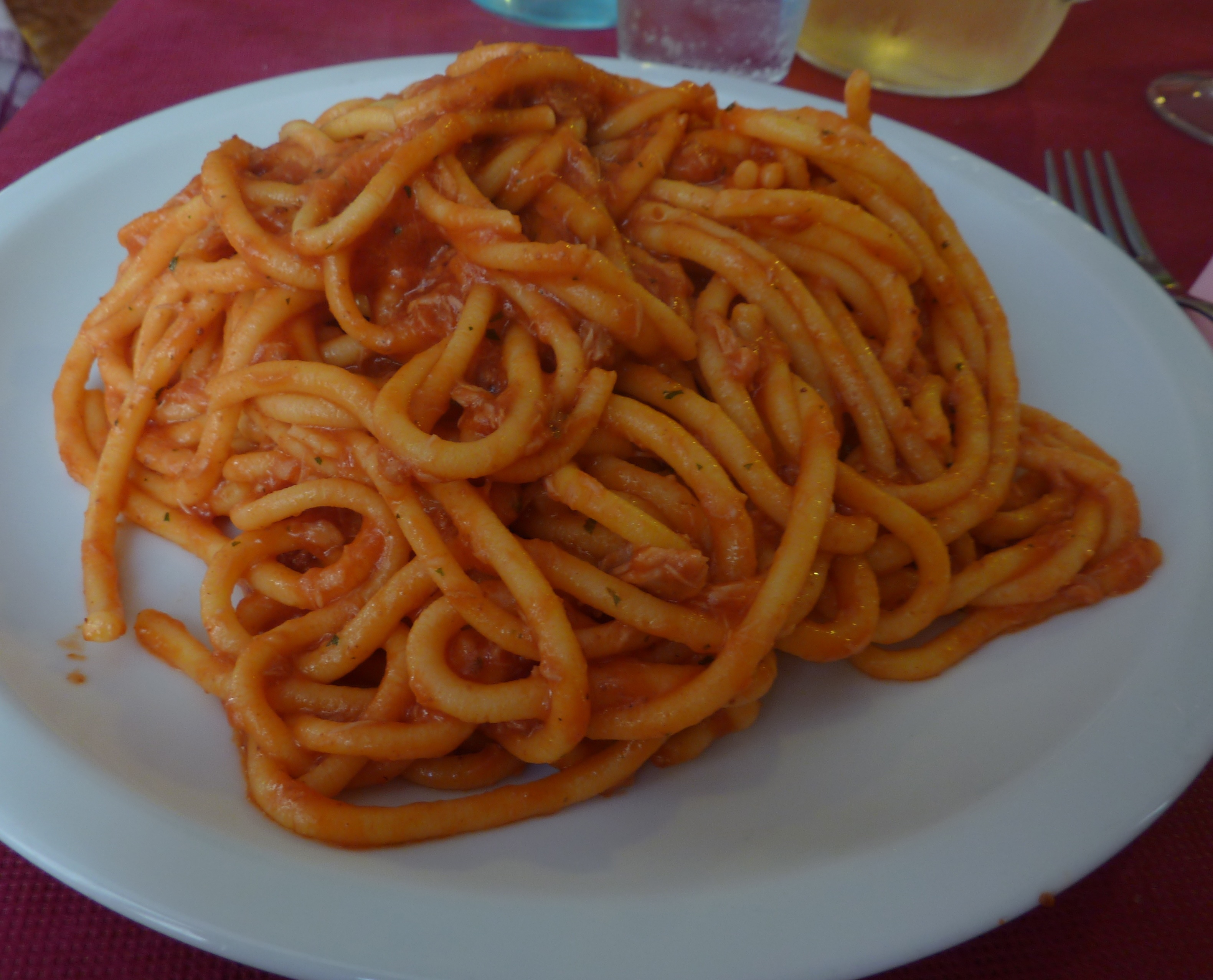
Lamb ragu

A tough act to follow, but I was also quite pleased with my pasta dish: Tagliatelle alla Bertarola. A nicely prepared homemade tagliatelle (using the local flour, no doubt), with a lamb ragu from a local farm raising an heirloom breed of the region, Pecora Brogna.
Posted in Lamb, Monte Veronese, Pasta, Tagliatelli, Uncategorized, Valpolicella, Veneto Food, Wine Pairings | Tagged , , , , , , , , , , , , , , , , , , , , , , | Comments Off on Travels in Italy – Fumane, Day 1

Travels in Italy – Soave

biking to soave bike tours italyI arrived at Venice just before 11am, for our upcoming Chefs on Bikes trip with Master Chef Susan Regis. I have a few ‘free’ days before the trip; so-called ‘free’, but actually packed with plans for visits to prepare for this trip, and our upcoming fall trip Bike the Amarone Wine Roads.

My first stop is Soave, just a little over an hour from Venice, the center of the Soave wine region and home to some wonderful refreshing white wines, made from the Gargenega grape, either alone, or blended with Chardonnay, Pinot Grigio, or most traditionally, the indigenous Trebbiano di Soave.

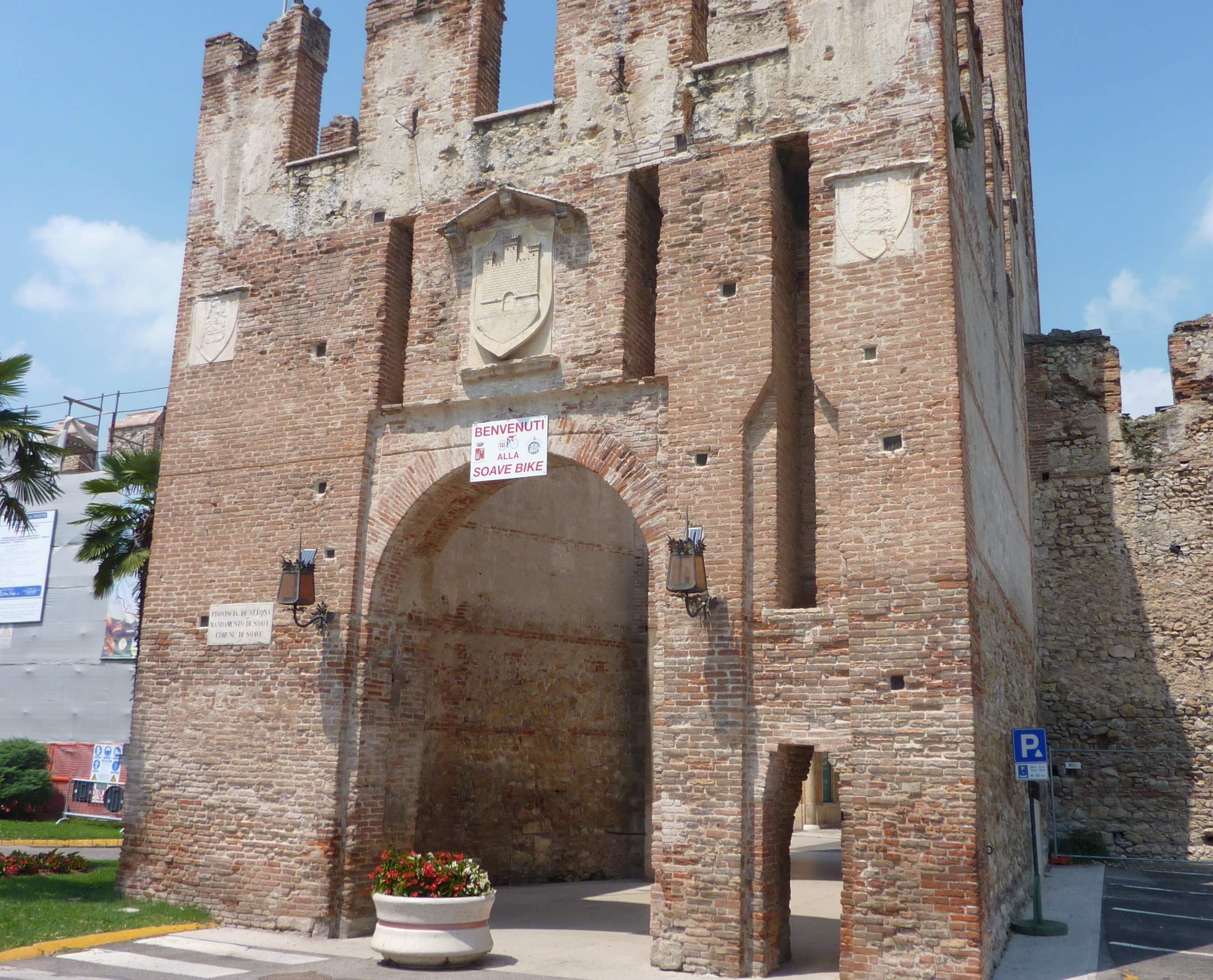
soave gate cycling holidays europeI entered the city just as the outdoor market was closing up for the day. A friendly fruit vendor sliced off a big chuck of watermelon and handed it to me; a perfect welcome after a hot car ride. I recalled a pizza place up the street that was too crowded last time I visited to accommodate me, so I figured I see what all the fuss was about.

lunch cycling tours italyNo worries about getting in today – only one other couple was dining there. An overwhelming number of choice for both pasta and pizzas.  A very traditional local place, but I am concerned when I see a large menu – if you are doing all of these, you probably aren’t doing them well. I had bigoli with tonno, bottarga, and pomodoro, a tomato sauce with tuna and bottarga. It was average, the bottarga was not the best, and the bigoli was not cooked to order, and overcooked. No options for tasting various Soaves by the glass either.

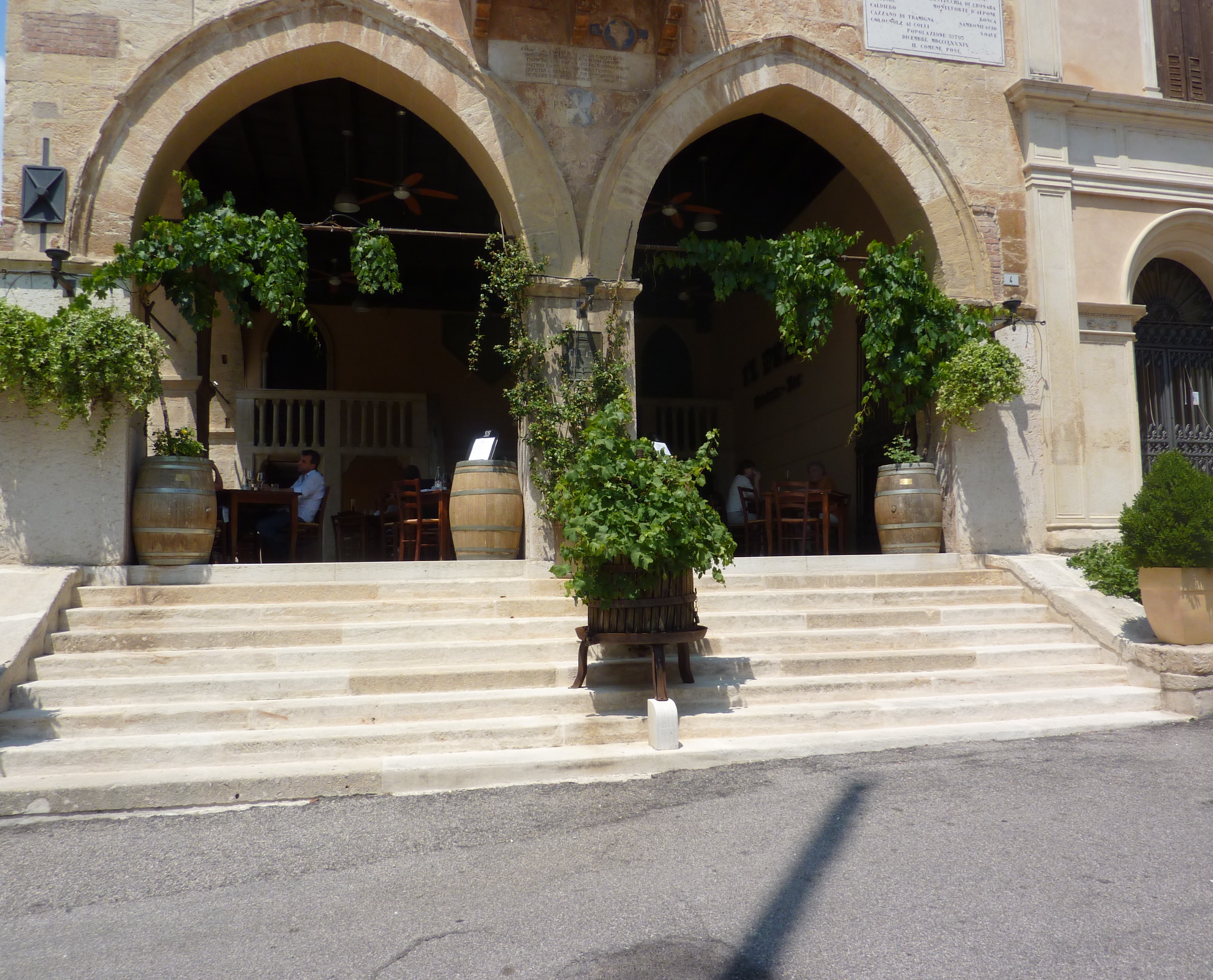
wine bar italy bike toursAround the corner from this I passed by two enotecas, basically wine bars with a small menu. I should have kept walking past the pizza place and stopped at Il Drago. Nice menu, and a local wine is recommended with each. A lovely covered outdoor venue.

Just down the way is the Enoteca del Soave, which Vernon and I had dined at last year. Again, you have ample opportunity to sample various local wines with your meal. I enjoyed a bigoli con anatra (duck ragu) last year, which was a much better choice than what I had today!

pieropan wineryAs for tastings here in Soave, the large but highly regarded Pieropan winery has a cantina here. They have been at the top of Soave winemakers for four decades. You will find these wines in the states fairly easily. Try the Calvarino, La Rocca, or Ruperpan. They have recently purchased land in the Valpolicella region, and are moving into those as well.

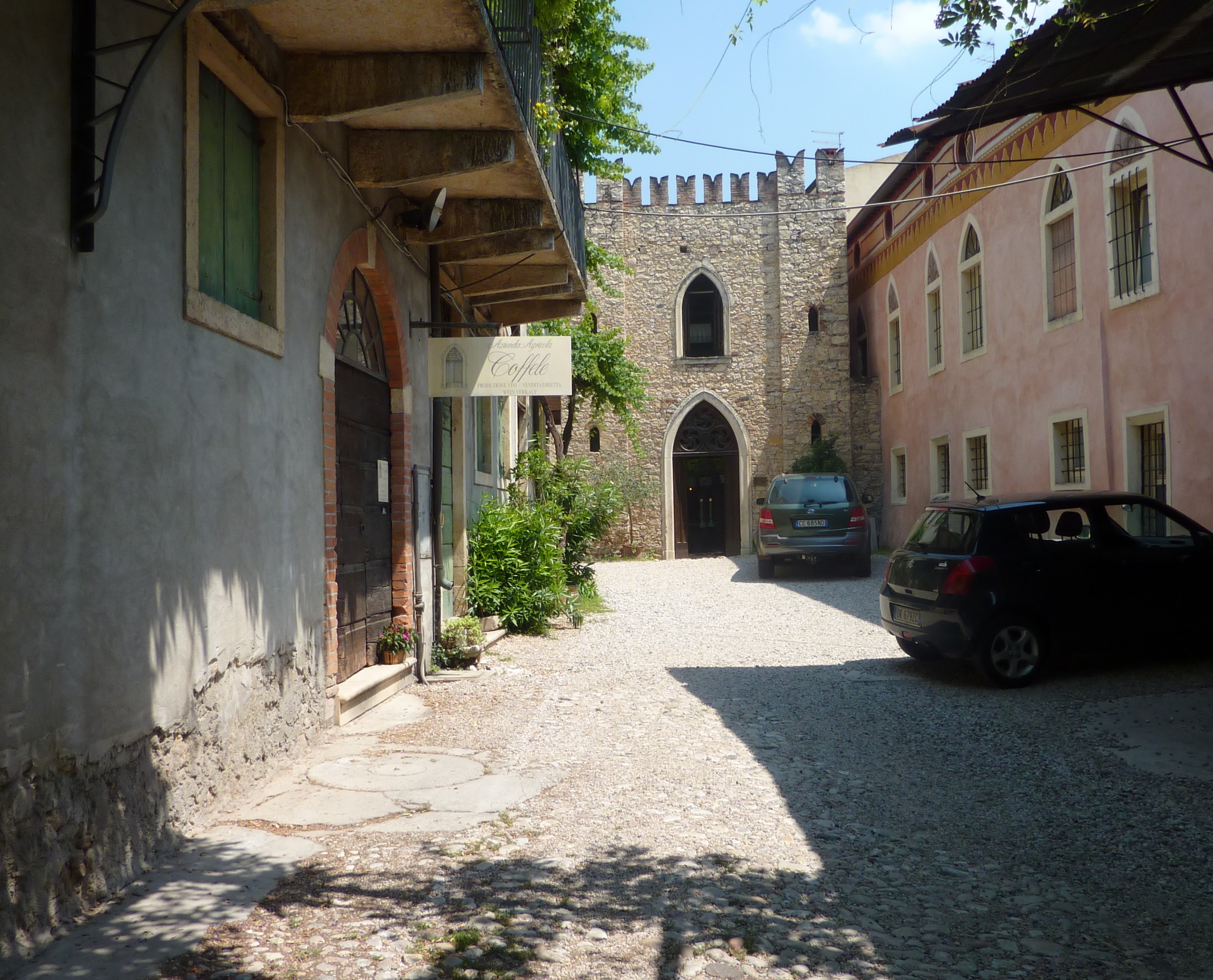
coffeleBetween the two enotecas, up an alleyway is the Coffele cantina, another Soave producer, much smaller than Pieropan, and hard to find here. Try the Classico, the Ca’ Visco, and the sweet Recioto.

Posted in Mascarpone, Pasta, Soave, Veneto Food | Tagged , , , , , , , , , , , , , , , , , , , , , | Leave a comment

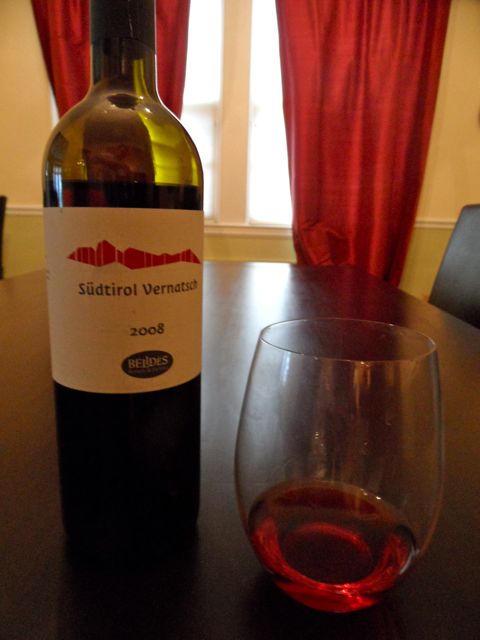
BellDes Sudtirol Vernatsch (Schiava to Italians…)

2008 BellDes Vernatsch (Schiava)

I found this wine on a recent trip to Baltimore to visit family. It spoke to me from the racks of a wine shop/cafe we visited for lunch. When in a new wine store, I always check out the selection of wines, to expand my tastings of wines from Northeastern Italy. Here I discovered a Vernatsch, a wine from the Sudtirol region of Alto Adige. The label is written in English, as well as Italian and German. This region of Italy only became part of Italy following World War I. Before that, it was part of the Austro-Hungarian empire, and you will still find German speakers there today.

This is an indigenous varietal, very popular in Italy and Germany, but yet another example of wonderful wines Italians mostly keep to themselves! Vernatsch is a black skinned grape that carries many names; the German speakers in the region use Vernatsch. Italians use Schiava, which means ‘slave’ in Italian, but probably traces its origin to Slovinia, the reputed source of this grape. Germans today drink this same varietal, called Trollinger, which is likely derived from Tyrolinger. And finally, if you purchase this grape in Germany for consumption at your table, it is called Black Hamburg.

Schiava or Vernatsch wines are primarily exported to the German-speaking countries to the north. The best known come from around picturesque Lake Caldaro, or Kalterersee. This DOC is actually one of Italy’s largest DOC producers, with over 20 million liters per year. But you will find Schiava wines produced throughout the Sudtirol, along the Adige river into Trentino and even as far south as the Veneto, where they are produced under the Valdadige DOC.

I tasted the 2008 BellDes Sudtirol Vernatsch. The producer here, BellDes, is a cooperative run by DeSilva vineyards (Des) and their winemaker, Christian Belluti (Bell). The focus on indigenous Alto-Adige varietals. This wine is 100% Vernatsch, and hails from vineyards around Lago di Caldaro near Tramin, Alto-Adige. It is produced using traditional mash fermentation in stainless steel tanks. It ages for 6 months in the bottle prior to its release.

This wine can often be dismissed by wine ‘connoisseurs’ as undistinguished and mundane. I am enjoying it with some nice antipasti cheeses as I write this. It is fruity, with cherry and red fruit flavors, hints of almond and violet, and a bit of mineral. It is low in tannins, which will disappoint if you are looking for a huge red. But perfect for a nice lunch with grilled chicken, or with an antipasti with fresh cheeses and speck.

Posted in Chicken, Schiava, Trentino Food, Trollinger, Uncategorized, Vernatsch, Wine Pairings | Tagged , , , , , , , , , , , , , , , , , , , , , | Leave a comment

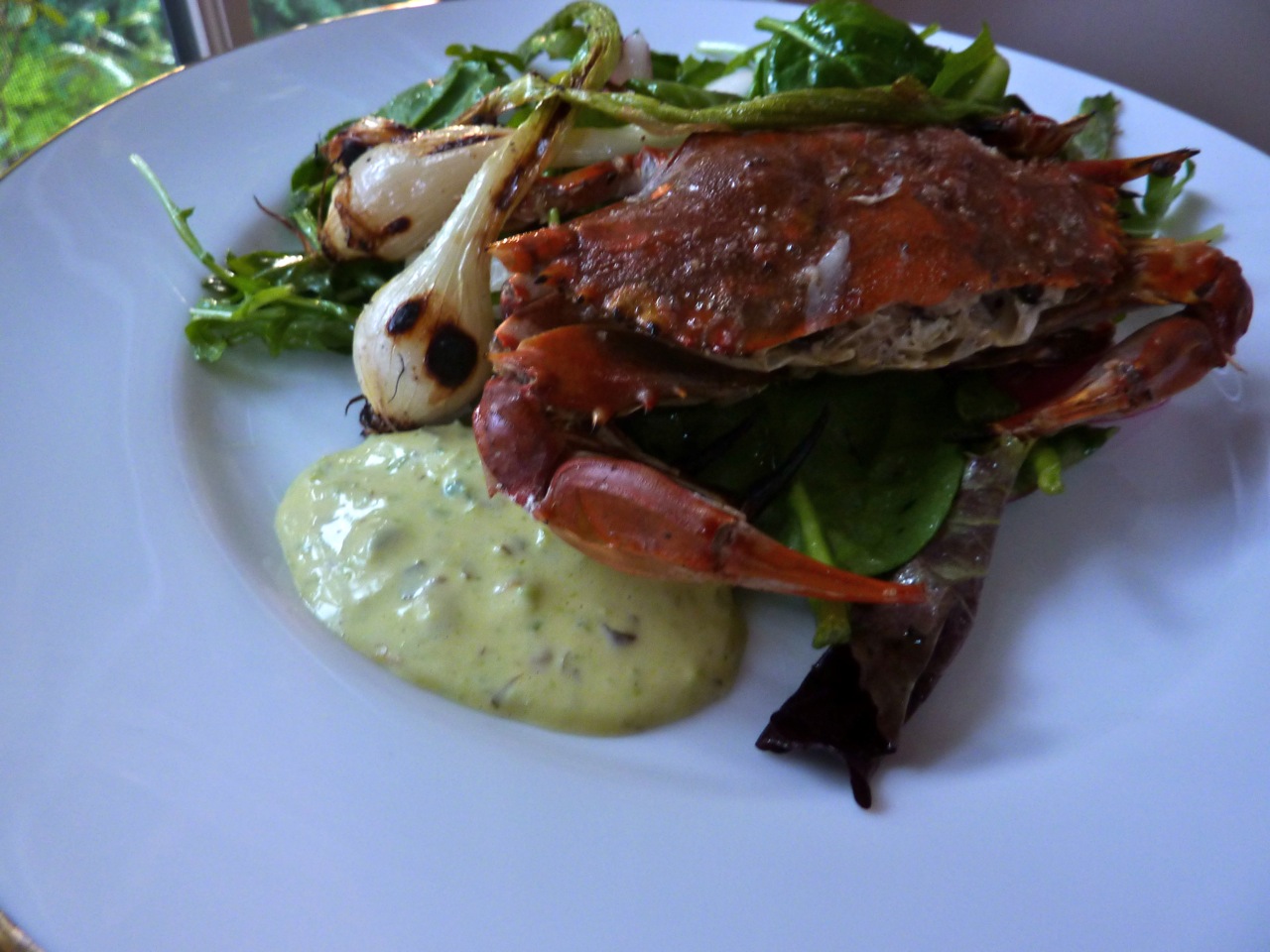
Grilled Soft Shell Crabs with Spring Onions and Chive Garlic Scape Mayonnaise

Grilled Soft Shells Crab

Now is the season for soft shell crabs here on the US east coast. One of my favorites, the availability is limited to only a couple of weeks a year.  In the US, the term ‘soft-shell’ crabs refers to blue crabs that have just recently shed there hard ‘exo-skeleton’, and for a brief time have a ‘soft’ shell until it matures and the shell becomes hard again. While the shell is soft, we can enjoy the entire crab, and you will see it often pan-fried, deep-fried, sauteed, and less commonly, grilled.

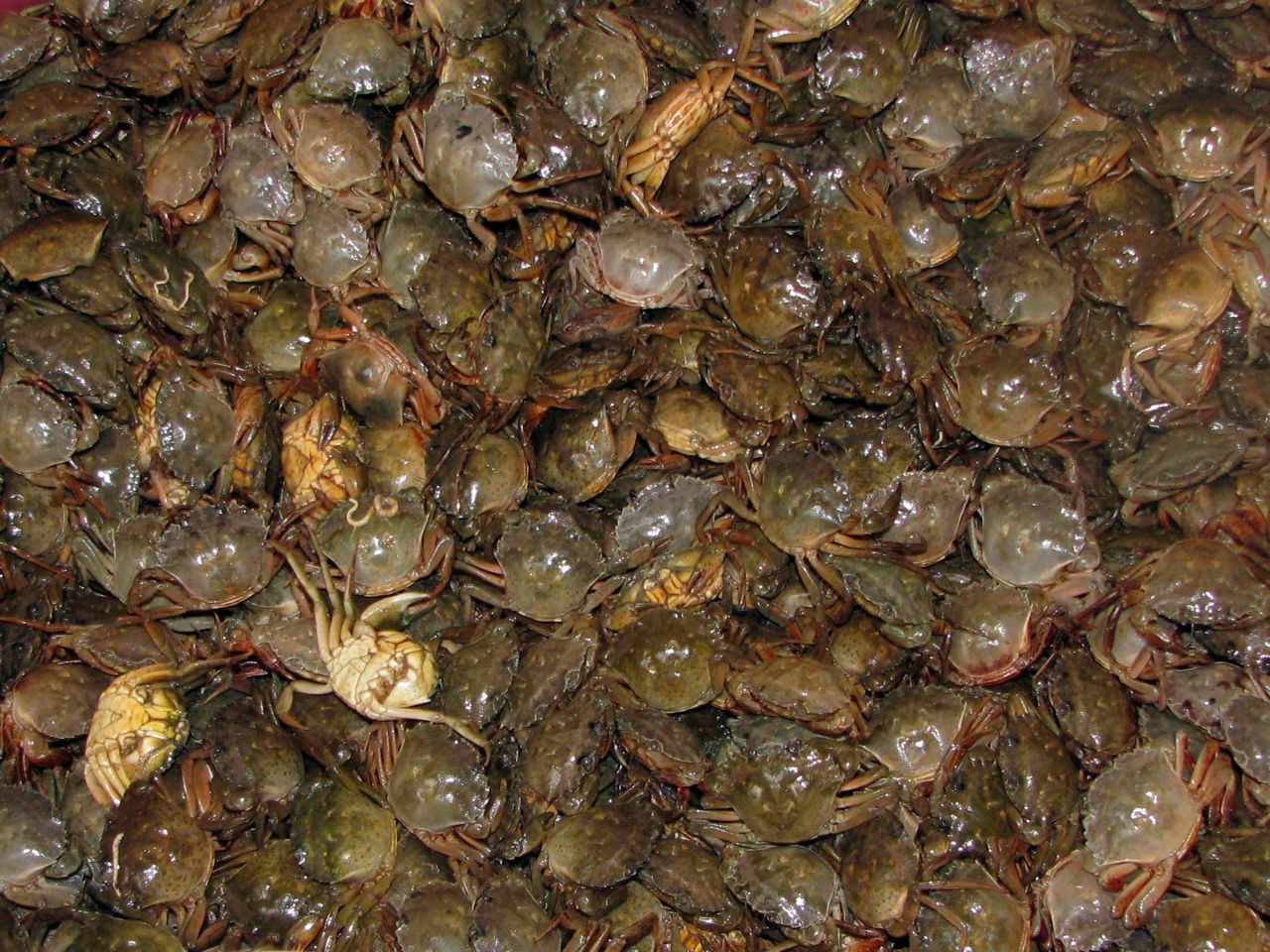
Moleche at Rialto

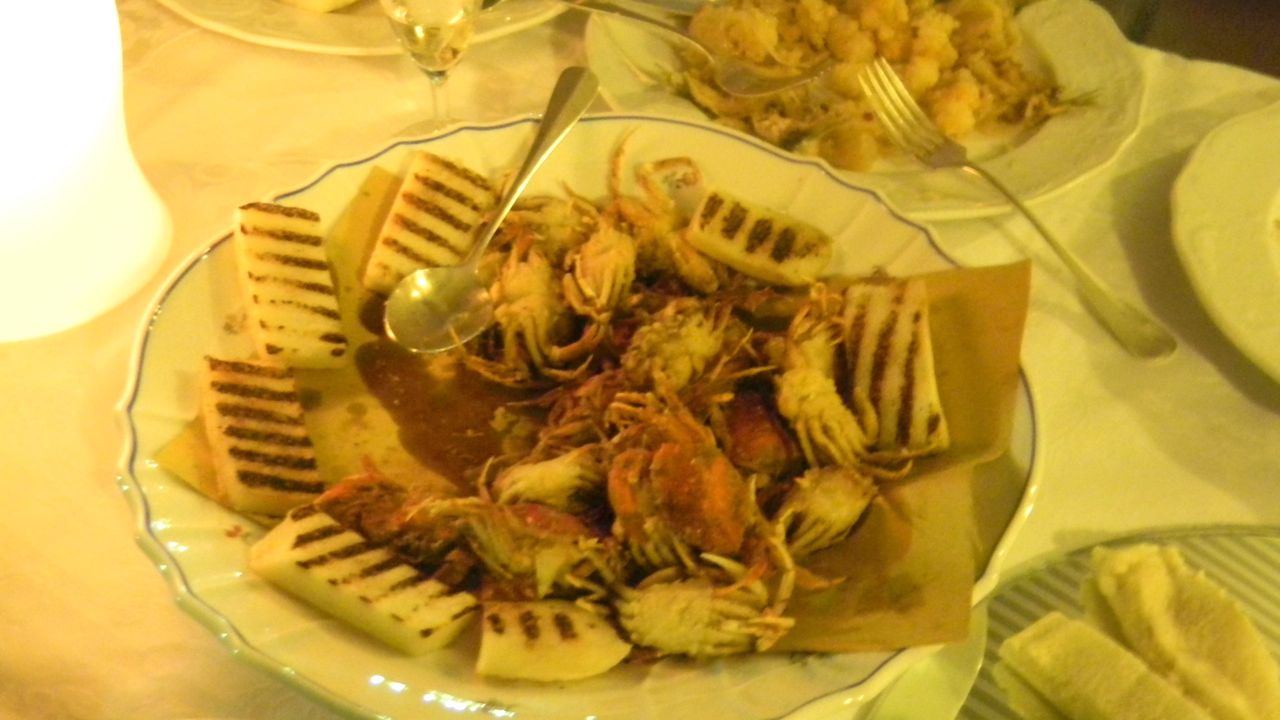
Soft shell crabs are a seasonal Venetian treat as well,  there referred to as moleche. These crabs are a different species than found here in the US, they are smaller (about 2-3 inches), and are available twice a year – in the fall and spring. Click here to learn more about the moleche.

Moleche with Polenta

Every fish restaurant in Venice will feature soft shell crabs on its menu during the season. We were lucky enough to be in Venice last September with one of our Chefs on Bikes trips, and were treated to some wonderful Venetian soft shell crabs are our welcome dinner at Villa Margherita. They were simply sauteed, and served in a very traditional manner with grilled polenta. I have typically deep fried or pan fried them, but decided this year to try an even simpler preparation – grilling.

Cleaning the soft shell crabs here in the US is easy, but not for the faint of heart, as the crabs are alive (or should be, otherwise don’t buy them!). You can have your fishmonger do this if you are planning to prepare them immediately. There are two steps to the cleaning – the first being to remove the ‘face’ of the crab. This is most easily done with a pair of kitchen shears. You make a quick cut across the top of the crab, removing the eyes and ‘head’. The next step is to remove the apron. Flip the crab over on its back, and you will find a large flap which you can pull away from the crab. Again using kitchen shears, cut this flap off. Some people also like to remove the lungs, which you can do through the cut you made as you removed the head. I don’t bother with this step. Now you are ready to fry, saute, or grill your crabs

Grilled Soft Shell Crabs with Spring Onions and Chive-Garlic Scape Mayonnaise

Serves 4

8 soft shell crabs, cleaned
8-12 spring onions (depending on size)
1/4 cup extra virgin olive oil
Kosher salt and freshly ground pepper

1 cup mayonnaise, preferable homemade
1 tablespoon chives
2 garlic scapes (the top shoot on a garlic plant), coarsely chopped
1 tablespoon capers, preferably salted, rinsed and coarsely chopped

4 cups mixed salad greens
Olive oil for drizzling

Preheat your grill.

Place the crabs and spring onions on a sheet pan, and brush with the olive oil. Season with salt and pepper.

Place the mayonnaise, chives and garlic scapes in a food processor. Blend briefly to combine. Transfer to a bowl and stir in the capers.

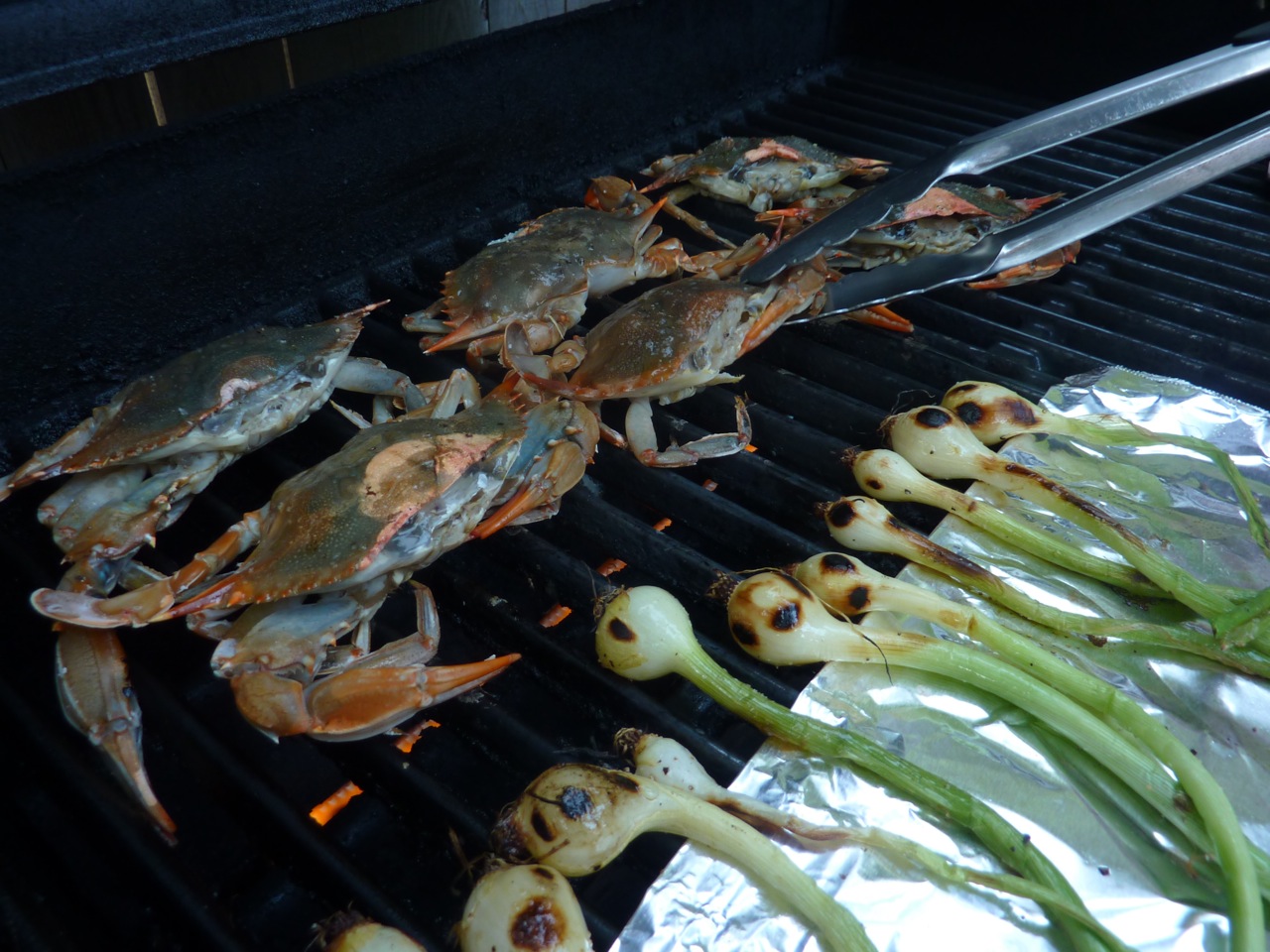
Soft Shell Crabs on grill

Place the crabs and onions on the grill. The crabs will cook fairly quickly; the onions could take longer if they are large, so you could may want to start those first. The shoots on the onions will cook more quickly than the larger bulbs, you can place a sheet of aluminum foil under the shoots to protect them from the heat while the bulbs cook through. The crabs will take about 3 minutes per side.

Serve the crabs on a bed of mixed greens, which have been seasoned with salt and pepper and drizzled with olive oil. Top with the spring garlic and serve with a spoonful of the chive garlic scape mayonnaise on the side.

The mayonnaise is great the next day on a fresh tomato sandwich.

What to serve with it? A nice fresh white – try the Ottella La Creete, from the Lugana DOC in the Veneto, at the southern end of beautiful Lago di Garda.

Posted in Fish, Fitness, Soave, Uncategorized, Veneto Food, Wine Pairings | Tagged , , , , , , , , , , , , , , , , , , , , , , , , | Leave a comment

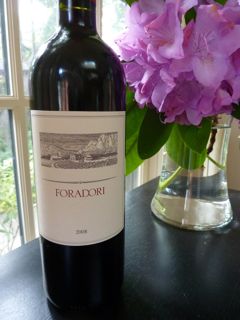
Foradori Teroldego Rotaliano

Foradori Teroldego Rotaliano

Teroldego is considered the king of Trentino wines. Legend has it that the name itself derives from Tiroler Gold, the gold from Tyrol, which is how this wine was referred to at court in Vienna. However, it more likely takes its name from its traditional method of cultivation, in which it is trained on a system of “tirelle” or wire harnesses. Recent DNA analysis has revealed that it is related to the French varietals Dureza and Syrah. Some authorities compare Teroldego to Zinfandel, with its spicy red fruits, but this is not accurate. Its acidity and snap makes it a versatile food wine. This is why the Teroldego Rotaliano wines made my Top 10 Undiscovered Wines of Northeastern Italy list – a great example of the amazing wines this region holds, which we discover as we bike, hike, walk or ski in this area during our active tours.

It flourishes only in the Piana Rotaliana area, and, in spite of many efforts to reproduce the vineyards, environment, and irrigation in other regions, no one has successfully replicated these high quality wines anywhere else. For many years, it was used exclusively as a blending wine, mixed with sub-standard grapes to produce a only somewhat drinkable wine. Eventually, the producers realized the benefits of eliminating the inferior grapes and producing a high quality single varietal wine, and we are just beginning to see some of the benefits of this decision. Teroldego wines are quite distinctive, with intense fruit, full body, and a strong, dry taste.

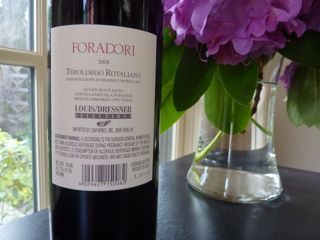
Back Label

Elisabetta Foradori took over her family estate in 1985. Her families’ vineyards lie in the side valley of Campo Rotaliano. Elisabetta has garnered quite a reputation as one of the premier producers of Teroldego, which has greatly helped expand the interest in this indigenous varietal. Here, the vines are farmed organically, with older ‘heirloom’ plants that Elisbetta, in conjunction with the department of viticulture at the University of Milan, was responsible for identifying and propagating.

I tasted the Teroldego Rotaliano 2008, which is the lower level bottling of Foradori Teroldegos, and is produced from a combination of estate as well as purchased grapes, 100% Teroldego. It is barrel aged for 20 months, and is made for earlier consumption. This Foradori Teroldego is a great introduction to this varietal, displaying dark fruit and sweet cherry with a bit of spice and floral notes, along with chocolate and herbs. Similar in style to a Syrah, it has a robust, full bodied palate, with a nice balance of tannins and acidity. A wonderful companion to a hearty pork dish, or a flavorful vegetable such as radicchio.

Posted in Radicchio, Teroldego Rotaliano, Trentino Food, Uncategorized, Wine Pairings | Tagged , , , , , , , , , , , , , , , , , , , , , , , | Leave a comment