The Top 10 Undiscovered Wines of Northeastern Italy

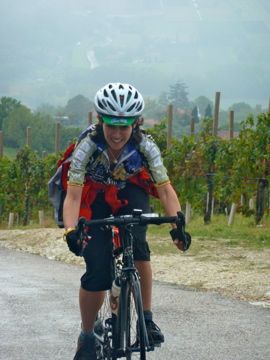
Biking through vineyards in Italy

This fall, Italiaoutdoors is leading two bike trips that explore the wine roads of the Veneto and Trentino regions of Northeastern Italy. Each day, on these or on any of our custom tours, as we wind our way through the beautiful countryside, we will discover the unique wines that have been cultivated here for generations. In Italy, these wine territories are designated as DOC (Denominazione di Origine Controllata) zones. The types of grapes and production methods in each zone are strictly controlled by the government, and this designation is an indication of the quality of the wine.

As we travel on our active tours, be it biking, hiking, walking or skiing, my favorite wines to introduce to our guests are those they have never experienced before. Across the Veneto, Trentino-Alto Adige, and Friuli-Venezia Giulia, there is a new wine region with its own traditional wines, remarkable terroir and distinctive winemaking style around every corner, and an amazing number of them are relatively, if not completely, undiscovered in the US.

Here are my favorites – my top 10 undiscovered wines from Northeastern Italy. We’ll savor a Tai Rosso and Raboso on our upcoming Bike the Wine Roads of the Veneto trips this fall. Ski trips this winter will give us lots of opportunities to taste Teroldego and Lagrein wines, and visits next season to Friuli will include a few tastes of Friulano and Picolit.
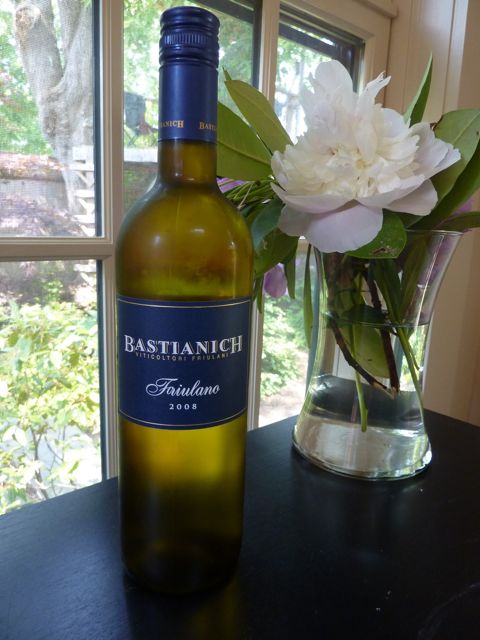
Fruilano

1. Friulano (the wine formerly know as Tocai Friulano or Tocai Italico).

Tocai Friulano is the pride and joy of the Collio wine region of Friuli-Venezia Giulia. So Friulians were not particularly happy when the EU dictated that the only wine that could use the Tocai name was the Hungarian dessert wine, Tokay. After much debate, a new name was decided upon – Friulano – and after 2006 winemakers in the region were no longer allowed to use the Tocai name. However, you will still hear the wine referred to as Tocai throughout the region (and Italy). Friulano is clean, delicate, refreshing white wine with a palate that varies according to the terroir. It appears as both a varietal and in blends.

2. Ribolla Gialla

This grape, believed to have originated in the Colli Orientali di Friuli, produces a wonderful white that is almost unknown outside the region. The phylloxera epidemic of the 19th century destroyed many of the Ribolla plantings, which were replanted with imported grapes like Merlot and Sauvignon Blanc. By the 1990s less than 1% of all white Friuli DOC wines contained Ribolla. Most recently, renewed international interest in the wines of the Friuli has thankfully led to an increase in plantings of the grape. It is lively and flavorful, and pairs well with many dishes, from seafoods to fruit.

3. Vino Santo

The Trentino region is renowned for its Vino Santo, a sweet wine made from dried grapes. This is not to be confused with the Vin Santo produced in Tuscany – this is a uniquely traditional product of the region, incorporating the native Nosiola varietal, and a treat not to be missed on a visit to the region. Nosiola is the oldest white grape variety grown in Trentino, believed to have originated in the Pressano hills and Sarca valley.
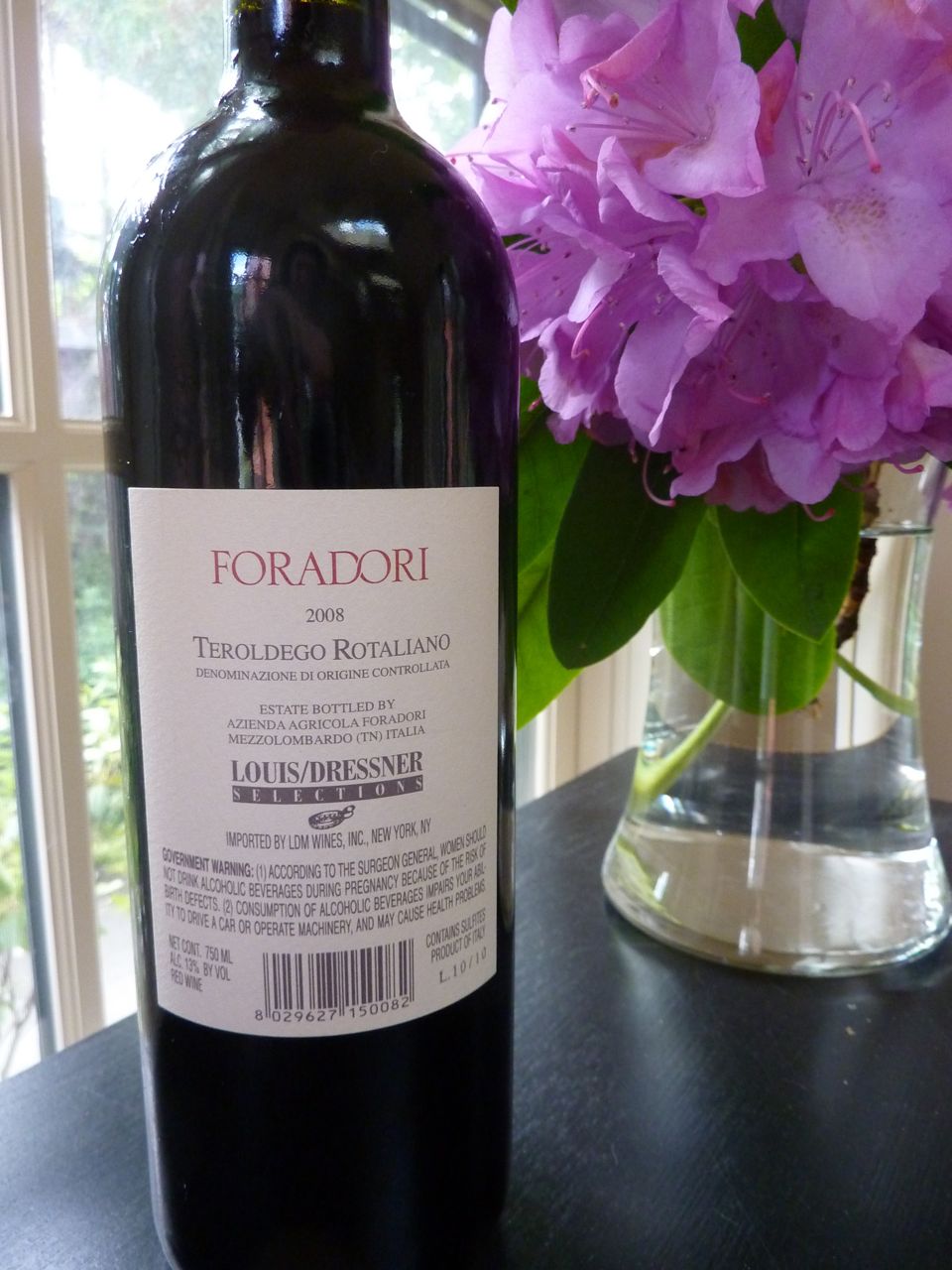
Teroldego

4. Picolit

Also known as Piccolit and Piccolito, Picolit is a white Italian wine grape grown in the Colli Orientali del Friuli DOC zone of Friuli-Venezia Giulia.  The name comes from piccolo, or small, due to the fact that this grape has very low yields. which continue to challenge the growers to make it an economically viable product. The Picolit grapes are characterized by a nice balance of sugar and acidity, resulting in a well-balanced dessert wine with soft floral aromas and stone fruit flavors.

5. Teroldego

Teroldego is considered the king of Trentino wines. Legend has it that the name itself derives from Tiroler Gold, the gold from Tyrol. It flourishes only in the Piana Rotaliana area, and, in spite of many efforts to reproduce the vineyards, environment, and irrigation in other regions, no one has successfully replicated these high quality wines anywhere else. Teroldego wines are quite distinctive, with intense fruit, full body, and a strong, dry taste.

6. Marzemino

Originally produced in the Rovereto region of Trentino, Marzemino was introduced by the Venetians in the 16th century. In Mozarts’ opera, Don Giovanni, Giovanni himself makes his last request before his deliverance to hell – a glass of Marzemino. This is a delicate, mellow wine with intense fruit and floral elements. It is a lighter bodied wine, and is not aged for too long – two to three years is optimum.

7. Raboso

Raboso is an ancient wine, grown in the Piave River valley of the Veneto region before the time of the Roman Empire. At one point, this grape was perhaps the most important variety of eastern Veneto, but, as with many indigenous grapes, saw native planting replace by international varietals in the 20th century.  At full maturity, Raboso is one of the great Italian reds, dry and full-flavored with an intense ruby red color and its typical bouquet of spicy cherries.
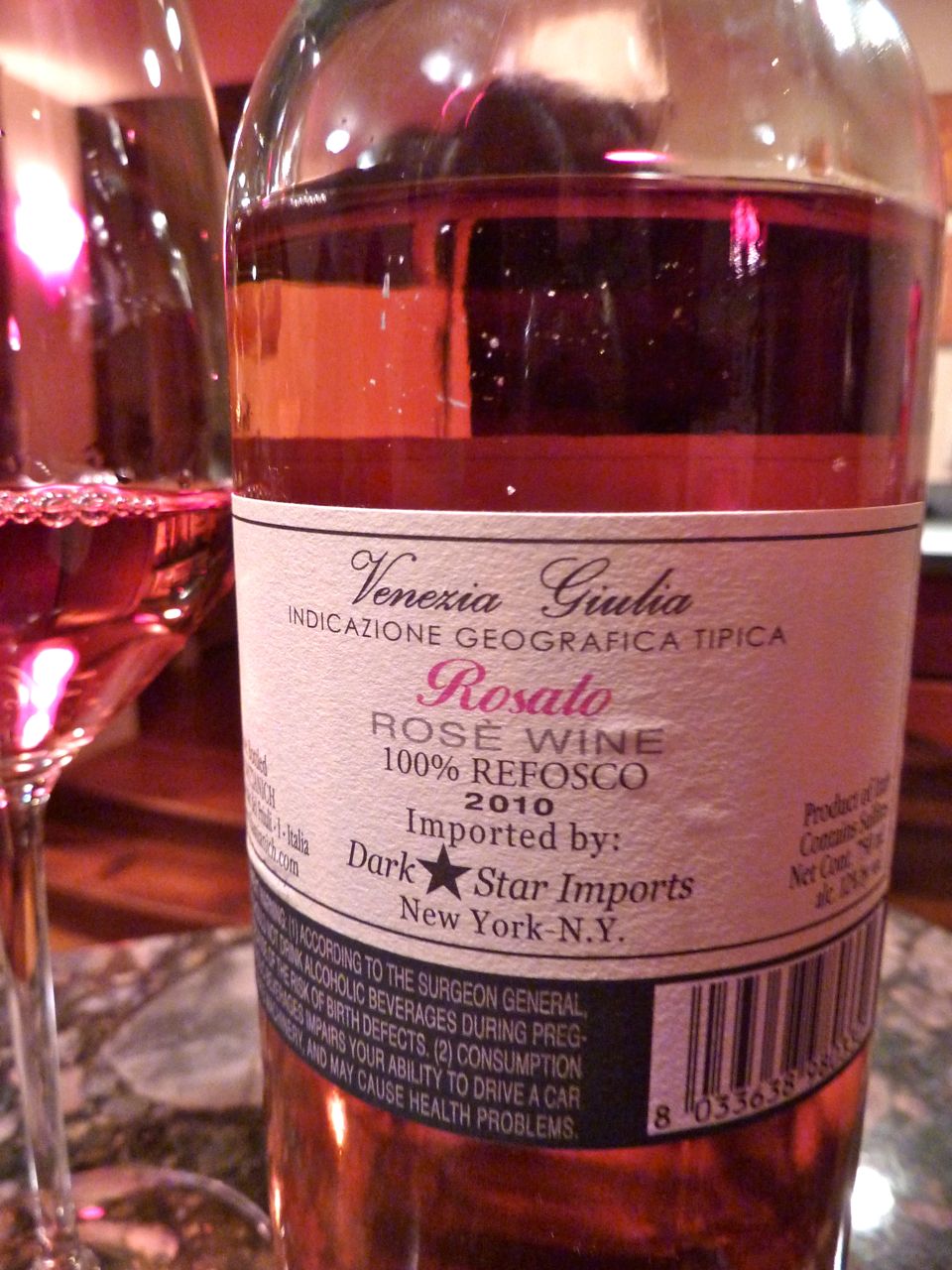
Refosco rose

8. Refosco dal Peduncolo Rosso

Refosco is a family of dark-skinned varietals native to the northern Italian areas of Friuli-Venezia Giulia and Trentino. The grape is also known as Terlan or Terlano. The origins of this varietal are not clear, but DNA analysis has shown that it is related to Marzemino. Refosco produces deeply colored wines that aged well, with very intense and concentrated flavors, and a slightly bitter finish.  A rose are also available.

9. Lagrein

Lagrein is a red grape native to the Lagarina valley in Trentino-Alto Adige. Along with Marzemino and Refosco, it is a descendant of Teroldego, and related to Syrah, Pinot Noir and Dureza.  It is rarely seen outside of the region. Lagrein grapes produce wines that exhibit a high acidity, and even the free run juice is tannic.  Lagrein produces a very deep yet intense red color in wine, with flavors of dark berry and cherry, and notes of tobacco and mushrooms.  A rose version is also produced.
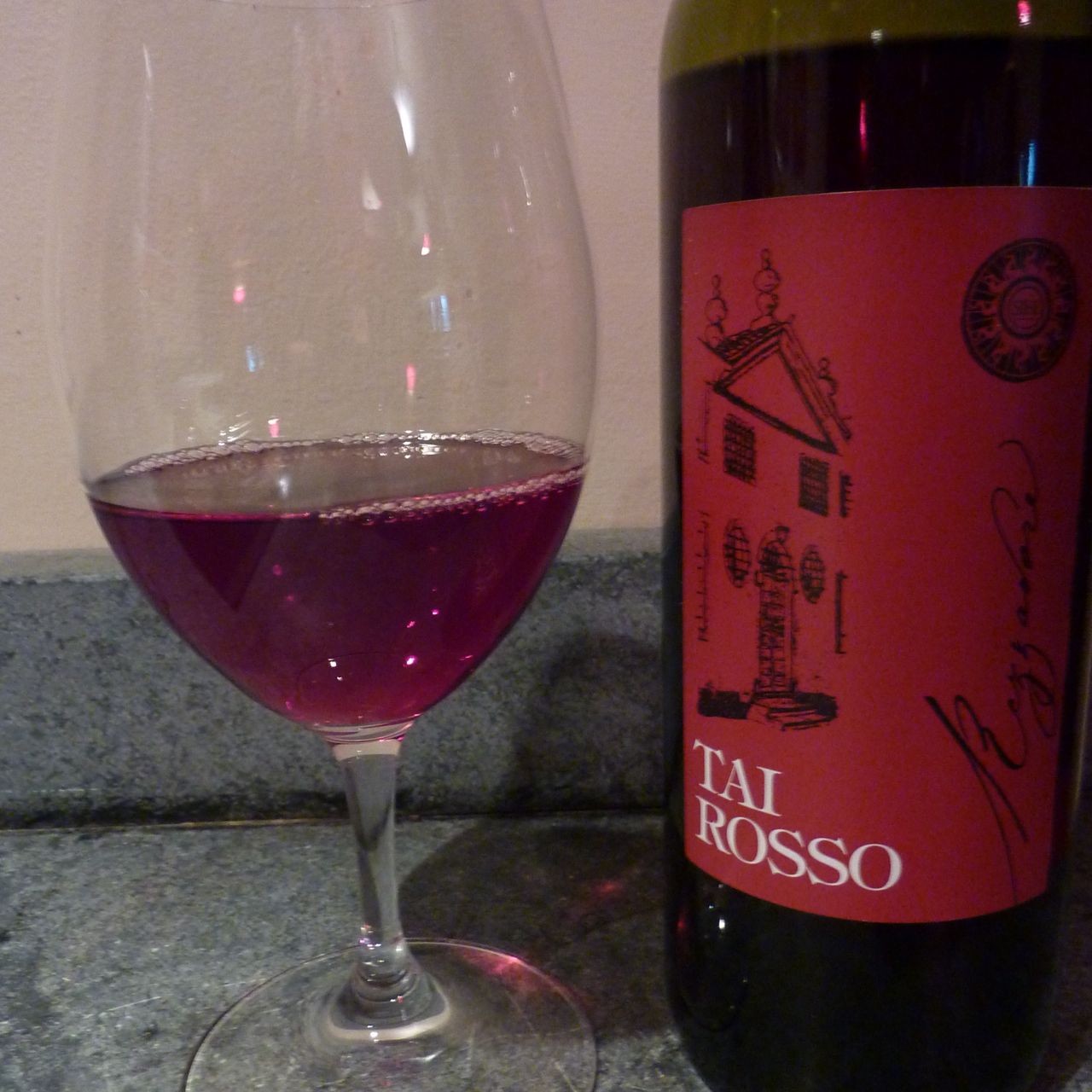
Tai Rosso

10. Tocai or Tai Rosso:

Tai Rosso, an indigenous varietal cultivated in the Colli Berici of the Veneto region, where it arrived from Hungary. In spite of its alleged origins, is not related to the Hungarian Tokay; most experts believe that it is more likely related to the Sardinian Cannonau or Granache. Before 2007, it was called Tocai Rosso, but since the regulations restricted the use of the Tocai name, it has been changed to Tai Rosso. This is a lighter red wine, clear and brilliant, with a bright red color, and a balanced, harmonious taste with a hint of cherries.
 

Posted in Colli Berici, Friuli-Venezia Giulia, Tai Rosso, Trentino Food, Uncategorized, Veneto Food, Wine Pairings | Tagged , , , , , , , , , , , , , , , , , , , , , , , , , , , , , , | 9 Comments

Gnocchi Crocconti di Sauris

gnocchi croccanti di sauris custom bike tours italy
Gnocchi Croccanti

Previously, I’ve covered several gnocchi recipes in my posts, from a potato gnocchi to a buckwheat squash version. It’s a food common to all the regions we visit with Italiaoutdoors, and there are so many different and interesting preparations. From potato, buckwheat, ricotta, mixed with meats from prosciutto to spleen, cheeses, and all sorts of greens, not to mention squash and bread, it has been a way to put all your leftovers to use for centuries. I don’t think I’ll run out of material on this subject for quite some time! On my Italiaoutdoors web site, there is a brief overview of the various different types of gnocchi we see in the Veneto, Trentino-Alto Adige and Friuli-Venezia Giulia.

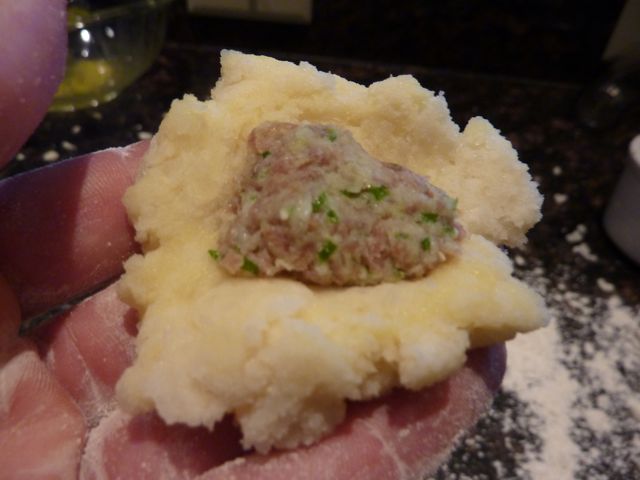
Stuffing with Prosciutto culinary cycling holidays
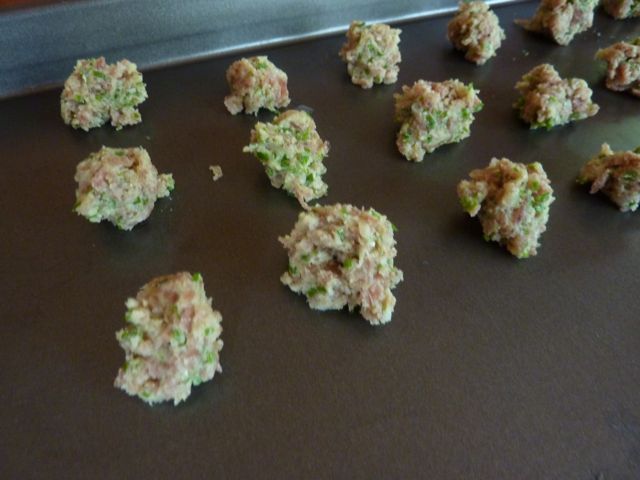
Stuffing balls

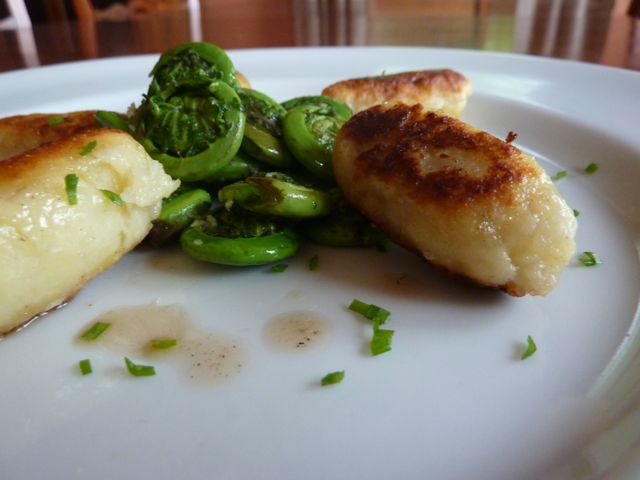
I recently came across a wonderful book on the regional foods of Friuli-Venezia Giulia, entitled Flavors of Friuli by Elisabeth Antoine Crawford. Interesting and well-done recipes, combined with great information on the producers and restaurateurs of the region makes it a fantastic resource for me. This latest recipe for gnocchi comes from there – “Gnocchi Croccanti di Sauris”. It is a gnocchi that has been stuffed with cheese and prosciutto, then pan seared after it has been first cooked in water. The prosciutto in this recipe is the wonderful local Prosciutto di Sauris, which I have never seen here in the US. Substitute another high quality prosciutto, like the San Daniele, also from Friuli.

I’ve seen several recipes for gnocchi croccanti, but many are not stuffed, just simply pan seared to finish. In Friuli, there is another classic gnocchi dish, Gnocchi di Susine, which is also a stuffed gnocchi, this one a sweet gnocchi which has been stuffed with fruit.

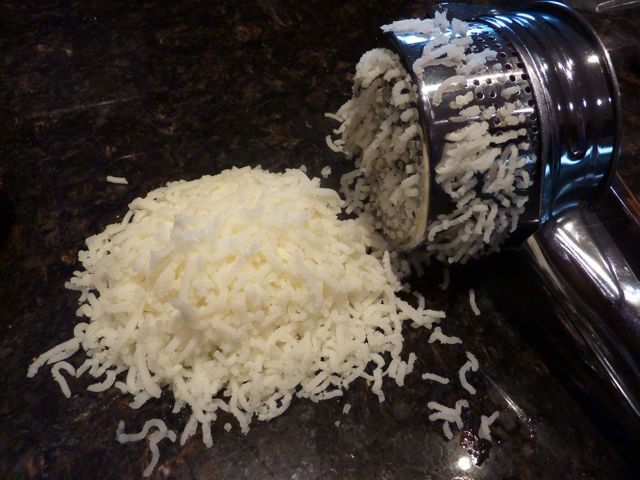
riced potatoes bike tours fruili
Riced potatoes

Having made, and taught how to make, gnocchi on many occasions, I’ve learned to secret to light gnocchi is twofold; first, rice the potatoes when warm, then allow them to cool. Second, use as little flour as possible, and handle it as little as possible. This second tip becomes a bit more difficult when you are stuffing the gnocchi. So I started with my standard gnocchi recipe, with the plan to increase the flour only as necessary to get the dough around the stuffing.

forming gnocchi wine bike tours italy
Forming the gnocchi

It ends up I didn’t really need to increase the flour at all. Once the dough was together, it was a bit sticky, but as long as I kept my hands clean and dusted with a little bit of flour, I was able to form the dumplings. I do elect to bake my potatoes that I use for gnocchi, rather than boil them. I baked them for well over an hour, and I live in a dry climate, although it is rainy and humid today. But having dry (and cool) potatoes will decrease the amount of flour that you will need.

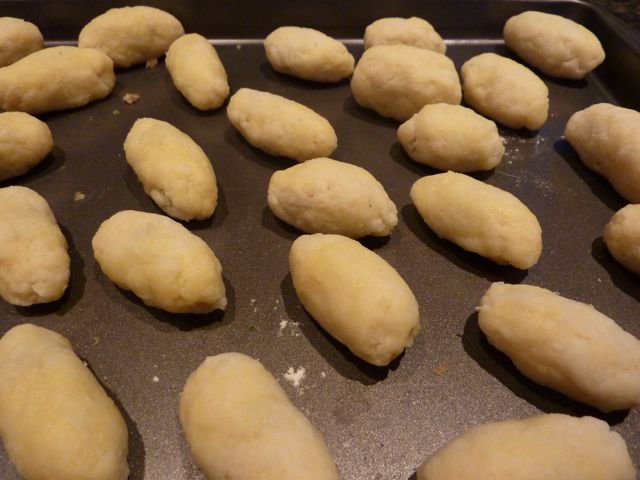
finished dumplings luxury villas italy
Finished dumplings, ready to cook

Here is my modified version of Elisabeth’s recipe. I would suggest just keeping the flour close by while you are forming the dumplings. If it is too wet, add a bit and try again.

As I am still living in a remote part of Maine, with limited access to things like Prosciutto di Sauris and Montasio – today, even arugula – I’ve substituted with sopressa, grated Sapore di Asiago, and my green of choice right now, local fiddleheads.

Gnocchi Croccanti di Sauris

Serves 6

Filling:
8 ounces prosciutto, coarsely chopped
1/2 cup grated aged cheese, such as grana or montasio
1 tablespoon whole milk
2 tablespoons chopped fresh chives

Dough:
1 1/2 pounds potatoes
3/4 cup all purpose flour
1 tablespoon salt
1 egg, beaten

6 tablespoons butter, divided
12 ounces arugula, or other green
1 clove garlic, minced
1 tablespoon chopped chives

Preheat the oven to 400°.

Pierce the potato in several places with a knife. Set in the oven and bake until very tender, about an hour, depending upon the size of the potatoes.

For the filling:

Place the prosciutto, cheese, and milk in a food processor and pulse to combine. Stir in the chives. Form the mixture into 3 dozen balls, of about 1/2 teaspoon each.

For the dough:

Remove the potatoes from the oven, and allow to cool only 5 minutes or so. Rice the potatoes with a ricer, or press it through a large mesh sieve. Allow to cool to room temperature. Add the flour and salt, and combine with the potatoes until well mixed, but still fluffy. Add the egg and mix just until you form a soft dough.

Taking a bit of the dough, about 1 scant tablespoon, press it out on the palm of your hand. Place one of the filling balls in the center, and wrap the dough around it. Keep a bit of flour nearby to dust your hands, and when the dough starts to stick take a moment to rub your hands together to remove the dough and dust them again with flour. Roll each dumpling gently to form an oblong shape.

To prepare:

Bring a large pot of lightly salted water to boil over high heat. Salt the water. Working in small batches, place the gnocchi in the water – don’t overcrowd them. Cook until the gnocchi rise to the surface; using a slotted spoon, remove them and place on a sheet pan in a single layer.

Melt 2 tablespoons of butter in a medium saute pan over medium heat. Add the greens and saute until tender. The time will vary depending on the greens; from a couple of minutes for arugula to 6-7 minutes for a chard, or fiddleheads. Add the garlic a minute or so before they are done. Remove from heat and season with salt and pepper.

Melt 2 tablespoons of butter in a large saute pan over medium high heat. Add half of the gnocchi, again, don’t overcrowd. Cook until the bottoms are crisp and golden brown, about 3-5 minutes. Turn, and cook the other side until brown. Don’t force them to turn, they will release from the bottom of the pan when they are seared. Remove and repeat with the remaining gnocchi.

Place the greens on 6 warmed plates. Top with the gnocchi, and drizzle any remaining butter over the dish. Garnish with chopped chives.

I’ll go off the beaten path here and recommend a red with this – it is delicious, but can be a bit heavy.. I think the La Biancara Rosso Masieri would pair nicely; the slight mineral tingle it offers would cut through the butter.

Posted in Arugula, Fitness, Friuli-Venezia Giulia, Gnocchi, Greens, Trentino Food, Uncategorized, Valpolicella, Veneto Food | Tagged , , , , , , , , , , , , , , , , , , , , , | Leave a comment

Arrosto con Bacche di Ginepro e Foglie di Alloro (Roast Pork with Juniper Berries and Bay)

pork with juniper and bay culinary bike tours italy
Arrosto con Bacche di Ginepro e Foglie di Alloro

Emilia-Romagna is one of the four regions in Northeastern Italy we visit during our culinary biking and walking tours. Located on the fertile southern bank of the Po River, this region is home to some of Italy’s most famous specialties: Prosciutto di Parma, balsamic vinegar and Parmigiano-Reggiano cheese. However, there are many more delicious dishes that await our discovery as we visit this region!

This recipe is based on January Pork, a recipe included in Lynne Rosetto Kaspers’ classic book on the cuisine of Emilia-Romagna, The Splendid Table. She attributes the origins of this recipe to the tenant farmers and laborers of this region that survived on what they could produce on their small farms, or trade for. The family pig was one of the few sources of meat available to them, and the majority of it was cured to preserve it, as they lived off of it for much of the year. The pig was traditionally killed in January, just prior to or after a local saint’s day such as January 17, Saint Anthony’s day. The ribs and the loin were the only parts of the pig not preserved, and were eaten immediately. This January Pork would be a special treat, the only time of year the family would enjoy fresh pork.

bay and juniper ski holidays dolomites
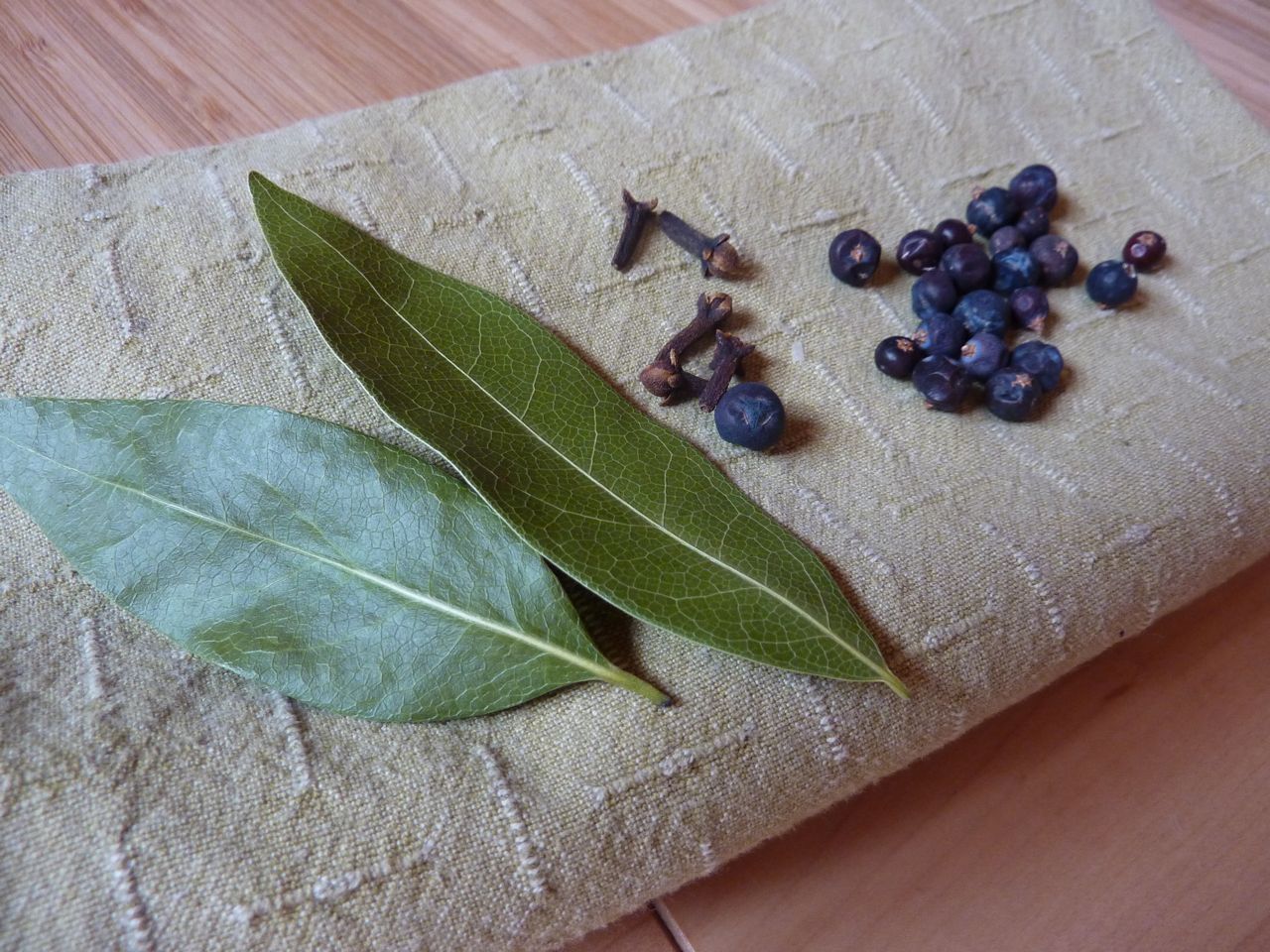
Bay, cloves and juniper berries

The spice combination used in the marinade is rather unique, but I encourage you all to develop your own. One I may try next, based on some of the dishes I am cooking from Friuli-Venezia Giulia, uses cloves and cinnamon. I can certainly imagine the pig farmers from Friuli roasting their pork in a similar fashion!

pork in marinade luxury villas italy
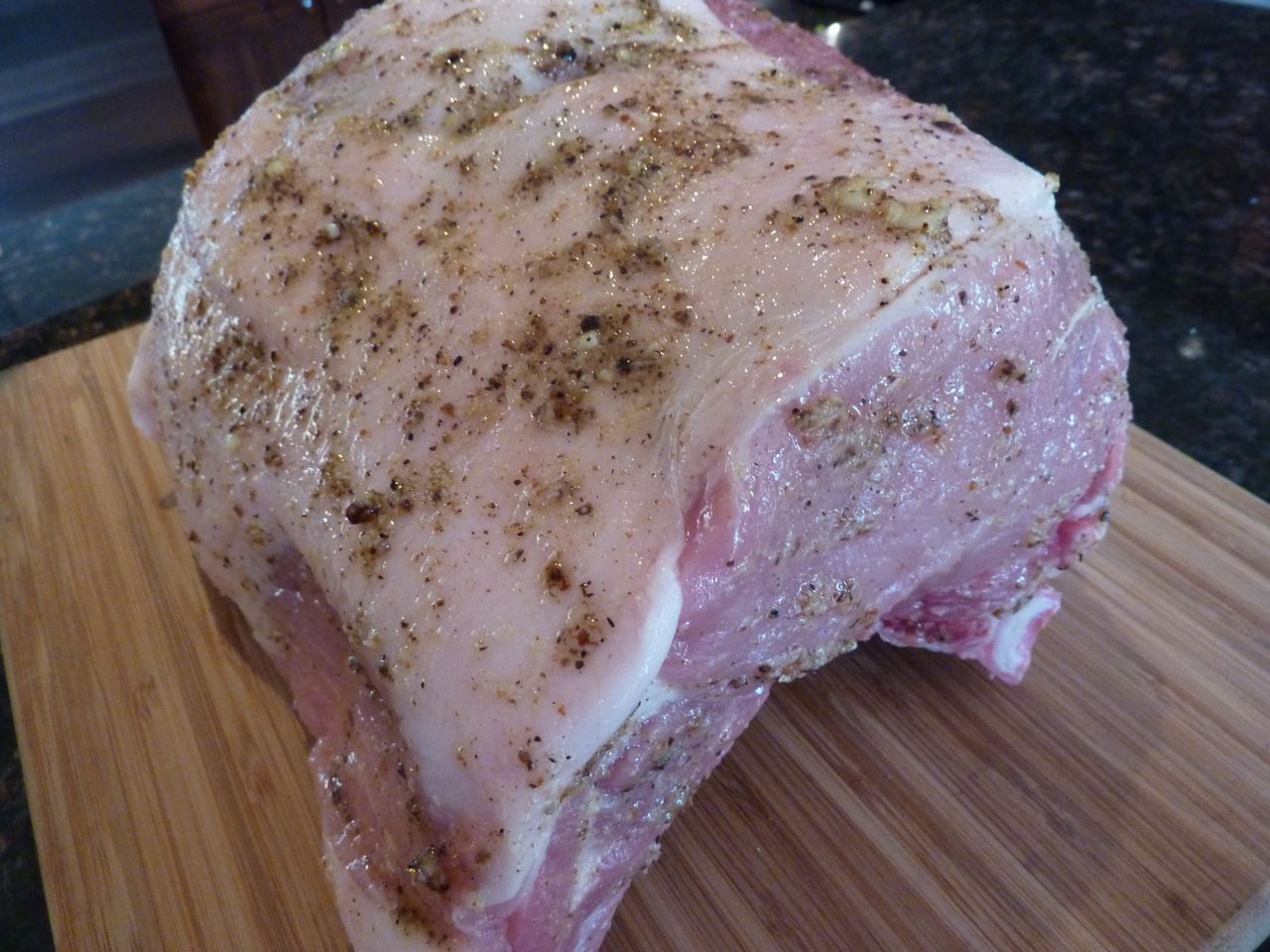
Pork in marinade

In her wonderful book, The Zuni Cafe Cookbook, Judy Rodgers urges her readers to add your salt “early”. Several of her signature dishes require this early salting in order to be successful. She first learned this technique when working in the kitchens of France. Contrary to popular belief, early salting does not result in dried out food. Yes, it does first draw moisture from the cells, but eventually reverse osmosis occurs, and the moisture is drawn back into the cells, bringing along for the ride salt and any other aromatics that you have included. So using salt in a marinade helps bring the other flavors into the food. I’ve used this technique in this recipe.

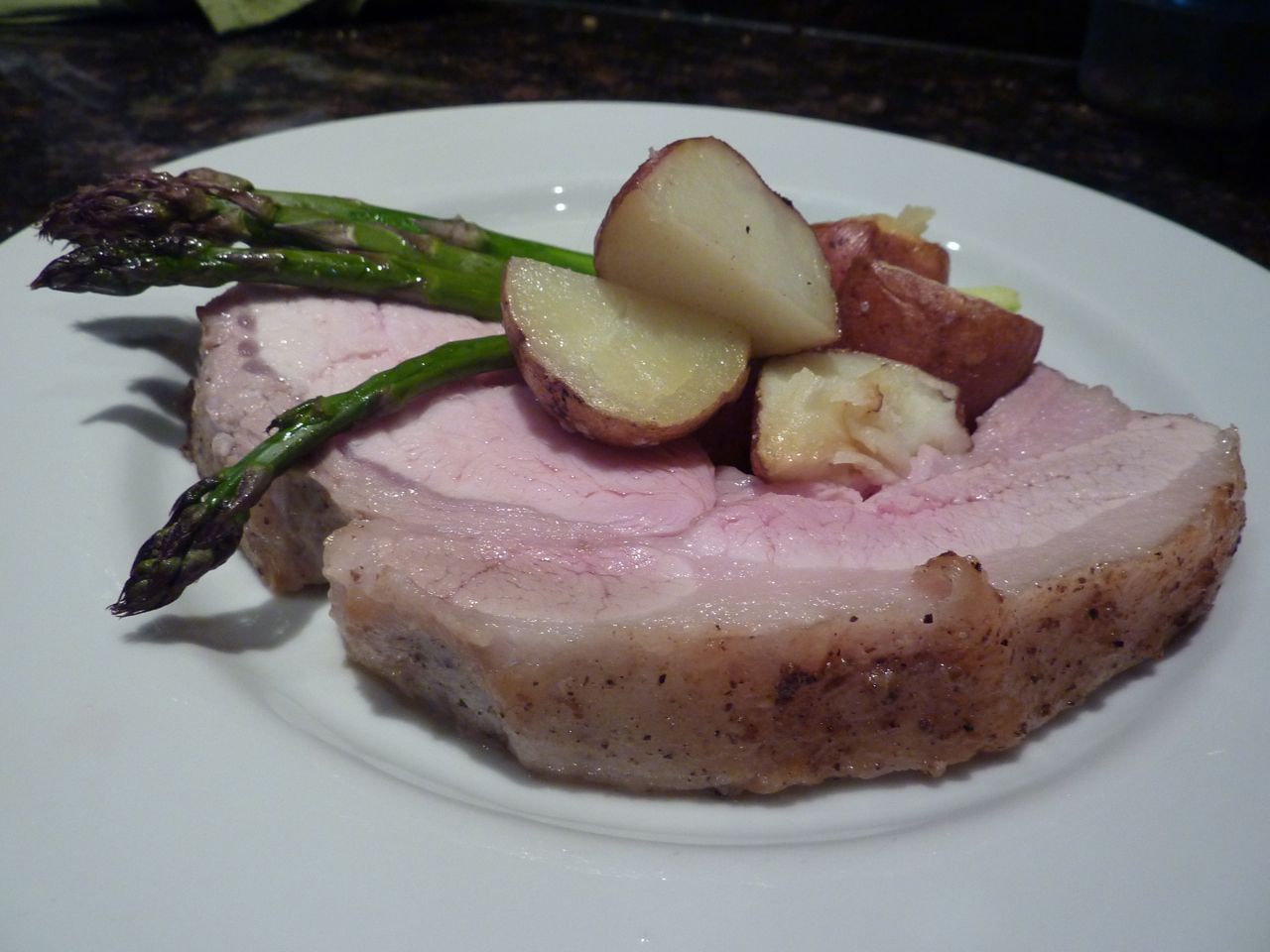
roasted pork cycling tours dolomites
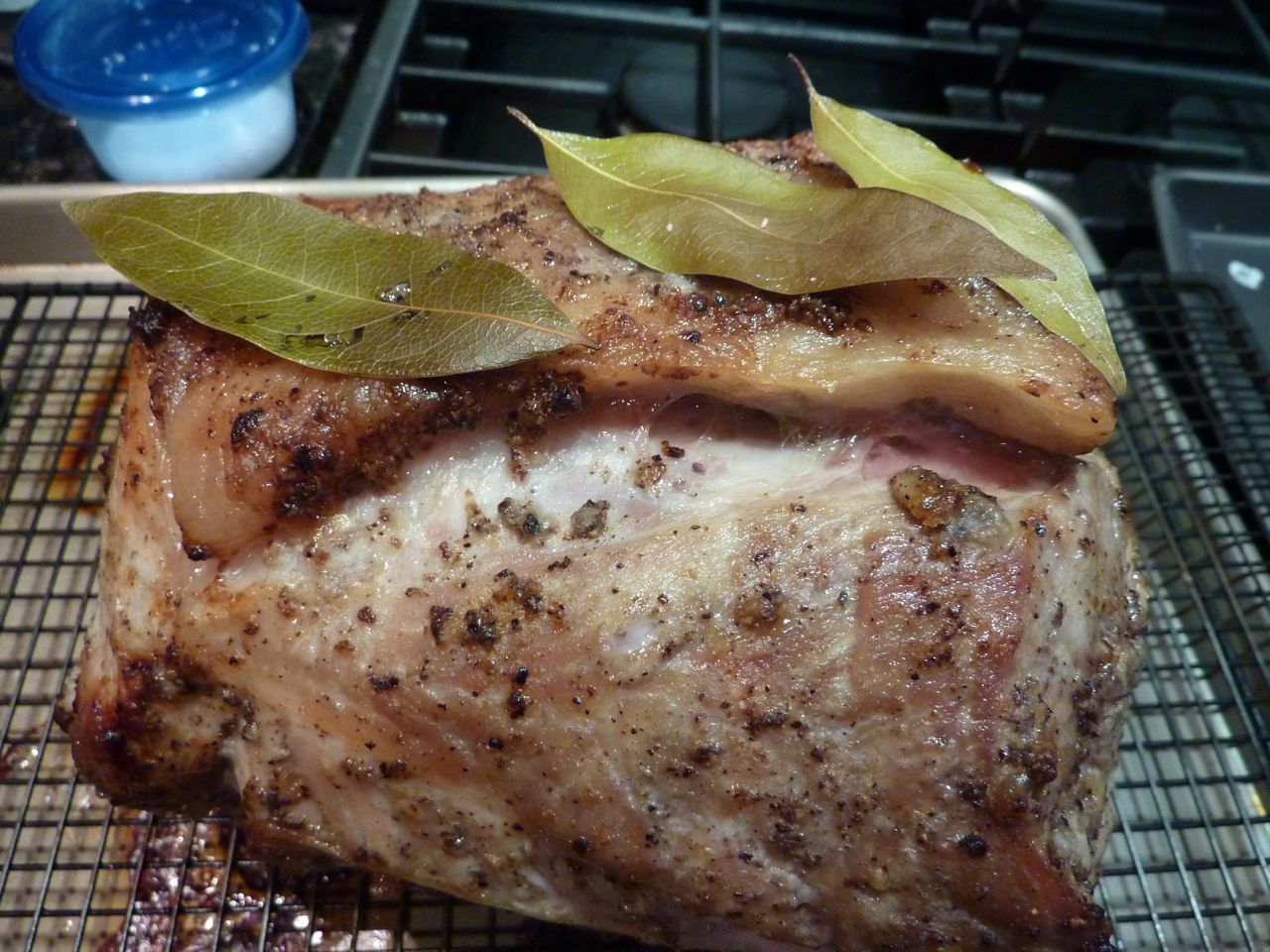
Roasted pork with bay

Arrosto con Bacche di Ginepro e Foglie di Alloro

Serves 6-8

30 juniper berries
3 whole cloves
1/2 teaspoon whole black peppercorns
3 cloves garlic, finely grated with a microplane
1 tablespoon kosher salt
4 tablespoons extra virgin olive oil
1 5-pound pork roast, bone-in
3 bay leaves

Begin the day before you plan to serve the pork:

Using a spice grinder (I use an old, retired coffee grinder), finely grind the juniper berries, cloves and peppercorns into a powder. Transfer to a small bowl, and combine with the grated garlic, salt and olive oil.

Place the pork roast on a sheet pan, bone side down. Brush the meat on all sides (you can skip the bone side) with the marinade. Refrigerate overnight.

Remove the roast from the refrigerator an hour before you are planning to roast it, to allow it to warm a bit. Preheat oven to 350°.

Roast the pork until it reaches an internal temperature of 135°. This will leave the meat still slightly pink, which I prefer. Keep it in longer if you prefer your pork cooked more. Remove from the oven and allow to rest for 15 minutes. Slice and serve.

I would suggest a nice Valpolicella to accompany this, such as the Zeni Valpolicella Ripasso. Or if you are in the mood for a big one, an Amarone could fit the bill!

Posted in Fitness, Friuli-Venezia Giulia, Pork, Trentino Food, Uncategorized, Valpolicella, Wine Pairings | Tagged , , , , , , , , , , , , , , , , , , , , , | Leave a comment

Orzo e Fagioli

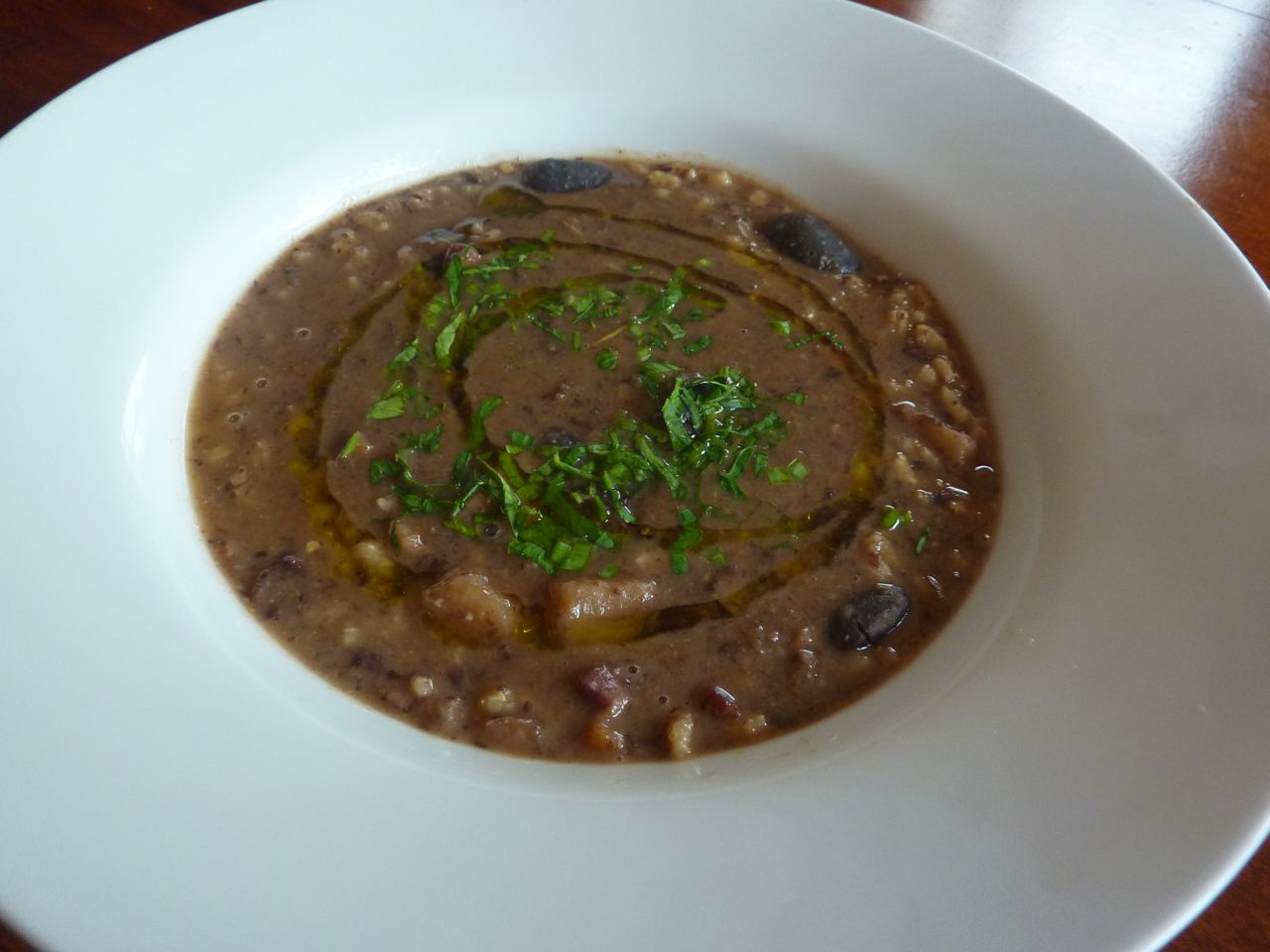
Orzo e Fagioli

A while ago I did a post on the very familiar Italian soup, Pasta e Fagioli. Here is an interesting variation, hailing from Friuli-Venezia Giulia. This is Orzo e Fagioli, or Minestra di Orzo e Fasio, a barley and bean soup. Recall that, in Italy, orzo is not the small pasta we know in the US, but is the grain barley. Barley is one of the most important grains in Friuli-Venezia Giulia. It is the most popular soup found in Friuli, and also popular in Venezia Giulia, but Jota dominates there, a bean and sauerkraut soup. The Friuli version calls for pancetta; in Trieste you will find smoked pork or smoked lard used rather than pancetta. I used bacon – all are delicious!

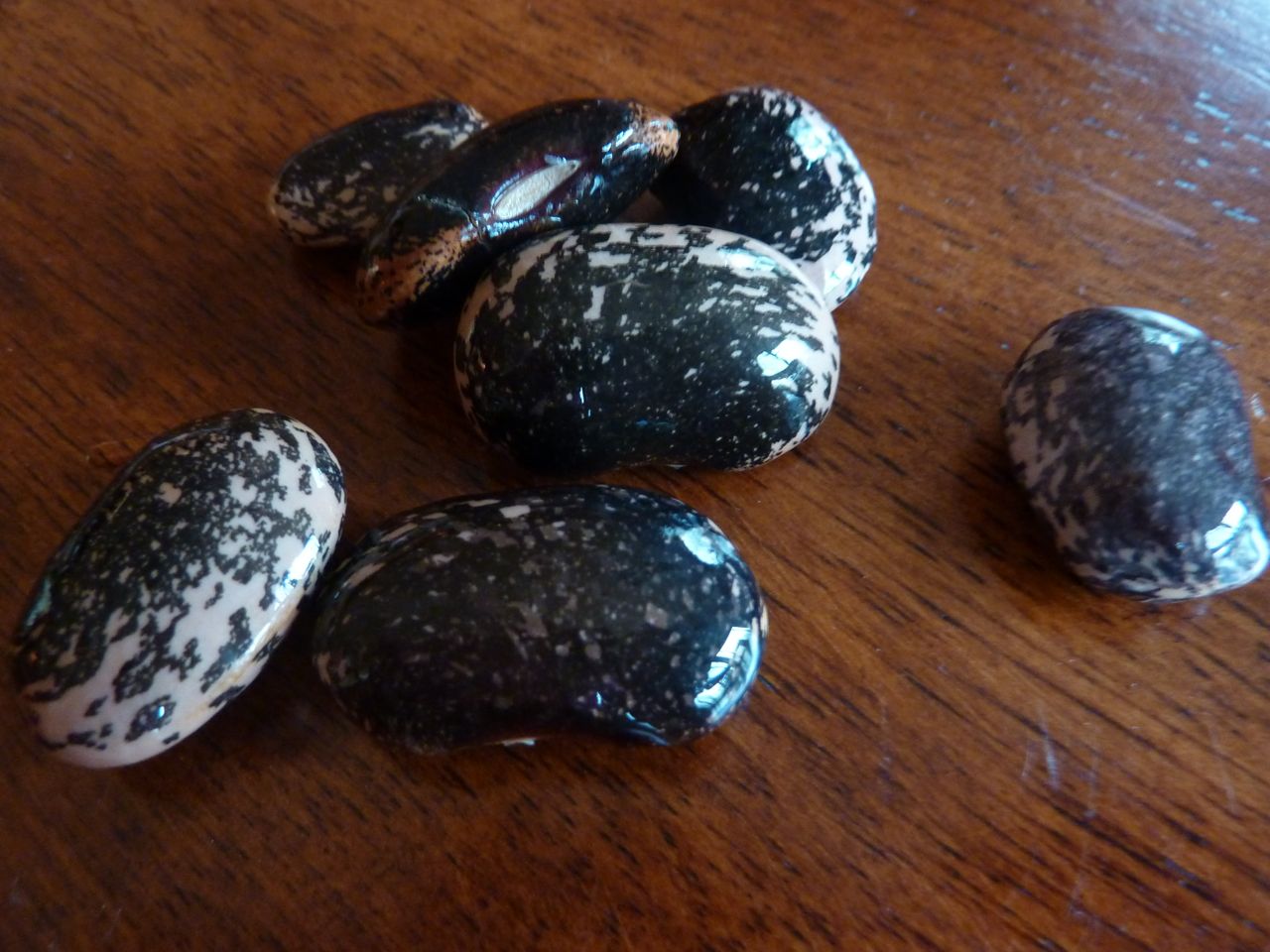
Scarlet Runner Beans

I’ve taken a few liberties with the multiple recipes I read for this soup. First of all, I used a local bacon rather than a poor version of pancetta. I also browned the vegetables first, before cooking the beans. I used chicken stock rather than water, to add a bit of protein and a little meat flavor. Finally, I cooked the barley separately, and store the bean base and the barley in individual containers until I am ready to eat the soup. I find starches kept in the soup for a day or so take on a mushy, unappetizing texture. And according to Fred Plotkin in his recipe for this soup in La Terra Fortunata, the barley will take on a bitter taste if it is reheated more than once. I haven’t experimented with this, as the soup was too good to waste!

Orzo e Fagioli

Serves

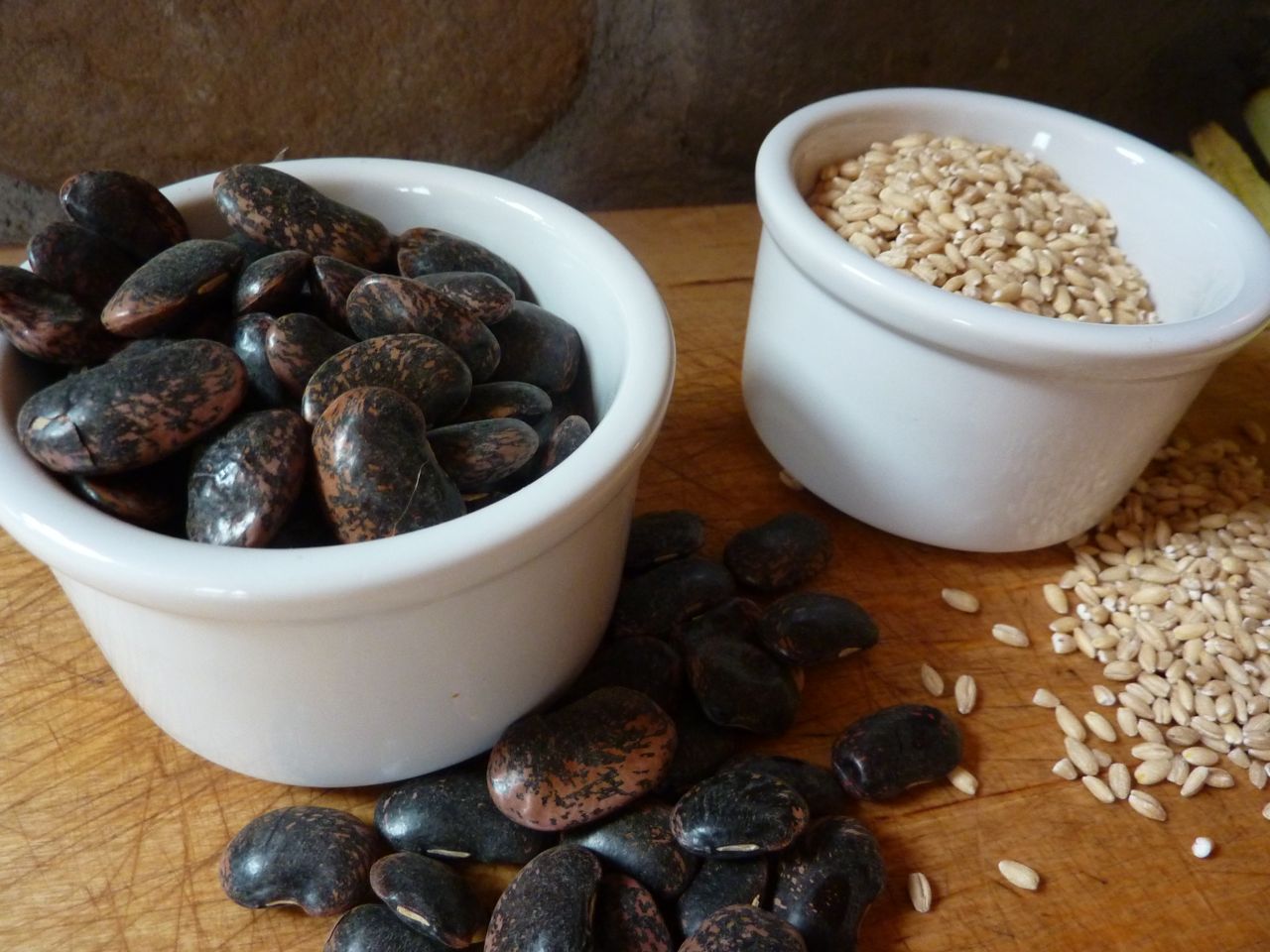
Fagioli and Orzo

1 pound dried beans, such as borlotti (cranberry) or cannellini
2 tablespoons extra virgin olive oil, plus more for drizzling
2 ounces pancetta or bacon
1 large onion, chopped
2 carrots, chopped
2 celery stalks, peeled and chopped
2 garlic cloves, minced
kosher salt and freshly ground black pepper
8 cups chicken, beef or vegetable broth
1 large potato, peeled and cut into 1/2 inch dice
2 bay leaves
1 teaspoon dried rosemary
1 cup pearled barley
3 tablespoons chopped fresh herbs, parsley, basil, rosemary, sage

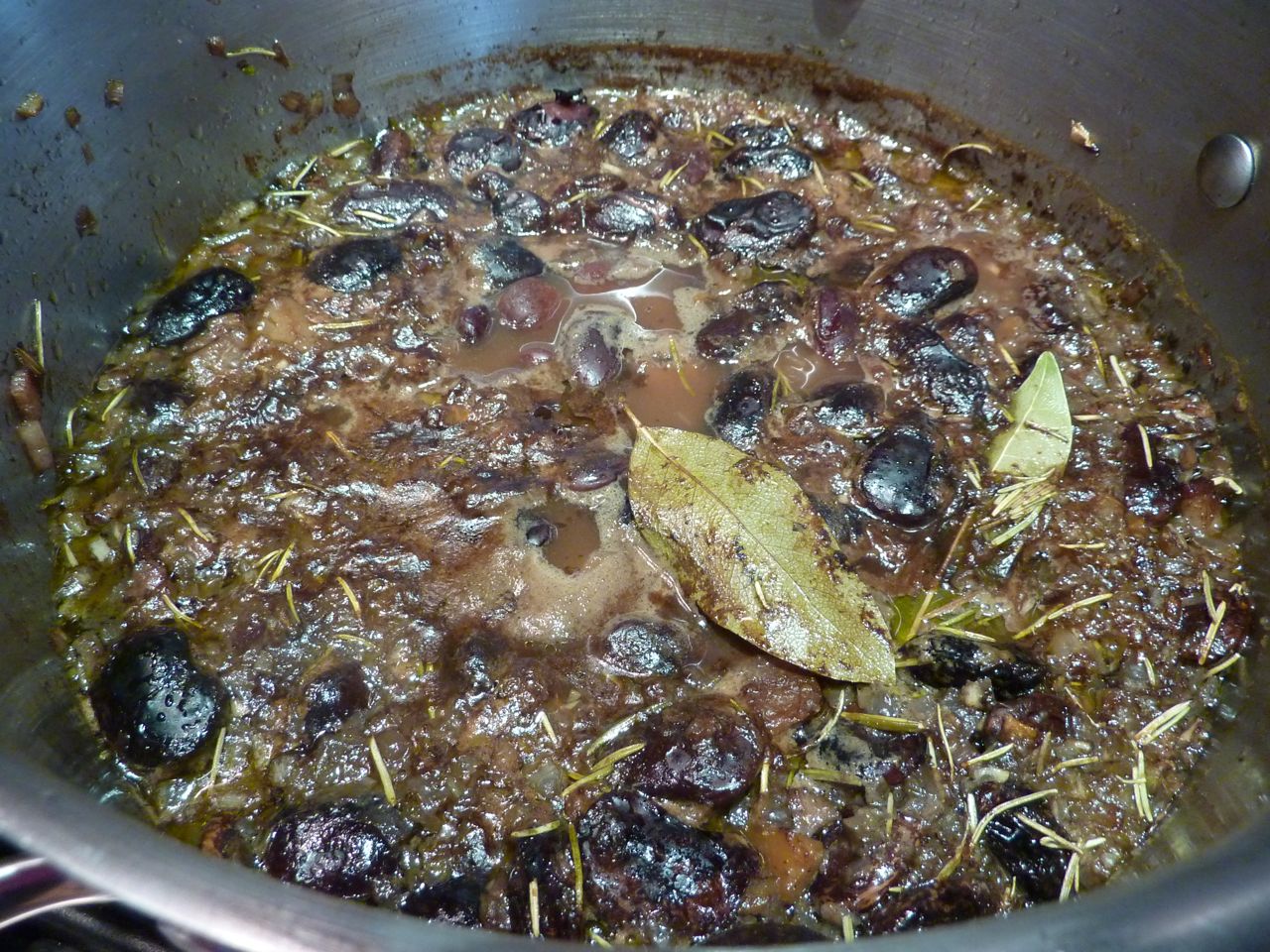
Cooked beans, remove bay leaves and puree

Rinse the beans, place in a large bowl and add enough water to cover by a couple of inches. Allow to soak overnight. If in a hurry, you can place the beans in a pot, cover with water and bring to a boil. Remove from heat and allow to soak for 2 hours.

In a large soup pot, heat the olive oil over medium high heat. Add the pancetta or bacon, onion, carrots and celery. Saute until softened and starting to brown, about 5 minutes.

Add the garlic and cook until aromatic, about 1 minute. Season with salt and pepper.

Drain the beans from the soaking liquid, and place in the pot with the vegetables. Add 5 cups of the chicken stock, the bay leaves and the dried rosemary. Bring to a boil, reduce to a simmer and allow to cook until the beans are soft, 1 to 1 1/2 hours, depending upon the size of the beans. The length of time will vary significantly, depending on the type, size and age of the bean. If you are keeping some or all of the beans whole, you will want them to still be firm enough to hold together, so some firmness is desirable here.

While the beans are cooking, place the barley in a medium bowl and cover the barley with water. Allow to soak for 1 hour, then drain.

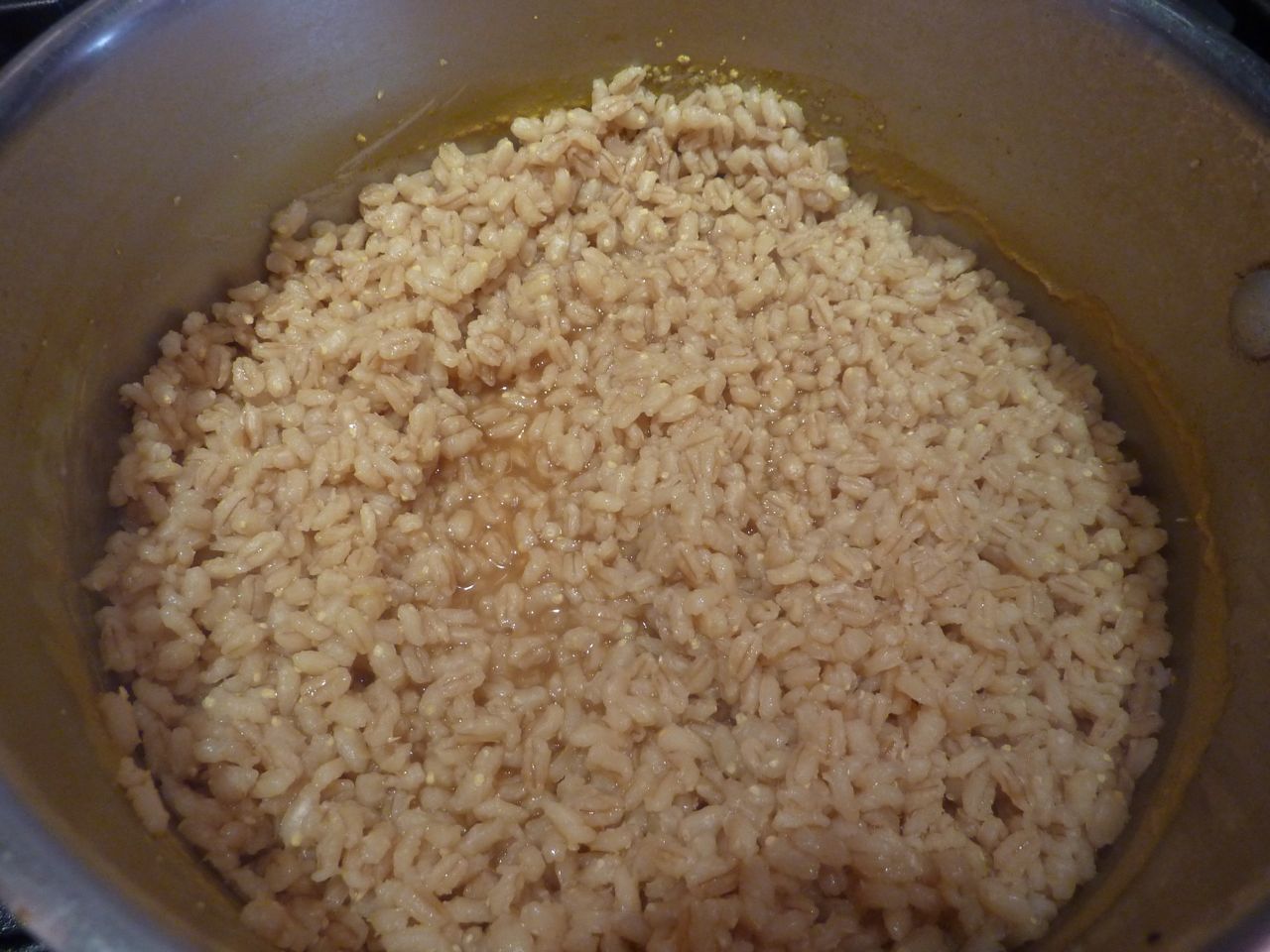
Cooked barley

Place the soaked barley in a medium saucepan and cover with the remaining chicken broth. Cook until the barley is tender, about 30 minutes. Season with salt.

Remove the beans from the heat. Search through the beans for the bay leaves and remove. Using an immersion blender, puree the beans slightly – you want about 1/4 of them to be pureed.

Transfer to a smaller pot the soup you will be serving immediately. Add some barley – roughly estimate the percentage, if you are serving half of the soup, add half of the barley. Add some of the chopped herbs. Warm and serve in warmed bowls. Top with a a drizzle of olive oil, and serve.

Save the remaining bean soup base and barley in two separate containers. Combine and heat through just before serving.

Posted in Barley, beans, Friuli-Venezia Giulia, Pinot Grigio, Soups, Uncategorized | Tagged , , , , , , , , , , , , , , , , , , , , , , , | Leave a comment

Farro con gli Asparagi

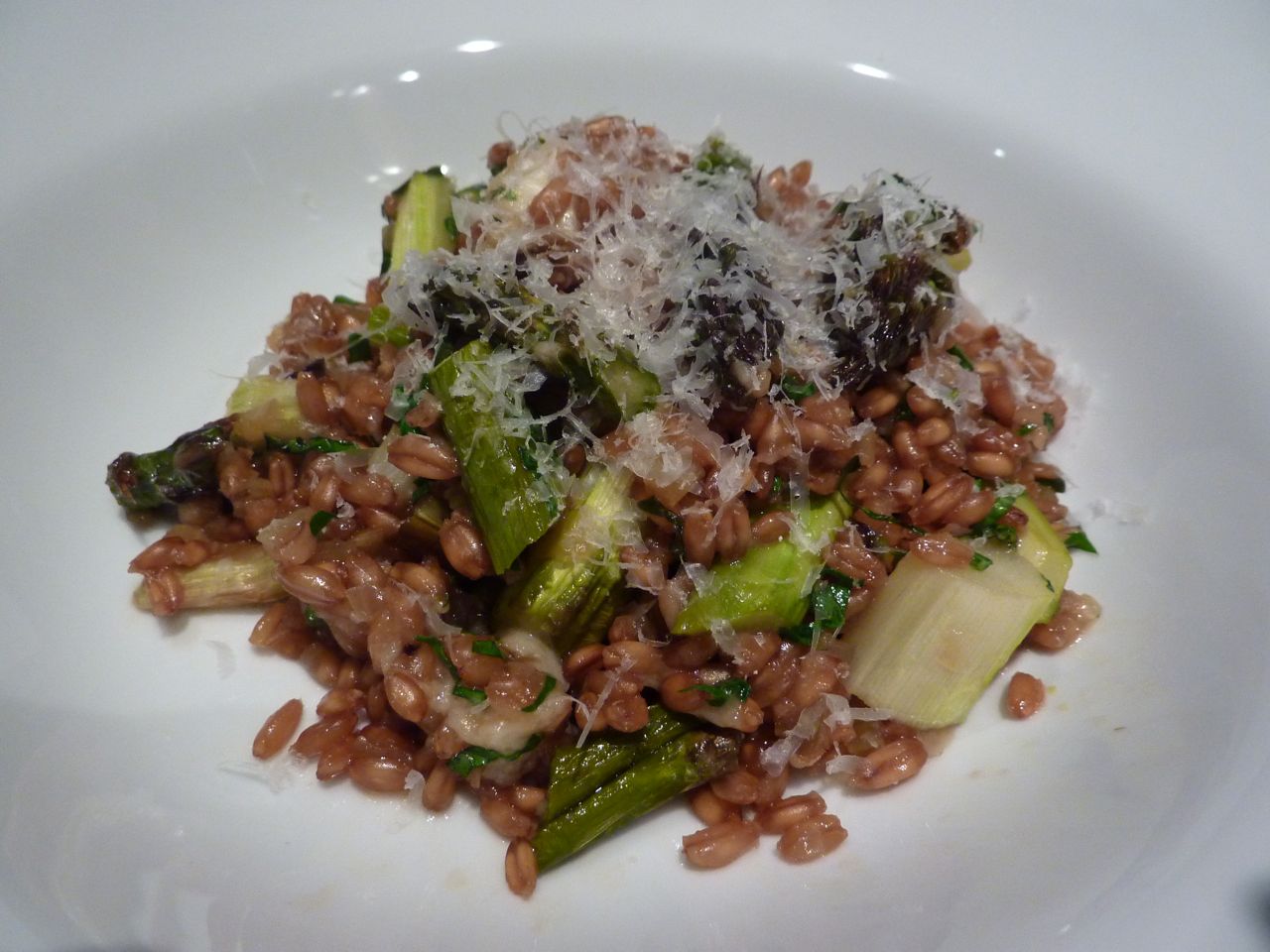
Farro con gli Asparagi

Farro, or spelt as it is often called in the US is a species of wheat, and an important staple in parts of Europe from the Bronze Age to medieval times. It is a hybrid that originated from a domestic wheat, such as emmer, and wild goat grass.  In the Middle Ages, it was cultivated in Switzerland, Germany and Tyrol, the southern part of Tyrol now being part of Italy. Spelt was introduced to the US in the late 19th century, soon to be replaced by bread wheat. The rise of organic farming has created a resurgence in popularity of this wheat, as it requires fewer fertilizers to grow than other varieties.

I have heard many claim that spelt and farro are different grains, but according to the International Plant Genetics Resources Institute, they are. They surely seem quite identical to me, based on what I’ve been able to find.

Also contributing to the re-introduction of farro or spelt is a renewed interest in the multiple health benefits of whole grains. Spelt contains 57.9% carbohydrates, 17% protein and 3.0% fat. It is also a great source of B vitamins such as niacin and thiamine, and minerals such as iron and magnesium.

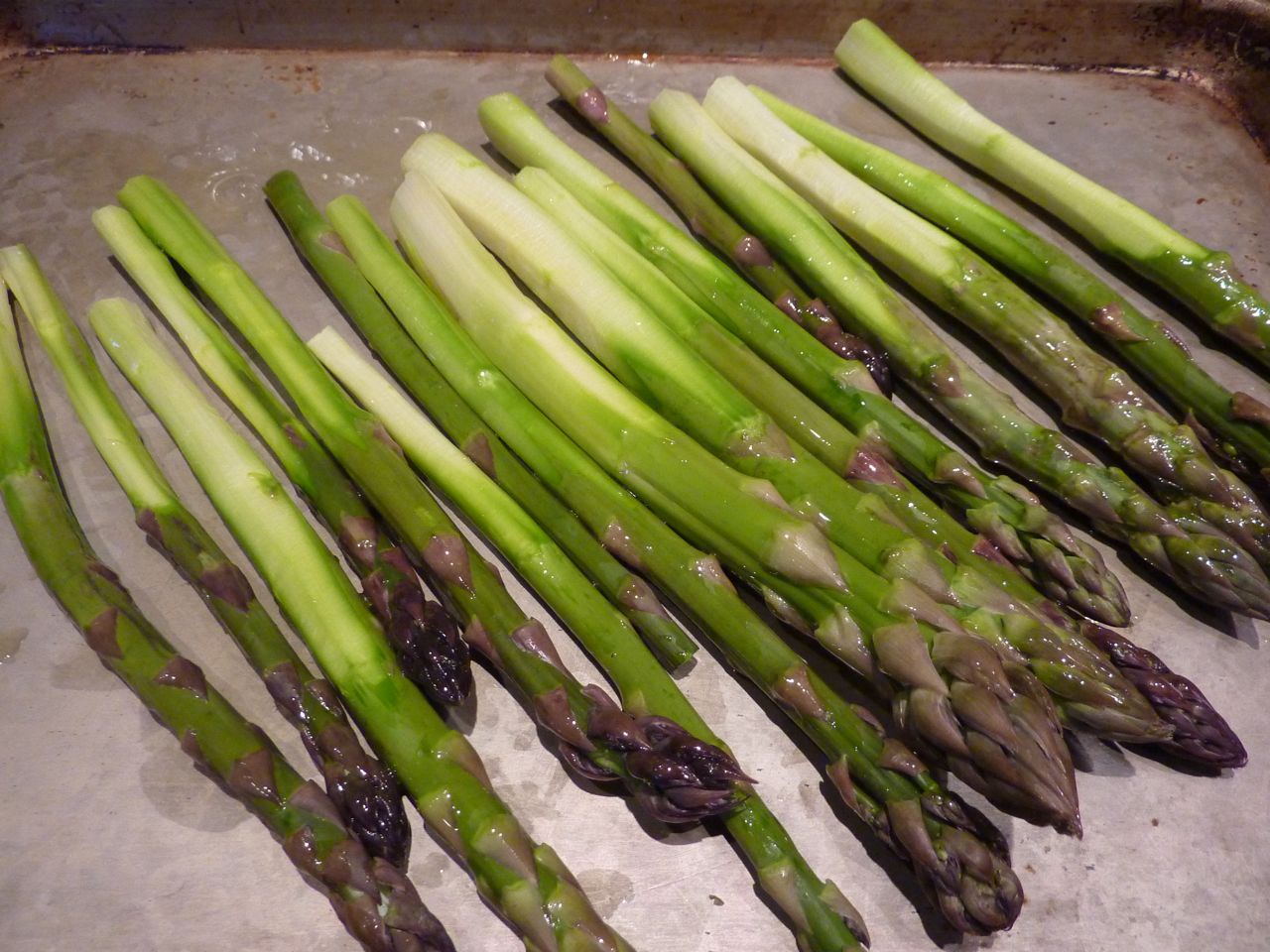
Roasted Asparagus

Risotto is a classic dish from all the regions we visit in Northeastern Italy. This time of year, with the wonderful white asparagus beginning to appear, an asparagus risotto would be a perfect dish to showcase this vegetable. In the Veneto, the white asparagus of Bassano del Grappa is renowned for its delicate flavor, and the quality of this hard-to-obtain product is protected with its’ own DOP status. But Friuli-Venezia Giulia is also home to an area that boasts a white asparagus of similar quality, one of the most celebrated crops in Friuli. The town of Tavagnacco honors its’ prized product every spring with the Festa degli Asparagi. Recent years have seen a market increase in the quantity and quality/ the white asparagus is now the most popular vegetable crop in this region, with 250 hectares and about 150 companies cultivating nearly 1M kg annually of the product. Even with this increase in production, there is still not enough available to meet the demand for the product within the Friuli-Venezia Giulia itself, but it is exported nonetheless.

I’ve presented a couple of risotto recipes already on this blog, so I decided to mix things up a bit and experiment with other options. Also, I didn’t have any decent risotto rice, but had spelt! The result was not creamy like a risotto, but quite nice all the same! If you prefer to use rice, the recipe will work for that as well, and will probably cook more quickly, requiring less liquid. I may try pre-soaking the farro or spelt next time I try this, to cut down on the cooking time. I also love roasted asparagus, so I’ve substituted the usual blanched asparagus used in the classic asparagus risotto recipe with oven roasted.

Just a word of caution when using store-bought chicken broth for a risotto – make sure it is low- or sodium-free. I just made some using College Inn broth, and the result was much too salty, even for me who is not shy about using the stuff! I didn’t add any to the dish, but just the continually reduction of cup after cup of the stock during the process of making risotto concentrates the sodium, making the product too salty.

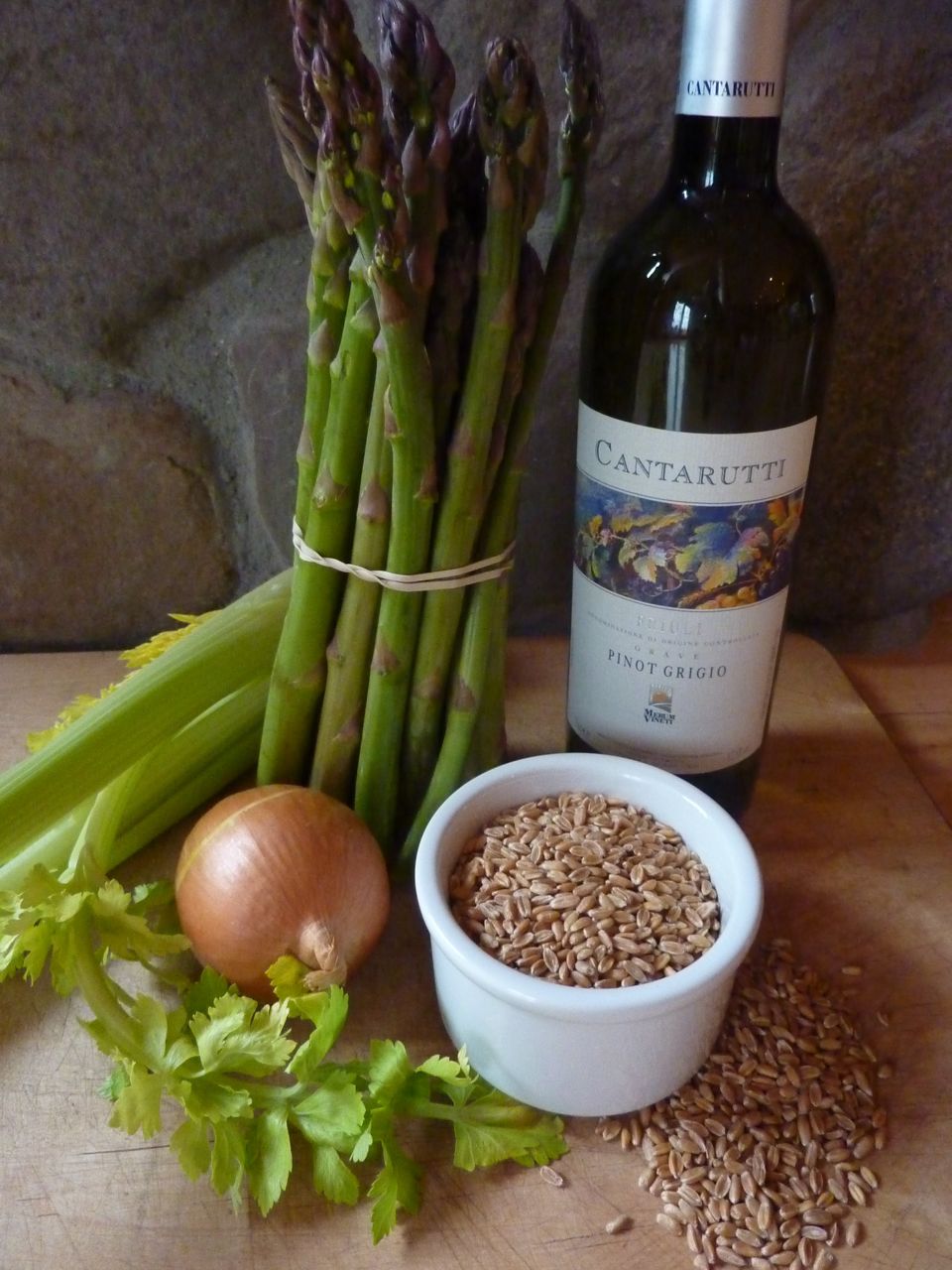
Ingredients

Farro con gli Asparagi

Serves 4-6

1 pound asparagus, ends trimmed
3 tablespoons extra virgin olive oil
2 tablespoons butter
1 medium onion, cut into 1/4 inch dice
2 stalks celery, peeled and cut into 1/4 inch dice
1 1/2 cup farro
1 cup dry white wine
8-12 cups chicken stock
1 cup grated grana cheese
1/4 cup chopped fresh herbs; parsley, chives, basil
kosher salt and freshly ground pepper

Preheat the oven to 350°.

Peel the asparagus, starting from 1 1/2 inches below the tip and extending to the opposite end. Place the spears on a sheet pan, drizzle with some of the olive oil and season with salt. Roast in the oven until tender. Remove and allow to cool. Cut off the tips, and cut the stems into 1 inch pieces.

Place the stock in a large saucepan and heat over medium heat. Keep warm.

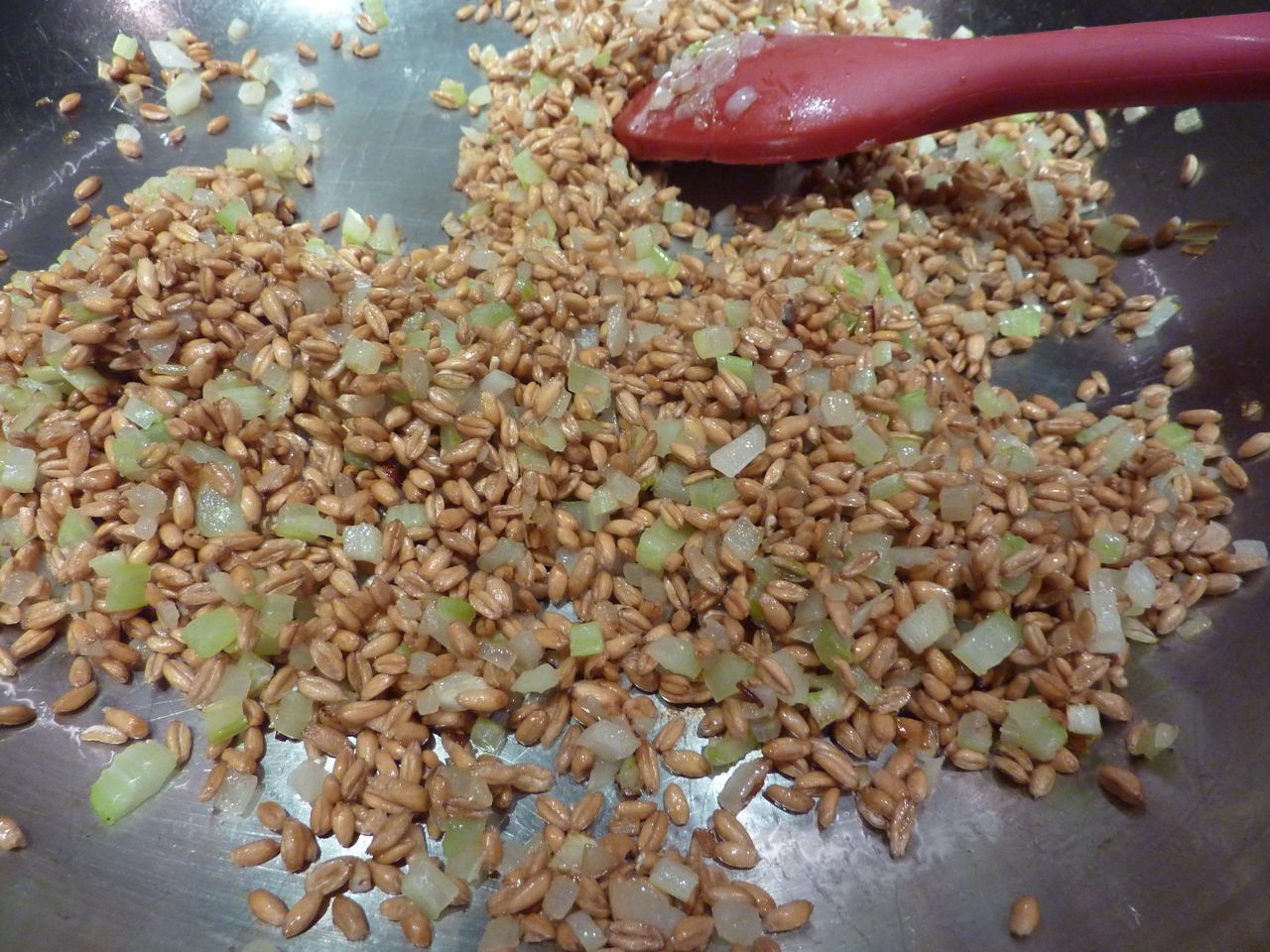
Sauteing farro and vegetables

Heat the remaining oil and the butter in another pan, add the onion and celery and cook over low heat, stirring occasionally, for 5 minutes.

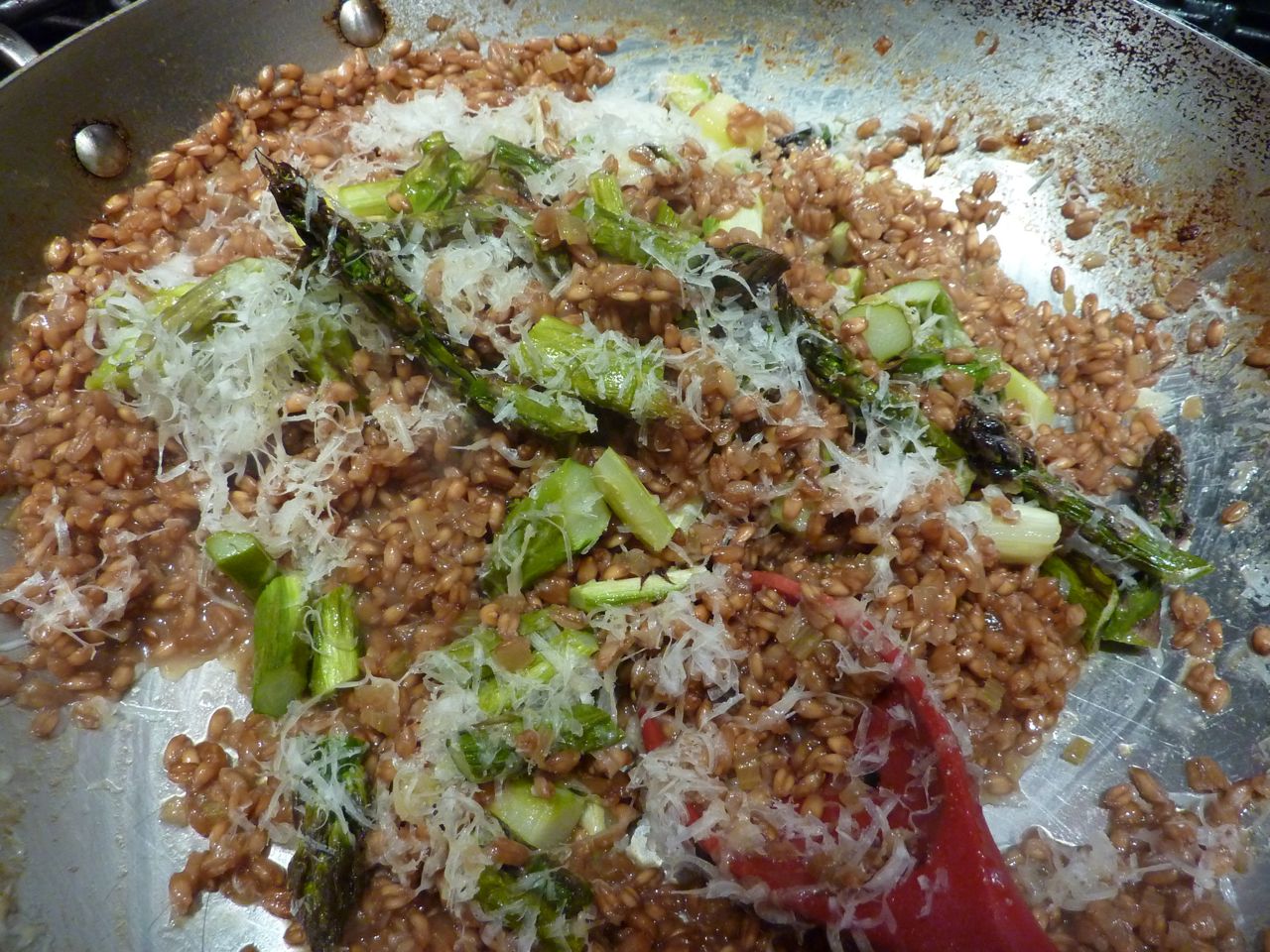
Add the farro. Stir for about 1 minute, and then stir in a ladleful of the stock. Cook, adding the stock a ladleful at a time, for about 45 minutes until the spelt is tender and all the stock has been used.

Finishing risotto on stove

Season with salt to taste, stir in the roasted asparagus, the cheese (reserve some for garnish) and herbs. Serve.


To pair with this dish, I would suggest the white wine I used in the preparation – a crisp, clean Cantaruzzi Pinot Grigio from the Grave region of Friuli-Venezia Giulia.

Posted in Asparagus, Fitness, Friuli-Venezia Giulia, Pinot Grigio, Risotto, Uncategorized, Vegetarian, Veneto Food, Wine Pairings | Tagged , , , , , , , , , , , , , , , , , , , , , , , , | 1 Comment