Randonnee by Day and Braised Rabbit by Night

Randonnee at West Mountain, Sugarloaf

My blog to this point has focused on my culinary activities. But my passions are divided between the kitchen and the great outdoors! So a perfect day for me is one in which I get to indulge in both. Today brought lots of sunshine, but some cold temperatures. With a holiday weekend crowd, it was not a day to spend waiting in lift lines. But a little snowfall this weekend provided enough coverage for a randonnee ascent of West Mountain at Sugarloaf. For those of you unfamiliar with this, it is also called ski touring, or hiking for turns. Instead of taking a lift up the mountain, you climb up. You need skis with binding that allow the skiers heel to lift, and ‘skins’ to attach to the bottom of the ski that prevent the ski from sliding backwards as you climb. These ‘skins’ are now made of nylon, but originally were actual seal skins. Here are a few pictures of my tour, working up an appetite for the braised rabbit I knew was awaiting  me upon my return home!

Home, and ready for Braised Rabbit

More pictures of my tour are on the Italiaoutdoors facebook page.

This recipe is loosely based on a recipe from “The Silver Spoon”, a classic Italian cookbook for over 50 years. I’ve added some pictures and instructions for cutting up a rabbit, for those of you who may not have a lot of experience with this particular item. If rabbit is not at hand, this would work great with chicken or turkey as well. I would braise the dark meat (legs) for the 45 minutes, then add the white pieces (breasts) and continue to cook just until done. Since chicken or turkey breasts are much larger than rabbit loins, I would keep a bit of additional stock at hand to replenish the braising liquid should it reduce too much while the breasts are cooking.
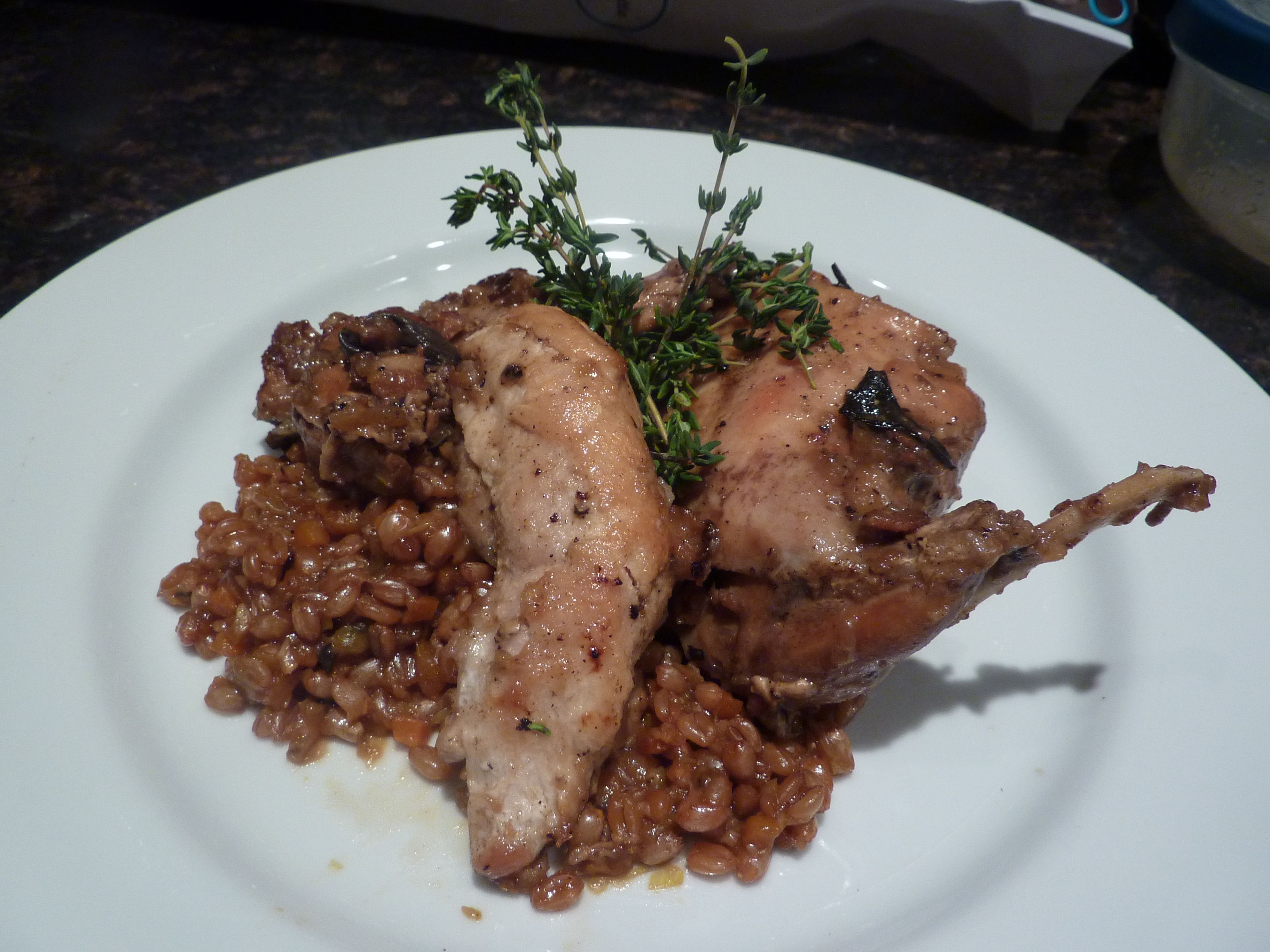
Braised Rabbit with Hard Cider

I used an intriguing and delicious pear cider that was available at our local gourmet store. And I scored some great black trumpet mushrooms for this – a find like this just makes my day! I don’t find rabbit very often here in the US, so to be able to pair it with the pear cider and some fantastic mushrooms is a real treat. Serve with polenta, or some other whole grain side like a farro or barley.

Coniglio al Sidro (Rabbit with Cider)

Serves 4-6

2 rabbits
kosher salt and freshly ground pepper
2 tablespoons olive oil
2 onions, sliced
1/2 cup pancetta or bacon, diced
2 1/2 cups hard cider
3/4 cup rabbit stock
1 1/2 cups mushrooms
1 fresh thyme sprig
Strip of thinly paired lemon rind

Cut each rabbit into 6 pieces: 2 rear legs, 2 fore legs, and 2 loins. This may sound intimidating, but it is no more difficult than cutting up a chicken. I begin by removing the rear legs. I grab the leg and twist it a little to help me locate the hip joint. Using a large chef’s knife, I then cut through the joint where the thigh bone meets the hip socket. The fore legs are next, and I remove them the same way.
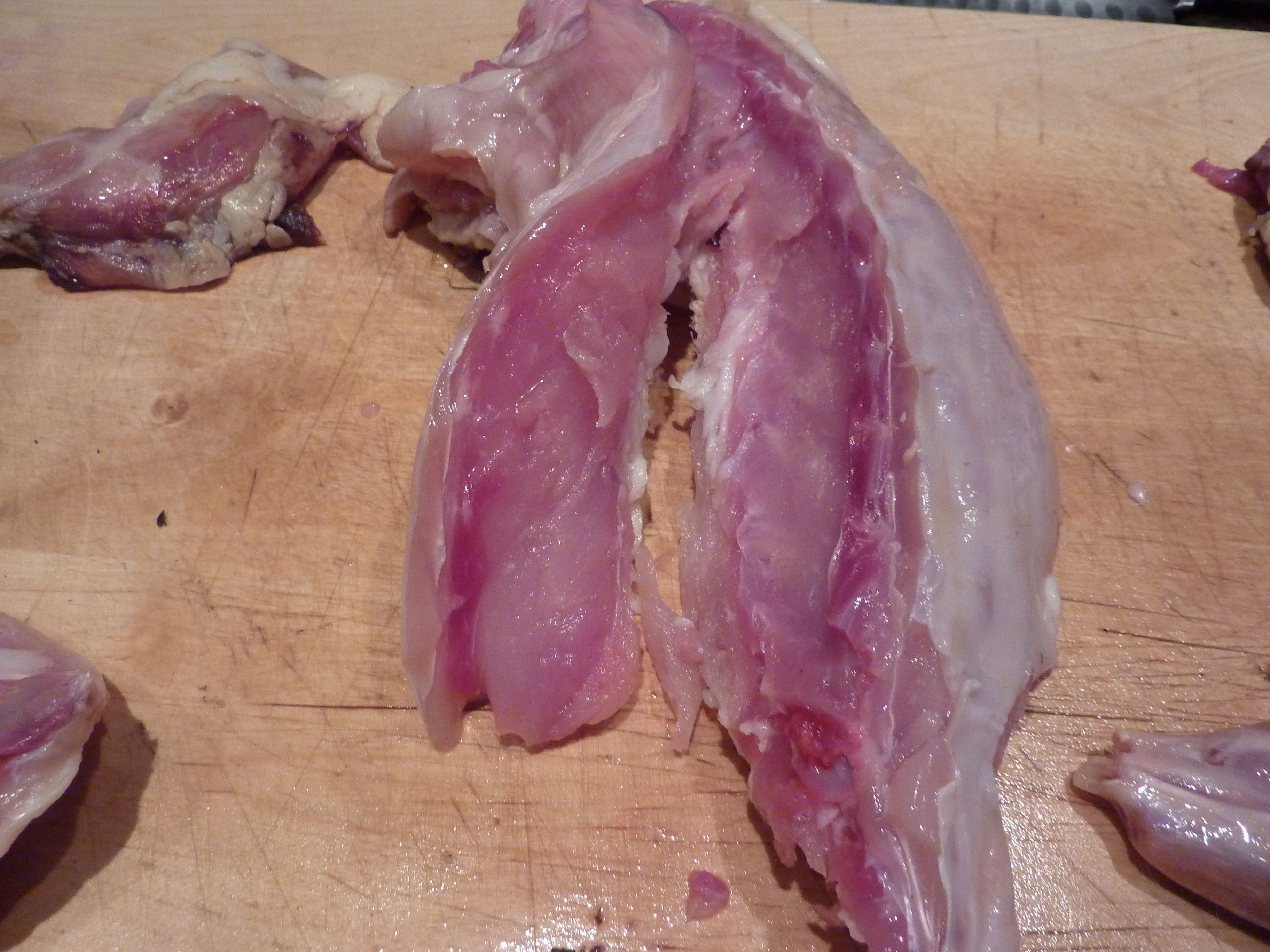
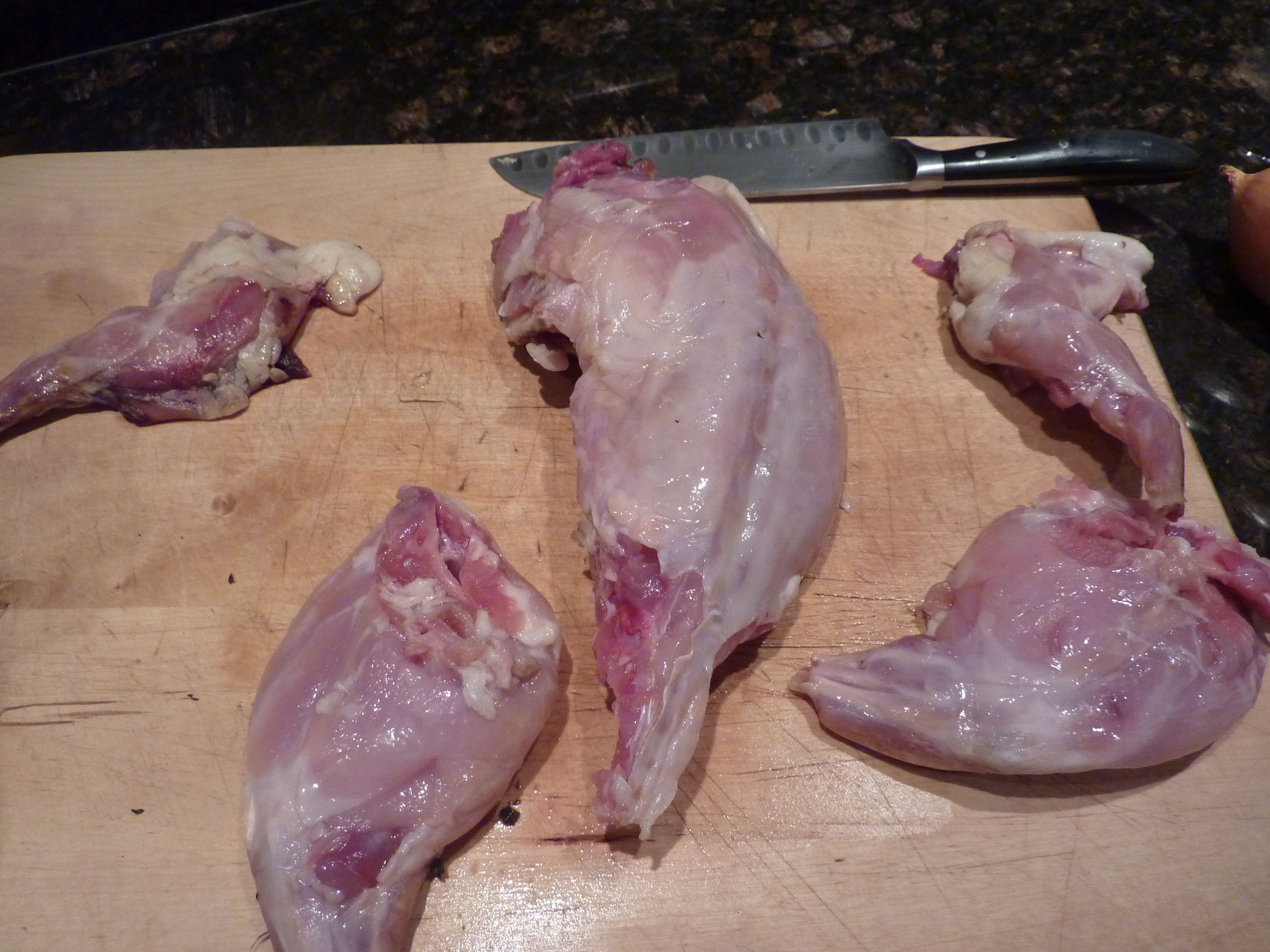
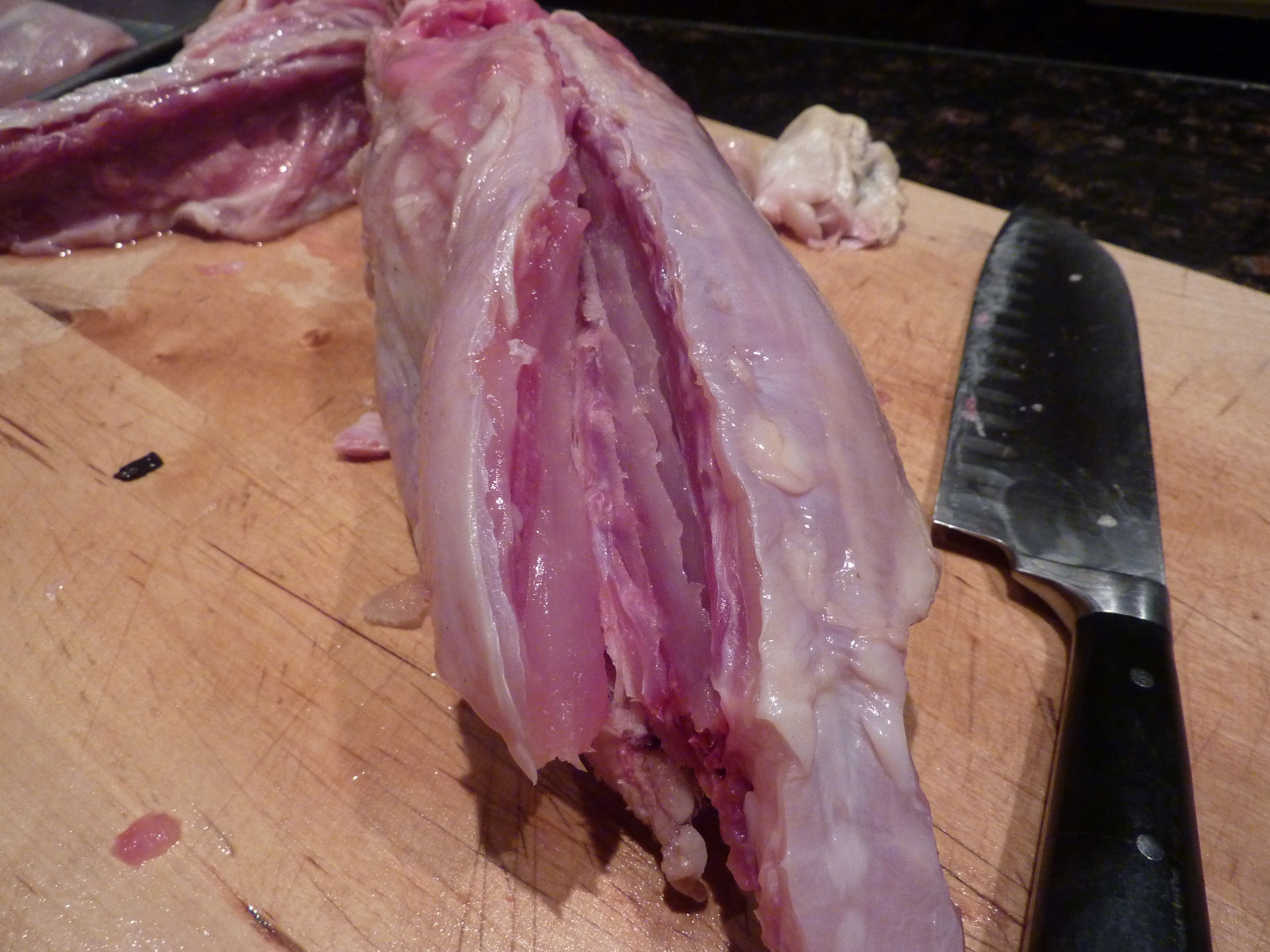
Removing loin
Remove rear and fore legs
Slice down the side of the backbone

The carcass remains, with two loins located down the back on either side of the backbone. Using a boning knife, I cut down on one side of the back bone to loosen the loin, then I make a series of cuts along this same line, following the curve of the rib cage. The loin will easily separate out in one large piece. Repeat on the other side for the second loin.

I save the carcasses to make rabbit stock which I keep in the freezer for future rabbit dishes or soups.
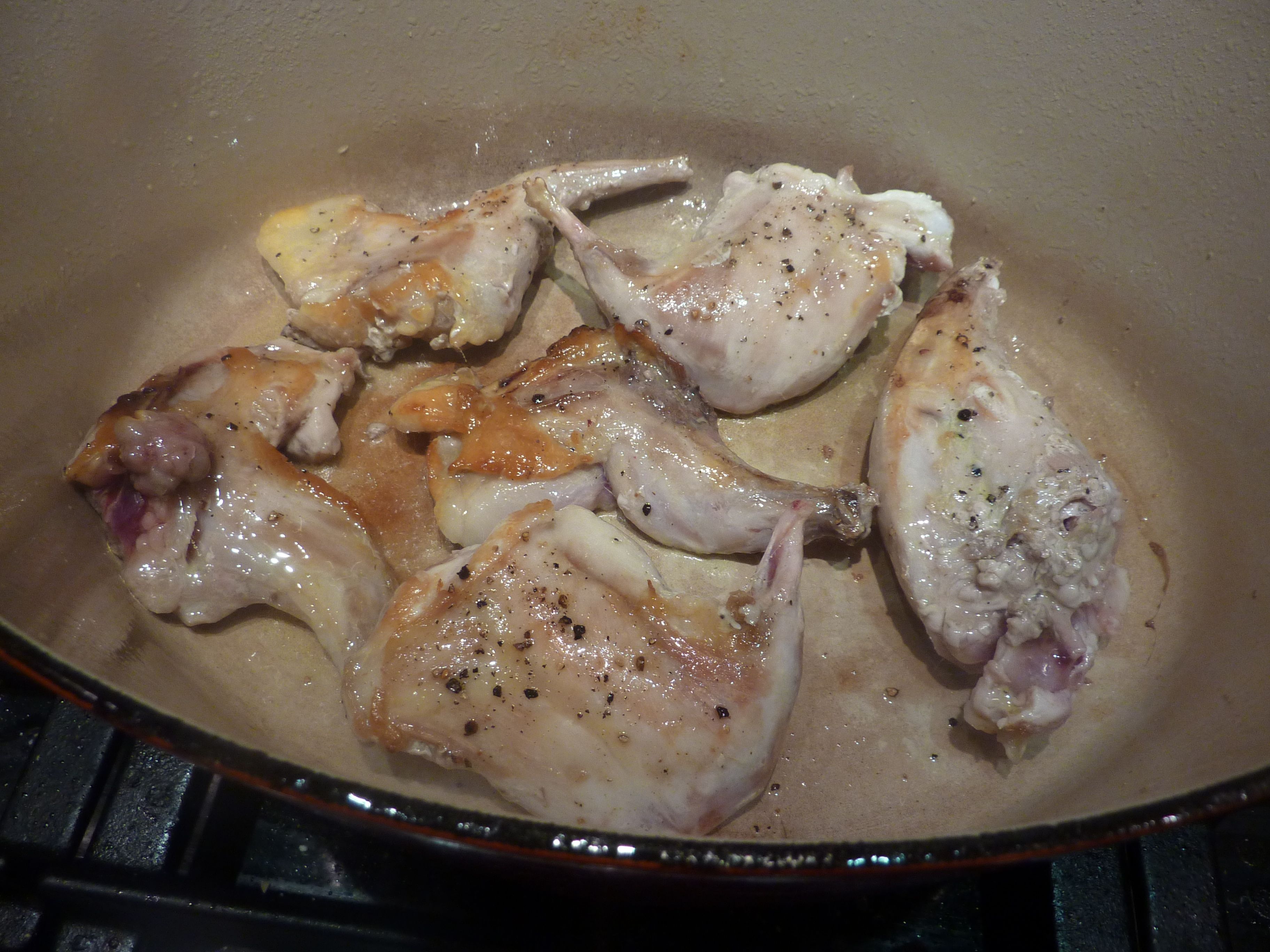
Searing rabbit

Season the rabbit pieces with salt and freshly ground pepper. Heat the olive oil in a large dutch oven or other braising pan over medium high heat, add the rabbit pieces and brown on all sides. You will have to do this in batches, as you do not want to crowd the rabbit pieces in the pan – they will steam, rather than brown nicely. Remove from the pan and set aside.
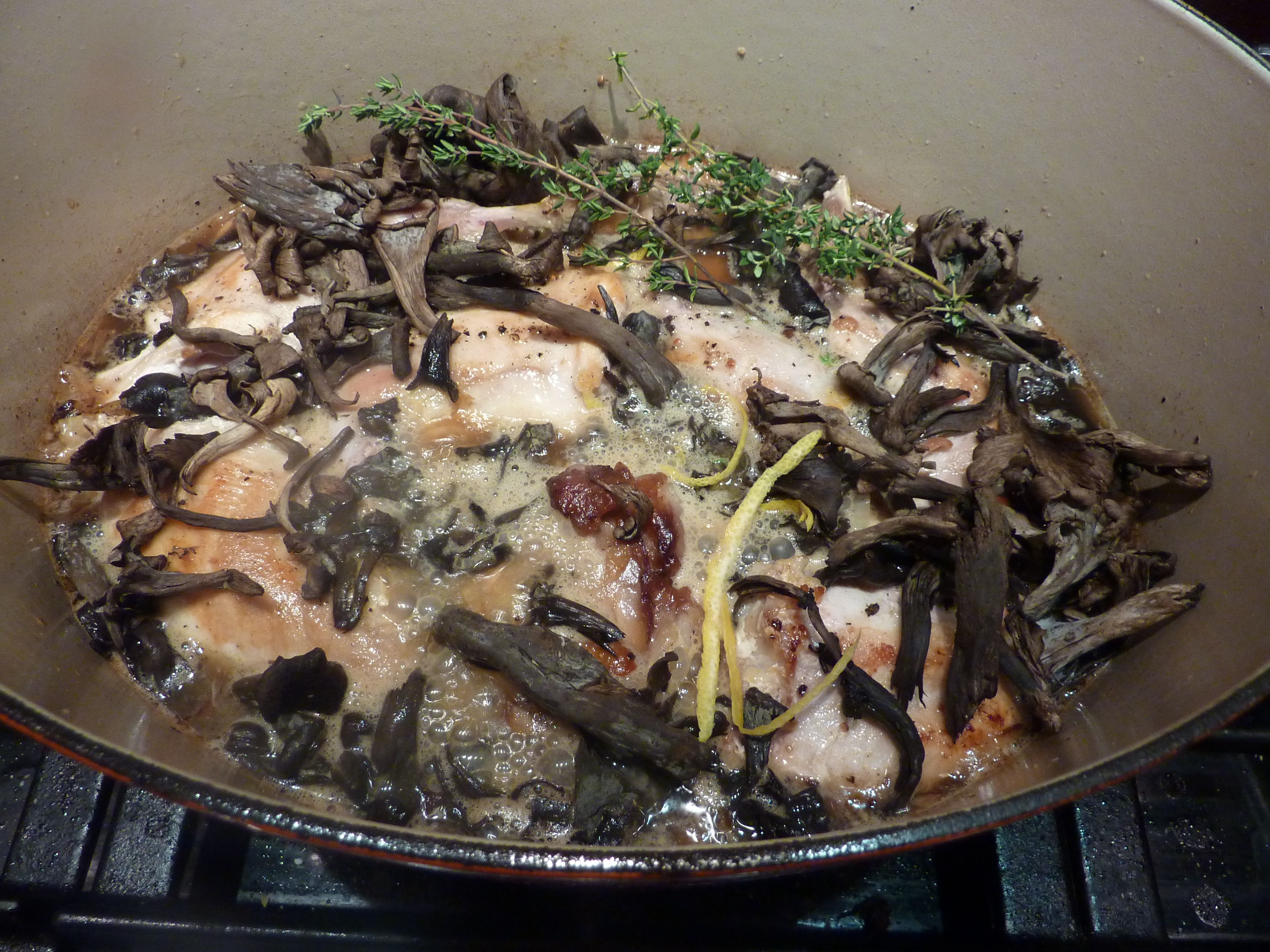
Braise ready to go

Add the onion and bacon to the pan and cook over low heat, stirring occasionally, until the onions are tender and the bacon is cooked but not too crisp, about 7 minutes. Add the cider and stock and bring to a boil. Add the mushrooms, thyme, lemon rind, and the rabbit rear and fore legs to the pan. Cover with parchment paper, and then aluminum foil, and reduce heat to a low simmer. Cover and cook over low heat for 45 minutes.

At this point, the braise can be saved for another day. Making it ahead of time allows the flavors to develop even further. I often make this one day and serve it the next; it is very quickly finished off and makes a great warm meal after nice ski tour! Remove it from the heat, and allow it to cool a bit. Place the entire pan in the refrigerator. If I am making it in advance, I don’t sear the loins, I just save them in a separate container.

When ready to serve the braise, place the pan on the stove over medium heat and bring back to a low simmer. Heat the remaining tablespoon of olive oil in a medium saute pan over medium high heat. Sear the loins on all sides. Transfer the loins to the braising pan, and allow to simmer, uncovered, until the loins are cooked through to desired doneness.
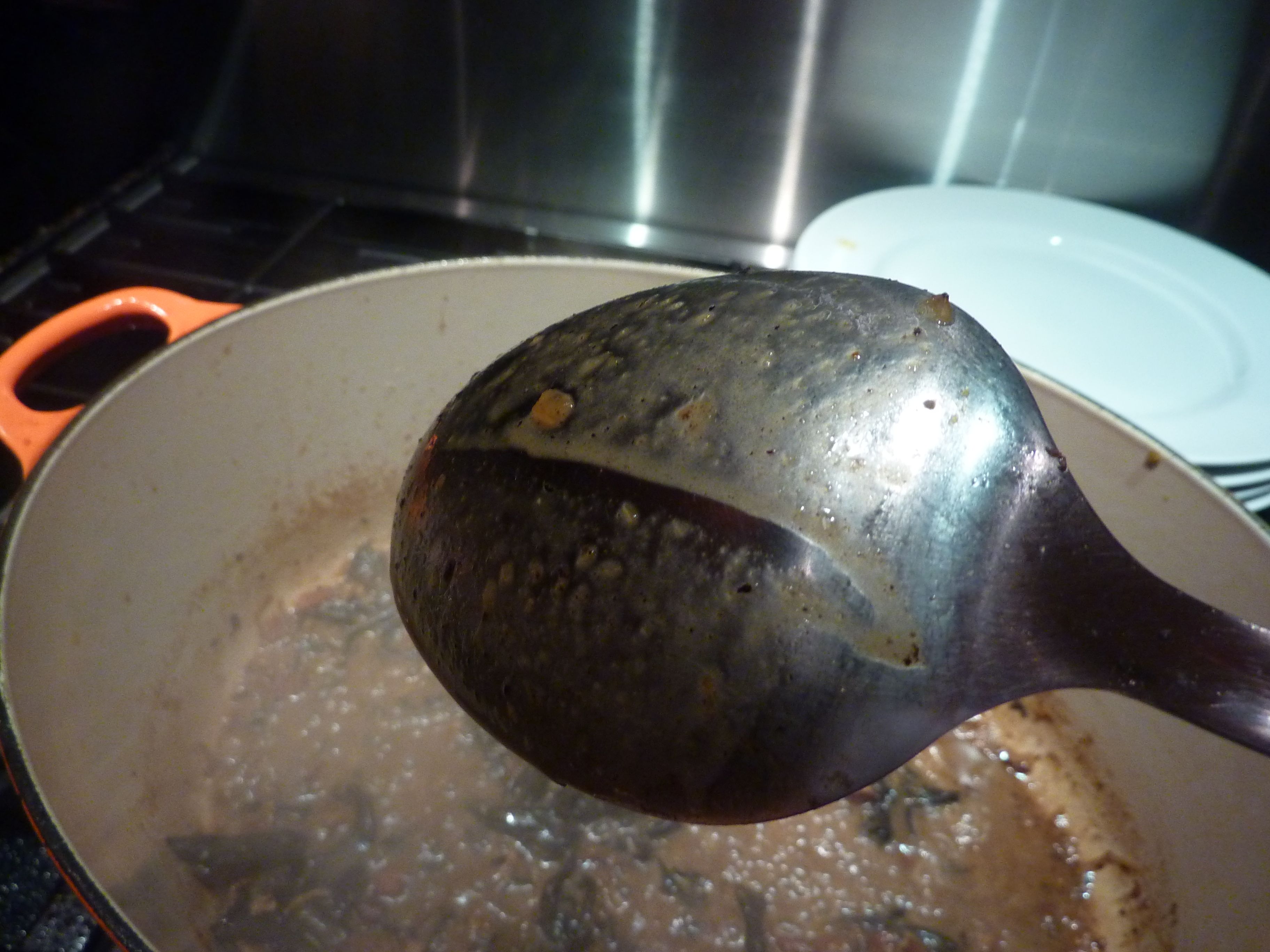
Coat the back of a spoon - done!

Remove the rabbit from the braising pan and set aside, keeping them warm. Continue to simmer the braising liquid, reducing the sauce to the desired consistency. In culinary school, I was trained to bring this to a ‘nape’ consistency, in which it will coat the back of a spoon and, if you draw your finger along the back of the spoon, the line that is left behind will remain clear. Taste sauce and correct seasoning with salt and pepper, if desired.

Place a rear leg, fore leg and loin on 4 warmed plates. Top with the sauce and mushrooms, and garnish with a fresh thyme sprig and a narrow strip of lemon peel.
Posted in Braising, Uncategorized | Tagged , , , , , , , , , , , , , , , , , | 4 Comments

Who’s Crazy Enough to Make their own Ricotta Cheese?

Homemade fig ricotta bike tours italy italiaoutdoors food and wine
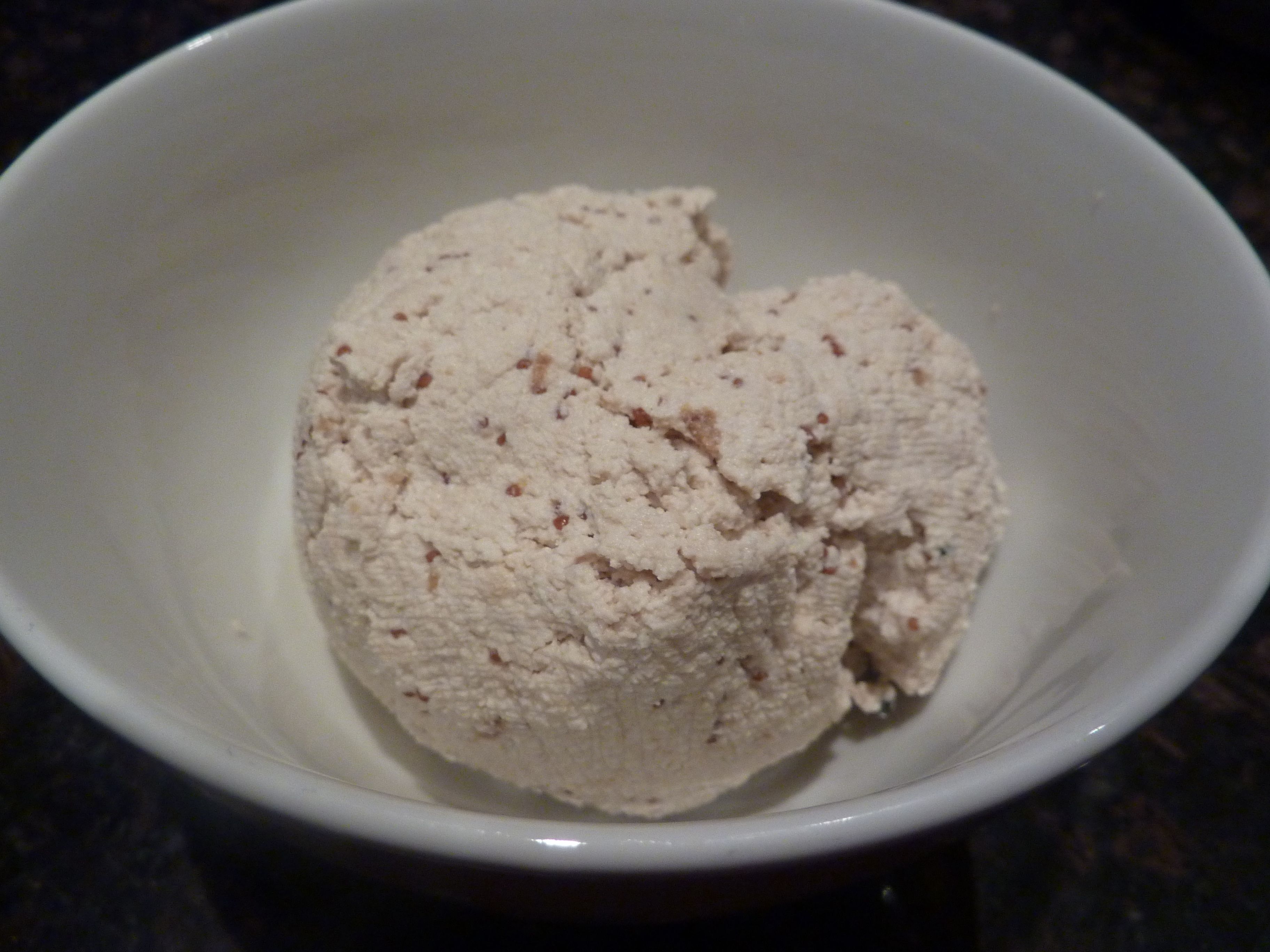
Homemade Fig Ricotta

Make your own ricotta cheese? Are you crazy? That is the reaction I usually see when this possibility is first introduced. But continue reading, and you’ll soon be a convert. You can actually make ricotta from two simple ingredients, and you’ll be done in less time than it will take you to run out to the grocery store and buy it!

The ingredients: whole milk and some sort of acid (vinegar, lemon juice)

How: Heat milk. Add acid. The milk will curdle. Strain curds from liquid. You are done.

Figs and herbs infusing ricotta curds culinary bike tours italy italiaoutdoors food and wine
Figs and herbs infusing ricotta curds

We introduced homemade ricotta with Jody Adams leading the way on our Chefs on Bikes tours last year in the Veneto. Everyone was amazed at how simple it was; the most difficult part was scrounging around in the borrowed kitchens trying to locate an adequate substitute for a strainer and cheesecloth (I think we ended up with paper towels, or coffee filters.) We stuffed zucchini blossoms with it in June, and in September we served it for dessert with roasted fresh local plums with walnuts.

Now to fess up a bit, this is not exactly a true ricotta cheese as you would find in Italy. The high quality ricotta cheese we found there are actually produced from the whey, the liquid that is drained off after the milk has curdled. When the protein rich whey is heated, protein particles fuse and create a curd, which is then drained and becomes ricotta. In Italy, most ricotta cheeses are produced with sheep, goat or water buffalo milk whey, while in the US cow’s milk whey is most commonly used. But this homemade whole milk version is delicious, and I love the idea of being able to control the quality of the ingredients – I opt for a locally produced whole milk, as opposed to a supermarket organic. The latter must be UHT (ultra-high temperature) pasteurized, due to the required long shelf life. UHT milk is not recommended for home mozzarella production, as the processing interferes with the more solid curd production needed for that type of cheese. It will work for this type of ricotta, however.

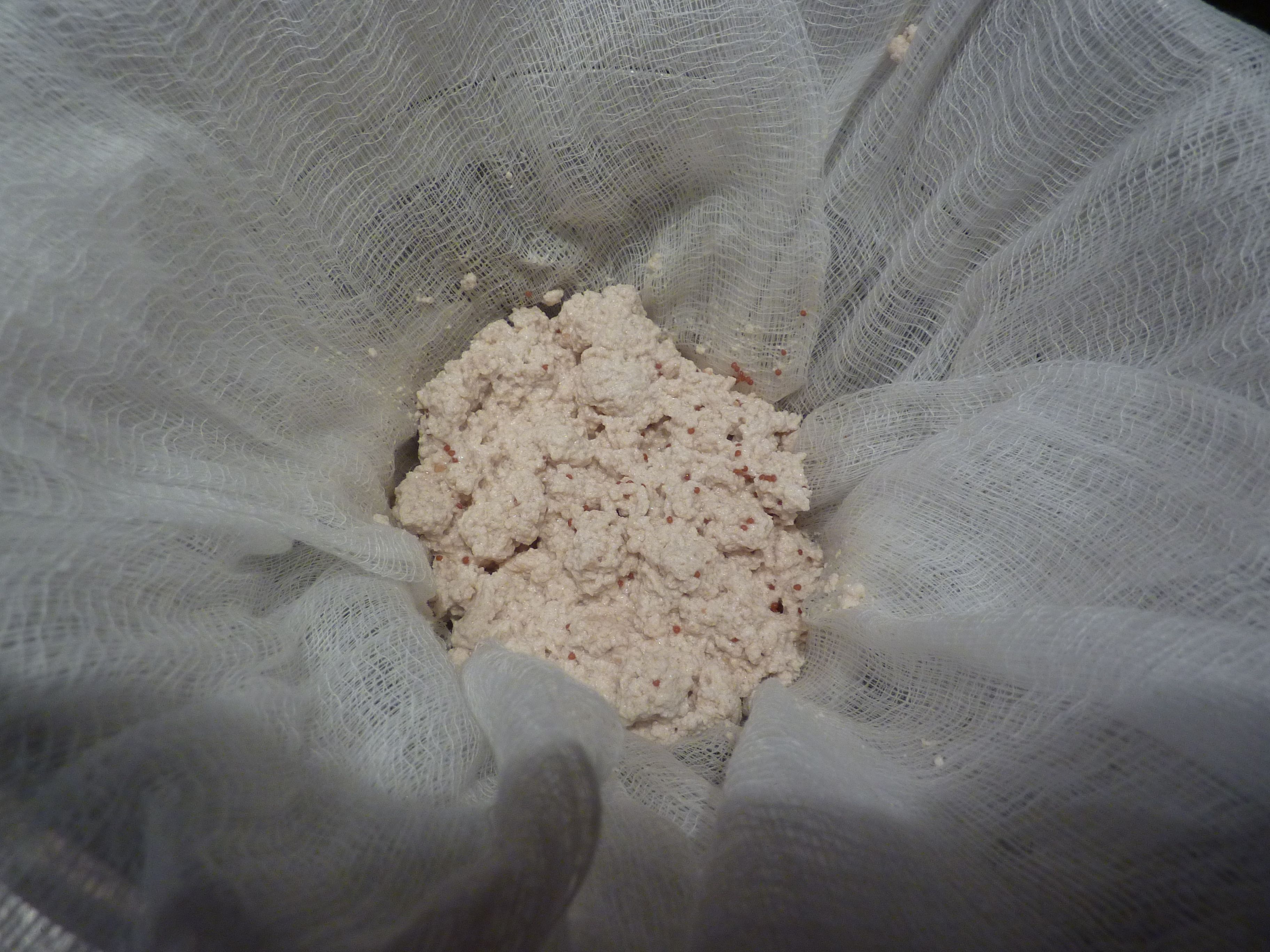
straining ricotta private bike tours italy italiaoutdoors food and wine
Straining ricotta

I’ve continued to play with variations, experimenting with different flavors of vinegar and different ingredients to infuse flavor into the cheese. I’m also planning on trying some versions with non-cow’s milk, when I can get my hands on some. Here’s one version in which I used a fig flavored balsamic vinegar and added some dried figs which sit in the curds for a period of time to infuse some flavor into the cheese. I’ve got a few more varieties I want to explore, which I will post with recipes – I’d love to hear from anyone out there with your own discoveries!

Homemade Fig Ricotta

Makes 2 cups

1/2 gallon whole milk, preferably local
2 bay leaves
sprig thyme
9 dried figs, woody stem removed and quartered
2 tablespoon and 2 teaspoons fig vinegar (balsamic vinegar flavored with fig)
Kosher salt

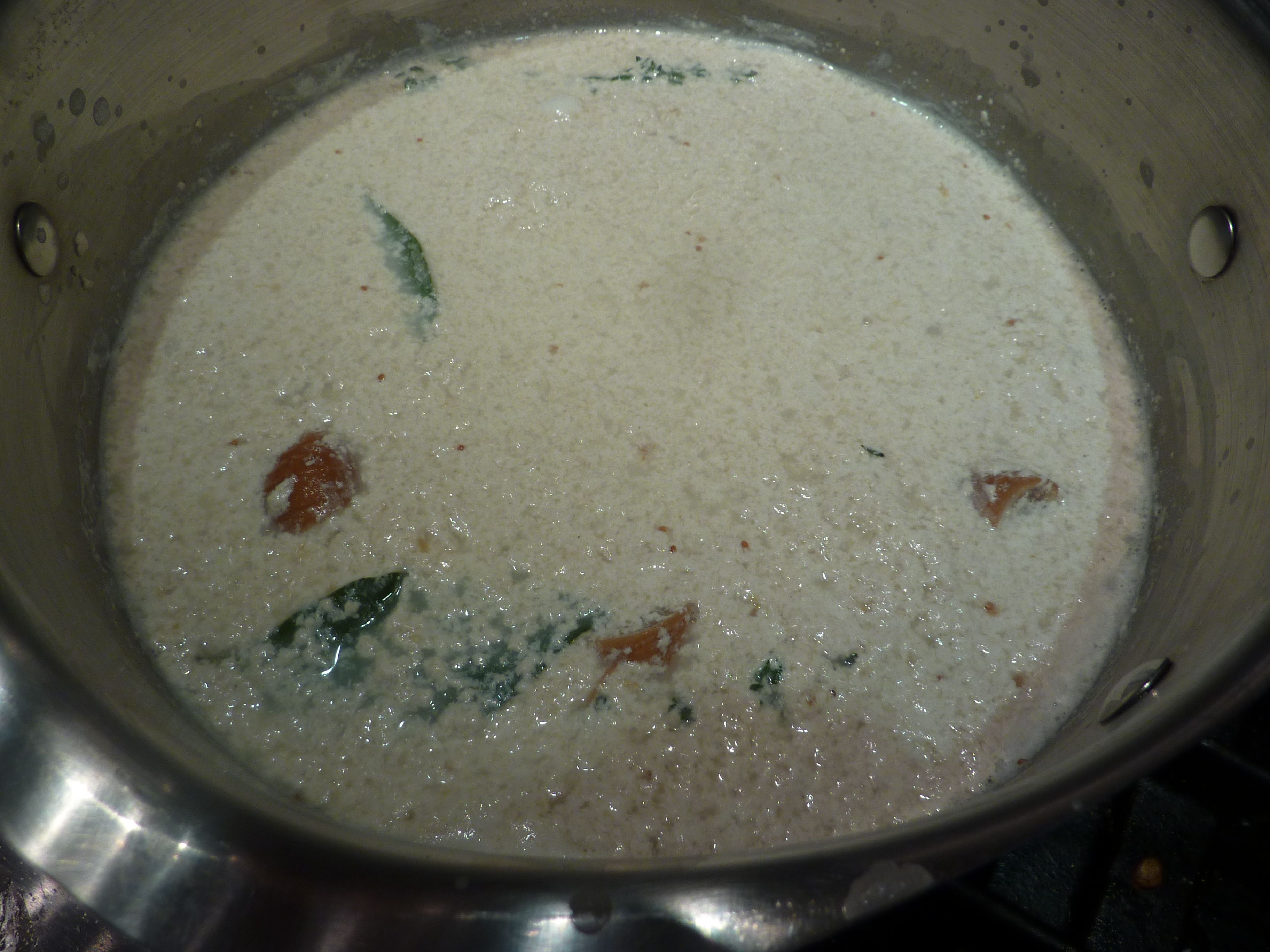
Place milk, bay leaves, thyme, fig quarters and balsamic vinegar in a large saucepan and heat slowly over medium heat, stirring occasionally to keep the milk from burning. Eventually, milk will curdle. Most recipes call for the milk to be heated to 180°, using a thermometer to keep track of the temperature.  This is a simmer, just below the boiling point. When the milk reaches 180°, you are instructed remove from the heat and stir in the vinegar. However, the milk will curdle as low as 165°, and if you are careful to keep an eye on it so it doesn’t boil over, you can do this without a thermometer. The milk will curdle when it reaches 165°, if you have added enough acid (vinegar).  For the fig ricotta, allow to stand for 1 hour, to infuse the ricotta with the bay, thyme and figs.

Line a strainer with cheesecloth. Remove the bay leaves, thyme sprig and fig quarters from the saucepan containing the milk. Ladle the curds into the cheesecloth, allowing the clear liquid to drain away. Hang in the cheesecloth for 8-10 minutes, longer if you want drier ricotta. You can also gather the ricotta up in the cheesecloth to squeeze out some of the whey. Season with salt.

So, now what do we do with it?

pasta with chicken cycling holidays tuscany
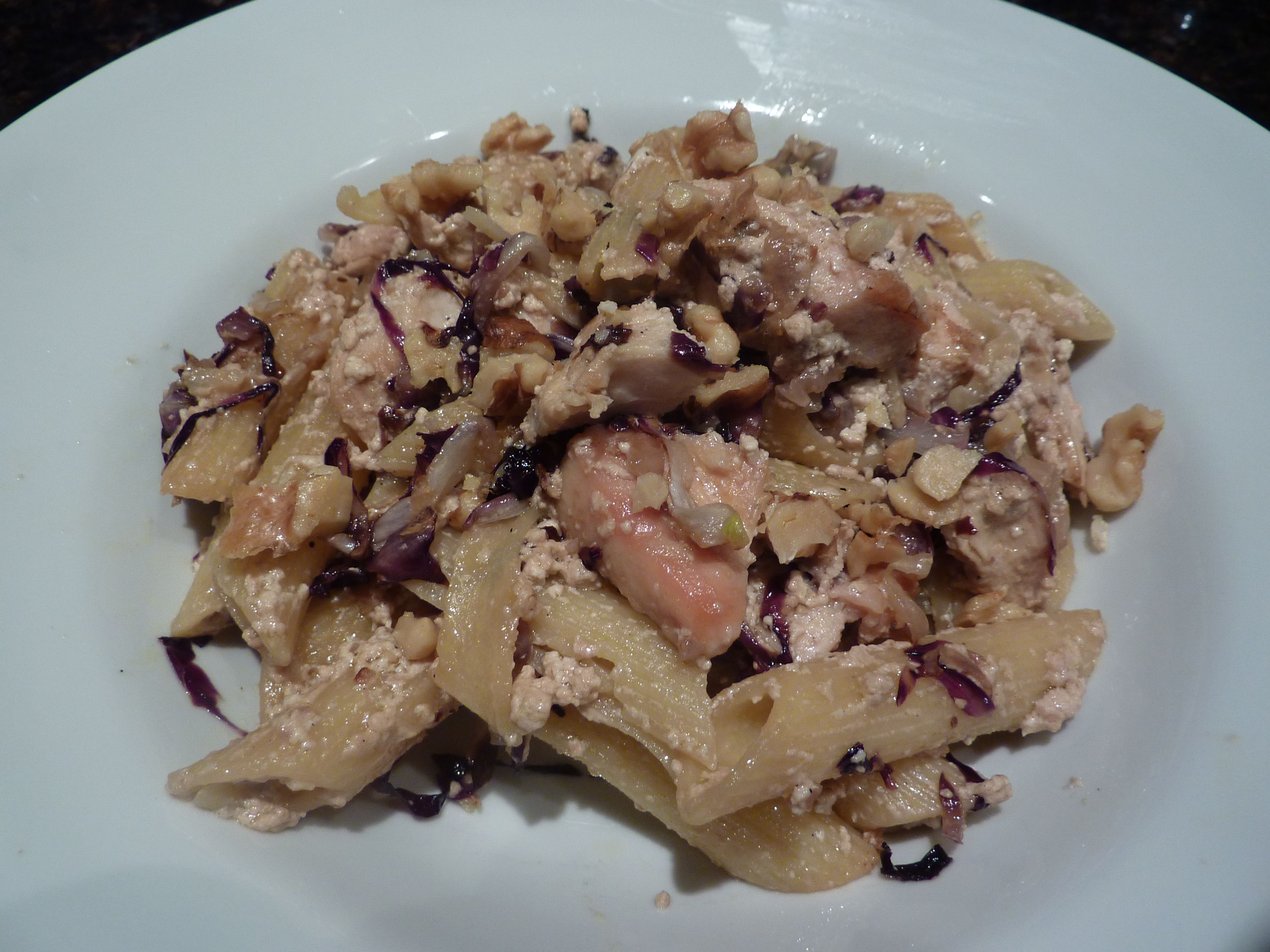
Pasta with Chicken, Radicchio, Homemade Fig Ricotta and Walnuts

Pasta with Chicken, Radicchio, and Homemade Fig Ricotta with Walnuts

This is a quick pasta recipe I came up with to feature this great homemade ricotta. The combination of fig and radicchio and walnuts I love; I’ve used it on crostini as an appetizer. I’ve added some grilled chicken here as a way to work in some protein, but a vegetarian version would be just as tasty. I used regular white pasta, as that is what I had on hand, but a whole wheat pasta would be very nice in this.

Serves 4

2 boneless chicken breasts
kosher salt and freshly ground pepper
3 tablespoons extra virgin olive oil
1 small head radicchio, chiffonade (thinly sliced)
2 cloves garlic, minced
1/2 cup homemade fig ricotta
1 pound dried penne pasta, either white or whole wheat
1/4 cup walnuts, toasted and chopped

Preheat your grill. You can also bake or broil the chicken, if a grill is not available.

Season the chicken breasts with salt and pepper. Grill until cooked through. Allow to cool, then chop into 1/2 inch pieces.

Fill a large pot with water and bring to a boil over high heat.

While the water is heating, heat 1 tablespoon of the olive oil in a large saute pan. Add the radicchio and cook until wilted. Add the garlic and cook another minute. Add the chicken pieces. Turn off the heat while the pasta cooks.

Once the water is boiling, season with salt. Add the penne and cook until al dente. Reserve 1 cup of the pasta water, then drain the pasta and add to the chicken and radicchio.

Turn the heat back on to medium under the pasta and chicken.  Add the ricotta and remaining olive oil and combine. If the pasta seems a bit too dry, add a bit of the pasta water – this will depend on how well you have drained your ricotta. Taste, and adjust the seasonings.

Posted in Cheeses, Chicken, Pasta, Uncategorized | Tagged , , , , , , , , , , , , , , , , , , , , , | 2 Comments

Pasta e Fagioli or Pasta Fazool to Us Americans…

pasta e fagioli bike tours italy italiaoutdoors food and wine

Pasta does not play as predominant a role in the cuisine of Northern Italy as it does elsewhere in the country. One pasta dish that the Veneto is famous for, however, is pasta e fagioli (or pasta e fasioi in Venetian dialect.) This is a soup with white beans and pasta, but the lead role is played by the beans, rather than the pasta.

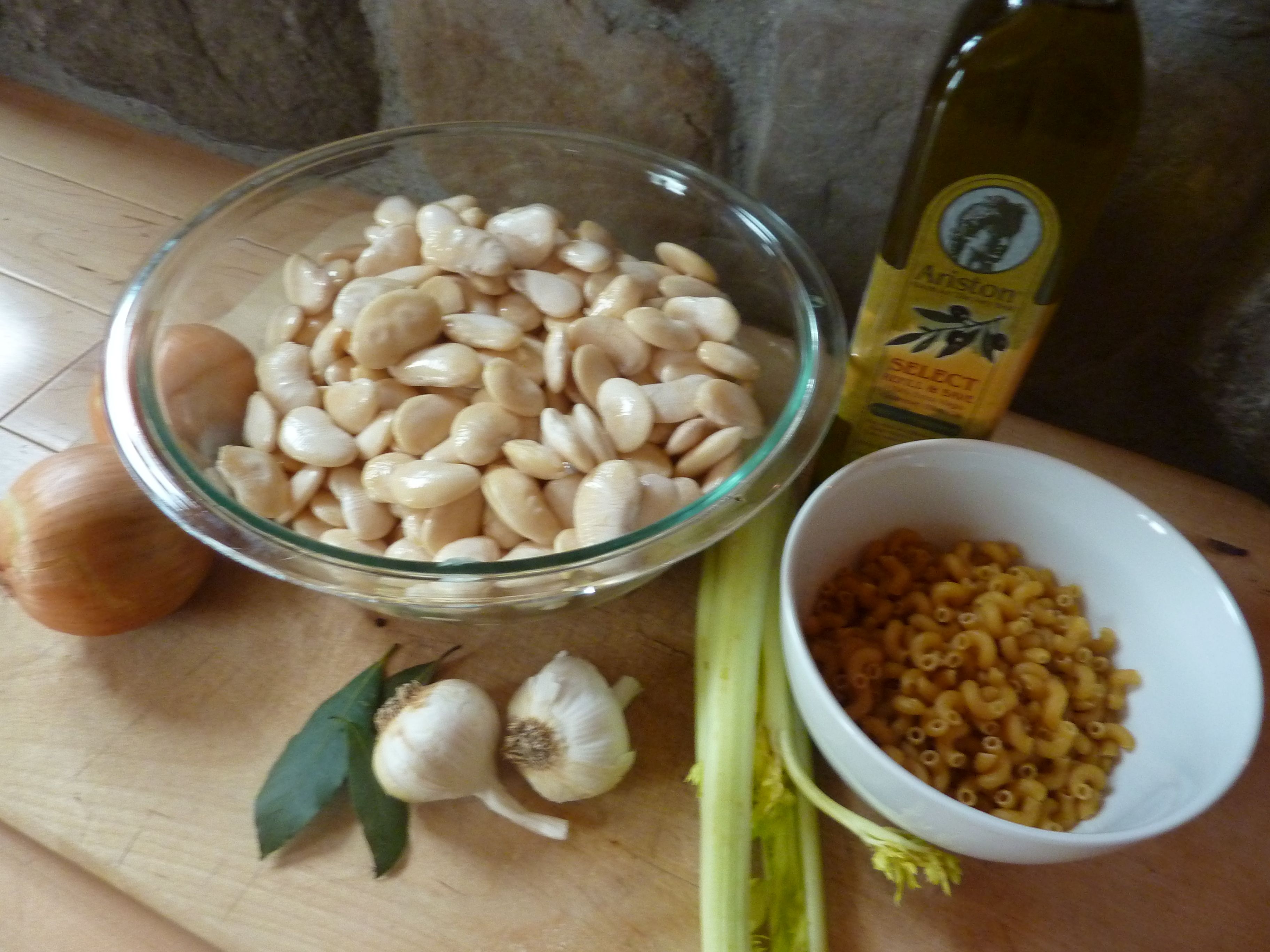
ingredients cycling tours dolomites italiaoutdoors food and wine

Here in the US, this soup is often referred to as pasta fazool, where fazool is derived from the Sicilian or Neapolitan dialect for beans. According to Wikipedia, the American slang usage of “fazool” was popularized via a 1927 song by Van and Schenck, which featured the rhyme “Don’t be a fool, eat pasta fazool.” So, let’s take their advice!

This soup is seemingly very straightforward but does require a bit of cooking time, especially if you are using your own homemade stock. Either fresh or dried beans can be used, but most recipes I’ve found recommend dried borlotti (cranberry) or cannellini beans. In the Veneto, the preferred dried bean is the bean of Lamon, from Belluno. Here in Maine, I use whatever dried white bean I can find. The dried beans are soaked in water overnight, then cooked either in water or in a stock – meat, chicken, or vegetable. My Italiaoutdoors partner and longtime Veneto resident Vernon first makes a chicken stock with vegetables and a chicken, when the stock is finished he simply pulls out the chicken and adds the beans.

When quite soft, the beans are removed from the heat and drained, reserving the cooking liquid. Depending upon the recipe, none, all, or a portion of the cooked beans are pureed to act as a thickener. Vernon doesn’t puree them at all, and claims most of the local places he frequents do not puree them either. The only absolute no-no is to use flour (gasp!) instead of pureed beans to thicken. Various vegetables (onion, celery, leeks) and sometimes, especially in the winter months, pancetta or prosciutto,  are sauteed in a large pot. The beans, both pureed and whole, are added to the pot with a combination of fresh stock and/or reserved bean cooking liquid to reach the right consistency – which is whatever you prefer.

Here’s where the whole bean version shines – you can now just add the dried pasta, cook until al dente, and serve. Very efficient, everything in one pot, the version my dishwasher prefers. You just need to keep an eye on the amount of liquid in the pot throughout the process, as both the beans and the pasta will absorb it as they cook, and some will boil off during the long cooking time. The result is a delicious easy soup with whole beans and pasta in a broth.

With a pureed bean version, you cook the pasta in a separate pot and add it to the soup just before serving. In spite of the extra step, I like this version when I know I’ll have leftovers – I usually make a big batch and bring it for my lunch. In between ski clinics my main objectives are to get something to eat and get warm; a nice bowl of warm soup does both! When the pasta and soup are combined and stored, the pasta can get a little gummy. I keep the pasta separate from the rest of the soup, and only add some of it to the portion of soup I am preparing that day. Keeping the two separate prevents the pasta from over-absorbing liquid getting a little ‘flabby.’

Both versions are wonderful, so whatever your choice – the easy, more rustic whole bean version or the slightly more elegant pureed version – you can’t go wrong!

osteria biking and cooking tours italy
Osteria La Caneva, Bassano del Grappa

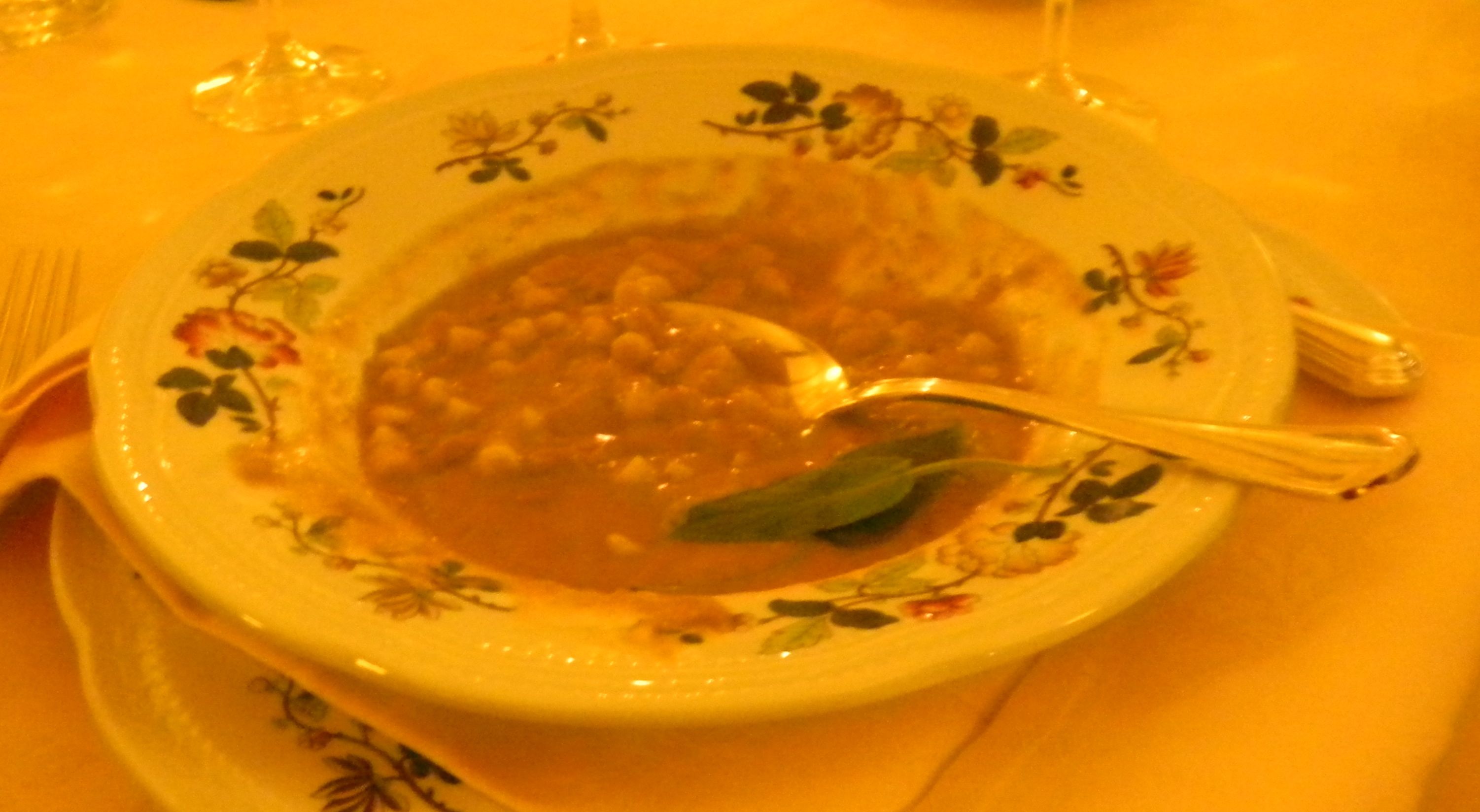
I enjoyed pasta e fagioli at two very different places during our last Italiaoutdoors Food and Wine bike trip in September. The first bowl was at acclaimed Villa Cipriani, a 4 star hotel and restaurant in the lovely town of Asolo. The second bowl I had a few nights later at a little seven table local spot in Bassano del Grappa, Osteria La Caneva, around the corner from Piazza Libertia. While both were delicious, I have to say the soup at the osteria was my favorite, both in terms of flavor as well as presentation.

villa cipriani pasta e fagioli wine bike tours italy italiaoutdoors food and wine
Villa Cipriani Pasta e Fagioli

The bowl at Villa Cipriani was consisted of about half whole beans, half pureed. It was garnished with a simple sage leaf. The pasta was definitely there only in a supporting role. It was good, but not memorable. The picture does not do it justice –  I didn’t remember to take the picture until I had already eaten half. Blame it on the prosecco aperitif…

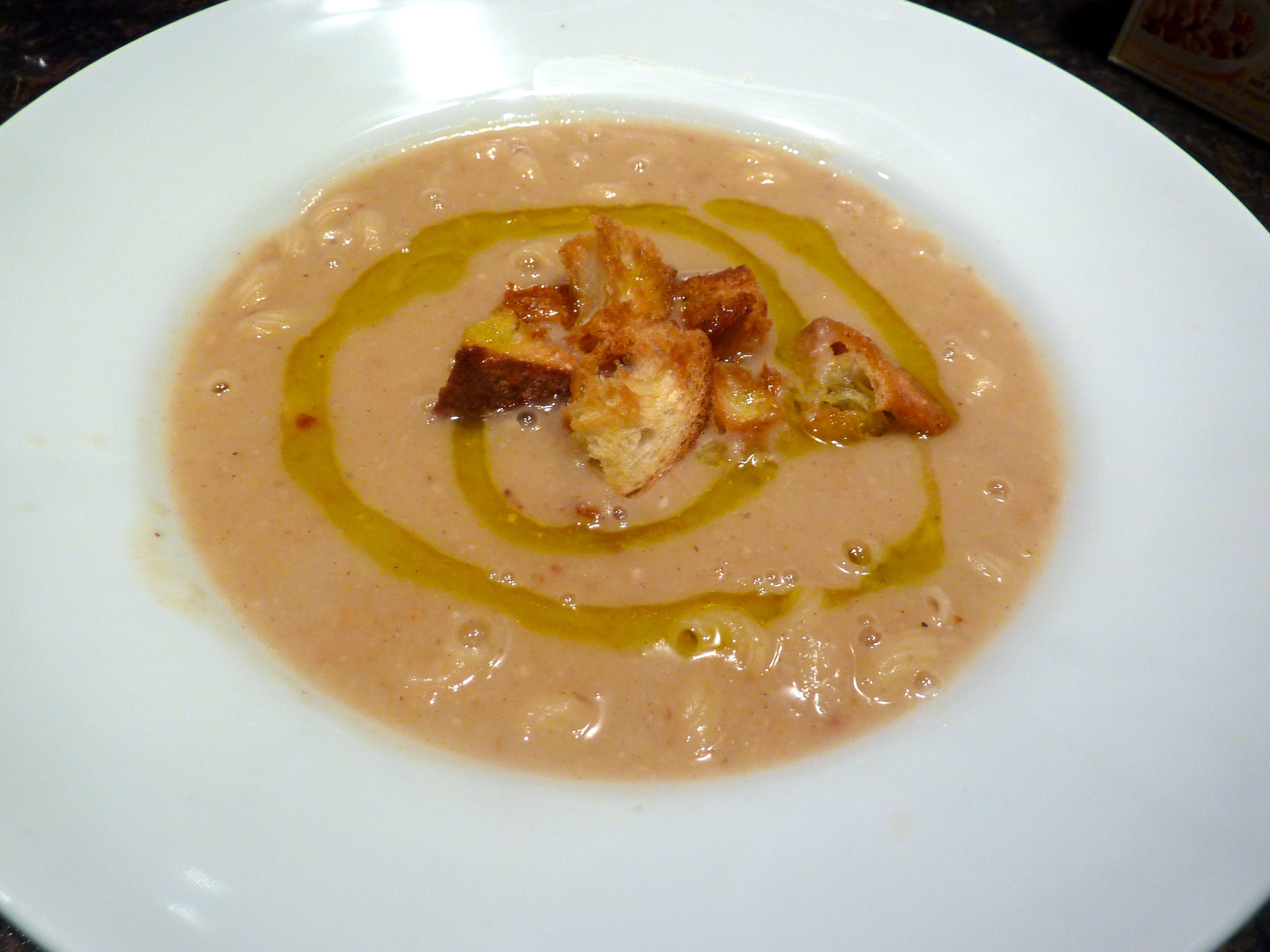
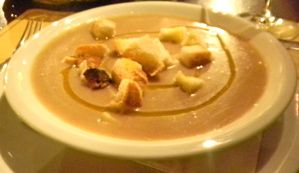
The version at La Caneva, a small, rustic local spot, actually had the more elegant presentation. The beans were almost entirely pureed, with only a few whole beans and a small amount of inch long pieces of fettucine. A nice flavor with the noticeable presence of pancetta. The soup was garnished with some nicely toasted croutons and a drizzle of olive oil.

pasta e fagioli caneva luxury ski holidays dolomites italiaoutdoors food and wine
La Caneva Pasta e Fagioli

Here, I’ve attempted to recreate the version I loved at La Caneva. I substituted bacon (gasp again!) for pancetta, because I can’t find the latter within a 40 mile radius. And although this substitution may offend the purists of Italian cuisine, I’d rather use bacon from locally grown pigs that is smoked right at the farm stand I frequent, rather than some grocery store pancetta from who knows where.

Pasta e Fagioli

Serves 4-6

1 pound dried white beans, such as borlotti (cranberry) or cannellini
3 bay leaves
2 sprigs fresh thyme
1 head garlic, cloves separated and peeled
kosher salt and freshly ground black pepper
1 tablespoon extra virgin olive oil, plus more for drizzling
1 large onion, diced into 1/4” dice
2 stalks celery, 1/4” dice
3 slices bacon or 3 ounces pancetta or prosciutto, diced
6 cups chicken, beef or vegetable broth
1 cup small pasta, such as dilatini or small elbow macaroni
1 1/2 cups toasted croutons (bread cubes, drizzled with olive oil and toasted in oven)

Rinse the beans, place in a large bowl and add enough water to cover by a couple of inches. Allow to soak overnight. If in a hurry, you can place the beans in a pot, cover with water and bring to a boil. Remove from heat and allow to soak for 2 hours.

Drain the beans from the soaking liquid, and place in a large pot. Cover with water by 1 1/2 inches, and add the bay leaves, thyme, garlic cloves, and season with salt. Bring to a boil, reduce to a simmer and allow to cook until the beans are quite soft, at least 1 hour. The length of time will vary significantly, depending on the type, size and age of the bean. Some recipes recommend cooking the beans for 4 hours. If you are keeping some or all of the beans whole, you will want them to still be firm enough to hold together, so some firmness is desirable here.

Remove the beans from the heat and drain. Search through the beans for the bay leaves and thyme sprigs and remove. Puree the beans using an immersion blender.

Heat the tablespoon of olive oil in a large pot. Add the onions, celery and bacon or pancetta, and saute until the vegetables are softened and the onion is translucent, about 7 minutes. Add the pureed beans and the stock. Bring to a simmer.

Meanwhile, bring a large pot of water to a rapid boil over high heat. Add salt to the water. Add the dried pasta, and cook until al dente. Drain.

Adjust the soup to your desired consistency. If it is too thick, add a little water. If too thin, reduce over medium high heat until it is the consistency you prefer. Season with salt and pepper.

Transfer to a smaller pot the soup you will be serving immediately. Add some pasta – roughly estimate the percentage, if you are serving half of the soup, add half of the pasta. Warm and serve in warmed bowls. Top with a few croutons and a drizzle of olive oil, and serve.

Save the remaining bean soup base and pasta in two separate containers. Combine and heat through just before serving.

Posted in beans, Soups, Uncategorized, Veneto Food | Tagged , , , , , , , , , , , , , , , , | 13 Comments

Feast of Seven Fishes, Part II

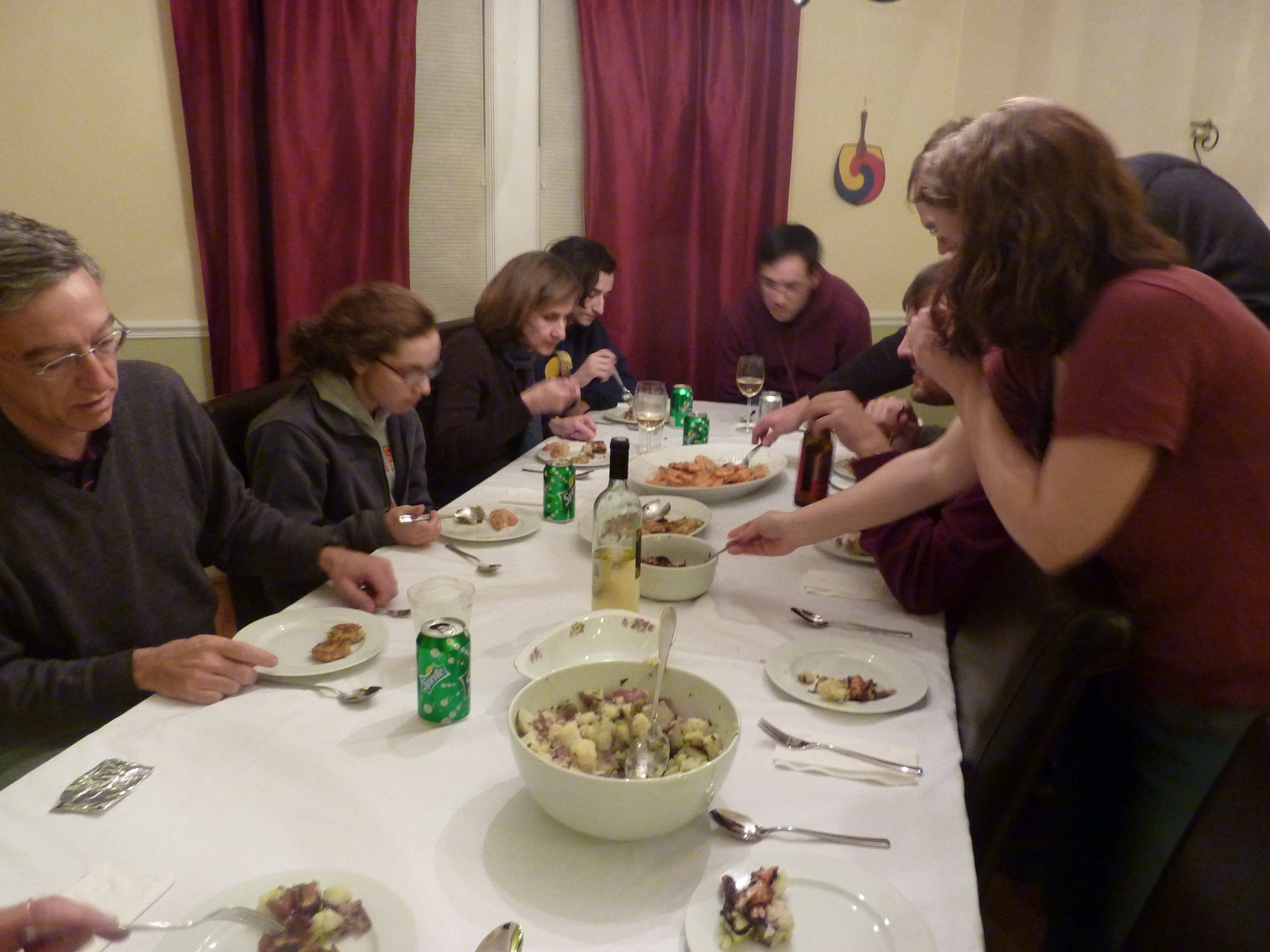
family at table bike tours italy italiaoutdoors food and wine
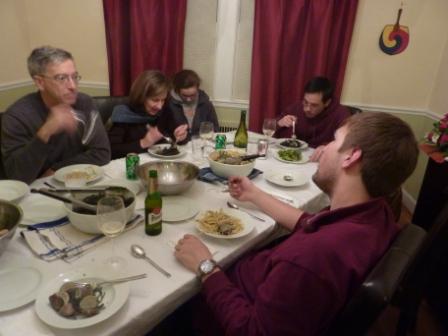
Family at table

I continue to research the history behind the Feast of the Seven Fishes, even though Christmas has come and gone. I emailed my Italiaoutdoors partner, who has been living in Vicenza, Italy for the past 19 or so years, asking him what he does for his Feast. Never even heard of it. I pull out my copy of Waverley Root’s “The Food of Italy”, THE tried and true reference to regional Italian foods, although a bit dated as it was published in 1971. No mention of it.

Root describes various regional Christmas Eve foods, including various fish dishes – roasted eel in Rome and Naples, a squid preserved in olive oil and marjoram from Capri, cabbage with codfish fritters from La Spezia. In the Northern mountain regions where we visit during our ski trips, and not much fish to be had, there is an interesting lasagna that starts off Christmas Eve in Belluno and incorporates nuts, apples, raisins, and poppy seeds. Celery soup is traditional in Friuli. The Catholic no-meat influence is everywhere, but the Seven Fishes appears to be very regional, and yet another example of how varied and diverse the cuisine of Italy can be!

Here are the last four recipes from my probably non-traditional, but fun and delicious, Feast of Seven Fishes. We had two Soave whites to enjoy with these: a Ca’ Foscari 2008, which was floral, and just slightly sweet, and a Pra Soave Classico, which we preferred – it had a bit more acidity which gave it a better balance.

squid with tomatoes biking and cooking tours italy
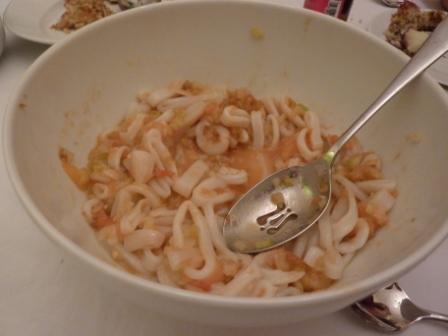
Flash Cooked Squid with Tomatoes

Flash Cooked Squid with Tomatoes

This recipe is a variation of a Venetian Squid recipe from our Italiaoutdoors Chefs on Bikes tours in the Veneto this year, created by Jody Adams of Rialto restaurant in Cambridge, MA.

Makes 12 appetizer servings

5 large tomatoes
¼ cup extra virgin olive oil
1/2 cup onion, diced ¼ inch
½ cup celery, peeled and diced ¼ inch
Kosher salt and freshly ground pepper
1 tablespoon finely chopped garlic
½ teaspoon hot red pepper flakes
1 1/2 pounds squid, cut into ¼ inch rings

Fill a medium saucepan with water and bring to a boil over high heat. With a sharp knife, score an “X” on the bottom of each tomato. Place the tomatoes in the boiling water for 30-45 seconds, then remove and place on a plate. When cool enough to handle, peel away the skin, cut out the core, and cut each tomato into quarters. Using your fingers, pull the seeds out of the tomato quarters – you may need to poke through the flesh into the cavities to get at them. Discard the seeds, then chop the tomatoes into ¼ inch dice.

Heat the olive oil in a large sauté pan over medium high heat. Add the onion and celery and cook 5 minutes. Season with salt and pepper. Add the garlic and pepper flakes and cook 3 minutes. Add the tomatoes, cook 4 minutes. Add the squid and remove from heat, tossing well. The squid will continue to cook off the heat.  Taste and adjust seasonings.

Broiled Shrimp with Bread Crumbs private bike tours italy

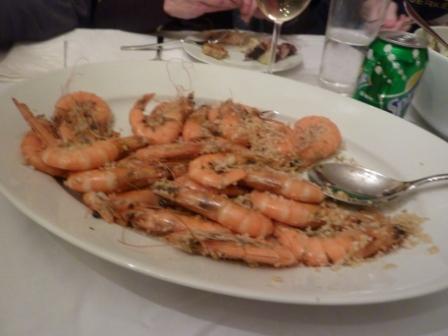
Broiled Shrimp with Bread Crumbs

This recipe is a slight variation of Grilled Shrimp, Cannocchie Style, from Marcella Hazan’s Essentials of Classic Italian Cooking. The cannocchie is a crustacean similar to shrimp, but found only on the Adriatic coast. Marcella describes a recipe which her local fishermen use to prepare the cannocchie, in which the shrimp are split down the back, marinated in olive oil, bread crumbs, and a lot of black pepper, then grilled. You eat them with your fingers, spreading the shell open with your lips and sucking the meat out, col bacio, with a kiss.

Makes 12-15 appetizer servings

2 pounds medium to larger shrimp (12-15 count), unshelled, deveined
1 cup panko
½ cup extra virgin olive oil
1 ½ tablespoons minced garlic
Kosher salt and freshly ground black pepper

Wash the shrimp thoroughly in cold water, then pat dry.

Put the shrimp into a large bowl, and add the remaining ingredients. Mix well to coat the shrimp. Refrigerate, allowing to marinate for at least 30 minutes, but not longer than 2 hours.

Preheat broiler.

Place shrimp on a sheet pan, broil just until cooked through and bread crumbs slightly brown. Serve. Alternatively, you can grill them, either on a grill pan or outside on your grill.

shrimp fan luxury villa rental italy
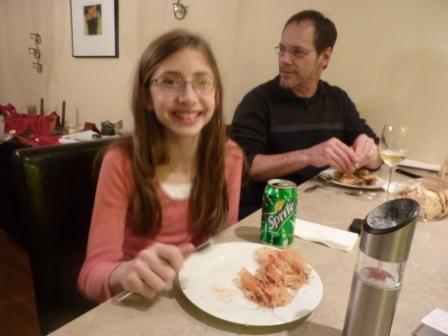
Rebecca is a huge shrimp fan
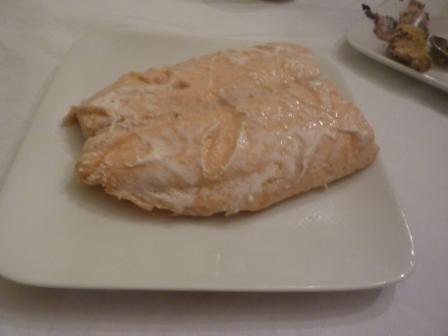
salmon ski holidays dolomites
Oven Poached Salmon

Simple Oven Poached Salmon

This is an incredibly simple salmon recipe, which I included for the members of our group who were not the most adventurous fish eaters. I like to have this dressed up with a bit of pesto, or a fruit salsa. The leftovers made a nice topping for my Christmas morning bagel.

Makes 8 2-oz. appetizer servings

1 pound wild salmon
1 tablespoon extra virgin olive oil
Kosher salt and freshly ground pepper

Preheat the oven to 375°.

Place a large sheet of aluminum foil (one that is large enough to package the entire piece of salmon) on a sheet pan, and place the salmon on it, skin side down. Brush the fish with the olive oil, and season with salt and pepper.

Place in the oven, and bake until just cooked through, about 12 minutes depending on the thickness of the salmon. Serve.

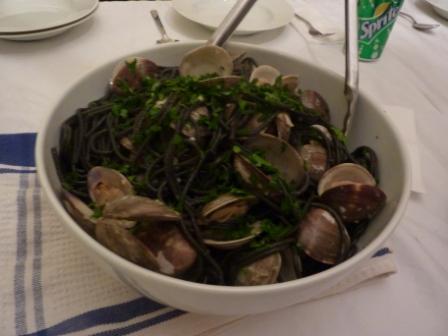
clams with squid ink pasta custom bike holidays italy
The squid ink pasta version

Pasta with White Clam Sauce

Your basic clams steamed with garlic and white wine, served over pasta. We served two versions, one with regular pasta, the other with black squid ink pasta.

Serves 8

50 littleneck or other small, hardshell clams, scrubbed
1/4 cup extra virgin olive oil
1 tablespoon garlic, minced
1/3 cup white wine
Kosher salt
2 pounds dried pasta, linguini or vermicelli
1 tablespoon fresh flat-leaf parsley, finely chopped

Discard any clams with broken shells.

Fill a large pot with water, and bring to a boil over high heat. Season water with salt; it should taste salty.

In a large sauté pan, heat the olive oil over medium high heat. Add the garlic and white wine, then the clams. Cover and steam until the clams are open, about 10 minutes. Discard any clams that do not open.

While the clams are cooking, add the pasta to the boiling water. Cook until al dente. Drain the pasta.

Pour the pasta into a large warm bowl. Pour the clams and their juices over the pasta, and toss with tongs. Garnish with parsley and serve.

Posted in Christmas, Clams, Fish, Pasta, Salmon, Shrimp, Squid, Veneto Food | Tagged , , , , , , , , , , , , , , , , , , , , , , , , | 3 Comments

Feast of Seven Fishes Christmas Eve – Part I

Family gathers to feast on Seven Fishes

Italians traditionally celebrate Christmas Eve with the Feast of Seven Fishes. The choice of fish as the central theme for this menu evolves from the Catholic practice of abstaining from meat during holy days. More often observed in southern Italy than in the north, there are many different versions – each with their own story behind the custom.

The celebration itself marks the long wait Christmas Eve until the midnight birth of Christ – La Vigilia di Natale. Initially, this day was a day of fasting, so I’m sure this wait probably did seem quite long! Eventually, it became simply a day of abstinence. The Cena della Vigilia, eaten during this waiting period, could not include meat or dairy products; hence the focus on fish fried in oil. Why seven fishes? There are various explanations. Some say it is simply one fish for each day of the week, others that it represents the seven days it took God to create the universe, or the seven sacraments in the Catholic church. And ‘seven’ is not necessarily a sacred number; some traditions use 3 fishes, representing the Holy Trinity, others 9, or 13, 13 representing the 12 apostles plus Jesus himself.

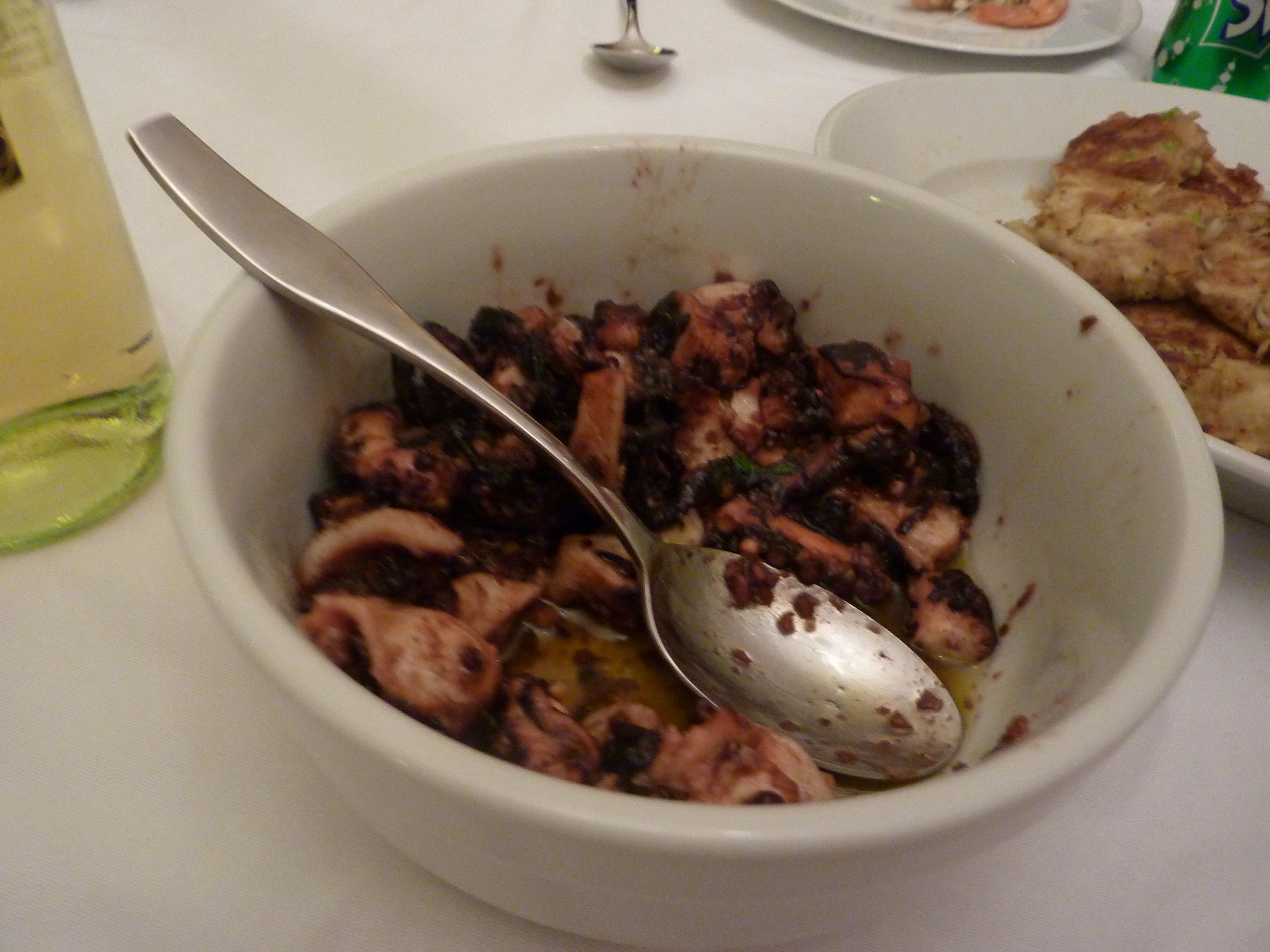
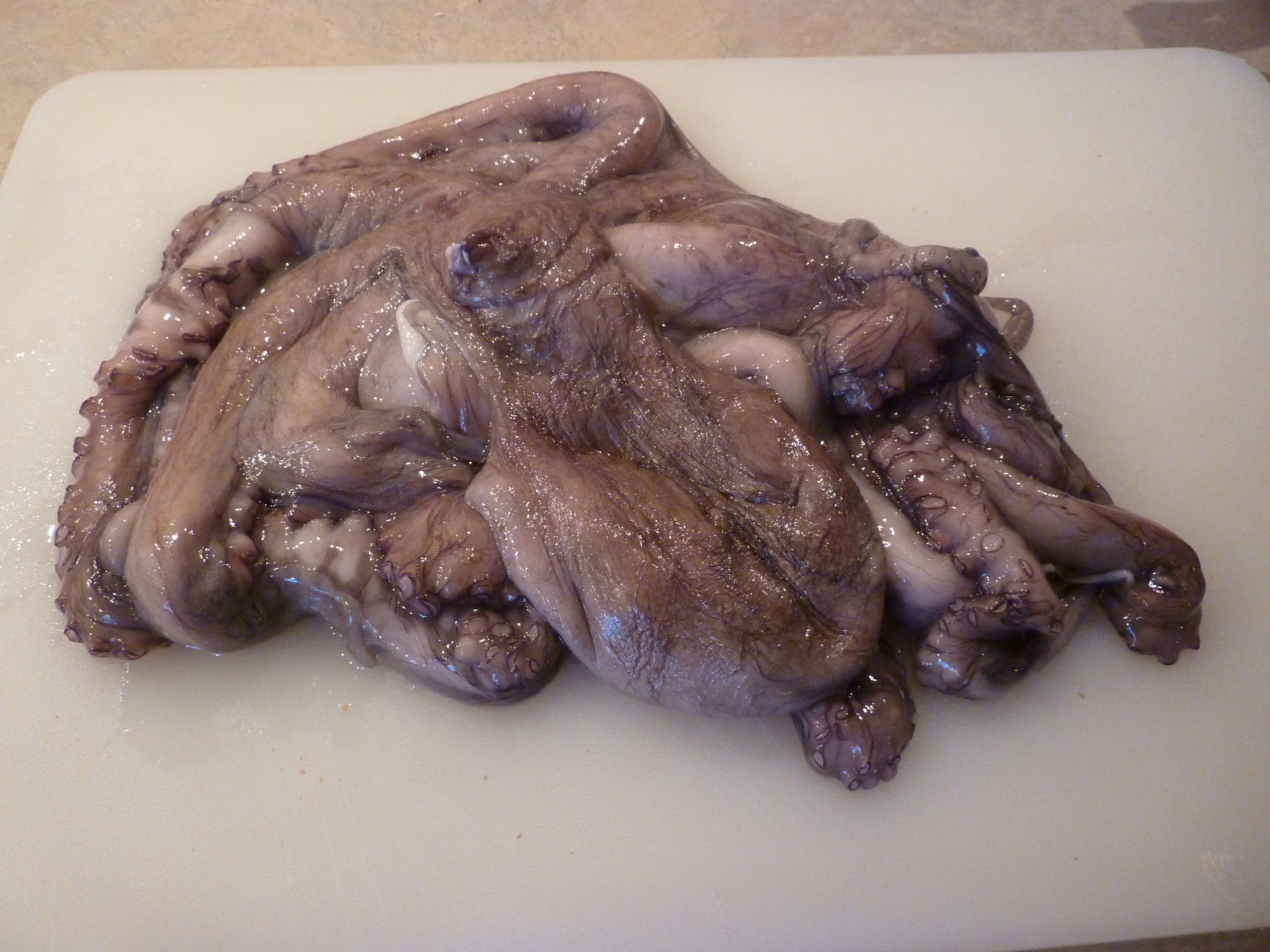
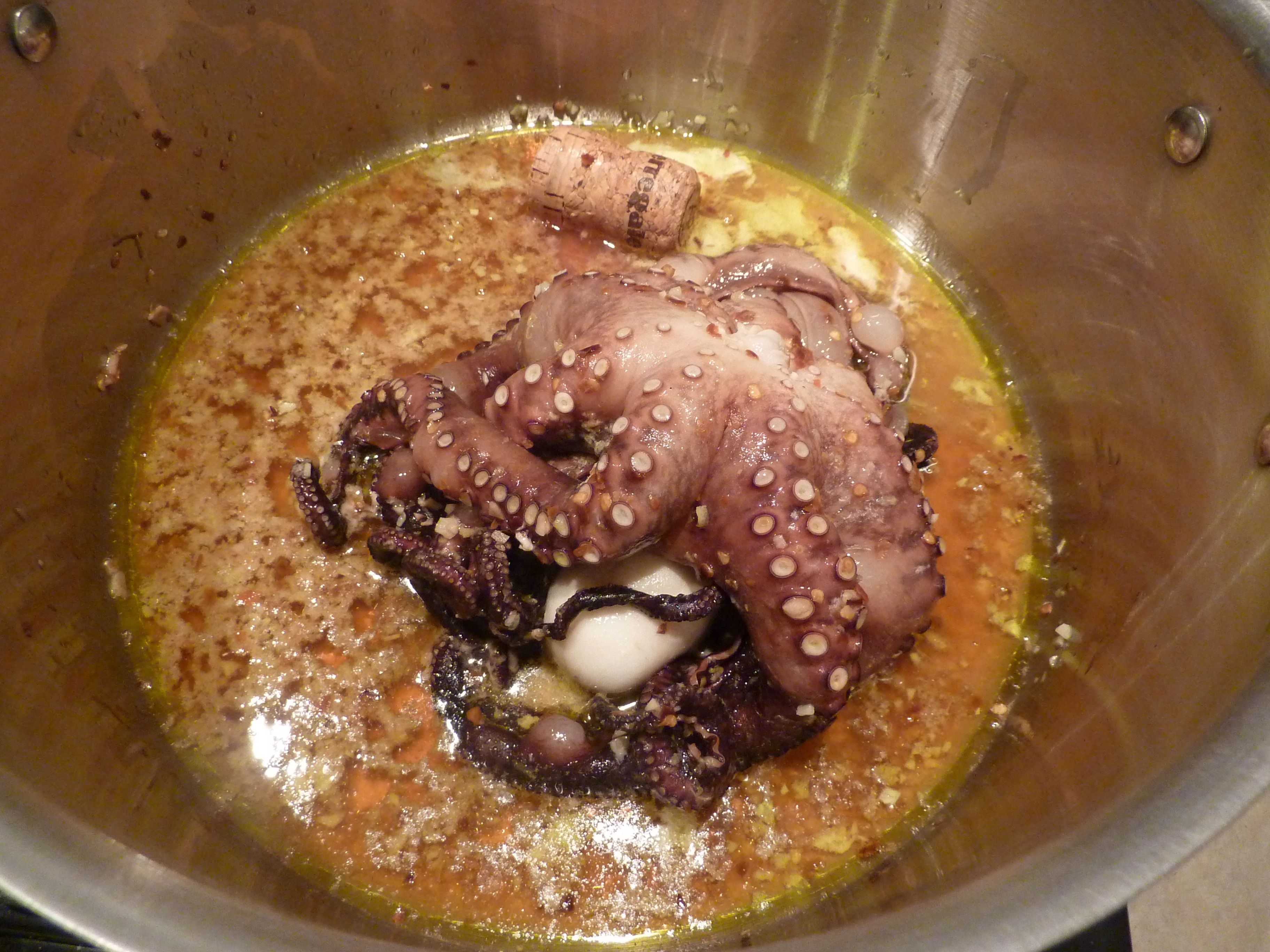
Octopus
Octopus

The varieties of fish, or the preparation techniques, are not standard either. Historically, the menu varied depending on the region and what fish was available locally, as well as the economic status of the family. For example, you may find baccala on the less affluent tables, and eel on the tables of the upper classes in the same locale. But it is common to find some combination of octopus, shrimp, squid, sardines, anchovies, mussels and clams, served with pasta, vegetables such as kale, bread, and wine, of course!

Maryland Crab Cakes

This year, I traveled down to Baltimore to visit with two of my sisters and their families, and my parents who are not able to travel. We arrived the evening of the 23rd, with no plan and no food to feed the 12 of us, and a full day ahead of errands and visits. So the Feast of Seven Fishes was not an obvious choice for a busy day, but my sister and I decided we’d go for it. A trip to the market at 7:30 the next morning to beat the crowds, and our menu evolved at the fish counter. Seven very straightforward fish dishes – we didn’t have the time for complicated ones – made for a memorable Christmas Eve family dinner event, and captured the true flavor of this holiday dinner – time with family and friends.

The Menu:

Grilled Octopus with Potatoes
Fried Sardines
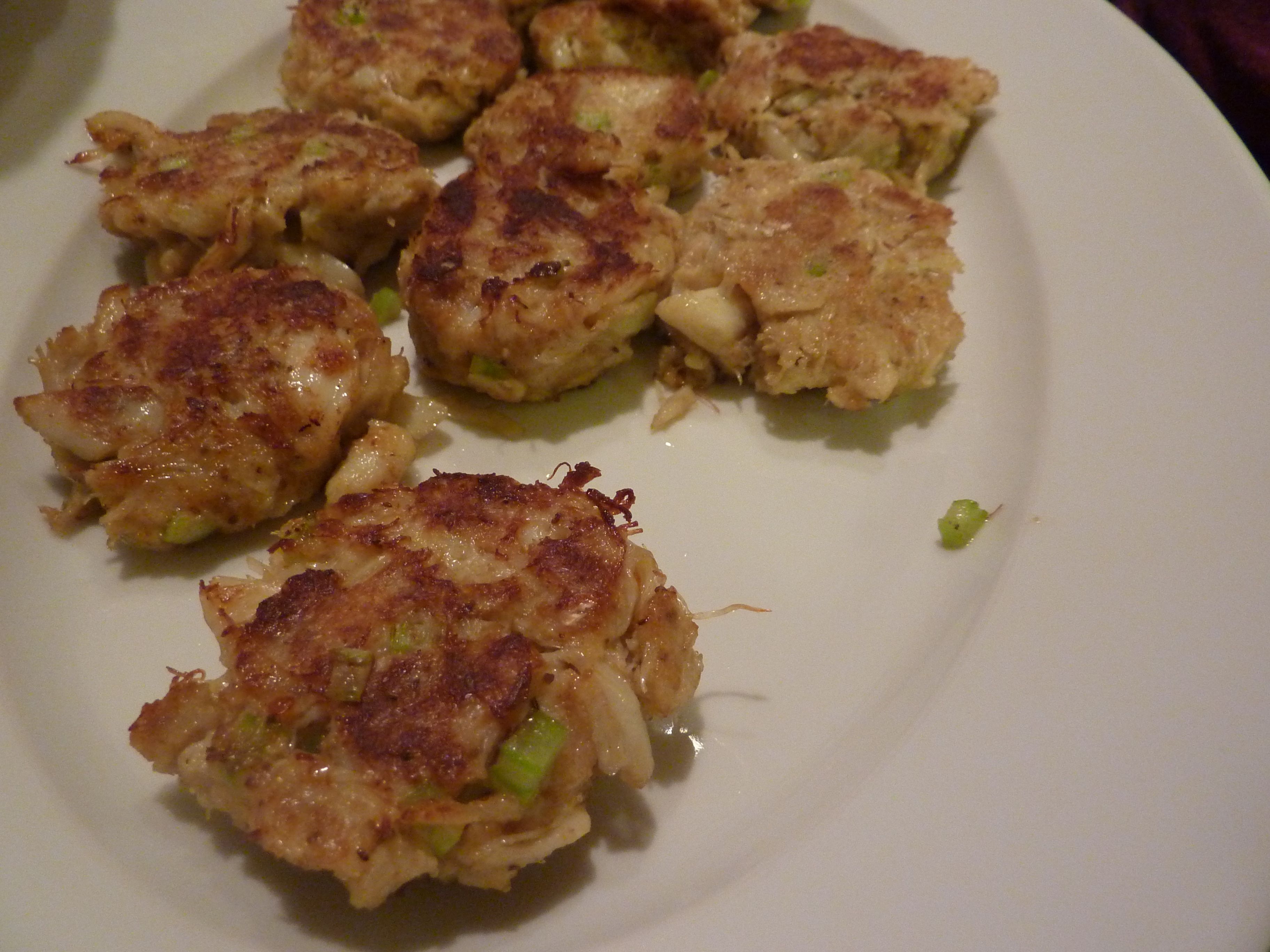
Maryland Crab Cakes
Flash Sauteed Squid with Tomatoes
Shrimp with Garlic and Breadcrumbs
Baked Salmon
Clams with Pasta

We prepped all the recipes first, lined up and ready for the final quick cooking to finish off these simple dishes. Once we were set to go, we were able to pretty rapidly put out a nice antipasti spread of the first six items. After we finished that off, we completed the pasta dish and served that as a second course. You could also serve it as seven different courses, but we had a long day and a lot of hungry kids, so a large antipasti with opportunity for all to pick and choose what they wanted made the most sense, and the most lively dinner table.

I’ll post some recipes here today – very informal, just like our meal. The remainder will follow in a few days. I don’t think this menu should be reserved for Christmas Eve. Any opportunity to indulge in a wide variety of fresh fish would be a great time to gather a group of friends and create a feast like this!

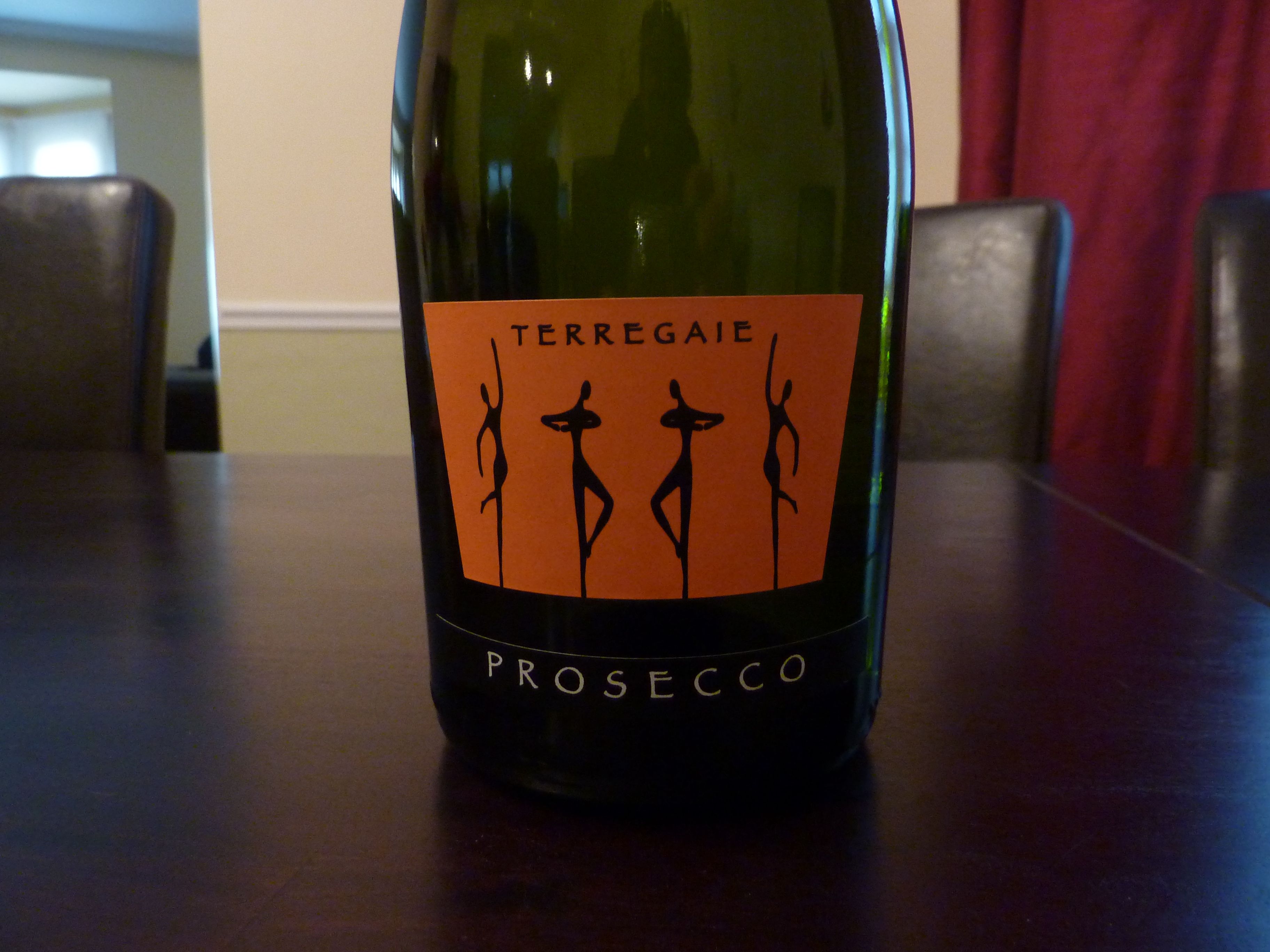
Terregaie Prosecco

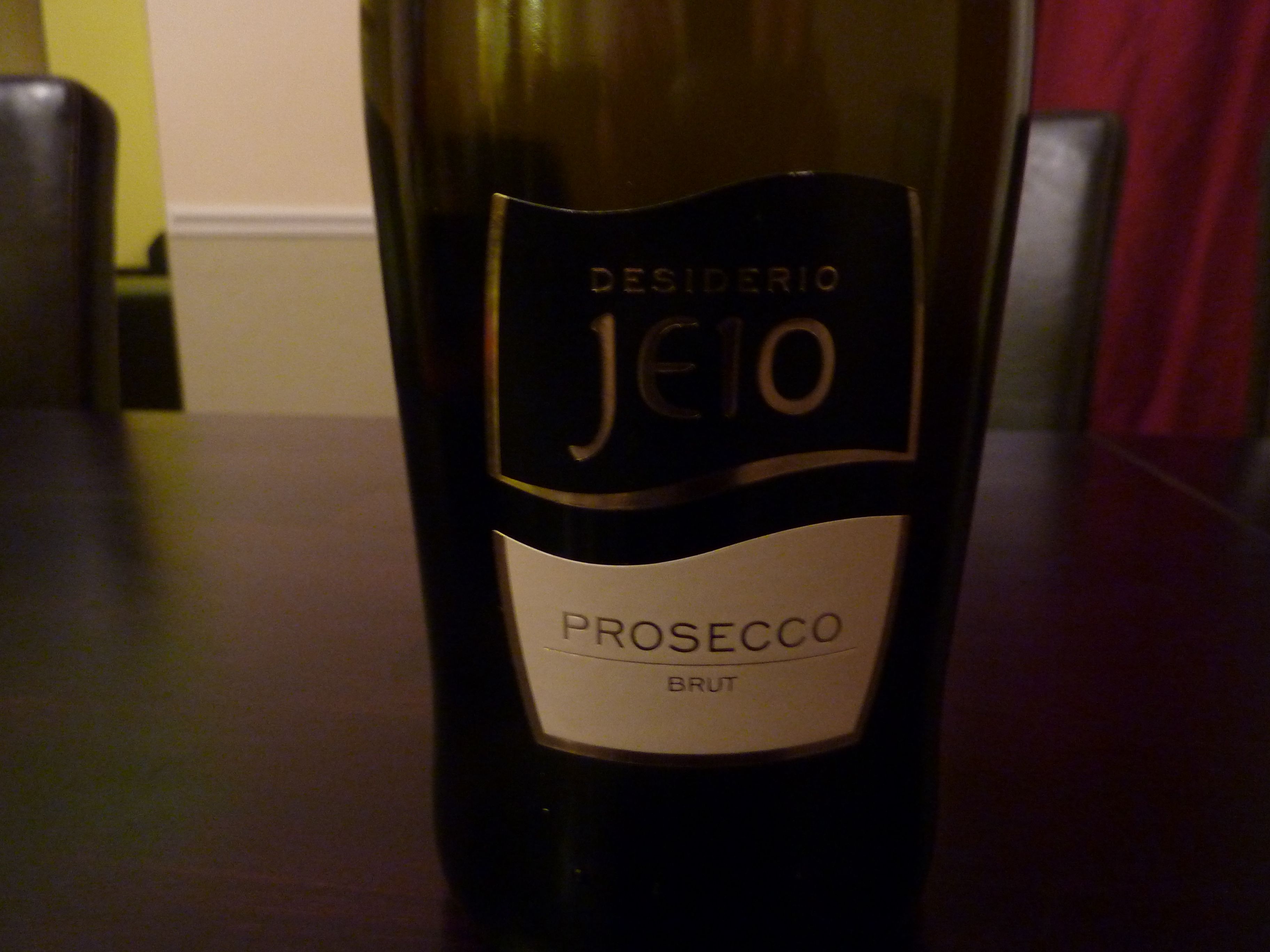
We of course did our part to consume some wines with our fish – we began with two proseccos: a prosecco from Colli Euganei, Terregaie. It was clean, with a slightly tart grapefruity start, but actually finished a little on the sweet side. Our preference was our second try, a Desiderio Jeio Prosecco Brut – from the traditional Prosecco region in the Veneto – Conegliano Valdobbiadene. This was drier, with a very clean, crisp finish, and paired quite well  with the fish.

Desiderio Jeio Prosecco Brut

Grilled Octopus with Warm Potato Salad

This is a variation of a dish we did with Chef Jody Adams during our Italiaoutdoors bike tours of the Veneto this summer. We didn’t have all of the ingredients, so we ad-libbed a bit and it still came out wonderfully – tender octopus with a warm potato salad.

To prep this in advance, we cooked the octopus until tender, then cut it up and set aside. We made the potato salad ahead, and reduced the octopus juices. The last minute prep only involved grilling the octopus on a grill pan, then mixing it with the reduced juices and serve.

Octopus

Serves 8 as an appetizer

1 2-pound octopus
1 tablespoon Kosher salt
1 lemon–zest removed and juiced
6 cloves garlic, minced
6 tablespoons extra virgin olive oil
1 teaspoon hot red pepper flakes
1 tablespoon chopped parsley
1 wine cork

Rub the octopus with one lemon half, season with salt, lemon juice and half of the garlic and allow to macerate for 30 minutes.

Octopus cooking and releasing its juices

Heat 4 tablespoons of the olive oil in a large pot over medium heat. Add the reminder of garlic, and cook 1 minute, or until aromatic.  Do not brown. Add the octopus with the lemon juice, 1 teaspoon hot pepper flakes and the wine cork, cover, and turn the heat to low. The octopus will slowly release its liquid. Cook for 50-60 minutes, until a fork slides through it easily. Allow to cool.

Remove the head, cut in half, and discard any internal material.  Remove the eyes, and the beak at the center where all the legs meet.  Cut the tentacles into individual pieces through the natural dividing points at the top of the body.

Put the pan with the octopus juices back on a medium burner and cook until reduced to syrup. Reserve.

Preheat a grill pan to high. Add the remaining two tablespoons of olive oil. Grill the octopus pieces over high heat just to mark them. Cut into 1-2 inch pieces. Toss with the reduced juices, and serve with the warm potato salad.

Warm Potato Salad

Serves 8 as an appetizer

¼ cup white wine vinegar
1 tablespoon Dijon mustard
1 tablespoon minced shallot
¾ cups extra virgin olive oil
1/4 cup heavy cream
1 ½  lbs Yukon gold potatoes, peeled and cut into 1 inch dice
Kosher salt and freshly ground black pepper
2 tablespoons parsley, finely chopped

Place the white wine vinegar, dijon, minced shallot, olive oil and heavy cream in a small sealed container. Shake vigorously to mix. Season with salt and pepper.

Place the potatoes in a medium saucepan, cover with cold water, and season with salt.  Bring to a boil over medium-high heat and then reduce heat to low and simmer until potatoes are just cooked through. Strain the potatoes, and transfer to the bowl with vinaigrette while still warm.  Toss well. Allow to cool

Add the parsley adjust seasonings and serve with warm grilled octopus.


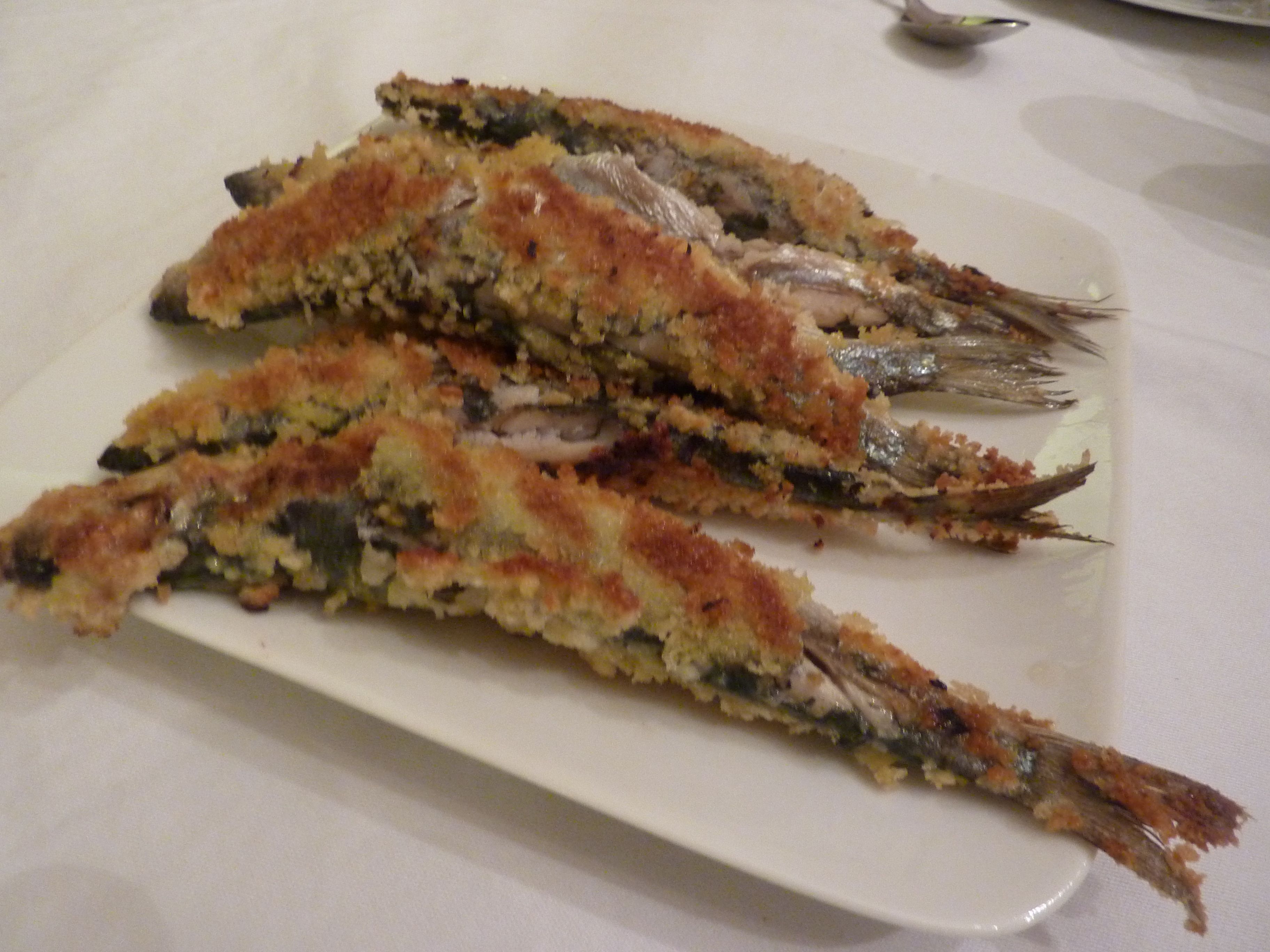
Fried Sardines

Fried Sardines

Serves 8 as an appetizer

8 sardines
1/2 cup flour
kosher salt and freshly ground pepper
2 eggs, lightly beaten
1 cup panko
3 tablespoons extra virgin olive oil

Clean the sardines under running water, inside and out. Dry.
Place flour on small plate and season with salt and pepper. Place the eggs in a shallow bowl, and the panko on a  third plate. Dredge each sardine first in the seasoned flour, then in the egg, and lastly in the panko.

Heat the olive oil in a saute pan or grill pan. Fry the sardines on one side until the bread coating is browned, flip and continue to cook until browned on both sides and cooked through. Serve.

Maryland Crab Cakes

Not exactly Italian – however, as we were celebrating the holidays in Baltimore, and in keeping with the spirit of utilizing the regional specialties, this was a given.  Also, it is a huge favorite of my parents, who now reside here.

Makes approximately 16 mini crab cakes

1 pound backfin crab meat
2 eggs, lightly beaten
1/4 cup mayonnaise
1 tablespoon Old Bay seasoning
1/2 cup toasted white bread crumbs (3 slices bread)
2 stalks celery, peeled and cut into small dice
1 teaspoon celery seeds
4 tablespoons extra virgin olive oil

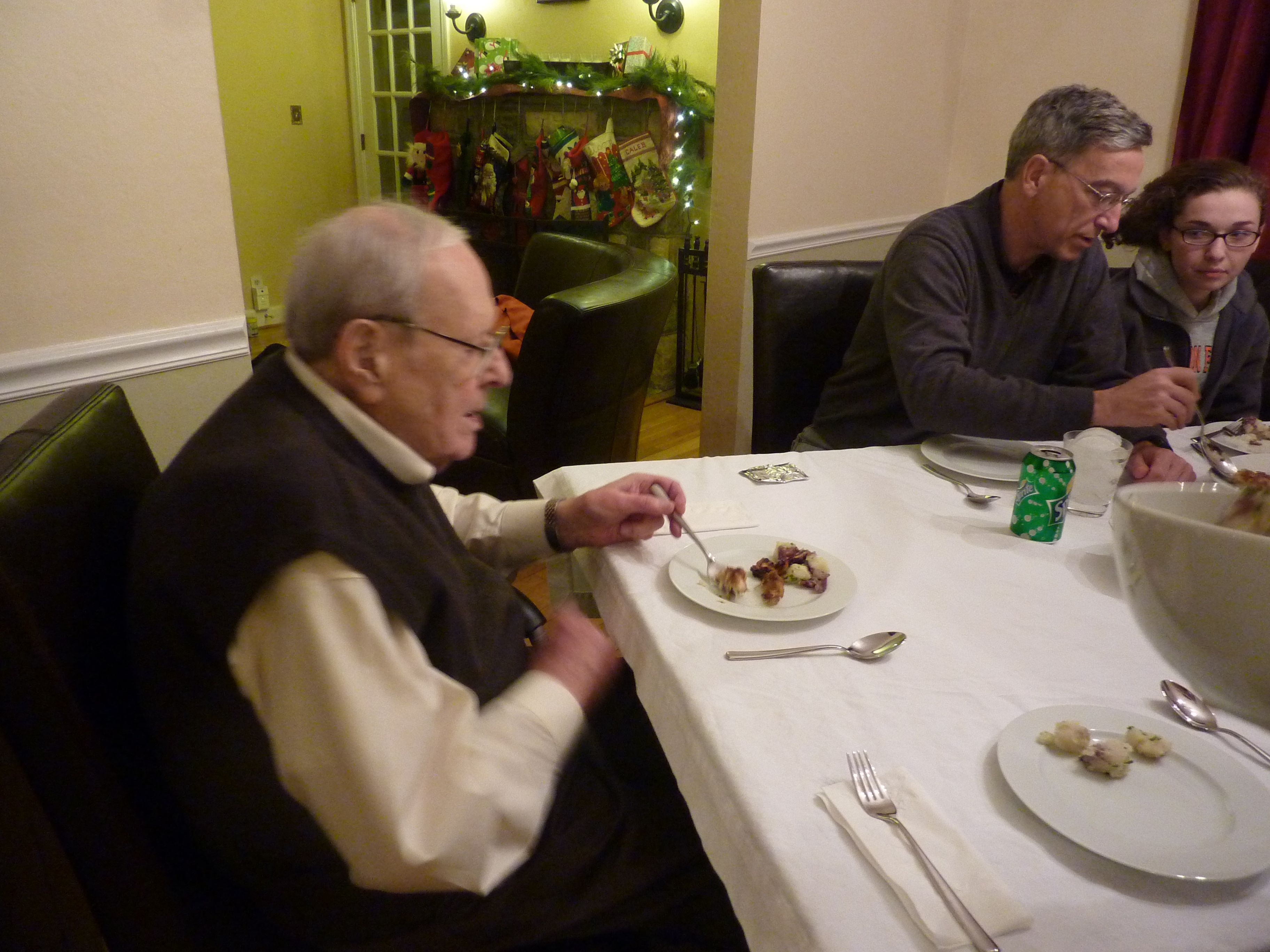
Dad enjoying his antipasti

Place the crab meat in a medium bowl and pull it apart with your fingers, removing any shell fragments. Add the eggs, mayonnaise, and Old Bay seasoning and mix to combine. Add in the bread crumbs, diced celery and celery seeds.

Form into small patties, about 2 inches across. These can be formed in advance, just keep them in the refrigerator until ready to cook.

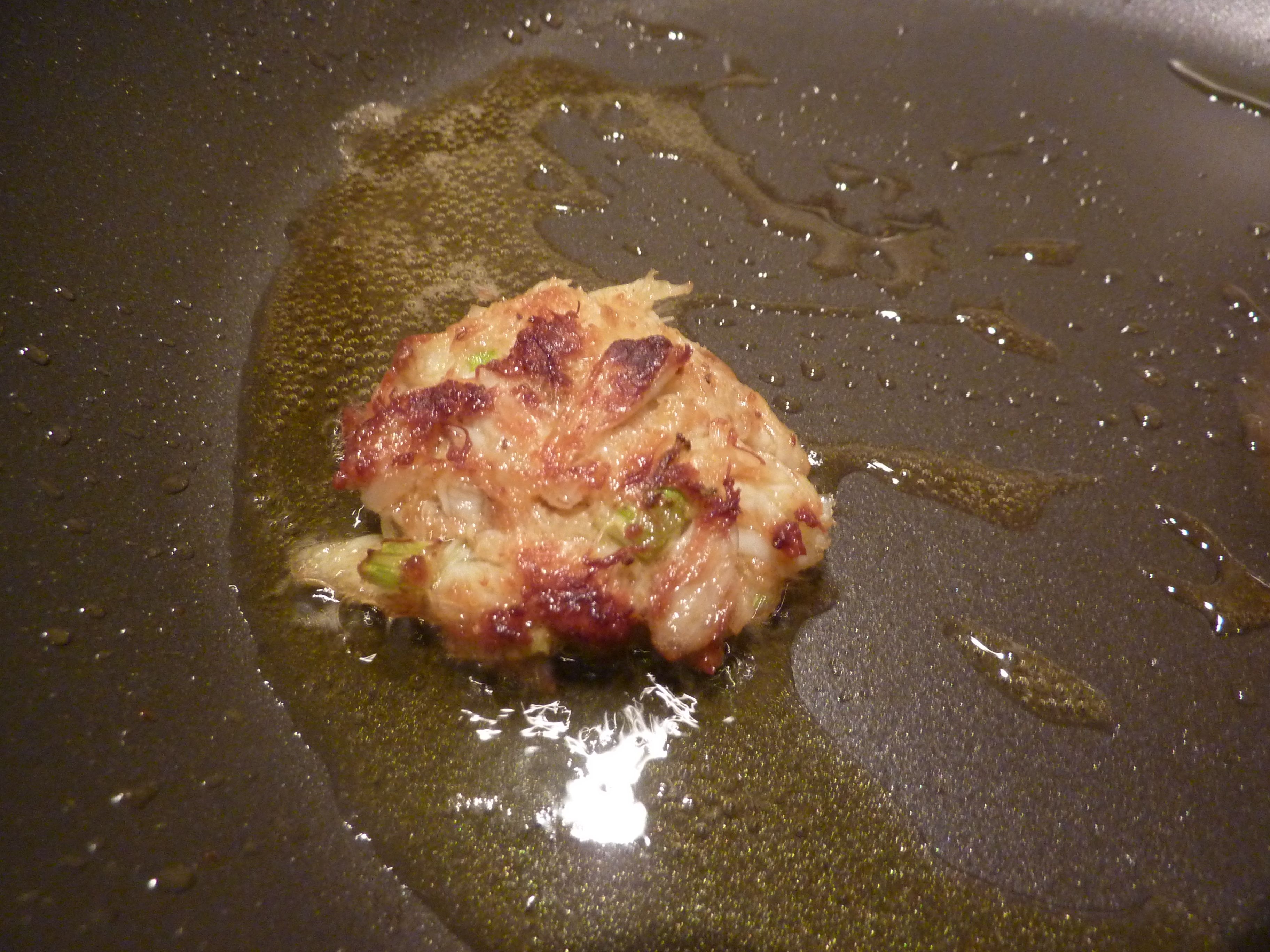
Frying crab cake

Heat 2 tablespoons of the olive oil in a saute pan over medium-high heat. Place the crab cakes in the saute pan, but leave space between them so they saute and not steam. You will probably have to do a couple of batches, adding some additional olive oil between each batch. Saute the crab cakes until golden brown on both sides and cooked through. Serve.

Posted in Fish, Octopus, prosecco, Soave, Uncategorized, Veneto Food | Tagged , , , , , , , , , , , , , , , , , , , , , | 2 Comments