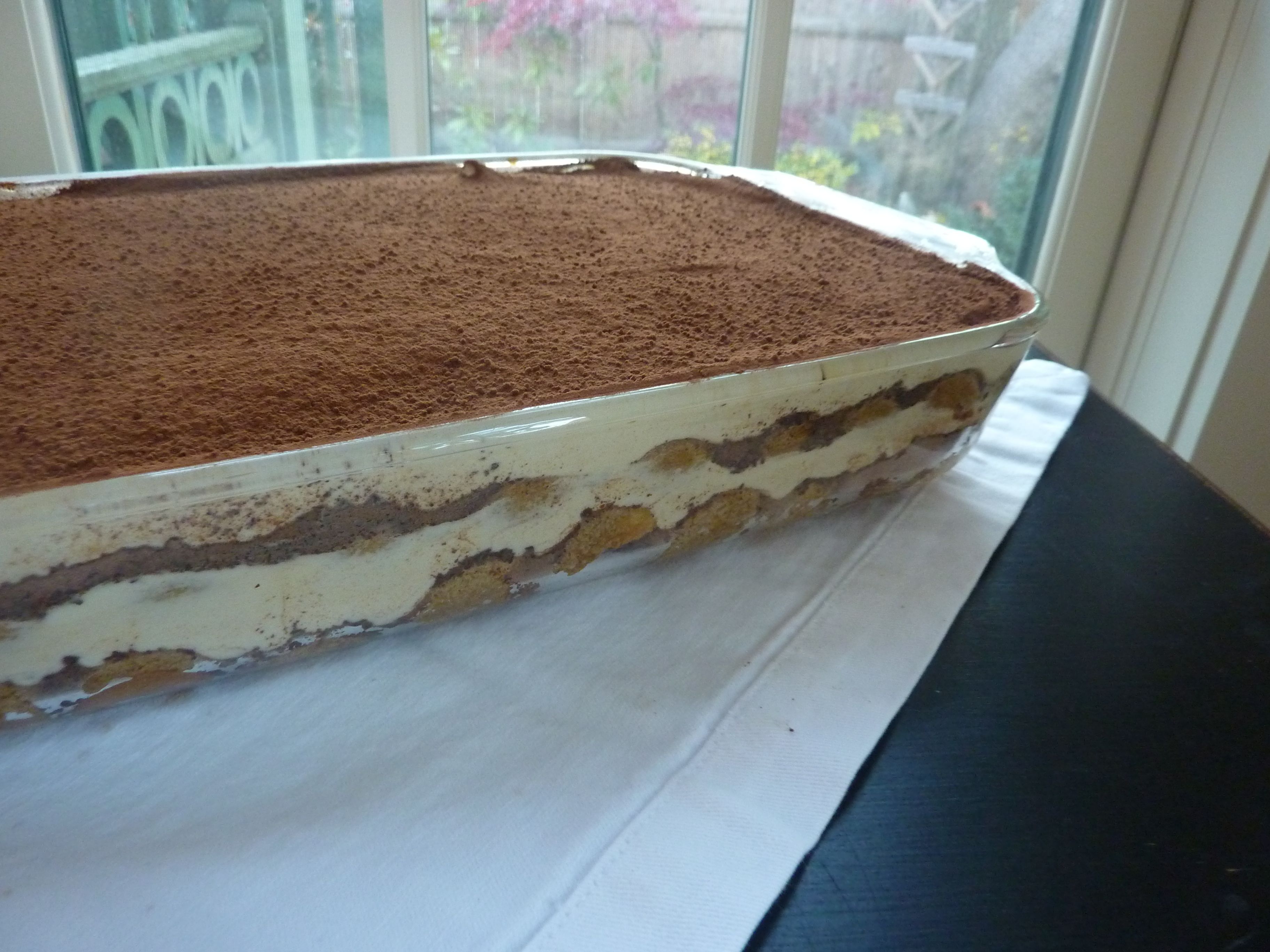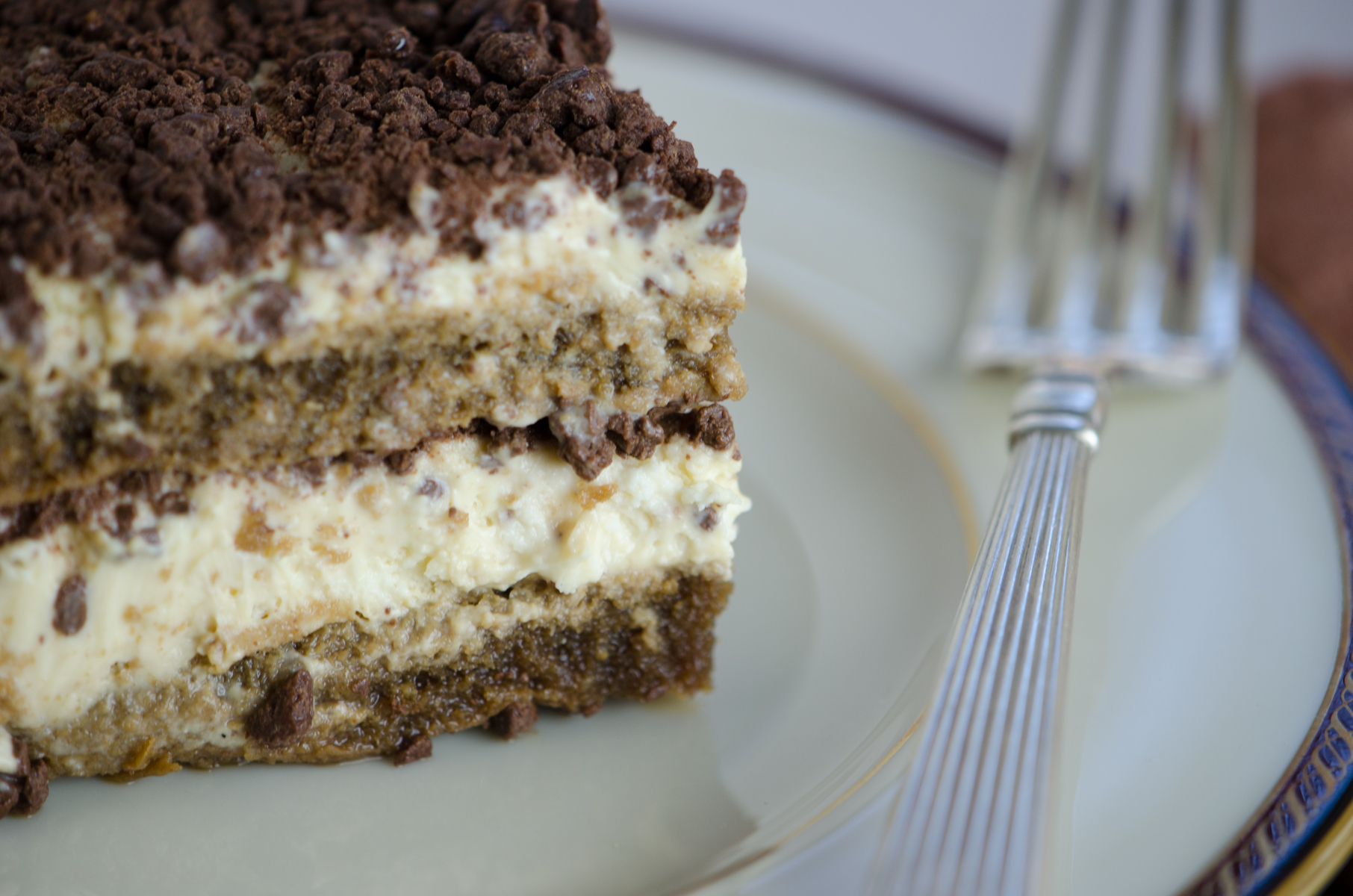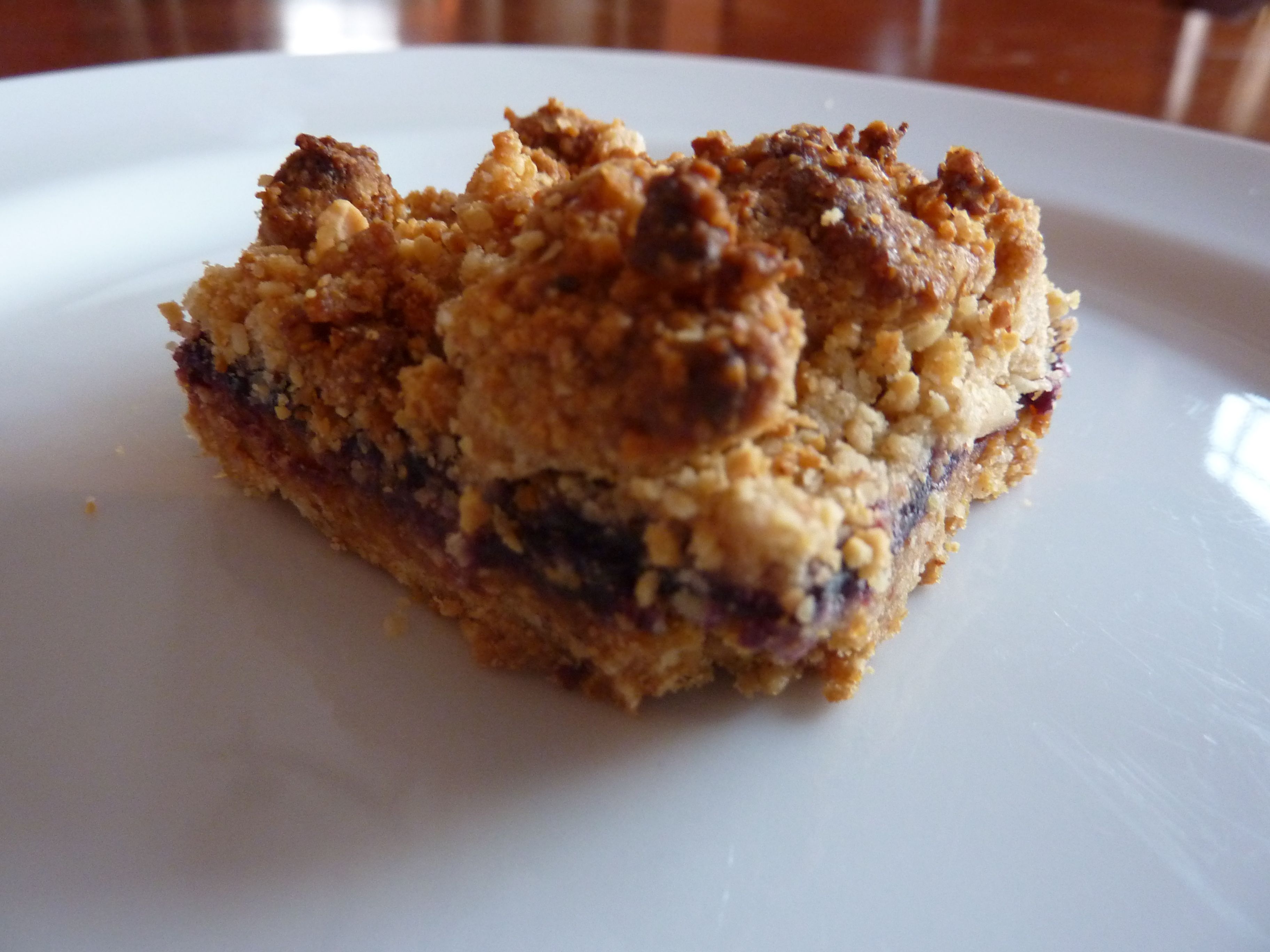
Brackett Basin Granola Bars

Granola Bar

A momentary deviation from my stated focus on Italian food. But hopefully one you will enjoy! In my opinion, food should be passionate and fun and not be about following the rules all of the time, so I’m going to ignore my “Italian food rule” for this post.

“You know, Kathy, you haven’t brought any treats for us recently” was my greeting from a coworker the other morning as I arrived. “If you really want to spread the word on your cooking skills and classes, you should step it up” was the implication, if not the actual words. Not one to back down from a challenge, the next day treats were supplied. Now I am greeted with requests.

Birch wants granola bars.
Rocky wants whoopee pies. Must be made with real butter (how else would you make them, I think?)
Gary wants a chocolate cake with a really good icing
Liam wants cake. Any cake. As he is my son, his request moves to the front of the line.
Liam also wants a recipe he can make at any time, without adult assistance.

So look for these in future posts.
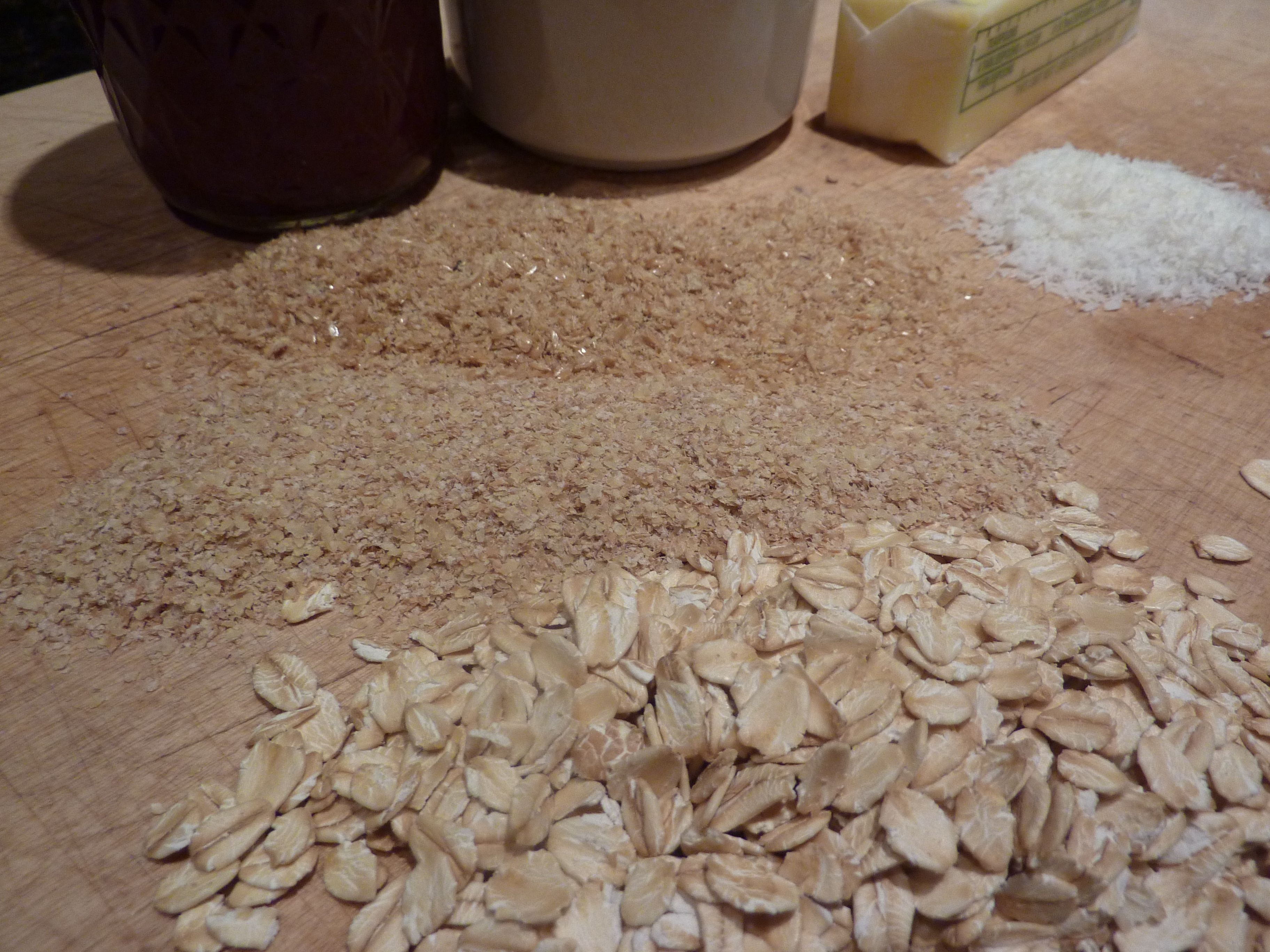
Oats, ground flaxseed, wheat germ

Today, granola bars. During the week, when I am teaching skiing, I am outside in the cold weather for most of the day. I find a little sugar at lunch gives me just enough energy to get back out there for the afternoon. But I prefer to do something as healthy as possible at the same time. This granola bar recipe gets me the sugar fix, with some healthy ingredients – almonds and cashews, ground flaxseed, wheat germ, sunflower seeds, whole rolled oats.

This recipe is adapted from a recipe from Joanne Chang’s “Flour” cookbook. I have made several changes, including incorporating my own homemade jams (or a great store-bought jam) rather than making a jam just for these. I would use whatever nuts you prefer; I had almonds and cashews, so that’s what I used. There is also a slight mistake in the original recipe, as you are not instructed where to use the toasted walnuts. I assumed they just go in the food processor with everything else, and that seemed to work just fine.

I replaced some of the flour with ground flaxseed. Flaxseed has a myriad of health benefits; high in Omega-3s, dietary fiber, and lignans, flaxseed lowers cholesterol, lowers blood sugar, fights heart disease and certain cancers, even decreases the symptoms of menopause. But whole flaxseed is hard to digest, so here I included it in its ground form. You can purchase it both ground and whole; the ground seed should be kept in the refrigerator to keep it from going rancid.

Other changes include the topping (more nuts, and wheat germ) and cooking times (much shorter). The cooking times in general in this book are significantly off – at least in 3 out of the 3 recipes I have tried. But the flavors are great.
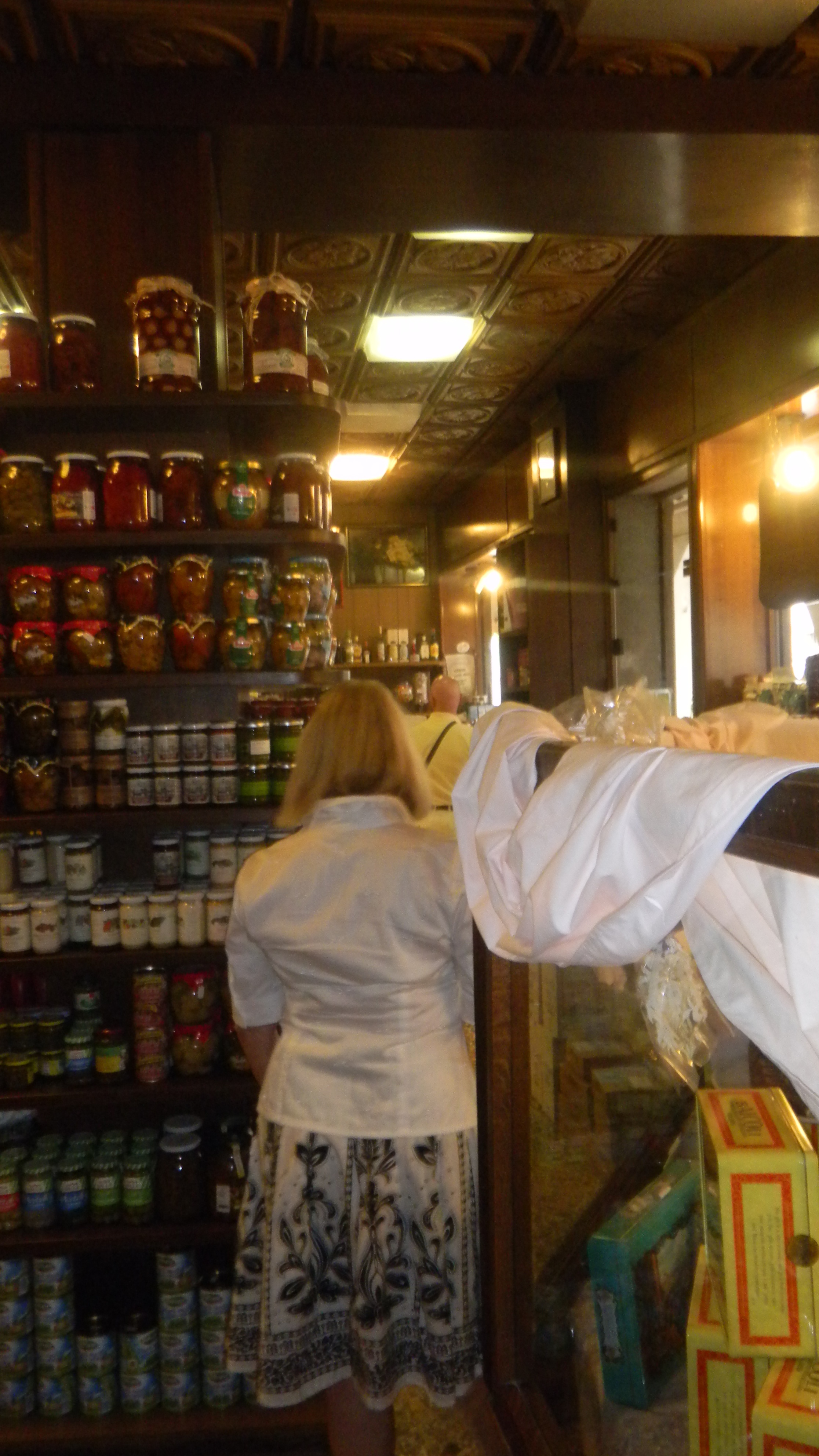
Wonderful gourmet shop in Asolo, lots of jams and honeys!

The last thing I did to make these more ‘healthy’ was to change the yield. I can get 24 bars out of a 13×9 pan. The original recipe has a yield of 12. While they are great, I’d have to do a few more mogul runs after lunch to burn off a large bar. I’ll take my time and enjoy a smaller one. A large part of healthy eating and cooking is an awareness of portion sizes, one we loose when we are constantly bombarded by the “Supersize”.

I am looking forward to making these with some amazing fruit jams and some artisanal honey (maybe chestnut…) that I can pick up on our next tour in Italy. See, I can make anything Italian food.

Some pictures of our post-lunch activity one day this week. See, this is why I need the energy boost! We’re enjoying some great new terrain here at Sugarloaf now that the snow is deep enough, but you have to be ready for some bumps and trees. A few more pictures of a visit to Brackett Basin is on our facebook page.


Brackett Basin entrance
Bumps and trees

Brackett Basin Granola Bars

Serves 24

1 cup almonds or other nut
1 3/4 cups unbleached all-purpose flour
1 1/2 cups old fashioned rolled oats (not quick cook or instant)
1/2 cup ground flaxseed
2/3 cup packed light brown sugar
2/3 cup unsweetened shredded coconut
1/ teaspoon kosher salt
1/4 teaspoon ground cinnamon
1 cup unsalted butter, softened, cut into 8 to 10 pieces
6 tablespoons honey
1 8 ounce jar fruit jam
3 tablespoons ground cashews or other nut
3 tablespoons sunflowers seeds
3 tablespoons wheat germ

Preheat the oven to 350°. Spread the nuts on a baking sheet and toast for about 10 minutes, or until lightly toasted and fragrant. Remove from oven, and let cool.

Line a 13×9 inch pan with parchment paper.
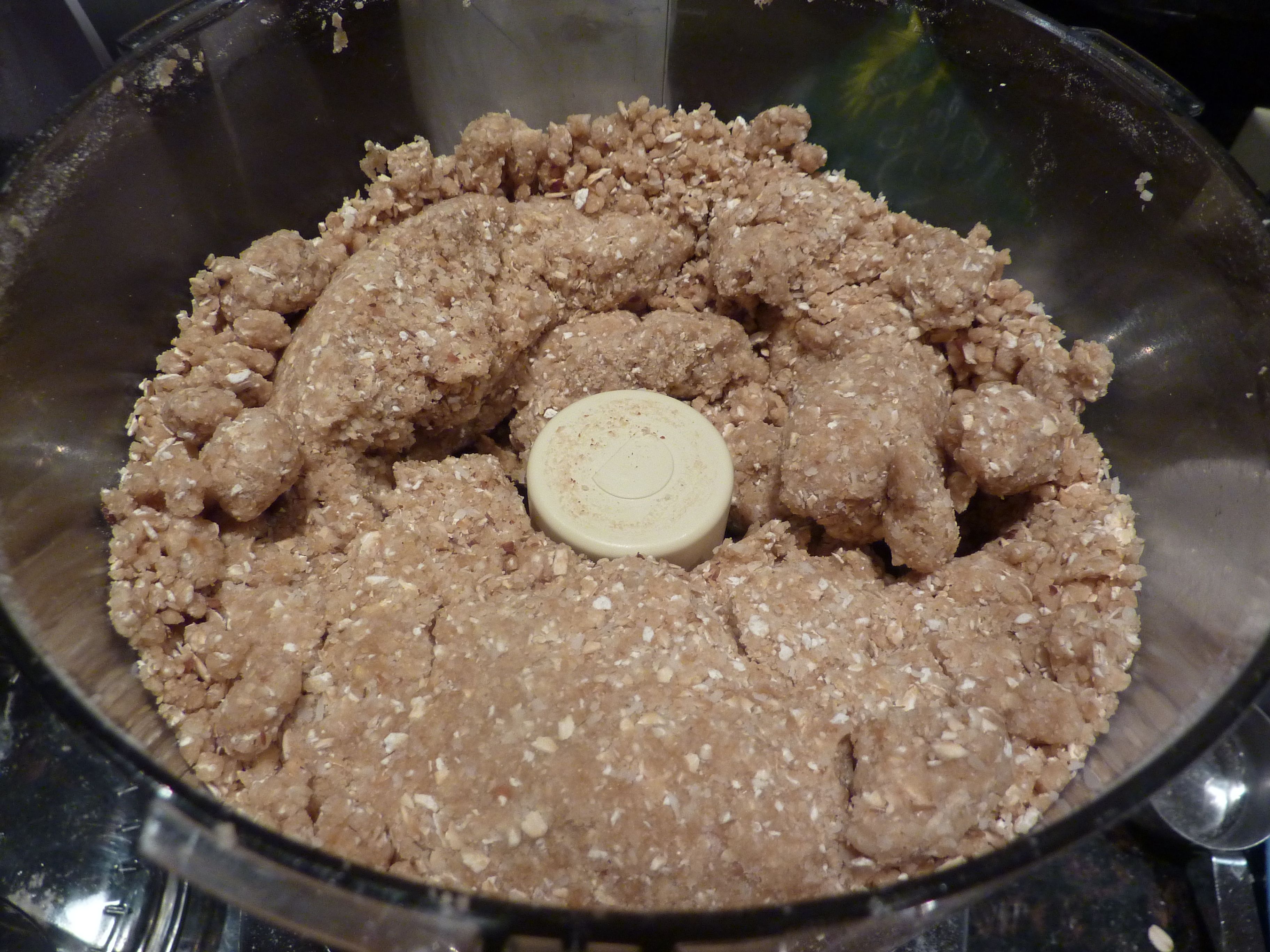
Combined granola 'dough' in food processor

In a food processor, combine the 1 cup toasted nuts, flour, flaxseed, oats, brown sugar, coconut, salt, cinnamon and butter and pulse about 30 times, or until the mixture is evenly combined. You may need to take off the lid and move things around a bit with a spatula during the pulses, as this pretty much fills up a standard larger Cusinart food processor, and you want to make sure everything is evenly distributed.
Dump the mixture into a large bowl and drizzle the honey on top. Work in the honey with your hands until the mixture comes together.
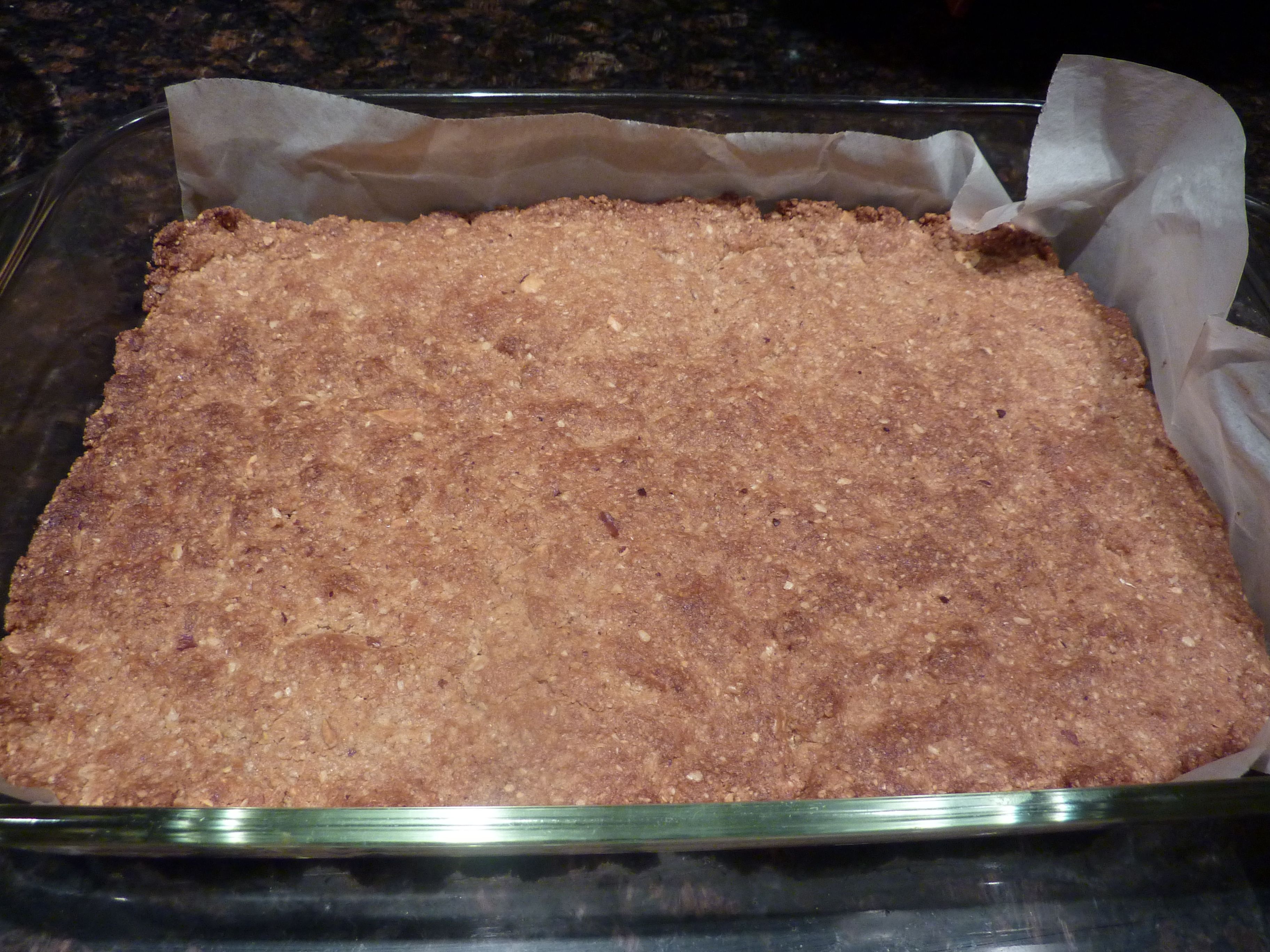
Bottom layer after first baking

Press about three-quarters of the mixture into the bottom of the prepared pan. Place the remaining quarter of the mixture in the refrigerator.

Bake for 20 to 25 minutes, or until light golden brown throughout. Remove the pan from the oven, spoon the jam on top and spread in an even layer across the top of the bars.

Place the remaining 3 tablespoons of nuts in the food processor and pulse until coarsely chopped. Remove the reserved granola from the refrigerator and break it up with your fingers. Add the chopped nuts, sunflower seeds and wheat germ and work together with your fingers to combine. Sprinkle the mixture like a crumb topping over the jam.
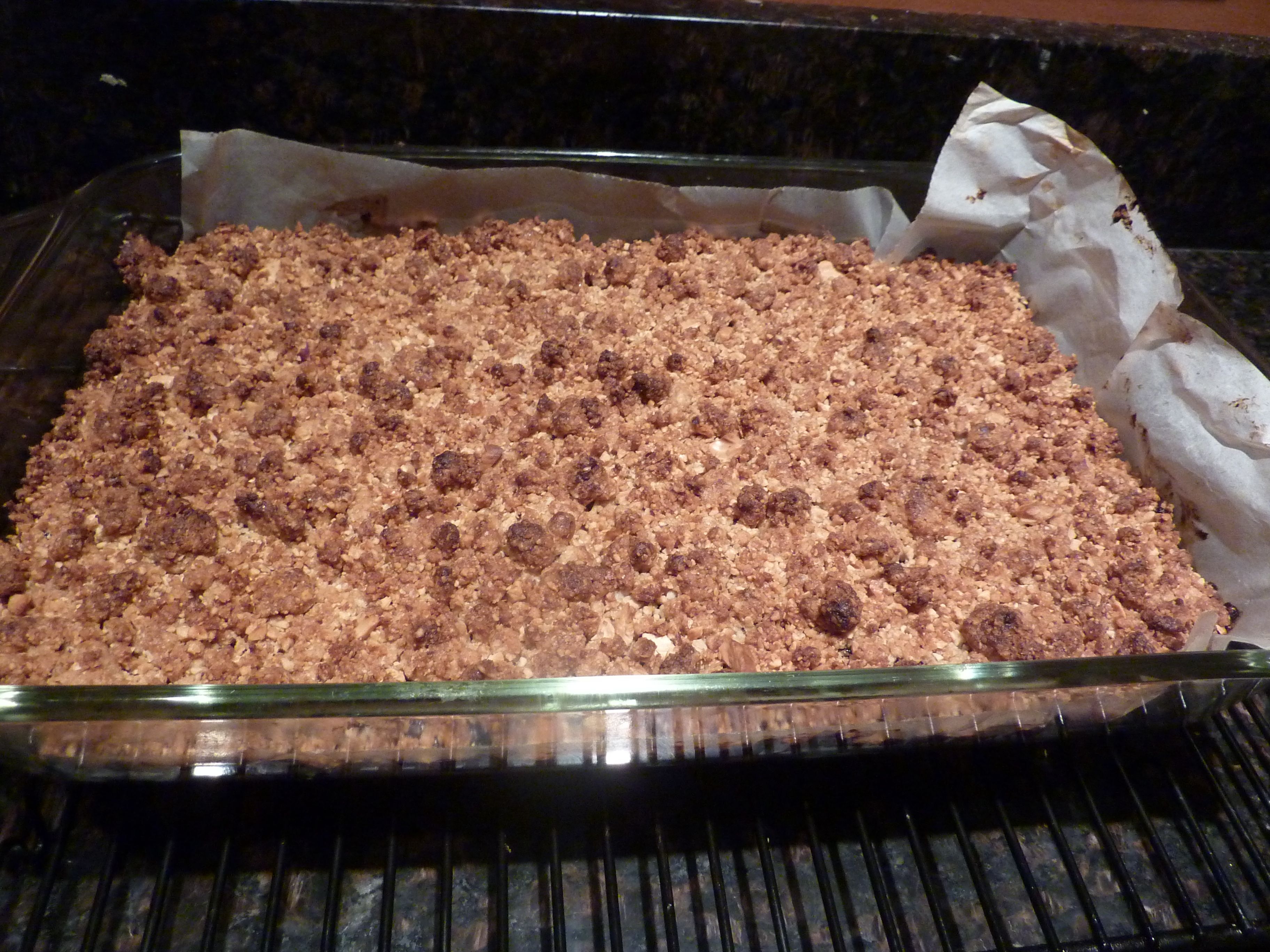
FInish bars, out of oven

Return the pan to the oven and bake for 30 minutes, or until the top is golden brown. Let cool in the pan on a wire rack for 2 to 3 hours. Cut into 24 bars. I find the cutting easiest if I first remove them from the pan, and lay it flat on a cutting board.

The bars can be stored in an airtight container at room temperature for up to 1 week.
Posted in Baking, Cookies, Uncategorized | Tagged , , , , , , , , , , , , , , , , , | Leave a comment

Lentils with Sausage – Two Ways

Lentils and sausage culinary bike tours italy italiaoutdoors food and wine
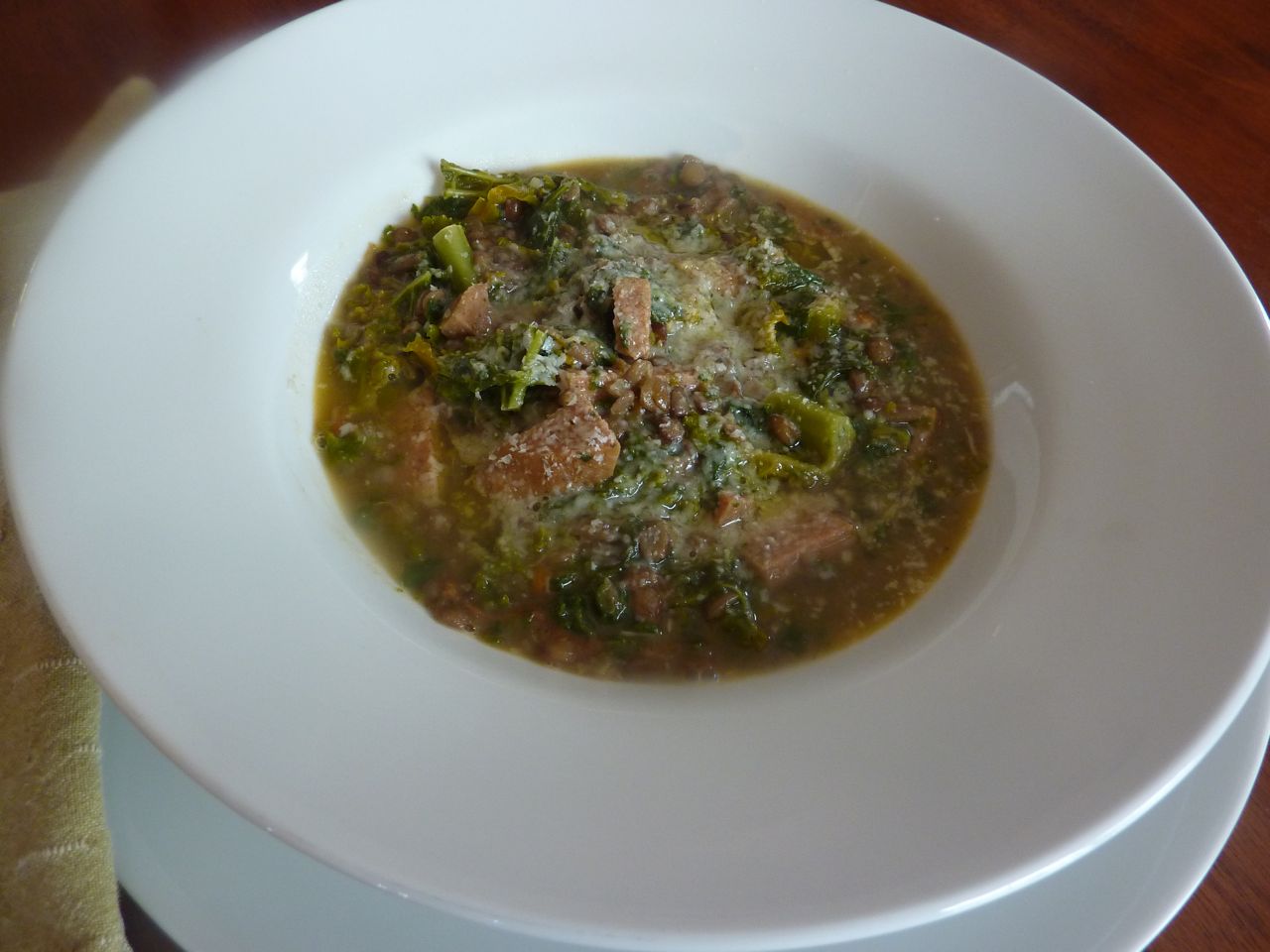
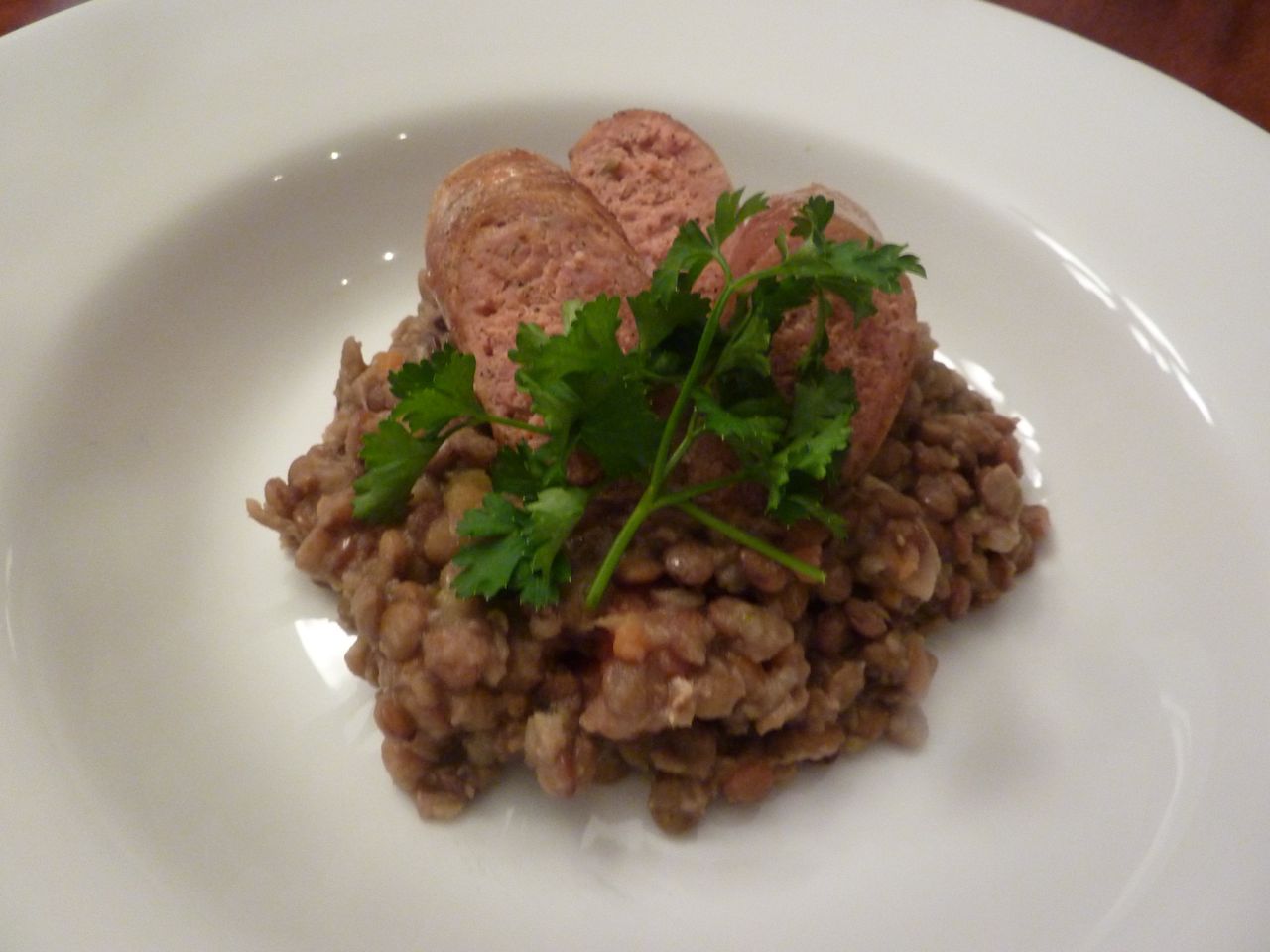
Finished dish, garnished with parsley

Lentils with some sort of pork, various sausages, pigs feet, bacon, and other cuts, is a fairly common dish in Italy. It is traditionally served on the New Year, as it is believed to bring good fortune – the rounded shape of the lentils resembling coins. During a past bike trip to Umbria with Jody Adams, we prepared the famous Umbrian Castellucio lentils with sausages we grilled over a wood fire.

Lentils have been part of our cuisine since 13000 BC (yes, BC). The Roman writers Juvenal, Martial and Apicius all describe various lentil dishes. Throughout human history, the lentil has been a popular substitute for meat, especially among the poorer classes.

Today we don’t suffer from a lack of access to meat, but lentils are a great source of nutrition, especially for those that are trying to cut back on meat. With 26% of its calories coming from protein, lentils have the third highest level of protein of any plant based food, behind soy and hemp. They also contain dietary fiber, folate, vitamin B1, minerals, and the essential amino acids isoleucine and lysine.

Most recipes for this dish of lentils and sausage would be titled “Sausage and Lentils”. But for any of you familiar with the Mediterranean Diet pyramid, meats are at the top (i.e. eat less frequently) and beans and legumes toward the bottom (eat more of these). And as many visitors to Italy may observe, meat portions there are much smaller than what you would find at a US steakhouse! Meats are used to complement, not overwhelm the remaining foods on the plate.

I admit, I love meat and don’t feel the need to apologize for enjoying it. And I feel better when I have a reasonable amount of protein in my diet. I am quite active, skiing or cycling daily combined with strength workouts, and feel that having adequate protein in my diet is important to muscle recovery. I try to consume a little at each meal, and some within a half hour after my morning workout. But I like to consume it in reasonable amounts – 6 ounces at a time is probably my maximum when I indulge in something really great – and 4 ounces is my usual.

So for the recipe, I recommend four 4 ounce sausages to serve 4 people; other similar recipes usually have two per person. But this makes plenty of lentils that are quite filling, and with the addition of roasted garlic, quite flavorful.

lentil and sausage soup luxury villa rental italy italiaoutdoors food and wine
Lentil Soup with Kale and Sausage – My Leftovers

Only two of us ate this, so I had plenty of leftovers. The next day for lunch the lentils and cut-up sausage went into a soup pot, I added chicken broth and some blanched kale I had frozen this autumn, and I had a warm soup for lunch in about 10 minutes. Topped with grated Grana Padano cheese and a drizzle of olive oil – delicious.


Lentils with Roasted Garlic and Sausage

Serves 4

1 head garlic
5 tablespoons extra virgin olive oil, plus more for drizzling
3 tomatoes
1 leek, white part only, sliced lengthwise then thinly sliced, swirled in a bowl of water to remove grit
1 carrot, cut into 1/4 inch dice
1 stalk celery, peeled and cut into 1/4 inch dice
1/2 red onion, cut into 1/4 inch dice
Kosher salt and freshly ground pepper
2 cups (14 ounces) lentils
2 bay leaves
10 or so parsley stems
4 4-ounce sausages
1 tablespoon red wine vinegar

Preheat the oven to 350°.

Using a serrated knife, cut the top off of the entire head of garlic. The goal is to exposed the tops of most of the cloves, while keeping the head intact. Take a sheet of aluminum foil and wrap it around the bottom of the head of garlic, leaving the top showing the exposed cloves open. Drizzle a bit of olive oil over the cloves, and place the head in the oven. Roast until the cloves are tender, about 30 minutes. You can squeeze the head a bit to check for doneness – the cloves will be pretty mushy and start to pop out of their peels. Remove from oven and allow to cool.

Turn the oven to broil. Cut the tomatoes in half, and place cut side down on a sheet pan. Place the tomatoes under the broiler and cook until skin is beginning to blacken and blister. Remove from the oven and allow to cool. Remove the skin and the core. Squeeze out the seeds, and chop the tomato flesh into 1/4 inch pieces.

Place 2 tablespoons of olive oil in a large saucepan and heat over medium high heat. Add the leek, carrot, celery and onion. Saute until soft, about 5-7 minutes. Season with salt and pepper.

Add the lentils, and cover with water by about 1 inch. Add the bay leaves and the parsley stems. Bring to a boil, then lower the heat to low and simmer until tender, about 30 minutes. This time will vary, depending upon the type and age of the lentil, so keep checking rather than relying on time. Keep the lentils covered with water while cooking; the goal here is to have the liquid just absorbed when the lentils are just finishing up. If excess water remains, turn up the heat to reduce it.

While the lentils are cooking, place the sausages in a small saute pan and saute them over medium heat until just cooked through. Remove from heat.

Take the garlic head out of the foil. Using your fingers, squeeze the roasted garlic cloves out of their peels and place into a small bowl. Mash the roasted garlic with the back of a fork.

When the lentils are done, remove the bay leaves and parsley stems. Add the roasted garlic and chopped tomatoes. Add the red wine vinegar and the remaining 3 tablespoons olive oil. Season with salt and pepper.

Rewarm the sausages if necessary. Slice on the diagonal, and serve in a bowl on a bed of lentils. Drizzle with olive oil.


Posted in Lentils, Sausage, Uncategorized, Valpolicella, Veneto Food | Tagged , , , , , , , , , , , , , , , , , , , , | Leave a comment

A Full Day: Filthly Fifties, Ski School, and a Second Risotto Class

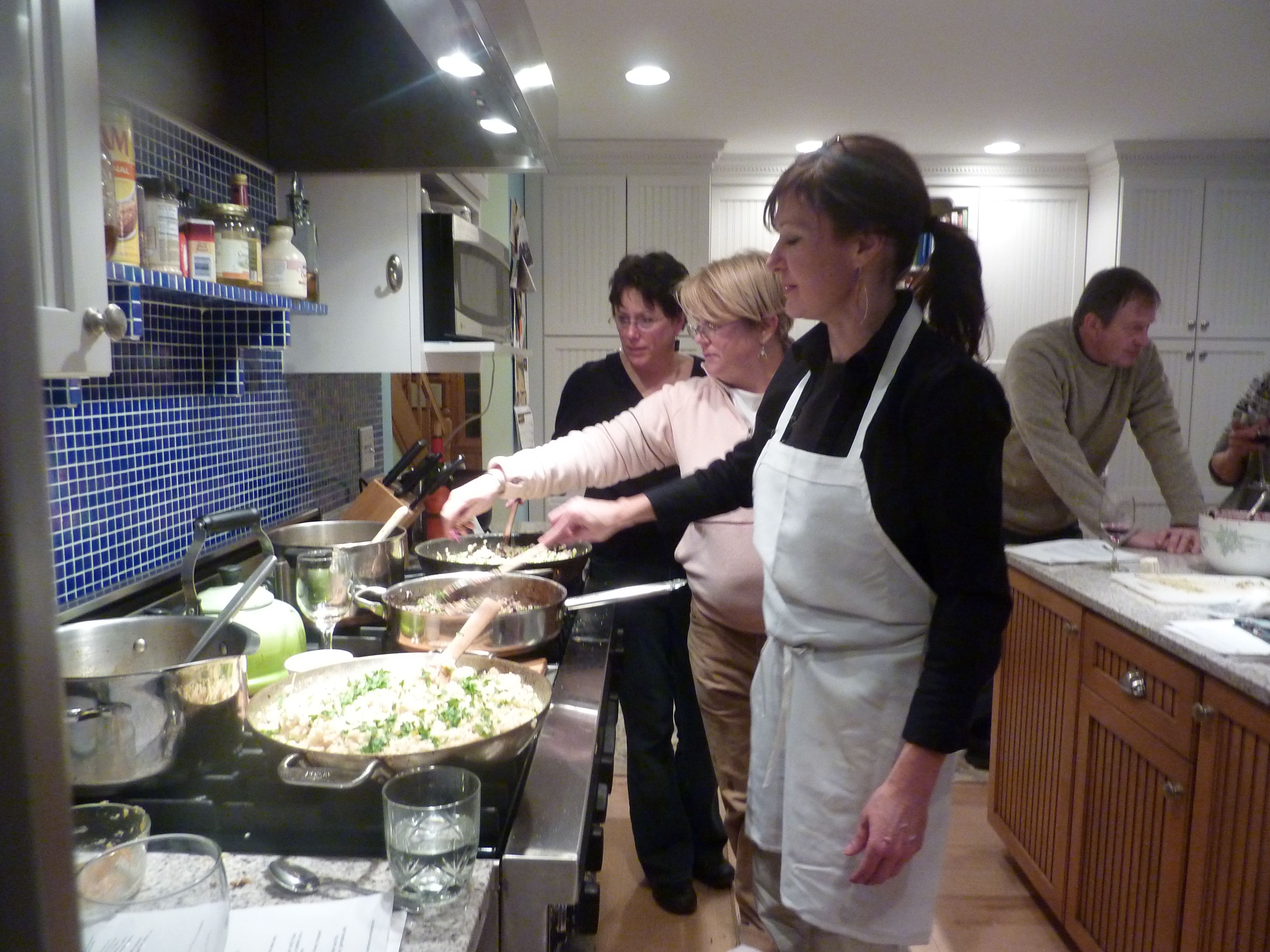
RIsottos cooking

My last Risotto cooking class was so popular, we couldn’t all fit into one evening. I scheduled a second class the following Monday for the overflow. I was reluctant to take another day off of work (if you can call ski instructor work), but as the first class went so smoothly (except for the fire), I thought I could pull it off. Everything came together, but it made for a very busy day!

Start: 5:20 alarm.

6:00 at the gym, with my three amazing workout companions. On the plan for today, Filthy Fifties. We have 45 minutes to do 50 reps of each of the following exercises – in no particular order:

  • Box Jumps
  • Jumping pull ups
  • Flying lunges
  • Knee to Elbow (Hanging crunches)
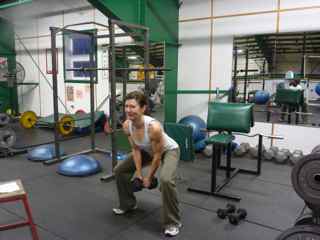
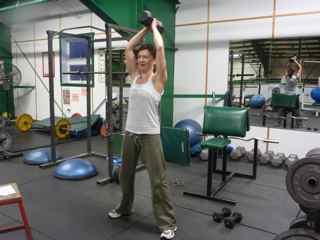
  • Push Pulls (Squats with a Shoulder press using dumb bells)
  • Squat Thrusts (otherwise known as burpees)
  • Wall Ball (Throwing a medicine ball overhead)
  • Kettle Ball Swings
  • Back Extensions
Dumbbell Swings - Start
Dumbbell Swings - Finish

We mix it up every morning; sometimes a good strength workout like this, sometimes a spin class, sometimes a mix of both. But a very fun group who love to push each other – great motivation to brave freezing temps and the still darkness to get to the gym.

6:50. Home, shower.

8:00 Ski School for weekly meeting. 10:30 and 1:15 clinics.

Line up at hut

Home at 3:00. Clean off counters, assemble ingredients for 6 recipes, set up work stations with ingredients and equipment for cooking class.

5:30 Students arrive.

Clean plates!

7:30 We’re sitting down to eat (hard to believe!!)

9:30 In bed, with a clean kitchen. I was expecting this to be more like 11 pm…

I love it when a plan comes together!

Here’s a second risotto recipe from the class.

Risotto Alla Salsa di Salmone e Prosecco

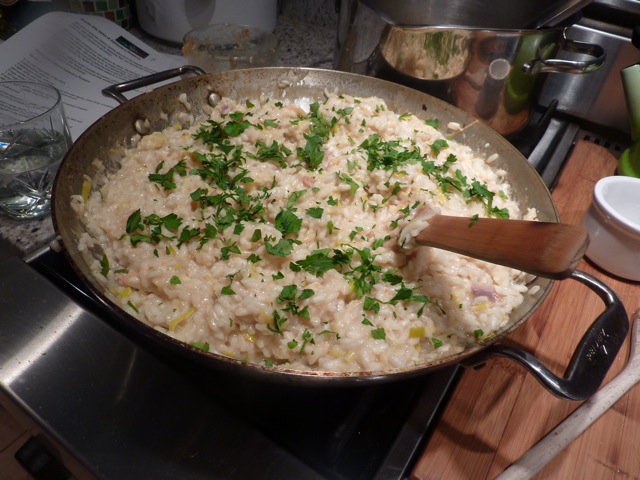
Finished Risotto

Fish and crustacean based risottos abound in the seaside communities around Venice, with each community featuring their own favorite fish and naturally preferring their version to all others!

We have been smoking our own salmon for years. We first brine, then wood smoke the salmon over a low fire for a couple of hours. I am often asked if we sell it commercially – the answer is no. As a special dish, I love it. If I had to produce it every day, it would quickly become a real job! For smoking, I prefer farm raised salmon. Its’ higher fat content makes for a moister smoked salmon.

So my ‘favorite’ seafood risotto includes this salmon, paired with a prosecco sparkling wine from the Veneto. A commercially available smoked fish; salmon, or trout, would make a great substitute.

Risotto Alla Salsa di Salmone e Prosecco

Serves 6

6 1/4 cups vegetable or fish stock
3 tablespoons olive oil
3 tablespoon butter, softened
1 leek, white part only, trimmed of roots and outer leaves, sliced thinly crosswise and swirled in a bowl of cold water to remove any grit
2 cups risotto rice, arborio or carnaroli
1 1/2 cups prosecco
8 ounces smoked salmon, coarsely chopped
1 tablespoon flat leaf parsley, finely chopped

Bring the stock to a boil.

Heat the oil and one tablespoon of the butter in another pan, add the leek and cook over low heat, stirring occasionally, for 5 minutes.

Adding stock

Add the rice. Stir for about 1 minute. Add the prosecco, and simmer until it has evaporated. Stir in a ladleful of the stock. Cook, adding the stock a ladleful at a time, and allowing it to be absorbed by the rice before adding more.

Just as you add the last ladleful of stock, stir in the remaining butter and the coarsely chopped salmon.

Season with salt to taste, and serve, garnished with the chopped parsley.

Posted in prosecco, Risotto, Salmon, Uncategorized | Tagged , , , , , , , , , , , , , , , , , | Leave a comment

Cooking Class: How to Cook Risotto, and Narrowly Avoid Burning Your Friends’ House Down…

Showing Basic Risotto Techniques

Last Monday we had another very enjoyable cooking class in the back woods of Sugarloaf, ME. A enthusiastic group of women, plus two brave men faced brutal sub-zero temperatures to gather at my friend Nancy Marshall’s house for an evening of cooking, eating, wine, and great fun. On the menu that night – risottos. I planned three types, a spin on the classic Venetian Risi e Bisi, a seafood risotto with smoked salmon, and a barley risotto with mushrooms, red wine and arugula.

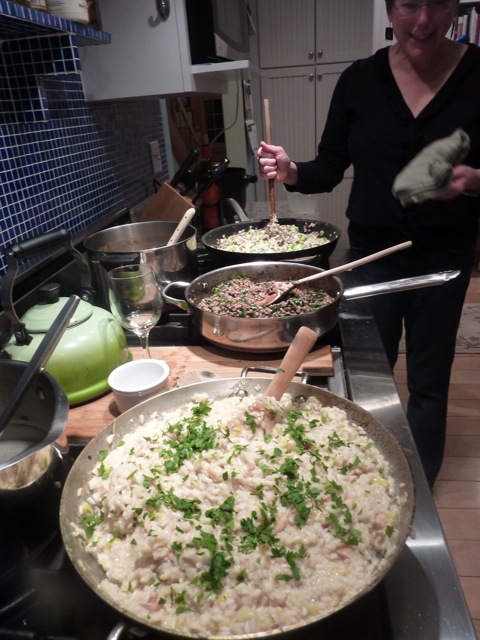
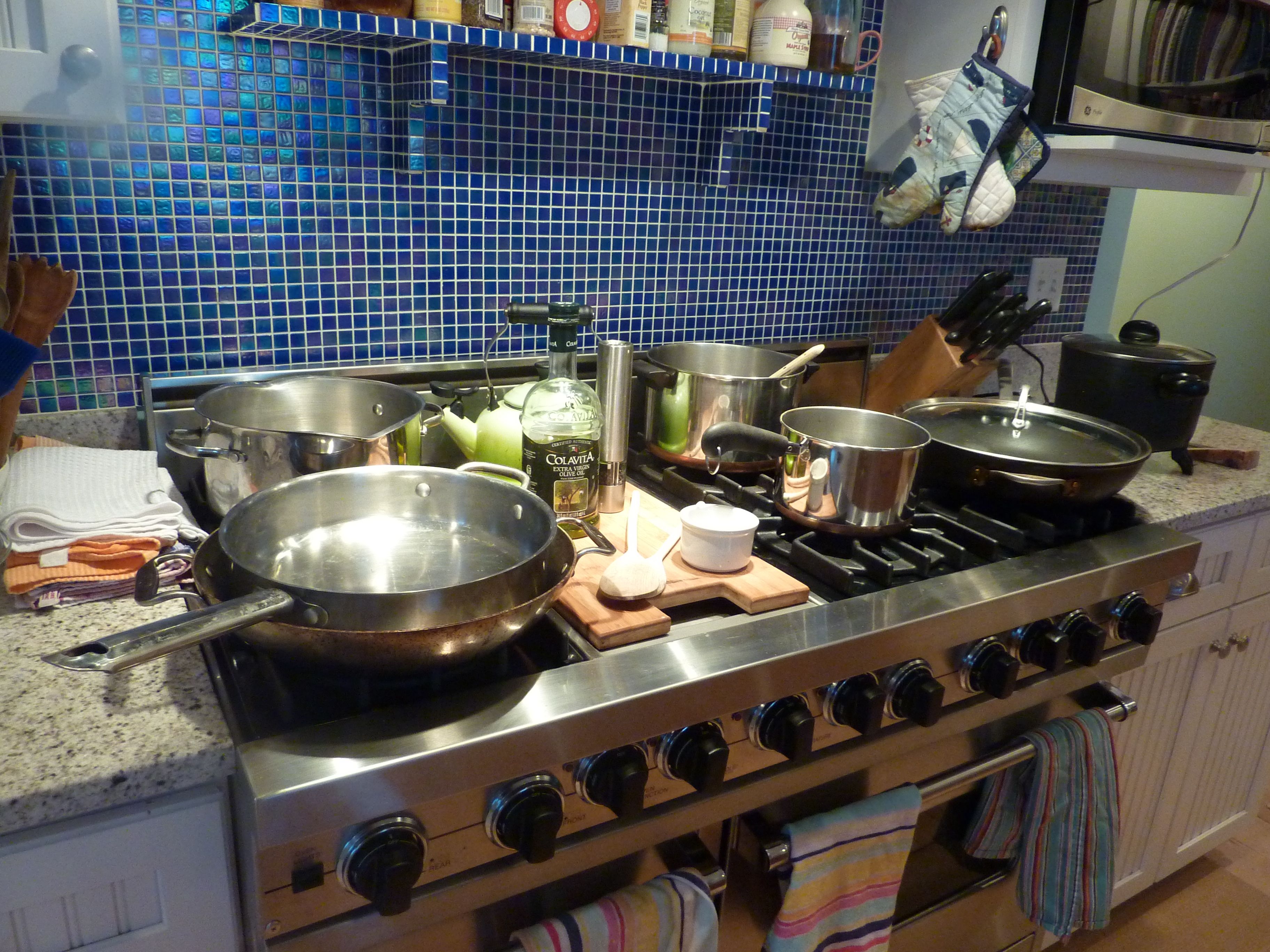
Stove Ready for Action

Okay, so we did almost burn down Nancy’s house in the process. The picture on the right shows the stove set up for cooking our three risottos prior to class. Note the stack of dish towels on the left, right near the gas burner. There is a lot of fun and bustle in the kitchen during my classes, and some wine is consumed, and somehow during all of this activity this stack of towels burst into flames. I could attribute this to spontaneous combustion – my 15 year old son Liam would be a proponent of this explanation, having viewed the movie Spinal Tap a few too many times. However, the towels were probably pushed a little to the right as ingredients were moved back and forth, and – poof! A quick thinking Nancy grabbed the stack, threw it in the sink and doused them with water. There was then a search for the fire extinguisher, just in case. Although if the fire extinguisher had been used there wouldn’t have been much risotto to eat, as the spray would have pretty much covered everything on the stove – Nancy’s method saved our meal! Her dish towels, however, are toast. Literally. Future classes will have these located far from the stove.

More pictures from the class are available on our Italiaoutdoors facebook page.

Back to the class: the basic technique for cooking risotto is pretty simple. The three recipes we used were simple variations on this basic technique. You may or may not use wine; you can add different ingredients at the beginning or at the end, depending on the cooking time they need – vegetables, cheeses, butter, meats, seafood, shellfish; you use different stocks, to complement the other flavors in the dish; you may even use grains other than rice – here, I used pearled barley for one of our recipes.

Basic Risotto Technique:

  • Heat the stock
  • Saute soffrito or similar vegetables (onion, carrot, celery, leeks, garlic) in oil in a heavy bottomed saucepan until tender
  • Add any vegetables or meats that may require a longer cooking time (mushrooms, uncooked meats, bacon/pancetta.
  • Add rice and saute a few minutes
  • Add wine, if using. Cook until absorbed.
  • Add stock, 1/2 cup at a time, cooking until it is absorbed before adding more
  • Stop adding the stock and remove from heat when tender, but still at little firm to the bite
  • Add any remaining ingredients – cheeses, butter, cooked meats, shellfish
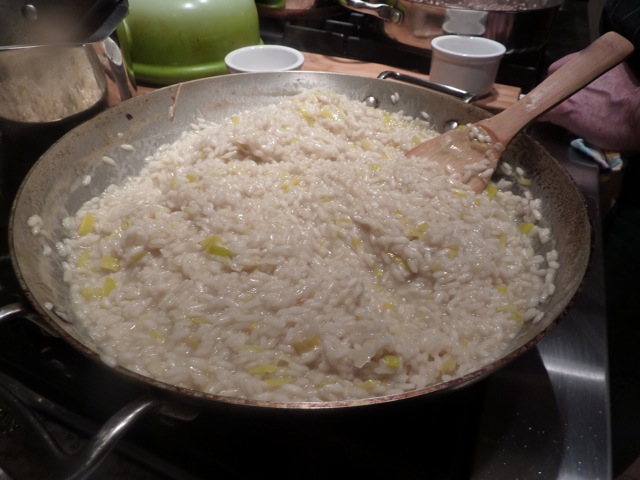
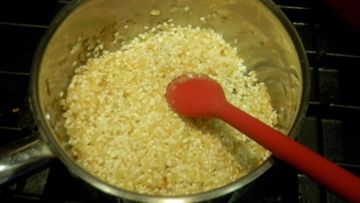
Sauteing Rice for Risotto
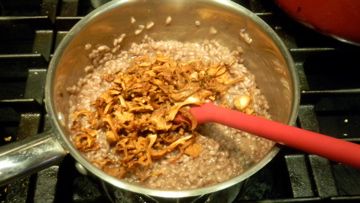
Adding vegetables (here, mushrooms
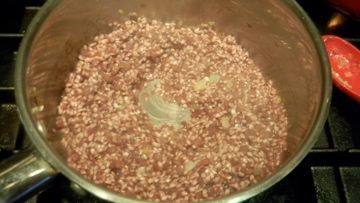
Cooking down after addition of wine

Depending on the recipe, you may add additional ingredients at the start, or at the end. But basically that’s it – the cook time will vary depending on the grain. A rice risotto takes about 30 minutes; the barley version may take 45 to 50, depending upon how ‘pearled’ the barley is. Other grain options include farro, or any of the various whole grain blends available from Kashi or Bob’s or a variety of suppliers here in the US. Depending upon the grains you use, the result may not be the creamy consistency you will get with a true risotto rice (more on this below) but will certainly be a healthy and delicious meal.

Risottos in Northern Italy

When referring to Italian food, most people immediately think of pasta. But Italy is the greatest rice producing nation in Europe, and the Po River valley in Northern Italy is the largest rice producing region in Italy. Since Venice controlled the major part of this fertile valley for centuries, rice is a mainstay of their cuisine; more prevalent than pasta. Venetians have a myriad of risotto dishes, but probably the most famous of all is Risi e Bisi, Rice with Peas.

Often prepared and served somewhat thoughtlessly, it can be a rather bland dish. However, historically it was created to celebrate the arrival of the new crop of fresh peas and only eaten in early spring. This dish was traditionally served to the Doge (Ruler) of Venice on April 25, the feast day of the patron saint of Venice, Saint Mark. This feast day roughly coincided with the annual introduction of the first baby peas at the Rialto market in Venice.

In Venice, a proper Risi e Bisi would appear to us Americans as more soup-like than the risottos we are familiar with. Their risottos are much more liquid, risotto all’onda, or “risotto with waves”. You should be able create ‘waves’ in your risotto by tipping your plate.

Most chefs are familiar with the use of two strains of rice for risotto, Arborio and Carnaroli. Carnaroli rice is grown in the Grumolo area today. But the area is perhaps best known for its unique regional strain, Vialone Nano. Developed in 1937 by crossing the Vialone strain with the Nano,  it is considered by many to be the premier risotto rice produced in Italy. It is the only European rice with its own IGP quality designation.

Vialone Nano rice

I use Vialone Nano rice when in Italy, cooking on our Italiaoutdoors trips, but cannot find it here in the states. Arborio and Carnaroli are pretty readily available here. Carnaroli has a longer, larger kernel that retains is consistency during cooking, as it releases the starch that contributes to a nice, creamy risotto.

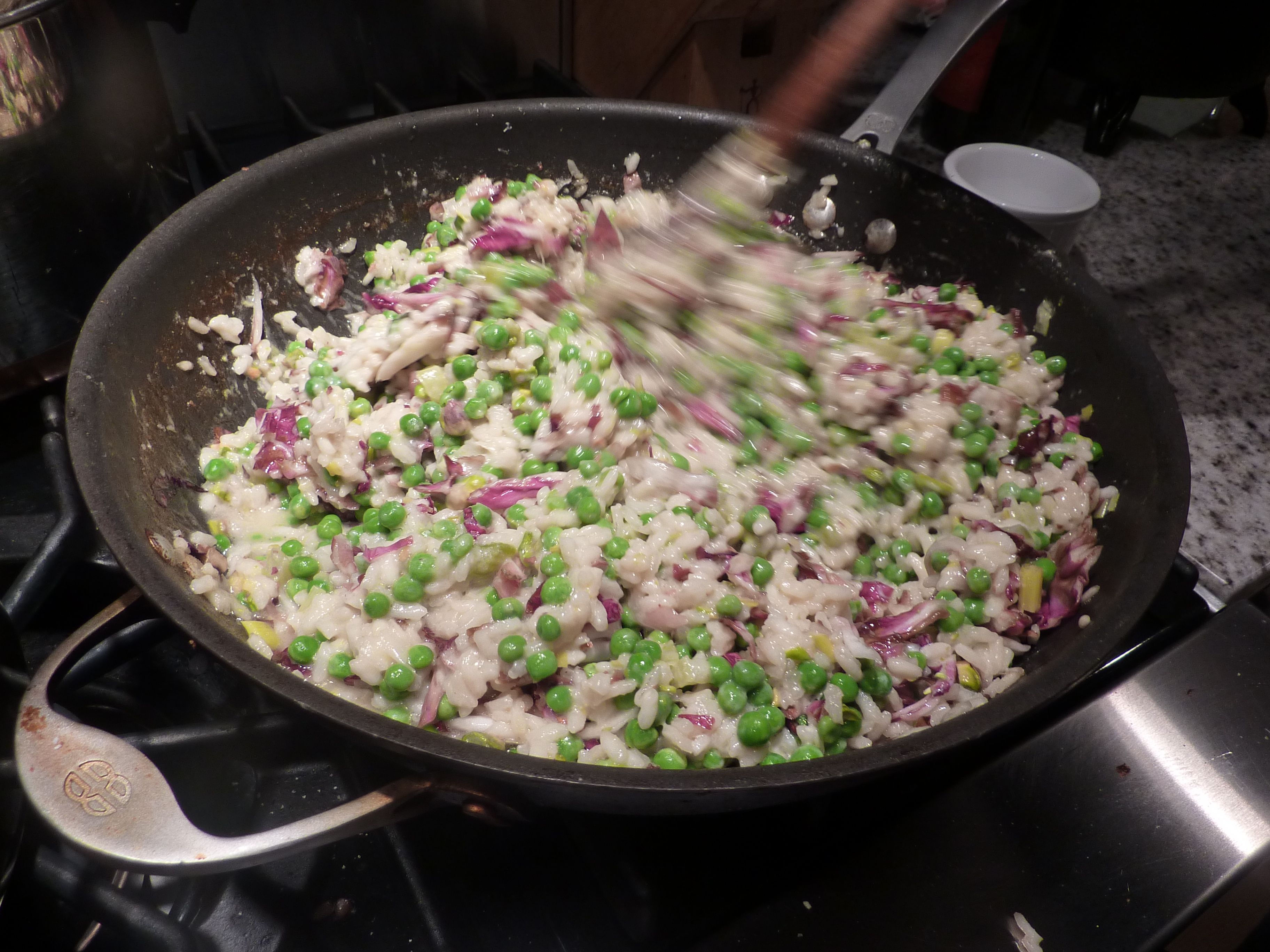
Here, I’ve played with a traditional risi e bisi recipe, and added radicchio and mascarpone – both ingredients also found in the Veneto. A little lemon and pistachios, and you have a dish that is worth serving even if the peas aren’t from Lumignano in April.

Risi e Bisi con Radicchio e Pistacchi

Serves 4-6

2 ¼ cups peas, shelled or 1 package frozen peas, defrosted
5 cups chicken stock
3 tablespoons olive oil
¼ cup butter
1 leek, white part only, trimmed of roots and outer leaves, sliced thinly crosswise, and swirled in a bowl of cold water to remove any grit.
1 garlic clove
1 celery stalk, chopped
1 cup risotto rice, preferably riso Vialone Nano, Carnaroli, or Arborio
1 small head radicchio, washed, dried, and thinly sliced crosswise
½ cup Asiago d’Allevo stravecchio or Parmigiano Reggiano, freshly grated
½ cup mascarpone cheese
½ cup raw pistachios, very finely chopped
Zest from one lemon
salt and freshly ground pepper

Risi e Bisi con Radicchio e Pistacchios

Bring the stock to a boil. If you are using fresh peas, rather than the chicken stock, you can create a pea stock by boiling the (washed) pea pods in 6 cups of water for 10 minutes. Fill a large bowl with ice water. Remove the pods from the stock, then add the fresh peas. Cook the peas, uncovered, until tender, which should only take a couple of minutes, especially if the peas are tiny. Remove the peas from the stock, and immerse in the cold water. Remove from the water and set aside. If you are using defrosted frozen peas, you can skip this step – they have already been blanched.

Heat the oil and half the butter in another pan, add the leek, garlic and celery and cook over low heat, stirring occasionally, for 5 minutes. Remove and discard the garlic.

Add the rice. Stir for about 1 minute, and then stir in a ladleful of the stock. Cook, adding the stock a ladleful at a time, for about 20 minutes until the rice is tender and all the stock has been used. Add the radicchio and continue to cook until radicchio is tender, about 5 minutes. Add the peas and cook until heated through.

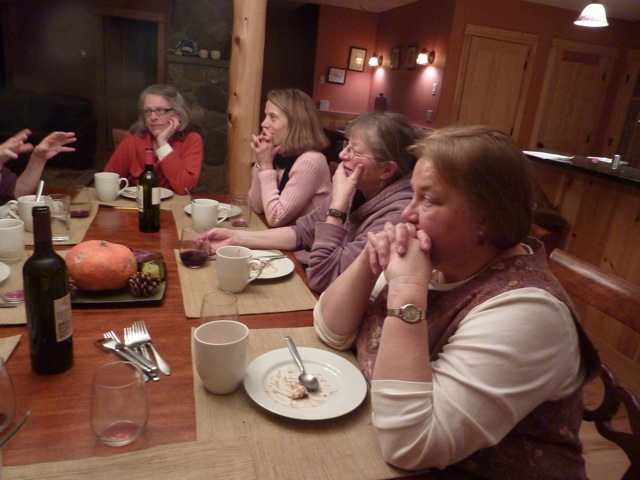
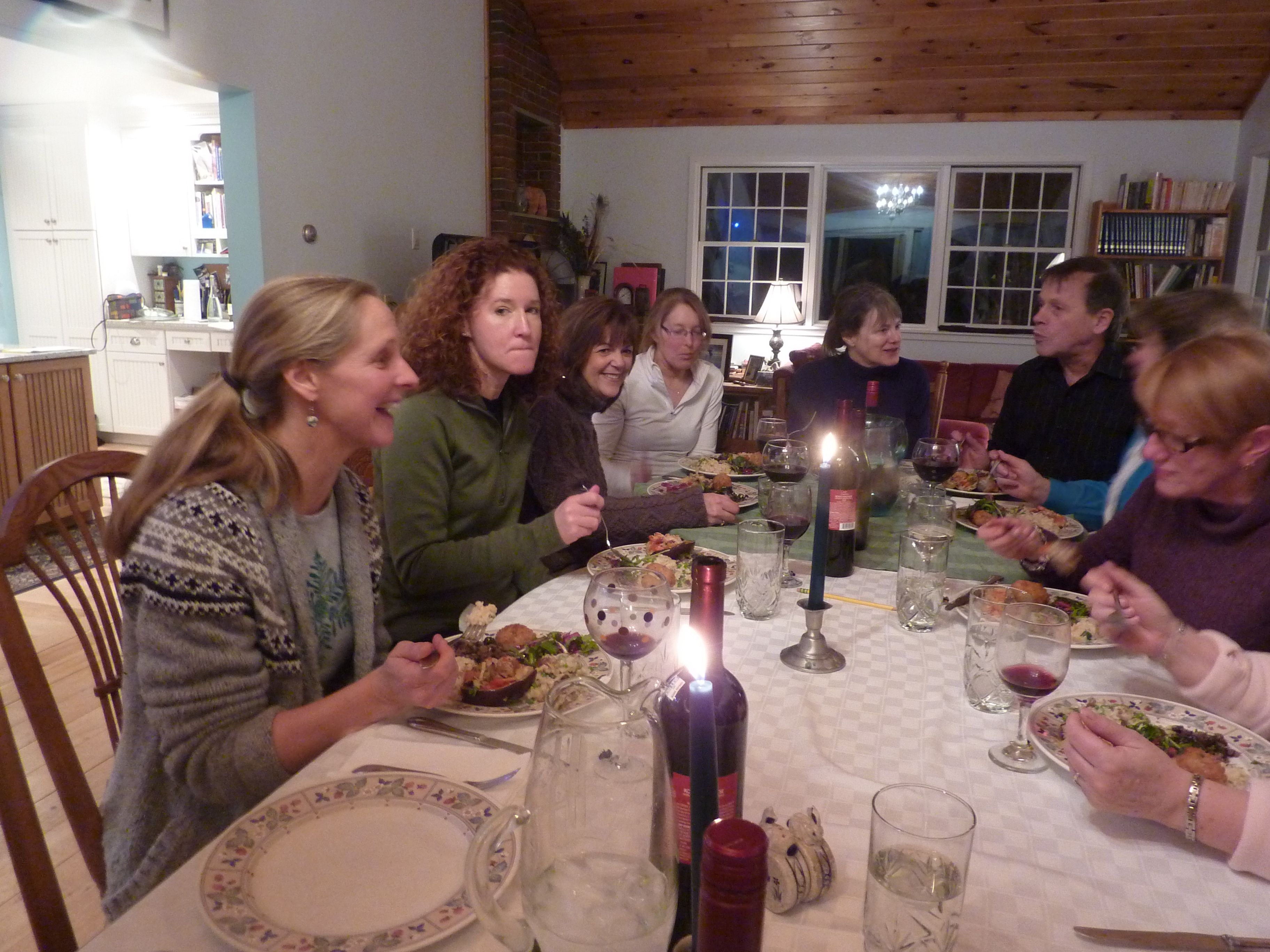
Enjoying our risottos

Season with salt to taste, stir in the remaining butter, the Asiago or Parmesan, and the mascarpone. Add the pistachios and lemon zest, reserving a tablespoon or so of the pistachios to garnish. Pour into a soup tureen and serve, garnish with the remaining pistachios.

Posted in Gambellara, Manzoni Bianco, Mascarpone, Radicchio, Risotto, Soave, Uncategorized, Veneto Food | Tagged , , , , , , , , , , , , , , , , , , , , , , , , , , , , , , | 1 Comment

Tiramisu – Italy’s Favorite Dessert

tiramisu custom bike tours italy

My favorite Italian dessert, and probably the best-known dessert of  Italy, is Tiramisu. We make this on many of our Italiaoutdoors Food and Wine Chefs on Bikes tours, and it always a big hit. My son Liam requests this on his birthday, rather than a cake. When we make this on our tours in Italy, our local chefs always have an anecdote to share as to the origin of this dish. Most begin in a brothel….

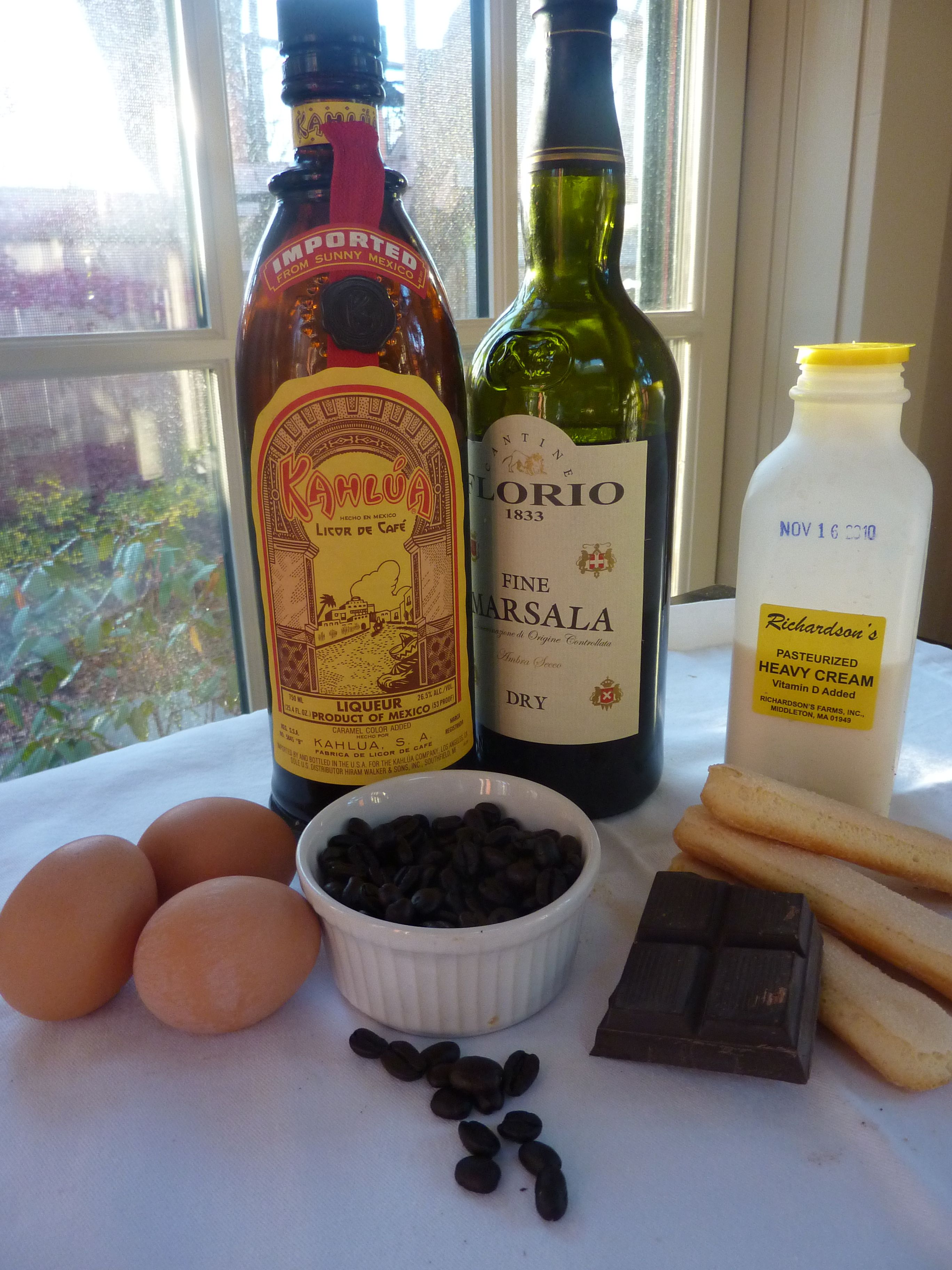
ingredients culinary bike tours italiaoutdoorsfoodandwine
Ingredients for a “pick me up” – coffee, chocolate, sugar

Tiramisu translates roughly to ‘pick me up’, and one of the more prevalent, and by far the most colorful legend behind the origin of tiramisu was that is was created as a ‘pick me up’ for weary patrons of a brothel, but I’ve already covered those stories in my tiramisu cookie post (click here). So what to add here? There are a lot of tiramisu recipes that use a simple combination of mascarpone and/or whipped cream as one of the layers, rather than take the time to make the traditional ingredient, an egg custard called a zabaglione. Why bother with making a zabaglione?

cooking tiramisu ski holidays dolomites italiaoutdoorsfoodandwine
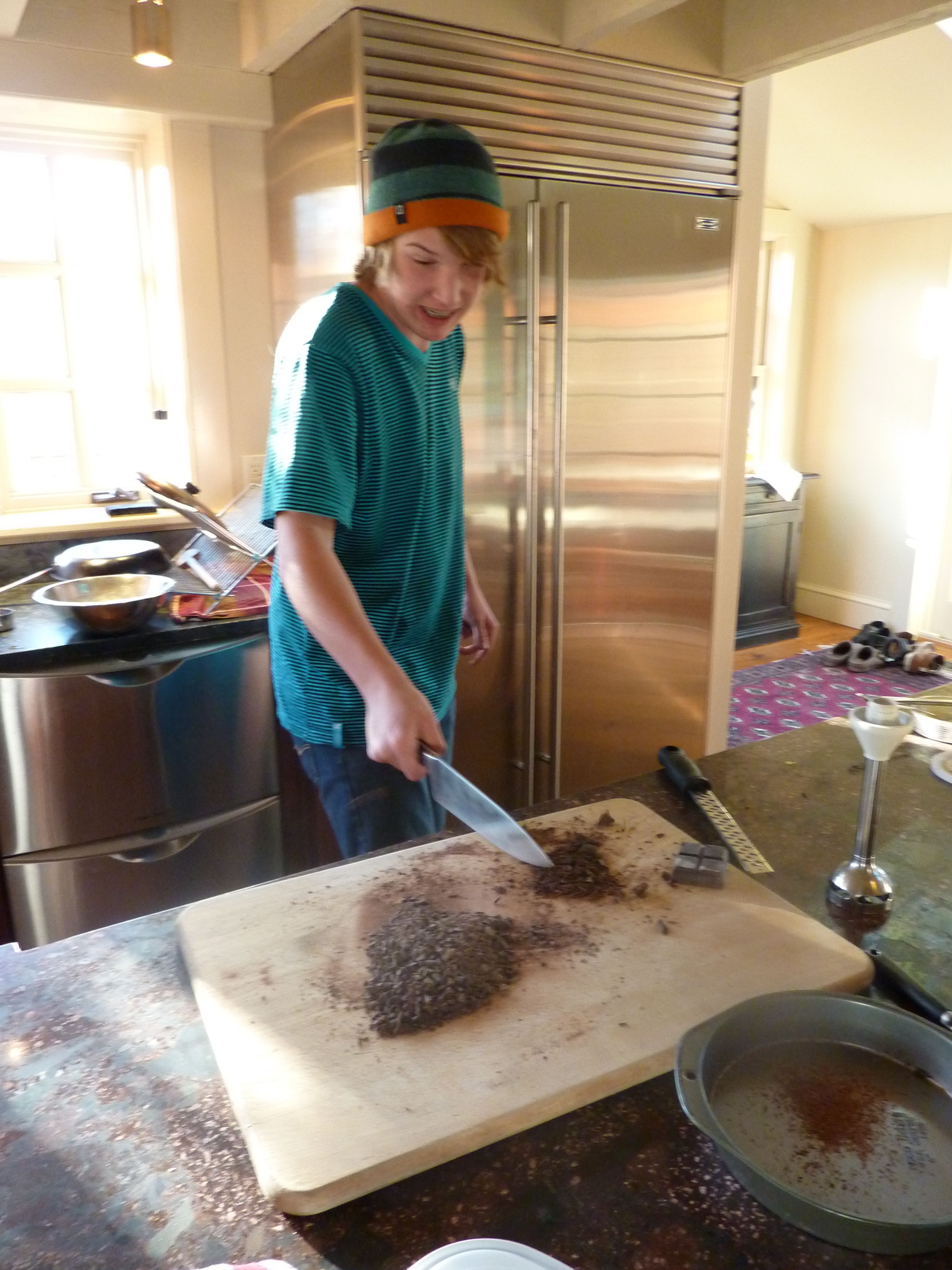
Liam assisting me with grating chocolate

For me, THE key component to a great tiramisu is the zabaglione. It is a classic egg custard that appears in various forms, referred to as zabaglione in Italian, and sabayon in French. In Italy, it usually includes sugar and is served as or with desserts. In France, it is often made without sugar as an accompaniment to savory dishes. Various liquors are used; often you will see sparkling wines like prosecco or spumante. In the Veneto, their zabaglione (referred to in dialect as zabaio) is made from egg yolks, sugar, and marsala. I prefer the  texture this provides over the simpler whipped cream and mascarpone versions of tiramisu, and I also miss the marsala. And a real zabaglione is not hard to do.

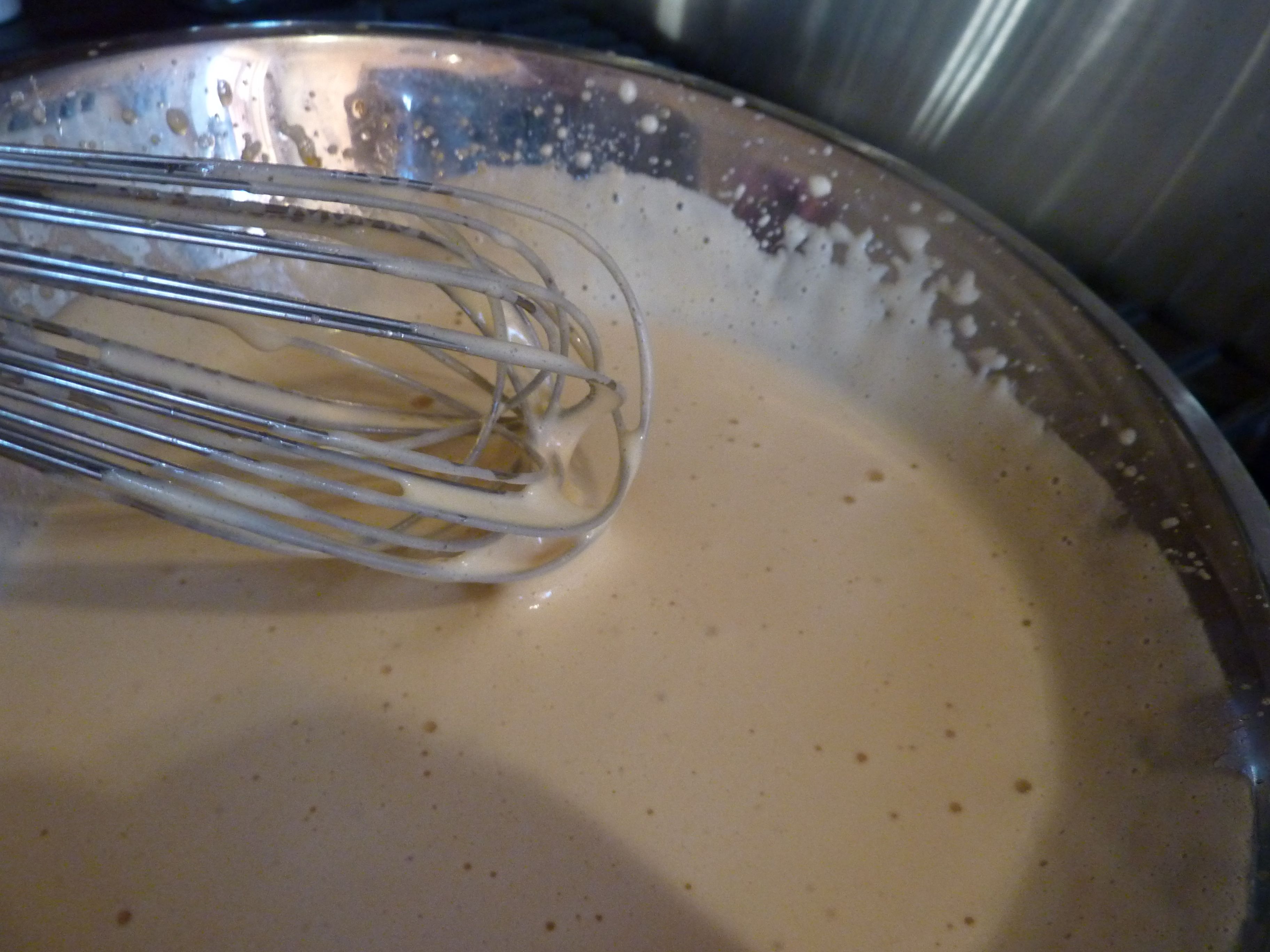
zabaglione biking and cooking italy italiaoutdoorsfoodandwine
Zabaglione

There is no single agreed-upon consensus on the origins of zabaglione. “The Penguin Companion to Food” claims that it was first produced in Florence in the Medici kitchens around 1500. The most probable story, but boring.

A more interesting tale gives the credit to Giovanni Baglioni, a military commander in the early 1500s. He and his troops were camped near Reggio Emilia, in Emiglia Romagna, and the locals referred to him in their dialect as “Zvan Bjoun”. Scrounging what they could from the locals for food, this concoction was invented, and the troops loved it so much they named the treat after him.

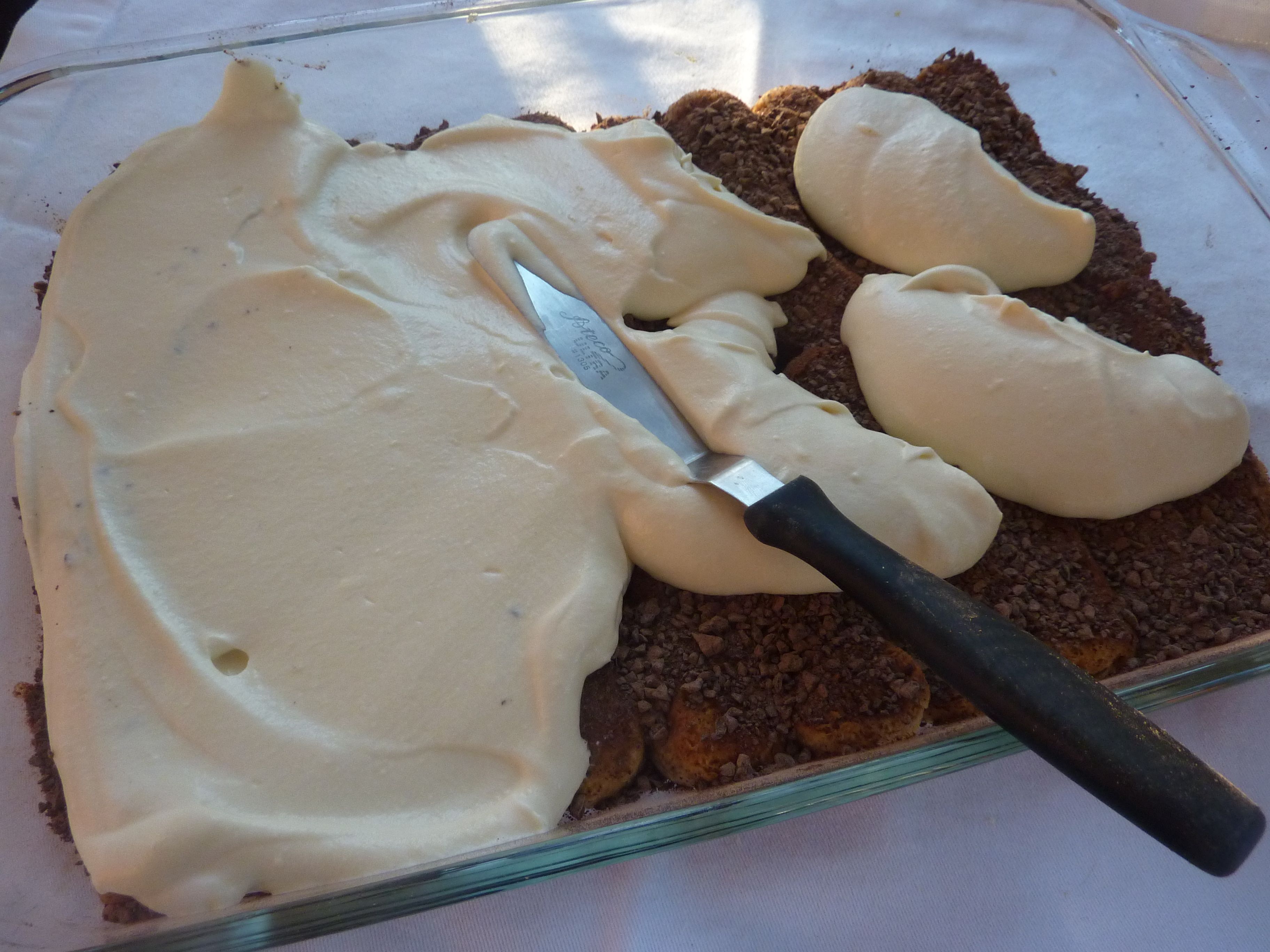
mascarpone zabaglione layer bike tours italy italiaoutdoorsfoodandwine
Mascarpone zabaglione layer

This latter story, unlikely but nevertheless well-known in Italy, in which zabaglione is used to provide sustenance to soldiers gave rise to a fairly common practice over past centuries of serving it to newlyweds, either on their wedding night, or on their first morning together. If it can fortify a well-conditioned fighting force, what better food to fuel more peaceful sustained activity?

finished tiramisu chefs on bikes italiaoutdoorsfoodandwine

A well-known Italian food expert, Giuseppe Maffioli, claims that the origins of zabaglione hail from Zabaja, a sweet dessert from Illiria, once a Venetian territory across the Adriatic. Maffioli writes, in his book “Il Ghiottone Veneto”, “The groom’s bachelor friends at the end of the long wedding banquet, maliciously teasing, gave to him before the couple retired a big bottle of zabajon, to guarantee a successful and prolonged honeymoon.”

So, it appears that if tiramisu is to achieve its’ claimed objective of picking up weary patrons of a brothel, zabaglione is a ‘must’ ingredient! And I thought it was for purely culinary reasons…

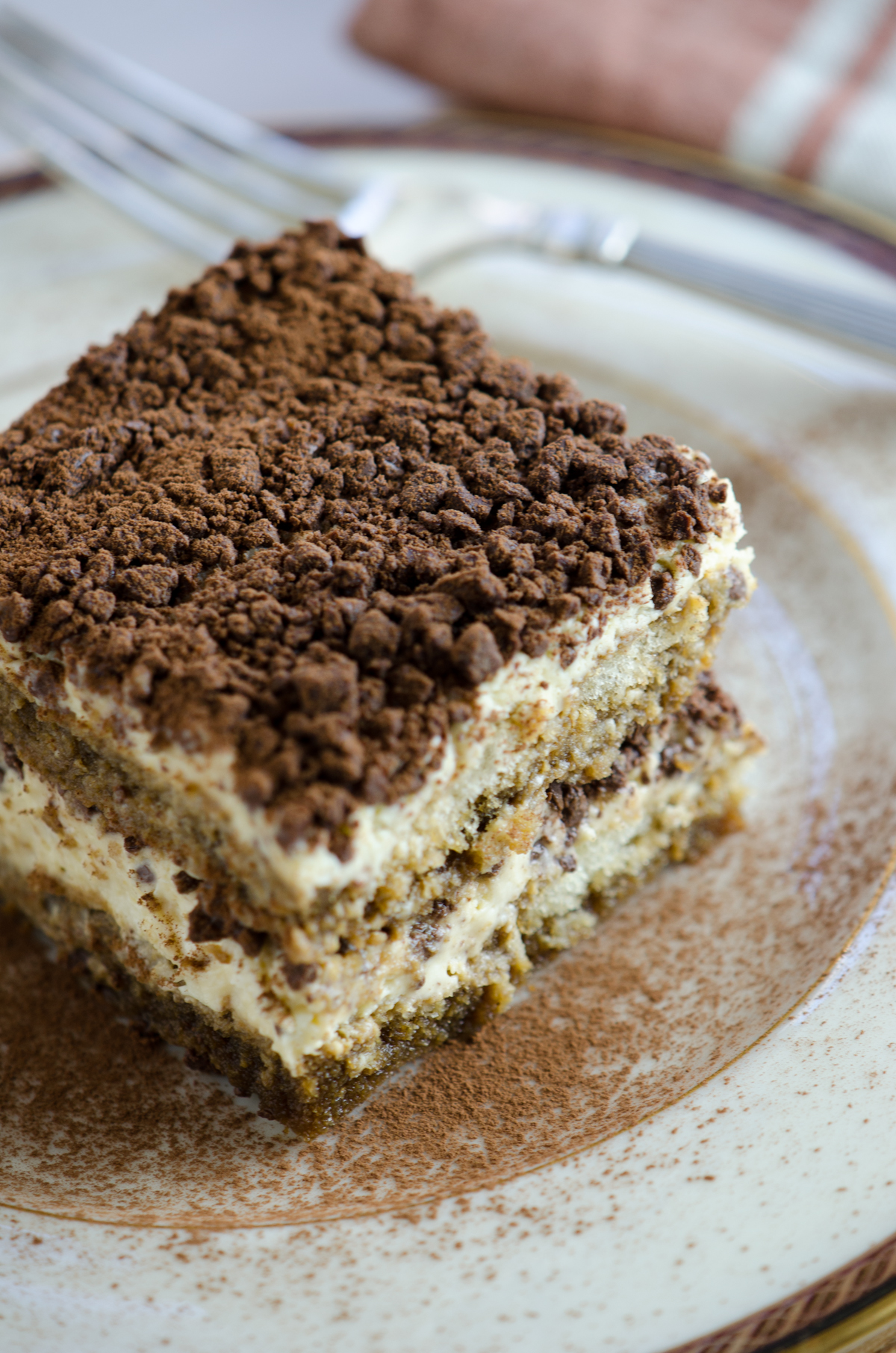
tiramisu close private bike tours italyTiramisu

Makes 16 servings (13×9 pan)

2 ½  cups freshly brewed espresso
½ cup plus 1 tablespoon sugar, divided
3/4 cup Tia Maria or other coffee liqueur
4 large egg yolks
1/2 cup dry marsala
1 pound mascarpone (2 ½ cups)
1 cup chilled heavy cream
36 savoiardi (crisp Italian ladyfingers)
7 ounces bittersweet or dark chocolate, grated. I use bittersweet chocolate chips which I pulse in a food processor
Unsweetened cocoa powder for dusting

In a shallow bowl, combine the espresso, 1 tablespoon sugar, and Tia Maria. Stir until the sugar is dissolved, then cool.

Using a whisk, beat the egg yolks, marsala, and remaining ½ cup sugar in a metal bowl set over a saucepan of simmering water until it has tripled in volume and thickened slightly, about 5 to 8 minutes.  You’ve just made a zabaglione. Remove the bowl from the heat and set aside so it can cool slightly.

In a large bowl, beat the heavy cream until stiff. Add the mascarpone and beat together to combine. Add the zabaglione and beat briefly just until combined.

Gather your mascarpone mixture, ladyfingers, coffee mixture, and grated chocolate, along with a 13- by 9- by 3-inch glass pan.

Quickly dip both sides of each ladyfinger into the coffee mixture, and line the bottom of the 13- by 9- by 3-inch pan with ladyfingers in 2 rows, trimming edges to fit if necessary. Spread half of the mascarpone mixture on top. Sprinkle with half of the grated chocolate. Repeat a second layer of dipped ladyfingers, then top with the remaining mascarpone, and then the remaining grated chocolate.

Chill, covered, at least an hour. It is best made a day in advance. If it has chilled longer, allow to stand at room temperature for 30 minutes. Dust with cocoa before serving.

Posted in Dessert, Mascarpone, Passito, Torcolato, Uncategorized, Veneto Food, Wine Pairings | Tagged , , , , , , , , , , , , , , , , , , | 4 Comments