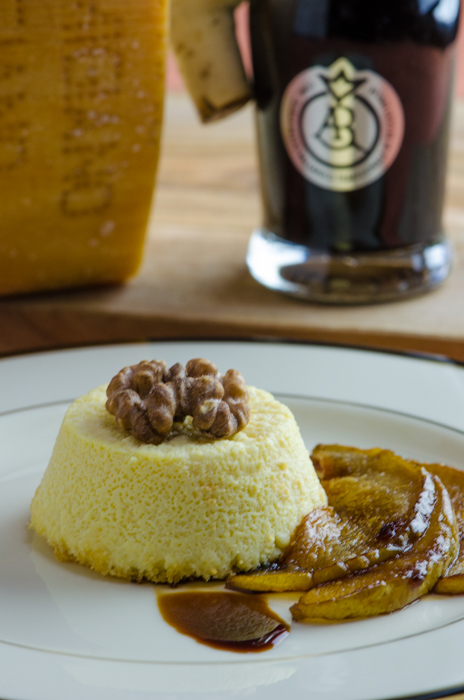
Sformato di Parmigiano with Caramelized Pears

sformato-parmigiano-italiaoutdoors-private-wine-toursWe indulge in many wonderful Italian specialties with guests on our private walking and cycling tours in Italy, but one that always generates lots of discussion is Parmigiano Reggiano cheese – primarily because it can be found back home in the US and our guests want to be educated consumers when they return. What is it? What do I look for when I buy it? Is there a good substitute? Can I buy some here and bring it home? I’ll address a few of this questions here, and finish with an easy and elegant recipe featuring the “King of Cheeses”. I reference Lynn Rossetto Kaspers’s “The Splendid Table” for some of the following information.
parmegiano-cheese-testing-private-tours-italy

What is Parmigiano Reggiano cheese?

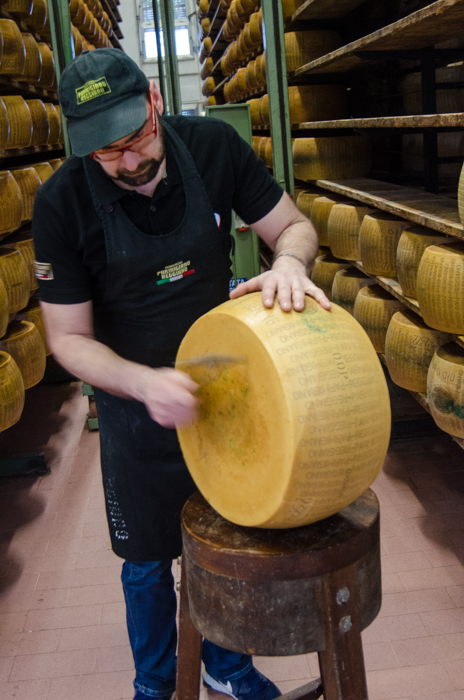
It is a part skim cow’s milk cheese, aged 18 months to 4 years or more. Production is limited to the Italian province of Emilia and a small part of Lombardy. It is a grana (grain) style cheese, a generic term for aged Italian hard cheese whose interiors are speckled with grain-shaped white flecks of crystallized amino acids that often crackle in the mouth. For the details of the production process and quality controls, see my recent article covering my visit to a producer of Parmigiano Reggiano in Parma.

What do I look for when I buy it in the US?

The identity of Parmigiano Reggiano cheese for sale here in the US is confusing, as it is widely imitated, typically very poorly. There is ONLY one type of Parmigiano Reggiano cheese, and this comes from the aforementioned regions in Italy. It is not produced here is the US. It does not come pre-grated in a green can. It is not sold as “Parmesan” cheese.
parmegiano-cheese-firebrand-private-tours-italy

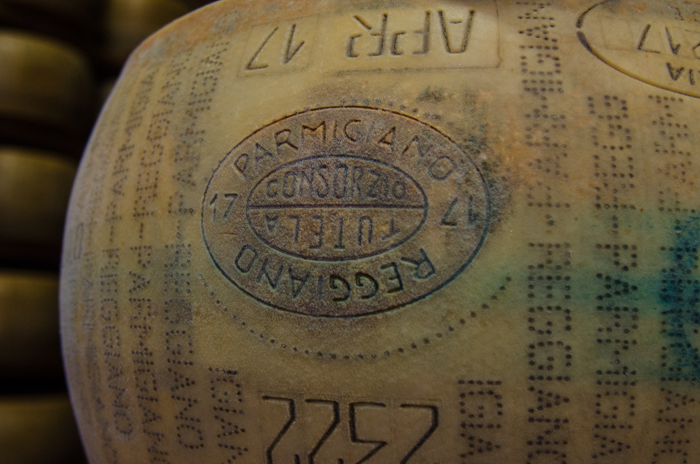
You can find true imported Parmigiano Reggiano cheese at specialty grocers. It is made only in large 800 lb. wheels, so the wheel itself may not be on the premises. It will be broken up into smaller pieces, and wrapped tightly in plastic wrap, or cheese paper if it is cut at purchase. It will not be sold already grated; it should never be grated until you are ready to use. Look for the words PARMIGIANO REGGIANO to be marked repeatedly on the rind; this unique stencil is tightly controlled by the producers and identifies the authentic product.

It is unlikely you will find a store here in the US that offers more than one option as to the age of the Parmigiano Reggiano cheese; typically here I find 18 month or 24 month.

Store in the refrigerator, it will keep for about a month.

Is there a good substitute?

Of course, true aficionados will say “No!” But a nice imported “grana” cheese will do for most culinary uses, like Grana Padano. This cheese goes through a very similar production process, but is not from the authorized producers in the provinces of Emilia and Lombardy. However, I would save my 25 year old bottle of Traditional Balsamic Vinegar from Reggio Emilia for the real stuff.

Can I buy some in Italy and bring it home?

Yes, Customs allows you to bring home hard and semi-hard cheeses. You can find the cheeses already vacuum packed, they will keep 3 months like this. A hard, aged cheese like Parmigiano Reggiano will be fine unrefrigerated in your luggage for the day you will travel. Just make sure to declare to Customs, it is not worth risking the hefty fine. You may want to make sure it is easily accessible in your luggage should they wish to inspect.
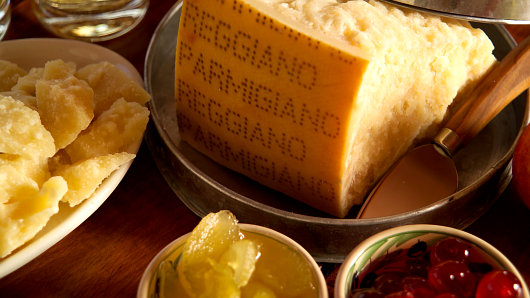
In Italy, you will have the option of purchasing Parmigiano Reggiano cheese of different ages – 18 month, 24 month, 30 month, even 48 month; you can take home a few to compare the differences. Older is not always better, an Italian nonna would recommend a younger cheese, which will have a more delicate flavor, as part of an antipasti, accompanied by raw vegetables, fresh fruit, or paired with a mild fruit or fig jam. A 24-month old Parmigiano Reggiano is best grated on traditional Italian pasta dishes or soups, or served with nuts and dried fruit. A 26 to 30-month old Parmigiano Reggiano would be used to enhance flavor of main courses, served as shavings on meat with a drizzle of extra-virgin olive oil. The ultimate indulgence is to pair the most exclusive 48 month aged with a few drops of the thick, luscious Traditional Balsamic Vinegar from Modena or Reggio Emilia.

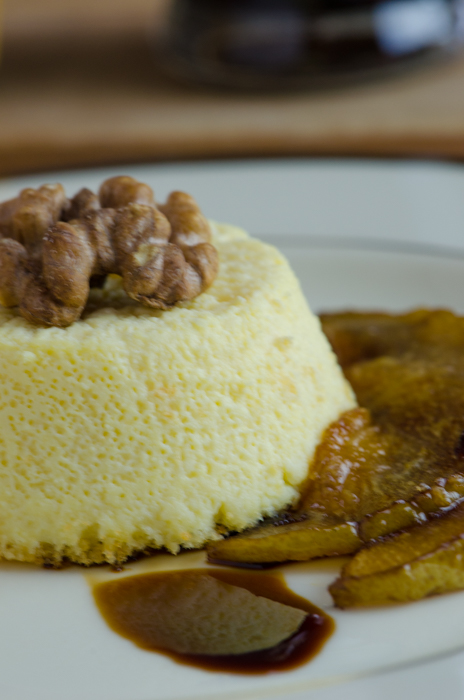
The Parmigiano Reggiano consortium offers a nice array of recipes on its web site. It includes a recipe for a cheese souffle, elegant, but intimidating! A sformato is similar to a soufflé, but is not as airy, with no risk that it will deflate. Italians will also use the French word flan for this type of preparation.
sformato-italiaoutdoors-private-wine-tours

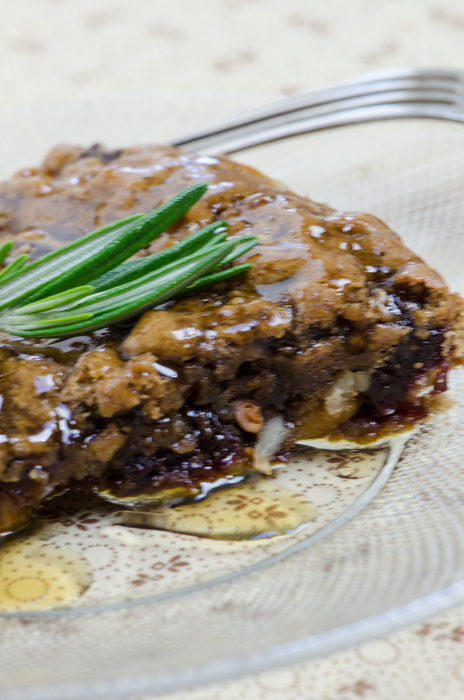
Sformato di Parmigiano with Caramelized Pears

Adapted from “Eating My Way Through Italy” by Elizabeth Minchilli

Serves 10

2 tablespoons butter
1 cup heavy cream
3 1/2 ounces 24- to 30-month-old Parmigiano Reggiano cheese, finely grated
4 large eggs
1 ripe, but firm, pear, thinly sliced
2 tablespoons granulated sugar
2 tablespoons of Aceto Balsamico di Modena
Aceto Balsamico Tradizionale for drizzling

Ten 1/2-cup molds or muffin cups

Preheat the oven to 325°F. Butter the interior of the molds or muffin cups.

Put the heavy cream and eggs in a large bowl, whisk to combine. Add the grated Parmigiano Reggiano, whisk until smooth.

Divide the mixture among the buttered molds and place them in a large roasting pan, filling it halfway up with very hot water.

Place the pan in the oven and bake for 45 minutes, until the sformato are set – they don’t wiggle when you shake them – and they are lightly browned. Remove from oven and allow to cool.

Heat a non-stick frying pan over medium-high heat. Add 2 tablespoons of water and add the pears. As soon as they begin to brown, sprinkle them with the sugar, turn them over, and cook them on the opposite side.

Reduce the heat to medium. Drizzle with 2 tablespoons of the Aceto Balsamico di Modena and let it evaporate. Remove from heat.

Run a knife around each between the mold and the sformato to loosen the sformato. Invert the sformato onto individual serving plates. Arrange a few slices of pear next to each. Drizzle with Aceto Balsamico Tradizionale.
Posted in Cheeses, Emilia Romagna, Pears, Travel, Uncategorized, Vegetarian | Tagged , , , , , , , , , , , , , , , , | Leave a comment

Walk and Wine in Tuscany – Podere Le Ripi

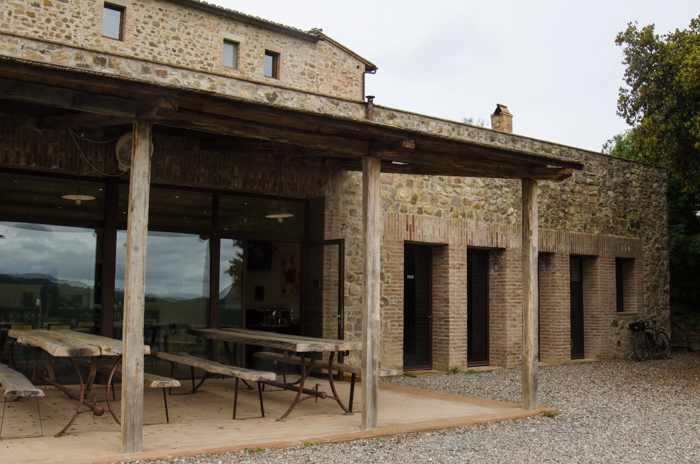
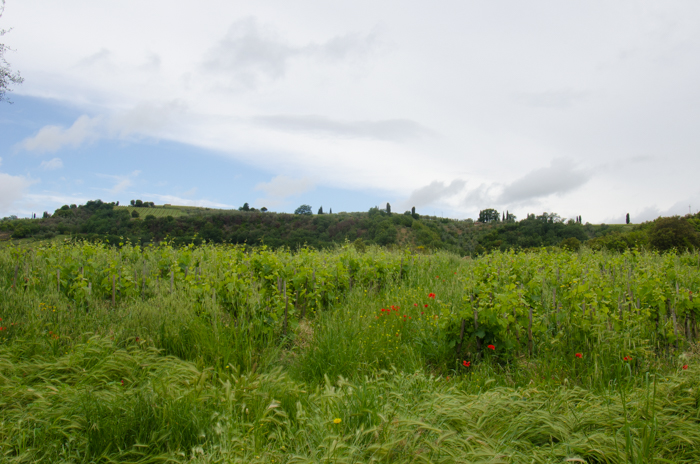
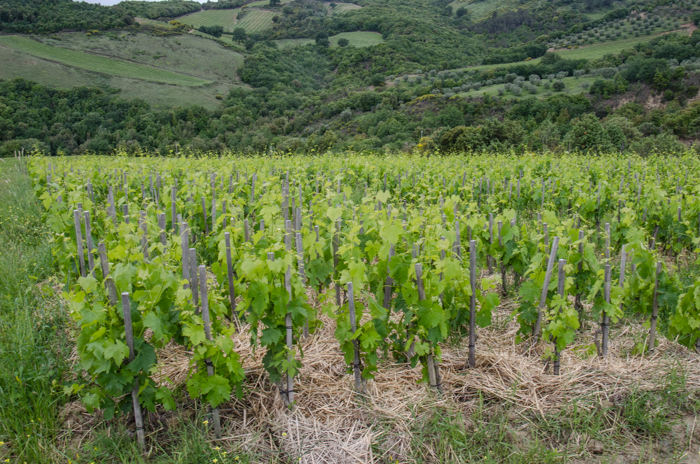
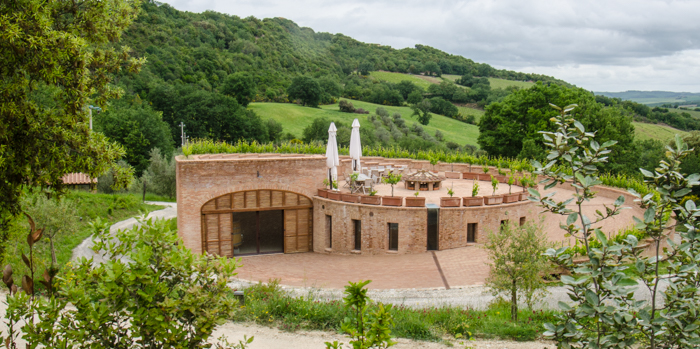
podere-ripi-vineyards-italiaoutdoors-tuscany-wine-tours Our Italiaoutdoors Tuscany Walk and Wine tour is an immersion into the history, natural beauty, culture and cuisine of two of Tuscany’s finest wine zones, Montepulciano and Montalcino. One of the truly unique destinations on our daily walks is Podere Le Ripi, a Brunello producer just south of Montalcino.

podere-ripi-tasting-exterior-italiaoutdoors-tuscany-wine-tours

Founded in the late 1990s by Francesco Illy of the Illy Espresso family, this unique property was wilderness prior to Francesco’s arrival. For thousands of years, it was not populated due to its poor soil unsuitable for farming, and its inhospitable climate with extremely hot summers and frozen lakes in the winter. In spite of this, Francesco found four hundred years old olive trees, incredibly diverse forests, and flowers everywhere, all year around. Wild asparagus, porcini mushrooms, blackberries, the white and black truffles, with rabbits and deer, boar and porcupine.

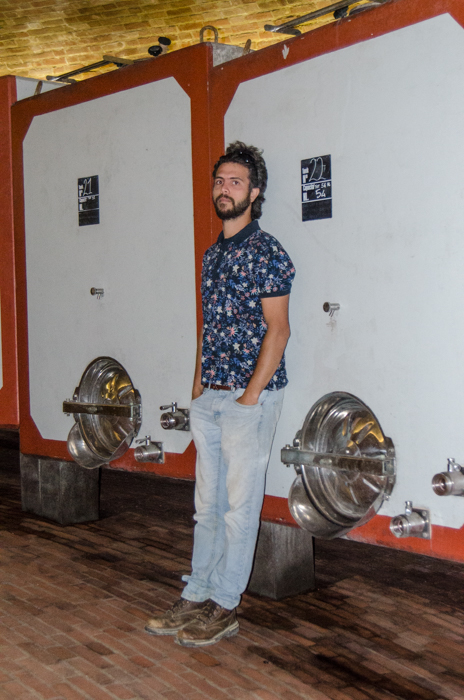
podere-ripi-giovanni-italiaoutdoors-tuscany-wine-tours
My host Giovanni Stella

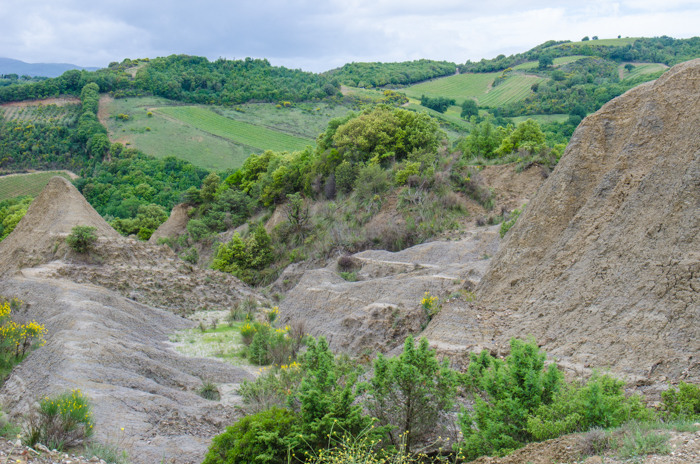
One of Podere’s young winemakers, Giovanni Stella, took some time to show me around. Giovanni is one of a team of young, passionate people who enjoy the freedom and challenge of producing wines in an authentic yet innovative way here at Le Ripi. We began in the vineyards with the terroir – where the essence of a great wine begins. Giovanni points out “Le Ripi”, the cliffs, tenacious clay based hills that remain after thousands of years of erosion have washed away the surrounding soil. The soil here is clay, quite still salty as millions of years ago this area was a sea. Limestone boulders remain, rounded down from centuries of sea and river waters. Many minerals are found in the soil here, just 7 miles from Monte Amiata, an ancient volcano. Today Podere grows both Sangiovese as well as Syrah and Merlot. This clay soil presents itself in powerful, intense wines, salty, with good acidity.

podere-ripi-cliffs-italiaoutdoors-tuscany-wine-tours

A second vineyard parcel north of Montalcino was added later, which has less clay, and more schist and stone. These terroir contributes more fruit, especially peach, and more elegance to the Sangiovese grown here.

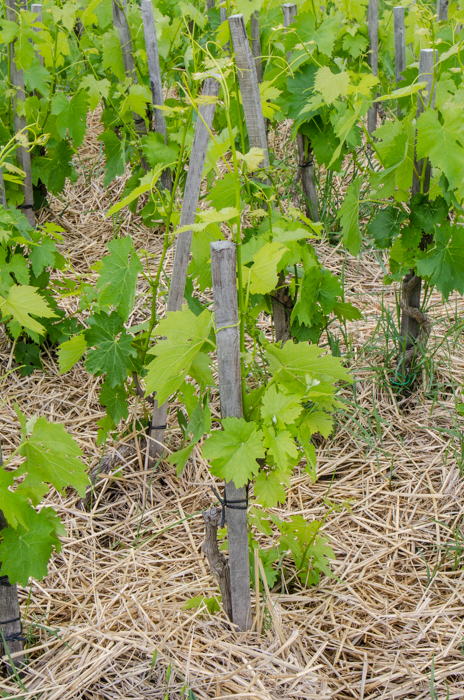
When first planting the vineyards, Francesco was so inspired by the distinctive qualities of the soil and the beauty of the flora that, rather than using large equipment to tear up a whole field, he chose two long rippers to move the soil without turning it upside down. The fields kept their original shape, with curves and slopes that you do not see in other vineyards.

podere-ripi-biodiversity-italiaoutdoors-tuscany-wine-tours

They began planting Sangiovese in 2000 with a pretty standard density of 5,000 plants per hectare. But Francesco has always admired the wines of Burgundy, where the density tends to be higher (higher density = fewer grapes per plant and, therefore, higher quality) so in 2002 he reduced the distance between the rows from 2.5 to 2 meters and reached a density of 6,666 plants per hectare. In 2003, even denser: five rows at 1 meter and one at two meters to allow the tractor to go through: 11,000 plants/hectare.

Then Francesco took it up a notch. He quotes a winegrower in Burgundy: “A vineyard can produce good grapes only after 35 years.” He thinks “Should I wait until I get to ninety to start producing a great wine?” So he decided to try something totally out of the box: planting at such a high density that the only direction the roots can grow to find water and nutrients is straight down. The roots develop the deep root system in just a few years that normally would take decades in a standard vineyard. These deep roots go through many different geological layers, displaying as more complex flavors in the resulting wines.

podere-ripi-bonsai-plant-italiaoutdoors-tuscany-wine-tours

This experiment became his Bonsai vineyards. Instead of rows, these are planted in 4 x 4 meter squares, with 121 plants per square. Each plant has a thin support pole vine training system, called “alberello” in Italy, meaning “small tree”. At only 40 centimeters (16 inches) between grape plants, this is the densest vineyard in the world, at 62,500 plants per hectare, 4 times as many plants as found in most vineyards in Burgundy.

podere-ripi-bonsai-vineyards-italiaoutdoors-tuscany-wine-tours

Experts told Francesco he was crazy and that the plants would simply die. But in fact, the opposite happened: the mortality rate of the Bonsai stopped at 8%, where the other vineyards had an average of 30%. Only two and a half years later (typically this takes 4 years) they made the first barrique of wine, the Bonsai Sangiovese 2007.

As ambitious as the Bonsai project was, it wasn’t the only task undertaken by the team. At the same time, Podere Le Ripi began to adopt biodynamic viticulture. Started in the 1920’s by an Austrian philosopher named Rudolph Steiner, biodynamics is a homeopathic method of farming. It is the first non-chemical agricultural movement, predating organic farming by about twenty years. All activities, from planting to pruning to harvesting, are performed according to a biodynamic calendar which divides days into four categories: Root, Fruit, Flower and Leaf days. Root days are for pruning, you water only on Leaf days, harvest only on Fruit days and leave everything to rest on Flower days. Special natural mixtures and tisanes, insects and hormones are used to control pests and diseases. The result is soil that remains close to its woodland origins; less compact, complex with lots of natural humus and teaming with biological activity, from worms to insects to cover crops to bacteria.

podere-ripi-golden-cellar-italiaoutdoors-tuscany-wine-tours

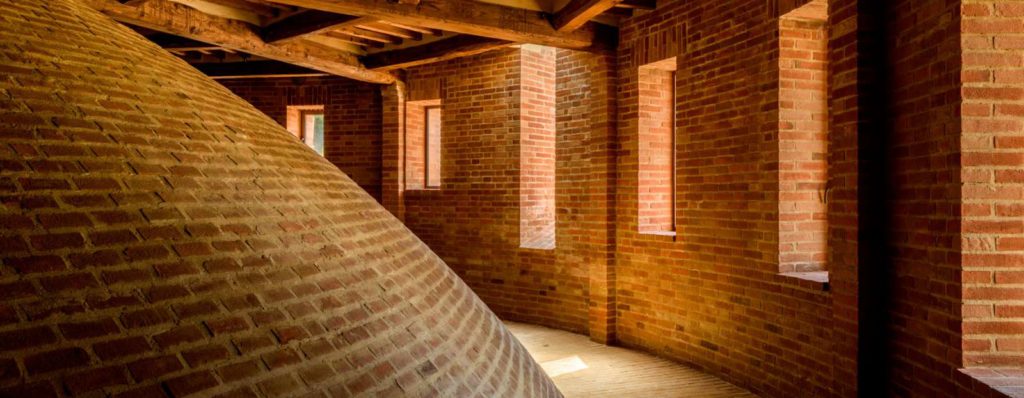
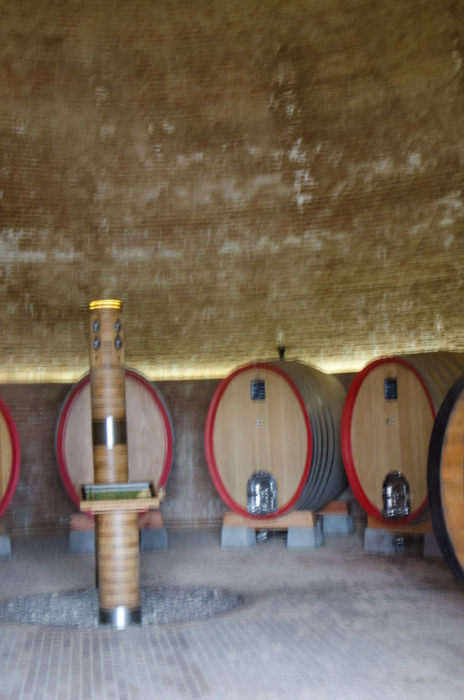
And along with all of this, there was the construction of the Golden Cellar, maybe their most ambitious undertaking of all. A team project, involving Francesco’s sons Ernesto and Marco Pasqui, this magnificent cellar was built using only ancient construction techniques, using the spatial dimensions of Golden Ratio (1:1.618033) found in various architectural masterpieces from Stonehenge to the Parthenon. Constructed solely from natural clay bricks held in place with a mortar made of lime, this building was created as a spiral, descending along a continual slope. Fermentation occurs in the upper part, the bottling line as well as the ageing in the lower levels in order to allow the wine to flow between stages by gravity.

Fermentation occurs in open oak vats, using only the indigenous yeasts occurring naturally in the grapes. Most of their wines age more than 4 years in oak vats and casks of different capacities, Sangiovese typically in 500 liter tonneaux, while Merlot and Syrah in the smaller barriques. The winemakers here then take their time to refine the wine further after barrel aging, first with a few weeks in cement tanks to ‘wean’ them off the oxygen that can permeate wood, but not cement. Then they age for another year or even 18 months in the bottle, allowing the tannins to relax and the wine to become more round and complex.

podere-ripi-aging-center-italiaoutdoors-tuscany-wine-tours

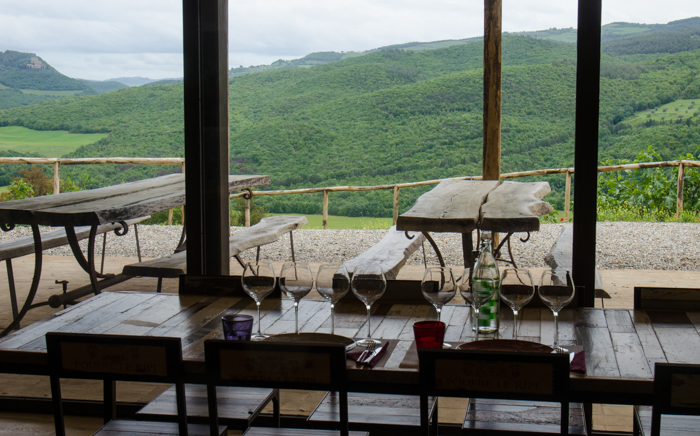
Now to the wines! Giovanni led me to their lovely tasting room, with a spectacular panoramic view.

podere-ripi-tasting-room-italiaoutdoors-tuscany-wine-tours

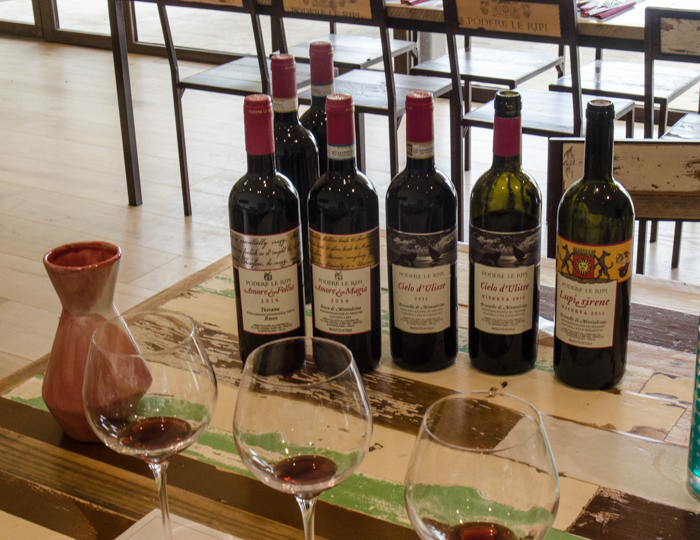
Amore e Follia 2014

100% Syrah, the name translates to Love and Folly, as everyone thought Francesco crazy to grow Syrah here. Fermentation and maceration for 25 days in open-tops oak tuns. 28 months of aging in big oak barrels, followed by 12 months in bottle.

Deep purple red, aromas of woodland berries with floral notes. Distinctive tannins with a great minerality, a slight bitterness finish. Serve with pasta with meat sauce, roasted meats, aged cheeses.

Amore e Magia 2014

A Rosso di Montalcino DOC, 100% Sangiovese. Same grapes, same yield as their Brunello, just a year less of aging. Fermentation and maceration for 25 days in open-top oak tuns. 30 months of ageing in the big barrels followed by 1 month in cement vats

A deep ruby red with orange tinge. Aromas of red fruit, violets, and herbs. Well structured, nice minerality. Serve with pasta with meat sauce, roasted meats, aged cheeses.

podere-ripi-wine-tasting-italiaoutdoors-tuscany-wine-tours

Cielo D’Ulisse 2013

A Brunello Di Montalcino DOCG wine ,100% Sangiovese. Prior to 2012, Podere Le Ripi produced only one Brunello, a blend of grapes from both vineyards. Now, they offer two single vineyard Brunello. This one is from their vineyards north of Montalcino. The soil here is not as clayey, but predominately schist and limestone.

Fermentation and maceration for 20 days in stainless steel tuns, 36 months ageing in large oak barrels and a minimum ageing of 12 months in bottle.

Classic Sangiovese with its delicate garnet red color. Aromas of wood and red fruit. Freshness and peach fruit, fine quality tannins with a well-balanced acidity.

Cielo D’Ulisse 2012 Riseva

The same Brunello Di Montalcino DOCG,100% Sangiovese, with an additional year of aging, earning the Riserva designation. Much rounder fruit, cherry flavors here. Intense, would benefit from more time in the bottle.

Lupi e Sirene 2011 Riserva

Another Brunello di Montalcino DOCG, so 100% Sangiovese. Soil here is clay and limestone. Fermentation and maceration for 25 days in open-tops oak tuns. 36 months ageing in oak barrels, followed by a passage of 12 months in cement and a minimum ageing of 12 months in bottle.

Deep ruby red with hints of orange. Intense aromas of cherry and strawberry with balsamic notes. Expansive structure and depth with a great minerality, fresh acidity and a slight bitter finish. Serve with roasted meat, aged cheeses and pasta with meat sauce.

Posted in Tuscany, Uncategorized, Wine, wine tastings | Tagged , , , , , , , | 1 Comment

Castagnaccio – Chestnut Cake

castagnaccio-barolo-wine-toursChestnuts are found throughout Italy, and have been a staple of their cuisine for thousands of years. Fall in the Piedmont region, where we explore on our Barolo Walk and Wine tour, The chestnut was once also called “bread of the poor” and represented an important food for the populations of the Alpine valleys of this region. In mountainous areas of Italy, from Trentino and Alto Adige to Tuscany, chestnuts are one of the few crops that can be grown on steep slopes, as well as produce during colder winter months. In some of these areas, the economy revolved around the chestnut, as people gathered them in the fall and worked throughout the winter to sort, dry and sell them.
view-barbaresco-wine-tours-baroloChestnuts were traditionally dried to preserve them. A small, two story hut was built, and the chestnuts were laid out in the top story; a fire was started in the lower story, under a large stone shield that protected the crop and the building itself from the heat of the fire. The fire was kept going continuously, the heat drying the nuts and the smoke would rid them of the worms that could infest and ruin an entire crop. During colder evenings, entire families would gather in the roasting hut to enjoy the warmth and aroma of roasting nuts.
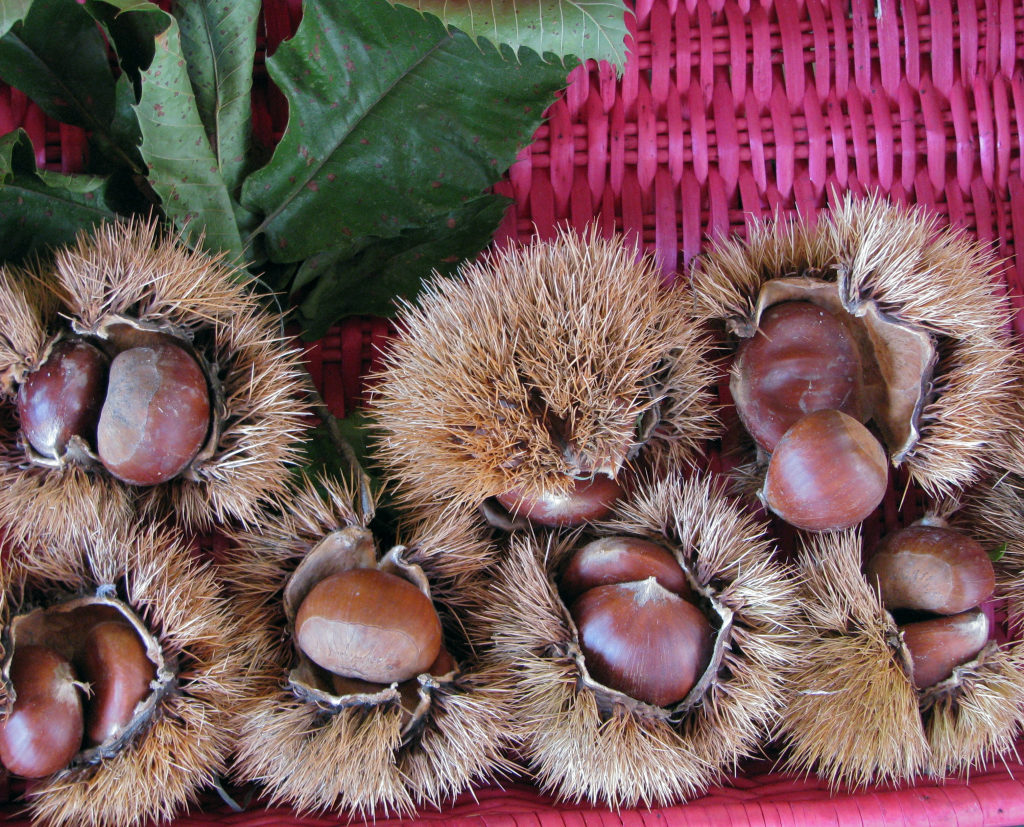
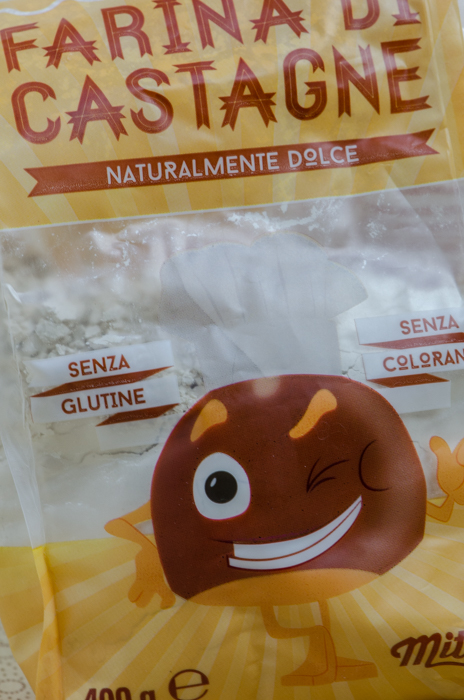
marroni-custom-bike-tours-italyDried chestnuts can be boiled, or the dried nuts ground up into flour and used in a variety of dishes, such as pasta or baked goods. I’ve been looking to find naturally gluten free options for our clients with dietary restrictions, and chestnut flour is a great option. Here in Italy, I can pick up chestnut flour in my local grocery store, in the US you can find it on line through various gourmet stores.
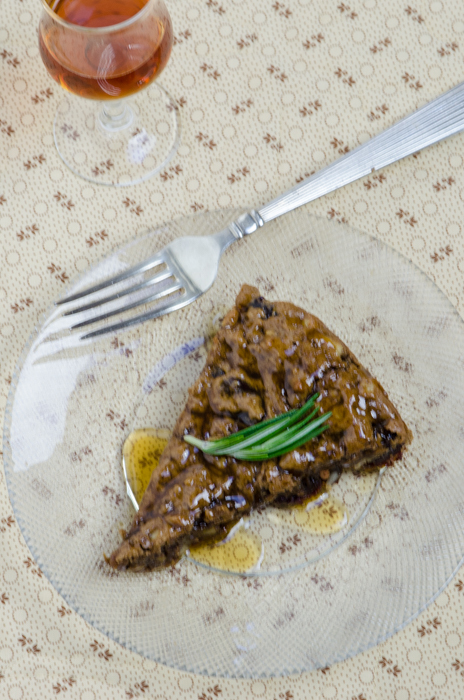
farina-castagne-barolo-wine-toursCastagnaccio is a chestnut cake with origins in the area around Lucca, Tuscany. The original recipe contains no sugar or sweeteners like honey, just chestnut flour, nuts, raisins and olive oil. It is a bit of an acquired taste. I looked at a couple of recipes designed to be more ‘approachable’ and developed this version. I kept the rosemary flavor of the authentic recipe by infusing a bit of rosemary in the honey wine syrup topping; you can omit if rosemary in your dessert does not appeal.
castagnaccio-top-barolo-wine-tours

Castagnaccio

Makes one 9” cake

2 1/2 cups chestnut flour
1 teaspoon sea salt
1 tablespoon baking powder
1 tablespoon cocoa
2 tablespoons granulated sugar
1/4 cup dark brown sugar
3 eggs
1/4 cup chestnut honey
1/4 cup extra virgin olive oil
3/4 cup dried cherries
1 cup walnuts, toasted and chopped
1/3 cup pine nuts, toasted

For syrup

1/2 cup chestnut honey
1/4 cup vin santo
1 sprig rosemary

Preheat the oven to 300°F.

Sift the dry ingredients – the chestnut flour, salt, baking powder, cocoa and sugars – through a sieve into a large mixing bowl. Whisk to combine.

In a small bowl, whisk together the eggs, honey and olive oil. Pour into the dry ingredients and stir to combine. The batter will be thick and very sticky. Add the cherries and the toasted nuts and mix well.

Brush a little olive oil to coat the inside of a 9” springform pan. Transfer the cake dough to the pan, using damp hands or the back of a spoon to pat the dough out to fill the pan.

Place in the warm oven to bake until done, approximately 20 minutes.

Combine the 1/2 cup chestnut honey and vin santo in a smalll saucepan and bring to a boil. Add the rosemary sprig and simmer for 2 minutes. Remove from heat.

When the cake is done, remove from the oven and immediately brush with some of the honey syrup. Allow to cool, then remove from the springform pan. Brush with a bit more syrup, cut into pieces and serve, drizzled with a bit more syrup. Enjoy with a glass of the Vin Santo.

Posted in Uncategorized | 1 Comment

Ricotta, Cherry Jam and Balsamic Tart

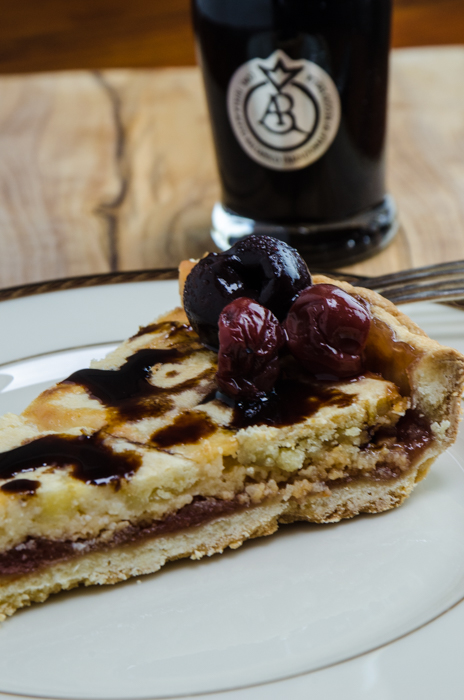
ricotta-cherry-tart-private-tours-italy I’ve lost count now of how many times I have visited Italy, between hosting our Italiaoutdoors tours and then the on-the-ground research required to discover unique new experiences to share with our guests. My friends and family think I by now have “seen it all”, what more could I possibly discover? But my frequent visits have only really taught me one thing – even if I had a lifetime to devote to this, I would barely scratch the surface. In culinary school I was taught about the 20 regions of Italy, and we covered briefly the cuisine of each. But I’ve discovered that the reality of Italian cuisine is much more complex, with countless specialty products like the Tortona strawberry in Piedmont, or the Bosco grape varietal in Liguria that are only grown in a very small area, and consumed locally. The only way to learn about these is to visit the area itself; travel three towns over and you might well find the majority of locals may not have ever tried, or even heard of these foods.
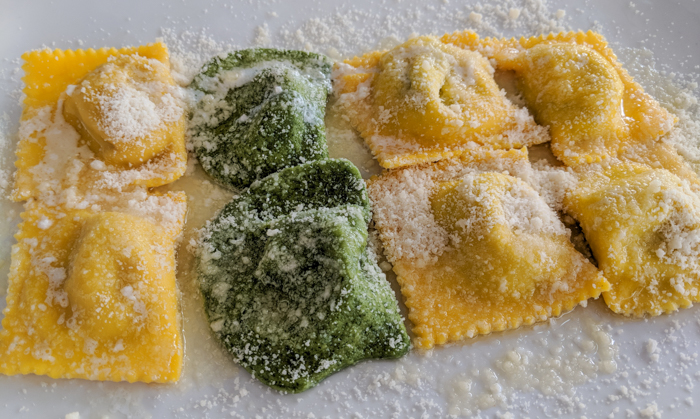
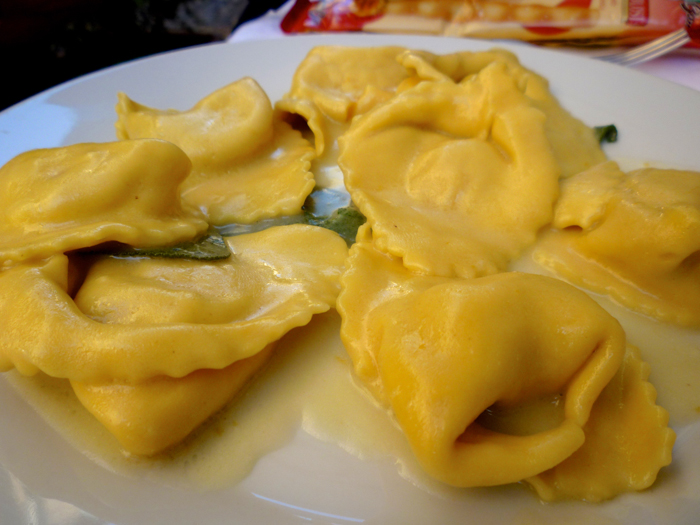
 tortelli-parma-private-tours-italyA quick example – a trip across the region of Emilia-Romagna to try its famed stuffed pastas would really need include stops in Parma to try the Tortelli Erbette (square ravioli stuffed with ricotta and herbs), then to Modena to enjoy Tortellino in Brodo (small stuffed ‘knots’ stuffed with meats and Parmigiano Reggiano, served in a rich capon broth), then on to Ferrara to try Cappellacci di Zucca (large ‘hat’ shaped knots stuffed with pumpkin and Parmigiano Reggiano, typically served either in a butter and sage sauce, as well as a tomato ragu). And then to Bologna…
cappellacci-bike-tours-emilia-romagna

So it was a great pleasure to find in my mailbox an advance copy of Elizabeth Minchilli’s latest book, “Eating My Way Through Italy – Heading Off the Main Roads to Discover the Hidden Treasures of the Italian Table”. I’ve followed Elizabeth’s very informative blog for a couple of years now. Having spent most of her life in Italy, she well knows the complicated and fascinating culinary landscape of Italy. Many cookbook authors covering Italian cuisine generalize by the 20 regions, leaving the reader with the sense that the food in one region is very similar throughout. This simplification is certainly the best way to present what is a very complicated subject in an organized, user-friendly way. But it also hides the enchanting disarray that can only be experienced as you visit the neighborhood kitchens; the traditions of a single village that resulted in a particular dish being served on Easter; the environmental conditions that allow the white asparagus to flourish in the Brenta Valley, but won’t grow in the next valley over; the historical events that led to Tuscan bread to be still made without salt today.

parmegiano-cheese-firebrand-private-tours-italyIn “Eating My Way Through Italy” Elizabeth takes the reader along with her on her culinary explorations, providing a series of engaging stories about her adventures around the tables of Italy. From well-known Italy classics like Parmigiano Reggiano and Acteo Balsamico Tradizionale to very obscure local traditions like Su Filindeu of Sardinia, Elizabeth provides not only a very readable overview of the production process, but also captivates us with a bit of history, as well as the always interesting, often amusing role these foods have played in Italian culture. Definitely a welcome addition to my library, one I will return to again and again for both information as well as inspiration!

balsamic-vinegar-loft-battery-private-tours-italyElizabeth includes some wonderful recipes among her anecdotes. I had just last week posted an article on my visit to a producer of Acteo Balsamico Tradizionale, Medici Ermete in Reggio Emilia. So, equipped with my souvenir bottle of the real stuff, I thought I’d try Elizabeth’s recipe for a tasty Ricotta, Cherry Jam and Balsamic Tart. It was a delicious – and very easy – way to share the special Acteo Balsamico Tradizionale with my friends back here in the US.
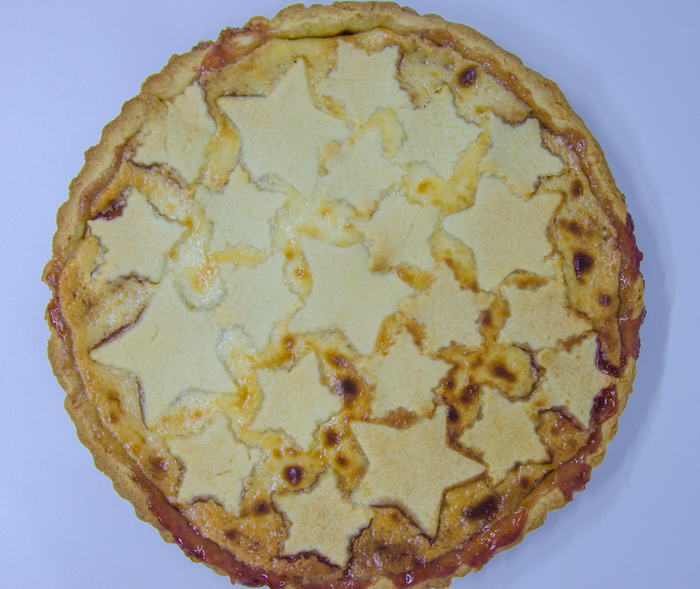
I used my favorite sweet pie crust recipe, and replaced the lattice crust with cookie cutouts because I find those a little easier to work with. But the combinations of flavors in tart filling make the dish, and those are all Elizabeth’s!

ricotta-cherry-tart-full-private-tours-italy

Ricotta, Cherry Jam and Balsamic Tart

Makes one 10-inch tart

For the crust

1 cup unsalted butter, at room temperature
Large pinch of kosher salt
1/2 cup granulated sugar
1 large egg, beaten
1 teaspoon finely grated lemon zest
2 cups all-purpose flour

For the filling

1 cup cow’s milk ricotta
1/4 cup granulated sugar
1 cup sour cherry jam
1 tablespoon Aceto Balsamico di Modena
Aceto Balsamico Tradizionale, for drizzling

Make the crust: Place the butter, salt, sugar, egg and lemon zest in a food processor and process until smooth; add the flour, 1/2 cup at a time, pulsing in between each addition until just combined. After the last addition, process until a ball of dough forms, 15 to 30 seconds. Do not overwork.

The dough will be very soft. Divide into two balls, one using 2/3 of the dough, the other 1/3. Place each ball of dough on a sheet of clear plastic wrap. Stretch a second sheet of wrap over the dough and flatten it to a round disc with a thickness of 1/2 inch. Refrigerate for 30 minutes, and not more than an hour.

Preheat the oven to 350°F.

Make the filling: Beat the sugar and ricotta until very smooth. Set aside.

Stir the Aceto Balsamico di Modena into the jam. Set aside.

Line the bottom of a 10-inch tart pan with parchment paper. Roll out the larger disc of the dough between the two sheets of plastic wrap to a round about 12 inches in diameter, slightly larger than your tart pan. Remove the top sheet and invert the dough into the tart pan. Fit it in the pan as well as you can, then remove the top sheet of plastic wrap. Don’t worry if it breaks, the dough is very forgiving. Just patch it together. Trim the top edge.

Spoon the jam filling onto the crust, then carefully spread out the ricotta on top of the jam, using the back of a spoon to smooth it out.

Roll out the remaining dough between the two sheets of plastic wrap to about 1/4″ thick, remove the top sheet. With a cookie cutter or knife, cut small shapes – I used stars, but leaves or whatever you wish. Top the tart with the cut outs. Place the tart on a sheet pan to protect your oven during cooking, as the jam may boil over the tart pan.

Bake the tart in the preheated oven for about 50 minutes, until the ricotta and the cut outs on top are beginning to brown. Let cool a bit, then remove the ring of the tart plan. Allow to cool completely before serving.

When ready to serve, cut and place the slices on individual dessert plates and drizzle with Aceto Balsamico Tradizionale.

ricotta-cherry-tart-full-private-tours-italy

Posted in Baking, Dessert, Tarts and Pies, Uncategorized | Tagged , , , | Leave a comment

Aceto Balsamico Tradizionale – The Real Deal Balsamic Vinegar


balsamic-vinegar-vinegar-barrels-private-tours-italy Balsamic vinegar is one of Italy’s best-known contributions to the culinary world, and is now a basic condiment found in many kitchens here in the US. It is common all over Italy, we find it at every table in the regions we visit on our Italiaoutdoors private Italy tours, but to truly appreciate the “real deal” requires a bit of background. There is a vast difference between the stuff in the $4 bottle of balsamic vinegar found in every grocery store to the authentic Aceto Balsamico Tradizionale, besides the price – the latter goes for 70 euros and up per bottle. My recent food tour of Emilia-Romagna allowed me to learn first-hand how this ancient specialty is produced, and the role it has played in the households of this region over the centuries.
zona-origine-balsamic

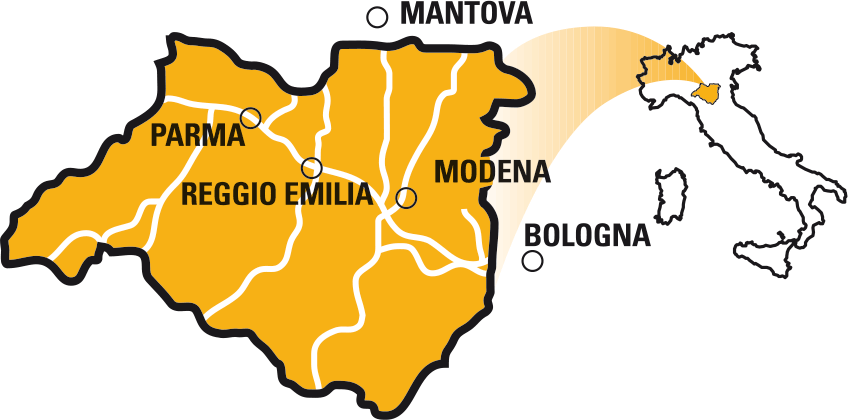
Aceto Balsamico Tradizionale hails from the Emilia-Romagna provinces of Reggio Emilia and Modena, with its origins dating almost 1000 years ago. The name comes from the Latin Balsamum, meaning a ‘balm’ or a restorative, and it was originally valued for its curative properties. Supposedly, during the plague of 1630, the Duke of Modena carried an open jug of the vinegar in his carriage to ward off the disease.

medici-ermete-private-tours-italy

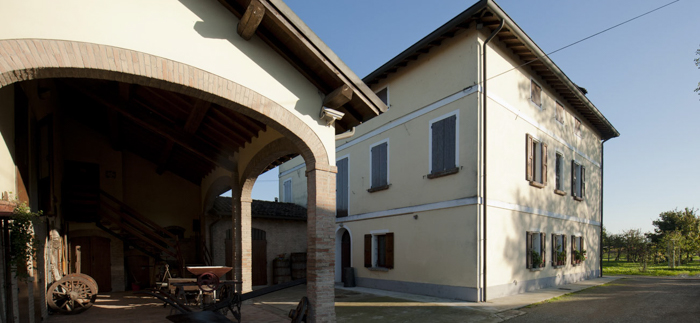
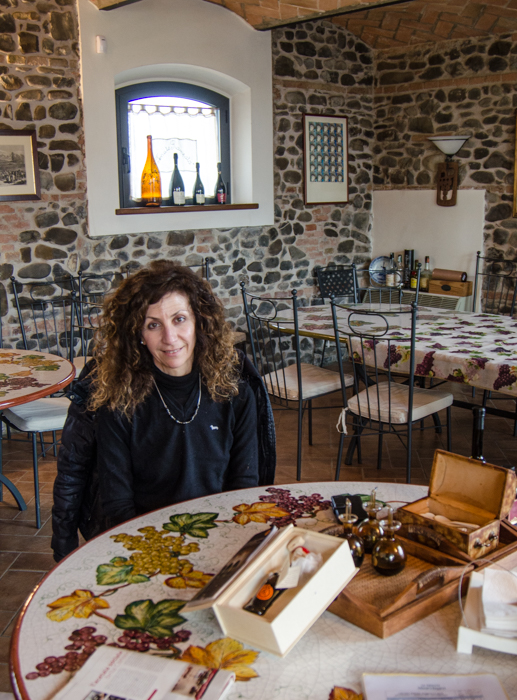
Today I am introduced to the production process of Aceto Balsamico Tradizionale by Alessandra Medici of Acetaia Medici Ermete. Medici Ermete is primarily a family run winery, operated by her brothers, producing some wonderful Lambrusco. Alessandra oversees the small Acetaia (the vinegar production), more of a passion than an economic venture – their very small annual production sells out through direct sales.

balsamic vinegar-barriques-private-tours-italy

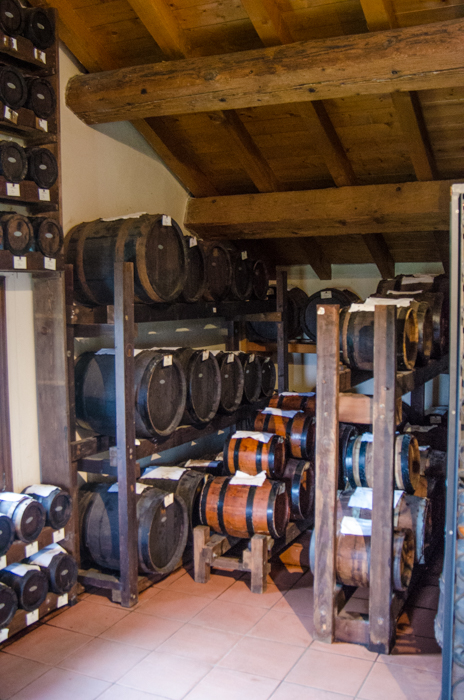
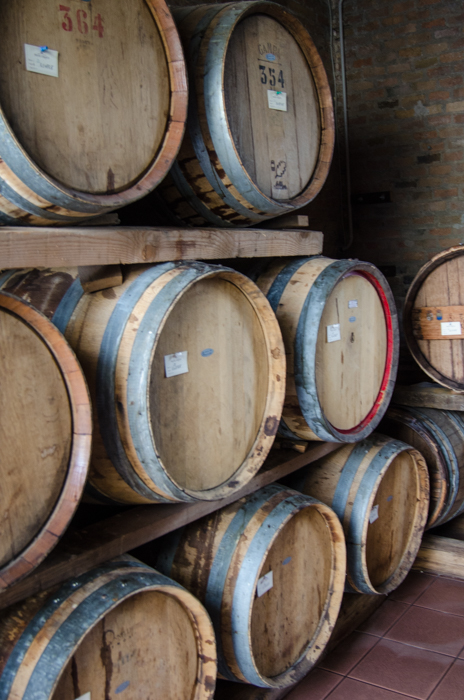
We begin with a stop on the ground floor of the barn that houses rows of wine barriques on one side, and smaller barrels on another. This is the first stop in the production process. Aceto Balsamico Tradizionale begins with a single ingredient – grape must – freshly pressed grape juice that contains the skins, seeds, and stems of the fruit. At Medici Ermete it is the local Trebbiano grape that is pressed, and then the must is cooked for 24 hours. After cooking, the mosto cotto, cooked grape must, is transferred to the barriques, where it sits for the next 2 years. Seems like a long time, but we are just getting started.

balsamic-vinegar-loft-battery-private-tours-italy

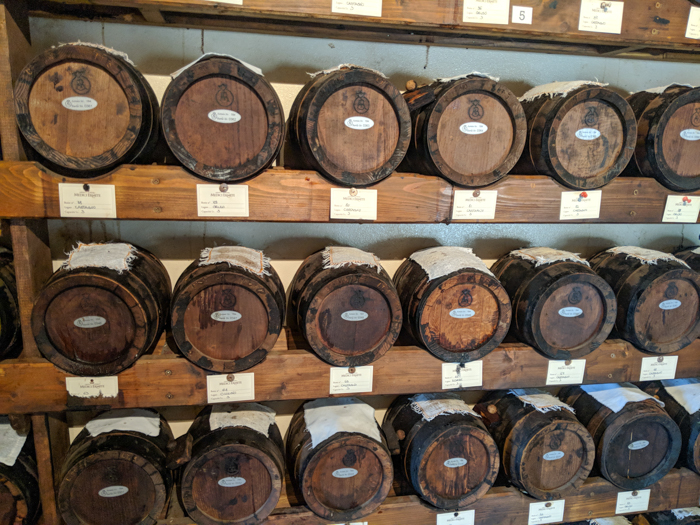
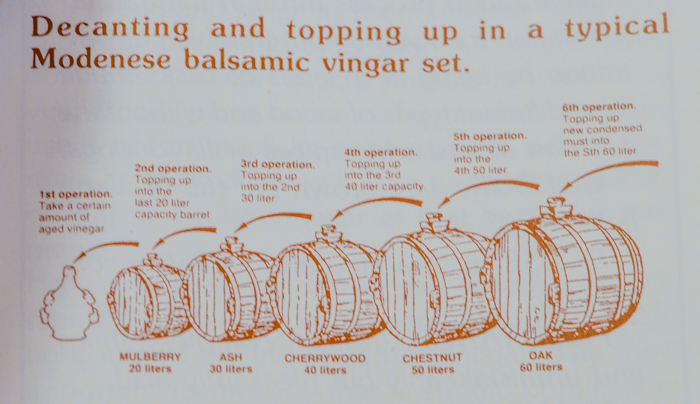
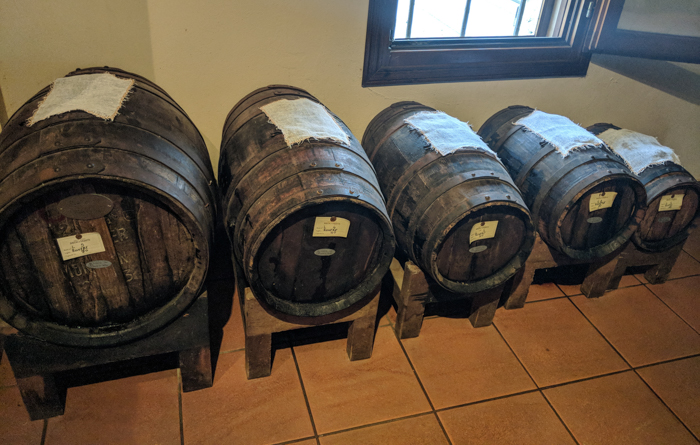
Next, we head upstairs to the top floor of the barn. In the farmhouses and estates across Reggio Emilia and Modena where Aceto Balsamico Tradizionale has been produced for centuries, enter their well ventilated attics and you will see one or more series of wooden barrels of increasing size, called a battery. The number of barrels in a battery may vary, but the minimum is 3, and the Aceto Balsamico Tradizionale DOP regulations require at least 7 barrels, and a total aging period of at minimum 12 years. The types of wood used for the barrels varies as well, one may be chestnut, one cherry, one mulberry. Storing in the well-ventilated attic is also crucial, the temperature variations throughout the year, the heat of the summer months alternating with the cold and dry winters, contribute to the development of the flavors.

balsamic-vinegar-production-private-tours-italy

Alessandra leads me through the use of the barrels here in the attic. Each year, about 3 liters of vinegar is removed from the smallest of the barrels in each battery, and placed in an even smaller barrel that will go off to be bottled by the Consortium, or used by the family. The smallest barrel is then topped off from the next smallest barrel of the battery, and so on down the line. The sweet, 2 year aged mosto cotto is then used to top off the largest barrel, beginning its slow progress into the wonderful balsamic vinegar – now one may understand why, in Modena, it is said “One generation makes balsamic for the next.”

balsamic-vinegar-century-barrels-private-tours-italy

Alessandra proudly shows me the many series of barrels owned by her family. For centuries, when a daughter was born, a family would mark the occasion by beginning her battery. This became part of her dowry when she married, and one of the families most prized possessions. I’ve read that saving the oldest barrels in the battery was a family priority during the wartime evacuations of WWI and WWII. Alessandra shares that as her family produces 90% male children, they begin a battery for both genders. She shows me the batteries for her two teenage sons, her sisters, and then leads me to a very old battery off by itself, which belonged to her grandfather and is over 100 years old.

balsamic-vinegar-tasting-private-tours-italy

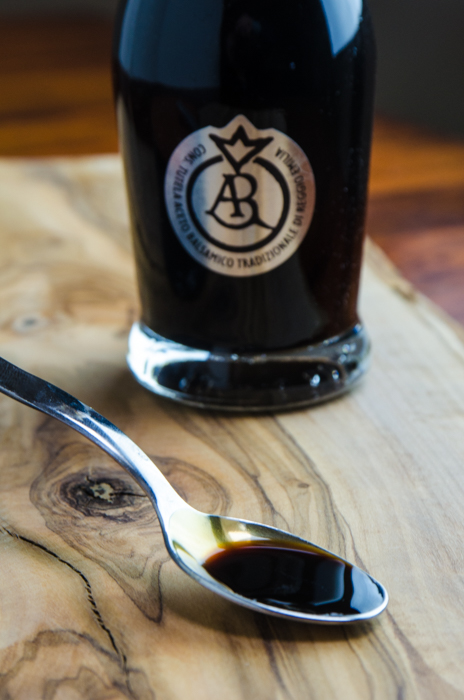
Our last stop is the tasting room, where I get to sample the three types of Aceto Balsamico Tradizionale she produces. We begin with the Red label, which as the youngest is aged 12 to 20 years. The difference between the “real deal” and the grocery store options is immediately obvious – this is thick, almost syrup like as it is slowly poured into a tasting spoon. It is not sour, as you would expect a vinegar to be, but has a mellow sweet-tartness. The flavor is complex and rich, with notes of dried fruits, fig, molasses, and chocolate, and flavors of wood. The youngest is recommended for serving with grilled and raw vegetables, prosciutto, and other fresh antipasti. Or drizzle a bit over a risotto – do not add during cooking, as this will destroy its flavor.

Next, the silver label, aged 20 to 25 years. Denser, more complex flavors. Great with aged cheeses, Gorgonzola, fresh fruit. Drizzle over ice cream or fruit desserts.

Finally, the Gold label, aged more than 25 years. Serve simply to appreciate its thick and glossy consistency and multi-layered flavor profile – drizzle over 48 month aged Parmigiano-Reggiano cheese or fresh ripe strawberries. A small spoonful all alone at the end of a dinner is believed to assist in digestion, harking back to its ancient reputation as a curative balm.

aceto-balsamico-tradizionale-spoon-private-tours-italy

So by now you are no doubt wondering – what am I buying in the grocery store?

Balsamic Vinegar

You can find very inexpensive “Balsamic Vinegar” in every grocery store. These products are typically wine vinegar to which coloring, sugar and flavoring has been added to mimic the texture and flavor of balsamic at a fraction of the price. Some may actually come from Italy, but that fact is no guarantee of higher quality.

aceto-balsamico-igp-private-tours-italy

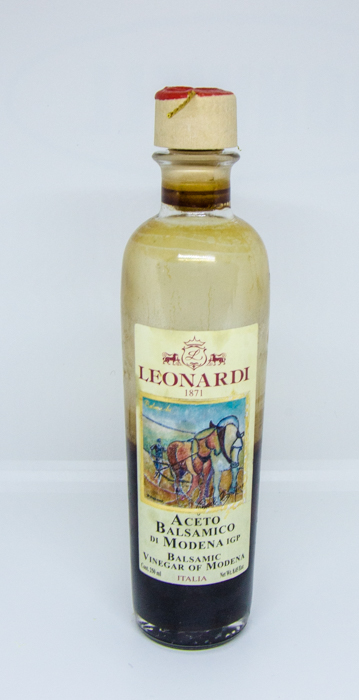
Aceto Balsamico di Modena IGP

The first balsamic vinegars sold in the US arrived in 1977, sold through gourmet stores like Williams-Sonoma. The demand quickly outstripped supply. This surge in popularity led to a rise in imitations, which led to the introduction of a protected designation (DOP) for the true Aceto Balsamico Tradizionale to differentiate the real thing from the inexpensive knock-offs. At the same time, the production Consortium of Modena began to look for a way to capitalize on the popularity of balsamic vinegar with a product that offered some measure of quality at a more accessible price point.

The IGP designation, defined by the European Union in 2009, was their opportunity. This offered a framework where the local producers could create a product under the Modena name that could not be replicated elsewhere, but produced in much higher quantities and at a much lower price point than the Aceto Balsamico Tradizionale DOP. Aceto Balsamico di Modena IGP is made from grape varietals typical of Modena, though the grapes can be from anywhere and only need to be processed in Modena. The vinegar is cooked in large pressurized vats and aged for at least two months in large wooden barrels. There is no fermentation stage. Balsamic Vinegar of Modena IGP must contain enough wine vinegar to meet an acidity level of at least 6%, and can contain up to 50% wine vinegar. It may contain thickening agents, caramel, or other colorants to make it more like real balsamic. They can range in price from a few dollars to $50, depending upon the ingredients and aging.

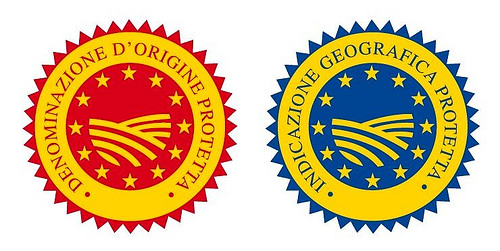
Look for Aceto Balsamico di Modena IGP on the label, as well as the EU IGP logo. The IGP and DOP logos are shown below. Higher quality versions will usually have a thicker consistency and fewer ingredients, with grape must at the top of the list.

igp-dop-logos

Aceto Balsamico Tradizionale DOP

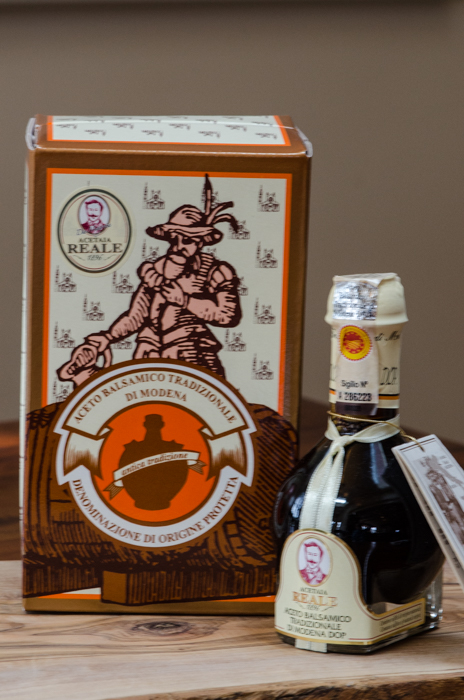
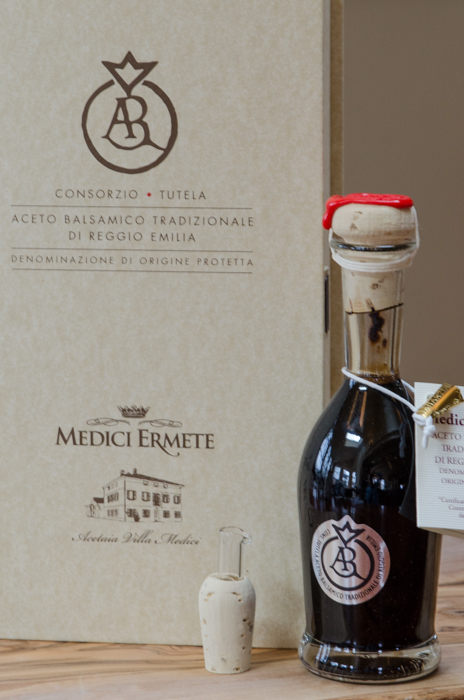
These you won’t find in your grocery store, and might be under lock and key at your gourmet store. The small bottles are packaged in sturdy boxes, the Consortium bottles the product and requires very distinctive packaging and specific labeling. The two options are shown below, the first the Aceto Balsamico Tradizionale di Modena DOP and then the Aceto Balsamico Tradizionale DOP di Reggio Emilia.

aceto-balsamico-tradizionale-modena-private-tours-italy

aceto-balsamico-tradizionale-reggio-emilia-private-tours-italy

To learn more about Medici Ermete, visit them on line at the Medici Ermete web site. Thanks again to Food Valley Tours for connecting me with Alessandra Medici.

Posted in Emilia Romagna, Travel, Uncategorized | Tagged , , , , , , , , , , , , , , | 2 Comments