Prosciutto di Parma – the King of Hams

parma-prosciutto-private-tours-italy

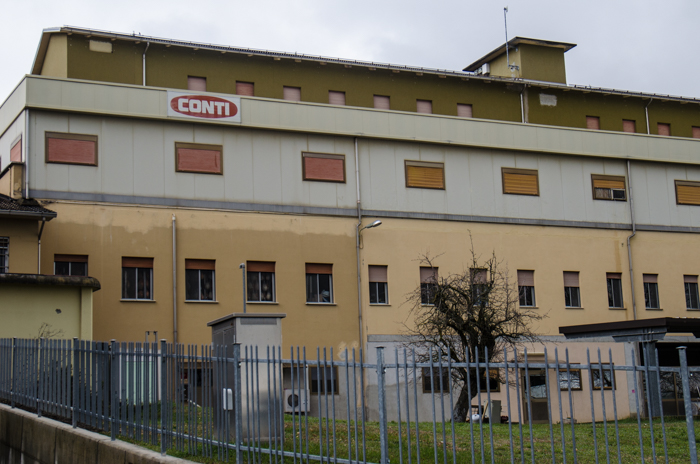
The region of Emilia-Romagna is arguably one of Italy’s best for gourmets, producing some of the most recognizable foods of Italy, from Parmigiano-Reggiano cheese to Prosciutto di Parma to authentic Balsamic Vinegar. So how to follow the King of Cheeses? With the King of Hams, of course – so off to visit a producer of Prosciutto di Parma ham, CONTI. During our private walking tours of Italy, I introduce the local gourmet products to our guests. So my free days are spent experiencing and educating myself on the wonderful authentic foods and wines of Italy. Many thanks to Daniela Lanfredi and Food Valley Tours for showing me the area.
castello-torrechiara-private-tours-italy
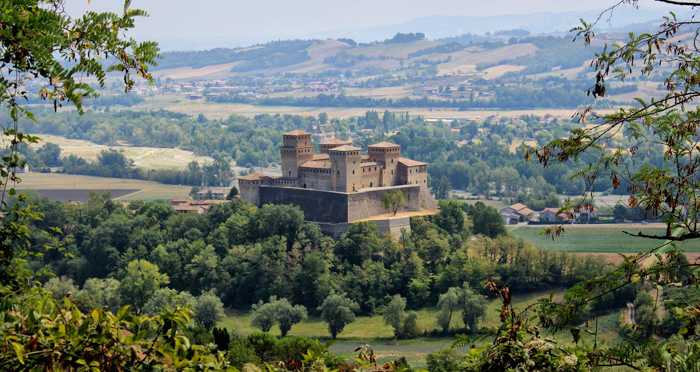
Castello Torrechiara in Langhirano

As with Parmigiano-Reggiano cheese that I wrote about in my last article, the high quality of the Prosciutto di Parma is inexorably connected with it’s place of origin. For Prosciutto di Parma, the epicenter is the town of Langhirano, about 20km south of Parma on the Parma River. Daniela describes the town as consisting of producers of Prosciutto di Parma and the homes of the plant workers as she points out the large rectangular windows that are found on the upper floors of most of the multi-story buildings in town, which identify the drying lofts. Here in this river valley the air is dry with aromatic breezes from the Apennine Mountains, which residents as far back as the Romans recognized created the perfect conditions for the natural curing of hams. In 100 BC, Cato the “Censor” mentioned the extraordinary flavor of the air cured ham made around the town of Parma in Italy; the legs were left to dry, greased with a little oil and could age without spoiling.
conti-prosciutto-private-tours-italy

Today the Consortium of Prosciutto di Parma tightly controls the production process to ensure the quality and authenticity of the product. It begins with the farms that produce the pigs. They must be certified by the Consortium, and abide by a myriad regulations. Parma pigs must be Large White, Landrance or Duroc breeds, born and raised by authorized breeding farms located in 10 regions of central-northern Italy. Their diet is a specially regulated blend of grains, cereals and whey from Parmigiano-Reggiano cheese production ensuring a heavy pig with a moderate daily growth in an excellent state of health.
massage-hams-private-tours-italy

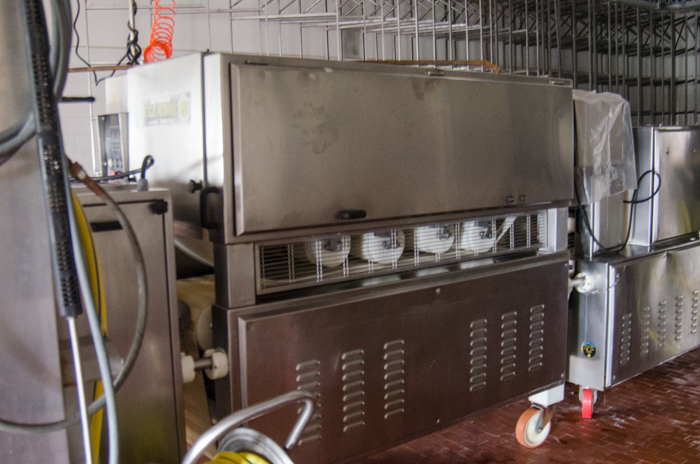
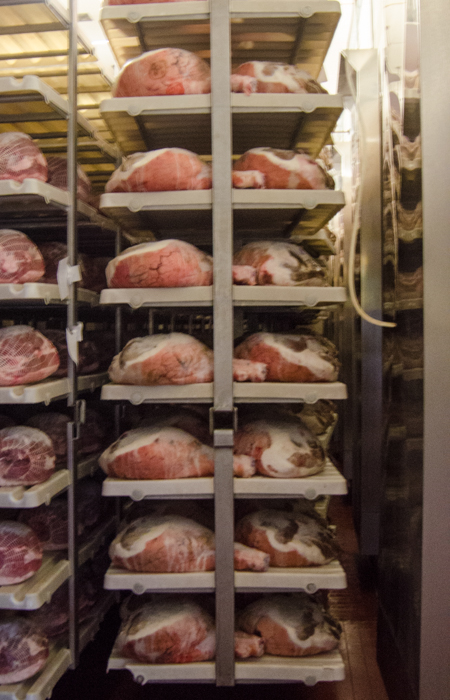
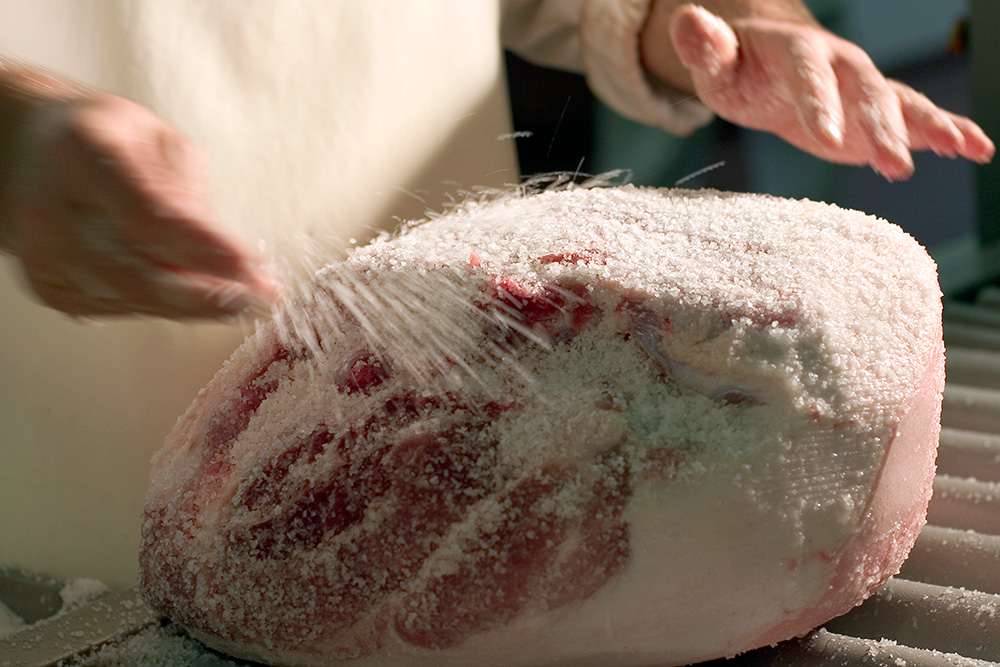
The legs arrive at the plant where they are logged and tagged for tracking purposes, then they are introduced into a specialized machine with a series of rollers that massage each leg. Under the supervision of a highly trained maestro salatore, or salt master, each leg is then salted just the right amount – the pig skin is covered with humid sea salt, while the muscular parts are covered with dry salt. They are then placed on their sides in a refrigerated space for a week to rest.
refrigerated-hams-private-tours-italy

After the week, they are removed from the cooler and the process of massage and salting is repeated. Then back to refrigerated rooms where they have the salt brushed off after another 10 days or so, and then continue to rest for about 100 days in total. This first period of massaging and salting is the crucial point of the production process, and a master with long experience in the art of making Prosciutto oversees the activity closely.
step-2-salting-prosciutto

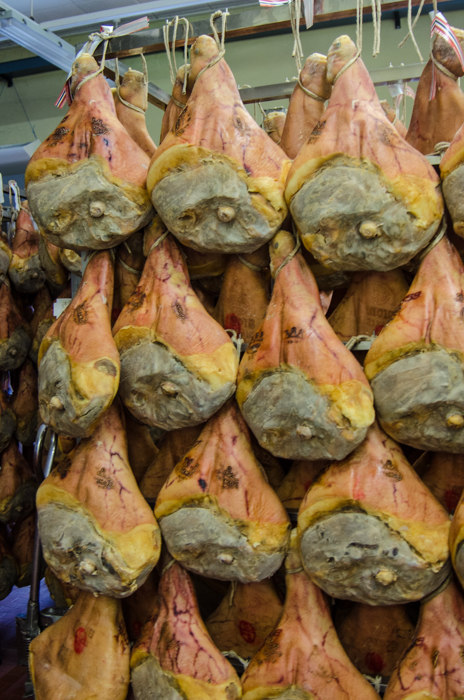
At the end of the 3 months, the hams are now hung by a rope on special metal racks. I look up, and note the ceiling of the production facility is covered with metal tracks that allow the workers to now move the heavy racks of hanging hams throughout the facility. The first stop – a washing station where the exterior is washed. Then the racks are moved downstairs to the first stage in the aging process, the initial curing.
initial-curing-prosciutto-private-tours-italy

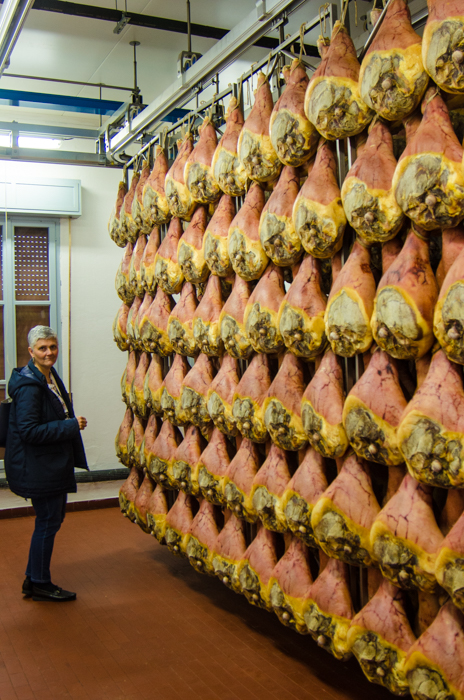
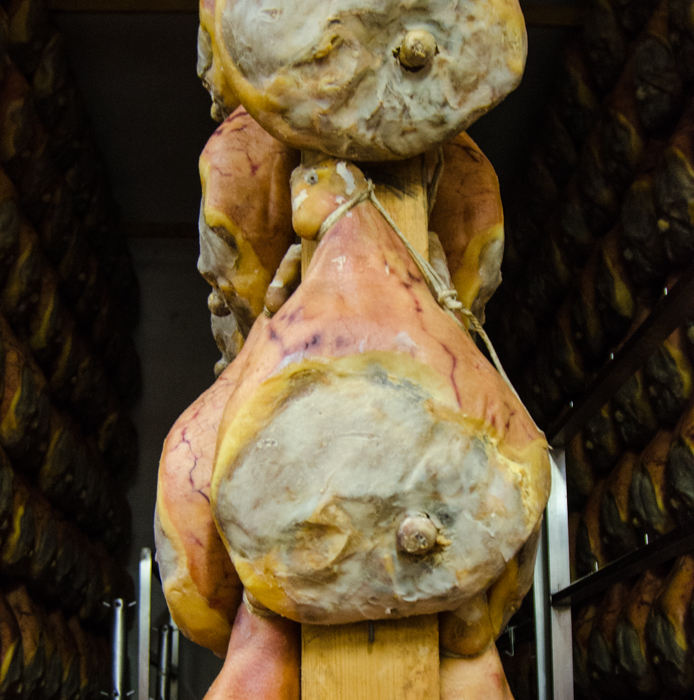
Here the hams are hung in well ventilated rooms with large windows that are opened when the outside temperature and humidity are favorable; this allows for a constant and gradual drying of the hams. At the end of this phase, which lasts about another three or so months, the exposed surface of the meat has dried and hardened.
Sugnatura-770x1041

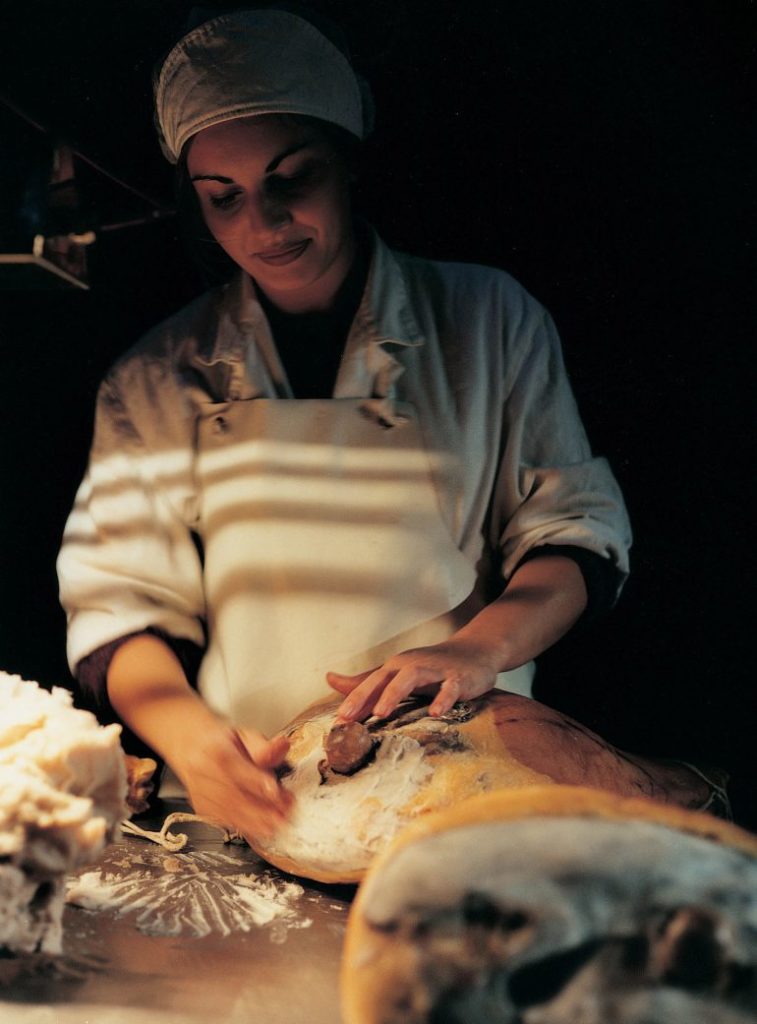
After this initial curing period, each ham is smeared with a mixture of rice flour, salt, seasonings and pork fat called ‘sugna’ to stop it from drying too quickly for the remainder of its maturation. This ‘sugna’ is kept warm under a heat lamp so it spreads easily, and it’s precise mix of seasonings and salt each producer keeps as a closely guarded secret. The exposed surfaces of the hams are softened with this paste, more on the exposed meat surfaces, less on the parts of the leg that are covered with fat. Rice flour is used today so the hams are gluten-free.
sugna-prosciutto-private-tours-italy

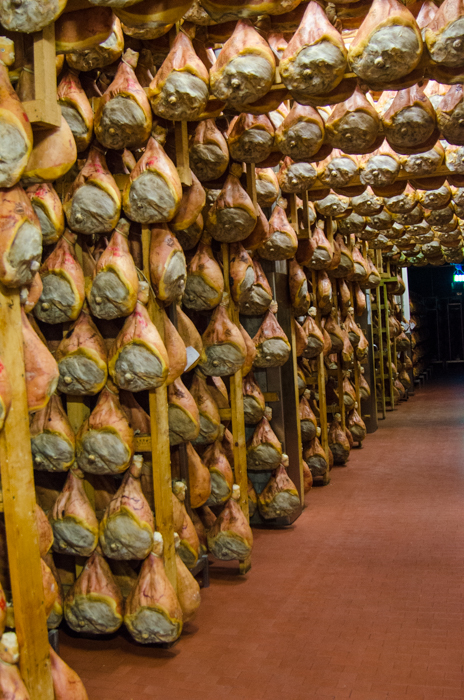
After the ‘sugna’ has been applied, the hams are transferred to the cellars, rooms with less air and light, where they hang on racks until the curing is completed. By law Parma Ham is cured at least 1 year (starting from date of first salting), and some may be cured as long as 3 years. Daniela says that most locals prefer hams that have aged 16 months or more.
final-aging-prosciutto-private-tours-italy

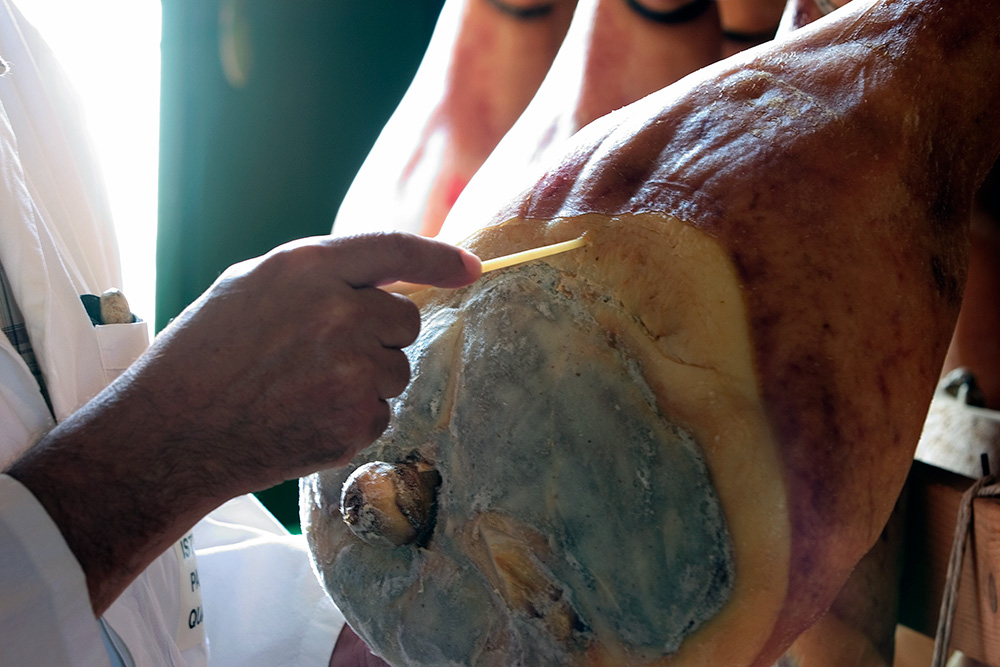
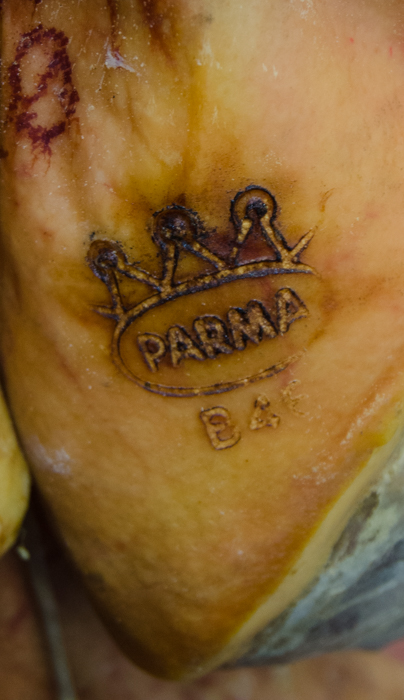
After 12 months of aging, each ham is checked by an inspector from the Consortium. The inspection includes a traditional “smell” test, where the inspector pierces each ham in several spots with a long needle made from horse bone. Horse bone has a unique porosity that absorbs the aroma of the ham, allowing the inspector to assess its quality and maturity. Once approved, the ham receives the authentic five-point Ducal Crown firebrand. Occasionally this firebrand is altered every so slightly, but in a way only known to a very few at the Consortium, to thwart counterfeiters.
step-7-horsebone-process-prosciutto

The Ducal Crown seal is in honor of Marie Louise, the second wife of Napoleon. She was an Austrian Archduchess who was married to Napoleon in 1810, as he was eager to marry a member of one of Europe’s leading royal houses to cement his hold on the Empire. She was Empress of the French from 1810-1814, and bore Napoleon a son. After Napoleon’s exile, Marie Louise was sent off and out of the way to reign as Duchess of Parma, which she did until her death in 1847. She performed many good works during her reign, and was much loved by the residents.
firebrand-prosciutto-private-tours-italy

These time-honored methods and attention to detail produce the “King of Hams” right along side the “King of Cheeses”. The process is 100% natural: no additives, just sea salt, air, and time. The result is a perfect balance between sweet and saltiness; the aroma is fragrant, the color is pink in the lean part and white in the fat. Sweet and delicate in flavor, fruity but gentle.
PROSCIUTTO_PICNIC_132-792x1000

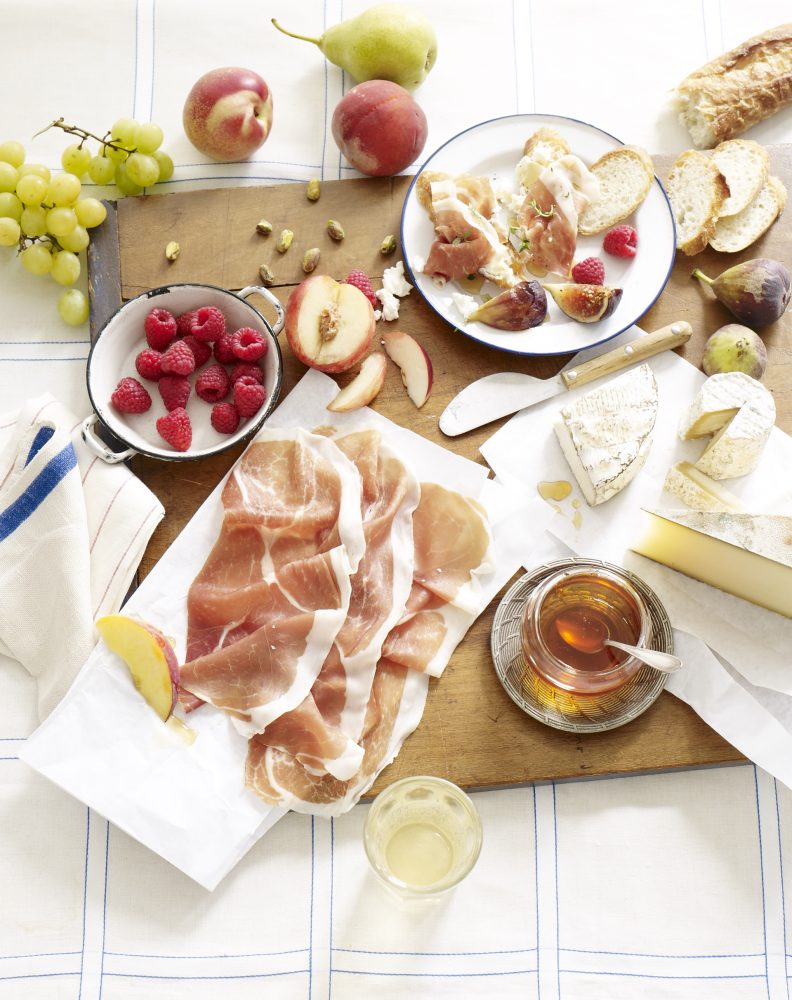
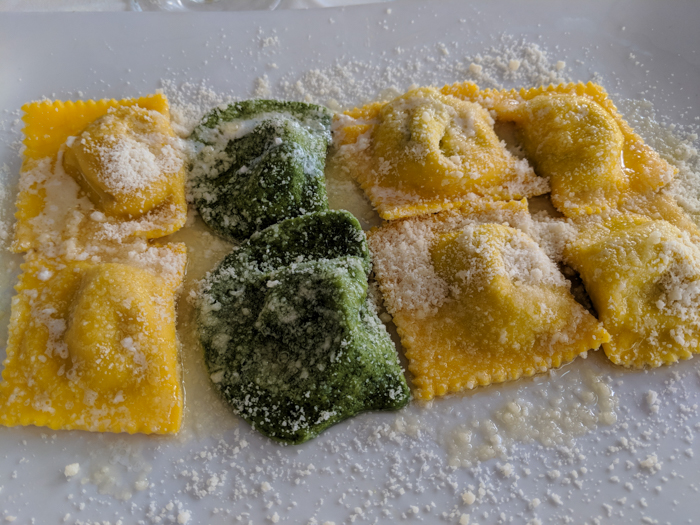
The best way to enjoy prosciutto is sliced paper thin with a bit of fat around the edge, which carries much of its distinct flavor. The fat is part of what makes Prosciutto di Parma unique; never ask for it to be removed. Prosciutto di Parma is perfect with melon, with fresh cheeses like mozzarella and burrata, and with breadsticks. It is also an essential ingredient in the favorite Parma tortellini. Look for it at gourmet stores in the US, and I encourage you to taste it side by side with a prosciutto from your grocery deli – you’ll see they are not the same thing at all!
 tortelli-prosciutto-private-tours-italy

Posted in antipasti, Travel, Uncategorized | Tagged , , , , , , , , , , | 1 Comment

Parmigiano-Reggiano – The King of Cheeses

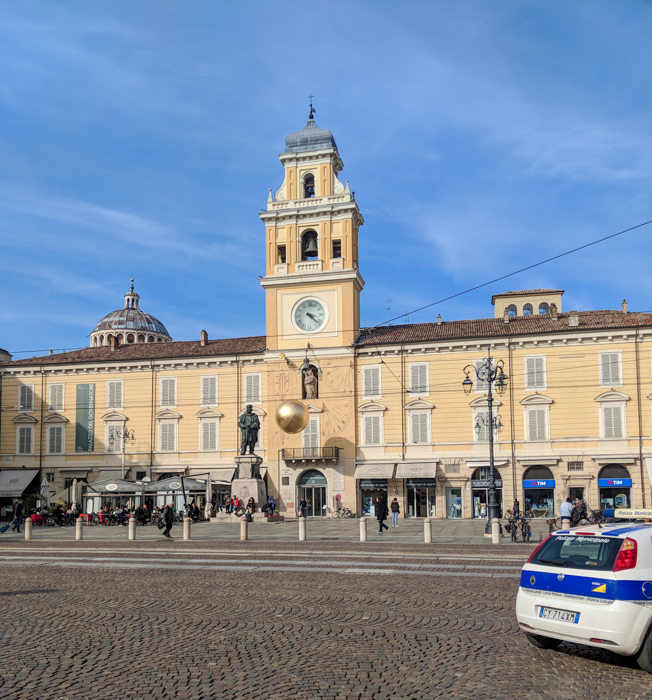
parmegiano-cheese-firebrand-private-tours-italyOne of the most recognized food products of Italy is the internationally acclaimed Pamiggiano-Reggiano cheese. During our private walking tours of Italy, I introduce the local gourmet products to our guests. In Italy, the identity of these amazing products is entwined – physically, historically, culturally- with their place of origin. Recently I visited the lovely city of Parma in the region of Emilia-Romagna to discover first-hand what goes into producing this world-renowned cheese. I look forward to bring guests on future custom tours to appreciate what goes into the production process.
parmegiano-cheese-parma-private-tours-italy

My day begins at 8:30 when my tour guide, Daniela Lanfredi meets me at my hotel. I was connected with Daniela via the great people at Food Valley Tours. I typically set up my own visits to the producers we go to see, but these producers strictly regulate their visitors and you must be accompanied by a guide certified by the production consortium.

parmegiano-cheese-maturation-private-tours-italy

Daniela directs as we drive to Consorzio Produttori Latte Baganzolino, just north of Parma. It’s location is quite close to the city center, but it is encircled by large fields that Daniela assures me will be green with alfalfa in a few weeks. It is a large industrial building, with several barns behind it. These barns are home to the cows, as well as pigs, the reason for the pig’s presence becomes clear later. Today, over 80% of the production of Parmigiano-Reggiano cheese is done in these larger cooperatives, only 20% in smaller, family owned farms. But there still is a “family” that is intimately involved in overseeing the process, as the head cheesemaker and his family live on site. A couple of small children and the family dog greet us as we arrive.

parmegiano-cheese-group-work-private-tours-italy

The first order of business is suiting up. Daniela dons her official tour guide lab jacket, then we both cover up with hair nets, plastic coats and shoe coverings – I feel like I’m on a episode of CSI. We get it done more quickly than most groups, as there is only me and I don’t feel the desire to document my new wardrobe with selfies.

parmegiano-cheese-copper-vats-private-tours-italy

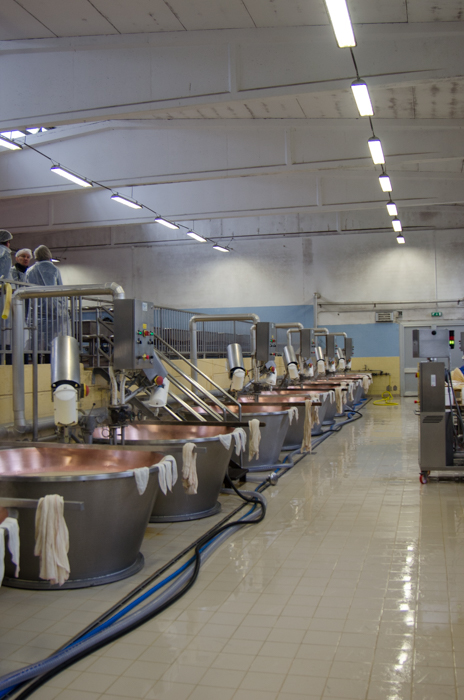
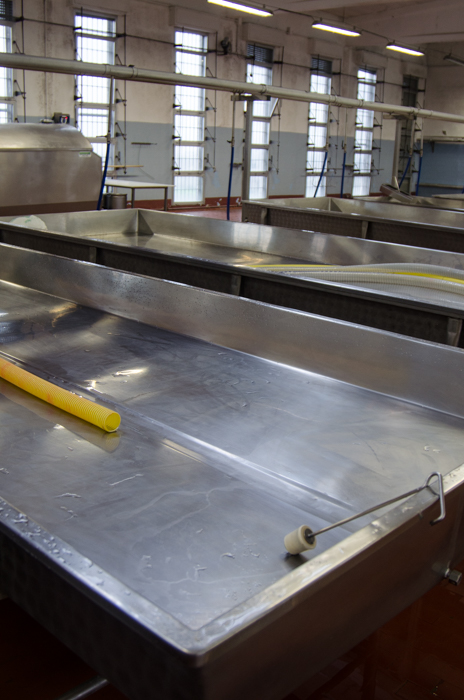
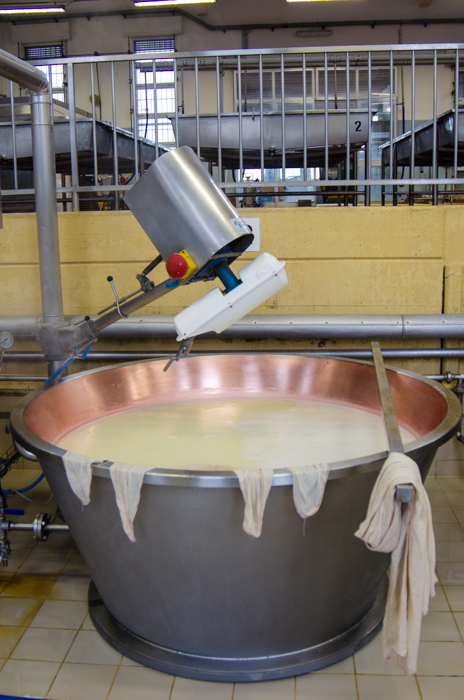
The main floor of the production facility has two levels, separated by a railing. The lower level contains a row of large copper-lined vats, which are currently filled with liquid and steaming. On the upper level is a series of long, flat, rectangular metal troughs with hole and stopper at the end closest to the copper vats.

parmegiano-cheese-troughs-private-tours-italy

The process begins with the evening milking. The milk is brought immediately from the cows to the metal troughs on the upper level, where it spends the night. One of the key contributors to the esteemed distinctive flavor of Parmigiano-Reggiano cheese is that the milk used is never refrigerated. Refrigeration is believed to compromise the flavor. So the cows must be located at the production facility, and their milk processed immediately. During the night, as the milk rests in the trough, the cream rises to the top. In the morning, the cream is skimmed off, and sent to another plant where it is made into butter. The skimmed milk is then transferred into the copper vats, each filled about halfway.

parmegiano-cheese-vats-private-tours-italy

Next, the morning milking arrives, and goes directly into the copper vats, this milk is not skimmed. The cheesemaker then visits the vats and adds just the right amount of rennet to each. Rennet is an enzyme that curdles the casein in milk, separating the curds from the whey. These curds will be pressed into the cheese, the whey has two future uses: some is made into fresh ricotta cheese, the rest goes back to the barns where it is fed to the pigs. This diet of Parmigiano-Reggiano whey contributes to the flavor of another product that Parma is equally famous for, Prosciutto di Parma.

parmegiano-cheese-spino-private-tours-italy

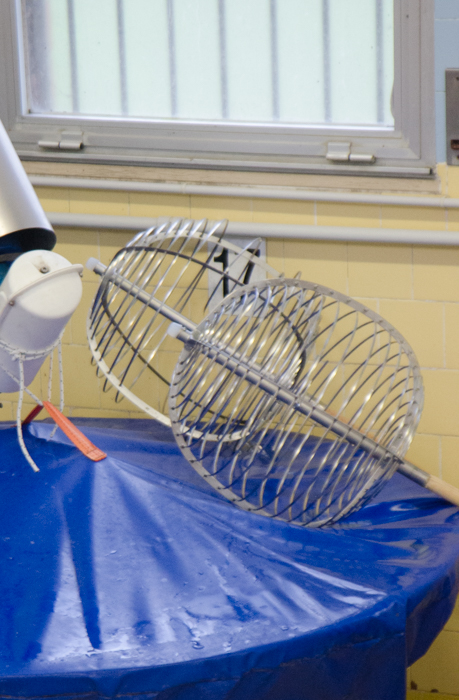
Daniela points out to me the traditional large whisk like tools that are used to manually break up the curds into smaller granules, called a “spino”. The coagulated milk is gently cooked in these heated vats while the curd particles slowly sink to the bottom and begin to stick together, conforming to the bell-shaped bottom of the vat. This is the current state of the production process as we begin our tour.

parmegiano-cheese-curds-private-tours-italy

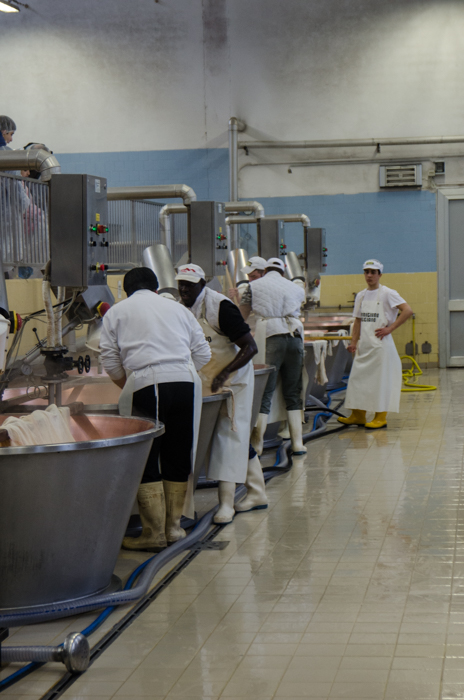
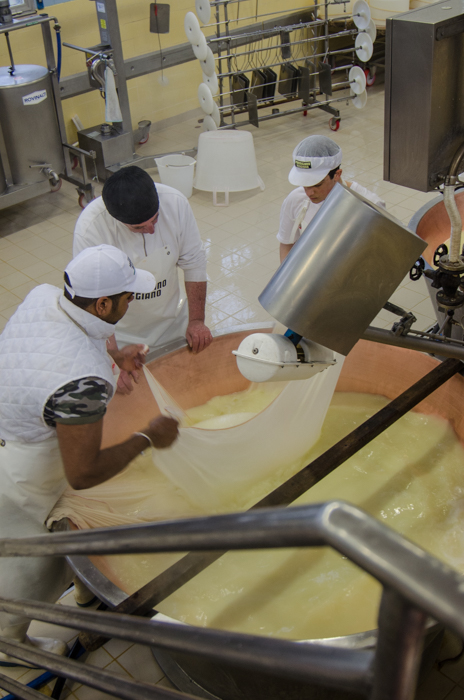
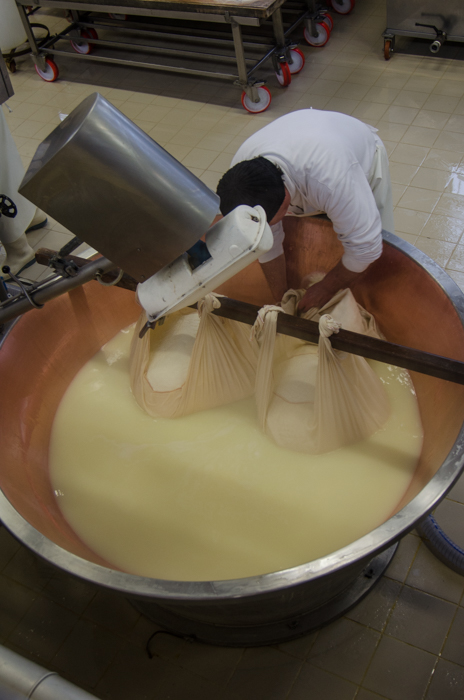
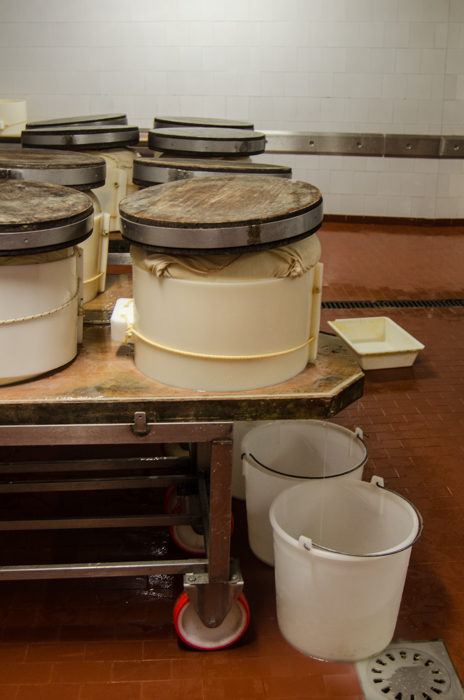
The cheesemaker soon enters and makes his next round, inspecting each copper vat to ensure the curds have settled out. Once he gives the green light, two to three workers descend upon the vat to extract the curds. Using large muslin cloth sheets, two workers carefully lift and roll the curds out of the vats, manipulating them into large rounded cylinders. The muslin sheets containing the rounds are used as a sling, and the rounds are hung from a wooden stick over the trough for a bit before being sliced in half to form two large rounds that will become two large wheels of Parmigiano-Reggiano cheese. Each round is then transferred into a plastic mold that will help keep its shape as the rounds begin to dry. At this point, each wheel is assigned a unique QVC code allowing the producer to trace back each wheel to the cows it came from. In this manner, any issues that turn up in the production process can be diagnosed.

parmegiano-cheese-curds-resting-private-tours-italy

parmegiano-cheese-pressing-private-tours-italy

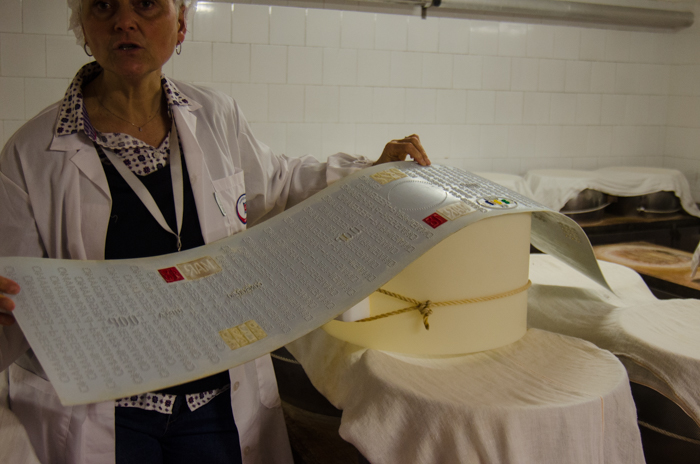
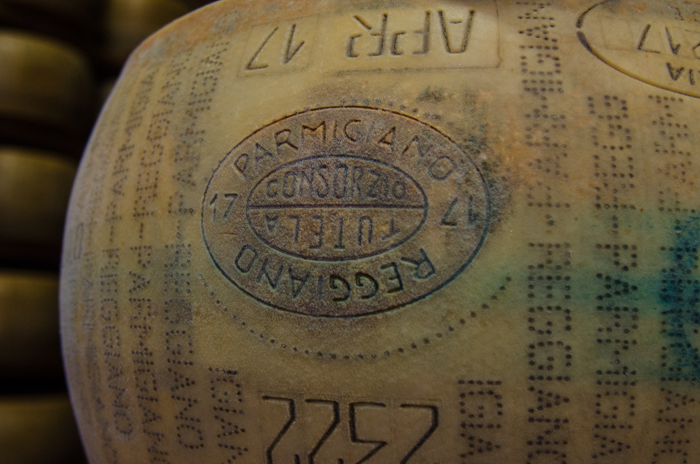
Each round is carefully wrapped up in a sheet of muslin and left in the plastic mold with a weight on top to encourage any remaining whey to drain. These rounds are now moved to a smaller room on a lower floor where they spend the night. They are turned occasionally, and after a few hours a special marking band is wrapped around each wheel. This band engraves the entire exterior with the signature markings that indicate an authentic Parmigiano-Reggiano cheese. These markings include the month and year of production, the dairy registration number and the unmistakable dotted inscription PARMIGIANO-REGGIANO. These marking bands are so tightly controlled that even the official Museum of Parmigiano-Reggiano cheese does not have one.

parmegiano-cheese-stencil-private-tours-italy

parmegiano-cheese-brine-private-tours-italy

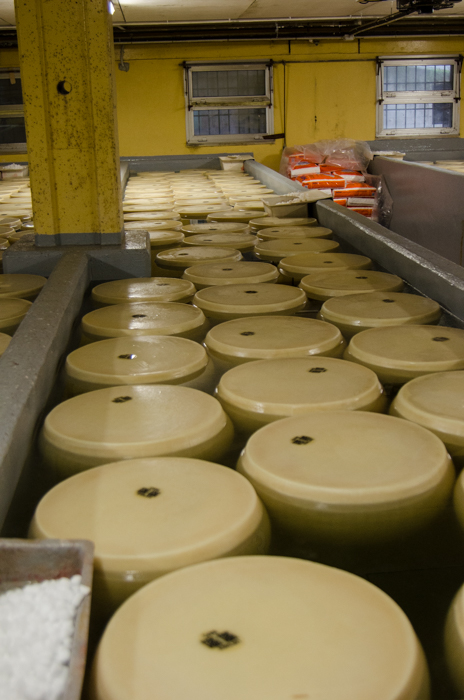
After a couple of days of resting, the rounds removed from the molds and are immersed in a sea salt brine solution. Here the rounds rest for about a month, being turned daily as the sea salt slowly permeates the cheese. This is the last stage of the production process, the cheeses now move on to the maturation rooms.


parmegiano-cheese-turning-machine-private-tours-italy

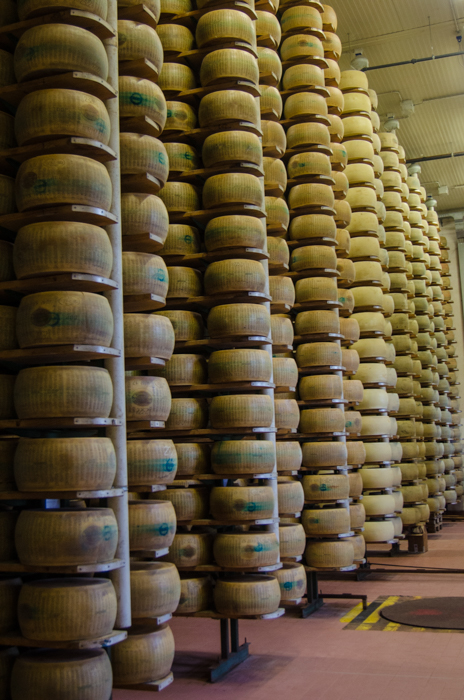
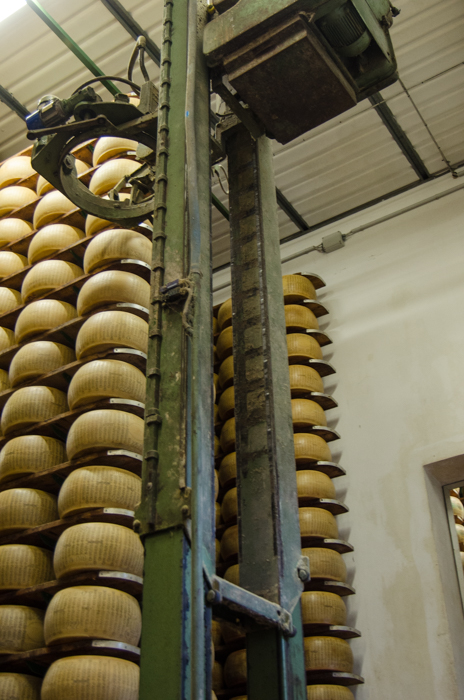
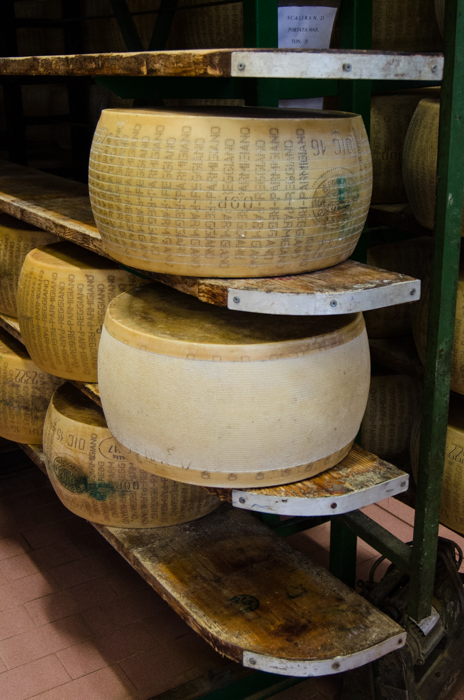
In the large, temperature controlled aging rooms the cheese wheels are laid out in long rows on very impressive shelves that extend probably 30 feet high. The cheeses rest on wooden shelves as the outside of each cheese dries, forming a natural rind. Each cheese is turned and brushed regularly, a specialized machine was developed to reach the high shelves to perform this arduous task; the minimum weight of each wheel is 30kg (just under 70 pounds). The cheeses must rest here for a minimum of 12 months, but can be aged as long as 48 months.

parmegiano-cheese-testing-private-tours-italy

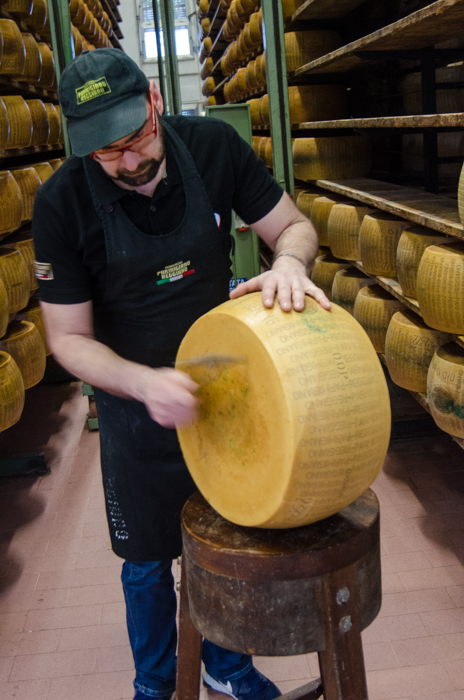
Inspectors from the Consortium visit regularly to examine each cheese. The inspector removes a cheese from the shelf, turns it on its side and places it on stool, then taps it all over. He listens for consistency in the sound of the taps; if he hears hollow sounds, or inconsistent sounds it is an indication of a bubble or some other quality issue with the cheese. When a cheese passes inspection, an official mark is fire-branded onto the cheese indicating it meets the requirements of the Protected Designation of Origin. All identifying marks and the dotted inscriptions are removed from any cheeses which do not meet the PDO requirements. These are sold as ‘seconds’, referred to as “white” cheeses as the golden rind has been removed.

parmegiano-cheese-seconds-private-tours-italy


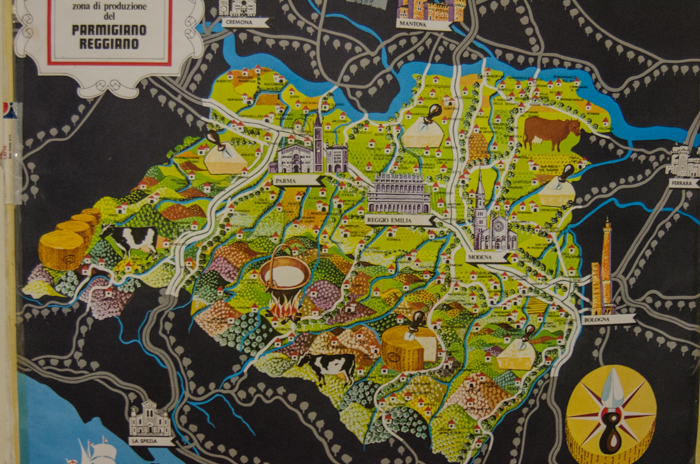
Leaving the aging rooms, we head to the store for our final stop: a tasting of the ultimate product. On our way, Daniela points out a map showing the production area of Parmigiano-Reggiano cheese. Production is restricted to the provinces of Parma, Reggio Emilia, Modena, Bologna, to the west of the Reno River, and Mantua, to the east of the Po River. The production of cheese in this area dates back to the 1200s, when the Benedictine monks here made cheeses in this style to preserve milk. Prior to refrigeration, products like cheeses or prosciutto were made to preserve food for later consumption. The thrifty monks used every by-product of the production process – cream was made into butter, whey into fresh ricotta and fed to the pigs, the casein curds preserved as cheese – and this long tradition continues today.

parmegiano-cheese-map-private-tours-italy

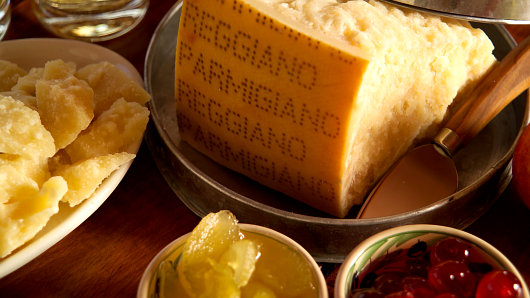
The final stop is a tasting of Parmigiano-Reggiano cheeses, from young 12 months of aging to 48 months. Visually you can see differences between the younger and more mature cheeses, the older cheeses are harder, and as the cheeses age the proteins continue to break down, producing amino acid crystals which are noticeably more prevalent in the older cheeses.

A 12 to 18-month old Parmigiano-Reggiano has a more delicate flavor, and is wonderful as part of an antipasti, accompanied by raw vegetables, fresh fruit, or paired with a mild fruit or fig jam. A 24-month old Parmigiano-Reggiano is best grated on traditional Italian pasta dishes or soups, or served with nuts and dried fruit. Both pair well with white wines or lighter reds.

A 26 to 30-month old Parmigiano-Reggiano would be used to enhance flavor of main courses, served as shavings on meat with a drizzle of extra-virgin olive oil. This longer maturation Parmigiano-Reggiano can be served with fuller bodied red wines. The ultimate indulgence is to pair the most exclusive 48 month aged with a few drops of the thick, luscious Traditional Balsamic Vinegar from Modena or Reggio Emilia.

I have always appreciated the distinctive flavor of an authentic Parmigiano-Reggiano cheese, But after learning about it’s long history and role in the community, seeing first hand the care and passion that the producers put into their product, and their close attention to quality and detail, I can say the respect is has among gourmets is well deserved. As I savor one last bite of the 48 month aged cheese, I agree it is truly the “King of Cheeses”.

parmegiano-cheese-bologna-private-tours-italy

Posted in Cheeses, Emilia Romagna, Uncategorized | Tagged , , , , , , , , , | 4 Comments

Bagna Cauda – A Hot Dipping Sauce from Piedmont

bagna- cauda-walking-tour-piedmont

One of the signature dishes of native Piedmontese cuisine is Bagna Cauda. The origins of this classic dish date back all the way to the 16th century, and we will still see it as a staple on the menu during our Italiaoutdoors Barolo Walk and Wine tours.

monforte-view-piedmont-walking-tours

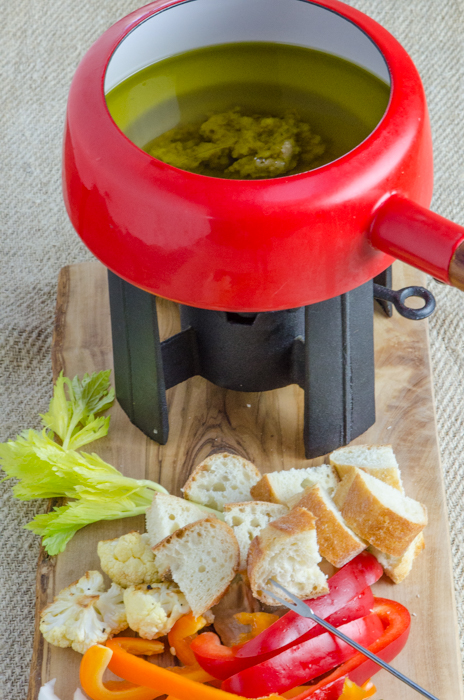
This dish is today commonly served as an appetizer. Bagna Cauda translates to “hot bath”; It is a hot dipping sauce that is served with a selection of vegetables and chunks of crusty bread that are dipped into the sauce before eating, similar to a fondue. Like fondue, it is kept hot on the serving table using a candle or burner.

bagna-cauda-ingredients-walking-tour-piedmont

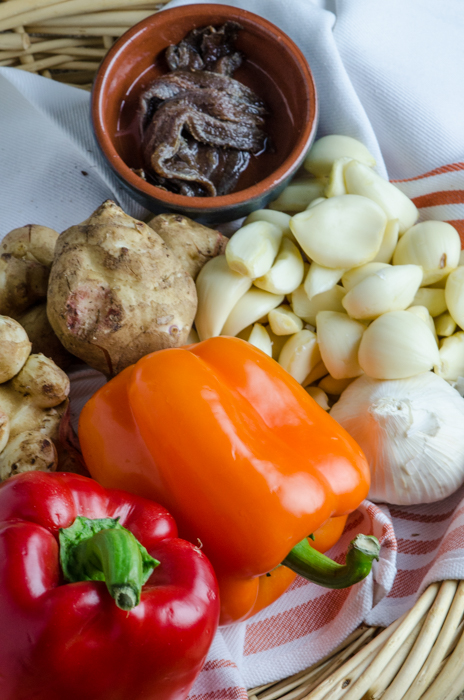
It has just a few simple, but strong flavored ingredients: olive oil (typically Ligurian olive oil in Piedmont), lots of garlic, and anchovies. As one of my native cookbooks describes it: “A strong flavored dish for strong people.”

Anchovies are interestingly enough a staple of Piedmont cuisine, not a seafood consuming region. But they are, when preserved, a strong flavored ingredient that keeps for a long time. In Italy, you would use whole anchovies that are preserved in salt, removing the bones and rinsing before using. Here in the US these are difficult to find, but high quality canned anchovy fillets are a good substitute. Look for flat packed fillets in olive oil.

I have seen several versions where the raw garlic is placed in olive oil and heated to infuse the oil, then the anchovies added, making quick work of the sauce. But recipes I’ve found from authentic Piedmontese sources call for the garlic to be poached in milk for a long time, then mashed and combined with the olive oil and anchovies. This mellows the flavor of the garlic. If I were to adapt the following recipe to eliminate the milk, I’d use a LOT less garlic.

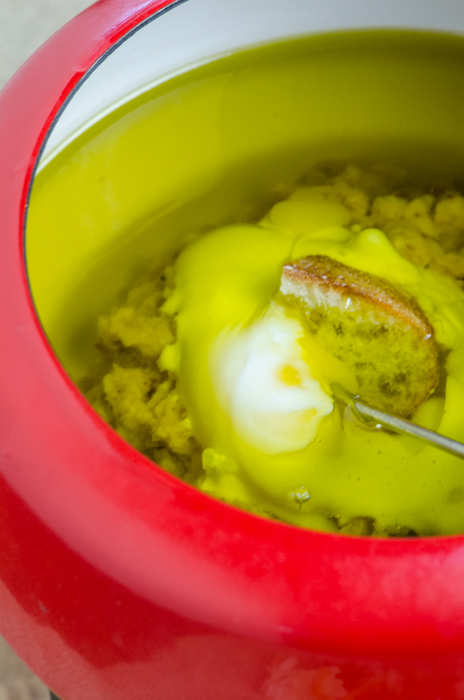
bagna- cauda-egg-walking-tour-piedmont

A couple of interesting variations: in Alba, you might find the Bagna Cauda flavored with truffle. Another cookbook author recommended poaching an egg in the Bagna Cauda.

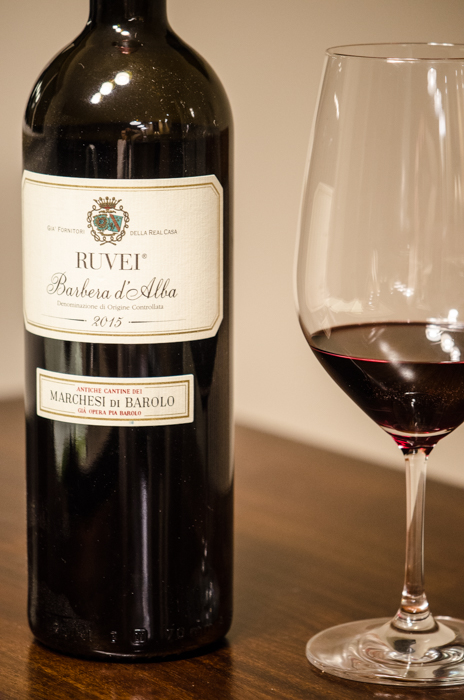
Early cookbooks recommend serving Bagna Cauda with “rivers of red wine.” In Piedmont, a Barbera would be a good choice, the favorite every day table wine of this region.

barbera-walking-tour-piedmont

Bagna Cauda

4 cups whole milk
4 heads garlic, separated and peeled
3 cups extra virgin olive oil
12 anchovies, rinsed and chopped
Kosher salt and freshly ground pepper

8 ounces Jerusalem artichokes
Juice of 1 lemon
1/2 cauliflower
Extra virgin olive oil
8 ounces asparagus, tough woody end removed
1 red pepper, sliced into thin strips
1 orange pepper, sliced into thin strips
1 fennel bulb, trimmed of tough outer layer and stalks, cut lengthwise in half, cored and thinly sliced
2 celery stalks, peeled and cut into 3” lengths
In Piedmont, this is iften served with cooked cardoons. But you will be hard pressed to find them in the US.
Crusty bread, cut into 2 inch chunks

In a small pot, bring the milk to a boil. Lower the heat, add the garlic and simmer for an hour. Remove the garlic and smash into a rough paste with a fork. Combine the olive oil, smashed garlic and anchovies in a saucepan over low heat and whisk until the anchovies dissolve and the liquid is creamy. Cover and keep warm while you prepare the vegetables.

Preheat the oven to 400°F.

Peel and trim the Jerusalem artichokes, and cut into 2-inch chunks. Keep the chokes in a plastic contained covered with water into which you’ve squeezed the juice of one lemon to prevent discoloration.

Break the cauliflower into uniform pieces about 2 inches in size. Place the cauliflower and the Jerusalem artichokes in a large bowl and toss with a glug of olive oil to coat. Season with salt and pepper. Spread on a sheet pan and roast until tender and beginning to brown, about 15 to 20 minutes.

Place the trimmed asparagus in the same bowl, toss with another glug of olive oil to coat, and season with salt and pepper. Spread on a second sheet pan and roast until tender, about 10 minutes.

Arrange the roasted vegetables on a large platter with the sliced peppers, fennel and celery. Place the bagna cauda sauce in a bowl or fondue pot (rewarming if necessary), and serve with the vegetables and crusty bread.

In Piedmont, this is often served with cooked cardoons. But you will be hard pressed to find them in the US. This link to last week’s article on cardoons will tell you how to prepare them if you happen to find them.

Posted in antipasti, Piedmont, Uncategorized | Tagged , , , , , , , , , , , , | 3 Comments

The Artichoke from Piedmont – Cardoons

cardoon-baked-walking-tour-piedmontDuring our autumn Barolo Walk and Wine walking tour in Piedmont, we not only experience the grape harvest for the prized Barolo wines, we get to enjoy some of Piedmont’s distinctive culinary treasures as well.

barbaresco-walking-tour-piedmont

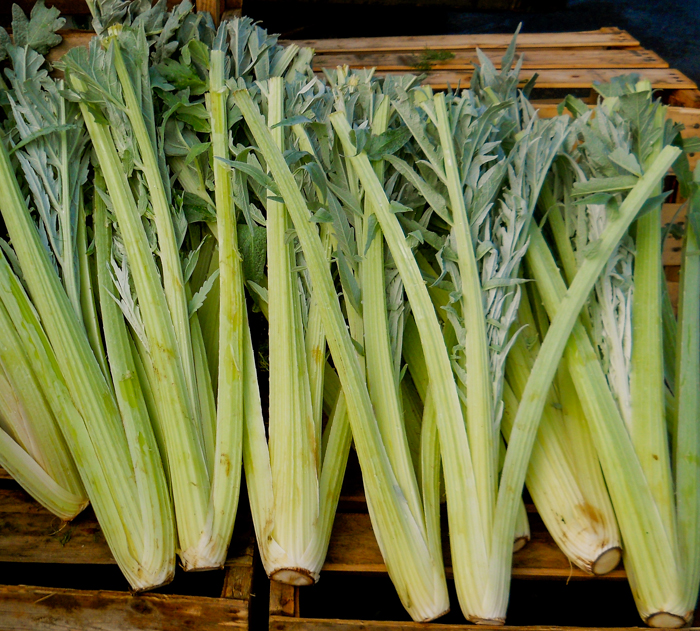
In autumn in Piedmont you will find a unique vegetable rarely seen in the US, the cardoon. The cardoon, also called the artichoke thistle or globe artichoke, is a thistle in the sunflower family. It is a naturally occurring species that includes the globe artichoke, the cardoon being cultivated for its edible stalk, the globe artichoke for its edible flower buds.

cardoons-piedmont-italy-cycling-tours

Locally called cardo gobbo, or “hunchbacked” cardoon, these cardoons are so named because early on they are curved and redirected back underneath the soil. Only the innermost, white stalks are considered edible, and cardoons are traditionally protected from the sunlight for several weeks by burying the plant underground. The resulting vegetables are especially tender.

A cardoon has a white crunchy stalk, with a sweet flavor similar to its artichoke cousin, but typically less bitter. Like artichokes, cardoons should be dropped into acidulated water as they are chopped so that they don’t discolor. They are an essential ingredient to an autumn bagna cauda or cooked in a bechemel. Their slightly bitter flavor is also often used in the production of Amaro (Italian for “bitter”), the traditional family of Italian herbal liqueurs that are commonly consumed after dinner as a digestif.

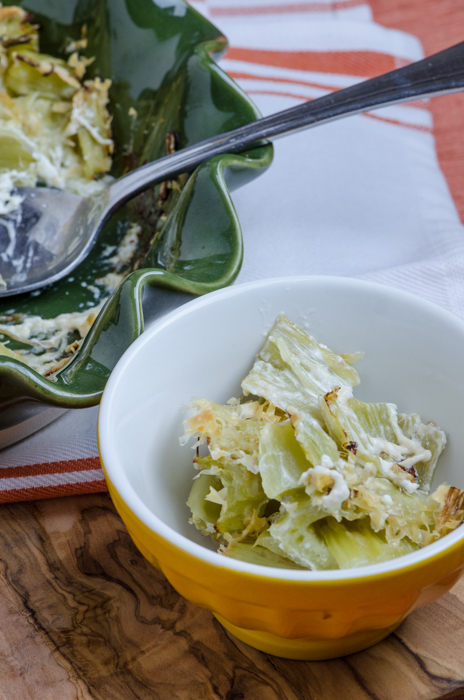
cardoon-forno-walking-tour-piedmont

The bitter flavors of cardoon and artichokes are challenging to pair with wines. I would recommend a “Gavi,” a wine from the Cortese grape, usually sold under the name of the town in the southeast part of Piedmont where they are produced. Typically dry, with lemon-like citrus flavors, very high acidity and distinct minerality.

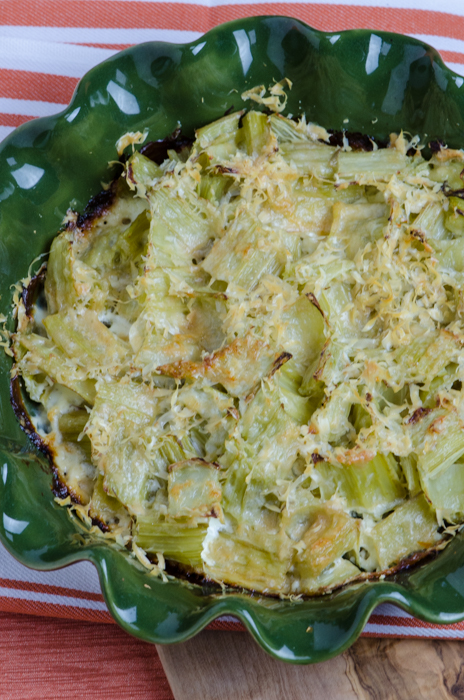
Cardi al Forno

When baked, cardoons have a tender texture and a more subtle taste akin to that of artichokes. Very tasty baked in cream and cheese!

Serves 4

2 lemons
2 medium cardoons
Kosher salt and freshly ground pepper
1/2 cup heavy cream
3/4 cup grated Parmigiano-Reggiano

Prepare a bowl of acidulated with the juice of one lemon. Trim the cardoons: discard any outer fibrous ribs and any leaves and peel off any strings. Chop into 4-inch lengths and drop the pieces into the lemon water. Allow to rest in the water for 15 minutes. Preheat the oven to 350°F.

Fill a pot with water. Add the juice of the remaining lemon and salt to taste and bring to a boil. Drain the cardoons, add them to the boiling water and cook until tender but still crisp. Drain and allow to cool.

Spread half the cream in the bottom of a baking dish and sprinkle on about half of the grated cheese. Scatter the cardoons on top in a single layer. Pour the remaining cream over the cardoons, distributing it as evenly as possible. Season with salt and pepper and sprinkle on the remaining grated cheese. Bake in the preheated oven until the top is golden, about 45 minutes.

cardoon-salsa-walking-tour-piedmont

Cardi Gobbo in Salsa

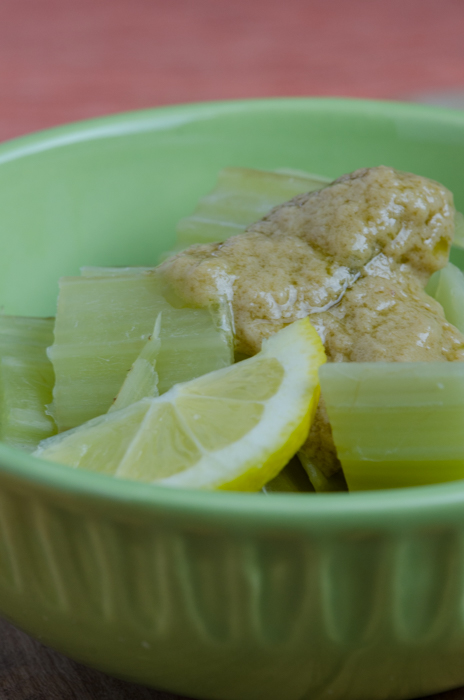
This recipe includes a sauce that is similar to the favorite antipasti of Piedmont, Bagna Cauda. Not a dish that would appeal to the American palate, but surprising good – the milk mellows the garlic.

Serves 4

! 1/2 to 2 pounds cardoons
2 heads garlic, cloves separated and peeled
Milk
4 anchovy filets, rinsed and minced

Prepare a bowl of acidulated with the juice of one lemon. Trim the cardoons: discard any outer fibrous ribs and any leaves and peel off any strings. Chop into 4-inch lengths and drop the pieces into the lemon water.

Fill a pot with water. Add the juice of the remaining lemon and salt to taste and bring to a boil. Drain the cardoons, add them to the boiling water and cook until tender but still crisp. Drain and keep warm.

Meanwhile, place the cloves of 2 heads of garlic in a small pot with milk to cover and simmer until soft, about 20 minutes. Drain the garlic, transfer to an earthenware pot, and crush with a fork. Mash in the anchovies with the fork. If the mixture is still chunky, puree it until smooth using an immersion blender. Cook over medium heat, stirring with a wooden spoon, for 10 minutes. Transfer cooked cardoons to a serving platter. Pour the sauce over the top and serve.

Posted in antipasti, Piedmont, Travel, Uncategorized, Vegetables, Vegetarian, Wine Pairings | Tagged , , , , , , , , , , , , , | 2 Comments

Brasato al Barolo – Beef Braised with Barolo

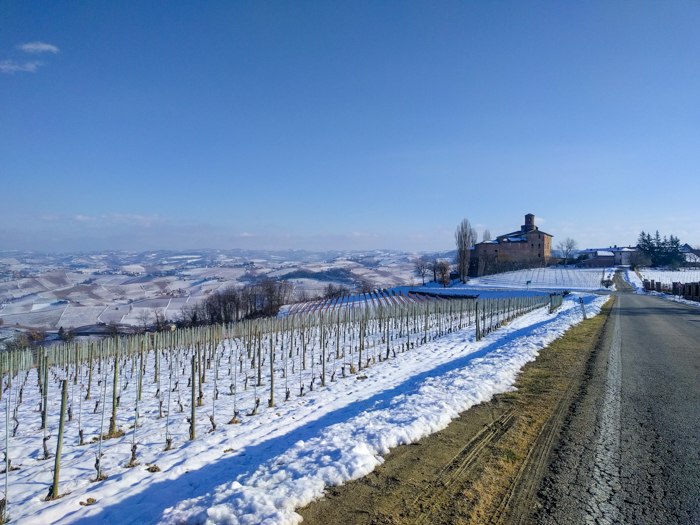
brasato-barolo-close-piedmont-walking-tours-baroloHere’s a dish we see no matter where in Italy our Italiaoutdoors private tours take us – Brasato al Brunello or Chianti in Tuscany, Brasato al Valpolicella or Amarone in the Veneto, and Brasato al Barolo in Piedmonte. A perfect dish for colder months that pairs superbly with the robust red wines that are the signature ingredient.
la-morra-winter-piedmont-walking-tours-barolo
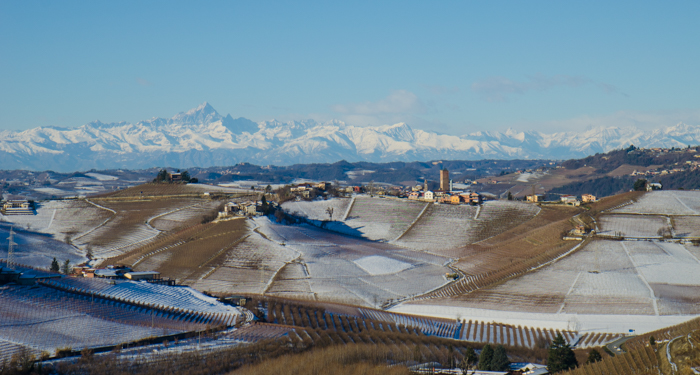
Piedmont is lovely even in winter….

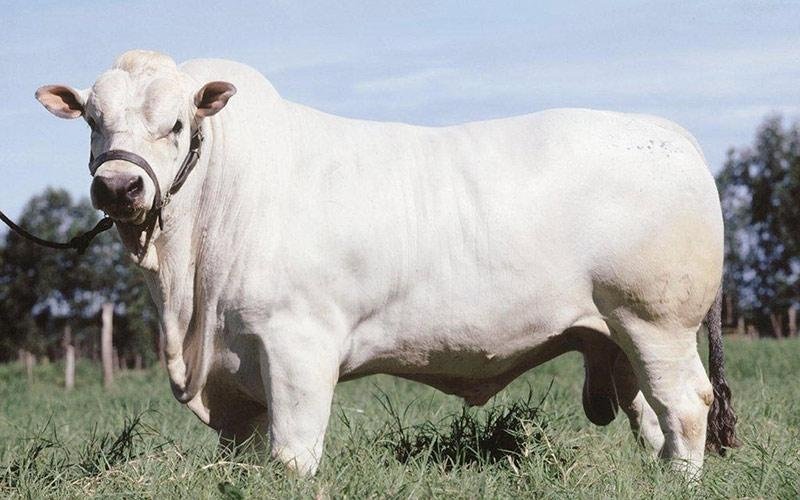
In Piedmont, there are actually two signature ingredients, the wonderful Barolo wine and meat from the local breed of cattle, the Piedmontese (Razza Bovina Piemontese). The calves are born fawn colored, and turn grey-white as they mature. Piedmontese cattle carry a unique genetic mutation that causes excessive muscle growth, or double muscling. This mutation deactivates a protein that tells the muscles to stop growing, resulting in cattle that have a higher lean-to-fat ratio, as well as less marbling with less connective tissue than meat from most other breeds of cattle. These cattle have a very distinct muscular appearance.

razza-piemontese-barolo-walking-tours

Braising is a centuries-old method of cooking that magically transforms a less desirable (= cheaper) cut of meat into a luscious dish that warms the soul on a cold night. The meat is seared, some vegetables may be added for flavor, then the meat is partially submerged in liquid and slowly simmered for hours until the meat literally falls apart.

brasato-stove-piedmont-walking-tours-barolo

The Italian word brasato comes from brace, meaning “hot coals”, as a heavy pot containing the braise would be buried in glowing coals where the meat would cook for hours.

In his The French Laundry Cookbook, Thomas Keller says this about braising:

“When you’ve pulled your pot from the oven to regard your braise, to really see it, to smell it, you’ve connected yourself to generations and generations of people who have done the same thing for hundreds of years in exactly the same way.”

brasato-barolo-piedmont-walking-tours-baroloA perfect way to end a day on our Barolo walking tours, gathered around a table in an ancient trattoria, enjoying this dish with a glass of Barolo alongside the locals, like generations of Italians before you.

Brasato al Barolo (Beef Braised in Barolo)

Serves 6 to 8

2 tablespoons extra virgin olive oil
3 1/2 pound boneless beef roast, chuck or bottom round
Kosher salt and freshly ground pepper
2 medium onions, diced
4 medium carrots, peeled and diced
1 stalk celery, diced
2 cloves garlic, minced
2 bay leaves
Leaves of one sprig of rosemary
5 whole cloves
6 cups Barolo wine (can substitute a Nebbiolo if you are reluctant to cook with a $60 bottle of wine)

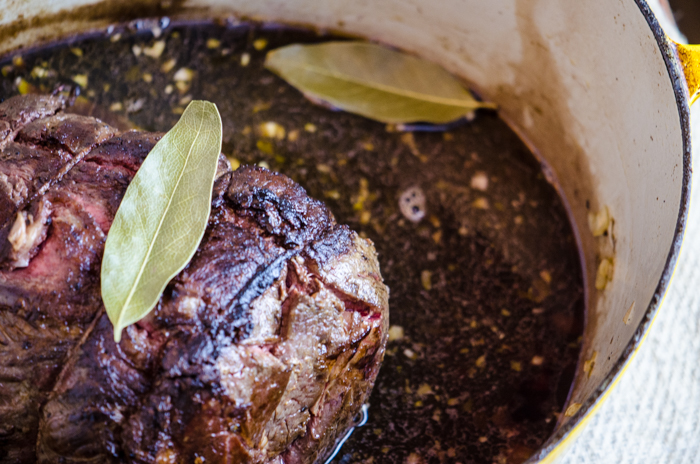
Season all sides of the roast with salt and pepper. Heat the oil in a heavy enamel pot or other ovenproof pot; place roast in the pot and brown on all sides until well caramelized all over. Remove and set aside.

Add the onions, carrots, celery and garlic, season with salt and pepper, and cook until they begin to soften, 4-5 minutes, scraping up all the browned bits from the pan as they cook. Add the bay leaves, rosemary and cloves, stir to combine. Return roast to the pan, placing it on the vegetables.

Add the wine. The wine will come up the sides of the roast so that the roast is half submerged.

Raise the heat to high, when the wine begins to bubble, lower to a simmer and cover. Cook over low heat, turning the meat occassionally, until the meat is very tender, falling apart when you pull it with a fork, and the wine is reduced – this may take 2 1/2 – 3 hours.Turn the roast over halfway through.

Carefully remove the meat to a platter and keep warm. Bring the wine and vegetables back to a boil and continue to reduce until it thickens enough to coat the back of a spoon. Taste and adjust the seasoning with salt and pepper if necessary.

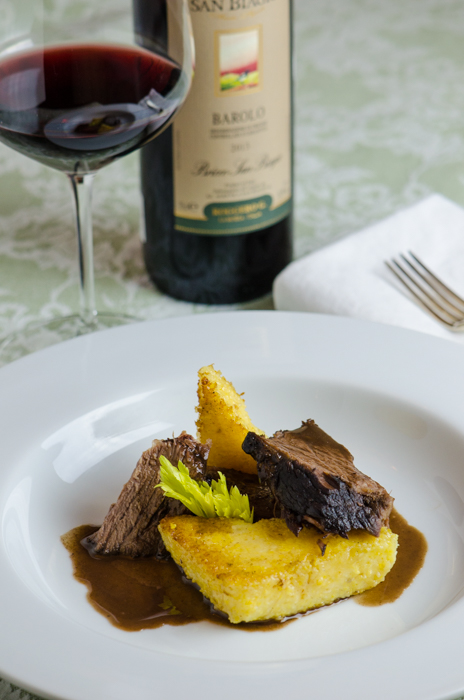
To serve, slice the meat crosswise and arrange slices overlapping and fanned-out on the serving plates. Spoon some of the sauce over each serving.

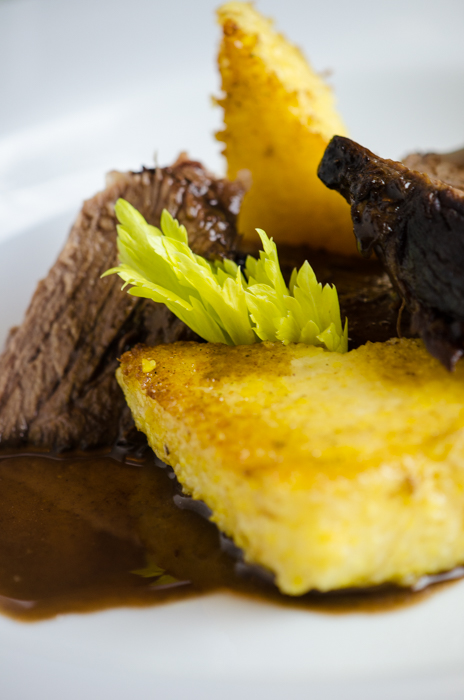
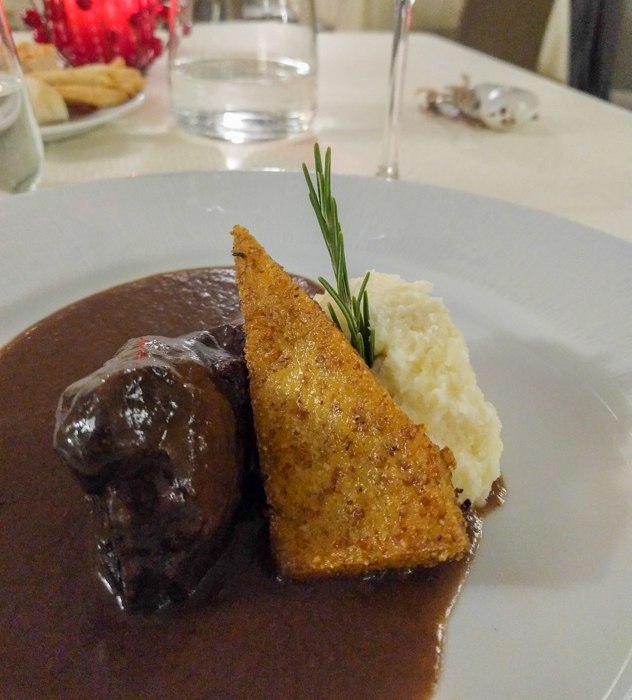
On a recent trip to Piedmont, I enjoyed this dish with pureed celery root and grilled polenta.

brasato-barolo-nieve-piedmont-walking-tours-barolo

Posted in Beef, Braising, Piedmont, Travel, Uncategorized, Wine, Wine Pairings | Tagged , , , , , , , , , | 3 Comments