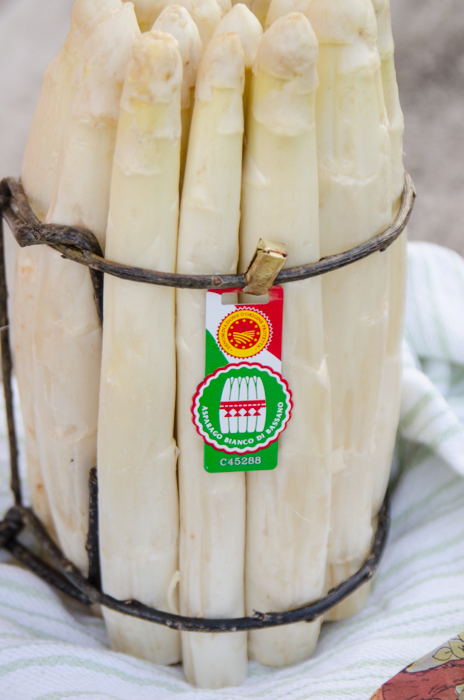
 On our April private cycling tour this past week, we feasted daily on the delicacy of the season, the famed white asparagus of Bassano. Appearing from mid-March to mid-June, the oldest legend attributes its introduction to the area hark back to the 1200s, when Saint Anthony of Padua, who was fond of this asparagus, spread knowledge of the vegetable to Bassano to appease the Lord of the Western Venetian region and nasty tyrant, Ezzelino II da Romano.
 More recently, Ernest Hemingway, during his stint as a volunteer in the Red Cross of the United States during the First World War, so enjoyed the taste of an asparagus dish that he celebrated the plant in his legendary book, Farewell to Arms.
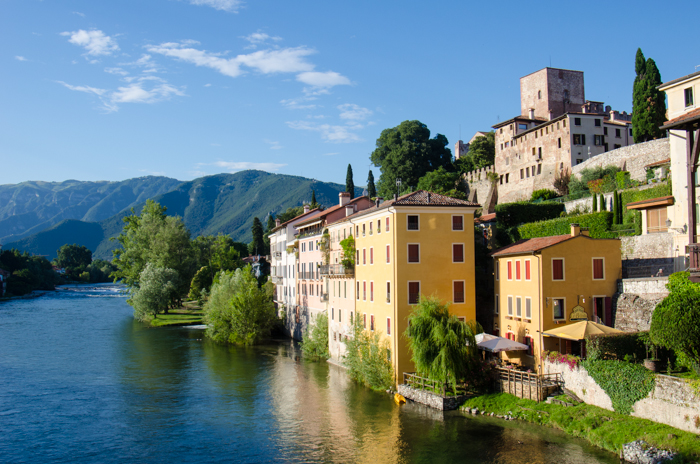
Alongside the Brenta River in Bassano the asparagus found the ideal environment: sandy, soft, well-drained and slightly calcareous soil. The soil type, combined with a particularly mild climate, produces a product recognized for its quality the world over. Its’ pale color, tenderness and sweet-sour perfume make it particularly well-suited for rice dishes, soups, pasta and salads.
 During our week, we enjoyed an asparagus risotto on our first night. Later in the week, we visited a winery with a farm-to-table restaurant that produces their own asparagus. Our antipasti selection included roasted white asparagus with polenta and sopressa. Our primi was a tasting of two pasta dishes – we couldn’t make up our minds! Another asparagus risotto, and a pasta carbonara with white asparagus and poppy seeds, made with eggs from their own geese.
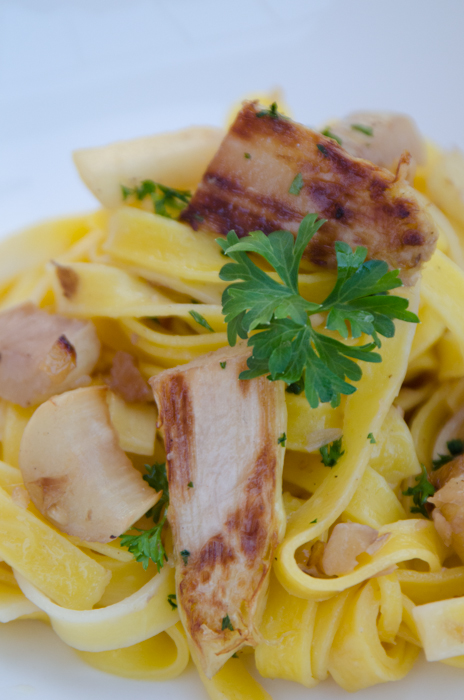
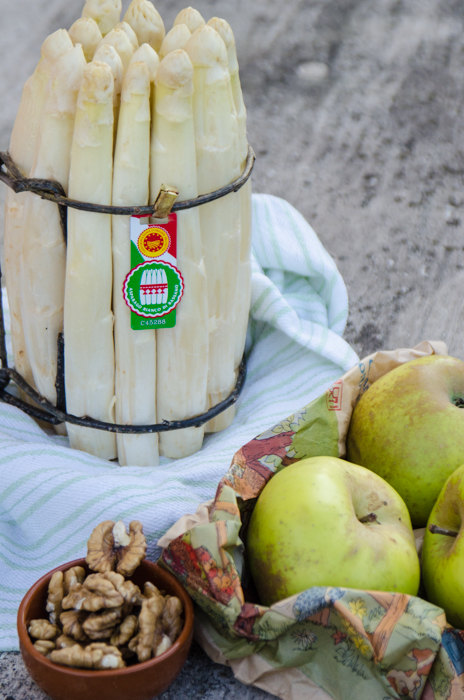
The white asparagus has a very different flavor than our green. It is less grassy and earthy, more refined and well rounded, with hint of sweetness. So we find many more recipes for white asparagus that you might for green. The recipe below is an updated version of a classic recipe for Tagliatelle pasta with asparagus, where apples and nuts complement the asparagus, demonstrating the range of possibilities with this versatile delicacy.
Pairing wines with asparagus is tricky, some of the compounds can make wine taste metallic and harsh. A citrusy, unoaked white is best. Thankfully, the white asparagus is significantly less vegetal than the green, and a bit more wine-friendly. Here in Bassano, I pair it with the local white, Vespaiolo, but this will be hard to find outside of the area.
A Sauvignon Blanc is another good choice, and easy to find. With the white asparagus, I prefer an Old World style Sauvignon (from France, Italy, Spain) which are typically more mineral and herbal than New World style (USA, Australia, New Zealand) which are usually more citrusy. One from Italy I quite like is the Sauvignon from Cantina Terlan in Alto Adige. Probably not a coincidence, as the town of Terlan is know for its local delicacy, white asparagus!
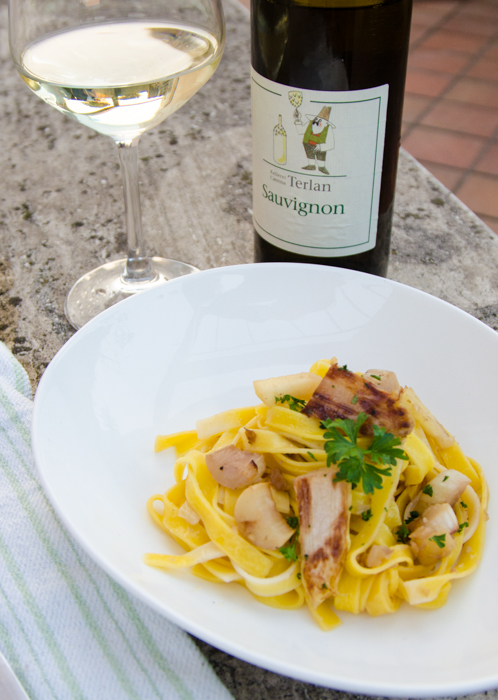
Tagliatelle agli Asparagi, Mele e Noci
Serves 4
1/2 onion, minced
Extra virgin olive oil
1 pound fresh egg tagliatelle or other pasta
12 ounces white asparagus from Bassano, cut into 1/2 inch pieces
1 Renetta apple, peeled and chopped
2 ounces shelled walnuts, chopped
Parsley, minced
Kosher salt and freshly ground pepper
In a large saute pan, pour a bit of olive oil and saute the onion. Add the asparagus pieces and season with salt and pepper. Cooked until the asparagus is tender, about 15 minutes.
Bring a large pot of water to a rolling boil. Add salt. Add the tagliatelle and cook until al dente, which should only be a couple of minutes with fresh pasta. Drain.
Add the apples, nuts, and butter to the pan with the braised asparagus, and cook for a couple of minutes. Add the tagliatelle and stir to combine.
Serve garnished with minced parsley.
 Our
Our 
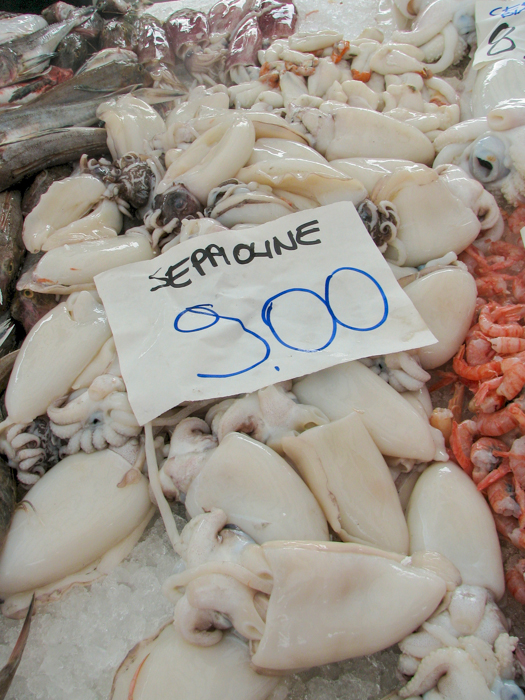
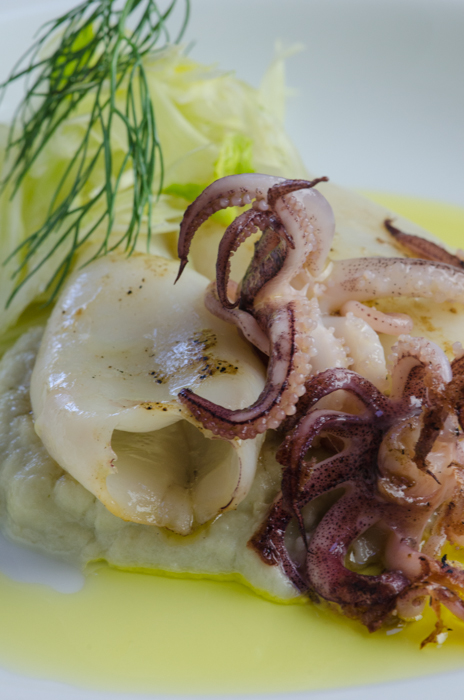
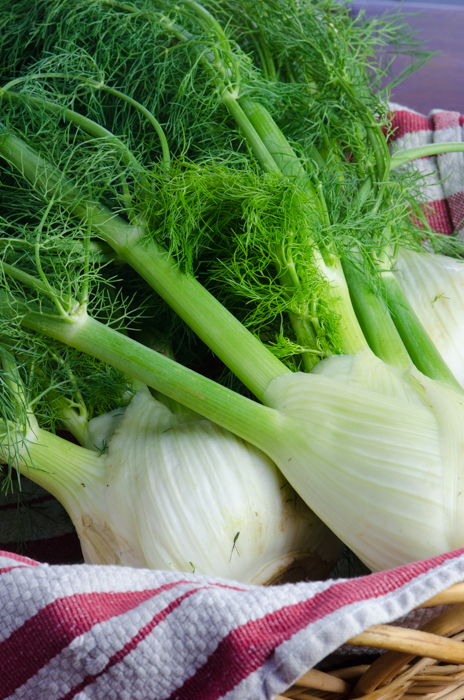 Fennel is a hardy, perennial herb that is indigenous to the shores of the Mediterranean, but today is found many parts of the world, especially on dry soils near the sea-coast and on riverbanks. Known as the Florence fennel, it has a bulb as its base, with stalks emerging from the soil, carrying yellow flowers and distinctive feathery leaves. It has a mild anise-like flavor, but is more aromatic and sweeter. In Italian, fennel is finocchio. Fennel features prominently in Italian cuisine, where bulbs and fronds are used, both raw and cooked, in side dishes, salads, pastas, vegetable dishes and risottos. I particularly like it paired with seafood. Another variation would be to replace the squid with pan-seared scallops.
 Seppie Aromatizzate al Finocchio – Squid with Fennel Cream
 As we explore the Veneto on our
 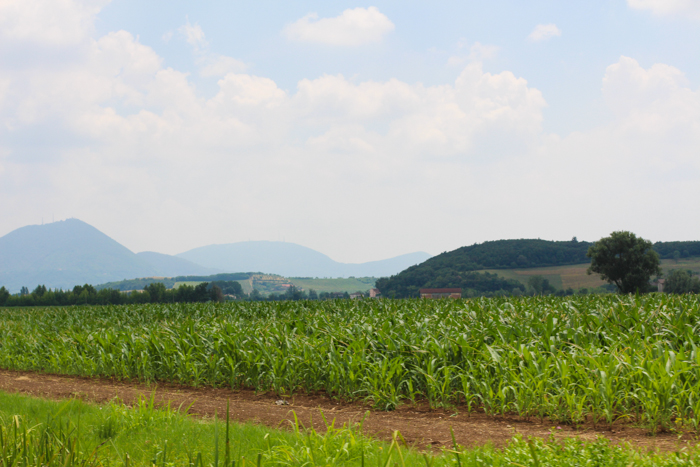 Maize was very easy to cultivate in the lands of Northern Italy, and quickly replaced buckwheat and the other grains. The yield of maize compared to other cereals was much better, making it much more profitable a crop for landowners. Unfortunately, the nutritional value of maize is not as high as the grains it replaced, as it continued to act as a staple in the cuisine of the lower classes in Northern Italy. Today, maize is still the predominate grain used in polenta.
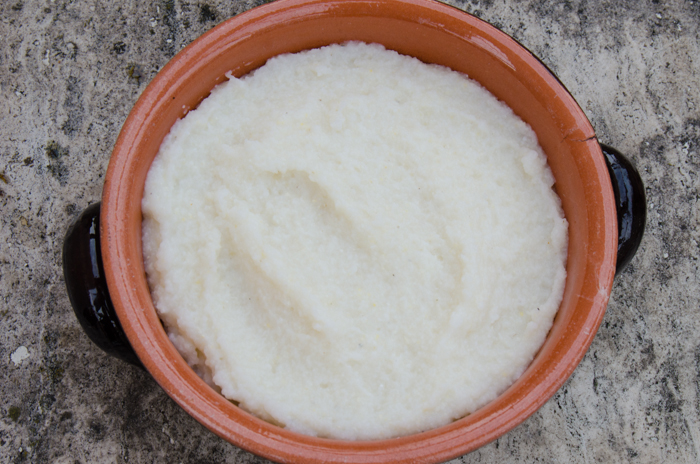 Polenta still plays a major role in the cuisine of the Veneto. It is most commonly prepared with a yellow Marano corn, which is hardy and can be grown in both the plains and mountain foothills of the region. However, until the end of the Second World War, a local white corn variety called Biancoperla was the most highly prized. This corn, which has tapering, elongated cobs with large, bright, pearly-white kernels, was widely planted during the second half of the 19th century. It is know for its fineness and delicate flavor, but has a lower yield than its yellow counterpart.
 Today, a few dedicated farmers continue to grow this Biancoperla corn varietal. It has been recognized by the Slow Food Presidium in order to ensure the quality of the Biancoperla cornmeal and to promote it to consumers.
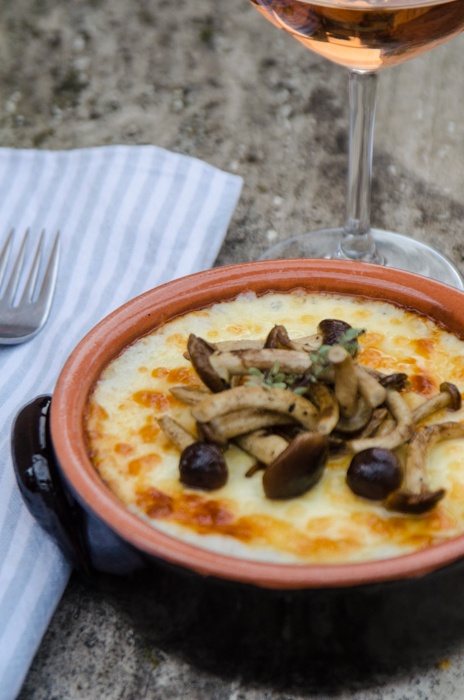
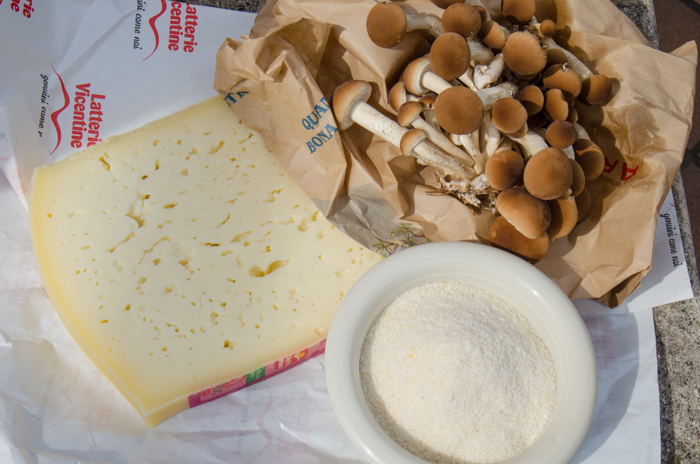
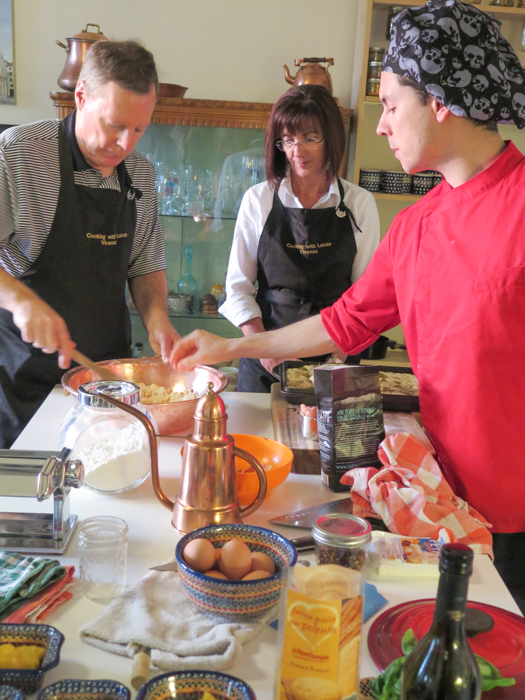 During a recent private walking tour, we enjoyed another wonderful cooking class with Chef Lucas. We made this baked polenta recipe, topped with fresh asiago cheese and mushrooms, but you can envision countless variations! Lucas uses truffles for an elegant spin on this rustic dish.
 As I return to Italy for our first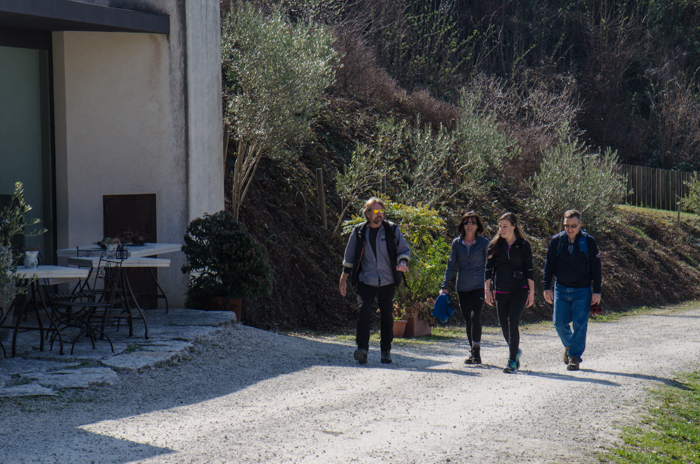
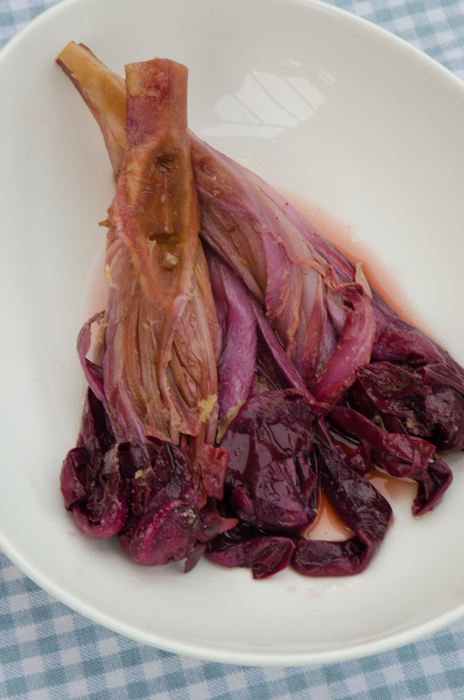
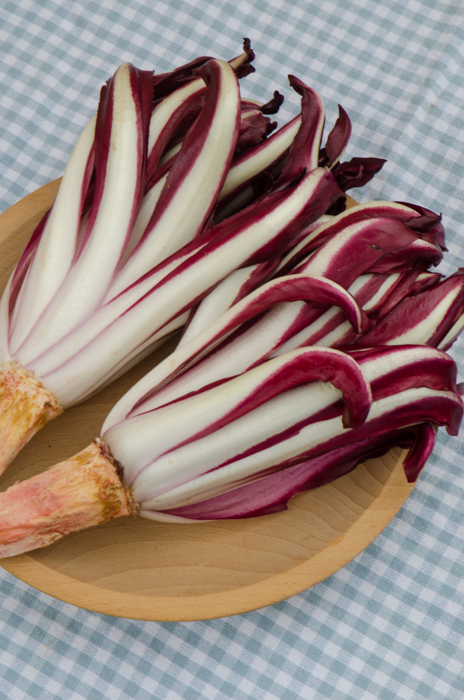 The second type, Tardivo, is more elongated, with a more pronounced vein. Radicchio di Treviso was engineered by a Belgian named Francesco Van Den Borre who lived in Italy and cared for the gardens of the villas in the Veneto. He applied the imbianchiamento techniques used in his country to radicchio plants to create white-veins in the red leaves. This is a forcing, or ‘whitening” process similar to that used for Belgian endive, in which field-harvested plants have their upper halves cut off, and then are replanted in running water. After a few days, the deep red inner ‘heart’ begins to grow, which is sweet and tender, with a touch of the original bitterness still remaining. The older outer leaves are removed and the heart is what you will see in the market.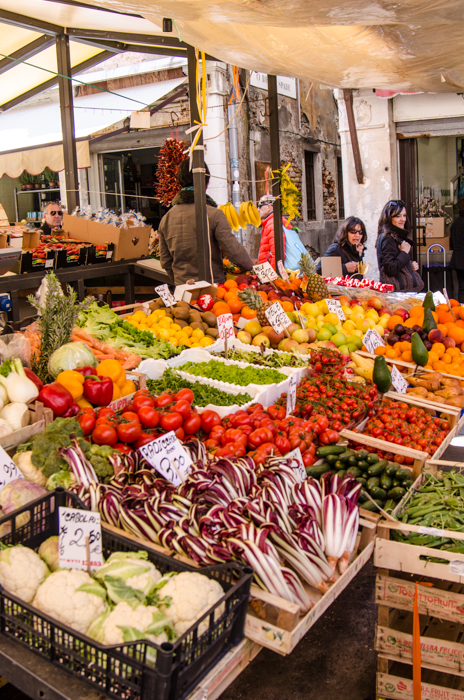
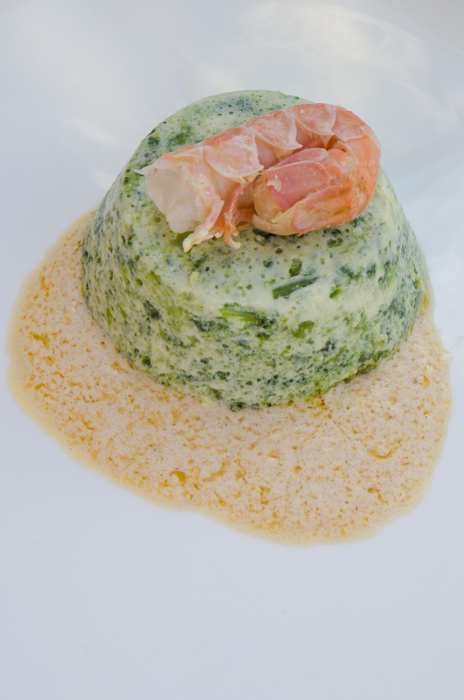 There are countless local varieties of plants that are incorporated into the traditional cuisine and wines of Italy. Due to Italy’s unique geography, these particular species have been isolated to a small area, and may only be found and used within a couple of kilometers. Discovering these very special local specialties is part of any of our
 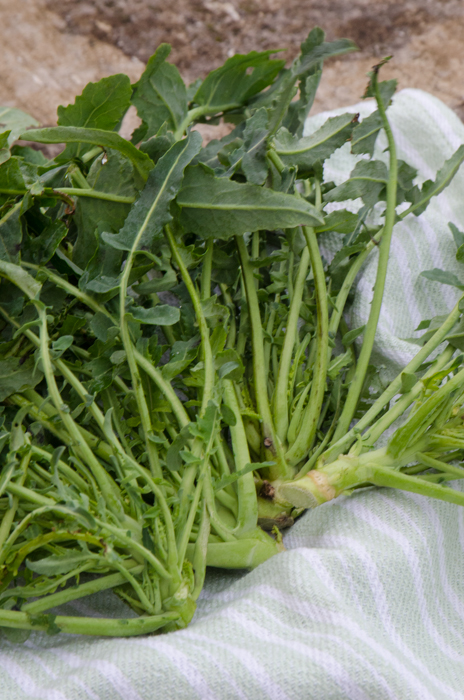 Belonging to the Brassicaceae family, which includes cabbage, cauliflower and kale, fiolaro broccoli has been known in Europe since Roman times. Fiolaro broccoli is unique, as it does not resemble other varieties of broccoli either in form or in taste. Unlike other broccoli, it does not form a flower, but instead produces small secondary shoots along the stem of the plant which are called fioi and have given this plant its name.
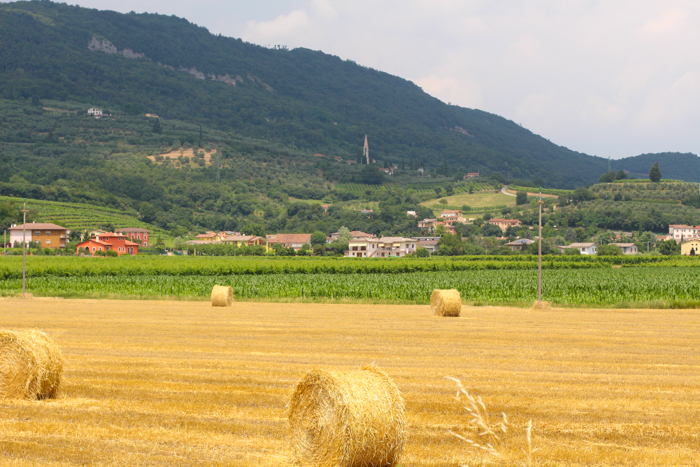 Grown on the hills of Creazzo, just west of Vicenza, at least since the eighteenth century, this plant flourishes in the rich soil on the south slopes in the area of Rivella-Beccodoro-Rampa, where the winter is dry, not too cold, but with brief November frost (-8/10°C) that makes the fiolaro particularly tasty. The plant, which is harvested at the end of February, protects itself from the frost by limiting its water intake, which increases the concentration of salts and sugars.
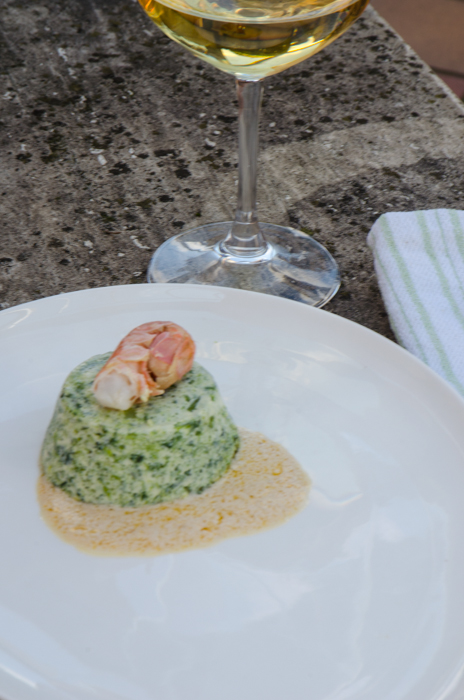 The following recipe is elegant, surprisingly easy, and just as tasty with “regular” broccoli you will be able to find at home. It comes from “Mangiare Veneto: Sette Province in Cucina” (Eat Veneto: Seven Provinces, One Kitchen), by Amedeo Sandri and Maurizio Falloppi. This book offers many recipes for these micro-local specialties of this region, including one recipe for the white asparagus of Bassano, another totally different one for the white asparagus of Sile, nearer Treviso. Locals here in Vicenza would be as likely to gather Fiolaro from the wild, as they would purchase it at the market, then simply saute it with pancetta, onion, olive oil, salt and pepper.