 Our Gourmet Venice to Florence Walking Adventure traverses Northeast Italy, exploring the historical sights, regional kitchens and local wines of Venice, Vicenza, Bologna and Florence. One stop on this journey that surprises our guests, as it is not that well-known to tourists, is the city of Ferrara.
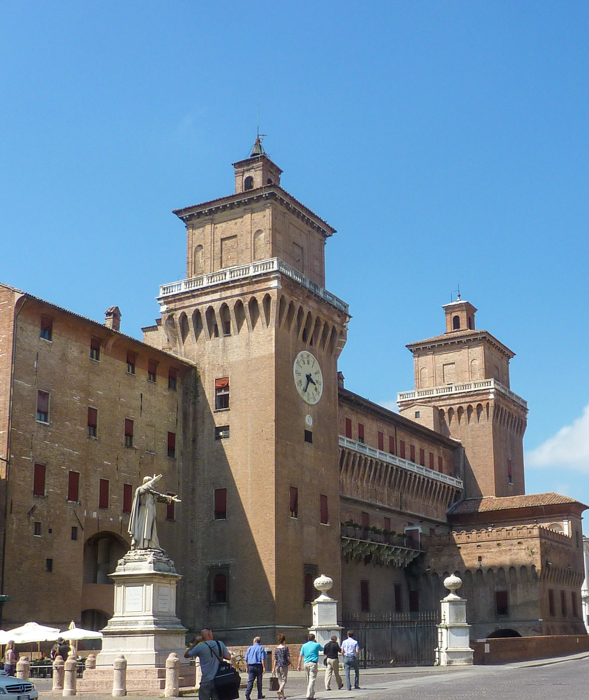
 Ferrara is the capital of the province of Ferrara, in the region of Emilia-Romagna, about 50 km northeast of Bologna. The center of town is dominated by the Castello Estense, a brick castle complete with moat, commissioned by Nicholas D’Este in 1385. The Este family ruled Ferrara for close to 400 hundred years, and during their reign Ferrara became a center for art and culture, and was one of the first examples of Renaissance city planning earning today its status as a UNESCO World Heritage site. The notorious Lucretia Borgia was married to the Duke of Ferrara, Alfonso I, and spent most of her life here in Ferrara, and is buried here as well.
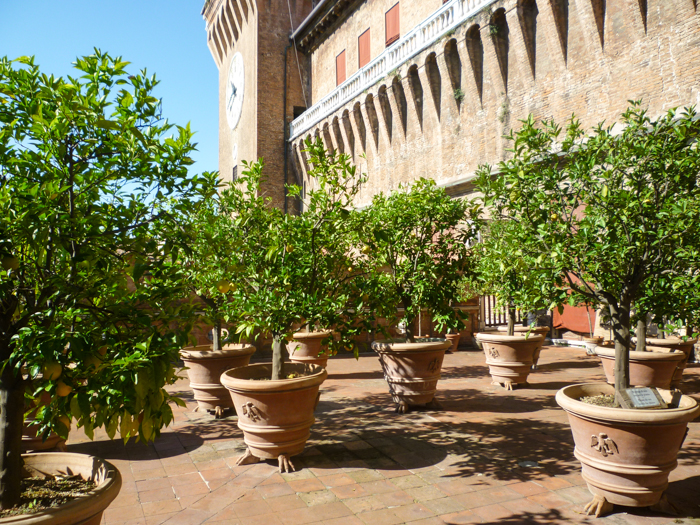
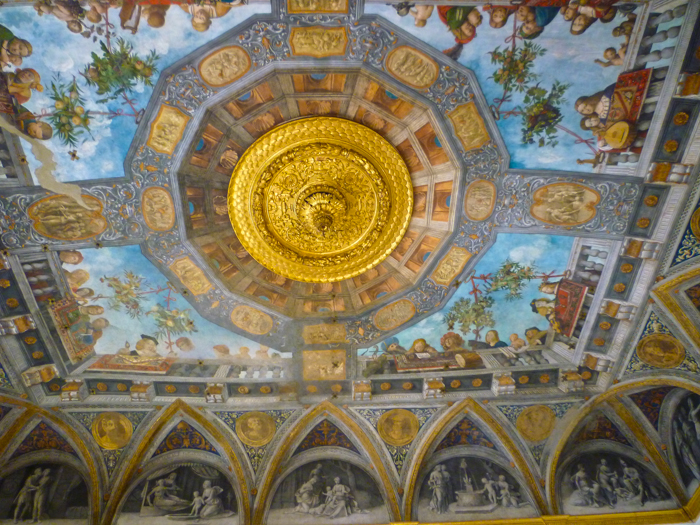
Visitors to the Castello have the opportunity to experience the old prisons, the Tower of the Lions, the terrace orangerie which supposedly inspired the same at Versailles and the ducal kitchens, where a nice exhibit describes the elaborate feasts that were put on by the ruling family. The Este’s were renowned for their elaborate banquets which feature numerous courses, elegant table decorations, and musical and theatrical entertainment, from magicians to pastry castles, pies filled with live birds, sucking pigs, and decorative marzipan figures and sculpted sugar table ornaments.
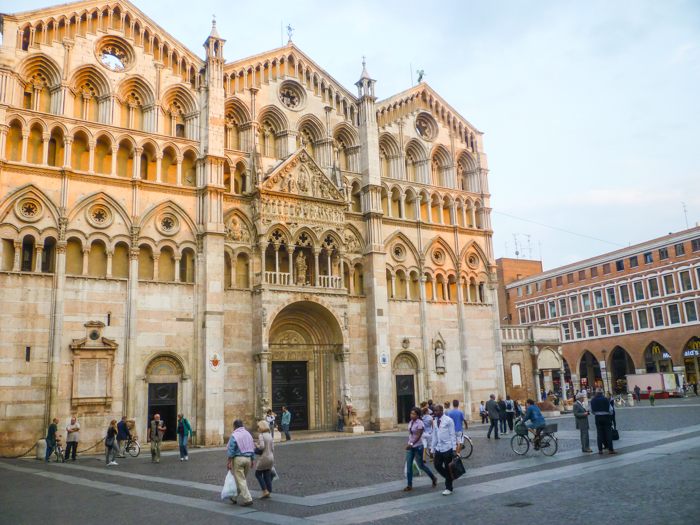 The center of Ferrara is dominated by Romanesque façade of the Cathedral, one of the landmarks of the city. “The Martyrdom of St. Lawrence” by Guercino is among the most important works housed inside the cathedral. The surrounding busy marketplace is the center of activity in this lively city.
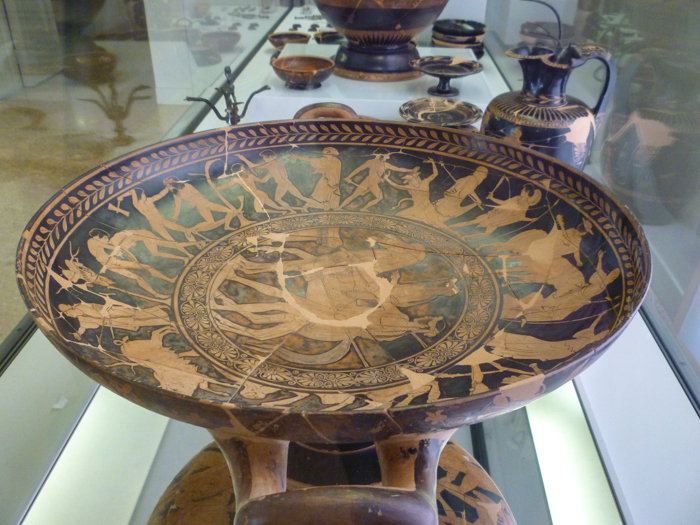 Another spot worth a visit is the Museo Archeologico Nazionale di Ferrara, located in Palazzo Costabili. A very interesting exhibit is dedicated to Spina, an Etruscan port that flourished between the 6th and 3rd centuries BC. Spina was the principal port in northern Adriatic Sea between the late Archaic and Hellenistic periods, and one of the cornerstones of Etruscan presence in northern Italy.
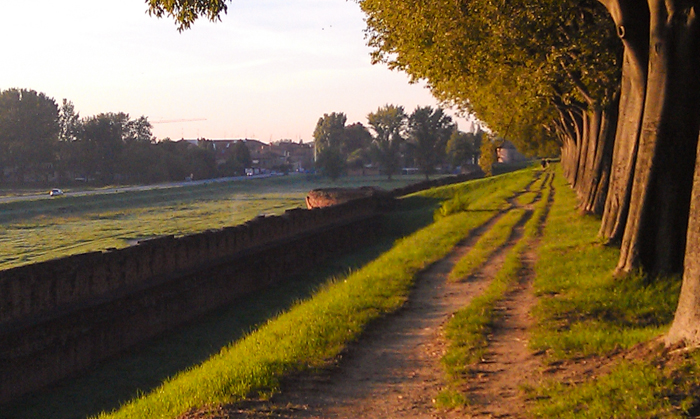
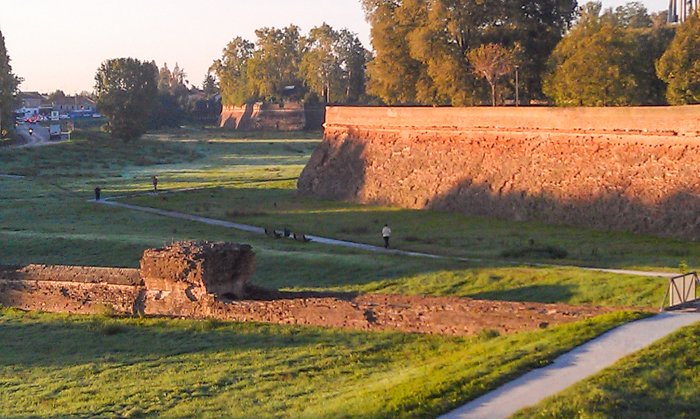
 Ferrara is surrounded by some of the best preserved ancient city walls in Italy, dating from the 15th and 16th century. Today, 9 km of cycling and walking paths follow these walls, where you will often find the residents of this “Citta delle Biciclette” enjoying the outdoors along these quiet tree-lined paths.
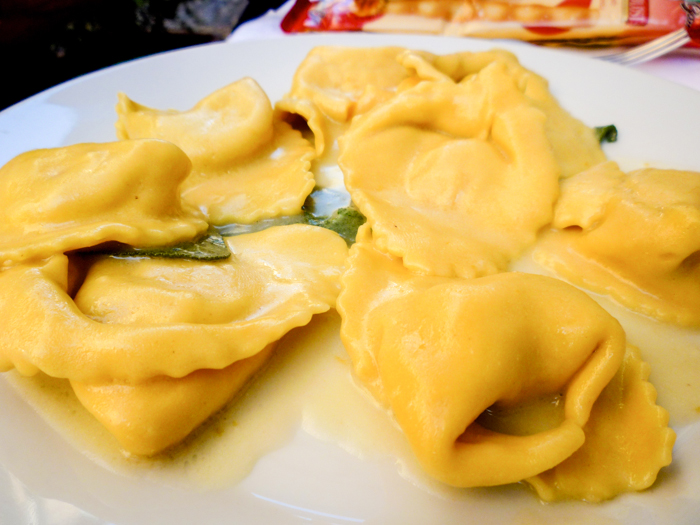
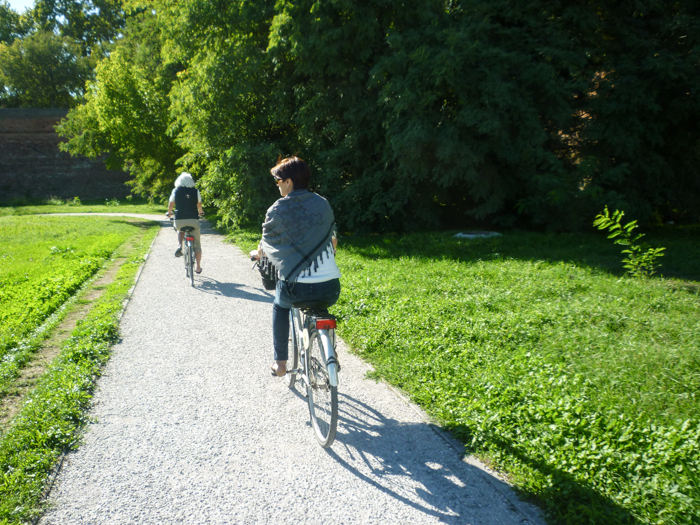 After a nice late afternoon bike ride, we head out for dinner to discover some of the favorite local dishes. The undisputed signature first pasta course in Ferrara is cappellacci di zucca, a stuffed pasta with a filling of winter squash or pumpkin, Parmigiano-Reggiano and nutmeg. It is served two ways, either with a butter and sage sauce, or, interestingly enough, a meat ragu. Cappellacci di Zucca Ferraresi are mentioned in recipe books from the Renaissance, when these were prepared for the Este family. A great place to find both the Cappellaci as well as another Ferrarese specialty, Salama da sugo, is Trattoria da Noemi.
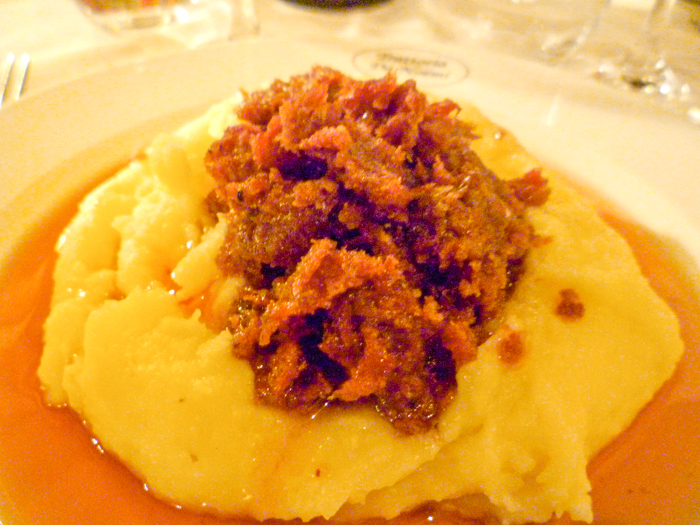
 Salama da Sugo is a locally produced pork sausage that is prepared for eating in a very specific way. The sausage is first soaked in warm water overnight in order to soften the outer crust, which is then brushed to clean it. Next, it is wrapped in a cloth and immersed in a pot of water, hanging from a wooden stick so it does not touch the bottom. The water is brought to a low boil, and the sausage simmers here for over four hours. Once cooked, you carefully break the casing and spoon the warm meat over mashed potatoes or polenta.
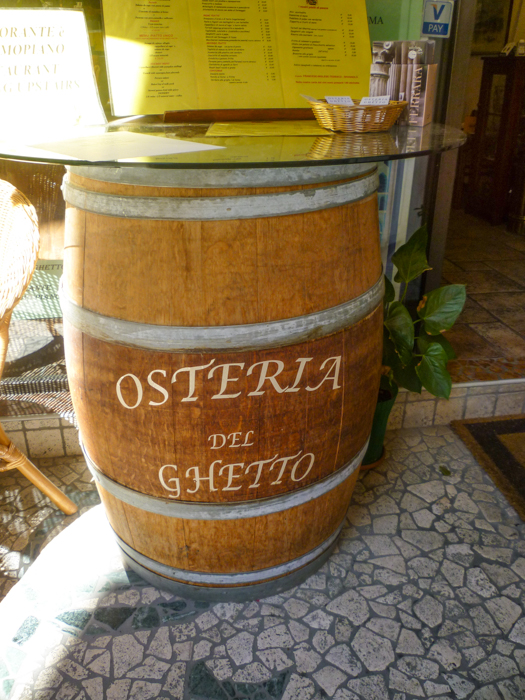
 A wonderful dining destination in the heart of the medieval district of Ferrara is the Jewish Ghetto, where the Jewish community of this city was segregated from 1627 to the Unification of Italy (1848 – 1870). Sights here include quaint terracotta houses, the Jewish school, and the Synagogue in Via Mazzini, site of the Jewish Museum. My favorite restaurant here is the Osteria del Ghetto, where you can sample traditional dishes of the community.
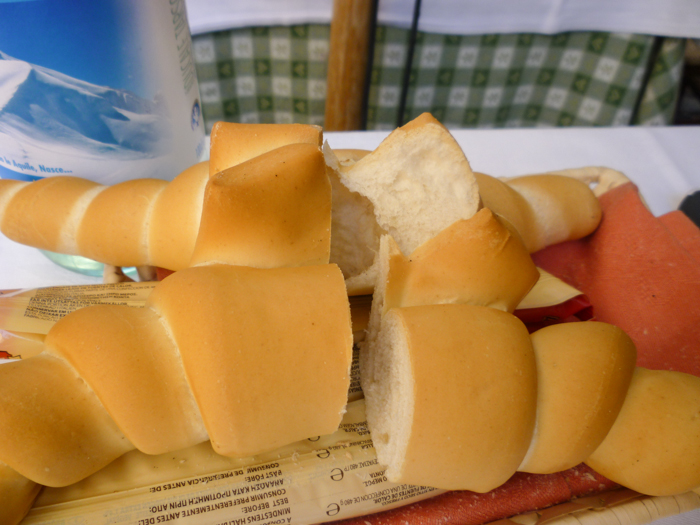
 The breadbasket will arrive filled with bread with a very unusual shape, this is coppia Ferrarese (ciupeta), the local specialty bread. This bread dates back over 800 years or more, when rules instructed bakers to produce bread in the shape of scrolls (orletti). Today’s version is a sourdough bread, made from two rolled up ribbons of dough which are united together in the center, leaving the four twisted ends sticking out like a four pointed star. Coppia Ferrarese enjoys PGI (Protected Geographical Identification) recognition by the European Community.
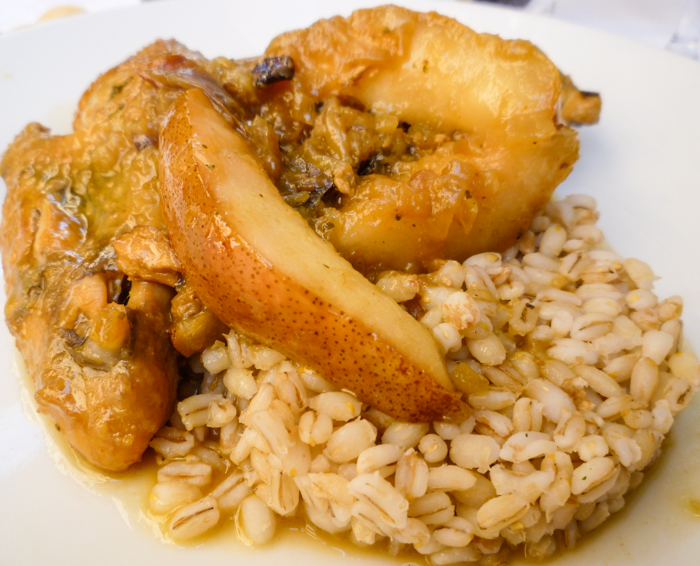
 Due to religious restrictions, you would not find pork dishes here, instead, poultry based dishes were common. Here, try the Chicken Braised in Pears, spiced with cinnamon, featuring the local pears found in the orchards surrounding Ferrara.
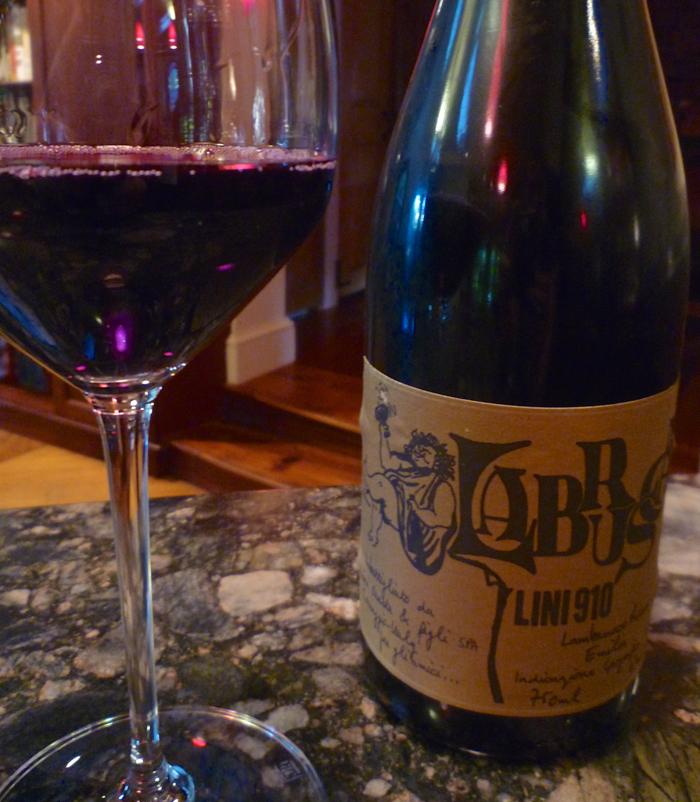
 When in Ferrara, I recommend the local wines to accompany your meals. The region of Emilia-Romagna produces quite a bit of wine, but not a lot is exported. You should try a glass of Lambrusco, and re-discover this wine you have probably tried early in your wine drinking career. Lambrusco is the name of both a family of red grapes, and the sparkling wines produced with them. There are many varieties of the grape, over 60 have been identified throughout Italy. The best to try: Lambrusco Salamino, Sorbara, and Grasparossa.
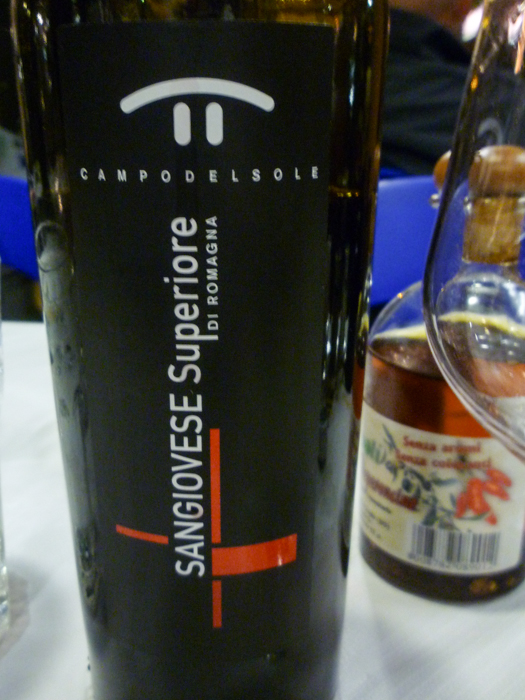
 For a white, the local favorite is a Pignoletto. Here in Emilia-Romagna the residents proudly use this name, but DNA analysis has shown that Pignoletto is actually the Grechetto grape grown in Umbria. The best are lively and crisp, and you can find both still and sparkling versions. Finally, the local red wines are made from the Sangiovese grape, the most widely planted grape in Italy, You have no doubt enjoyed Sangiovese based wines before, in your glass of Chianti. Spend your evening in Ferrara enjoying a glass on the Piazza della Cattedrale, watching the sunset reflecting on the historic facade.
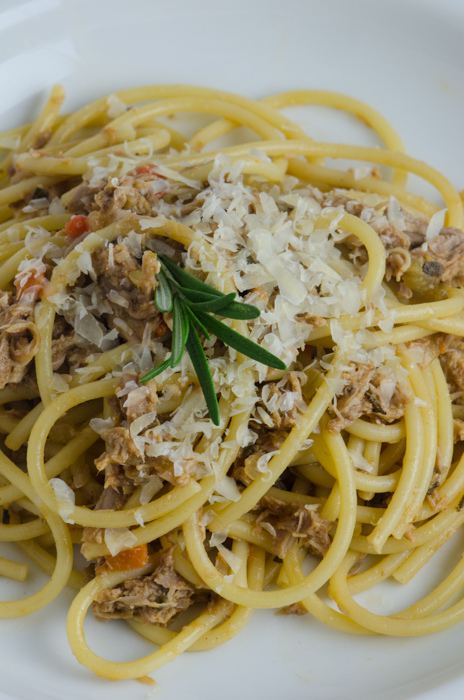 Venetians themselves are not really meat eaters; their watery surroundings naturally drove them to a seafood based cuisine. However, as we move inland from Venice to the mainland on our
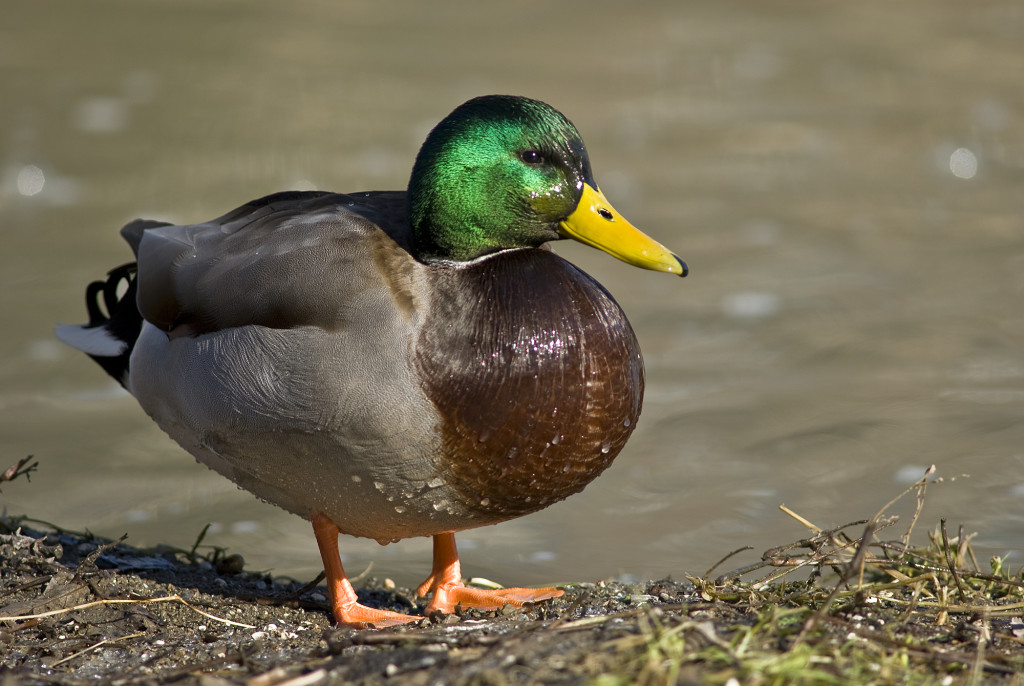
 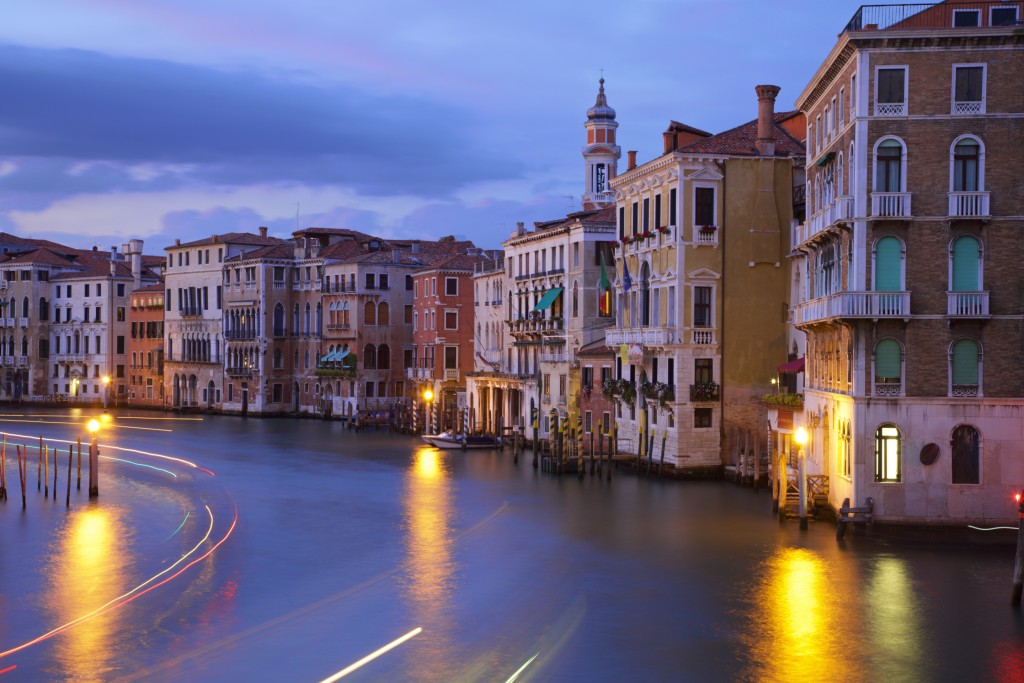 All along the waterways leading to the Venetian lagoon, we see the food products used in the local cuisine, from rice for risottos, to fresh-water fish, to waterfowl. Traditionally there was an enormous variety of water birds that were hunted and used for food. Each would be prepared in a particular way, designed to exhibit (or hide) its particular characteristics. Nowadays, we see recipes that call for “duck”, years ago, you would prepare each particular variety in a slightly different way. The most prized species of duck “germano reale”, the familiar Mallard, even had different preparation techniques for the female (boiled, and used for stock) than the male (roasted). There is a specific recipe for the pintail duck, another for the teal, the tufted duck, the coot, and so forth. Waverly Root describes recipes in which the not-particularly attractive taste of heron and curlew is disguised with a lengthy marinade in white wine, lemon juice, consomme and herbs.
 When using meat in a recipe in the Veneto, you will most likely see it chopped up and used in some sort of sauce, rather than served in large pieces as is done in most meat loving regions. Poultry in general is more popular in this region than beef or other meats, undoubtedly due to the availability of waterfowl in the low-lying wetlands of the region. Throughout the area, you will see a meaty duck sauce served in a variety of different ways. In Venice, it might include tomatoes and be served over gnocchi. In Vicenza, it will be served over the favorite local pasta, bigoli, not often seen here in the US, but most closely resembles bucatini, a wide, hollow, spaghetti.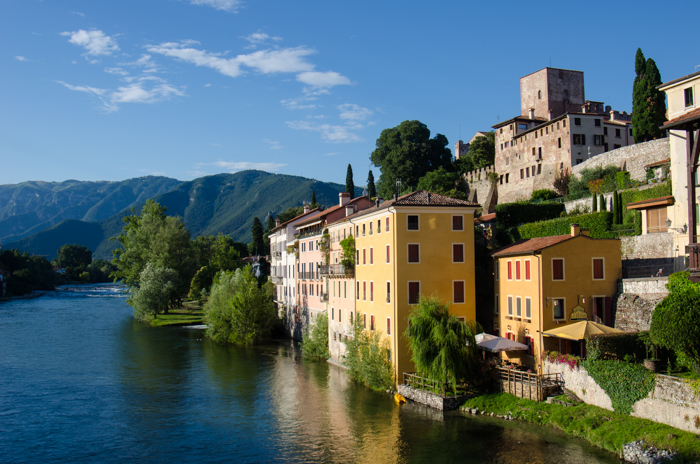
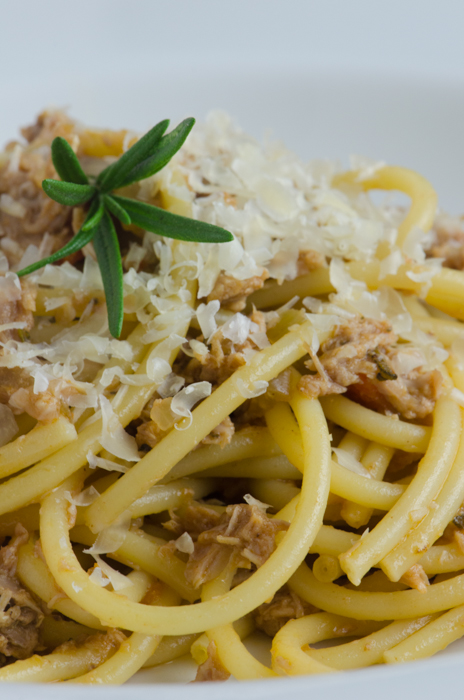
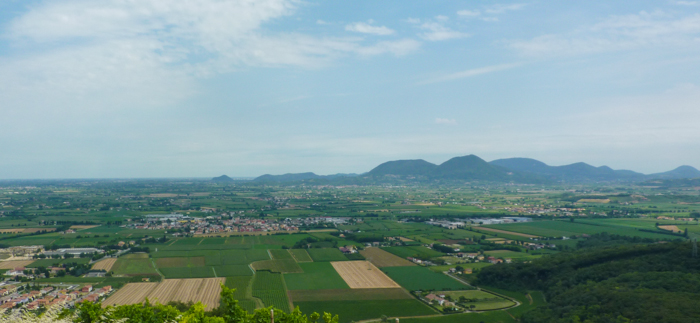
 Exploring the countryside of Northern Italy during
  The origin of the cultivation of rice is poorly documented. Some scholars believe it was grown as early as the seventh century BC on the island of Java; others identify China. What is certain is that it spread throughout Asian; from Japan to the Middle East.
 The first firm evidence of the cultivation of rice in Italy is a letter from 1475 in which Gian Galeazzo Sforza, Duke of Milan, sent 12 bags of rice to the Duke of Ferrara so he might taste the product of his lands. In the following centuries constant land reclamation and a new water infrastructure enabled the spread of the rice fields, despite the resistance of the authorities who considered these rich areas of standing water a source of malaria – which was one of the leading causes of death in Italy until the 1950s.
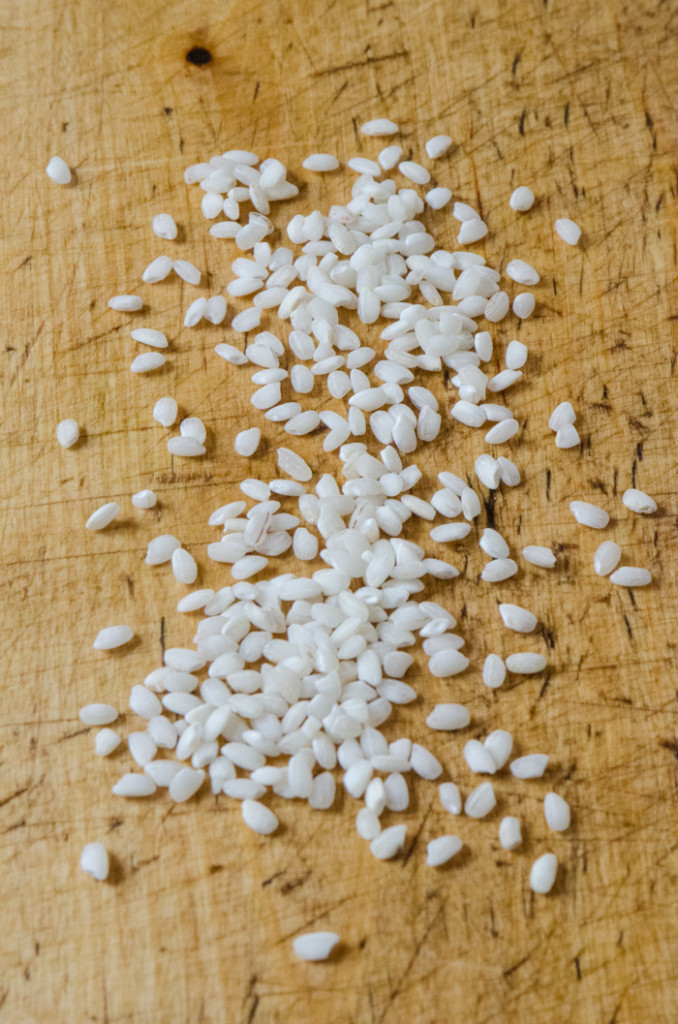
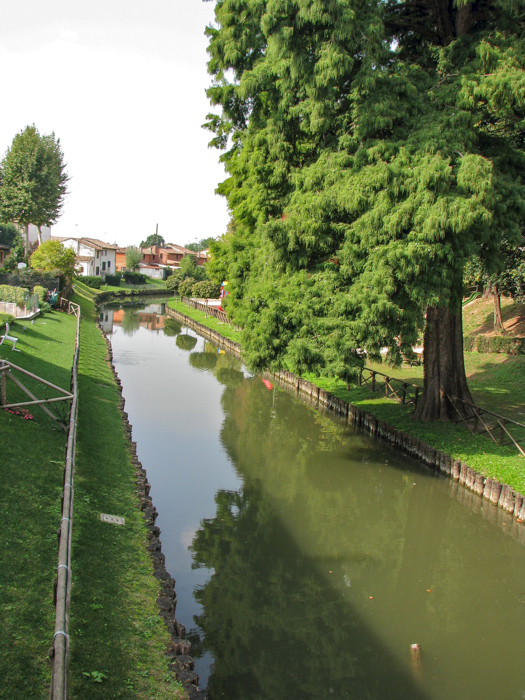 With the opening of the Suez Canal, the Italian production of rice suffered due to the import of cheaper rice from Asia. This continued until the end of World War II, when a growth trend began that brought Italy to a leading position in the European market. In concert with this growth was a resurgence of Italian style rices that possess the unique characteristics required for the best risotto – an extraordinary ability to absorb liquids and seasonings, up to an impressive twice its weight, and a kernel that retains is consistency during cooking, rather than becoming mushy.
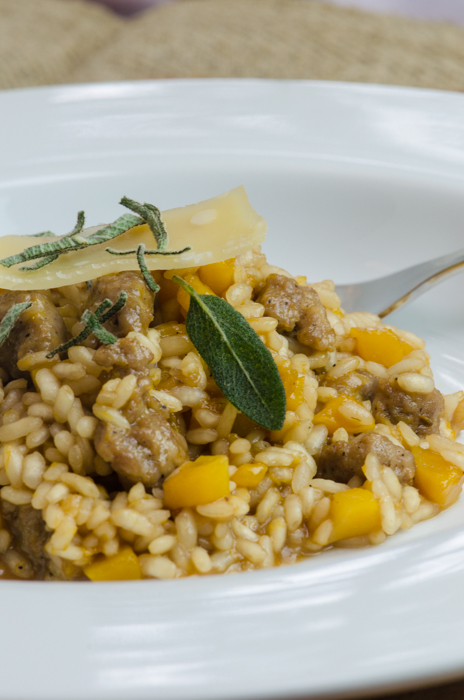
 The recipe below is just one example of the main flavors of risotto found in the Veneto. The source is a recipe book put out by one of the region’s tourist boards, so it identifies the local products one would use – the Vialone Nano rice, Soave wine, Grana cheese. I’ve identified options that you are more likely to find here in the US. To make it vegetarian, leave out the sausage and use vegetable stock. It is naturally gluten free.
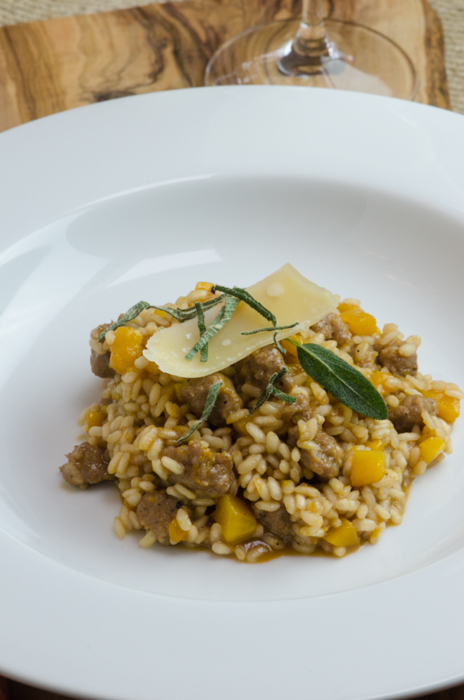 Risotto con Zucca e Salsiccia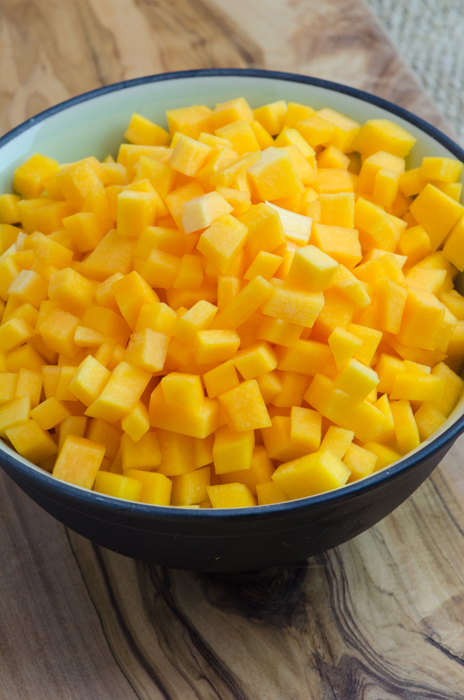
 During many of our
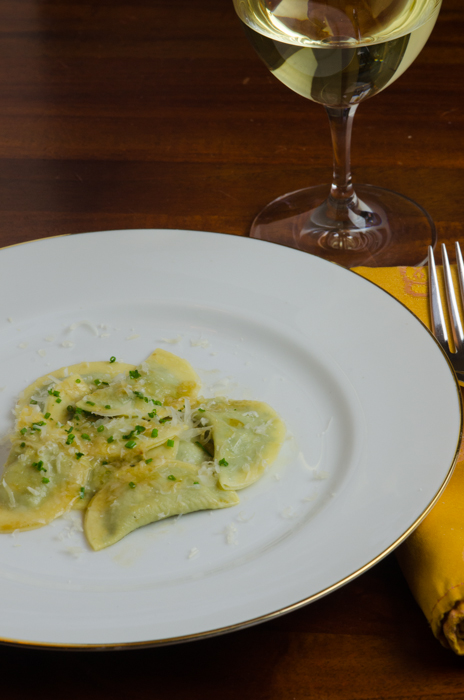
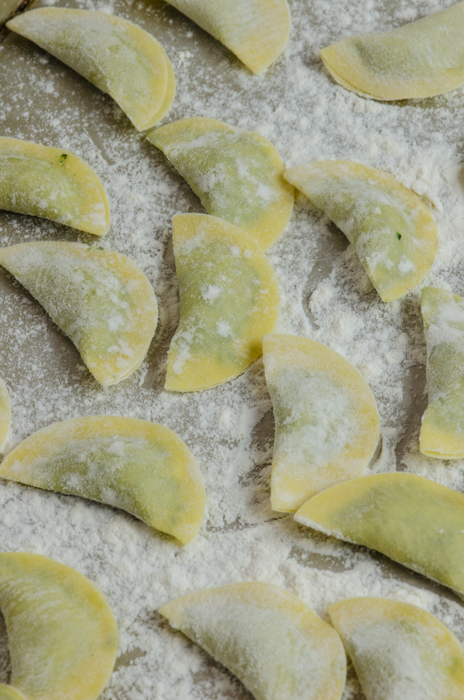
 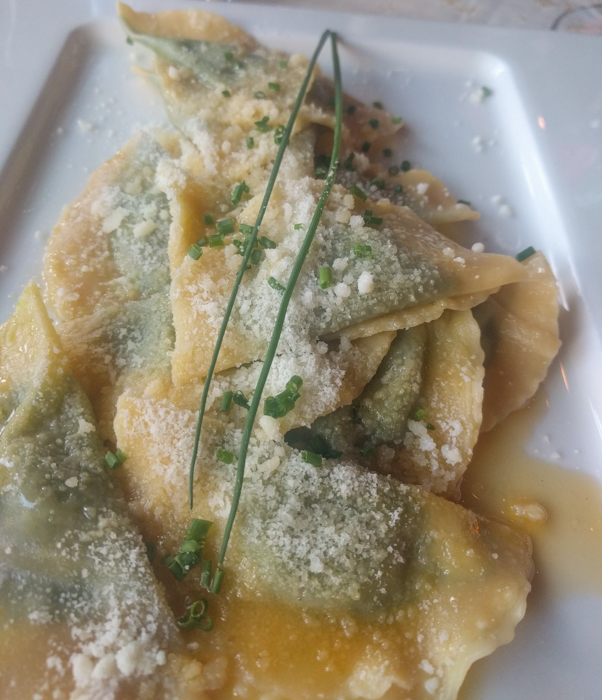 Schlutzkrapfen, called Mezzelune (“half moons”) by the Italian speaking natives of the region, are semi-circular stuffed pasta, similar to ravioli.They are also known as Ravioli della Pusteria, after the Pusteria valley. The dough is usually made of white flour, sometimes mixed with rye or buckwheat flour, mixed with eggs and milk. The fillings may vary, but the most typical is ricotta cheese and spinach. These would often be served during days of abstinence, as a meat free first course. Similar types of pasta found in Northern Italy are the beet stuffed
  I adapted this recipe from a cookbook put out by the Sudtirol Tourism agency, Alpine Flavors: Authentic recipes from the Dolomites, the Heart of the Alps. Here, they introduced yet another name for this dish, the Ladin name Cajinci t’ega. The Ladin people are an unique ethnic group in northern Italy. Their native language is Ladin, a language related to the Swiss Romansh and Friulian languages. The Ladin people constitute only 4.5% of the population of South Tyrol, but their influence has played a role in the culture, history, and traditions of this region.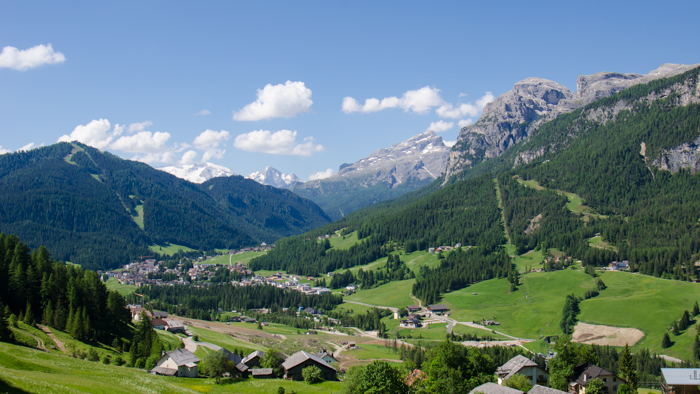
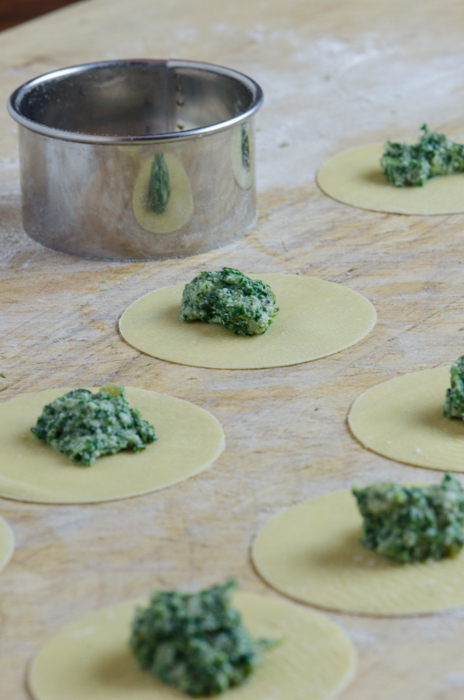 On half of each disc place a teaspoon of filling, fold over the other half and press the edges together well.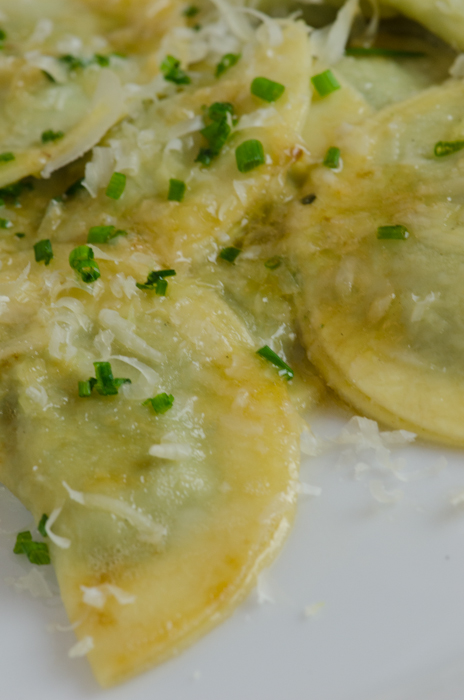
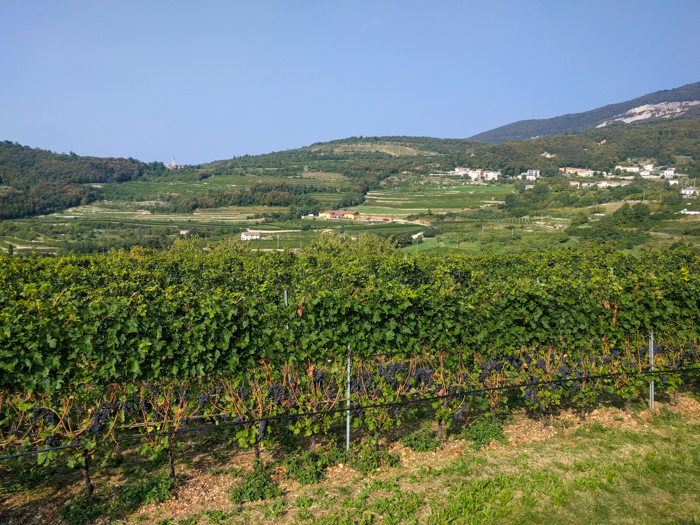 There is no better way to appreciate the terroir of a wine than to walk through it. On our private walking tours in Italy we typically plan a day to do just this – choosing a route that brings us through the countryside and vineyards to a winery where we learn how they create amazing wines from their picturesque surroundings – the soil, the vines, the climate, the grapes. This season we spent a day walking up in the hills of
  Gaetano Accordini, helped by his wife Giuseppina Bertani, opened the winery in the early 1900s when he purchased 5 acres of land in the town of Negar. HIs son Stefano continued the business, producing Valpolicella wine for the local market. Stefano’s sons Tiziano and Daniele continued the business through the 1970s, when lower quality Valpolicella wines flooded the market, and the business struggled to remain profitable. Daniele remained committed to producing quality wines, planting new installations of Corvina, Corvinone, Rondinella and Molinara, decreased yields per hectare, and modernizing the cellar and wine production process. Today the fourth generation is carrying on the family tradition, with Giacomo overseeing viticulture, Paolo caring for all stages of vinification, aging and bottling, and Marco currently a student of Agronomy and Enology.
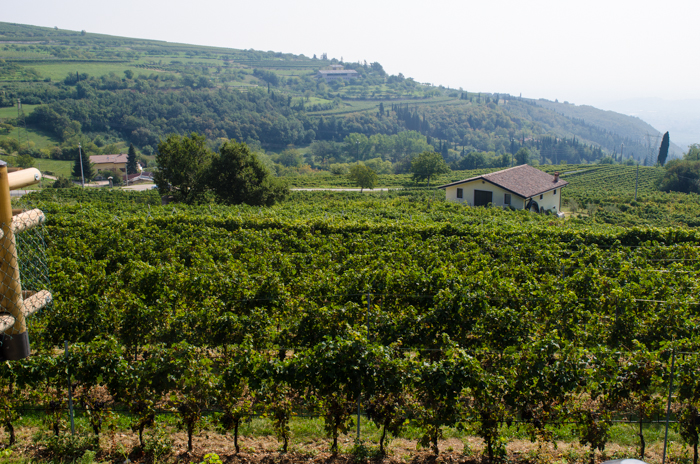 In 1999, the family purchased an additional 10 acres in the hills of Fumane, in the village of Cavalo. The most favorably situated vineyards in the classico zone are located in the Monti Lessini foothills, where the grapes ripen at altitudes between 150–460 meters. The vineyards of Accordini are located between 500 and 600m, making them the highest vineyards in the area. The higher elevation means lower temperatures, concentrated sun exposure, and a large temperature differential between night and day.
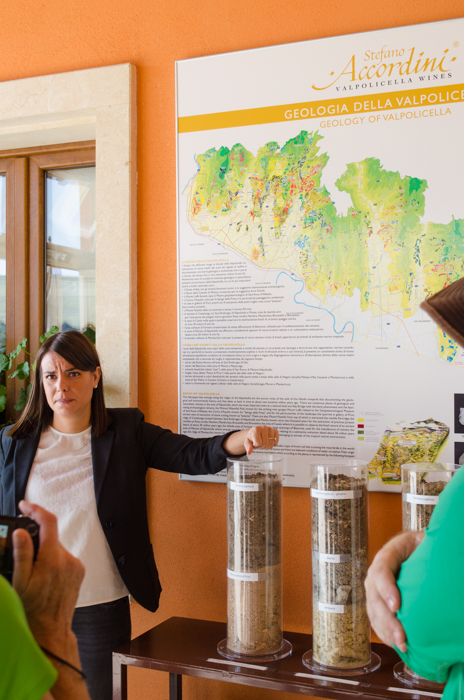 After a lovely walk up through the vineyards to the winery above Fumane, we enjoyed a private tour of the cellars. Alessandra warmly greeted us, then introduced us to the unique terroir of the region, showing samples of the various soil types, from morainic gravel near Lake Garda to more dolomite residual gravel with alluvial deposits. Alessandra tells us how many areas have tried to cultivate Valpolicella’s most important grape, Corvina, but the results have not lived up to the quality achieved here.
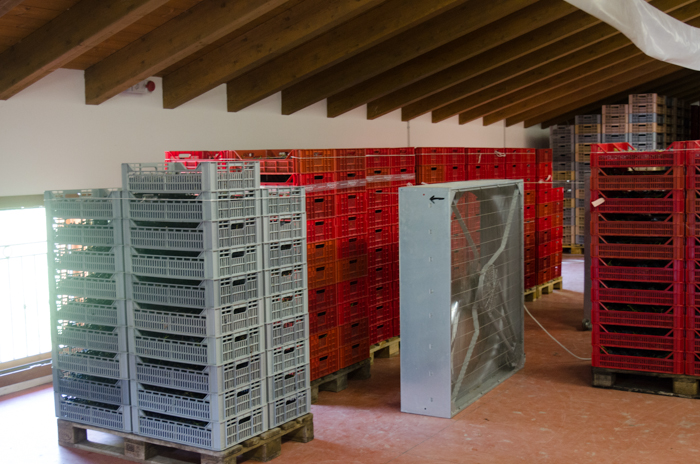 Then we moved to the drying loft, our late September tour the perfect time to visit as it is during harvest and we see how the grapes are layed out on pallets and stacked to dry. The grapes destined to become Amarone dry for 3 months, for Recioto, 4. DOC regulations dictate what percentage of grapes can go into Amarone, typically 50% in a good year, like 2015. In 2014, a bad year with too much rain, only 35% of grapes could be used. During the drying process, the grapes loose 35 to 40 percent weight. One bottle of Amarone requires 5 kilos of grapes, over 10 pounds!
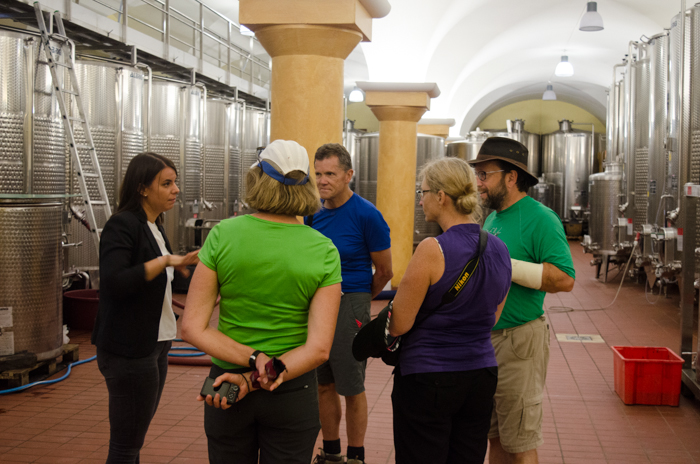 Off to the cellar, where we learned the different processes for each wine. The ‘basic’ Valpolicella is produced in typical red wine fashion – harvested grapes are pressed, yeast is usually added, and the juice and skins/pulp sit and ferment. Fermentation continues until the sugar in the grapes is converted into alcohol and CO2, the skins/pulp (called lees) is removed, and the wine is placed in either stainless steel tanks or wood barrels – or both – to age. For the Valpolicella Classico, a fresh wine meant to be enjoyed young, it is aged in stainless steel tanks, with an additional two months in the bottle.
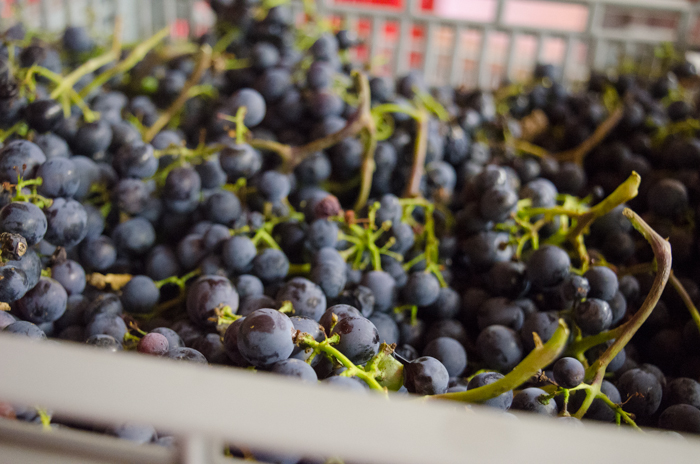 For Amarone, the best grapes are picked, then dried in the loft for 3 months, which concentrates the sugars. The grapes are pressed, yeast is added, and fermentation occurs. The higher sugar content means more alcohol is produced, and a special strain of yeast must be used, to withstand the higher alcohol content. After this maceration, which lasts about 35 days, the juice is the filtered off from the lees, then off to the aging rooms. The Amarone is refined in new French oak barriques for 24 months, then in bottles for a additional 8 months.
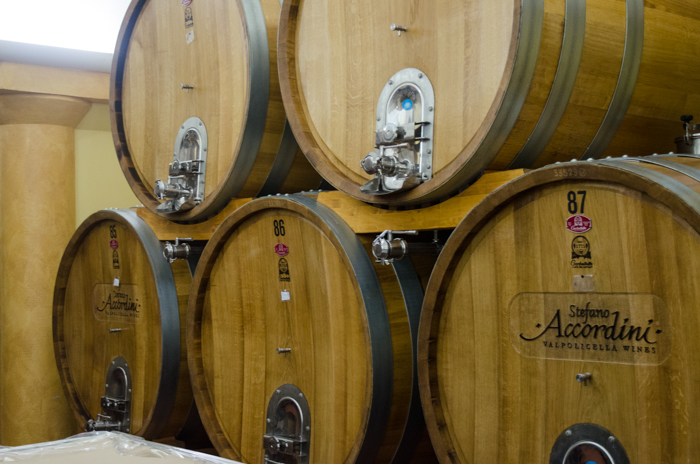
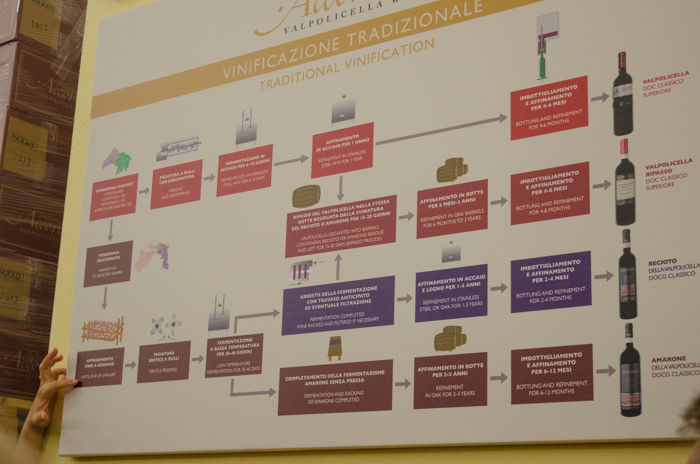 The lees from the Amarone are not disposed of quite yet. Instead, they are put to use in yet a third style of dry red wine made in this region, a Valpolicella Ripasso. Some of the Valpolicella wine mentioned previously is pulled off, placed on the leftover lees from the Amarone for about 10 days, allowing a second fermentation occurs. The Ripasso is aged in barriques of French Oak for 12 months, then six other months in bottle. The resulting wine offers a bit more structure and complexity than the Valpolicella.
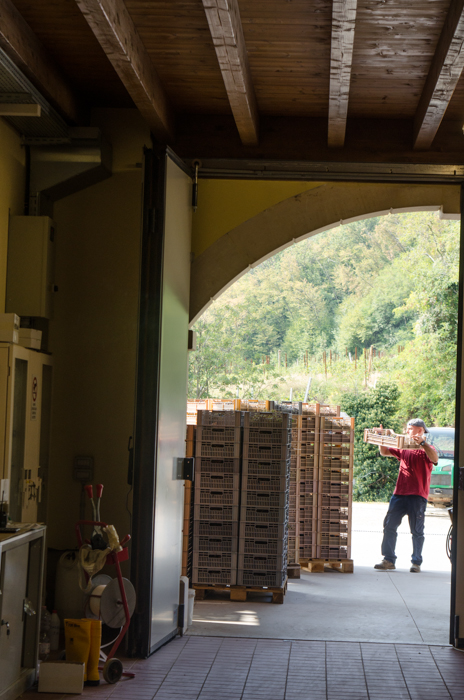 Finally, the Recioto dessert wine – this is produced using the same method as the Amarone, but the fermentation Is halted earlier, after only about 20 days, when some residual sugar still remains. The Recioto is refined in barriques for 4 months, then in bottles for 3 months.
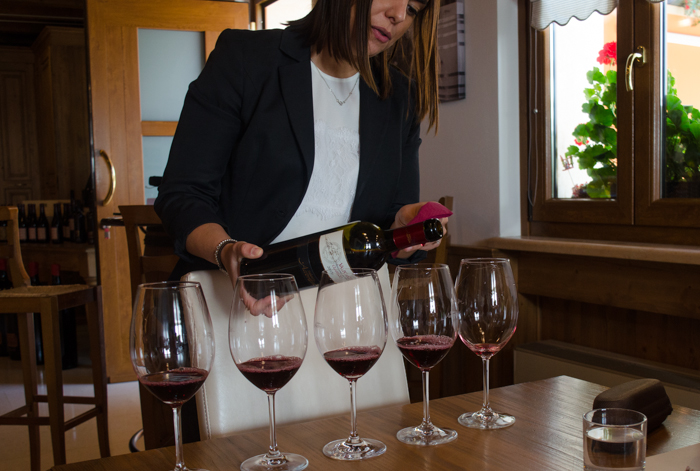
 Finally, the moment we’ve been waiting for – the tasting! We tasted all four of the aforementioned wines, three from their Acinatico line. Acinatico is ancient Roman name for wines of this area. The first reference to this wine goes back to the 5th century A.D. in a letter of Cassiodoro, minister of king Theodoric, who was looking for red “Acinatico” for the royal meals. This was a red wine made during the winter months with wilted grapes; it was very difficult to get, at least in large quantities and was produced in the hills around Verona.
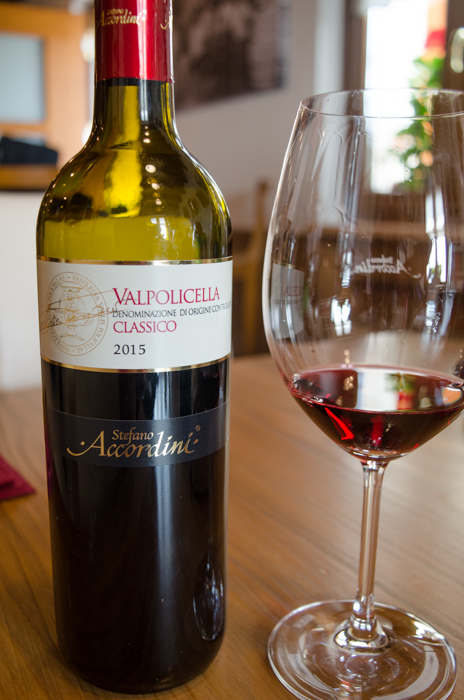 Bright ruby red with hints of violet. Very fresh and fruity, cherries and berries. Medium body, it should be enjoyed while young to appreciate it at its best. A versitile food wine, it is recommended with first courses and soups.
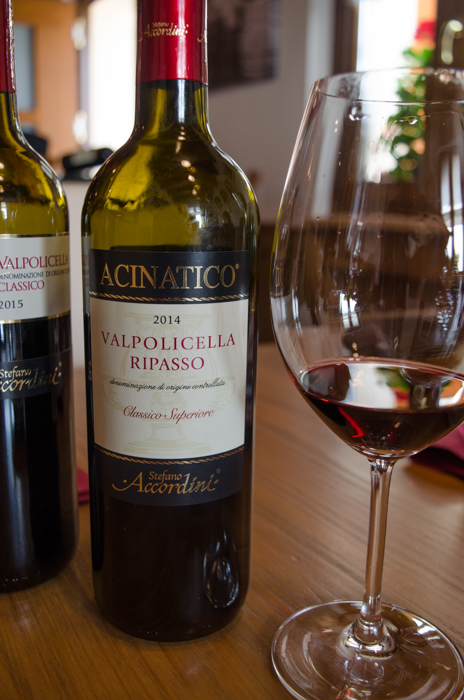 Corvina Veronese (60%), Corvinone (15%), Rondinella (20%), Molinara (5%).
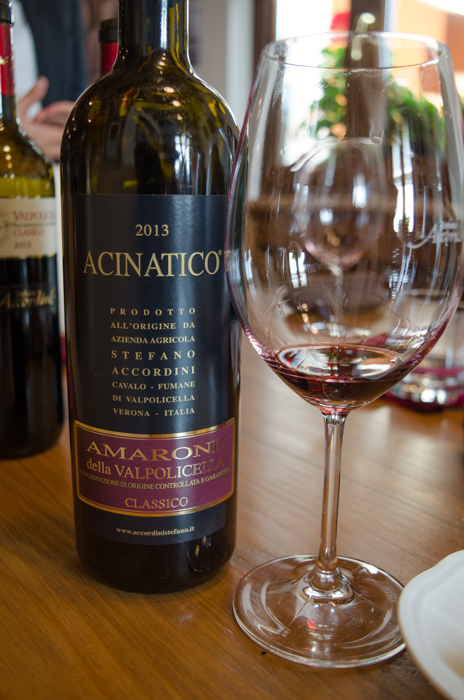 Corvina Veronese (75%), Rondinella (20%), Molinara (5%)
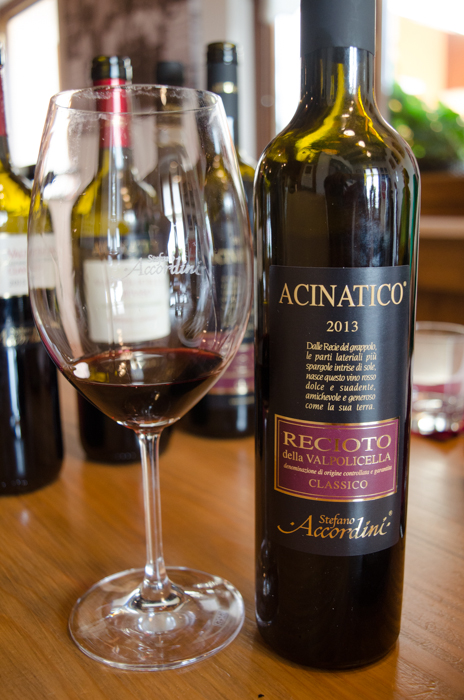 Corvina Veronese 75%, Rondinella 20%, Molinara 5%