Wines of Alto Adige: Valle Isarco DOC and Garlider Winery

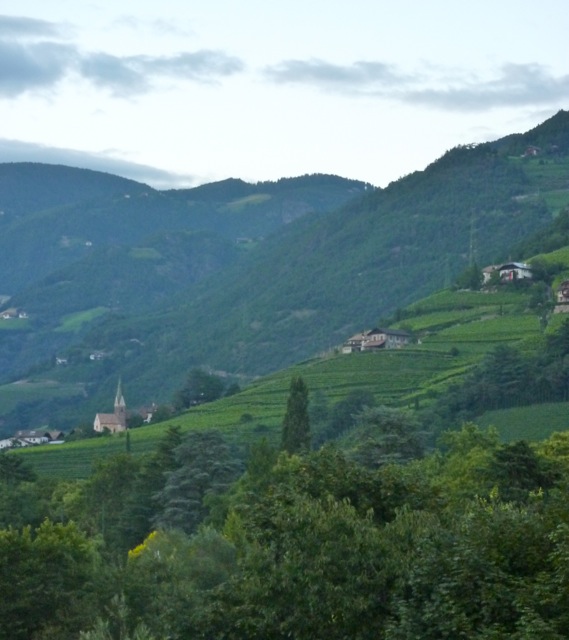
Vineyards in Alto Adige - Italiaoutdoorsfoodandwine bike tours italy
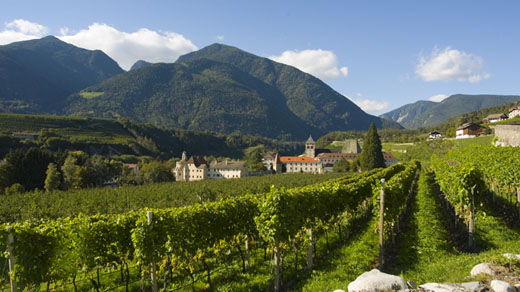
Vineyards in Alto Adige

The Alto Adige Valle Isarco DOC, also known as Sudtirol Eisacktaler, is Italy’s northernmost wine region. This is one of the many wine regions that lay along the Sudtirol Strada di Vini, and one we will visit with our Bike the Wine Roads of Trentino-Alto Adige in September. Surrounded by the Italian Alps, and the gateway to the Dolomites, this wine region is on Italy’s northern border with Austria. Historically, this region was under the control of the Austro-Hungarian empire, and only was ceded to Italy as recently as the end of World War I.  The culture here is very Germanic, and many of the grape varieties grown here reflect that influence. This is Alpine country, though the areas right around the Isarco river are a little lower as the river has carved out the valley over time.  Many of the vineyards here are at altitude, ranging from 400-800 meters above sea level.
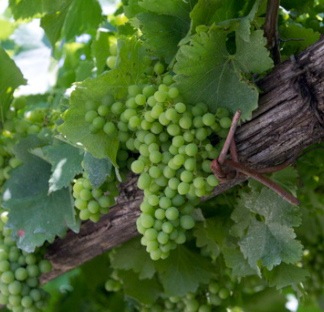
White grapes on vine - Italiaoutdoorsfoodandwine cycling Dolomites
White grapes on vine

Traditionally, this region chiefly produced reds (80%) such as Portugieser, Zweigelt, Lagrein, and Schiava. Many younger winemakers have set up shop here, with a focus on innovation and production of high quality wines. Fresh, cool nights, warmer days and good breezes give these white wines a fruity, subtle aroma, an elegant dryness and attractive mineral palate. Today the ratio is reversed, with 80% of the production white wines, predominately Muller Thurgau and Sylvaner, along with Gewurztraminer, Gruner Veltliner, Kerner and Pinot Grigio.
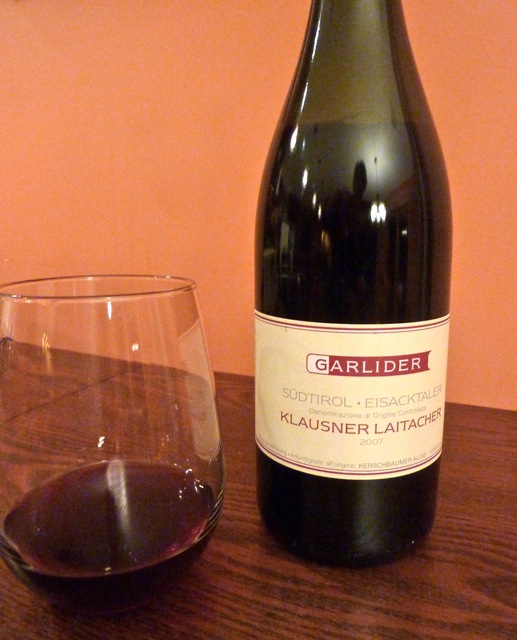
Garlider Klausner Laitacher - Italiaoutdoorsfoodandwine bike tours italy
Garlider Klausner Laitacher 2007

One of the most notable wine makers in the Valle Isarco wine region is Garlider. Located in Feldthurns, with a panoramic view of the entire Valle Isarco (Eisack Valley), lies the vineyards of Garlider. The Kerschbaurmer family owns 4 hectares of vineyards here, on a sunny mountain slope, and produces several wonderful whites as well as a few excellent reds.

Christian Kerschbaumer currently cultivates his parent’s winery. Kerschbaumers philosophy is to play with the wines as little as possible during the winemaking process, maintaining the character of the vines, and allowing one to taste the grapes and the terroir.  He uses organic cultivation techniques and prefers the use of indigenous yeast in his wine cellar. The Garlider Gruner Veltliner has received many awards, from Gambero Roso, Guida ai Migliori Vini d’Italia, and Le Guide de L’espresso.

Garlider produces some red wines as well, a Blauburgunder (Pinot Noir), and the Garlider Klausner Laitacher. I recently tasted two wines from Garlider, the Garlider Klausner Laitacher 2007, and their Muller Thurgau 2010.

The Klausner Laitacher name refers to the only red wine covered by the Valle Isarco DOC designation, and refers to a blend of the local indigenous reds, Schiava/Vernatsch and Lagrein. The Garlider Klausner is comprised mostly of Schiava with a touch of Lagrein. It is a brilliant garnet red, with a dark fruit aroma. A bit bitter, with mineral components, with hints of red berries and tart cherry, it has a nice acidity.  It is an excellent foil to any dish with speck or prosciutto, or a meat ragu over gnocchi.
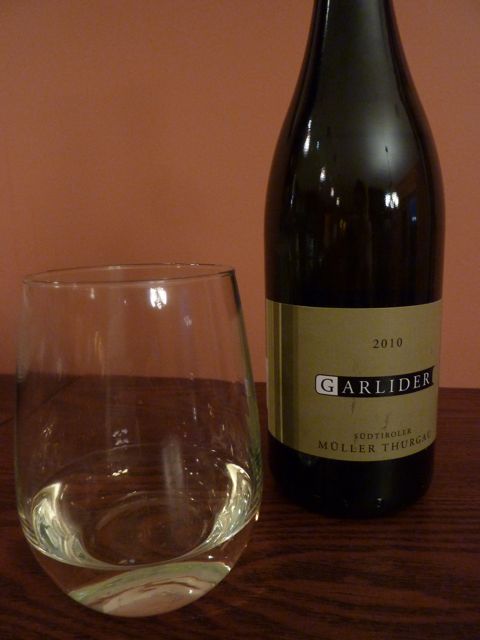
Garlider Muller Thurgau - Italiaoutdoorsfoodandwine bike tours italy
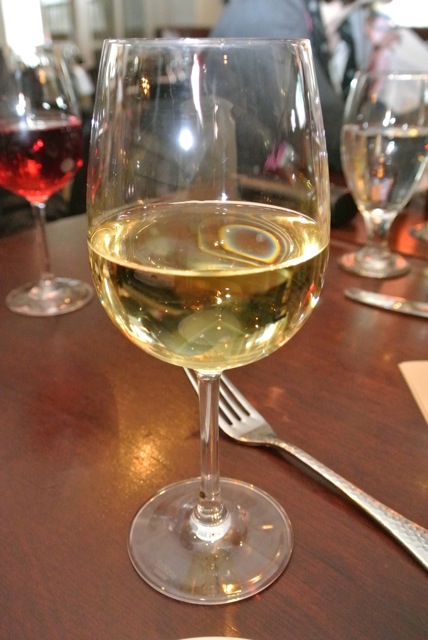
Garlider Muller Thurgau 2010

I’ve also enjoyed the Garlider 2010 Muller Thurgau. A very pale yellow in color, with distinctive hints of green. It has a very flowery perfume, with notes of grass and spice. It is quite tart on the palate, with flavors of citrus and granny smith apples. Crisp and fresh, with a persistent, almost bitter finish, and nice acidity. Wonderful as an aperitif, or to accompany light pasta and fish first courses.
Posted in Lagrein, Schiava, Uncategorized | Tagged , , , , , , , , , , , , , , , , , | Leave a comment

Oven Poached Salmon with Roasted Beets – Featuring Fresh Maine Salmon from Maine Aquaculture

Oven Poached Salmon - Italiaoutdoorsfoodandwine culinary bike tours italy
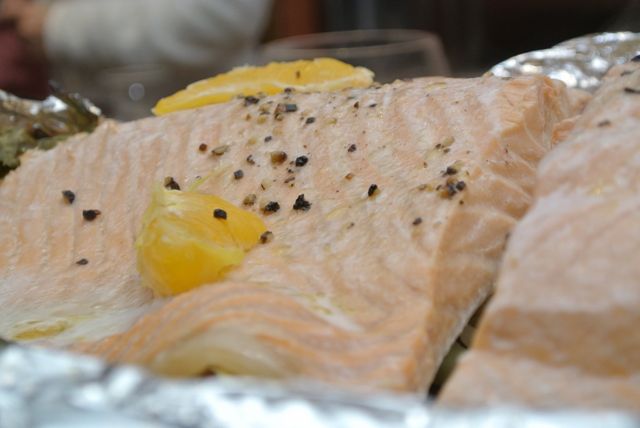
Oven Poached Salmon

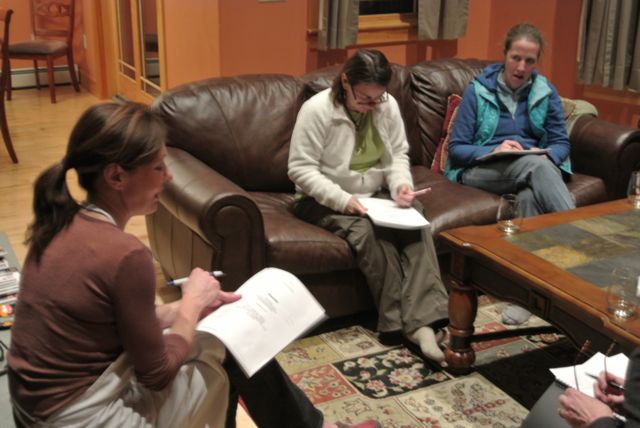
I recently had the opportunity to host a cooking class for a fun group of women travel writers here to experience some winter adventures in Maine. The weekend included skiing at Sugarloaf, a wonderful winter hike into the Flagstaff Lake Hut operated by Maine Huts and Trails, and a cooking class and wine tasting with me. It was a very fun group to be a part of, including writers Hilary Nangle, Jackie Dishner, Mimi Steadman, Liz Fleming and Shelia Grant, as well as Nancy Marshall of Nancy Marshall Communications and Suzie Hockmeyer of Northern Outdoors.

Review of recipes - Italiaoutdoorsfoodandwine cooking classes
Review of recipes

Whether home in Maine, or on our culinary bike tours in Italy, I am always eager to include wonderful local foods in my classes. For this class, we were very fortunate to have some incredibly fresh local salmon available to us. Supplied by Maine Aquaculture Association ( http://www.maineaquaculture.com ) in Hallowell, ME, their amazing salmon, both fresh and smoked, can be purchased at Hannaford’s. Their smoked salmon is sold under the Heritage Salmon brand, http://www.heritagesalmon.com.

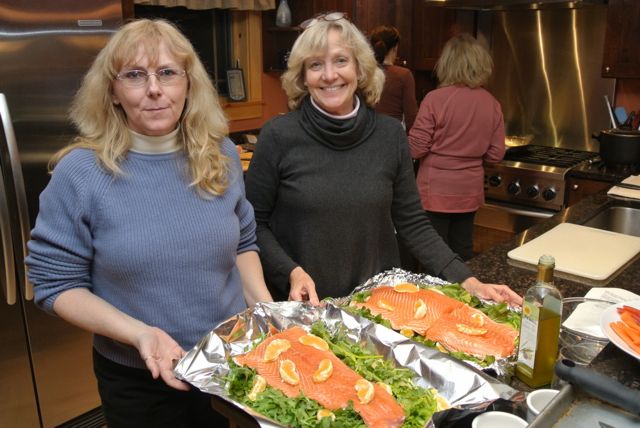
Our salmon chefs - Italiaoutdoorsfoodandwine cycle and ski holidays italy
Our salmon chefs - Shelia Grant and Mimi Steadman

Maine Aquaculture Association farms their salmon here in Maine, with operations that span the state, from the coastline to the interior mountains. The parent fish live in the cold, blue waters of Maine’s coastal bays. They are fed a fortified, all-natural diet and watched over carefully to ensure a healthy broodstock. In the fall, these fish spawn and the eggs and sperm are collected and combined, and the resulting fertilized eggs are carried to hatcheries in the freshwater lakes of the Maine mountains. Here, the eggs hatch, and the salmon fry are watched over by the hatchery staff as they mature and their bodies change from being able to live in fresh water to needing salt water, one of natures amazing transformations, called smoltification. In early spring, this process is complete, and the smolts are ready for their transfer back to marine farms on the coast.

The fish are loaded into special tank trucks and shipped down to the coast, where they are loaded onto local boats and transported offshore to the marine farms. This process is completed as quickly as possible, to make sure all smolts are transferred before the inland waters get too warm, and to minimize the time the fish spend in transport.

Once in their new home, the fish are inspected by teams of divers to make sure they are adapting to their new surroundings. Here in the cool waters off the coast of Maine, high oxygen and strong currents provide the ideal growing environment for the smolts. Over the next 15-26 months, they will grow to large, silver, strong, healthy adults. The salmon farmers watch over the fish in their farms year round, with each season bringing its own challenges; the low temperatures, strong storms and freezing spray of winter, to the struggle to keep up with the salmon’s insatiable appetites as their metabolism increases rapidly when warmer weather arrives. The fish are harvested as they reach their ideal adult size, and they are sent to special processing plants on shore where they are packed for shipment all over the United States.

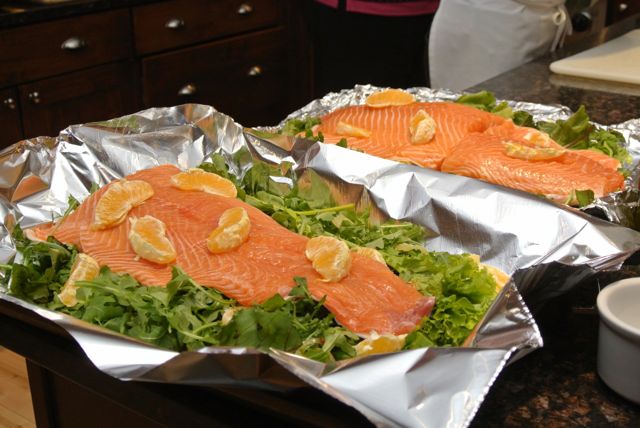
Salmon ready for oven - Italiaoutdoors culinary bike tours italy
Salmon ready to be wrapped for oven
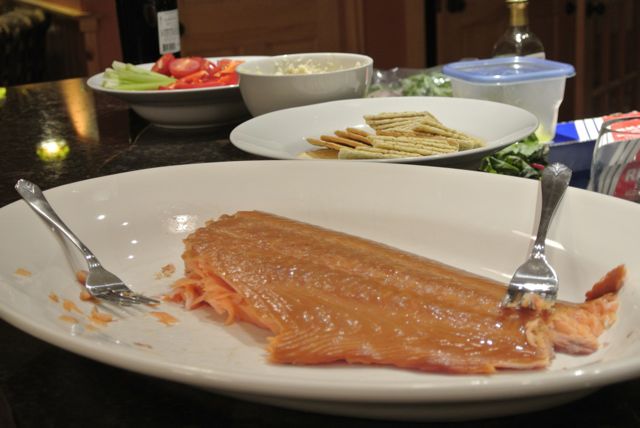
Smoked salmon antipasti - Italiaoutdoorsfoodandwine bike and wine tours italy
Smoked Salmon Antipasti

We were supplied to HUGE beautiful fillets to use in our class. I smoked half of one to use as part of our antipasti. I’ve posted my recipe for smoked salmon in a previous blog. This recipe I’ve used several times, it’s one I developed when I was cleaning out my frig at home before I left for a trip to Italy, and I wanted something easy! It reminds me of the  hobo packs we used to make on camping trips – everything wrapped in aluminum foil and roasted over the fire, or here, in the oven. It’s a great way to use both the roots and the greens of beets. If your beets don’t have the greens, substitute your favorite; in our class, we supplemented the few greens that came with the beets with arugula.

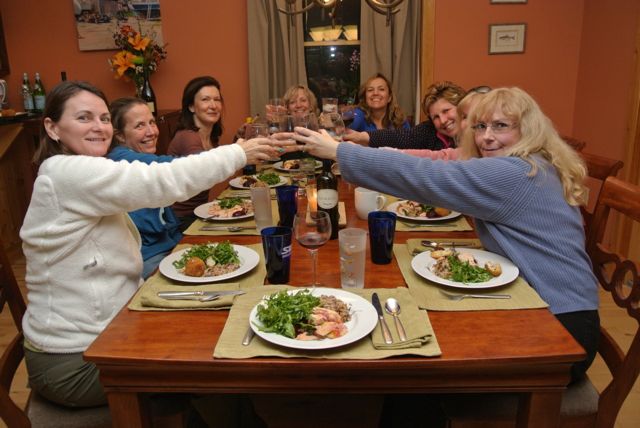
We feast on salmon! - Italiaoutdoorsfoodandwine luxury bike tours italy
We feast on salmon! and risotto, and salad, and cake...

Oven Poached Salmon with Roasted Beets, Greens and Orange

Serves 4

4 beets with greens
¼ cup extra virgin olive oil
kosher salt and pepper
Zest of one orange
2 stalks celery, peeled and thinly sliced
Splash of pernod (optional)
1 orange, thinly sliced
1 ½ pounds wild salmon

Heat the oven to 400°.

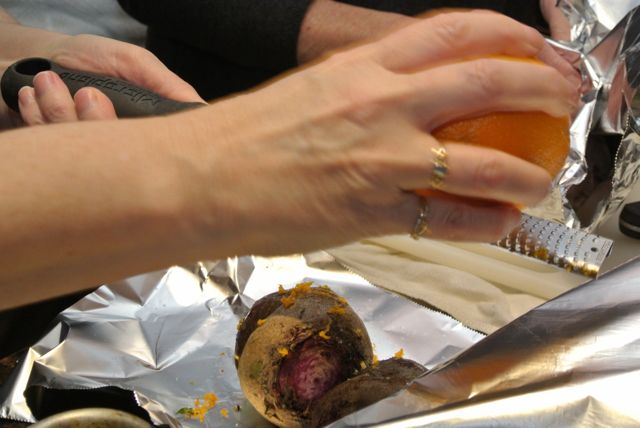
Remove the greens from the beets, wash the greens and set aside. Place the beets into one or two pouches of aluminum foil. Drizzle with 1 tablespoon olive oil, season with salt and pepper and orange zest.

Roast in the oven until tender, about 45 minutes. Remove from oven and let cool slightly. Remove the outer skin from the beets. This can be done with your hands, or with a paper towel; simple rub the beets and the skin will pull away. Cut each beet into eight pieces. Set aside.

Place an 18 inch sheet of aluminim foil on a sheet pan. Spread the greens on the foil, and top with the sliced celery. Drizzle with 2 tablespoons olive oil and season with salt and pepper. An optional splash of pernod can be added at this point as well. Top with half of the slices of orange.

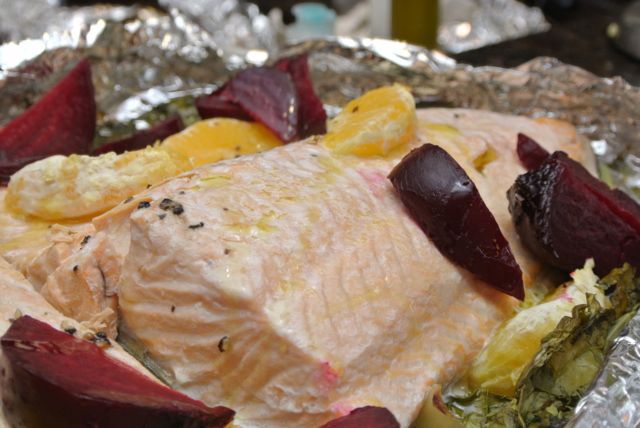
Place the salmon skin side down on top of the greens and vegetables. Drizzle with the last tablespoon of olive oil, season with salt and pepper, and top with the remaining orange slices.

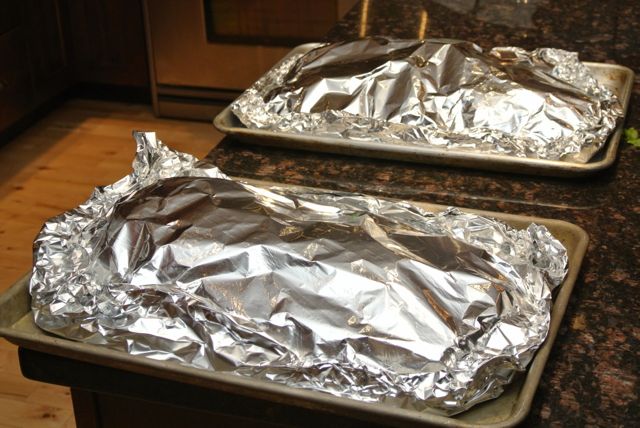
Cover with a second sheet of foil and seal the packet on all sides.

Bake in the oven until the salmon is just cooked through, about 30 minutes depending upon the thickness of the fish. If the fillet is thin, start checking it earlier. Serve with the greens and roasted beets, topped with a drizzle of olive oil.

Beet prep - Italiaoutdoorsfoodandwine bike and ski holidays italy
Beet prep - wrap in foil, drizzle with olive oil, season with salt, pepper, orange zest
Hobo packs - Italiaoutdoorsfoodandwine culinary cycling tours italy
Hobo packs
Salmon with beets - Italiaoutdoorsfoodandwine custom cycle holidays italy
Salmon with beets
Posted in Arugula, beets, Fish, Salmon, Smoked Food, Travel, Uncategorized | Tagged , , , , , , , , , , , , , , , , , , , , , , | Leave a comment

Kerner – An Amazingly Aromatic White from Sudtirol

Abbazia di Novacella
Abbazia di Novacella (from their web site)

My explorations of the many wines found along the routes we cycle (learn more about our Bike the Wine Road tours) continue to uncover many wonderful wines that amazingly remain relatively unknown outside the region. My latest discovery: Kerner. The Kerner grape is a white originally developed in Germany, It was bred in 1929 by August Herold by crossing the red grape Trollinger, which is known in Italy as Schiava or Vernatsch, with the white grape Riesling. The name Kerner was chosen as a tribute to a poet and physician, Justinus Kener, who wrote songs and poetry on wine.

Kerner is most commonly cultivated in Germany, but was introduced into Sudtirol in the early 1970s, and awarded DOC status in 1993.  Kerner exhibits considerable resistance to colder weather, so is ideal for the cooler climate of Sudtirol, and thrives in the higher elevations of Valle Isarco and Val Venosta. The wines made from this varietal are wonderfully rich in flavor, with bright floral aromas and a full, fruity palate.

Abbazia di Novacella Kerner - wines from Italiaoutdoorsfoodandwine bike tours italy
Abbazia di Novacella Kerner

I recently tasted the 2010 Kerner from Abbazia di Novacella winery in Alto Adige. Interestingly enough, I ran into it twice this past weekend, once on the wine list at Rialto in Cambridge, MA, and then the very next day at Sel de la Terre, in Boston. The Abbazia di Novacella is located in Varna, just north of Bressanone in the northern-most wine growing region in Italy, where the mineral-rich soils, elevation and the cool climate combine to create white wines with intense aromas and flavors as well as fruity, mouth-watering acidity. A long drawn-out ripening period lasting well into the autumn is crucial. The most widely-grown grape varieties in their vineyards around Varna are whites: Sylvaner, Kerner, Gewürztraminer and Veltliner.

Abbazia di Novacella also owns vineyards to the south, in the warmer central region of Alto Adige. Here, they grow their red varietals, including the full-bodied, savory Lagrein, as well as Vernatsch/Schiava, Pinot Nero and the sweet Moscato Rosa.

The Abbazia di Novacella (Abbey of Novecella) is still today a working Augustinian monastery as well as a winery. Established in the 12th century, it has been a prominent religious and cultural center through the centuries. It has also been producing wines for over 850 years, and today combines a respect for the regional wine making traditions with state-of-the-art technology to produce some of the most highly-regarded wines in Alto Adige.

The 2010 Abbazia di Novacella Kerner is 100 percent Kerner. It is a pale, straw yellow in color with hints of gold and green. Intensely aromatic, with notes of grapefruit, peach, and tropical mango, and mountain flowers. It is full-bodied with green apple and white stone fruit flavors, its sumptuousness balanced with good acidity and citrus. It is a perfect match for summer pasta salads and shellfish, as well as spicy dishes. Its full flavor would hold up even against grilled white meats, fish and poultry.

Posted in Kerner, Uncategorized, wine tastings | Tagged , , , , , , , , , , , , , , , , , , , | 1 Comment

Gnocchi di Polenta – Yet another variation from Northeastern Italy

Gnocchi di Polenta - recipes from Italiaoutdoorsfoodandwine bike tours italy
Gnocchi di Polenta

I held another cooking class on gnocchi this weekend; this one for the Eastern Ski Writers Association who were meeting here at Sugarloaf. Once again, someone asks “Are all gnocchi made from potatoes?” The easier question to answer is “What can’t you make gnocchi from?” From potatoes, to variations with squash or pumpkin, to Trentino’s canderli made with stale bread; you can make ‘gnudi’ with ricotta cheese, or gnocchi based on grains such as semolina- see a great recipe here in Ken Rivard and Jody Adams food blog thegarumfactory. Other grains such as buckwheat are used, or the a French influenced version made with choux paste. We discover many variations on our Italiaoutdoors travels in Northeastern Italy, and I have a few more variations still left to try on my own.

Corn fields along bike route - Italiaoutdoors italy bike tours
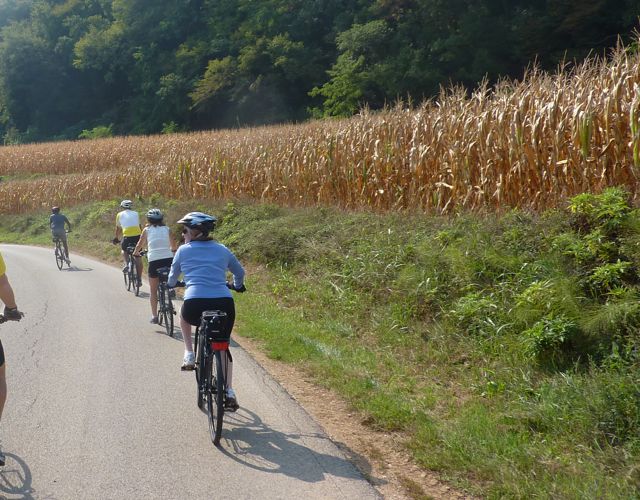
Cycling beside corn fields in the Veneto

This initially was going to be my opportunity to try the semolina gnocchi from Ken and Jody, but I was frustrated in my attempts to purchase semolina flour. Several visits to grocery stores left me empty handed; I can only find semolina ‘mixed’ in with other flours, not in its pure form. But I did have on hand polenta, and you can make a quite similar version with corn meal, gnocchi di polenta, which is common in the region of Trentino. I have covered the history of polenta in several other posts, the most recent on a sweet polenta based shortcake, Polenta Torta.

Polenta crust - recipes from Italiaoutdoorsfoodandwine cycle tours italy
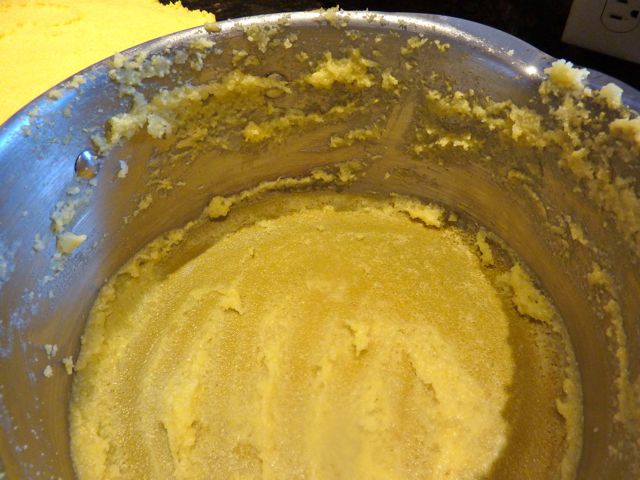
Polenta crust on bottom of pan

To make ‘traditional’ polenta, you need a copper pot, a wood fire, and a large wooden spoon for stirring, called a canarola. Fill the pot with water, four parts water for every one part polenta, and add salt. When the water is boiling, slowly add the corn meal, whisking as you do so.  Cook over low heat, stirring frequently to prevent lumps, until the polenta forms a crust which begins to peel away from the pot. This will take between 45 minutes to an hour or more. Don’t short change the cooking, it won’t develop the full flavor until then, tasting a bit ‘undercooked’. The crust goes to the hard working cook who has spent the last hour stirring; this is the best part!

Gnocchi di Polenta

Serves 6-8

10 cups water
Kosher salt
2 1/2 cups coarse polenta
4-5 tomatoes
1 cup grated Grana cheese

Place the water in a large pot, and bring to a boil over high heat. Salt the water. Add the polenta in a thin stream, whisking as you do so in order to prevent lumps from forming. Reduce the heat to low, and cook until a crust forms on the bottom and sides of the pot, about 45 minutes to 1 hour. If the polenta becomes too thick before the cooking time is up, add a bit more water.

Pour the polenta onto a clean countertop and spread it out to about 1 inch thick. Allow to cool.

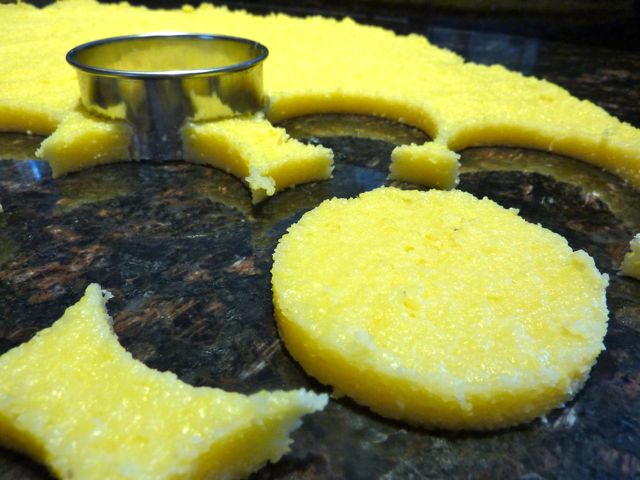
Cutting polenta - recipes from Italiaoutdoorsfoodandwine cycling holidays italy
Cutting polenta into circles

Using a glass or round cutter, cut the polenta into circles. Place the circles in a 13×9 glass baking dish, stacking them if you wish. Top with the sliced tomatoes, then sprinkle with the grated cheese. Brown under a preheated broiler and serve.

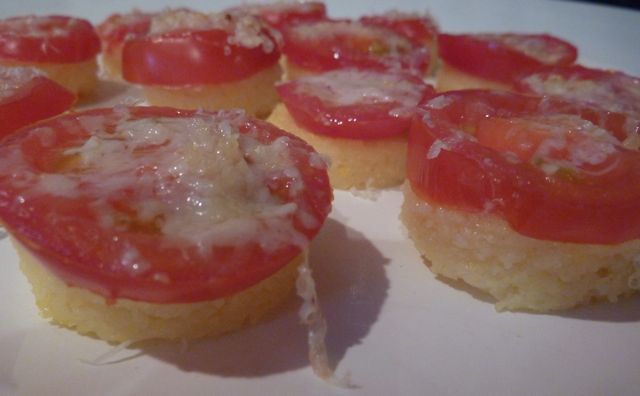
I’ve served these as individual ‘gnocchi’ as a side. I also cut them into 1/2 inch circles, topped with a cherry tomato slice and some grated cheese, and serve as an antipasti.

You can top these any way you wish – sauteed mushrooms, sopressata, or simply with butter and cheese.

Posted in antipasti, Gnocchi, Polenta, Travel, Trentino Food, Uncategorized, Vegetarian | Tagged , , , , , , , , , , , , , , , , , , , , , | Leave a comment

Stinco di Agnello Brasato – Braised Lamb Shanks (sounds better in English…)

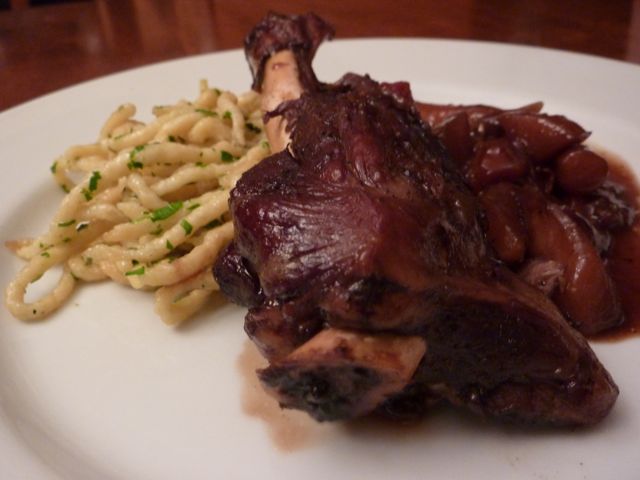
Stinco di Agnello Brasato - recipes from Italiaoutdoorsfoodandwine
Stinco di Agnello with Spaetzle

My last post on spaetzle made a very simple preparation of this rustic noodle. To dress it up a bit and make a delicious Sunday dinner, I wanted a hearty meat dish with lots of sauce to enjoy with the spaetzle. My favorite way of creating such a dish, meat with lots of sauce, is a braise. In Italy, a very common braised dish is shanks (veal, for Osso Buco, for example) cooked in wine, tomatoes, and broth. In Trentino-Alto Adige you can enjoy it with spaetzle, in Milan, your Osso Buco would come with risotto, in the Veneto we enjoy it with a soft polenta.

Braising does take a while, but not a lot of hands-on time. I can write, ride my bike trainer, read a book, figure out how to make spaetzle, anything to while away the couple of hours of cook time. The same basic technique works for all types of meat: beef, pork, lamb, even chicken, turkey and rabbit. The cook time will vary a bit for each type of meat, you can play with all sorts of options for the braising liquids, from broth, to wine, cider, milk, beer, as well as the “aromatics”, or vegetables to add. Often, my choices are dictated by what I have on hand, rather than a trip to the grocery store. Right now, lamb is what I have on hand.

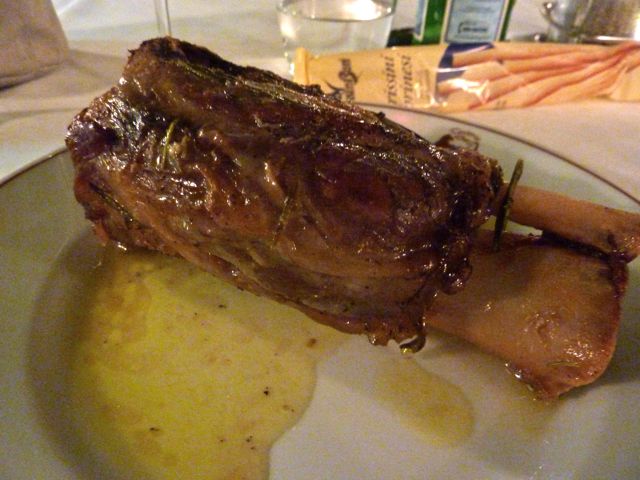
Pork shank dinner in Mantova - recipe from Italiaoutdoorsfoodandwine
Pork shank in Mantova, Italy

I had just purchased my second full lamb from a fellow ski instructor at Sugarloaf. Bill Trussell runs French Hill Farm, where he raises lambs throughout the year, breeding and birthing them himself. These are true lambs, not mutton or sheep; a leg will only feed about 3 people, and I can fit the entire animal in the freezer section of my refrigerator with room to spare. The meat is mild and quite delicious. The first time I made lamb burgers for the family the boys LOVED them, and they have become the burger of choice in our household.

French Hill Farm raises Coopworth lambs, a breed from New Zealand known for its mild meat and lustrous wool. Billy feeds them oats, some corn, and hay. In New Zealand,  they are often feed a salt supplement that Billy avoids, as he believes it gives the lamb meat a more ‘gamey’ flavor. This lamb was definitely not at all gamey. I get several pounds of ground lamb, chops, ribs, legs, and four lamb shanks. The shanks are perfect meat for a braised dish.

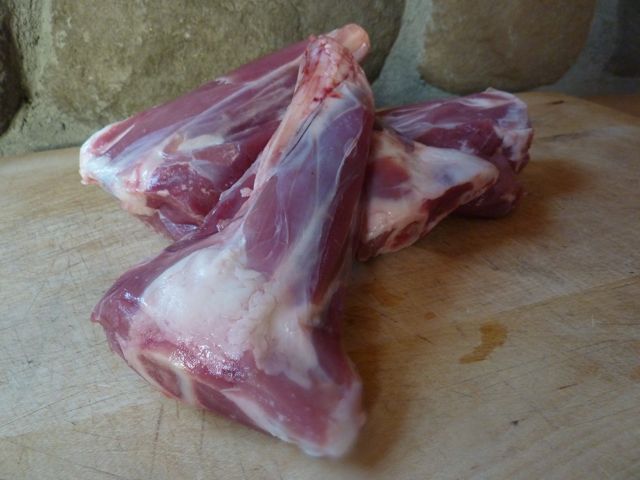
Lamb shanks from French Hill Farm - recipes from Italiaoutdoorsfoodandwine
Lamb shanks from French Hill Farm

The shank is the lower part of the leg, from the knee down. The meaty part is up toward the knee joint, and as you move down towards the ankle, the meat basically disappears. These are the most used muscles on the animal, and so are the toughest, making this cut not a good candidate for grilling or sauteing. But perfect for the slow-cooking involved in braising. The tough connective tissue dissolves slowly, mixes with the braising liquids and creates a wonderful, luxurious sauce with no effort on the part of the cook.


Stinco di Agnello Brasato (Braised Lamb Shanks)

Serves 4

4 lamb shanks
2 tablespoons olive oil
kosher salt and freshly ground pepper
2 turnips, peeled cut into 1/2 inch pieces
3 carrots, peeled and sliced into 1/4 inch slices
1 cup red wine
2 cups beef or chicken stock
1 tomato, chopped, or 2 tablespoons tomato paste

Lay the lamb shanks out on a sheet pan and season generously with salt and pepper.

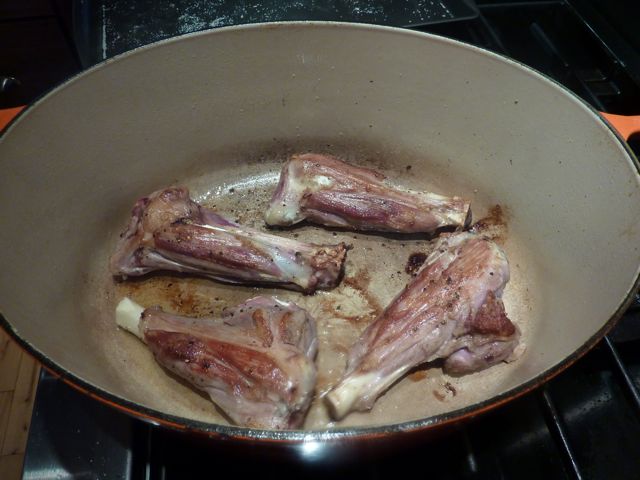
Searing shanks - recipes from Italiaoutdoorsfoodandwine
Searing shanks

In a large, heavy bottomed pot, heat the olive oil over medium-high heat. When hot, add the shanks to the pan and brown well on all sides. Allow space between the shanks, searing them in batches if they are too large to fit nicely in the pot. You want them to sear, not steam. When nice and brown, remove from pan and set aside.

Add the turnips and carrots, and cook until beginning to soften and turn brown. Season with salt while browning.

Add the red wine, bring to a boil and reduce by about half.

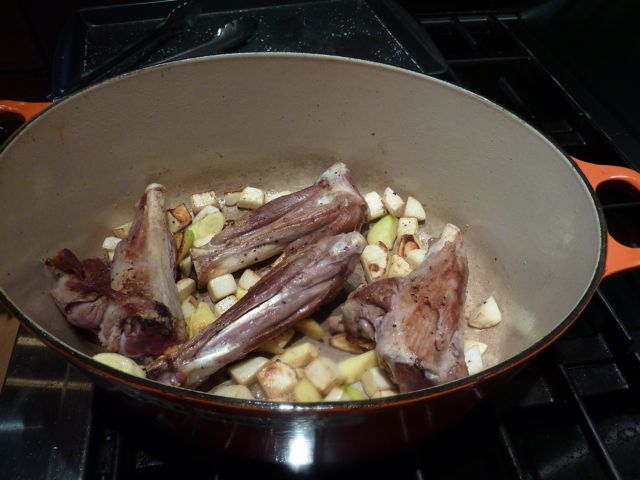
Place the lamb shanks back in the pot on top of the vegetables. Add the stock and tomatoes or tomato paste, stirring the paste a bit to break it up and mix it in with the broth. The shanks should be covered about half way with the liquid. Bring to a boil, then reduce to a low simmer.

Lamb shanks on top of browned vegetables - recipes from Italiaoutdoorsfoodandwine
Lamb shanks on top of browned vegetables

Cover the braise with a piece of parchment paper, then with an additional cover of aluminum foil. Push this down so it lies on top of the braise. Cover with the pot lid. Allow to simmer over very low heat until the lamb is very well done, and falling off of the bone, about 2 – 3 hours, depending on the size of the shanks. Alternatively, you can transfer the braise to a preheated 325° oven and cook there, rather than on the stove top. Just make sure your pot is oven-proof (no plastic handles.)

Remove the shanks from the braising liquid and defat. If you make this a day ahead, this becomes easy as the fat will rise to the top and harden.

Serve with spaetzle, soft polenta, or risotto, accompanied by a Lagrein from Trentino-Alto Adige or a Valpolicella from the Veneto, and enjoy as if your were in Italy!

Posted in Braising, Lagrein, Lamb, Travel, Trentino Food, Uncategorized, Valpolicella, Veneto Food | Tagged , , , , , , , , , , , , , , , , , , , , , , , | 1 Comment