Apple Risotto

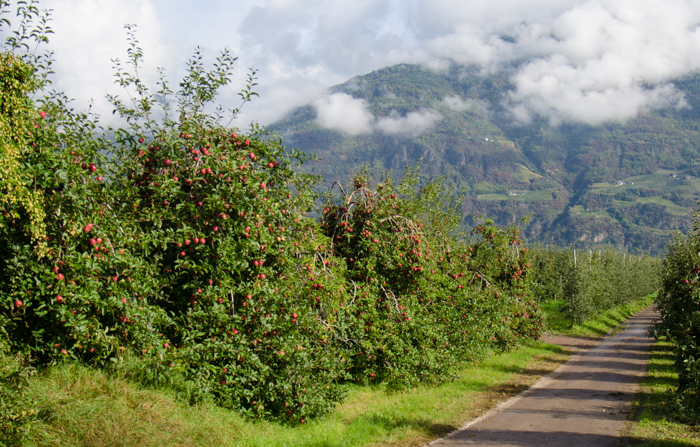
I have found versions of this recipe in the cuisines of both Trentino and Fruili-Venezia Giulia, two regions we explore on our Italiaoutdoors private Italy tours. Apple orchards wind their way across Italy’s northeast area, from Val Sugana, continuing along the Adige Valley and then straight to the epicenter of apple cultivation, the Val di Non and Val di Sole in Trentino. More than four million apples of all varieties and sizes are produced each year in these valleys and today, more than ever, they are used satisfy a growing overseas market.
apple-trentino-friuli-italiaoutdoors-private-italy-tours

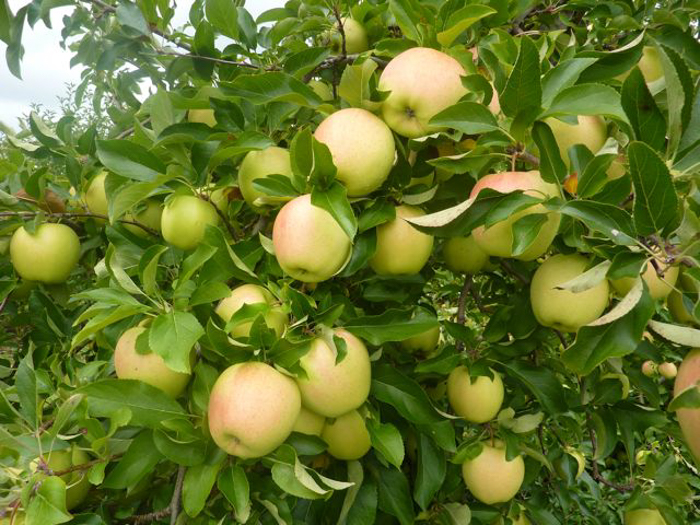
Italy is the world’s sixth largest producer, and Europe’s second, with 2.2 million tons of apples. Golden Delicious is the second most widely cultivated apple variety globally and the first in Trentino where around ten thousand hectares are dedicated to production.Trentino is particularly well-suited to the growing of high-quality fruit, and production totals for 2009 were around 450 thousand tons, accounting for 21 per cent of the national market. One in five apples eaten in Italy comes from Trentino, and together with Alto Adige, it provides over 60% of apple production in Italy.
apple-friuli-italiaoutdoors-private-italy-tours

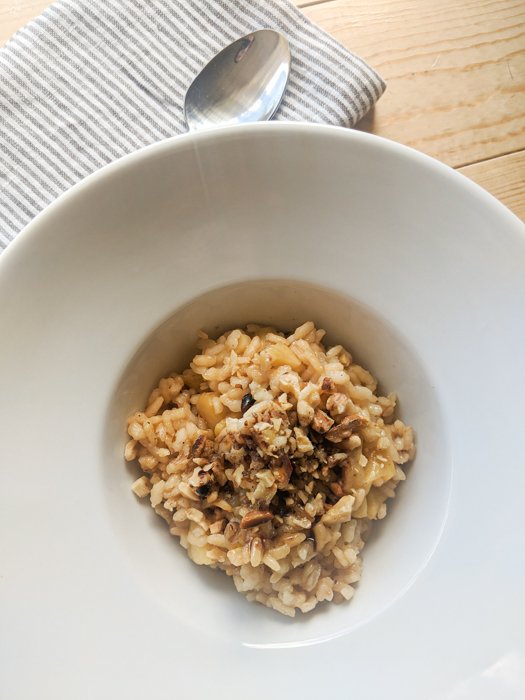
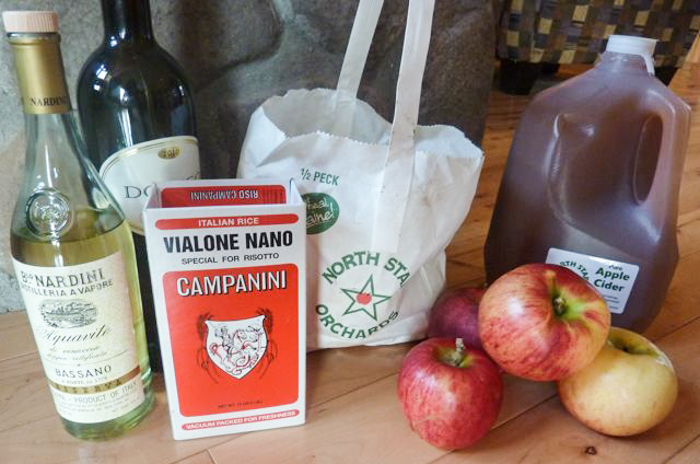
Here’s my adaptation of a couple of Italian Apple Risotto recipes. Fred Plotkin has a recipe in his cookbook on the cuisine of Friuli-Venezia Giulia, “La Terra Fortunata”. He suggests using apple juice and water as the cooking liquid, which immediately struck me as too sweet. A similar recipe I found from Trentino uses meat stock for the cooking liquid. I used, and liked, a combination of fresh apple cider – also from North Star Orchards – with chicken stock. Using pure cider, or apple juice, would definitely be too sweet for this savory dish.
apple-risotto-ingredients-friuli-italiaoutdoors-private-italy-tours

Plotkin recommends NOT using any spices such as cinnamon, while the recipe from Trentino called for them. I think with the meat stock used in the latter version, it might work. Plotkin suggests flavoring with fresh mint, which I wasn’t crazy about, and couldn’t find this time of year anyway. I used walnuts instead, which seemed to me a better fit with the regional cuisine, walnuts being another fall product of Northeastern Italy.

I served this with some roasted pork and roast squash – a great fall dinner.

Apple Risotto

Serves 4-6

3 apples, peeled, cored and diced. Braeburn, Gala, MacIntosh
Freshly squeezed lemon juice
Kosher salt and freshly ground pepper
Pinch dried thyme, or sprig of fresh thyme
1 cup apple cider
3 cups chicken stock
2 tablespoons unsalted butter
1 1/2 cups risotto rice (arborio, canaroli, vialone nano)
1/2 cup white wine
1/2 cup freshly grated aged Montasio or Grana cheese
Chopped toasted walnuts

Toss the diced apples with the lemon juice to prevent them from turning brown.

In a medium saucepan, combine the apple cider with the chicken stock, and bring to a boil. Reduce to a simmer.

Heat the butter in a large sauté pan over medium-low heat. Add the apples and sauté for about 10 minutes, until the fruit is soft and begins to carmelize. Add the rice, and sauté about 2-3 minutes. The rice should become slightly opaque.

Add the wine to the sauté pan with the rice. Cook, stirring, until the wine has evaporated. Add approximately 1/2 cup of the cider/stock, and stir again until the liquid has been absorbed. Continue, adding the liquid one ladle at a time, until the rice is creamy, but still firm, “al dente”. This will take 15-20 minutes. Do not just cook until the stock is gone, the risotto may well be done before you have finished using all of the stock. After the first 10 minutes of cooking, add the remaining apple pieces.

When ready to serve, stir in the cheese until it has melted and combined with the rice. Serve immediately, garnished with the toasted walnuts.
Posted in Apples, Friuli-Venezia Giulia, Fruit, Risotto, Travel, Trentino Food, Uncategorized, Vegetarian, wine tastings | Tagged , , , , , , , , , , , , , , , , , , , , , , , , , , , , , , , , , , , | Leave a comment

Vignaioli Contra Soarda Winery in Bassano del Grappa, Veneto

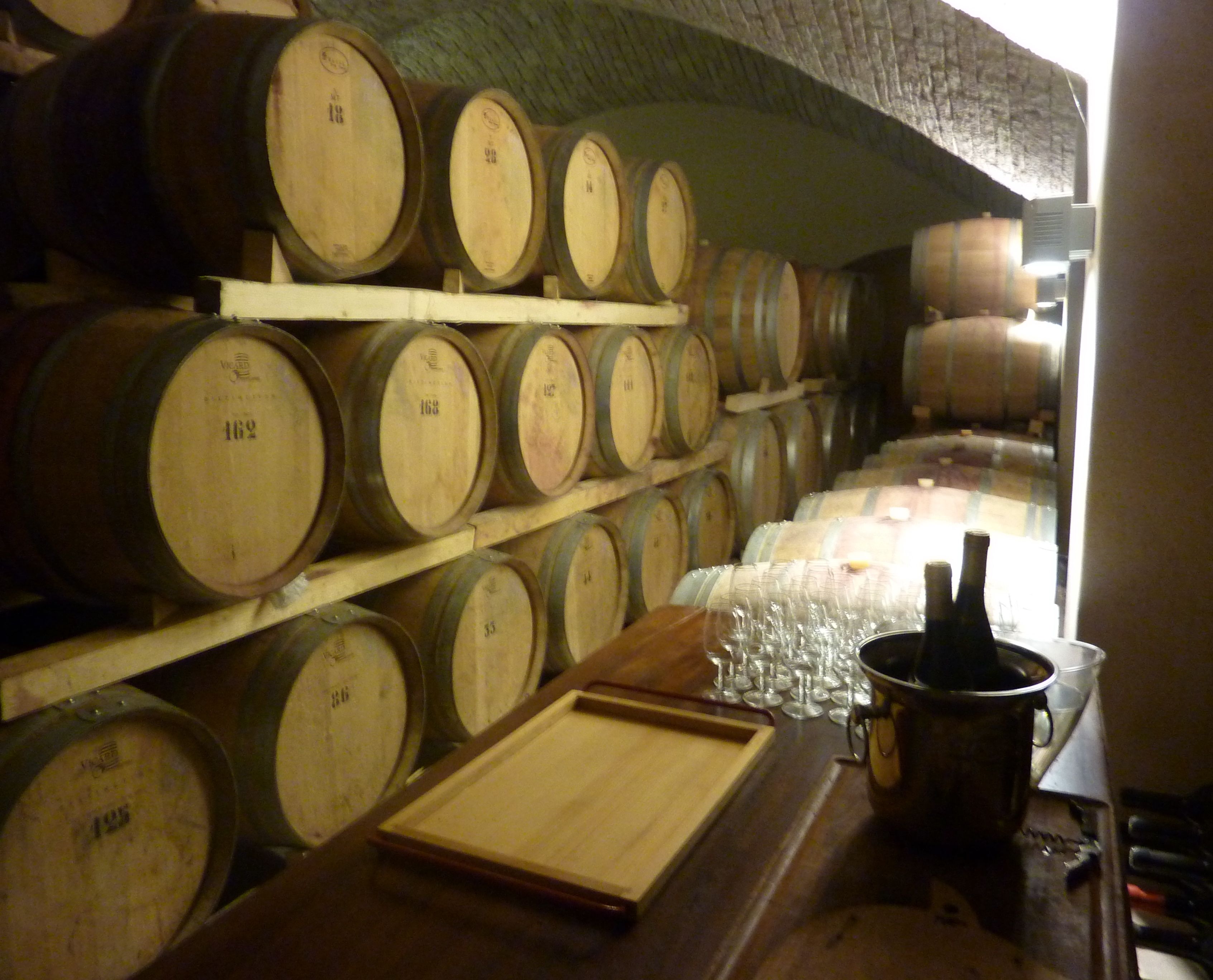
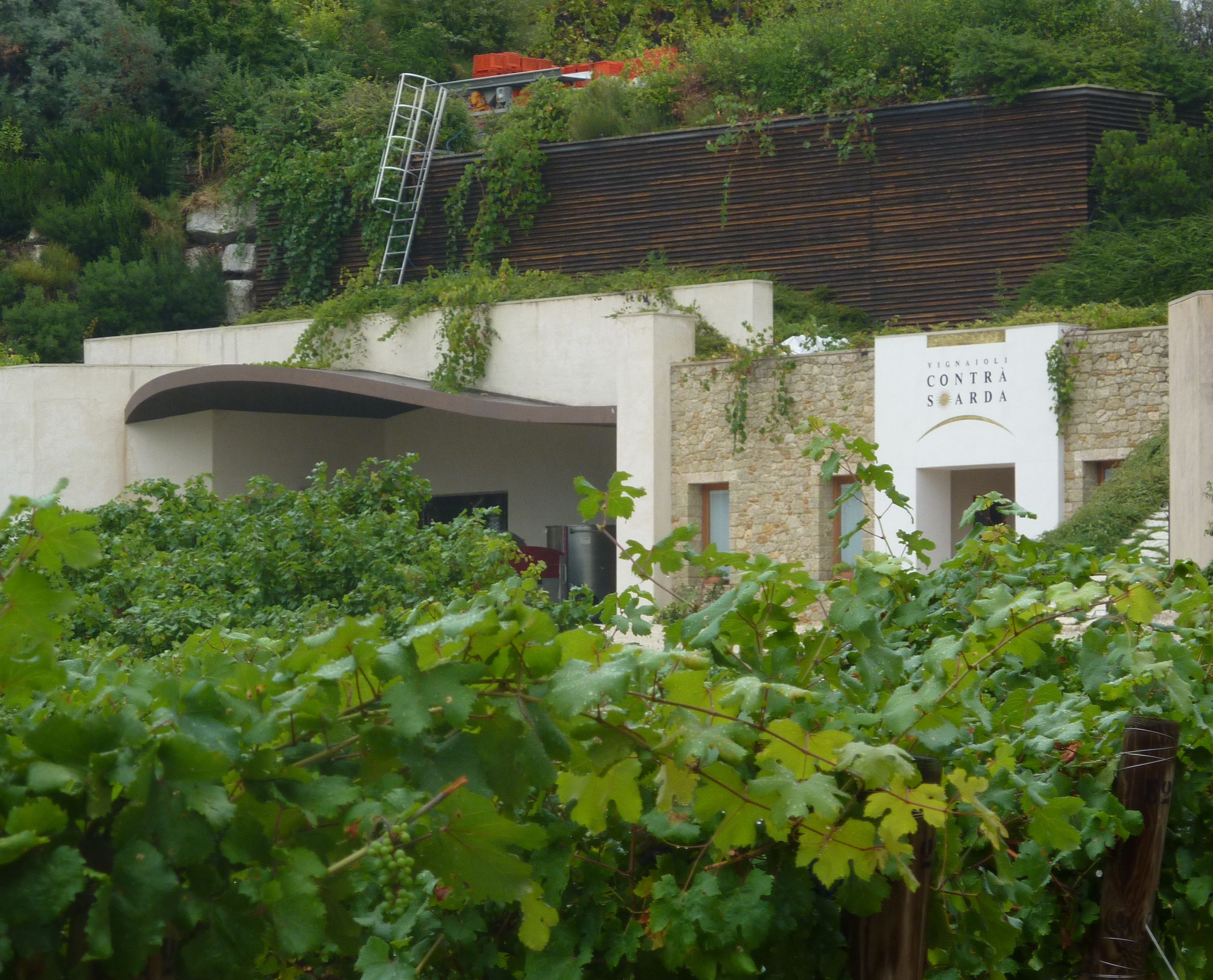
contra soarda cellar outside ski holidays dolomites italiaoutdoors food and wineDuring my last visit to Italy, I had the pleasure of an extended visit at Vignaioli Contra Soarda, outside of Bassano del Grappa. This wine maker has been on my list to check out for some time, having had numerous accolades by Gambero Rosso, Slow Food, Vini d’Italia, Robert Parker and other wine reviewers. Unfortunately their wines are not found in any of my local wine stores, so I had yet to try them. My plan was to stop by in September, and fortunately, they found me just before my visit – Vivana Fontana, who heads up marketing for Contra Soarda, found me through my wine writing for Italiaoutdoors, and invited me to visit next time I was in the area. She didn’t need to spend much time to convince me!

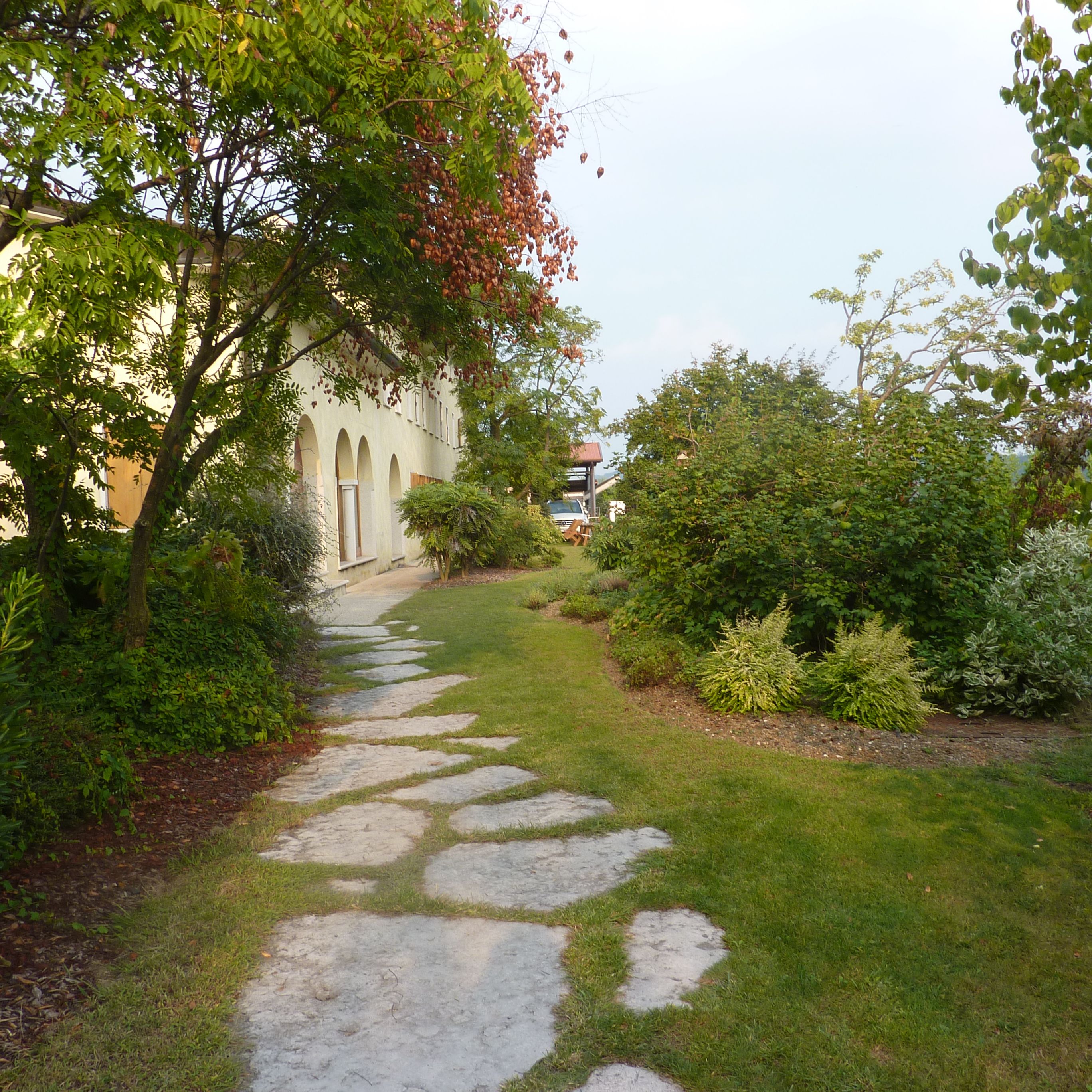
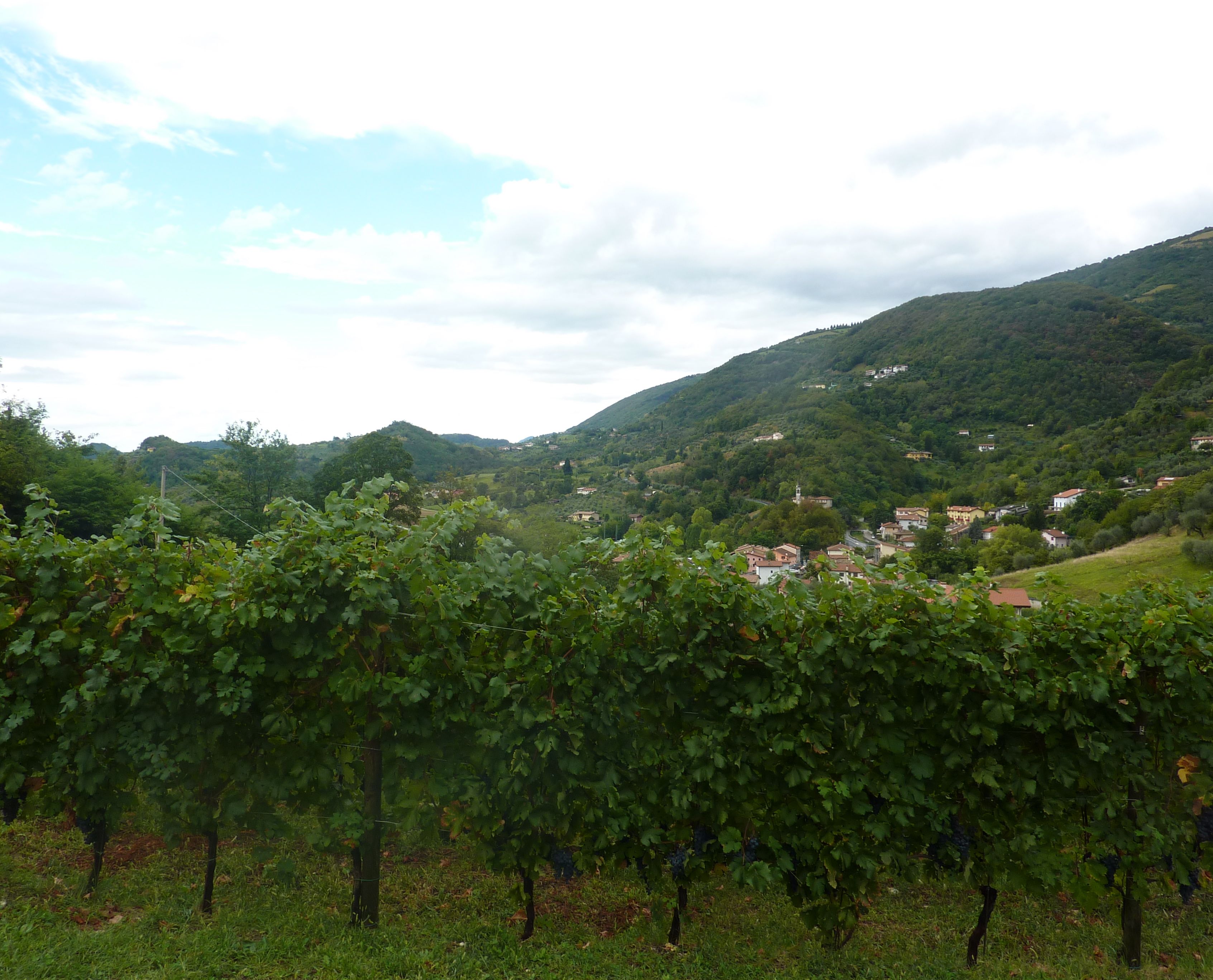
They are located in the San Michel hills, just outside of lovely Bassano del Grappa, a town we visit quite frequently on our bike and wine and bike and cooking tours. The twelve hectares of vineyards here lie in the volcanic soil at the entry to the Valsugana valley; the surrounding mountains and the valley create strong thermal excursions between night and day, which provides an optimum environment for developing wines with intense aromas and wonderful maturity.

vineyards of contra soarda italy bike tours italiaoutdoors food and wineThe vineyards here are fairly young, started in 1999 by Mirco and Gloria Gottardi. Their family history in the region, however, dates back much further. In 1904, Giovanna and Gottardi opened their country farm near Bassano as a “frasca”, offering simple food to passers-by. In the 60’s, Beppa and Marcello Gottardi converted the frasca into a country trattoria, called “da Pulierin”. In 1986, Gloria and Mirco took over da Pulierin, and oversaw its transformation into one of the most respected restaurants in the region, renowned for its traditional Bassano cuisine and its devotion to local products.

In 1999, Gloria and Mirco purchased the fields are now the vineyards of Vignaioli Contra Soarda, with the desire to produce their own wines and olive oils that truly reflect the traditions and terroir of their land. Today, they have a beautiful estate, with their vineyards, production facility, tasting rooms, and, as of last year, the new home of da Pulierin.

cellar interior cycling holidays dolomites italiaoutdoors food and wineThe cellar itself is quite amazing, an award winning structure designed by engineer and architect Henry Zilio. It is built into the hillside, to minimize environmental impact and blend into the land. Built with old wall techniques, a cave built inside the hill with the local stone, the style is reminiscent of Gaudi. The entire wine making operation is built to operate without pumps, with the grapes entering into the facility through the top of the structure, and gravity doing the work to move the grapes, and then the juice, through the wine making process. This cave within the hill location also makes controlling the temperature and humidity within extremely efficient.

Vivana and Gloria gave me a tour of the caves, which are as lovely as they are functional. A tasting room is available for groups, with the proper lighting and environment for evaluating wines. After my tour of the cellar, Vivana offered to show me the restaurant and treat me to lunch, and an opportunity to taste some of their wines.

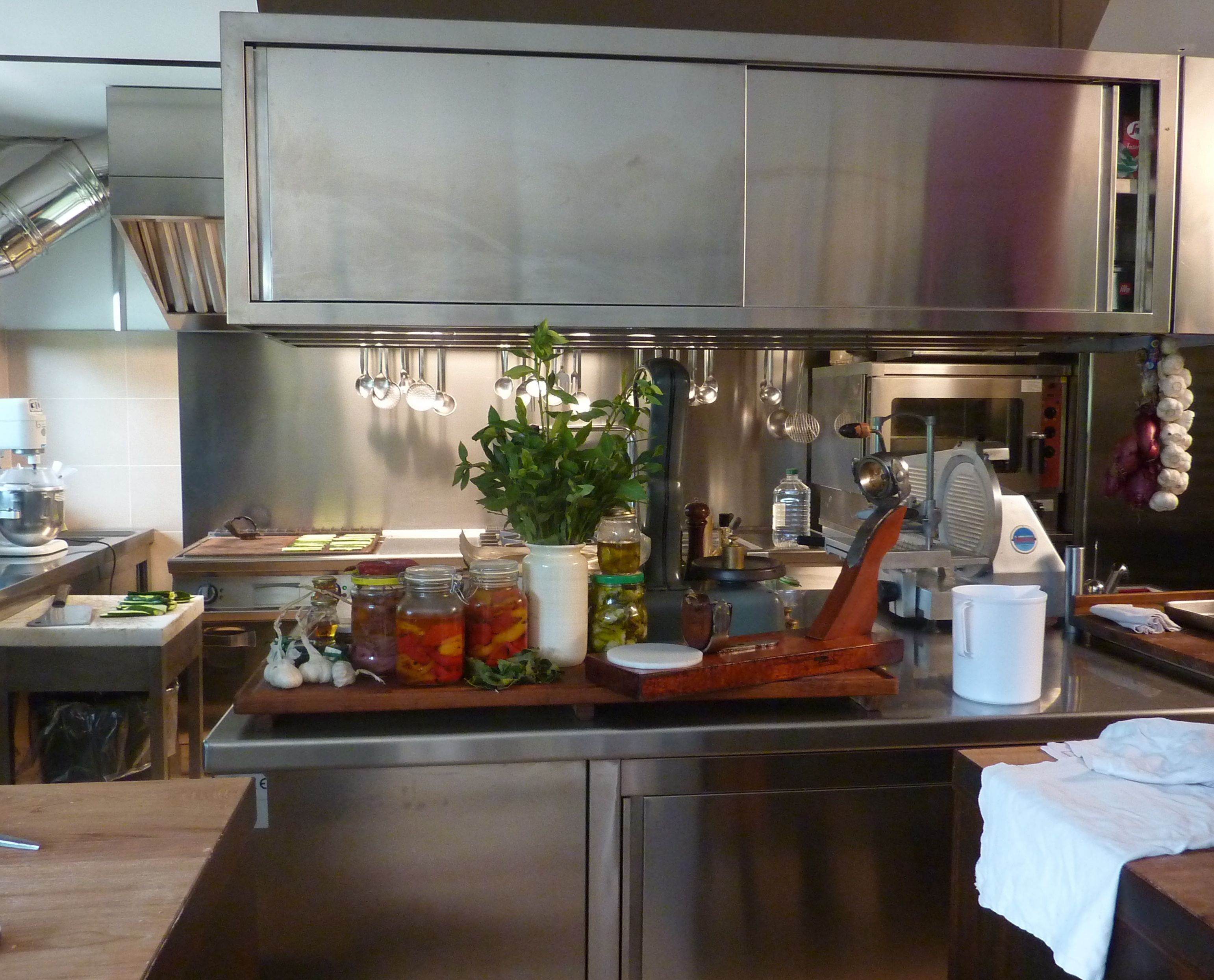
kitchen at da pulierin wine cycling tours italiaoutdoors food and wineA small place, built in what was once the garage, da Pulierin also backs up into the hill on one side, with floor to ceiling windows on the other, offering a spectacular view of the vineyards. Gloria and Mirco continue to offer the best in local products, many of which are grown on their grounds there at Contra Soarda. They raise their own beef and grow produce on their estate.

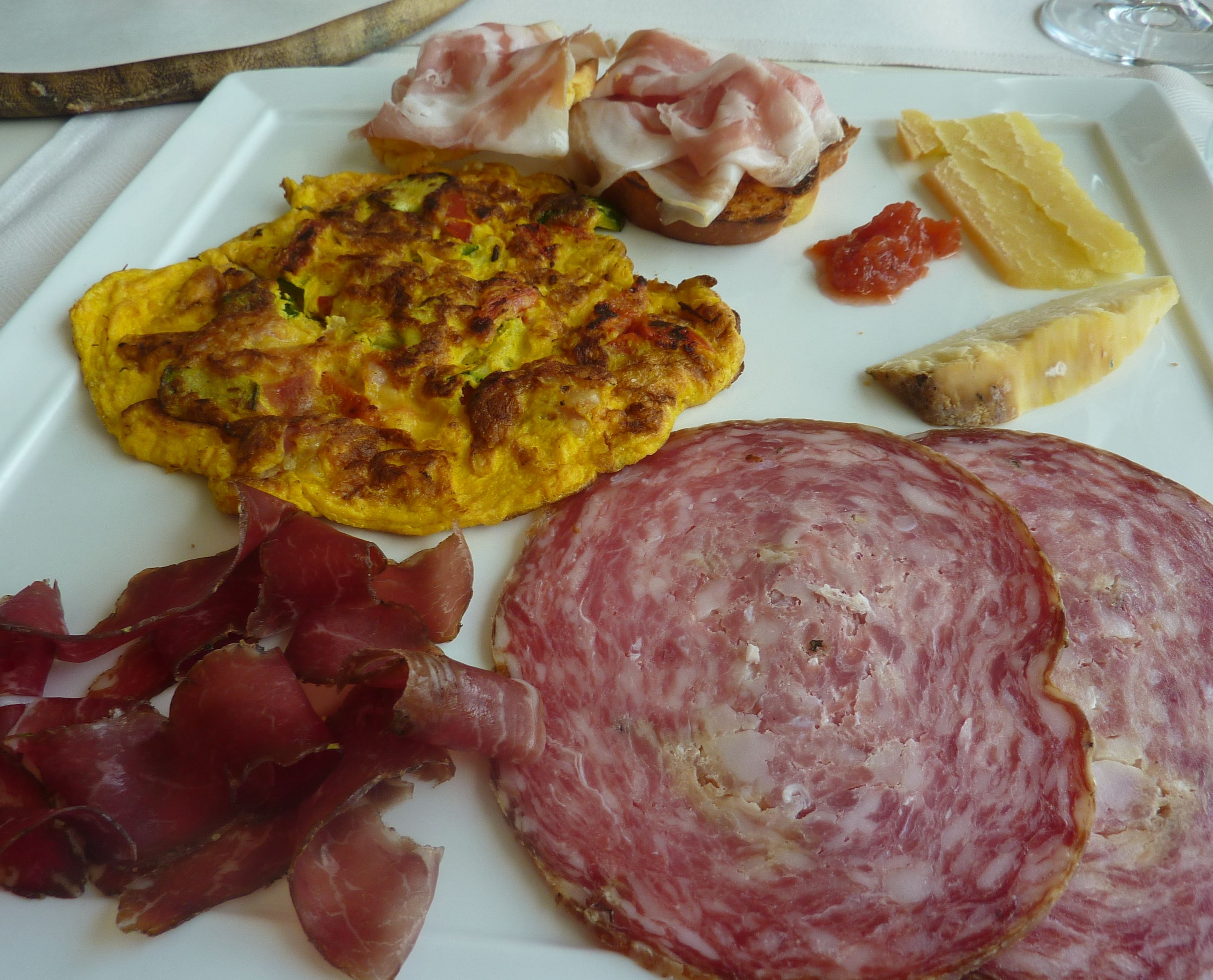
antipasti bike tours italy italiaoutdoors food and wineMy lunch began with an antipasti of local cured meats and cheeses – salumi and prosciutto. To pair with this, our first wine was the Contra Soarda Il Pendio. This is a unique wine, a combination of 80% garganega, which has been barrique aged for 18 months, with 20% vespaiolo, which has been aged in steel for 12. Straw-yellow in color, the barrique flavor was pleasantly apparent to both the nose and mouth. Ripe and full, with a nice combination of fruit and floral, and a hint of spice.

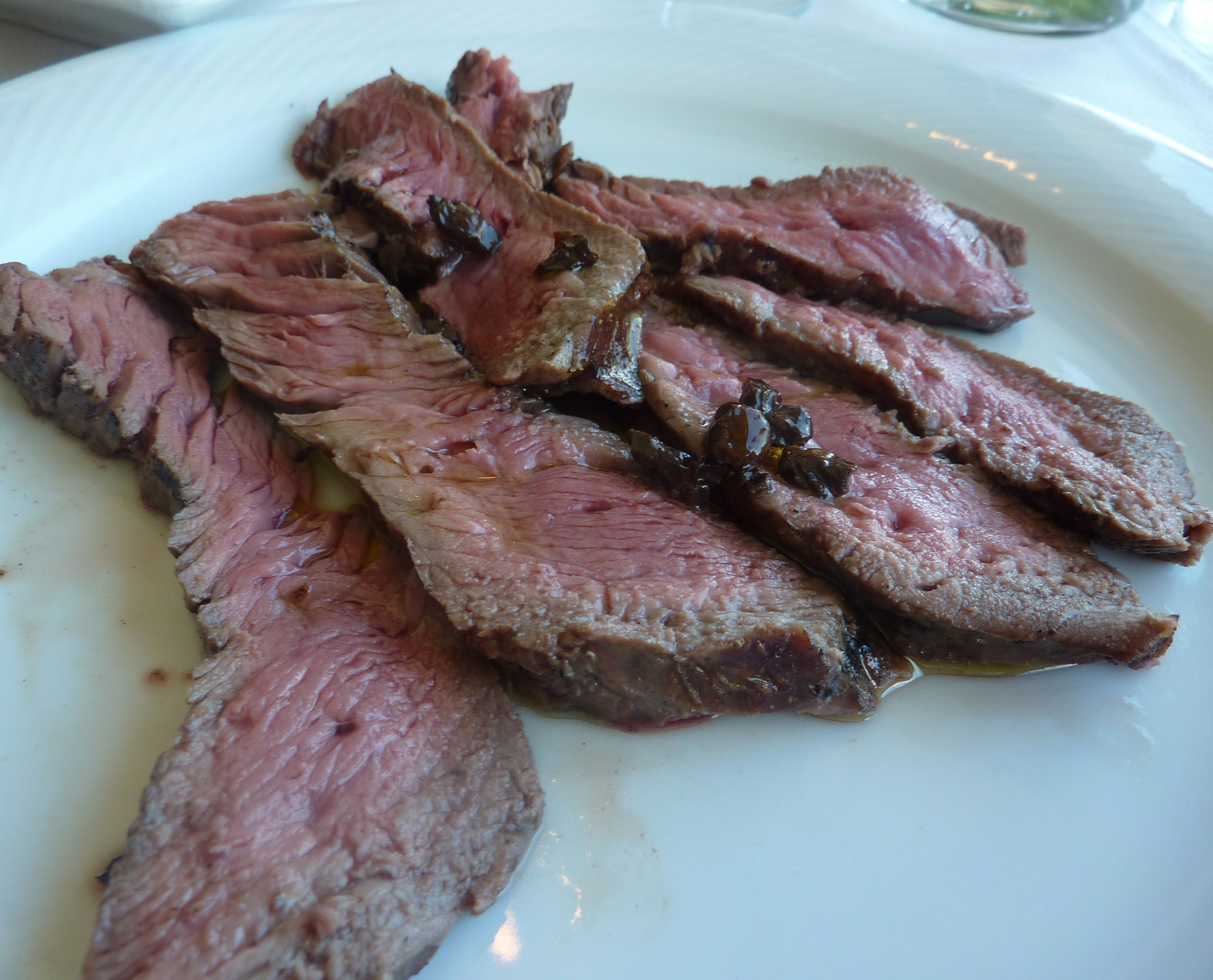
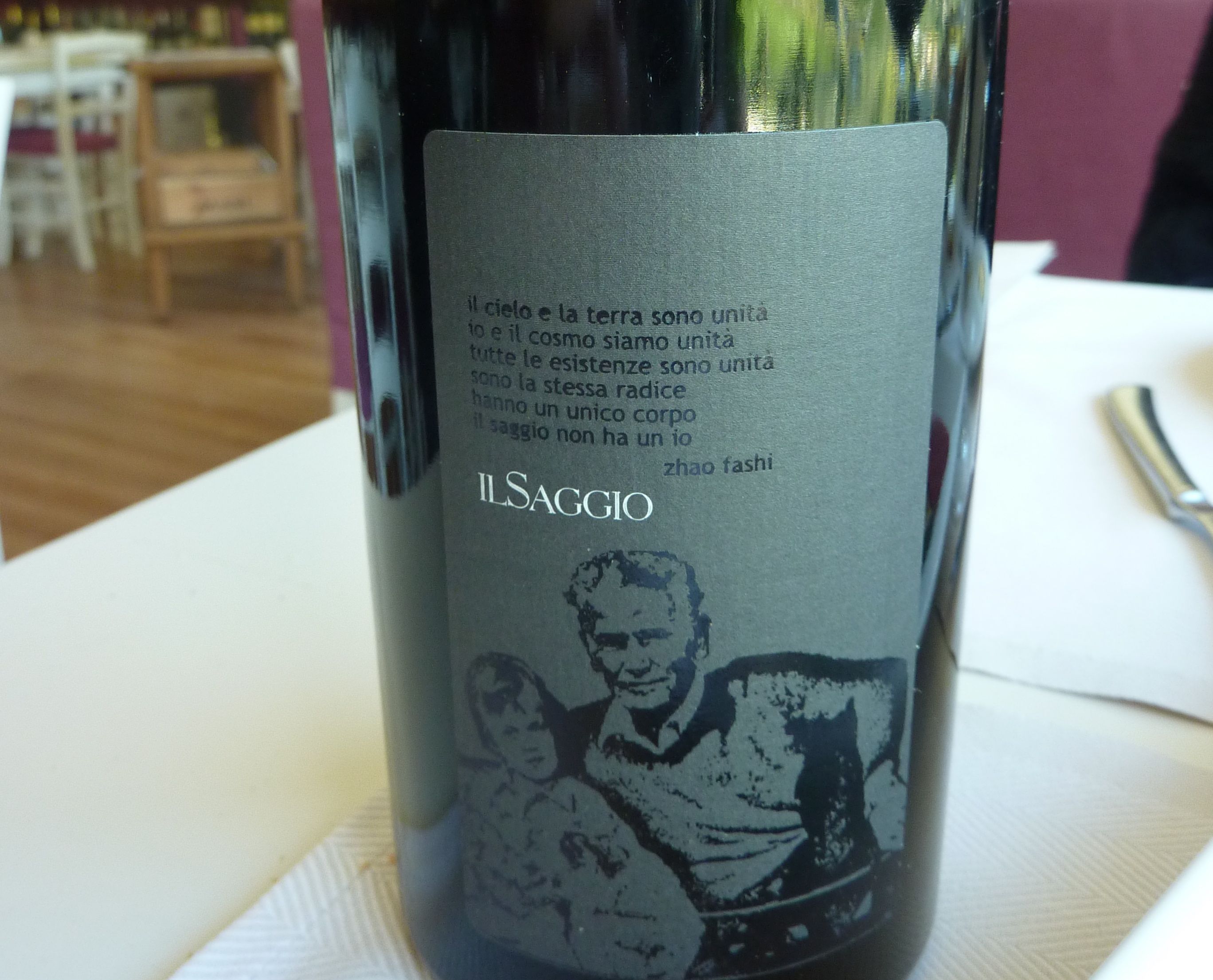
grilled meat with grapeseeds private bike tours italiaoutdoors food and wineOur main entree was a real treat, their own beef and vegetables, both just simply grilled. The meat was quite tender, and drizzled with their own olive oil which has been flavored with dried grape seeds. This was paired with one of their top wines, Il Saggio, a wonderful blend of Carmenere (around %80), rounded out with the indigenous varietals Grupello and Marzemino. It is aged for 48 months in barriques and casks, with another 12 months in the bottle. A deep ruby red with hits of garnet, it has a very intense aroma of cherries and dark fruits. Medium bodied and long lived in the mouth, with flavors of smoke and spice, and light tannins.

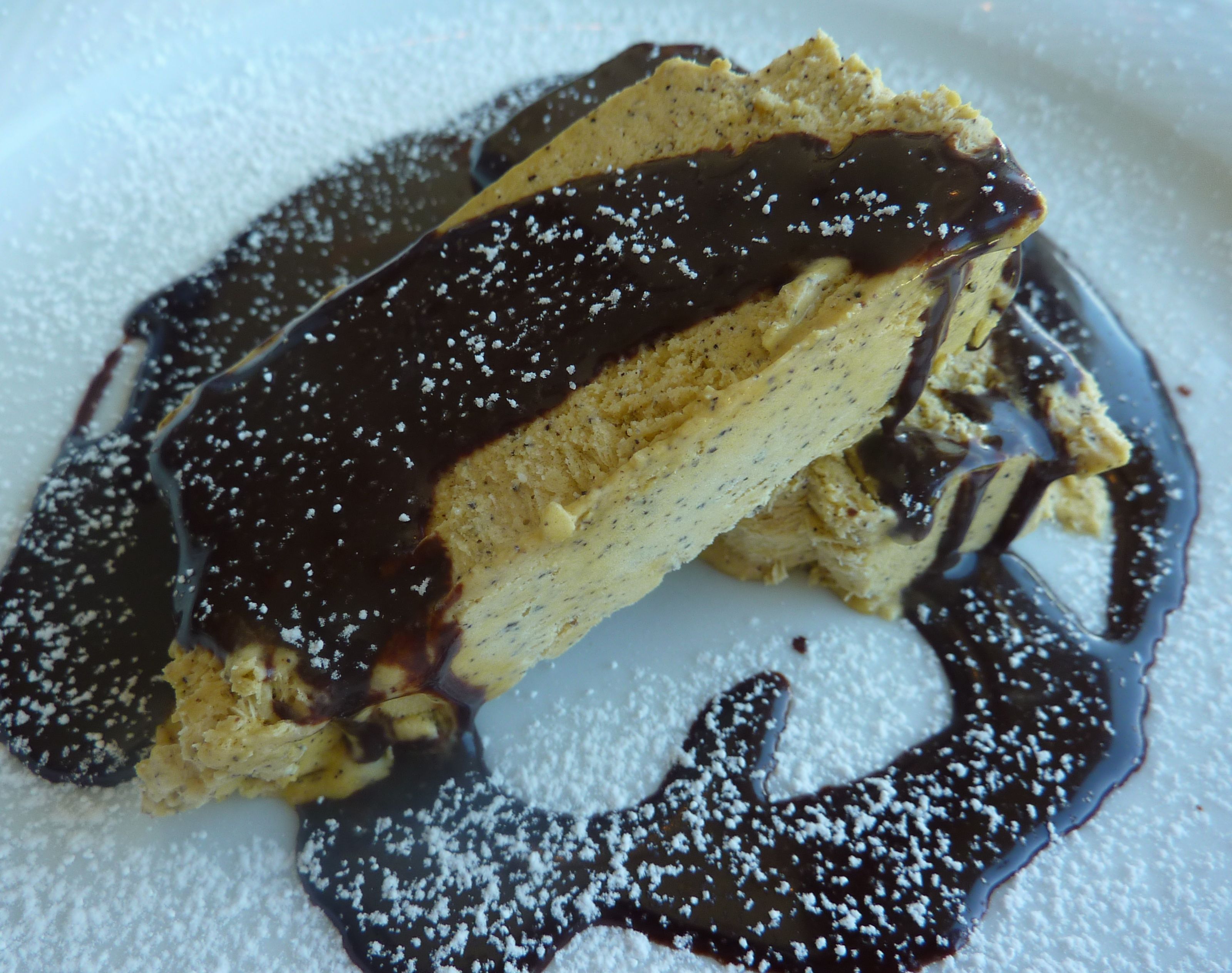
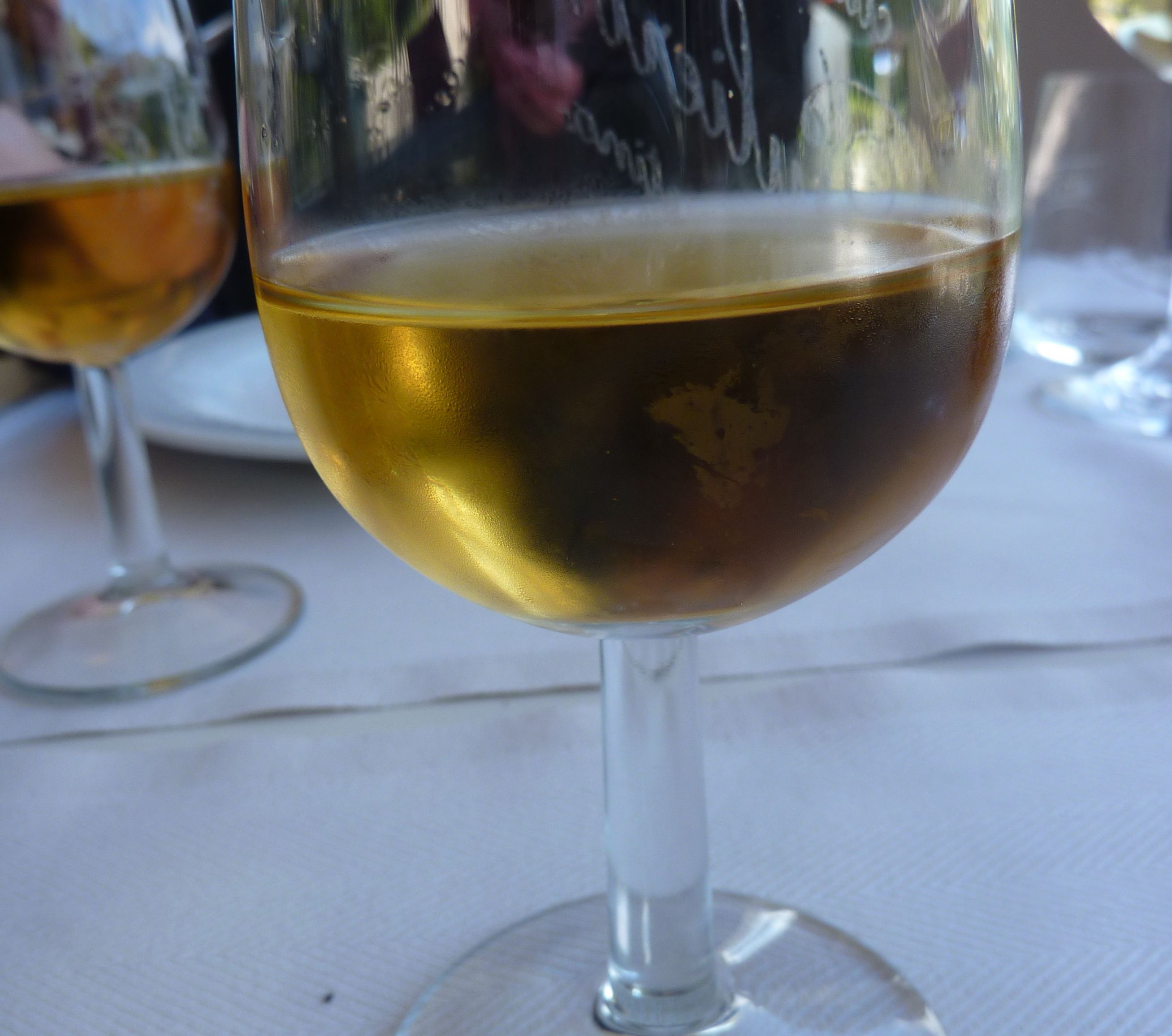
Il Saggio wine bike tours italy italiaoutdoors food and wineFor dessert, I enjoyed a decadent coffe semifreddo with chocolate sauce, accompanied by the Contra Soarda Torcolato. Torcolato is the classic wine of the Breganze DOC. It is produced from pressing dried Vespaiola grapes which are hung (“torcolate”) on strings from the wooden beams of the well-aired attics of farmhouses. As they dry, these grapes lose much of their water, concentrating the flavors and sugars. The grapes for the Contra Soarda Torcolato are semi-dried, and pressed in January. The wine is a deep golden yellow. This wine was scented with ripe and dried fruits – fig, in particular, and offered a nice acidity to balance the sweetness of the wine. It would also pair quite well with blue cheeses and foie gras.

semi freddo bike tours veneto italiaoutdoors food and wineI enjoyed my visit, and would highly recommend a stop at Contra Soarda should you be in the area. And don’t pass up any opportunity to sample their wonderful wines!

torcolato best bike tours italy italiaoutdoors food and wine

Posted in Travel, Uncategorized, Veneto Food, Wine Pairings, wine tastings | Tagged , , , , , , , , , , , , , , , , , , , , , , , , , | Leave a comment

Strangolapreti con Salvia – Trentino ‘Priest Stranglers’ Gnocchi

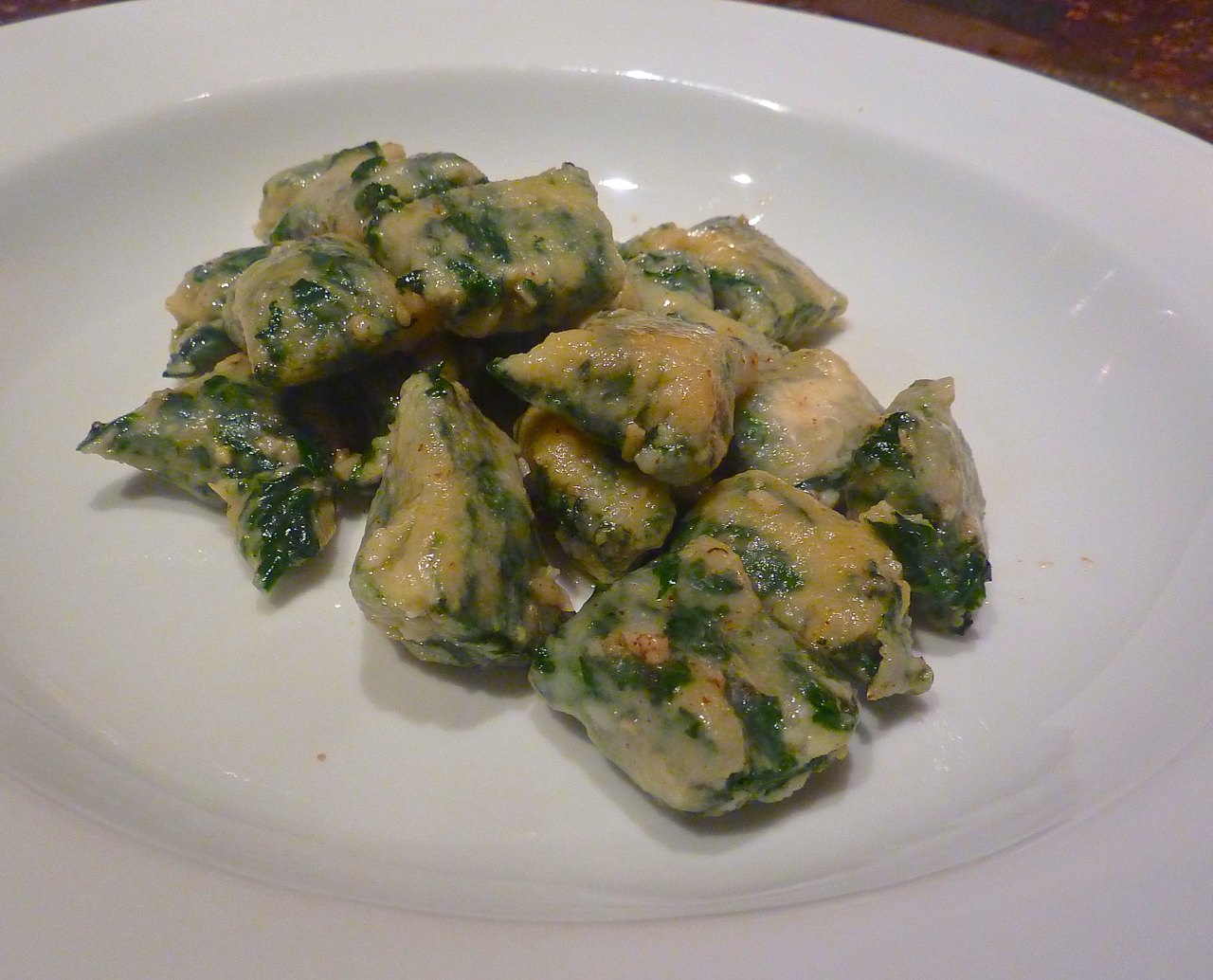
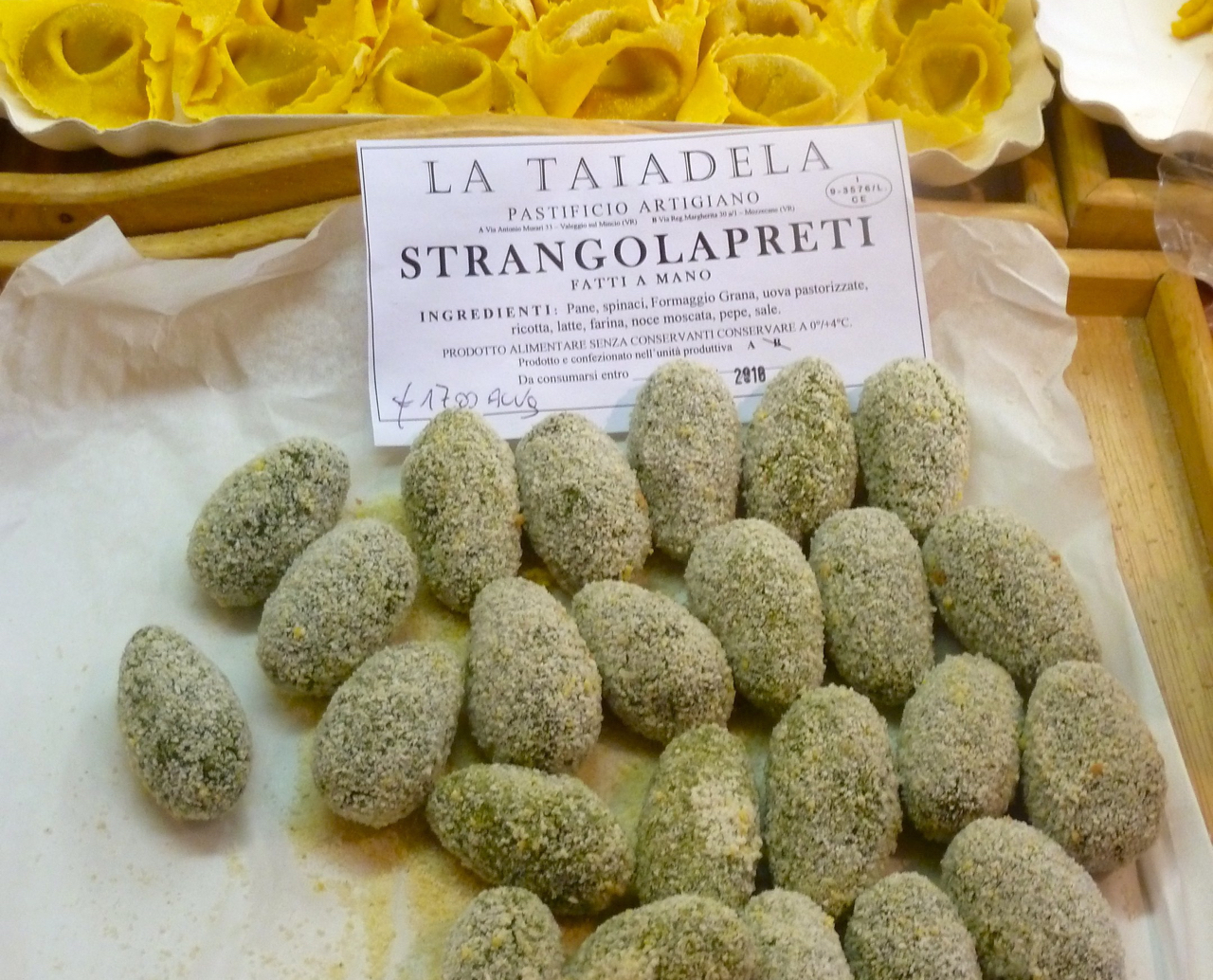
strangolapreti sage private ski tours italyThis type of gnocchi, made from stale bread rather than potatoes, is a traditional dish of the Trento area, the capital of the region of Trentino. This dish was traditionally served on Fridays, when religious restrictions forbade the consumption of meat. It origins date to the time of the ecumenical Council of Trent (1545-1563), to satisfy the clergy ensconced here during the Council meetings. As the legend goes, priests and other clergy members very much enjoyed this dish, and would eat it until they choked, hence the name strangolapreti, or priest stranglers. Some versions have more spinach or kale than the one below, and are very green in color. We’ll have an opportunity to discover some of these variations during our Bike the Wine Roads of Trentino Alto-Adige trip.

strangolapreti lombardy custom bike tours italyYou can find similar dishes in the Trentino region, basically dumplings made from bread crumbs, greens, flour and egg; they are also called gnocchi con pane, or when larger and rounder in size they are referred to as canderli. To make matters even more confusing, the name strangolapreti is used throughout Italy; sometimes referring to standard potato gnocchi (Naples), sometimes referring to a pasta similar to cavatelli (Tuscany and Basilicata).

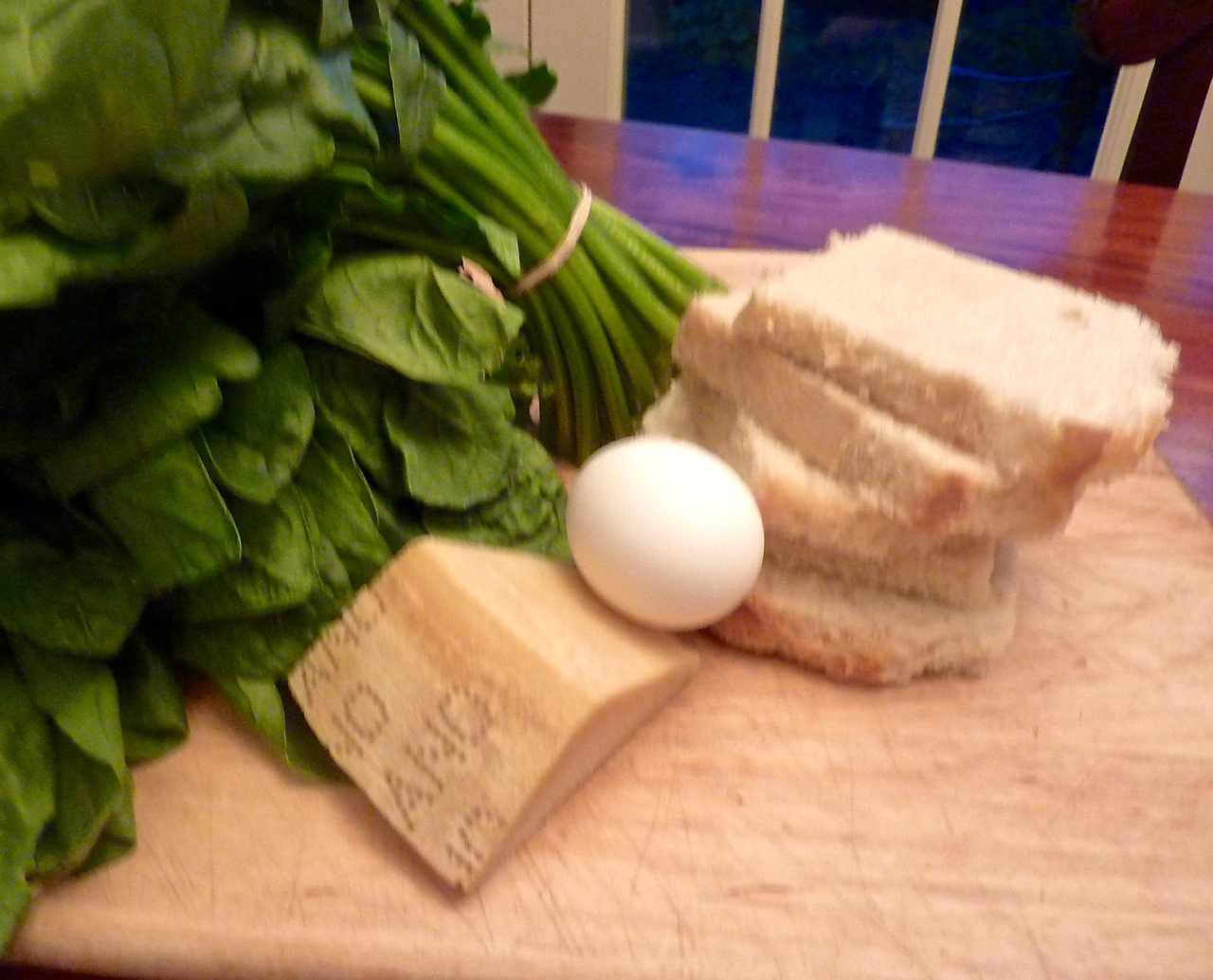
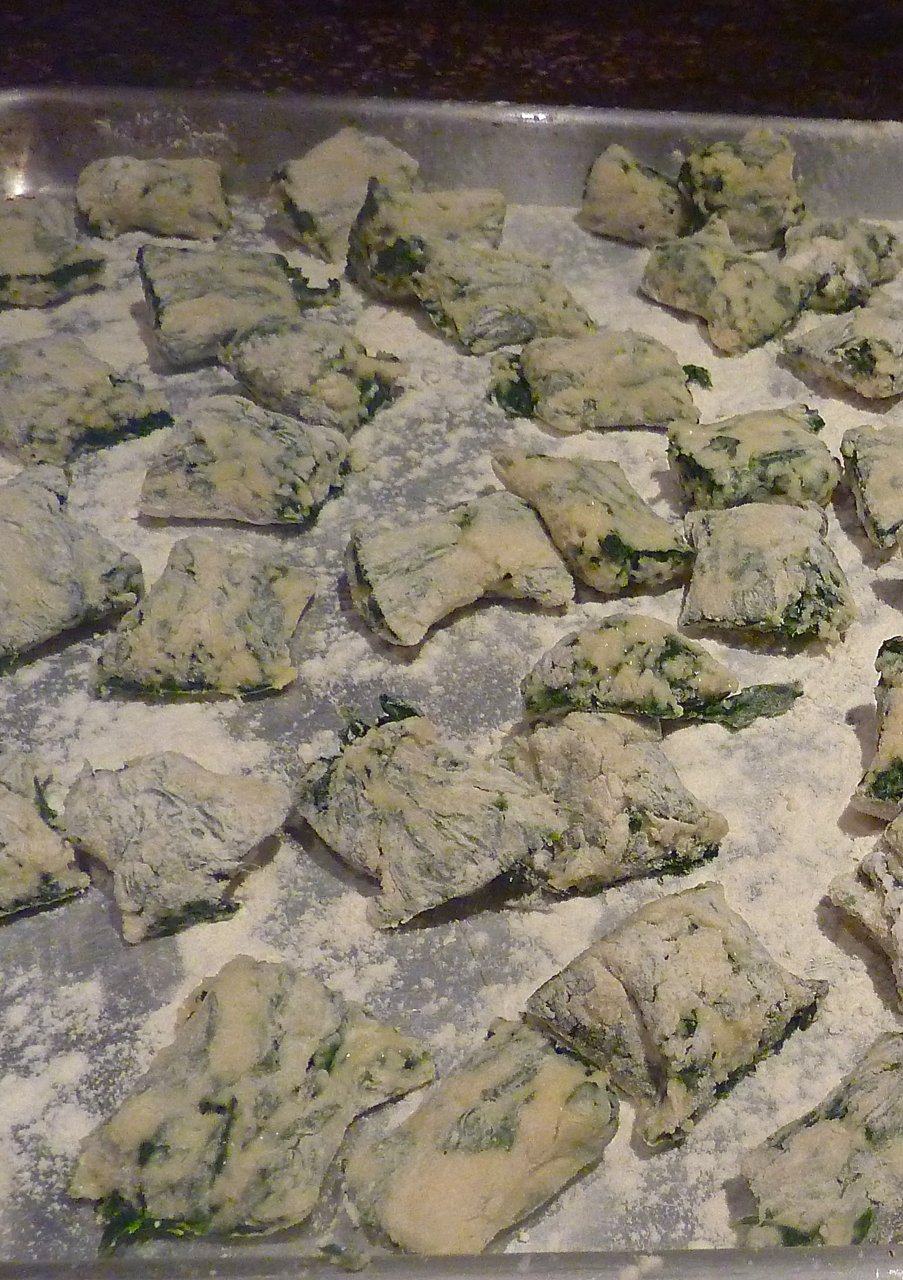
strangolapreti ingredients private bike tours italyThese require a bit of a delicate hand; you don’t want to keep adding flour until they are easy to form into dumplings – they will be too heavy. So keep a light hand on the flour, and dust your hand and the dough well as you form the strangolapreti. I start by adding the 3/4 cup of flour, and increase it only if necessary.

strangolapreti finished private ski tours italyThe sage browned butter sauce is the traditional way of serving these strangolapreti.

Strangolapreti con Salvia

Serves 4 as an appetizer, 6 as a side dish

8 ounces stale bread, turned into bread crumbs in the food processor or blender
1 cup milk
16 ounces fresh spinach or swiss chard, thick stems removed
1 egg, lightly beaten
3/4 c. to 1 c. white flour
A few gratings of fresh nutmeg
1 teaspoon salt
6 tablespoons butter
1 shallot, minced
6 sage leaves
kosher salt and freshly ground pepper

Place the breadcrumbs in a small bowl, and cover with the milk. Combine to thoroughly moisten bread.

Bring a large pot of water to boil, and season with salt. Add the spinach and/or swiss chard, and blanch until tender, 2-3 minutes. Drain well, and immerse the blanched greens in ice water to halt the cooking. Remove from the ice water, and drain in a sieve, squeezing well to eliminate as much of the water as possible. Chop finely.

Squeeze any excess milk out of the breadcrumbs (there should not be much, if any), and place in a medium bowl. Add the spinach/chard, eggs, flour and grated nutmeg. Combine until the mixture just binds together and holds, adding more flour if necessary, but don’t overdo it. It will be very wet. You want to add as little flour as possible, to keep your strangolapreti as light as possible.

When making these for the first time, it would be good to test the strangolapreti before making them all, to make sure the mixture will hold through the cooking process. Have a small pot of boiling water ready, and pinch off a small strawberry size ball of dough. Place it in the boiling water, and see if it holds together. If it remains intact, and eventually rises to the surface, you are all set! If it breaks apart, add a little more flour and try again. When you’re at the right consistency, continue on to the next step.

Dust the counter with flour. Divide the dough into between 4 and 5 equally sized pieces. Coat your hands with flour, and take one of the pieces and place it on the floured countertop. Using the palms of your hands, roll the piece out into a 1/2 inch thick log, which will be about 18 inches long. Cut the log into 1-inch lengths, and place the individual strangolapreti onto a sheet pan that has been dusted with flour. Repeat with the remaining pieces of dough.

Bring a large pot of water to boil over high heat. Salt the water. Working in small batches, place the strangolapreti in the water – don’t overcrowd them. Cook until the strangolapreti rise to the surface; using a slotted spoon, remove them and place on a sheet pan in a single layer.

Melt the butter in a large saute pan over medium high heat. When the butter is melted, add the shallots and sage leaves.  Continue to cook, watching carefully, until the butter solids begin to brown and smell nutty. Remove from heat, add the strangolapreti, and serve, garnishing with the sage leaves.  Drizzle with remaining butter.

A nice couple of Trentino wines to try with the strangolapreti:

Rose: Lageder Lagrein
Red: Belldes Sudtirol Vernatsch

Posted in Gnocchi, Lagrein Rose, Lagrein Rose, Teroldego Rotaliano, Travel, Trentino Food, Uncategorized | Tagged , , , , , , , , , , , , , , , , , , , , , , | 1 Comment

Bolzano – Great Food and Wine In Sudtirol

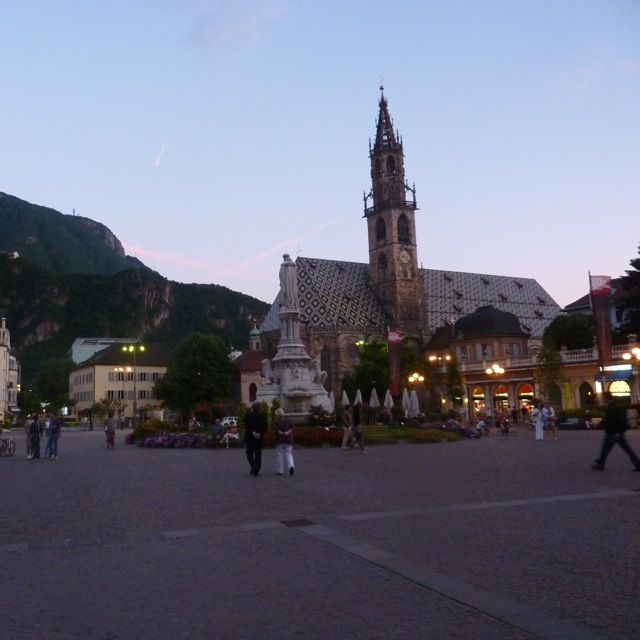
Piazza Walthur at dusk

Bolzano is the capital of the province of Alto Adige (South Tyrol or Sudtirol) in Italy. Originally a Roman settlement, after the fall of the Roman Empire, immigrants arrived from Barvaria to the north, and it has been settled by German populations since then. Before World War 1, Bolzano was part of the Austro-Hungarian county of Tyrol, and became part of Italy at the end of this war. This cultural heritage is still prevalent throughout the region, from its bilingual street signs and town names, to its foods of wurst and spaetzle, to wines such as Vernatsch (Schiava) and Blauburgunder (Pinot Noir).

I arrived in Bolzano late in the afternoon. We will visit Bolzano both in the winter and in the spring – in winter, we will use it for a home base as we explore the local ski areas in the Dolomites. In the summer, we will Bike the Wine Roads that head both north and south, discovering the many great local wines produced here.

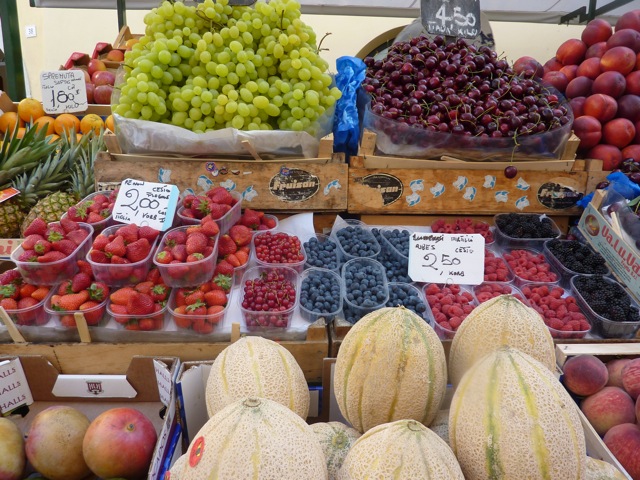
Market at Piazza del Erbe

I had a short list of restaurants to visit, and no other purpose than to eat and walk around this magnificent city. The main piazza and shopping streets were just outside my door, the Piazza delle Erbe (Piazza of Herbs), the main city marketplace, close by as well. The shops and the market was closed, as it was Sunday evening, but the stands were ready for business the next morning.

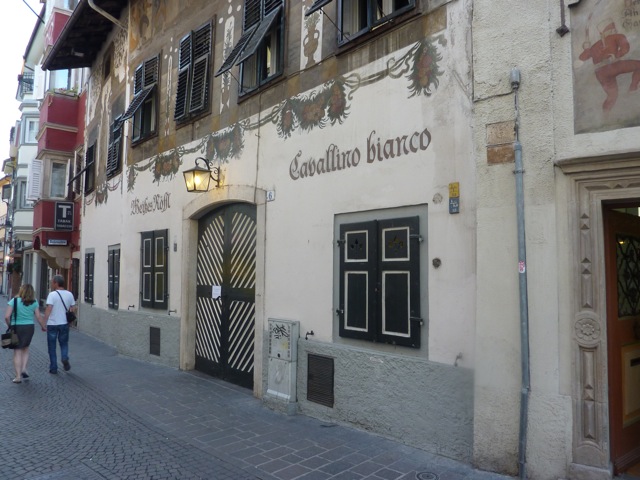
Cavallino Bianco

My first stop was a walk-by of a restaurant I knew would be closed, Cavallino Bianco. This is a very traditional establishment, in operation since the 12th century, initially built to serve the vendors in the surrounding markets. It still has shared tables, and the extensive menu features many time-honored local specialities, including leberknodel, bauernplatte, deer stew, and goulash. They unfortunately were on holiday during my visit, but I will be sure to check them out next time I am through.

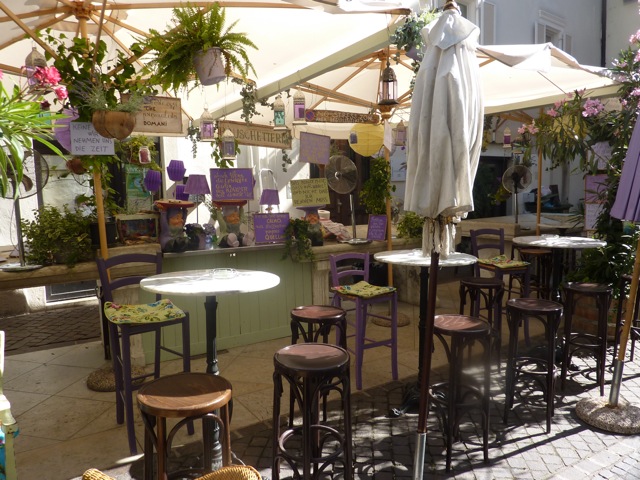
Fischbahke

A very intriguing street food restaurant was just around the corner – Fischbahke. Very funky, with lots of hand-lettered signs and a very eclectic mix of furnishings. It reminded me of something you might see in Boulder, CO or some other big college town. The menu was simple small plates: mozzarella with tomato, feta with olive, speck, mixed cheeses, or a salad with grana.

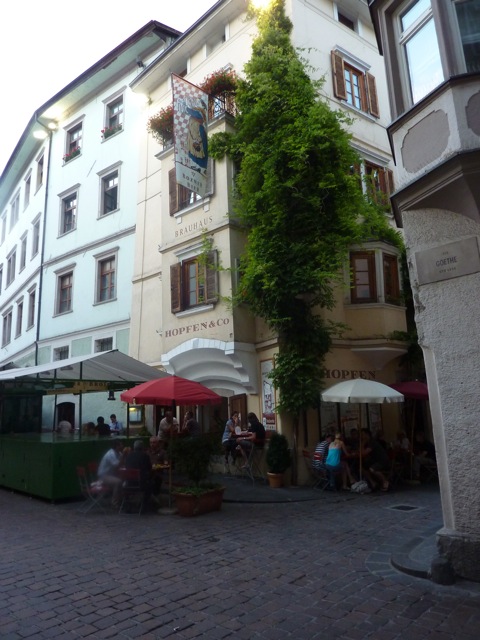
Hopfen & Co.

I stopped at Hopfen & Co, Piazza delle Erbe, 17, for a small bite. This is a what we in the US would call a brew pub. It offers an nice selection of local foods, accompanied by their homemade Bozner bier. A couple of small rooms downstairs, the first one dominated by their large bar. Also, some nice outside seating, where most of the action was this pleasant Sunday evening. They had a dark, lager, and weiss beers, as well as a small selection of local wines, including Lagrein, Santa Maddalena and Teroldego.

The menu included some traditional sausages, including wurstel bianchi and salsicce di noremburger, and dishes like homemade gnocchi, canderli, spaetzle, goulash, stinco di maiale (pork shank), and veal liver with rice. I very much enjoyed my spaetzle, prepared with bacon and cheese, and served in a saute pan, which many of the dishes were. It was accompanied by some of the best bread I’ve had yet in Northern Italy; a basket of assorted lighter rye breads, one with strong caraway, another with more of whole grain texture.

Vogele

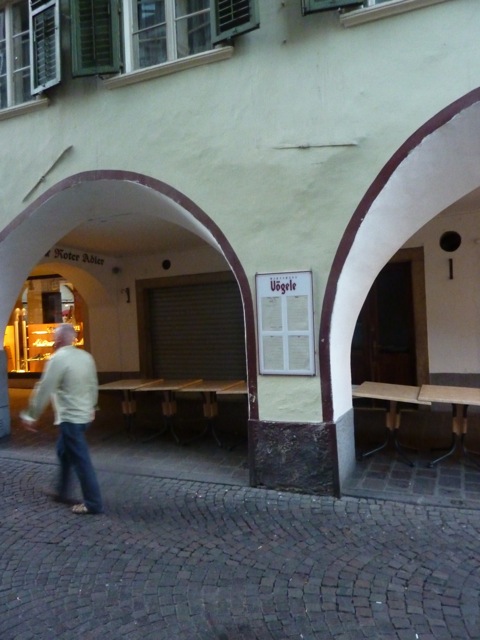
Almost right next store is Vogele, Via Goethe 3, a ristorante serving a mix of traditional fare, as well as more Mediterranean dishes. Antipasti included prosciutto with melon, mozzerella with tomato and grilled zucchini, and cavatelli with octopus to mixed grilled meats with sauerkraut and potatoes. Also on the menu, roasted veal head with mushrooms and wine vinegar, a variety of canderli with sauerkraut to ravioli stuffed with fish served with a prosecco crema, and tagliatelle with fresh local mushrooms.

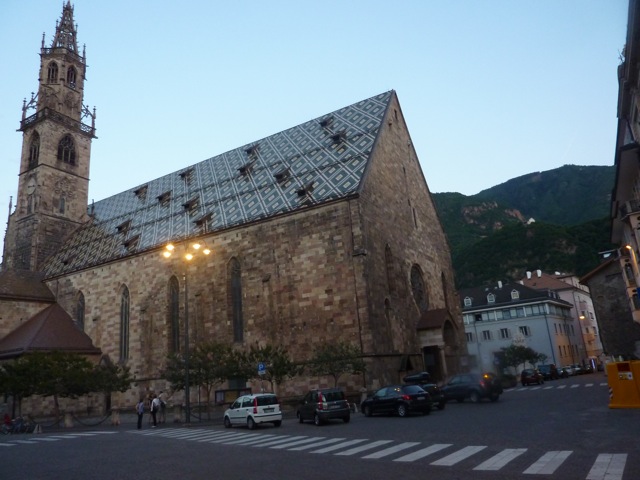
Duomo in Bolzano

The other restaurants were located around Piazza Walthur, across from the Duomo. Pretty standard pizzarias or gelato/dessert fare. But all fairly busy on a warm summer evening. This piazza is a perfect spot to wind down the day, surrounded by towering man-made and natural wonders: the Duomo, and the Dolomites. Some great ski runs up in those mountains!

Posted in Gnocchi, Lagrein, Mushrooms, Schiava, St. Magdalener, Teroldego Rotaliano, Travel, Trentino Food, Uncategorized, Vernatsch | Tagged , , , , , , , , , , , , , , , , , , | Leave a comment

Tour of Prosecco DOCG Region

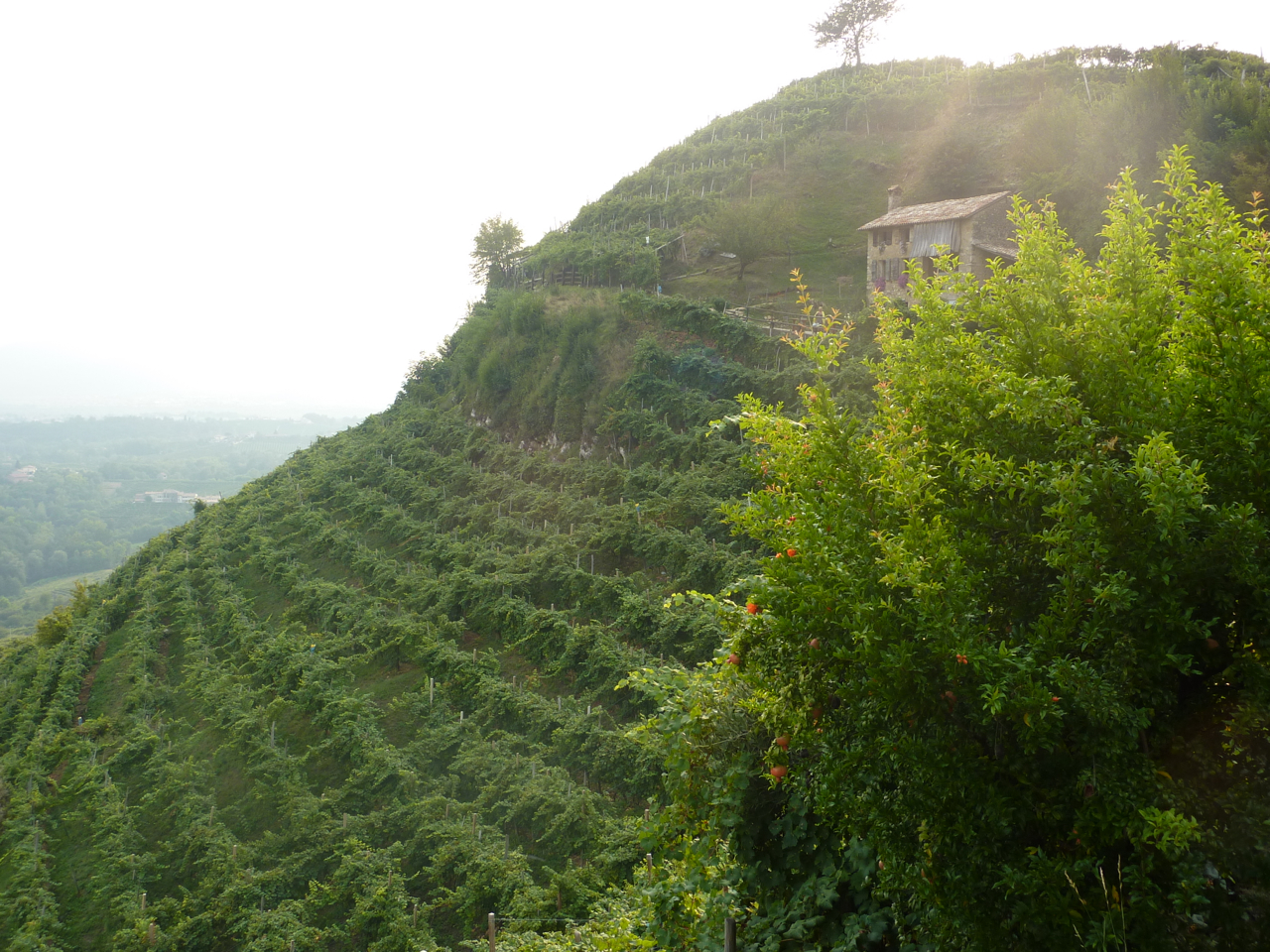
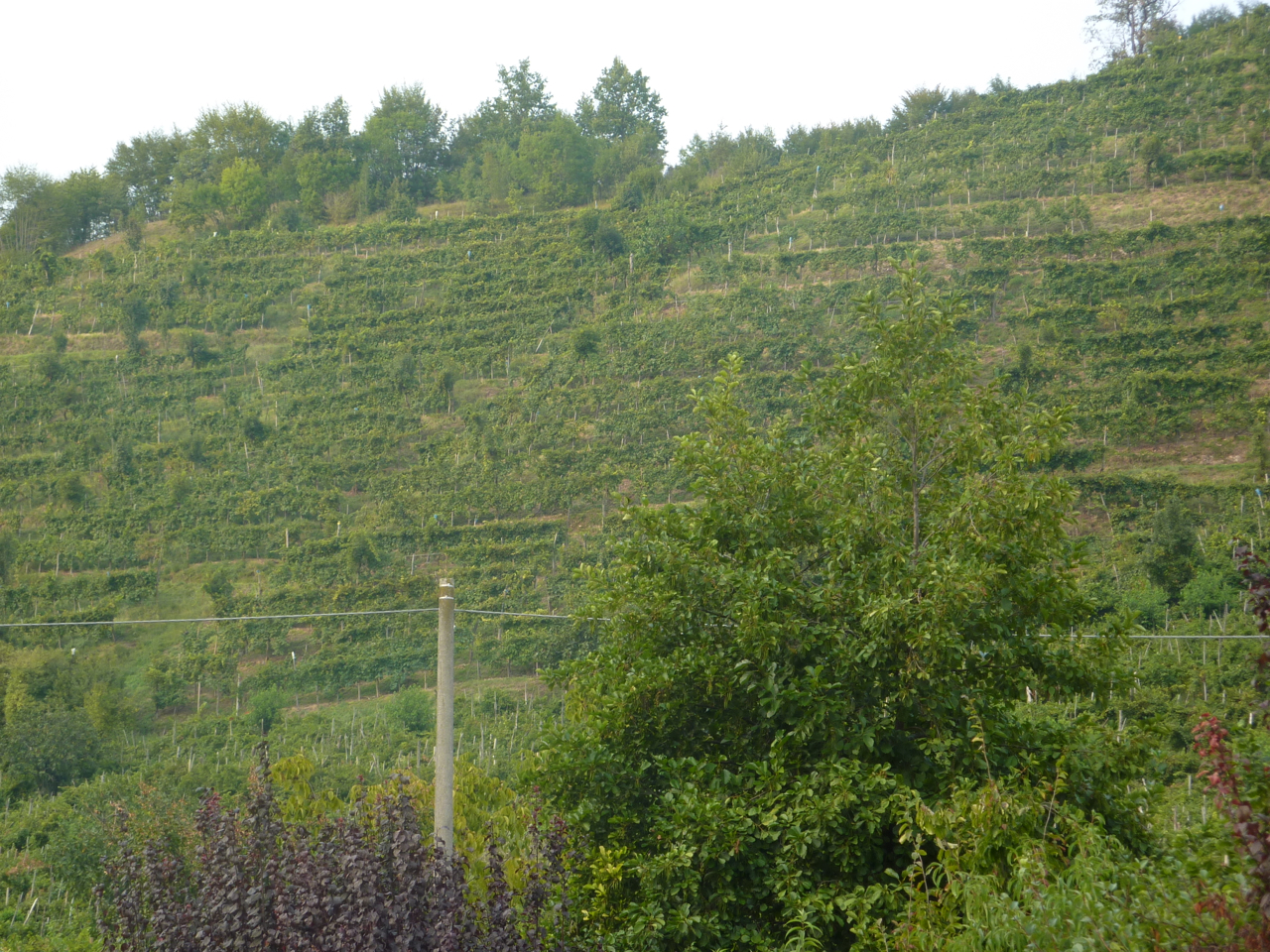
cartizze vineyards prosecco bike tours italyWe here at Italiaoudoors are planning a couple of bike and wine tours in 2012 that will include rides through the Prosecco region. This lovely area of the Veneto lies in the foothills of the Alps, with ancient terraced vineyards clinging to the sides of every possible slope. For hundreds of years, the locals have appreciated that their unique terrain affords the perfect combination of sun exposure, drainage and air currents for the production of these refreshing sparkling wines.

Prosecco has been produced for over 10 centuries in the foothills of the Marco Trevigiana, in the province of Treviso, running from Valdobbiadene to Conegliano.  This area is home to multiple DOC wines zones, both the Prosecco as well as the lesser known Colli di Conegiliano wines. The origins of wine cultivation in this area date back even prior to the Roman colonization in the 2nd century B.C.

col del lupo prosecco bike tours italy

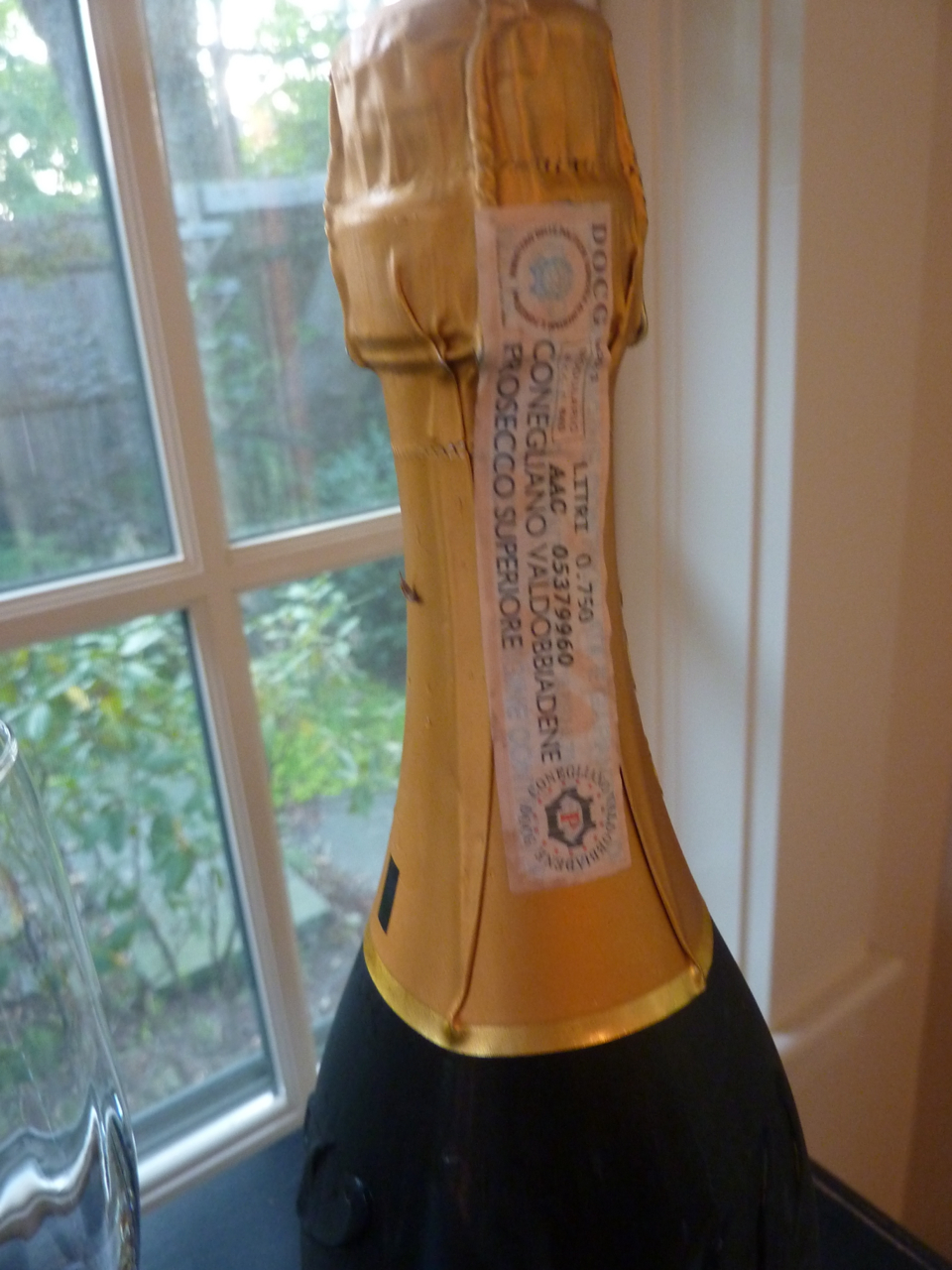
This dramatic growth in popularity of prosecco in recent years has brought to market many suppliers using the name “prosecco” who are not located in the traditional hill-region that produces the best grapes, and may not adhere to the same quality standards. As happened with the French “champagne” sparkling wine, this dilution of the name ‘prosecco’ has become a bit of a problem, as these lesser quality wines hit the market bearing the same name. In an effort to combat this situation, a new quality designation was created specifically for the sparking wines from the original Valdobbiadene to Conegliano area – the Conegliano Valdobbiadene Prosecco Superiore DOCG (Denominazione di Origine Controllata e Garantita.) This is the highest quality designation for Italian wines. It is stricter than the DOC rating, with lower allowable yields, and an evaluation by a tasting committee before they can be bottled. This DOCG region is comprised of 15 communes, of around 20,000 hectares. The grapes are grown only on the sunny parts of these hills. Right now, only 5,000 hectares of vineyards are entered into the official DOCG register.

label prosecco bike tours italy

Proseccos from the surrounding areas in Veneto and Fruili are labeled Prosecco DOC. Proseccos from other regions in Italy are labeled with the IGT designation, indicating more of a table wine, and display a wide range of quality levels.

The original Prosecco region centered around the steep hill of Cartizze. As in all wine varietals, the more challenging the terrain, the better the wines. Forcing the roots to dig deep for nutrients and water produces the best quality grapes for wine production. The Prosecco from the Cartizze area, a small area of 106 hectares in the steepest hills of San Pietro di Barbozza, Santo Stefano and Saccol, is considered to be the best, the “Grand Cru” of Prosecco. These grapes are the last to be harvested, as they are difficult to access. The high quality of the grapes, combined with the lower yields and difficulties with cultivating here all contribute to the higher cost of these wines.

col vetoraz prosecco bike tours italyI spent a couple of days driving around this region, searching out a few of the more interesting, smaller producers. My first stop was at the very top of Cartizze, along a spine that abuts the hill 400 meters above sea level, home of the Col Vetoraz winery. Prosecco has been grown on this plot of land since 1838 by the Miotto family. In 1993, descendant Francesco Miotto joined forces with Paolo De Bortoli and enologist Loris dall’Acqua to start Col Vetoraz. They are quickly becoming a force to be reckoned with in this region filled with quality producers. The winery was closed on the day of my visit (a Sunday), but I got a chance to enjoy the absolutely stunning panoramic view. I’ve tried their Valdobbiadene Brut Prosecco DOCG, which was a wonderful fresh, intense, dry prosecco – not surprising, given their enviable location. Well worth the climb up the hill!

adami prosecco bike tours italy

Next stop, Vidor. I was on my way to the Adami Winery. I knew it would be closed on a Sunday, but I had already tasted several of their proseccos and my main objective was to see the location of their facility. Hills are wonderful venues for growing wines, but can be a challenge for some bikers! The Adami production facility is not located at the hilltop, but at the base of the hills. Vidor is south of Valdobbiadene, on the southernmost edge of the wine DOCG region.

Adami was started in 1920, when grandfather Abele purchased the vineyard. Shaped as an amphitheater, and exposed to the south, its shallow calcareous soil is set on the under lying bedrock. Now in the hands of grandsons Armando and Franco, their wonderful wines are exported worldwide. I’ve found them fairly easily in the US, and I’ve tasted both the Garbel, as well as the Bosco di Gica, and enjoyed both.

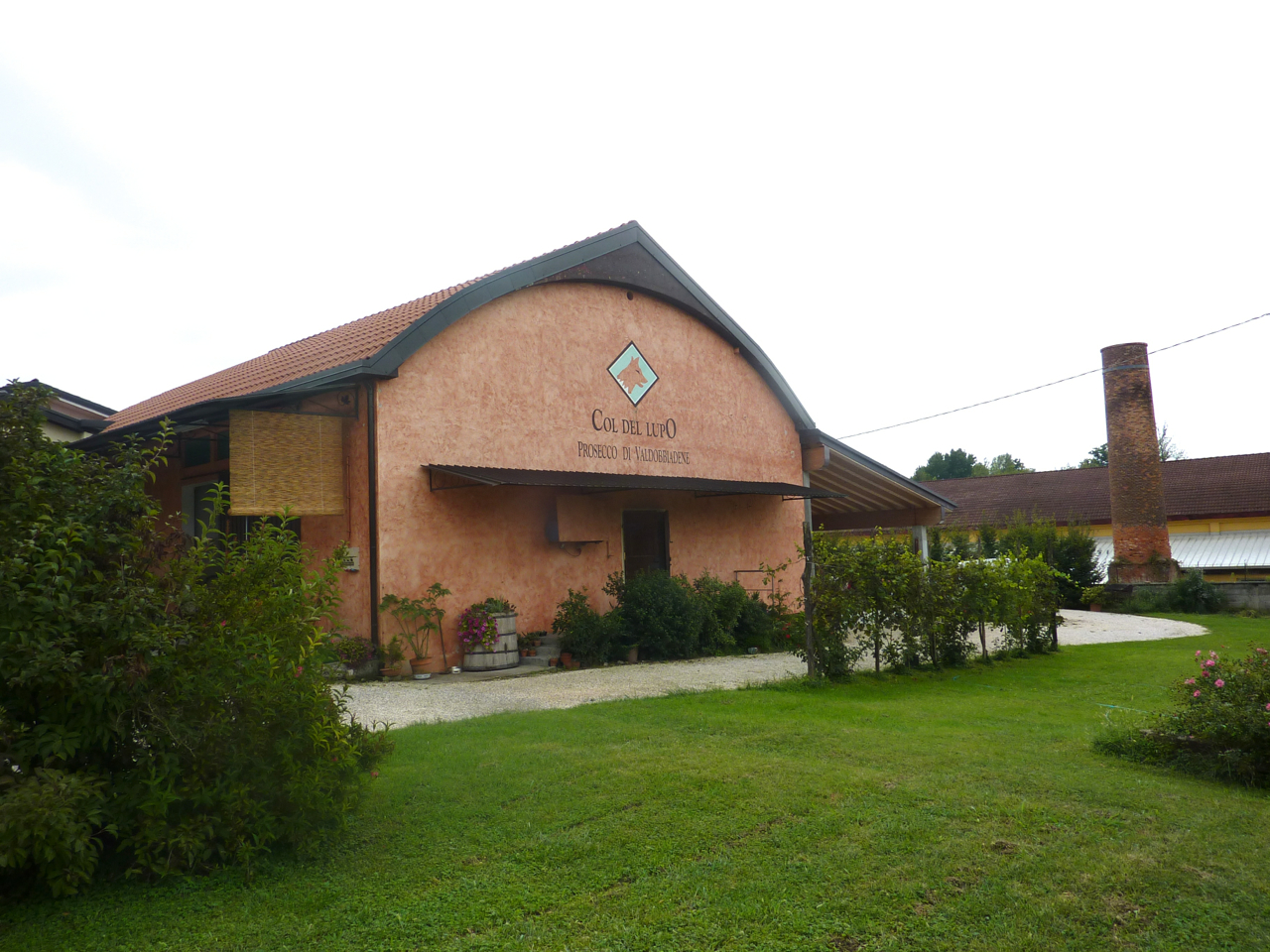
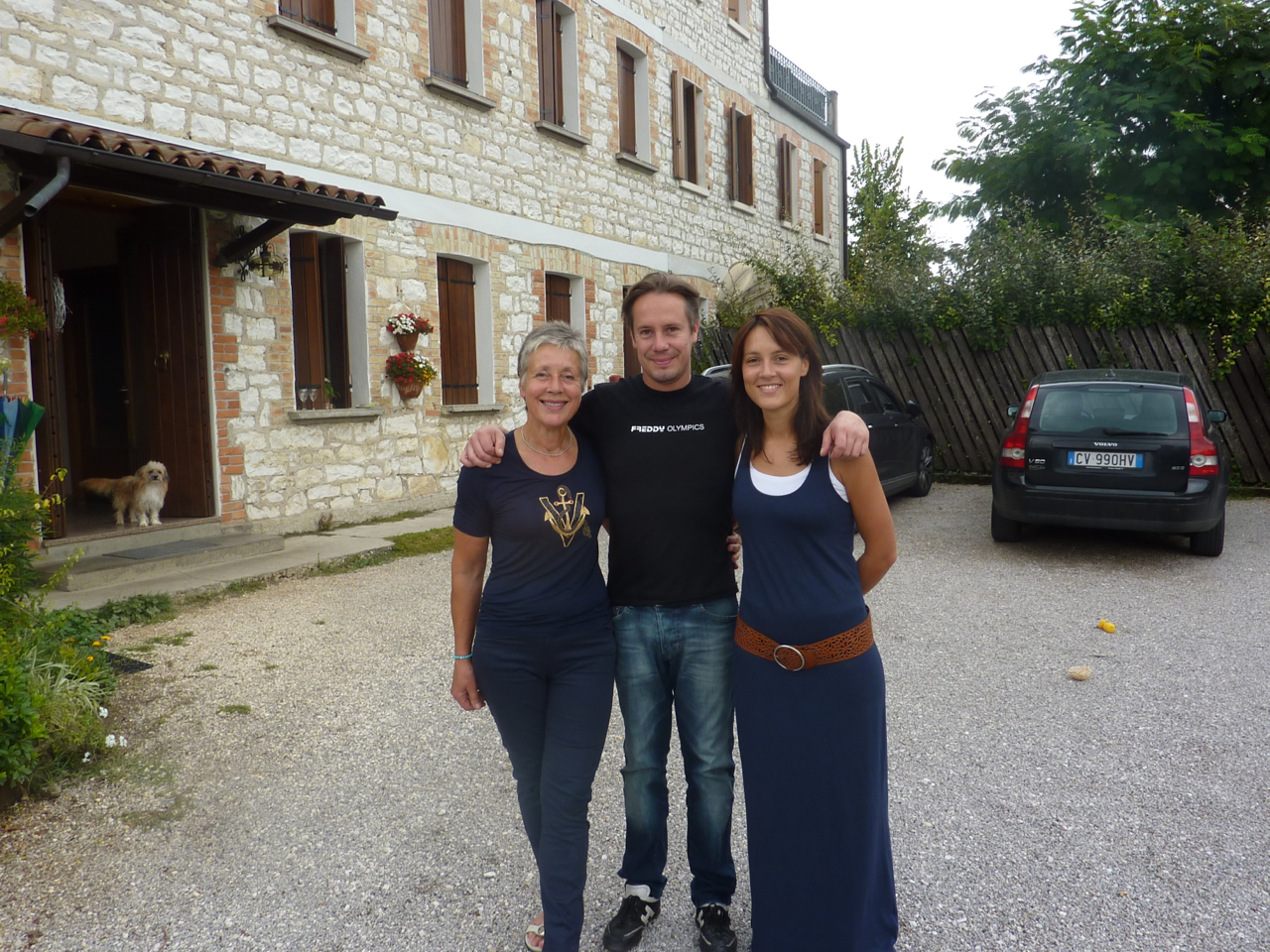
family col del lupo prosecco bike tours italyNearby, serendipity awaited. Another winery, this one with a sign saying “Aperto” (open). This was Sunday, so I was quite surprised to see it, and drove in. I had discovered Col del Lupo, another prosecco winery that had not yet been on my radar. They sell only to private clients, restaurants and agrotourismos. I was greeted warmly by Marco and his lovely wife. They were incredibly patient with my minimal Italian, and chatted with me while I sampled a couple of their wonderful proseccos, accompanied by homemade snacks cooked up by Mom – grape focaccia and nice pastry. I tasted both their Brut and Extra Dry Prosecco DOCG, and purchased a bottle to take home. When I have to narrow it down to three bottles in my suitcase, and choose one, you know it’s a good one!

merotto prosecco bike tours italy

The next day I continued to explore, first finding the Merotto winery, located down in Farra di Soligno. Their production facility is down in at the base of the hills, but their vineyards are located in a ring of hills surrounding Col San Martino, an ancient Lombard village north of Treviso. While there, I tasted both the Bareta Brut, as well as their flagship wine, the Cuvee di Fondatore Giovanni Merotto. Both fresh, dry, and flavorful, with a bit more yeast on the palate with the Cuvee. Perfect apertif wines!

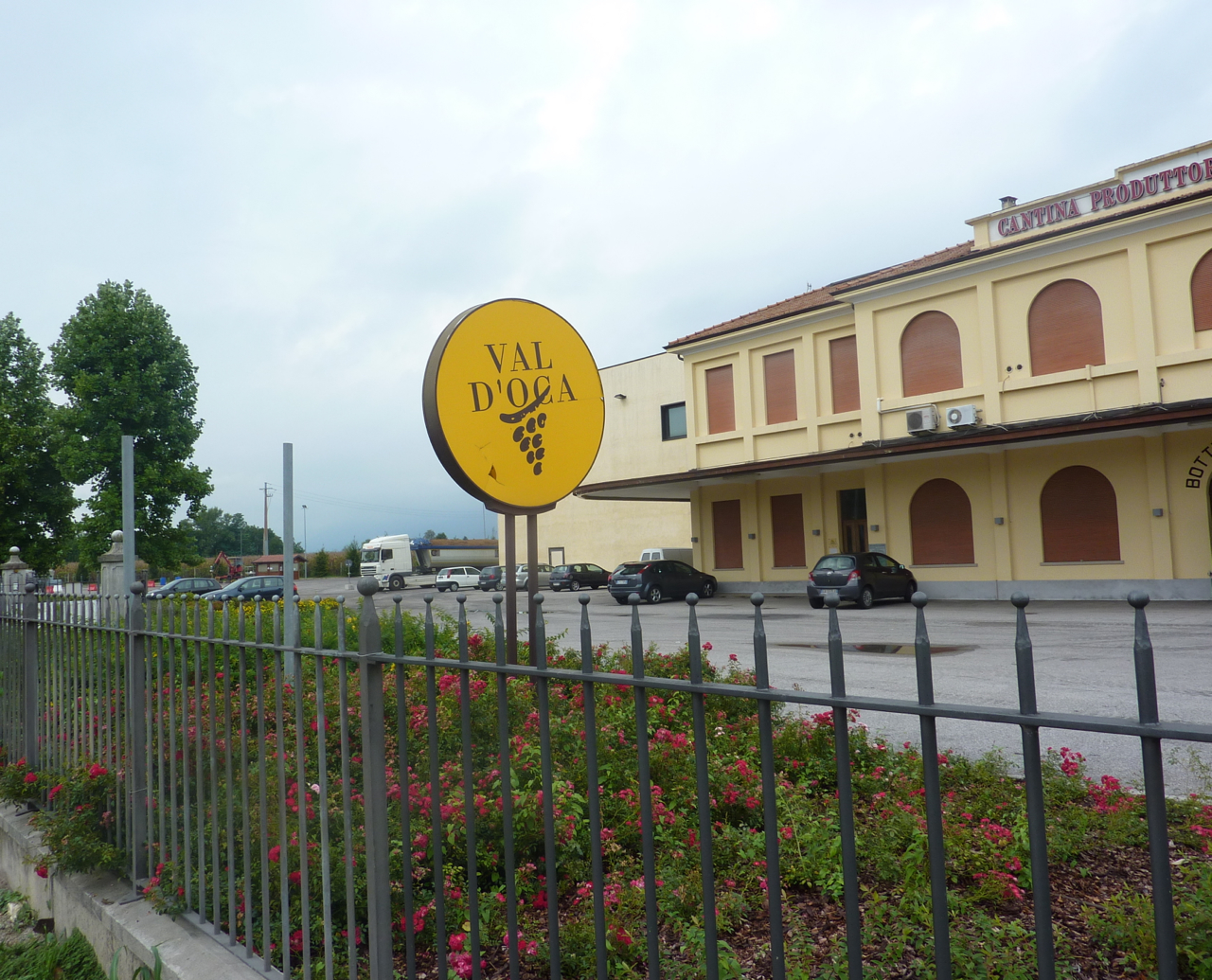
val doca prosecco bike tours italyMy primary reason for being in Italy at this time was our September 2011 Chefs on Bikes tour of the Veneto. On two occasions on that trip, I served a Val d’Oca prosecco to our guest as an aperitif, and we very much enjoyed both of them. I had been passing their vineyards  throughout the region over the last day, the first time being on the way up to Col Vetoraz, where Val d’Oca has vineyards right in prime Cartizze territory.  Val d’Oca is the Cantina Produttori di Valdobbiadene, a consortium of 600 growers who own 614 hectares here in the Prosecco DOC. The Cantina itself is located in Valdobbiadene, but I saw their vineyards throughout the region. We had tried the Val d’Oca Valdobbiadene Superiore di Cartizze DOCG for our welcome aperitif, and the Millesimato Val d’Oca Extra Dry at the start of our risotto cooking class. The owner of the wine store in Mira highly recommended the Cartizze, and it was awarded 5 Grappoli from the Duemilavini in 2010, while the Millesimato walked away with 4 grappoli.

Posted in prosecco, Prosecco, Uncategorized | Tagged , , , , , , , , , , , , , , , , , , , , , , , , , | Leave a comment