Wine Tasting – Alto Adige Muri-Gries Lagrein 2009

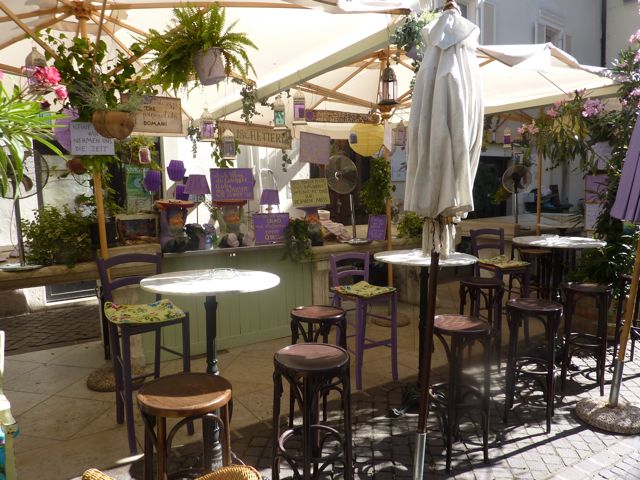
Outdoor cafe in Bolzano

I’ve been finalizing itineraries for our 2012 Italiaoutdoors bike tours, and we’re offering a couple of Bike the Wine Road tours. One I am really looking forward to is biking the Strada del Vino in Alto Adige down to Trentino. There are wonderful wines in this region that we don’t see too much of in the US. We are beginning to see their whites here and there, but they actually produce quite a few reds as well. I recently tasted a nice Lagrein from one of the oldest wineries in the entire country, Cantina Convento Muri-Gries.

Located outside of Bolzano,  this winery and convent dates back as far as the 11th century, when the Earl of Bolzano built a stronghold in an old ‘chellar’ (or cellar) to protect himself from the Bishops of Trento. In the 13th century, Meinhold II, who ruled the independent state of Gorz-Tirol, lived in this stronghold of Gries, as it had come to be known.  In the 1400s, the then ruler of Tyrol, Earl Leopold, gave the estate to a group of monks, who had lost their monastery due to a flood. The facility has been a monastery ever since, being taken over by Benedectine monks from Muri in the Swiss Alps in 1845.
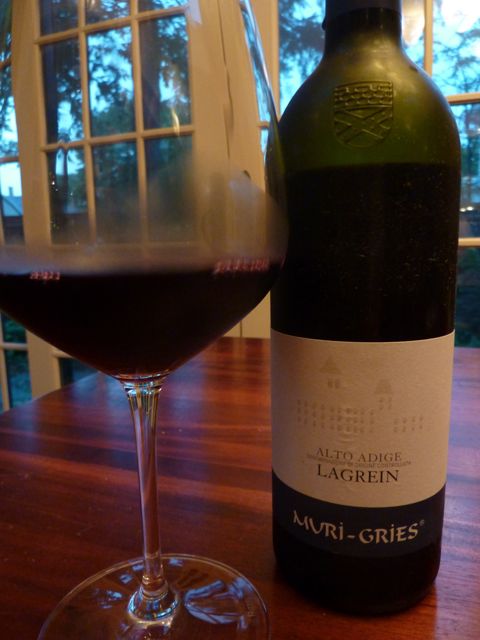
Muri-Gries Lagrein 2009

The Benedictine are a pretty serious bunch when it comes to their wines, and as the monastery entered the 20th century, there was a rededication to the production of quality wines. They started exporting their wines to the German speaking countries to the north, focusing on local varietals and styles like St. Magdalener, Malvasia, Lagrein, Kretzer and Pinot Grigio.

The monastery today relies on many agricultural activities for their livelihood, with nearly 30 ha (75 acres) of vineyards, 52 ha (131 acres) of fruit orchards, a large farm on the mountain slopes around Jenesien with meadow and wood, and 45 animals kept in stables.

Muri-Gries produces primarily red wines, with whites lagging at only 15% of their production. And among all red wines Lagrein covers 80% of their production. The resting 20% is shared among other brands like Vernatsch, St. Magdalener, Kalterersee selection, Pinot Nero and Moscato Rosa. The white offered include Pinot Bianco, Pinot Grigio, Chardonnay and Gewürztraminer.
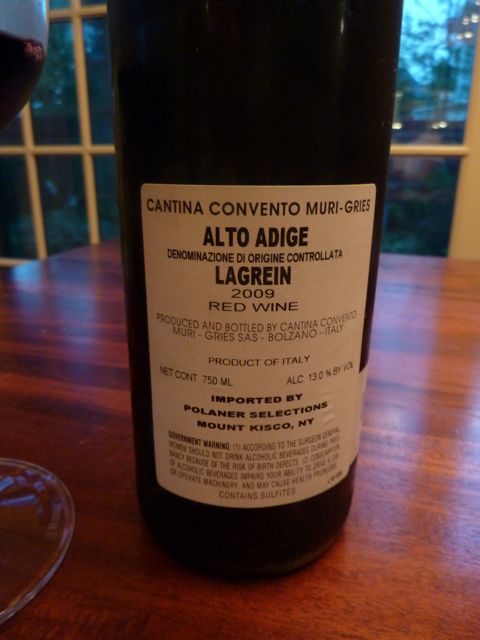
Back label

I tasted the Muri-Gries 2009 Lagrein. It exhibits a deep, garnet red color, with a strong cherry and chocolate nose. An intense palate of spice, chocolate and cherry, with a slightly bitter, tannic finish. As a varietal, the Lagrein is a bit on the acidic side, and this wine is no exception. It would easily overwhelm a light dish, but the acidity makes it a wonderful foil to a strong meat dish, such as a braise, roasted meats or game. This wine was awarded two glasses (very good to excellent in its respective catagory) by Gambero Rosso 2011, a perfect example of this regional varietal, meant to be paired with the mountain foods of this area.
Posted in Lagrein, Travel, Trentino Food, Uncategorized, Wine Pairings, wine tastings | Tagged , , , , , , , , , , , , , , , , , , , , , , | Leave a comment

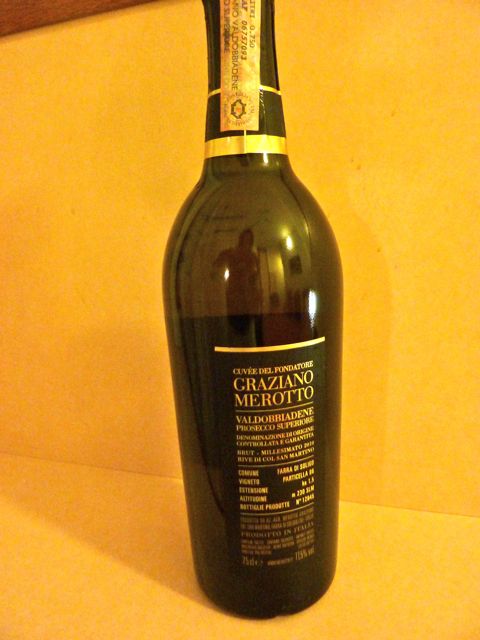
Merotto Prosecco – Bareta Brut and Cuvee del Fondatore

Vineyards for the Cuvee

The Merotto Winery is located in the heart of the Conegliano Valdobbiadene Prosecco Superiore DOCG production zone, known for its famous quality proseccos. In these Alpine foothills,  the vineyards of Giovanni Merotto are located in a ring of hills surrounding Col San Martino, an ancient Lombard city north of Treviso. Merotto owns 12 hectares of vineyards in this area, and rents another six, for a total annual production of about 2.3 tons of grapes. In addition, he purchases additional grapes from another 25 local growers, who are constantly subjected to inspections to insure their grapes achieve the quality levels Merotto requires.

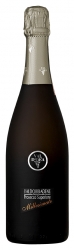
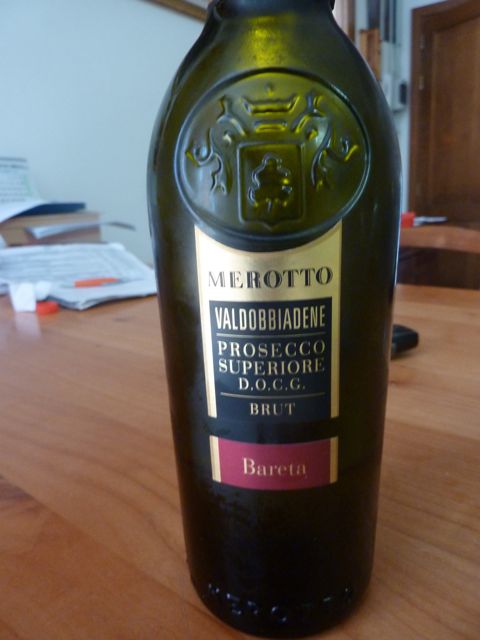
Merotto Bareta Brut

I tasted two of the Merotto Proseccos on a recent visit to their production facility in Farra di Soligo as I researched wineries for our Italiaoutdoors Bike and Wine tours. The first, the Bareta, is a Brut Prosecco Superiore DOCG, made from 100% Giera grapes (the official ‘new’ name for the prosecco grape.) From the vineyards in Col San Martino, this wine is a straw yellow, with small pearlage and persistent sparkle. It’s perfume is fruity, with apple, peach and pear. A fresh and well-balanced flavor, intense with a long finish.

Cuvee di Fondatore Merotto

My second taste was of their flagship Prosecco, the Cuvee del Fondatore Graziano Merotto. This founder’s cuvee “is the result of over 40 years of experience matured by Graziano Merotto among his precious vineyards.” From the hills surrounding their production facility in Farra di Soligo, this wine is also produced exclusively with Giera grapes, with an extensive period of on-skin maceration. Straw yellow, with fine bubbles and a touch of foam, it has a fruity nose with both stone fruits as well as citrus notes. A very pleasant fresh taste, with a great balance and a nice mineral finish. Again, a long lasting finish.

Both are perfect aperitif wines, and pair well with fish and shellfish dishes, as well as spring vegetable first courses, such as the local white asparagus.

Posted in Prosecco, Uncategorized, Wine Pairings | Tagged , , , , , , , , , , , , , , , , , , , , , , | Leave a comment

Val d’Oca Cantina Produttori di Valdobbiadene

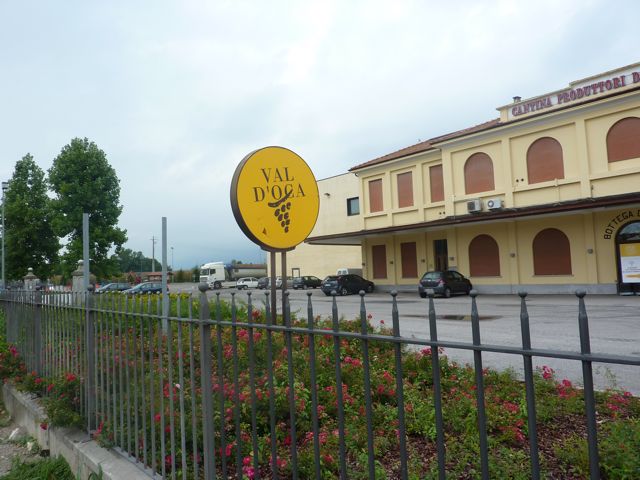
Val D'Oca Cantina in Valdobbiadene

I’ve just returned from Italy, where we hosted our Italiaoutdoors September Chefs on Bikes tour. A great time, fantastic weather, good company and lots of great food and wines. After our guests left, I spent a wonderful couple of days exploring some of the 22 wine regions of the Veneto. We are planning several Bike  the Wine Roads trips in 2012, and I was investigating some of the producers we will feature. I visited several Prosecco wineries. During our trips, we’ve served on many occasions the proseccos from Val D’Oca, so that was one winery on my list to learn more about.

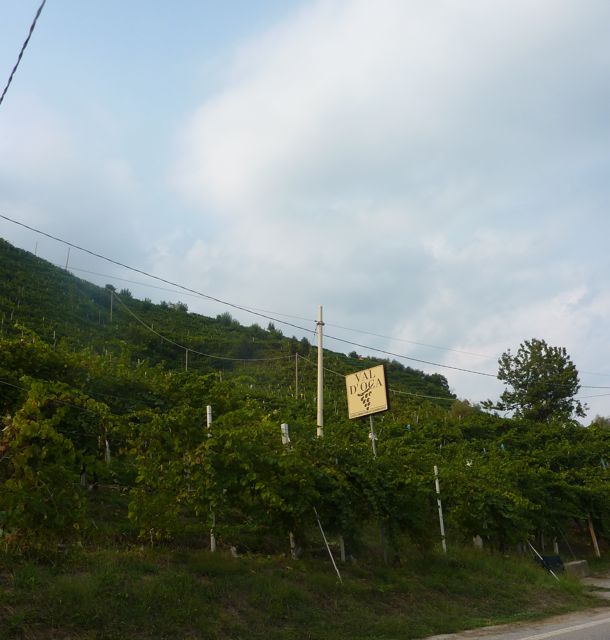
Val D'Oca vineyards in Cartizze - beautiful terraced vineyards high on the hill

The Val D’Oca Cantina Produttori di Valdobbiadene is a consortium of 600 growers, representing 614 hectares of vineyards in the Conegliano Valdobbiadene Prosecco Superiore DOCG zone. Val D’Oca (Valley of the Goose, a big product of the region) was formed in 1952 by a far-sighted group of local growers who realized that, by joining forces, they would be in a better position to keep up with the rapidly changing market and technological advances in wine production.

For over 50 years this consortium has assisted its member growers in improving the quality of its wines, promoting their wines, training growers in the latest methods of cultivation, and now converting vineyards from traditional farming to organic. It also is continually investing in production improvements and quality control.

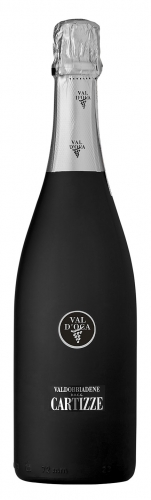
Val D'Oco Cartizze

I served two of the Val D’Oca proseccos during our last Chefs on Bikes tour. For our welcome aperitif, I like to serve a top notch prosecco, and the Val d’Oca Valdobbidene di Cartizze DOCG fits the bill. From the Cartizze “Grand Cru” area of  the region, the prime 107 hectares of vineyard real estate in Valdobbiadene, this prosecco is perfect for a special aperitif, or with desserts and biscotti. This is made from 100% Giera grapes, using the classic prosecco Charmat method. Soft, tiny bubbles accompany the pleasant aromas of apple and peach, with a clean, refreshing palate.

Val D'Oca Millesimato

A couple of days later, we began our cooking class with the Millesimato Val D’Oca. A winner of 4 grappoli from the Duemilavini awards of 2010, this was also wonderful. Aromas of apple with floral notes, it worked as an aperitif, but would also pair wonderfully with fish and shellfish.

Posted in Prosecco, Uncategorized, Wine Pairings | Tagged , , , , , , , , , , , , , , , , , , , , , , , , | Leave a comment

Roasted Figs with Grappa Mascarpone Cream

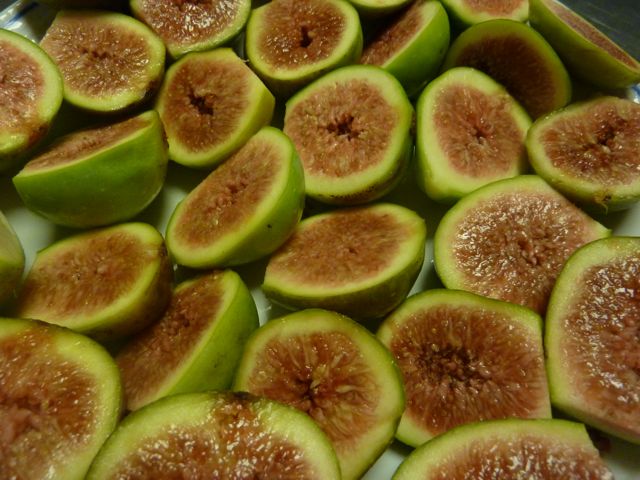
Fresh figs from the market today

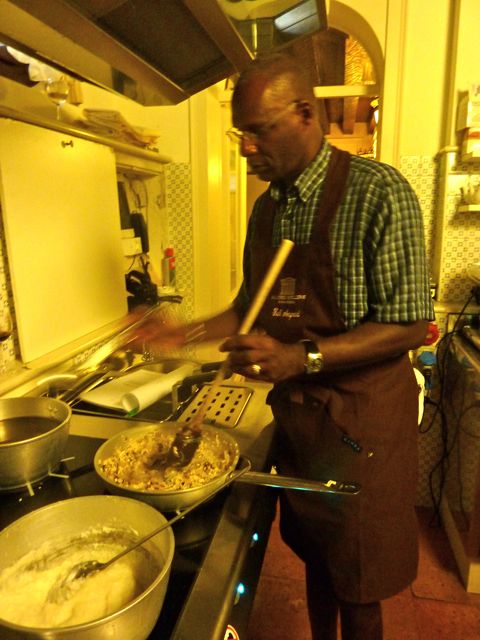
With the exception of special occasions, I am a simple dessert person. Fruit desserts are my favorite – usually fairly easy to prepare, and healthy – or at least better for you than a concoction of sugar, butter, and cream. This recipe I’ve done at several cooking classes, changing it up to feature whatever is in season. In the spring, I make it with a mixture of berries; strawberries first, then blueberries and raspberries.

As I write, we are on our September Italiaoutdoors Chefs on Bikes trip through the Veneto, and fresh figs are plentiful, both green and black. Fig trees are common in the backyards we pass, all laden with their fruits this time of year. So I adapted the berry recipe to use figs. Small local honey producers are also common, providing lots of options for flavoring and sweeting the figs a bit – I used a chestnut honey. Finally, a few toasted walnuts provide a bit of crunch.

Our post-ride cooking class

My first choice was chestnuts for the garnish, but we are just a few weeks early; chestnuts, or marroni, will shortly be found in every market here. Grown in the woods just north of our stop in Asolo are the Marroni di Monfenera, a variety of chestnut with the IGP quality designation (Indicazione Geographical Protecta), verifying the origin and growing environment of the product. Chestnuts have been part of the cuisine here for hundreds of years, providing not just the nuts, but also flour. Today, the cured pork products from this area attribute their unique flavor to the chestnuts that are used for fodder for the pigs.

A little local grappa, from Poli in Bassano del Grappa, flavored the whipped cream. We visit Bassano today, and will do a grappa tasting at the Poli distillery, with a chance to purchase a bottle or two for home!

Roasted Figs with Grappa Mascarpone Cream

Serves 8

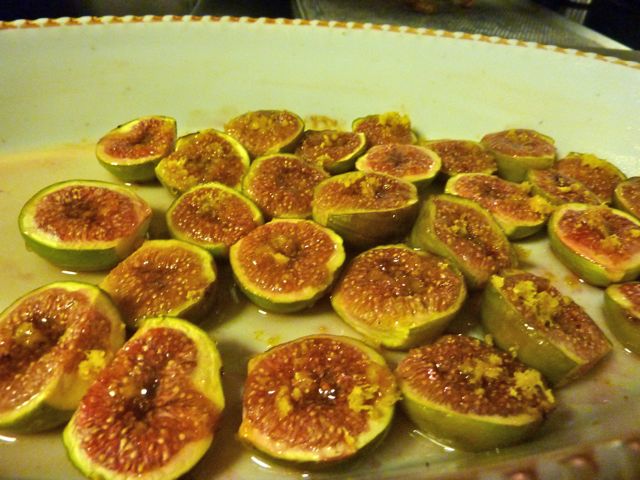
Roasted figs with honey

3/4 cup chilled whipping cream
1/2 8-ounce container mascarpone cheese
3 tablespoons confectioners sugar
3 tablespoons grappa

1/2 cup walnut halves (or chestnuts, if available)
1 tablespoon butter
32 fresh figs
1/2 cup walnut halves
1/4 cup honey
1 tablespoon grated lemon peel

Preheat the oven to 350°.

Combine whipping cream, mascarpone, 3 tablespoons sugar, and grappa in large bowl. Beat until soft peaks form.

Place the walnut halves on a baking sheet and toast in the oven until just beginning to brown. Remove from oven.Allow to cool slightly, then coarsely chop.

Butter a small baking dish. Wash the figs and remove the woody stem. Cut in half, and lay in the baking dish, cut side up. Place in the oven and roast until softened and beginning to brown, about 12 minutes. Remove from oven.

Drizzle the honey over the warm figs, and sprinkle with the lemon zest. Top with the walnuts, and serve on a plate with a large spoonful of the grappa cream. You can drizzle a bit of the grappa over the figs if you wish!

We paired this with a wonderful Picolit from Friuli Venezia-Giulia, which was enjoyed immensely by all! Another option is more grappa, of course.

Posted in Dessert, Figs, Fruit, Mascarpone, Picolit, Uncategorized, Vegetarian, Veneto Food | Tagged , , , , , , , , , , , , , , , , , , , , , , , , , , , , , | Leave a comment

Bagnoli di Sopra

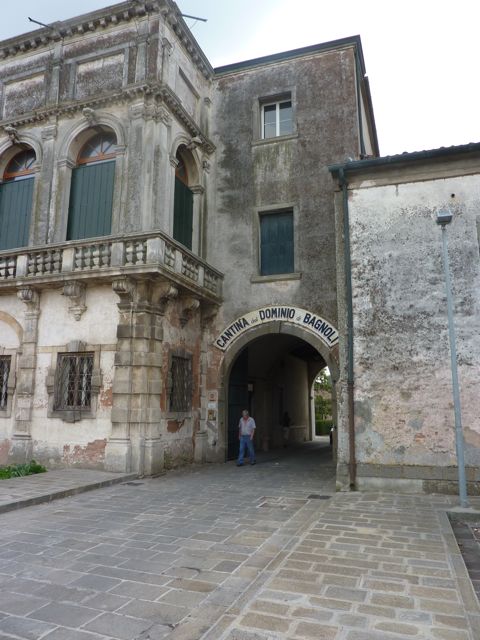
Cantina di Dominio di Bagnoli

The Bagnoli di Sopra DOC, established in 1995, covers an area that includes 15 municipalities in the Veneto province of Padua. The heart of this wine region is the town of Bagnoli di Sopra, an ancient Longobard village that grew up around the Benedictine monastery of San Michele Arcangelo. The Benedictine monks established themselves in this area, which was swampland when they arrived. These industrious monks set about reclaiming the land from the water, by building drainage and canal systems. Due to their hard work, cultivation of grapes and other crops became possible in this area.

For centuries, the wine produced here had been renowned in the neighboring villages, but its fame never went beyond the local boundaries. The DOC designation has begun to reverse this situation and make it possible for the producers of this wine to compete with other Veneto wines in the domestic and international markets. In my visits to wineries to prepare for our next Italiaoutdoors Chefs on Bikes trip to the Veneto, I made a stop in Bagnoli  to learn a bit more about the wines, and pick up a few to introduce to our guests. Even in the Veneto, I don’t see these much outside this DOC region itself.

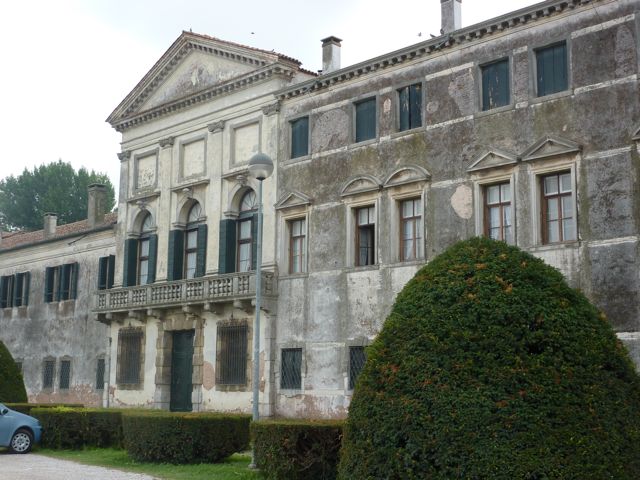
Villa Widmann

The Cantina di Domino di Bagnoli is located in the center of Bagnoli di Sopra, in the Villa Widmann. The Widmann family owned most of these vineyards, beginning in 1656 when they purchased  them from Pope Alexander VII. During the 17th century, this family development most of the cellars for these vineyards, and the wines enjoyed quite a good reputation within the local area.

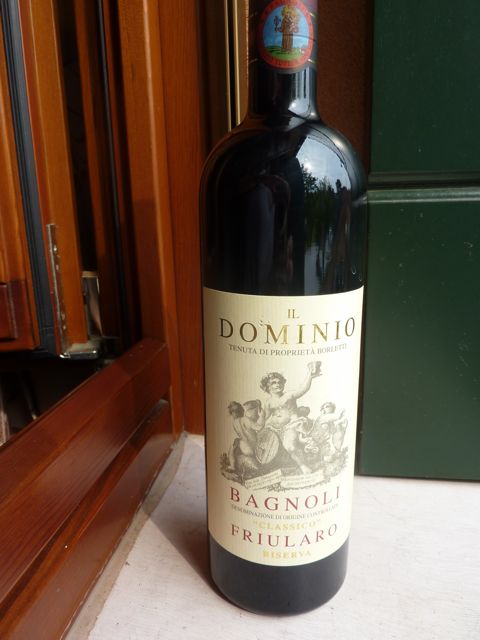
The most interesting wine of this DOC is the Friularo, a full-bodied red made with the indigenous Raboso grapes, named after an affluent of the Piave. This is a round, mellow wine that is at its best after at least two years of aging. In its “Vendemmia Tardiva” (late harvest) version, the grapes are gathered only as they start to wither.

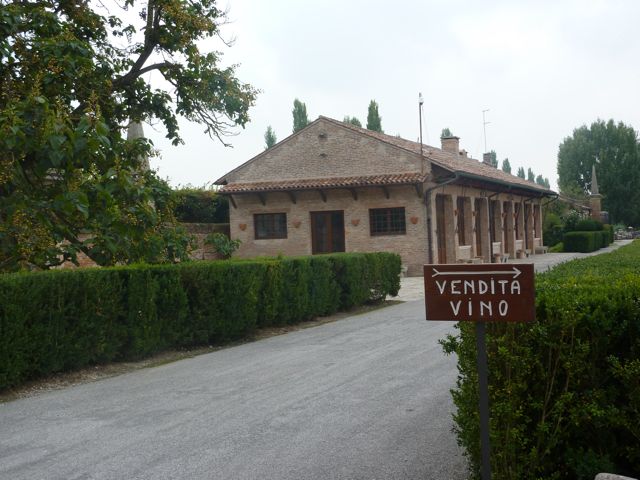
Inside Cantina

Some researchers believe that the Friularo wine hails from the Friuli region of Italy; transferred by the De Widmann family. Others disagree, claiming that in Veneto dialect it would be said friulan or furlan, coming from the Latin frigos or frius (cold), and aro, meaning “he who was”. Therefore Friularo is a grape that ripens with the cold. Friularo  is an extremely late maturing grape and is traditionally harvested after the Bagnoli Friularo Festival, in October, and partly after the summer of St. Martin, in the second half of November. Friularo is also an exceptionally hardy variety, managing to survive the phylloxera epidemic in the late 18th century. The river Adige today passes only a few miles away from the Bagnoli region: this alluvial terroir gives the wine a singular structure and body, and enhances the aromas through cool summer nights.

Bagnoli di Sopra Friularo

I picked up a bottle of the Friulano Riserva (aged 2 years) as well as the Bianco. I’ll post a review from myself and our guests when we taste these in the next couple of days!

Posted in Uncategorized | Tagged , , , , , , , , , , , , , , , , , , , , , | Leave a comment