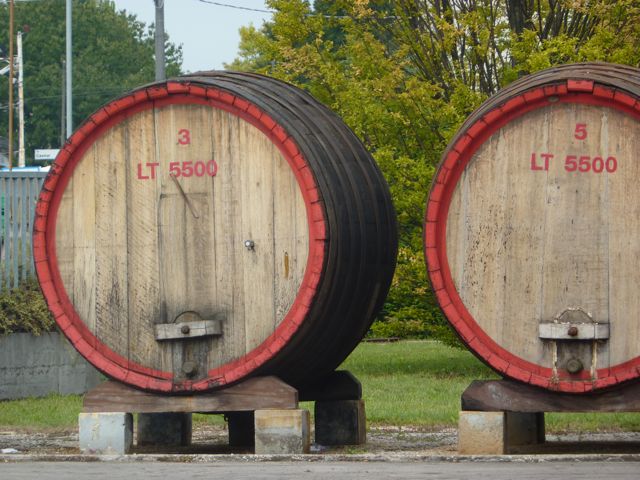
Large barrels at Sansovino in Corti Benedettine de Padovano DOC
Another trip to Italy – and another chance to explore the wines I can’t find back in the US. There are several regions in the Veneto that have been on my list to check out, and I was able to hit two today. The Corti Benedettine del Padovano DOC lies in both the provinces of Padua and Venezia, south of Padua. Established in 2004, this DOC recognizes the role the Benedictine monks played in the social and economic development of this area.
This territory lies between the rivers Brenta and Adige and the Adriatic, an alluvial plain subject to periods of severe flooding over the years. From the 12th century, the Benedictine monks have made their home in this plain, putting huge amounts of effort into reclaiming these wetlands. While also battling wars, malaria outbreaks, and famine, they managed to build canals and drainage systems to create Corti. A Corte was the heart of their reclamation effort, and would contain the quarters where the friars lived, as well as houses for the farm laborers. These Corti became the social, economic and administrative centers for these large estates for almost 1000 years. The monks were the leaders of the efforts to prepare the land here for cultivation. The wines produced on the lands reclaimed in this area became a major commodity, exchanged with the nearby towns of Padua and Venice, and through the Venetian port, cities across the Adriatic.
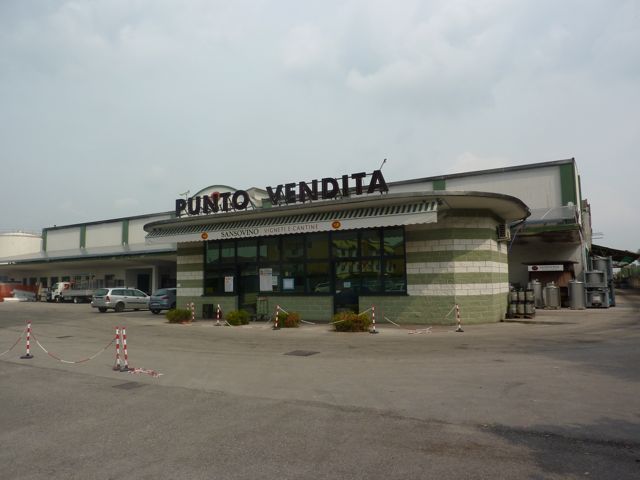
Sansovino VIgneti e Cantina
Cultivation of wines in this fairly damp region requires a great deal of local expertise. But local winegrowers have had success with both indigenous grapes as well as (relatively) newly introduced international varietals. Historically, varietals such as Raboso, Refosco, Tocai and Moscato Giallo have been cultivated here (on my list of top undiscovered wines in Northeastern Italy), and today wine-growers also produce what international varietals that thrive in the excellent local climate and soil conditions: Merlot, Cabernet, Cabernet Sauvignon, Chardonnay, Sauvignon, Pinot Grigio and Pinot Bianco. Most wines in this DOC are best served young, when then exhibit fresh floral notes; others are better left to develop greater complexity with a bit of aging.
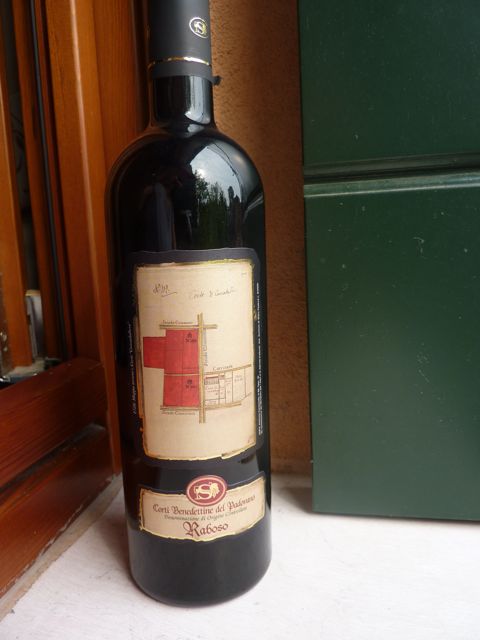
Corti Benedettine Raboso
I visited what is listed at the contact address for this DOC – the Sansovino Vigneti & Cantina in Conselve today. The small store had a nice mix of local wines; along with the Corti Benedettine, there were a few from the Bagnoli di Sopra DOC, and a nice variety of IGT wines from the Veneto and Colli Treviso. I purchased a Sansovino Raboso and a Pinot Grigio from Corti Benedettine, as well as a Bagnoli di Sopra Frulano. Definitely worth a stop back to try some other local wines. We’ll taste these with our guests on our ItaliaoutdoorsChefs on Bikes trip that starts on Sunday. We’ll be riding through these vineyards during the first days of our trip.
Currently, I am working on the recipes for our upcoming Italiaoutdoors Chefs on Bikes tour of the Veneto. I like to include dishes that incorporate the wonderful products of the Veneto region, reflect the traditional cuisine of the area, and are ones that our guests would be able to prepare in their own kitchens when they return home. I’ve done many classes introducing risottos, and students always enjoy them, as the technique is pretty straightforward, and there are so many options to make this dish different every time.
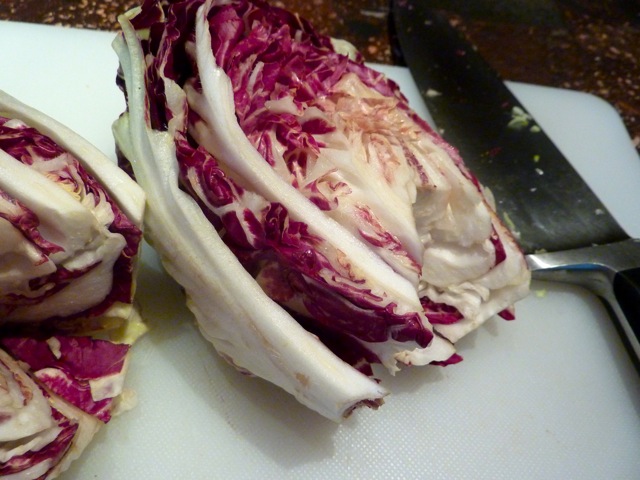
Cored chioggia radicchio
Radicchio is one of the foremost products of the region – there are 4 different varieties that are officially recognized with the IGP (Indicazione Geografica Protetta) or DOP (Denominazione Origine Protetta) designations. Both designations protect these products from lower quality competitors using the same names, dictating the region, production methods, varieties and other details of the production process. There are four of these in the Veneto region alone, for four different types of radicchio, with many other wonderful varieties available as well. The beautiful walled city of Treviso is radicchio ‘central’ of the Veneto region, and a biking destination on our trip. I love this slightly bitter vegetable, and can find locally grown Chioggia radicchio right now in New England, so a radicchio risotto is a perfect dish to include.
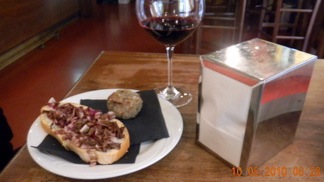
Radicchio snack at Treviso enoteca
Often risottos are made with a bit of wine being the first addition of liquid; prosecco is what I’ve chosen to include, reflecting again the Treviso region. Finishing the risotto with a cheese is traditional, my choice in this recipe is a Ubriaco Prosecco, another product from the Veneto region. This cheese is washed with the pomace, or grape must, leftover from the wine production process, which makes a very tasting and tangy cheese that will stand up well to the radicchio. My local cheese shop carries the Ubriaco Prosecco on a regular basis, but a grana padano would make a good substitute.
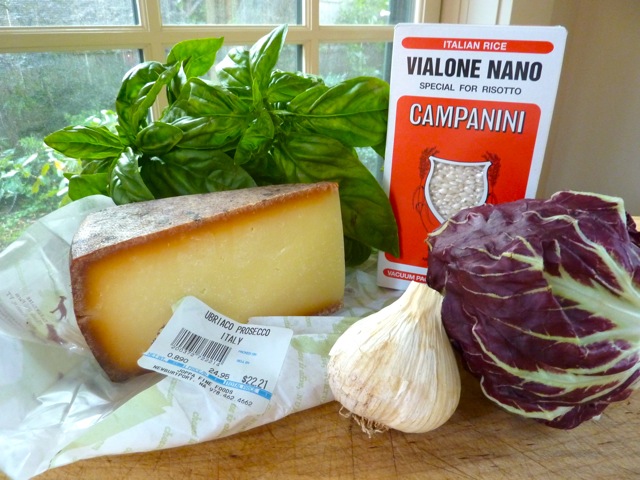
Ubriaco Prosecco and Vialone Nano
One other Veneto product I’ve included here is marroni, or chestnuts. In September, these are found at every market, freshly roasted and ready for snacking. In the forests of northern and western Veneto, as well as north in Trentino and east in Friuli, chestnuts have been a traditional food since ancient times, used as is, or as chestnut flour. It is even used as pig fodder, and required feed for some of the IGP and DOP prosciuttos. In the US, I will substitute walnuts when I can’t find good chestnuts.
Finally, my choice for rice – the Vialone Nano rice is the IGP rice from the Veneto region traditionally used in the risottos of the region. The Grumolo della Abbadessa area, right outside of Vicenza, is renowned for this rice, which has been cultivated here for hundreds of years. I have managed to find this here, at Micuci’s Market in Portland, ME, but a Carnaroli or Arborio rice would make a great choice as well. Risotto con Radicchio Trevigiano e Ubriaco
Serves 4
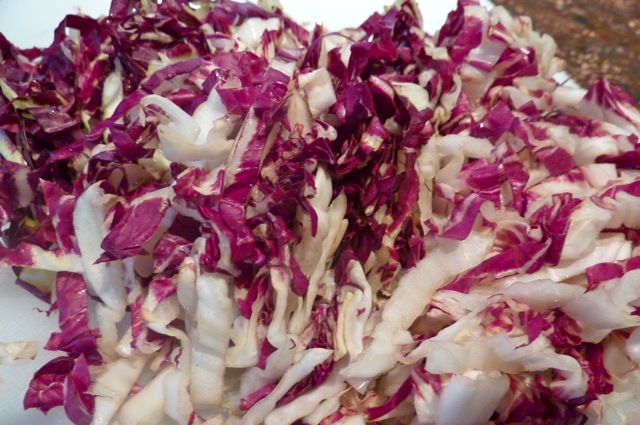
Thinly sliced radicchio
About 6 1/2 cups vegetable stock
2 tablespoons extra virgin olive oil
1 tablespoon butter
1 onion, chopped into 1/4 inch dice
1 stalk celery, chopped into 1/4 inch dice
1 clove garlic, minced
1 head radicchio, cored and cut into thin strips (chiffonade)
2 cups risotto rice, preferably Vialone Nano
1/2 cup prosecco or white wine
3/4 cup grated Ubriaco cheese
Kosher salt and freshly ground peper
1/2 cup toasted chestnuts
8 basil leaves, cut into thin strips (chiffonade)
Bring the stock to a boil in a large pot.
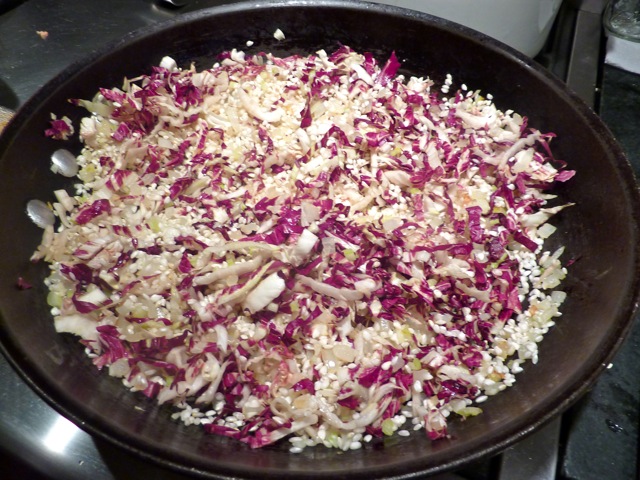
Heat the olive oil and butter in a large saute pan over medium heat. Add the onion and celery, and cook until soft and translucent, about 5-7 minutes. Add the garlic and radicchio; cook for 1 minute.
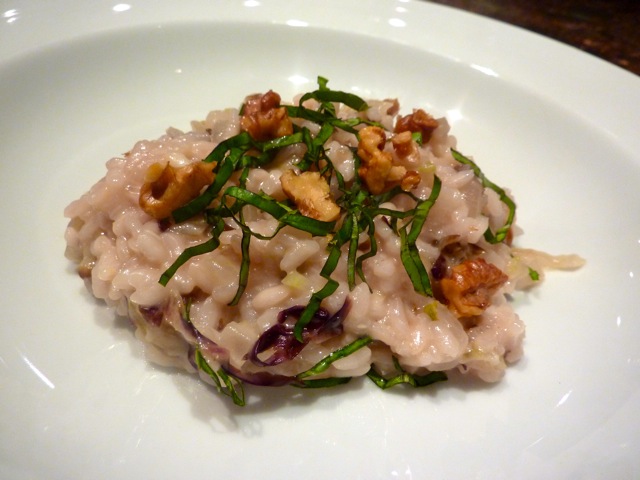
Radicchio risotto
Add the rice. Stir for about 1 minute. Add the prosecco, and simmer until it has evaporated. Stir in a ladleful of the stock. Cook, adding the stock a ladleful at a time, and allowing it to be absorbed by the rice before adding more. Cook until the rice is just tender to the bite, or ‘al dente’. You may not use all of the stock.
Stir in the cheese, and season with salt and pepper. Divide between 4 serving plates, garnish with walnuts and basil and serve.
And what wine to pair with this? A sparkling prosecco from Treviso, of course!
The more I visit and study the wines of Northeastern Italy, the more impressed I become by the variety and number of wonderful producers there. I particularly enjoy it when I find wines here that are unique to these areas; wines produced from the grapes that have grown here, and only here, for hundreds of years, that reflect both the ‘terrior’, as well as the culture and the history of this particular spot on earth.
The wines of Trentino-Alto Adige are continuing impress wine enthusiasts worldwide. Located between the Veneto region of Italy to the south, and bordered by Austria to the north, the region reflects both Adriatic as well as Austrian-German influences. The region is predominately mountainous, with the majestic Dolomites dominating the landscape, but the valleys and foothills are perfect terrain for producing world-class wines. Between the mountains, where one can hike or ski, and the lovely valleys, where one can bike along beautiful bike trails, to quote wine experts Joseph Bastianich and David Lynch, in their Vino Italiano The Regional Wines of Italy guide, “For those who love both the outdoors and wines, Trentino Alto-Adige is hard to beat.” We at Italiaoutdoors wholeheartedly agree, which is why we picked this region as the venue for our ski, hike and bike tours. The Sudtiroler-Weinstrasse (Sudtirol Wine Road) brings us right by many of these vineyards, include this next producer.
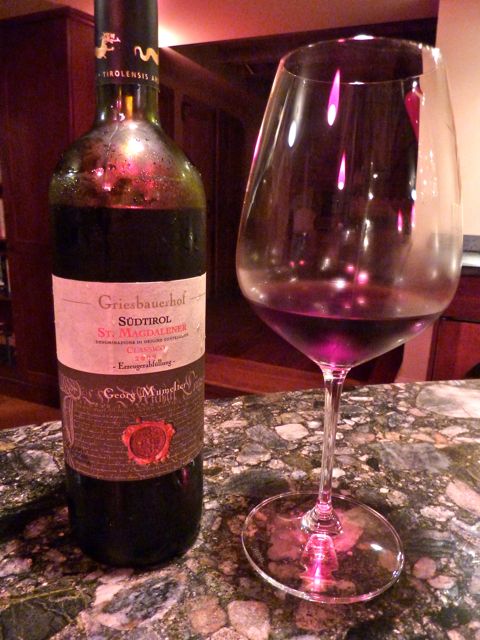
Georg Mumelter St. Magdalener
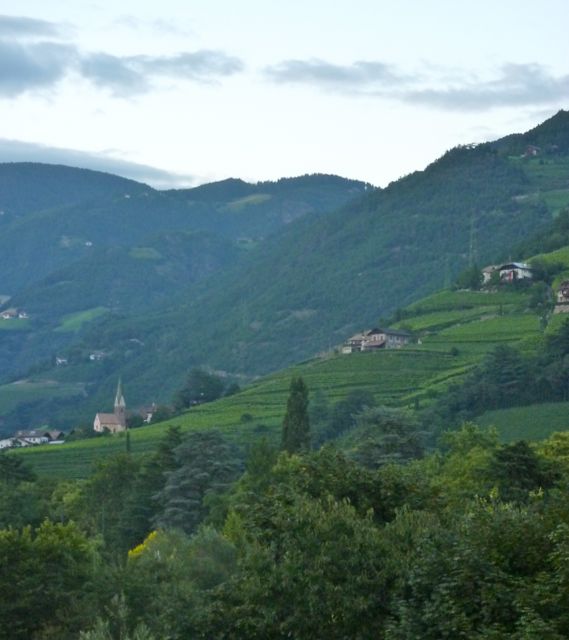
I recently discovered a red wine from Alto Adige, from the vineyards of Georg Mumelter. Mumelter’s farm, Griesbauerhof, is located right outside of Bolzano, where the Val d’Isarco opens into the basin around Bolzano. This farm has been in the Mumelter family since 1785, at the base of the picturesque hills of St. Giustina and St. Maddalena in Rencio. The winery still operates in a tiny cellar below the house, using an original wine press. The vineyards have a sunny, southern exposure and sandy clay soil, providing ideal conditions for the ripening of both whites as well as reds.
Some wine areas focus on producing wines that are impressive all on their own, huge reds that can blow you away. You can find these in Italy, but these are balanced by an equal, if not greater emphasis on producing wines that pair with food; that complement rather than overwhelm. The former emphasis is for export to countries such as the US, the latter for their own consumption, and is more authentic. This wine is one of the latter. I tasted the 2009 Georg Mumelter Griesbauerhof St. Magdelener (also called Santa Maddalena.) A blend of two varietals varietals rarely seen outside of these regions – Schiava and Lagrein – both of these made my list of the Top 10 Undiscovered Wines of Northeastern Italy. These varietals are grown here in Alto-Adige, as well as in Germany, but are not commonly exported here, as they producer lighter bodied red wines, rather than the huge reds that are so in vogue here.
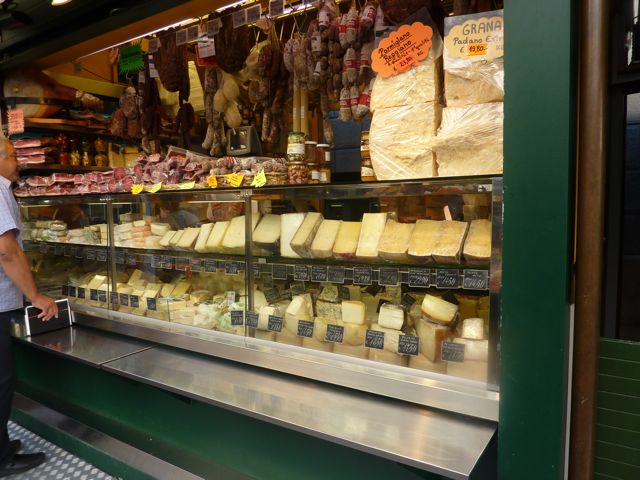
Speck hams at Bolzano market
The St. Magdelener is primarily Schiava (also known as Trollinger, Vernatsch or Kalterersee) with about 10% Lagrein. It is a medium-bodied red, with lots of cherry and berry, followed by a slightly bitter finish. A spicy note, similar to a Pinot Noir, came through as well. It pairs perfectly with the Alto-Adige speck (a smoked ham, similar to prosciutto), as well as lighter meats such as chicken and pork, a meat ragu over pasta, and even fish such as salmon.
My fall project, outside of Italiaoutdoors, is developing a 10-segment series of short cooking episodes for WSKI-TV at Sugarloaf, ME. A long way from Italy, but my philosophy remains the same – celebrating fresh, local foods. This is a bit harder in the harsh climate of Maine, but I am discovering an entire community that is dedicated to producing local foods even in this region. So with the support of both WSKI-TV and the Skowhegan Savings Bank, we are putting together this series and introducing a local producer during each segment. We’ll learn what they make, where to buy it, what to do with it, and why they are crazy enough to attempt this in Maine! But for those of us who live there, we know why. Our home is remote, but allows us to indulge in all sorts of outdoors activities – skiing, of course, but also hiking, kayaking, golf, mountain biking, snowmobiling, and so on. Finding great ingredients is a bit more difficult that it is in Italy, but the whole ‘locavore’ movement has arrived even here, and our options are increasing rapidly. Hopefully this project will provide a bit of encouragement and support for these local farmers and producers.
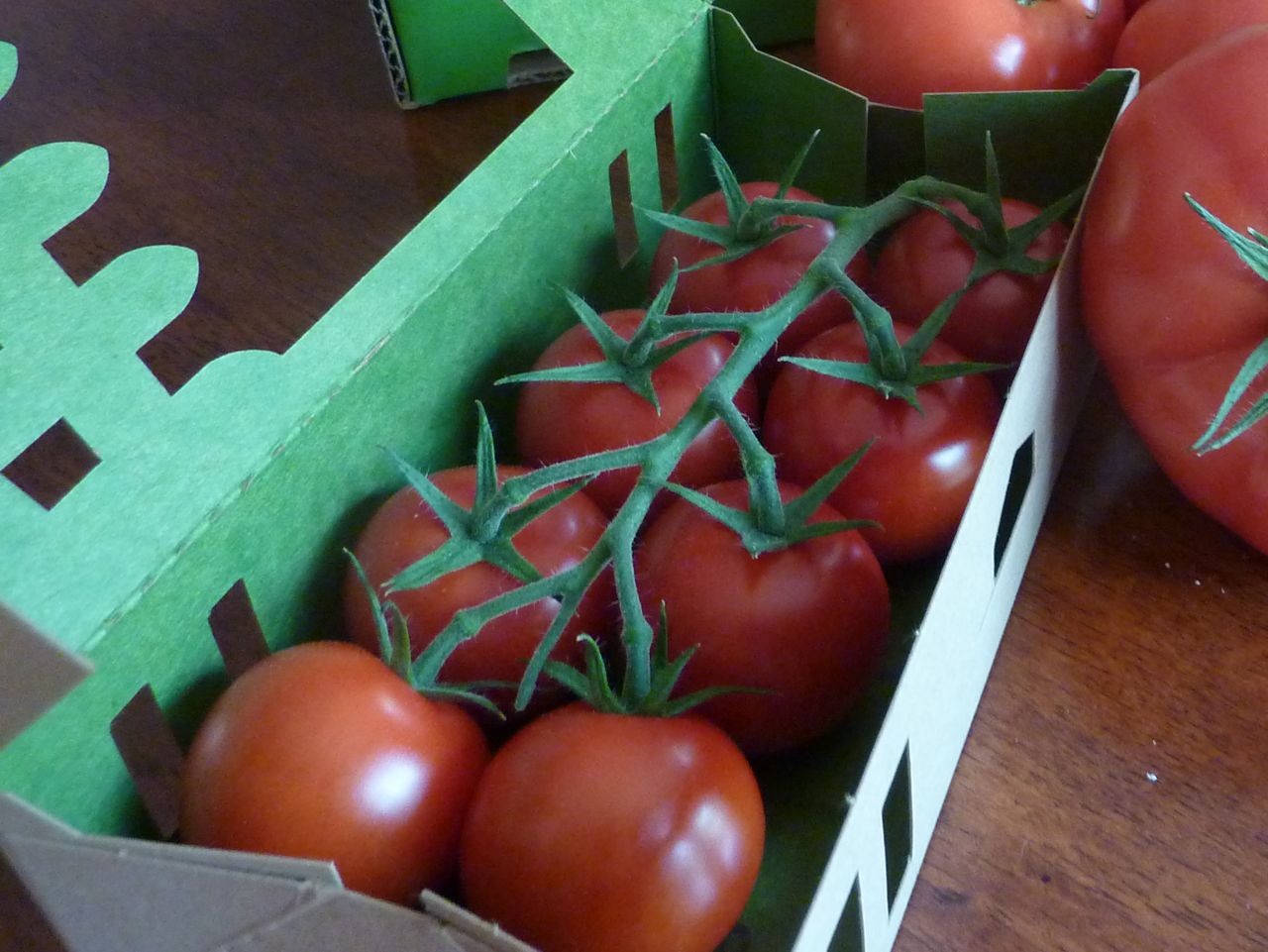
Backyard Farms Cocktail Tomatoes
My first farm visit was to the biggest and most successful local producer in the region. Backyard Farms started in 2004 as Backyard Beauties, with the goal of growing good, local tomatoes. At that time, if you wanted a tomato in the ‘off-season’, your choices were from Mexico or some other far-off location. These tomatoes are bred not for flavor, but for looks and their ability to survive long transport. They are picked when still firm and green to minimize shipping damage, usually a good two weeks before their optimum ripe stage. They are then held in cold storage up to a month before they reach the shelves of your market. Ethylene gas chambers are used to artificially induce color and ripeness. All of these processes result in something that looks like tomato, but tastes like cardboard.
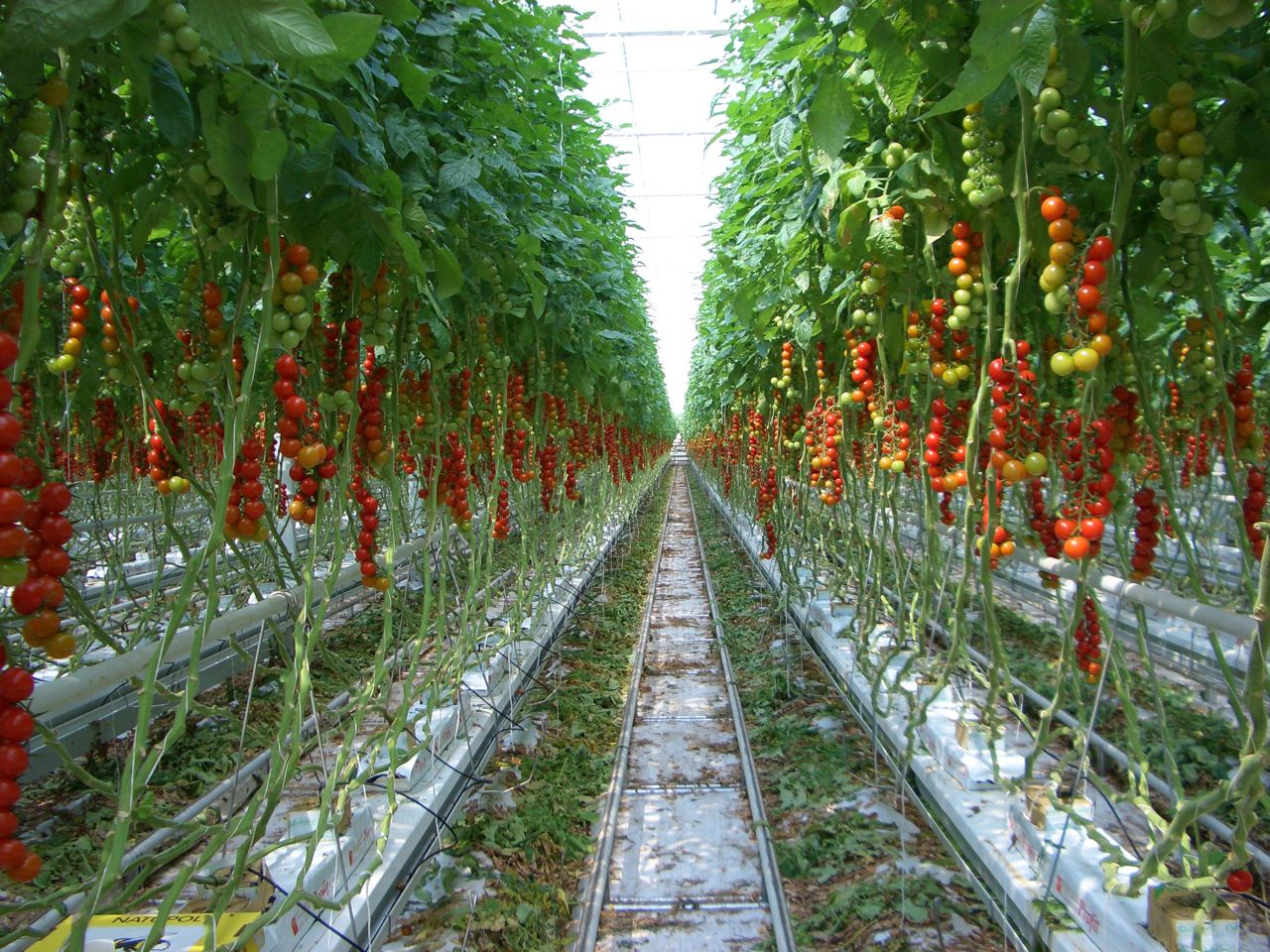
Backyard Farms today grows hydroponic tomatoes in two enormous greenhouses in Madison, ME. Their enterprise is quite impressive, with perfectly manicured tomato vines stretching up to 30 feet in the air. Each ‘bunch’ is hand pruned to ensure optimum ripening of each tomato, and hand picked when perfectly ripe. Their rule is to only supply those outlets that are within a day’s drive of Madison, so their tomatoes ripen on the vine and are never chilled to preserve. They produce year-round, which requires an incredible vigilance to prevent pests and diseases from spreading within and between the greenhouses. To tour the greenhouses, I had to don a very attractive white jumpsuit made out of Tyvek to prevent any stray microbe on my person from jumping off in the greenhouse. They also have bees for pollination, and wasps for pest control within the houses.
Tomato plants at Backyard Farms
Many claim that hydroponic products, as they are not grown in soil, will never have the flavor of a true, dirt-grown tomato. While nothing may yet compete with the heirloom tomato just picked out of your own backyard, the Backyard Farm tomatoes do taste like a tomato, and are worth buying and using fresh all year round. I usually only use raw tomatoes when they are in season, which is only a few weeks a year. The rest of the time I cook with them, trying to somehow bestow some flavor by concentrating, reducing, or adding herbs, salt, sugar and other ingredients. The Backyard Farms tomatoes I will definitely use year round in their delicious, tasty, raw form!
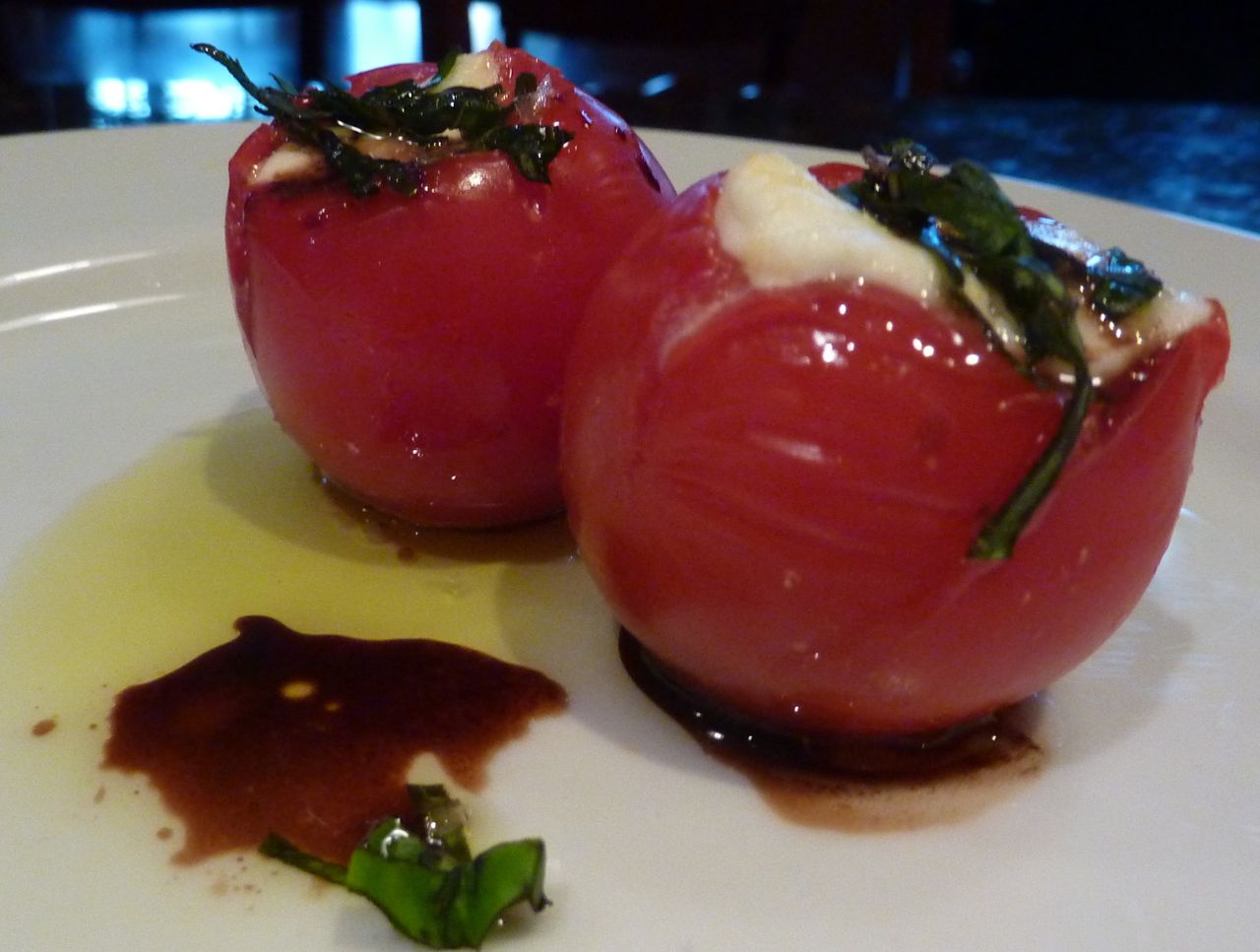
I asked my tour guides how they used their tomatoes, and both immediately expressed a preference for raw tomatoes. Tim di Kok, Head Grower, and fourth generation greenhouse farmer, and Pete Lewis, VP of Marketing, showed me around. Pete described his favorite recipe, using their cocktail tomatoes, and Tim gave me a full box of their various tomatoes to play with at home. Pete’s recipe sounded so good and easy that I made it for an antipasti for guests a few days later. It is a spin on the classic Italian Caprese salad. Stay tuned for more recipes using these, including a grilled fresh tomato pasta sauce that I’ll feature on an upcoming cooking segment.
Backyard Farms Caprese Cocktail Tomatoes with Mozzarella and Basil
Makes 16
16 Backyard Farms Cocktail Tomatoes
8 ounces fresh mozzarella
8 fresh basil leaves
Good extra virgin olive oil
Balsamic vinegar
Sea salt
Preheat the broiler on low.
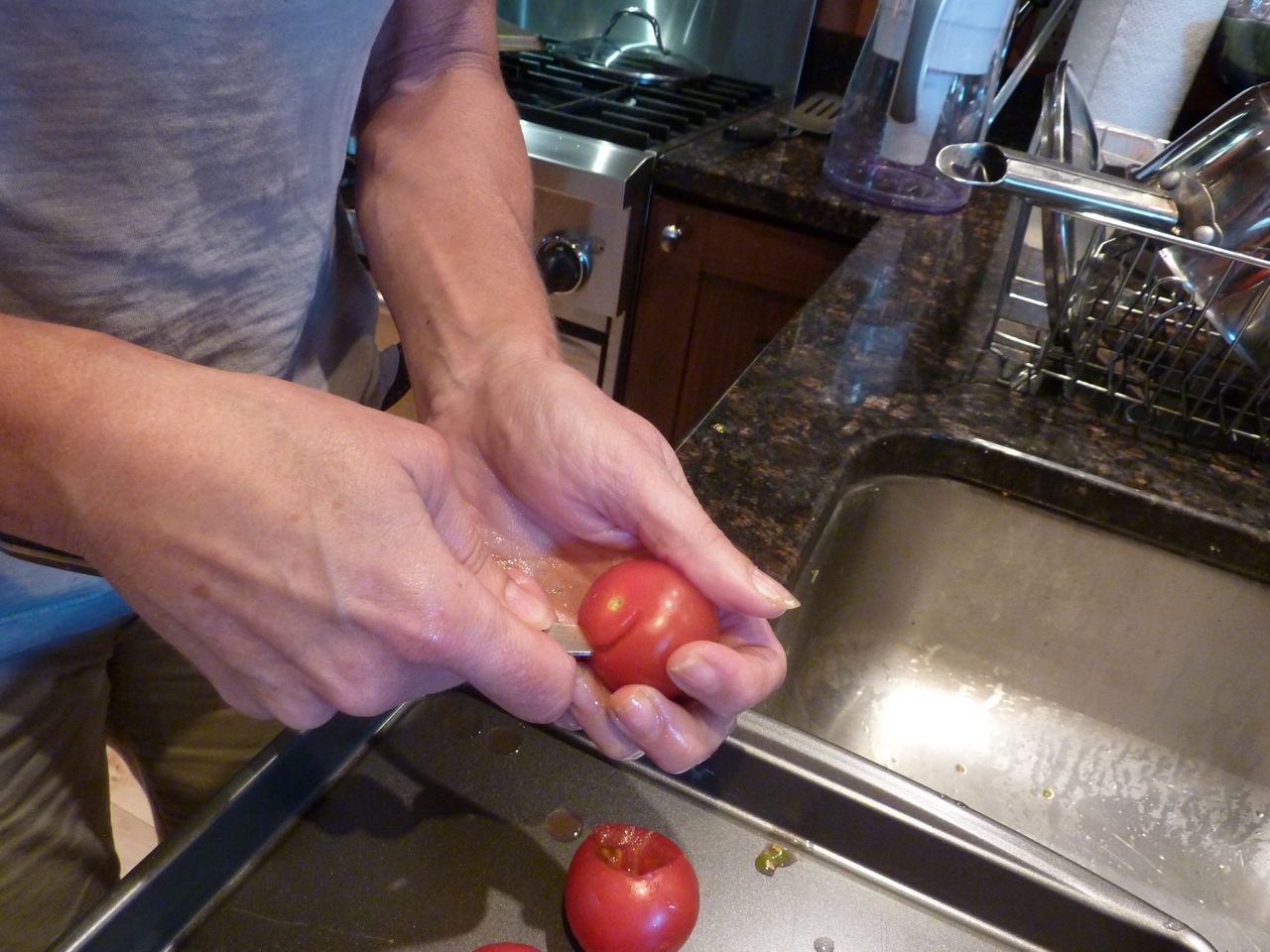
Making tomato cups
Remove the tomatoes from their stem. Using a melon baller, or a sharp knife and a 1/2 teaspoon measuring spoon, scoop out the inside of each of the 16 cocktail tomatoes, at the top where the stem attaches to the tomato. If you have a melon baller, you can just scoop out the flesh; the edge of the melon baller should be sharp enough to cut through the tomato skin. If you don’t (I didn’t), cut a small circle on the top around the stem end with a small sharp knife, then use a small spoon to scoop out the flesh. The goal here is to create little tomato cups that we can stuff.
Place the 16 tomato cups on a sheet pan.
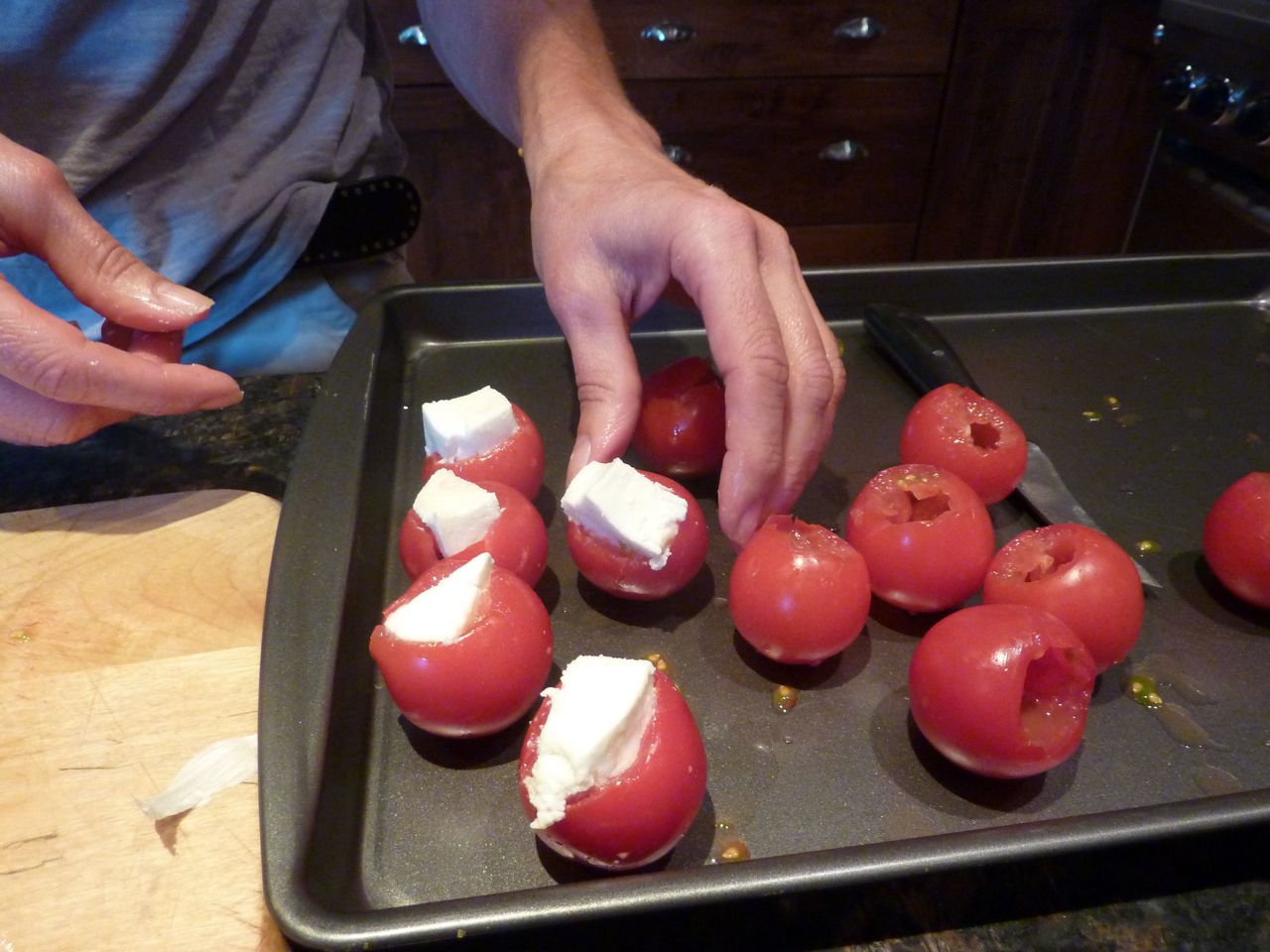
Stuffing tomato cups with mozzarella
Cut the mozzarella into 16 cubes, about 3/4 of an inch on all sides. Place a mozzarella cube into each of the 16 tomato cups. Place the sheet pan under the broiler, and heat until the cheese is just beginning to melt and turn just slightly brown. Remove from oven. Keep a close eye on them while they are in the oven, you don’t want the tomato to cook too much.
Take the basil leaves and stack into a pile. Roll the leaves lengthwise, creating a basil cigar. With a sharp knife, cut the crosswise into narrow strips. This should give you lots of pretty narrow ribbons of basil, called ‘chiffonade’.
Place the stuffed tomato cups on your serving platter. Garnish with the basil ribbons, and drizzle with the olive oil and balsamic vinegar. Sprinkle with a little sea salt and serve.
During my June trip to Italy, I visited several vineyards in the Valpolicella wine region, doing ‘research’ for Italiaoutdoors Bike the Wine Roads bike trips. One stop I made was the Novaia winery, located in a large manor in the Alto Valpolicella area, in the township of Marano di Valpolicella.
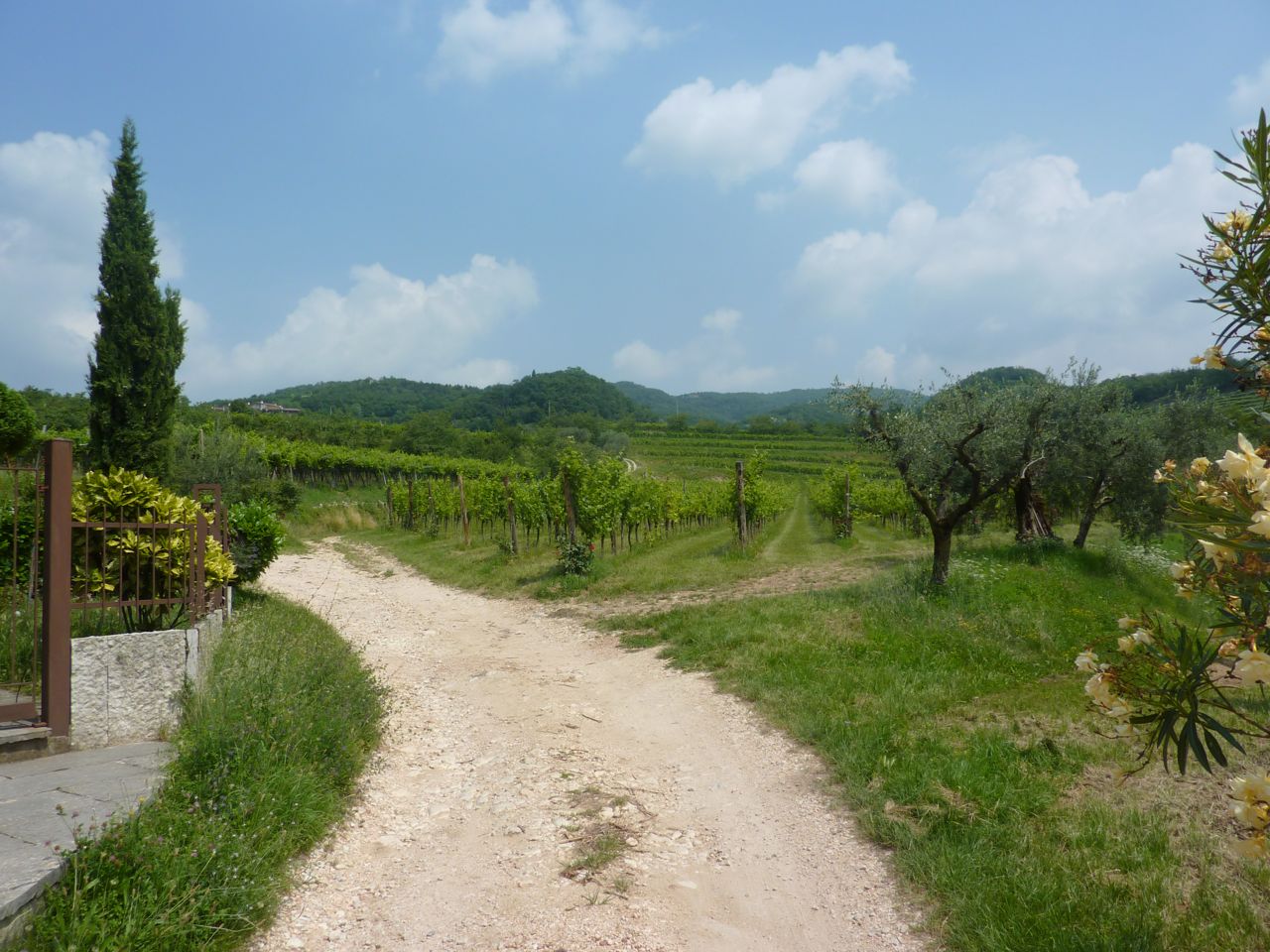
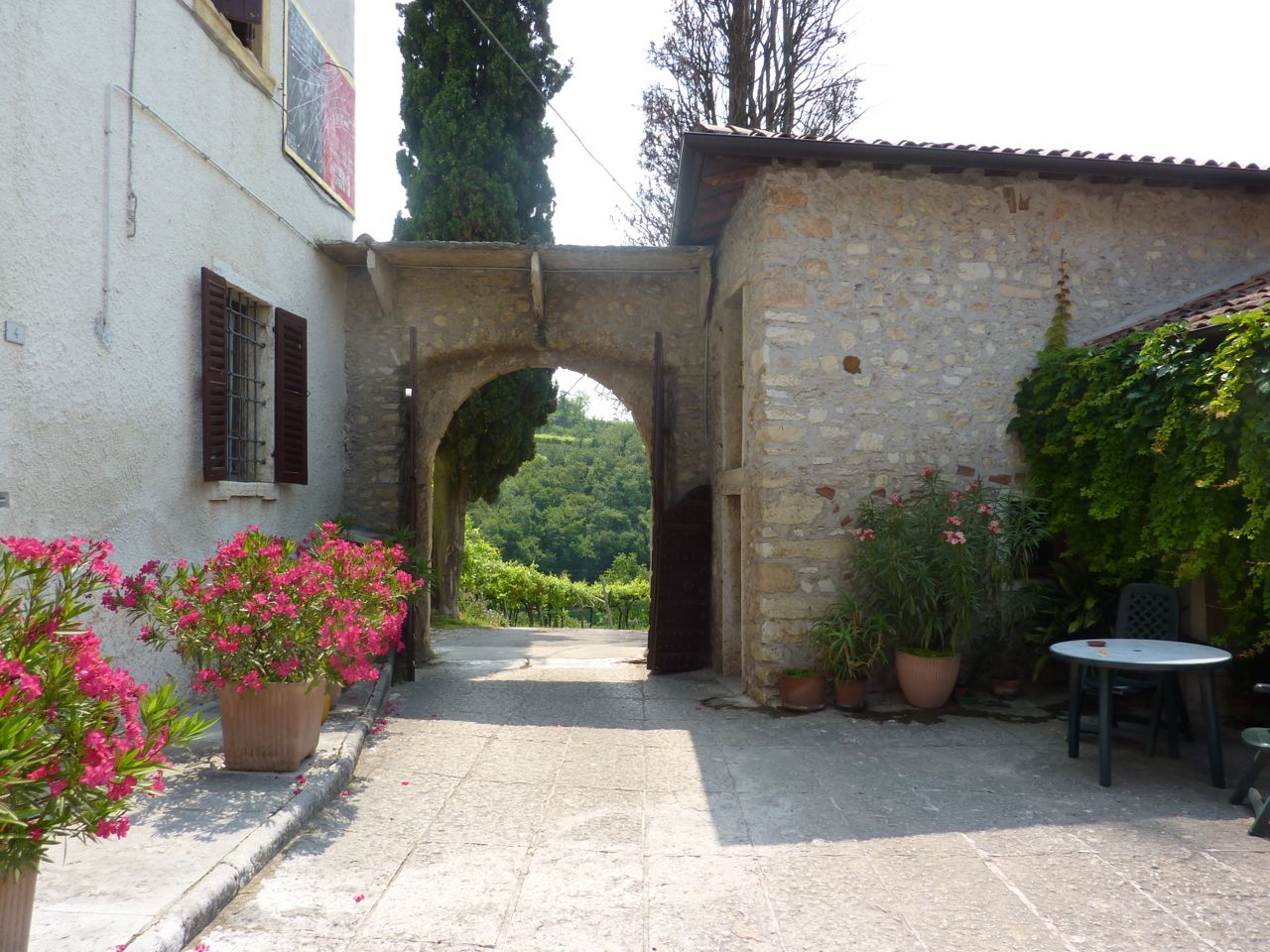
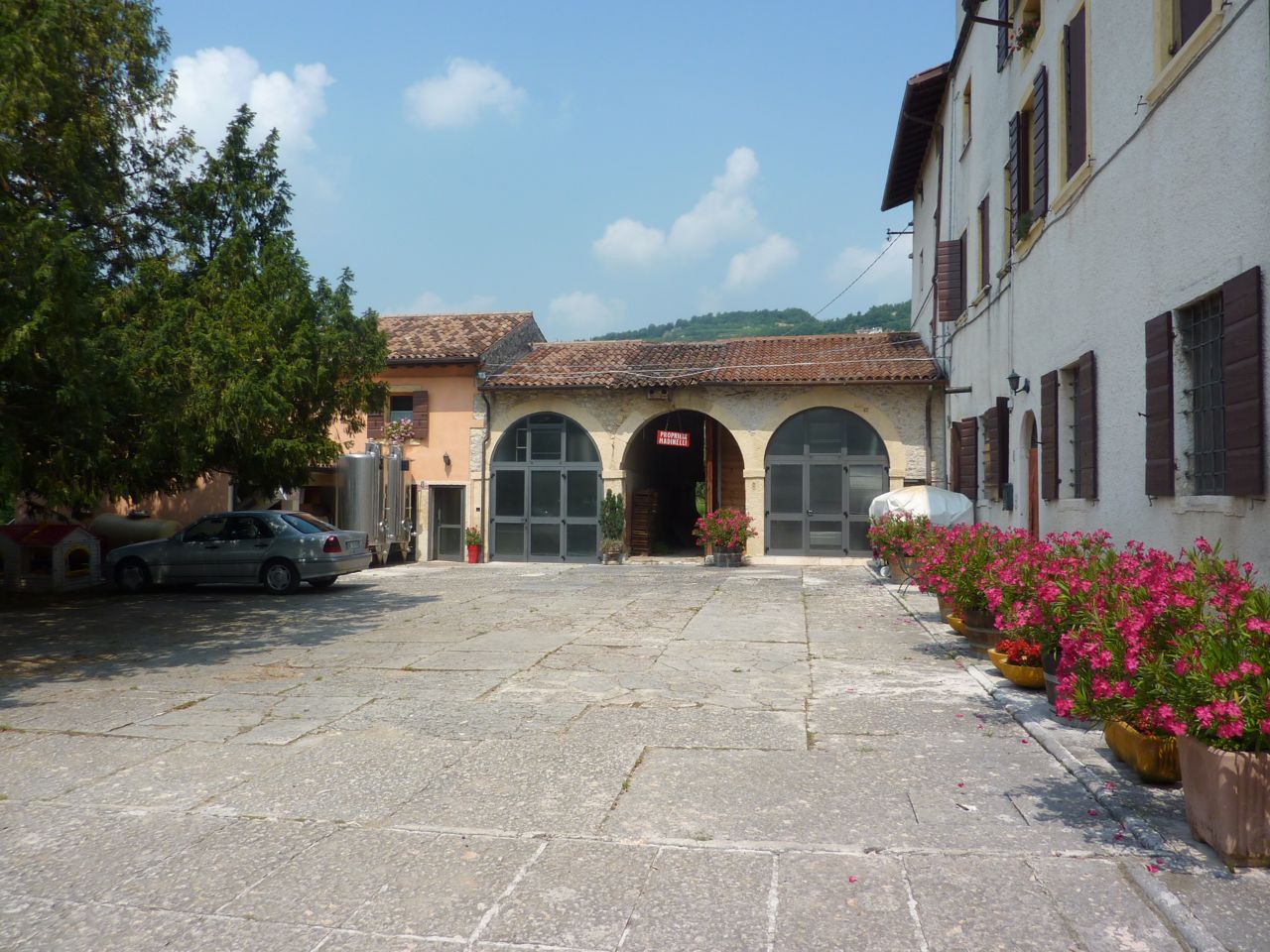
A winding drive through some of the 7 hectares of vineyards leads to an elegant 15th century manor. This is a multi-generational family run operation, I was greeted by the mother, whose grandparents ran the business, and then was introduced to her son, who is continuing the tradition. Mom did not speak any english, but her son, Marcello did, and was brought in when I described my interest. Marcello’s father, Gianpaolo Vaona, was the enologist for Bolla for many years, but now can devote all of his energy into developing wines from his own estate. A very gracious and welcoming family, and both the company and the wines make this well worth a visit.
Azienda Agricola Novaia
The vineyards of Azienda Agricola Novaia face south and south-east, and are between 250 and 300 meters above sea level. Novaia cultivates the following grape varieties: Corvina Veronese, Corvinone, Rondinella, and, most recently, Oseleta, an indigenous heirloom variety from Valpolicella which was lost during the last fifty years.
I tasted several of their wines, all quite enjoyable; a bit less intense than some other examples, but elegant and lively. Here are three excellent examples of the classic wines of this region:
Valpolicella DOC Classico 2009: Produced from Corvina, Corvinone and Rondinella grapes hand picked at the end of September. It is fermented in stainless steel for 7-8 days, and aged 10 months in steel, and an additional 2 in the bottle.
This is a medium-bodied, ruby red wine that is meant to be drunk young, when it is lively and fragrant with flowers and cherry fruit. This red can pair with a lot of lighter dishes and first courses, including pasta dishes, soups, and even grilled or roasted poultry.
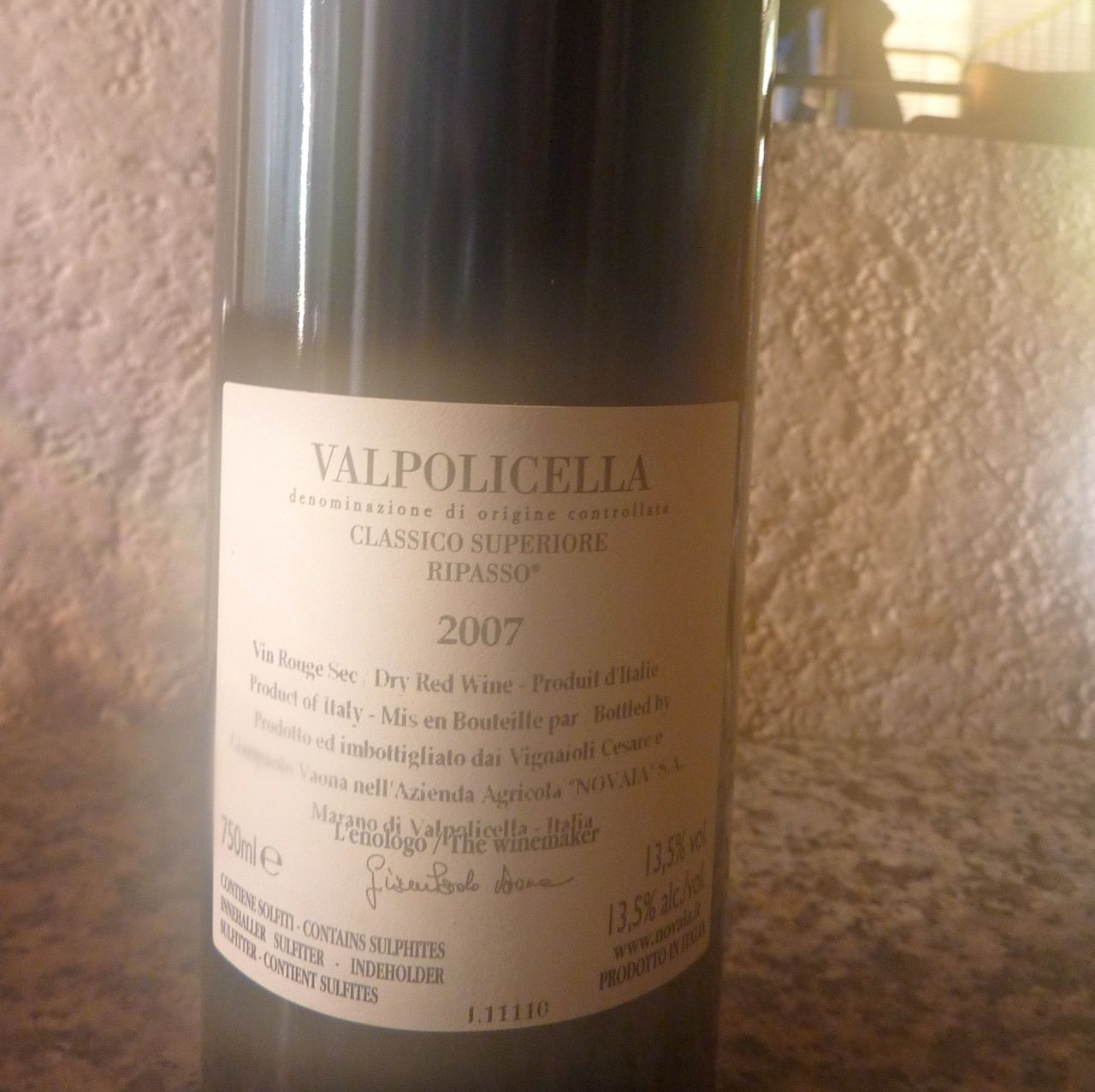
Back label of Ripasso 2007
Valpolicella Ripasso DOC Classico Superiore 2007: Using the same grapes, a heartier, more intense wine is produced as a result of the Ripasso method. This is a traditional vinification technique in which the Valpolicella wine undergoes a second fermentation on the pomaces (solid remains after pressing) of grapes that were used for Recioto and Amarone wines – wines that have been produced from dried, concentrated grapes. After the second fermentation, these wines are aged for 12 months in barriques, and an additional 4 months in the bottle.
This wine is a deeper red, and has a more intense and fuller-bodied flavor that the standard Classico. A slightly spicy nose, a savory dark fruit and cherry flavor, with a harmonious, medium acidic finish. This wine can age for 5-6 years. It pairs well with a bit more robust foods; meaty pasta dishes, truffles, and grilled and roasted meats.
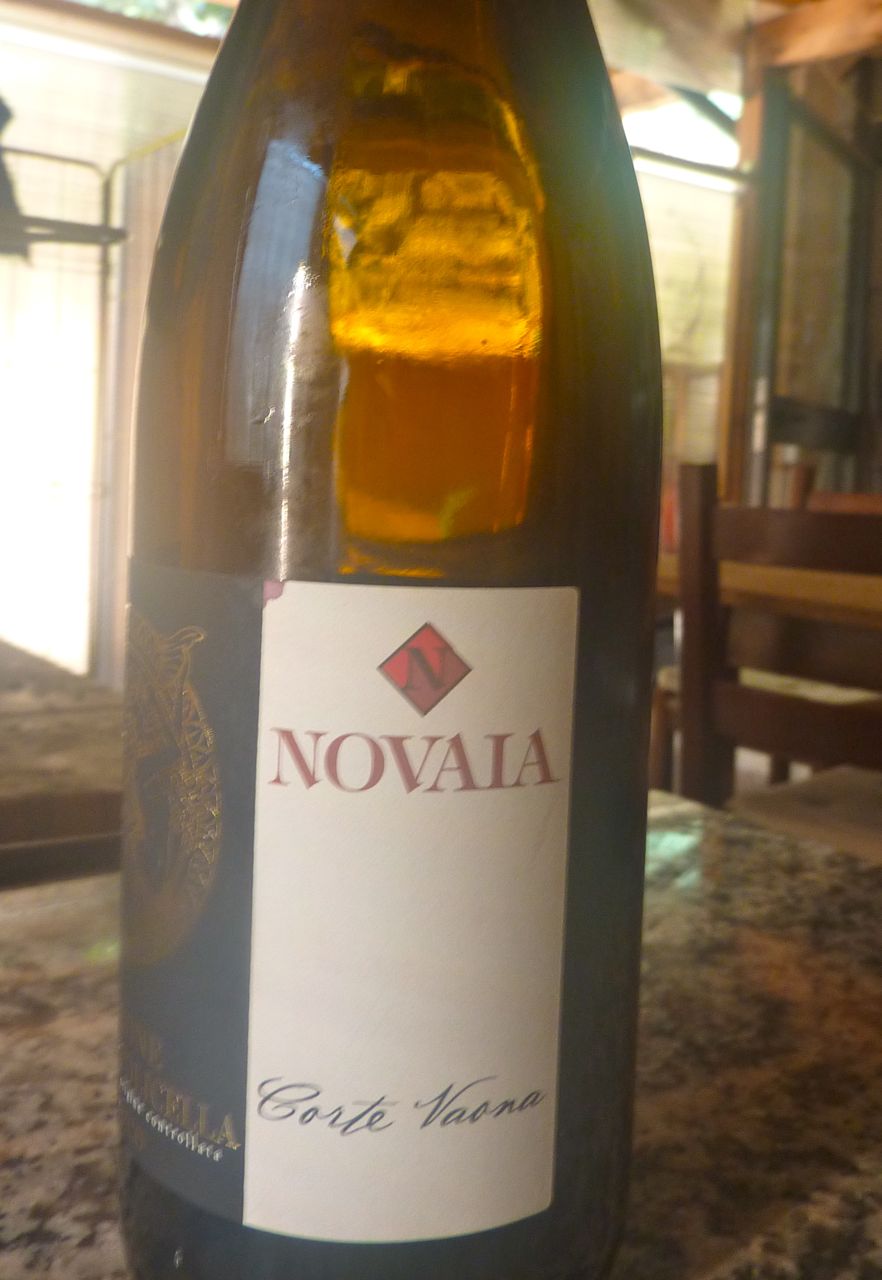
Corte Vaona Amarone
Amarone della Valpolicella Corte Vaona 2007: This Amarone is named in honor of the ancient paved courtyard that graces the front of the manor house that today is the site of the Azienda. The grapes are hand selected by the Vaona family from their own vineyards. The same grape varieties are used – Corvina, Corvinone, and Rondinella – demonstrating the amazing diversity of wines that can be produced by the various vinification techniques.
Amarone wines are produced from grapes that have been allowed to dry to concentrated the sugars. The grapes are the last to be picked in this zone, and then spend the next three to four months in drying rooms, being carefully desiccated to avoid mold and rot. This technique (passito) produces a raisin that has the acid balance characteristic of grapes from cooler climates. These grapes are then fermented, in a similar method used to produce sweet Recioto wines; however, instead of stopping the fermentation to produce a sweet wine, due to some remaining sugar, Amarone wines allow the fermentation to continue until all the sugar is consumed, resulting in a robust, slightly bitter (amara) wine with a fairly high alcohol level. The Corte Vaona is aged for 24 months in barriques, and another 8 in the bottle.
Novaia estate
The Corte Vaona has an intense aroma of cherries, red fruits and spice, with a dry, tannic, long-lasting mineral finish. This would pair well with grilled and roasted meats – we enjoyed is with pork belly during our recent trip with Master Chef Susan Regis – but also goes nicely with aged cheeses such as Grana, or as a wine to be just enjoyed on its own; a wine for ‘meditation’, as they say in Italy. The 2006 vintage of this wine received a 91 rating from Wine Spectator.