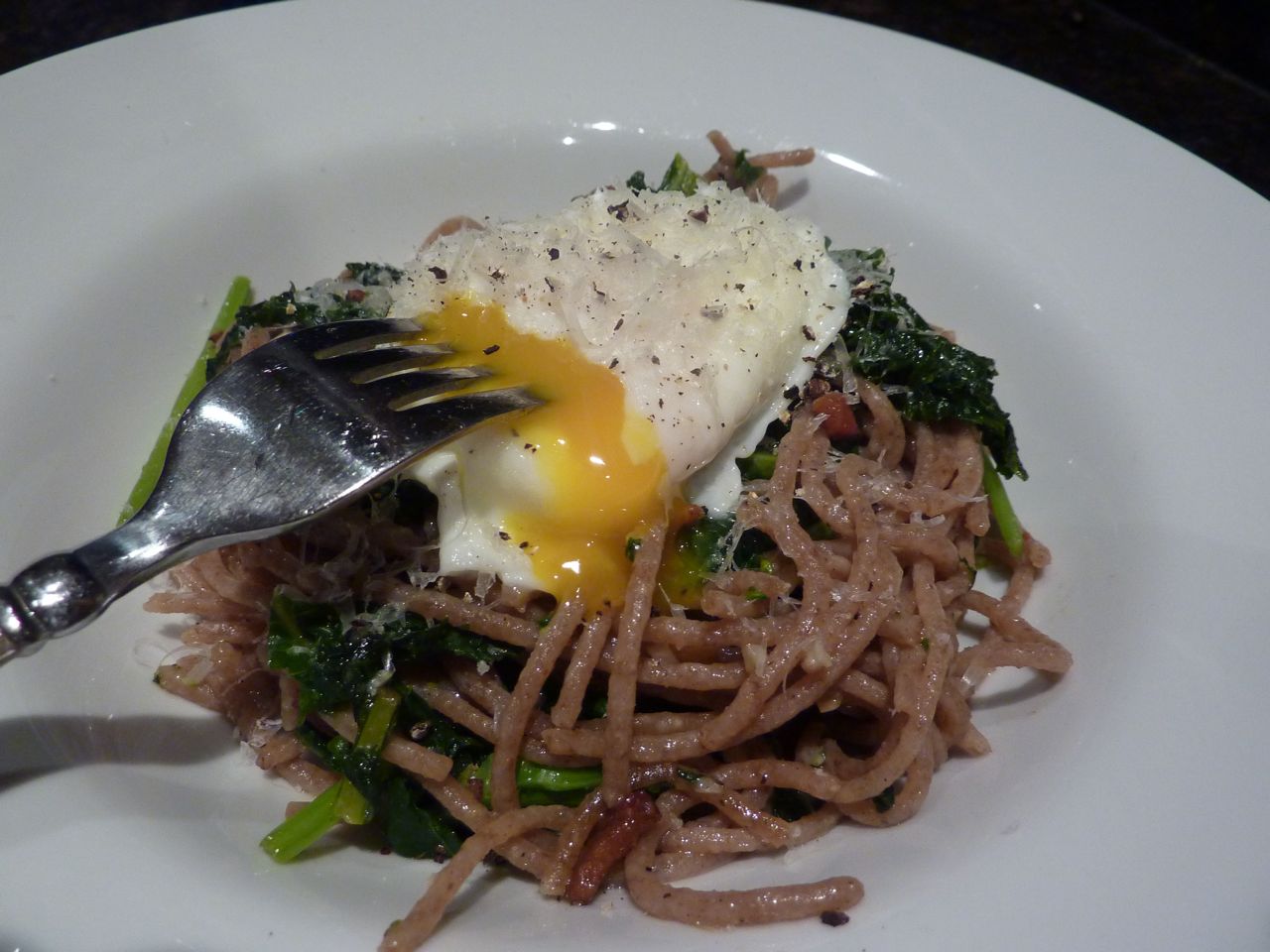
Farmer’s Market Pasta – Whole Wheat Pasta with Poached Egg and Spring Greens

farmer's market pasta luxury villas in italy
Farmer’s Market Pasta

Here is a recipe which I must describe as ‘Italian inspired’, rather than a strict interpretation of a traditional regional Italian dish. When we are on one of our Italiaoutdoors culinary adventures in Italy, we learn about the regional dishes, but our real inspiration is the wonderful local, seasonal produce we discover. The inspiration here is the same – the first visit of the year to the Newburyport Farmer’s Market. Various mixed spring greens, a couple of wonderful fresh eggs, and a homemade whole wheat pasta were the spoils. Now, what to do with them?
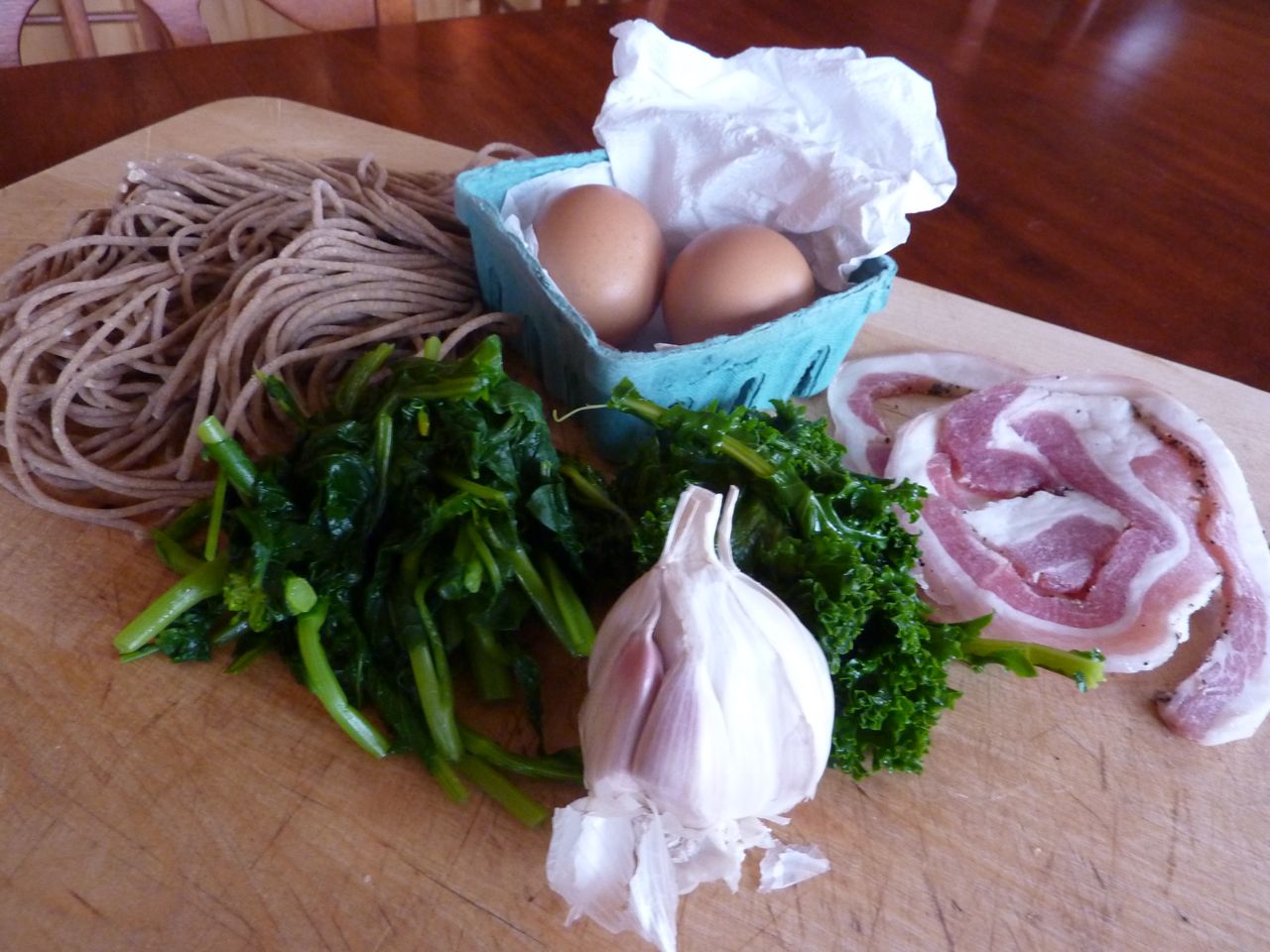
ingredients custom bike tours italy
Fresh ingredients from Farmer’s Market

I have always enjoyed poached eggs with greens for breakfast, and earlier had posted a recipe here that topped buckwheat polenta with greens and a poached egg. I also had a conversation recently with someone who had described the standard American version of spaghetti alla carbonara to some Italians during a recent trip to Italy – they were pretty horrified by her description, something more akin to an alfredo sauce, with lots of cream. The traditional carbonara ingredients are eggs, bacon or pancetta (or guanciale), and cheese. Some nice spring greens would be a perfect addition here. And so this recipe evolved.
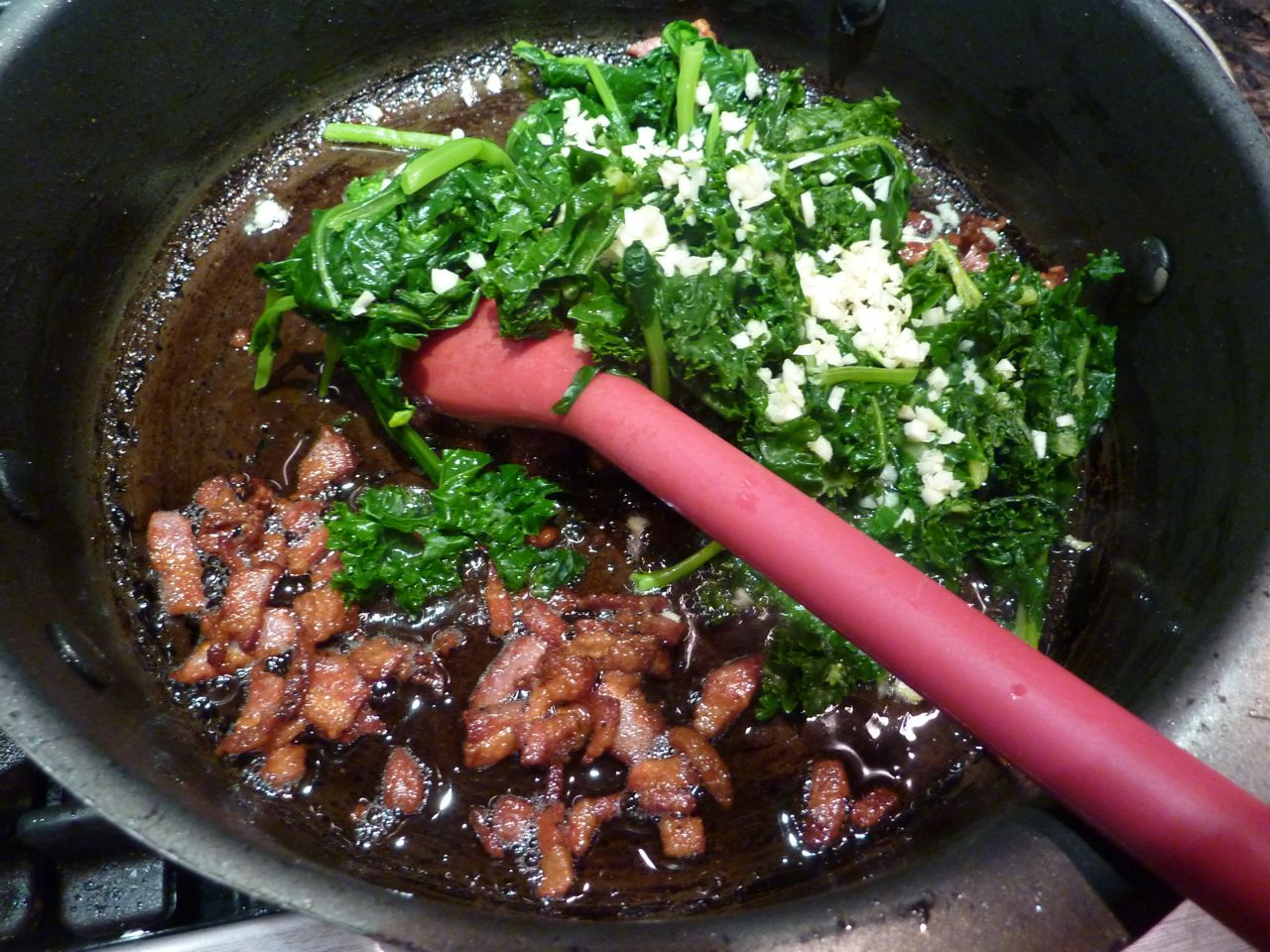
saute greens biking and cooking tours
Sauteing greens, garlic and pancetta

For those who are interested as I am in where these dishes came from – spaghetti alla carbonara is a typical Roman dish, hailing from the middle of the 20th century. There are anecdotes that attribute the name and the origin of this dish to woodcutters from Abruzzo who, while cutting wood for charcoal, would cook their pasta with eggs and cheese over a wood fire. The name carbonara supposedly derives from the Italian carbonaro, or charcoal burner. However, there is not any evidence of this dish being in existence prior to the Second World War. During and immediately following this devastating war, the local population was facing severe food shortages and the powdered eggs and bacon that were standard issue for the American troops were widely used for bartering. The Italians would use the acquired eggs and bacon as a sauce for their dried pasta, and it became quite popular with the American troops stationed there, who brought it home with them after the war. It is now a standard of Italian-American cuisine here in the states. I suspect that the dish has improved a bit with the addition of fresh eggs!

A quick lesson on blanching the greens. If you are using a very ‘light’ textured green, such as arugula, blanching is not necessary – you can just saute it. For greens that are a bit more dense, blanching will tenderize the greens, making them a little more palatable. But this step is not absolutely necessary, and if you don’t mind the texture, just saute your greens until they are as you like them!
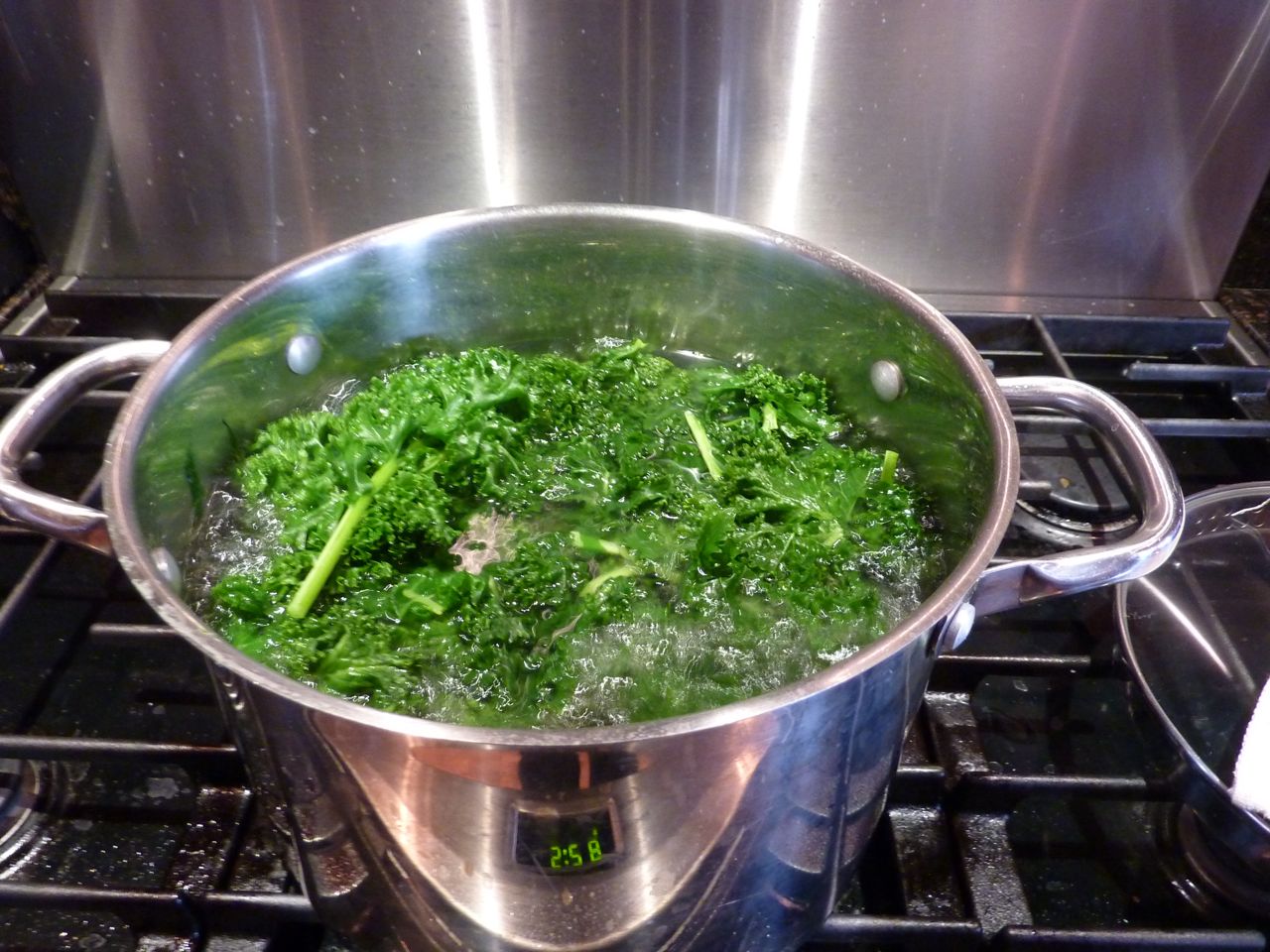
greens blanching cycling tours dolomites
Greens blanching – NO LID!

To blanch, fill a large pot with water and bring to a boil. Add salt to the water. Immerse the greens in the boiling water; the water will usually briefly stop boiling when the cold greens are added – bring the pot back to a boil WITHOUT placing the lid on the pot. The lid will trap enzymes that are released during the blanching, and the greens will turn a grayish green. If you allow the enzymes to escape, the greens will be a wonderful vibrant green. Cook the greens just until tender. Immediately remove from the boiling water and submerge them in a ice water bath. This halts the cooking process. When cool, remove from the ice bath and squeeze out at much water as possible.
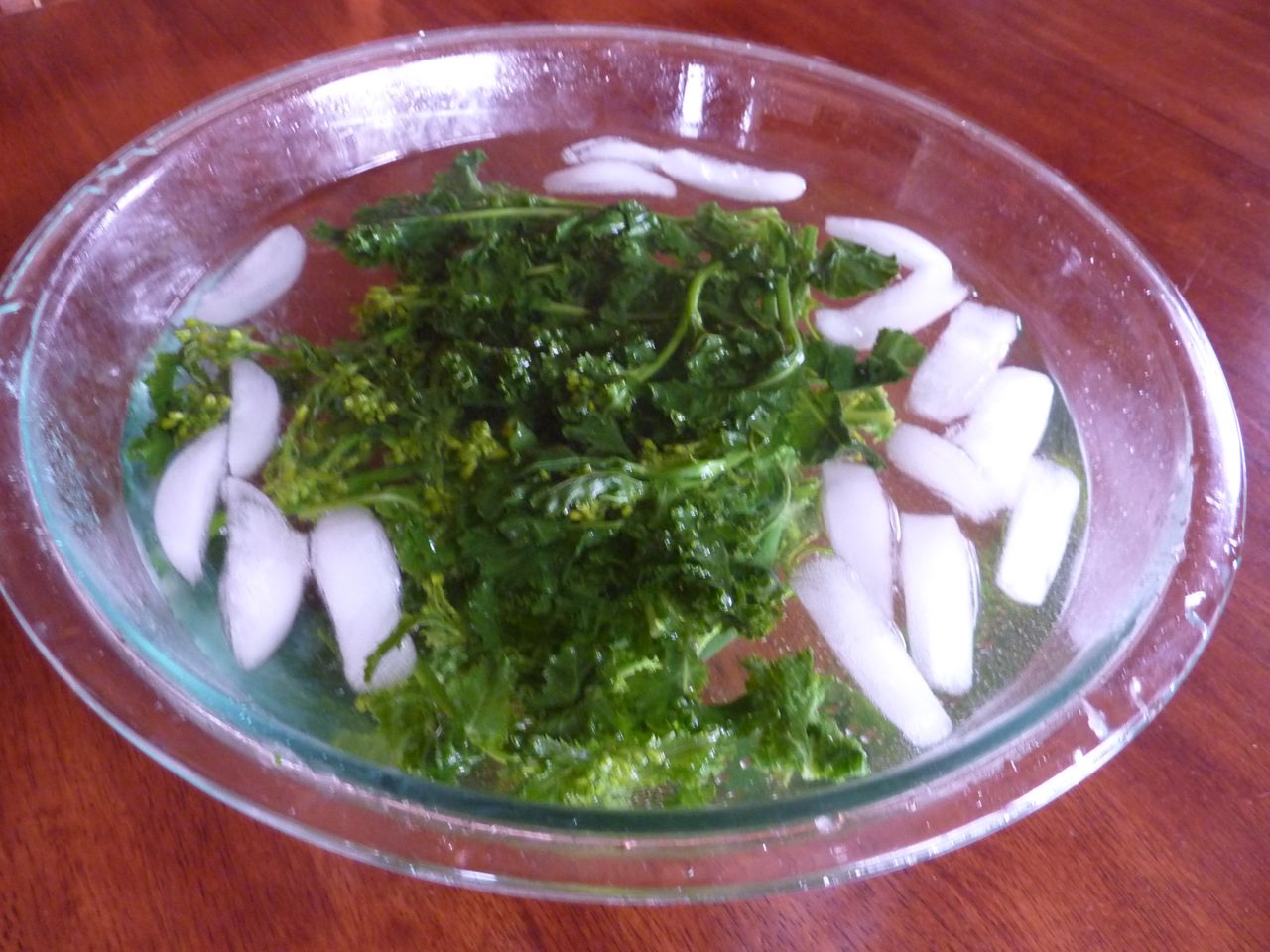
ice bath ski holidays dolomites
Ice water bath

Blanching is usually done to all vegetables prior to freezing, as this process destroys/releases the aforementioned enzymes, which cause vegetables and fruits to ripen and then rot. Vegetables that have been blanched will be fresher looking and better tasting after a period of freezing than vegetable that have not.

Farmer’s Market Pasta – Whole Wheat Pasta with Poached Eggs and Spring Greens

Serves 4
2 tablespoons extra virgin olive oil
2  slices pancetta
2 cups blanched spring greens, chopped (see blanching instructions above)
2 cloves garlic, finely chopped
Kosher salt and freshly ground pepper
1 pound whole wheat spaghetti
4 fresh eggs
1 cup freshly grated grana, asiago stravecchio, or other hard aged cheese

Fill a large pot with water and bring to a boil over high heat.

Fill a large saucepan with water and bring to a simmer over high heat. Turn heat to low, just high enough to barely maintain a simmer; you should see bubble rising, but the water should not be moving too much.

Place the olive oil in a large saute pan and heat over medium heat. Add the pancetta and cook until just beginning to brown. Add the greens and garlic and cook just until heated through. Remove from heat.

Add salt to the boiling water in the large pot. Add the pasta and cook until just al dente. Reserve 1 cup of the pasta water. Drain the pasta, and add to the saute pan with the greens and garlic.

Carefully break the four eggs, one at a time, into the saucepan with the barely simmering water. If you wish, you can break the eggs into a small bowl or teacup and slowly lower it into the water using the bowl or cup. The goal here is to not break the yolk! Cook the eggs in the simmering water for 2 minutes. Using a slotted spoon, remove the eggs and place on a plate with a paper towel on top to absorb some of the excess water.

Place the saute pan with the greens and the pasta back on the burner over medium high heat. Combine until heated through; if the mixture seems a bit dry, add some of the reserved pasta water. Add the grated cheese, reserving a bit for the final garnish. Season with salt and pepper.

Serve the pasta in four preheated bowls. Top each with a poached egg. Season each egg with a bit of salt and pepper, and garnish with the remaining grated cheese.

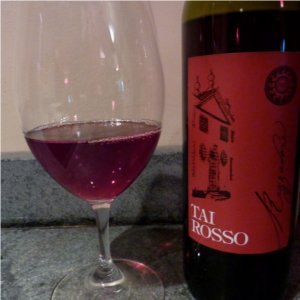
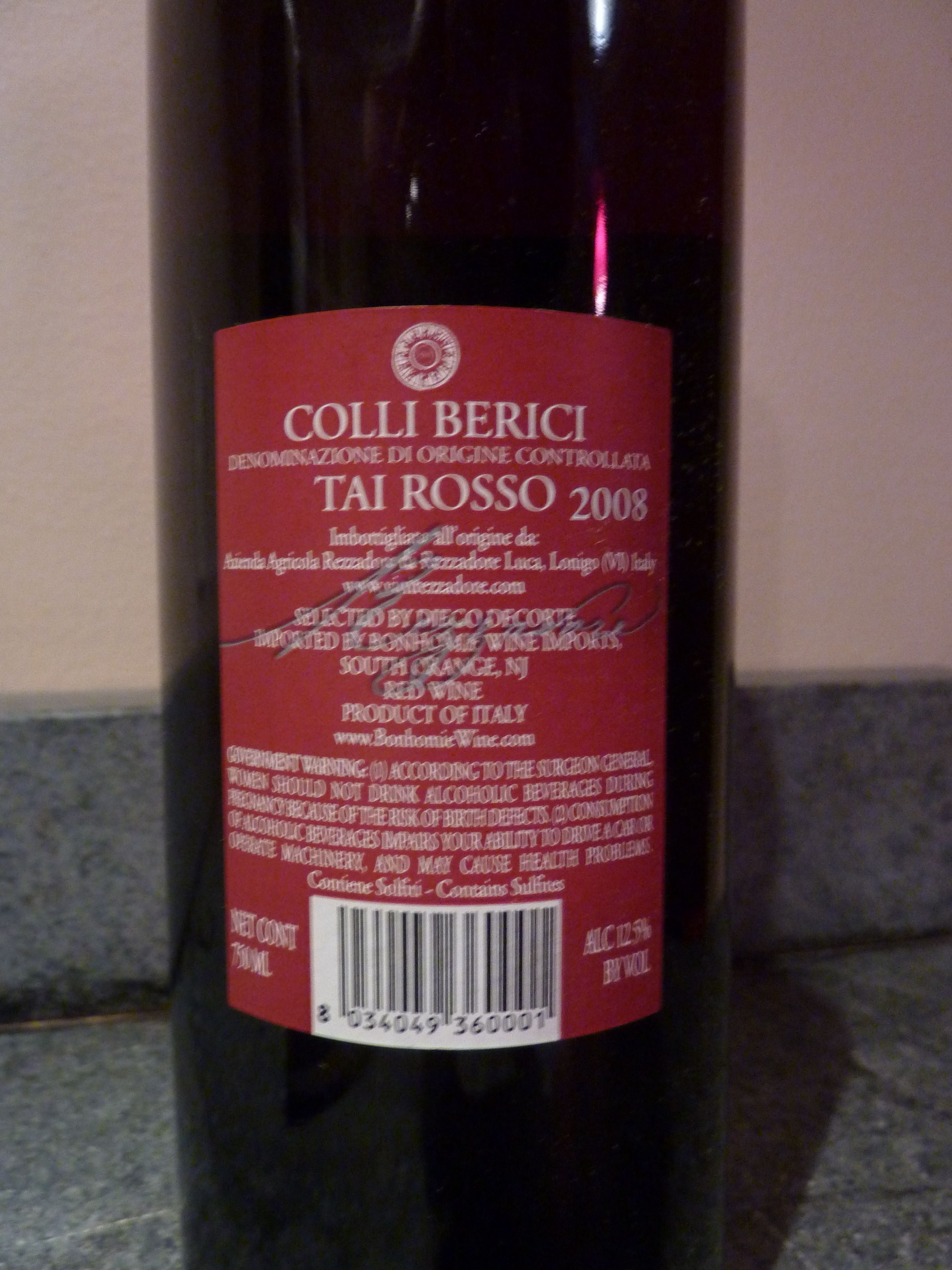
A nice wine pairing here would be a great Soave, or, if you are a fan of red, the nice, light bodied Tai Rosso Rezzadore wine I just reviewed in my last post, from the Colli Berici DOC.
Posted in Eggs, Greens, Pasta, Tai Rosso, Uncategorized | Tagged , , , , , , , , , , , , , , , , , , , , , , | Leave a comment

Wine Tasting: Rezzadore Tai Rosso 2008

tai rosso wine bike tours italy

This family of winemakers has occupied Villa Rezzadore for many centuries. It is located right near to La Rocca Pisana, a famous villa designed by Scamozzi, a student of Palladio. The renovated cellar is located in the estates’ old barn. The surrounding area is very typical of the Colli Berici, with soil of marine origin, and later volcanic, which gives great freshness and flavor to the wines. Red grapes have traditionally flourished here, but as of late the white grape Garganega has also done well here.
The Tai Rosso wine I’m reviewing here is made from an indigenous variety that we don’t see here in the states. This variety, Tocai Rosso, dates back at least 700 years in this region. It became an official DOC wine in the Colli Berici in 1973.

It is not related to the Tocai grape produced in Friuli or Hungary; most experts believe that it is more likely related to the Sardinian Cannonau or Spanish Aragona “granacha”, or Granache. In this region, it will appear either as a single varietal wine (such as this), or occasionally blended with Garganega.

After an initial selection during the harvest, the grapes undergo a second, more rigorous selection in the cellar before moving on to the first pressing and maceration on the skins for about 10 days. After pressing and fermentation, it is aged for about 6 months in steel, then bottled and aged for another 3 months before selling.

Colli Berici DOC

This is a rather light red wine, quite different from the heavy reds that most of us here in the US are accustomed to. While I would not recommend this to go with a juicy big steak or something very rich and meaty, it is a very nice, light red that can be an elegant accompaniment to the right dish. So often here in the US we get caught in the ‘big red’ trap. In Italy, there is more of an appreciation of the diversity available in the genre, and I think more attention paid to selecting the appropriate wine/food pairing.

This wine is quite affordable, I paid about $12 a bottle. So when I review a wine like this, I appreciate it for what it is, rather than comparing it to a 20 year old Amarone. They both have their attributes, and we are better off for having both on our list to choose from! The Tai Rosso has a very fruity nose and palate, with flavors of wild strawberry and cherry. It is quite lively, but not overly intense. It would go wonderfully with a lighter, warm weather lunch – a grilled chicken salad or a pasta with fresh cheese. I would pair this with my Penne with Peas, Bacon, Ricotta and Mint, for example.

Posted in Colli Berici, Tai Rosso | Tagged , , , , , , , , , , , , , , , , , , , , , , , , | Leave a comment

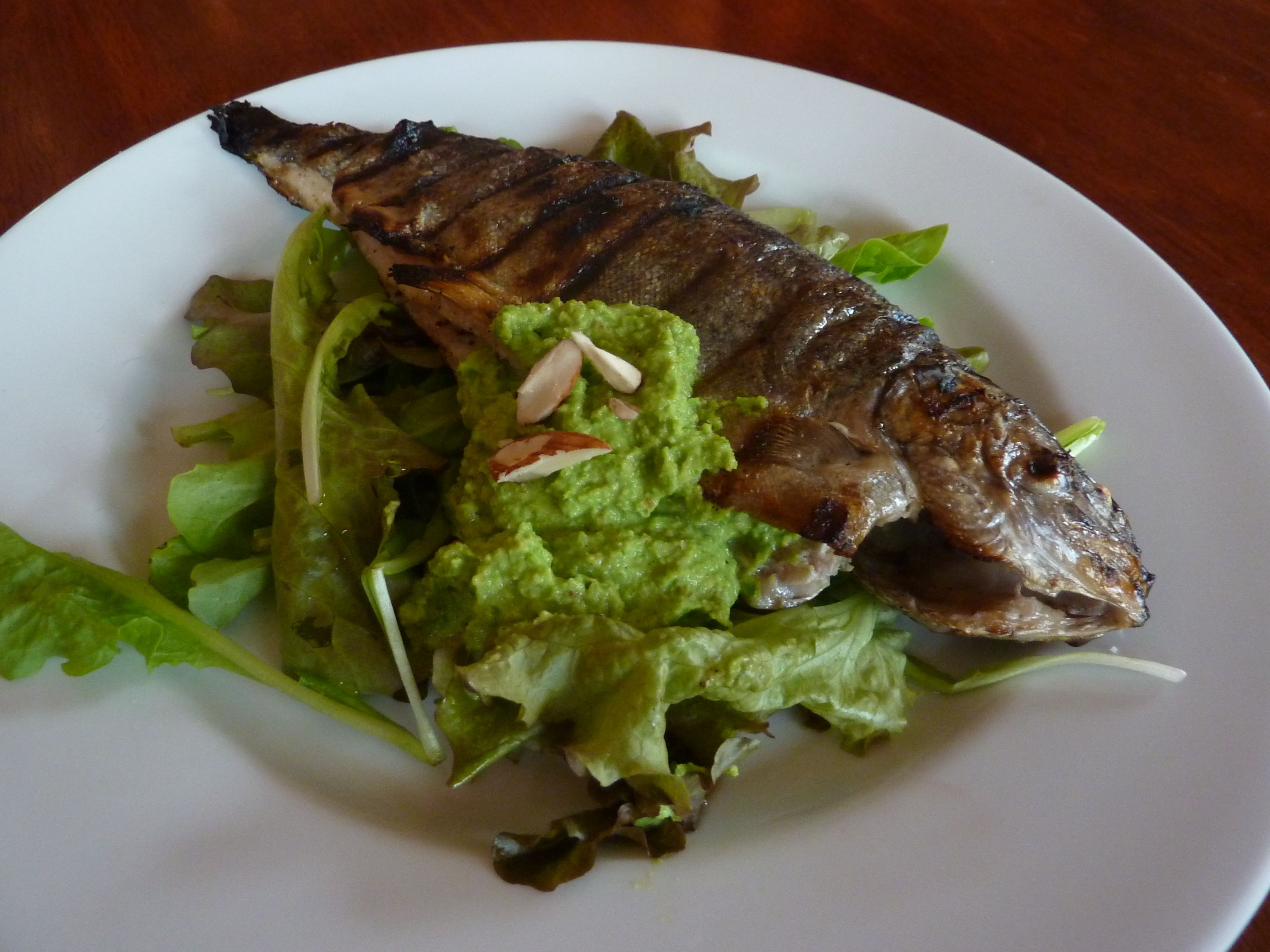
Grilled Trout with Pea Pesto

grilled trout luxury villas in Italy
Grilled Trout with Pea Pesto

Most Americans today are familiar with pesto, which is a sauce that originated in Genoa in the Liguria region of northern Italy. The traditional pesto, often called pesto alla genovese, consisted of basil, crushed garlic, grated cheese (parmigiano-reggiano and/or pecorino), pine nuts and olive oil. Originally, this would be made using a mortar and pestle, and this preparation technique gave rise to the name, pesto, which comes from the Italian pestare, to pound or crush. Nowadays, with a electric blender, the process is much easier.

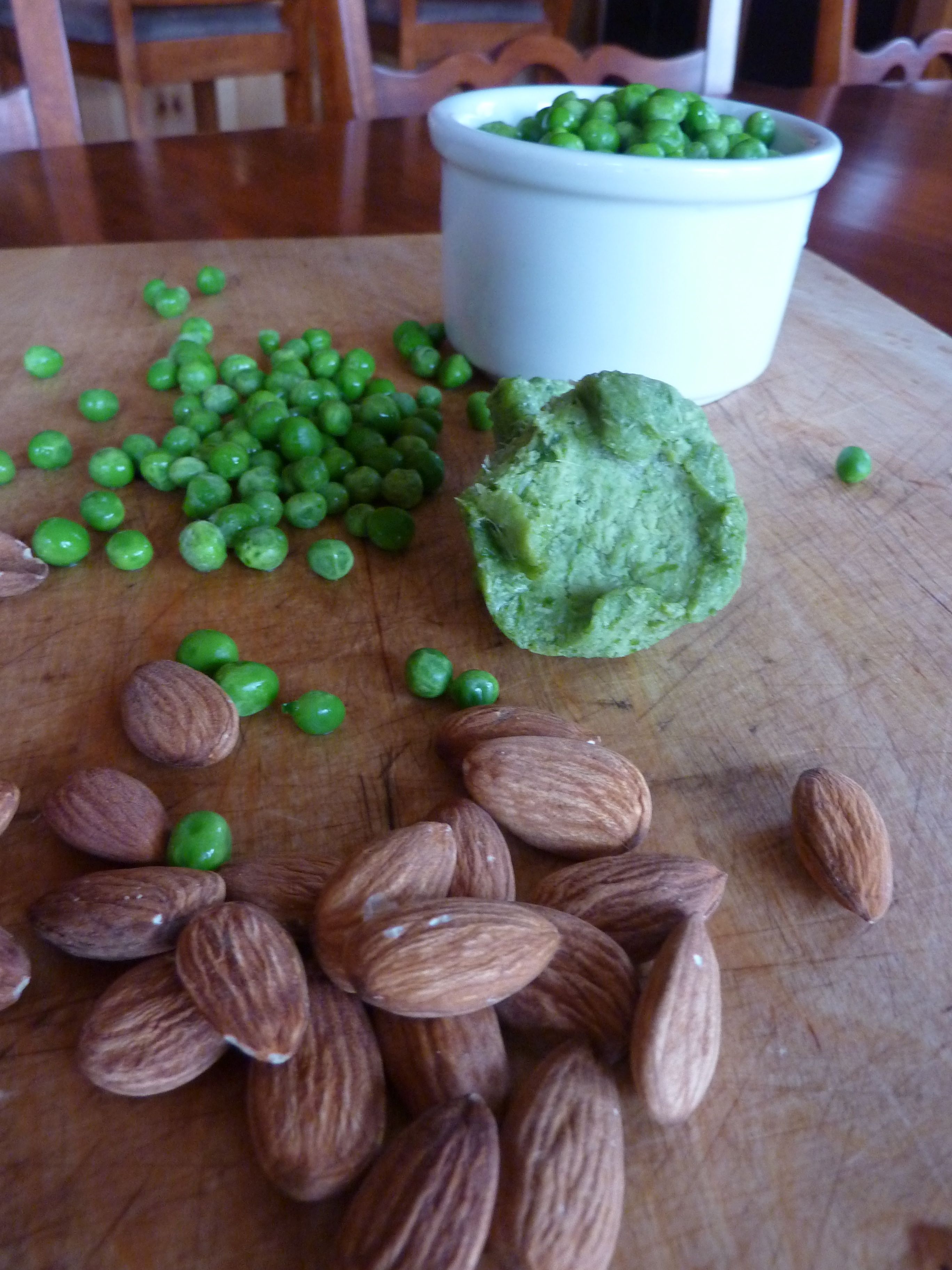
ingredients custom bike tours italy
Ingredients

On our active culinary tours in Italy, we see different variations of ‘pesto’, all made using a similar technique – combining  something – and there are many, many choices here – with olive oil, garlic, nuts (optional), and cheese (optional). I’ve used garlic scapes (the tops of growing garlic), basil, mint, chives, parsley, arugula, radicchio, …., and here, peas.

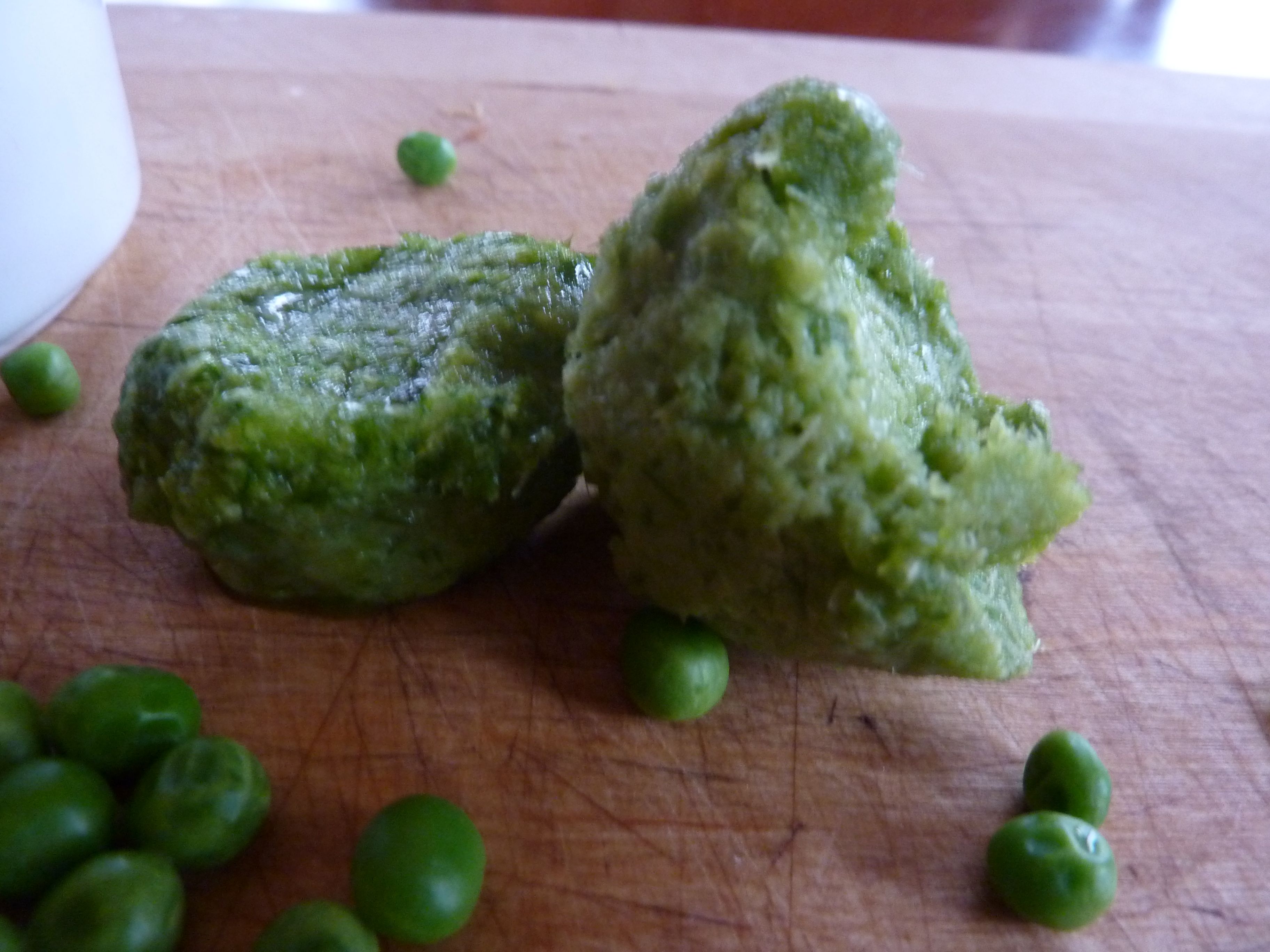
pesto cubes culinary cycling holidays europe
Pesto cubes – garlic scape and chive

A basic pesto is a wonderful way of preserving excess fresh herbs you may have as a result of an overabundant garden. I first blanch the herbs for a minute or so in some boiling water. This keeps the fresh green color; otherwise, the pesto can turn grayish. I squeeze out as much water as possible, and puree the herbs in a blender with a bit of olive oil. I place a tablespoon or so of pesto in mini-muffin tins or ice cube trays, and freeze. When solid, I can take them out of the tin or tray, dump them all into a large ziplock, and store in the freezer. I can pull out an individual cube to flavor a soup, make a nice accompaniment for chicken or fish, or top some pasta.

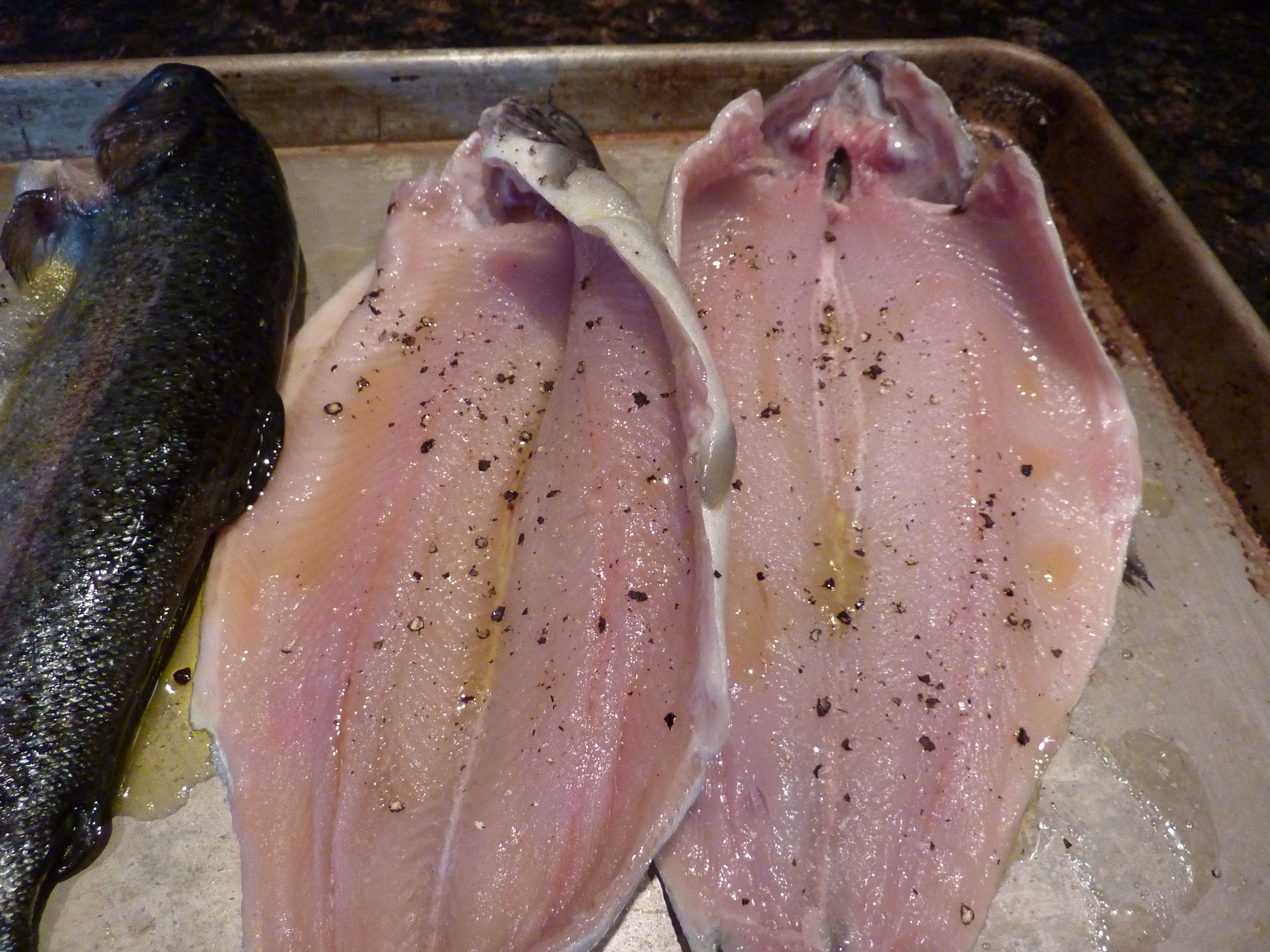
trout ready for grill wine bike tours italy
Oiled and seasoned trout

At this time of year, I’m trying to find a way to use up all of last years’ cubes before this summers’ herbs are available. Here, I used one cube of garlic scape pesto, and one of chive pesto to flavor a delicious spring pea pesto – a great and healthy topping for some grilled trout.

grilled trout cycling holidays europe
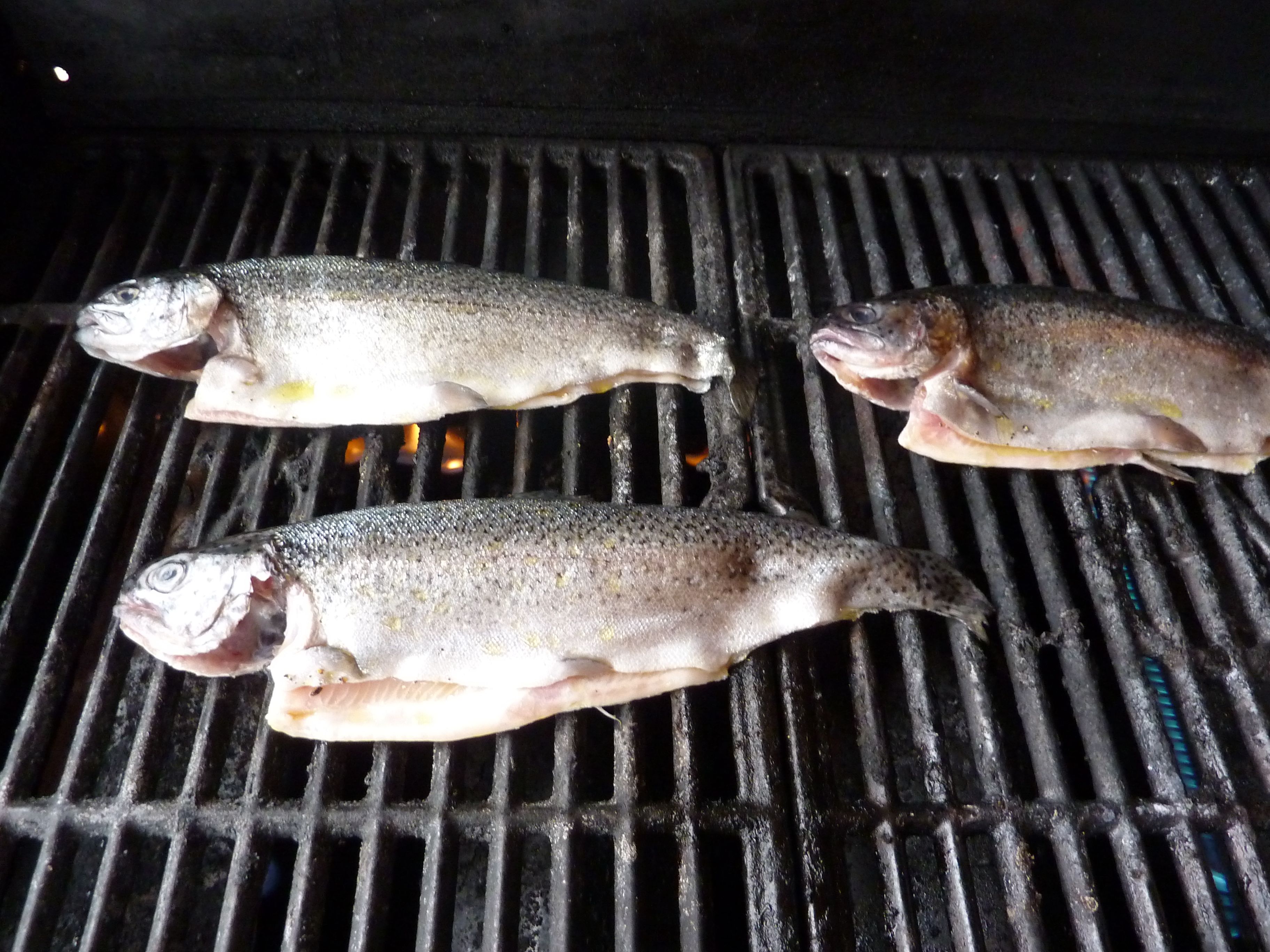
Grilling trout

Rainbow trout is plentiful in Lago di Garda in the Veneto and Trentino regions, as well as in the many fresh water lakes found in Trentino and Friuli-Venezia Giulia. A wine from the Lugana DOC, at the southern end of Lago di Garda, is a fantastic pairing for this dish – I recommend the Ottella Lugana Le Creete 2009.

Grilled Trout with Spring Pea Pesto

Serves 4
1/4 cup whole almonds, toasted
1 tablespoon garlic scape pesto, or 1 clove garlic, peeled
1 tablespoon chive pesto, or 1 tablespoon chopped chives
1 10 oz. package frozen peas, defrosted
1/2 cup extra virgin olive oil
kosher salt and freshly ground pepper
4 whole trout
Extra virgin olive oil

Preheat the grill.

Place the toasted almonds, garlic clove (or pesto) and chives in a blender. Pulse to chop. Add the peas, then pour in the olive oil. Puree until the desired consistency. You may need to break it up a bit with a spatula, or even add more olive oil or water. Season with salt and pepper.

Place the trout on a sheet pan. Drizzle olive oil on both the inside and outside, then season the insides with salt and pepper.

Place on the grill, and cook, turning once. Serve on fresh greens, and top with the pea pesto.

Posted in Fitness, Friuli-Venezia Giulia, Lugana, Peas, Trentino Food, Trout, Veneto Food | Tagged , , , , , , , , , , , , , , , , , , , , , , , , , , , , | Leave a comment

Wine Tasting: Bastianich Sauvignon “B” 2009

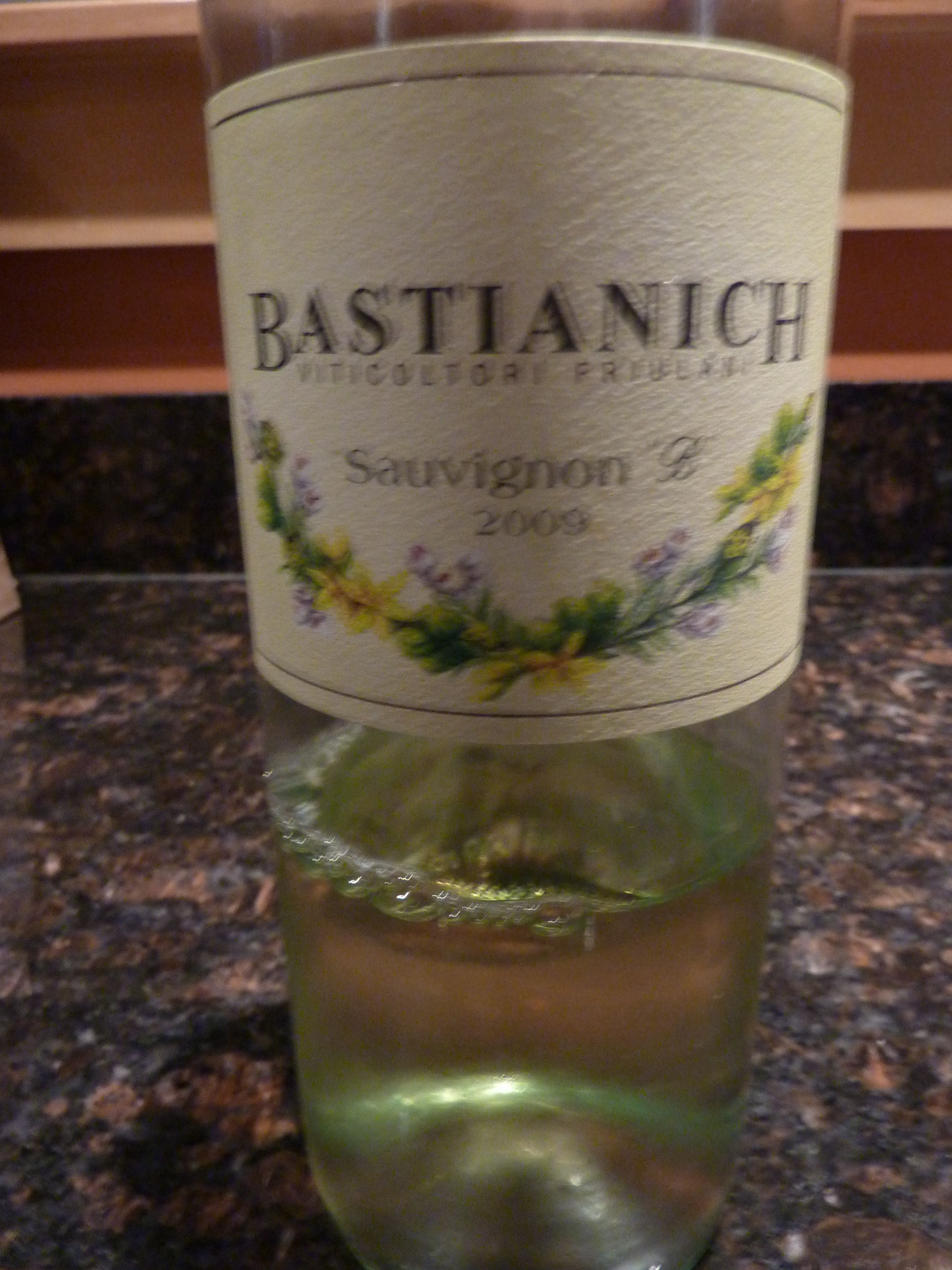
Bastianich Sauvignon "B"

I thought I would begin sharing some of the wines I am discovering as I ‘research’ the wines of Northern Italy for our Italiaoutdoors culinary vacations where we enjoy biking, hiking and skiing there. Yes, my job is so tough sometimes. But reading up on each wine, tracking it down (not easy here in the states, if possible at all), and documenting it does take a bit of discipline and time. Here’s my first post in this vein – the Bastianich Sauvignon “B” 2009 from Friuli-Venezia Giulia.

A well-known name in the US restaurant and Italian food world; mother Lidia, famous chef, TV show host and cookbook author, hails originally from the Istrian peninsula in this region; son Joseph is a very successful restauranteur (with his partner, Mario Batali.) Joseph operates several vineyards in Italy, with this being his most recent venture. The Bastianich’s have acquired prime vineyards in the Buttrio/Premariacco region on the southernmost hills of the Colli Orientali del Friuli DOC, and near Cividale, where their vineyards are subjected to the cooler winds from the north, resulting in particularly aromatic wines.

They cultivate Pinot Bianco, Pinot Grigio, and Sauvignon varietals, as well as local varieties such as Tocai Friuliano. This area is traditionally known for producing single-varietal wines, but the Bastianich’s are producing blends here, specifically their Vespa Bianco and Vespa Rosso (the name vespa means wasp, which are attracted to the ripening grapes.) Also produced here is a red blend, Calabrone (or hornet), made from dried grapes. The cellar here has a drying room, where the winemakers are experimenting with a variety of grapes. Another example is the Tocai Plus, which is a blend of late-harvest and dried fruit from a single vineyard of 60 year-old wines.

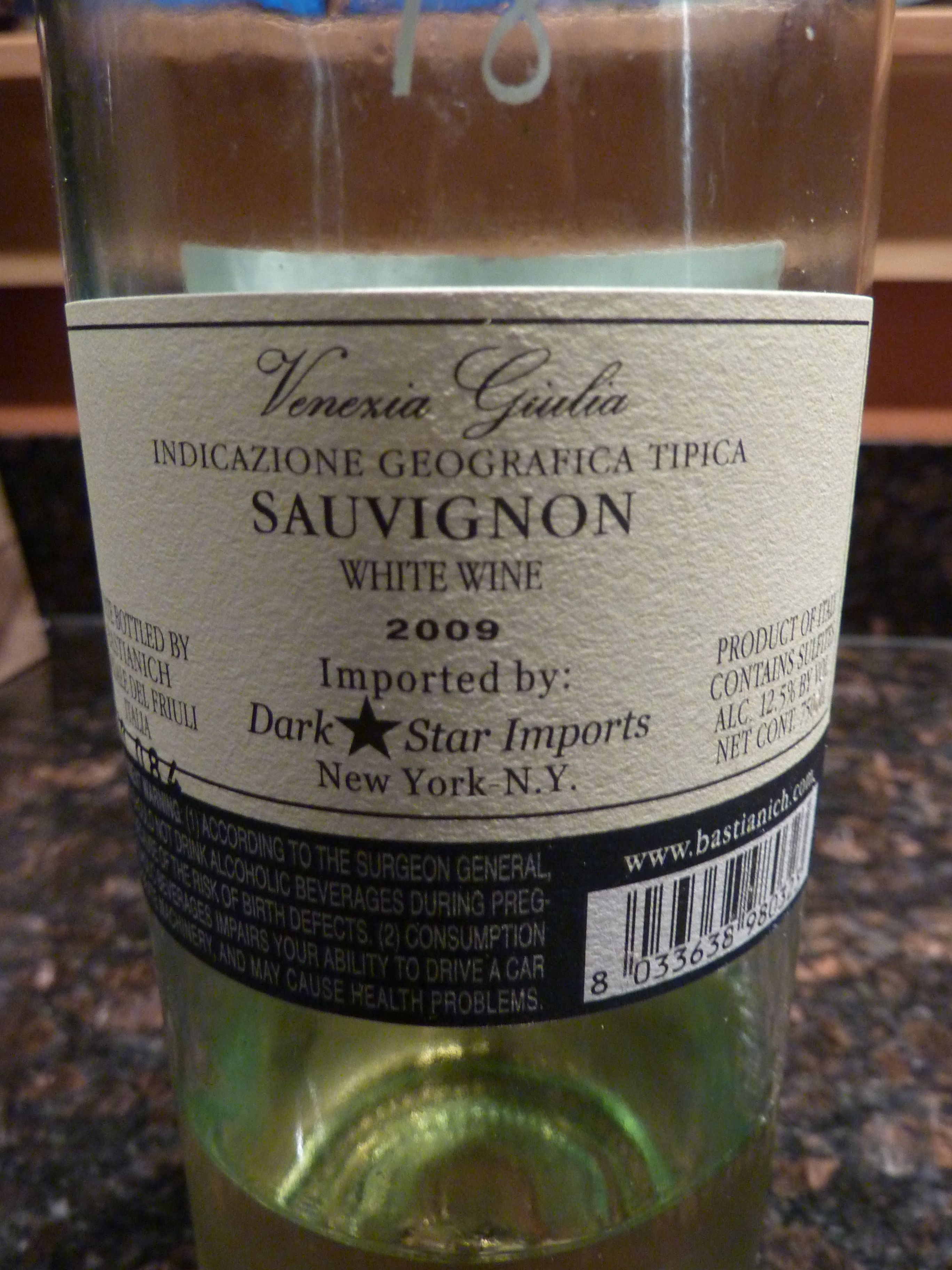
Back label

My tasting was of the Bastianich Sauvignon B 2009. Note that this is an IGT (Indicazione Geographica Tipica) wine, which indicates a wine that is considered to be higher quality thatn your average table wine, but does not adhere to the established DOC/DOCG wine laws for this region. Made from 100% sauvignon blanc grapes, I found it very crisp, dry and refreshing with a fruity aroma – the description on line describes it as a mix of grapefruit, mango, mint, tomato leaf and white sambuco. I found it had a good balance between the tartness and the other flavors, but not overbearingly grapefruity like some Sauvignon Blancs can be. A nice first course wine, which would pair well with antipasti and risottos – a wonderful match with my Risi e Bisi with Radicchio and Mascarpone.

Posted in Friuli-Venezia Giulia, Uncategorized, Wine Pairings | Tagged , , , , , , , , , , , , , , , , , , | Leave a comment

Pear and Grappa Crostini with Prosciutto di Sauris

Crostini pear grappa bike tours italy
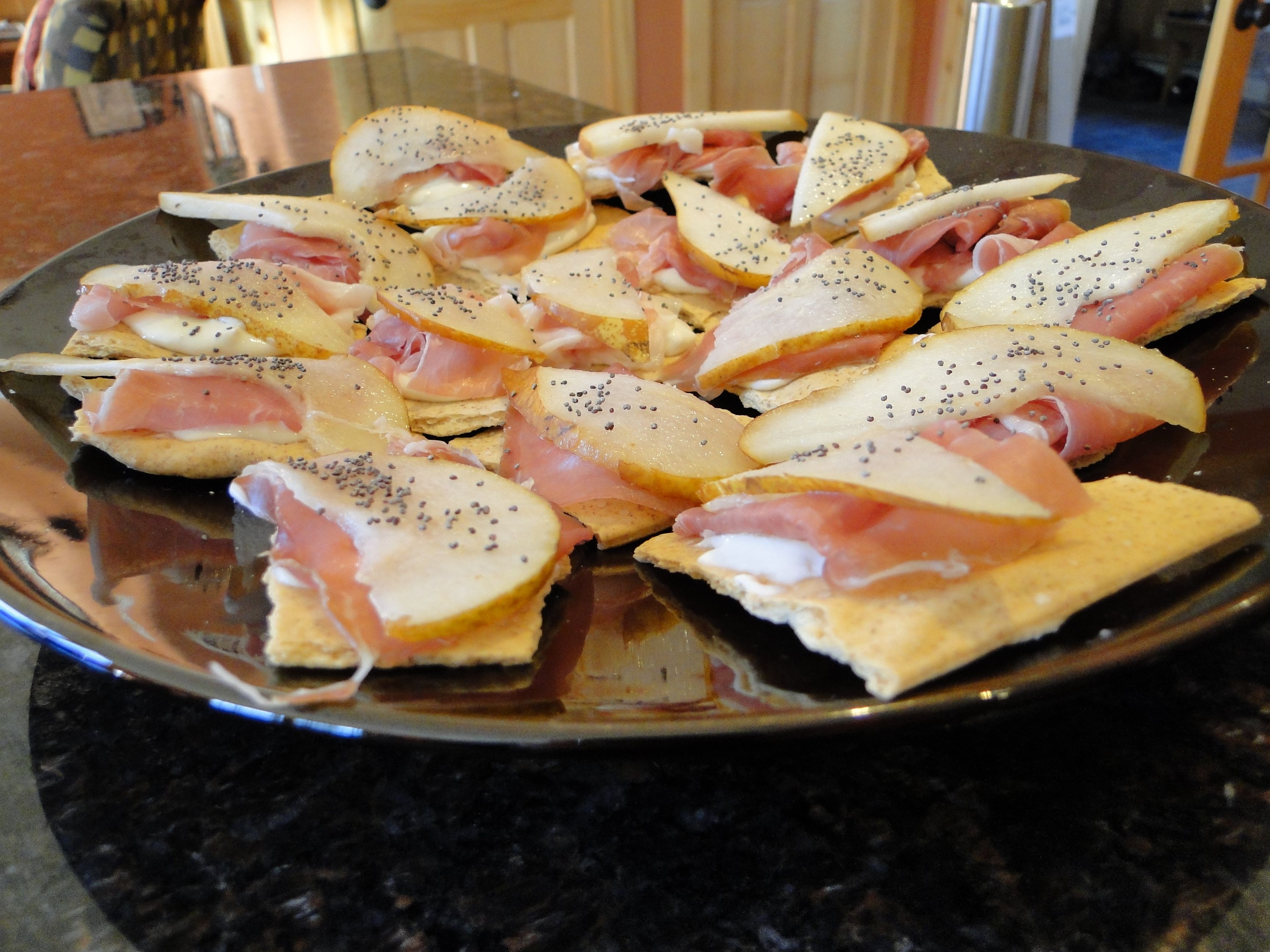
Finished crostini

Americans are very familiar with the Prosciutto di Parma, but there are many other wonderful hams produced across Italy that are virtually unknown to us. We sampled the great Prosciutto Berico-Euganeo and a few types of speck on our culinary bike trips last season. But there are many more to discover, especially in the mountains of Trentino and Friuli-Venezia Giulia.

Hundreds of years ago, the first settlers to the area known today as Friuli-Venezia Giulia were the Celts and the Carni, both Celtic peoples who settled in the mountains here. They brought with them their methods of preserving hams, and their expertise enabled them to recognize that this area, located between the mountains and the Adriatic sea, provided the perfect climate for air drying of these hams.

grappa bike wine tours italy
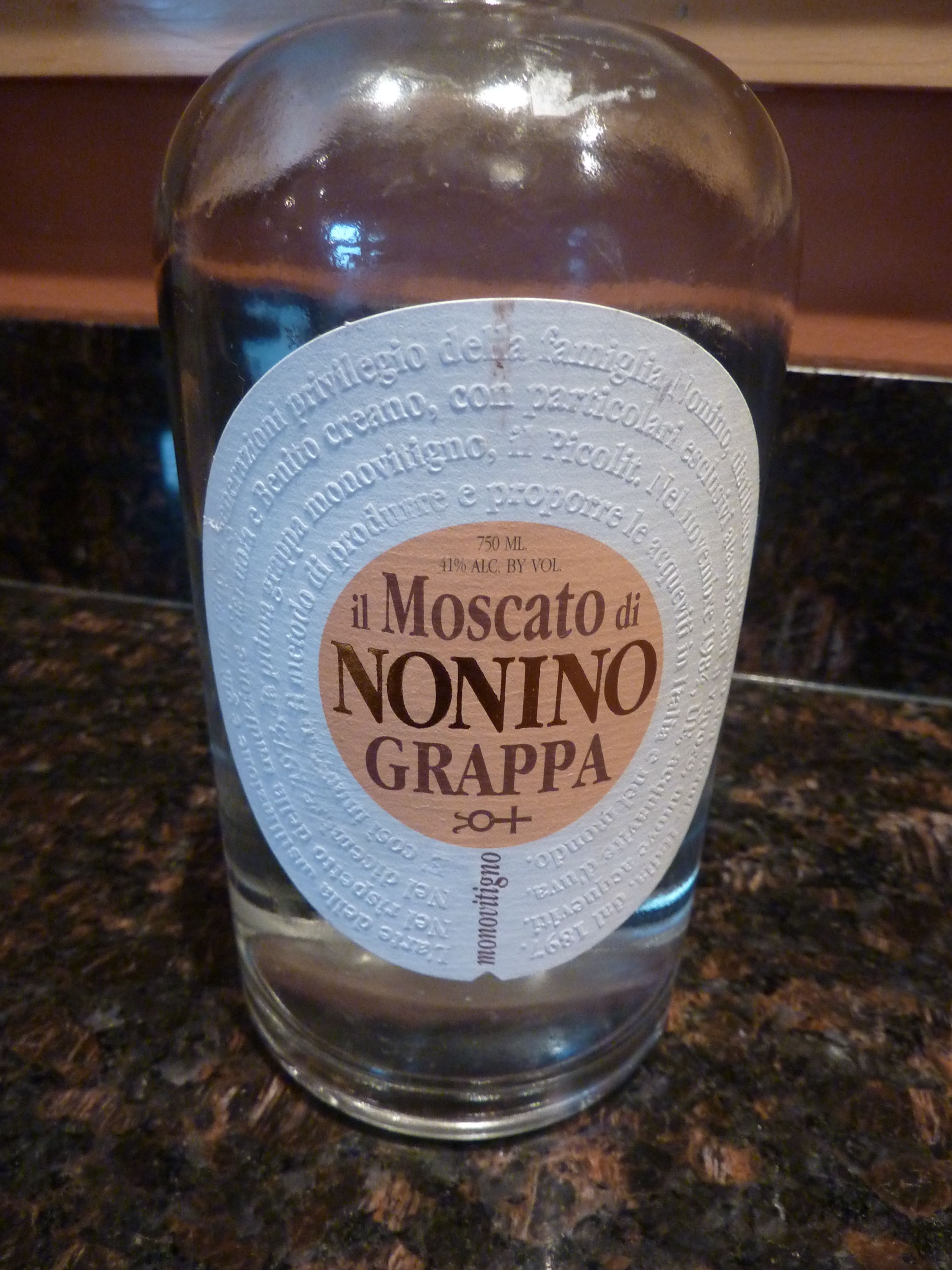
Nonino grappa – secret ingredient!

I am still struggling to understand the difference between a ‘prosciutto’ and ‘speck’. I have been told, and read, that prosciutto is brined, salted, and air dried, while speck is smoked.  In my recent readings on the Prosciuttos found in Fruili-Venezia Giulia, the difference between the two is said to be that a speck is a prosciutto with the bone removed, so both prosciuttos and speck can be smoked, or not.  I admit to being mystified. But I don’t worry too much about the definition, and just enjoy using these wonderful hams. For more information on this Prosciutto di Sauris, visit our food and wine section of our Italiaoutdoors Food and Wine web site.

This hors d’oeuvre recipe was inspired by the great mountain flavors of Northeastern Italy – pears from their orchards, a amazing prosciutto (or speck), and finally a little touch of grappa to add a bit of a kick to the cheese spread. It’s also quite a pretty and delicious addition to any antipasti platter.

pear culinary bike tours italy
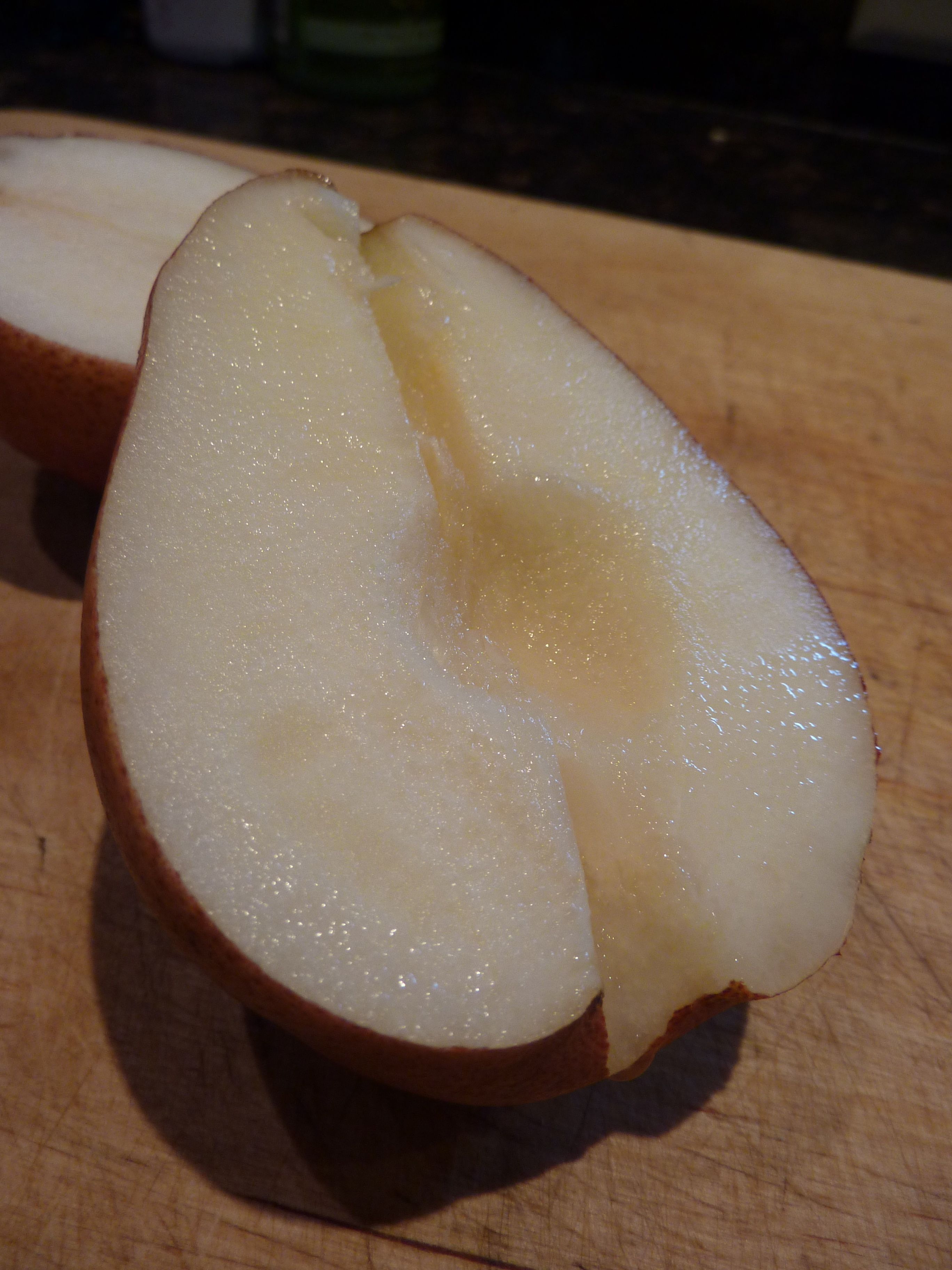
Pear with core and string removed
sliced pear custom bike tours italy
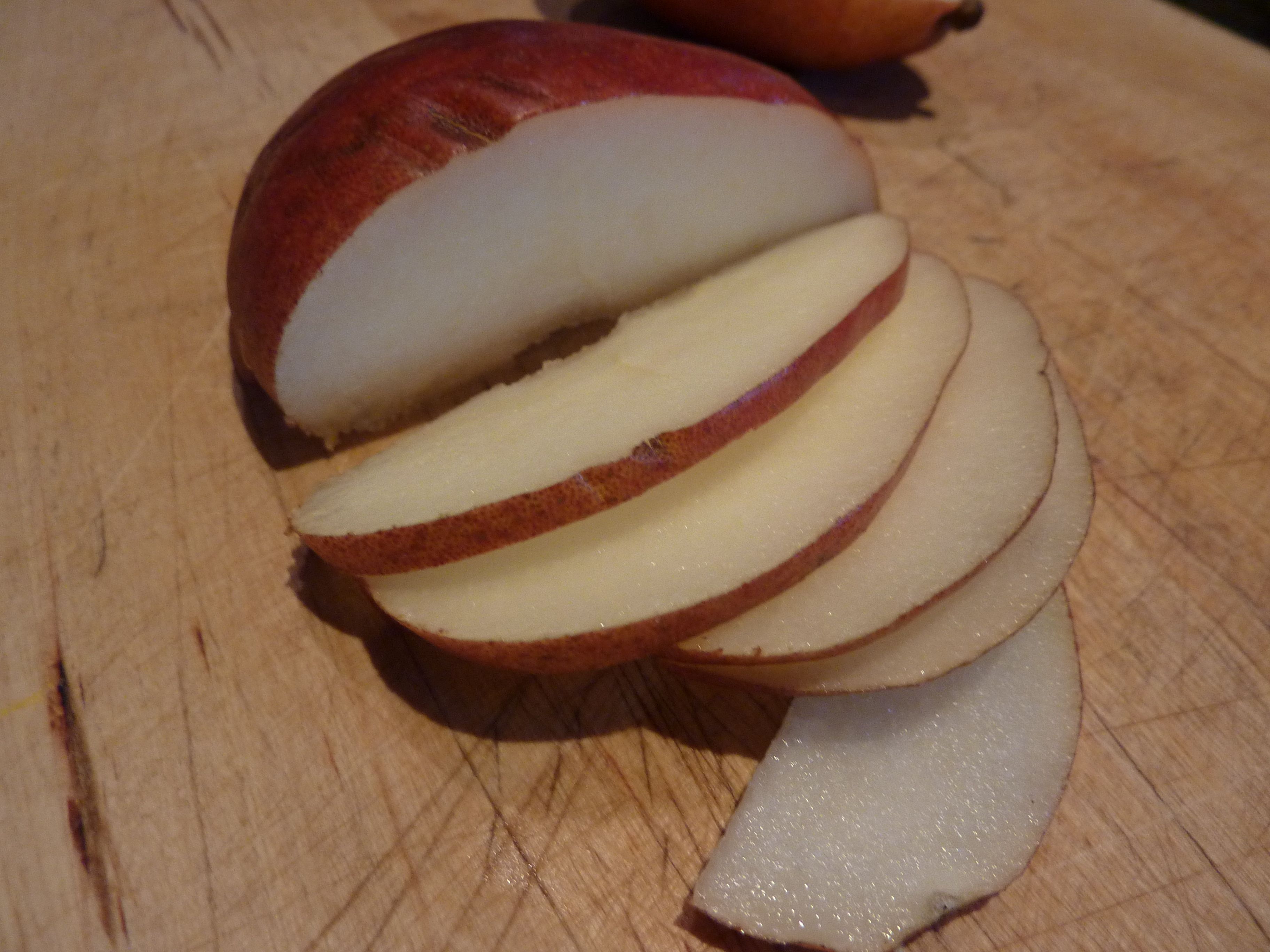
Sliced pear

Pear and Grappa Crostini with Prosciutto di Sauris

Makes 16

1 baguette, sliced on the diagonal into 16 1/4” slices, or 16 crostini size pieces of thick flatbread crackers
1/4 cup extra virgin olive oil
1/2 cup mascarpone cheese
1/2 cup ricotta cheese (preferably homemade, recipe here)
1 tablespoon grappa
kosher salt and freshly ground pepper
1 pear
juice of 1/2 lemon, strained
8 slices of Prosciutto di Sauris, or another smoked prosciutto or speck
1/2 teaspoon poppy seeds

Preheat the oven to 350°.

Place the baguette slices on a sheet pan, and cook until just beginning to brown. Don’t let them get too hard, or they will break apart when you bite into your crostini. Remove from oven and brush with the olive oil.

Place the mascarpone and ricotta cheese in a small bowl. Stir in the grappa. Season with salt and pepper.
Slice the pear in half lengthwise. Remove the core and the string that extends from the stem to the base. Place each half cut side down on a cutting board, and slice each half lengthwise into thin slices. Place in a bowl and toss with the lemon juice.

Cut each prosciutto slice in half.

Lay the 16 baguette slices out on a sheet pan. Spread a layer of the cheese mixture on each baguette. Top with a slice of the prosciutto, then top each with a slice of pear. Garnish each with a sprinkling of poppy seeds.

Wine Pairing: a nice prosecco, or from Friuli-Venezia Giulia’s Colli Orientali di Friuli DOC, the Bastianich Sauvignon “B”.

Posted in antipasti, Friuli-Venezia Giulia, Pears, prosecco, Prosecco, Uncategorized | Tagged , , , , , , , , , , , , , , , , , , , , , , , , , , | Leave a comment