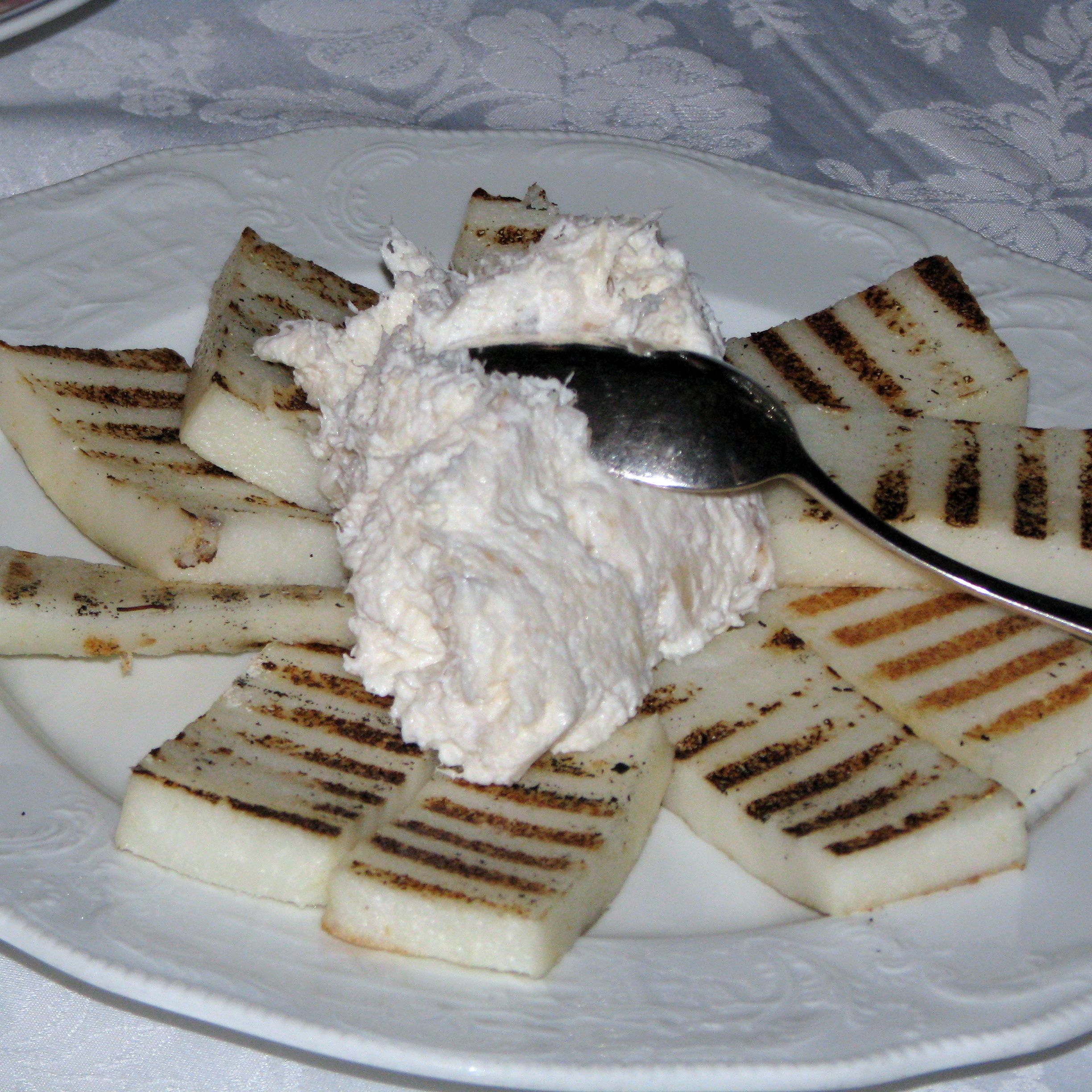
Polenta, typically made with corn meal, is a traditional dish from the Veneto region. It has many variations, from a soft side dish served with meats and fish, to a firmer texture that can be grilled or broiled. During our cooking classes in Italy, we’ve made our own and topped with sopressa and cheeses. Our wonderful hosts at Villa Margherita served it grilled with baccala.
Polenta and Baccala at Villa Margherita
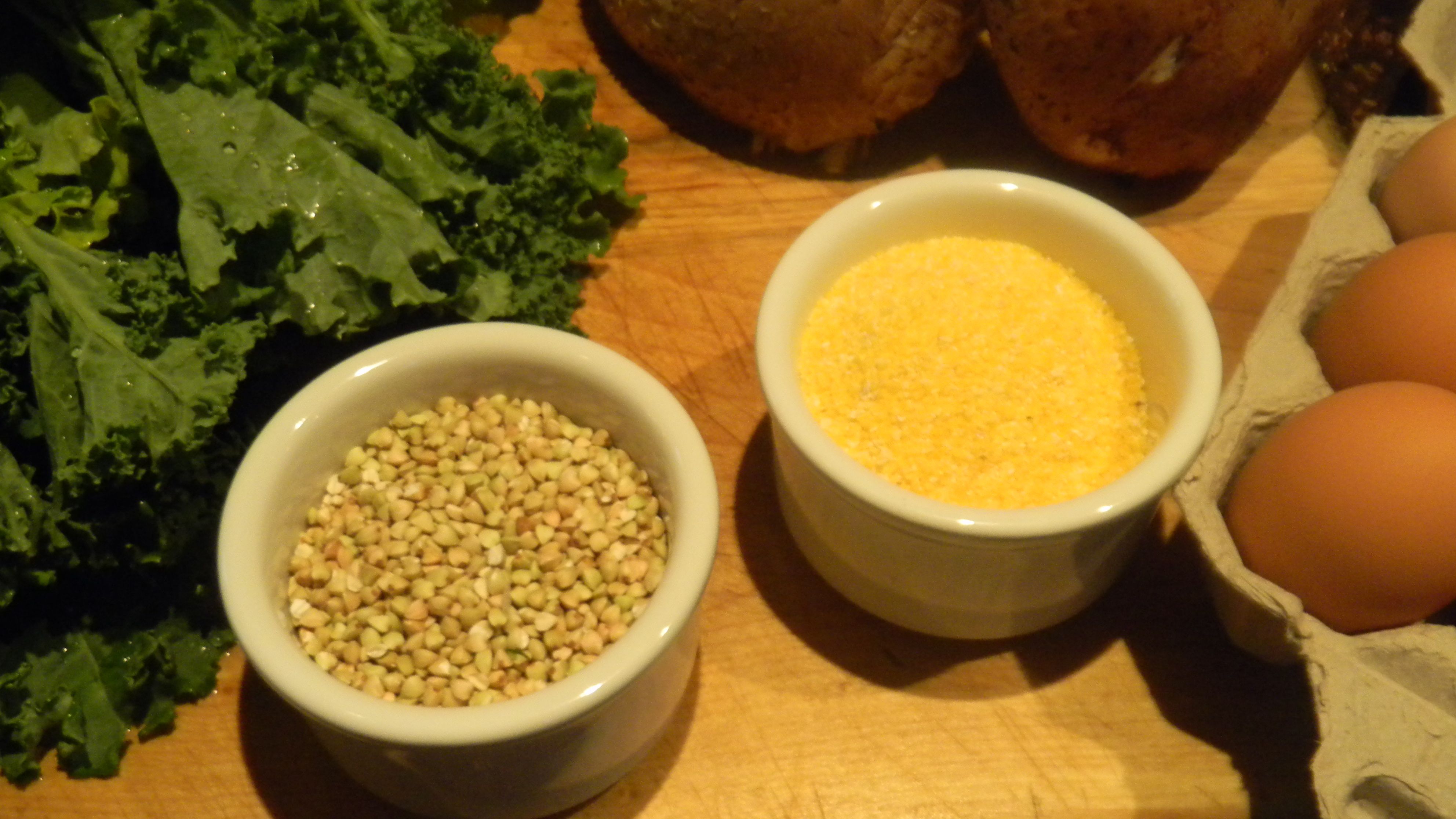
Polenta is an ancient dish, but the use of corn as the base grain is not. Corn was first introduced to Italy in the 1700’s, from the New World. Prior to that, other grains such as spelt, millet, even ground chickpeas were mixed with water to produce a porridge. Buckwheat was commonly used, and it still used today in very northern areas where corn is not as easily grown. The following recipe uses a combination of buckwheat and corn meal to produce a flavorful polenta with a bit of a nutty taste.
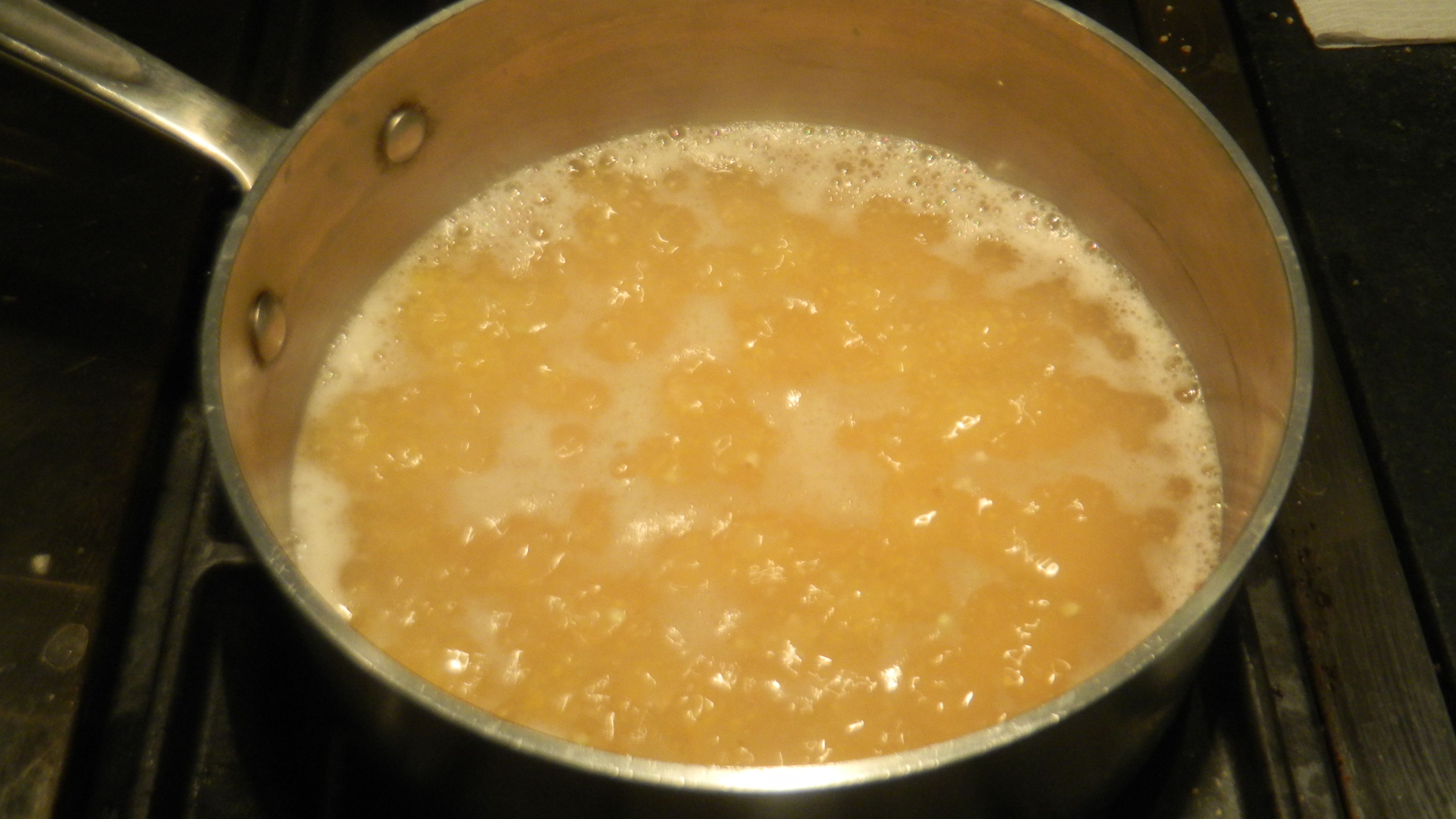
Polenta cooking
Polenta was traditionally cooked in a payola, a huge copper cauldron which would hang over the fire in an open fire place. When the water in the cauldron came to the boil, the corn meal was sprinkled into it. Then the hard work began. Housewives needed to be equipped with an olio di gomito, a well oiled elbow and a sturdy bastone, a long wooden stick, for the polenta had to be stirred continuously.
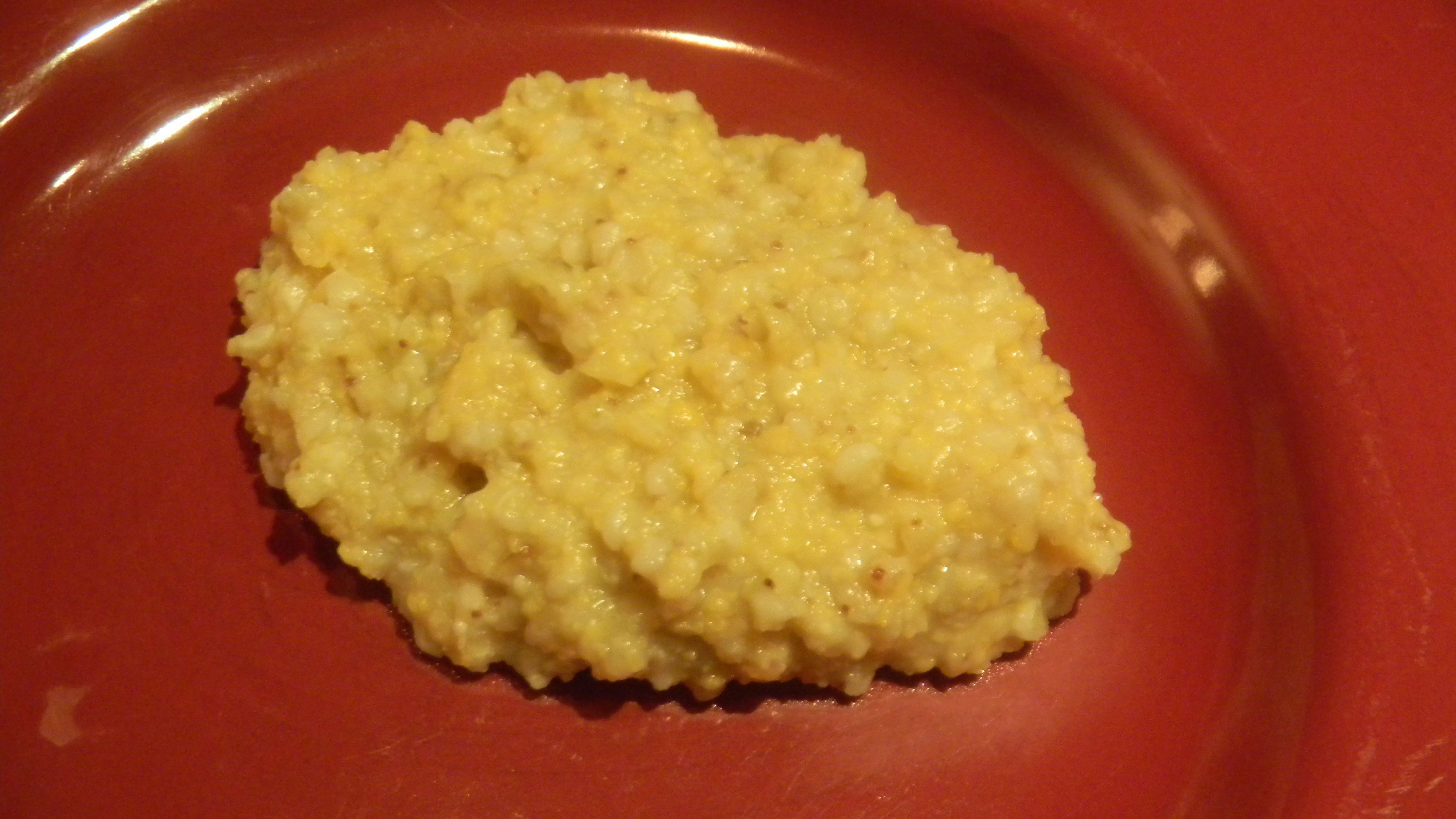
Cooked soft buckwheat polenta
Once the polenta begins to move away from the sides of the saucepan, it is tipped out onto a wooden board and sliced with a piece of string. It is usually eaten when still warm instead of bread. Polenta is often served soft with rabbit, lamb, game or forest mushroom ragout. Italians also like to eat it with sausages or cream cheese and in Venice it often accompanies fish dishes. Polenta can also be served as primo, a first course, spread with a little butter and topped with freshly grated cheese. Favorite uses for left overs are grilling, frying or polenta gratin with a sauce.
4 cups water
2/3 cup polenta or corn meal
1/3 cup buckwheat groats
Kosher salt
2 tablespoons extra virgin olive oil
1 teaspoon shallot, minced
2 portobello mushrooms, or 6 large white mushrooms, sliced
1 clove garlic, minced
10 ounces baby spinach
¼ cup grated piave vecchio or grana cheese
Shaved piave vecchio or grana cheese
1 tablespoon white wine vinegar
4 very fresh eggs
Fresh ground pepper
Truffle oil
Place the 4 cups water into a medium saucepan and bring to a boil. Add salt. Whisk in the corn meal and buckwheat groats, whisking until no lumps remain. Reduce the heat to a simmer, and allow the polenta to thicken, stirring often. If it becomes too thick, add a little water to loosen it. Cook for 30-40 minutes.
While polenta is cooking, heat the olive oil in a large sauté pan. Add the shallots and cook until soft. Add the mushroom and allow to brown and soften. Add the garlic and cook until aromatic, about 1 more minute. Finally, add the spinach and cook until wilted. Remove from heat.
When the polenta is done, add the grated cheese and the butter and stir to combine. Keep warm while you poach the eggs.
Fill a medium saucepan halfway with water, and bring to a gentle simmer. Add the vinegar and some salt. Carefully break the eggs into the simmering water. Alternatively, you can break them, one at a time, into a small ramekin and slip them into the simmering water. Poach for 2-4 minutes, depending upon how runny you like your eggs. Remove from pan with a slotted spoon.
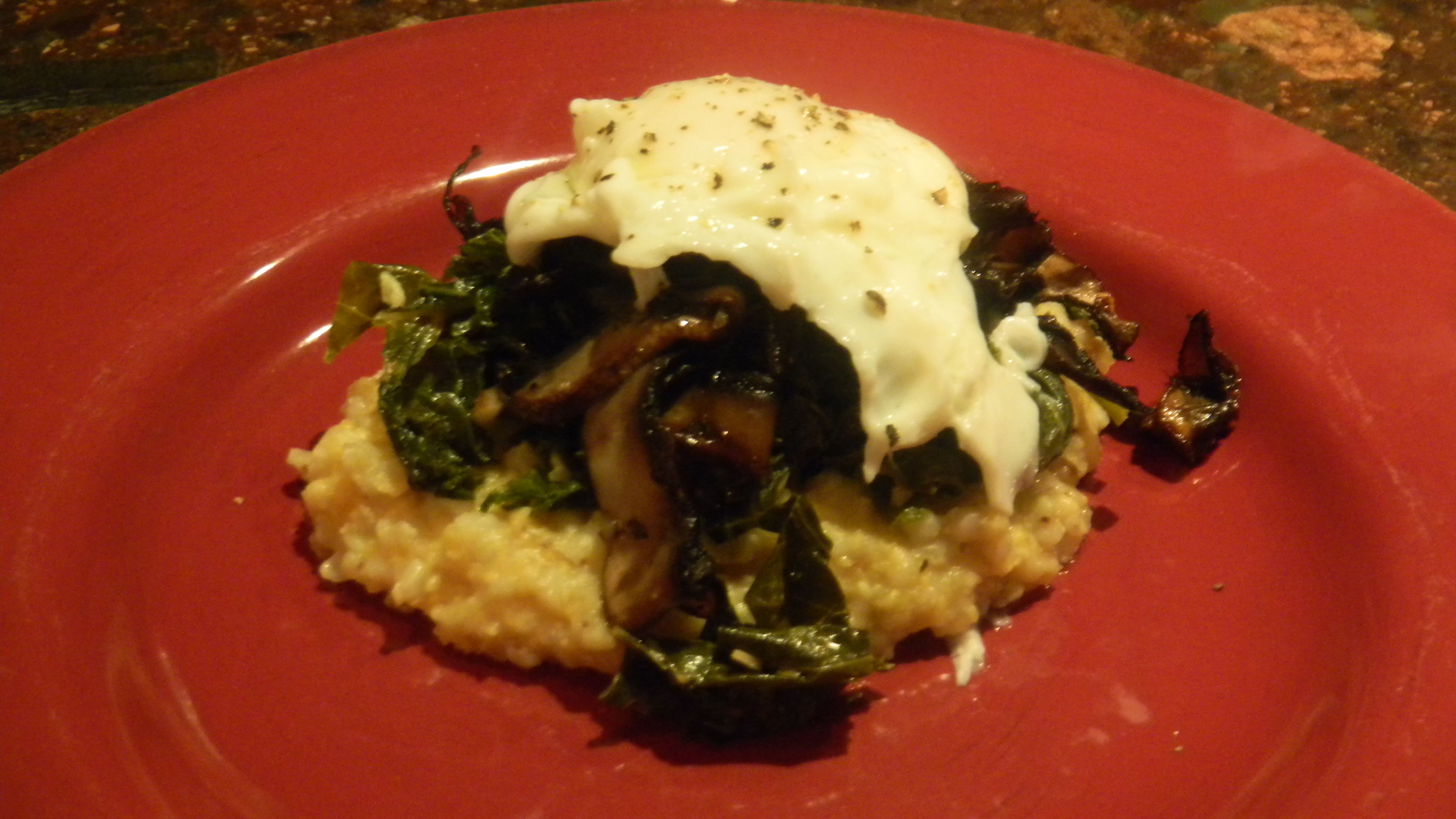
Lay out 4 plates. Place a large spoonful of polenta on each, top with the spinach/mushroom mixture, and then with a poached egg. Garnish with the shaved cheese, salt and fresh ground pepper. Drizzle with truffle oil.
Radicchio, a member of the chicory family, was first introduced to the Republic of Venice from Asia around 1400. It began to be cultivated fairly extensively in the region, but it served primarily as animal fodder, and the roots were dried and mashed and used as a substitute for coffee. It was also included as an ornamental plant in the botanical gardens of the Venetian aristocracy. It wasn’t until the 19th century that radicchio was introduced into the cuisine of the Veneto. It does make an occasional appearance in its raw form, but the preferred method of use is as an ingredient in pasta fillings, rice dishes, or sauteed and served as a side dish to braised meats.
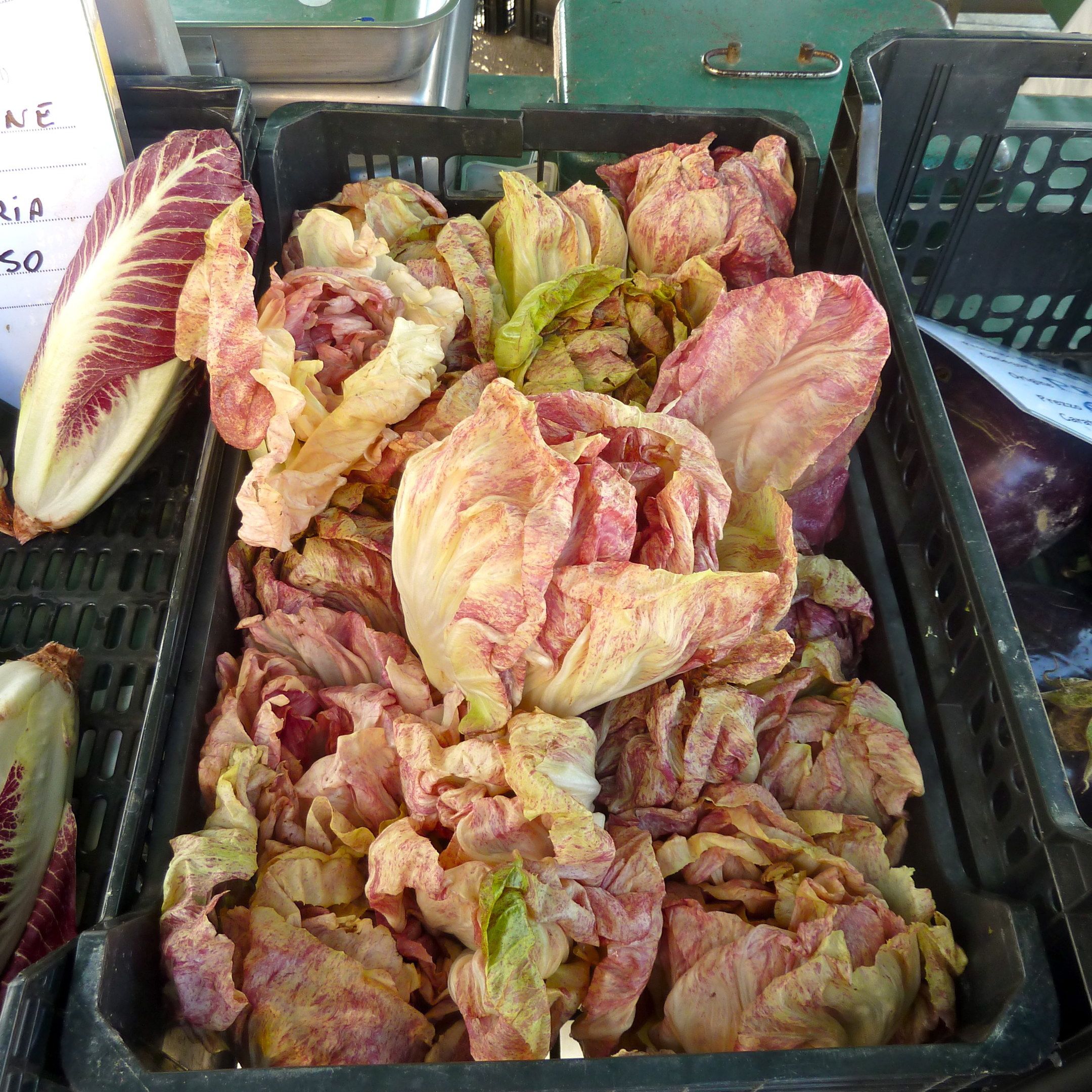
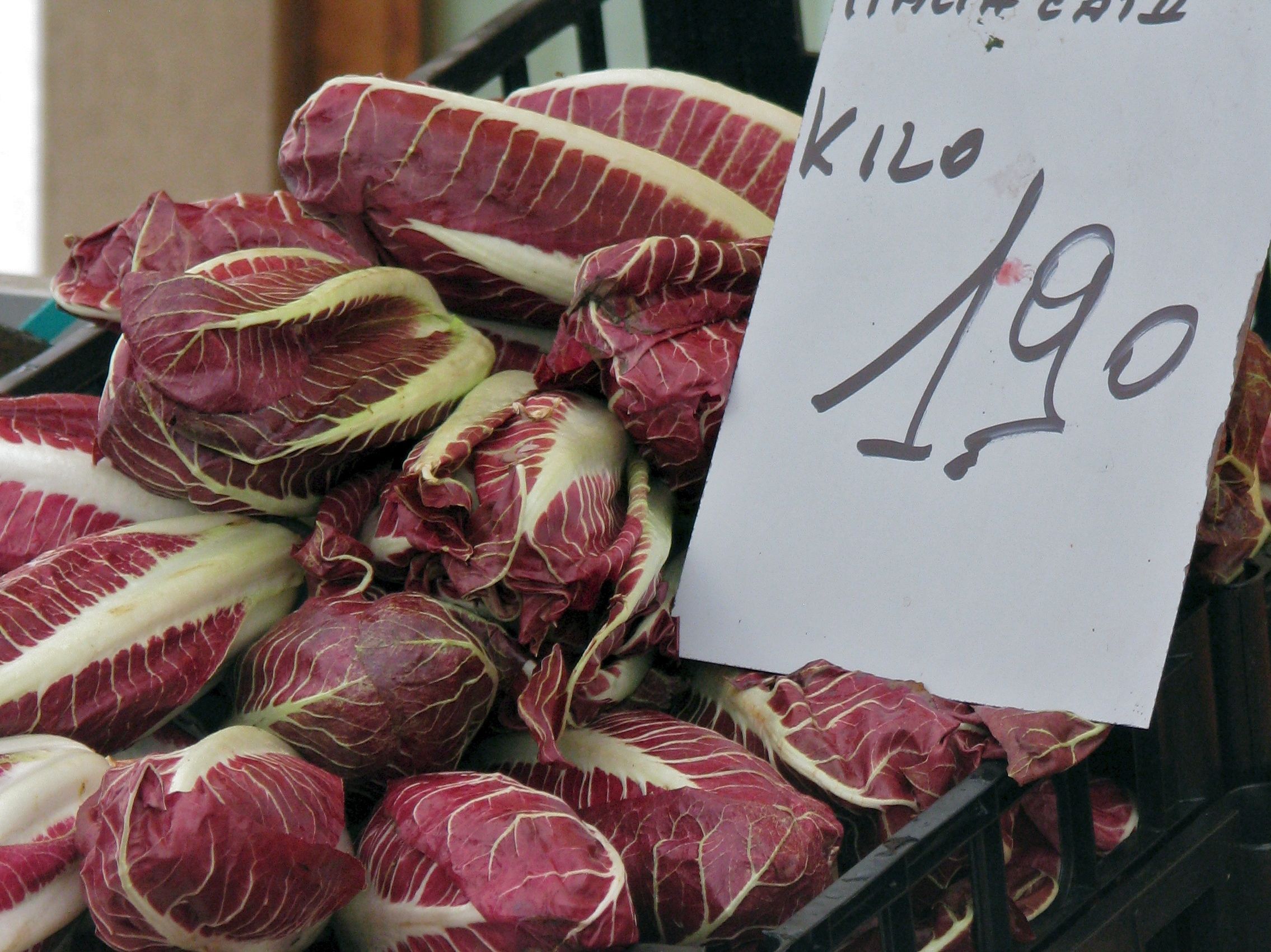
Beautiful Radicchio
Here in the US, we see predominately the Radicchio Rosso di Chioggia form, which was first grown in the town of Chioggia on the Venetian Lagoon. This type is ball-shaped, like a small cabbage, and mostly purple in color with larger white streaks, or veins. In the Veneto region, however, especially in the Province of Treviso, renowned for its’ radicchio, there are many other varieties, each making an appearance at a slightly different time of year and displaying its own culinary characteristics. On our Italiaoutdoors web site, our food section introduces a few these very interesting varieties, ranging from dark purple to white streaked with light green and pink.
Radicchios undergo a forcing, or ‘whitening”, imbianchimento, in which field-harvested plants have their upper halves cut off, and then are replanted in running water. After a few days, the deep red inner ‘heart’ begins to grow, which is sweet and tender, with a touch of the original bitterness still remaining. The older outer leaves are removed and the heart is what you will see in the market.
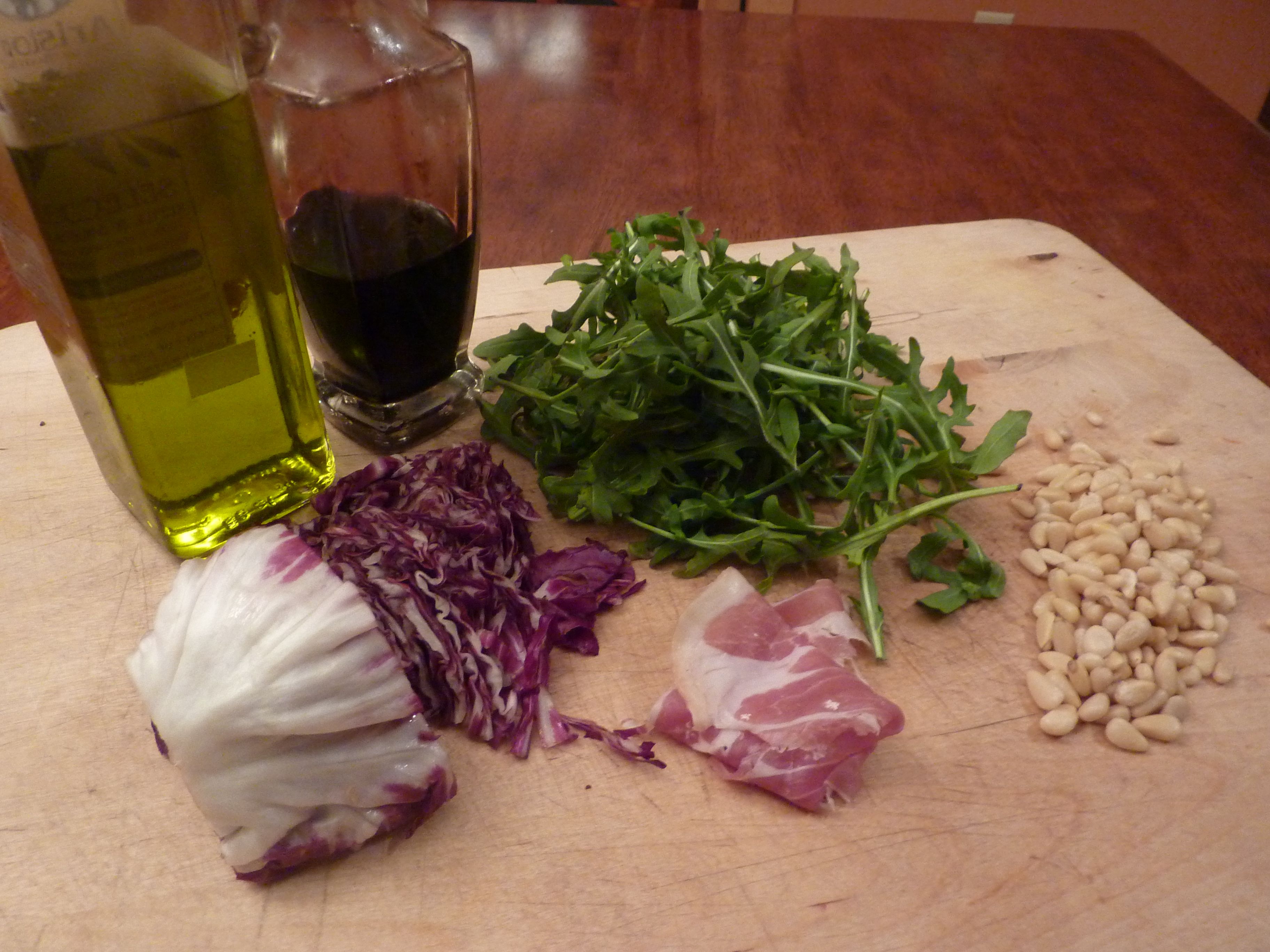
Fresh Ingredients
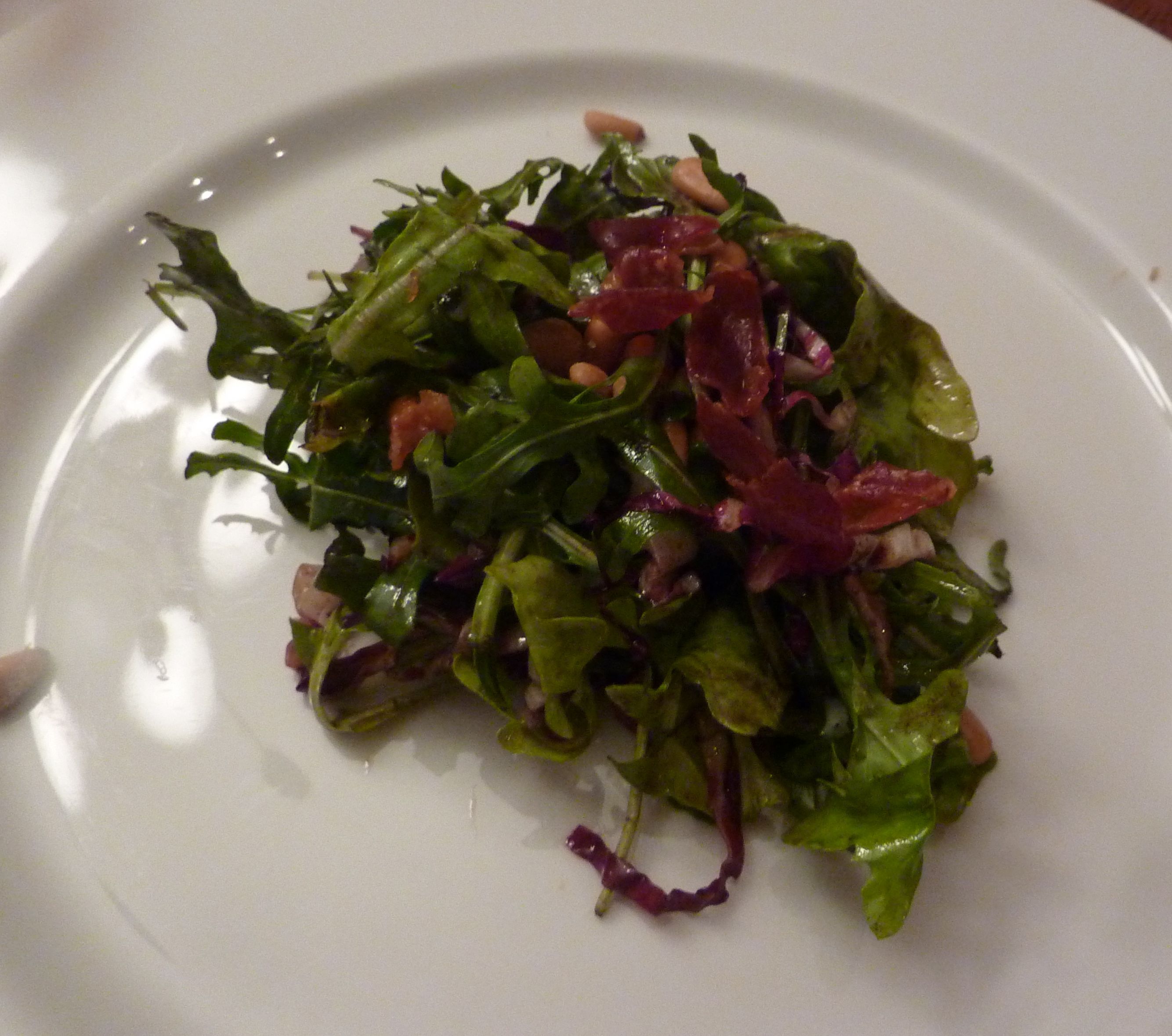
This recipe is an example of the occasional appearance of radicchio in its raw form, here it is combined with spicy arugula to make a wonderful salad. Dressed with a classic balsamic vinaigrette, I’ve added toasted pine nuts and Italian ‘bacon bits’, or oven-dried prosciutto. This was a recipe from my last cooking class and several of the students have tried and enjoyed it on their own.
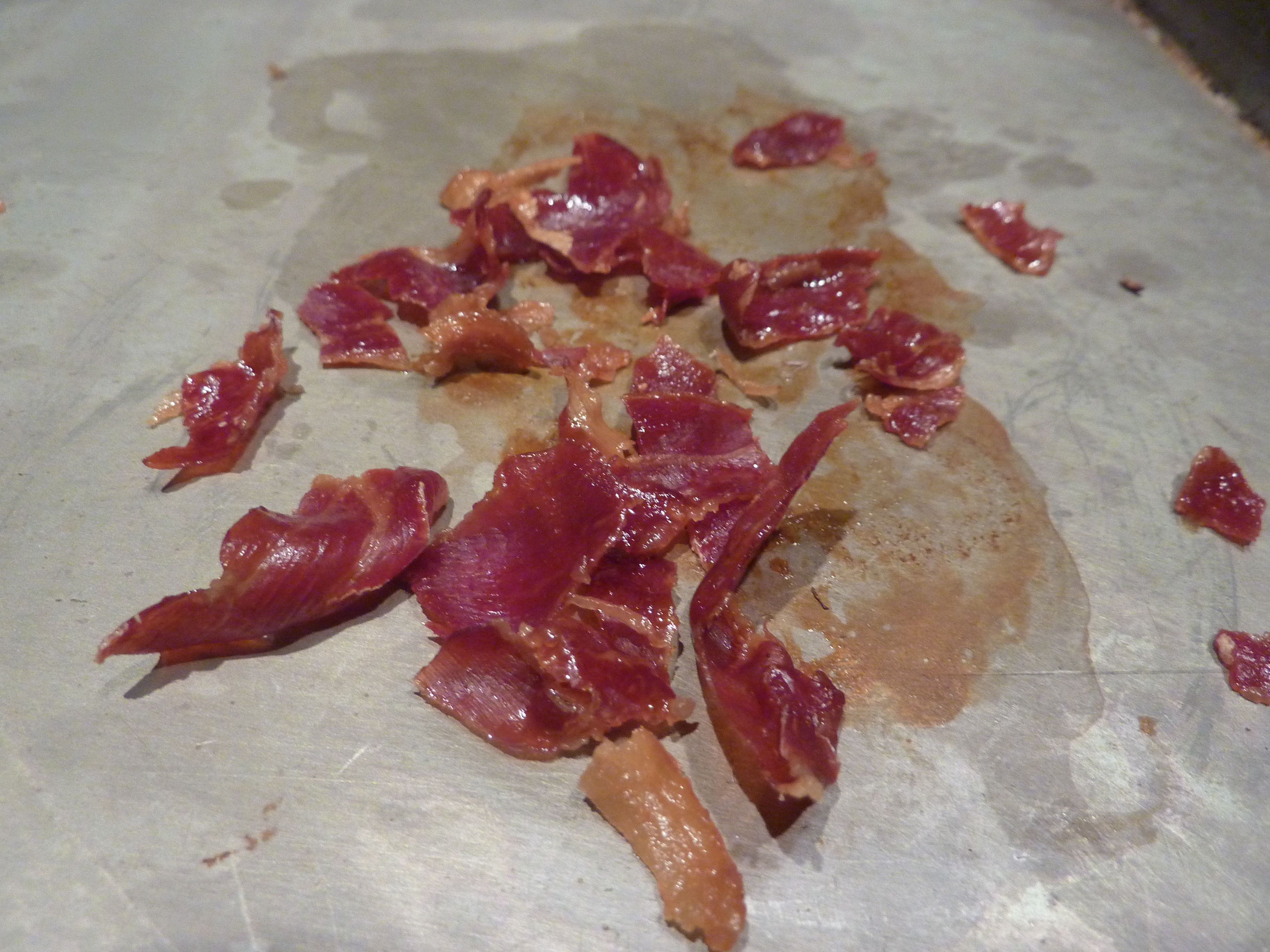
Italian Bacon Bits
Insalata di Radicchio e Rughetta
Serves 4
2 slices prosciutto
6 cups baby arugula
1 head radicchio, thinly sliced
1/2 cup freshly grated Grana Padano cheese
2 tablespoons balsamic vinegar
6 tablespoons extra virgin olive oil
kosher salt and freshly ground pepper
1/4 cup pine nuts, toasted
Preheat oven to 300°.
Place the prosciutto slices on a sheet pan and dry in the oven until crispy, about 20 minutes. Remove from oven and allow to cool. Break into small pieces.
Combine the arugula, radicchio and cheese in a large salad bowl.
Place the vinegar and olive oil in a small lidded plastic container. Cover tightly with the lid, and shake vigorously. Season with salt and pepper.
Add the dressing to the salad, and toss lightly. Place on 4 places, and top with the pine nuts and prosciutto pieces.
Apples are grown in both the Veneto and Trentino regions, but are considered to be the queen of the land in Trentino. Apple orchards wind their way across Italy’s northeast area, from Val Sugana, continuing along the Adige Valley and then straight to the epicenter of apple cultivation, the Val di Non and Val di Sole. More than four million apples of all varieties and sizes are produced each year in these valleys and today, more than ever, they are used satisfy a growing overseas market.Apple desserts are popular in the Val di Non and surrounding provinces in Trentino. From apple strudel, apple cakes, and the apple in puff pastry dessert that we enjoyed making during our cooking classes at Villa Margherita, there are a variety of tasty treats made with apples all around northern Italy. Here, I’ve taken the granola base I used for my granola bar recipe from a few posts back, and turned that into a delicious, somewhat healthy streusel type topping for this apple crisp. Another hit with my coworkers at the ski school!
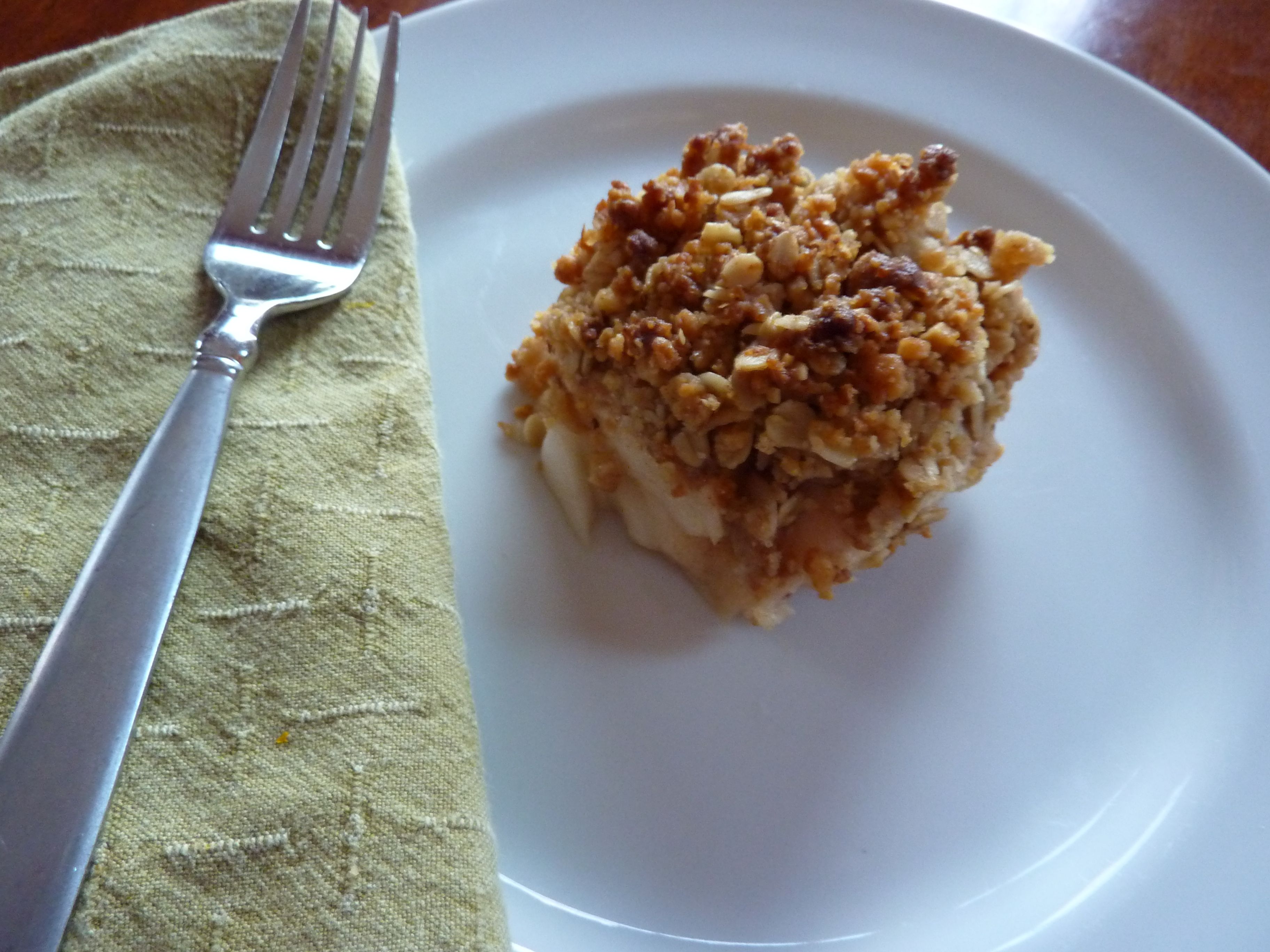
Apple Crisp
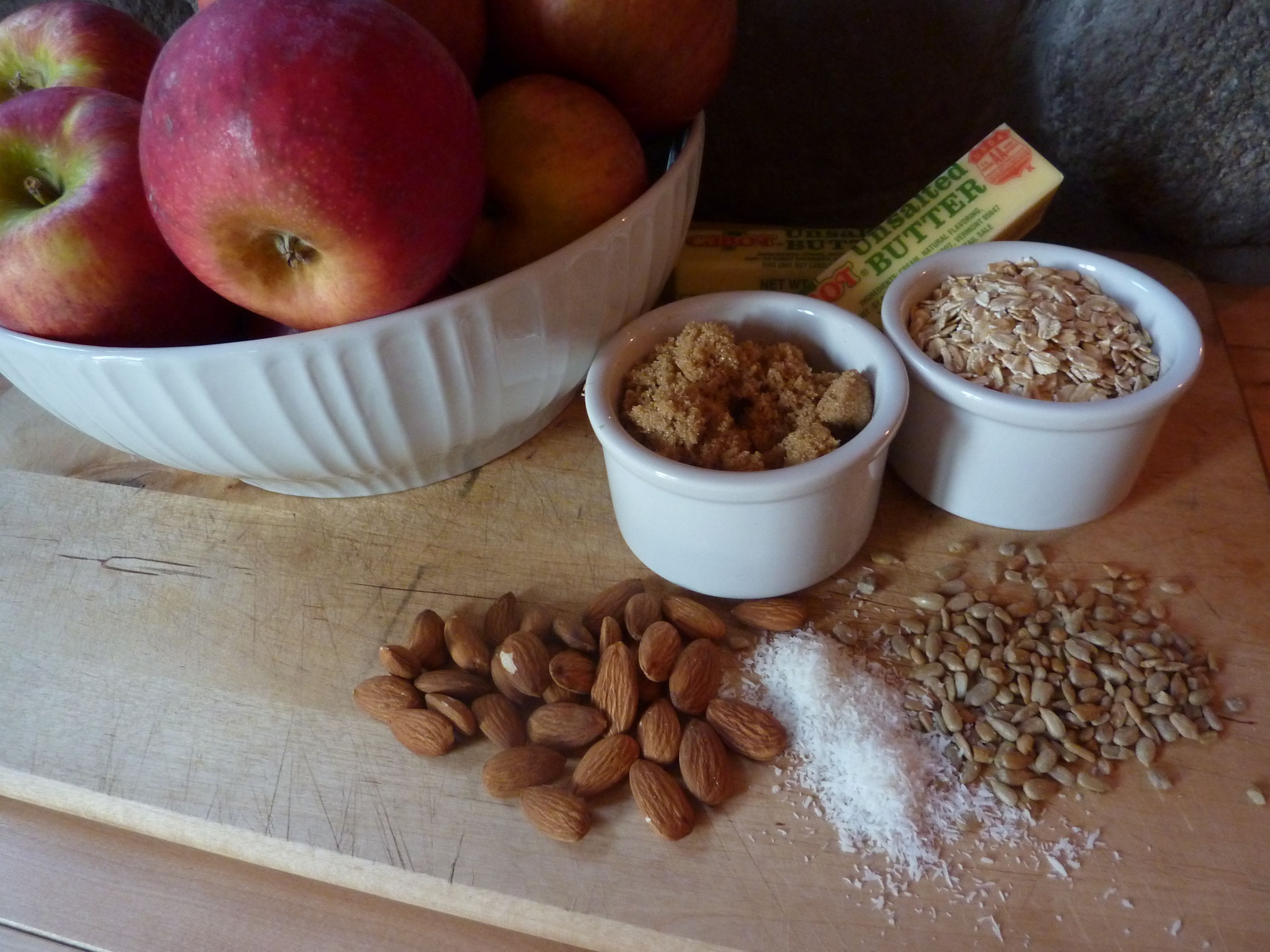
Ingredients - apples, nuts, coconut
Serves 24
3/4 cup almonds or other nut(s)
6-8 apples, peeled, cored and sliced
1/4 teaspoon cinnamon
2 tablespoons brown sugar
3/4 cups unbleached all-purpose flour
1/4 cup ground flaxseed
1/3 cup packed light brown sugar
1/3 cup unsweetened shredded coconut
1 teaspoon kosher salt
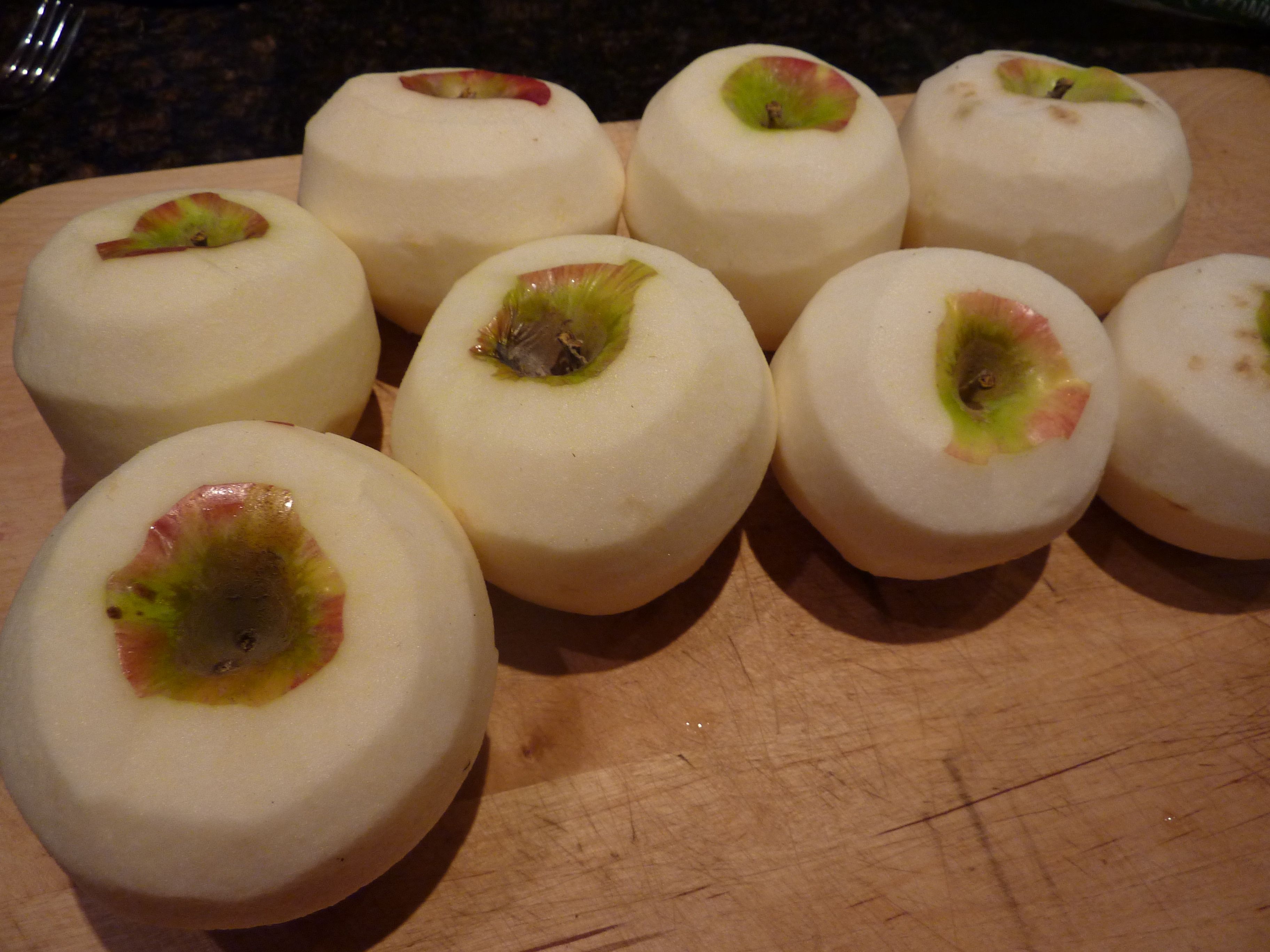
Peeled apples
1/4 teaspoon ground cinnamon
1/2 cup unsalted butter, softened, cut into 8 to 10 pieces
3 tablespoons honey
3/4 cup old fashioned rolled oats
3 tablespoons sunflowers seeds
Preheat the oven to 350°. Spread the nuts on a baking sheet and toast for about 10 minutes, or until lightly toasted and fragrant. Remove from oven, and let cool.
Place the apple slices in a 13×9 baking dish. They should fill the dish about 2/3 of the way to the top. Sprinkle with the 1/4 teaspoon cinnamon and the 2 tablespoons of brown sugar.
In a food processor, combine the toasted nuts, flour, flaxseed, brown sugar, coconut, salt, cinnamon and butter and pulse about 30 times, or until the mixture is evenly combined. You may need to take off the lid and move things around a bit with a spatula during the pulses, as you want to make sure everything is evenly distributed.
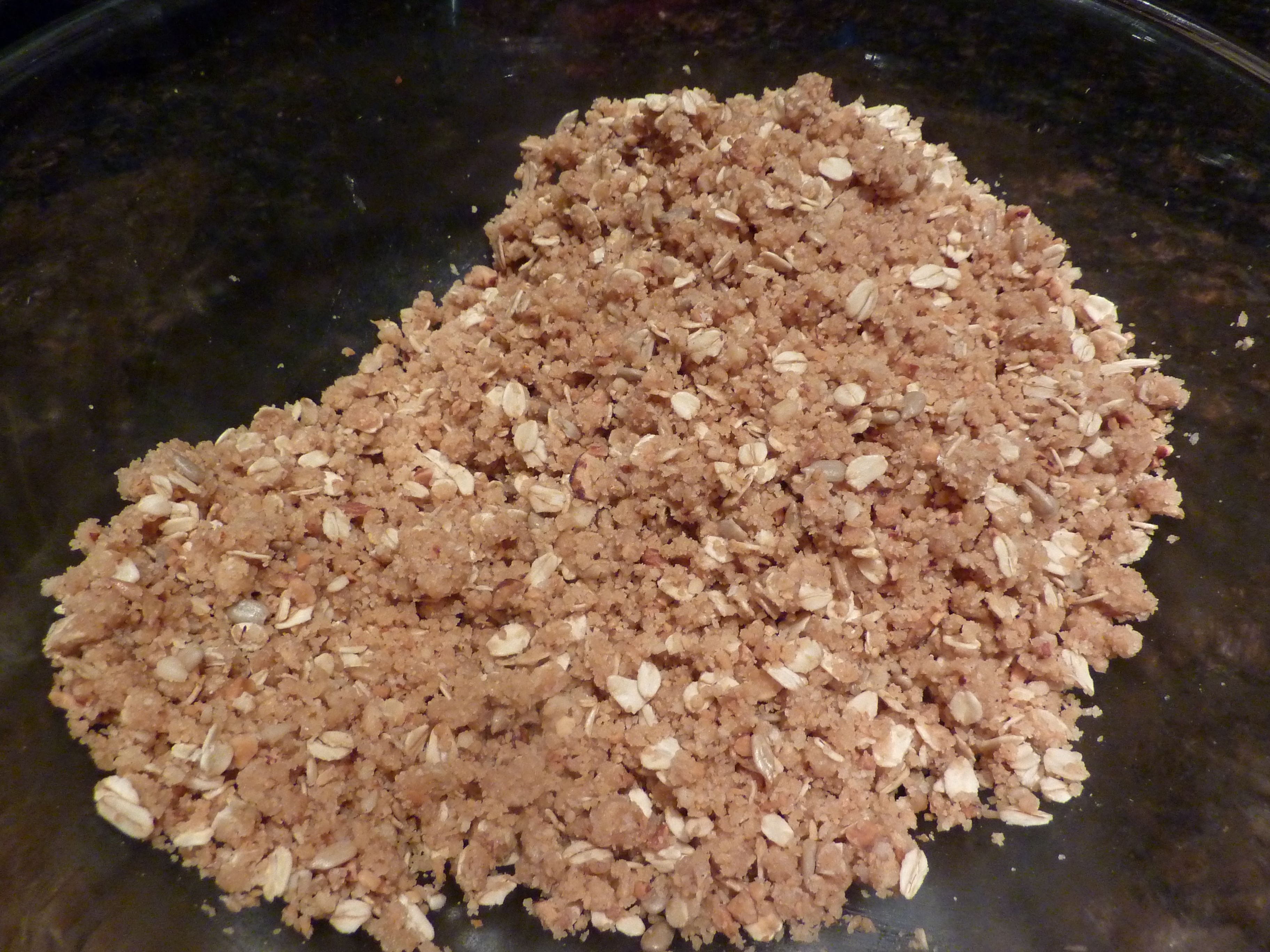
Granola topping
Dump the mixture into a large bowl and drizzle the honey on top. Work in the honey with your hands until the mixture comes together. Add the oats and sunflower seeds, and mix in with your hands until well combined.
Sprinkle the mixture like a crumb topping over the apples. Place the pan on a sheet pan (this will prevent any overflow apple juices from landing on the bottom of your oven.) Bake for about 40 minutes, until the top is golden brown and the apples are bubbling.
Let cool in the pan on a wire rack for 2 to 3 hours. Cut into 24 bars.
Apres Ski – Stretching
I have been reminded several times recently about the importance of incorporating flexibility and stretching into your regular fitness routine. A couple of women in my early morning workout group are feeling the need for more flexibility, with tight muscles after running. At the ski school this week, our weekly fitness message on Monday touched on the importance of hip flexibility as we rotate our skis under us while keeping our upper body facing down the hill. I see many of my ski students struggle with these movements that require the upper body and the legs to be moving in different directions. I promised to lead my early morning workout group through some stretches, and to be more vigilant about remembering to do them myself on a regular basis!
Here are a few of my favorite apres-ski streches.
PIgeon pose
Pigeon Pose
This is a classic yoga pose that really stretches the glutius and piriformus muscles.
Begin hands and knees. Slide one of your knees forward to the hand in front of it, moving the foot of the same leg toward the opposite hand. Place this leg on the ground; the knee, foot and outside of the shin should be in contact with the floor. Slowly slide the other leg back, straightening it so the knee rests on the ground and the upper thigh is facing (or touching) the ground. Your back leg should extend out straight behind you, and your hips should be even, not tilted to one side so that one rests on the floor
Pigeon from side
while the other is elevated. Your front foot can be well out in front of you, if you are quite flexible, or may be tucked just in front of your pelvis. You should feel a good stretch, but not be in pain! Hold for 30 seconds, then come out and repeat on the other side.
Pigeon on Your Back
Pigeon on back
This is a similar pose, one that may be more accessible. Lie on your back. Bring your right knee towards your chest. Grasp the knee with your right hand, and the right foot with the left hand. Pull the left foot forward towards your chest, rotating the right knee toward the right. Bend the left knee, placing the left foot on the floor. Then raise the left leg until the left thigh and bent knee touch the right foot. Hold here, applying just enough pressure with the left leg to feel a good stretch, or for more of a stretch reach the right hand between the legs and the left hand around the outside of the left leg and join hands around the shin of the left leg. Repeat on the other side.
This recipe is an adaptation of “Pot Roast of Beef Braised in Amarone Wine”, from The Essentials of Italian Cooking by Marcella Hazan. It is preceded in the book by a very similar recipe, “Pot Roast of Beef Braised in Red Wine”. The former is assigned to Veneto, as it uses Amarone wine from Verona. The latter is attributed to Piedmont, as it uses a Barolo. You can see the pattern here – same dish, just use whatever regional wine is at hand to make it a local favorite.
Here in the US, the only Amarone wines I come across are over $30 a bottle, a bit too much for me to use for a cooking wine unless it is a very special occasion. Still wanting to keep this a dish from the Veneto, I substituted a Ripasso della Valpolicella wine. Both Amarone and Valpolicella hail from the Verona region of the Veneto. For the Ripasso wines, the leftover grape skins and seeds from the Amarone fermentation process are added to Valpolicella, and the mixture is allowed to macerate for an extended period of time. The Ripasso della Valpolicella wines are fuller-bodied, with a higher alcohol content, making it an excellent substitute for the Amarone in this recipe.
Braising Basics
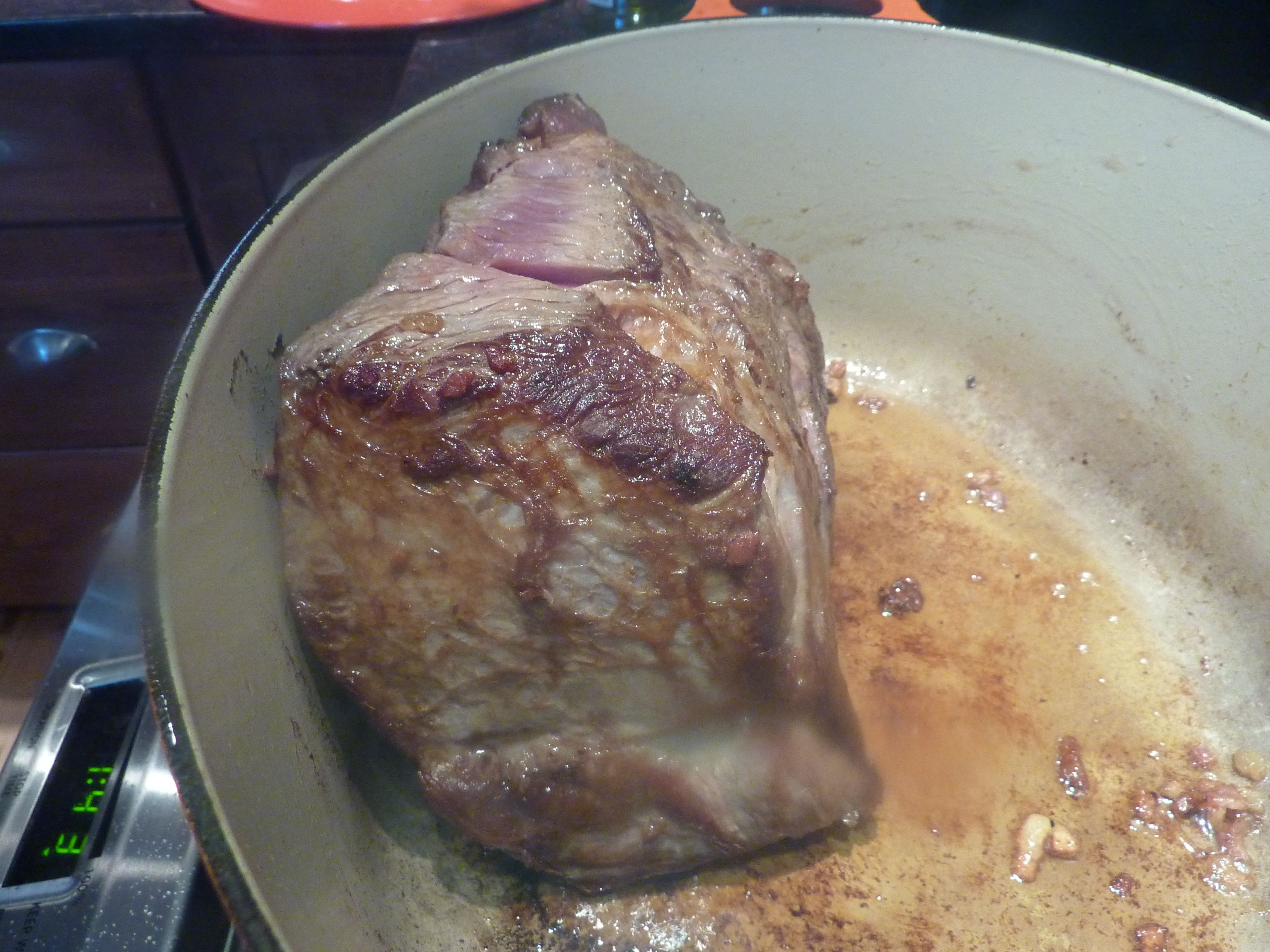
Searing beef
Braising is one of my favorite ways to cook meat. It is a fantastic way of transforming any inexpensive cut of meat into a delicious dinner. And the leftovers are even better!
Most every braise uses the same basic technique. The meat, anything from beef, pork, lamb, chicken, or turkey, is first browned in some sort of hot fat. Vegetables, most commonly a mirapoix or soffrito (onions, carrots and celery) are browned also. A liquid is added, enough to come about 1/2 to 2/3 up the side of the meat, not more. The pot is then covered, and the meat cooked over low heat in the slowly simmering liquid.
Braise is done when meat is fork tender
The cooking liquid and the juices released by the meat during the cooking process meld together. These more economical cuts of meat contain a relatively high amount of connective tissue. This slow cooking method releases the gelatins and collagens in this connective tissue, which adds body and enriches the cooking liquid. This is why you would not braise an expensive cut of meat, such as a tenderloin – the lack of connective tissue in these meats make them great on the grill, but poor choices for braising. A braise is done when the meat is falling apart. The cooking liquid is then reduced to make a wonderful sauce.
A braise can be prepared in advance. In fact, it is best prepared in advance! A night in the refrigerator only improves the flavors. You simply take the entire pot off the stove when the braise is done, and place the pot in the refrigerator. Just before serving, reheat on the stove. Remove the meat from the cooking liquid and set aside. Reduce the cooking liquid to a sauce of the desired thickness. Place the meat back in the sauce to reheat, and serve.
Braised Pot Roast in Ripasso della Valpolicella
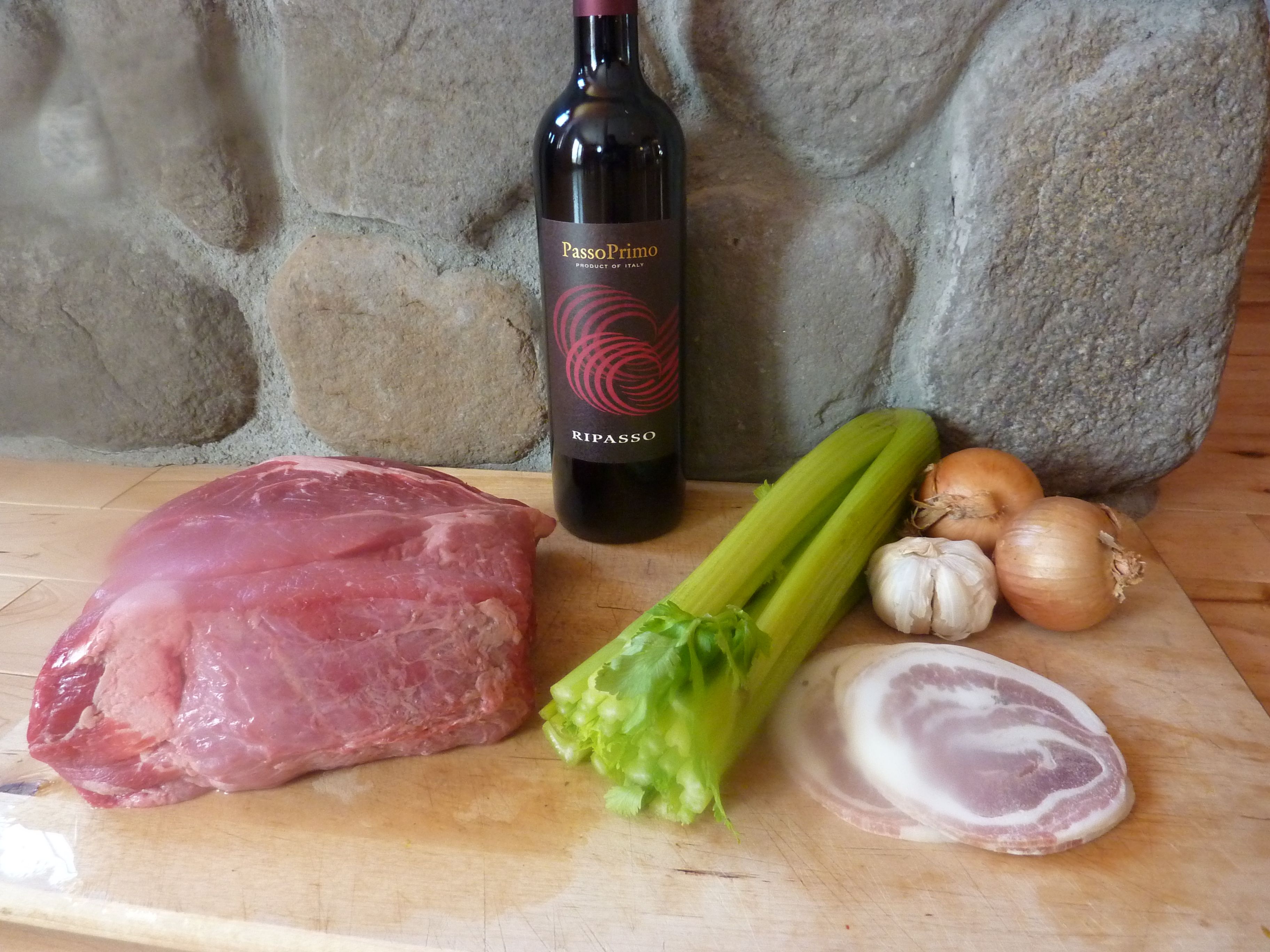
Ingredients
Serves 8
4 tablespoons extra virgin olive oil
4 pounds beef chuck
4 tablespoons extra virgin olive oil
Kosher salt and freshly ground black pepper
4 tablespoons pancetta, chopped
1 cup onion, chopped into 1/4 inch dice
1 cup celery, peeled and chopped into 1/4 inch dice
2 garlic cloves, minced
1 bottle Ripasso della Valpolicella
For any braise, use a heavy bottomed pot with a tight fitting lid, large enough to accommodate the meat.
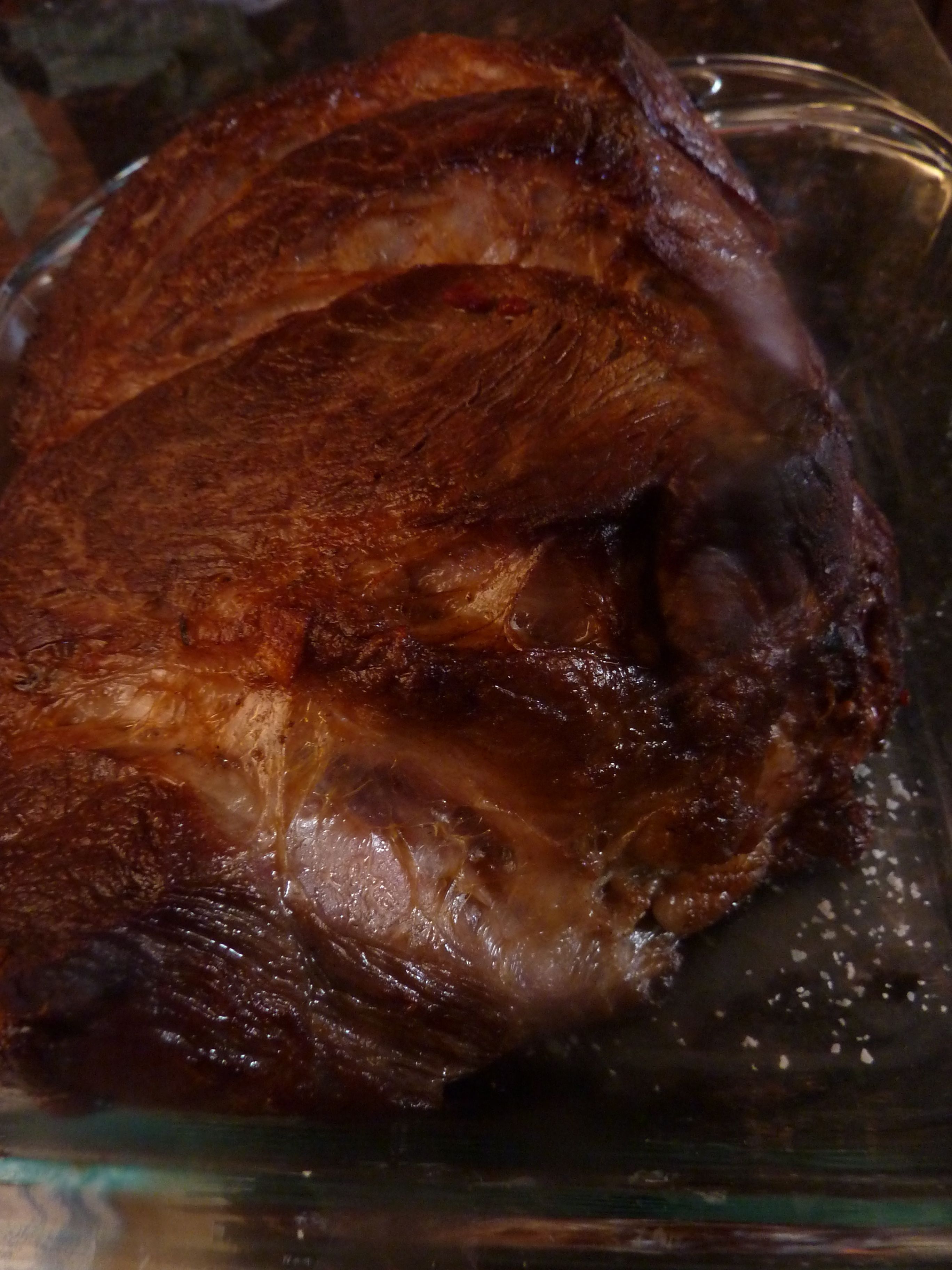
Nicely browned beef
Season the meat on all sides with the salt and pepper. Heat the pot over medium high heat. Add the olive oil. Sear the meat on all sides until nicely browned all over. I often prop the meat against the side to sear a side that the meat cannot balance on unsupported. I’ve even held the meat up, using a dishtowel, while the meat sears on one last side that I can’t seem to get onto the bottom of the pan any other way!
Remove the beef from the pan and set aside. Add the pancetta, onion and celery to the pan and cook until the vegetables are beginning to soften and the pancetta beginning to brown, about 4 minutes. Add the garlic, and cook until aromatic, about another minute.
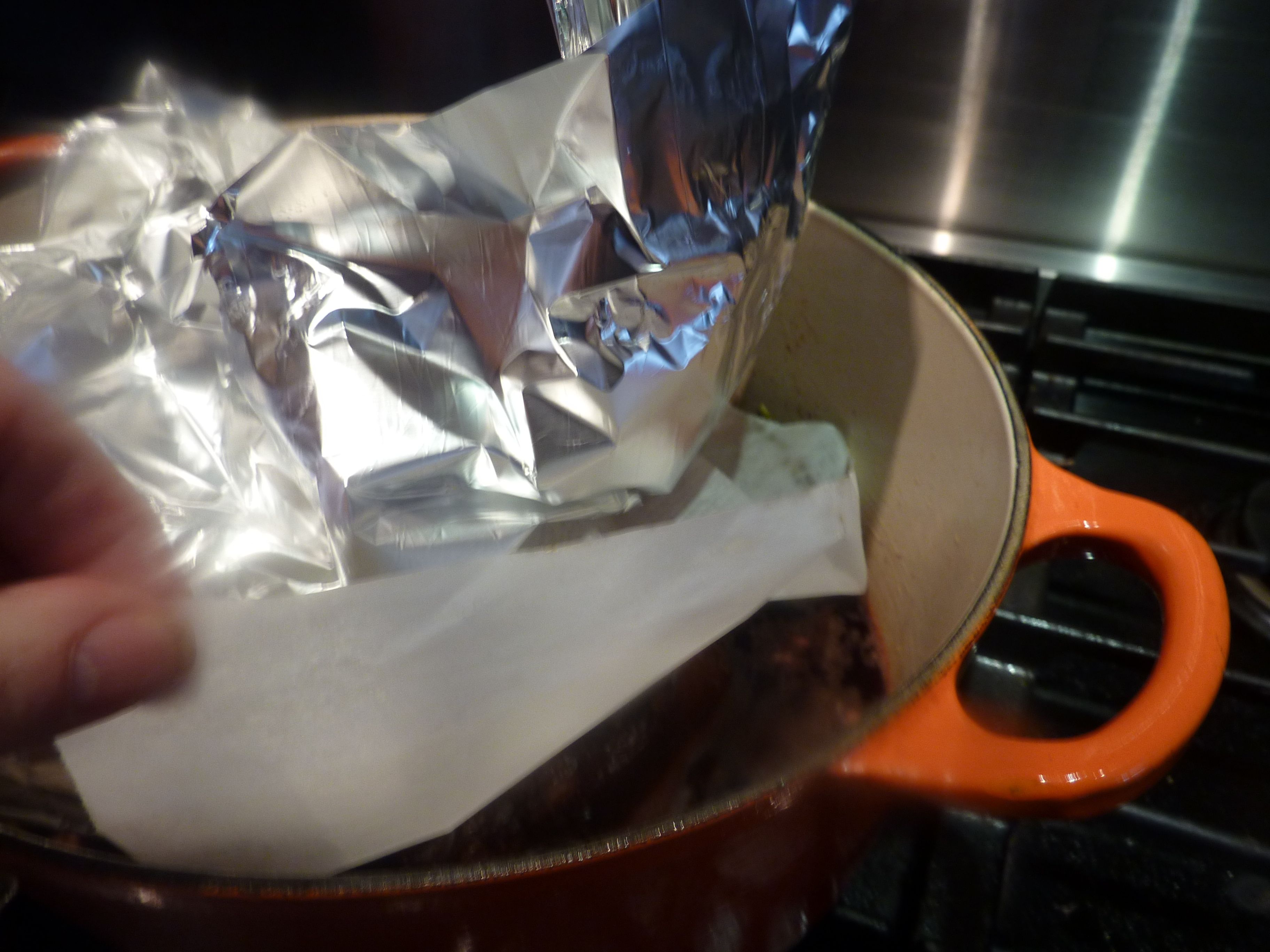
Inverted Lid
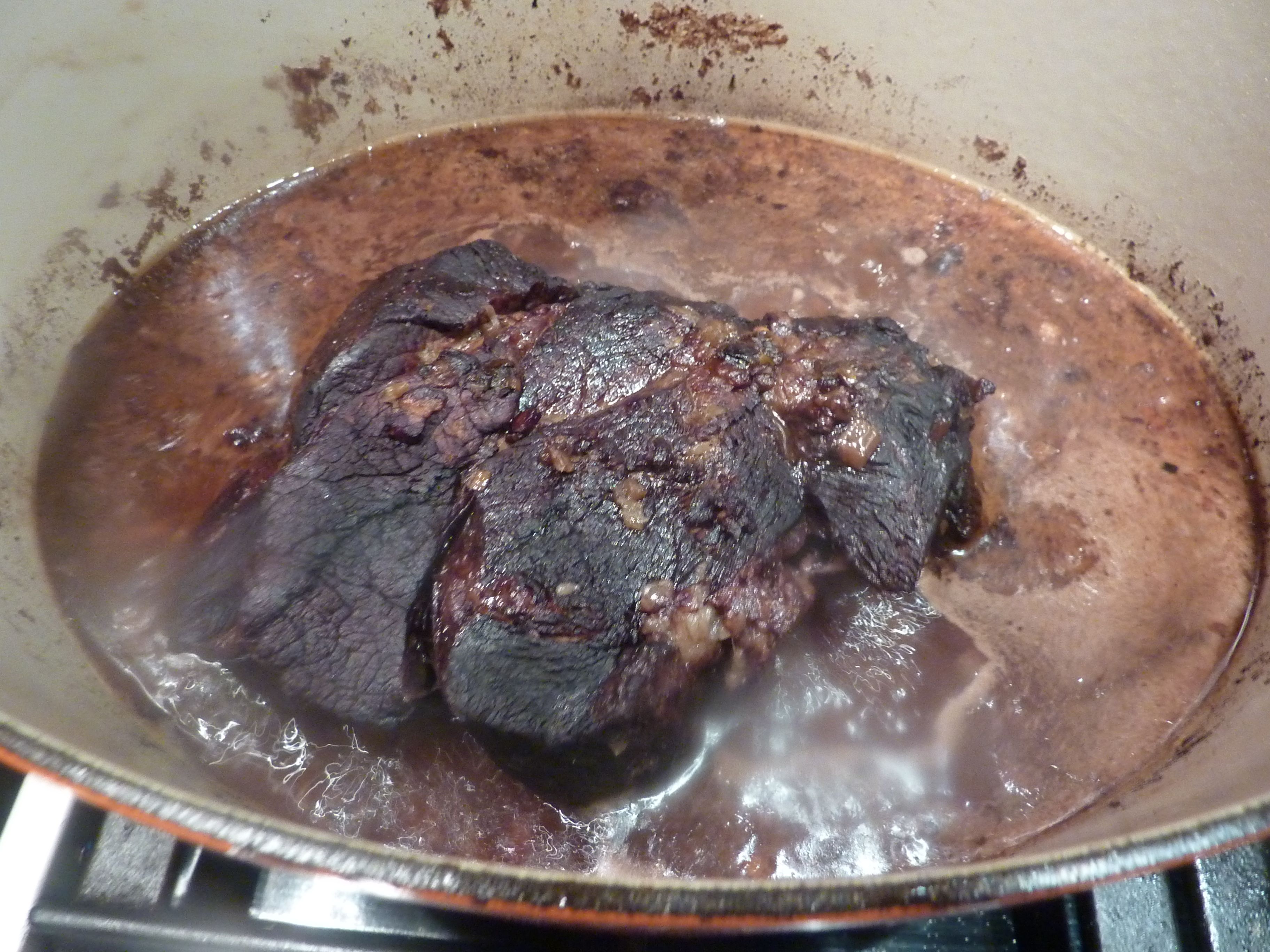
Place the beef back in the pan. Pour the bottle of wine over the beef. Cover the beef with a sheet of parchment paper, then a sheet of aluminum foil. This ‘inverted lid’ lies close to the meat, supposedly (according to culinary legend, and author of The Making of a Cook, Madeline Kamman) trapping the steam and insuring a tender final product. The layer of parchment paper is there to protect the foil from the acids in the wine that may react with the aluminum. Cover the pot with the lid. Bring the wine to a boil, then reduce the heat so the liquid is barely simmering.
Cook for 3 hours over very low heat, turning the meat from time to time. The meat is fully cooked when it is extremely tender, falling apart when pulled with a fork.
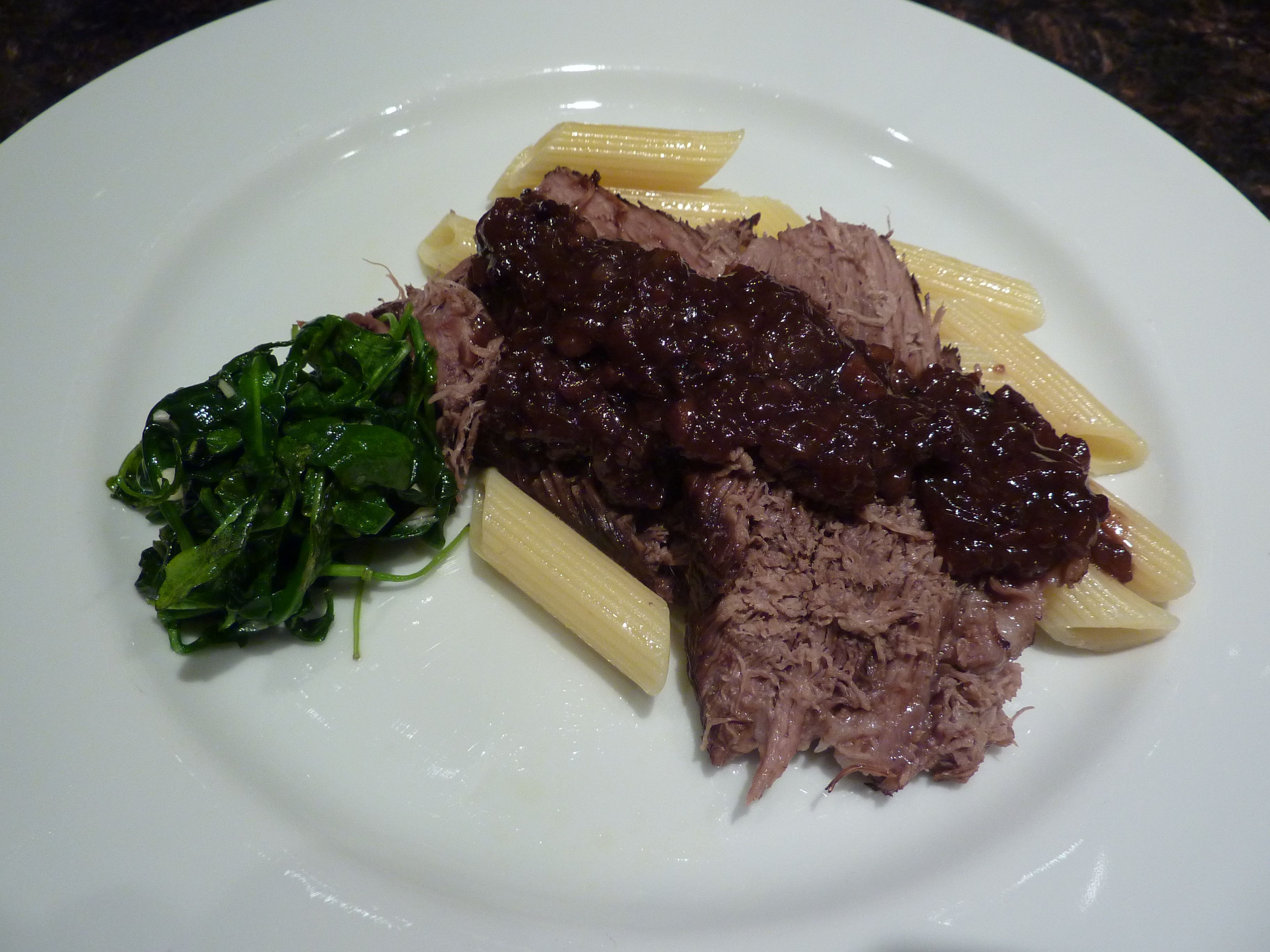
Remove the meat from the pan, and increase the heat to medium. Reduce the remaining cooking liquid until it becomes a nice sauce. Slice the meat into thin slices, and serve with the sauce.
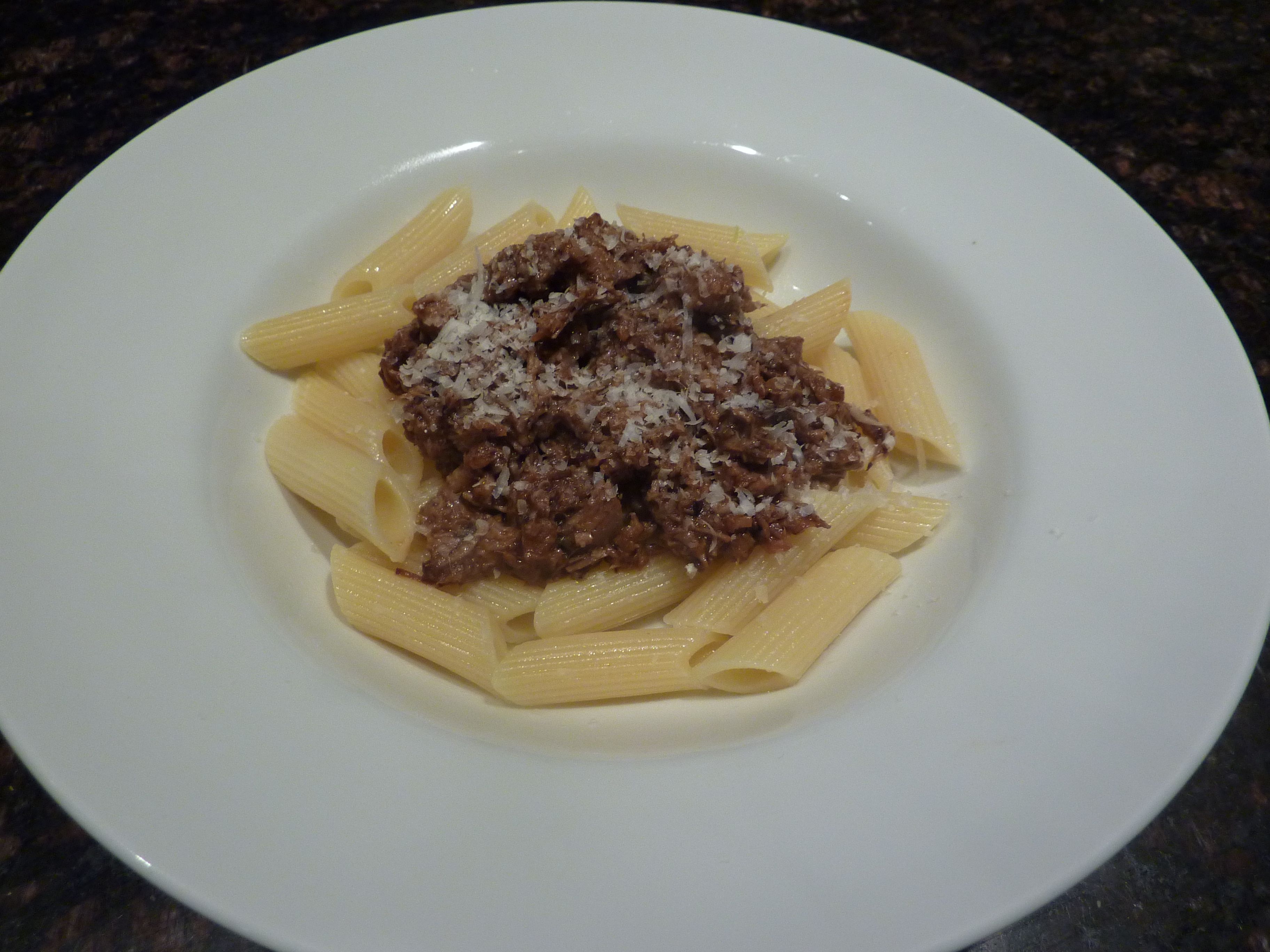
Braised Beef Ragu (Lunch the next day)
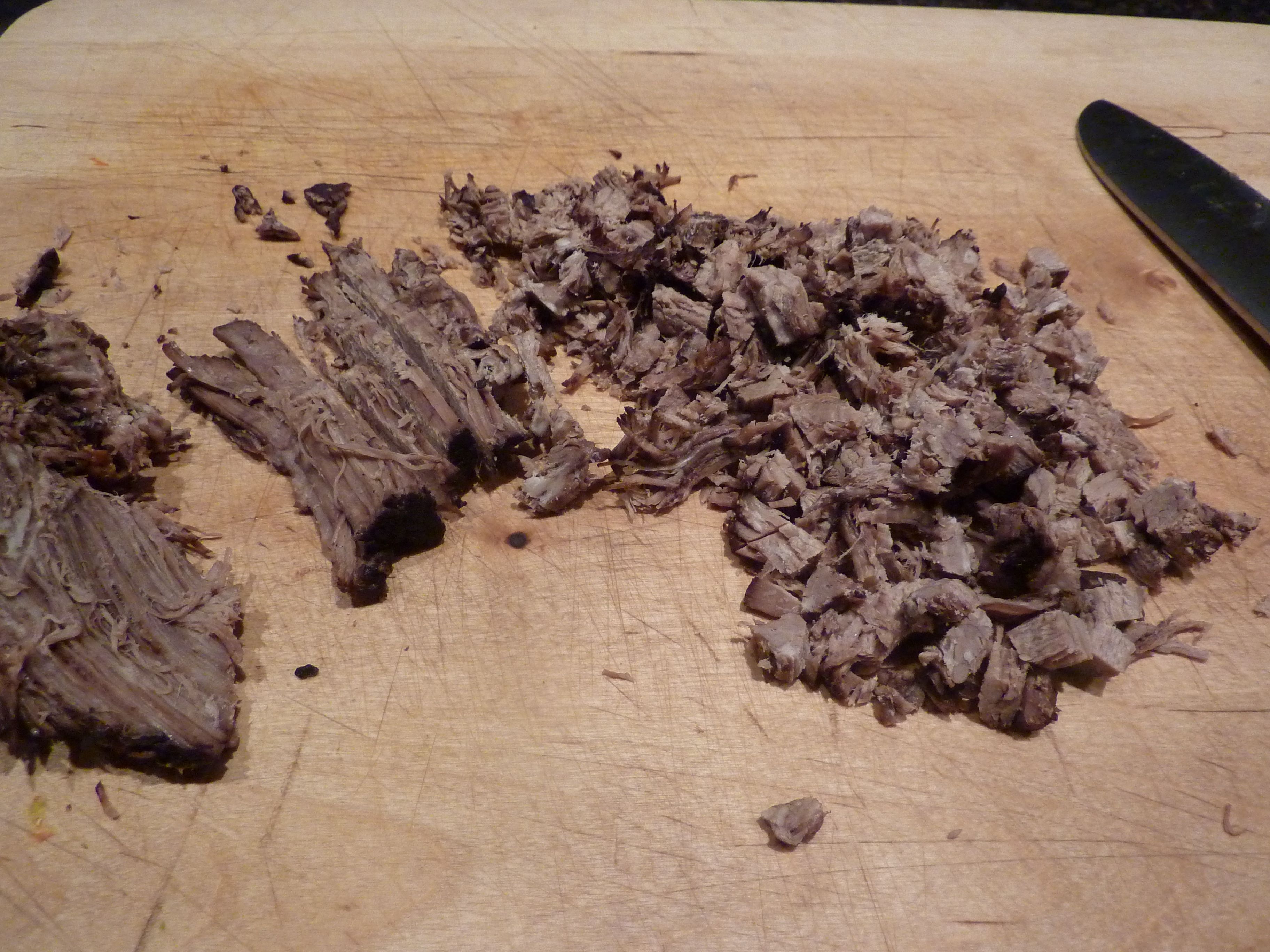
Finely chop leftover meat
Take the leftover meat, and chop it into small pieces. Place in a saucepan, and add the leftover braise sauce. Heat. Add water if needed to thin. Serve over pasta.
Our Benvenuti aperitif - prosecco! Welcome to Italy!
Prosecco is a wine hailing from the Veneto region in Northeastern Italy that is growing in popularity worldwide. A fresh, crisp, sparkling white wine that is the classic Italian aperitif, it is also used in the famous Bellini cocktail (prosecco mixed with a peach puree). I always serve a prosecco as an aperitif to begin a cooking class, as it goes perfectly with most any antipasti I may be serving. For many of my students, this is the first time they have been introduced to this wine and they are very pleasantly surprised, especially when we start comparing price tags to a classic French champagne.
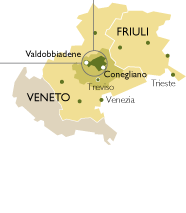
Prosecco has been produced for over 10 centuries in the foothills of the Marco Trevigiana in the province of Treviso, running from Valdobbiadene to Conegliano. This is the beautiful Colli di Conegliano Wine Zone, home to multiple DOC wines, and a region best explored by bike or foot. The origins of this wine date back even prior to the Roman colonization of the area in the 2nd century B.C.
Prosecco is reputed to be “Pucino”, a wine referred to in ancient Roman writings. It was believed to contribute to longevity. Prosecco’s renown peaked in the 15th to 17th centuries, when it was a very profitable and reliable export to Venice and the Germanic countries.
A severe frost in 1709 killed most of the prosecco vines. This forced the farmers to move to more rustic varietals, which were more robust but resulted in poorer quality wines. The demand for prosecco suffered accordingly. It took over 100 years for the farmers to recover and return to the higher quality vines. A second series of setbacks occurred around 1900. First several blights wreaked havoc on the area, including the grape louse phylloxera. Following this, the First World War devastated the region. But post-war, the farmers were committed to recover their vineyards, which brought a transformation of the vines and viniculture of the area and the restoration of quality in the resulting wines.
Prosecco is a sparkling wine, either spumante (full sparkle) or frizzante (light sparkle). Often confused with champagne, prosecco is produced using the Charmat method, also known as the Italian Method, as it was invented in Italy. In the production of both champagnes and proseccos, the wines undergo a first fermentation in large tanks in which the natural sugars are converted into CO2, which is allowed to escape. In the Traditional Method, used to produce champagne, the wine from the first fermentation is then placed into bottles, yeast and sugar are added, the bottle is capped, and a second fermentation occurs in the bottle, this time capturing the CO2 that is produced which creates the characteristic bubbles. After this fermentation, the bottles are then “riddled”, in which the sediment (lees) are slowly forced into the neck of the bottle by a process of turning and gradually tipping the bottle, top down. Special racks are built to hold the bottles during this process, which takes 6 to 8 weeks. The neck of the bottle is then flash frozen, the collected sediments are “disgorged”, and a cork in inserted.
In the Italian Method used to produce Proseccos (and Asti Spumate), the secondary fermentation occurs in a closed stainless steel tank over days, rather than in the bottle over months or years as in the Method Traditional. The wine is then bottled under continuous pressure. The bubbles in Prosecco are typically smaller and longer lasting than those found in champagne, due to this different production method. This less labor intensive and less time consuming process also makes the wine less expensive to produce. Prosecco is now growing rapidly in popularity outside of Italy, with double-digit annual growth in sales.
This dramatic growth in popularity has also brought to market many suppliers using the name “prosecco”, who are not located in the traditional hill-region that produces the best grapes, and do not adhere to the same quality standards. This dilution of the name ‘prosecco’ has become a bit of a problem, as these lesser quality wines hit the market bearing the same name but appearing no different from the higher quality original.
Official DOCG label
In an effort to combat this trend, a new quality designation was earned by the sparking wines from the original Valdobbiadene to Conegliano area – the Conegliano Valdobbiadene Prosecco Superiore DOCG (Denominazione di Origine Controllata e Garantita.) This is the highest quality designation for Italian wines. It is stricter than the DOC rating, with lower allowable yields, and a evaluation by a tasting committee before they can be bottled. This DOCG region is comprised of 15 communes, of around 20,000 hectares. The grapes are grown only on the sunny parts of these hills. Right now, only 5,000 hectares of vineyards are entered into the official DOCG register.
Proseccos from the surrounding areas in Veneto and Fruili are labeled Prosecco DOC. Proseccos from other regions in Italy are labeled with the IGT designation, indicating more of a table wine, and display a wide range of quality levels.
Prosecco DOCG (dark green) and DOC (medium green) Zones
The original Prosecco region centered around the steep hill of Cartizze. As in all wine varietals, the more challenging the terrain, the better the wines. Forcing the roots to dig deep for nutrients and water produces the best quality grapes for wine production. The Prosecco from the Cartizze area, a small area of 106 hectares in the steepest hills of San Pietro di Barbozza, Santo Stefano and Saccol, is considered to be the best, the “Grand Cru” of Prosecco. These grapes are the last to be harvested, as they are difficult to access. The high quality of the grapes, combined with the lower yields and difficulties with cultivating here all contribute to the higher cost of these wines.
This year, a second Cru was added to the DOCG; The Rive. “Rive” indicates vineyards that are on steep ground, in which the grapes are grown in the most challenging terroir of this region. The maximum yields are reduced to 13 tones per hectare, the grapes must be picked by hand, and the vintage must appear on the label. There are a total of 43 Rive in the Conegliano Valdobbiadene zone.
Prosecco is made from the prosecco grape, now sometimes referred to as Giera. The main varieties are Prosecco Bianci, Prosecco Tondo or Gentile, and Prosecco Lungo. 85% of the grapes in a DOCG prosecco must be of the Giera varietal. The remaining 15% is made from Verdiso, Perera and Biancheta, all local varieties that add structure to the wine. Pinot Grigio and Chardonnay may also be used. Proseccos are labeled according to the amount of sugar that remains after fermentation; the sweetest are “dry”, then “extra-dry”, with the driest versions labeled “brut”.
Brut: The most modern and internationally popular, with both citrusy and vegetal aromas, it pairs well
Prosecco to start our cooking class
with seafood pastas, risottos and antipasti.
Extra dry: The traditional version, with scents of apples and pears and a mellow, but crisp palate. Excellent with pasta with light or white meat sauces, poultry, creamy cheeses, and as an aperitif.
Dry: The least common version, with a floral fruitiness. Its’ relative sweetness pairs best with either spicy foods or pastries.
This version is a bit more informal, with rich fruit and floral notes and a fresh palate. It is a wonderful aperitif, and pairs well with simple risottos or pastas.
The least common version, it actually comes from the most densely planted vineyards with the lowest yields. The grapes are harvested only when extremely ripe. A delicate straw yellow, with aromas of apples, pears, honey and almonds. It is an excellent accompaniment to seafood and antipasti.
Superiore di Cartizze and The Rive
Cartizze: Available traditionally as a fully sparkling spumante, usually Dry, some producers have now introduced a Brut version. An intense wine, with fragrances of apples, pears, apricot, citrus and rose. A full palate, with fine bubbles. It pairs wonderfully with traditional local cakes, shortbreads and fruit desserts.
The Rive: Only available as a fully sparkling spumante. New to the market this year, it remains to be seen what wonderful flavors and aromas develop.
Prosecco has an intense, immediate fruity nose and flavor, due to its youth and the Italian Method of production. As it does not ferment in the bottle, it can degrade fairly quickly and should be drunk young. It is served chilled as an aperitif or an accompaniment to desserts. Prosecco is fairly low in alcohol content compared to other wines (11-12%), and has a wonderful fresh and light flavor.