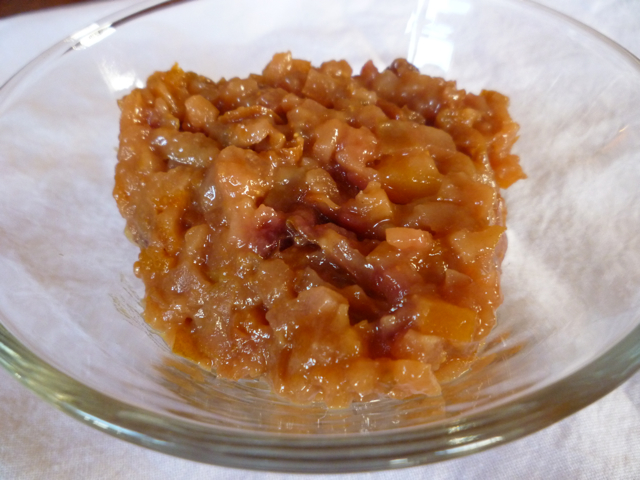
Our culinary adventures in Italy always inspire my cooking back home in the US. I recently have been playing around with some versions of mostarda, a sweet and sour relish, most commonly made from fruit, fresh, dried or candied – quince, pears, apples, even grape must, and mixed with wine and mustard. I had a delicious antipasti on my last cycling tour that included mostarda paired with goat cheese, but mostarda is customarily paired with boiled meats.
Cranberry Mostarda
An on-line food magazine I write for, The Daily Meal, was looking for recipes for Thanksgiving side dishes, specifically cranberry. What new version could I supply – of course, a cranberry mostarda!
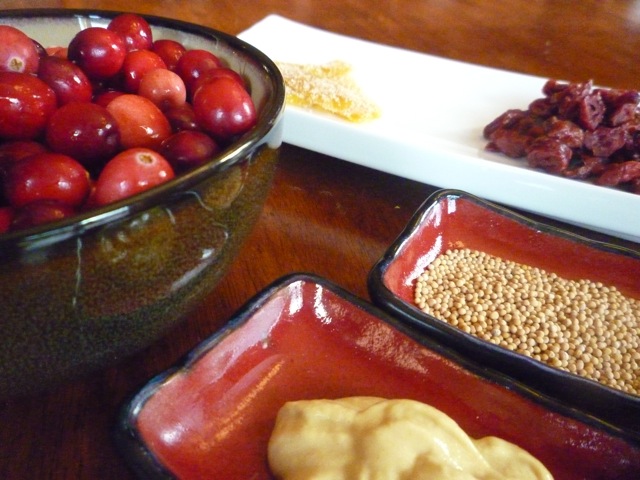
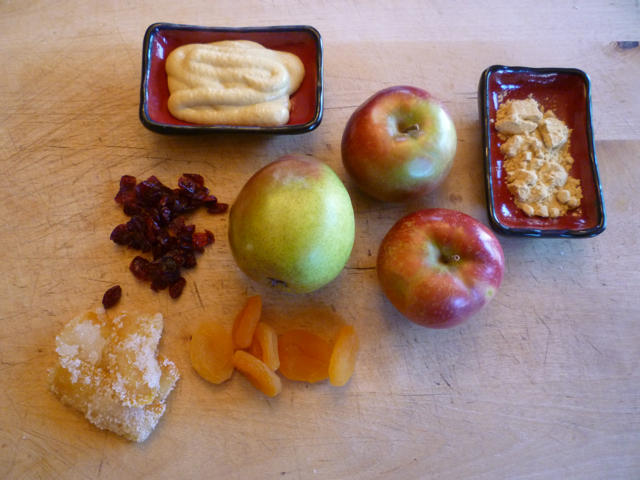
Ingredients for Mostarda
Mustard isn’t a common ingredient in your traditional cranberry sauces. But the combination works, and makes a great foil to the turkey. I recall a trip I made once with Chef Jody Adams, where she was invited to cook a traditional Thanksgiving dinner for a group of journalists in Paris. I got to tag along, and as the turkey arrived, complete with carefully matched side dishes of gravy, dressing, potatoes, cranberries and vegetables, each and every Parisian reached for the dijon mustard in the center of the table. Apparently no one in France eats turkey without mustard!
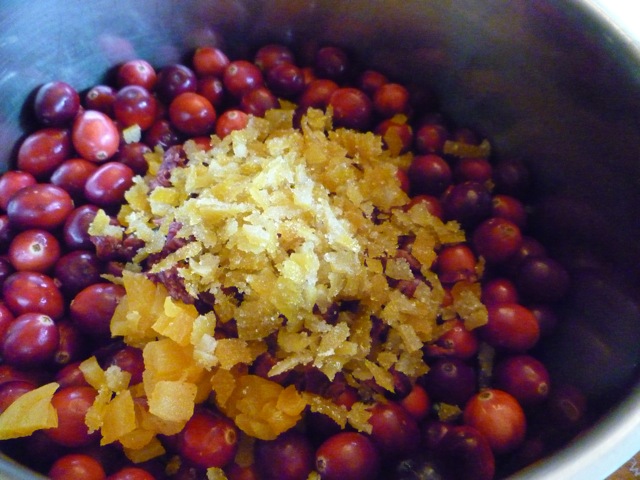
Ingredients in saucepan
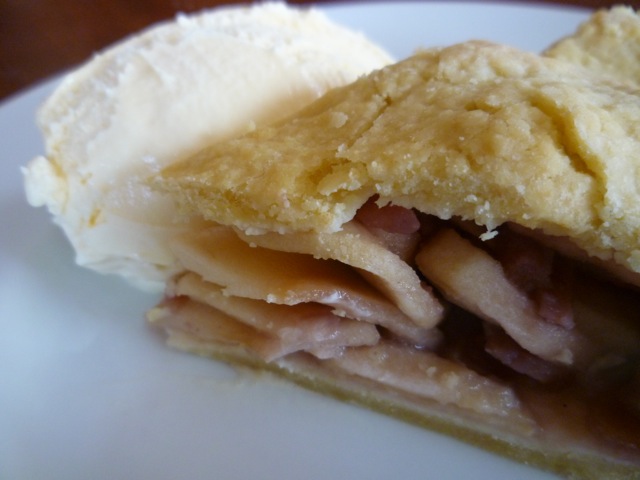
This will be on our table this Thanksgiving, as well as on our turkey sandwiches the next day instead of mayonnaise. And I’ve also added a couple of spoonfuls to an apple pie for a version of Torte di Mele e Mostarda, a traditional Veneto dessert recipe.
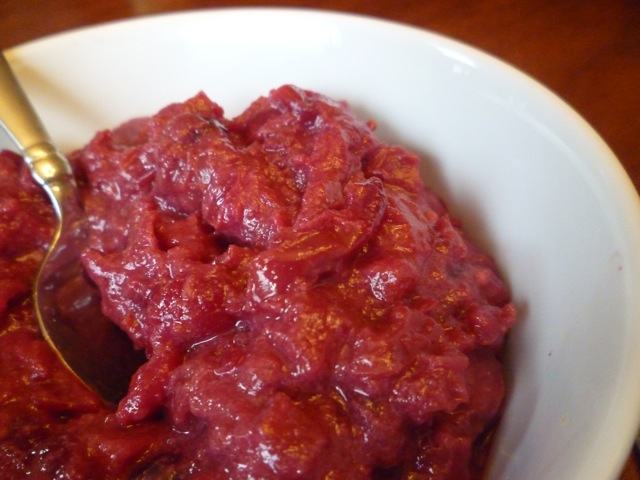
Cranberry Mostarda
Makes approximately 2 cups
12 ounces fresh cranberries
1/4 cup dried apricots, cut into 1/4” pieces
1/4 cup craisins, chopped
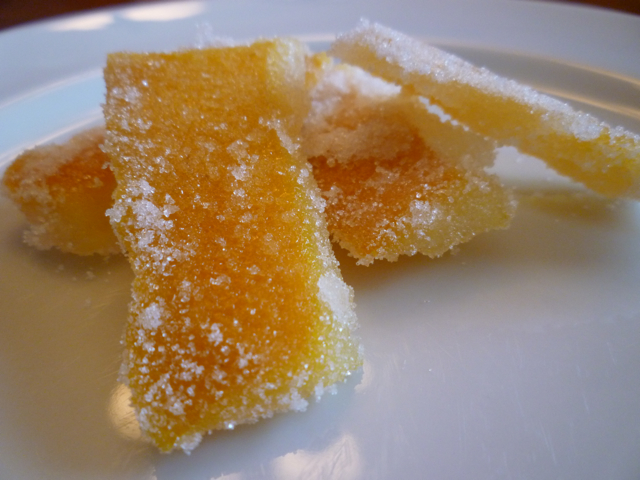
1/4 cup candied orange peel, chopped
1/4 cup candied lemon peel, chopped
1/2 cup dijon mustard
1 1/2 cups red wine
1/4 cup honey
1 1/2 teaspoon mustard powder or 1/2 teaspoon mustard seeds
Place all ingredients in a large saucepan and stir to combine. Bring to a boil over medium-high heat. Reduce to a simmer, and cook over low heat until softened and thick, about 20 minutes. Allow to cool.
Advance prep: This is better after sitting for a day or so to let the flavors blend, so make a day or two ahead!
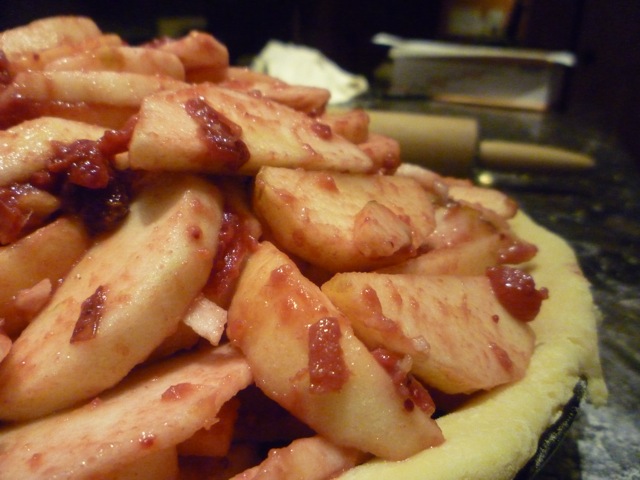
Pie filling with mostarda
Torta di Mele e Mostarda
Pie Crust:
2 1/2 cups all-purpose flour, plus additional for dusting
1/4 cup granulated sugar
1/2 teaspoon salt
1 cup unsalted butter, very cold and cut into pieces
1 large egg, beaten
4-6 tablespoons cold water
Pie:
6-8 apples, peeled, cored, and sliced
1/4 cup cranberry mostarda
For crust:
Place the flour, sugar and salt in the bowl of a food processor. Pulse several times to combine.
Add the butter pieces, and pulse just until the mixture is a coarse meal, with small pea size pieces of butter.
Add the egg, and pulse to combine.
Add the cold water, 1 tablespoon at a time, pulsing to combine. After each addition, pinch the crumbly mixture. When it holds together, it is done. If it doesn’t, add more water.
Remove the dough from the food processor, and place on the counter. Using the heel of your hand, smear the dough mixture across the counter, to flatten the butter into layers. Do this a few times, then shape the dough mixture into two discs. Wrap in plastic wrap and refrigerate for at least an hour.
Preheat oven to 350°.
Remove one disk from the refrigerator, and allow it to sit at room temperature for 5-10 minutes in order to soften. Roll out with a rolling pin on a lightly floured surface to a 12-inch circle. As you roll out the dough, keep checking to make sure the dough is not sticking to the counter. If it is, sprinkle underneath with flour. Carefully place onto a 9-inch pie plate. Gently press the pie dough down so that it lines the bottom and sides of the pie plate. Trim the dough to within 1/2 inch of the edge of the pie dish.
Place the apples in a large bowl. Add the mostarda, and gently combine.
Roll out second disk of dough, just as you did the first one. Gently place onto the top of the filling in the pie. Pinch together the top and bottom of dough rounds. Trim, leaving a 3/4 inch overhang. Fold the edge of the top over and under the edge of the bottom crust, pressing together. Flute edges using thumb and forefinger or press with a fork.
Using a knife, cut several 2-inch long slits in the top crust, so that steam from the cooking pie can escape. Place the pie pan on a sheet pan (this protects your oven from any overflow) and bake for 45 minutes, until golden brown and bubbly.
Lago di Garda, the largest lake in Italy, is located in Northeastern Italy between Milan and Venice. Three regions border this lake which we visit on our Italiaoutdoors Food and Wine bike tours – the Veneto on the west, Trentino on the north, and Lombardia on the east and south. I enjoyed some wonderful lakeside cuisine during a recent stop on the southern side of the lake, in Sirmione.
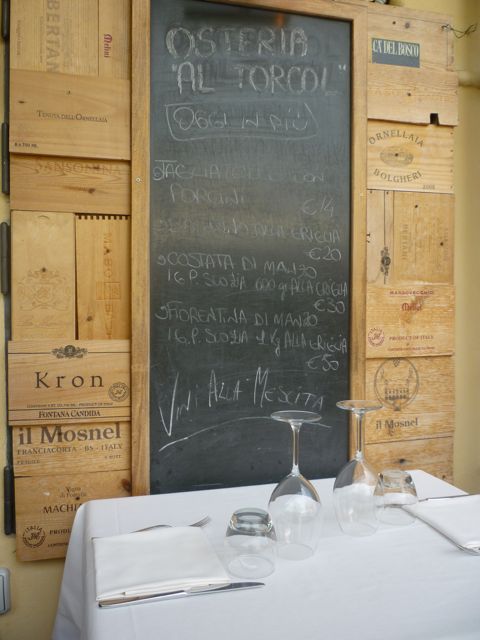
Chalkboard menu at Al Torcol
Sirmione sits on a peninsula that runs north-south, protruding into Lago di Garda from it’s southern shore. You can learn more about Sirmione in this previous post. The lake itself was formed at the end of the last ice age, as a glacier descended, and then receded from this region. It is quite deep, up to 346 meters, and home to a wide variety of fresh water fish. Agone, or lake shad, is the main source of income for local fisherman, and served fried if small, or grilled when larger. Carpione, large lake carp, similar to salmon, is found at the center of the lake. You will also find luccio (pike), coregone or lavarello (white fish), tinca (tench), black bass, and several varieties of trota (trout).
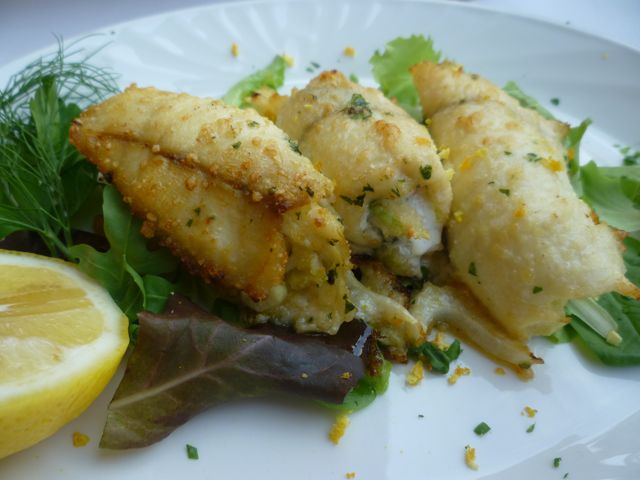
Pesce al Garda Agli Agrumi at Al Torcol
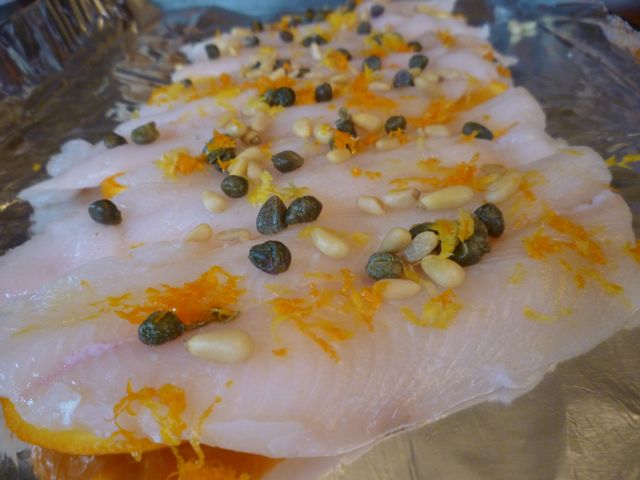
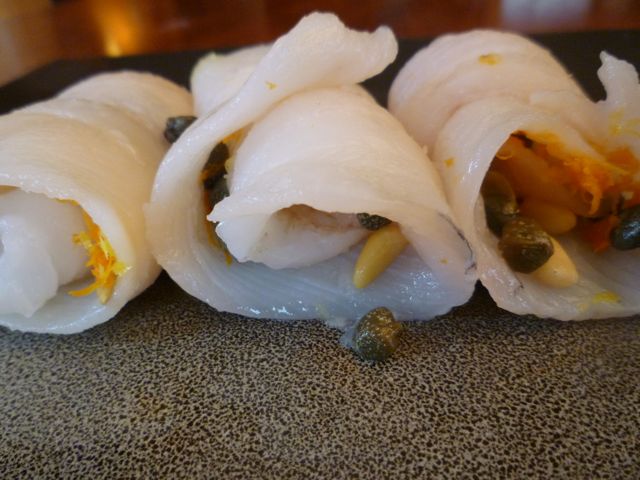
I enjoyed this particular fish dish, “agli agrumi”, with citrus, twice during my visit. For lunch at Osteria Al Torcol, the fish was not identified (Pesce al Garda) but was a simple white fish rolled into involtini, and stuffed with citrus peel, capers, pine nuts, celery and herbs. At dinner at Osteria del Vecchio Fossato, I had lavarello, also known as coregone , or white fish, again seasoned with capers, citrus, pine nuts and herbs. Both were just the type of dish I like to cook at home, simple, quick, delicious, and healthy.
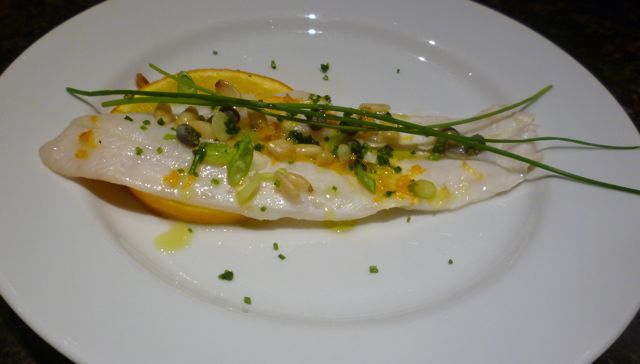
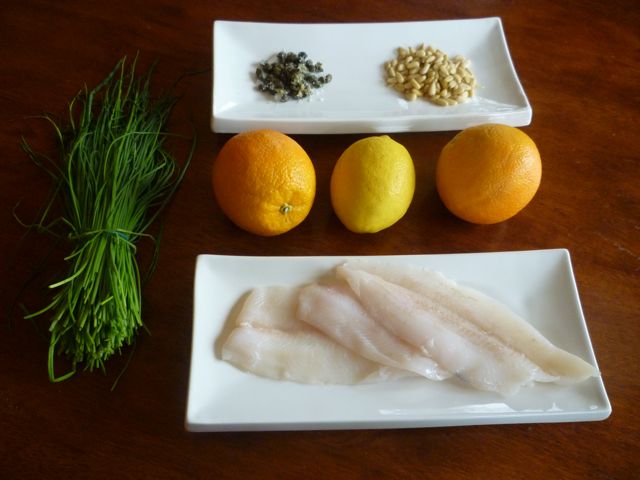
Ingredients – orange, lemon, pine nuts, capers, chives, grey sole
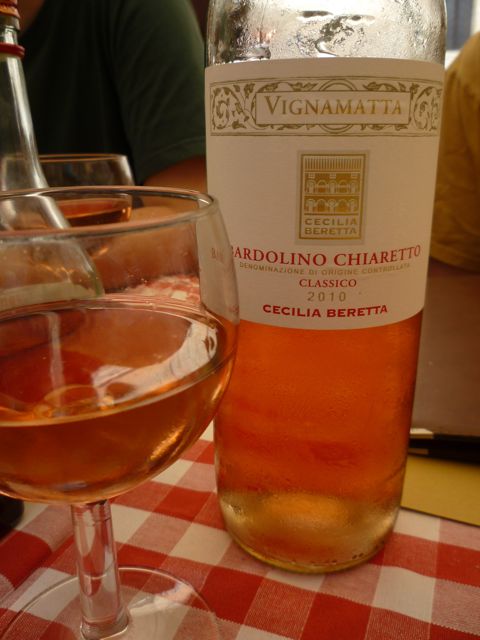
I’ve tried this recipe now a couple of times since my return. I’ve used whole trout, haddock, and here in the photos, grey sole. You can serve rolled up into involtini, or as flat fillets. You can take a few minutes to reduce the pan juices into a sauce, as described in the recipe, or you can skip this and simply spoon the juices straight from the baking pan onto the fish and serve. I used chives here, but use whatever great fresh herbs you can find. Add celery, fennel, scallions, or whatever else strikes your fancy. Serve with a nice white Trebbiano di Lugana wine from the Lugana lake region DOC, like the Ottella Le Creete, or a crisp rose Chiaretto from the Bardolino DOC.
Chiaretto from Bardolino DOC
Lavarello Agli Agrumi – Whitefish with Citrus
Serves 4
1 1/2 lbs. white fish – sole, cod, trout, branzino
1 orange, thinly sliced
1 lemon, thinly sliced
Kosher salt
Rosemary sprigs
1 tablespoon capers, rinsed and coarsely chopped
Juice of two oranges
Juice of two lemons
1/2 cup white wine
2 tablespoons extra virgin olive oil
2 tablespoons toasted pine nuts
Zest from one orange
Preheat the oven to 325°.
Place half of the slices of orange and lemon in a baking dish. Arrange the fish on top of the slices of citrus. Season with salt, and top with the rosemary sprigs and capers.
Sprinkle with the orange and lemon juice, and the olive oil. Bake for about 15-20 minutes, depending upon the size of the fish.
After the first 5 minutes, open the oven and pour the white wine over the fish.
When the fish is done, remove from the oven and pour the sauce into a small sauce pan. Keep the fish warm in the baking dish by covering with foil. Bring the sauce to a boil and whisk, allowing it to thicken a bit. Add the pine nuts, orange zest, and adjust seasoning.
Serve the fish on a warm plate, topping with the sauce and garnishing with remaining citrus slices, chopped chives, and a drizzle of great olive oil.
Ferrara? Said my girl friends when I had suggested it. We were looking for a place to meet up in Italy after one of our Italiaoutdoors Food and Wine bike tours in the Veneto. They’d never heard of Ferrara. As I am constantly discovering, there is so much more in Italy than the main tourist spots of Tuscany, Rome, and Florence. Wonderful cities and town where you can explore without the crowds of tourists, eat well, and enjoy amazing new wines you’ve never seen on shelves in the US.
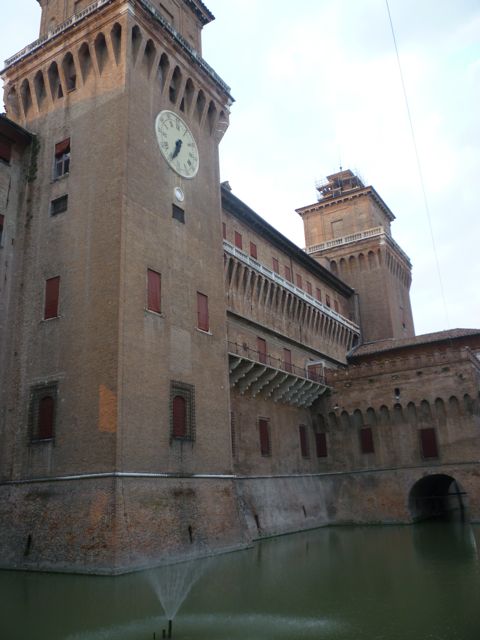
Castello Estense, Ferrara
Ferrara is the capital of the province of Ferrara, in the region of Emilia-Romagna, about 50 km northeast of Bologna. The center of town is dominated by the Castello Estense, a brick castle complete with moat, and home to the rulers of Ferrara, the Este family. The Este family ruled Ferrara for close to 400 hundred years, and during their reign Ferrara became a center for art and culture, and was one of the first examples of Renaissance city planning earning today it’s status as a UNESCO World Heritage site. The notorious Lucretia Borgia was married to the Duke of Ferrara, Alfonso I, and spent most of her life here in Ferrara, and is buried here as well.
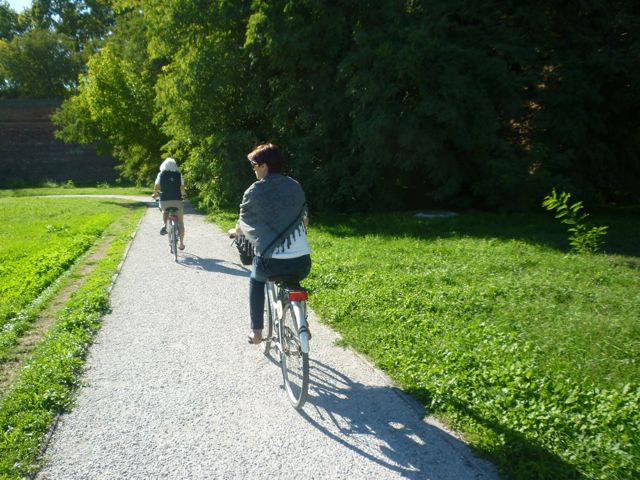
Biking along walls of Ferrara
Ferrara is surrounded by some of the best preserved ancient city walls in Italy, dating from the 15th and 16th century. Today, 9 km of cycling and walking paths follow these walls, where you will often find the residents of this “Citta delle Biciclette” enjoying the outdoors along these quiet tree-lined paths.
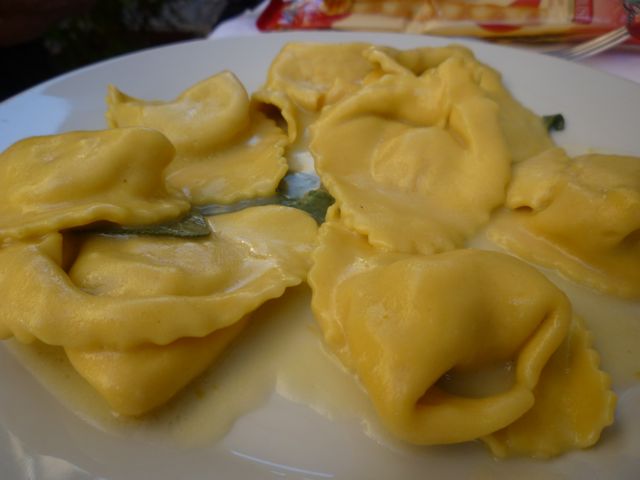
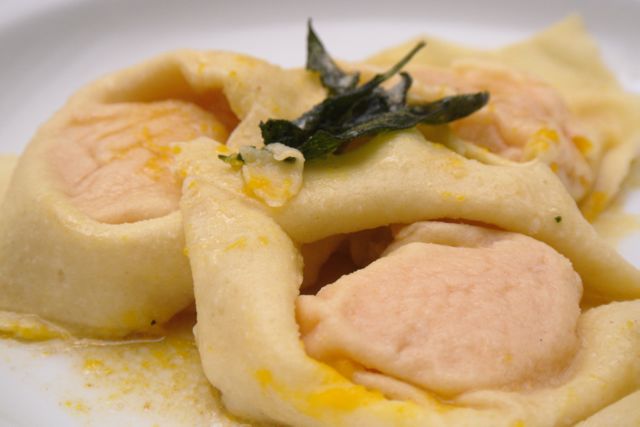
Cappellacci in Ferrara osteria
After a nice late afternoon bike ride, we headed out for dinner to discover some of the favorite local dishes. The undisputed ‘signature’ first pasta course in Ferrara is cappellacci di zucca, a stuffed pasta with a filling of winter squash or pumpkin, Parmigiano-Reggiano and nutmeg. It is served two ways, either with a butter and sage sauce, or, interestingly enough, a meat ragu. Cappellacci di Zucca Ferraresi are mentioned in recipe books from the Renaissance, when these were prepared for the Este family.
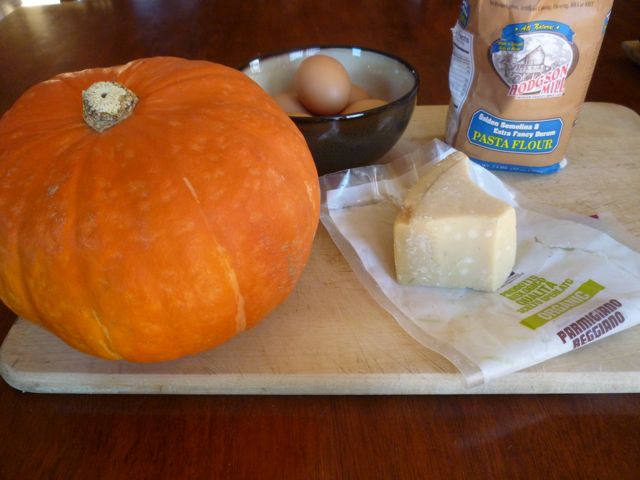
Ingredients for cappellacci
The name cappellacci – known as caplaz in the local dialect – comes from the pasta’s resemblance to the straw hats worn by local peasants. The pumpkin usually used is a favorite local variety, a violin shaped winter squash. In the Renaissance, the cooked squash would be flavored with ginger or pepper, as well as nutmeg, but today these aren’t as popular. This dish is currently awaiting IGP certification (Identificazione Geografica Protetta).
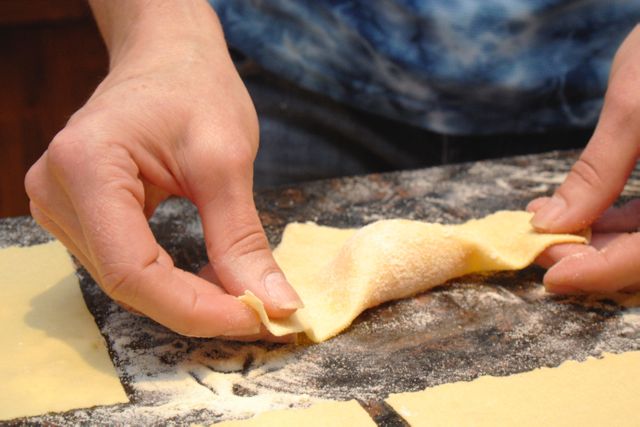
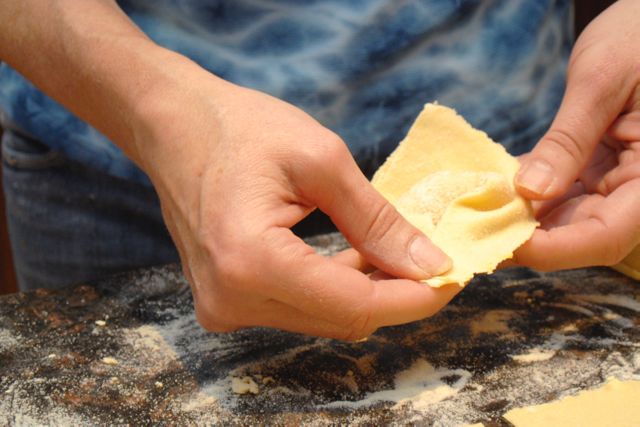
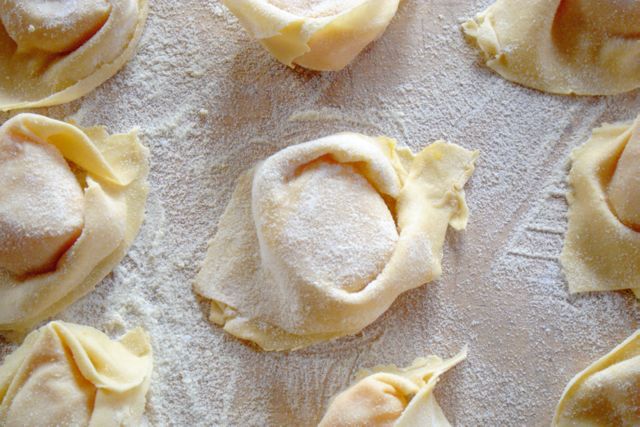
The recipe follows after lots of photos – I’ve included a series to show how you shape the cappellacci. But persevere past them all, and you will be rewarded with the recipe!
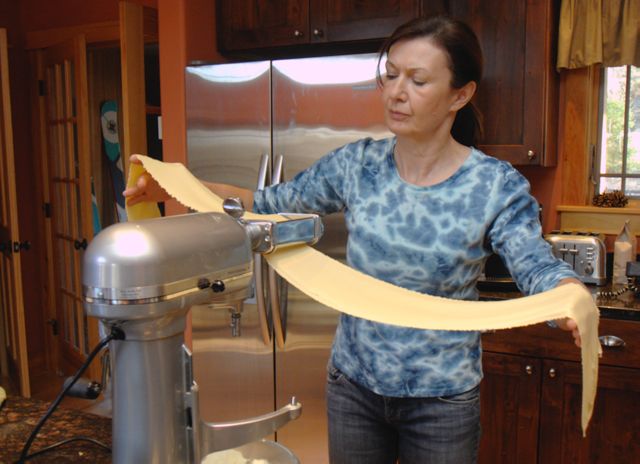
Me rolling pasta dough for cappellacci
When we were home, my girlfriends and I relived our Italy vacation one evening, with a cooking class. I recreated several of our favorite dishes, and this was high on all of our lists. We had a fun night making our out cappellacci, it’s a great recipe to make with a group – the exaggerated size of these stuffed pastas make producing enough for a first course quick work!
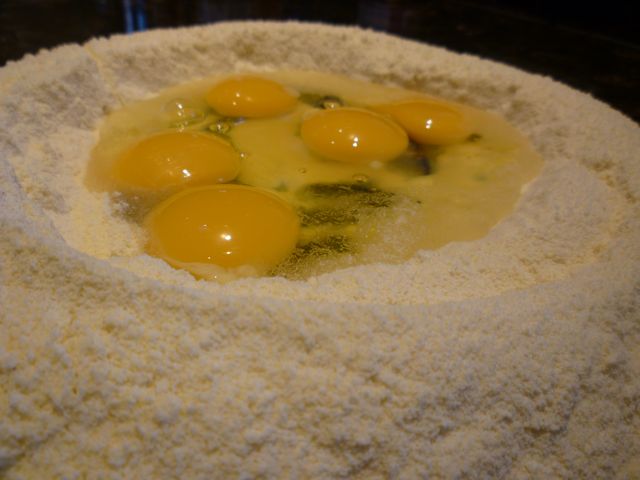
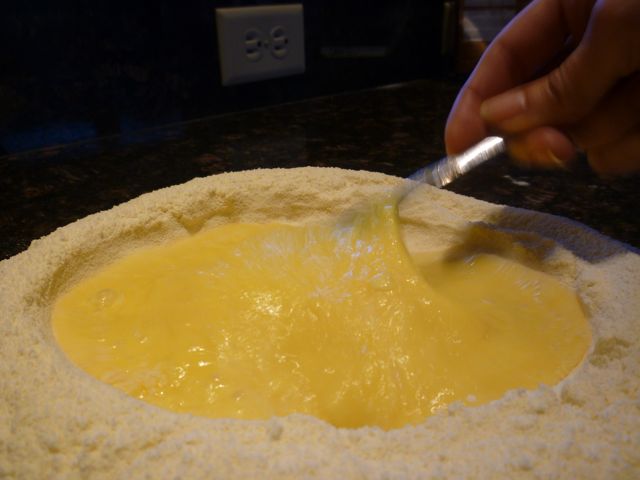
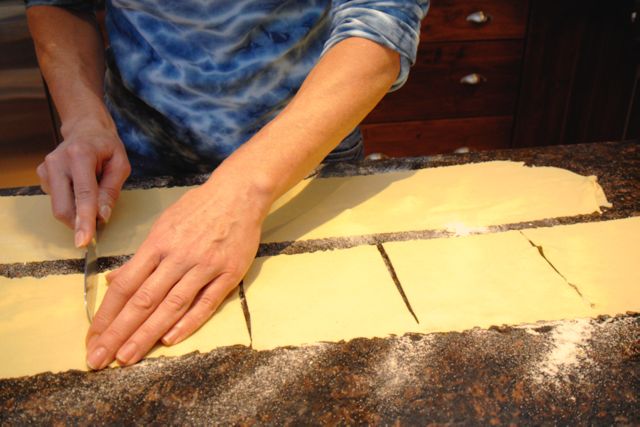
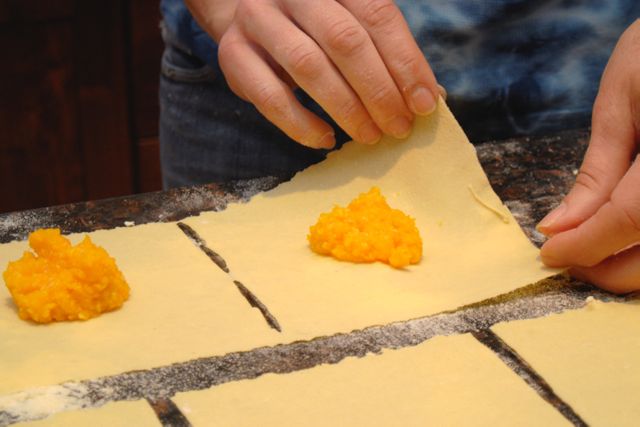
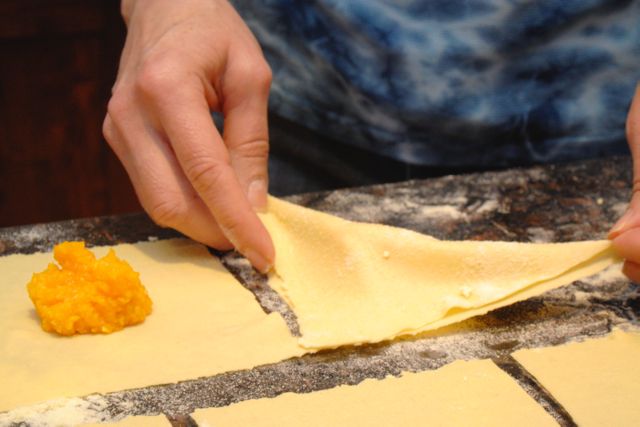
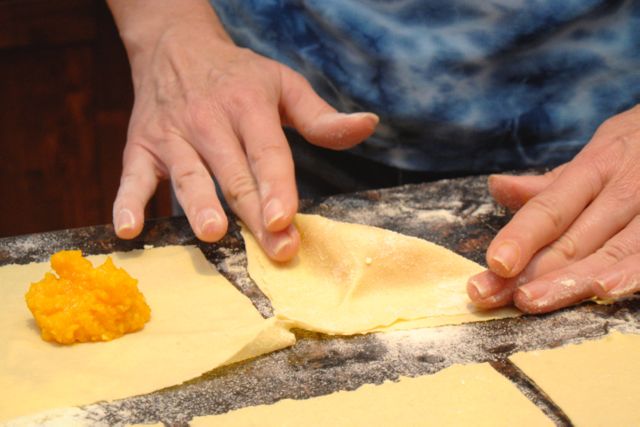
Eggs in flourMixing together eggs and flourCutting pasta squaresStuffing in place, beginning to shapeFolding pastaPressing out air around stuffingForming cappellacciPinching ends
My version of our Ferrara favorite
Cappellacci di Zucca Ferraresi
Adapted from Lynn Rosetta Kasper’s book, A Splendid Table
Makes 30 pieces – serves 6 as a first course
Pasta:
5 eggs
3 1/2 cups all purpose or pasta flour (14 ounces), plus more for dusting
FIlling:
1 tablespoon vegetable oil
2 1/4 lbs. butternut or other flavorful winter squash or pumpkin
1 cup (4 ounces) freshly grated parmigiano-reggiano cheese
Freshly grated nutmeg
Kosher salt and freshly ground black pepper
Sauce
5 to 7 tablespoons unsalted butter
1 bunch fresh sage leaves
2/3 to 1 cup freshly grated Parmigiano-Reggiano cheese
Kosher salt and freshly ground pepper
Making the dough:
Light, delicate pasta comes from working the dough as much as possible to develop the elasticity of the flour’s protein, or gluten. Kneading and then gradually rolling, stretching and thinning the dough lengthens the gluten strands, producing tender and resilient pasta. Shortcutting the process results in heavy noodles. There is nothing difficult here, but like any craft the pleasure of achievement comes from learning a few basics and then practicing. Take time to work the dough well and it will pay you back tenfold in dining pleasure.
Measuring the flour: Weighing the flour is preferable, but if no scale is available, spoon the flour from the sack into a measuring cup, and level with a knife. Do not tamp or tap the cup. A cup of all purpose flour filled this way will weigh approximately 4 ounces.
Mound the flour in the center your counter. Make a well in the middle. Add the eggs, and using a fork, beat until well mixed. Gradually start incorporating a bit of the flour from the sides of the well into the eggs. As you continue to work the flour into the eggs, the sides of the well may collapse. Use a pastry scraper to keep the liquids from running off and to incorporate the last bits of flour into the dough. Do not worry if it looks like a mess at this point!
With the aid of the scraper to scoop up any pieces, start kneading the dough. Once it becomes a cohesive mass, use the scraper to remove any bits of hard flour from the work surface. Knead the dough about 3 minutes. It should be elastic and a little sticky. If it is too sticky to move easily, knead in a few more tablespoons of flour. Continue kneading 10 minutes, or until the dough has become satiny, smooth, and very elastic. Poke your finger into the dough – if the indentation made by your finger does not disappear, continue to knead. Wrap the dough in plastic wrap and allow to rest at room temperature for 30 minutes to 3 hours. Skipping this rest step does not have much effect. according to Kasper.
Work with one fifth of the dough at a time, keeping the rest wrapped. Lightly flour the machine rollers and the work surface around the machine. Set the rollers at the widest setting. Flatten the dough into a thick patty. Guide it through the rollers by inserting one end into the space between the two rollers. Turn the crank handle with one hand while hold the upturned palm o your other hand under the sheet emerging from the rollers. Keep your palm flat to protect the dough from punctures by your fingers.
As the emerging sheet lengthens, guide it away from the machine with your palm. Pass the dough through the rollers five to six times, folding it in thirds each time. Then set the rollers at the next narrower setting and pass the dough through three times, folding it in half each time. Repeat, passing it through three times at each successively narrower setting. Repeated stretching and thinning builds up elasticity making especially light pasta. If the sheet becomes too long to handle comfortably, cut it in half or thirds and work the pieces in tandem.
Don’t worry if at first the dough tears, has holes, is lumpy, or is very moist. Just lightly flour it by pulling the dough over the floured work surface. As you keep putting it through the rollers, it will be transformed from slightly lumpy and possibly torn to a smooth, satiny sheet with fine elasticity.
Making the filling:
Preheat the oven to 375°F. Lightly oil a baking sheet. Cut the squash or squashes in half, scoop out the seeds and dispose of them. Place the halves cut side down on the sheet pan. Bake the squash for 1 hour, or until the squash are easily pierced with a knife. Allow to cool.
Scoop out the flesh of the squash. Place in a bowl, and mash with a potato masher. Stir in the cheese. Grate in a bit of nutmeg; just enough to give it a nice, soft taste, but be careful – it can quickly overwhelm the filling.
Roll out the pasta dough as described above, making it thin enough to see the orange squash through the sheet. Once rolled out, work with one sheet at a time, keeping the others covered with plastic wrap. Using a knife, cut 3 1/2 to 4 inch squares. Cut no more than 5 at a time to keep the dough from drying out.
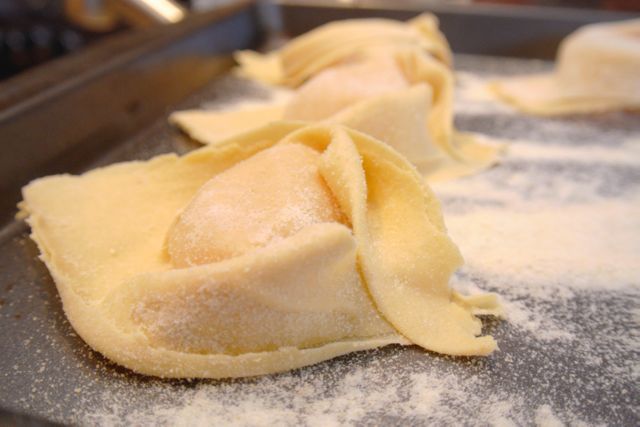
Place a generous spoonful of filling in the center of each square. Fold the square in half, forming a triangle, and force out the air as you seal the edges together. Moisten the edges with water or egg if necessary, to seal them. Then form an oversize tortellino by bringing the two ends together, folding one over the other and sealing. Place them on a baking sheet that has been sprinkled with flour or semolina, without touching each other. Continue filling and shaping until done.
Cooking and serving:
Melt the butter with about 20 or so sage leaves in a small saucepan. I like to brown the butter, it adds a wonderful nutty flavor, but that’s not commonly done in Italy. Set aside and keep warm. Warm the serving bowls. Fill a large pot with water and bring to a rapid boil over high heat. Salt. Drop in the cappellacci, cooking in batches so as not to overcrowd the pot. Cook for about 3 minutes, or until the edges of the pasta are tender but still firm to the bite. These are too fragile to drain in a colander. Instead, use a spider or large slotted spoon to gently scoop the cappellacci from the boiling water, allowing the water to drain. Place them in the warm serving bowls. Sprinkle with cheese, and top with a bit of the melted butter. Season with salt and pepper, and garnish with a few fresh sage leaves.
Now that I have a few months in the US as our bike tour season is over, and ski tours are a few months away, I have some time to devote to recipe development and my food blog. My travels in Italy provide so much inspiration, and I always arrive home with many dishes that I cannot wait to recreate in my own kitchen for family and friends.
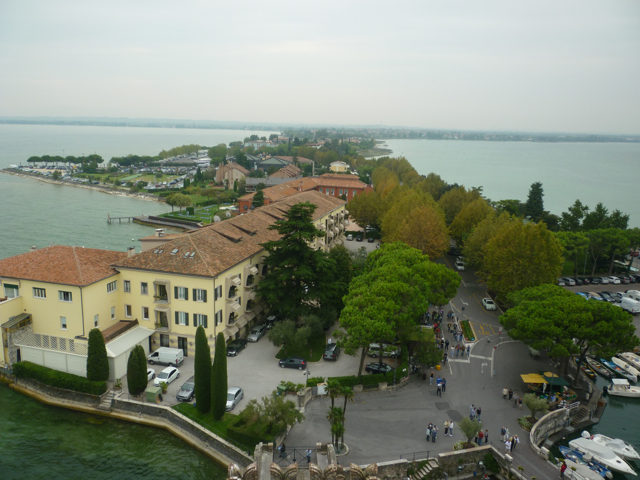
View of Sirmio peninsula from Scaligar castle
In September, after the completion of our last bike tour, I met up with friends from home for a few days of exploring. My friend Ginny and I spent one night in Sirmione, on beautiful Lago di Garda. Sirmione located on the Sirmio peninsula that divides the lower part of Lake Garda. It lies in the Brescia province of Lombardia, but is surrounded by the province of Verona in the Veneto, so Sirmione is almost more ‘Veneto’ in flavor than Lombardia. A busy resort town, with thermal springs, the ancient Roman ruins of the Grotte di Catullo, and the medieval Scaliger Castle, as well as many shops, and great dining options.
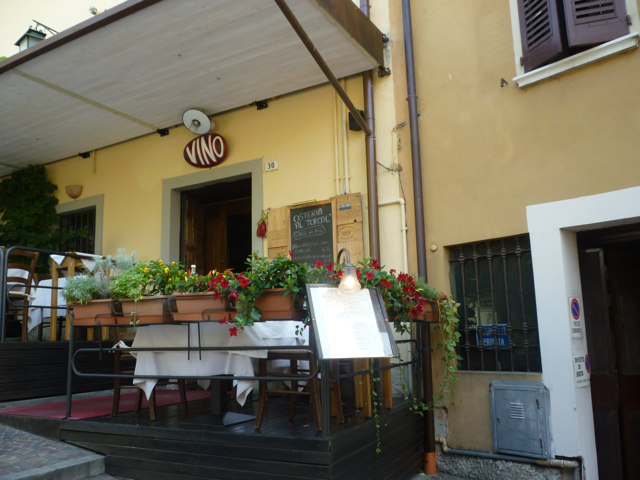
Osteria al Torcol in Sirmione
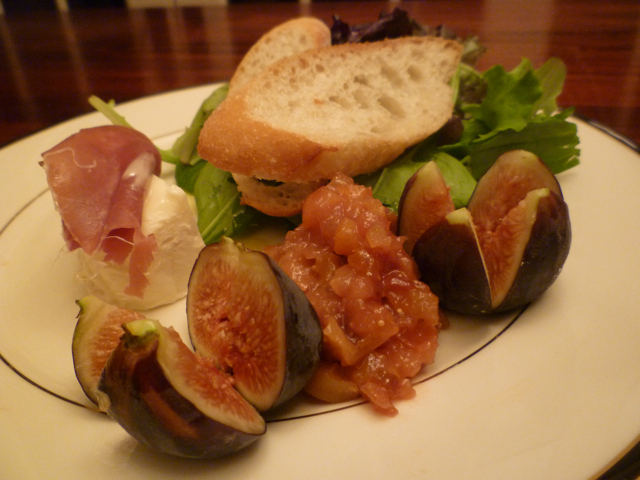
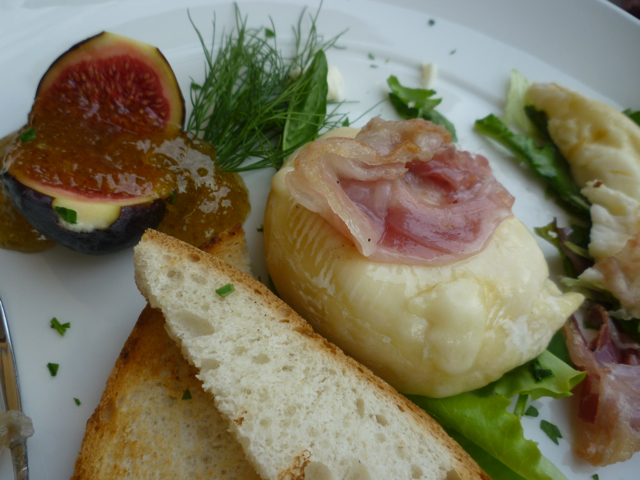
After finally navigating our van through the narrow streets to our hotel and settling in, Ginny and I walked to a nearby restaurant to enjoy a leisurely lunch. Seated on a quiet outdoor patio, we both started with delightful salads, mine with burrata cheese, and Ginny with goat cheese, prosciutto, fresh figs and a relish that she had never seen before – a mostarda. It worked wonderfully with the meat, cheese and figs. When all of us girls got together upon our return to the US, we cooked ourselves up a great Italy inspired meal, with this salad as our first course.
Salad in Sirmione
Mostarda in various forms appears all over Italy. It is an agrodolce relish (bitter sweet, or sweet and sour), most commonly made from fruit, fresh, dried or candied – quince, pears, apples, even grape must, and mixed with wine and mustard. La Cucina Italiana published a short informative article on the history of mostarda, which apparently was a favorite of Catherine de Medici, who included a jar in her dowry trunk when she travelled to France to marry the son of the King in 1533.
Mostarda
There are many different versions of mostarda, including a mostarda di cremona, di mantova, as well as versions from Tuscany. Mostarda from Verona is mae from vegetables, and recipe abound for versions made from pumpkin, squash, carrot and celery, pomegranate, figs, the list goes on. Mostarda Veneta is made from pureed quince and pears, with candied orange and citron.
Homemade candied orange peel
Mostarda is customarily served in the fall, often paired with bollito misto, boiled meats. Once I made a batch, I found plenty of ways to use it – in addition to the salad recipe below, you could serve it with grilled or roasted chicken or pork, include it in an antipasti platter, serve it with some great cheeses, grill some radicchio and brush some on just before serving, or check out my next post, where I use it in an apple pie!
Ingredients for mostarda
Feel free to adapt this to what you have on hand. I’ve made subsequent versions of this with quince jelly, fresh figs, dried figs, whatever fruit I happened to have on hand. I’ve seen recipes that called for red wine, but I find the end product is not the most attractive color, kind of a muted purple, so I recommend using white wine.
A Lugana white wine would be a perfect pairing for this salad – it was what Ginny and I shared during our lunch. The local DOC zone, this white is made from the Trebbiano di Lugana grape. Ottella makes a wonderful one, called Le Creete, and available here in the US.
Mostarda
Makes approximately 2 cups
1 unripe pear, cut into 1/4” pieces (peeled if you prefer)
1 apple, cut into 1/4” pieces (peeled if you prefer)
1/4 cup dried apricots or figs, cut into 1/4” pieces
1/4 cup craisins, chopped
1/4 cup candied orange piece, chopped
1/4 cup candied lemon pied, chopped
1/2 cup dijon mustard
1 1/2 cups white wine
1/4 cup honey
1 1/2 teaspoon mustard powder
Place all ingredients in a large saucepan and stir to combine. Bring to a boil over medium-high heat. Reduce to a simmer, and cook over low heat until softened and thick, about 20 minutes. Allow to cool.
This is better after sitting for a day or so to let the flavors blend.
Insalata di Formaggio di Capra, Prosciutto, Fichi Freschi e Mostarda
Serves 4
8 ounces fresh goat cheese
2 cups fresh salad greens
4 slices prosciutto
4 fresh figs, cut into quarters
1/2 cup mostarda
8 thin slices of bread, toasted
Kosher salt
Extra virgin olive oil
Balsamic vinegar
Cut the goat cheese into 4 pieces, and warm slightly in the oven.
Divide the salad greens into four, and place on 4 salad plates in a small pile. Place one piece of the warm goat cheese onto each plate, and top with a slice of prosciutto.
Place about 2 tablespoons of mostarda onto each salad plate, and top with the four pieces of a whole fig. Place two pieces of bread on each plate.
Sprinkle with salt, then drizzle with extra virgin olive oil and balsamic vinegar.
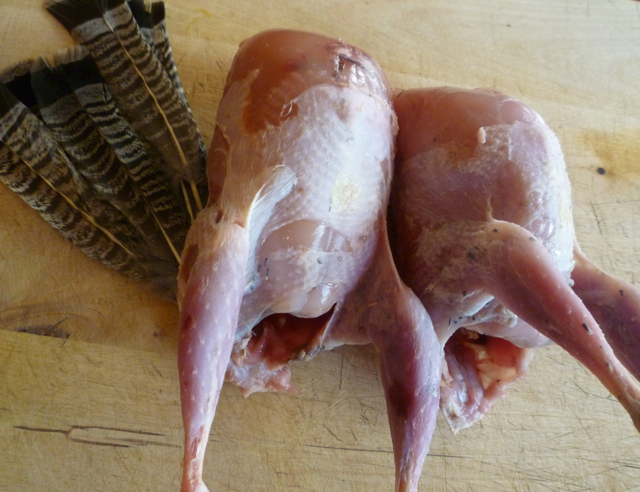
At my home in rural Sugarloaf, Maine, October brings the end of the magnificent foliage, and the start of bird hunting season. I am not a hunter myself, but I am quite happy to accept gifts of game birds from friends – in this case, my son’s friend, Rollie Zagnoli – who arrived with two ruffled grouse. As always, I turn to my trips to Italy for inspiration as to how to prepare them.
Fresh grouse
I’ve been rereading my Hemingway as on our bike and ski tours we explore firsthand his stomping grounds for his novels like Farewell to Arms or Across the River and Into the Trees. The latter story is told primarily as a flashback, as a Colonel Cantwell recalls his romance in Venice with a young woman, and his experiences during the war, as he spends a Sunday afternoon in a blind on a duckhunting trip to Trieste.
We think of fresh fish when we think of the cuisine of Venice. But all along the waterways leading to the Venetian lagoon, from Trieste to the Po and the Brenta, there was an enormous variety of water birds that traditionally were hunted and used for food. Each type of bird would be prepared in a particular way, designed to exhibit (or hide) its particular characteristics. There are even different preparations for the female – usually boiled, while the male would be roasted. Bigoli pasta with a duck ragu is a very common dish that appears on many restaurant menus. And you will see many forms of game birds on the menu as soon as you move inland from Venice itself – especially faraona, guinea fowl, and quaglie, quail.
Roasted Faraona on our bike tours
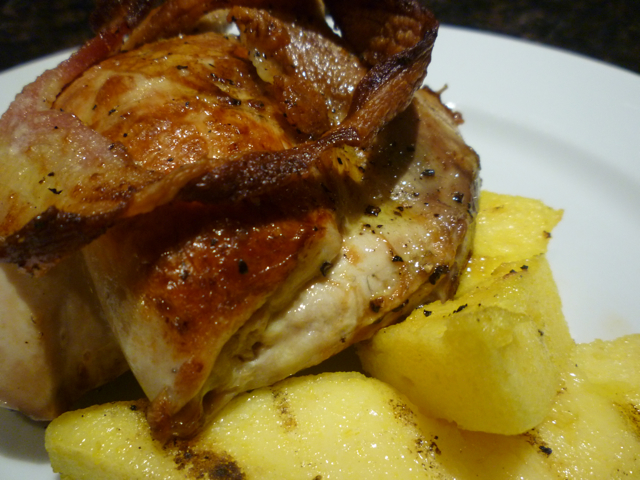
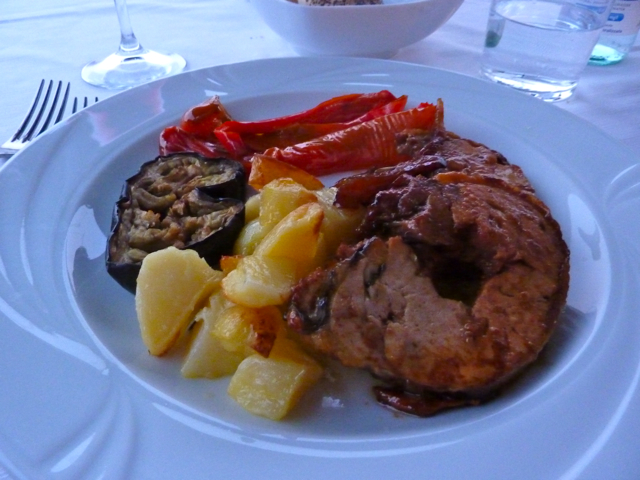
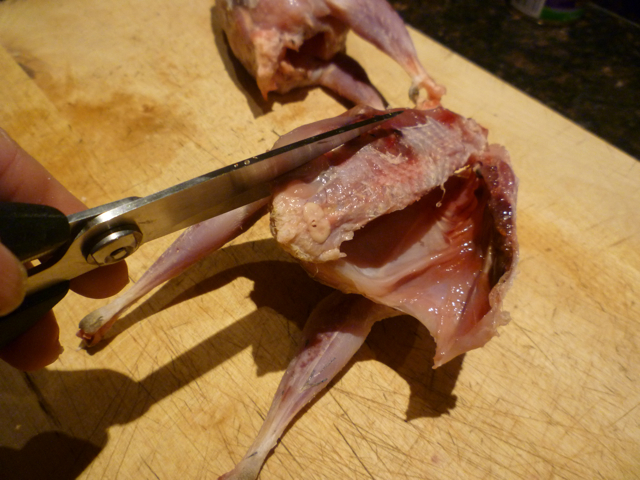
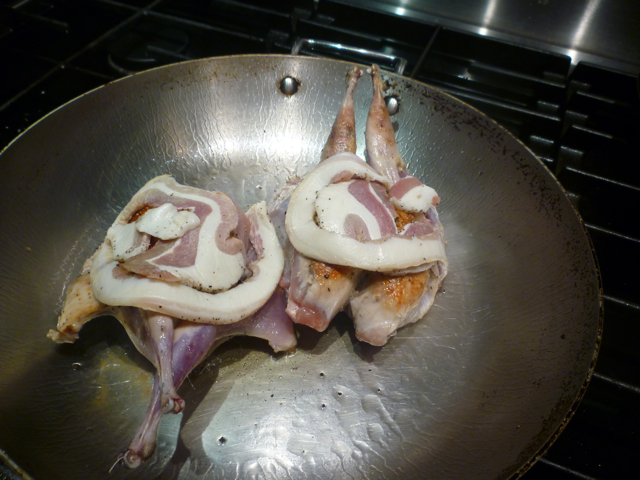
I adapted a quail recipe from La Cucina – The Regional Cooking of Italy for my grouse, Quaglie alla Scaligera. La Cucina translates this as Quail Veneto Style, but the name actually refers to the Scaligari family, who ruled the city of Verona for 125 years. This recipe is quite simple, uses one of my favorite techniques to cooking whole birds – ‘spatchcocking’, or cutting out the backbone – and uses some fat to prevent the bird from drying out during roasting. As recommended by La Cucina, I served this with some grilled polenta. A wine from Friuli, the region where Hemingway’s Colonel Cantwell was duckhunting, would be a great match for this – a white Friulano, or for those of you who prefer a red, the spicy Schioppettino. Petrussa makes a wonderful version of each.
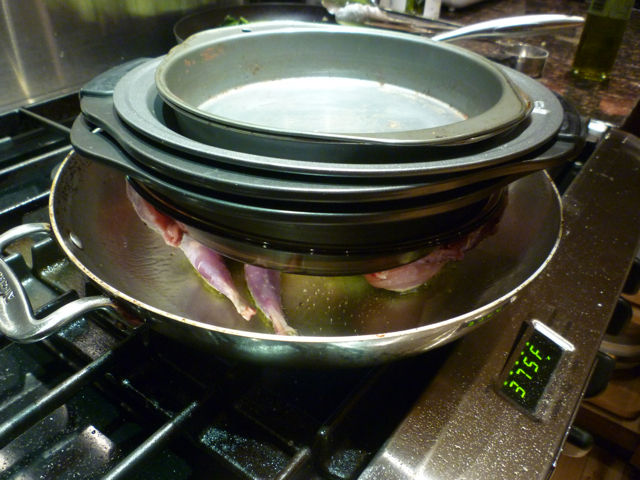
Removing backbone from grouseWeighting grouse to searGrouse topped with pancetta, ready for oven
Gallo Cedrone alla Scaligera
Serves 4
4 grouse or other small game birds (cornish hen would work as well)
Kosher salt and freshly ground pepper
1/3 cup pure olive oil
2 tablespoons butter
4 thick slices pancetta, or 8 slices bacon
Preheat the oven to 375°.
Using a pair of kitchen shears, cut open the grouse along either side of the backbone, removing it from the birds. Spread open the grouse cut side down on a sheet pan. Season with salt and pepper.
Heat the olive oil and butter in a large oven-proof saute pan over medium high heat. Place the birds skin side down on the hot oil/butter, and weight with another pan to insure good surface contact with the hot pan. Cook for 7-10 minutes, until the skin is a nice golden brown.
Remove from heat, remove the top pan, and turn the birds so they are skin-side up. Top each bird with a slice of pancetta, or two slices of bacon. Place in the preheated oven and roast until a thermometer inserted into the thickest part of the bird reads 160°. This will take about 15 minutes or so, but will vary depending upon the type and size of the bird.
Remove from the oven, cut each bird in half along the center of the breast bone, and serve with grilled polenta. Drizzle a bit of good extra virgin olive oil.