Alto Adige Terlano Wine Zone: Wonderful, Crisp Whites from Northeastern Italy

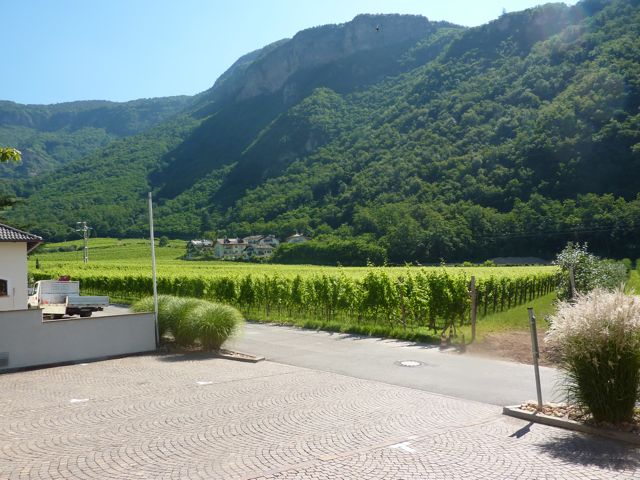
View of Terlano Vineyards

This past summer I spent some time exploring the wine regions of Alto Adige. One stop on my tour, and a place we will return to on our Bike the Wine Roads of Trentino-Alto Adige bicycle holidays in 2012 is the town of Terlano, and the DOC wine zone that shares its name. Located in the Adige valley, the Terlano (or Terlaner) wine zone stretches several miles both north and south of Terlano, which lies six miles west of Bolzano. Terlano is a small town of about 4000 people, and is famous for two products – wine and white asparagus. According to the 2001 census, 87% of the population of Terlano speak German, with only 13% speaking Italian.

The wine-making tradition in this area dates back over 2000 years, back to the ancient Rhaetians, the people that lived in the area when the Romans reached the Alps. In the Middle Ages, the wines from this region were quite popular in the Bavarian monasteries, who purchased quite a bit of wine from this area. Terlano is located at the foot of Mount Tschoggel, and as is usually the case in these mountainous wine producing regions, the topography plays a huge role in the cultivation of these grapes. The south-facing slopes offer extended exposure to the sun, the porphyry rocks found here soak up the sunlight and keep the soil warm and dry; the porous soil drains well, again, keeping the roots dry and rot-free.
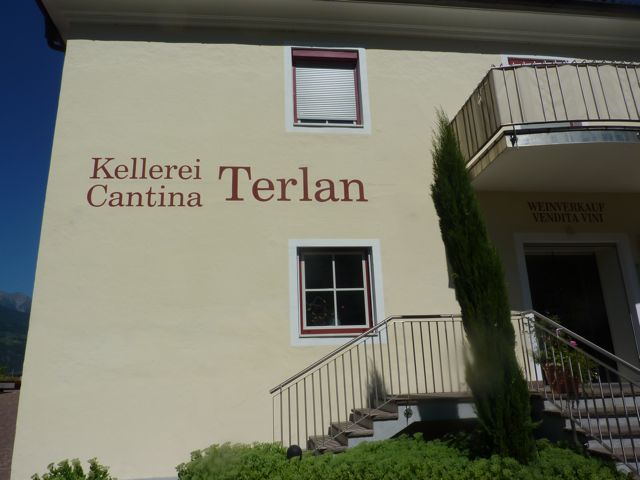
Kellerei Cantina Terlan

The vineyards of Terlano are particularly well-known for their white wines, which are big, complex, and long-lived. Red wines are also grown in the region, but the particular Terlaner DOC regulations apply only to the whites from this area. Reds are included under the Alto Adige DOC, which I’ll cover in a future post.

In April and May, this region produces a wonderful white asparagus, a very elegant vegetable found throughout Northeastern Italy, but rarely outside of it. The Terlaner Sauvignon Blanc is a perfect wine to pair with the asparagus.

Wines of the Terlano/Terlaner DOC

Terlaner Bianco: A white blend, using a variety of white grapes from the Terlaner region. It must consist of a minimum of 50% Pinot Bianco and/or Chardonnay, with the remainder Riesling, Riesling Italico, Sauvignon, Sylvaner, Muller-Thurgau. Both dry and sweet Passito and Vendemmia Tardiva (late harvest) versions are available, as well as a dry Spumante. Flowery and fruity, with a full flavor profile.

Chardonnay: 90% chardonnay. Both dry and sweet Passito and Vendemmia Tardiva (late harvest) versions are available, as well as a dry Spumante. Fruity, dry, medium-bodied, pale straw yellow in color.
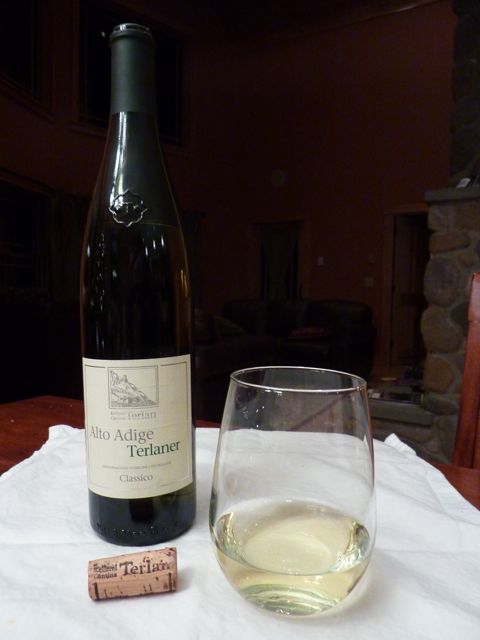
Kellerei Cantina Terlan Terlaner Wine

Muller Thurgau: 90% Muller Thurgau. Both dry and sweet Passito and Vendemmia Tardiva (late harvest) versions are available, as well as a dry Spumante. Pale yellow, lightly aromatic with tropical fruits.

Pinot Bianco or Weissburgunder: 90% Pinot Bianco. Both dry and sweet Passito and Vendemmia Tardiva (late harvest) versions are available, as well as a dry Spumante. Pale yellow with hints of green, fruity and soft.

Pinot Grigio or Rulander: 90% Pinot Grigio. Both dry and sweet Passito and Vendemmia Tardiva (late harvest) versions are available, as well as a dry Spumante. Light straw yellow, ripe fruit and good balance.

Riesling: 90% Riesling. Both dry and sweet Passito and Vendemmia Tardiva (late harvest) versions are available, as well as a dry Spumante.

Riesling Italico or Weischriesling: 90% Riesling Italico. Both dry and sweet Passito and Vendemmia Tardiva (late harvest) versions are available, as well as a dry Spumante.

Sauvignon: 90% Sauvignon. Both dry and sweet Passito and Vendemmia Tardiva (late harvest) versions are available, as well as a dry Spumante. Light yellow, with hint of green, intense fruit bouquet, well-balanced acidity.

Sylvaner: 90% Sylvaner. Both dry and sweet Passito and Vendemmia Tardiva (late harvest) versions are available, as well as a dry Spumante. Earth and minerals, with a scent of fresh herbs.
Posted in Terlaner, Travel, Uncategorized, Wine, wine tastings | Tagged , , , , , , , , , , , , , , , , , , , , , | Leave a comment

Christmas Lasagna – Lasagna da Fornel: Not your ordinary lasagna!

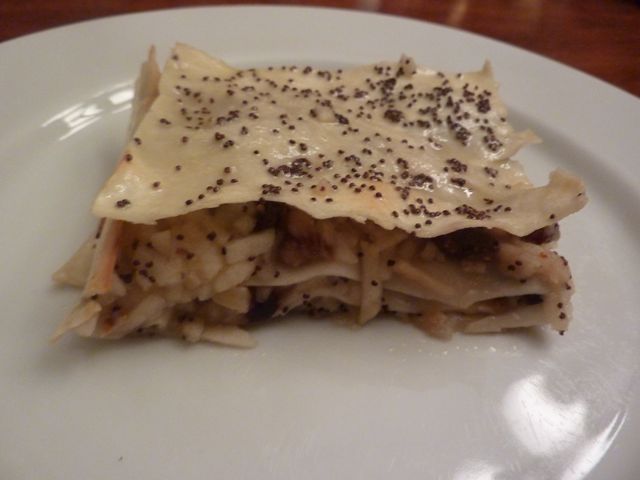
Lasagna da Fornel
Lasagna da Fornel

Another traditional Christmas dish from Northeastern Italy intrigued me the moment I discovered it, but it is quite unexpected, and I was unsure of how it would go over with American palates. I’ve made it a couple of times now, and it has been incredibly well-received, with people requesting seconds. It is a Christmas Lasagna, Lasagna da Fornel, but it’s not your typical lasagna. Throw out all your preconceptions of what goes into a lasagna – this is made with apples, figs, raisins and nuts.

This recipe hails from a couple of different areas in Northeastern Italy, where apples abound throughout the area – you can cycle through apple orchards from Trentino-Alto Adige all the way down to the Adriatic. It is found in the mountainous Carnia territory of Friuli-Venezia Giulia; a festive dish that is commonly served at Christmas, but may be found throughout the year. It is also found in the Veneto region, in the provinces of Belluno and Treviso, served either on Christmas eve or Christmas day. It is made as a lasagna, layers of apples, dried fruits and nuts between sheets of pasta; or it can be made as a  deconstructed loose pasta dish.

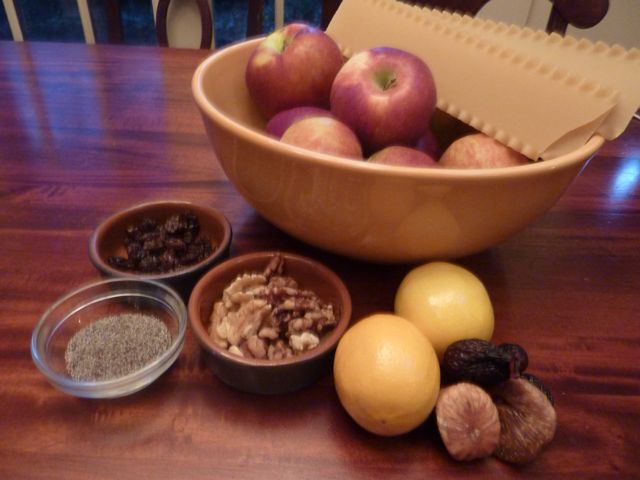
Ingredients - apples, nuts, raisins, poppy seeds

It is seasoned with semi di papavero, poppy seeds, not a spice you think of when you think of Italian food, but quite common in these regions in the Northeast. Poppy seeds are used in many cuisines of Central Europe – Austrian, Czech, Hungarian, German and Slovac. There appearance in the cuisine of Friuli-Venezia Giulia is one more example of the influence of these areas on the foods of this region of Italy.

The city of Trieste lies on the Adriatic, and throughout history was a very active trading port, as Austria lavished money and attention on the principal port of the Hapsburg and then Austro-Hungarian empire. Here, spices of all types arrived to be carried north to Austria, Germany and elsewhere in Central Europe. These spices were often transported by cramars, traveling peddlers who lived in the mountains of Carnia in the northernmost section Friuli-Venezia Giulia. Originally settled by the Celts, who brought with them a talent for land management, and began by raising livestock in this region. When winter approached, and grazing was limited, these pig farmers would load up with spices, leave their families behind and made a difficult trek north through the Alps to Austria and Germany to pick up some additional income by selling their wares.

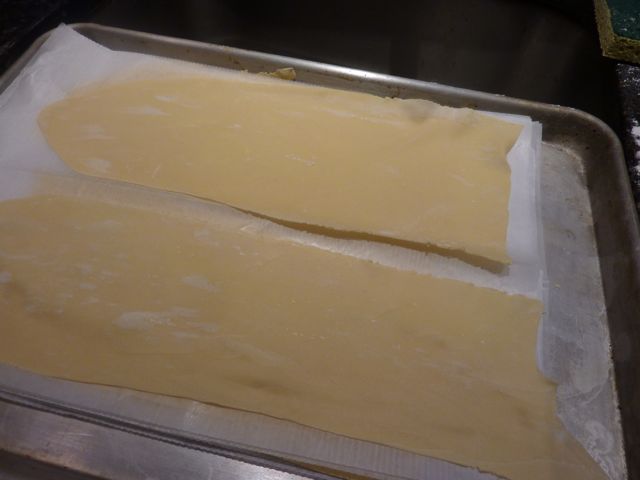
homemade pasta
Homemade pasta sheets

As many of these spices were believed to have medicinal benefits, these cramars became a sort of medicinal healer as well, selling mixtures of spices and dried herbs as remedies. Any of these spices that were not sold ended up being used in the kitchens of this region. You see them in many baked sweets, breads, and salad dressings, just as you do here in the US, but they also appear, as here, in pastas.

I made it with both store purchased as well as homemade pasta. My homemade was much preferable. I would recommend using the best pasta sheets you can find, as it is a  bit more delicate that a traditional meat lasagna.

A prosecco would make a wonderful pairing with this dish, most certainly what they would enjoy it with in Treviso, the home of prosecco.

Lasagna da Fornel – Christmas Lasagna

Kosher salt
1 pound dried lasagna
8 apples, such as Macoun, McIntosh, or Cortland
1/4 cup lemon juice
6 ounces dried figs
6 ounces raisins
4 ounces walnuts, finely chopped
3/4 cup unsalted butter, melted
1/4 cup poppy seeds

Preheat oven to 350°.

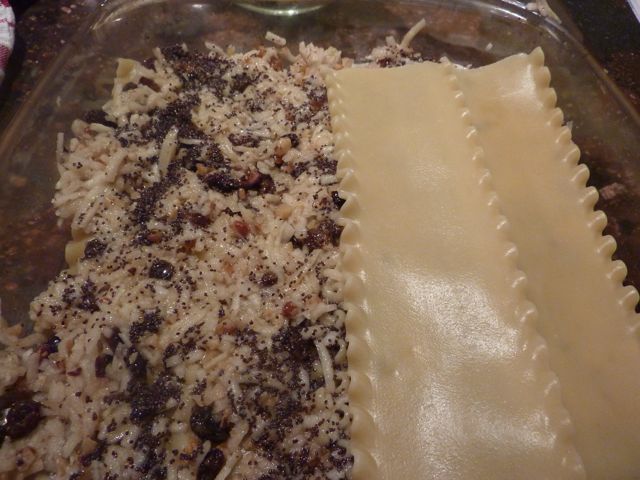
Layering lasagna
Layering the lasagna

Bring a large pot of water to boil over high heat. Add salt. Cook the lasagna noodles, 4 or 5 at a time, until about 1/2 done. For fresh pasta, this would be about 2 minutes; for purchased dried pasta, about 4-5 minutes.

Spread the cooked sheets out on a towel, without overlapping. Allow to dry.

Peel and core the apples. Grate them into a large bowl, or using a food processor. Transfer to a large bowl, and add the lemon juice to keep them from turning brown. Add the figs, raisins and walnuts, and mix to combine.

Melt the butter.

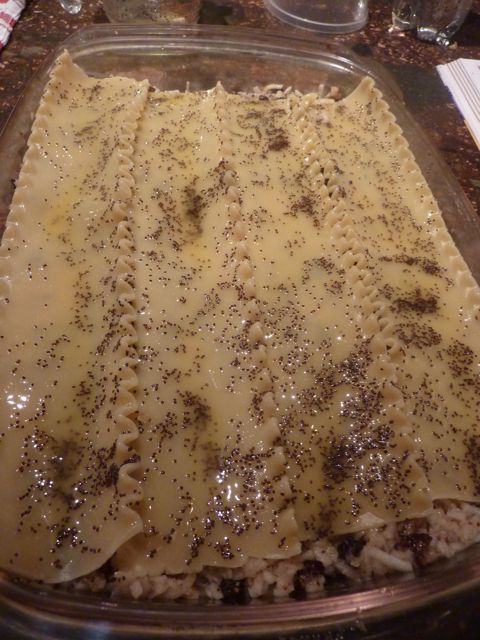
Ready for oven
Ready for oven

Brush butter on the bottom of a 13×9 baking dish. Place a layer of lasagna sheets, and top with 1/3 of the apple mixture. Brush with about 1/4 of the butter, and sprinkle with 1 tablespoon of the poppy seeds. Repeat the layers of noodles, apples, butter and poppy seeds two more times. Finish with a last layer of noodles, brush with the remaining butter and sprinkle the last of the poppy seeds.

Place in the oven and bake for 15 minutes. Serve.

Posted in Apples, Christmas, Figs, Friuli-Venezia Giulia, Pasta, prosecco, Travel, Uncategorized, Veneto Food, Wine Pairings | Tagged , , , , , , , , , , , , , , , , , , , , , , , | 3 Comments

Warning: Bombardino May Cause an Early End to your Ski Day

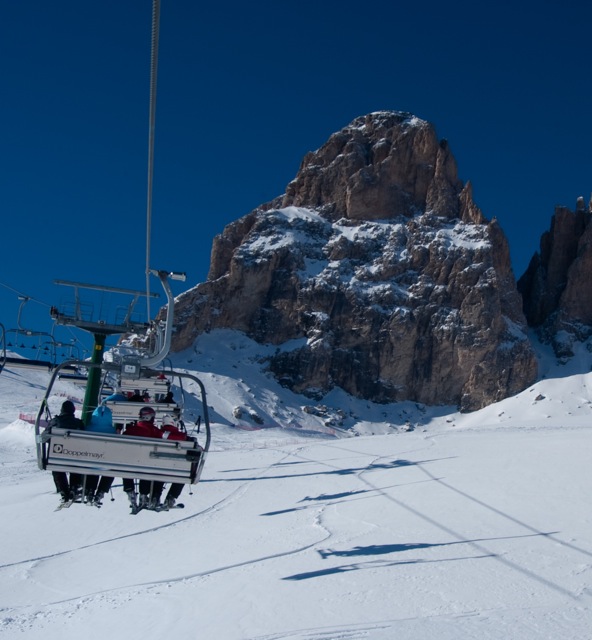
bombardino ski holidays dolomites
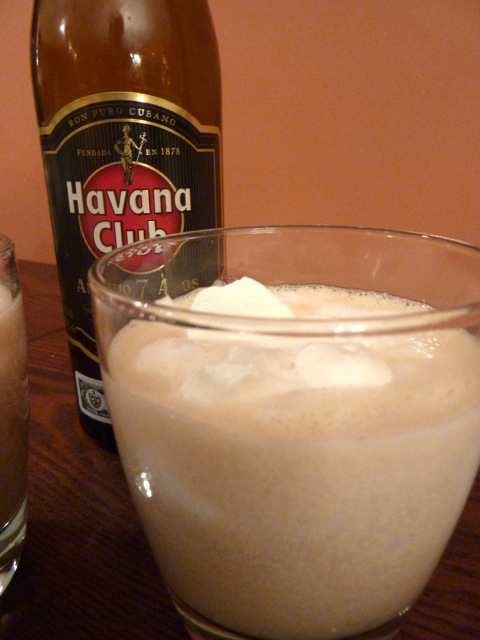
Bombardino

Bombardino is an egg nog based drink that is very popular in the cold climates, especially for those enjoying a ski holiday in Northeastern Italy. This is a perfect drink for sipping apres ski in Val Gardena, or to warm you up after shopping in the Christmas markets of Bolzano. I say apres ski, as I can’t imagine hitting the slopes after one of these. It is made by combine 1 part advocaat (called Vov in Italy) or egg nog, and 1 part brandy. Advocaat is a creamy, rich liquor made from eggs, sugar, and brandy, very similar to our egg nog. In Europe, however, it usually has a slightly higher alcohol content – no surprise there. For a Bombardino, you add MORE alcohol, heat it up, and serve it topped with whipped cream. The name is derived from this potent combination of heat and high alcohol content, “the bomb”.

val gardena luxury ski holidays
Val Gardena, Italy

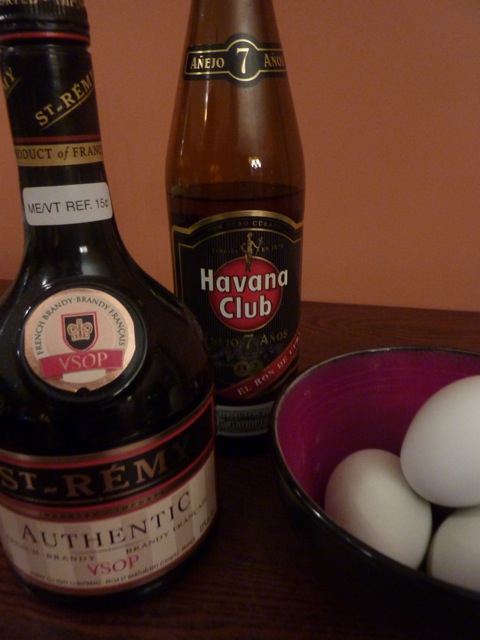
There are several variations, using rum rather than brandy, or including espresso in the mix. The coffee version is sometimes called a calimero. I prefer the addition of the espresso. And nowadays, the younger set will add Red Bull instead.

brandy rum eggs custom ski holidays
Ingredients – brandy, rum, eggs

I’ve adapted a traditional egg nog recipe here to make your own. I did find some recipes on line for Advocaat, but all seemed to be variations of the same recipe, which called for an unbelievable amount of sugar – 29 ounces, which is over 3 cups. This version, with approximately 3 ounces, was plenty sweet. Some recommend letting the mixture ‘age’ for a week in your refrigerator, but who plans that far in advance? It is traditionally served in a clear cup or glass.

Advocaat/Egg Nog/ Vov

4 egg yolks
1/3 cup sugar, plus 1 tablespoon
2 cups whole milk
1 cup heavy cream
6 ounces brandy
4 egg whites

Using a mixer, beat the egg yolks until they are light in color. Gradually add the 1/3 cup sugar and continue to beat until it is completely dissolved. Add the milk, cream, and brandy. Transfer to another bowl.

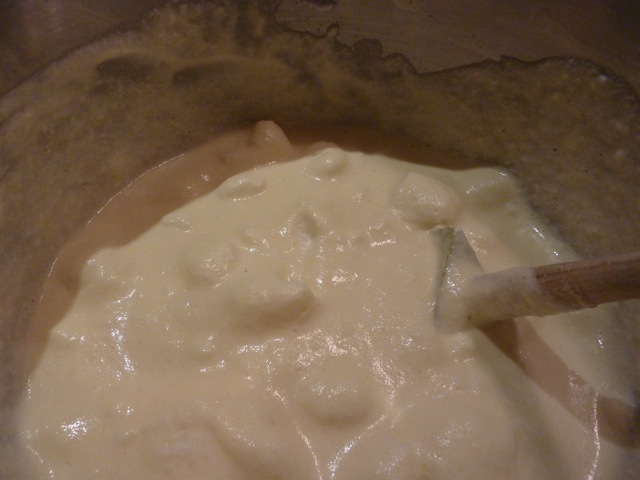
Folding in egg whites

Place the egg whites in the bowl of the mixer and beat to soft peaks. With the mixer still running gradually add the 1 tablespoon of sugar and beat until stiff peaks form.

Fold the egg whites into the egg yolk mixture. This can be stored for up to a week in your refrigerator.

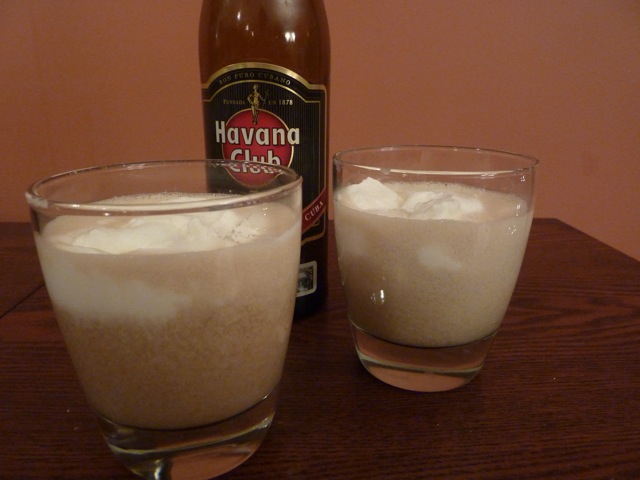
Bombardino

1 part rum or brandy
1 part homemade Advocaat/Egg Nog/Vov
Sweetened whipped cream

Heat the advocaat and rum or brandy in a small saucepan. If you have a cappuccino machine, you can use the steamer to heat. Top with sweetened whipped cream. Serve.


Calimero (left) and Bombardino

Calimero

1 part rum or brandy
1 part homemade Advocaat/Egg Nog/Vov
1 part espresso
Sweetened whipped cream

Heat the advocaat, rum or brandy, and espresso in a small saucepan. Again, you can also heat using your cappuccino machine. Top with sweetened whipped cream. Serve.

Posted in Christmas, Travel, Trentino Food, Uncategorized | Tagged , , , , , , , , , , , , , , , , , , , , , , , , , | Leave a comment

Gubana – Traditional Italian Christmas in Friuli-Venezia Giulia


gubana bike tours italy italiaoutdoors food and wine

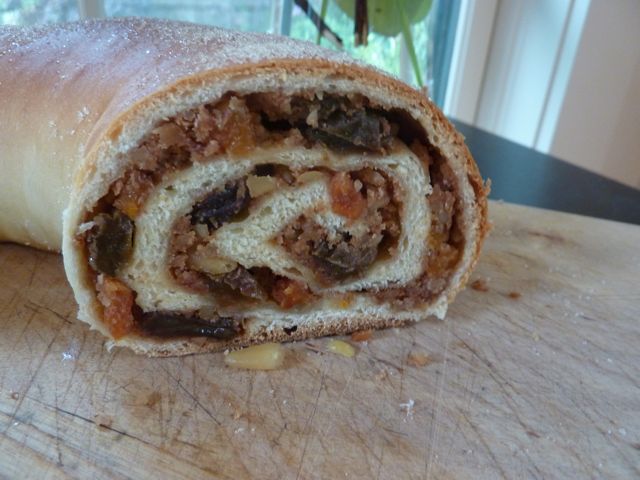
One example of traditional Christmas holiday food with deep-seated cultural roots in a specific region is the Gubana. A cake of sweet leavened dough, heavy with a filling of dried fruits and nuts. Depending upon the source, Gubana originated in either the Valli del Natisone or nearby Cividale, in the region of Friuli-Venezia Giulia.  Friuli-Venezia is a fascinating region in the northeast corner of Italy, at the cross-roads of eastern and western Europe. It is a region we are exploring on one of our Italiaoutdoors bicycle tours in 2012. The original settlers in the area were from Slavic stock, and the name Gubana is derived from the Slavic word guba, meaning fold. As far back as 1409, Gubana was one of the 72 courses served during a dinner held by the city of Cividale in honor of visiting Pope Gregory XII.

grappa cycling holidays italy italiaoutdoors food and wine

Local legend has it that Gubana was created by a poor woman who had nothing with which to sweeten Christmas meals. She prepared for her family a cake made with what she had a hand; flour, eggs, walnuts and honey. A less picturesque explanation is that Gubana sprang from the Slovian dumplings called struklji, known today as strucchi, which were fritters filled with a similar stuffing of dried fruits and nuts.

gubana ski holidays dolomites italiaoutdoors food and wine

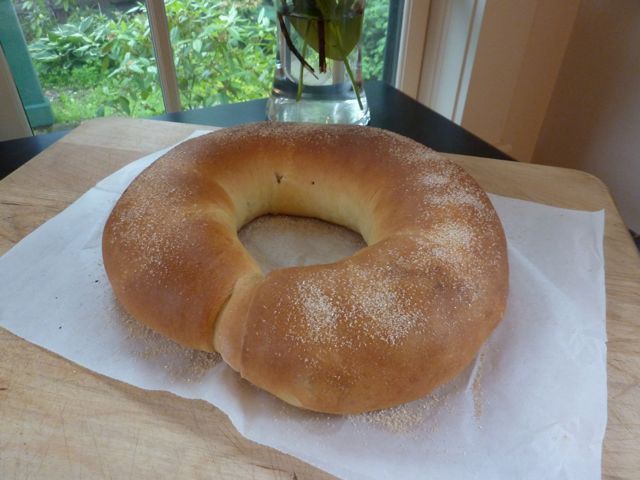
There are a couple of versions of Gubana dough, and numerous variations in the filling. Waverley Root, in The Food of Italy, describes Gubana as a ciambella, a ring-shaped cake of puff pastry, stuffed with crushed walnuts, pine nuts, almonds and spices. He mentions that you can dress it up with raisins, dried figs, prunes, candied citron, orange peel and chocolate. It is then doused in liquor, typically rum or grappa. In her cookbook, Flavors of Friuli, Elisabeth Antoine Crawford supplies two recipes, both using the same stuffing, one a sweetened leavened dough, the other a puff-pastry version. Gubana is a bit labor intensive, and many bakeries in the region produce wonderful versions, so they are rarely made at home.

gubana stuffing luxury private ski trips dolomites italiaoutdoors food and wine
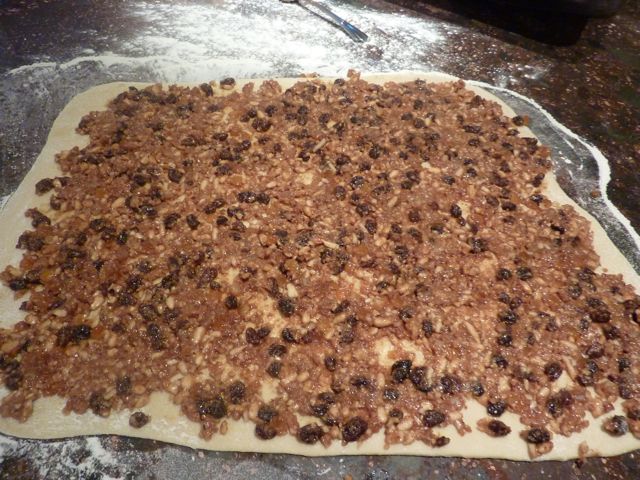
Filling on dough

I based this recipe quite closely on Crawford’s Gubana delle Valli del Natisone. I’ve tried it numerous times, and while it does take a bit of time, it consistently comes out well. I’ve simply made a few additions to the filling, and added a tablespoon of grappa to the dough.

Gubana Filling

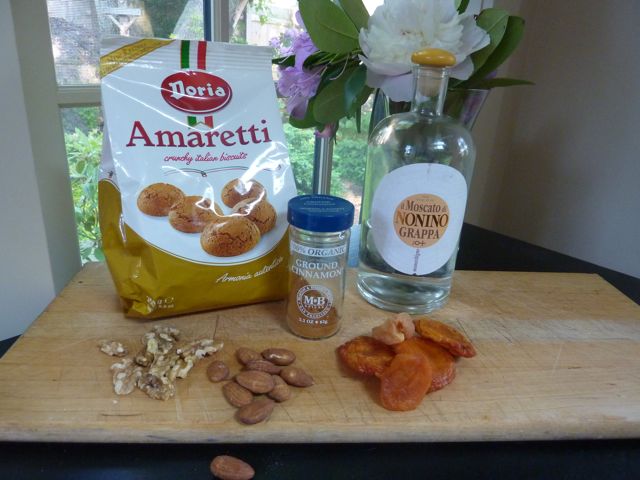
1/2 cup raisins
1/2 cup dried fruit – prunes, apricots
1/2 cup grappa
1 cup coarsely chopped walnuts
1/2 cup blanched slivered almonds
3/4 cup finely chopped amaretti cookies
1/4 cup diced candied orange peel
1/4 cup diced crystalized ginger
1/4 cup pine nuts
2 tablespoons melted butter
1 tablespoon honey
1 1/2 teaspoons ground cinnamon
4 ounces bittersweet or dark chocolate, shaved
1 egg

Place the raisins in a large bowl. Add the grappa and let soak for 30 minutes.

Finely grind the walnuts and almonds in a food processor; add to the bowl of raisins and dried fruit. Stir in the crushed amaretti, candied orange peel, ginger, pine nuts, melted butter, honey, cinnamon, grated chocolate, and egg.

Gubana

3 1/2 teaspoons active dry yeast, divided into 2 teaspoons and 1 1/2 teaspoons
1/3 cup sugar, divided
1/2 cup warm water, divided into 1/4 cup and 1/4 cup
2 2/3 cup flour, divided into 1/2 cup, 1 cup, and remaining 1 1/6 cups
1 egg
1 egg yolk
4 tablespoons butter, diced and softened
1 teaspoon salt
1 teaspoon vanilla extract
1 tablespoon grappa


For the dough:

In a small bowl, dissolve 2 teaspoons yeast and a pinch of sugar in 1/4 cup warm (110°) water. If you haven’t used the yeast in a while, let it rest until foamy, about 10 minutes, to make sure it is still active. Stir in 1/4 cup flour. Cover and let rise for 30 minutes.

Transfer the mixture in a large bowl. Stir in 1 cup flour, 1 tablespoon sugar, the egg and egg yolk. Cover and let rise for 1 hour.

In a small bowl, dissolve the remaining 1 1/2 teaspoons yeast and a pinch of sugar in the remaining 1/4 cup warm water. Add to the bowl of risen dough, along with the remaining flour and sugar, butter, salt, vanilla extract and grappa; mix well. Using a mixer with a dough hook attachment, knead for 10 minutes, adding a bit more flour if the dough begins to stick to the sides of the bowl. Transfer the dough to a lightly floured surface and knead briefly by hand; the dough should be smooth and elastic. Form the dough into a ball; cover loosely with plastic wrap or a damp kitchen towel and let rise in warm place for 1 1/2 hours.

To prepare the Gubana:

Preheat the oven to 350°. Place a pan filled with warm water on the bottom rack to create steam. On a lightly floured surface, roll  the dough into a 14- by 20-inch rectangle. Spread the filling over the dough, covering the dough as evenly as possible. Starting with one long side, roll up the Gubana jelly roll style. Place the roll seam-side down on a sheet of parchment paper. Form the roll into a spiral. Transfer the spiral, along with the parchment paper, to a baking sheet. Cover loosely with plastic wrap or a damp kitchen towel and let rise for 30 minutes.

Sprinkle the top of the spiral with 1 teaspoon sugar. Bake until golden brown, about 45 minutes. Serve with grappa for dunking.

Posted in Baking, Christmas, Dessert, Friuli-Venezia Giulia, Uncategorized | Tagged , , , , , , , , , , , , , , , , , , , , , , | Leave a comment

Seven Fishes – Myth or Tradition? And What Christmas Food Was Inspired by a Navel?

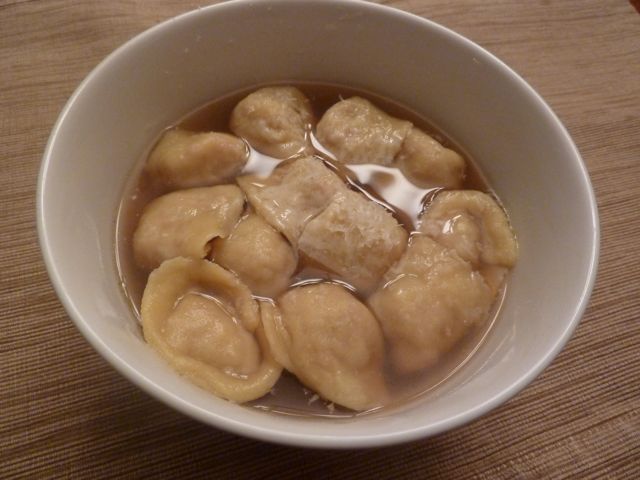
Tortellini in Brodo
Tortellini in Brodo

The Christmas season is upon us, and once again, Italian foodies here in the US are planning their Feast of the Seven Fishes for Christmas Eve. Italian restaurants are announcing their version of it for their December menu special, Saveur magazine features it in it’s December issue. Food bloggers cover it; I devoted two posts to it myself last year, here’s a link to Part I and Part II. It’s easy to find here in the US, but once place it’s hard to find it — Italy.

According to Wikipedia:

“is believed to have originated in Southern Italy and is not a known tradition in many parts of Italy”

According to Saveur:

“Started in America and sometimes called La Vigilia”

Waverley Root, in his classic tome “The Food of Italy” mentions over 30 different traditional regional Christmas dishes, and does not mention this Feast at all.

My Italiaoutdoors partner, Vernon, has been living in Vicenza, Italy for 20 years, and has never heard of it.

So I thought this season I’d research and make a few of the truly authentic regional Christmas dishes of Northern Italy.

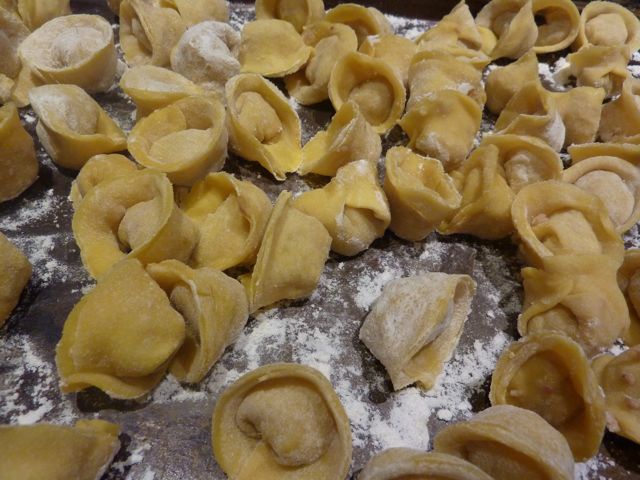
Tortellini
Tortellini

In my search through Waverley Root’s “The Food of Italy”, I found this great quote, which he attributes to the Gazzetta di Bologna, about 100 years ago: “Christmas should be celebrated in Christian fashion, that is to say by eating until you burst, drinking until your head spins, and in general loading down the human machine with choice wines and edible of all sorts, varieties and origins. But precede everything with a great dish of tortellini. Without tortellini there can be no Christmas in Bologna.” So tortellini makes my list of traditional Italian Christmas foods.

To the Bolognese, the shape of tortellini was inspired by the female navel. One story, hailing from the 17th century, claims that tortellini was created by a cook who molded the pasta in the navel of a Bolognese woman. In 1925, the play “The Man Who Invented Tortellini” was shown at Teatro del Corso in Bologna, in which a cook who is smitten with the young wife of his employer, makes a pasta dish inspired by the shape of her navel, and manages to have them served to her at a banquet.

I made my own tortellini, without the use of a navel, or even a pasta machine. Root mentions observing women making tortellini in a pasta shop, and that they produced about 6,000 tortellini an hour. I didn’t quite get up to that speed.

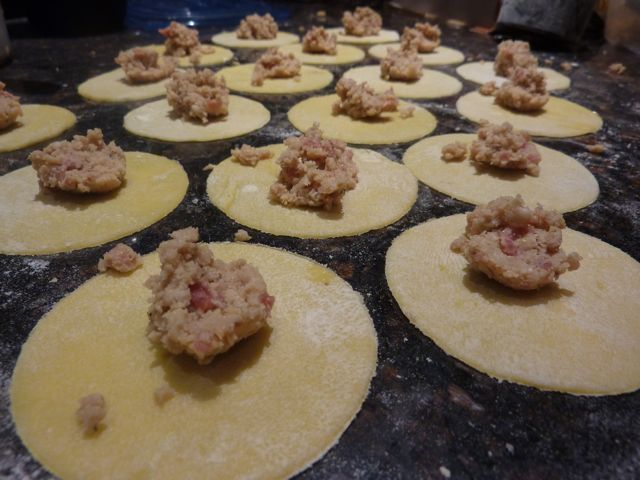
Stuffing on pasta circles

I referred to Lynne Rossetto Kasper’s book, “The Splendid Table”, a wonderful reference  on the cuisine of Emilia-Romagna. Both Kasper and Root relate that the most traditional tortellini dish of the region are those that have been stuffed with a mixture of meats and parmigiano-reggiano cheese, and served simply in a beef broth. I based this recipe on the Pasta all’Uovo and Tortellini in Broth from “The Splendid Table.”

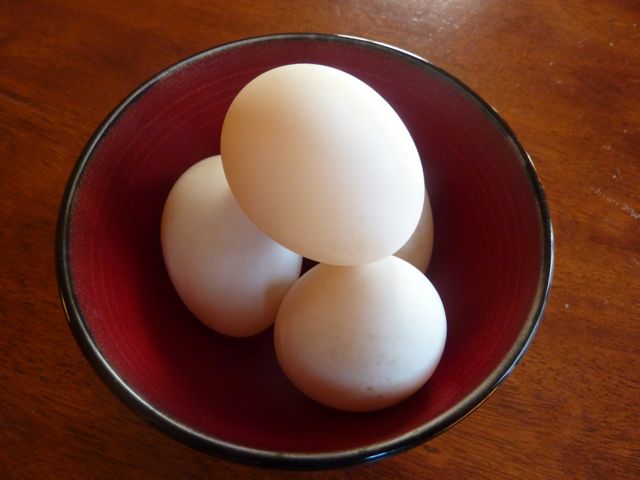
I only had duck eggs to use in this pasta, which made for a particularly luxurious end product. As duck eggs are significantly larger than chicken eggs, I assumed I would use less duck eggs than chicken, so I started with the amount of flour that Kasper

Duck Eggs
Duck Eggs

specifies, and used 3 duck eggs rather than the 4 chicken eggs. I was very surprised when I only used about 1/2 of the flour. The duck eggs are higher in protein and fat, and contain much less water than chicken eggs. The resulting pasta was very elastic, and easy to work with. This was very helpful, as I discovered when I went to roll out my pasta into sheets that both my mixer pasta attachment as well as my manual machine are back in Massachusetts. So I was forced to be truly traditional, and resort to a rolling pin.

Pasta all’Uovo d’Anatra

2 cups all-purpose unbleached flour
3 duck egg
1 beaten egg (of any type) for egg wash

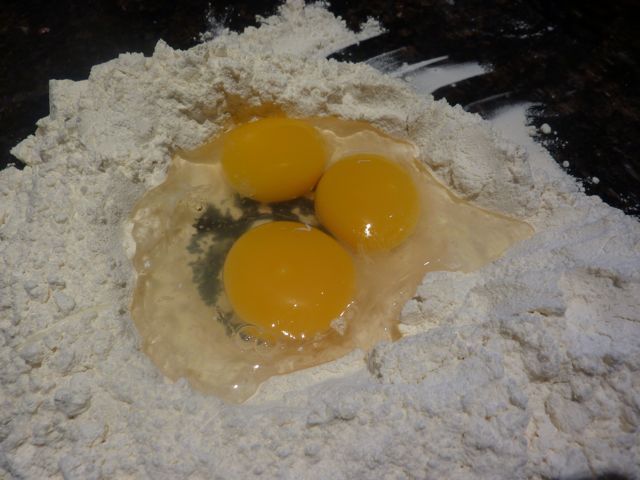
Place the flour on your counter in a mound. Make a well in the middle. Add the eggs. Using a fork, lightly beat the eggs. Gradually start incorporating the flour from the sides of the well. Eventually the sides of the well will collapse, at this point use a pastry scraper to work the rest of the flour into the dough.

Eggs in well of flour

Knead the dough for about 10 minutes, working a bit more flour into it when it gets a bit sticky. The dough should be very smooth, silky, and very elastic. Take a sharp knife and cut the dough in half; if any air bubbles are visible in the dough, continue to knead it for another minute or so.

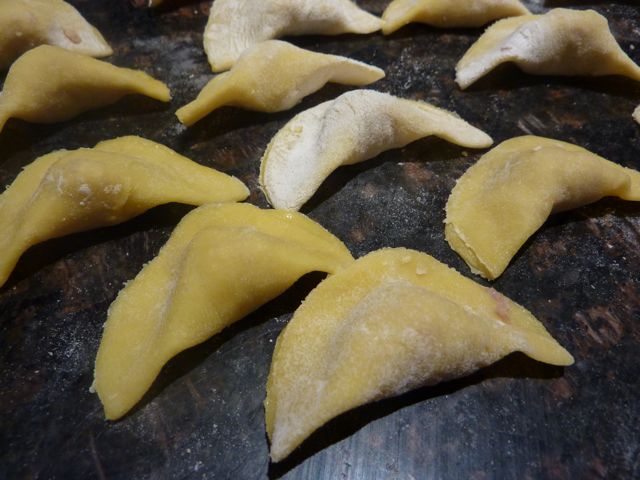
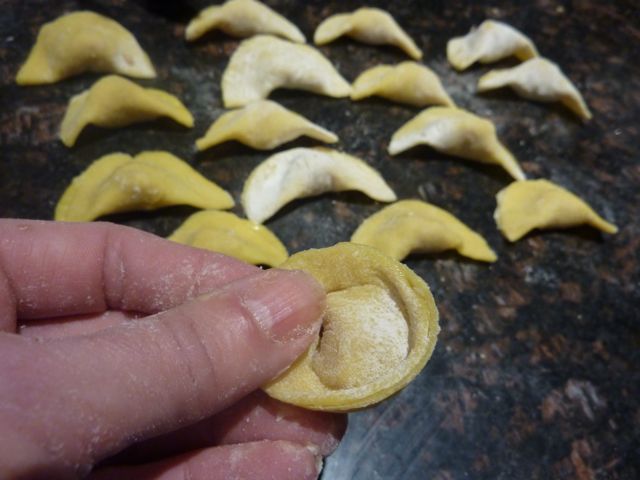
If using a rolling pin, divide the dough into quarters, and roll out one quarter at a time, keeping the remainder covered with plastic wrap so it does not dry out. The goal is to stretch the dough, rather than flatten it. When you are finished rolling, the sheet should be so thin that you can see through it. Taking a 1 3/4 inch cutter, or a small glass, cut the sheet into circles. Place approximately 1/2 teaspoon of filling in the center of each circle, and brush a little of the beaten egg around the outer edge of half of the circle. Fold the circle in half, and pinch the edges closed. Then take the corners on the bottom of the semi-circle, and pinch them together. Place the tortellini on a floured sheet pan when completed.

Stuffed half circles

Tortellini Alla Bolognese

2 tablespoons unsalted butter
3 ounces ground pork
3 ounces ground chicken
1 strip bacon, diced
2 ounces salami
1/4 cup grated Parmigiano-Reggiano cheese
Pinch of nutmeg
1 egg, beaten

Melt the butter in a saute pan over medium-high heat. Add the pork, turkey and bacon, and saute until cooked through, breaking up the meat with a fork or a potato masher.

Pinching corners to form tortellini

Transfer the meat to a food processor, and add the salami. Pulse until finely ground, but not pureed. Transfer to a bowl and add the cheese, nutmeg and egg. Season with salt and pepper.

To serve:

1 quart meat or chicken stock
Kosher salt and freshly ground pepper
Grated Parmegiano-Reggiano cheese

Heat the meat stock in a large saucepan and bring to a boil. Season with salt and pepper. Drop in the tortellini and cook a minute or two. Check one for doneness by tasting. They should be tender, but still have some ‘bite’, al dente. When done, ladle into small bowls and serve with grated Parmigiano-Reggiano cheese on the side.

Posted in Christmas, Emilia Romagna, Pork, tortellini, Travel, Uncategorized | Tagged , , , , , , , , , , , , , , , , , , , , , , | Leave a comment